Wicked Valley Turns Five: Believe in Beauty, Make Beauty Real | Grandma Kouzi

On 16 June 2026, Wicked Valley turned five. The rain cleared to fresh sunshine, and I hurried up to the roof to take photographs. The forecast had predicted rain for days on end; in the ten days before and the ten days after, the old saying calls this the “Dragon Boat rains”, and the rainy season usually doesn’t end until after the Dragon Boat Festival.
The heat, combined with generous rainfall, has the plants at Wicked Valley growing like mad. Every morning on my rounds I make new discoveries — overnight, the changes are visible to the naked eye. The dragon fruit I have been growing for two years loves the heat and thrives in it: people wilt in the heat, but dragon fruit blooms. One day they are still buds, and the next you come back to find enormous blossoms already bowing their heavy heads. But wild growth is not all good news. Leave the weeding for a few days and the grass declares independence and founds a nation — there is no path left for a person to walk through.
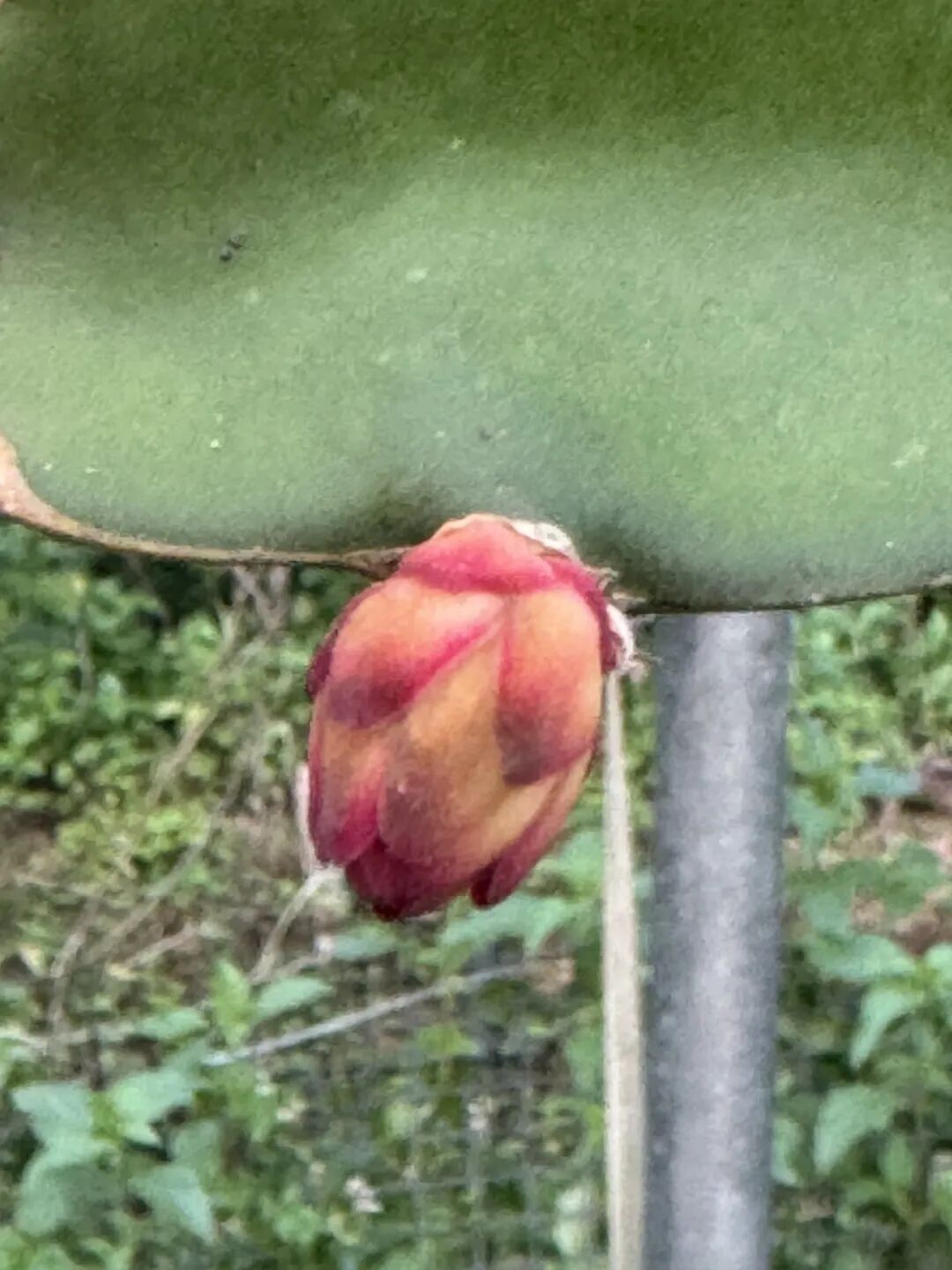
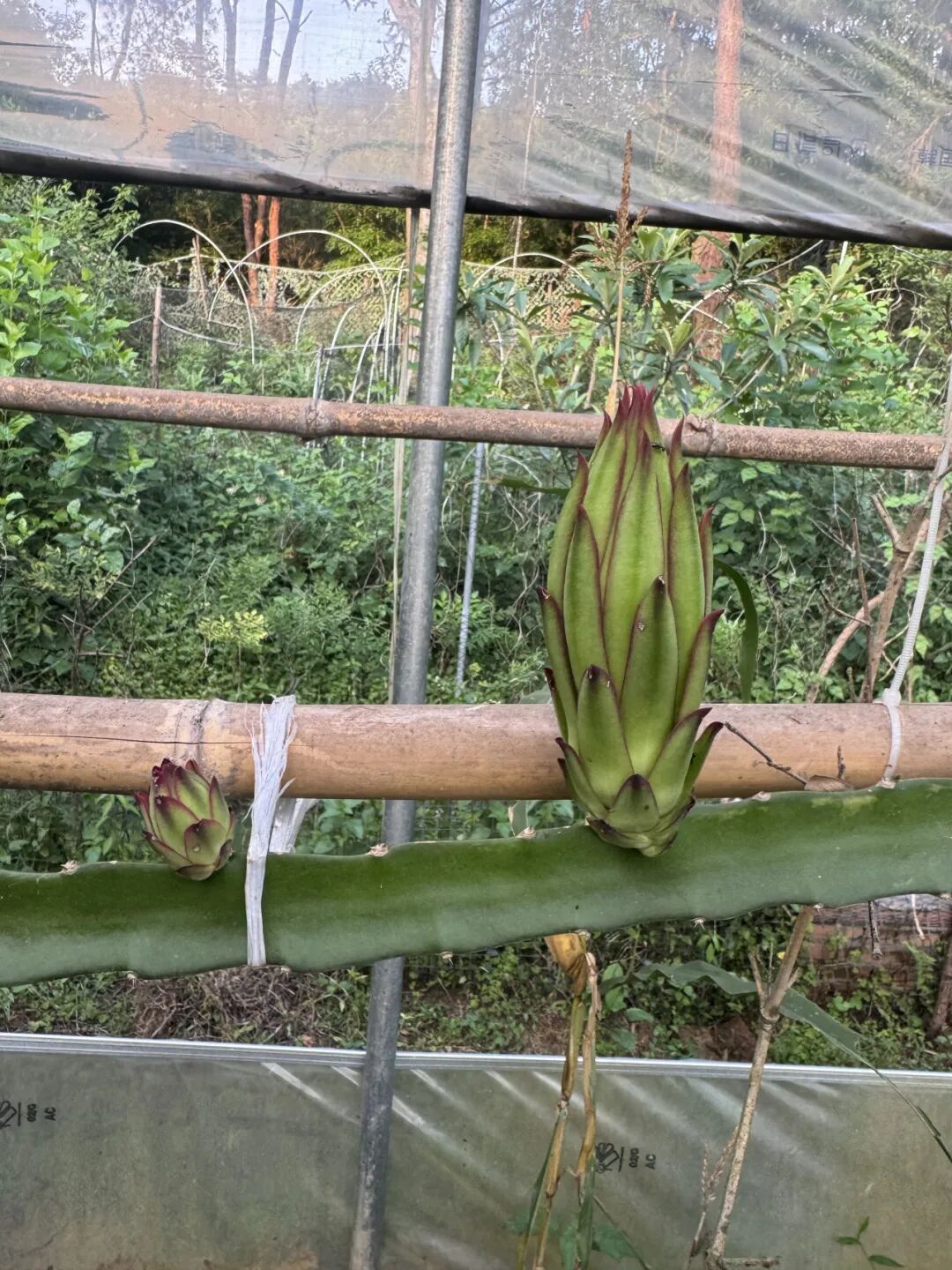
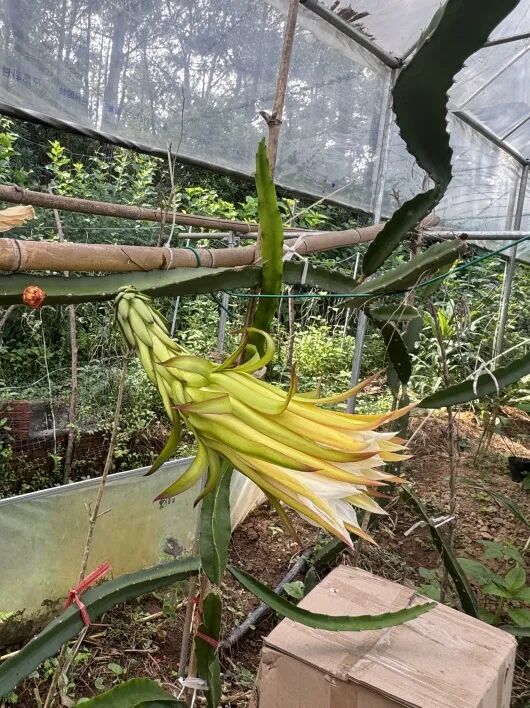
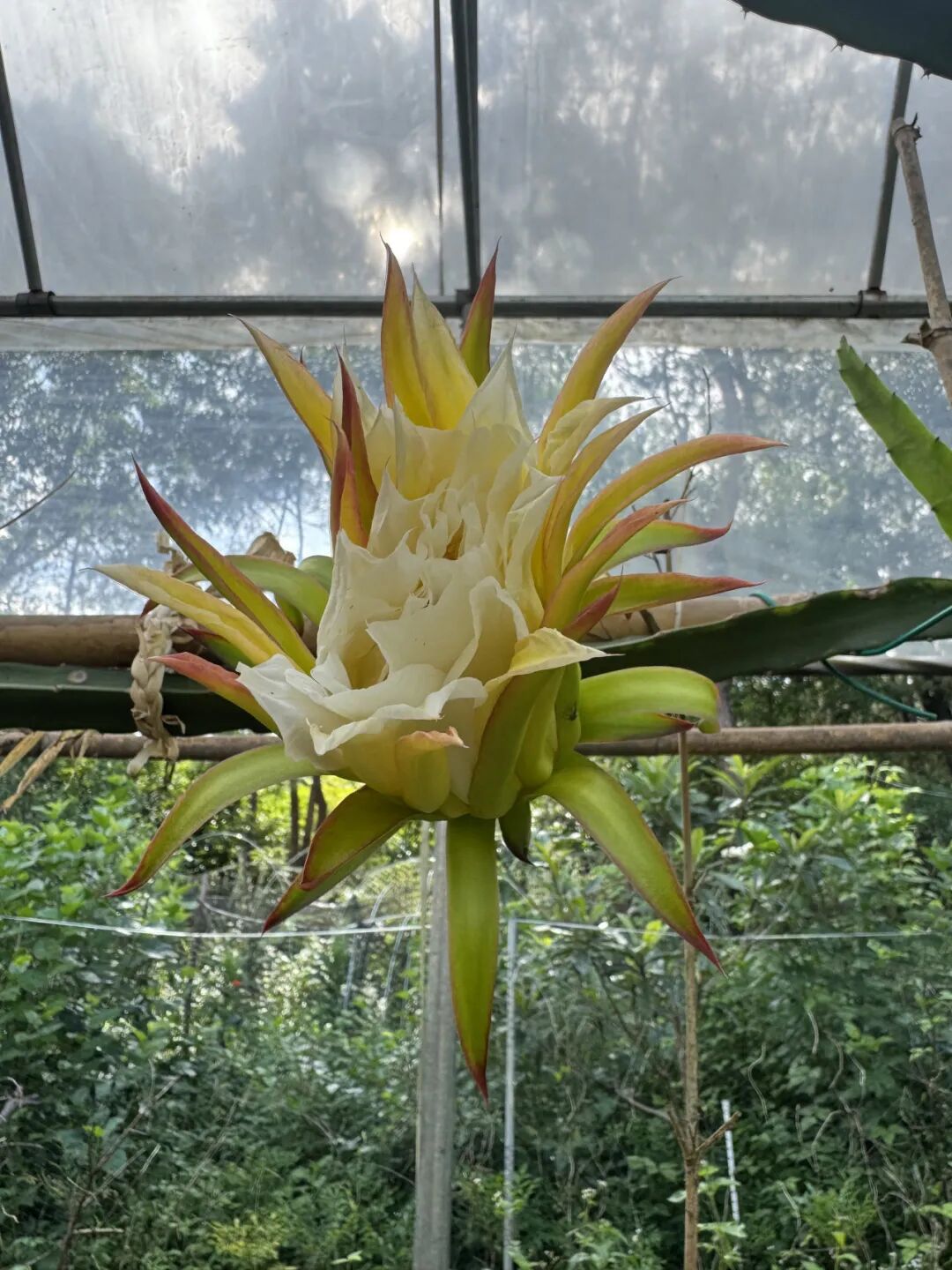
◉ In just a few days, the dragon fruit flowers have gone from first bud to full bloom. God willing, they will bear sweet fruit.
Now at Wicked Valley, there is nothing I cannot do without except salt. Actually, even salt could go without, too — the surrounding hills have Chinese sumac, and in autumn its fruit is coated in a layer of salt. If you do not mind the hassle, you can pick them, soak them in water and extract salt — but I do mind the hassle.
In five years, I have not only built a self-sufficient one-person farm; my health indicators have kept improving, too.
From Construction to Refinement
Looking back to when I first arrived at Wicked Valley, in those earliest days of clearing the land, things changed day by day. I came here carrying three years’ planting experience from both sides of the strait, no longer a complete novice when it came to farming. I had a blueprint for a one-person farm and could picture a self-sufficient homestead taking shape on this barren plot.
But after a full year of digging ditches, shaping slopes, planting trees and putting in flowers, the first thing I did come the following spring was call in the excavator. The farming know-how I had picked up in Taiwan and at Dawudi, where I had tilled a field for a year, still needed time to adapt to Wicked Valley’s realities. Road layouts and irrigation channels were dictated by the terrain, so they rarely needed changing. But after one rainy season, I learned that my northern-bred understanding of “drainage” was painfully shallow. The drainage system had to be redesigned and redug. Rearing chickens on the hillside slopes by the road made perfect sense, and the fencing around them was solid enough — but chickens have wings, and chickens fly. They would hop up the slope, flap once, clear the lower fence and break out of prison with ease. So while raising the fence, I called the excavator again to soften the steep gradients. Later, to achieve the “chicken-centric design” for free-ranging chickens in a small area, I brought in the full team of “excavator + loader + lorry”, hauling in over a dozen loads of rich pond mud. That softened the slopes and improved the soil at the same time, and I laid out zone-by-zone plantings around the chickens’ needs.
In five years there have been many similar stories. This year’s tweaks centre on the water lily pond. Originally, I had planned to ring it with roses. Over five years I spent well over a thousand yuan on rose plants of every kind — seedlings, young plants, established ones — and the survivors could be counted on one hand.
Roses are plagued by pests and diseases, I refuse to spray chemicals, and the moisture around the pond was too heavy for them anyway. This year I finally accepted reality and decided not to replant a single one. Instead, I ringed the pond with daylilies. The starter plants came from a friend’s garden, dug up by hand and carried home on my bicycle — you can imagine it was not many. Over a few years the original few have multiplied dozens of times and now put on quite the show at Wicked Valley. Daylilies are tough, easy to grow, and love water. Planted around the pond’s edge, they will soon form a great golden garland of blooms.
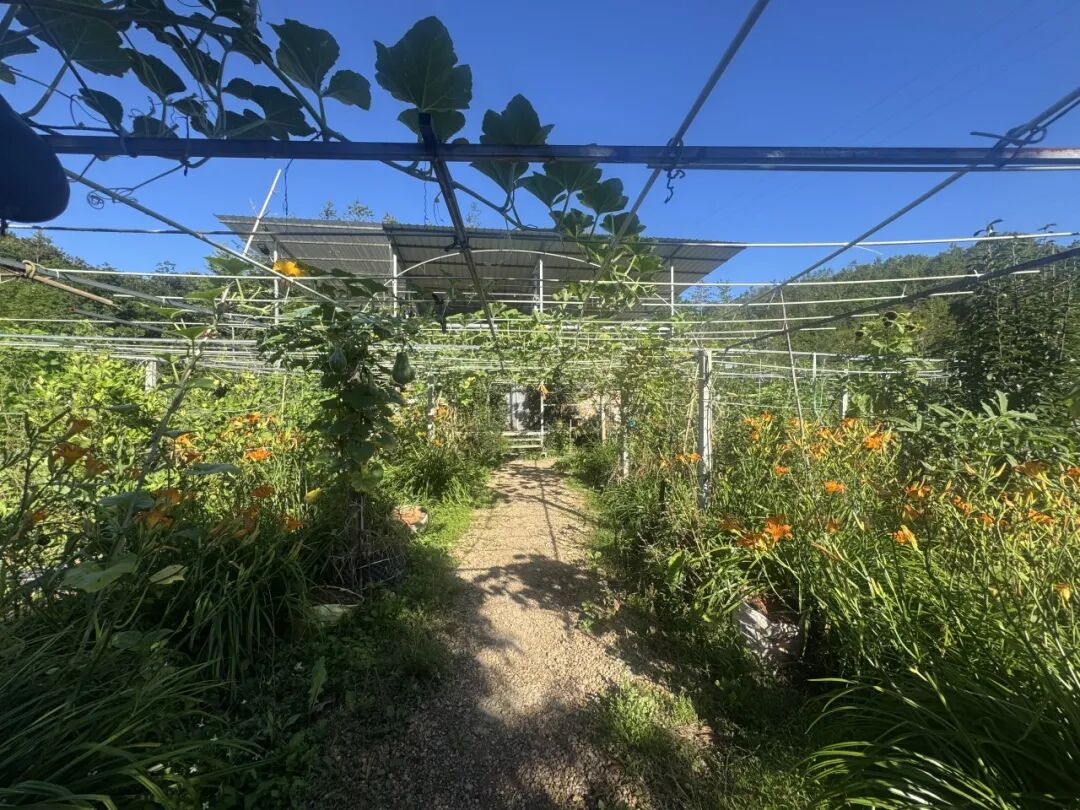
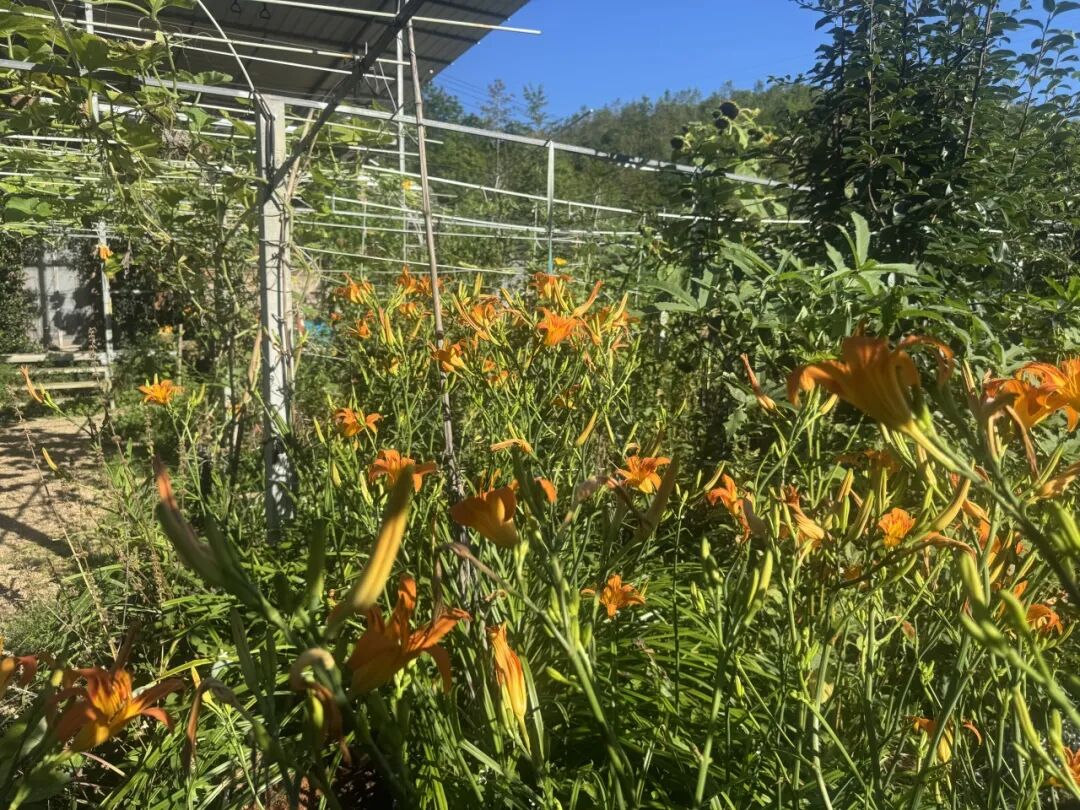
◉ The daylilies by my gate along the road — when I planted them, it was only a single little cutting.
This year, the lotus pond in the ditch beside the stream finally looks a little like a lotus pond. Beneath the broad leaves lie three years of my sunk costs. I started planting lotus in this water three years ago, throwing seedlings and lotus seeds from all over the place into the muck, falling flat again and again, getting up again and again. Only last year did the surviving red lotuses begin to spread into something resembling a colony. This year, the white lotuses have finally taken hold too.
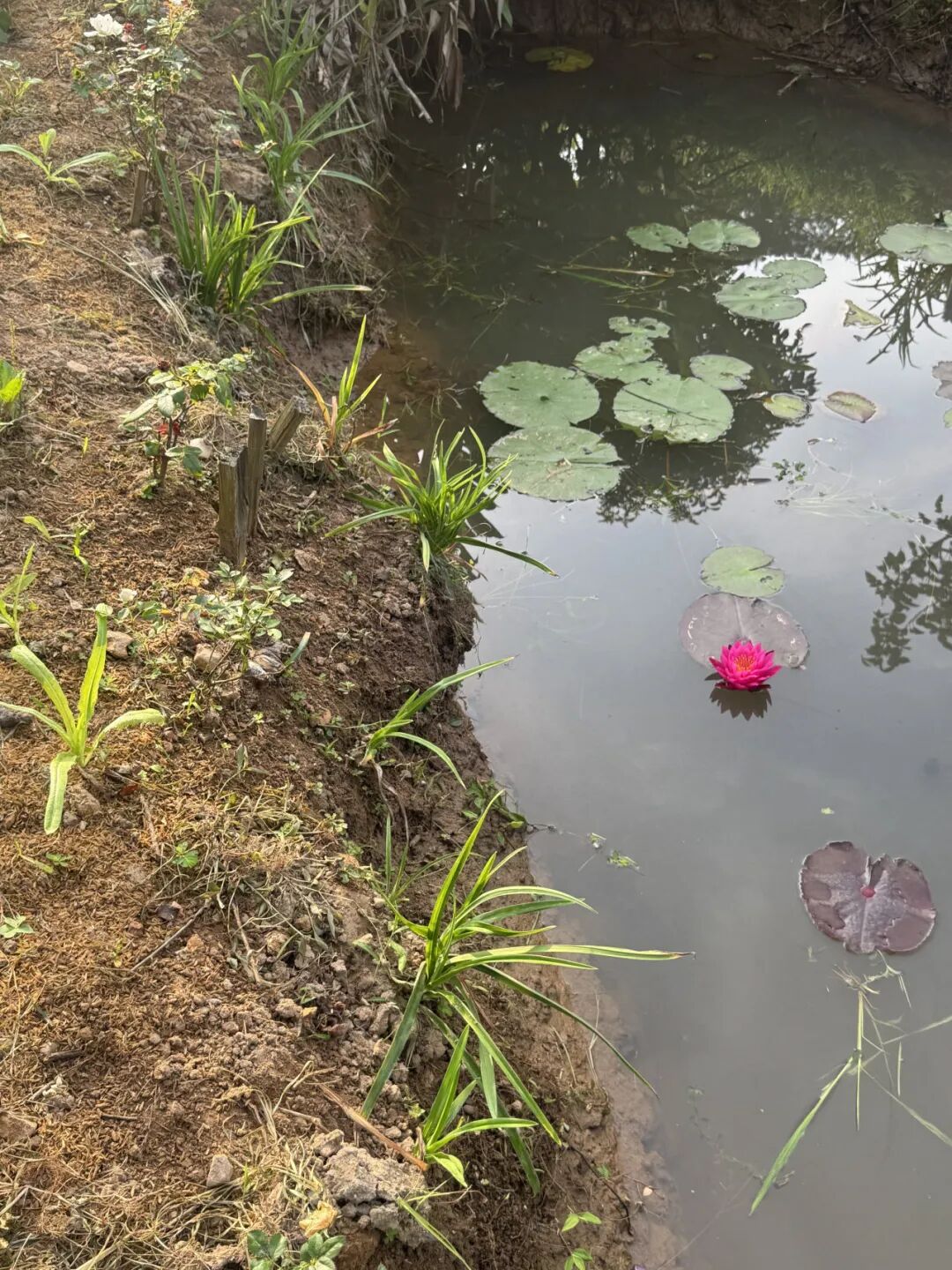
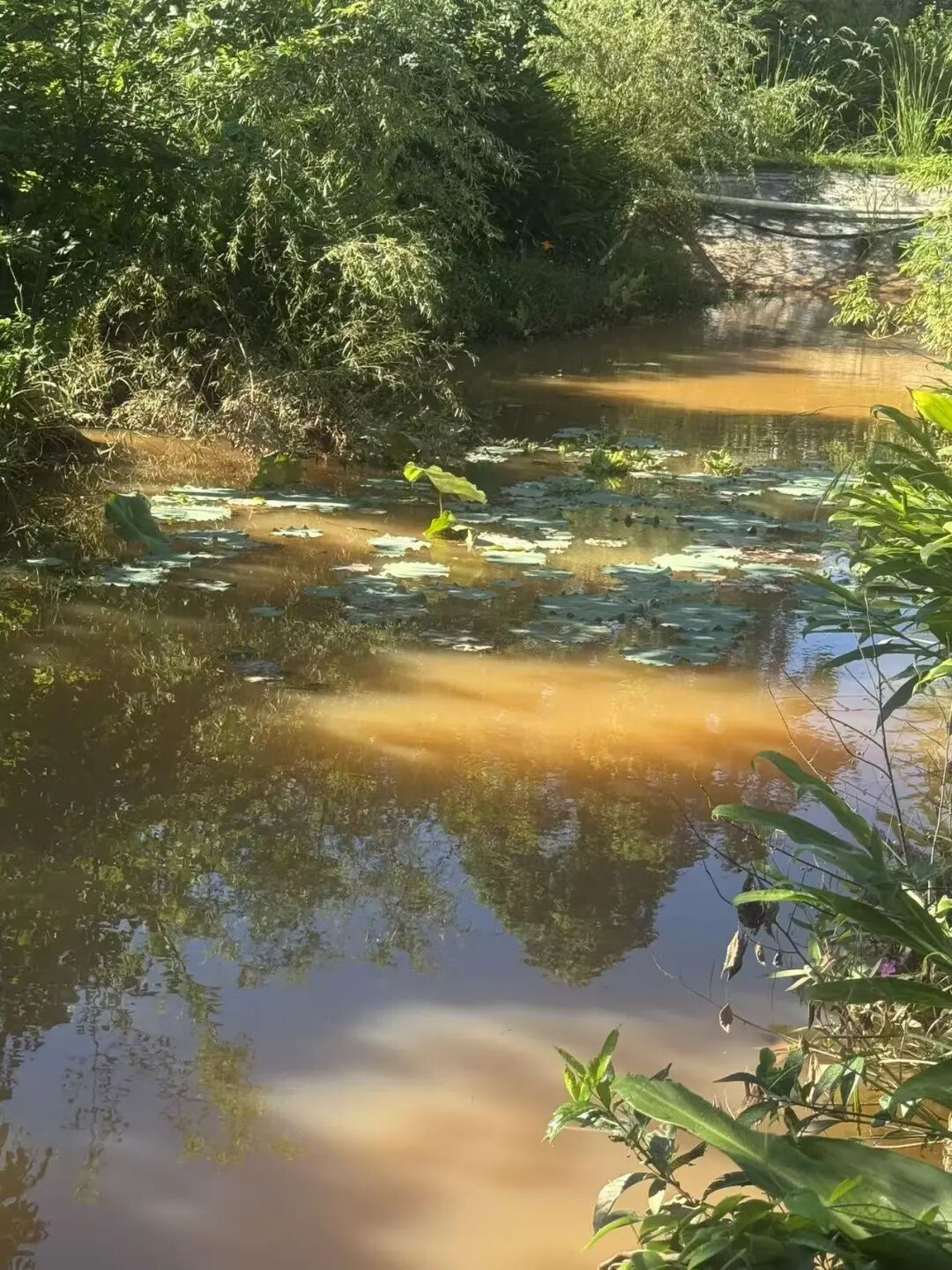
◉ Water lilies in full bloom and daylilies along the bank. The ditch has finally started to look a little like a lotus pond. This was always a wild watercourse — overrun with apple snails, running fast in heavy rain, and once a playground for the neighbour’s ducks — every one of them a mortal enemy to a slender lotus shoot. Just getting these leaves to survive this year is already an achievement.
Some difficulties, though, simply cannot be overcome. Citrus fruits are well suited to this land. Pomelo, mandarin, jelly orange, navel orange … I planted over twenty trees, and in spring the whole garden would be filled with their fragrance. Citrus blossoms are pure white and sweetly perfumed — so intoxicating your heart feels it in ripples. But then the pests arrive, chewing every leaf down to the bare vein. I refuse to use pesticides, so I just let them tough it out, waiting for the pests to gorge themselves, mate, lay their eggs, burrow into the soil and pupate — only then do the stripped branches push out fresh buds again.
Last year the rose of sharon put on a spectacular show, and I assumed this year would be just as glorious in its carpet of blooms. I was clearly wishful thinking. This year the worms arrived before the buds — enormous crimson caterpillars I had not seen in years, swarming thick across every leaf. There was nothing for it but to tough it out again. Born a plant of Wicked Valley, you cannot count on pesticide as a crutch; you simply have to practise the art of toughing it out alongside me. If you can weather it, you stay and belong to this land. If you cannot, you are culled.
The grand, sweeping adjustments took three full years before they gave way to small tweaks. In truth, Wicked Valley reached its basic version of self-sufficiency by its third anniversary, with core infrastructure in place for both the living and the growing quarters. The task from then on was to shift from “construction” to “refinement”. In years three and four the watchword for refinement was the “polytunnel”. From the fourth anniversary to today it has been “harnessing the sun” — perfecting the frame system.
All living things grow thanks to the sun. Last year I built a trellis overhead along the only way in and out of the valley. It turned out to be a brilliant idea: plants jostle and reach to claim their share of sunlight, while people want to dodge it, shrinking from the glare. A perfect win-win. Last year the pumpkins trained up the trellis did well, so this year I started early, carefully refining the hastily thrown-together frame into something orderly — straight lines, right angles, no more slapdash improvisation. The cucurbits spread freely and I find it a pleasure to look at — another win-win. Pumpkins are deep into their wild growth phase now; in a month’s time the vines will have carpeted the trellis, and the fruit will come heavy in clusters.
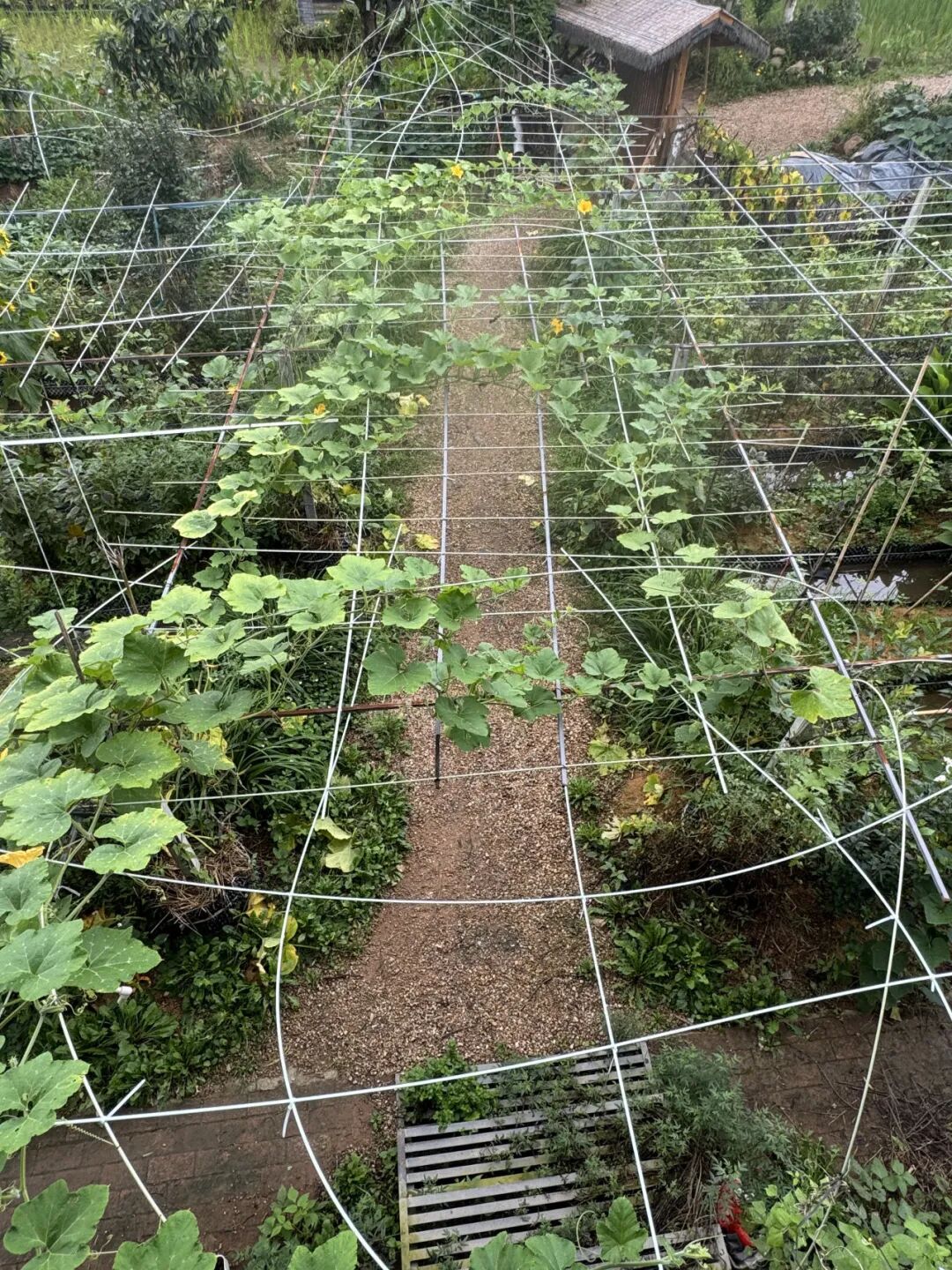
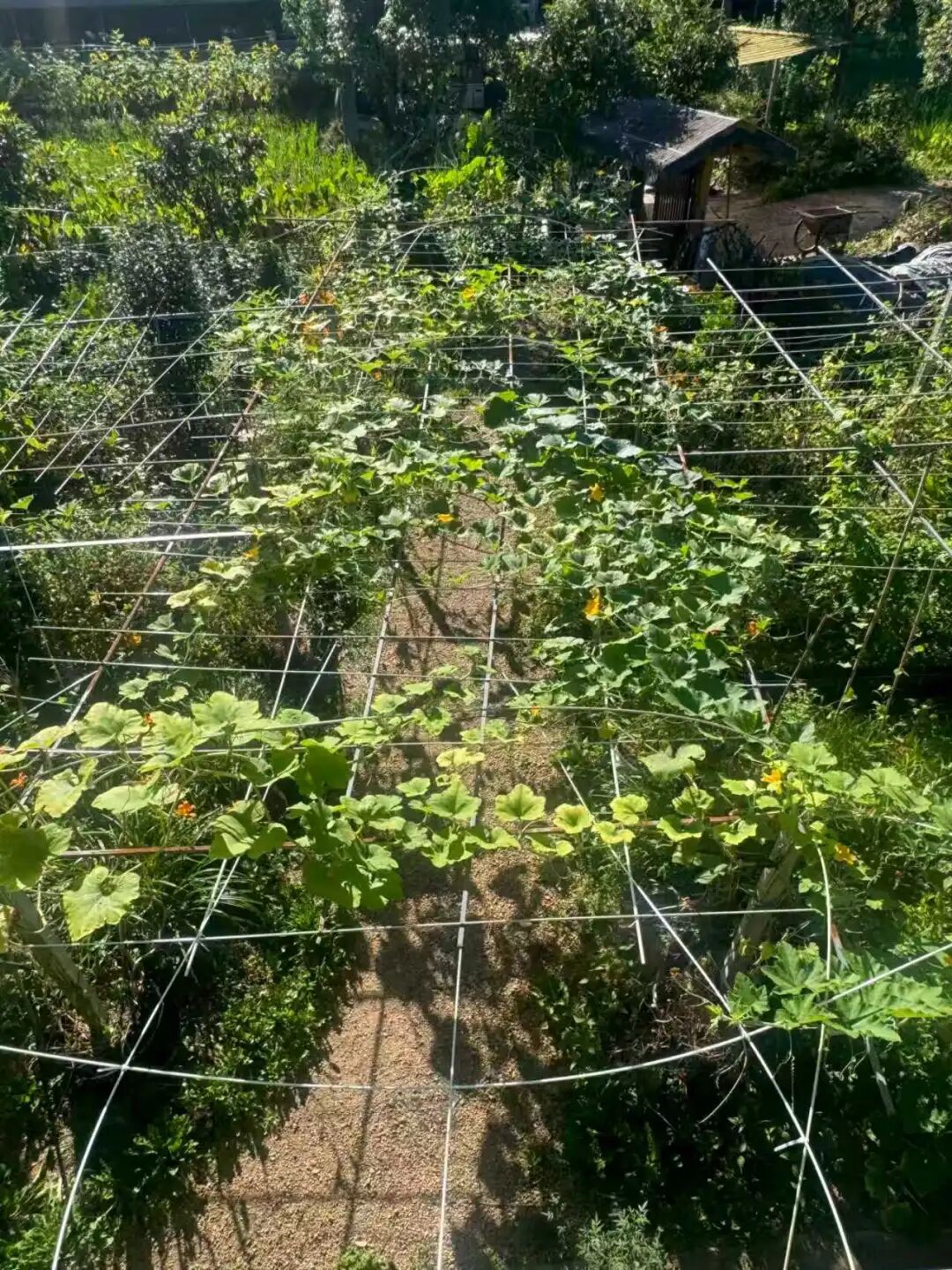
◉ Left: the trellis grid at my gate on 16 June, after days of rain had finally cleared. Right: the very same trellis just ten days later.
There are no major projects left at Wicked Valley. Apart from the sowing and harvesting of the main crops, it has settled into a daily cycle of routine management — weeding, for instance. I have pulled weeds every single day of the year since I came here; it seems there is always more to do. And yet every weed pulled is a tiny improvement. You cannot see much difference to the naked eye, but if I stopped, the grass would take over everywhere, and I might not even have a place to put my foot. In a sense, this kind of labour is a form of practice — a practice driven by “belief”. I believe that I am making myself just a little bit better.
Five years — bit by bit, little by little — Wicked Valley has grown softer, fitting me better and better, like a well-worn cotton shirt.
No Longer a Modern Person in an Industrialised Food System
Pumpkins entered the “more than you can eat” era last year. This year’s new crop is already on the table, and dozens of last year’s old pumpkins, big and small, are still waiting. I love that feeling of being a household with a glut of squash — so abundant, so indulgent. The melon-eating crowd will slice open a fresh one, taste a sliver, and at the slightest disagreement, fling the rest to the chickens. The daylilies are having the same problem this year: buds stretching on endlessly, promising a flowering season so lush it becomes its own nuisance.
When I first set out to find a place where I could practise self-sufficient one-person farming, it was, of course, driven in large part by ideals and a belief in living close to nature — a goal ahead that drew me forward. But there was a pull from behind too, factors in my life I wanted to escape. As a modern person in everyday reality, in my forties and fifties, this body of mine had accumulated all sorts of problems. Life’s one-way street had already entered its downhill stretch.
Around the age of forty, I began to notice qi and blood running low, sluggish digestion, restless nights … no major illness, but a constant drip of little complaints. I saw doctors, took medication, and neither improved nor got worse. They said these were “perimenopausal symptoms”; looking at the women my own age, they all seemed rather similar. The doctors also said that urban living breeds urban ills, which is common to everyone these days — and there was sense in that too.
I was frightened that this downhill slide might slip out of control, and I wanted to see whether I could take the wheel of my own life for once. So at forty, the year traditionally called the age of no more doubts, I quit my job at a State public institution, went south-to-north to Beijing as a Beijing drifter, older than most, doing charity work. I felt life should be a matter of one’s own choosing — that a person must be master of their own life and may choose to climb. But at fifty, my immune system collapsed, and body and mind both sank to the bottom of the pit. I even thought of Hawking, and I knew full well I did not possess the iron will he had. If I could not shake free of this life dictated to me by forces beyond my control, I was certain I would choose to end my own. When I want to climb but the body will not cooperate, then the first thing to do is halt the descent.
In fact, what I took was a third path. Farming in Taiwan for two years, falling in love — for a farming novice with no rural upbringing, I discovered I was apparently a born tiller of the soil. Ever since I started planting, my lower back stopped aching, my stomach stopped hurting, and falling asleep was no longer a struggle. I no longer wrestled with philosophical questions of whether to live or die; my mind was full of the practical ones: how to live better.
At the time I wondered whether a farming idiot like me could survive in the countryside simply because Shengou Village, Yilan — Taiwan’s first organic farming village — had it too good, with a complete support network of over two hundred neighbouring growers. So I wanted to test myself: go back, find a spot, start from scratch, and see whether, with no community around me, I could scratch a living from the earth with my own two hands and survive.
I wanted to know whether a single person, hurtling towards sixty, can still climb. If someone like me can hand-build a self-sufficient home from raw, unbroken land, then surely many others can do it far more easily.
Today marks five years since I first came to Wicked Valley. Five years at Wicked Valley, and I have not only built a self-sufficient one-person farm; my health indicators have kept improving. It seems a change of lifestyle really can reshape a modern person’s body.
Two years ago my health check showed three arrows: total cholesterol slightly high, high-density lipoprotein high, low-density lipoprotein low. The doctor said that as long as the good cholesterol is high and the bad is low, there is no cause for concern — cholesterol is one of the body’s essential “building materials,” and a slightly raised level is no problem.
I checked again recently, and the total cholesterol had actually come down. The change must be down to eating more eggs. I used to be told never more than two a day, the limit blamed on the cholesterol in the yolk. Lately quite a lot of research suggests there is no reason to hold back — the body synthesises most of its own cholesterol, and eating more eggs may in fact help lower it; there are even cases of people eating over twenty a day for extended periods. I am nowhere near that extreme. Since I keep my own chickens and ducks, I eat five or six eggs a day, topping up with protein powder if I drop below four. The most straightforward reason I eat so many is simply that I have far too many eggs to waste — eat them or lose them. By sheer accident, it seems, I have ended up validating the latter theory.
These days I farm and keep chickens with ease, everything tastes delicious, and I feel fit as a fiddle — “all four report cards marked A+.” My health indicators are better than they were twenty years ago. Growing older does not have to mean growing frail; a modern person need not be riddled with modern ills. Even when modern life lays ambush on every side, there is still room for choice. Your choices can shape the life you live.
In an age when the food system and the way we live have been industrialised and commodified from every angle, a person caught inside it must at least first see the problem clearly before any genuine choice becomes possible. Wicked Valley can shut its door and mind its own business, standing apart from the elephant in the room that is the modern industrialised system of food production, distribution and retail. But now that I have at last achieved self-sufficiency here, there is no smug satisfaction in watching the flames from across the river. I feel I must do something.
This past year, alongside the endless fine-tuning of every little detail at Wicked Valley, I fulfilled another small wish and did something I am not at all good at: writing a series of essays reflecting on the modern food system. Flagging the harms while also offering examples and methods for avoiding them — from refined vegetable oil and refined carbohydrate, through sugar and soft drinks, snacks, and fruit, all the way down to the “Food additive” label — I could finally call the series complete. A modern person navigating the real world, weighing risks against rewards, can begin to make changes in the everyday: in one meal, one mouthful of vegetables. I have done what I could. What a reader takes from it, how they choose to act on it, what it does to the shape of their life — that is down to each person’s own journey.
I will retreat back into Wicked Valley and keep to my own quiet life in its comfort zone. I am far gentler with myself now; I have learned, in so many ways, to be lenient with myself.
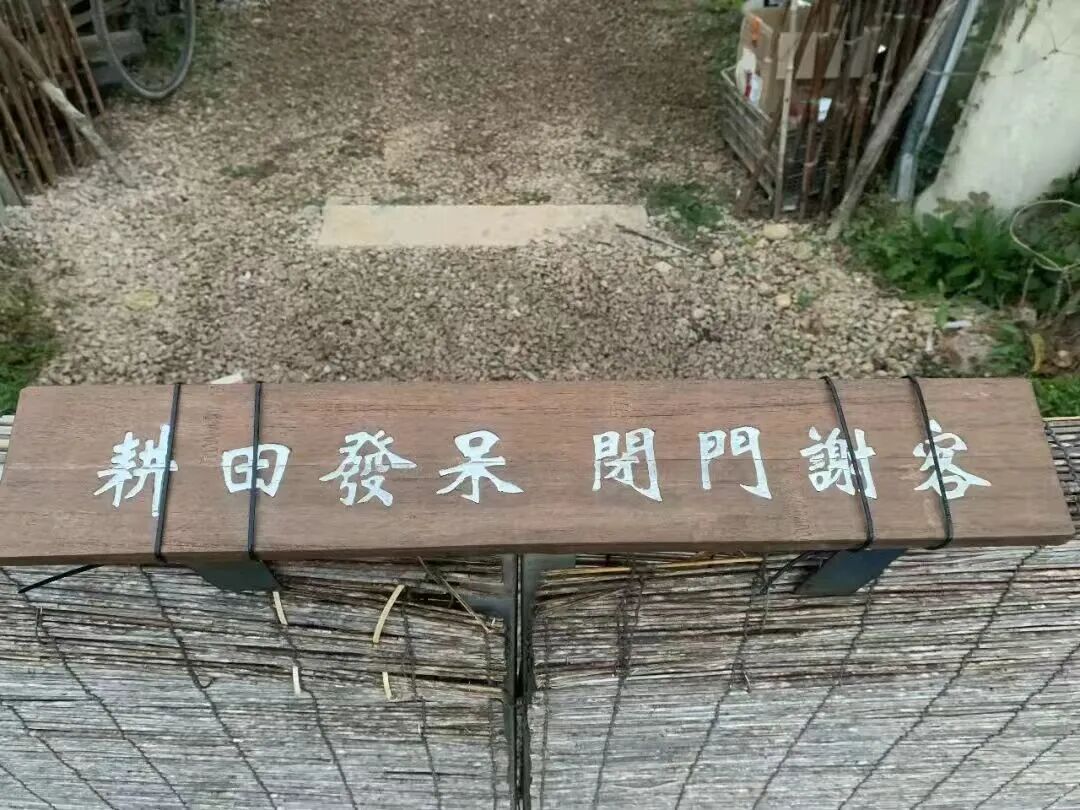
◉ “Till the field, let the mind drift; close the door, decline all callers” — this sign hangs at the gate of Wicked Valley.
Facing Rogues with Equanimity
One rather significant episode from the past year: Baidu AI splashing me with excrement and spreading fabrications.
Baidu AI “sentenced” me — “Extortion …… ten years and three months’ imprisonment.” I must confess I was rather shaken at the time, because the rumour laid out my birthplace, ancestral home, years spent in public-welfare work, and my personal publications — all of it strung together and paraded out for public exposure.
If a dog bites me, I will not bite back like a dog; but neither can I let those with no moral floor act beyond the law unchecked. So I engaged a lawyer and took Baidu to court.
Litigating against a company with no scruples such as Baidu is soul-grinding. Going head-to-head with an excrement-splashing rogue who waves the shit-stirring stick high in the air — whoever gets saddled with it, their stomach turns. It is almost a year now. Baidu has admitted no fault, offered no apology, paid no compensation. Instead, they have cooked up fresh rumours and pressed on with the smear.
Fortunately I am still all right — steady at heart, even in my emotions.
I must admit there was a stretch when things were rather bad: I could not eat, I could not sleep. Though I knew I could not let a rogue’s tricks destroy my life, I found myself dragged, helplessly, into the vortex. Happily, I have come through it, resumed a normal life, and filed fresh legal action over Baidu’s latest fabrications.
This year, alongside the lawsuit, I have tilled as always — a spring harvest, spring planting. I reaped over ten jin of rapeseed and a few dozen jin of wheat, and sowed corn, peanuts, soybeans, black beans, legumes of every sort. Right now the peanuts in my garden are growing at just the right pace; one more month and they will be ready to dig up. Last year, the very day I harvested peanuts, I came across Baidu’s rumour. Over the year, besides litigation, I have also tried picking up new side pursuits — filing complaints and reports with the relevant authorities, that sort of thing. Thanks to Baidu, past my sixtieth year, I am unlocking new skills once more.
Looking back on this year’s bizarre odyssey, I am fairly content with myself. Even after something so grotesque, I still believe in beauty — and still hold the power to create it.
– This is Foodthink’s 820th original article –
Foodthink
Author
Kouzi
A farmer with iron resolve, a village brewmaster. Full-time foodie, part-time farmer, amateur writer.
Unless otherwise noted, all images are provided by the author
Editor: Xiaodan
Layout: Minglin
Scan to tip, support original food wisdom
▼

▼
Click the image to read related articles

▼
Click a keyword to browse more article collections
Seeds | Farming Techniques | Policy | Fermentation | Nutrition | Fruit | Fisheries | Events | Jobs | Food Delivery | Food Market | Livestock | Food Talk | Sharing Sessions | Book Clubs | Harvest Festivals | Smallholder Stories | Climate Change | Rural Development | Cooperative Economy | Urban Farmers | Food Safety | Digital Technology | Biodiversity | Pandemic and Food | False Solutions | Agroecology Internship Programme
Beijing | Hebei | Shanghai | Guangdong | Guangxi | Henan | Sichuan | Jiangxi | Xinjiang | Shaanxi | Hong Kong | Chongqing | Zhejiang | Jiangsu | Guizhou | Taiwan | Inner Mongolia | the Philippines | Canada | Russia | Mexico | Italy | the United States | the UK | Germany | the Netherlands | Thailand | Sweden | Japan