Stop Telling Me Flexible Employment Is a Benefit

Who’s Doing Odd Jobs?
When Peking University Professor Zhang Dandan said “flexibility itself is a benefit”, I was deep in the remote forests of the Greater Khingan Range, trudging alongside a handful of odd-job workers picking pine cones. Their job was to haul nearly fifty kilograms of harvested pine cones out along the mountain paths.
I can never forget what one of the women said to me: “Do you have any long-term, stable work you could recommend to me?”
She was from Honghe, Yunnan Province, born in 1995, but already a mother of two. Travelling all the way to the northeast to pick pine cones was just one of the many odd jobs she took on in a year. She said it made it easier for her and her husband to take turns staying home to look after the little ones.
I had gone to the Greater Khingan Range to interview these seasonal workers who travel long distances to forage in the mountains, and the conversation on the journey had revolved around the very real conditions that forced her into odd jobs – without stopping to think that she didn’t actually want to do them.
That is why Professor Zhang’s words struck me as all the more grating.
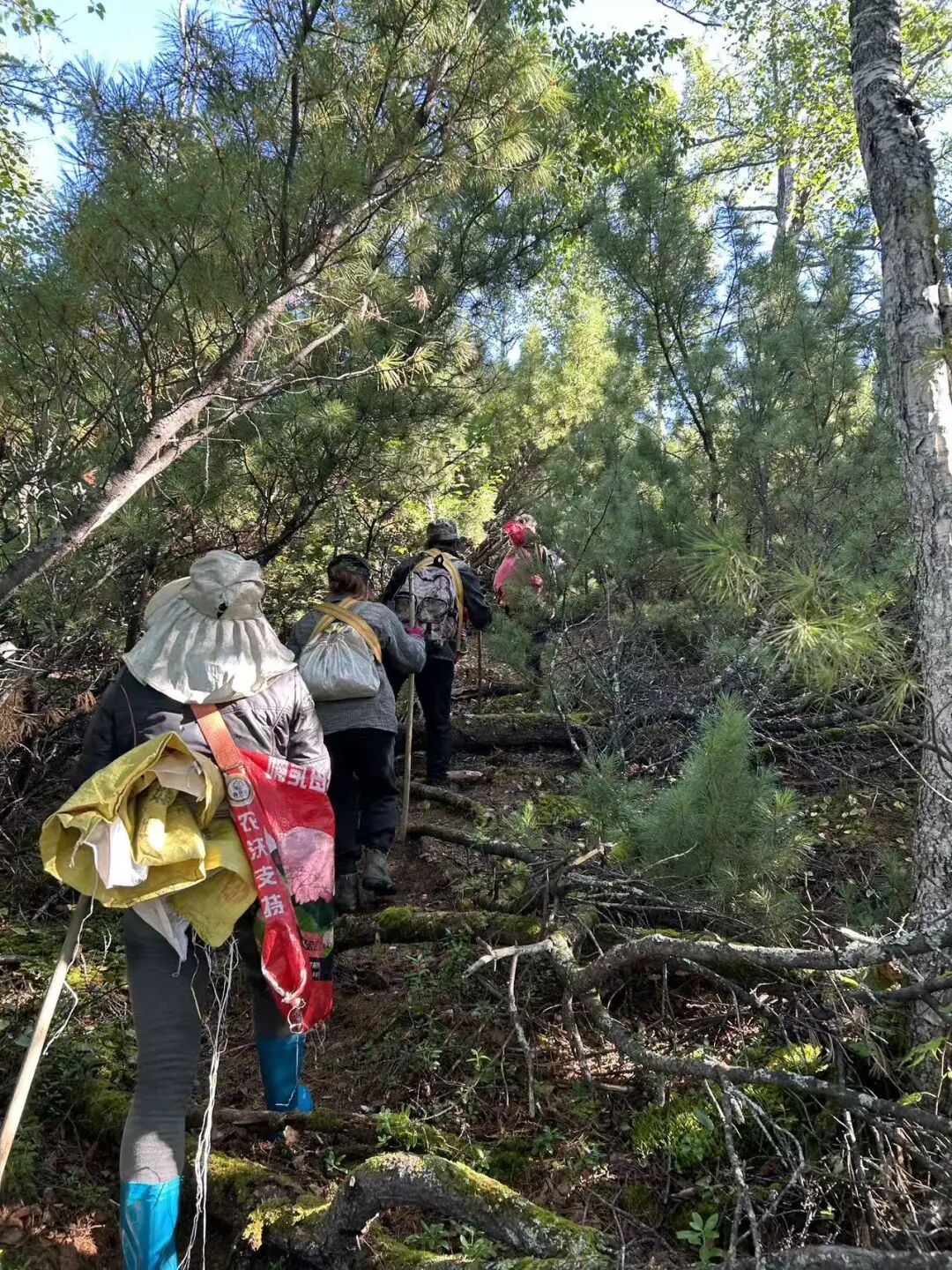
◉ Every August, large numbers of odd-job workers trek from Sichuan, Yunnan and Guizhou to the Greater Khingan Range in the northeast to pick pine cones, just to make a living.
As someone who has long followed the lives of odd-job workers and once delivered food full-time myself, of course I know what Professor Zhang means by “benefit”.
Take one of my fellow riders at the time, for instance – a big brother from the northeast, in his fifties. During the summer farming lull, he would come to Beijing to ride through the delivery busy season, then head back in October for the autumn harvest. Once the winter off-season had settled in, he’d come back to continue delivering.
As for myself, that summer I had finally been admitted to a postgraduate programme at Peking University. During the months before enrolment, I wanted to earn some money for living expenses, and food delivery had the lowest barrier to entry – and let me work for just a few months.

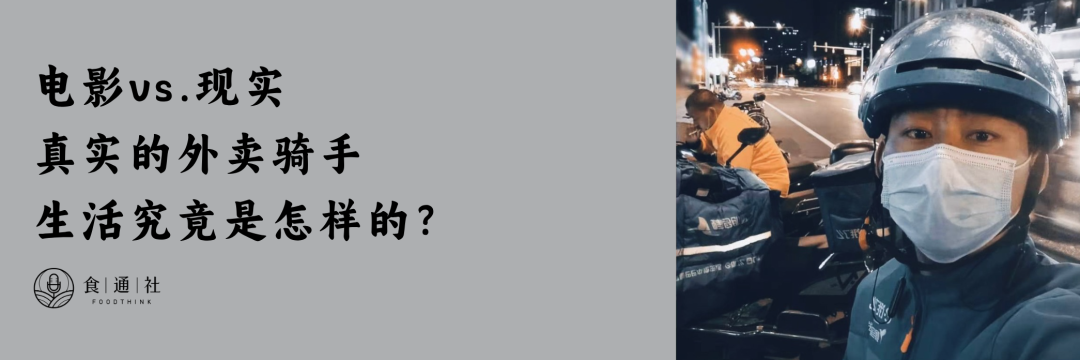
◉ In this podcast episode I share my own experience of working as a food delivery rider. Click the image to go to the original article.
For me and that big brother from the northeast, flexibility really was a “benefit”: the gig economy allows a person to arrange their work and life on their own terms, free from the constraints of a fixed job.
But it is precisely because I have actually delivered food myself that I cannot, as Professor Zhang does, so glibly frame flexibility as a benefit for workers. For most gig workers, their work is the same in kind as Professor Zhang’s at Peking University – it is a means of putting food on the table, a choice that every person must make. The difference is that gig workers are left with a full-time job demanding long hours, rigid constraints, low hourly pay and scant protection, with neither the platform nor the prestige of Peking University to let them pontificate to the media. Even the right to speak on their own behalf must be handed over to Professor Zhang.
Although Professor Zhang has carefully used academic language to express what appears to be an objective viewpoint, behind it lies a value judgement about what ordinary people truly want from their work and their lives – and that is precisely why her remarks have sparked such a heated debate. Those scholars who fail to understand the real working and living conditions of gig workers, who take the side of businesses or a grander perspective rather than standing with workers themselves, have no right to speak on their behalf.
Is the Gig Economy Progress or Regression?
In my view, before we even discuss whether gig work offers more freedom, the real question worth asking is: Is gig work a means of making a living that food delivery riders, ride-hailing drivers and others have actively chosen for the sake of freedom, or is it an employment model deliberately designed by platforms to cut labour costs and shift risk onto workers?
Let us first look at the story of nineteenth-century British dock workers. Although more than a hundred years separate them from today’s platform gig workers, they were remarkably similar – caught in precarious, high-risk labour relationships.
At the time, goods from the colonies had to be brought into Britain by ship, and the comings and goings of vessels would generate a massive, uncertain demand for dock labour in a very short span, requiring a large supply of workers ready at a moment’s notice. Two-thirds of dock workers were treated as an informal reserve army of labour. Yet in the end, after a long struggle, workers won rights to higher wages, overtime pay and guaranteed minimum working hours. By the late 1960s, every dock worker in Britain held a permanent contract.
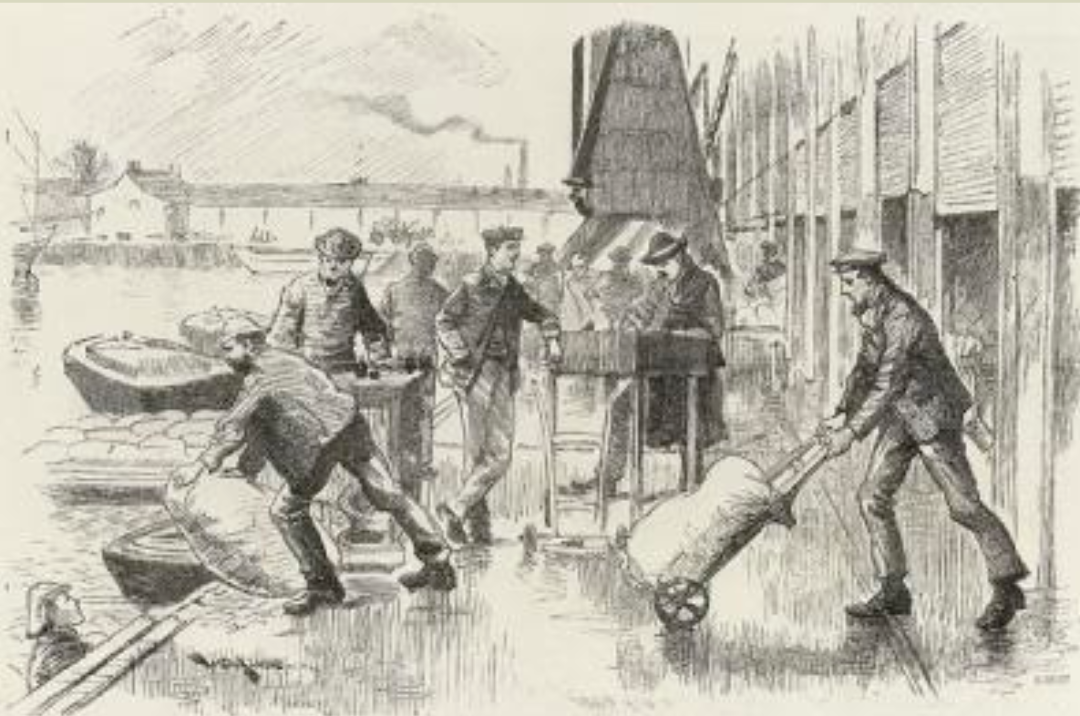
◉ The daily labour of British dock workers. Image source: old-merseytimes
At the moment they chose to fight, no standard employment relationship as we know it today was waiting for them. Fairer, more reasonable labour relations were themselves something workers created through the back-and-forth tug-of-war against capital’s control, and were further improved and safeguarded through legislation.
As a socialist country led by the working class, our country has been strengthening workers’ rights at the legal level since the Labour Law was first introduced in 1995, having since undergone two amendments. Therefore, in my view, any attempt to bend down and find progressiveness in the gig economy is turning back the wheel of history. I sometimes wonder whether, in Britain over a hundred years ago, there was also a labour economist called Dandan Zane trying to tell those dock workers: “Whatever you do, don’t fight for permanent contracts! Flexibility is a benefit, because you can arrange your own time however you like.”
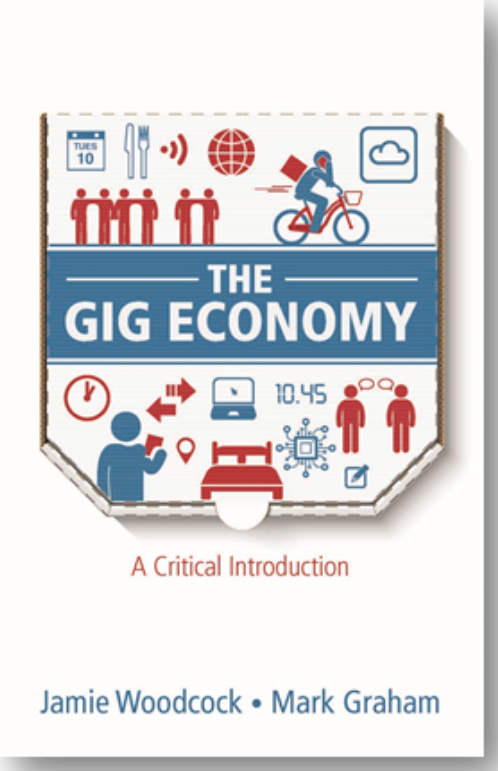
◉ In their book The Gig Economy: A Critical Introduction, two British scholars trace how nineteenth-century British dock workers fought to turn gig work into permanent-contract employment.
No One Can Speak for Gig Workers
The struggle was for a better life, for dignity and fairness – and, fundamentally, for a renegotiation of power relations. Why did the British dock workers of a century ago insist on making history and overturning the employment relationship? Why couldn’t they simply settle down and savour the ‘benefits’ of “flexibility” and “freedom” – dock work one day, match work the next, picking work in the countryside the day after? Not only earning a living but roaming the land at leisure.
Perhaps Professor Zhang, who “lacks freedom” at Peking University, has genuinely yearned for such a life. But I also know that many gig workers in China today must have harboured the same hope: that one day they could set aside a rushed, unprotected odd job in favour of work that would bring dignity, growth, and a sense of belonging.
When I first started, the rider who took me under his wing was a young man five years my junior. He dared not tell his family that, after graduating from university, he had taken up food delivery, but he thought the odd job suited him just fine. “Proper jobs are hard to find these days, and they don’t pay well either,” he said. A year after I stopped delivering, I met him again, and his story had changed. He “showed off” to me about being promoted to a formal management role at a delivery station. He was smoking at the time, watching the little rider icons glide across the algorithm’s backend, and with a rather unhurried air he said: “Even if you earn a bit less, it’s still better than being out on the road, buffeted by wind and rain, isn’t it?” A year after that, I ran into him again – and he was back on the road, delivering food. I can never forget his flush of embarrassment or the way his eyes darted aside.
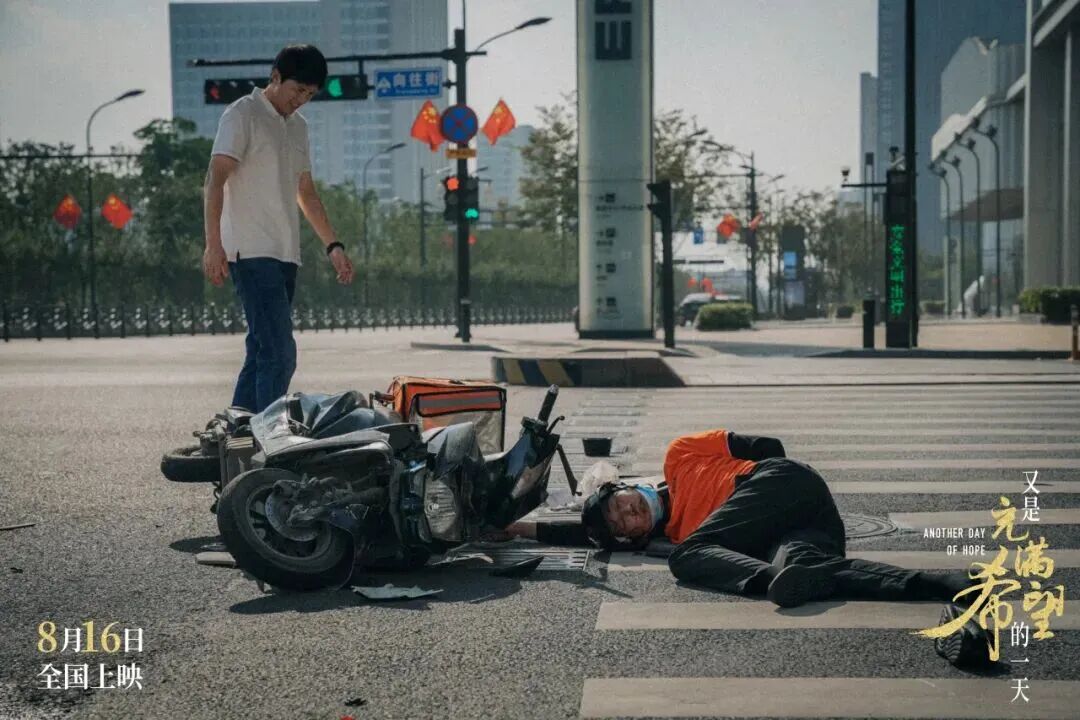
◉ The 2024 Golden Rooster Award for Best Small-Medium Budget Feature Film, Another Hopeful Day, vividly portrays the riders’ plight and suffering – their voices go unheard. Perhaps only a road accident that costs a rider their life can provoke a fleeting moment of reflection. Click the image to learn more about the director’s observations and reflections on the food delivery industry. Image source: official film poster
Clearly, even if the gig economy does afford workers greater freedom, that does not mean they relish this rootless, unstable status quo of work and life. Flexibility is less a benefit to be enjoyed than a stopgap one merely learns to endure. Gig workers may quietly accept things as they are, even find a measure of contentment, but they would never sing its praises – and those on the outside have even less right to speak on their behalf and call it a benefit.
Gig Work ≠ Freedom
If one merely argues, from the perspective of work cycles alone, that flexible employment is a benefit, there is still room for debate. But when Professor Zhang Dandan says, “Although our jobs come with the five insurances and housing fund and other guarantees, those are paid for with time and freedom. What flexible workers want is precisely flexibility and self-management, so their social insurance and other protections will naturally be a little weaker,” that is far less reasonable.
Setting aside the fact that all the income the vast majority of flexible workers earn through excessive hours and gruelling labour may well be lower than the five insurances and housing fund that a Peking University professor supposedly “bought” with time and freedom (never mind Professor Zhang’s actual cash income and the other material wealth and cultural capital she derives from an institution like Peking University), the very act of defining fragmented labour processes as freedom and flexibility while ignoring the platforms’ means of control is, in itself, untenable.
Who naively imagines that the working hours of food delivery riders and ride-hailing drivers depend solely on how much they want to earn? Spend more than a few conversations with taxi and ride-hailing drivers, and you will find that excessively long shifts are remarkably common among drivers in big cities. Even when they are exhausted, they must log enough hours each day and stay online during peak hours, or the algorithm will reduce their order dispatch.
The same holds true for food delivery riders. The delivery stations and teams they belong to have the power to compel them to go online during peak hours or in bad weather, imposing penalties if they refuse. Some stations even stipulate that if riders fail to meet the relevant KPI targets, the per-order rate for the entire month will be reduced. I remember clearly that during the 2021 May Day holiday, order volumes in Beijing were extremely low. One evening around ten o’clock, a rider was still out on the road, waiting for an order, because he needed just one more delivery to meet that day’s KPI. I gave him one of my orders. He said to me: “Thank you – a run home.”
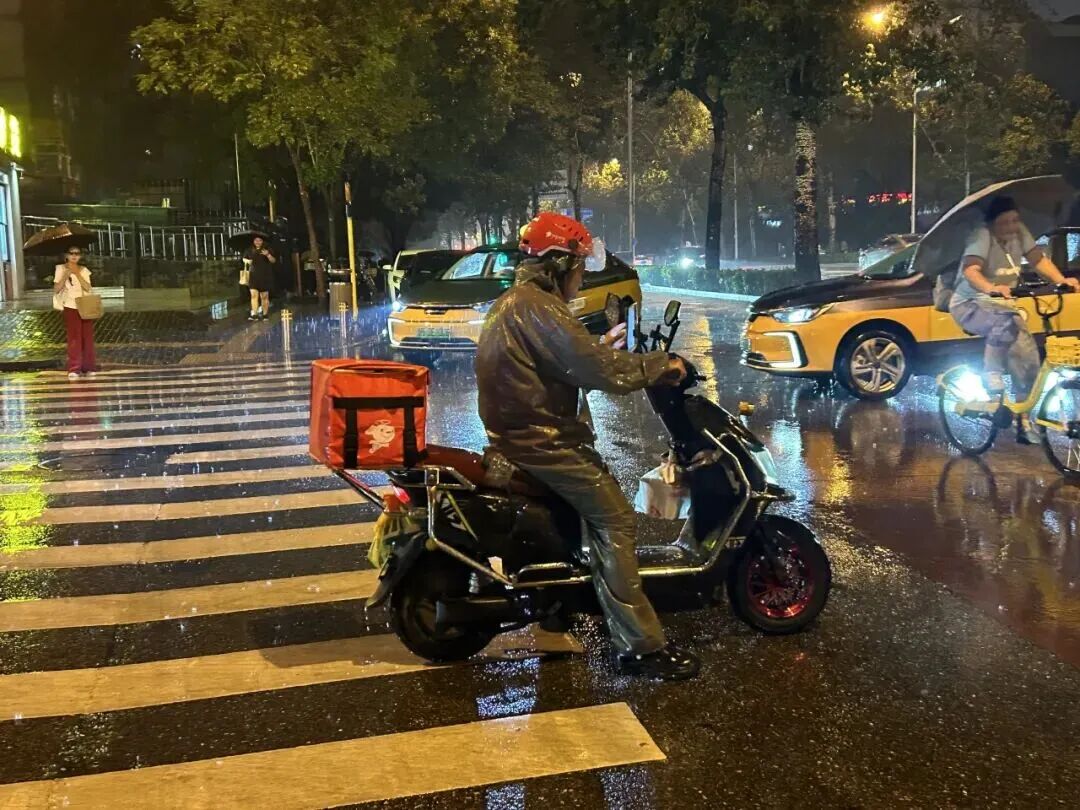
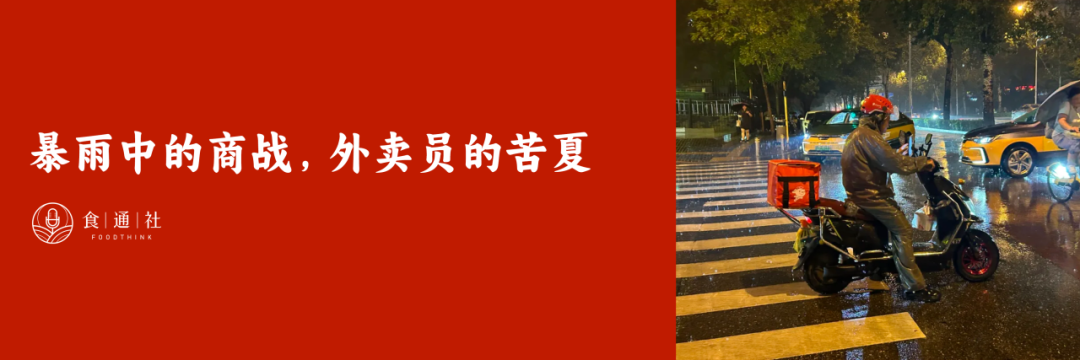
◉ Last year, Foodthink published “Business Wars in the Downpour: A Food Delivery Rider’s Bitter Summer,” depicting the plight of food delivery riders in severe weather. Click the image to go to the original article.
Compared with those in a fixed nine-to-five routine, food delivery riders are subject to at least as much control – in fact, they work longer hours, at greater intensity, and bear more risk.
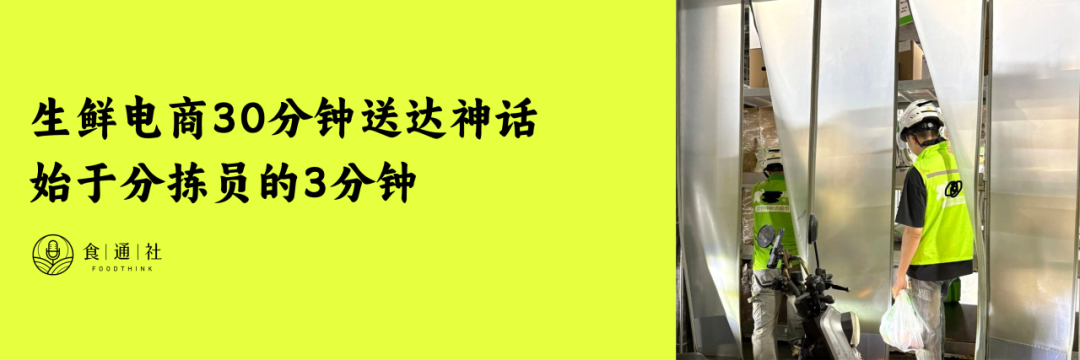
Beyond food delivery riders and ride-hailing drivers, newer categories of platform gig workers – such as sorters in fresh-food supermarkets – also have their labour processes governed by algorithms and the piece-rate system. To meet the platform’s thirty-minute delivery requirement, they must sort an entire order within three minutes, earning just a few jiao for each item sorted. Their work is extremely fragmented, yet the labour intensity is extraordinarily high. Many sorters work six days on, one day off, logging at least twelve hours a day, carrying heavy loads and walking tens of thousands of steps – yet they get only a single chance to eat each day.
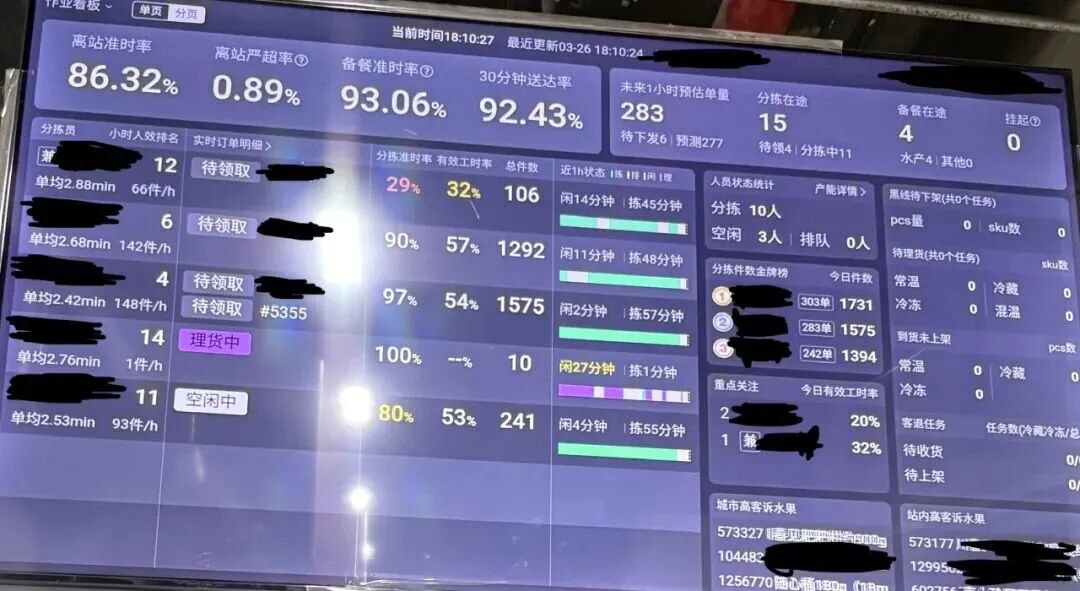
◉ On the large screen, all the data generated by sorters dashing around the fresh-food warehouse is updated in real time, placing enormous pressure on workers. Click the image to learn the truth about what sorters’ work really involves. Image source: Yakou
Many people who feel trapped by fixed employment are prone to projecting their own ideas of freedom onto gig workers, as well as onto small-scale producers such as market stall holders and small shop owners. Especially when someone does not understand the actual labour process of gig workers, they rely on their own imagination and whimsically conclude that gig workers do enjoy freedom. In reality, they are not free at all. Or rather, what they originally wanted was never the negative liberty of being able to flee work at any moment, but fairer working conditions and compensation.
Returning to the question from earlier that so easily muddies the waters: Is gig work a means of livelihood that food delivery riders, ride-hailing drivers and others actively choose for the sake of freedom, or is it an employment model that platforms deliberately pursue to cut labour costs and transfer risk?
According to Professor Zhang Dandan, both realities exist simultaneously and are inextricably linked. But in my view, as the food delivery wars have raged ever more fiercely in recent years, driven by demands for peak-hour delivery capacity and efficiency, the platforms’ control over food delivery riders has tightened markedly compared with before. Order dispatch is prioritised for dedicated-delivery, Le Pao and Chang Pao riders who are easier to manage, while crowdsourced riders – who enjoy greater autonomy – are increasingly being squeezed out.
Given that the platforms themselves are actively narrowing riders’ autonomy and tightening their performance assessments and control, the natural way forward is to extend to riders the social security they deserve, just as one would for full-time employees. Even if institutional barriers abound in the implementation process, that is precisely the kind of problem scholars should be working to solve – not continuing to live in their own imagination, once again anachronistically equating gig work with freedom, and presuming to speak on gig workers’ behalf to declare that “flexibility is a benefit”.
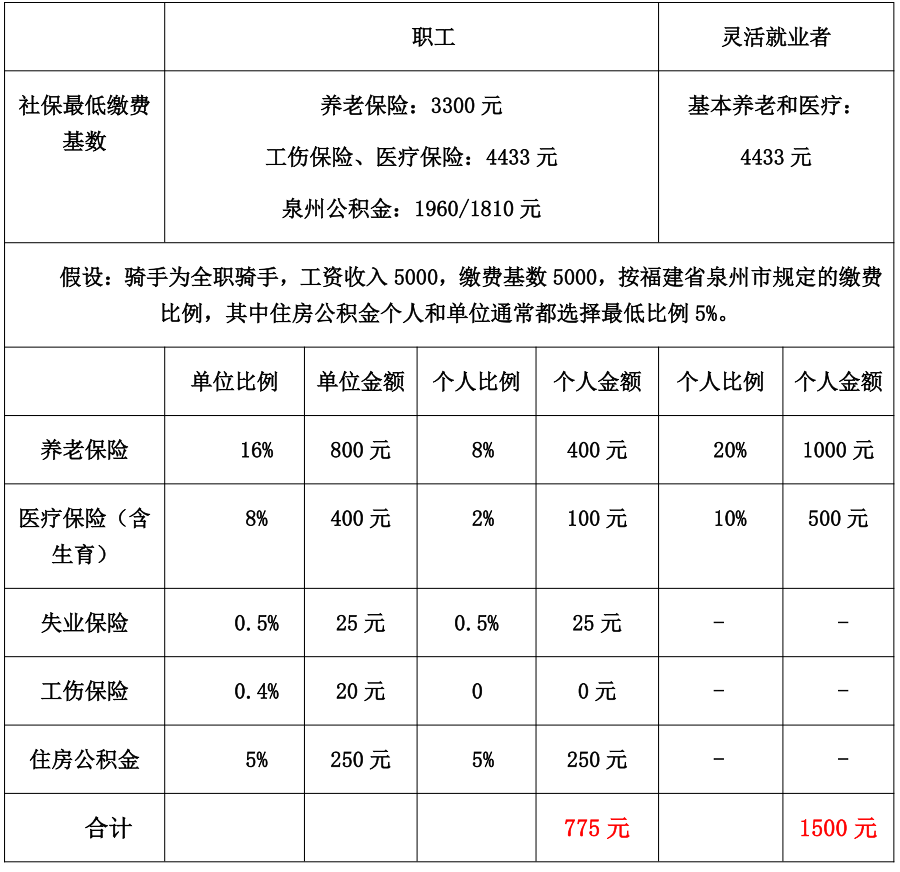
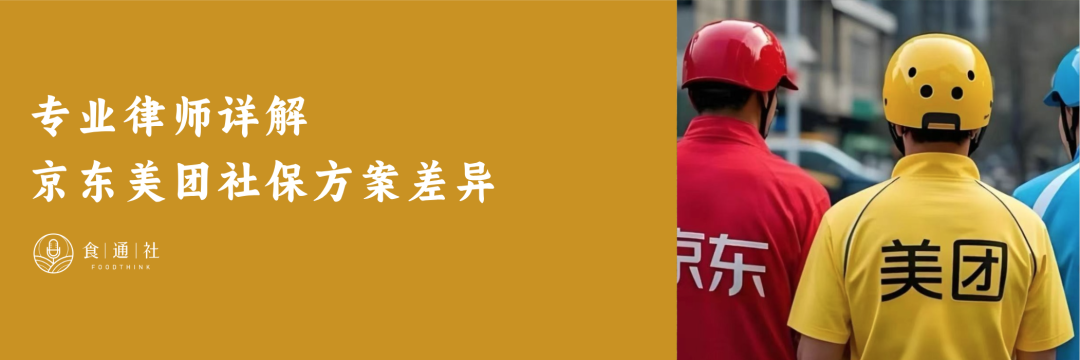
◉ How do social insurance schemes for flexible workers differ from those for regular employees? For more, see the article “Professional Lawyers Detail the Differences Between JD.com and Meituan’s Social Insurance Schemes”. Click the image to go to the original article. Image source: Hao Zhengxin
The True Social Cost of the Gig Economy
On the issue of social insurance, Professor Zhang Dandan mentioned in another context: “Some platforms are now proposing further steps to expand the coverage of the five insurances and housing fund, which upsets the existing market structure and brings pressure on labour costs. Rising labour costs could lead platforms to cut dedicated positions, reduce gig workers’ wages, or even pass the costs on to consumers by raising delivery fees.”
This once again gave me a glimpse into her labour-economics perspective: she is so accustomed to viewing the issues between platforms and gig workers through the lens of supply-and-demand matching across the entire labour market. But a scholar’s mind cannot consist solely of abstractions about labour and employment.
Extending social insurance to food delivery riders may well result in fewer available positions, but while strengthening riders’ protections, it would also curb the platforms’ currently destructive low-cost delivery model – one that drives down delivery fees to capture market share, then extracts steep commissions from the restaurant industry for profit, in turn squeezing the livelihoods of small and medium-sized eateries, forcing merchants to cut ingredient costs, and ultimately churning out unhealthy takeaway food for consumers.
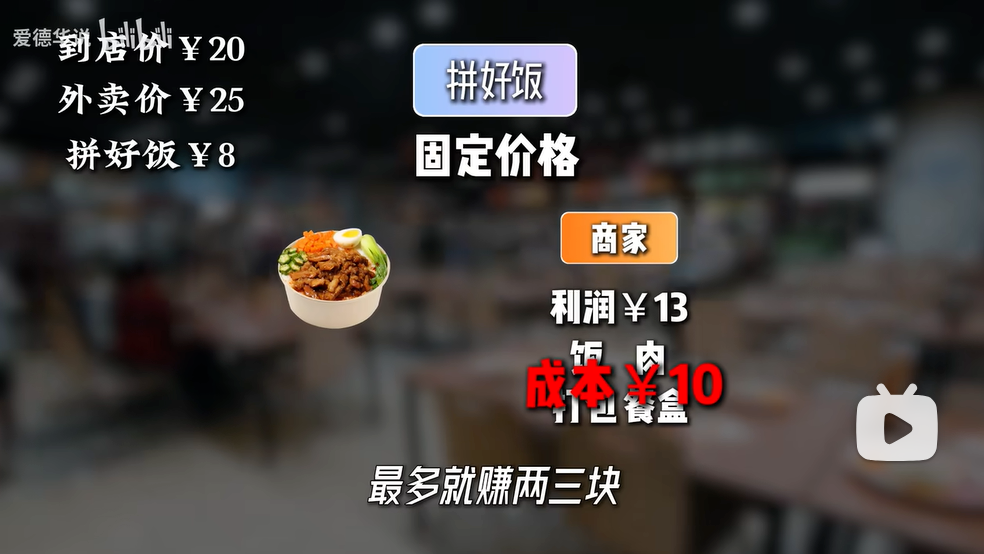
◉ For more analysis of Meituan’s cheap food delivery, see the article “Pin Hao Fan: Who Is Actually Getting a Good Meal?” Click the image to go to the original article.
Previously, Southern Weekly worked out the numbers in a report: if Meituan were to pay social insurance for the 1.2 million riders who meet the definition of full-time employment, the cost would be 21.6 billion yuan. Yet Meituan, Taobao and JD.com have burned through over a hundred billion yuan in the recent food delivery wars. So while the rise in labour costs driven by social insurance may squeeze the margins of small businesses, for these platform giants the added expense still falls far short of what they have spent fighting for market share.
What is even more ironic is that Meituan’s 2025 financial report reveals the company’s R&D spending on drones, autonomous delivery vehicles and AI has reached 26 billion yuan. In other words, the technology R&D a food delivery platform pours into trying to replace its riders is already enough to cover the social insurance costs of all its full-time riders.
Professor Zhang Dandan also studies the impact of AI on employment and claims to wield policy influence. Her pronouncements on gig work leave us unable to help but worry: might the same unfounded assumptions reappear in her research on AI and labour relations, misleading both the public and policymakers?
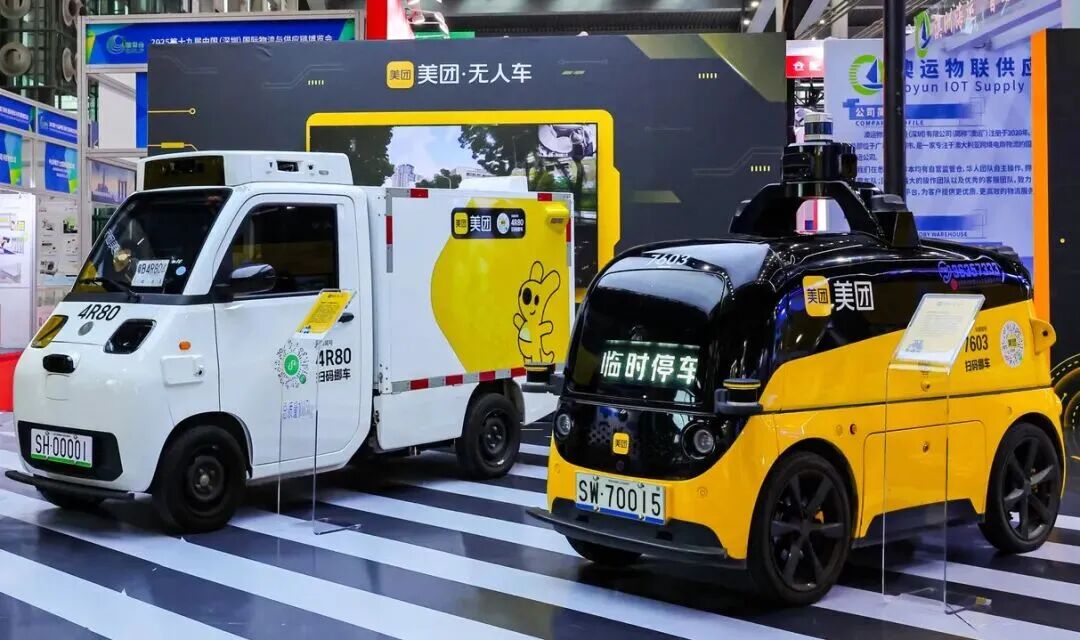
◉ A Meituan autonomous delivery vehicle on display. For more analysis on AI and labour, see the article “The Age of AI: Where Is Power Shifting?” Click the image to go to the original article.
In short, when it comes to platforms and the gig economy, and the relationship between technology and workers, there are still many questions for us to ponder. Employment, of course, matters enormously – but that does not mean workers owe unconditional loyalty to whoever provides them with jobs. After all, between platforms and workers, which is the skin and which is the fur – who depends on whom to survive – is a question that merits a debate in its own right. At the very least, no worker wants merely a grudgingly bestowed job; all we ask is to achieve a better life and livelihood through our own labour.
– This is the 835th original article from Foodthink –

Foodthink
Author
Zheng Yuyang
An INTP raised on Animal Husbandry Farm No. 2 in Bayan County, Heilongjiang Province, and currently drifting in Beijing. Delivered food in Beijing for four months. Now focuses mainly on digital technology, agricultural technology and sustainable development.
Editor: Tianle
Layout: Xiaoshu
Scan the code to tip and support original Foodthink content
▼

▼
Click the image to read related articles
▼
Click on keywords to browse more article collections
Seeds | Farming Techniques | Policy | Fermentation | Nutrition | Fruit | Fisheries | Events | Recruitment | Food Delivery | Fresh Markets | Livestock | Food Talk | Talks | Book Club | Harvest Festival | Smallholder Stories | Climate Change | Rural Development | Cooperatives | Urban Farmers | Food Safety | Digital Technology | Biodiversity | Pandemic & Food | False Solutions | Agroecology Internship Programme
Beijing | Hebei | Shanghai | Guangdong | Guangxi | Henan | Sichuan | Jiangxi | Xinjiang | Shaanxi | Hong Kong | Chongqing | Zhejiang | Jiangsu | Guizhou | Taiwan | Inner Mongolia | Philippines | Canada | Russia | Mexico | Italy | United States | United Kingdom | Germany | Netherlands | Thailand | Sweden | Japan