
A “Not Quite” Failed Working Stiff’s Food Story
I. Eating Takeout Is Directly Proportional to Work Stress
Weekend overtime at the office meant takeout, of course. I remember even the weekend of my birthday was spent working late. Fortunately, the manager who’d called me in that day was decent – he deliberately came to the office and treated me to lunch. My birthday wish that year was: I’d like to spend my birthday without having to work overtime and crunch payroll. But the Excel spreadsheet kept freezing and crashing several times that day. An absolute nightmare for anyone working late.
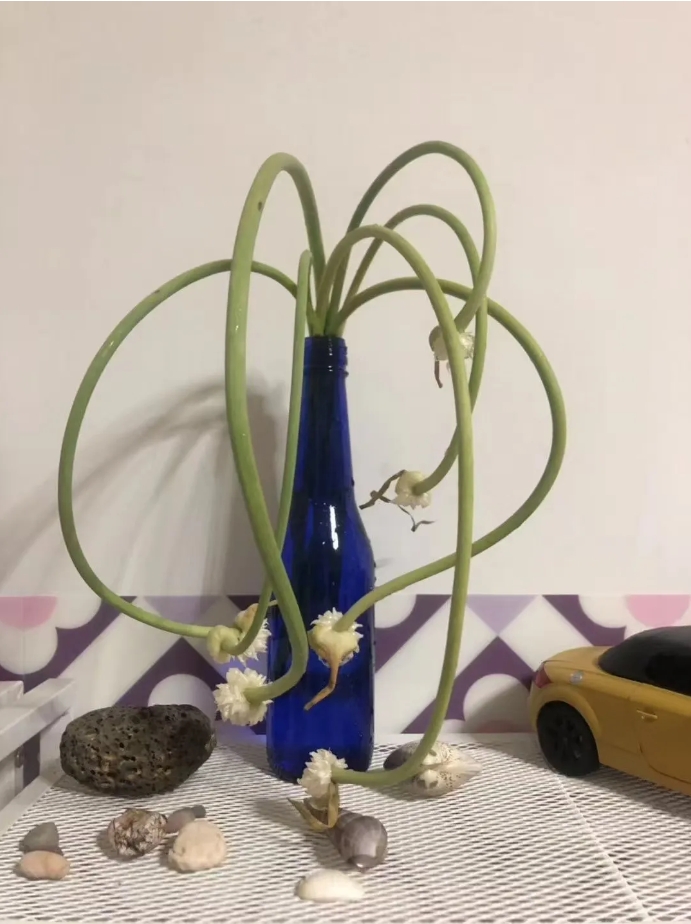
Sometimes, even on weekends at home, I was too exhausted to cook. Besides, if I felt a sudden urge to have a go, the first thing I’d need to buy were the staples – spring onion, ginger, garlic, dried chillies – the sort of things you use only a little of but absolutely need. By the time I remembered to cook again, those ingredients had long since gone off or shrivelled up. Once, a bunch of garlic scapes sat in my fridge for nearly two months and actually bloomed. I suppose I should count that as a happy accident. So the sensible choice, the one that avoids piling more hassle onto myself, is this: don’t light the stove.
When work was busy, I often brought tasks home. Even when I wasn’t working overtime, the moment I got through the door I only wanted to do something more relaxing. So if I was heading home for an evening meal, the first thing I’d do once I was on the metro was order takeout, so that by the time I got home the food would arrive right at my door. But when I untied the bag, opened the containers, and saw the vegetables already turning a dull, trapped yellow, then caught the smell of food mingled with a faint whiff of plastic, I instantly regretted the whole thing.
When I was a child watching TV, the immortal beings would simply catch a whiff of the fragrant food and be perfectly content. When my grandmother was still alive, she used to tell my aunt that on New Year or any festival there was no need to visit her grave; just ladle some of our Shaanxi sàozi noodle hot-and-sour soup and pour it at the doorstep, and she’d be just as happy. You can see that fragrance is the soul of a meal. Yet the moment I faced that soul head-on, all I felt was a wave of revulsion.
Of course, takeout could be good sometimes – the brined duck from Nanjing Dapaidang, for instance; I could devour half a bird on my own. But most of the time the flavour was underwhelming, and all I thought was, well, since I’ve paid for it, I might as well pick at it a little. But I could barely eat anything. What was left, I wouldn’t pop in the fridge, because I had no idea whether I’d be home the next day to eat it. In the end, I’d just throw out most of the leftover takeout.
This scene could be shot as a single unbroken long take in a film: I bring the takeout from the front door to the dining table with a measure of anticipation and untie the bag. I pick up my chopsticks, prod the food a couple of times, then, dejected, I slide the plastic containers back into the takeout bag. I tie the bag shut, carry it from the table to the door, open the door, and set it on the floor. Just as the delivery rider had left it there, as if nothing had happened at all.
I asked myself: does it hurt to waste food like this? Yes, it genuinely does. I’m genuinely hungry, but I genuinely can’t eat, and I still have to throw it away, and next time I’ll still order. When the food isn’t good, when I can’t eat properly, I always feel something is lacking inside, which leaves me in a low mood – and how could I possibly work overtime “happily” under those circumstances?
This went on for roughly a year, and my body began throwing up all manner of problems, big and small, like a crumbling house where you tear down one wall to patch another – there was always something new giving way. I made no end of trips to the hospital; thankfully, there weren’t many organic lesions. I did, of course, realise I needed to rebalance my work and life, but I still wanted to do my job better. As the nature of the work kept shifting, the workload didn’t shrink – if anything, the challenges multiplied.
But there’s only so much time in a day; cooking from scratch every evening was out of the question, so I started by healing myself on a mental level. I began reading on my metro commute – books I’d always wanted to get round to but never had the time for. On the morning-rush trains, where you had to wait two services just to squeeze aboard, I worked through Meditations on Beauty, Ancient Greek Art: A Personal Treasury, What to Eat Today? Let’s Take a Look at the Fields, The Gardener’s Year, and others.
The signal on the metro wasn’t great, so I didn’t need to keep my phone in my hand the whole time, worrying I’d miss an important work message. This way, wrapped in the protective circle the book cast around me, all the discomfort of the tube vanished. For me, the crowded metro I’d once dreaded became a small world that could grant me a brief moment of peace.
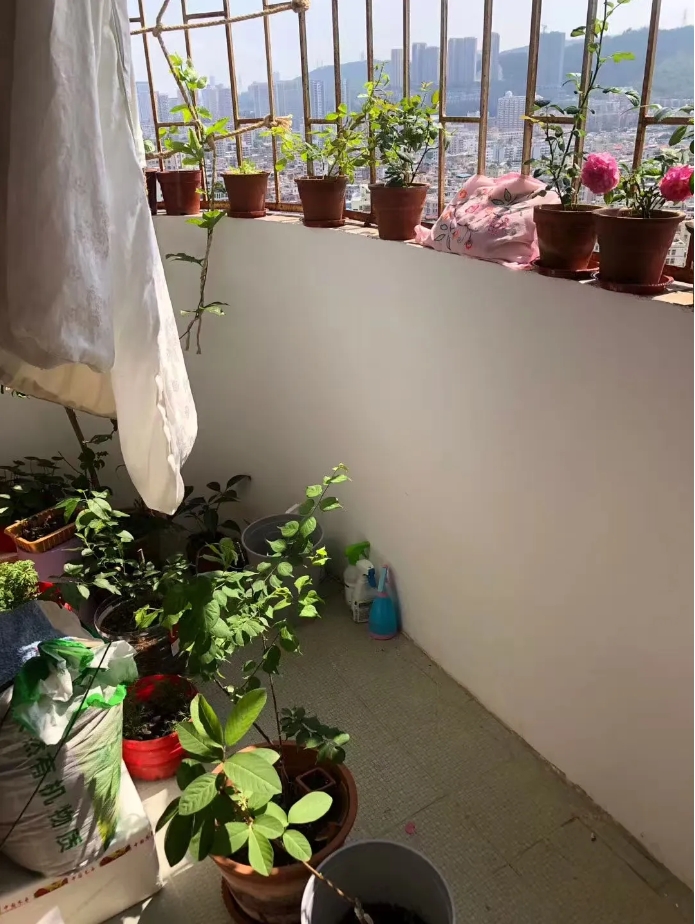
I also started watching television programmes about farming and nature. I don’t remember how many times I watched The Biggest Little Farm; I was simultaneously inspired and unable to bring myself to believe the story was real. I couldn’t accept that this couple in the documentary were so fearless, giving up everything to break new ground for the sake of their dog. I couldn’t believe they had actually turned a stretch of barren soil into a thriving, sprawling orchard. So I started learning about permaculture, picked up A Poetic Farm to read, and – under Uncle Meng’s recommendations on Gardening World – I set about developing my little balcony.
II. Breaking Life’s Vicious Cycle
Before my dad headed back to Xi’an, he stocked my fridge with frozen, ready-to-cook parcels: wrapped dumplings, rolled-out noodles, stir-fried sàozi, fresh tomatoes, and blanched long beans. That way, even when I had no time to shop, I’d still have food to eat when I got home from work.
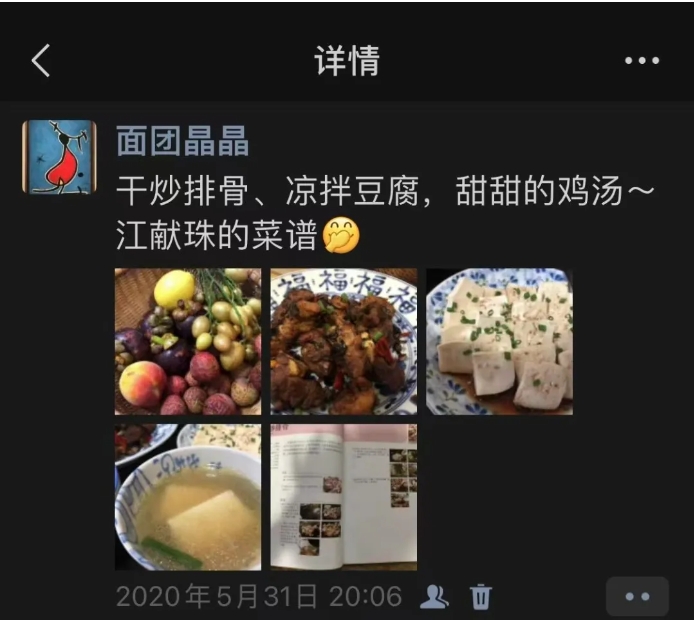
But before long, these quick vegetarian dishes couldn’t satisfy my hunger for meat anymore. So I dug out Jiang Xianzhu’s The True Taste of Home Cooking series to scratch the itch. Yes, that’s just what I am – a bookworm. When I hit a problem in real life, my only instinct is to hunt for an answer in a book first. I’d bought it because I loved the food memories and stories in it, and who would have thought I’d turn up a recipe for dry-fried spare ribs! I was also deeply influenced by an essay Wang Zengqi wrote called “Tofu” in his collection Flavours of the Human World. It talks about the different soy products out there, and especially the supreme flavour of this mortal world – tofu – which is incredibly versatile. You can eat it light or rich, give it a quick stir-fry or braise it for ages.
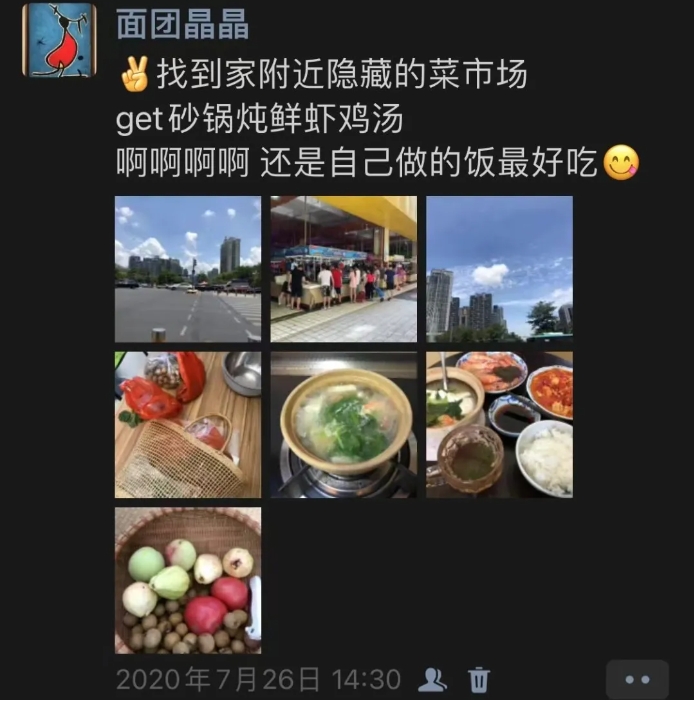
Once, when I visited my aunt’s, I discovered how good and easy my grandmother’s blanched choy sum and chicken soup were. The method is simple: put the chicken in a pot of cold water, bring to a rolling boil on high heat, skim off the foam, turn the heat down, add a few slices of fresh ginger, some fresh abalone or rehydrated dried scallops and porcini mushrooms, then simmer for 40 minutes. Once it’s done, ladle the chicken broth over cooked dried noodles and green vegetables in a separate pot, add a pinch of salt or a splash of soy sauce, and you have a steaming bowl of chicken soup noodles.
My tip: the chicken breast pulled from the pot that same day is the best to put over the noodles, or you can just make a simple dipping sauce to go with it. The bone-in pieces I portion into small zip-lock bags and freeze. I also portion up any extra broth into small glass containers and freeze those too. That way, on a weekday evening when I can actually get home in time for dinner, I can whip up a bowl of chicken soup noodles in no time – no takeout necessary.
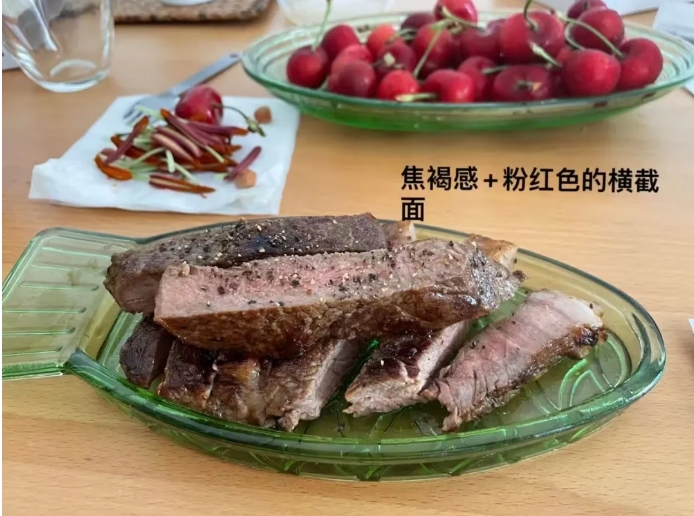
But after eating chicken for a while, my body threw up another problem – chest pain. At first I put it down to something else, but by chance I discovered that if I skipped chicken for a few days, it eased up. I was genuinely startled by the connection myself. So one of my go-to, happy, convenient recipes was gone too. I went back to researching other dishes I could keep eating without tiring of them – pan-fried steak, for instance.
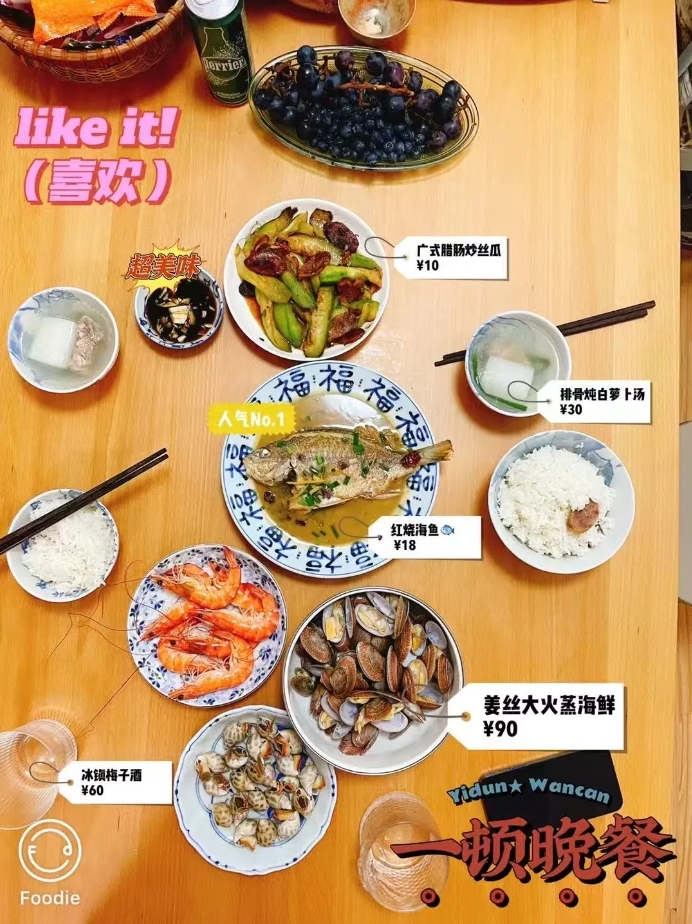
I’d also picked up a Bear electric steamer. Before bed at night, I’d take the frozen bao and eggs out of the fridge, set the timer – eggs boiling on the bottom tier, bao steaming on top – and wake up to a proper breakfast. Later, inspired by a friend, I started using the steamer for seafood. The nice thing is you can eat as you cook, and there’s no oil smoke. On weekends, I’d put plain congee on the bottom tier, steam a batch of manila clams on top, then a batch of fresh prawns, and finally a batch of baby chrysanthemum greens. After the seafood, you’d sip the congee alongside the tender greens – absolutely heavenly. Life was close to being an immortal’s.
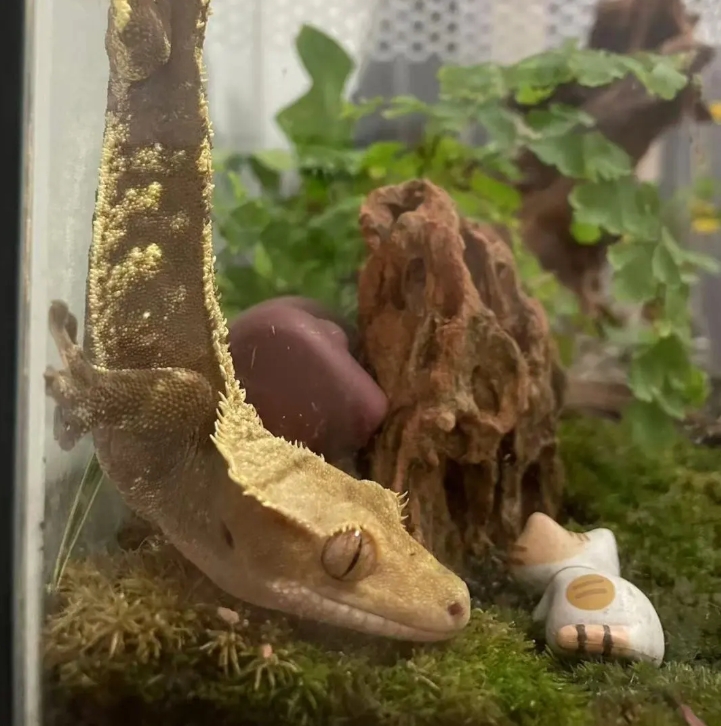
Oh, and I also got a crested gecko I called Wuwei. Getting home meant feeding him first and misting his enclosure. On weekends, I’d also fuss over the plants I’d been growing. All this added a fair amount of fixed daily work at home, but strangely, the busyness of the office job seemed to shrink while my sense of fulfilment in life grew. Of course, there were a couple of times I forgot to feed Wuwei, got home and collapsed straight to bed. I’d jolt awake in the middle of the night, remembering he hadn’t eaten, feel absolutely terrible, spring out of bed and rush to feed the little guy.
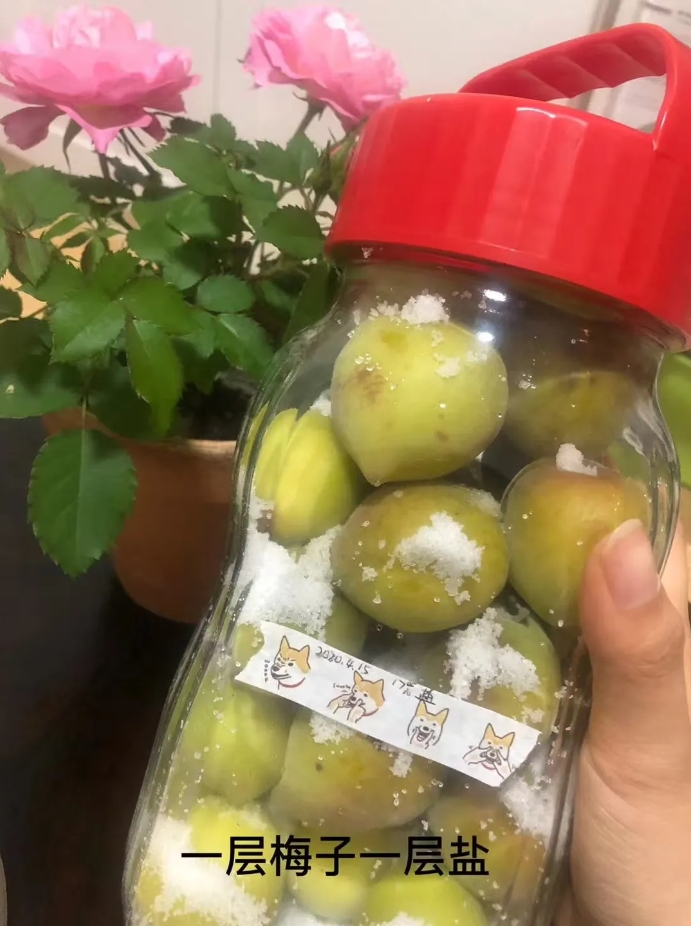
I was still busy every day, but I always made sure to go home and check on my plants first – a touch here, some water there, and a pinch out of any spider mites. It was this whole experience of growing roses that also made me realise the regulating role of fermented microbial solution for soil health, and how vital good soil is for plants to grow well. When spring came, I started following along with What to Eat Today? Let’s Take a Look at the Fields – buying green plums (Prunus mume), making plum wine, and curing plums in perilla and salt. At the time, I was hoping to imitate the story in the book: one day in the future, being able to eat perilla-salt plums I’d preserved thirty years ago. From where I stand now, I reckon it’s quite possible.
III. Learning to Be Kind to Yourself
Once I’d actually quit, I genuinely stopped ordering takeout. I’d grown tired of eating out, too, especially since the farewell meals with friends were mostly at restaurants. The one I remember most vividly was saying goodbye to my tea teacher. Teacher Zhou was so thoughtful – she knew I’d lost all interest in food from outside, so she specially made a few home-cooked dishes and brought them to the tea house. I remember the menu that day: winter melon and Job’s tears spare rib soup, garlic-steamed spare ribs, and Dai-style sweet-and-sour cold-tossed eggplant.
Because you can’t bring meat into the tea house – it would disturb the tea qi – the two of us sat at a table outside. As we ate, she kept telling me how easy these dishes were to make and how good they were for the body. She said I should cook them more often, for myself. As we parted, she gave me a porcelain teapot decorated with a chicken-cup pattern. I remember her saying that, as my teacher, she treated me with loving kindness, which is why she chose porcelain to give me. And because porcelain doesn’t absorb flavours, it would be convenient for me to use on the go – I could brew any kind of tea in it, as long as I washed it properly afterwards.
And so this is the food journey of a not-quite-failed working stiff like me. Over the course of these past days, I picked up some work skills, learned effort and perseverance, and also learned to be kind to myself and to let things go. I define it as “not quite” a failure because my life is still unfolding. I hope that in my own patch of soil, flowers will bloom – the kind that look like persimmon blossoms: unobtrusive, yet beautiful. And I hope this experience of mine can give those flowers a distinctive top note.
Eat Something Good
 All photos taken by the author
Editor: Yuyang