When a Hippie Decides to Farm

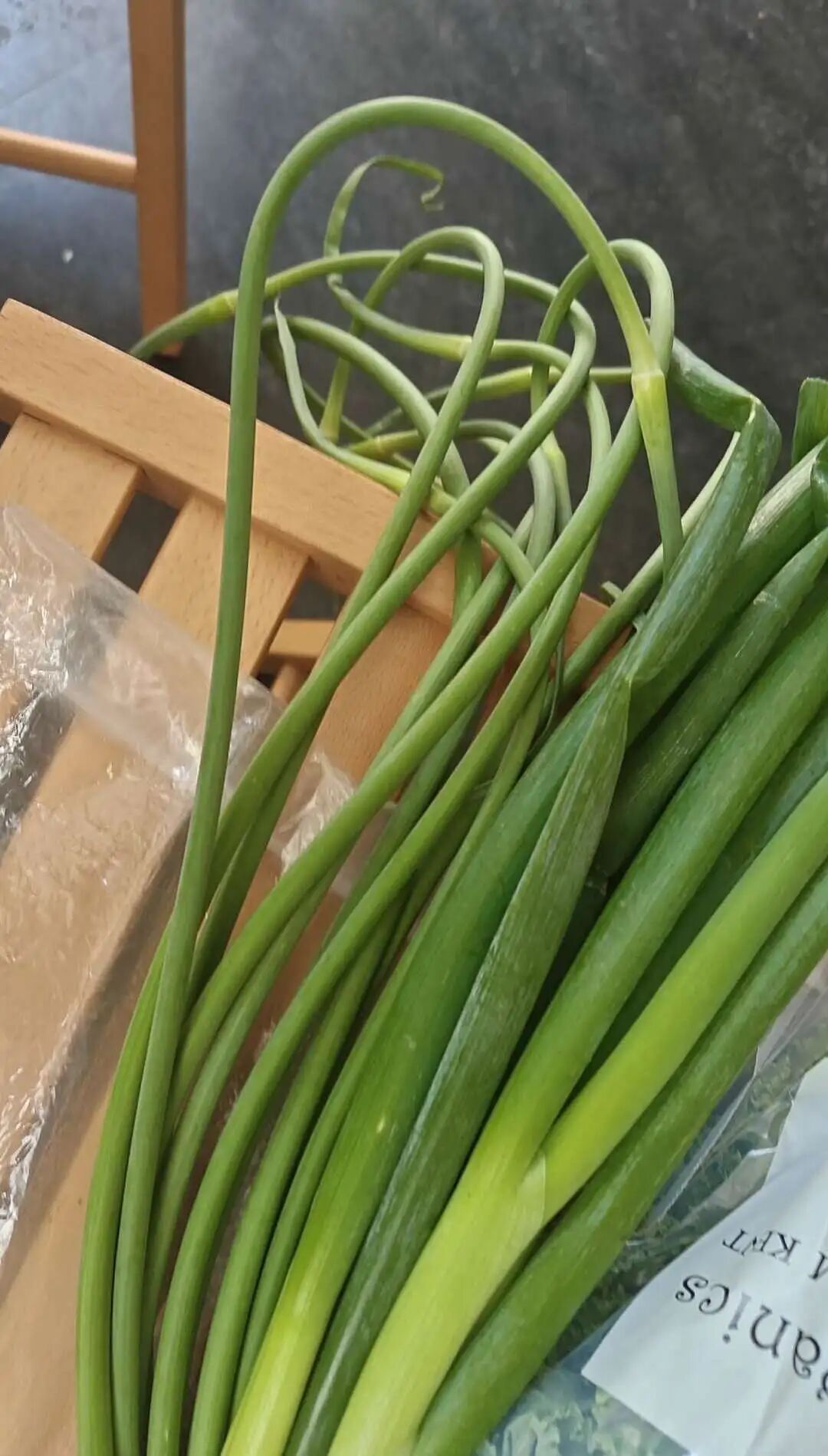
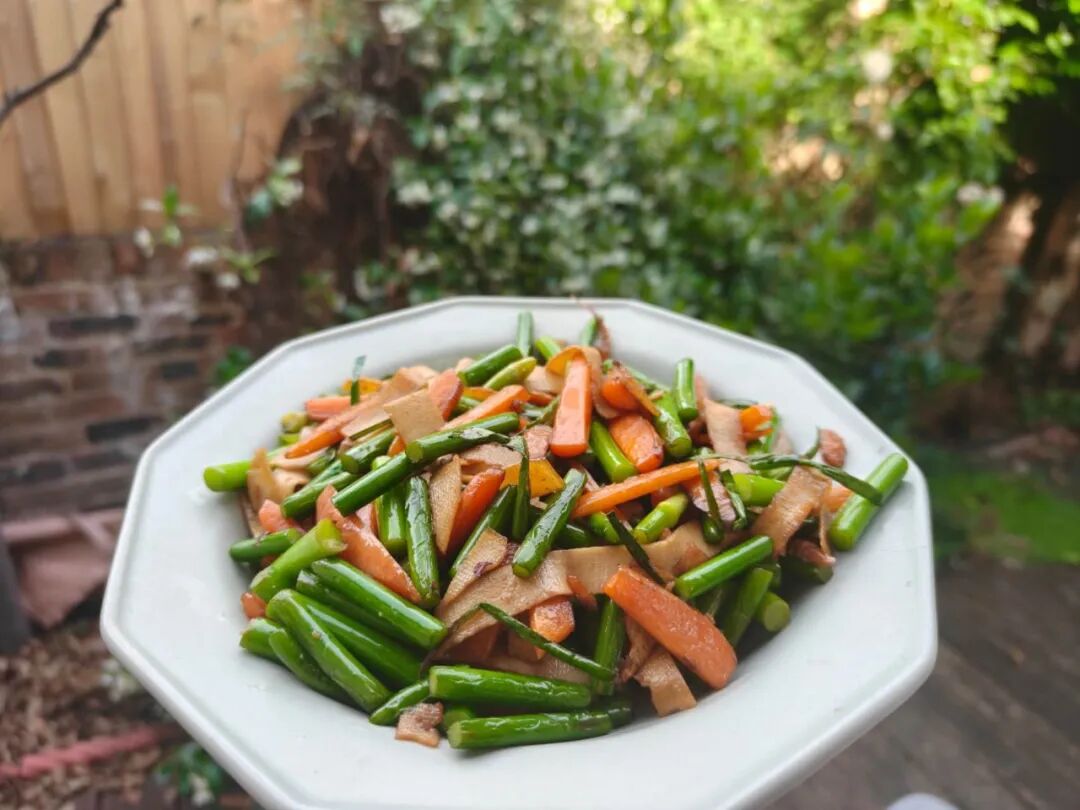
◉ Eating garlic scapes in a foreign land is a kind of happiness. Image: Jiang Xiechi
“Today I bought garlic scapes!” One Saturday morning in early summer, a friend showed off her farmers’ market haul. After moving to the UK last year, my friend and I often met at the Growing Communities organic farmers’ market in North London to shop, and we had become reasonably familiar with the farmers, but I had never heard of this one.
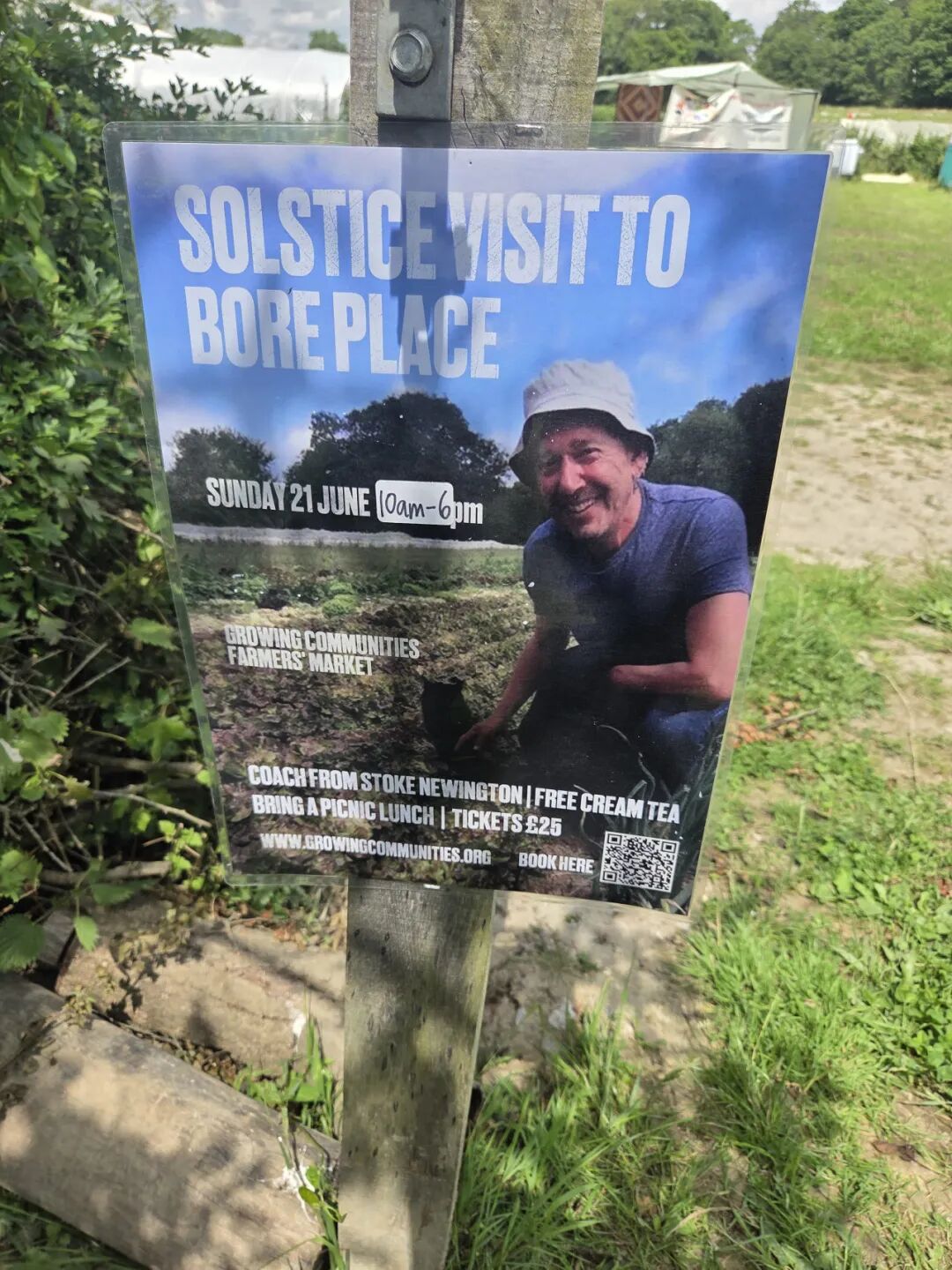
As it turned out, the garlic farmer was Dutch Metske van der Laan, who had been part of the market for nearly ten years but only put in a stall in summer and autumn. Before long, the market arranged for customers to visit their farm on 21 June, the summer solstice, and I signed up straight away. Our group of around thirty people drove south-east from North London, and in just over an hour reached Bore Place Organic Farm in Kent. Metske and her husband were already waiting to welcome us.
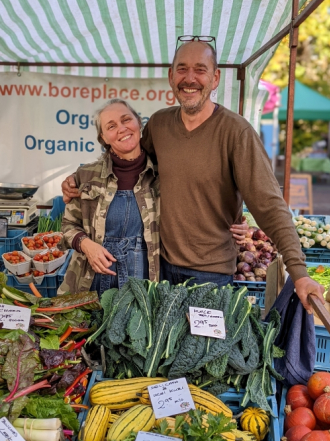
◉ Metske and her husband at the market. Image source: Growing Communities market
An Open, Shared Organic Farm
The farm lies within Bore Place, an estate of more than 3,000 acres, and the surrounding area is said to have no shortage of second homes owned by wealthy Britons. UK law places great importance on private property rights, and “private road” signs are common in cities and villages alike, warning strangers to keep away. Bore Place, which is managed by a charity, is guided by a public spirit, opening the land to walkers and cyclists. Of this, 60 acres are jointly managed by three parties: in addition to Metske’s organic vegetable farm, there is an organic willow nursery and a campsite.
“You rarely see this kind of land-sharing model anywhere else,” Metske told us.
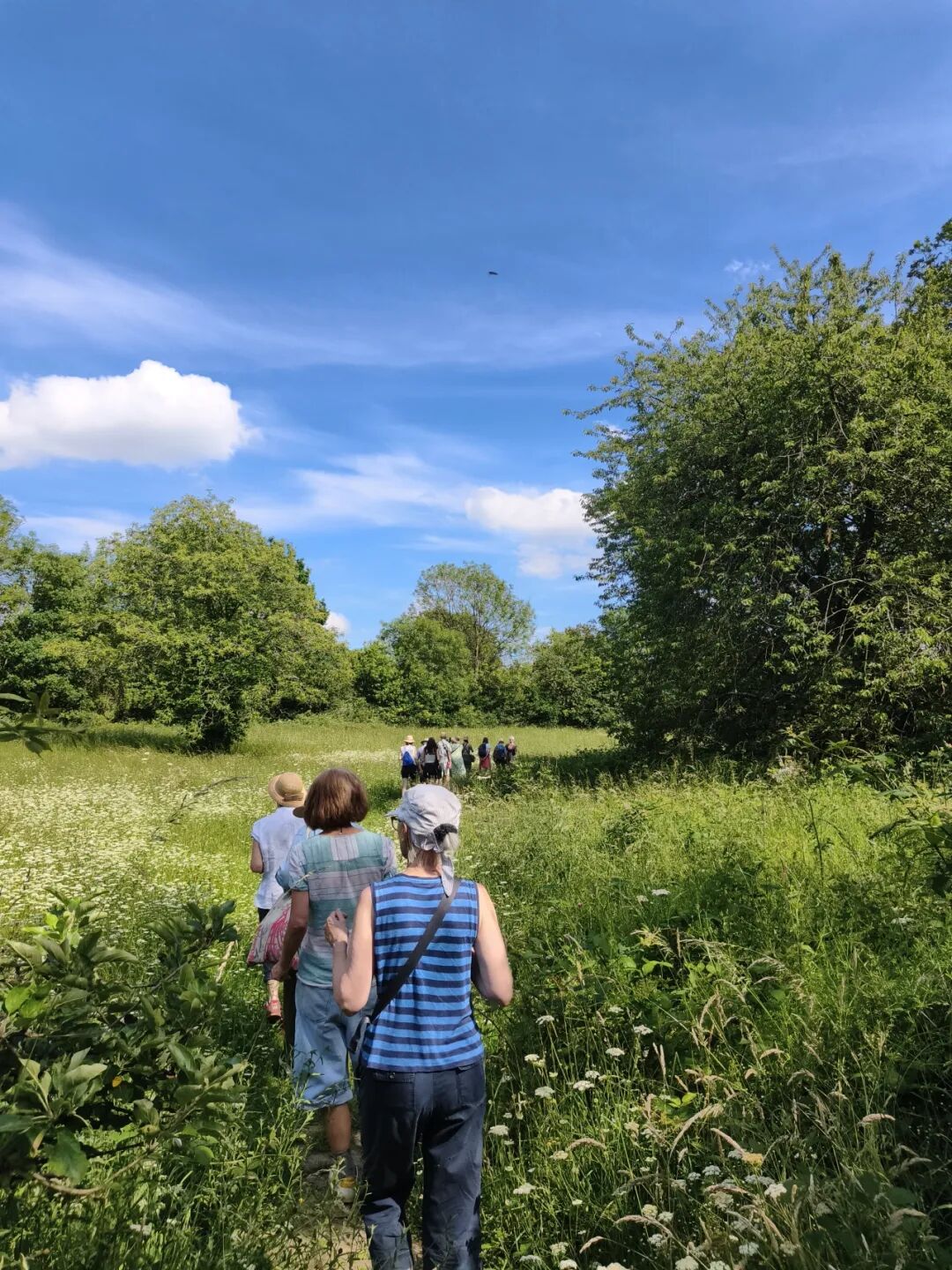
◉ Market customers strolling on the farm.
According to official data, the average UK farm in 2025 is 870 acres. By comparison, the 40-acre vegetable farm run by Metske is small but beautiful. Several polytunnels are used for raising seedlings, growing cucumbers and tomatoes. Open-field crops include pumpkin, beetroot, maize, French beans, fennel bulb and various salad lettuces.
Lettuce is the farm’s star product. “I don’t just love growing lettuce, I also love eating it. Does anyone remember last year’s lettuce? It was absolutely superb!” Metske’s pride is evident. Lettuce is harvested every three weeks, and the transplanting cycle is tighter, ensuring a weekly supply.
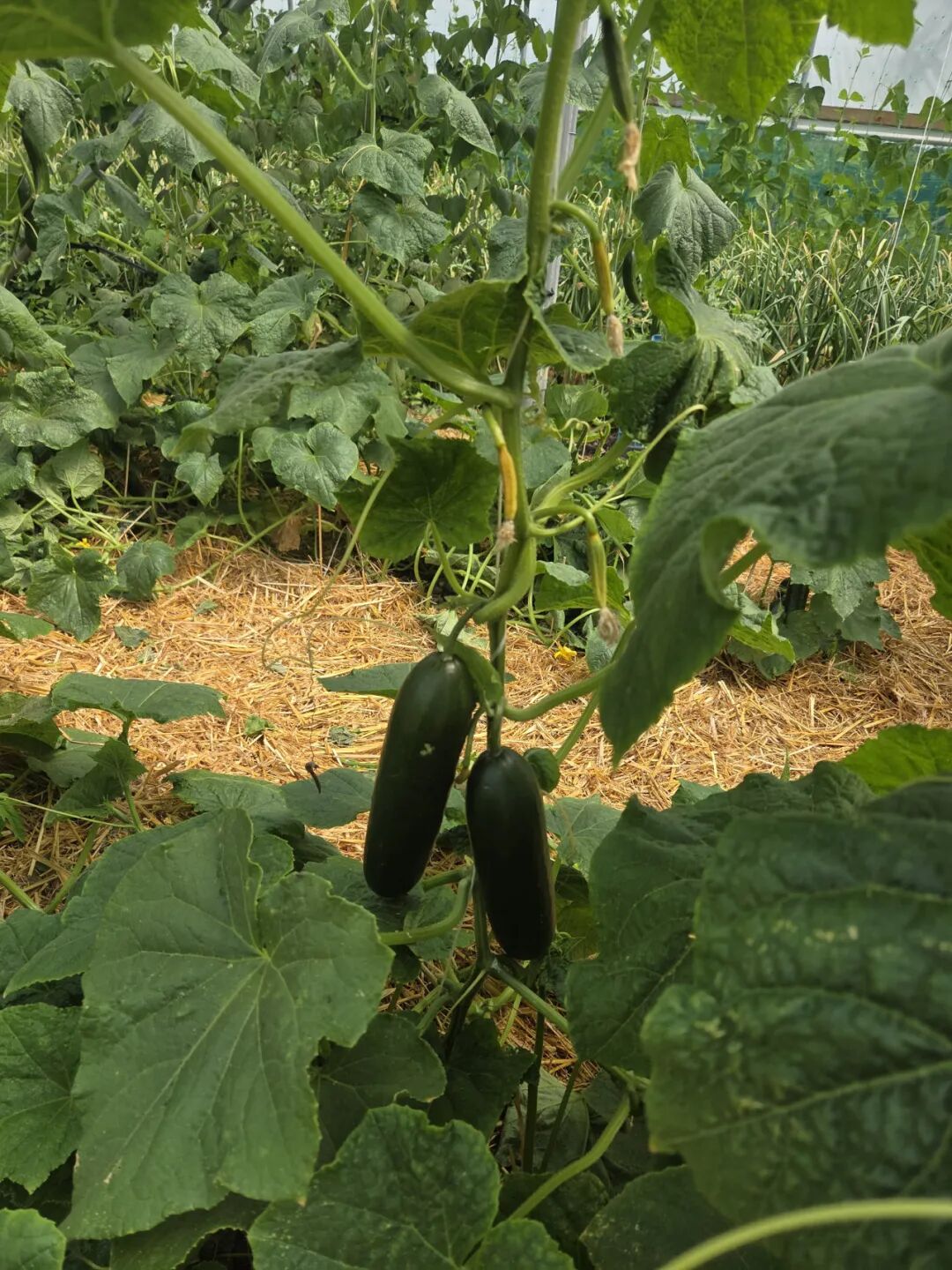
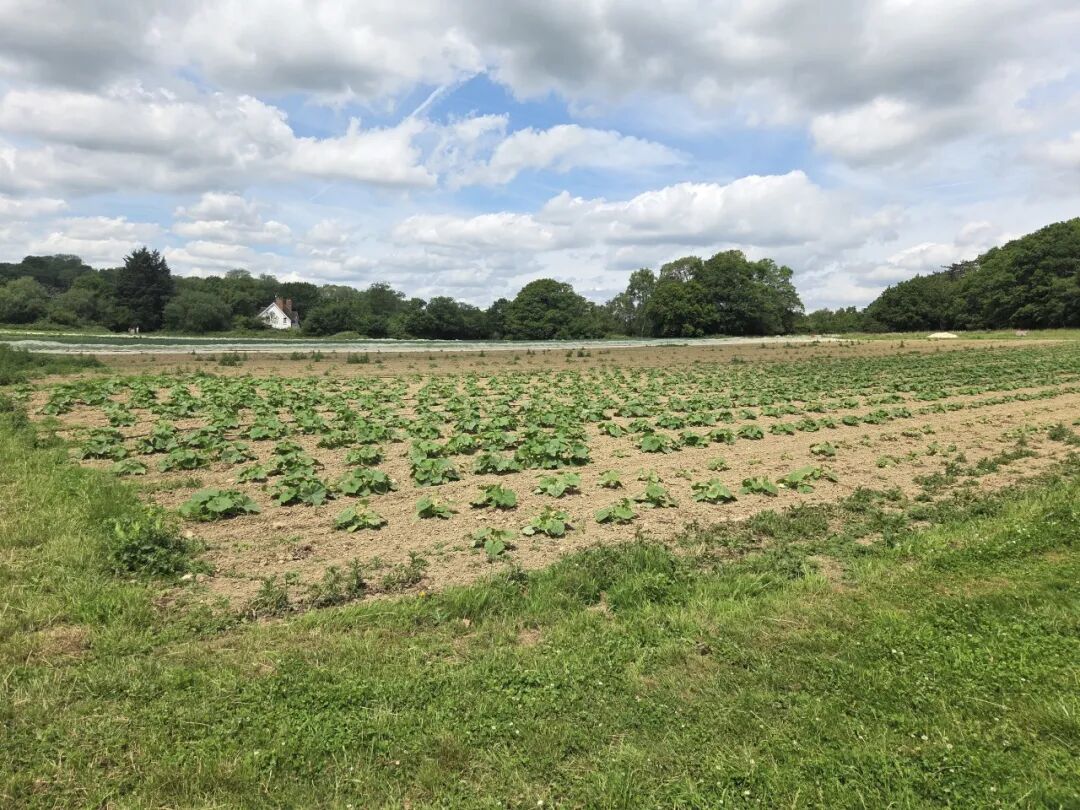
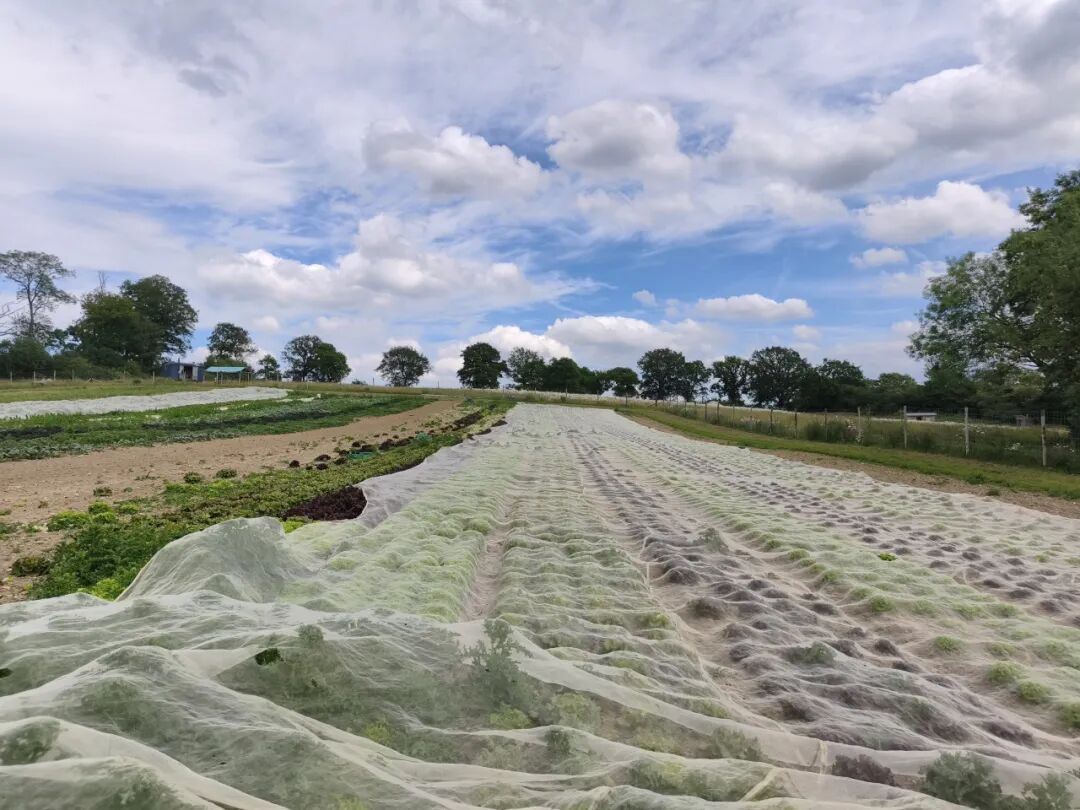
◉ Courgettes, pumpkin and lettuce under insect netting.
Soil conditions also mean that cultivation must be carefully planned. The farm’s soil is heavy clay, which is not really suited to leafy greens. Fortunately, Metske has spent a lifetime working with clay. Born into a farming family in the Netherlands, Metske used to grow potatoes in clay soil with siblings as a child. Clay and potatoes are a perfect match, but vegetables do not do as well. In spring the soil is too wet, and in summer it retains moisture poorly as temperatures rise; only five or six months of the year are suitable for cultivation, so time and land must be used to the full.
Metske starts buying seed and raising seedlings in February each year. Organic seed is available for 90% of the varieties, so the farm does not save seed and instead buys from reputable suppliers. Metske also chooses early-maturing varieties where appropriate, to be ahead of other farmers; early tomatoes on the market are sure to attract customers. Open-field planting does not begin until April or May.
Clay soil is also unsuited to mechanised cultivation. Metske showed us the farm’s small seed drill. The aim when sowing is to keep the plant spacing as even as possible, making weeding and management easier. “Farming is exhausting; you hardly ever get a break for nearly the whole year. My last holiday was probably over ten years ago. So if machinery can replace manual labour, it should be used.”
When asked about weeding robots, Metske seemed quite optimistic. Metske did not deny that weeding robots are expensive at present, but believes that in twenty years’ time, once the second-hand market has matured, ordinary smallholders will be able to afford them.
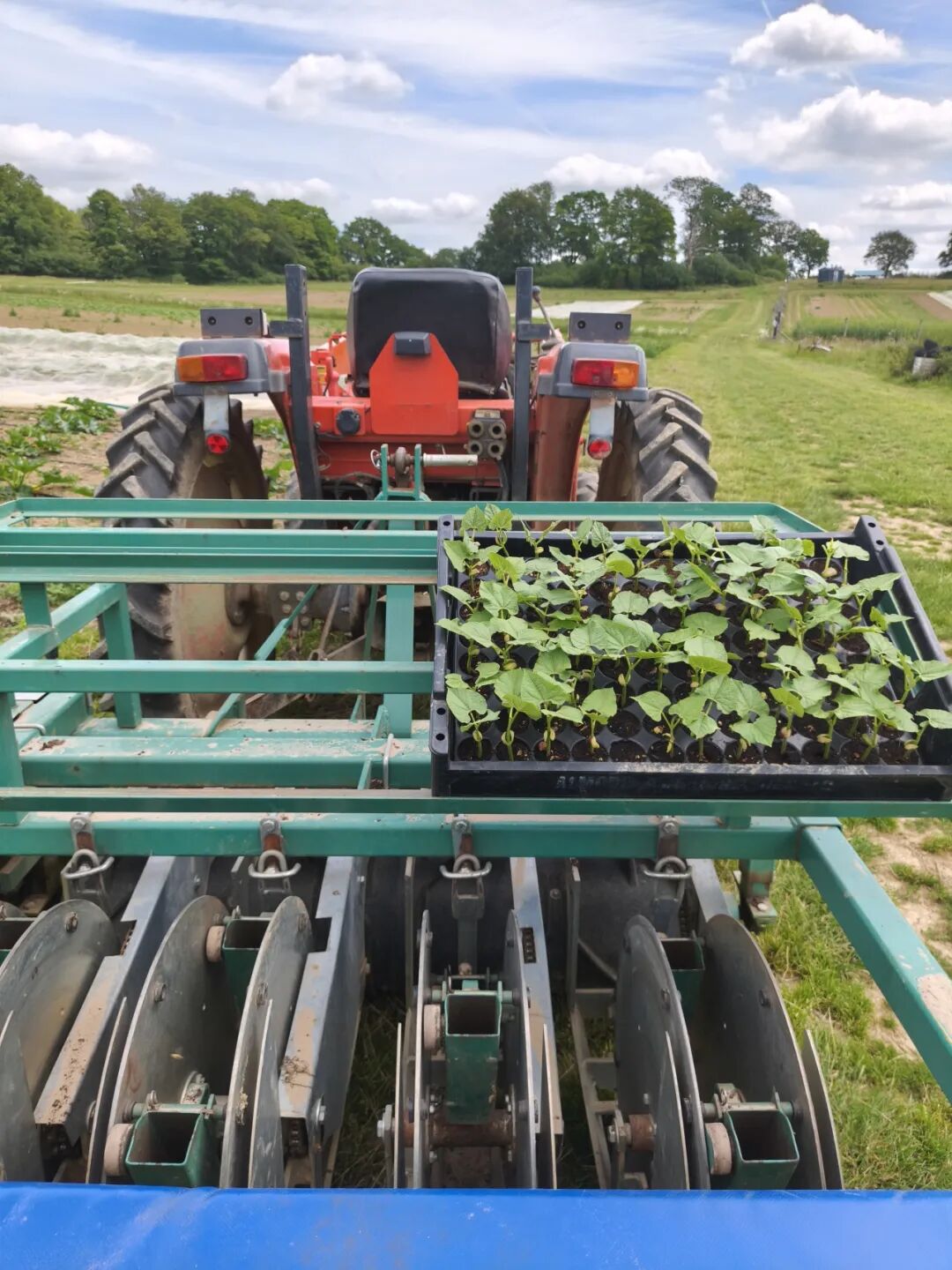
◉ Tractor and sowing equipment.
Moving on from the seed drill, we came to a wildflower strip and a green manure plot set aside for fallowing. A major function of the wildflower strip is to attract pollinating insects, so the pumpkins, which need pollination most, are grown beside it. Metske also sowed clover seed in the pumpkin field, for nitrogen fixation and weed suppression. The green manure plot is planned to be fallow for two years, mown regularly, left in situ, and used to build up humus in the soil.
“What do you do when you come across pests and diseases?” a customer in our group asked.
“Sometimes I have to find a solution, and sometimes nature has one for me.” Metske said. Not long ago the polytunnel was infested with aphids, but before long the ladybirds brought the infestation under control, because the wildflower strip can provide habitat for the natural enemies of pests, helping to regulate the ecological balance. In addition to the deliberately created wildflower strip, there are many edges and corners of the farm where flowers and plants flourish, which can have a similar effect.
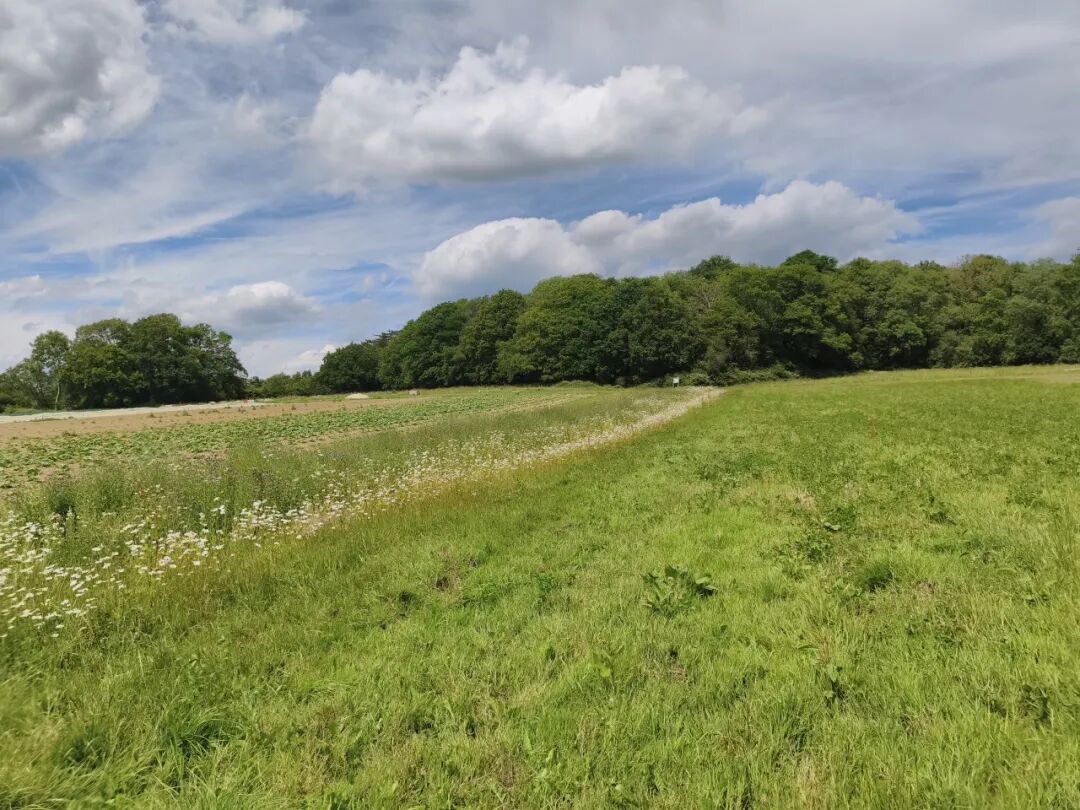
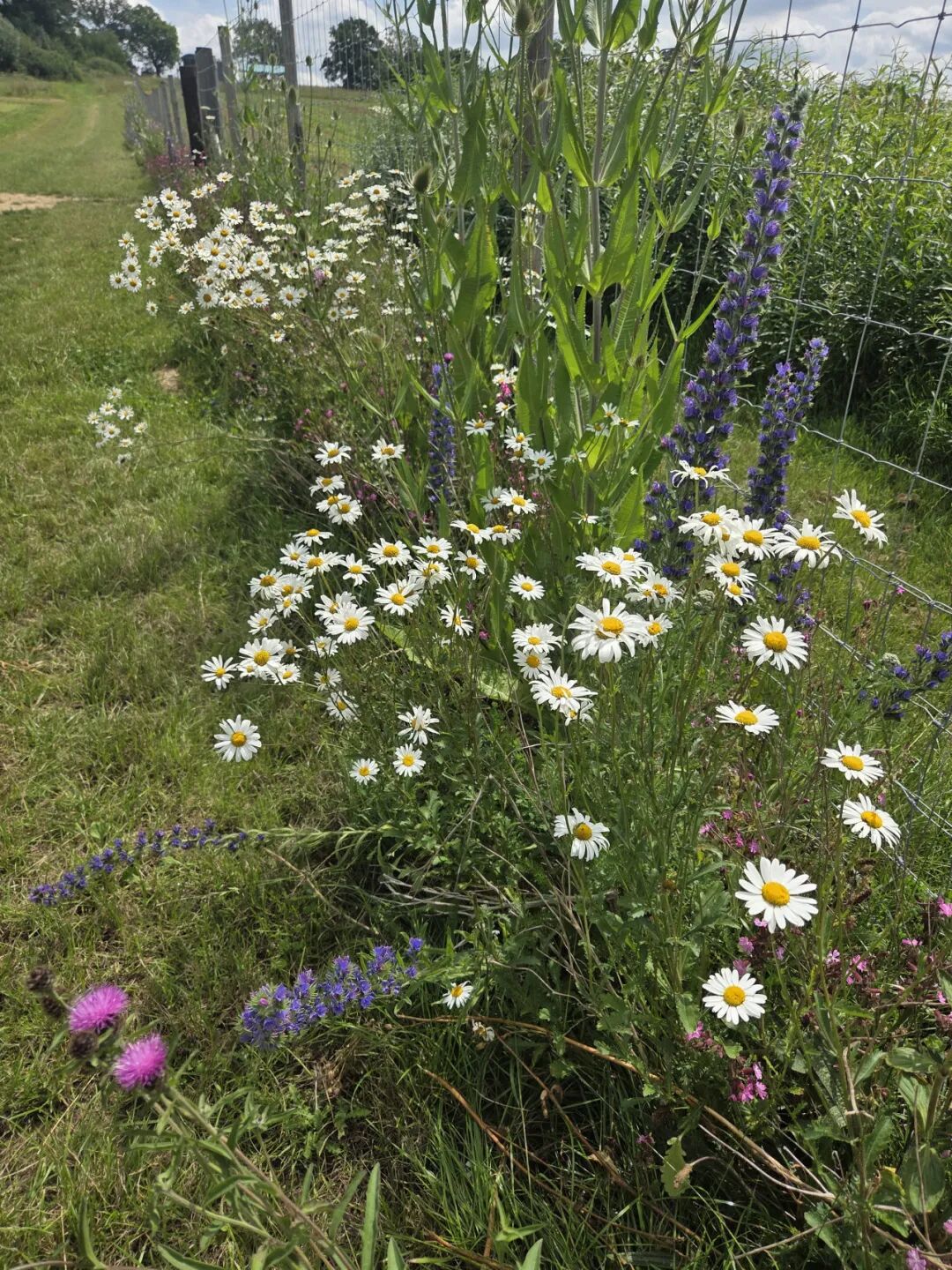
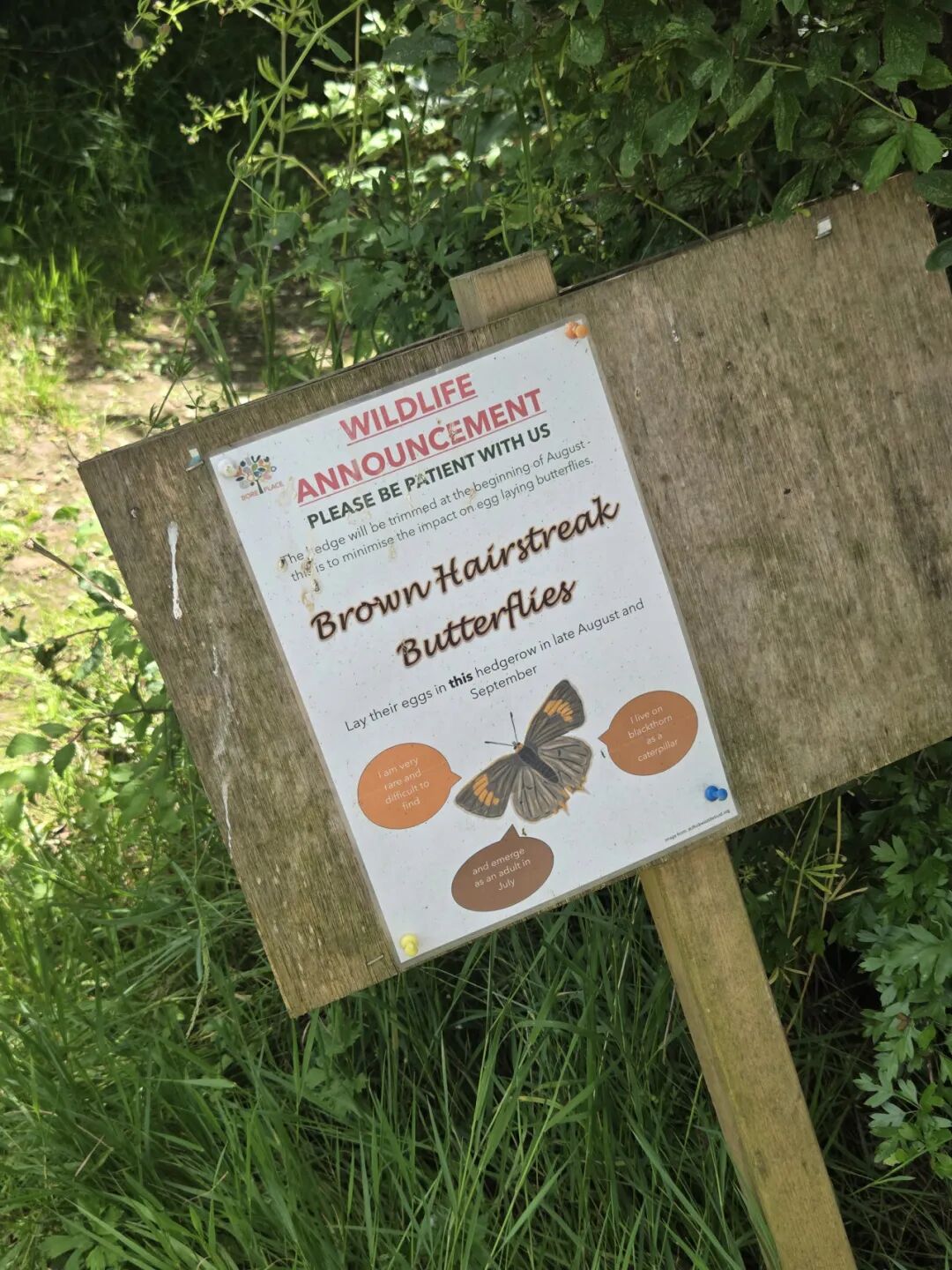
◉ Wildflower strip and green manure plot set aside for fallowing.
“Have you tried spraying chilli water?”
“I did spray it, but it was only so-so. And, you wouldn’t want your cucumbers to taste spicy, would you?” Metske’s witty reply drew a round of laughter. “But I’m planning to make a spray from onion skins and put it on the beans, hopefully to keep the spider mites at bay.”
He also emphasized that organic farming means accepting yield losses and adjusting one’s expectations. For example, deer often help themselves to the maize in the vegetable field opposite the plot set aside for fallowing, so a fence has been put up. The fence keeps the deer out but not the hares, so it is what it is.
Since 2021, the UK government has been piloting the Sustainable Farming Incentive, which provides cash subsidies for 102 ecologically valuable field management measures. In 2026, the number of eligible measures was revised to 71, including organic growing, the cultivation of nitrogen-fixing crops for nitrogen fixation, hedgerows, wildflower strips and so on. Taking wildflower strips as an example, the government pays an annual area-based subsidy of £739 per hectare, equivalent to about RMB 442 per mu?
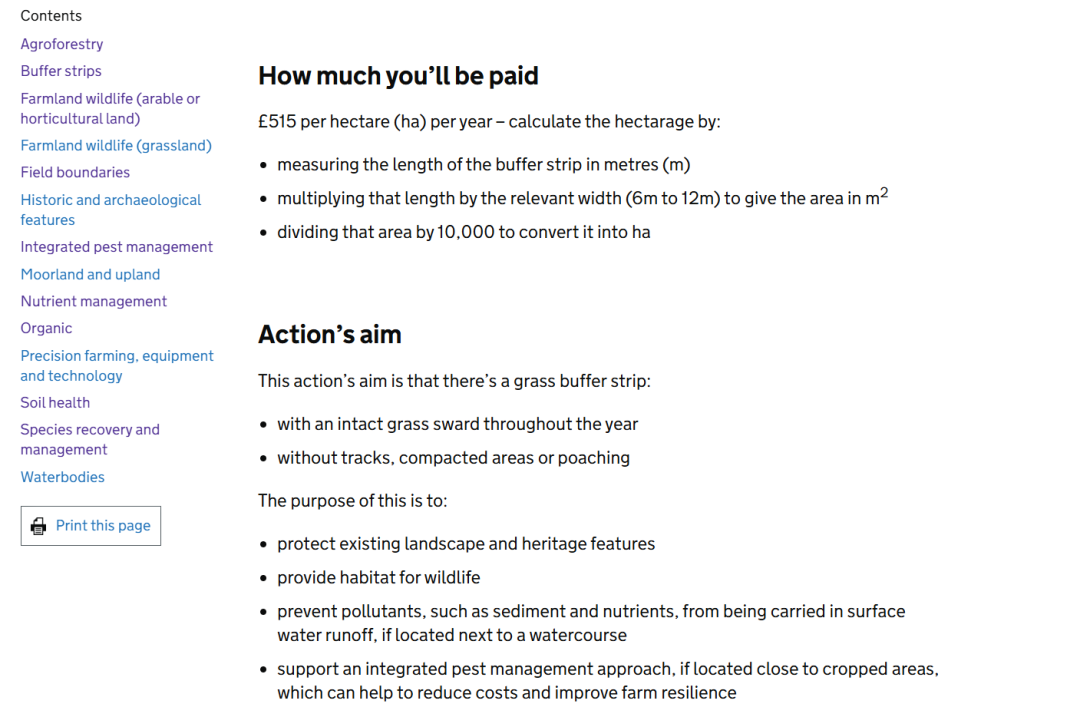
◉ Example of the UK Sustainable Farming Incentive. Image source: UK government website
In early 2026, the UK government pledged to invest £24 million (equivalent to RMB 215 million) in the Sustainable Farming Incentive, with a quarter of the funding earmarked for smallholders with holdings of under 50 hectares. However, Metske has not applied for a subsidy, partly because the farm was too small and partly because they did not own the land. Even without public funding, the connections and sales channels Metske has built up over more than twenty years in farming are enough to sustain the farm.
From Hippie to Organic Farmer
When I first saw Metske at the market, I noticed the seven earrings in his left ear — he must have been a seasoned hippie. This time I finally had the chance to hear him tell his farming story.
In his youth, Metske was involved in the squatting movement in the Netherlands — groups led by anarchists and hippies occupied vacant properties and “redistributed” them to people in need of housing and space. In the 1970s, vegetarianism was as much in vogue as squatting. So it was that Metske and his companions turned a squat into a vegetarian restaurant.
Vegetarianism’s emphasis on diet and the environment went hand in hand with the philosophy of organic growing. Metske’s restaurant naturally began sourcing ingredients from organic smallholders in the Netherlands. Later he moved into organic food retail, and, riding the wave of rising organic consumption in Europe, the business flourished. But as a retailer he earned more than farmers did, and money came more easily; this left Metske uneasy.
“I made up my mind to live an honest, more down-to-earth life.” So he went to work as an apprentice at an organic farm in the Netherlands. Metske says that in those two years on the farm he learned far more than in four years at university, and that it only strengthened his resolve to work in organic farming. And so he left his organic retail business in the hands of his partner, crossed the North Sea, and began looking for land in England where he could put down roots.
In the early 2000s, Metske continued to sharpen his growing skills through courses and farm placements, and also made many contacts in the UK food and farming community. “What mattered most was getting to know the people at the Growing Communities farmers’ market,” he stressed. With both the skills and the contacts in place, the next task was to find land.
Metske spent a long time looking for land. Just as he was losing hope, a phone call brought him to a farm in Sussex, in southern England. The two sides hit it off, and Metske rented a 36-acre farm, which he named Pannel Organic. This was in 2005. The farm was only a two-hour drive from London, but it fell outside the catchment area of the Growing Communities farmers’ market. He therefore targeted the consumer market in Brighton and Lewes, on the south coast, delivering vegetables and supplying organic greengrocers, until the lease ended in 2017.
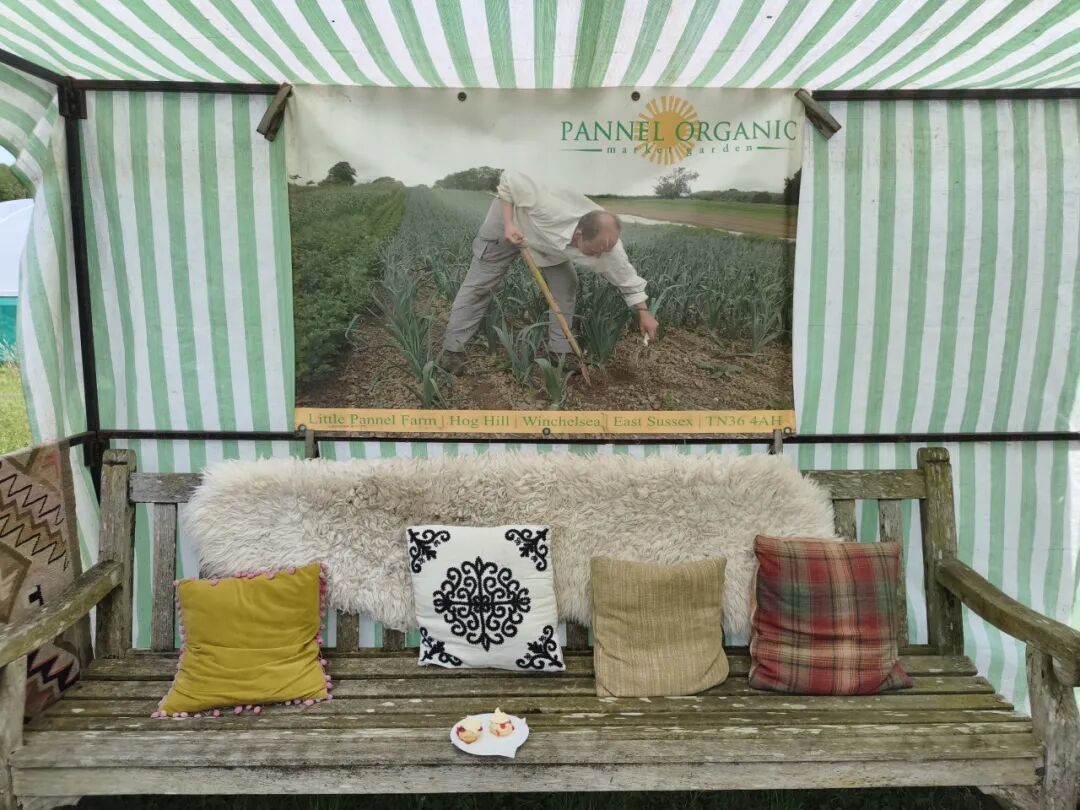
◉ The farm still has a Pannel Organic poster.
Fortunately, Metske soon received an invitation from Bore Place to be in charge of organic growing on a few acres of land. In 2019, he began running the farm independently. At the same time, Metske officially joined the Growing Communities farmers’ market, setting up a stall in London every Saturday during the growing season and also supplying produce for the market’s veg box and organic wholesale service.
It took Metske more than twenty years to go from beginner to seasoned organic grower. He has also shared his valuable experience with the next generation. On the day of the visit, some young people came to seek his advice, and Metske recommended the growing course at Organic Lea, an organic farm in north London. Besides improving growing skills, sales channels and social resources aligned with their values are also key to helping organic smallholders survive. Take, for example, the organisers of this farm visit — the Growing Communities farmers’ market in north London.
This farmers’ market, established in 1996, is dedicated to supporting local smallholders who farm in an environmentally friendly way and to paying fair prices for in-season organic produce. As of now, 23 farms have a stable trading relationship with the market.
What counts as environmentally friendly? Farmers at the market must hold organic or biodynamic certification. What counts as local? Farms must be no more than 70 miles (about 113 km) from the market. For organic meat, eggs and dairy, the limit can be relaxed to 100 miles (about 161 km). Traders selling processed foods must ensure that 70% of their raw materials are purchased from the market’s farmers; if this standard is not met, all raw materials must be organically certified.
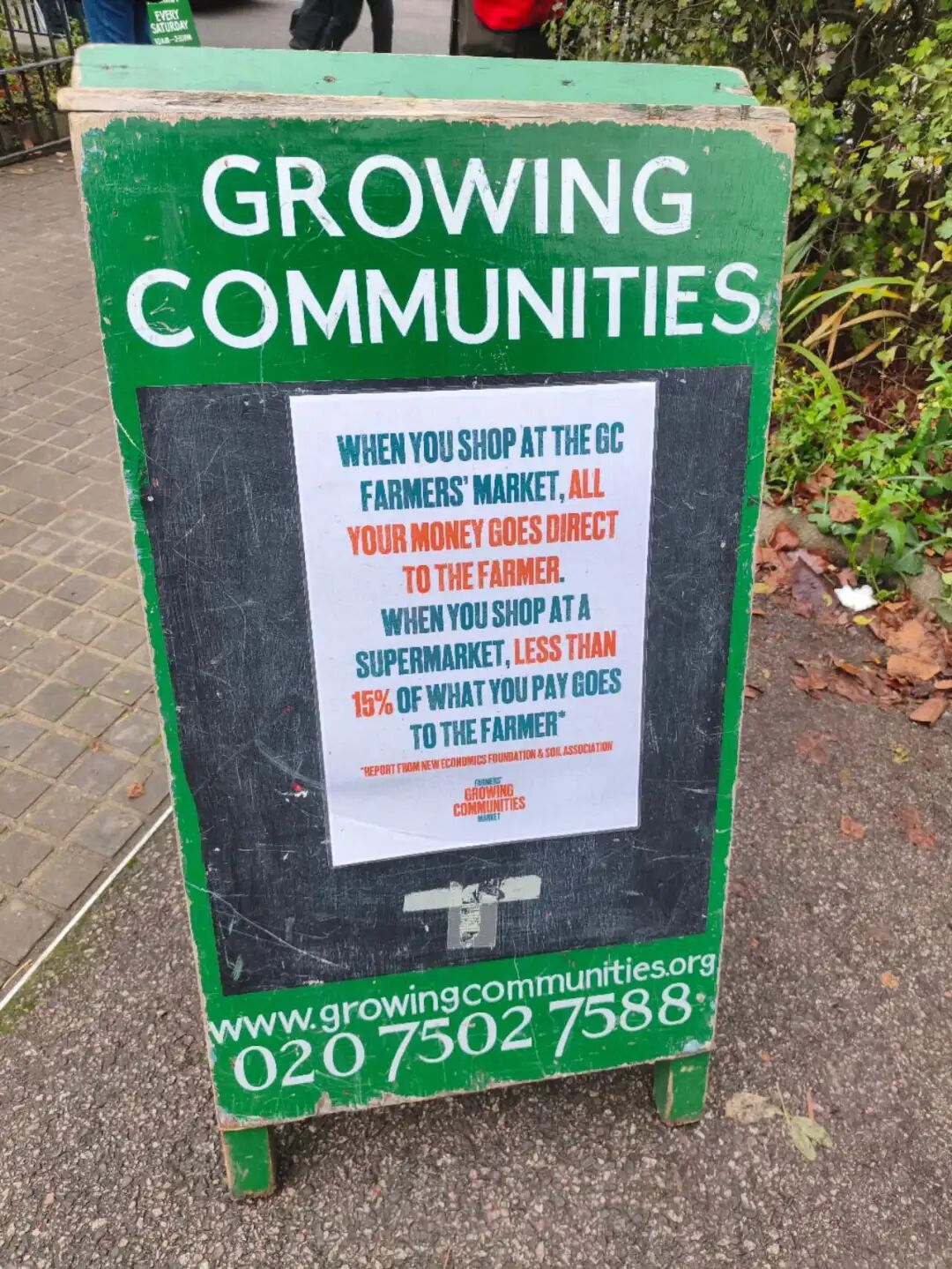
◉ The market sign explains to consumers the social value of buying food at the farmers’ market.
Why support local organic smallholders? The sign at the market entrance spells it out: “If you buy your food at the Growing Communities farmers’ market, all the money goes to the farmers. If you shop at a supermarket, farmers receive less than 15% of the retail price.”
Worse still, farmers sometimes cannot even cover their costs. In a report, UK civil society organisation Sustain analysed the gross margin on conventional carrots sold in supermarkets at £0.59 per kilogram and found it to be only £0.01. But in reality, farmers do not even earn that penny. Because carrots are a staple vegetable, retailers often push down purchase prices to below cost in order to keep prices low and encourage consumption.
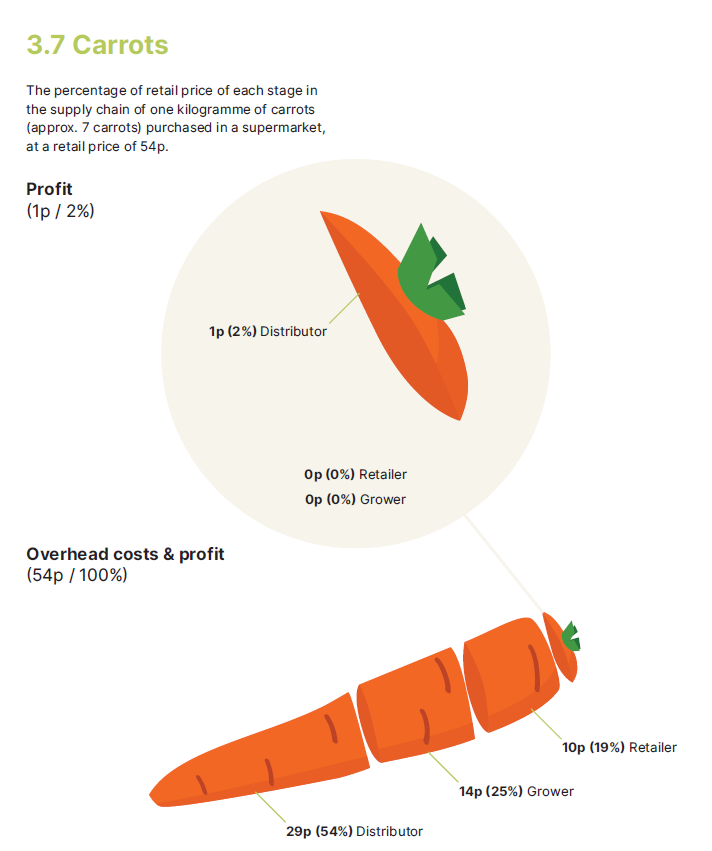
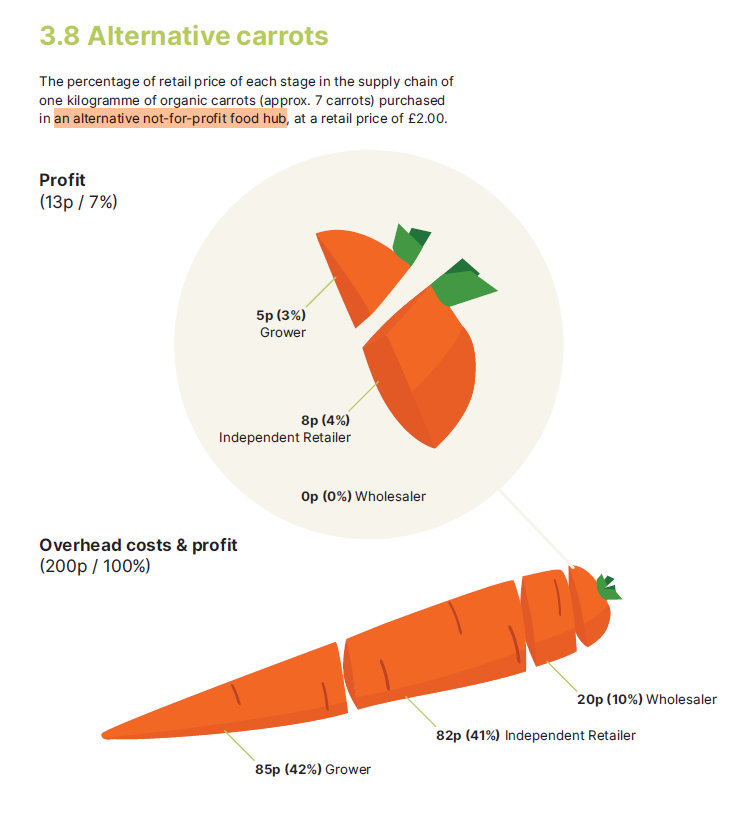
◉ Comparison of profit distribution in conventional supply chains and alternative food systems, using carrots as an example. Image source: Unpicking Food Prices
Retailers’ low-margin, high-volume sales strategy does more than squeeze farmers’ profit margins; public finances are also footing the bill. As early as 2017, the UK Ministry of Agriculture estimated that, without subsidies under the Common Agricultural Policy (CAP), more than 40% of farms would be unable to cover their costs. After the UK left the EU, direct payments fell sharply, and farmers have found it harder and harder to make ends meet.
Life is no easier for ordinary people in the UK. Since the pandemic, inflation and rising energy and food prices have combined to trigger the “cost of living crisis”. Faced with a problem that seems unsolvable, I still believe in Metske and the alternative food systems he represents. With greater public funding and resources in support, these small but excellent practices will surely catalyse greater change.
References
– This is Foodthink’s 814th original article –

Foodthink
Author
Zeen
A carb maniac who is particular about food, currently studying food policy at the University of London.
Editor: Tianle
Layout: Minglin
Scan the QR code to send a tip and support original food knowledge
▼

▼
Click the image to read related articles

▼
Click the keywords to access more article collections
Seeds | Ag Tech | Policy | Fermentation | Nutrition | Fruit | Fisheries | Events | Jobs | Delivery | Wet Markets | Livestock | Food Talk | Sharing Sessions | Book Club | Harvest Festival | Smallholder Stories | Climate Change | Rural Development | Co-operative Economics | Urban Farmers | Food Safety | Digital Technology | Biodiversity | Pandemic and Food | False Solutions | Ecological Farming Internship Programme
Beijing | Hebei | Shanghai | Guangdong | Guangxi | Henan | Sichuan | Jiangxi | Xinjiang | Shaanxi | Hong Kong | Chongqing | Zhejiang | Jiangsu | Guizhou | Taiwan | Inner Mongolia | Philippines | Canada | Russia | Mexico | Italy | United States | United Kingdom | Germany | Netherlands | Thailand | Sweden | Japan