Drinking Coke at Spring Festival: Who on Earth Came Up With This?
Spring Festival is drawing near, and not only has the holiday background music in major supermarkets started to thaw, but the familiar festival tagline “You gain three catty (1.5 kg) at every holiday” has refreshed across the homepages of various social media platforms. In the past, people tended to attribute holiday weight gain to feasting on rich meat and fish. In recent years, however, a growing body of research has identified excessive sugar intake as one of the primary drivers of obesity. The latest evidence comes from a study published in Nature Medicine on 7 January 2025. After running modelling estimates across 184 countries, the scientists found that in 2020, approximately one in ten new cases of type 2 diabetes and one in thirty new cases of cardiovascular disease globally could be attributed to the consumption of sugar-sweetened beverages.
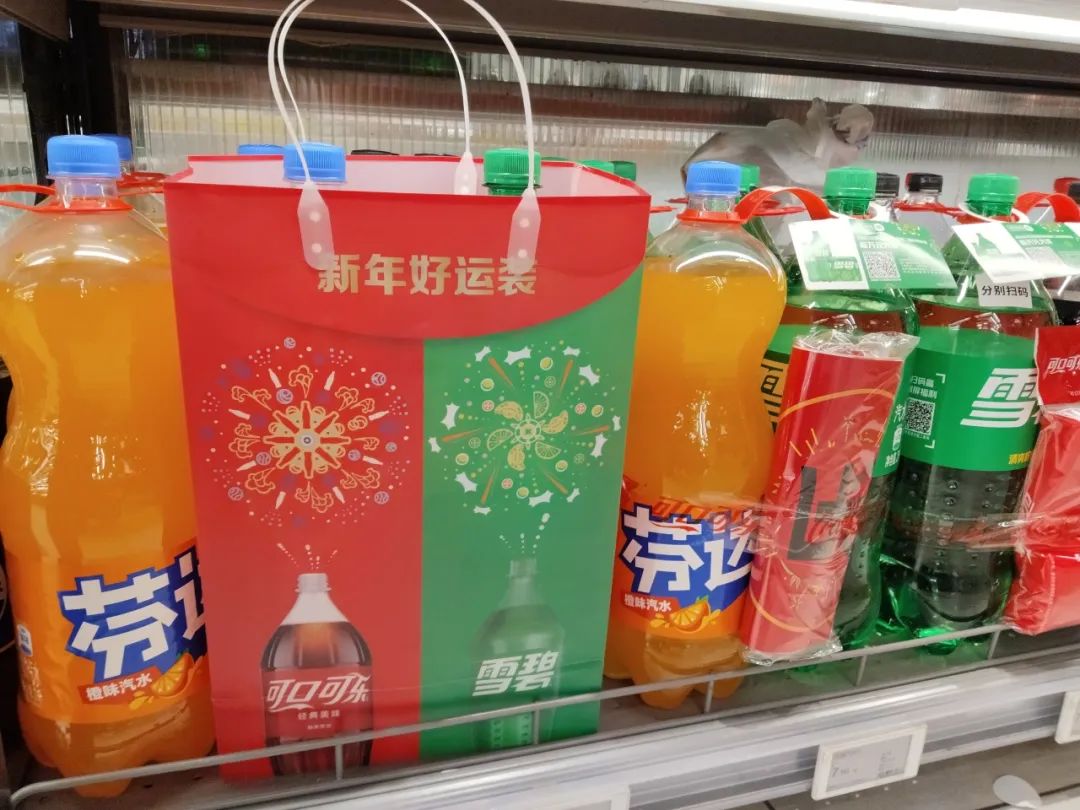
“Sugar control” has become a trending buzzword, popping up frequently in hot searches and consumers’ everyday discussions. The volume of backlash against high-sugar foods continues to grow, and sales of sugar-sweetened beverages of all kinds have been declining to varying degrees. Take Coca-Cola, the soft drink giant, for example. According to its Q3 2024 earnings report, Coca-Cola’s revenue for the quarter was US$11.854 billion (approximately RMB 84.51 billion), a 1 per cent year-on-year decline. In the Asia-Pacific market, which includes China, sales reached US$1.349 billion, down 4 per cent year on year. Media reports from offline research note that multiple distributors complained to reporters that Coca-Cola sales are becoming increasingly difficult.
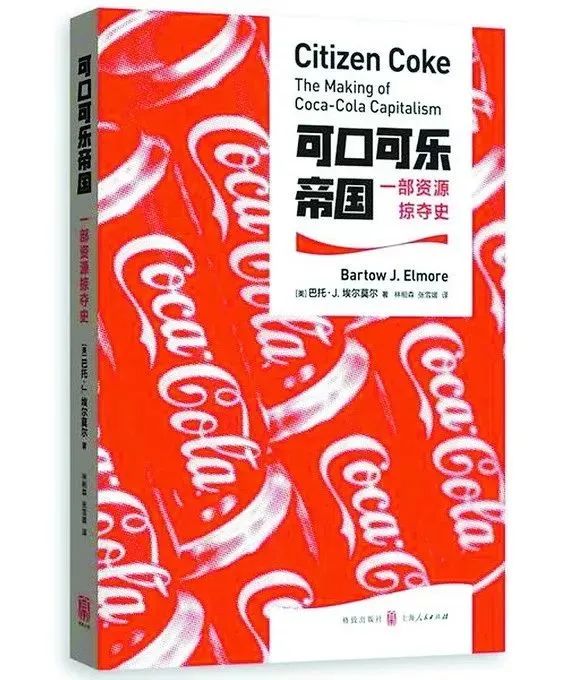
Is Coca-Cola’s “sky” about to fall? Probably not. Pick up American historian Bart J. Elmore’s The Coca-Cola Empire: A History of Resource Plunder, and you will discover that a crisis like this is far from the first, and that Coca-Cola’s problem is not simply about “making couch potatoes even fatter.” Using Coca-Cola as a case study, the author traces the development of one corporation to illuminate how the food industry shapes consumers’ dietary preferences, the amoral face of transnational capital, and the unchanging underlying logic behind the ever-shifting tactics of capital plunder.
Behind junk food are junk corporate values and real, non-degradable waste that pollutes the planet.
I. Three Key Moves to Building a Fortune
Few people know that before successfully building the Coca-Cola empire, its founder Pemberton had experienced a bankruptcy. This failure made him realise the first ingredient of success: lock onto policy and free-ride. In 1886, the first policy tailwind Pemberton caught was the US Prohibition. He created a new-flavoured non-alcoholic soda to replace alcoholic drinks. More precisely, Pemberton produced a concentrated syrup and sold it to iced-drink vendors in Atlanta. Ding — the second key factor in Coca-Cola’s success appeared: outsource everything non-core that is not concentrated syrup production.
Coca-Cola’s formula can be called a perfect embodiment of Gilded Age resource surplus: a mixture of water, large quantities of cane sugar, cheap caffeine, cocaine, and spices. The author points out in the book that the Coca-Cola company, like a scavenger, used surplus products to accumulate capital, selling cheap goods at marked-up prices to earn marginal profit. Thus, as a prerequisite for profit, seeking or manufacturing an oversupply of cheap raw materials became the third key factor in Coca-Cola’s success.
These three key factors are vividly on display in how Coca-Cola secured its most essential raw materials — a mix of favourable timing and geography, and active manipulation by Coca-Cola itself — ultimately feeding a behemoth with a market capitalisation exceeding one hundred billion dollars.

II. Water from Public Utilities
If Coca-Cola’s practice of “packaging public water for profit” might, when it occurs in the United States, draw a calm string of invective — “capital is truly insatiable” — their behaviour overseas can hardly be described in anything less than “resource plunder,” because the Coca-Cola company often invests in regions where water is at its scarcest, and this enterprise’s business consumes vast quantities of water.
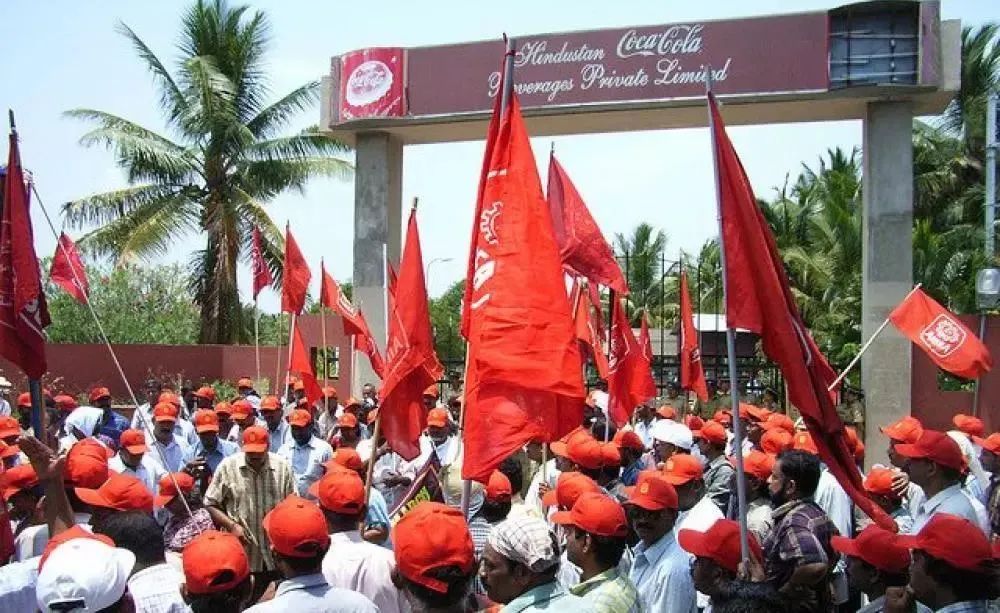
Coca-Cola’s shameless plundering naturally provoked resistance among people in various countries, but most of it ended in failure — with the exception of Kerala, India. Once the production equipment at the local Coke bottling plant started running, groundwater was nearly depleted, and local rivers and land were polluted. In 2002, local social activists formed the “Coca-Cola Violates Samara Committee,” hoping to shut down Coca-Cola’s processing plant. It was not until 2014 that they succeeded in driving it out — a success that is rare indeed and exceedingly hard-won.
III. Sugar Subsidized and Protected by the Government
Fluctuating sugar prices soured Coca-Cola’s relationship with this essential raw material. Fortunately, a more perfect sweetener came along — high fructose corn syrup — from corn, another crop produced in surplus in the United States. Once again, Coca-Cola latched on to a raw material made extremely cheap by government subsidies. In 1985, what Coca-Cola added in the United States was no longer cane sugar but corn syrup. This was a massive production shift, but the company did not need to sell off any factories, plantations, or equipment, because it did not own any. All it had to do was switch its suppliers from cane sugar producers to high fructose corn syrup producers. As for the enterprises thus cast out of the supply chain and the workers behind them, the answer was much the same as the one “the father of Coca-Cola” Woodruff gave when he dropped Monsanto Chemical: “I’m afraid I can’t be of much help.” And as for Monsanto’s pivot from selling saccharin and caffeine to Coca-Cola to selling toxic chemicals, pesticides, and GM seeds to the entire world — well, that is another story altogether.
IV. The Third Cheap Ingredient in Coca-Cola — Caffeine
At first, Coca-Cola purchased caffeine extracted from discarded tea leaves from Monsanto, and later switched to caffeine extracted from cocoa waste, bought from Maywood Chemical Company. Affected by world wars, advances in chemical industry technology, and other factors, the raw materials market for caffeine remained depressed for a long time. Benefiting from this, Coca-Cola stockpiled caffeine at prices below those seen at the turn of the century and, in doing so, became the largest buyer. Its powerful position as a major buyer in turn strengthened its bargaining leverage over caffeine. For example, in early 1942, Coca-Cola was purchasing caffeine from Monsanto at US$1.61 per pound, while PepsiCo had to pay US$2.18 per pound.
By the latter half of the twentieth century, even as the hidden ecological, economic, and biological costs in caffeine production and consumption began to rise and threaten the viability of the company’s product chain, Coca-Cola managed to shake free of this predicament — but only by riding the anti-caffeine wave of the 1950s. Although at the time Coca-Cola, as the prime suspect in spreading caffeine, was thoroughly reviled, the decaffeination market was expanding rapidly. Vast quantities of caffeine were being discarded as waste, left to accumulate in caffeine processing plants around the world. And so, once again, Coca-Cola secured a fresh source of abundant caffeine. The anti-caffeine campaign, remarkably, drove caffeine production to unprecedented volumes, and Coca-Cola’s profits continued to climb steadily over the following decades.
V. A Gaunt, Misshapen Resource Plunderer
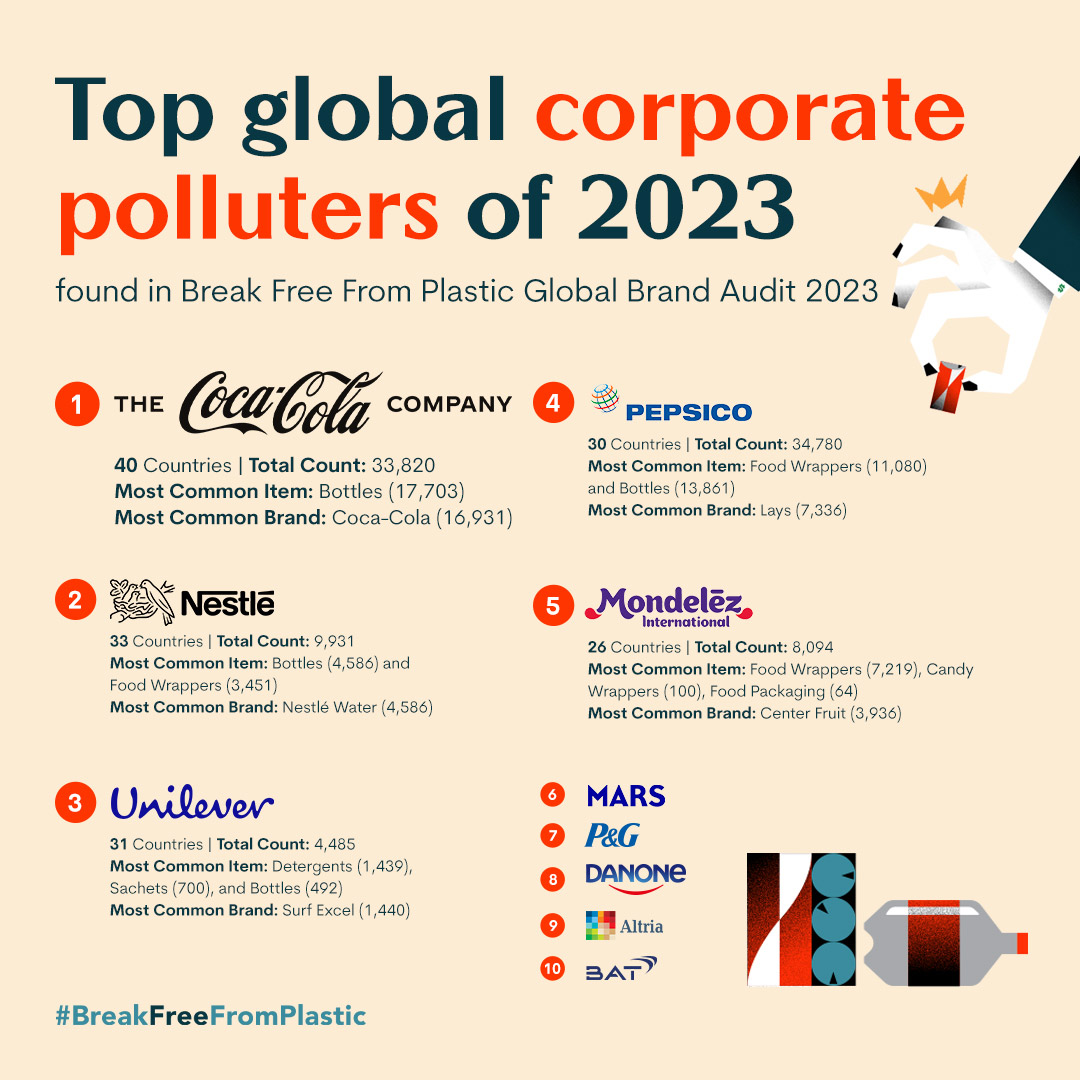
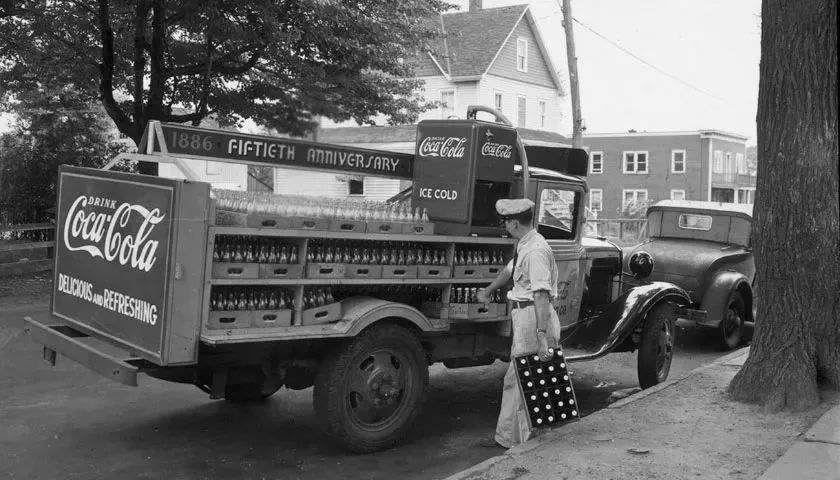
In fact, Coca-Cola has not always generated this much packaging waste. In its early days, it was even a pioneer in reusable packaging, using a deposit system to encourage consumers to return glass beverage bottles. This approach to reuse remains, to this day, one of the solutions most recommended by environmental organisations.
But the temptation to cut costs and shift responsibility for waste was simply too great. On the one hand, Coca-Cola rapidly swapped the eco-friendly reusable glass bottles for single-use metal cans or plastic bottles; on the other, it began manipulating public opinion, partnering with allies to establish “Keep America Beautiful” — using a name that sounds like a grassroots environmental cause to lobby both the public and the government, with the aim of transferring the responsibility for managing packaging waste from beverage companies onto the public: “Protecting the environment is everyone’s responsibility.”
In their messaging, it appears as though plastic pollution is caused by consumers littering, with no mention whatsoever that before consumers even buy the products, they are already sealed in single-use packaging. And the reason for doing this is that Coca-Cola needs to deliver its products to more remote markets at lower cost.
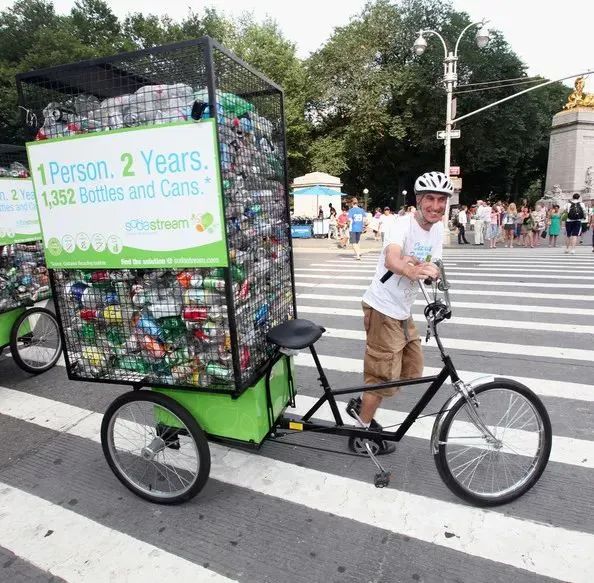
Despite the beverage industry’s intensive lobbying efforts, level-headed environmentalists were not taken in and continued to point the finger at the true source of pollution — the corporations themselves. Environmental and legislative bodies also attempted to address the increasingly severe waste problem through taxation and legislative penalties. These efforts met with fierce obstruction and opposition from companies such as Coca-Cola, which threatened the government that “tens of thousands of factory workers will face unemployment” and that “the entire industry will cease to exist.”
But is the employment question truly without a solution? Not necessarily. When Coca-Cola originally ditched glass bottles to save costs, it inevitably put large numbers of glass-bottle washing and transport workers out of work. In the future, if a reusable packaging system were to be rebuilt, the new jobs created for maintaining the system would presumably fill the vacancies left by single-use packaging production. If Coca-Cola genuinely had a sense of responsibility towards protecting the public, it would not leave behind, across the globe, one drained-out resource site after another.
Recently, Coca-Cola has once again found itself at the top of the storm over greenwashing. In early December 2024, Coca-Cola announced that it had revised its “voluntary environmental targets.” The new target is to use 35 to 40 per cent recyclable materials in packaging by 2035, whereas the previous target had been to reach 50 per cent by 2030 — a cliff-edge reduction. A representative from the environmental organisation Oceana stated: “Coca-Cola’s new pledge has virtually no real impact on its total plastic use.”
Whether the value created by the Coca-Cola company can offset the costs borne by society as a whole remains an open question.
VII. One of the Culprits Behind Obesity
By the 1990s, the obesity problem in the United States was not declining but worsening. Some cities began levying an “obesity tax” on junk food, and beverage companies continued to threaten that “the company will abandon its bottling plant investment projects in that region.” In the early twenty-first century, New York State again proposed a tax on junk food, and consumer freedom organisations backed by Coca-Cola launched lobbying campaigns on the grounds that “the government should not decide what people should eat or drink.” Coca-Cola’s public opinion strategy illustrates the Cantonese adage “Kiu m paa lau, zeoi him jiu sau” — the bridge need not be new, it just needs to hold; in other words, it doesn’t matter if the method is old, as long as it works.
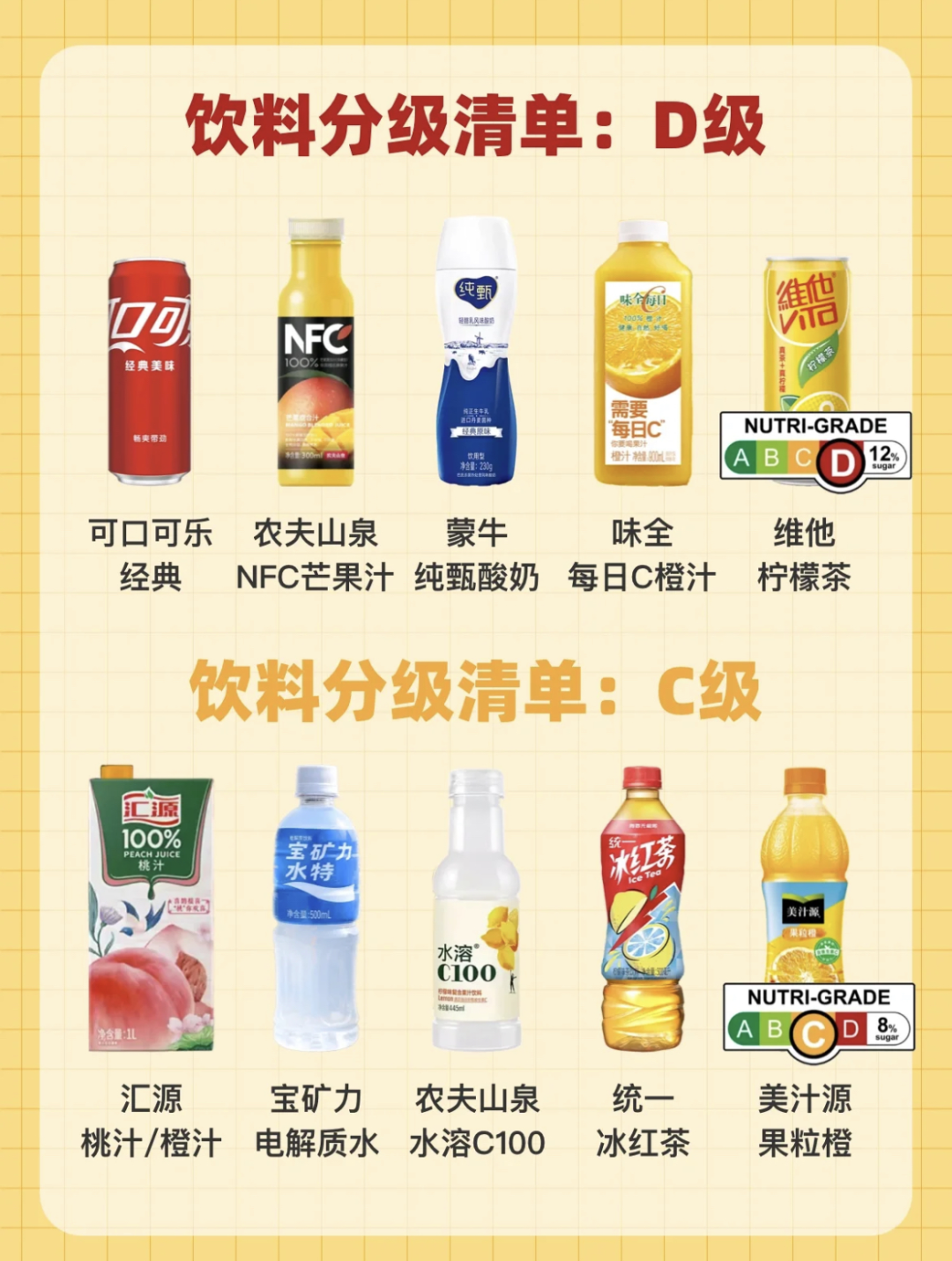
But no matter how desperately Coca-Cola clings on, more and more of the public now understand that sweetened beverages, of which Coca-Cola is the flagship, are a root cause of obesity. Moreover, consumers’ craving for sweetness has long transcended natural bounds. Researchers have noted: “The sweetness of carbonated beverages sends children a message — all food should be this sweet.” Even so-called zero-calorie artificial-sweetener drinks have been shown by research to increase appetite, disrupt the body’s basic self-regulating mechanisms, and bring with them the burden of obesity. As a result, an increasing number of countries have joined the ranks of those restricting sugar-sweetened beverages in recent years.
But Coca-Cola’s future is not humanity’s future. Although we sometimes get the delusion that “capitalists’ lives are longer than mine,” as long as more consumers recognise the health, environmental, and social costs behind their beverages and drink just a few fewer bottles of Coke, they will be in a state of constant dread all day long. And we, on the other hand, get a steady blood sugar curve.
Notes and References
[2] Coca-Cola China official website [OL]. https://www.coca-cola.com/cn/zh
[3] Coca-Cola. Coca-Cola 2024 Q3 Earnings Report: Revenue Beats Expectations; CEO Says Long-Term Goals in China Unchanged [OL]. https://www.coca-cola.com/cn/zh/media-center/q3-2024-financial-report,2024-10-23. [4] 21st Century Business Herald. Coca-Cola Sales in China Decline: Dropping Bottled Water, Doubling Down on Carbonated Beverages [OL]. https://m.21jingji.com/article/20241025/321e2a57981f9c7d1a54b525bee0b791.html,2024-10-25. [5] Wikipedia. The Coca-Cola Company [OL]. https://en.wikipedia.org/wiki/The_Coca-Cola_Company,2023. [6] China Foods Limited [OL]. http://www.chinafoodsltd.com/.
[7] Aiqicha – COFCO Coca-Cola Beverages (China) Investment Company [OL]. https://aiqicha.baidu.com/company_detail_28672433808726?p_type=2&p_tk=6540HVJ2znYhUzPGqUSHdsgVsFJCkOT7EHJDy3r%2BZqkrjraVucdxs3nJDfbaEaaHhdNoRPA6w5w6Jge5awN9GU91pO%2F1v%2BKZpMZhdMxkFKFvgqc5PWIP0BEbVSeM5QPSXunW1bo8JYr%2Bra2SOAJguOytJh%2B3VRfG5NaGwYNkwe3g4Ck%3D&p_timestamp=1737717947&p_sign=03d1383f7bcdf77b4954fbc74fe3fe22&p_signature=c67845b7ca55bff8937d6114d434aea4&__pc2ps_ab=6540HVJ2znYhUzPGqUSHdsgVsFJCkOT7EHJDy3r%2BZqkrjraVucdxs3nJDfbaEaaHhdNoRPA6w5w6Jge5awN9GU91pO%2F1v%2BKZpMZhdMxkFKFvgqc5PWIP0BEbVSeM5QPSXunW1bo8JYr%2Bra2SOAJguOytJh%2B3VRfG5NaGwYNkwe3g4Ck%3D|1737717947|c67845b7ca55bff8937d6114d434aea4|03d1383f7bcdf77b4954fbc74fe3fe22. [8] BFFP. The Brand Audit Report 2023 [R]. 2024. https://brandaudit.breakfreefromplastic.org/brand-audit-2023/.
[9] Coca-Cola Abandons Environmental Commitments; Plastic Pollution Crisis Escalates Again [OL]. https://www.cenews.com.cn/news.html?aid=1179912, 2024-12-07.
[10] Michael Moss. Salt Sugar Fat: How the Food Giants Hijack Our Brains [M]. CITIC Press. 2015-11.
[11] Hydrogen Consumer. This Generation of Young People Is Abandoning “Sugar-Sweetened Beverages” [OL]. https://36kr.com/p/2864886416018052,2024-7-16.