
After Two and a Half Years as an Agriculture Reporter, I Still Cannot “See” Food
Yet before long, I discovered that most of our story ideas came from listed companies’ announcements and earnings reports. My performance targets required me to turn out more than a dozen pieces a month, so the vast majority of my stories relied on phone or WeChat interviews, and I had to file on the very same day. I only rarely travelled for on-the-ground reporting.
So it was hardly a surprise that even though I wrote about “eating” every single day, I still could not see food – a large company’s annual report describes only the macro picture. The description is remarkably broad. Relying on the three statements in a financial report (namely the balance sheet, the profit and loss account and the cash flow statement – the three core financial statements) cannot explain how food is produced, processed, consumed, or discarded along the way. I often wondered: was I really a journalist?
1. The Invisible Abscesses in Pig Meat
Still determined to find where their pork actually went, I kept digging through the data and stumbled, unexpectedly, on a lead.
On a short-video platform, someone was venting: “Their pigs’ forelegs are riddled with abscesses that just can’t be trimmed away.” – referring, as it turned out, to that very company. Someone replied underneath: “Too many injections.” Another added: “They collect the abscessed meat to take home and feed the dogs.”
Their identities are not hard to guess – basically people working at the abattoir. In the slaughter process, there is a step called dressed-carcass trimming. Parts of the pig not fit for human consumption are removed at this stage and become condemned meat. Some supermarkets and pork butchers carry out further precision trimming before putting the meat on sale.
“Injections” here refers to vaccinations. If a pig is slaughtered before the vaccine has been fully absorbed, abscesses form on its body. This is inevitably the result of farming companies pushing too hard for production efficiency – boosting output being the way the livestock industry protects its margins when the cycle turns downward.

For the moment I had no bandwidth to follow the lead. So I set it aside and filed my story.
For those two years, most of the time I was writing stories of this nature – macro-level agriculture pieces. Writing about large companies was, admittedly, a solid piece of professional training: tracking daily business shifts and market pressures, you could soon get a read on where an industry was headed. Business, after all, is a crucial part of understanding how society works.
But after writing so much about big companies, I remained an amateur when it came to agriculture itself. In the end, most of my reporting could not break free of the framework of macroeconomic data analysis and supply-and-demand debate.
So when I stumbled upon that “abscess” clue, I was genuinely excited. No one had written about it. Even from a purely pragmatic standpoint, if I could get to the bottom of the problem, perhaps the company’s PR team would see me in a different light – for the longest time, communicating with that company had been an exercise in futility. They were like the “living dead” lurking in my contacts book: no matter how many times I called or messaged, they never responded. It was only after a colleague published a piece that had “touched a nerve” with them that we managed, at long last, to establish a workable line of communication.
But in the end, I never followed my lead through. Most likely it was simply fear of difficulty. In any case, the resources I had on hand could not have supported an investigation that tracked down people along the slaughter chain or, heaven forbid, got me inside an actual abattoir looking for answers. And the next deadline was already bearing down.
2. When the Reporter Hits a Downturn of Her Own
Another example: in the meat-duck supply chain, the duck meat itself is worth less than the by-products. Because it is so cheap yet still needs an outlet, some people use it to pass off as beef or mutton. One report noted that a great deal of duck meat ultimately ends up in group catering at construction sites. In an age when meat, eggs and dairy are no longer scarce, it was the first time I realised that even consuming meat, eggs and dairy can draw a line between people.
From this vantage point, had I not become an agriculture reporter, I might never have paid attention to the price swings at the wet market, let alone wondered, while ordering groceries online or a takeaway, where those ingredients came from and who they were sold to. And yet probing into why people have stopped buying milk, or why some settle for worthless duck meat – is that not the equivalent of asking “Why don’t they just eat meat?”, the callous question of a ruler who has never known hunger?
We have a familiar reporting framework, one pillar of which is watching for price fluctuations. Price is a direct handle on the story: it speaks to the macro market and yet mirrors every individual’s daily spending. Price movements usually stem from an imbalance between supply and demand. As it happened, the moment I entered agriculture was squarely in the middle of a price-decline cycle, defined by oversupply and falling consumption. The glut stemmed from optimistic expectations during the preceding upswing cycle – people seemed to believe the market had no ceiling, and nearly everyone poured more investment in, anticipating future windfalls. But the cold reality is this: the upswing ends, and people start trading down.
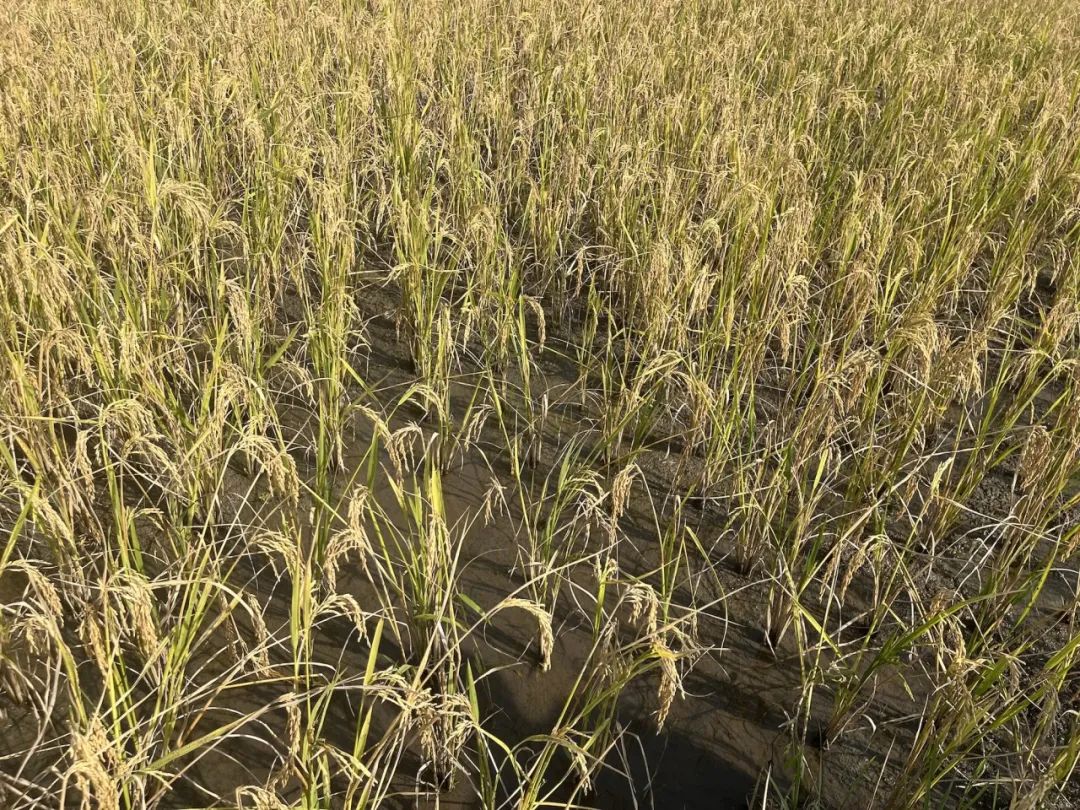
But real agriculture – the business of actually growing crops and raising pigs – is plainly not among them. During earnings season, the turnover of farming companies barely matches the profits of their tech and industrial counterparts. Farming companies mostly do not face consumers directly, have little incentive to build a brand, and see no need to partner with the media. Add to that the fact that my own articles were little more than recycling others’ talking points, attracting no readers – my traffic sat at the bottom every time – and in the end I could not hold on to my job.
3. Can Standardisation Solve Everything?
This overcame two perennial problems of traditional agriculture – being at the mercy of the weather and producing non-standardised goods – and lowered their operational difficulty. For consumers, it meant that buying fruit was no longer like opening a mystery box: one week the berries taste great, the next they taste completely different.
I visited orchards in Zhaotong, Yunnan, and Pinggu, Beijing, built on similar principles. Not only were the rows and spacing between trees uniform, but every tree had been pruned to the same shape, like soldiers standing in formation so that each fruit receives the same exposure to sunlight. The fruit itself is graded to standard: dedicated machines sort each piece so that size, shape and even sweetness are consistent.
I even got to drive a smart tractor worth well over a million yuan. While we are still debating whether driver-assistance technology is safe on city streets, it has already found an ideal application – large-scale farmland. Had Clarkson not bought a Lamborghini tractor but instead chosen one fitted with driver assistance, he would not have ploughed his fields all crooked in the first place.

The livestock industry is no different. Today, livestock companies can use sensors to know precisely how much feed each pig consumes, then calculate exactly how much flesh that feed translates into – a level of precision operations that can effectively bring down feeding costs.
When I first started covering agriculture, I was thrilled by these stories, convinced that with the right technology, farming could finally break free from being at the mercy of the weather, eliminate uncertainty altogether, conquer hunger, and let everyone eat better.
In practice, urban consumers in China already enjoy this convenience. Living in Beijing, you get a steady supply of fresh fruit and vegetables all year round; you can order groceries for home delivery, opt for a takeaway when you cannot be bothered to cook, or just pop into a nearby restaurant…
Basic survival needs appear to be effortlessly met, yet the true act of “eating” has grown ever more weightless. You cannot see food, you cannot see how food is produced, and wasting it is no longer something to feel ashamed of. “Who knows that the rice on one’s plate – every grain is the fruit of bitter toil?” – a verse that once carried real moral weight – has become a norm so easily breached that the government must launch a Clean Plate Campaign to teach people the lesson.
As a consumer, perhaps you can ease the anxiety with more transparent information. But as a journalist – as one link in the chain of information relay – I feel even more powerless. Companies talk of large-scale production, of direct sourcing from farms, of contract farming, of QR code traceability… Most of the time I have no choice but to believe their commercial judgements and solutions, becoming an unwitting tool of their market education.
And yet I cannot wholeheartedly embrace that commercial world. Even in purely logical terms, large-scale production does not truly mean safety; it merely means that when food goes wrong, it goes wrong on a far grander scale. Layer on the sprawling agricultural distribution system, and the blast radius only widens.

There is also a restlessness I cannot shake. The cattle farmer I mentioned once told me that in his hometown, Darhan Muminggan United Banner in Baotou, many people had turned to going home and raising cattle as a refuge. Today, “returning to the land to farm” is another topic the media loves to cover. But once they have gone back, if they try to run agriculture this way, the costs will be astronomically high, and they will still be swept up in agriculture’s cyclical price swings. Is returning to the land really a way out? And if all the smallholders exit farming, will life in the city truly be better?
4. My Experimental Plot
Of course I could not recoup the cost. It merely let me gain, through my own two hands, a fraction more understanding of the beat I covered.
At the end of July, when the crops were at their most vigorous, I went on a business trip lasting nine days in total. Just before I left, I had asked a friend to water the plants for me. But then I checked the weather forecast – Beijing was set for days of rain – so I told my friend not to bother.
When I got back, Beijing was still drenched by relentless rain. The plot had become an impassable bog, so for roughly half a month I could not set foot in it. I had assumed Heaven would tend my vegetables in my stead.
What I found instead was utter devastation: every leafy green had died, the chillies had drowned and rotted, and a handful of tomato plants clung on, barely alive. Only the mint and perilla – plants never subjected to long-term human domestication and cultivation – were still thriving after the downpour.
August brought more of the same – scorching heat lashed by heavy rain. Even replanting yielded nothing; not a single vegetable survived. I was not alone. The vegetable growers, battered by the same weather, suffered losses as terrible as mine. Last summer, vegetable prices rocketed. In the face of climate change, novices and veterans are equally fragile.

I faced not only the weather’s cruelty but also my body’s punishment for the labour of tilling the soil.
When I first started, I decided not to weed. I had read that leaving the weeds provides extra ground cover, and that their undisturbed root systems cause less disruption to the microorganism habitats in the soil.
Yet nearly every passer-by would stop to ask: why are you not weeding? One day an elderly neighbour did the same, and I launched into my freshly acquired knowledge with great enthusiasm.
He shot back: “Is that something you picked up on Douyin?” The implication was plain – I had been duped by Douyin. I pressed my defence, only to infuriate him further. I never managed to repair the neighbourly bridge, and from then on, whenever we crossed paths at the farm, he would not give me a second glance.
In the end I could not hold out against the social pressure and waged war on the weeds for weeks on end. Crouching in the mud to pull them left my knees aching – an injury that only healed completely this past summer.
Farming, apart from its therapeutic value, was of little practical help to my craft as an agriculture reporter. In the end I still had to return to the professional plane and find my own answers there.
Agriculture does throw up fresh story ideas from time to time: new-generation farmers returning to the land, consumer-facing companies moving upstream into growing, or even novel farm produce appearing in hotpot and tea beverages… There is no shortage of such angles. But do these stories truly carry the weight of agriculture?
While researching the Shine Muscat grape, I met a woman. Once I had finally convinced her I was a journalist, her emotions surged; she lashed out at the media’s lack of scruple. She told me her family had been swindled out of a fortune in their construction business, and they had turned to growing Shine Muscat to salvage their livelihood – only to be hit by a market glut. Reporting on it, she said, was nothing but salt rubbed into the wound.
I had made a mess of that encounter. I spent ages sending her WeChat and text messages to smooth things over, and it took some careful talking before she calmed. She even gave me her husband’s number, suggesting I go and have a chat with him.
I never called them. I deleted our entire conversation. By then, I had gathered enough grower material, and the story itself was simple: to write about how the Shine Muscat had failed as a crop. There was no need to disturb them again. Besides, a flimsy, lightweight story could never hold the weight of a family’s heartache.
Over the past two and a half years, countless moments like these have forced me to reflect: what kind of agriculture journalism do I actually want to do, and how?
Sometimes I think back to my former editor. He used to say our edge was being immersed among people in the industry every single day, so we could sense the shifts in the sector sooner than anyone else. Those words struck me to the core, and I have held them as gospel ever since.
Having come to agriculture and written about it for two and a half years, the face it presents to me grows ever more complex. It is not merely a business model; it is people’s livelihood. It is not just smart agriculture; it also has a deeply traditional side. I grow increasingly restive about reporting agriculture from within the confines of a commercial lens.
What exactly that looks like, I still do not know. But I can no longer write about agriculture as an outsider. The only way I can see through is the one my former editor articulated: to be among the people in the industry, every single day. I need to draw closer still.


In a world where everyone can eat their fill, agriculture receives far too little attention – a fraction of the buzz surrounding booming tech. Yet agriculture, too, is undergoing earth-shaking changes. It is its own “gold mine” of stories, with vast territory still waiting to be explored and reported.
If you share the author’s bewilderment and long to understand more deeply the logic and detail that lie behind food, if you want access to more first-hand information about agriculture, you are warmly invited to the Foodthink food and farming media workshop, organised in early September. Foodthink will bring together journalists who have reported on food, farming and the environment for years, and they will share their experience and craft. The author of this piece will also be there to join the conversation.
Edited by: Auntie Xiong