
Small Organic Farmers and Consumer Organisations in Canada
Foodthink Says: Organic farming in Canada has developed rapidly over the past decade, with the area of organic farmland, the number of organic farmers, and consumption volumes all rising sharply. This growth would not have been possible without the efforts of numerous small-scale organic farmer and consumer organisations. In a lecture, two Canadian scholars and farmers introduced us to the work of farmer and consumer organisations at every level across the country.
Towards Sustainable Agriculture and Food Systems
Small Organic Farmers and Consumer Organisations in Canada
Author | Chang Tianle
Motivated by concerns over sustainable agriculture, food safety, and social justice in agriculture and food, civil society organisations at every level across Canada have organised and carried out a wide range of activities around these issues.
Professor Steffanie Scott of the University of Waterloo explained that the principal national-level body is the Canadian Organic Growers.
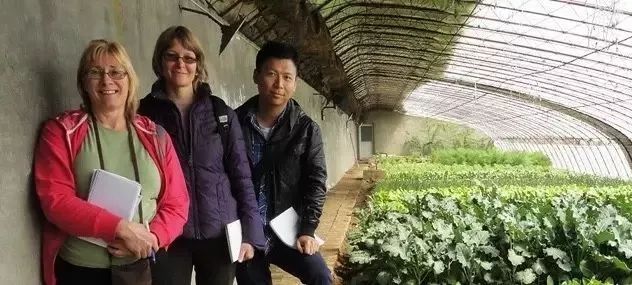
Professor Scott (second from left) with Theresa and Si Zhenzhong, conducting field research at an organic farm in Beijing. Their co-authored book on organic farming in China was published in September 2018.
This association has published a large number of books and materials guiding farmers on seed selection and breeding, crop and livestock production planning, soil quality improvement, and more. They help organic farmers develop their skills in technology, marketing, and management, and also provide platforms for farmers to connect with one another, carry out consumer education, and engage in policy advocacy. In their quarterly journal, farmers can read articles covering every aspect of organic farming, with topics including:
Specific agricultural techniques: for example, how to grow a particular crop in a given region, and soil management and pest and disease management;
Farm management: each issue features interviews with several successful organic farms, sharing their experiences;
Marketing: for example, how to reduce costs and improve sales efficiency through cooperative structures;
Policy analysis: for example, how to respond to government measures on dairy quotas;
Global issues: for example, organic farming and climate change.
The journal also features recipes, book reviews, coverage of events in various regions, and reader letters, as well as some advertising from related businesses (certification, consulting, and training organisations, organic restaurants, and the like) and classified ads to generate some revenue. However, most of the organisation’s operating income still comes from charitable foundations and membership fees.
Different Organisations, Different Focuses
Further organisations carry out activities nationwide, each with its own particular focus.
For example, the Canadian Biotechnology Action Network focuses on food sovereignty and environmental justice, particularly on informing the public about the potential environmental and social issues posed by genetically modified (GM) technology.
Another important group is Food Secure Canada, which uses publicity, education, outreach, and research to mobilise ordinary citizens to pay attention to environmental, health, food, and equity issues connected to agriculture, and to take action by providing policy recommendations to government and parliament. They also work with international organisations such as the United Nations to carry out related research in Canada.
Various farmer groups, consumer organisations, and civil society organisations across Canada come together to advocate for sustainable agriculture and food systems.
In addition to national organisations, each region has its own agriculture and food NGOs.
Some focus on producers, others on consumers. In Ontario, the province where the University of Waterloo is based, organisations such as Ecological Farmers of Ontario, Sustain Ontario, FoodNet Ontario, and the Waterloo Region Food Systems Round Table address the sustainability of agriculture and food from different angles and through different approaches.
These organisations also publish consumer-oriented pamphlets explaining why one should buy organic produce from local farms, and listing the location, scale, and how to purchase products from organic farms in each area. For different regions, the pamphlets set out the season and month each type of produce is available, encouraging readers to eat local, seasonal ingredients as much as possible. For consumers who do not cook at home, they also thoughtfully list restaurants that specifically use local organic ingredients, offering those readers options.
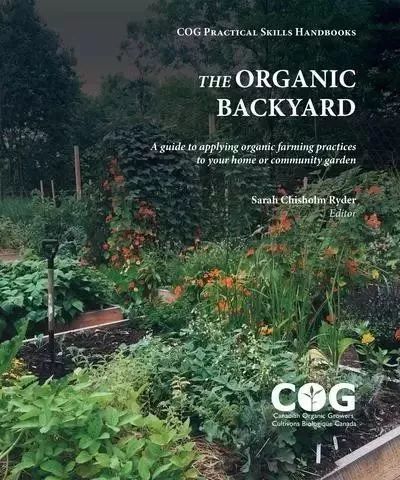
The Canadian Organic Growers provides comprehensive support for organic farmers through publications such as its journal.
Community Supported Agriculture (CSA) in Canada
Since 2012, Professor Scott has led several doctoral students in research on organic farming and food systems in China, making frequent trips between China and Canada. Theresa Schumilas is one of her doctoral students. Theresa herself worked in government for over twenty years, dedicating herself to the promotion and research of public health policy, including initiating and running a decade-long food systems research and policy advocacy programme.
After leaving government, she founded the Garden Party Organic CSA farm in 2009, providing healthy, safe produce to dozens of members in the Waterloo Region. At the same time, she has been actively involved in local farmer and consumer groups.
Theresa focused on the Garden Party CSA organic farm she runs. CSA – Community Supported Agriculture – is a model in which consumers become farm members at the start of the year, paying the farm for a full year’s or a season’s share of produce. The farm then plans its planting, usually using organic methods, according to the number of members and their needs, and provides a varied supply of ingredients each week. Through this model, consumers and producers share both the risks and the rewards, and consumers can also take part in the farm’s work.
Theresa’s farm is small in scale, covering only a few dozen mu, and grows mainly vegetables. The range of crops differs slightly across spring, summer, and autumn. Surplus produce is canned or frozen and delivered to members during the winter. In summer, she invites members to the farm for picnics and other events, giving them a close-up look at how the farm operates. To supplement the limited range of her own products, she also collaborates with other small organic farms in the area, sourcing flour, meat, dairy products, and other items from them before delivering them to her members. She believes that cooperation and exchange among small farms is the key factor in helping everyone grow together.

Later, Theresa’s farm transitioned into a flower farm, providing a fresh flower CSA service to urban flower shops, floral designers, wedding planners, and regular households.
She believes that small farms like hers are most in need of talent. So she and several neighbouring small farms jointly organised an internship programme, screening and inviting young people interested in organic farming to work on the farm while receiving training. This both reduces labour costs for the farms and nurtures the next generation of organic farmers – a win-win all round. Compared with the steep organic certification fees that deter smallholders in China, the costs in Canada are considerably lower. Theresa spends no more than 3,000 RMB a year on certification. What gives her a headache, however, is that obtaining certification requires a great deal of desk work – preparing all sorts of documents and materials. Many smallholders in North America have given up on organic certification altogether because the time burden is simply too heavy to bear.
Beyond pursuing her doctoral degree and running her farm, Theresa actively participates in various local activities related to agriculture and food, and also follows the international organic farming movement. She acknowledges that farm income is not yet enough to cover all her expenses, so she supplements it by teaching at the university and providing consulting services for new farms. As a “new farmer” who only “started a business” in her forties, her dream is to be able, through her own CSA farm, to fulfil her vision of sustainable agriculture while earning enough to sustain herself and her family. (Foodthink note: Theresa has now completed her doctorate. She is currently carrying out postdoctoral research while continuing to run her farm, though she has transitioned from the labour-intensive vegetable CSA to a flower farm.)
Lessons from the Canadian Experience for China
The remarks by the two Canadian friends deeply moved the more than 30 fellow practitioners and consumers in attendance. China’s organic agriculture is still in its early stages, and there are already signs of monopolisation by large capital and big enterprises – some practices even run counter to the principles and original intent of organic farming.
Canadian organic agriculture, by contrast, places greater emphasis on the harmonious development of people, environment, and society. Smallholders and consumers have plenty of space to form associations and band together to protect their interests and push for better policies. In fact, the local food movement and the organic food movement have been active in North America for more than 30 years, and the range of purchasing options on offer speaks to a mature market: besides supermarkets, consumers can form group-buying groups and place collective orders directly with farms; they can become farm members and receive fresh produce on a regular schedule; they can shop at farmers’ markets and consumer cooperatives; or, if they wish, drive out to the farm to buy or collect produce; and well-developed internet infrastructure has made online grocery shopping a reality as well. All of these formats bring producers and consumers closer together and cut out middlemen, lowering costs on both sides while helping to build relationships of mutual trust and support that differ from the mainstream consumption model. These experiences have given the Chinese organic farmers and consumers in attendance reason for hope.
At present, farmer cooperative organisations in China are primarily concerned with organisational structure, democratic management, and improving farmers’ income levels. The Canadian practice-sharing offers two new directions for our country’s farmer cooperative organisations: 1. Emphasising the sustainability of agriculture: by reducing the use of chemical fertilisers and pesticides, lowering farmers’ dependence on external inputs, enhancing the environmental and ecological functions of agriculture, and simultaneously addressing food safety – the most sensitive issue in today’s society. 2. Connecting with consumers: stepping outside the conventional model of large-scale distribution and mass-market retail, linking directly with consumers, reducing intermediaries, strengthening mutual trust and cooperative relationships on both sides, giving farmers greater pricing power, and improving both their income and their dignity.

Steffanie Scott
Professor Steffanie Scott is from the University of Waterloo in Canada. She teaches in the Department of Geography and Environmental Management and the School of Business and Development, and also serves as Director of the Local Economic Development programme. She has long been devoted to researching global and local food systems, as well as rural development in Asia. Beyond her regular teaching, she actively engages in a wide range of academic, advocacy, research, and practice work. She also serves as Vice-Chair of the Canadian Association for Food Studies and is a member of the Waterloo Region Food Systems Round Table, participating in various practical activities in her capacity as both a researcher and an ordinary consumer.
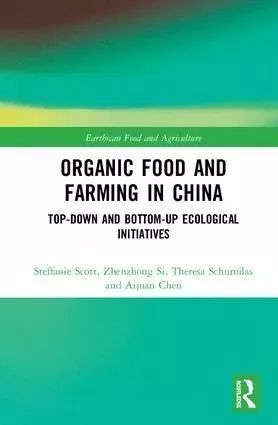
Professor Scott and her team’s new book on organic farming in China, Organic Food and Farming in China, has been published by Routledge.
* This article was compiled by Chang Tianle based on a presentation given by Professor Scott and Theresa at the Beijing Organic Farmers’ Market on 8 April 2012. The original was first published in Comprehensive Agricultural Cooperative magazine. Foodthink has made minor edits. The content reflects only the situation described at the 2012 presentation and has not been updated.
Related Links
| 1 | Webpages for the China Ecological Agriculture Research Project at the University of Waterloo, led by Professor Steffanie Scott: uwaterloo.ca/chinas-changing-food-systemuwaterloo.ca/ecoagchina |
| 2 | Theresa Schumilas and her Garden Party farm: http://www.gardenparty.ca/ |
| 3 | Canadian Organic Growers www.cog.ca www.cogwaterloo.ca |
| 4 | Other related Canadian links: www.organiccouncil.ca www.guelphwellingtonlocalfood.ca www.cban.ca |
From Consumers to Livelihood People: Japanese Mothers’ Path to Community Reform
The “Green Era” of Chinese Agriculture and the Ecological Transition of Smallholders
Schools and Development of Natural Farming and Organic Farming in Japan
Slow Thinking After Slow Food: Speaking for Farmers, or Lending a Platform to Commercial Capital?