
Smallholder Dairy Farms vs. Large-Scale Dairy Farms: Whom Should We Support, and How?
Foodthink Says
This article further makes the case for developing smallholder family dairy farms from social, economic, and environmental perspectives. It also addresses the reasons small dairy farmers have been marginalised in China and proposes concrete measures to support them. The primary data come from field research conducted in 2023 by Professor Feng Xiaojun and his team at China Agricultural University in a major dairy-cattle county in Shandong Province.
1. Smallholder Dairy Farms vs. Large-Scale Dairy Farms: Whom Should We Support?
Supporting farmers to enter meat, egg, and dairy production is therefore an important pathway to raising rural incomes. Yet when capital enters dairy cattle farming, it marginalises small dairy farmers and severs this route to higher earnings. This is precisely the story that has unfolded in China over the past 20 years.
From small dairy farmers to large dairy farmers to corporate dairy farms, labour intensity gradually declines, the absorption of rural labour shrinks, and the effect on farmer income becomes progressively less favourable.
A smallholder family dairy farm run by a married couple without hired help typically keeps fewer than 30 head. A couple plus one hired worker, if very hardworking, can manage around 60 head. With four family workers across two generations supplemented by a few hired hands, a farm can keep around 150 head.
Wealthier farms with some capital that rely on hired labour commonly range from 200 to 1,000 head. The farmer-owner still works alongside the hired labourers, who are typically neighbours from the same village, with roughly 30 head per worker on average. Farms of over 1,000 head are classified as large-scale dairy farms, essentially run as enterprises that depend on hired labour, predominantly university graduates, with roughly 40 to 50 head per worker on average.
When smallholders were the main producers of raw milk in China, keeping dairy cows significantly improved farmers’ livelihoods, enabling them to stay in their home villages and lead settled lives rather than migrating for work. Here are memories from small dairy farmers in the survey area:
“I bought a car in 2004—I was the first person in the village to have one.”
“Raising cows took me from having nothing to owning a car and a proper house.”
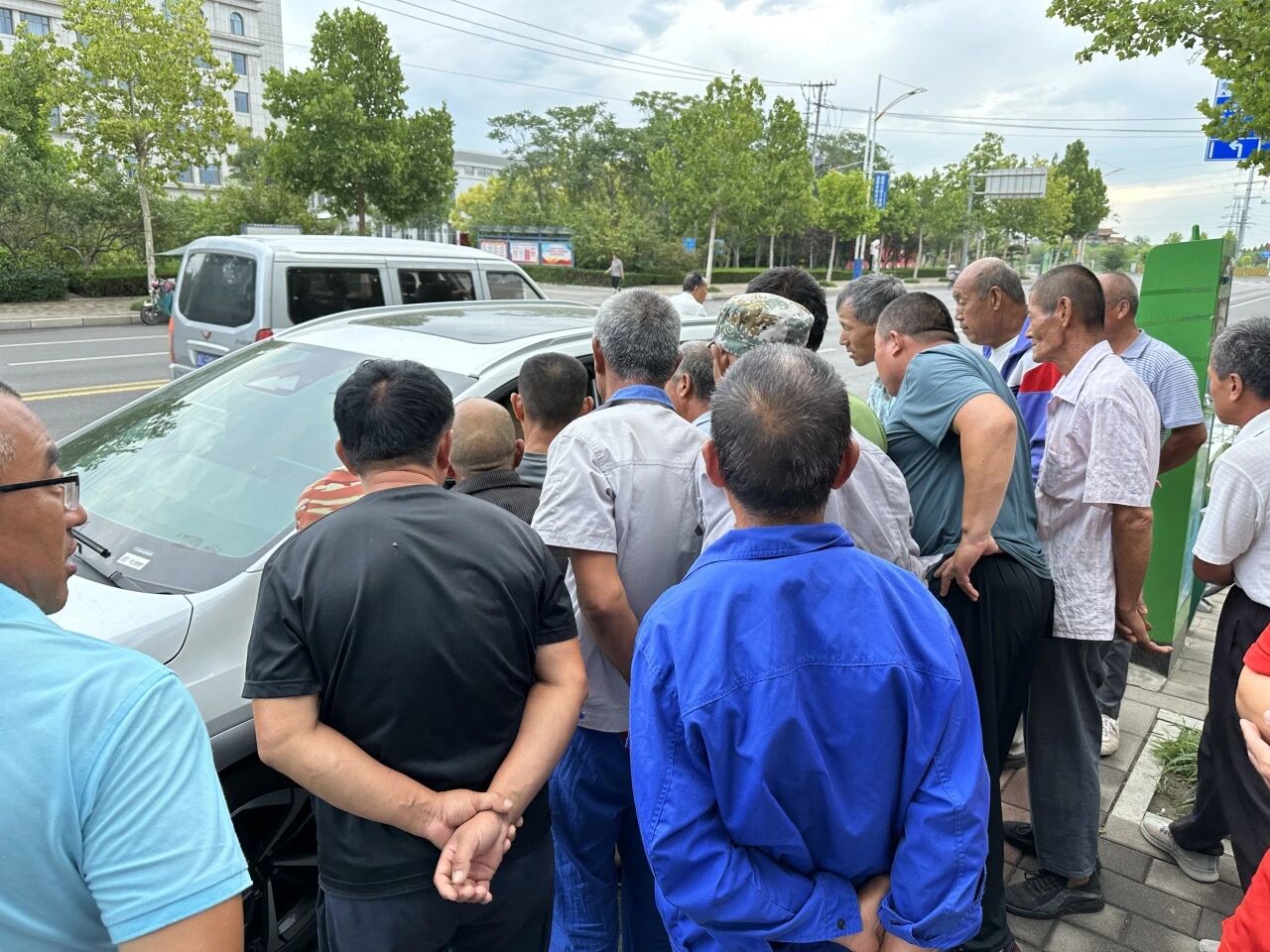
In the survey area, once small dairy farmers were excluded from dairy farming, most turned to casual day labour for a living. Figure 1 shows a casual labour market in the survey area at dawn, where grey-haired men look for day work, mainly on construction sites.
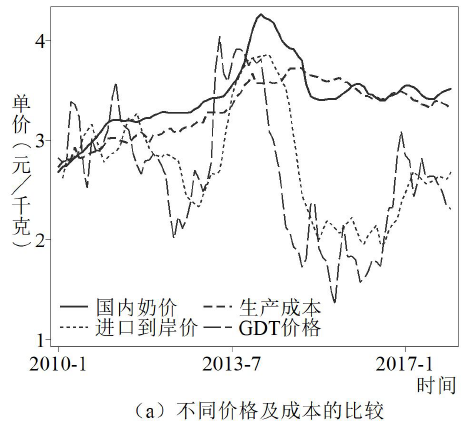
In addition, China’s tariffs on imported dairy products remain relatively low by international standards, and the equivalent landed cost of raw milk from imported dairy products has long been below the price of domestically produced raw milk (Figure 2). Furthermore, following the melamine incident, consumers in China have lacked trust in domestic milk, particularly infant formula. These factors have intensified the impact of imported milk on domestic production.
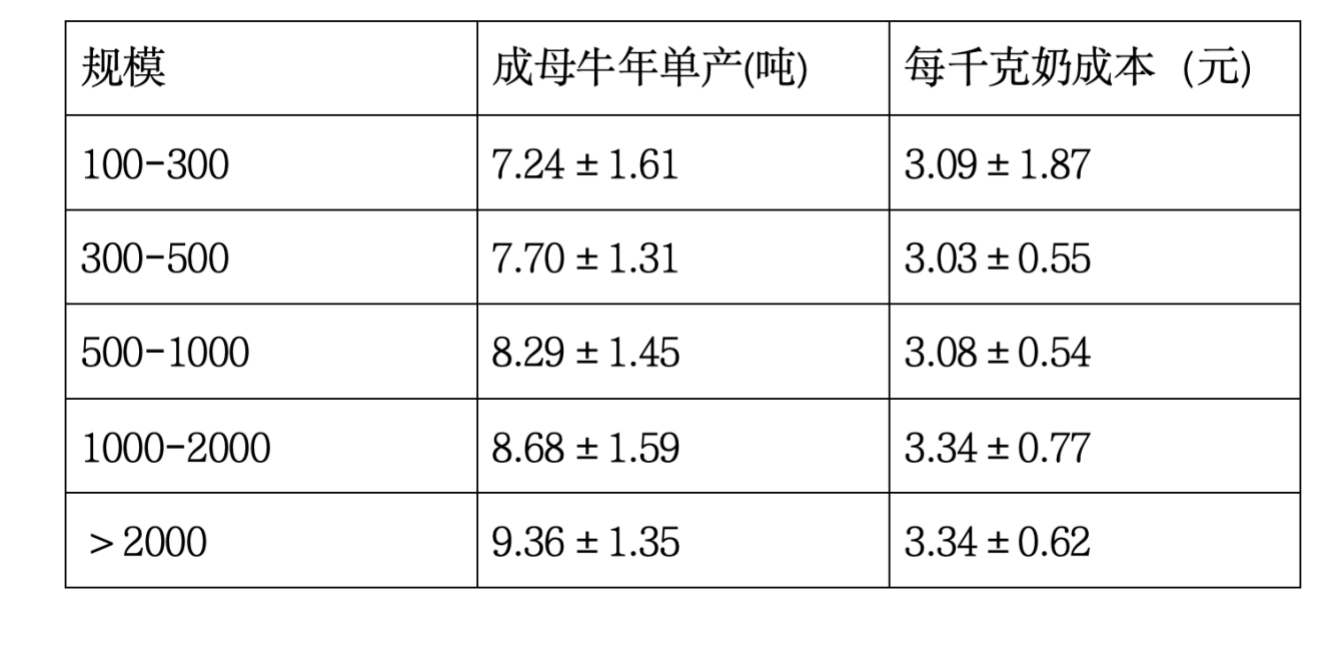
Under these circumstances, as shown in Table 1, small dairy farmers, with their lower production costs than large-scale dairy farms, help China to resist the impact of imported milk.
There are several reasons why smallholder production costs are lower.
First, labour costs are lower. Small dairy farmers use their own family labour rather than hired workers.
Second, feed costs are lower. Some of the feed for small dairy farmers comes from crop residue and maize grown on their own land, whereas large-scale dairy farms source almost all of their feed from the market. Smallholders tend to favour local, inexpensive feed, which is a low-cost, low-yield model (Table 1). Large-scale dairy farms, by contrast, pursue high output and use high-value feed, including imported feed.
Third, management costs are lower. Small dairy farmers manage their herds more extensivistically, while large-scale dairy farms manage in detail, at higher cost. For example, small dairy farmers largely do not divide their herds into separate pens and use only three or four types of compound feed. Large-scale dairy farms, on the other hand, divide their herds into no fewer than ten groups according to the animal’s stage in its life cycle and lactation characteristics, and specialist feed formulators then tailor feed rations to the conditions in each group.
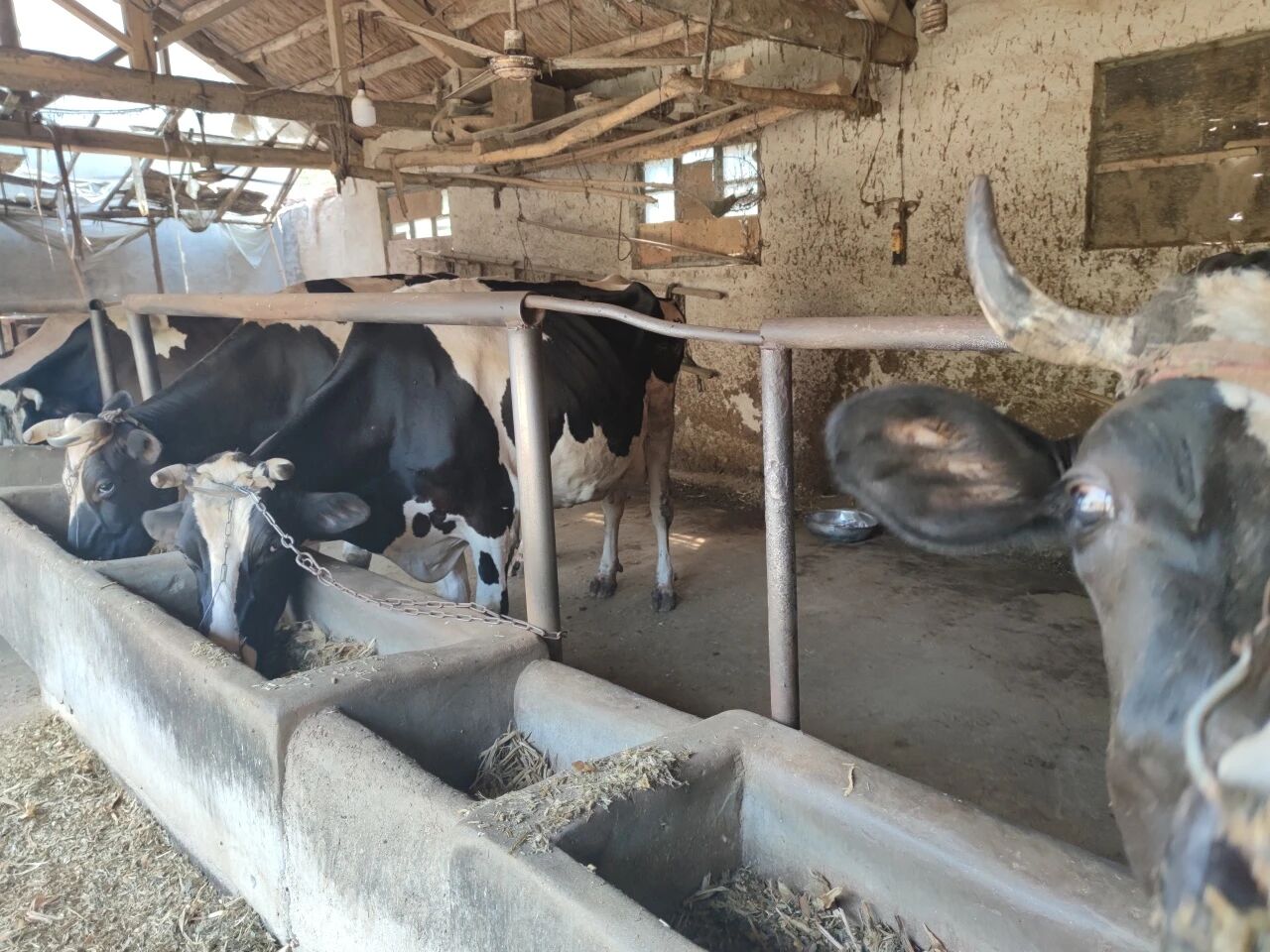
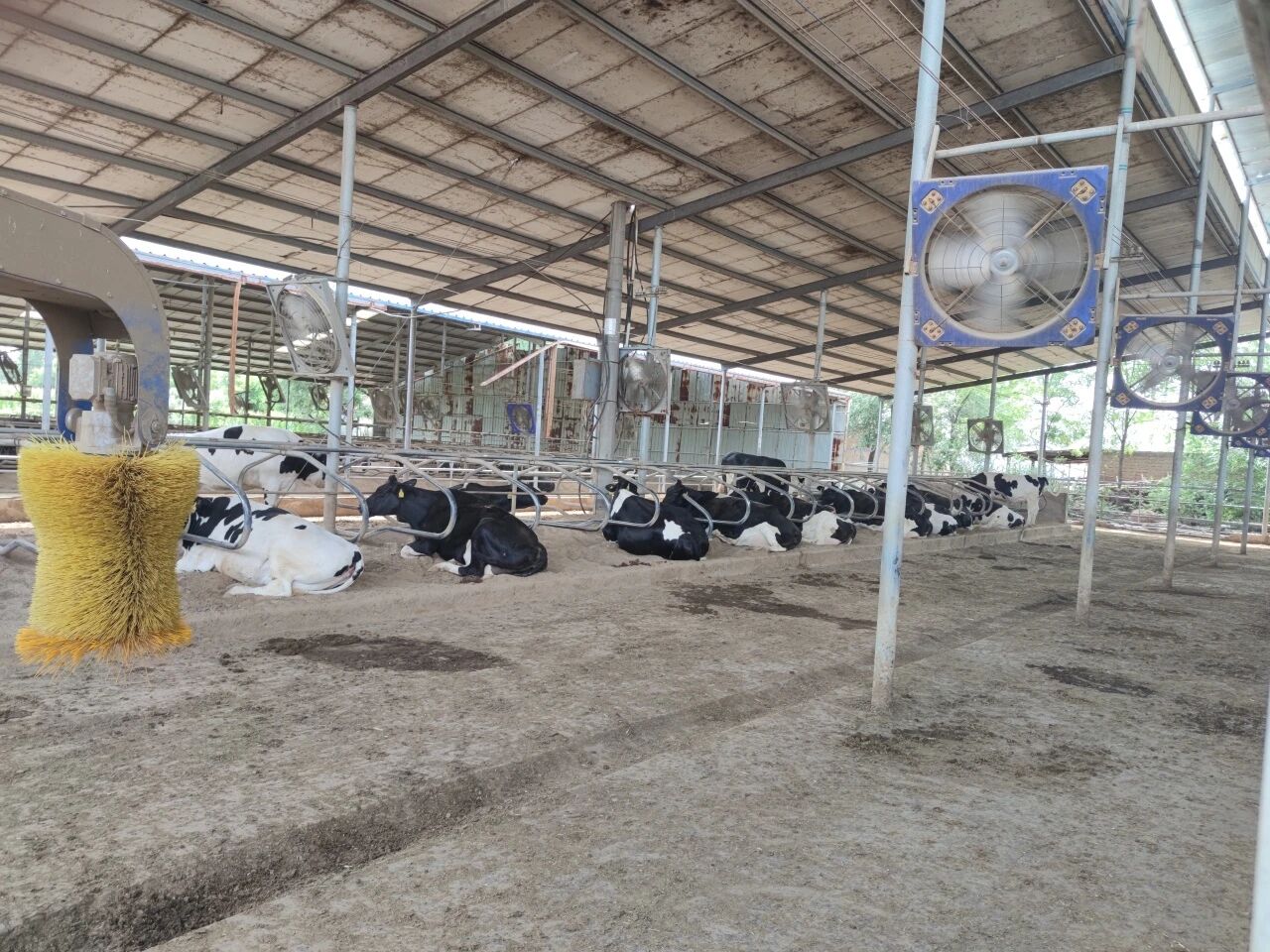
Fourth, infrastructure and equipment costs are lower. The cattle sheds of small dairy farmers are either behind their houses or in their own village, with land costs of zero or very low. As shown in Figures 3 and 4, the cattle sheds of small dairy farmers are of modest specification, while those of large dairy farmers and large-scale dairy farms are built to a higher standard. In addition, large-scale dairy farms prefer to substitute machinery for manual labour, and the larger the farm, the more so.
The two also handle manure and wastewater differently. In the survey area, small dairy farmers typically apply manure to their fields or sell it through manure dealers to local vegetable growers for land application.
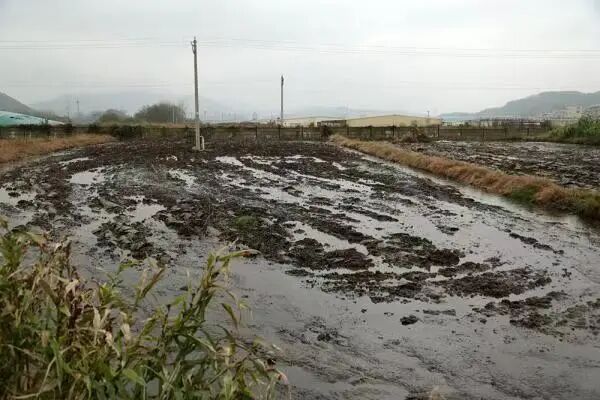
Large-scale dairy farms in the survey area claim to use equipment for solid-liquid separation of slurry, after which the solid fraction goes into fermentation tanks and, once treated, is spread as bedding in cow cubicles; the liquid fraction goes into oxidation ponds and, after fermentation, is used to irrigate fields. Large-scale dairy farms typically lease farmland and claim to grow feed crops. In practice, this land is often used to dump farm waste liquid.
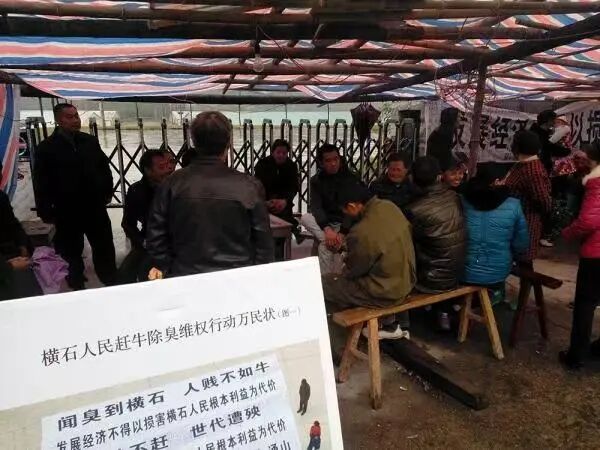
Large-scale dairy farms have triggered environmental protest events. In 2014, in Fanzhong Village, Tongshan County, Hubei, villagers blockaded a 10,000-head dairy farm owned by Modern Dairy for two weeks, ultimately forcing the farm to relocate. The farm had long been dumping large quantities of digestate and cattle manure in the surrounding area, resulting in conditions where “it stinks all year round, especially in summer—so bad you cannot even find a place to cool off.”
Small dairy farmers make a steady, long-term use of their cows, while large-scale dairy farms exploit them like killing the goose that lays the golden eggs. In the survey area, small dairy farmers typically milk their cows twice a day and cull a cow after it has had five or six calves. Large-scale dairy farms, by contrast, milk three to four times a day to boost output and cull each cow after only two or three calves. This is a production system that maximises output through intensified nutrition and uses each cow only during the peak of its lactation. Every cow’s life is arduous and short.
Making cows more comfortable does increase yields. At large-scale dairy farms, the herd enjoys better heat and cooling provisions, soft cow cubicles, imported automated scratch brushes… none of which small dairy farmers have. Yet these comforts do not offset the hardship and brevity of these cows’ lives.
1. Policy Bias
Because milk is produced daily and is perishable, and given the small scale of small dairy farmers, they are at a natural disadvantage relative to dairy enterprises. This disadvantage is reinforced by the following factors.
First, long-standing government industrial policies in the farming sector that favour large-scale dairy farms have marginalised small dairy farmers. From the 1980s until 2008, the Chinese government supported the development of small dairy farmers. After the 2008 melamine incident, the government associated small dairy farmers with backwardness and unsafe production, and large-scale dairy farms with modernity and safety, directing substantial public funding towards the large farms.
Second, long-standing government industrial policies in the processing sector that favour large dairy enterprises have intensified the power imbalance between small dairy farmers and dairy enterprises. After the melamine incident, the government shut down a large number of small and medium-sized dairy enterprises, raised the minimum capacity requirement for new dairy enterprises, and encouraged mergers and consolidation among dairy enterprises.
Third, the government’s import policy on dairy products undermines the interests of domestic dairy cattle producers, particularly small dairy farmers. Large-scale dairy farms, with their closer ties to dairy enterprises, have more secure sales channels. By comparison, small dairy farmers are hit harder by imported dairy products.
2. Short-Sightedness of Dairy Enterprises
One senior industry figure points out that over the past few decades, China’s leading dairy enterprises have pursued a path of eliminating smaller competitors rather than growing the overall industry pie; of holding multiple stakeholders’ interests hostage for their own benefit rather than promoting the industry’s long-term development; and of monopolising the high-end market rather than cultivating the lower-tier market. They fail to recognise that a well-developed lower-tier market is what sustains a steady stream of consumers in the mid- to upper-tier market.
In 2021, per capita annual dairy product consumption among China’s urban residents was 18.2 kilograms, compared with 9.3 kilograms among rural residents. Behind this stark disparity is the dairy enterprises’ abandonment of the rural everyday dairy consumption market. In rural areas, dairy products are generally treated as gifts for festivals and visits to relatives and friends, rather than as everyday food.
This short-sighted approach to industry development has shrunk what could have been a much larger dairy consumption base. At the same time, dairy enterprises’ pursuit of premiumisation has driven them to build their own farms. Both of these trends have deepened the exclusion of small dairy farmers.
The exclusion of dairy farmers has primarily occurred during periods of falling milk prices. Falling milk prices signal ample market supply, which strengthens the bargaining power of dairy enterprises over the farming end. Dairy enterprises seize the opportunity to refuse to purchase farmers’ milk, or to push farmers to upgrade their operations—implying that if they do not upgrade, their milk will not be bought. Since 2000, the first major milk price crash followed the 2008 melamine incident, causing a large wave of small dairy farmers to exit. The second major crash occurred in 2014–15, triggering a second wave of mass exits among small dairy farmers. The third major crash has been ongoing from 2022 to the present, resulting in a third wave in which small dairy farmers have been absorbed into large dairy farm operations or have exited entirely.
III. How to Support Smallholder Dairy Farms?
First, abandon policies that favour large-scale dairy farms and actively support the development of smallholder dairy farms. Since 2017, the central government has begun to reflect on its past pro-large-farm policies and has offered more support to family dairy farms. In practice, however, large-scale dairy farms continue to multiply and widely receive substantial government subsidies. This reflects a gap between the directional adjustment of national policy and its actual implementation.
In response, the state needs to introduce more detailed and more forceful policies to support the development of smallholder dairy farms. For example: ① fundamentally restructure the government’s allocation of dairy-sector funding so that smallholder dairy farms receive priority support; ② comprehensively assess the true costs of large-scale dairy farms and levy compensation charges for the environmental and social impacts they cause, thereby constraining large farms to their actual operating costs and prompting a shift in their direction of development; ③ encourage dairy enterprises to purchase raw milk from small dairy farmers, for instance by linking the proportion of small dairy farmers’ milk in their raw milk supply to relevant tax and fee reduction policies.
Second, abandon policies that favour large dairy enterprises, remain vigilant about and curb the concentration trend in dairy processing, and take multiple measures to support local small and medium-sized dairy enterprises. An excessive pursuit of large-scale enterprises leads dominant firms to: ① use their advantageous position to pursue short-term, self-interested gains rather than long-term, industry-wide interests; ② abuse their power along the supply chain to the detriment of other stakeholders; ③ hold government action hostage, undermining public trust in government and weakening food safety oversight; ④ increase the distance between production and consumption, generating inefficiency. Therefore, the government should support small and medium-sized dairy enterprises to foster a landscape in which dairy enterprises of different sizes flourish side by side.
Third, take multiple measures to build the bargaining power of small dairy farmers relative to dairy enterprises. ① Small dairy farmers are small and scattered; unity is their strength. Small dairy farming clusters are mostly led by milking parlour owners, but have played a certain role in resisting dairy enterprises’ price cuts and payment delays, and also carry positive significance in terms of knowledge transfer and raw milk source safety oversight. It is recommended to promote small dairy farming clusters as an organisational form for developing small dairy farmers, while encouraging these clusters to evolve into genuine cooperatives led by small dairy farmers.
② Foster social organisations led by small dairy farmers. At present, dairy associations at all levels nationwide are largely controlled by dairy enterprises and large-scale dairy farms, leaving small dairy farmers with no channel to be heard. Beyond small dairy farming clusters, independent social organisations of small dairy farmers should be developed to promote self-governance within the smallholder community and to present a united front externally, speaking on behalf of small dairy farmers.
③ Regulate dairy enterprises’ procurement conduct and curb arbitrary cost-shifting onto farmers, price cuts, and refusals to purchase. Establish a negative list of dairy enterprise conduct, for example prohibiting the bundling of raw milk procurement with the sale of feed, consumables, and equipment. Establish a list of permissible grounds for price cuts and purchase refusals, restricting dairy enterprises from cutting prices or refusing milk on grounds outside that list. Small dairy farmers have limited capacity to test raw milk quality, which has allowed dairy enterprises to manipulate quality assessments to justify arbitrary price cuts and refusals. To address this, national testing institutions should be designated as third parties to provide public-interest raw milk quality testing services.
Fourth, vigorously support dairy farmers’ own processing operations. The significance of farmers running their own processing lies in rationalising the distribution of returns, thereby stimulating enthusiasm on the farming side and improving both raw milk quality and farmer income.
The main difficulties facing farmer-run processing at present lie in national dairy industry policy restrictions on the production capacity of newly established processing plants and on the minimum distance between such plants. These restrictions prevent many dairy farmers from obtaining a dairy processing licence; their products cannot be distributed in supermarkets or schools, and they can only obtain a food and beverage business licence, selling dairy products externally through self-operated milk bars. Milk bars have limited sales volume and cannot effectively reduce farmers’ dependence on dairy enterprises.
These restrictions should be relaxed. However, relaxing them does not mean farmers will automatically succeed in processing. For instance, how would they negotiate with supermarkets? How would they compete with existing dairy enterprises? The latter have already moved firmly into the chilled fresh milk segment, which is typically where farmer-run processing operates.
At present, the main operators of farmer-run processing are large dairy farmers with several hundred head and individual small dairy farmers on the urban fringe. To survive in a competitive environment, dairy farmers need to join forces. Dairy farmers unite to form production cooperatives; small cooperatives consolidate into cooperative unions, which establish dairy processing companies to compete in the market. This has been the path to prosperity for dairy farmers in countries such as New Zealand and Denmark, and is worth China’s reference.
Fifth, mobilise consumer power to activate a bottom-up food safety oversight system. China’s current food oversight system emphasises the scaling-up of production entities and top-down regulation. This has given rise to a host of problems.
If the focus shifts to developing small and medium-sized raw milk production and processing entities, a food safety oversight system commensurate with their scale must be established. Given the small and dispersed nature of these entities, priority should be given to developing a bottom-up food safety oversight framework. Dairy consumers are, by nature, food safety regulators. Going forward, food safety oversight should mobilise consumer groups and adopt a mass-line approach.
Sixth, leverage the current dairy industry crisis to reshape the direction of dairy development and strengthen relief policies for dairy farmers during severe milk price crashes. China’s raw milk prices have been falling for four years. This crisis has exposed, in concentrated form, the flaws in the past direction of dairy development and is a good opportunity for reflection. The relevant authorities should seize this crisis to rebuild consensus and steer China’s dairy development onto a healthier path.
Seventh, in the long term, reconsider import tariff policy on dairy products. The fact that China’s import tariffs on agricultural products are generally on the low side is a concession made as part of China’s accession to the WTO. In substance, this amounts to spending farmers’ wealth to promote the interests of industry and commerce. Without a stable agricultural base, the nation is unstable; without industry and commerce, the nation cannot grow wealthy. Such policies have driven the hollowing out of rural areas while simultaneously promoting the development of China’s export-oriented processing industry, creating non-farm employment for hundreds of millions of farmers.
A prerequisite for this policy adjustment is the restructuring of China’s domestic and external circulation framework. If China cannot alter the important role of external circulation in its economic development, the scope for such policy adjustment is limited. If China ultimately achieves a new development pattern with domestic circulation as the main axis and domestic and international dual circulation reinforcing each other, then there will be room to ease these policies.
IV. Conclusion
The key to developing family dairy farms lies in changing the structurally weaker position of small dairy farmers relative to dairy enterprises. To this end, the government should abandon policies that favour large-scale dairy farms and large dairy enterprises, and support the development of family dairy farms and small and medium-sized dairy enterprises; take multiple measures to build the bargaining power of small dairy farmers relative to dairy enterprises; vigorously support dairy farmers’ own processing operations; mobilise consumer power to activate a bottom-up food safety regulatory system; leverage the current dairy industry crisis to reshape the direction of dairy development; and in the long term, reconsider import tariff policy on dairy products.
Author’s Note
Those interested in how small dairy farmers in China have been marginalised and how large-scale dairy farms have risen may refer to: Xiaojun Feng. 2025. Cost competition or power struggle? The exclusion of dairy farmers from raw milk production in China. The Journal of Peasant Studies. https://doi.org/10.1080/03066150.2025.2539842
[2] China’s Dairy Industry to Go All-Out Toward High-Quality Development. 2018. https://www.gov.cn/zhengce/2018-05/26/content_5293782.htm
[3] Image source: Liu Changquan, Han Lei, Zhang Yuanhong. (2018). An International Comparison of China’s Dairy Industry Competitiveness and Development Strategies. China Rural Economy, 7, 132–146.
[4] World Dairy Development Report. 2021. China Agricultural University Press. Page 8.
[5] Investigation into the Modern Dairy Crisis: In the “Post-Melamine” Era, the 10,000-Head Dairy Farm Model Suffers a Major Setback. 2014. https://www.thepaper.cn/newsDetail_forward_1282965
[6] Investigation into the Modern Dairy Crisis: In the “Post-Melamine” Era, the 10,000-Head Dairy Farm Model Suffers a Major Setback. 2014. https://www.thepaper.cn/newsDetail_forward_1282965
[7] Some Thoughts on China’s Raw Milk Supply Development Strategy. 2024. https://mp.weixin.qq.com/s/zZoMFp3Av1-FTU2Nz8bVaA
[8] National Data. 2025. https://data.stats.gov.cn/easyquery.htm?cn=C01
[9] World Dairy Development Report. 2021. China Agricultural University Press.
[10] People from All Sectors Gather at the Great Hall of the People to Discuss the Second Phase of China’s Dairy Development. 2008. China Dairy Cattle.

Editor: Xiaodan