
The Sweet Trap in the History of the Dietary Guidelines for Americans | Grandma Kouzi
On 7 January 2026, a foodie’s first scoop of the year: the United States has released a new edition of the Dietary Guidelines for Americans. The announcement has set off a chain reaction; opinions are split, and there are as many views as there are readers. The most immediate change is clear at a glance.
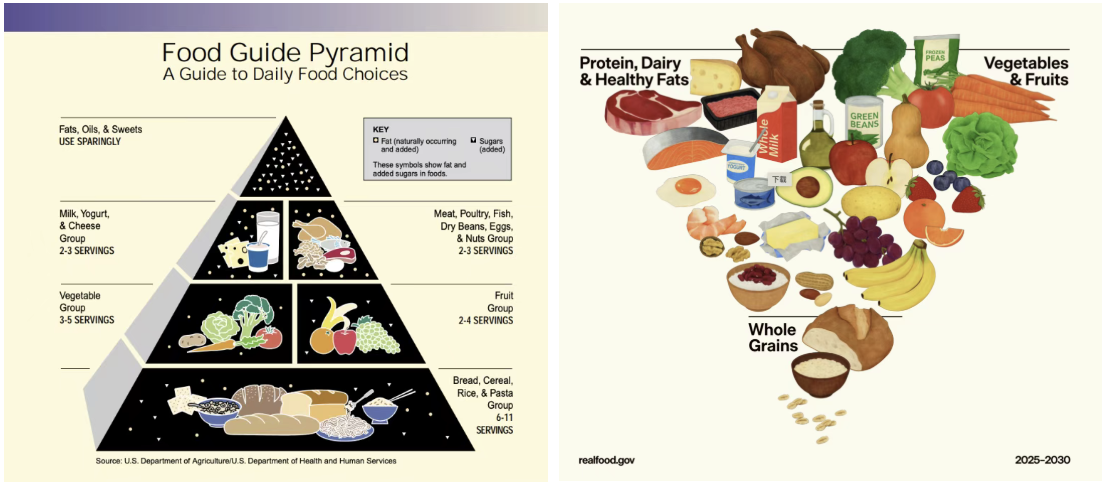
“The old Dietary Guidelines for Americans ensured that ‘cardiovascular disease and endocrine disease are highly prevalent’; that was the source of enormous profits for drug companies and hospitals!”
Today, I am taking this opportunity to revisit the history behind the Dietary Guidelines for Americans once more.
I. From Fraudulent Academic Papers to the First Edition of the Dietary Guidelines for Americans
Before the first Dietary Guidelines for Americans were issued on 23 January 1980, the United States Senate Select Committee on Nutrition and Human Needs had published a set of Dietary Goals in 1977. Although this was an official document, it was regarded as lacking professional rigour. Consequently, D. Mark Hegsted, a professor of nutrition at Harvard University and a doctor of biochemistry, joined the United States Department of Agriculture in 1978 as Administrator of the Human Nutrition Division and drafted the first Dietary Guidelines for Americans.
D. Mark Hegsted was a professional, and his expertise was directly relevant to the work. However, those who pursued science and fairness had fallen precisely into a sweet trap, a trap laid by a food industry linked to sugar.
The Sugar Association was founded in 1943. In that era, the American food industry evolved from scattered meat processing businesses into multinational giants with vast supply chains, forming an industry structure centred on “meat processing” and “food processing”.
At first, the association was called the Sugar Research Foundation, and in the 1970s it was renamed the Sugar Association. The reason for the name change is also intriguing; it was supposedly “to more broadly represent the interests of American sugar producers and consumers”. But, as the saying goes, those who know, know: what the association clearly represented were the interests of sugar producers.
The Sugar Association’s funders were all sugar-related companies, and it funded a great deal of research on heart disease. They did this not because food tycoons had suddenly fallen in love with medicine and changed careers to heal and save people, but to use “scientific research” to prove that sugar was not the culprit behind heart disease. In the final analysis, the Sugar Association’s core objective in funding medical research was to shift public attention—more specifically, to shift the blame for heart disease, the leading killer of Americans, from sugar to fat.
The background of the 1940s and 1950s must be explained. At the time, heart disease was the number one killer of Americans, and people turned pale at the mere mention of the heart. In 1955, then-President Eisenhower, a 64-year-old World War II hero, suffered a sudden onset of heart disease, and for six or seven weeks Vice President Nixon performed the duties of the President. This event pushed the “heart disease panic” to its peak.
Postwar America had begun to take the lead in the world; the best opportunities and the most money were in the United States. It is only natural that the American people had become, like never before, eager to live and afraid of dying. In peaceful, prosperous times, who does not want to live a little longer and enjoy a little more? Research on heart disease received the whole nation’s attention and attracted America’s finest scholars.
But people did not know that research on heart disease was also attracting the attention of the Sugar Association. From its inception, the association funded research on cardiovascular disease and diet. At that time, heart disease was raging, and scientific research was in pursuit of the culprit. If sugar were conclusively dragged into the public spotlight, how could the sugar bosses, with their shining futures, bear it?
In that era, the American food processing industry (including the sugar industry, meat processing, and dairy products) accounted for about 2–3% of GDP, but as high as 15–20% of manufacturing, and was an important pillar of America’s postwar industrialisation. It is especially worth noting that before this, America’s food processing industry had been dominated by meat processing; during the two World Wars, tinned foods grew rapidly, and after the wars ended, the growth came from the sugar industry and related food processing industries. The rising sugar industry elite needed scientific research to tell the American people that the real culprit behind heart disease was not sugar but its next-door neighbour, fat.
Money can make the devil grind the mill; this time, science was the devil. In 1967, three Harvard University professors published a paper in the world’s leading medical journal, the New England Journal of Medicine, claiming that sugars were unrelated to heart disease.
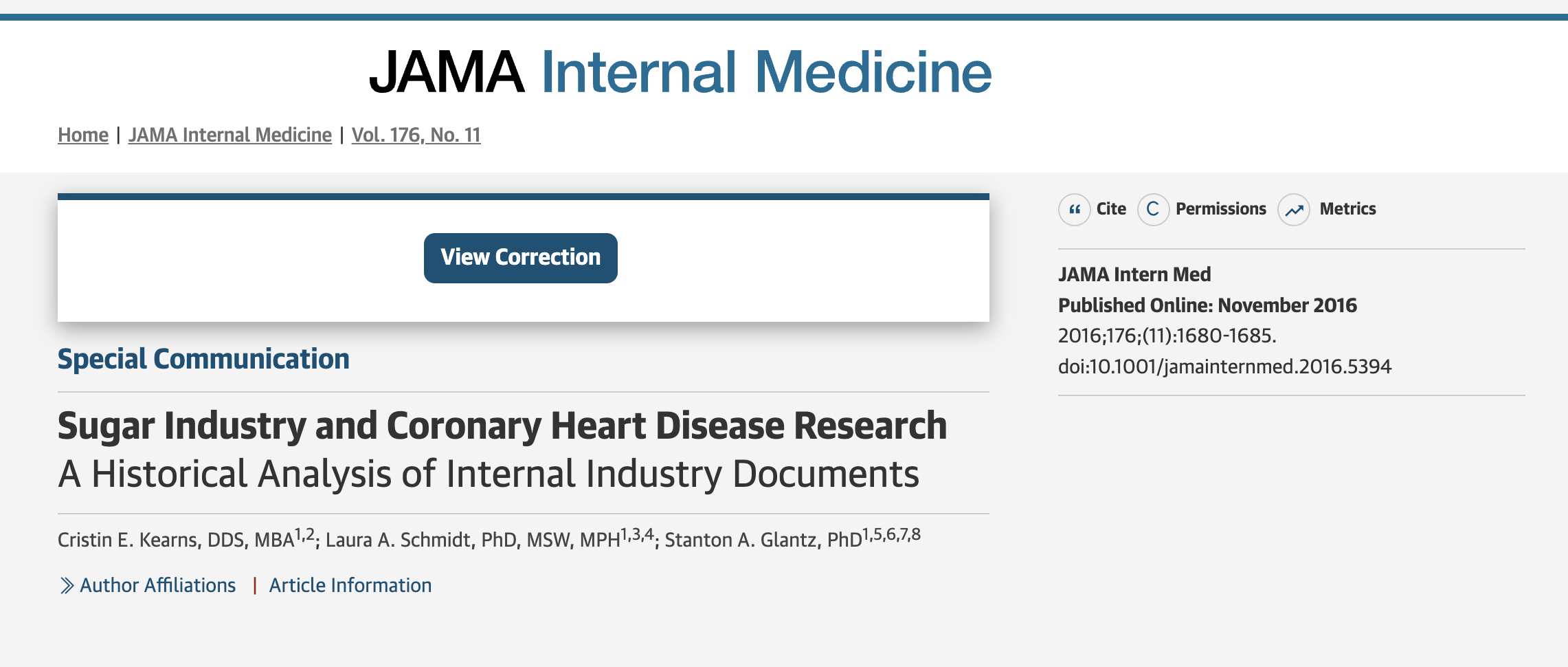
Of the three Harvard University professors who sold out human health for a little money, two were prominent figures. One was Frederick Stare, founder of the Department of Nutrition at the Harvard School of Public Health, who had promoted public health strategies such as regular exercise and fluoridated water. The other was D. Mark Hegsted, the drafter of the Dietary Guidelines for Americans mentioned earlier. In 1980, the first Dietary Guidelines for Americans was published; the key point was: “In view of the increasingly serious harm of heart disease to the American people, the public is reminded to reduce saturated fat intake for the safety of their lives.”
Now everyone in the world knows that the human heart is fragile and needs careful care. Excess sugar and fat are major factors that trigger heart disease. Although sugar and fat were co-champions, with sugar actually taking the lead on many indicators, at the awards ceremony only fat was pushed onto the podium.
Blaming heart disease on fat was a “major achievement” jointly created by the sugar conglomerate and scientists. Under the guidance of such scientific research and Guidelines, over half a century Americans’ fat intake fell by 25%. By 2016, heart disease was still the main killer of the American people, and obesity and diabetes were hot on its heels. The true culprit was that one — sweet sugar. American life was too sweet.

II. A Life in the Limelight: The Posthumous Downfall of Ancel Keys
The study was led by Ancel Keys of the University of Minnesota. He held two doctorates, from the University of California and the University of Cambridge, and was a widely respected cross-disciplinary authority in nutrition and physiology. In addition to the Seven Countries Study, he was also an important promoter of the “Mediterranean diet” and had appeared on the cover of Time magazine for his research on cholesterol.
The data from the Seven Countries Study showed that fat was the culprit behind heart disease. However, this scientist did not say that his research had actually sampled the populations of 22 countries. Why, then, was the published paper the Seven Countries Study? Because he discarded the 15 countries that did not support this conclusion and selected only the seven countries that best fitted his hypothesis to publish: the United States, the United Kingdom, the Soviet Union, Italy, the Netherlands, Finland, and Greece.
Moreover, within the samples from these seven countries, he also selected only the data favourable to him, and even introduced a “fictional statistical correction” into the statistical model to exaggerate the correlation between fat and heart disease. This, the most influential epidemiological study of the time, selected only 499… from the survey sample of 12,770 people.
Beyond the falsification of the Seven Countries Study, Keys’s academic misconduct also included the suppression and blacklisting of academic dissidents.
When the Seven Countries Study was at the height of its influence, John Yudkin of the University of London in the United Kingdom inconveniently published: the incidence of heart disease was more strongly correlated with sugar consumption than with fat. Yudkin was a doctor of medicine and a professor of physiology and a professor of nutrition at the University of London. As one of the early advocates of the harmful effects of sugar in the twentieth century, he published Pure, White and Deadly in 1972, analysing the relationship between sugar and cardiovascular disease, obesity, and metabolic syndrome.
The pro-sugar camp and Keys pounced on Yudkin, even making false accusations that he had taken kickbacks from meat and dairy companies. This left the former British chief scientist with a ruined reputation; he practically experienced a “social death” in his field: sponsors withdrew their promises and did not support the academic conferences he called; research journals refused to publish his papers; research institutions did not invite him to academic seminars; the British Sugar Board criticised him as being “too emotional”; and his book was mocked as science fiction…
Yudkin, his career thwarted, spent his later years depressed, and died at the age of 77. Keys, by contrast, lived a life in the limelight and enjoyed a peaceful old age. He was born in January 1904 and died in November 2004, a long-lived old man who lived to be over a hundred.
Keys was an important promoter of the Mediterranean diet and practised it himself. Although I cannot find the exact recipes of this long-lived old man, from common knowledge about the Mediterranean diet I infer that his plate would surely have contained no added sugar, unlike the general American public, whose diet was so sweet.

III. The Evolution of the Dietary Guidelines
In the 1990s, the ranking of the US food industry had changed from the traditional order of meat processing, sugar, and tinned foods to sugar, meat, and drinks. The concepts of “low-fat” and “low cholesterol” swept the market; the market share of related products rose sharply, and consumers were led along by delicious “low-fat” foods. Scientists conducted such “research”, the state pushed so hard, the advertising industry promoted in unison, and companies also went with the flow, adding extra sugar to compensate for the missing mouthfeel of fat, quietly leading humanity into a new era of low fat, high sugar, and rampant obesity and diabetes.
Entering the new century, things began to change. The Dietary Guidelines for Americans shifted from “nutrient restriction” to a “food pattern”; that is, they began to emphasise reducing processed foods and eating more whole foods. The Dietary Guidelines released in 2020 had already begun to “limit added sugar” and to discuss the issue of “ultra-processed foods”. Unlike previous guidelines, which were as thick as books, this year’s Dietary Guidelines are only a slim ten pages. The moment the new guidelines appeared, there was a stir and opinions were split; interpretations of them, in depth and intensity, have long since outgrown the guidelines themselves.
Let us return to the sugar-related content. Although the previous Dietary Guidelines for Americans had already begun to control added sugar, they still permitted the addition of sugar to foods for children aged two and over. In the past, the phrasing about sugar was often a “recommendation to reduce”, with a target of “added sugar < 10% of total energy per day”, whereas this edition takes an extremely firm line on added sugar: “It is not recommended to consume any amount of added sugar or non-nutritive sweeteners; they are also not part of a healthy or nutritious diet”. It also recommends completely avoiding added sugar in infancy and early childhood, and recommends that children aged 5–10 consume no added sugar.
Emphasising that sugar is not regarded as part of a healthy or nutritious diet— I agree with that, but I doubt its feasibility. The specifics will be dealt with in another article; I cannot go into detail here.
Almost every major update to the Dietary Guidelines has triggered a wave of transformation among food companies. Because the Dietary Guidelines for Americans have continually reinforced the idea that “low fat = healthy”, the food industry has completed a commercial translation of this concept; “healthy foods” such as “low-fat yoghurt” and “sugar-free drinks” emerged accordingly, leading a new trend in revenue growth.

The food industry’s share of US GDP is now about 3.5%, stable with a slight upward trend but not a large one. But the total US GDP is nothing like it used to be. The top food company in the era of the first Dietary Guidelines had annual revenue of only about US$10 billion; today, PepsiCo’s annual revenue has already exceeded US$90 billion. The influence of giant food companies on trends in health and fashion has long swept the globe, and they can also use their strong research and development and capital resources to quickly adjust their product mix. Who knows what new tricks will be deployed this time to seize the next high ground.
Since the Dietary Guidelines change every few years and cannot be relied on, what method of healthy eating remains for ordinary people? Here I shall praise my own wares a little: dear readers, please click the link below and look at the healthy eating tips I have shared with you before!

Editor: Xiaodan