
How Can Contemporary Young People Eat Well? | May Fourth Special Edition
Wishing all young friends a happy holiday!
People often say that young people are the most dynamic, active, lively and idealistic group. In reality, however, most young people are also just workers rushing about to make a living.
In this busy, accelerating era, over the past two years, Foodthink has been engaging with young friends through a call for stories about how to eat well. Many have shared their own reflections and notes on the issue of eating: some have analysed why, given their work situation, they cannot break free of takeaways; some have pointed out the inherent link between takeaways and dianzi zhacai; some have set out to find community canteens and small eateries in city corners; some have found that eating fermented foods, produced by fermentation, can relieve constipation; some have reflected on the relationship between their lifestyle and the planet’s ecology in the midst of plastic-packaged food……
How can young people eat well? What dilemmas are we facing? What changes should we make? Here we have gathered these reflections and notes. The concerns they address may be big or small, but most are phenomena and feelings frequently encountered in young people’s lives.
In the future, Foodthink will continue to focus on young people’s eating issues. What other eating problems do you think young people face? Or are there other ways of eating well and suggestions you would like to recommend? Please share in the comments. We also hope all young friends can eat well and live well!
Why Can’t This Generation of Young People Do Without Takeaways?
The number of users on takeaway platforms in China is as high as 535 million, and young people are the main force behind ordering takeaways. But why, when it comes to eating, are young people always unable to do without takeaways? Do you also face a similar dilemma?
As an editorial team that has insisted on not ordering takeaways, we have been deeply moved by these contributions: for platforms, takeaways are merely a business; but for ordinary young people struggling to get by in society, takeaways are closely intertwined with their daily lives. What resonates most with workers is that a third of the readers, without prompting, mentioned a positive correlation between ordering takeaways and work-life stress.
At the same time, many people are increasingly aware that what is trapped in the system includes not only “the issue of delivery riders’ rights” but also “consumer health problems caused by excessive use of oil and salt”, as well as the “anxiety”, “guilt”, “sense of being wronged”, and “sense of inner emptiness that cannot be filled” that accompany ordering takeaways. These hidden emotions of young people, usually too private to share with outsiders, have been earnestly expressed here by everyone.

◉ Click on the image to see everyone’s more detailed discussions and contributions.
A Longstanding Problem for Workers
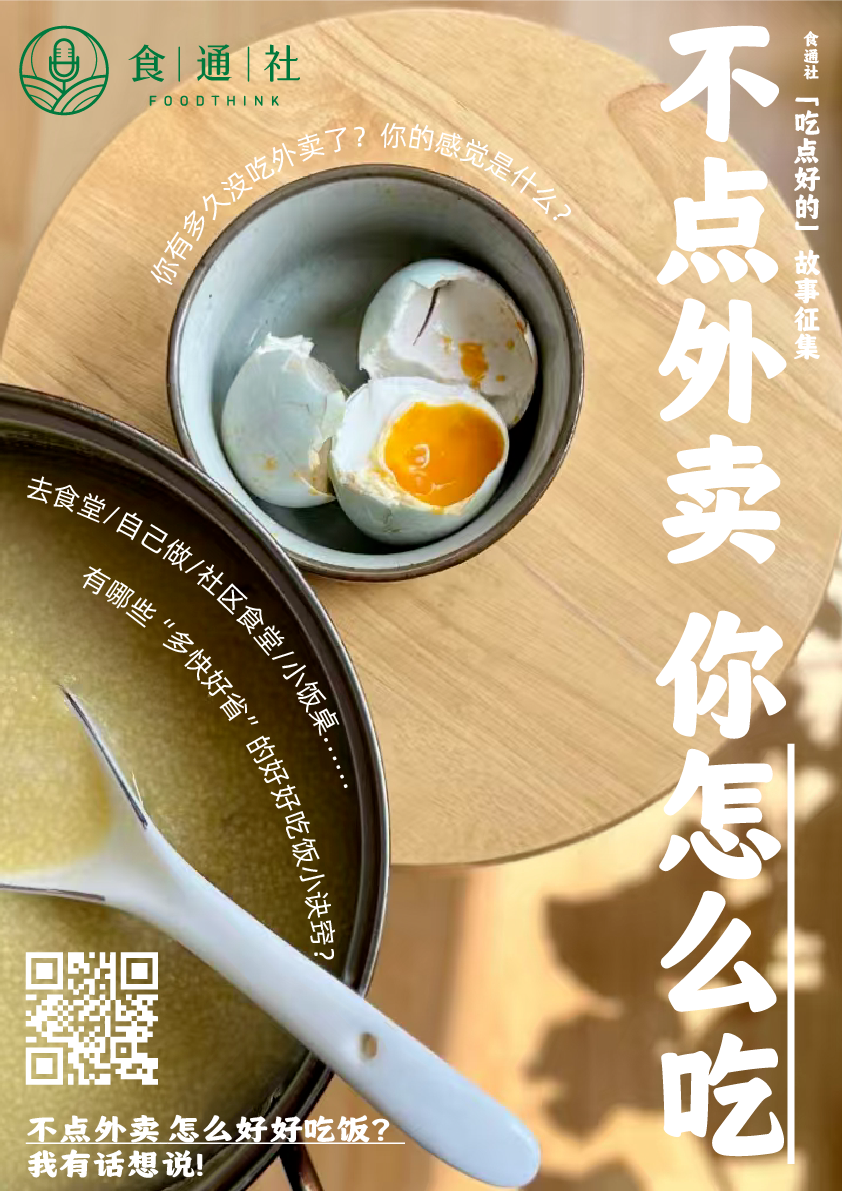
If you don’t order takeaways, how do you eat? This seems to be a problem that has long troubled workers, yet it has never been seriously discussed. Many people say that, although there comes a moment when they no longer want takeaways, a demanding work pace, their novice cooking skills, or a basic cooking setup leave many young people still unable to completely break free of takeaways.
Fortunately, the wisdom of the crowd is boundless. Young friends from all corners of the country have enthusiastically contributed their own “eating well” tips, which have been compiled into a “more, faster, better, cheaper” secret guide to eating. Some start with small, personal steps, such as choosing to eat at community canteens and small eateries, designing simple and efficient recipes for weekdays, making pre-prepared food at home, or trying to bring packed meals to work; others feel that “cooking alone is too hard”, so they choose to take turns cooking with meal partners; and some simply choose to grow their own vegetables, ensuring they can eat well right from the source.
How feasible are these ways of eating for you?
◉ Click on the image to see everyone’s more detailed discussions and contributions.
Is Dianzi Zhacai the Antidote to Young People’s Loneliness?
In the food repertoire of contemporary young people, dianzi zhacai, a kind of virtual food, is also indispensable. Why do we need dianzi zhacai?
Some readers say that it is precisely because they want to eat well that they need “dianzi zhacai” to give a meal more “flavour”. Others, however, report that “dianzi zhacai” does not necessarily truly help people rid themselves of negative emotions, and can even make them overlook the food’s original taste.
Research teams have already found that eating while absorbed in electronic devices can increase a person’s total calorie intake by 15 per cent and may also lead to problems such as gastric dysfunction, indigestion, and nutritional imbalance. Perhaps we should now take the phenomenon of “dianzi zhacai” as a starting point for serious reflection: in a modern society where loneliness and acceleration coexist, what truly counts as “eating well”? And how can people actually “eat well”?

◉ Click on the image to see everyone’s more detailed discussions and contributions.
When Young People’s Food Is Trapped in Plastic Packaging
In young people’s everyday diets, excessive plastic packaging is everywhere, clinging to food and uncontrollably “spreading and multiplying”. Many people have certainly complained about the layer after layer of plastic wrapped around takeaways, vegetables and pastries, and about the plastic packaging of various ultra-processed foods, but more often they feel it is absurd and have no words for it: “This surplus plastic is not what I wanted, but why is it still here?”
For a long time, a “use-and-throw-away” lifestyle has locked humans and plastic into a “toxic, impossible-to-quit relationship”. Whether discarded into rubbish bins and then sent to landfill sites and incinerators, or scattered across mountains and seas and then returned to human dining tables via the food chain, plastic packaging causes enormous harm to people and nature. So, ultimately, we still need to reduce plastic consumption at the source.
Have you come across any other examples of excessive plastic packaging? You are also welcome to share some experiences and tips on recycling or reducing plastic use in the comments.

◉ Click on the image to see everyone’s more detailed discussions and contributions.
How Long Has It Been Since You Last Visited a Wet Market?
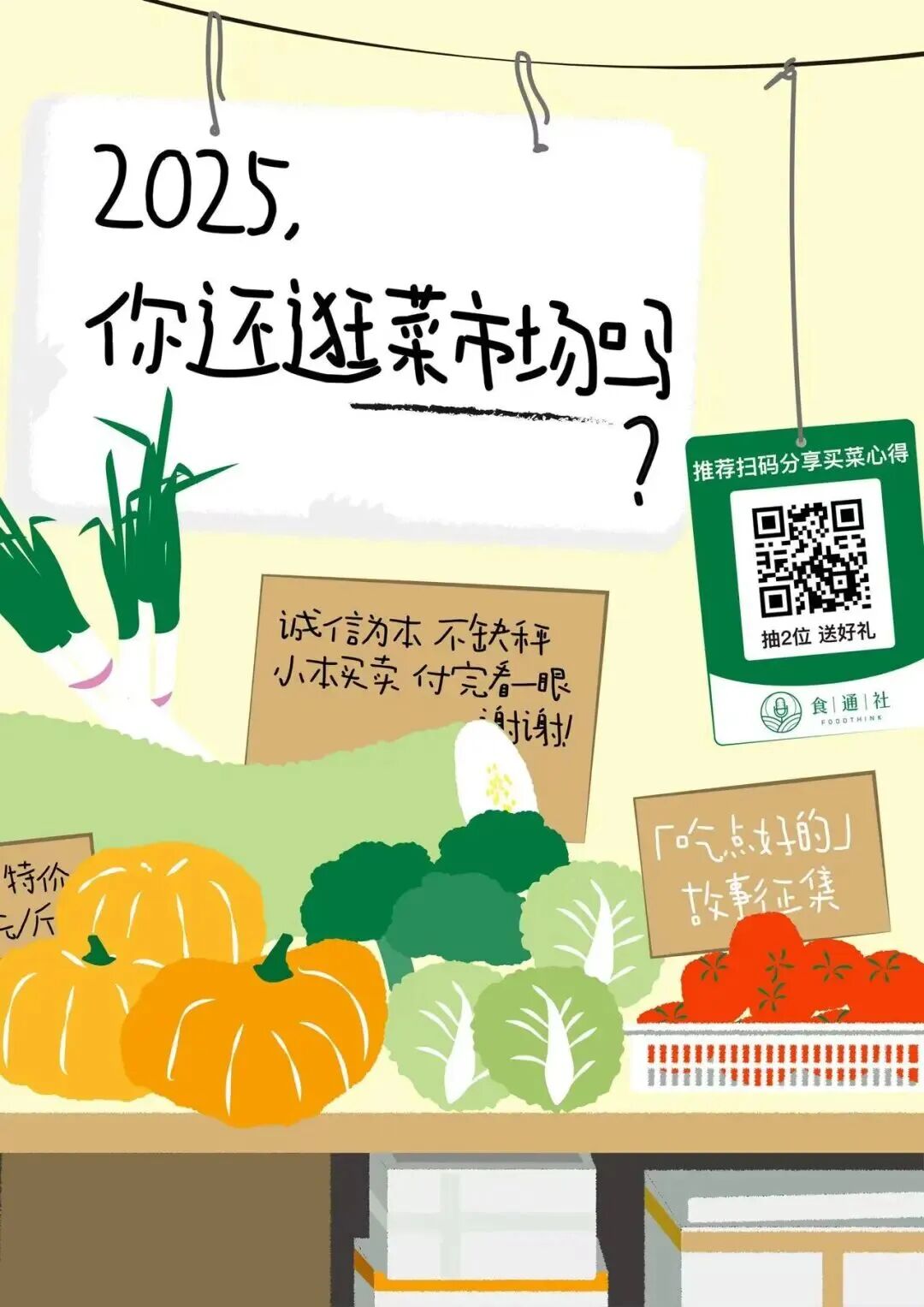
A wet market offers more than just ingredients. It also lets you feel a way of life strung together with food as a medium, and it is the most vibrant and dynamic place there is.
As a young person, do you still often visit wet markets? In this era of acceleration, we have still received many contributions from young readers sharing their wet-market experiences. Whether in big cities or small towns, whether at home or abroad, whether in the far south or the far north, people’s lives are always linked to wet markets in all sorts of ways.
Some people think wet markets will become the next space where the “20-minute theory” plays out, while others think wet markets are still “dirty, chaotic and run-down” places. Old and new ideas overlap, but neither seems able to fully articulate the whole experience of wet markets. Yet a wet market dwells in some corner of the city, intertwined with the weight of making a living, inhaling and exhaling the breath of life.
◉ Click on the image to see everyone’s more detailed discussions and contributions.
When Young People Start Learning Fermentation
While we are torn over whether to cook for ourselves or go to a wet market for ingredients, some young people have already begun experimenting with fermentation. Fermentation is, in essence, a process in which microorganisms interact with a particular surrounding material environment through human action. Therefore, among the many cooking techniques, making fermented foods especially enhances people’s perception of food and the material environment.
Fermentation is not only a cooking technique, but also a way of life. Many young people treat fermentation as a new attempt to eat well in the city. At the same time, fermentation is rooted in the local customs and traditions of various regions. Northeastern suancai may be an overseas student’s longing for home; sharing kombucha liquid culture is also a continuation of friendship; the method of making kimchi can be passed down through generations, and so can the kimchi brine.
Guizhou’s qu and sour soup, Northeastern songren yitang, Kunming’s za eggplant, Shanxi’s tou dao, Jiangxi’s qi gao, Hunan’s chopped chilli… Have you tried all of these delicacies? If you have any other fermented foods you would like to recommend, feel free to leave a message in the comments, and together we can keep refining this “Guide to Fermentation Delicacies Across the Country”.

◉ Click on the image to see everyone’s more detailed discussions and contributions.
Compiled by: Yuyang
Poster: Zhou Xuan, Li Ye, Kairui