
Who Is Speeding Us Up? A Discussion Between Fresh E-commerce Picking Workers and Consumers
Today, fresh e-commerce platforms such as Alibaba Hema, Meituan Xiaoxiang, Jingdong 7Fresh and Pupu are increasingly popular. These platforms let you shop from home with just a few taps and have a wide range of everyday essentials delivered within 30 minutes.
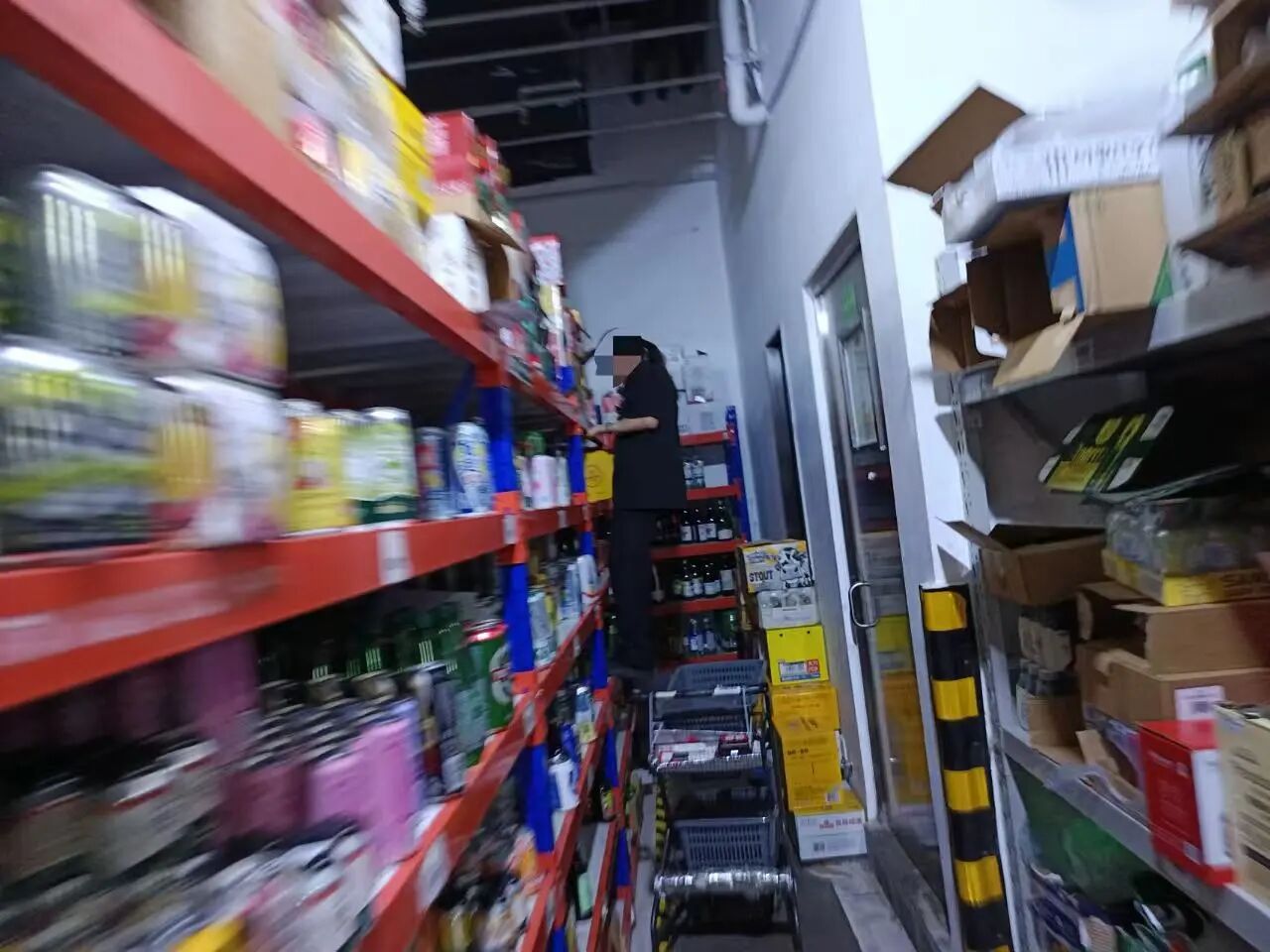 ●A picking worker puts both feet directly on a shelf to save time while reaching for goods higher up. Photo: He Siqi
However, what you may not know is that behind the convenience of “30-minute delivery” is the relay run of delivery workers and picking workers. The article “The 30-Minute Delivery Myth in Fresh E-Commerce: It Begins with Picking Workers’ Three Minutes”, published by Foodthink last month, describes in detail the high-pressure working conditions in which picking workers are trapped by algorithms, data and piece-rate pay.
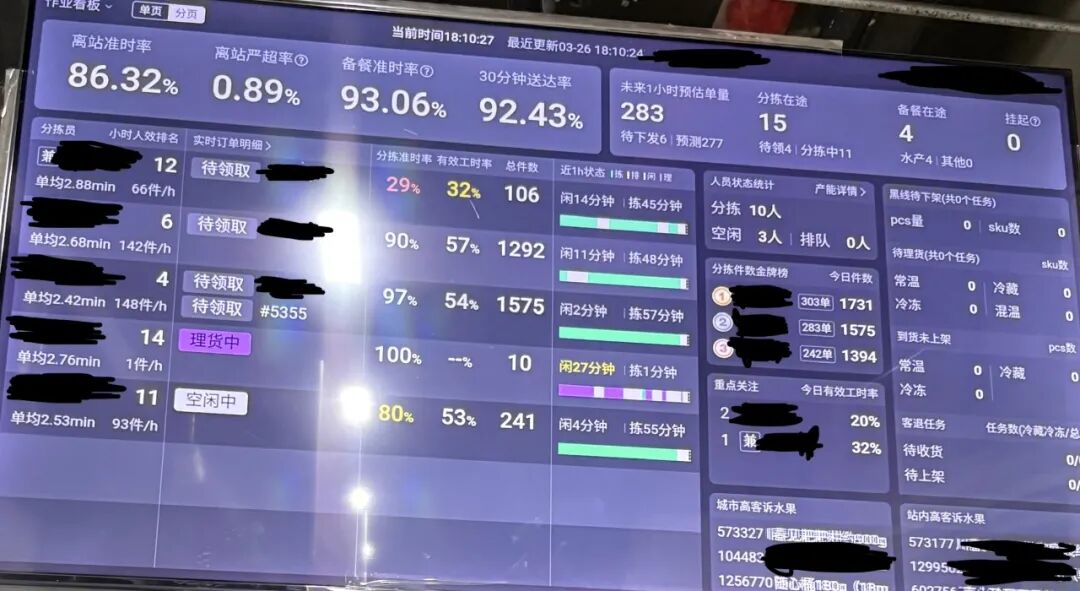
●In a fresh e-commerce dark store, a large display is suspended; the whole site’s on-time rate, 30-minute delivery rate and other data are displayed on the large screen, and every second of everyone’s time seems to be held accountable for these figures. Image source: Yakou
Encouragingly, the article’s comment section has become a rare space for consumers and workers to communicate.
Many of the article’s detailed descriptions of work resonated with some picking workers and delivery workers, who also left comments recounting their own circumstances: working hours longer than imagined, piece-rate pay as low as 0.01 yuan, damaged health, and a management system that substitutes punishment for oversight — these real accounts are a reminder of the kind of world we live in.
Many consumers expressed empathy for the hard work of picking workers and delivery workers. Some said they had come to realise that the convenient life consumers enjoy comes at the expense of other people’s bodies and time; some said the platform’s 3-minute time limit is not a requirement from consumers, but the result of competition between platforms, and that consumers themselves should not be held responsible for picking workers’ plight; others said they should collectively boycott platforms that excessively exploit workers.
Some consumers leave a note on their orders saying “no rush”, hoping to ease the pressure on picking workers and delivery workers; however, some point out that the rules and time limits are set by platforms, and this cannot actually improve workers’ conditions. But we can indeed also take some concrete actions, such as off-peak ordering and reducing our reliance on online platforms.
Initially, the focus of these discussions was always on the relationship between consumers and workers, but in the end it went beyond that binary opposition. Some broader, more diverse facts and views, and some possibilities for action, have emerged in this space for communication. The following is a compilation of comments drawn from the comment section.
Discussion
论
One
What Is the Price of Convenience?
What is the price of a convenient life? The question may seem to place an unreasonable burden on consumers, but it is not really an act of blame; it is an invitation: an invitation to consider who benefits and who bears the cost. Beyond the harm suffered by workers—fresh e-commerce’s excessive plastic packaging, hygiene and food safety issues, and the various traffic accidents caused by delivery workers—are consumers also bearing these consequences?
@觀宸奕: I worked at Meituan Xiaoxiang. There was no social insurance, and the work was exhausting. You were not allowed to rest on weekends or statutory holidays; if you wanted leave, it could only be from Monday to Friday, and there were basically only four days off a month. If you were over time, you got scolded; most of the time you had to pick two orders within three minutes. Some orders were all frozen goods, and in the frozen room, searching all over for products could freeze you to death. You also had to give 30 days’ notice to resign; there was no such thing as being paid in full on the spot, and you still had to keep working scheduled shifts before leaving. Working hours were basically 8–12 hours a day. No matter how long you worked, the Xiaoxiang Supermarket employee app counted only 11 hours a day, but the rosters were scheduled for more than 11 hours. Anything beyond 11 hours did not count as working hours; you could only wait until clocking out, otherwise it was absenteeism. You were forced to work for free, with only a few mao in commission.
@A: I worked there for two years. My back and legs hurt. I worked 15 hours a day but was only paid basic pay for 11. If you disagreed, you were told not to do it. Then the pay kept being cut; when things were quiet you were not given shifts, and when things were busy you were not allowed to rest.
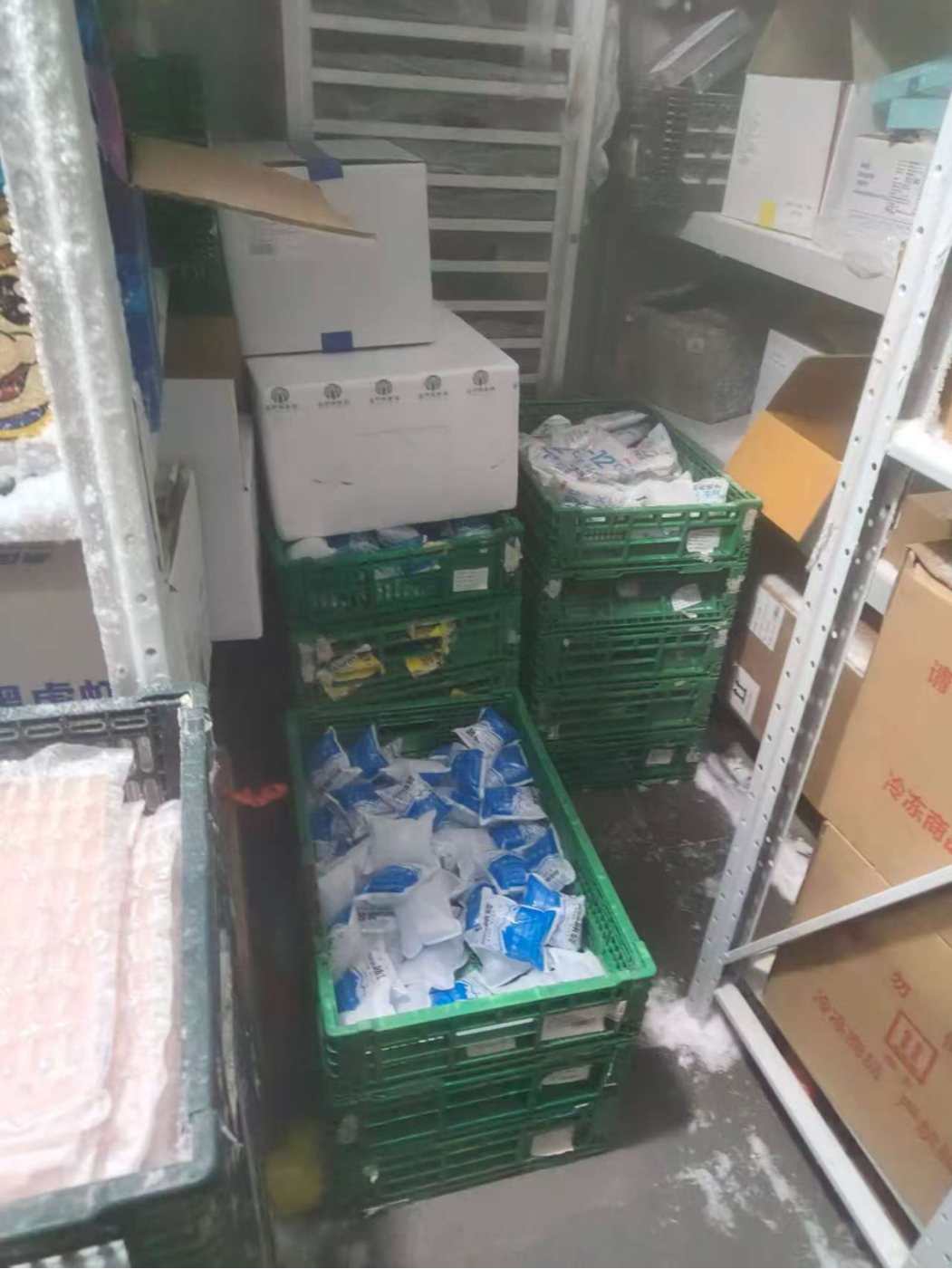
●The temperature in the frozen room is generally below -20°C, and many picking workers are unwilling to go in to pick goods. Photo: He Siqi
@Quella Lin: I have done part-time work, so here is my experience: a shift was 7–8 hours, from 16:00 to 24:00, with an average of 25,000–30,000 steps a day. I was only part-time; I cannot imagine how full-timers manage when their shifts are often 10–11 hours! If there was a customer complaint that produce was not fresh, 10 yuan was deducted (when picking vegetables and fruit quickly, you have to check very carefully; with fruit such as blueberries, strawberries and loquats, it takes a lot of time). If eggs were broken and it was not caused by the rider, 20 yuan was deducted. After three consecutive days I caught a mild cold. Picking meant running back and forth between the frozen zone, chilled zone and ambient zone. The ambient zone only had fans, so I sweated heavily, but going into the low-temperature and frozen zones froze me to death. That is also why turnover is extremely high in this work, and they are always recruiting.
@弗兰克: Sigh. People are not machines, and it is impossible to work precisely at every moment. Real-time data assessment, precise to the second, very easily makes people make mistakes under pressure and even forget about safety. I used to do food delivery for a while. The countdown figures on the delivery order page made it very easy to become anxious. What I dreaded most were merchants holding up meals and lifts in high-rise buildings that took ages to wait for.
@热情华夫饼: On the road, I often see delivery e-bikes with external subwoofers playing music loudly all the time. I once discussed this with friends and guessed it might be a way for delivery workers to declare their presence in urban space. But later I heard a delivery worker with this habit explain that delivery times are so tight that he has to run red lights often, and playing music loudly allows cars travelling normally at junctions to notice him much earlier, reducing the chance of accidents.
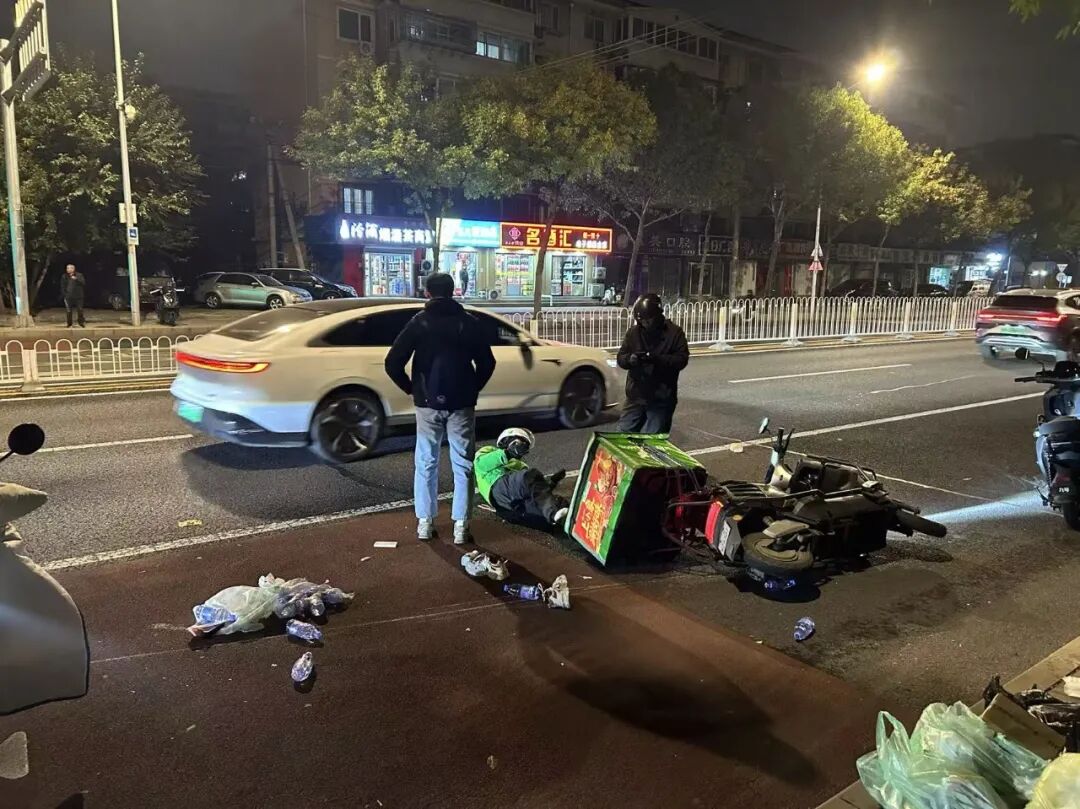
●A Xiaoxiang Supermarket delivery worker, travelling too fast and carrying an excessive load, still slid forward for some distance after emergency braking and collided with an e-bike crossing the road, scattering the delivered mineral water across the ground. Image source: Foodthink
@来去之间: The major online supermarkets in China are Meituan Xiaoxiang, Alibaba Hema, Jingdong 7Fresh, and Pupu Supermarket from Fujian. All these platforms aim for 30-minute delivery to customers, so the picking stage in the dark store can only be compressed to the prescribed time. For example, with 3-minute picking in Xiaoxiang dark stores, the time allotted to the delivery worker is only about 25 minutes. But the delivery system usually assigns 5–7 orders to a delivery worker, and all of them need to be delivered within about 25 minutes. After a delivery worker has finished an order, whether you are stuck in a lift or waiting at a red light, if you have not returned to the dark store within the time limit, the system immediately assigns you another order. That is why the roads are full of chaotic, reckless riding.
@蒹葭: Picking workers on fresh e-commerce platforms are always under the high pressure created by algorithms, data and piece-rate pay. Mis-picks and missing items are unavoidable structural problems — scrapes and traffic accidents are also almost unavoidable for every courier. My uncle works in this line; he has been doing it for more than ten years and has lived through several iterations of the technology. He always eats like a whirlwind. Before I have even touched my chopsticks, he has finished. He is actually a fairly reserved person. But on a rainy day last year, while he was delivering packages, he collided with someone. He fractured his thigh and is still recovering at home. Low educational attainment and a lack of voice in public discourse have reduced this group to a silent underclass, crushed under the weight of life and algorithms.
@凛冬廿九星眠: Generally, hygiene in most stores is just like that, but many people still like having the stores peel the durian and cut the watermelon in half for them.
@Anonymous: I have never used a grocery app; for environmental reasons, I have disliked them since the day they appeared. I reuse plastic bags when I shop, but fresh e-commerce deliveries always come with a heap of one-off plastic packaging.
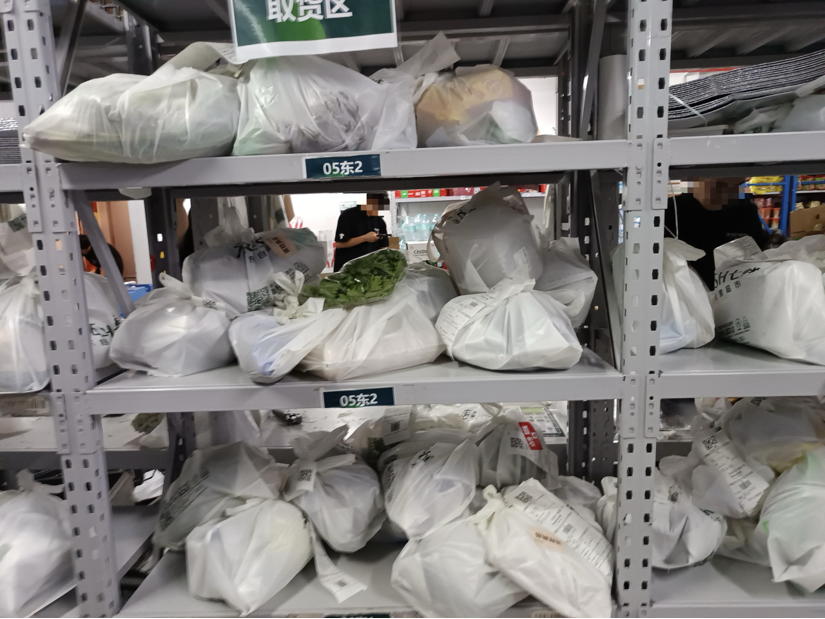
●The shelves are full of goods wrapped in plastic bags. Photo: He Siqi
@信啊信Rui: If we did not want platforms, delivery workers and picking workers would be unemployed again; if we do want them, the situations described above would occur. So which stage exactly is the problem? I can neither understand nor make sense of it.
@来去之间: They have killed off physical stores. Have you not noticed that there are fewer and fewer offline supermarkets?
@H.L: This article reminded me of the supermarket near my home. It opened more than five years ago. At its peak it had about ten employees, but now only the owner and one or two people are left. He has to pay the employees’ wages no matter what, even if it means selling his pots and pans. The owner has been making no profit since last year, but now he is in a position where he cannot back out. The investment in the supermarket is hidden in every aspect; it is close to 2 million yuan, and even if they stop, it cannot be handed over to anyone else. I asked whether the other woman I often saw collecting money was his wife. He said it was impossible. His wife works in Shenzhen to support the family; if they both did this, they would be finished.
What stands in contrast to the slump in community supermarket trade is the booming business of online delivery platforms, along with picking workers and delivery workers driven to extreme speed by system algorithms. The convenience of coming into this community supermarket to say hello, chatting for a few minutes, and dropping in at any time to buy something has turned out to be such a heavy, luxurious element of old street life.
●Vegetable markets or greengrocers, full of the atmosphere of everyday life and human warmth, are facing a huge impact from fresh e-commerce. Photo: Tian Le
Discussion Two
Is the 3-Minute Time Limit Answering Customers’ Urgency or Running at the Expense of Picking Workers?
Picking workers are required to pick all items in an order within three minutes and pass the baton to delivery riders, who continue racing against time; customers who have enjoyed “30-minute express delivery” have all said they are not in a hurry to receive these goods. In this situation, why does the platform insist on pushing speed even further?
@哇塞: What exactly are we all rushing about? Rushing to finish secondary-school subjects in primary school, completing a quarter’s KPI in a single month, and if the work cannot be finished within the scheduled hours, it means overtime, single rest days and alternating five- and six-day weeks—who exactly demanded 30-minute delivery? Wouldn’t it be better if we all slowed down?
@6: As a consumer, this life-and-death three minutes may be nothing more than the time it takes for me to inadvertently lose my train of thought. In my experience, Xiaoxiang really does deliver fast, but if it were a little slower—five minutes, ten minutes—I doubt consumers’ perception would change much. What I care about mainly is whether the quality is good and the quantity is accurate, and after all I believe most people are still willing to understand one another. Turning people into machines, and making machines into something like people, is a warped value system. Slow down a little; the sky is not going to fall.
@云淡风轻: On behalf of all the front-line picking workers at Xiaoxiang, Hema and 7Fresh, let me say thank you to you—thank you for understanding. I am also part of this system myself. If everyone were like you, our work would be a lot easier.
@露mio: Why should people let algorithms squeeze them? Sigh, I am being squeezed too; when someone speaks up for me, it suddenly feels a little heartbreaking.
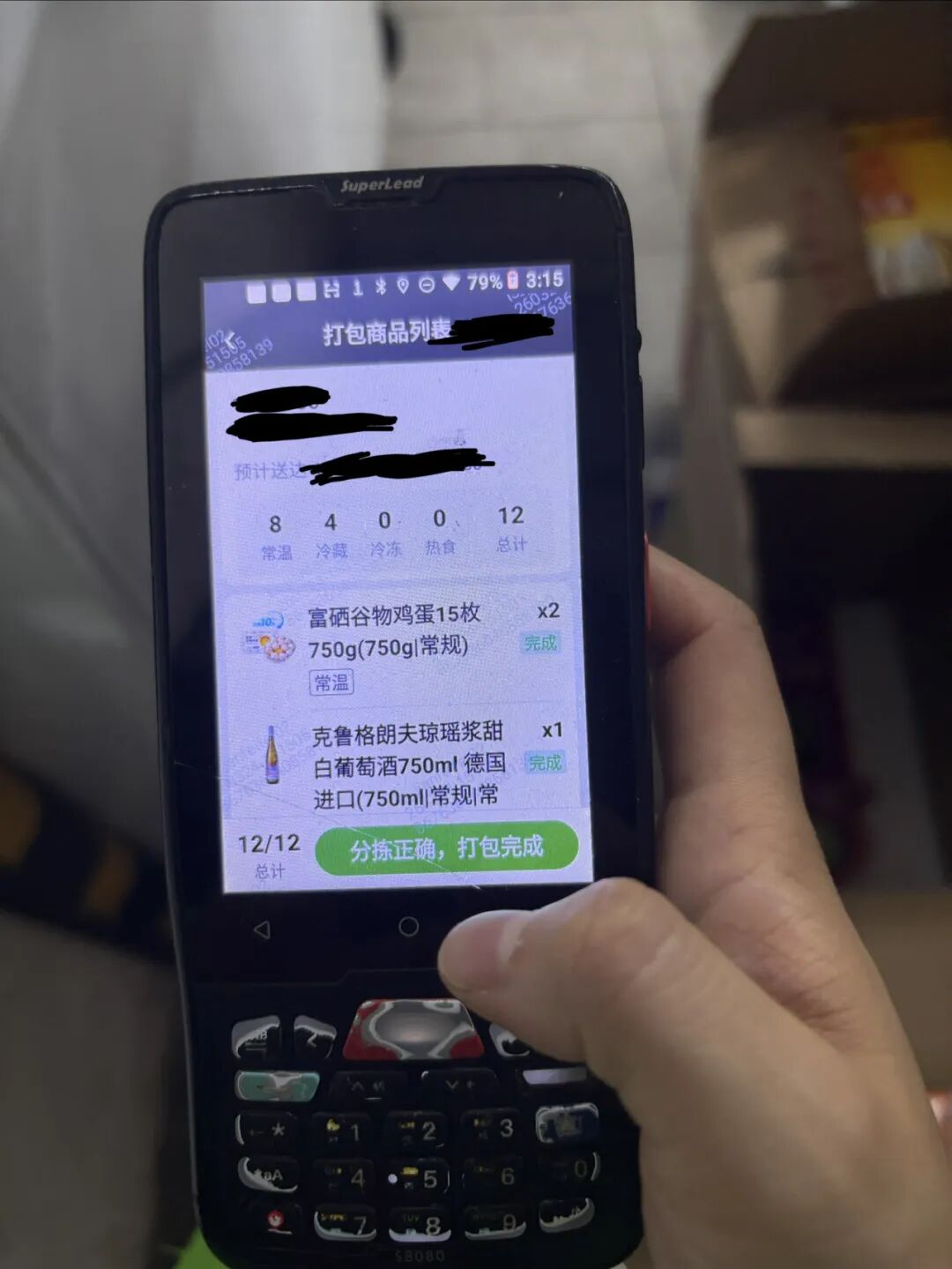
●The PDA (handheld device) in the picking worker’s hand is constantly urging them to speed up. Photo: Ya Kou
@星星观察员: All the squeezing has nothing to do with consumers; please take note. It is clearly the fault of platform capital, which is squeezing both customers and employees. As consumers, we have no obligation to understand the platform’s operating rules. The rules were clearly made by the platform itself, so why should consumers have to consider whether they are reasonable?
@cora: Why must it be picked within three minutes? The platform is really squeezing employees by doing this. If customers are in a real hurry, they should not place an order in the first place but go downstairs and buy the goods themselves. If they are willing to wait for someone to deliver the goods to their door, that shows they can wait.
@15432: If there were an option for urgent and non-urgent orders, perhaps everyone could breathe a little easier.
@来去之间: The platform will not give you the chance to breathe a little easier. Its system has all kinds of assessments, and your pressure is its performance.
@L.: Isn’t what capitalists do just squeezing employees? Even if customers are not in a hurry, if lead time is reduced to the minimum, labour productivity will be at its highest. The same amount of work would originally require paying forty people’s wages, but by shortening lead time, it might only require paying thirty people’s wages. Moreover, different platforms compete with one another; when goods and prices are similar, consumers will prioritise the faster one.
@暮夏之后: To be honest, as a customer, I am not really in a hurry over those ten-odd minutes. I am buying fresh produce, not something to eat immediately; after receiving it, do we not first put it in the fridge and take it out when we need it? The 30-minute delivery requirement was introduced by platforms in order to seize the market, so that they can then squeeze ordinary employees to the limit.
@瑞年: I have been using it since Pupu, and later Pupu and Xiaoxiang, for several years now! I have never complained! I always place orders after 8 p.m., and there are plenty of bargains! On rainy days I even leave a message telling the rider to stay safe—I am not in a hurry! There is a comment above that is very good: If you choose to order online and sit at home waiting, you need to wait; you must be able to wait! If you complain about delays, you really need to go to a physical store and buy it yourself.
@G: There is no point saying you are not in a hurry. The platform’s algorithm does not care whether delivery riders live or die; it must deliver on time.
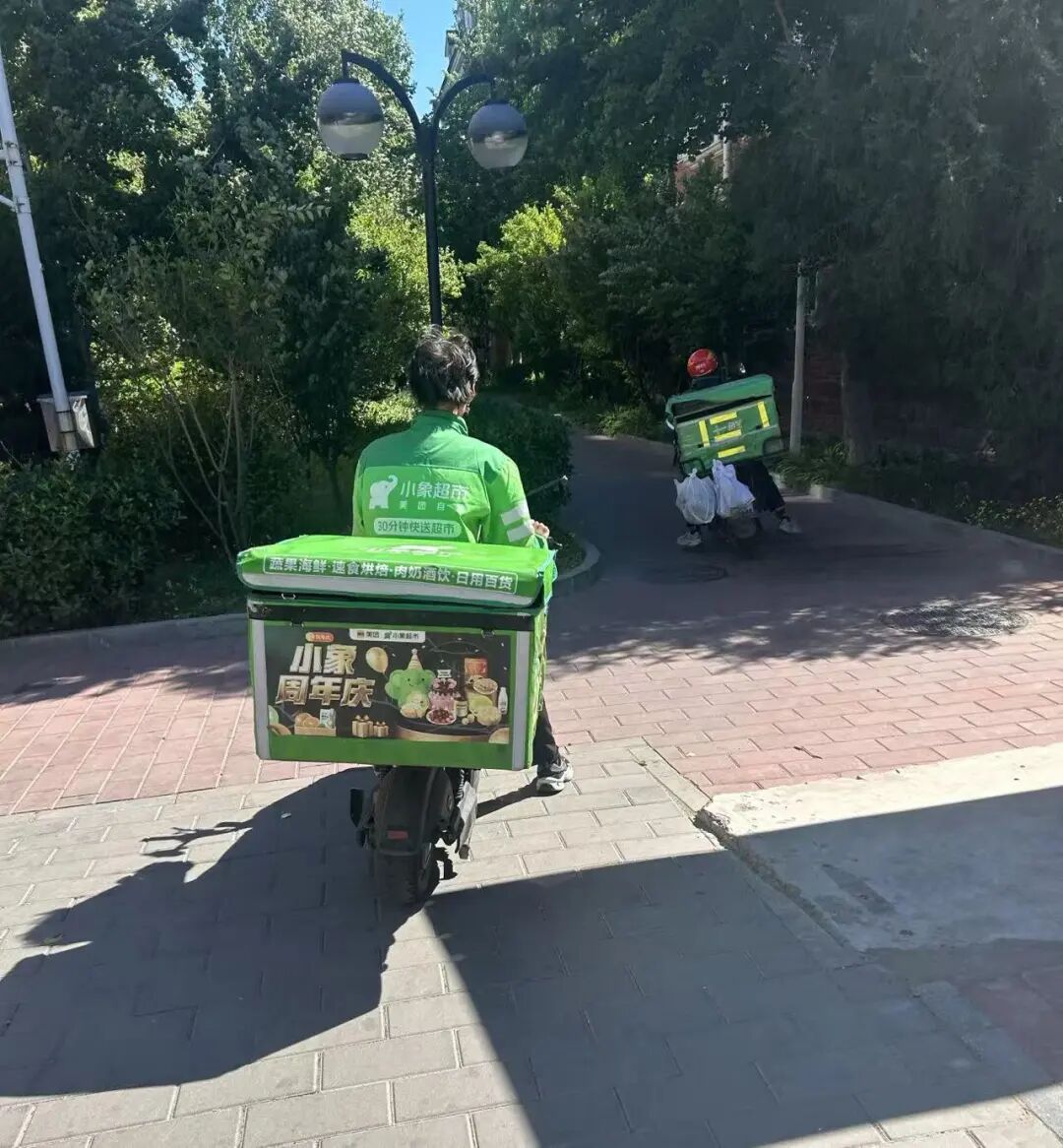
●A Xiaoxiang picking worker delivering in the residential estate. Image source: Foodthink
@海盐柠檬: Recently, delivery from Xiaoxiang Supermarket and Hema has become available near my workplace. I have placed a few orders, and it really is convenient. Before finishing work I order the food I need most, and after work I can take it straight home. What impressed me is how fast they deliver, especially Xiaoxiang Supermarket; it arrives 20 minutes after I place the order. Only after reading this article did I realize what those 20 minutes mean and what they carry. I do not need it that fast; I could accept an hour, and I could accept two hours.
Dis
cussion
Three
Behind Complaints: Bodies Pushed to the Limit and an Invisible Platform
For consumers themselves, filing a complaint when they discover a problem with their order is a reasonable response. However, a better understanding of the system helps us think about this in a way that goes beyond a binary opposition: bodies kept working at high speed cannot avoid making mistakes; what lies at the root of these errors? Complaint-related penalties fall on picking workers and delivery workers. Can the platform that “encourages complaints” stop being invisible and take responsibility for this?
@Lzx: I worked for five and a half hours yesterday and received seven customer complaints. Simply unbelievable.
@麦子: At the end of 2023, I worked part-time at Xiaoxiang Supermarket for a while. Once, I took an order with 89 items; it took me four minutes to pick them all, and I nearly died of exhaustion. Another time, an order of 9 items included both food and toilet cleaner. I forgot to pack the toilet cleaner separately, and the complaint covered all 9 items, with a deduction of 90 yuan. My part-time pay for four hours was only 80 yuan to begin with. I was upset for two days. The following evening, the station manager successfully appealed on my behalf, and only 10 yuan was deducted. It was terrifying. I had been thinking that, if I did not want to go out for a run in the evening, I could run around at Xiaoxiang Supermarket and still earn money. I was too naive. Since then, I have not dared to think about the prospect of a complaint again.
@尤利西斯: If a customer receives the goods, notices missing items, and contacts the store manager directly, does that not count as a complaint?
@麻麻雷: It still counts, because that means there was a problem with the order, and the picking worker or delivery worker is required to take responsibility for it.
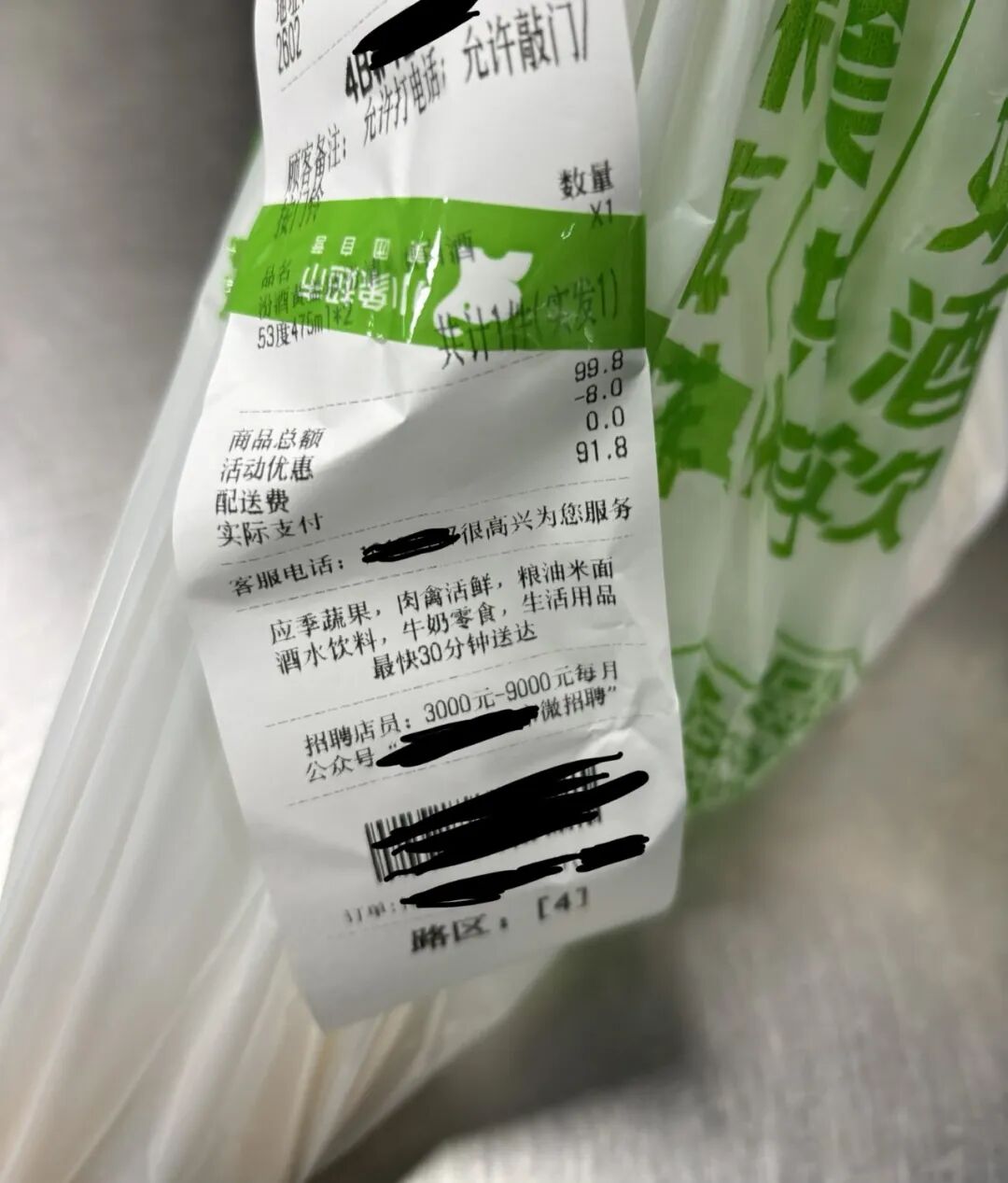
●On the receipt that customers receive, the picking worker’s name is written after the order number. Photo: Ya Kou
@哦喔: If a customer files a complaint about a product on reasonable grounds, the picking worker also has to bear the complaint. Picking workers also face two further pressures. First, the 3-minute picking time must not be exceeded; if you are often over time, the station manager will speak to you, because the station’s fulfilment needs to be protected. Second, if you have just finished picking and then press “pack”, the rider will speak to you, and the rider’s station manager will also speak to you. If you do not press “pack” in advance, the station manager will say you are over time.
@1: Picking at Xiaoxiang is relatively a little better. Customer complaint deductions are around 10 yuan. When a delivery rider receives a customer complaint, the deduction is basically 50 to 300 yuan. Since the average pay per order is only a little over 3 yuan, it can sometimes take several days of work to earn back the amount of one complaint.
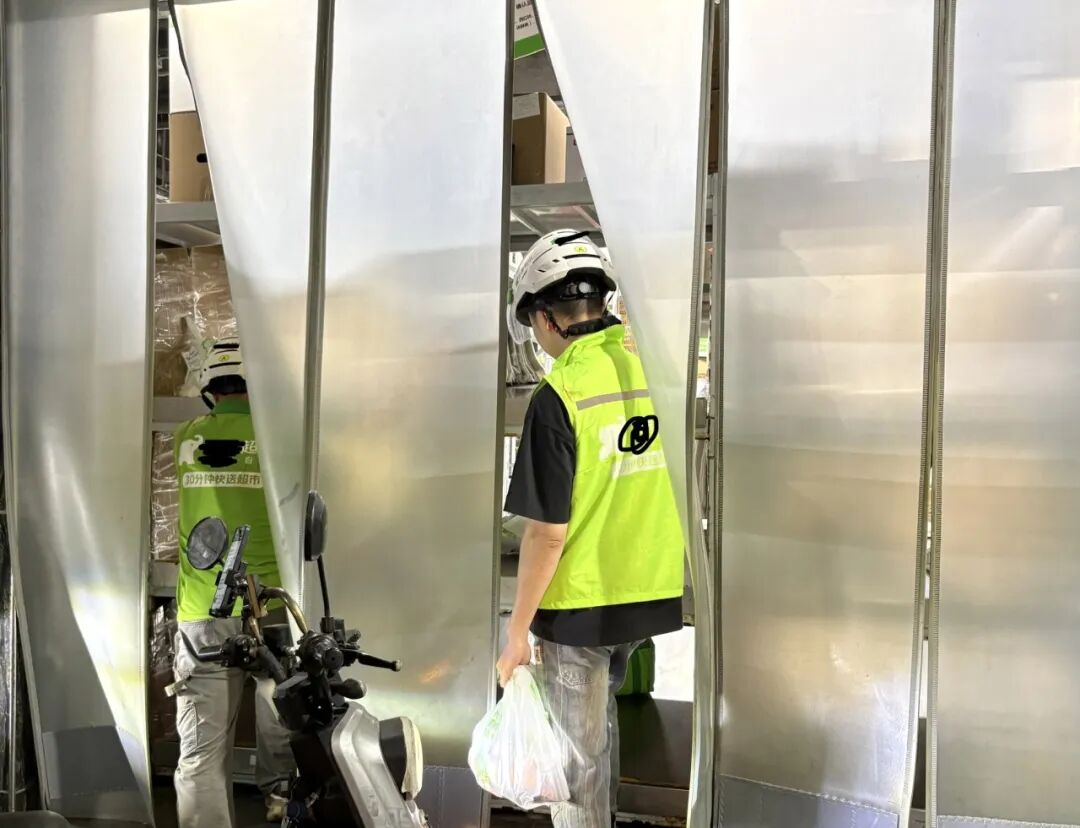
●A delivery worker waiting for the picking worker to pack. Photo: Ya Kou
@Freya: It is a little sad to read. I rely quite a lot on Hema and Dingdong, and I had not realised how brutal things are behind that convenience. A few days ago, a delivery rider knocked over a meal box while delivering the food. Some of the soup from the chopped chilli fish head had spilled out. He kept apologising and offered to pay compensation, but I told him it was not necessary and that I would put it in a bowl at home later. I thought it was over, but the next day, on the delivery platform, I saw that he had then left a message asking me not to give a bad review or apply for a refund, because he would be subject to a serious performance penalty…
@宇宙督查员: I have also complained before because I received the wrong item. Although they were different types of product, the packaging was strangely similar, and at the time I was annoyed that this could be delivered incorrectly. Next time I will have a little more patience and understanding about situations like this. In the face of the platform’s oppression and alienation of people, what else can we do?
@范范: Over the past year I have often been buying from Pupu and Xiaoxiang, especially because there is a Pupu just downstairs from my home. I have also seen posters advertising part-time jobs, and I did not realise how exasperating the picking stage of this work is. The algorithm itself is not meant to squeeze employees, but capitalists use algorithms to create “time management”, so that no “accident” is allowed to happen. Anyone who often uses time management to make plans will know how impossible that is to achieve. But the author need not feel guilty about having complained before; this is what capitalists do when they tie complaints to working people. I have also complained twice, for example when I received vegetables that were not fresh or the weight was insufficient; consumers’ needs need to be met as well.
Discussion Four
Is Xiaoxiang Supermarket the Only One Like This?
Although the previous article was about Meituan’s Xiaoxiang Supermarket, this is not a phenomenon unique to it. E-commerce platforms compete with one another, and none can remain unscathed. Picking workers embedded in this larger system are, no matter which platform they work for, hardly likely to escape exhaustion.
@WR: This is probably to compete with other platforms. Consumers may empathise with the hardships of picking workers and delivery workers, but when choosing a platform to place online delivery orders, they tend to favour one with bigger discounts and better service (fast delivery and fewer errors). As a result, platforms that allocate time reasonably lose out in cutthroat competition, while platforms that squeeze employees’ time in exchange for customer satisfaction are more favoured.
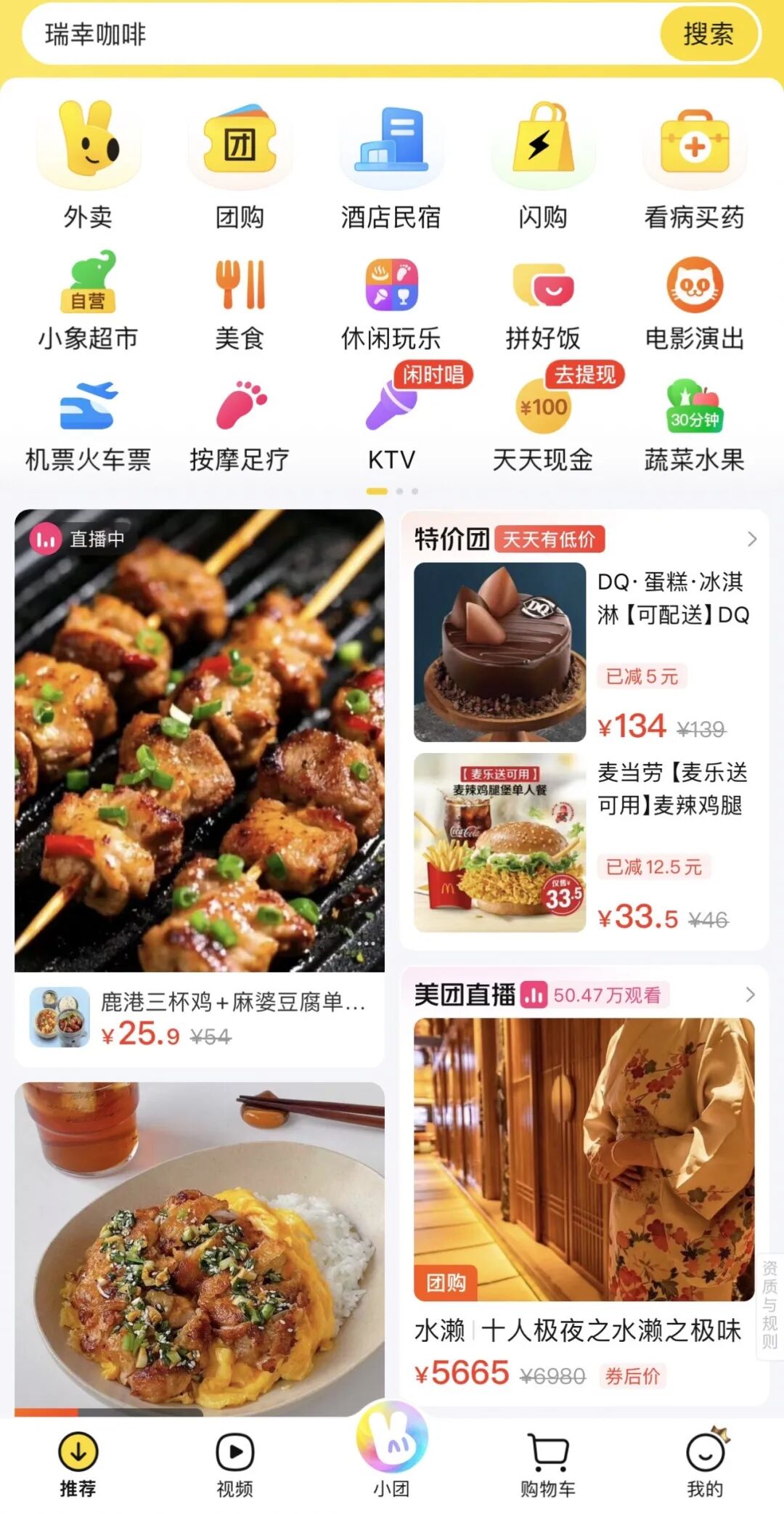
●On the home page of the Meituan app, the entrance to Xiaoxiang Supermarket is very prominent, located in the first column, second row, right below food delivery. With competition in the food delivery market becoming increasingly fierce and regulation increasingly strict, Xiaoxiang Supermarket’s tapping into and satisfying online demand for fresh produce has become a new weapon for maintaining Meituan’s local commerce traffic advantage. Image source: Screenshot of the Meituan app
@油菜花: This article resonated deeply with me. Last year, my job search did not go well, and I was forced to interview for a part-time job at Pupu Supermarket. Its model is basically the same as Xiaoxiang’s. On the day of the interview, I felt the picking workers’ nervousness and sense of pressure. They worked against the clock, had to memorise the locations of products, and also had to memorise address zones, all represented by codes. Once they were proficient, they also had to pick multiple orders at the same time. Each person carried several bags, and many of the items were heavy. This is fundamentally a “mental + physical” job, and it is really hard on women. I reflected on whether I could really do it. In the end, I did not go.
@初到海拉鲁: I usually use Ele.me to buy groceries. Previously, a single purchase of 20–30 items took an hour and a half to be delivered. Starting last year, the delivery time has been shortened to one hour, and this year even to less than 50 minutes. So the industry has already reached this point.
@观花: Last week I bought soy products, yoghurt, and fruit from Chaoshifa on Taobao Flash Sale. After placing the order and tapping send, I saw a rider being called just three minutes later. I told my father that platforms really do not need to be so cutthroat now! If I happen to be cooking and am suddenly short of a piece of ginger and need it urgently, even if I order a single piece, they will not deliver it; I have to go downstairs to the small vegetable stall in the courtyard to buy it myself. What I buy from them is not something I need urgently, so the rider does not need to rush over like that.
@We十: With Duoduo Maicai, if you buy mineral water, it arrives at the station the next day. At least Duoduo Maicai uses a van to deliver, even if there is some distance. There is a small trailer on the van. Then, some station managers will deliver it to your door.
@jam: Duoduo Maicai also uses picking workers for picking, after all. For a large item, it is 6.8.
@纯情女大声: I am a Xiaoxiang Supermarket customer, and in a certain month, out of curiosity, I went to a Xiaoxiang Supermarket to apply for a part-time job. During every peak period, fast-paced songs are played loudly in the warehouse to encourage employees. I know that Pupu’s grocery service assigns trolleys to picking workers, but the Xiaoxiang branch I was at did not have any. Picking workers often carried heavy items, panting as they moved among the shelves. Their time was compressed into these 3 minutes, and the PDA in each person’s hand was their way of surviving in this system.
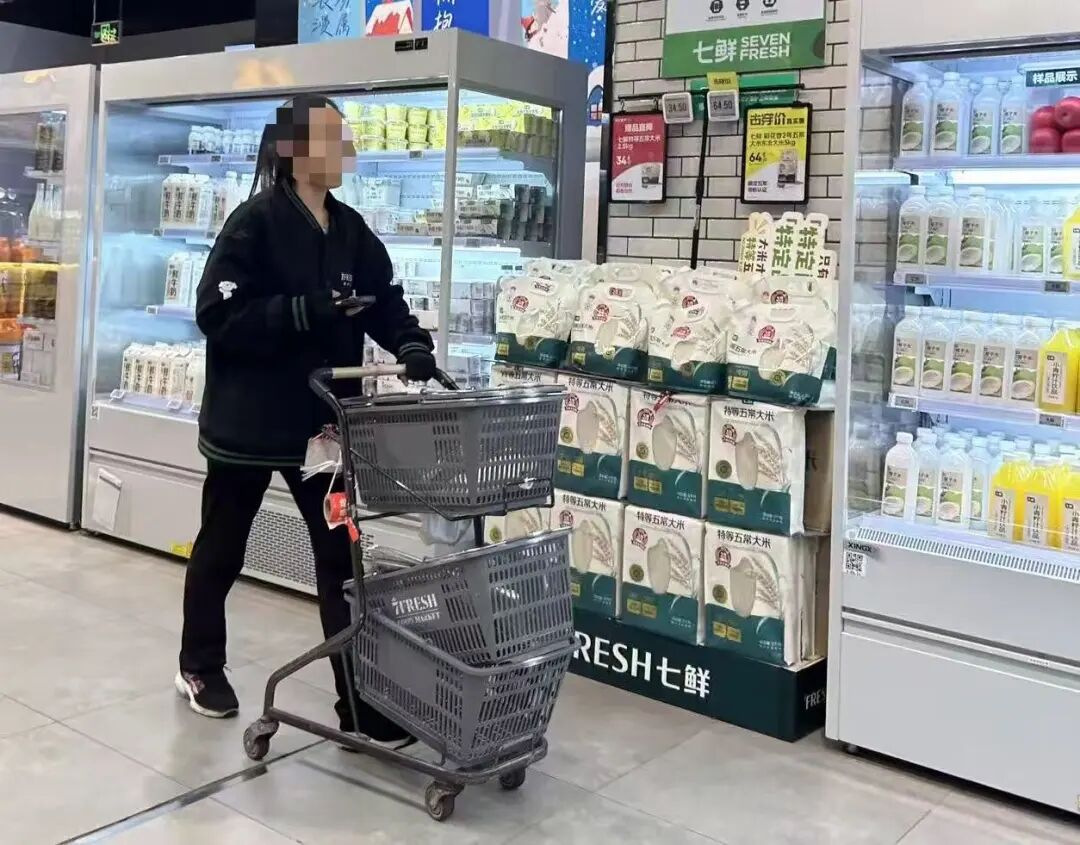
●A picking worker picking with a hand trolley. Photo: Yu Yang
@黄映红: I have worked as a part-time picking worker at a Walmart store. The pay was 0.3 yuan per item. Sometimes an order had only 1–2 items, but it still had to be packed before the next order could be taken. No matter how many items were in an order, it had to be completed within 10 minutes. Some items could not be found no matter how long I looked (the supermarket was out of stock), and I also had to call the customer to confirm a change of brand or specification. On average, it was only 10–15 yuan per hour.
Discussion Five
What Else Can Consumers Do Beyond Buying Fewer Heavy Items?
Most people believe that platforms should be held accountable for such poor working conditions, but as ordinary consumers, people also hope to do something to improve the situation. From specific individual actions to collective boycotts, we are not as powerless as we might imagine.
@水瓶春天: So that is how it works. I can see now why Xiaoxiang’s deliveries are always so fast! But giving only 3 minutes is far too little; when I buy a lot, it definitely is not enough! It would be reasonable to add the appropriate amount of time according to the number of items! If I had not seen your article, as consumers we really would not have known how it works. Next time I will order a little less in each order, and add a note in the remarks saying it is not urgent and asking the delivery worker not to rush—would that work?
@来去之间: That is not feasible. Once an order is generated, it only moves through the system. If you call the rider and say, “There is not enough time to deliver; you can mark it as received first and deliver it slowly,” the system will monitor the call records. If a rider actually dares to mark it as received, they are fined immediately. If the rider has marked it as received, but you have not received the goods and call the rider or customer service, then, if the rider answers, they earn nothing for the day and are fined 300 yuan!
@棘草籽: Today I still have to buy a large bottle of mineral water on Hema, with a guilty conscience. This seems to be the only thing I have to buy on a fresh food platform. I never buy more than two large bottles of water at a time. My earlier concern was that delivery workers found it difficult to carry them up the stairs, but now I have realised that, for picking workers, large items are also a very heavy burden. If I have to use the platform, are there any strategies that could make things a little easier for picking workers? For example, ordering off-peak? Buying fewer items in one order? But as long as the platform does not take workers’ conditions seriously, consumers’ little tricks are a drop in the bucket.
@芽口: The peak period is 4:30–7:30 pm. You can place orders away from peak times; do not order too many heavy items in each order; and try shopping offline more often to reduce reliance on fresh food supermarkets.
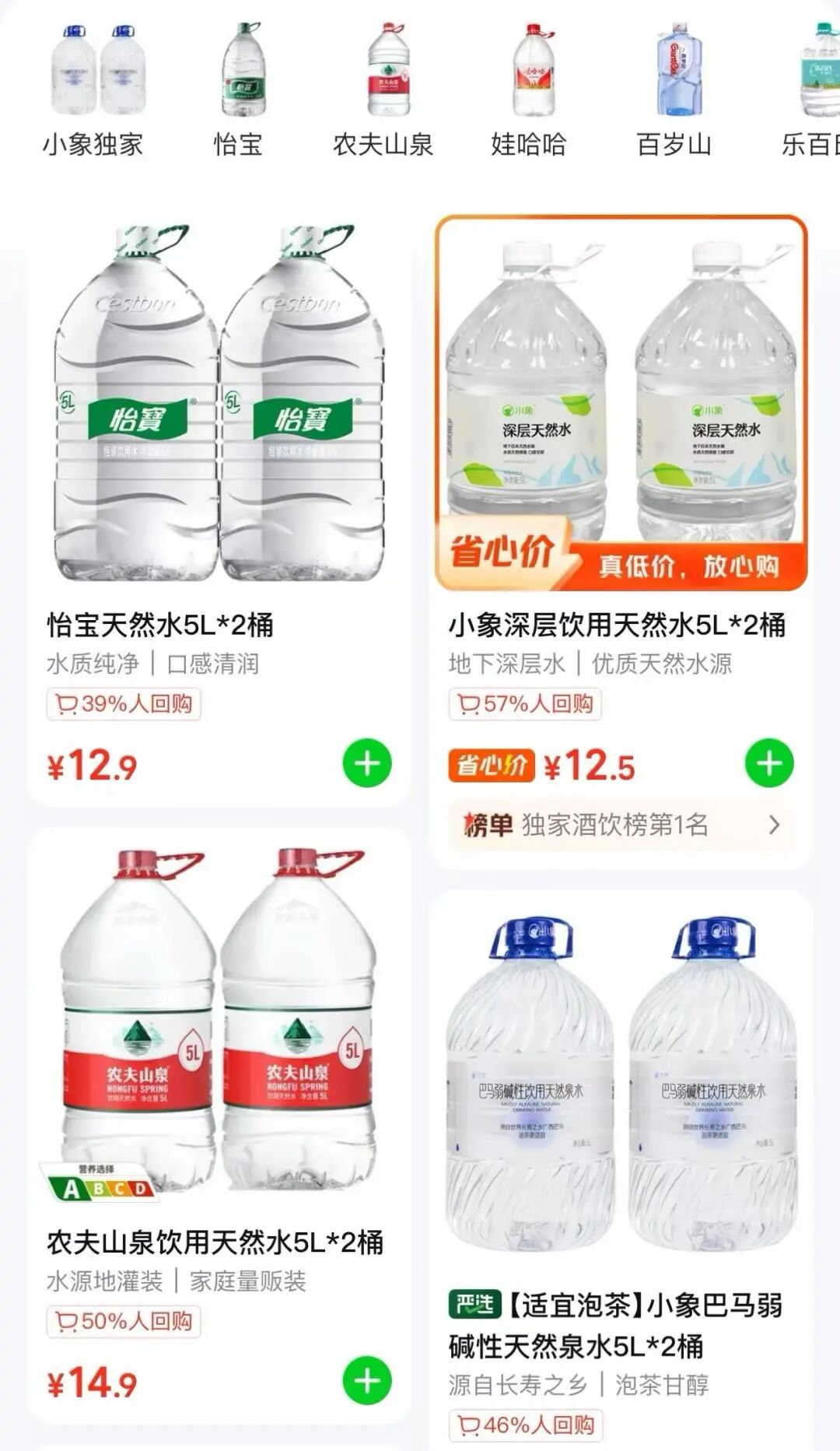
●Because they have to run while carrying heavy items, the orders that many picking workers are least willing to pick are those containing large bottles of mineral water. Image source: Screenshot of a Xiaoxiang Supermarket page
@偷菠萝油的女鬼: My only form of resistance is to try not to place orders on the platform.
@yyyyyyyyyyyy: In fact, it is only by reducing online shopping and increasing offline spending that we can have an effect on the economy. Otherwise, if all the offline physical stores close, online e-commerce, without any competition, will only keep raising prices.
@旺财来福: I remember that on the day before Chinese New Year’s Eve, someone ordered from Dingdong Maicai. Because most delivery workers had gone home, the remaining delivery workers were overloaded and running around, and people who had ordered kept urging in the Dingdong group, while those who had received their deliveries kept complaining. In fact, there is a supermarket within 10 minutes of my home, so if I were in a hurry I could cancel the delivery and go straight to the supermarket. It turns out that before delivery services existed, people could live just fine without them. Once, when a typhoon came, someone posted on Moments saying that they had ordered delivery and it was not delivered until two hours later. After hearing the weather forecast, I had already bought frozen dumplings and instant noodles in advance and kept them at home.
@殷羽sama: Consumers should band together and boycott platforms that over-squeeze picking workers and couriers. Employees should be allowed a platform to rate these companies anonymously. Companies that mistreat employees, withhold wages, or maintain a high-pressure culture should be given low ratings, which would lower their standing in public evaluation systems. We should not wait until someone is killed every time before people start boycotting a certain brand.
Compiled by: Ya Kou
Edited by: Yu Yang
Layout by: Xiao Shu