Is There a Food Delivery War Outside China? A UK Roujiamo Shop Owner’s Answer

This is the seventh year of my life in the UK. Six years ago, in a small town in Exeter, I opened a roujiamo shop called Rogamo. By now, the name has almost become a generic English term for roujiamo.
Before Rogamo, I had already spent 10 years in the food and beverage industry back in China. When I opened my first shop in Beijing, group buying, the forerunner of food delivery, was just taking off. At the time, the Hundred Group Buying War was in full swing, and day after day, street canvassers would come to the shop, urging us to join group buying and tempting consumers and businesses with all sorts of subsidies. Looking back, the Hundred Group Buying War was precisely the forerunner of the food delivery war, and the beginning of countless businesses being swept into the platform economy.
As an entrepreneur who entered the food and beverage industry in 2010, it is fair to say that I have been dealing with food delivery ever since, and I have witnessed the many changes as delivery platforms have gone from being parasitic to gradually looming over the food and beverage industry. Rogamo is now also listed on food delivery platforms, but food delivery in the UK differs greatly from food delivery back in China.
This dynamic, comparative perspective made me realise that, after several subsidy wars, in China’s food delivery industry, platforms, businesses and consumers have all forgotten that food delivery was originally just a simple delivery service, and that it should follow the principle of “whoever benefits should pay.”
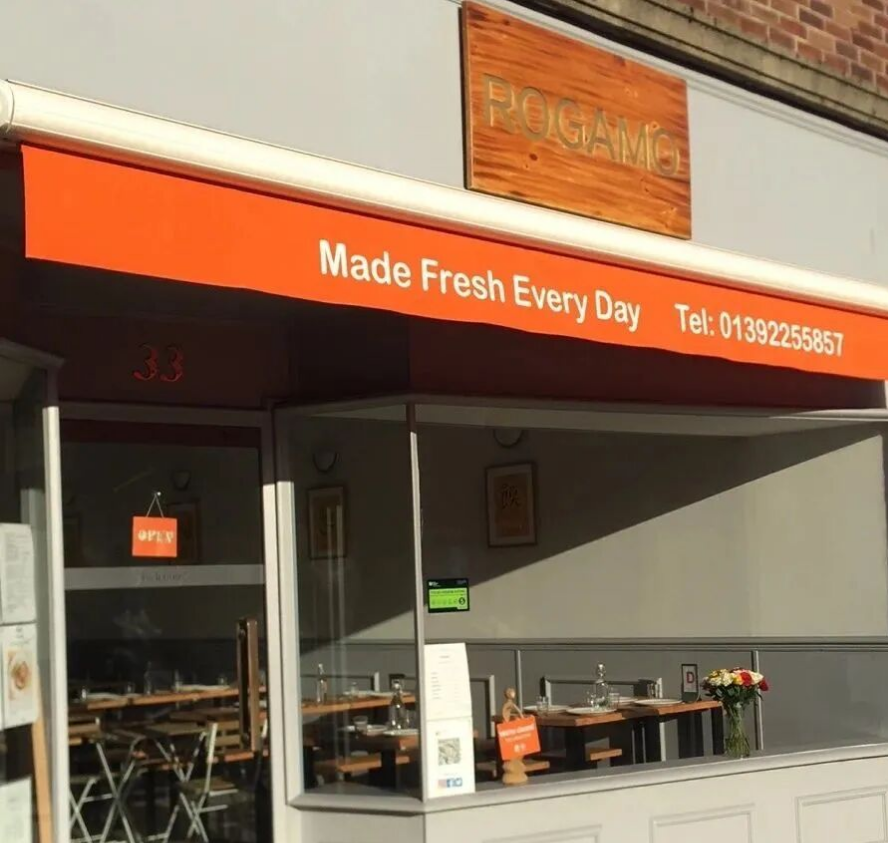
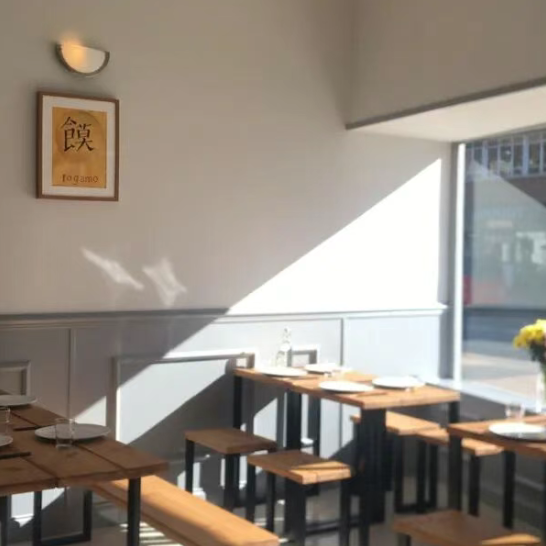
◉Rogamo shop.
What Is the Who Benefits, Who Pays Principle?
One afternoon last month, in the central business district of Canary Wharf, London, at what should have been peak food delivery time, a friend and I did not actually see a single delivery rider anywhere.
In the small town where I live, the central business district has many chain restaurants, such as well-adapted, fusion-style Asian chains Wagamama and Pho. On the Sunday half a month ago, I went there to have pho. During my two hours there, I did not hear the shop’s food delivery equipment going off, and I did not see any delivery riders weaving through the streets of this business district.
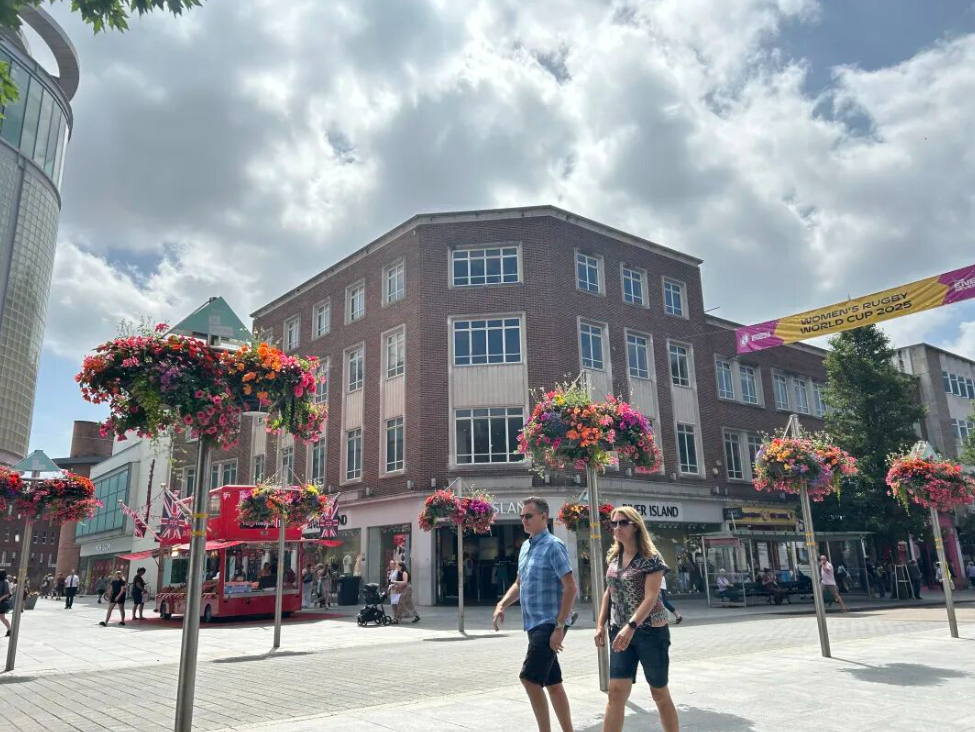
◉The main street of the small town where the Rogamo shop is located.
In other words, food delivery in the UK is not so “developed” that, like back in China, traces of it are present in every street and alley at all times.
The main food delivery platforms in the UK are these four: Deliveroo, Uber Eats, Just Eat and Hungry Panda, all of which are foreign companies.
Hungry Panda, whose Chinese name is Hungry Panda, was founded in the UK by a Chinese international student. Our shop’s orders show that most people ordering on the Hungry Panda platform are Chinese international students. Our shop is directly across from the apartments where many international students live, and delivery riders often come to the shop to pick up meals, park their vehicles at the shop entrance and walk to deliver the meals. But the students still prefer to have food delivered to their apartments.
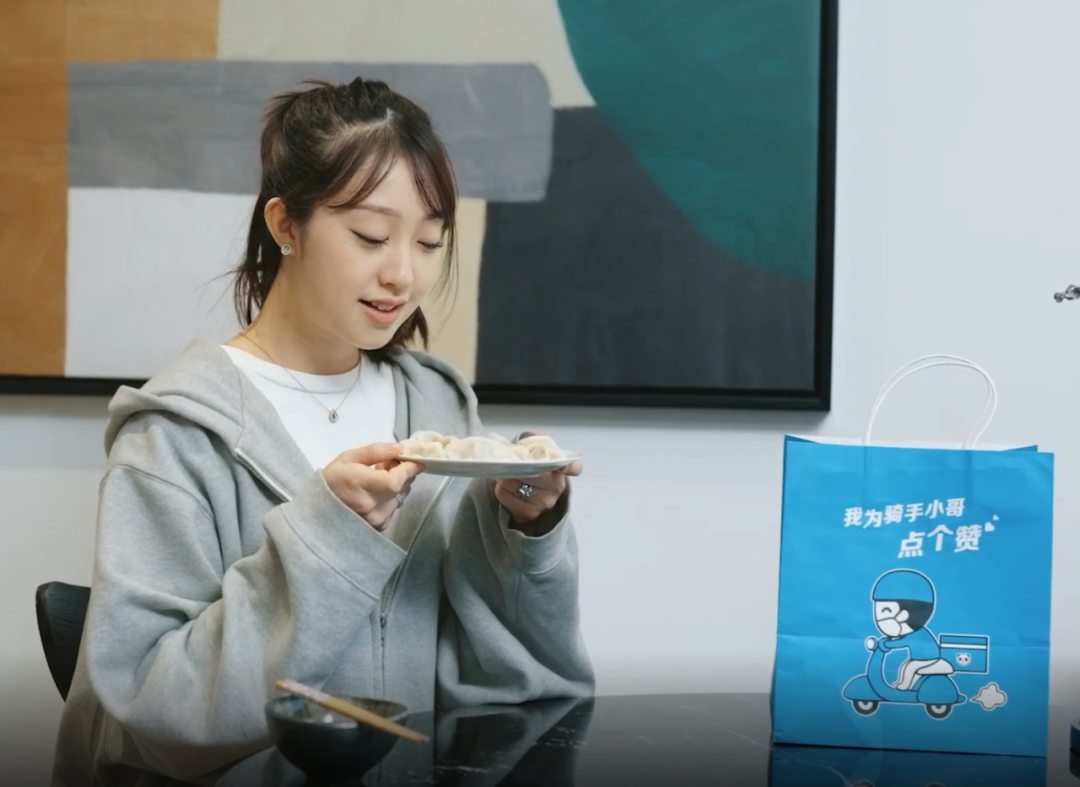
◉Hungry Panda is a Chinese food delivery platform positioned for the market of overseas Chinese and international students. The image is a screenshot of Hungry Panda’s video advertisement. Image source: Hungry Panda’s official website.
To be honest, I hope they come to the shop to eat, not just because the food is better when it is steaming. More importantly, for the same order, the amount that lands in our pockets is different between delivery and dine-in. For small food and beverage businesses like ours, UK food delivery platforms charge a fee of 35% plus VAT (value added tax). Only 58% of the order comes back to our account.
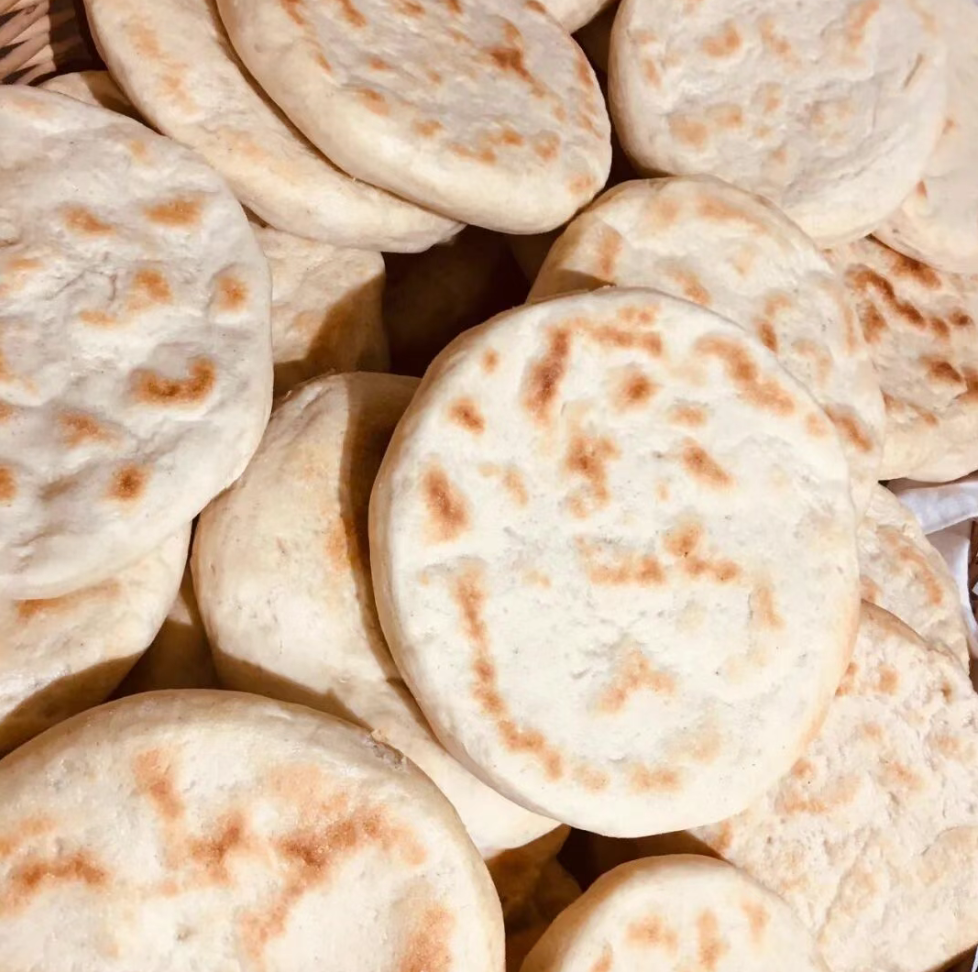
◉Hot, fresh-from-the-oven roujiamo buns.
However, unlike many businesses back in China, I don’t keep delivery prices on par with, or even below, dine-in prices, even when the platform commission is already very high. Even with the need to maintain the platforms and drive traffic to the shop in mind, we still raise delivery prices by 20%, so we lose a little less. I have had brief discussions with some excellent restaurant owners in the small town, and their prices on delivery platforms are also higher than in the shop. That is something customers need to bear.
This is the “whoever benefits should pay” principle I was talking about: if you want to spend less, come to the shop; if you want the convenience, you have to pay for it. It is only three or five minutes, just a few steps, from the apartments to the shop. If customers insist on enjoying this kind of food delivery service, they need to pay the costs that should be paid, to the delivery rider and to the platform.
For us as a business, costs are fixed. Rent, staffing, utilities and all sorts of other expenses do not go down simply because you order food delivery. So, in my logic, these additional food delivery costs should be borne by customers.
About the Food Delivery War
Last year, when Meituan, JD and Taobao Flash Sale were locked in a three-way battle, I, as a food and beverage entrepreneur, kept a close eye on it. I can offer a comparative perspective here, drawn from my experience with food delivery in the UK.
Over the past six years, I have not seen any real battle among the different platforms in the UK, and so there have been no complicated subsidy campaigns. Earlier I mentioned that UK food delivery platforms charge a 35% commission; many people may think this is much higher than the commission charged by platforms back in China. But in China, on top of the headline 20-25% commission, there are all manner of subsidy and super-voucher campaigns, for which businesses bear most of the cost. Once you work out what actually lands in your pocket, it is probably about the same as mine.
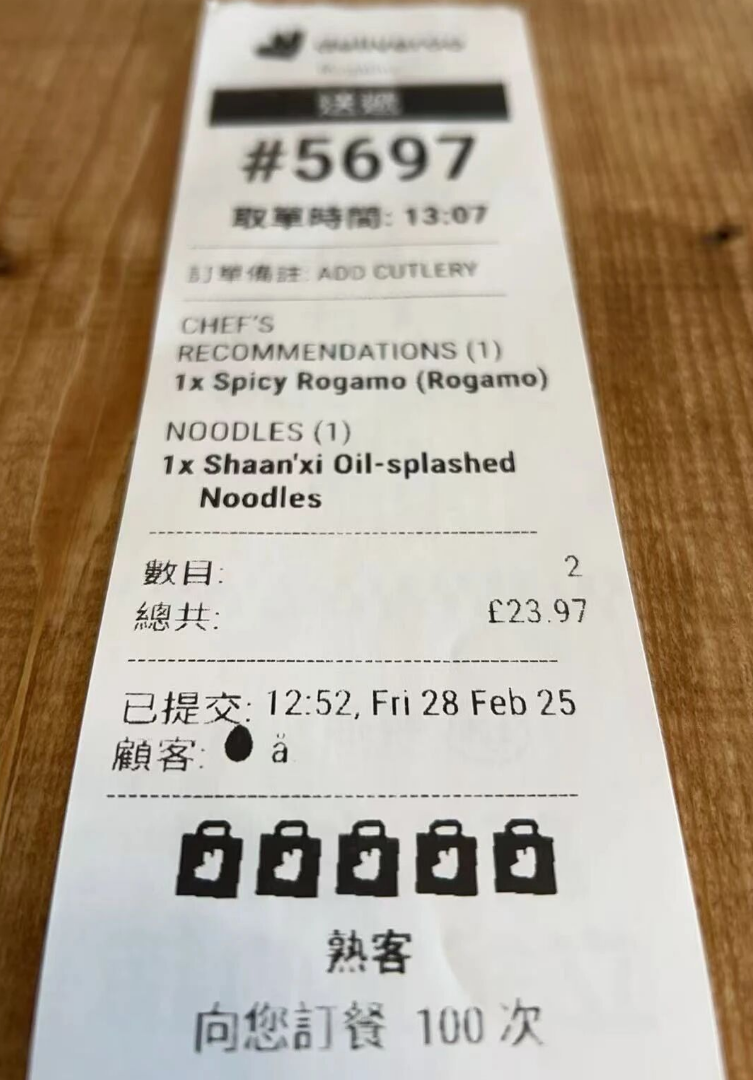
◉A food delivery order from the Rogamo shop.
So the main difference between the two is this: the operating model of UK food delivery platforms is simple and straightforward. It is simply a delivery service: the food is delivered to you, and you have to pay for that delivery. A commission is charged to the business and a delivery fee to the customer. Everything is clear at a glance, with none of the roundabout gimmicks.
This is the normal way food delivery platforms operate, not the way the platforms back in China do: first, they offer heavy subsidies to lock in all parties, causing many businesses whose normal cost structures were disrupted by the subsidies to go under after the platforms cut off the subsidies;
Later, the platforms also asked businesses to jointly subsidise customers and attract users, and began requiring businesses to give back the subsidies they had previously received; later still, the platforms stopped subsidising and required businesses to subsidise alone. If you did not subsidise, customers on the platform would move to other businesses. It was only then that everyone realised, but it was already too late. All businesses on food delivery platforms had been firmly held hostage, with no bargaining power at all. Only for leading food and beverage brands was there a little room for negotiation, because platforms allowed some leeway to attract and retain customer traffic.
Finally, the platforms make you buy traffic and purchase search rankings, so that your shop might appear among the top listings on the food delivery page. Otherwise, by the time customers come across your shop, the moment will have passed.
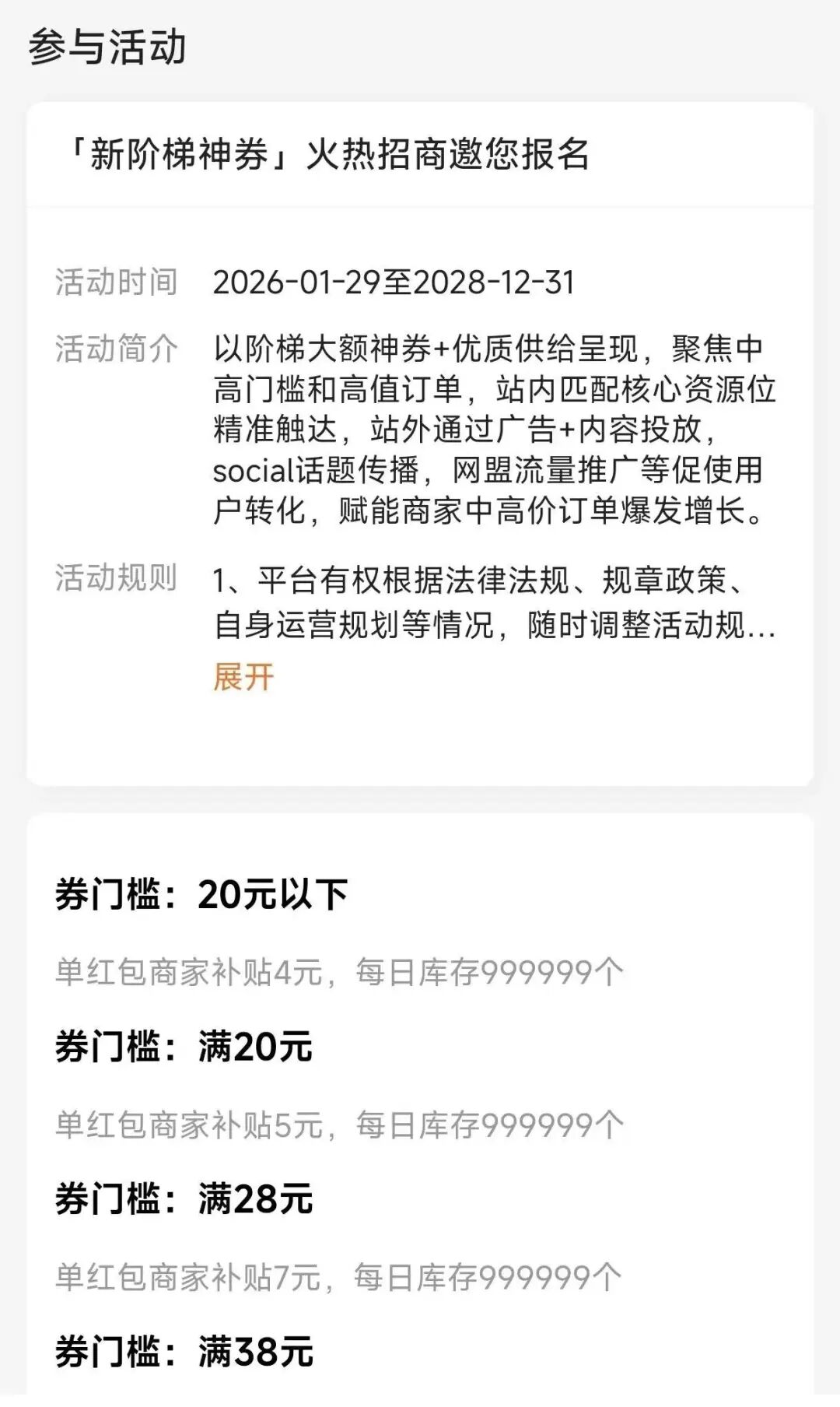
◉The image shows Meituan’s recently launched tiered super-voucher campaign, which refines the original tiered super-vouchers from five to six tiers into nine tiers covering 0-128 yuan, with the business contribution range adjusted to 5-22 yuan. A research team has pointed out that the core of this subsidy adjustment is not whether the tiers are more refined, but that the platforms have further shifted the cost of subsidies onto businesses by adding more tiers. Image source: Screenshot from the Meituan app.
Having dealt with platforms continuously since the group buying era, I see it very clearly. During the Battle of the Hundred Groups, I told the salespeople who came knocking at our shop: “My shop already has its own customer traffic. It is your platform that wants to acquire users from my shop; you should be paying me.”
Six years ago, Rogamo went live on the four UK platforms as soon as it opened. But to this day, for both dine-in and delivery, I have not run any promotions or advertising, and there have been no offers or discounts. Every time Hungry Panda runs a joint promotion with merchants, they come to me and invite our shop to take part. I have never once taken part. I told them: “If the platform subsidises customers, you can go ahead; if it makes businesses subsidise, I will not take part.”
Customers attracted by offers, subsidies and discounts are basically low-value deal-seekers: they are ordering to get a bargain, not because your food is good. Drawing on more than ten years of food and beverage experience, I know that once these customers have enjoyed the offer, they often do not become regulars. Some even leave bad reviews; it is not worth it at all. Customers who truly like you do so because the food you make is good. Our customers have been built up through word of mouth. Even now, from time to time, people still make the two-hour train journey from London just to come to the shop and eat.
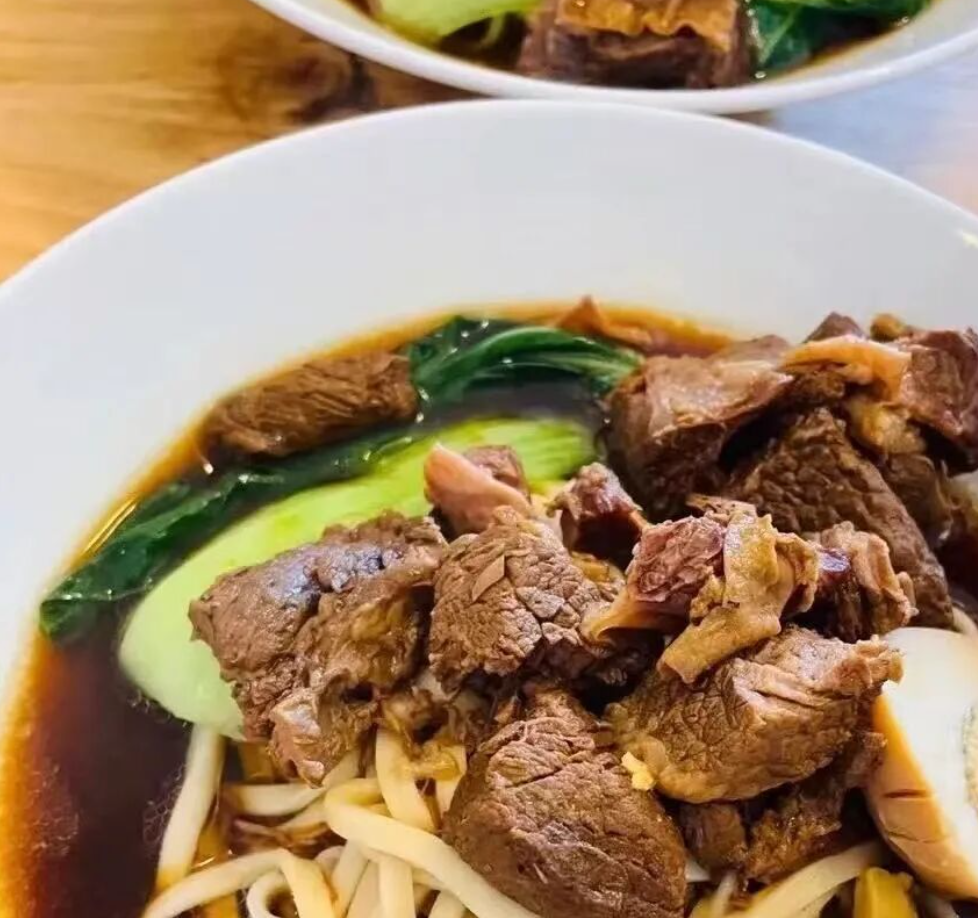
◉There is a young man who comes at least four or five times a week. We are open six days, and each time he orders just a bowl of red-braised beef noodles and a plate of chilli oil. One day, he said to me in Chinese: “This is my favourite, No. 1.”
Some of the more unusual dishes, such as pork intestine noodles and the old-Beijing lu zhu I make only occasionally, I don’t put online. If you want them, come to the shop. The main point is that if these items were raised by another 20%, their online prices would be even higher. Some students who come to the shop for dine-in, seeing that the same dishes are cheaper than on delivery, will try to come to the shop to eat, and the experience is better than delivery too. In my food and beverage philosophy, customer traffic should be generated in exactly this way, by the food itself, rather than by platforms and subsidies.
Of course, this logic only holds on the premise that UK food delivery platforms have not developed to the point where they can fully control the resources of users and businesses. This may be related to factors such as the UK not having a cheap labour force as large as China’s, the higher concentration of the food and beverage industry, and many chain food and beverage outlets having their own delivery services. But in any case, in this context we can recognise that the development of the food delivery industry does not necessarily have to be built on taking businesses’ livelihoods and consumers’ dietary health entirely hostage to the platforms’ traffic and profit logic.
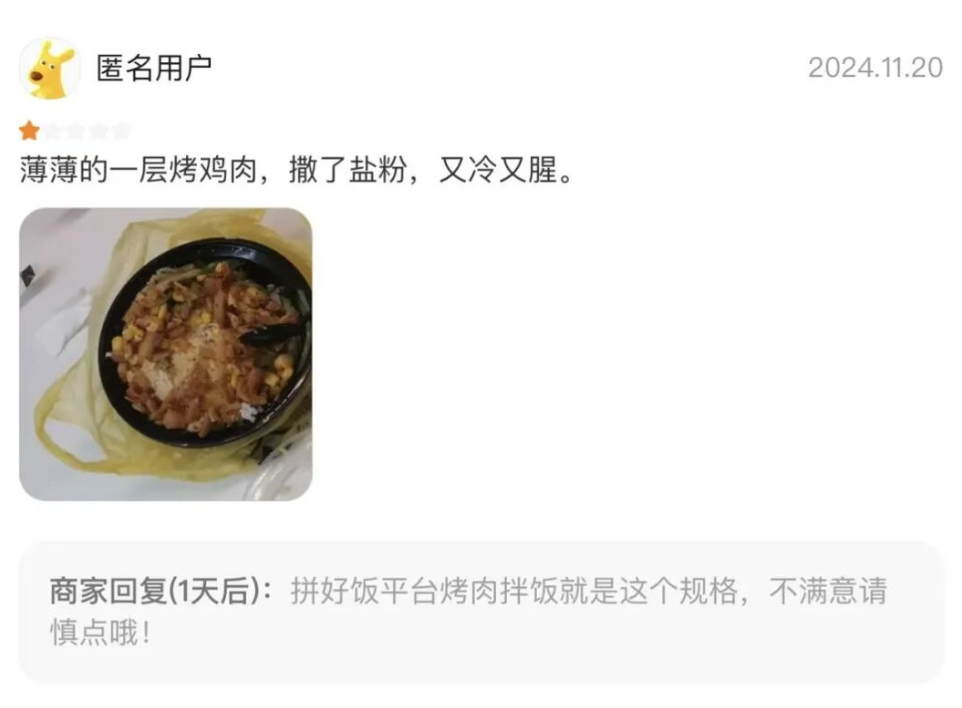
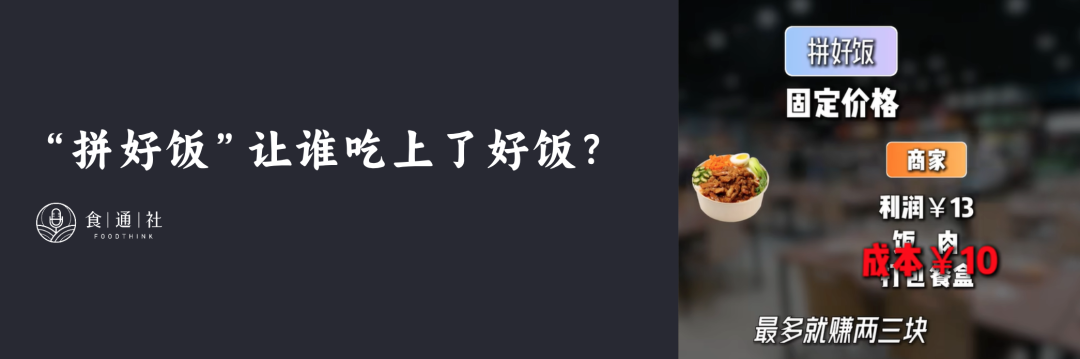
◉Meituan’s “Pinhaofan” uses customer traffic as a weapon to push down product prices, forcing businesses to cut ingredient costs. The image shows feedback from Pinhaofan users and responses from businesses. Foodthink previously described and analysed this low-cost food delivery model in “Pinhaofan”: Who Gets to Enjoy a Good Meal?. Image source: Screenshot from the Meituan app.
It can be said that China’s food and beverage delivery industry was spurred into existence over the past decade or so by an abnormal subsidy war. More than ten years have already made us forget what a normal food and beverage delivery model should look like. But as an industry that concerns people’s livelihood and health, we have indeed reached the point where we need to think about how the food delivery industry should develop.
Take It Slow, and It Is Fine
In the UK, the tradition of customers ordering online or at the shop and then collecting their food themselves is a very long-standing one. Customers would call the shop to place an order; once the food was ready, they would come to collect it and pay. Businesses were only responsible for preparing and packaging the food well. Even today, when food delivery platforms have reached the UK countryside, many delivery shops still use this phone-order model.
Just Eat still offers a large number of such services today, connecting a large number of these delivery shops; customers can order online, but still come to the shop to collect their food. To this day, I believe that, for food and beverage businesses, this is a very good business model, because a shop’s service radius is only a few kilometres around it. For businesses, the task is to prepare the food with care and leave the rest to customers.
It is worth remembering that in the five to ten years before food delivery platforms appeared, the pace of everyday eating and life back in China was not as fast as it is now. At the time I was working at a newspaper office in China. If we were too busy to make time to go downstairs and eat, we would order food out too. Back then, what we now call food delivery was not called food delivery; it was called takeaway. The way it worked was also very simple: nearby restaurants would leave their menus and promotional flyers at the newspaper office. We would call to place orders, the restaurant would note them down, and once the food was ready, customers could come to the shop to collect it, or the restaurant would bring it over. At the time, the quality of the takeaway food was exactly the same as the dine-in meals.
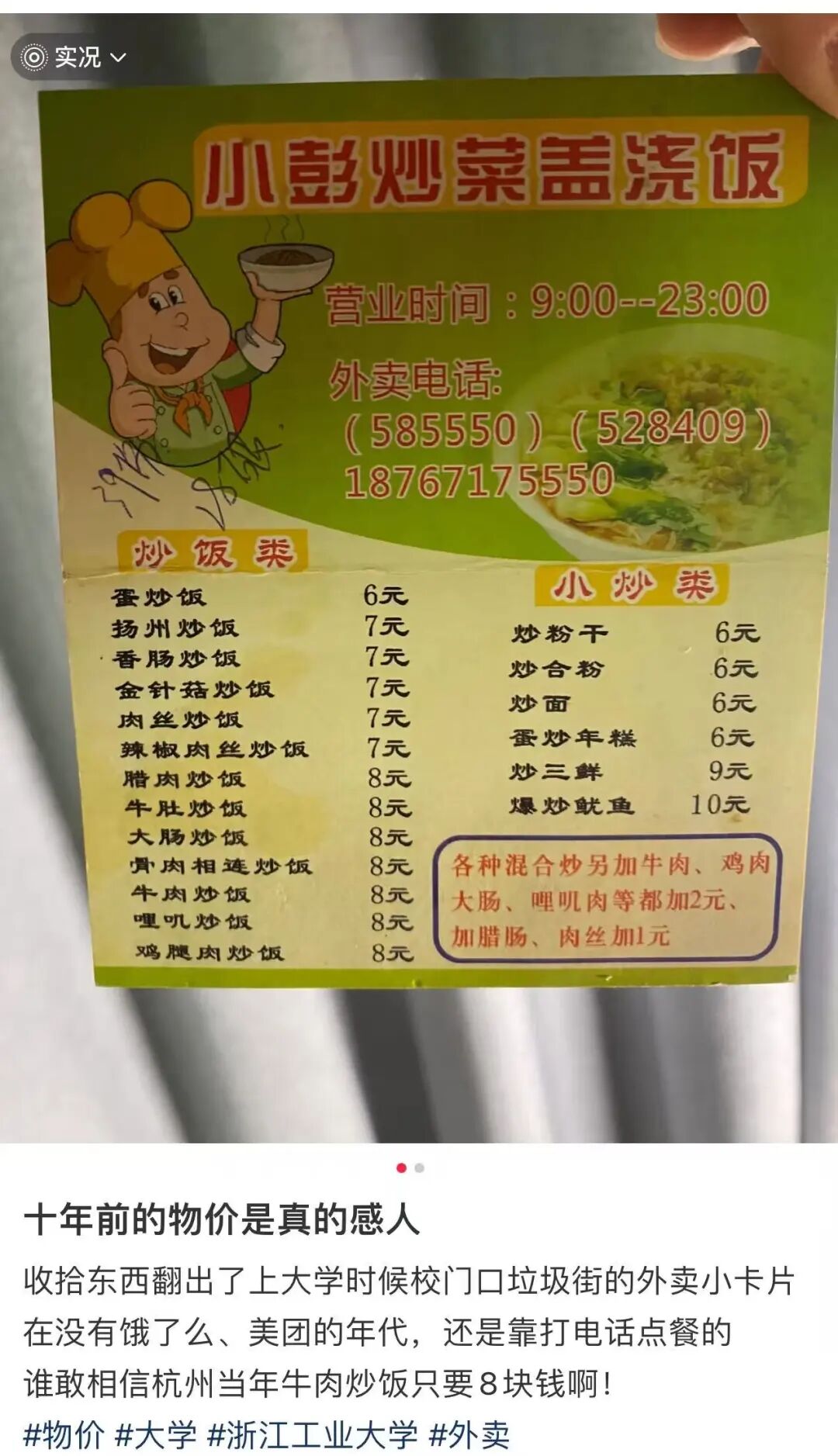
◉A user shared on social media a flyer from years ago, from a business that delivered its own food. Image source: Xiaohongshu @叶不羞的修
Now, the pace of eating and life has been pushed faster and faster by food delivery platforms. Under the platforms’ irrational competition, delivery times that used to be an hour have gradually been squeezed down to 40 minutes, or even half an hour. The price is the lives and safety of delivery riders, and increasingly frequent traffic accidents.
Speaking of riders, in the five or six years of running my shop in the small town, hundreds of delivery riders have come and gone at the shop, and I know most of them well. I do not know whether delivery times for food delivery riders in the UK are also strictly controlled by algorithms, or whether riders are docked pay if they make a mistake. In any case, the riders I have seen work at a slow pace and do not seem very rushed while delivering.
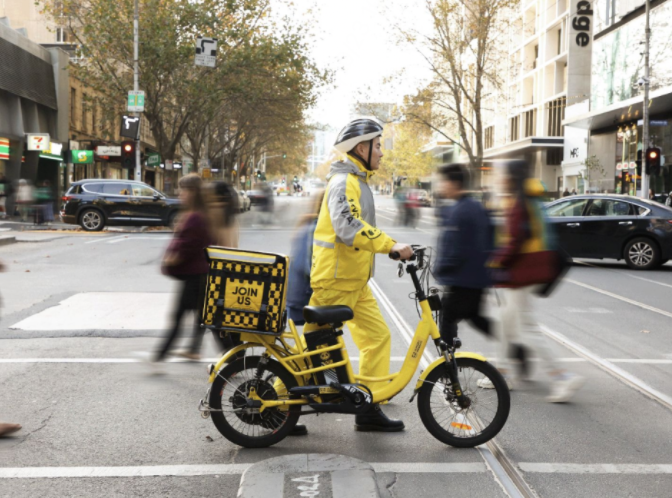
◉A Hungry Panda rider delivering an order. Image source: Hungry Panda official website
The people in this small town are not in a hurry over their meals either; they have gradually grown to like the taste of roujiamo. I am not in a hurry about the cooking either. Here, I am slowly practising my food and beverage philosophy. And so, take it slow, and it is fine.
– This is Foodthink’s 806th original article –
Foodthink
Author
Ru Tongxue
A food and beverage entrepreneur with more than ten years of experience, currently writing a book called “I Sell Roujiamo in the UK”.
Editor: Yuyang
Layout: Minglin
▼
Click the image to read related articles