In Lihu, Guangxi, Everything Can Come to the Market

At 8 a.m. on the morning of 19 April, I was standing on the main street of Lihu Yao Ethnic Township, Nandan County, Guangxi, feeling like a piece of scrap.
I rushed all the way from the county seat to Lihu on my own; I had come to catch the market. Xu, sometimes written as 墟, is the Liang Guang term for a traditional market. My friend Guan Qi once mentioned that the market days in Lihu fall on any date ending in 3, 6 or 9. The fourth Nandan Music Festival came to a close on the 18th, so today happened to be a market day, and I had to come and have a look. But as music festival staff, I had been working at high intensity for five days straight, and I felt like a bowstring pulled too far—I had slept less than four hours the night before, my vision was blurry, my mind was hazy, my head was wrapped in a fog, and I walked a little unsteadily.
I had taken a taxi specifically to catch the market opening. The driver went like the wind, and we covered the winding mountain road in half an hour. The county seat of Nandan sits in a mountain basin in the upper reaches of the Hongshui River, while Lihu lies deep in the karst mountains where Guangxi borders Guizhou. The mountain road, at more than twenty kilometres, is not far, but it quickly leaves the city landscape behind and gives way to the rhythms and scenes of Yao life passed down over generations.
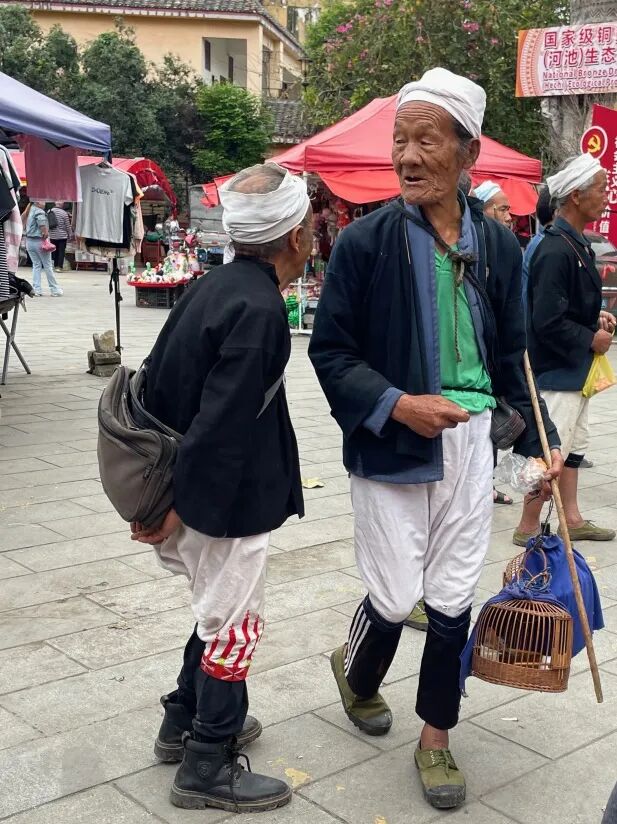
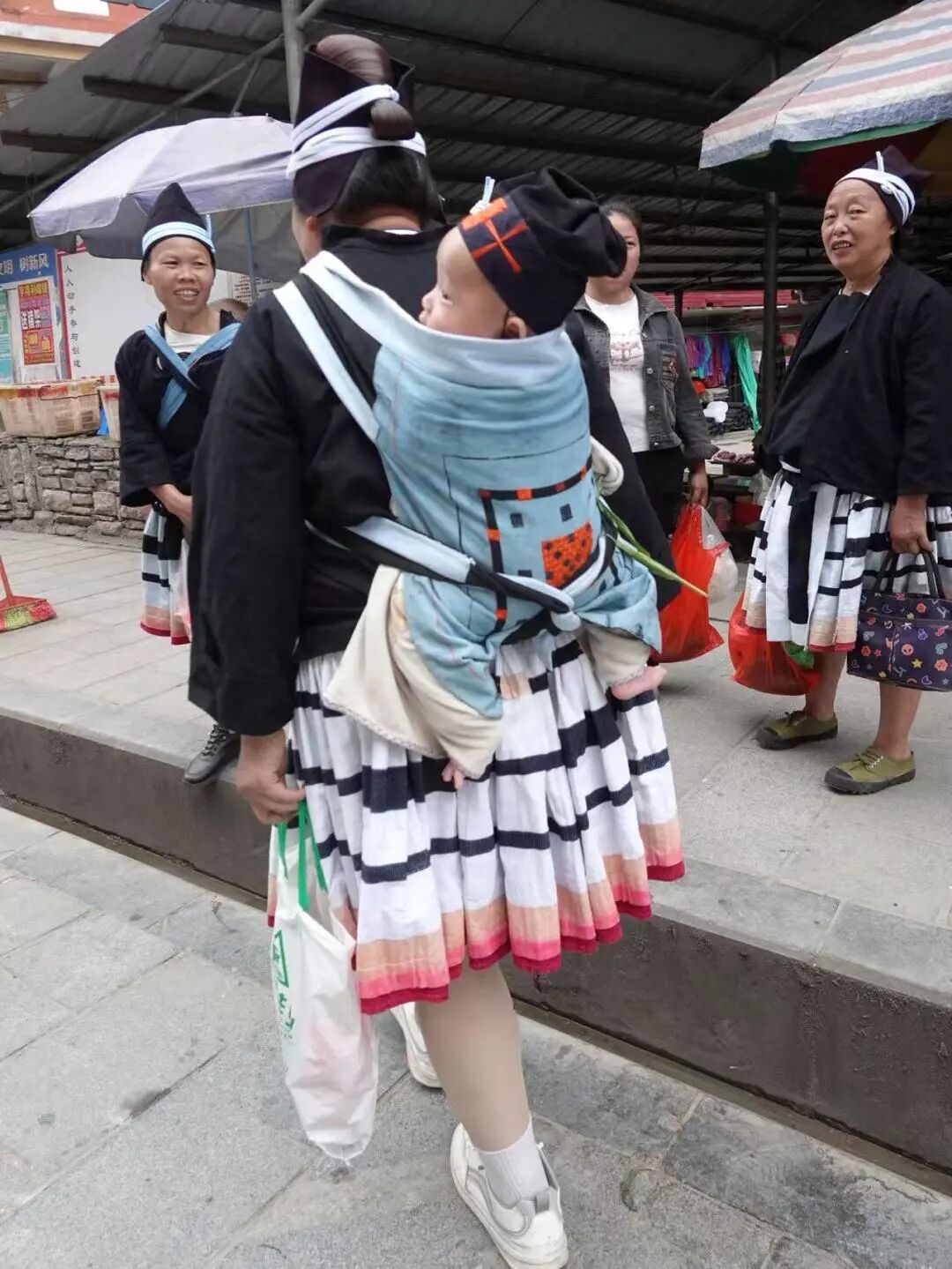
◉ The White Pants Yao take their name from the distinctive white trousers worn by men of the ethnic group. Right: locals come to the market in traditional dress.
This is one of the most concentrated settlements of the White Pants Yao—the name derives from the white knee-length shorts in the traditional dress of men in the group. Across China, the White Pants Yao number about fifty thousand, and Lihu and the neighbouring Baxu are home to more than thirty thousand of them. As a branch of the Yao people, the White Pants Yao still preserve a relatively intact traditional culture and way of life. Coming to the market is part of daily life for locals. Lihu market is not only an important place for surrounding villages to exchange goods and meet relatives and friends; it is also said to retain a relatively traditional appearance of a Yao market. On major festivals, the crowds here reach their peak.
As for me, a tourist who had rashly come on the back of a few words from a friend, I knew almost nothing about the White Pants Yao. At the time I had only a slightly laughable, not entirely proper, even somewhat offensive thought: I wanted to see the locals coming to the market in full dress, as Guan Qi had mentioned—to see their dresses and general attire, and also their food, clothing and everyday goods.
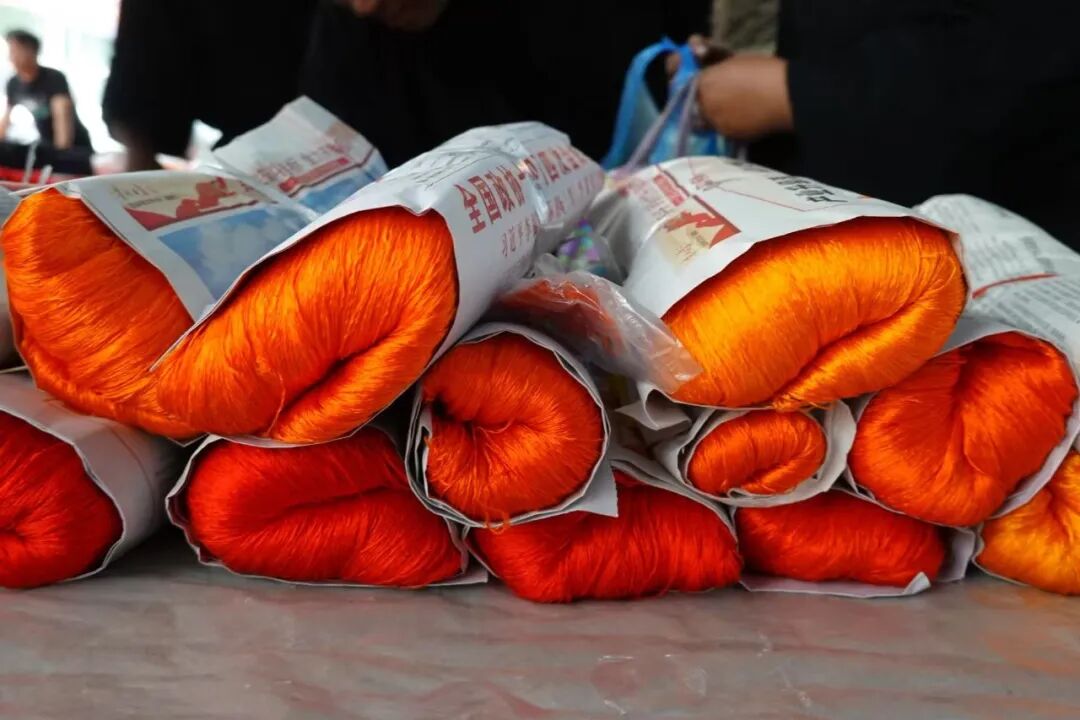
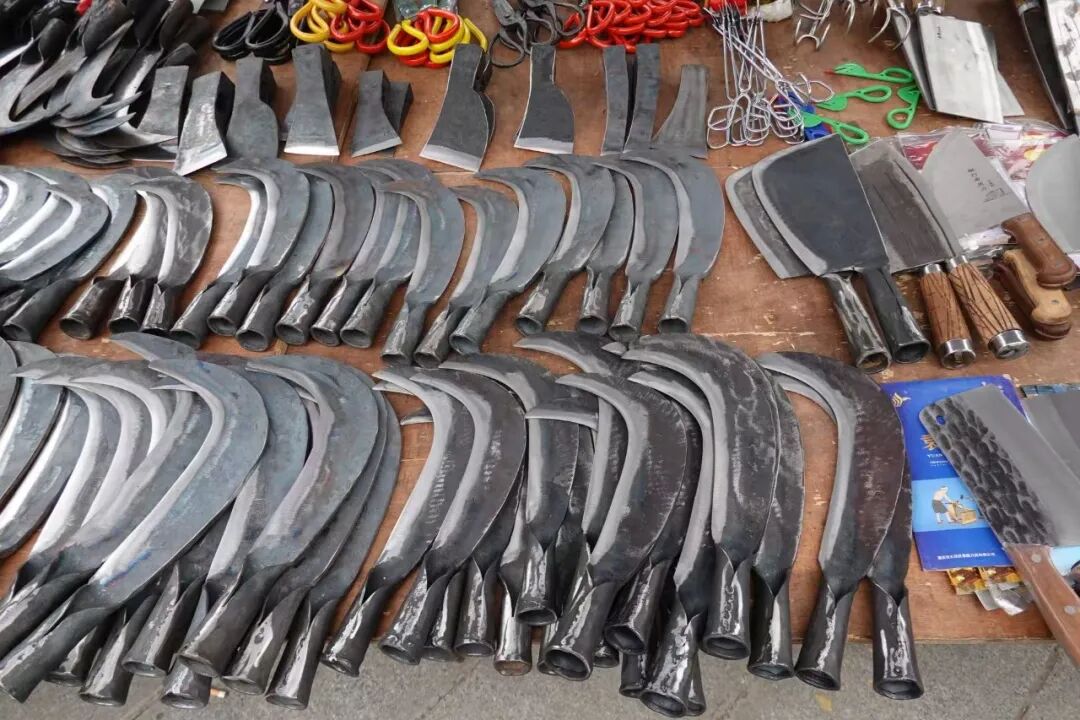
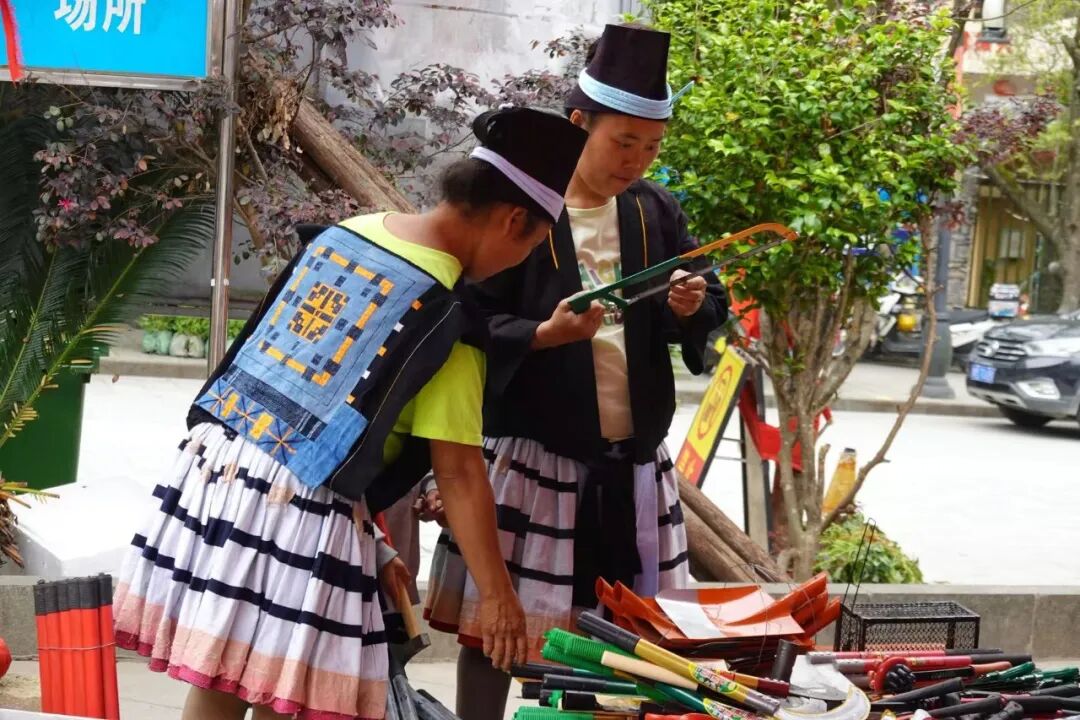
◉ The market sells not only food ingredients, but also all sorts of food, clothing and everyday goods.
Everything Can Come to the Market
At 8 a.m., the stalls were already opening one after another. A few older locals sat on the steps of the veterinary clinic, chatting, and occasionally cast a sidelong glance at me, a weary outsider. Opposite the clinic was the main space of the market: a semi-open-air farm produce market sheltered by a canopy. From the slightly higher ground, the whole market could be seen, with clearly defined sections: vegetables, fruit, meat, live poultry and pigs, textiles, sundries… Rows of concrete stalls lined the space, with small fixed shops on either side, while temporary stalls were scattered in a few surrounding alleys.
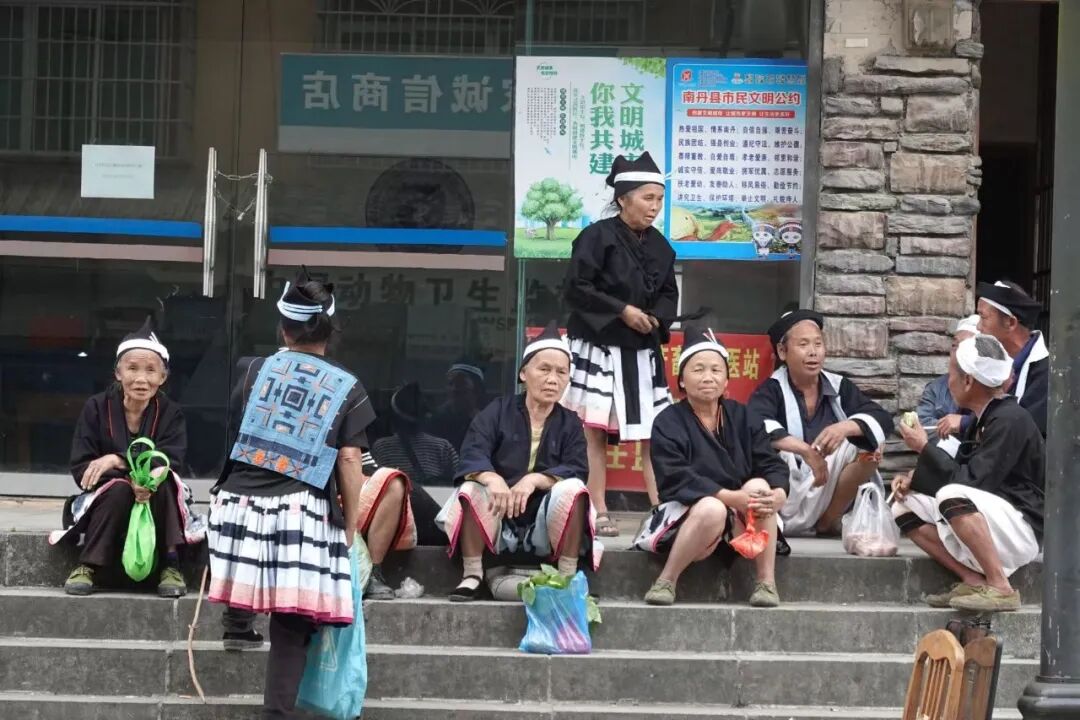
◉ On Lihu’s streets, the early-morning “gaze” and “reverse gaze”.
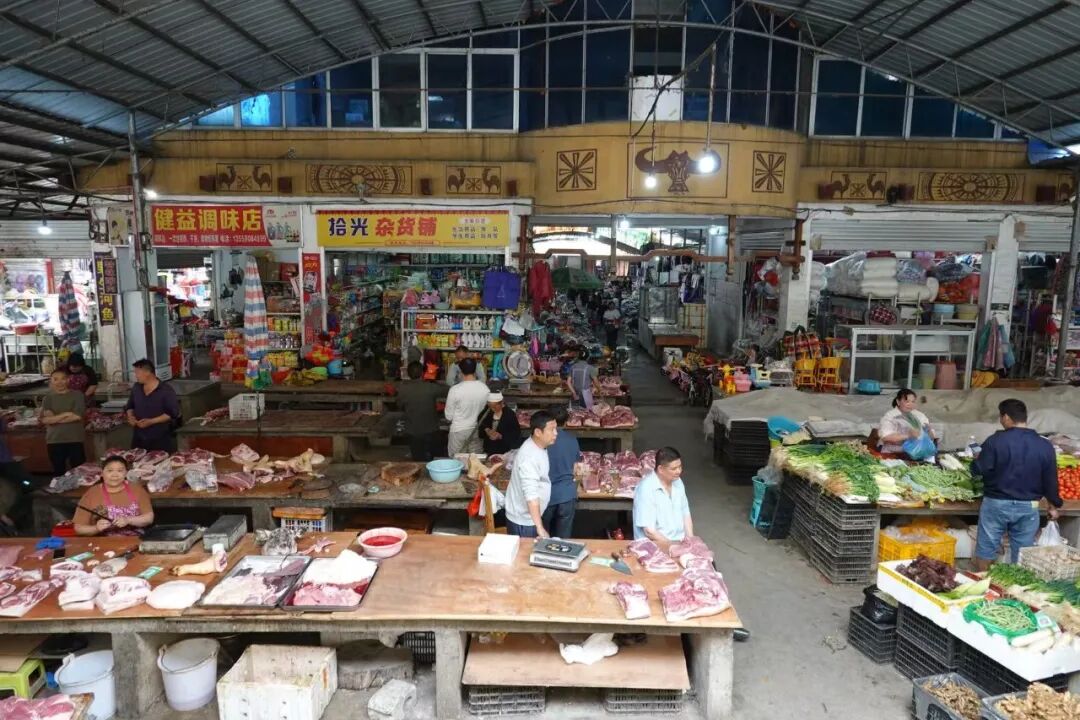
◉ The main space of Lihu market is not all that different from local markets elsewhere in China.
Everything in sight can come to the market. My eyes, unsure where to look, first fixed on the most familiar things. There were perhaps two or three fixed stalls here selling vegetables and fruit: corn, chillies, beans, aubergine, cucumber, stem lettuce, tomatoes, through to various leafy greens—Chinese cabbage, greens, cabbage… Most were also seen in supermarkets up north.
At several street stalls, clusters of vegetables were displayed with their roots wrapped in leaves. The leaves looked like lotus leaves, and the wrapped parts were so fresh they could even stand upright on the ground. At first I thought this was a local way of keeping them fresh, but I soon realised that not all leafy greens got this treatment. I tried asking the stall owner, but I could hardly understand the heavy accent, so I dropped it.
As I walked on, I saw bundles of sweet potato vines laid out on the ground. Not entirely sure, I asked again in a low voice, “Is this for feeding pigs?” The vendor looked at me half-smiling: “It’s something to take home and plant.” So it wasn’t for eating. The question from before was instantly answered: those “vegetables” whose roots had been carefully wrapped (most of them chillies and aubergines) were, like the sweet potato vines, bought to take home and plant. The roots were wrapped to keep them moist.
The produce sold at the market is not only food, but also seeds and seedlings.
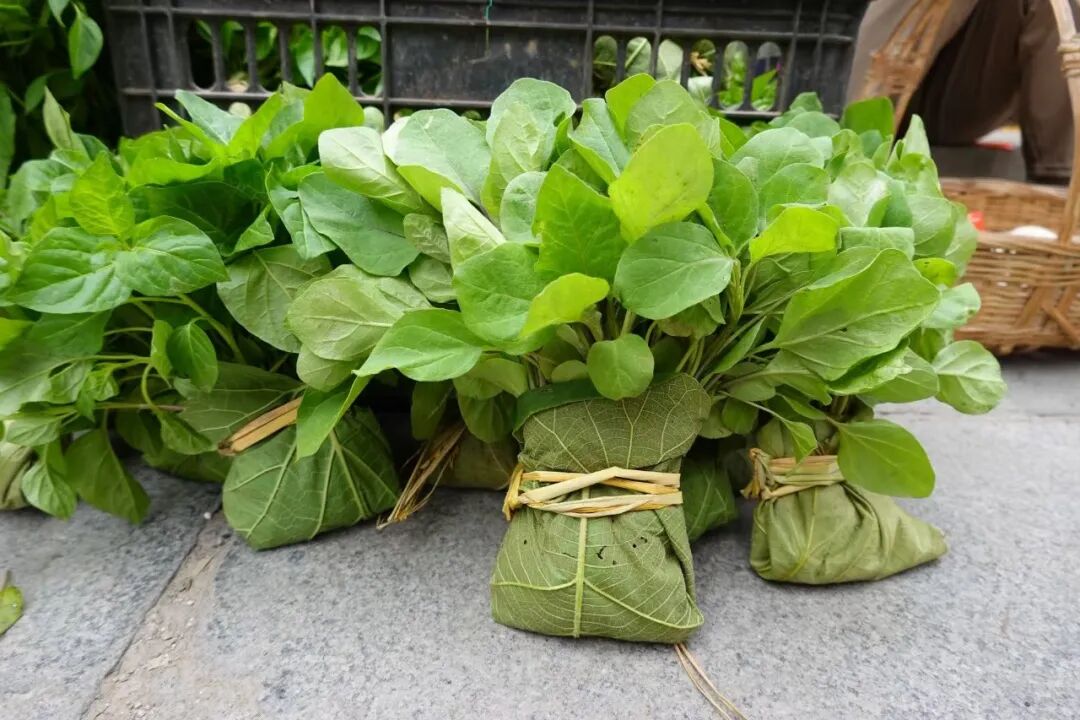
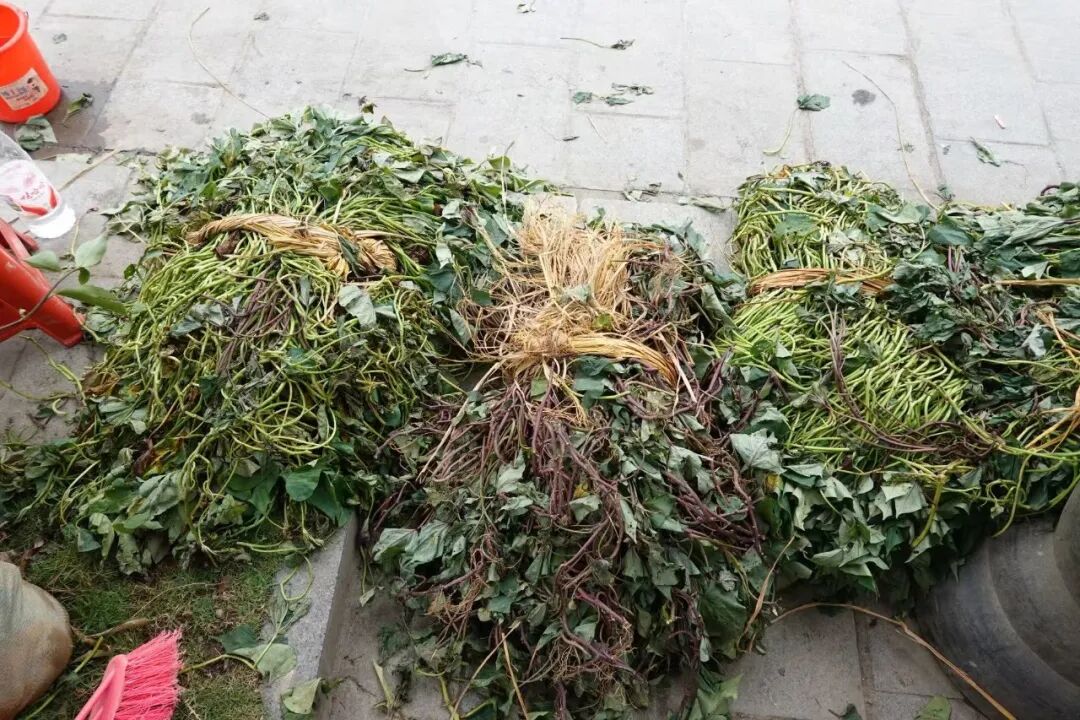
◉ The ones with their roots wrapped in leaves are seedlings, which local Yao people buy to take home and plant.
Do You Know How Expensive This Dyed Cloth Is?
Live pigs and poultry can no longer be seen in Beijing markets, but here were rows of local black piglets, chickens, ducks and dogs, packed into bamboo cages of all shapes for sale. With my earlier experience, I guessed the piglets were mostly meant to be raised, not put straight on the table—right beside them were pork stalls, with whole cuts hanging to be sold by the jin. One meat stall also sold soy products, and the stall owner had set up a grill to roast tofu. I had wanted to buy a piece to try, but seeing raw meat all around, I backed off.
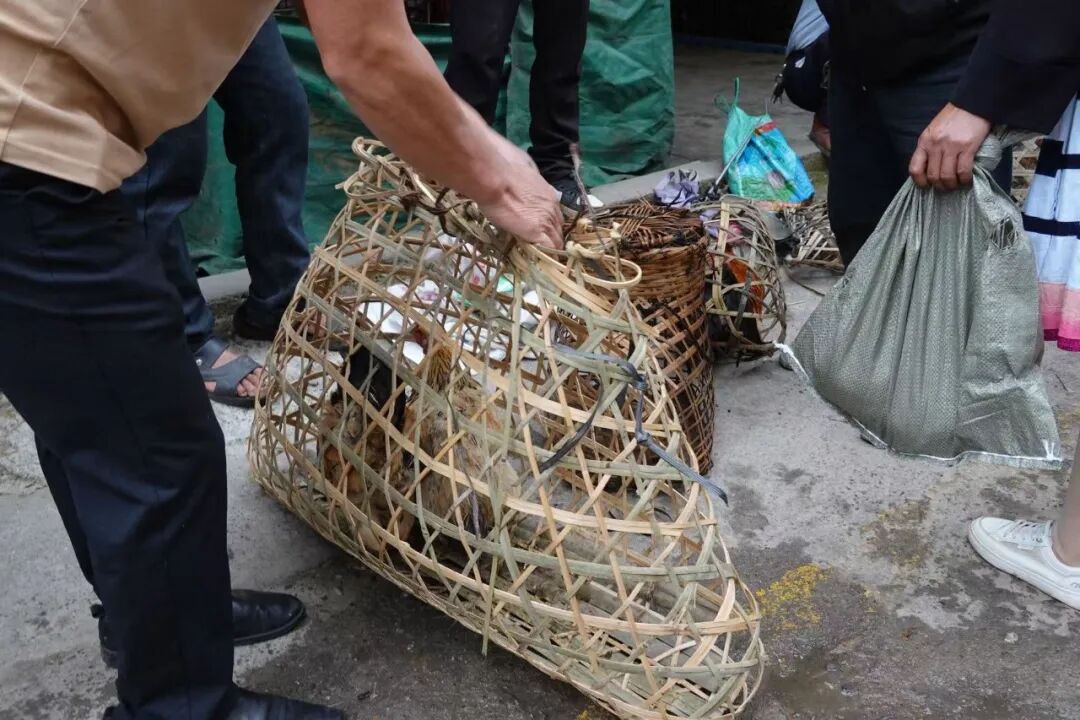
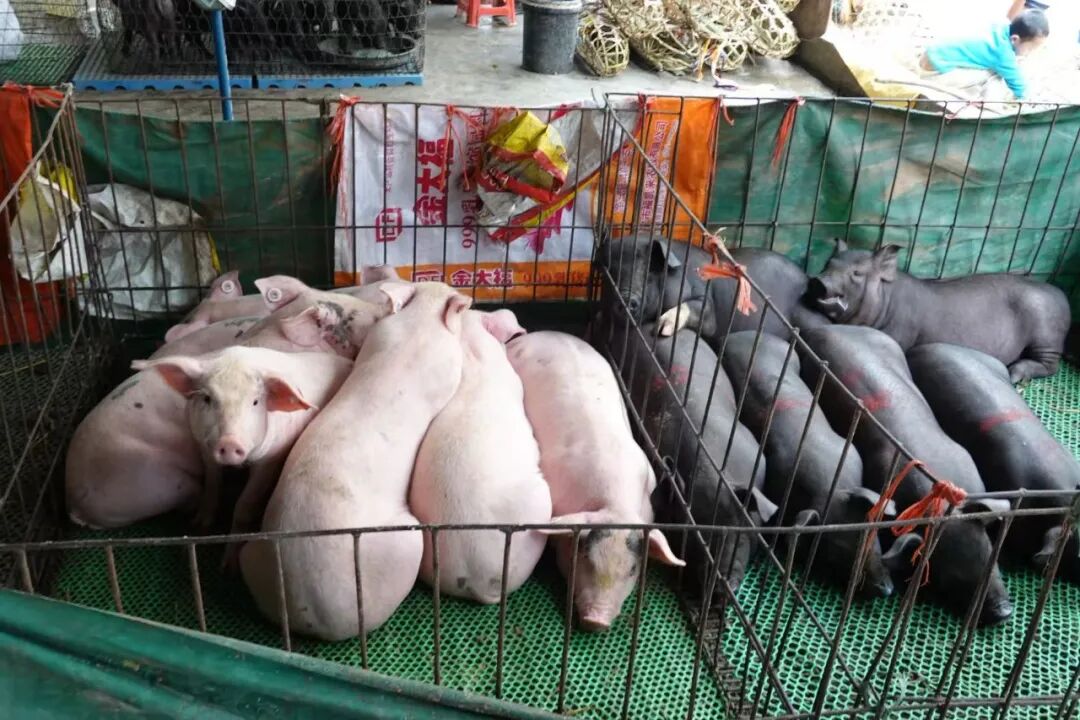
◉ The poultry and livestock at the market—chickens, pigs, dogs and so on—are each kept in their own cages.
There were also a large number of cloth stalls. The White Pants Yao are a mountain people; farming and weaving are their main livelihoods, and weaving and dyeing hold a central place in everyday life. I saw many fabric stalls, most of which sold plain white raw cloth, along with bundles of cotton thread and silk thread, plastic bags containing white powder, small blue bottles, brushes, beads of various colours… and golden and red-gold silk threads twisted into strands. The White Pants Yao’s golden silkworm is famous, and stalls commonly displayed golden silkworm cloth rolled up like Xuan paper. This is flat silk cloth formed from the silk spun by the golden silkworm.
“This is it,” I thought. Wasn’t this the White Pants Yao’s culture of sericulture? I had heard Guan Qi mention it.
Beside the cloth stalls stood White Pants Yao women in beautiful attire, choosing goods and chatting with ease. I wandered self-consciously among piles of raw cloth and balls of thread; we did not share a common language, and I did not feel at ease asking too many questions. When at last I found a stall with bolts of dyed cloth laid out, I went over to ask the price. The young woman running the stall hesitated for a moment: “This is very expensive; it is handmade and costs over a thousand.” She said it without much emphasis, but the message was clear—I was not local, I did not know the trade, and I was not the kind of buyer she had in mind.
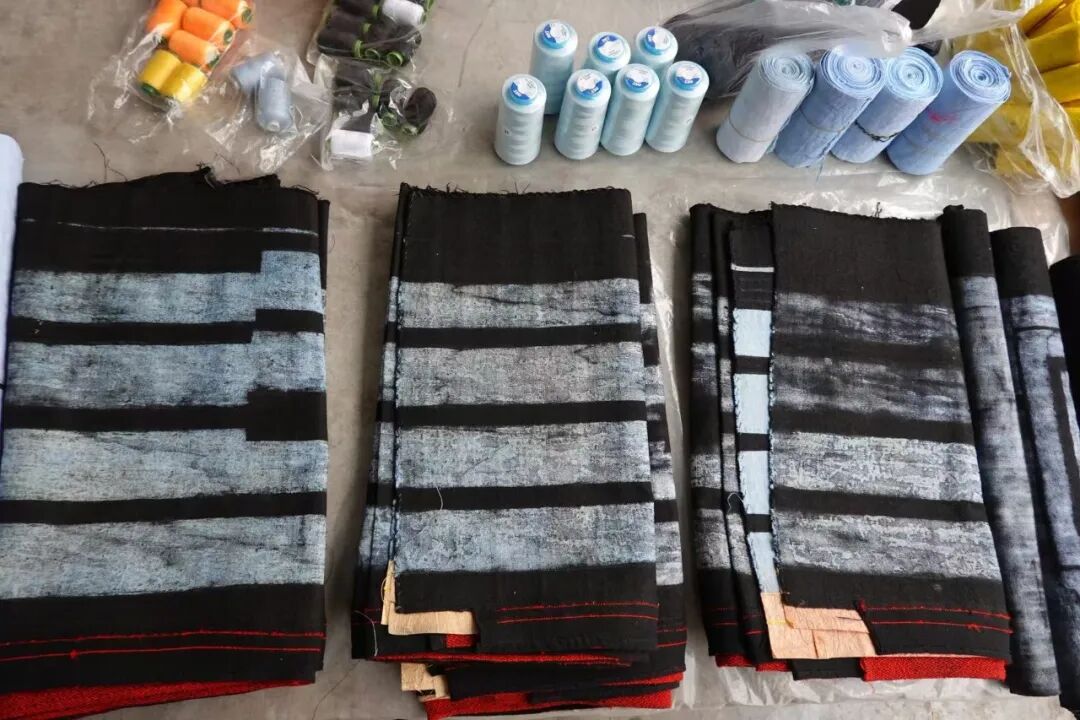
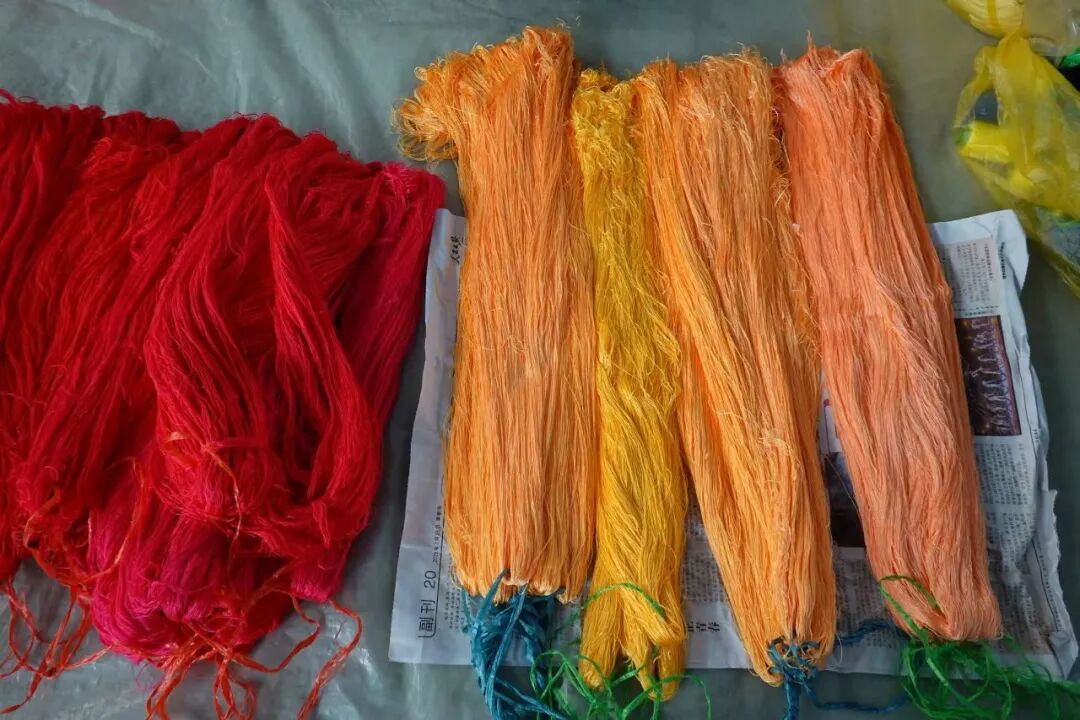
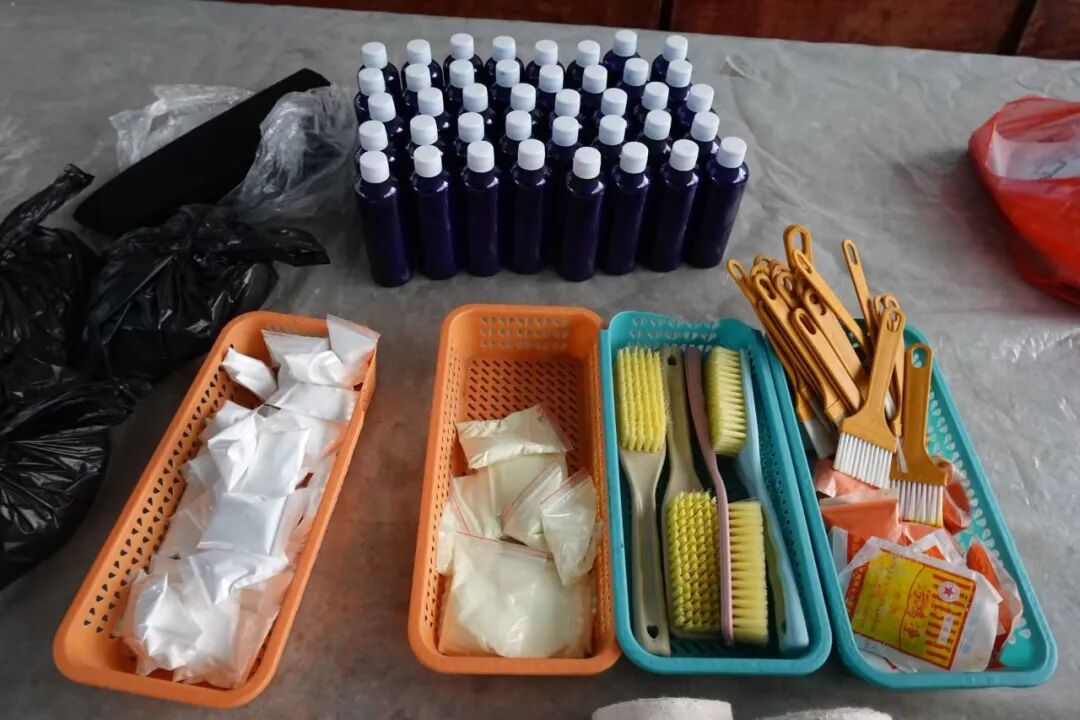
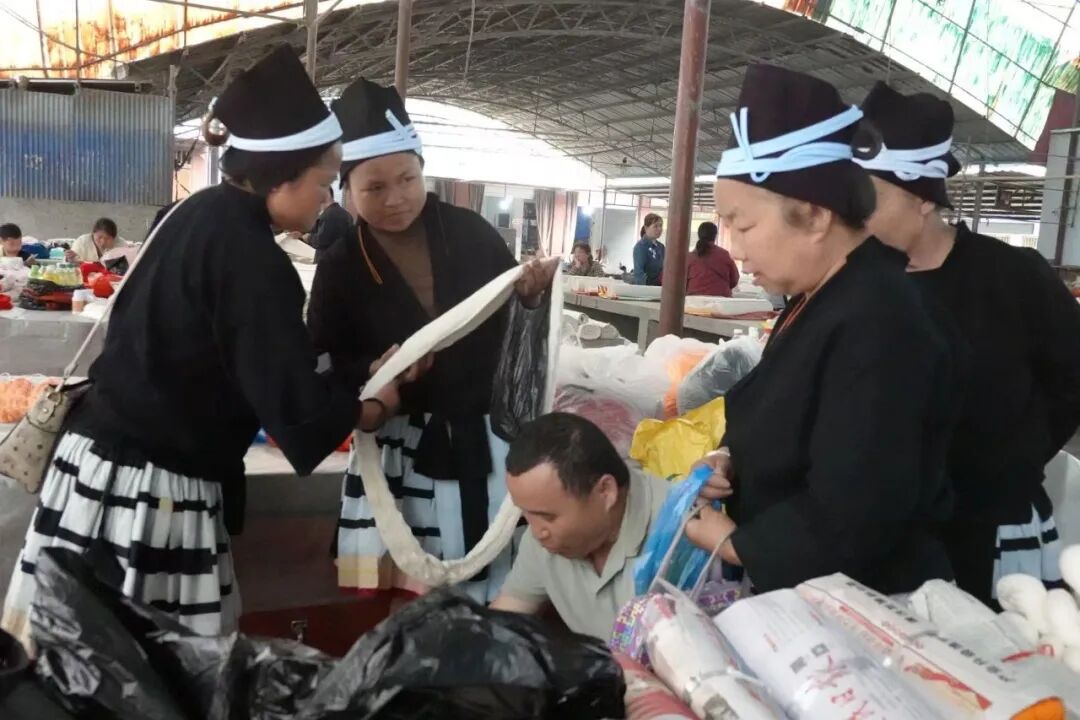
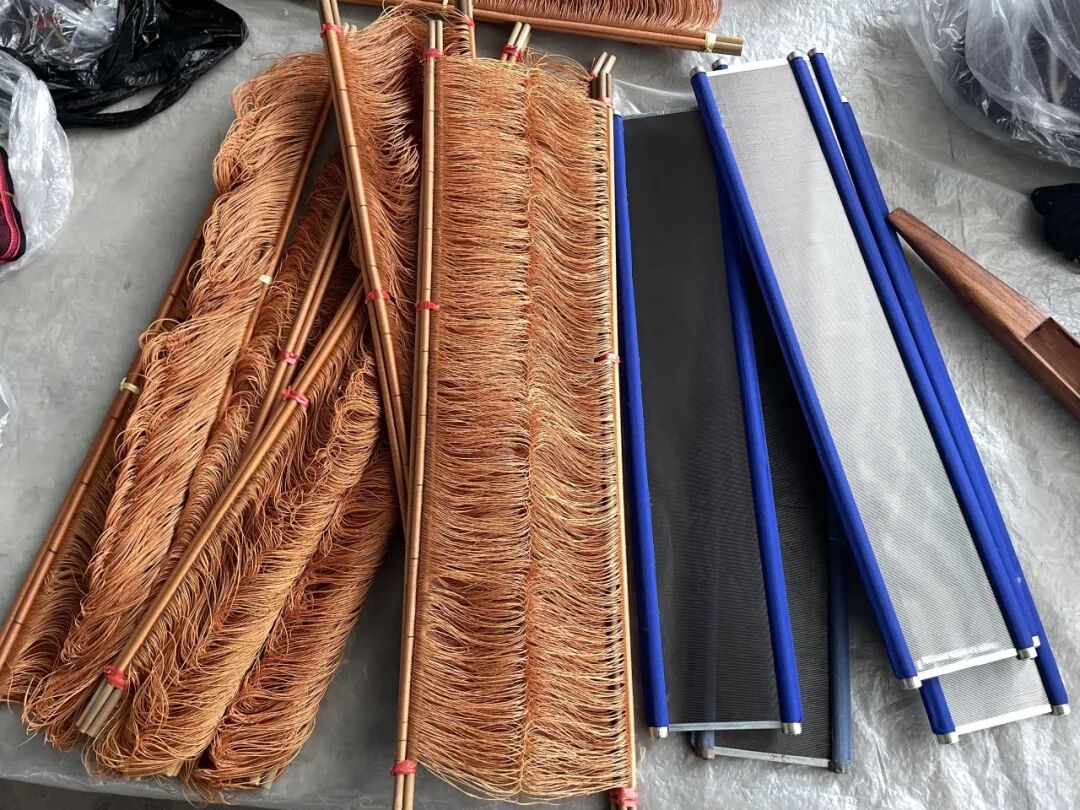
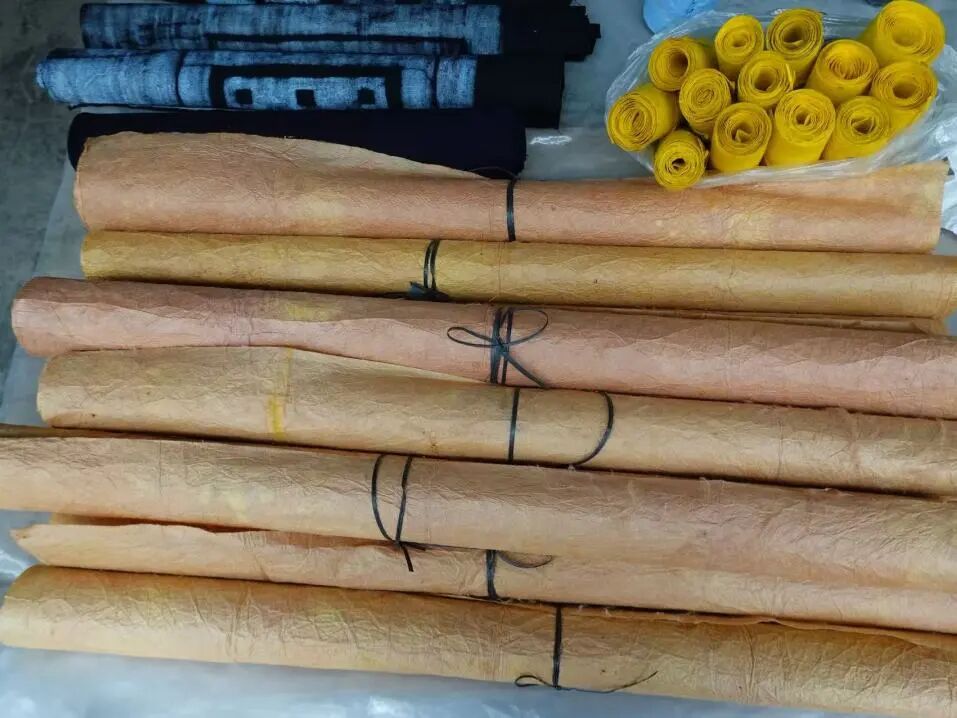
◉ Various components used by White Pants Yao people for weaving and dyeing. The last one is flat silk cloth.
At some cloth stalls there were also plant roots and rhizomes I did not recognise. Sure enough, facing the shan shao and shu lang used for weaving and dyeing cloth, I posed my grand, laughably absurd question: “Is this taro?”
I wandered the market, furtively looking things over and taking photos. With little knowledge of production and no local experience, I could not say what I had actually come to do. My curiosity was strong, but I could not go deeper; all I felt was wave after wave of internal wear and tear.
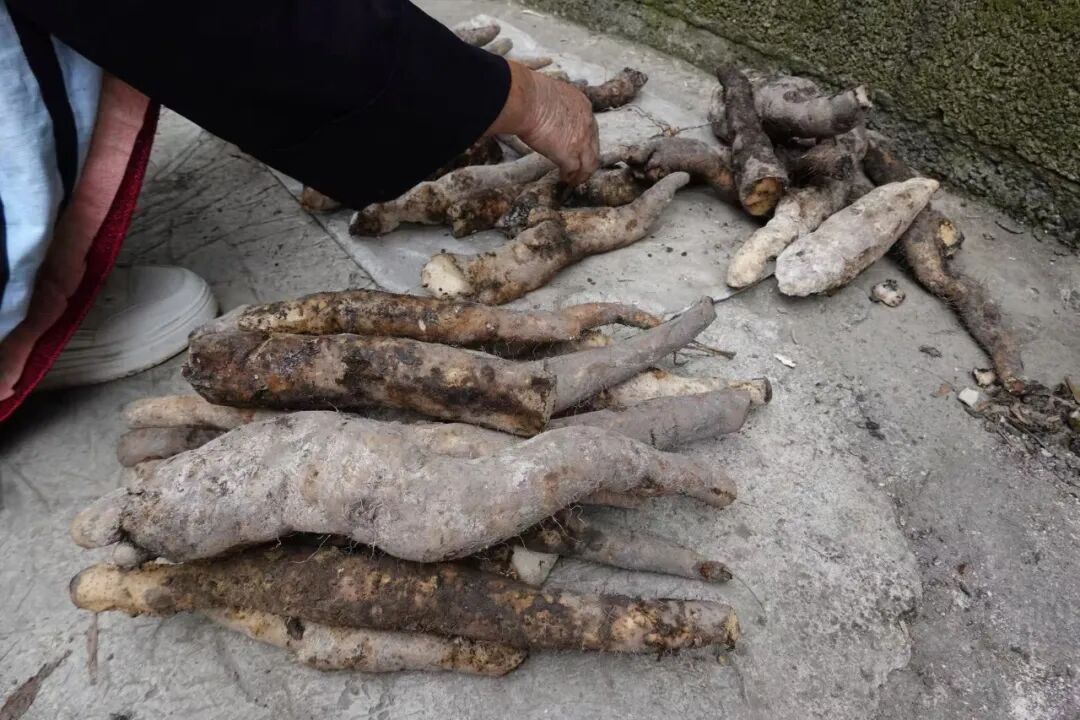
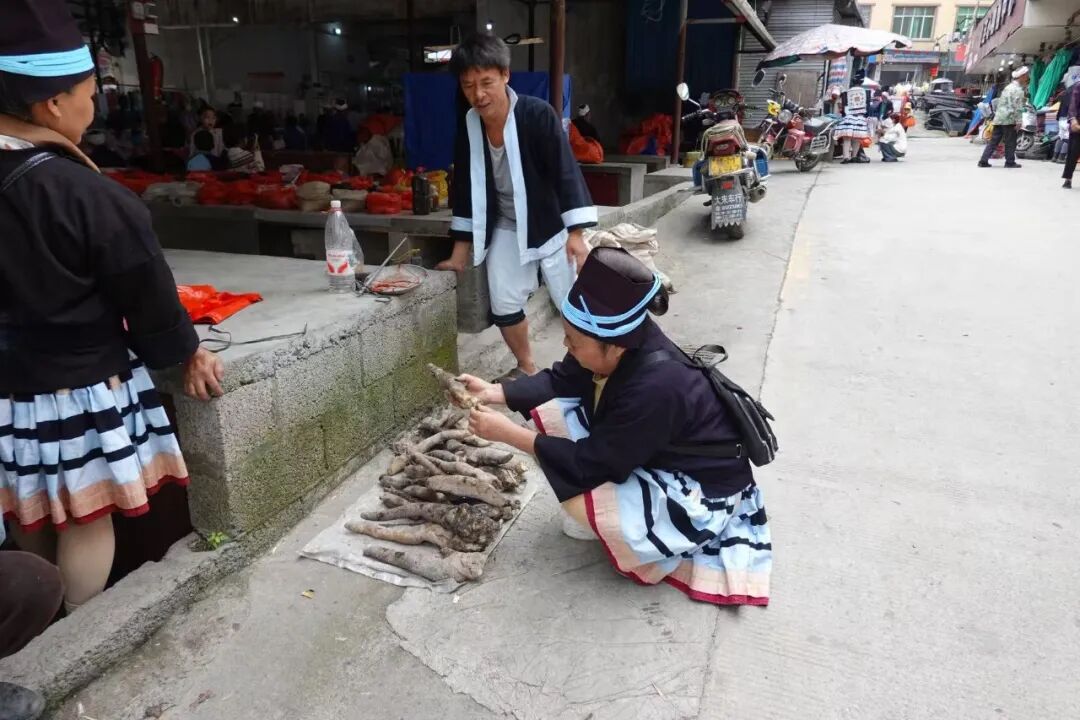
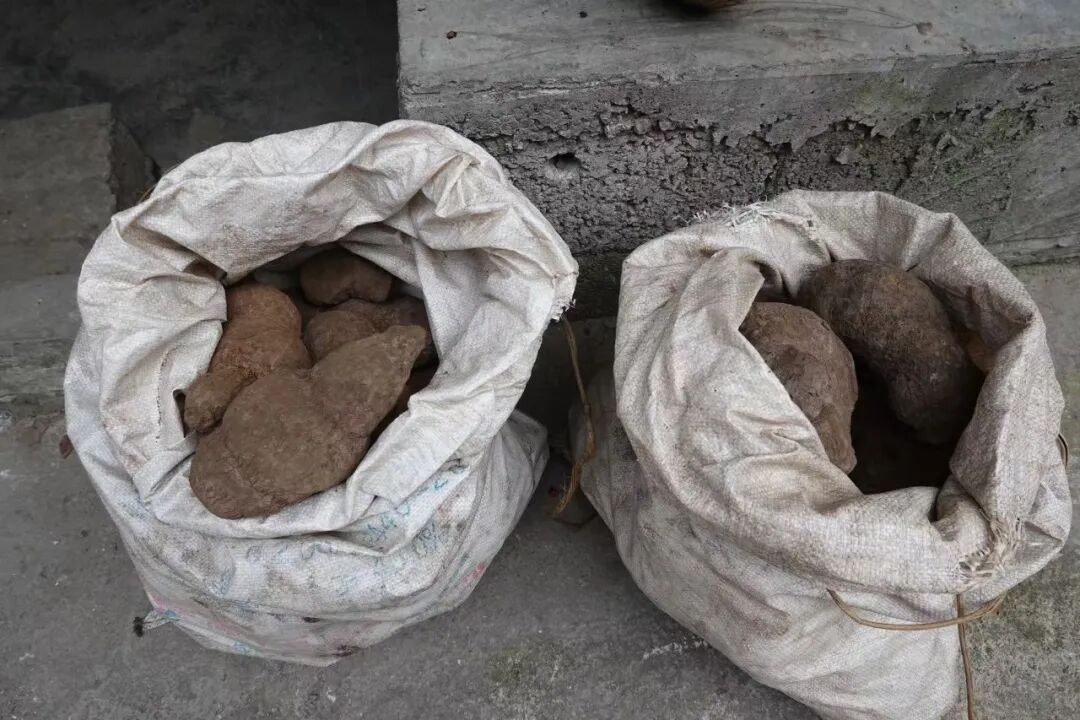
◉ Top image: shan shao (a type of wild herb), used for sizing the thread; the thread becomes tougher and less likely to break after being boiled with shan shao. Bottom image: shu lang, used for dyeing cloth. The traditional textiles of the White Pants Yao are black with a red glow, and the “red” in them comes from shu lang.
Shopping in the Maze
I suddenly heard someone behind me calling my name, and it turned out to be Meng Fang, whom I had met at the music festival: “Come along with us for hempseed chicken hot pot!”
It turned out that she too had brought a group of friends to Lihu to browse the market. Meng Fang works at a social work organisation in Guangxi and is a core volunteer for the Nanning Urban Farm Market; she is also very familiar with Lihu. This time, they had come from the music festival, planning to buy some produce at the market and then go to the White Pants Yao Ecomuseum to cook and eat. I had also planned to visit the museum—what a coincidence.
Once I had found my people, the market visit instantly entered a new chapter. As I followed Meng Fang, my aimless wandering and the gaze/reverse gaze disappeared. She moved quickly through the market, as if she had long known where everything was.
She first came to an inconspicuous little stall and pointed to a bag of grey-brown granules: “Let’s buy some of this hempseed.” The stall owner scooped a bagful for her with an old iron bowl and weighed it. Hemp is a major oilseed and food ingredient for the White Pants Yao. Meng Fang told me that locals grind the hempseed with water, strain out the residue, and generally use the liquid to make soup, while the residue can also be used as feed.
I thought of the Guangxi oil tea I had drunk a few days earlier in Nandan; I had been told that some oil tea is stir-fried with hempseed for flavour.
While the stall owner was away grinding the hempseed, Meng Fang casually picked up a bottle of “sour meat” from nearby—clean meat packed in a plastic bottle, pinkish in colour, with fine yellow millet grains mixed in. She said that this was also a typical local way of eating: raw pork is sealed with salt and millet and left to ferment; after a while, the meat gradually sours and cooks. Sour meat keeps well, and White Pants Yao households often keep some on hand. When it is eaten, it can be sliced and served straight on the table, or steamed or stir-fried. Later I tried eating it raw, and indeed it had a refreshing sour aroma, with no fishy or greasy taste.
After several turns and bends, we stopped at a stall with plastic buckets and glass bottles and bought two bottles of locally home-brewed liquor. This local spirit is often packed in square plastic buckets that are easy to carry by hand, so locals joke that it is a “Guangxi briefcase”. I had heard about it at the music festival before, and now, at the market, I finally saw the real thing.
Finally, we returned to the meat stall that had made me a little hesitant earlier. The woman running the stall was turning pieces of tofu on the grill. I moved closer and saw that it was actually stuffed tofu, with minced meat in the middle—no wonder the stall was set up beside a meat stall. Meng Fang bought a large bagful, and the owner, as she put the fried tofu pieces into the bag, was smiling and chatting with her.
We carried these things out and set off for the next stop. At the time, I was just following Meng Fang, buying, buying, buying, without thinking too much. It was not until I returned to Beijing and began writing this article that I gradually realised: the hempseed, sour meat and “briefcase” spirit lay right at the heart of the White Pants Yao’s everyday diet. Lihu’s market belongs to people who truly know life here; only they can instantly zero in on what they want in a market like a maze.
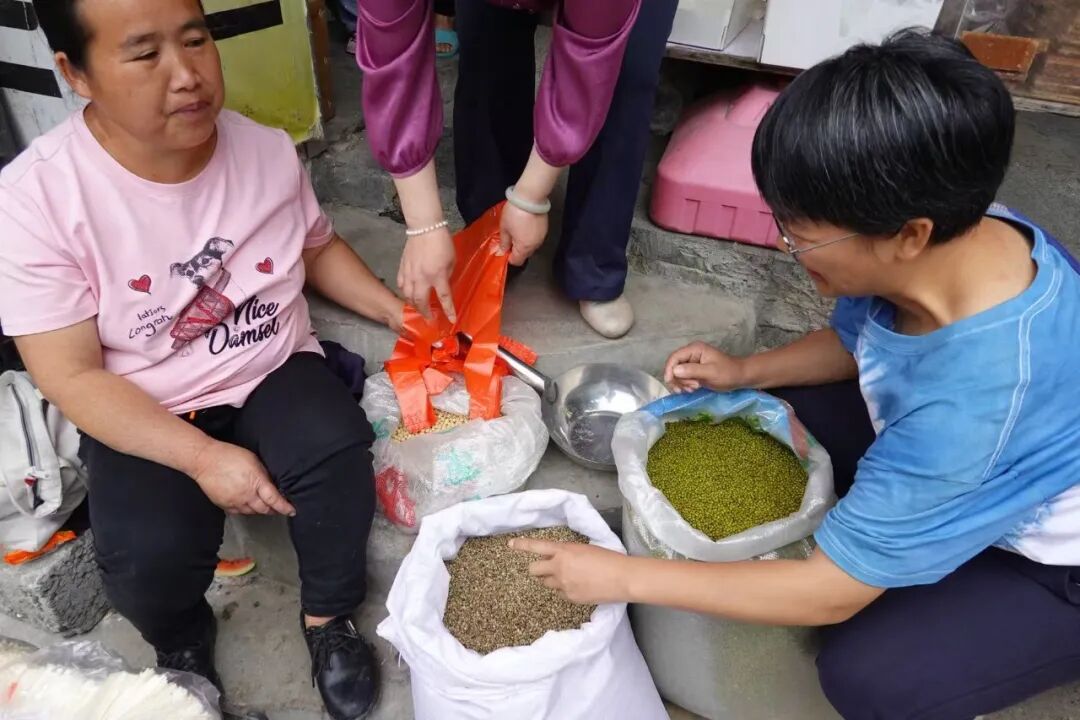
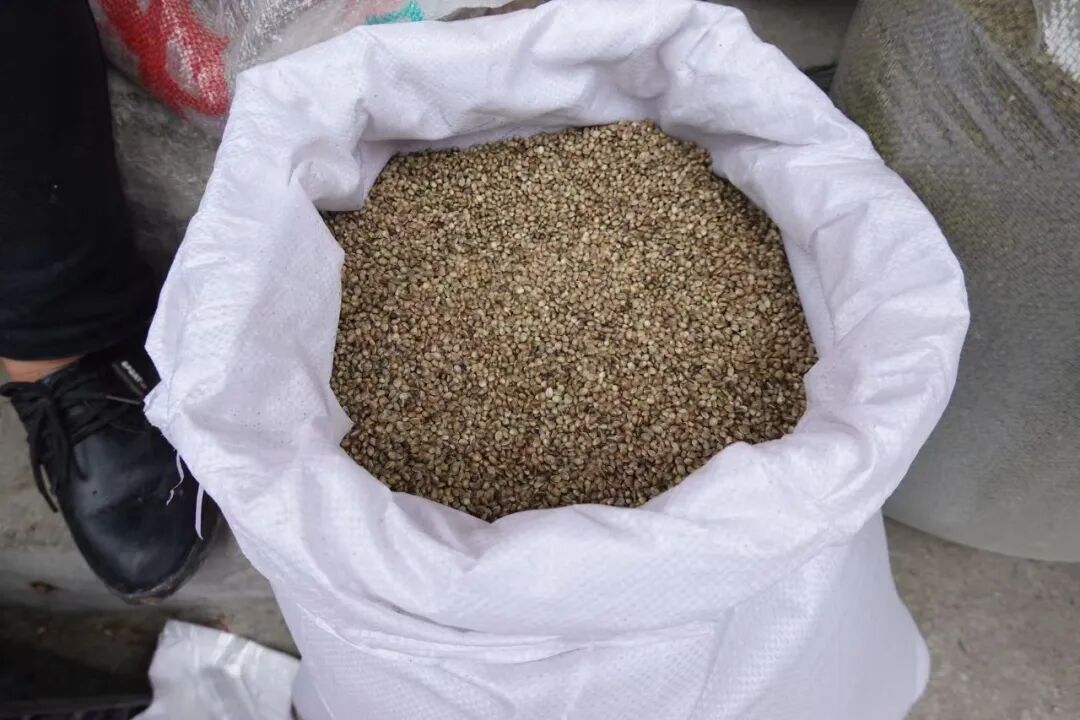
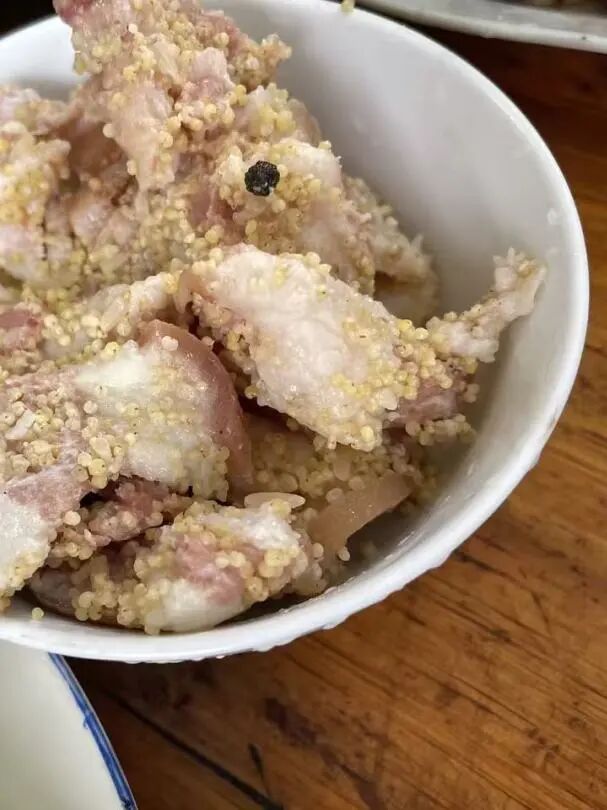
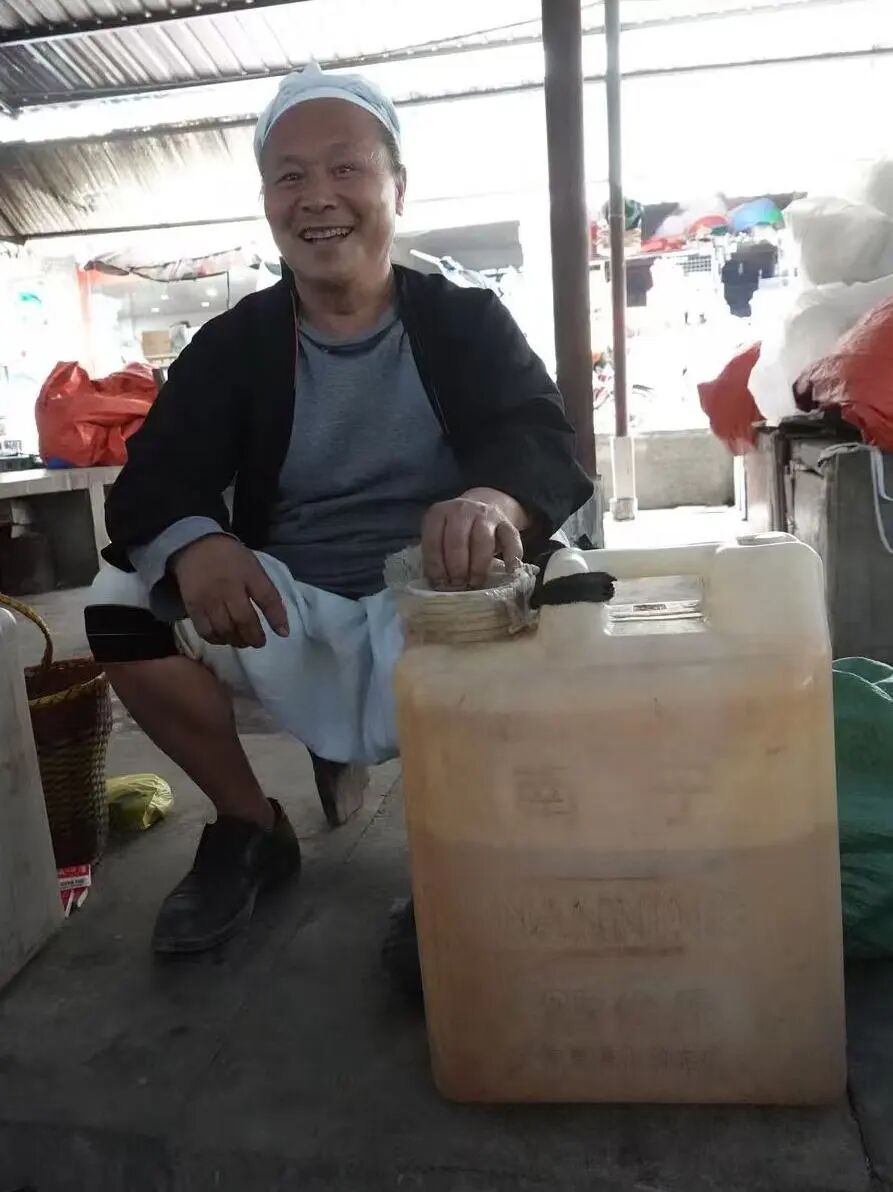
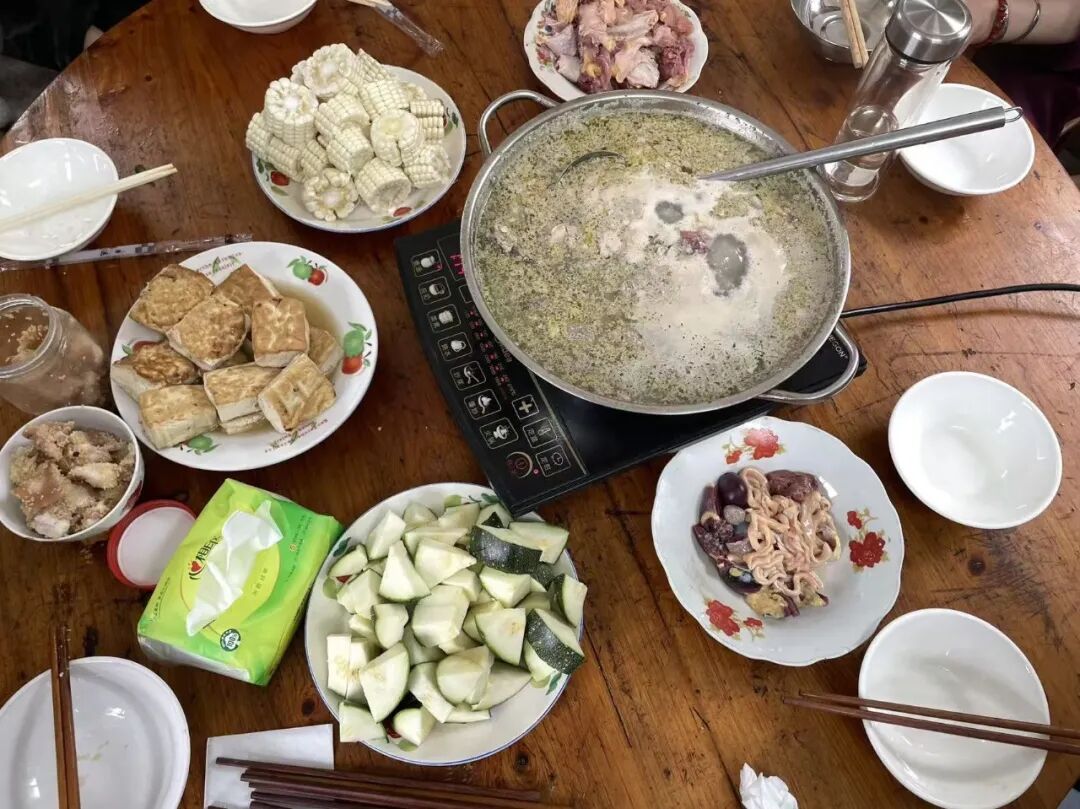
◉ Meng Fang selecting hempseed (hemp), sour meat, “briefcase” spirit, and a handmade feast at the museum.
A Museum That Is Not a Museum
Carrying a pile of ingredients, we took the bus up the mountain to the White Pants Yao Ecomuseum, halfway up the slope.
I had originally come to “fill in the gaps”—after all, who visits a museum without wanting to learn something? But as I followed this group down, the main thread suddenly turned to cooking and eating.
This is more than just an exhibition hall; it is also linked to several surrounding White Pants Yao natural hamlets. There are no clear boundaries; the exhibits and daily life are intertwined. The things we had bought at the market were carried into the kitchen, washed, chopped, and put into the pot, and quickly turned into a feast. I sat to one side, eating along with them, and gradually felt that I could not quite say where “visiting” had begun.
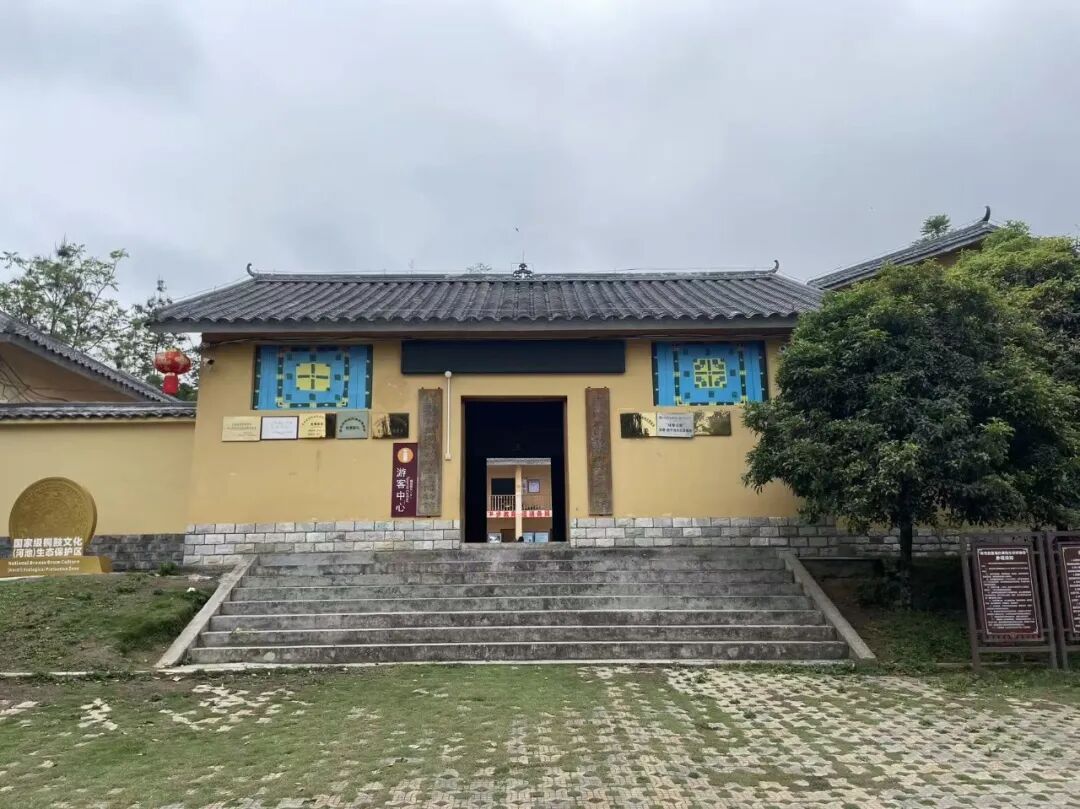
◉ The White Pants Yao Ecomuseum looks unremarkable from the outside, but it is only once you step inside that you discover a whole other world.
Outside the kitchen, the open space in front of the door was also busy.
Several wooden stakes were driven into the ground, enclosing a patch of earth in a square. Yarn was strung taut between the stakes, layer after layer, pulled very straight. Three White Pants Yao women each took a side, holding up frames wound with yarn, and walked slowly around the loop. The yarn was drawn off the frames, kept close to the original layer, then pulled to the next corner. At each corner they paused briefly; their hands turned slightly, and the yarn lay smoothly in place.
I stood by for a while before it dawned on me that this was “warping”.
They did not say much, but kept to a shared rhythm. When one reached a corner, the other two changed direction with her; if one slowed, the whole loop slowed. The ring of yarn between them gradually grew thicker and tighter.
I moved two steps closer, wanting to see more clearly. The woman weaving said something quietly, gesturing for me not to come too near. I stopped.
Later, Meng Fang explained to me that among the White Pants Yao there were taboos around warping. For example, people must not step directly over the yarn, for fear of affecting the yarn’s “luck” and “qi”. This was probably a tacit understanding the women followed by convention: if things went smoothly and the yarn did not snag, that was good luck; if things went wrong, they would feel that their own “luck” was out of step with the process.
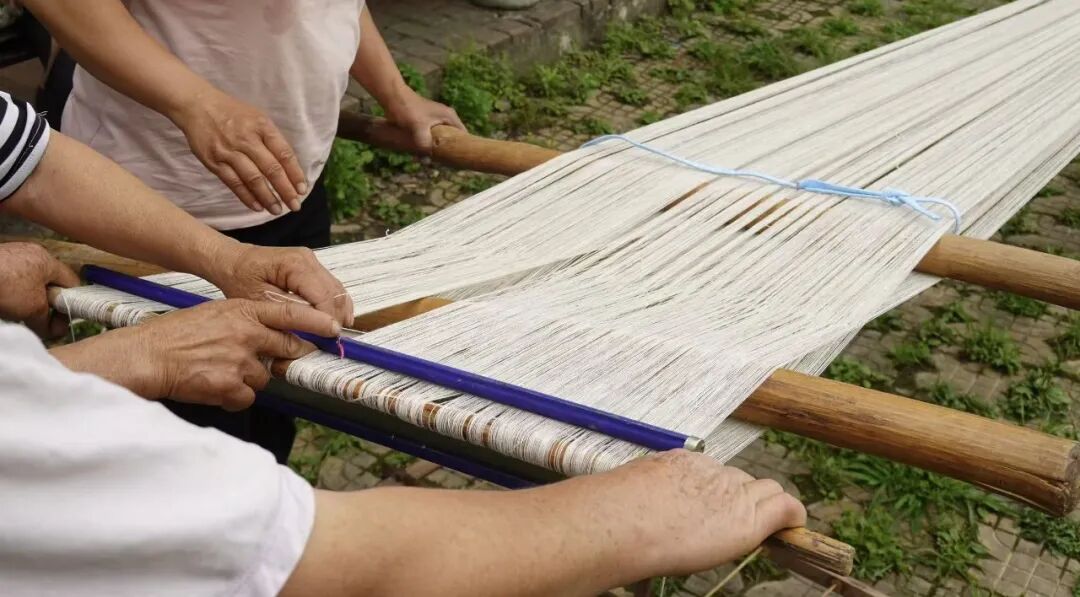
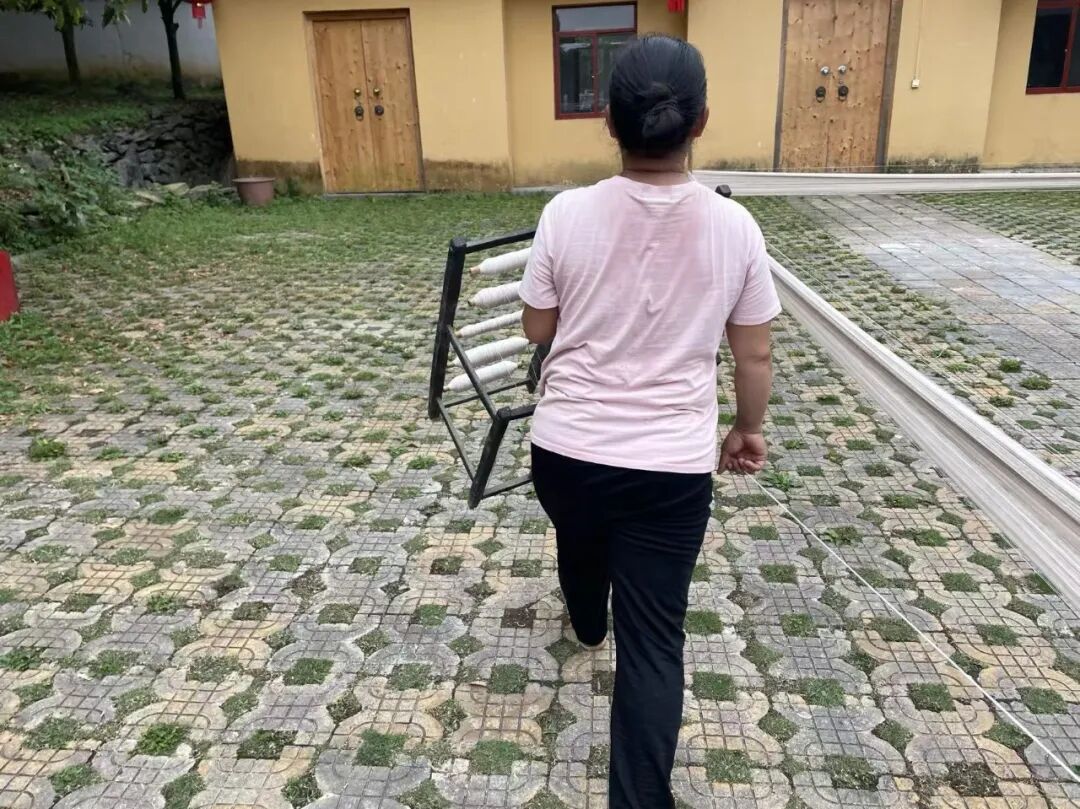
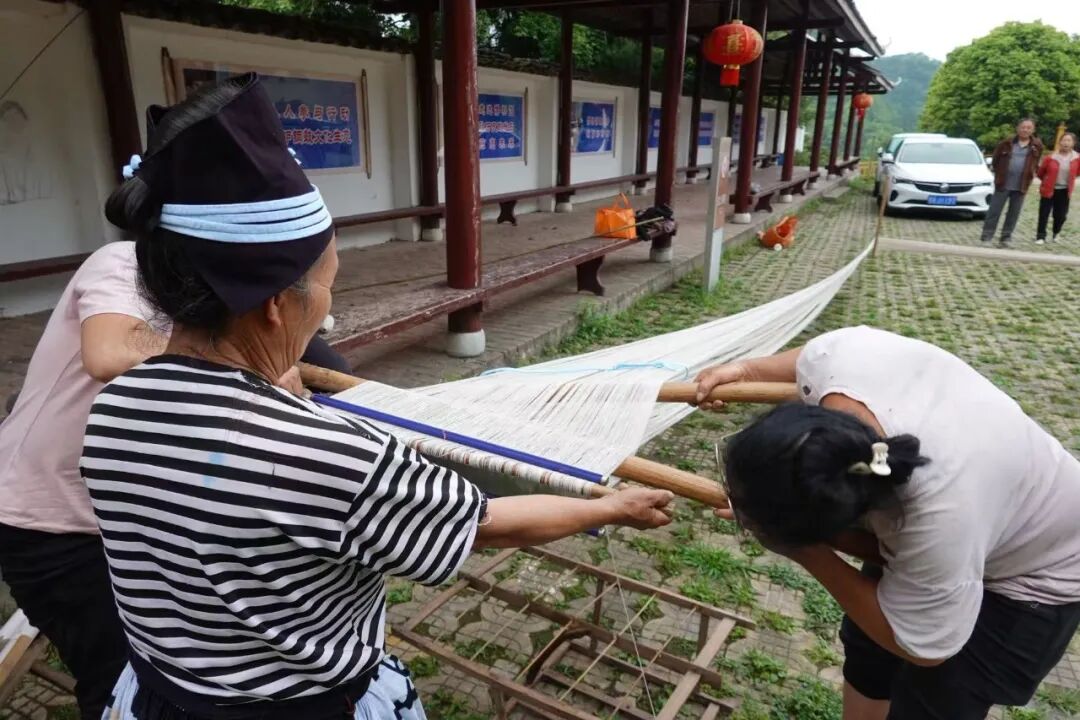
◉ The “warping” process requires the craftspeople involved to work together in close coordination.
The museum’s upper floor is used for sericulture.
The golden silkworms filled a whole room, spread across baskets, heads down, feeding on mulberry leaves. On the other side, some had already started spinning. They did not form individual cocoons; instead, they spun back and forth on wooden boards, slowly laying down a continuous sheet. The staff adjusted the silkworms’ direction from time to time, taking advantage of the silkworms’ tendency to avoid light while spinning, to make them change direction and continue spinning, so that the silk cloth stayed flat and even. During the spinning period, golden silkworms need intensive care. Sometimes the staff kept watch day and night, observing the silkworms’ health and promptly removing their waste, so that it would not be woven in and spoil the silk cloth.
I thought of the rolls of silk cloth I had seen at the market, looking almost like paper—so that was how it came to be.
The dyed cloth I had seen at the cloth stalls, with a thin golden strip inserted along the edge, must have been this precious silk cloth—pieces of processed fabric that could be used directly to make the everyday pleated skirts worn by White Pants Yao women. At the time, I could not see the relationship between them. Now that I had witnessed these complex processes with my own eyes, I suddenly understood the “sky-high” price of the dyed cloth at the stalls, and the young stall owner’s hesitant, tactful refusal.
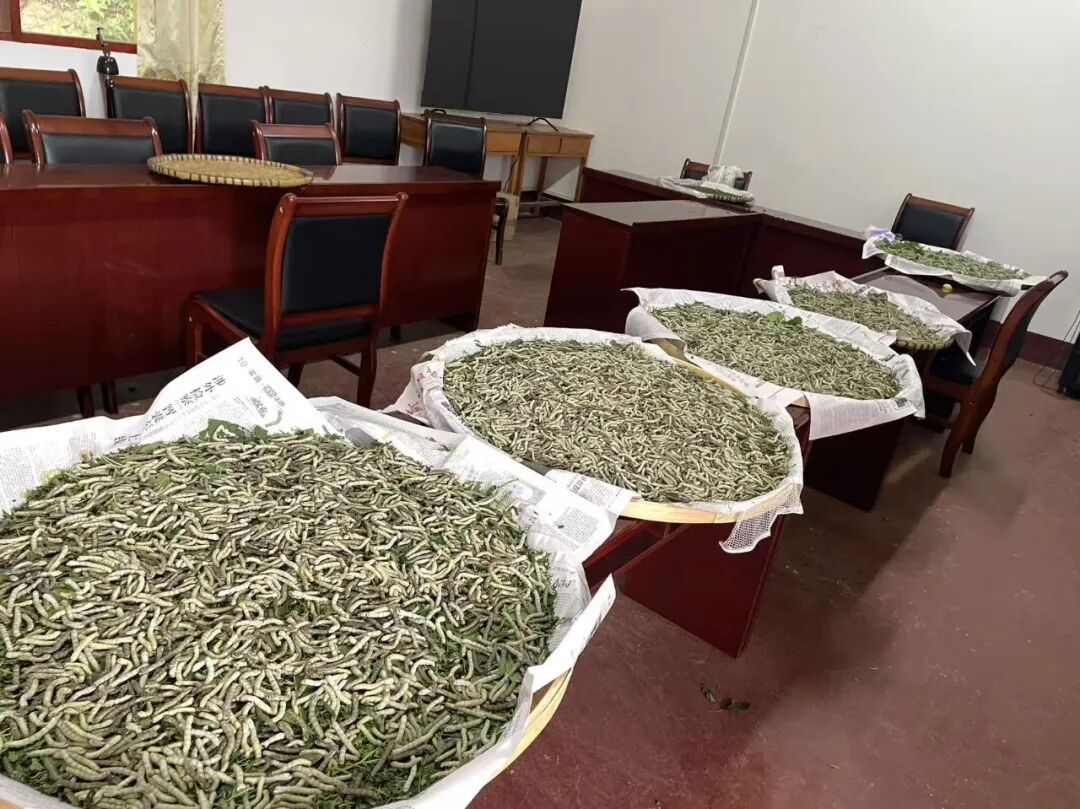
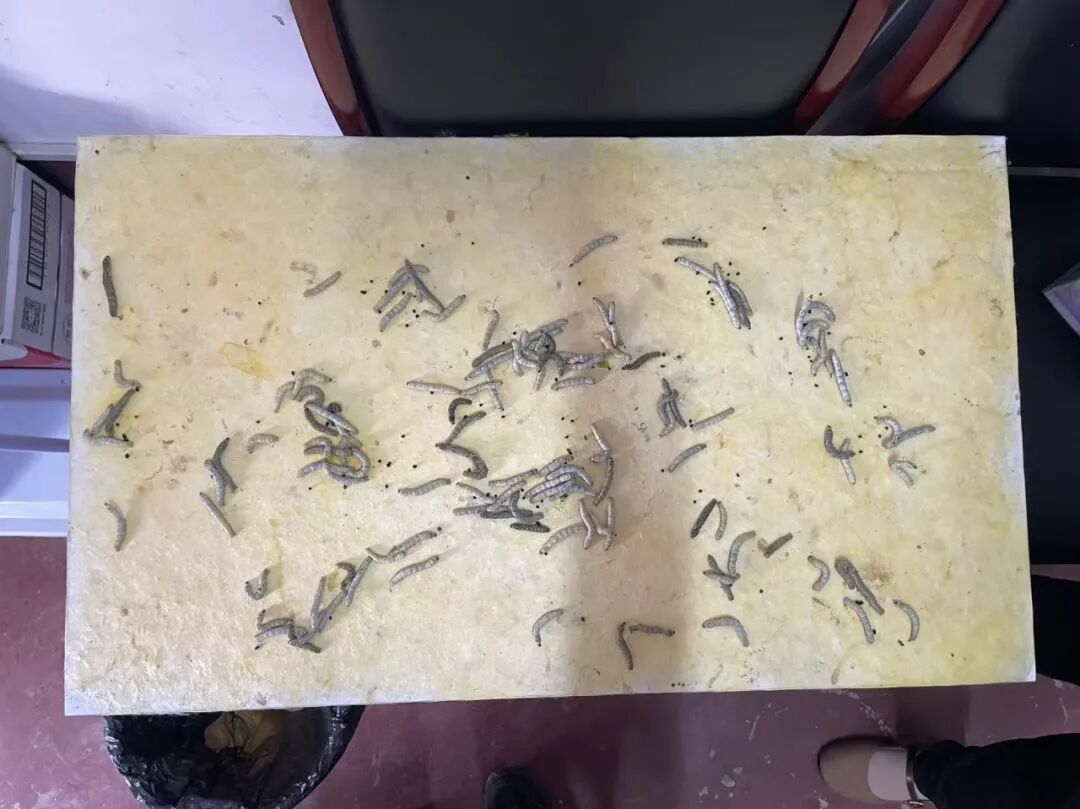
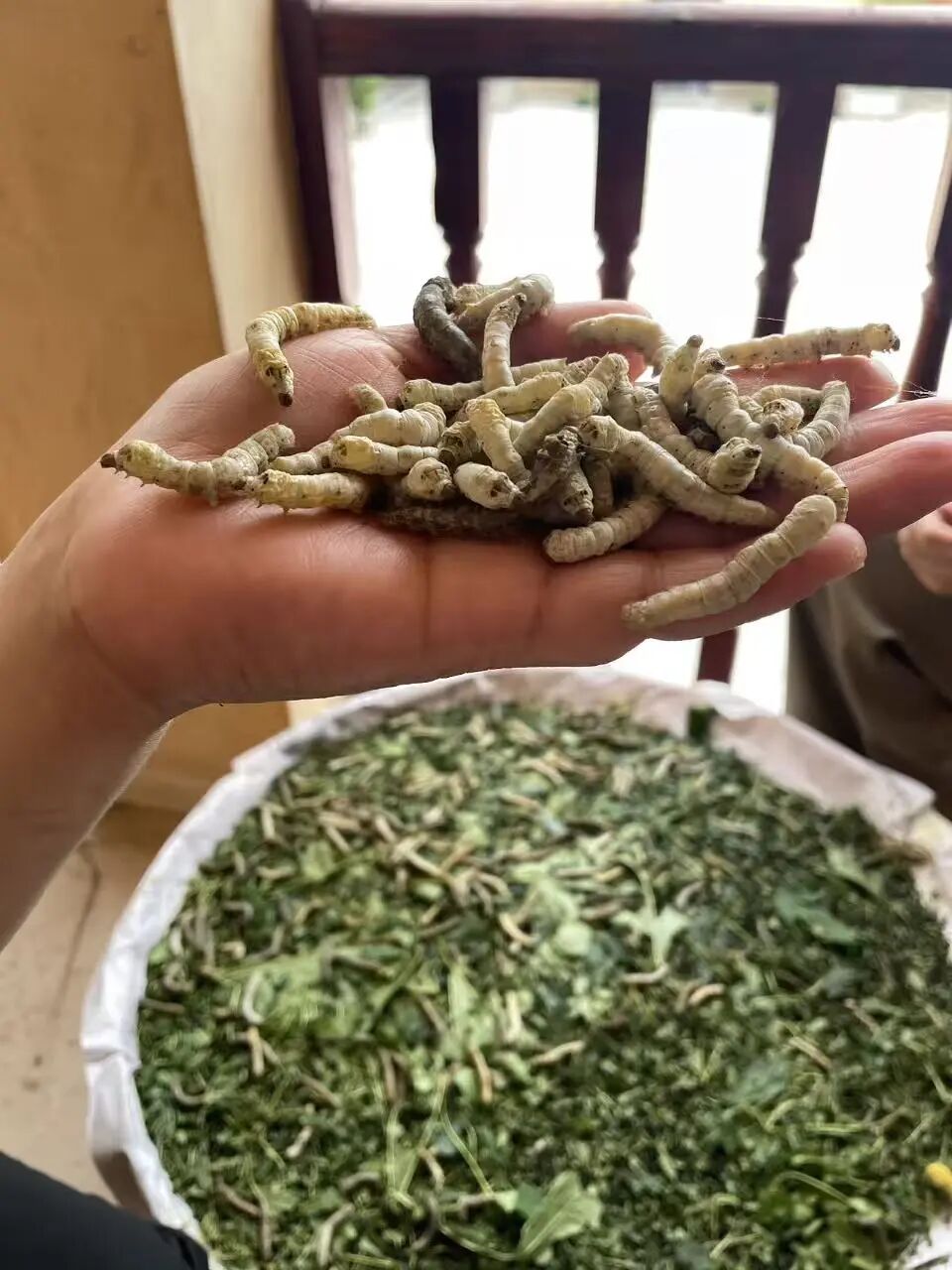
◉ On the second floor of the White Pants Yao Ecomuseum, there is a whole sericulture room, housing local Yao silkworms that spin golden silk.
After all the eating and wandering, I realised that the White Pants Yao Ecomuseum is more than just a museum; it also encompasses three nearby Yao natural hamlets: Manjiang, Huatu and Huaqiao. An ecomuseum is a museum without walls, seamlessly embedded, protecting the surrounding natural and human environment. It does not seek to separate culture from everyday life and preserve it in display cases—here there are static exhibits, but also real production and daily life. For local people, this is first and foremost their home; for an outsider like me, being able to enter such a space and take part in it, even briefly, is itself a kind of good fortune.
Ripples of the Market
If an early-morning market run is like casting a stone into a pond, the experiences that followed were like ripples that kept widening. The museum was the first ripple. After leaving the museum’s main exhibition area, we set off towards several of the eco-hamlets in the surrounding area. The village was not large, but the paths were complex, and it took a kind-hearted friend to show the way. All along the way, we saw dense, lively southern vegetation. In several places, under trees or beside water sources, altars and shrines expressing the White Pants Yao’s animist beliefs had been set up, along with dyed cloth, waistcoats and skirts that villagers were airing out.
In the hamlet there were also traces of other forces intervening. There were, for example, government-funded pavilions and walkways with a cultural-tourism flavour, and traditional granaries that, though no longer in use, had been compulsorily preserved under policy, as well as several dry latrines. Some were already in use, while others lay half-abandoned.
So far, the White Pants Yao people have left me with the impression that they are both steadfast and conservative, yet also possess a fairly gentle and calm tolerance towards outside influences. I thought of the so-called zhiguo minzu, a concept that now calls for reflection. In this concept, history feels like a one-way street leading to the same destination, with some walking ahead and others left behind. When I piece together the different scenes I saw in Lihu, I see intriguing patterns of change: within the same valley, different things do not simply replace or supplant one another, but seem to lie in overlapping layers, interweaving, blending and settling. In any case, it is certainly not “linear”.
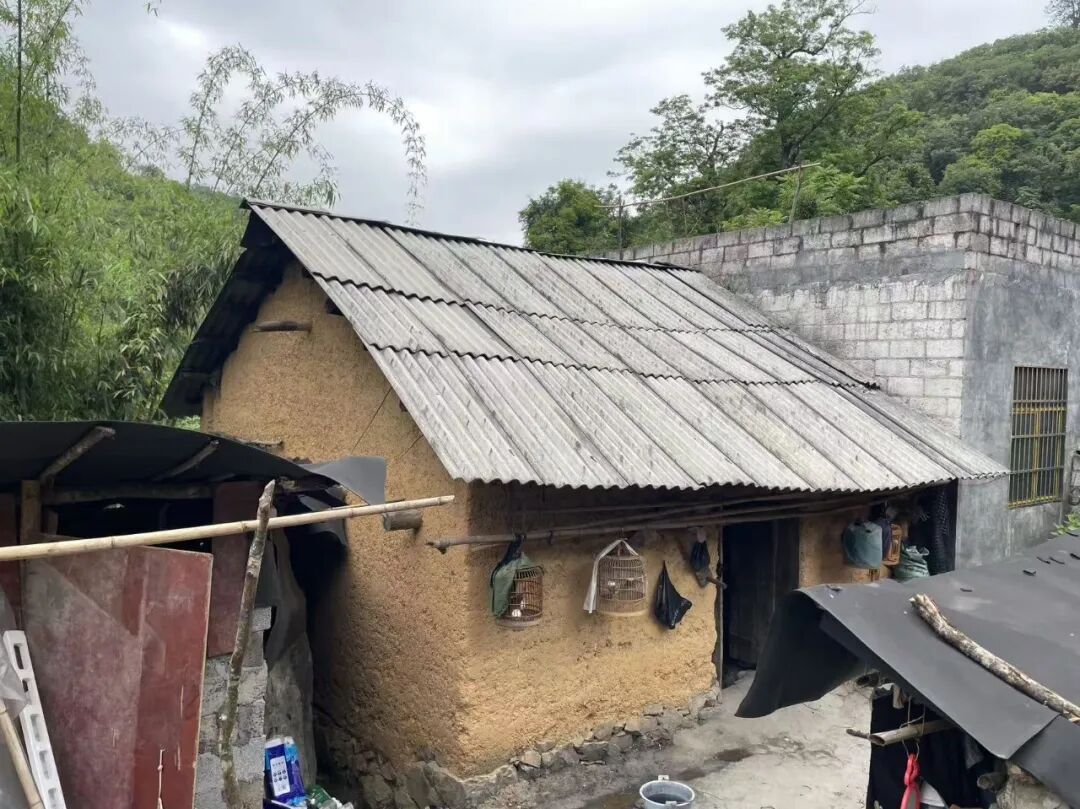
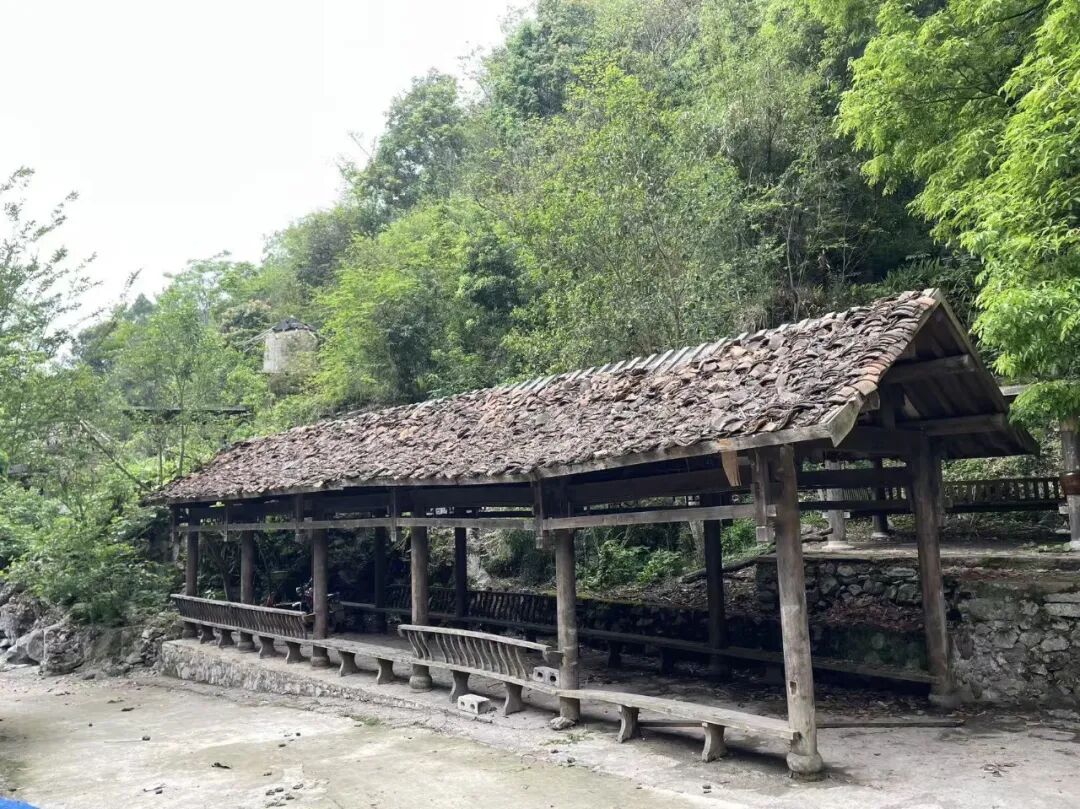
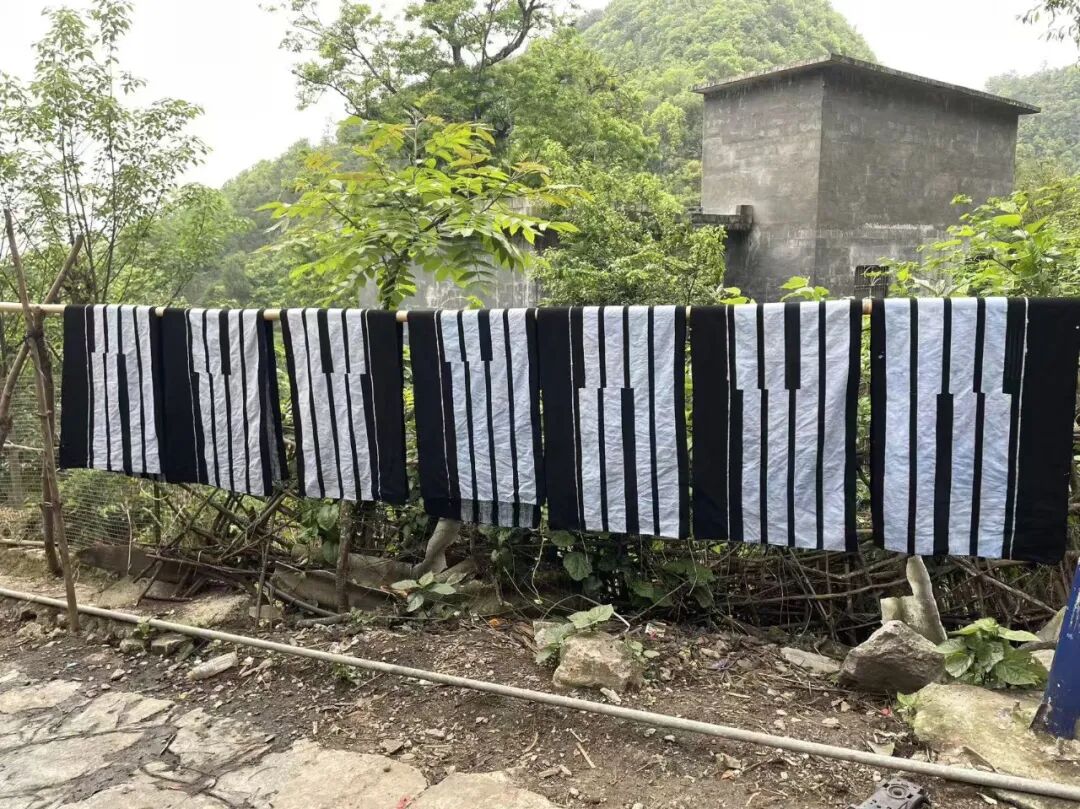
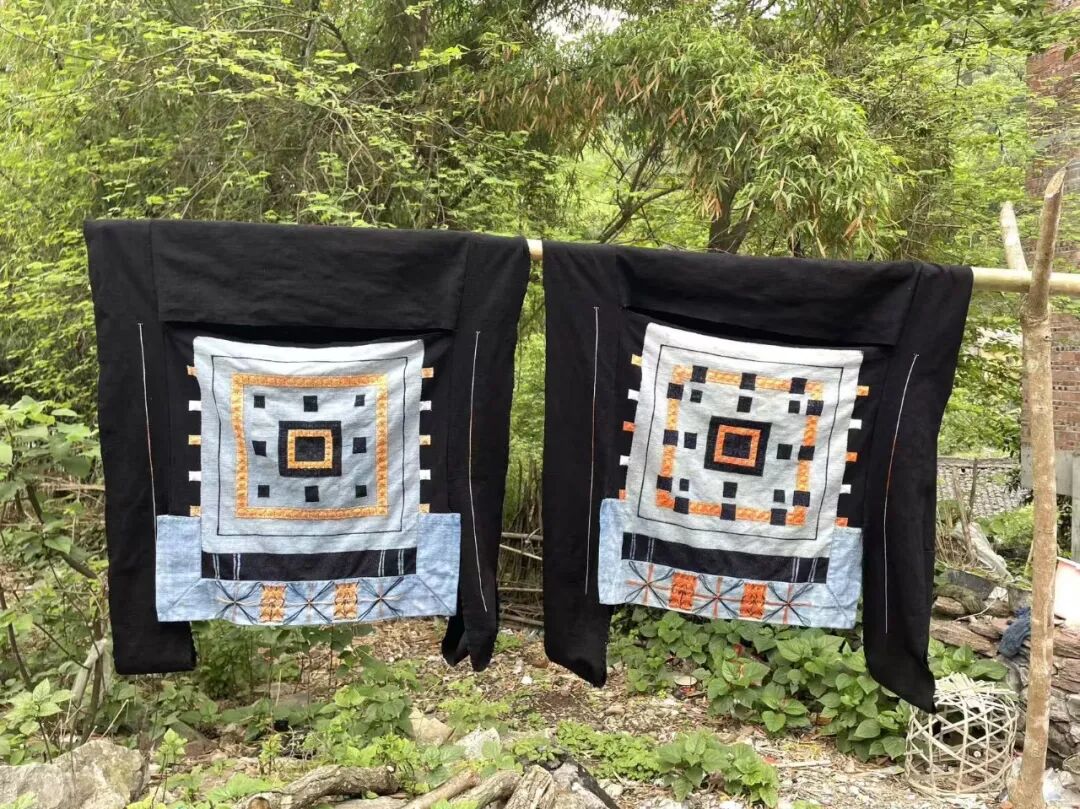
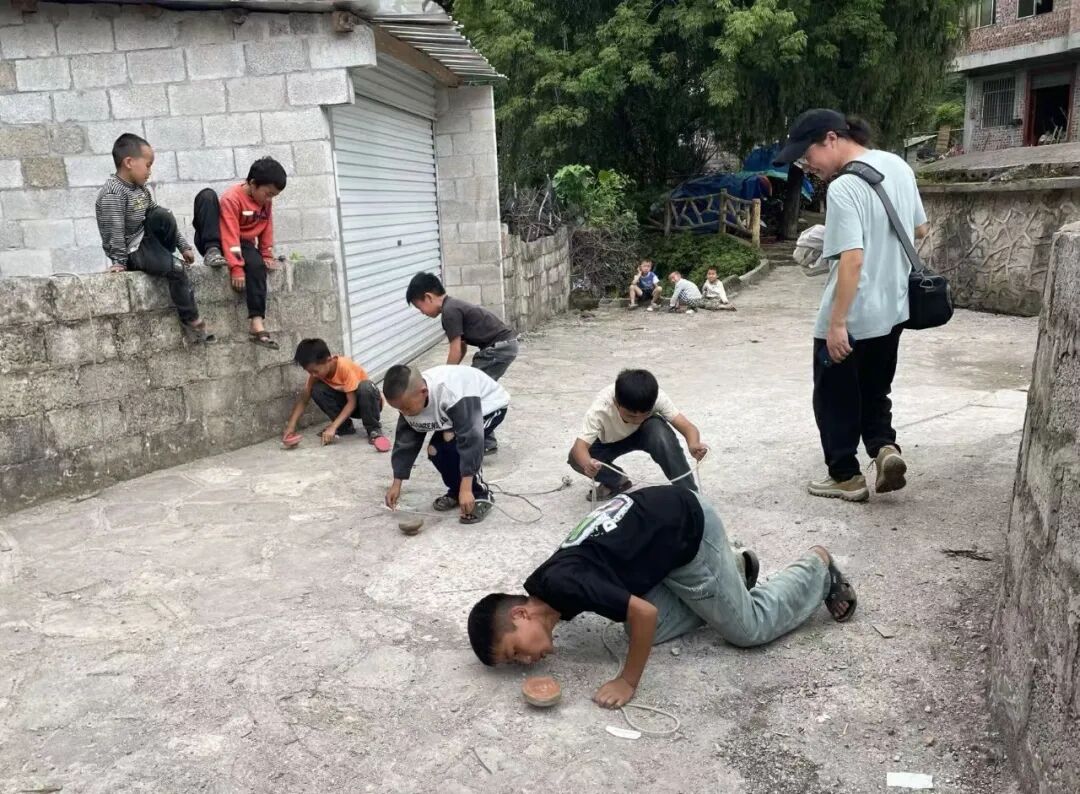
◉ The White Pants Yao Ecomuseum encompasses three nearby natural hamlets: Manjiang, Huatu and Huaqiao, places of production and daily life for the local Yao people.
The ripples of the market reached their final circle in the more distant Moling Hamlet of Yaoli Village. There I saw farmland in the broader valleys, and an intercropping practice in line with White Pants Yao farming traditions—maize, legumes and other crops planted together. In early spring, when the seedlings were sprouting and the evening breeze swept across the Dashi Mountain area, I thought of the roots I had seen at the market, wrapped in leaves; even now, carrying moist earth, they were quietly taking root on some hillside. As we walked down the field ridge, we also saw the village women washing the sticky sap of the lacquer tree out of dyed cloth. The cloth had to be boiled and washed in alkaline water filtered through straw ash before the sap could be removed. It looked like a more laborious process than warping.
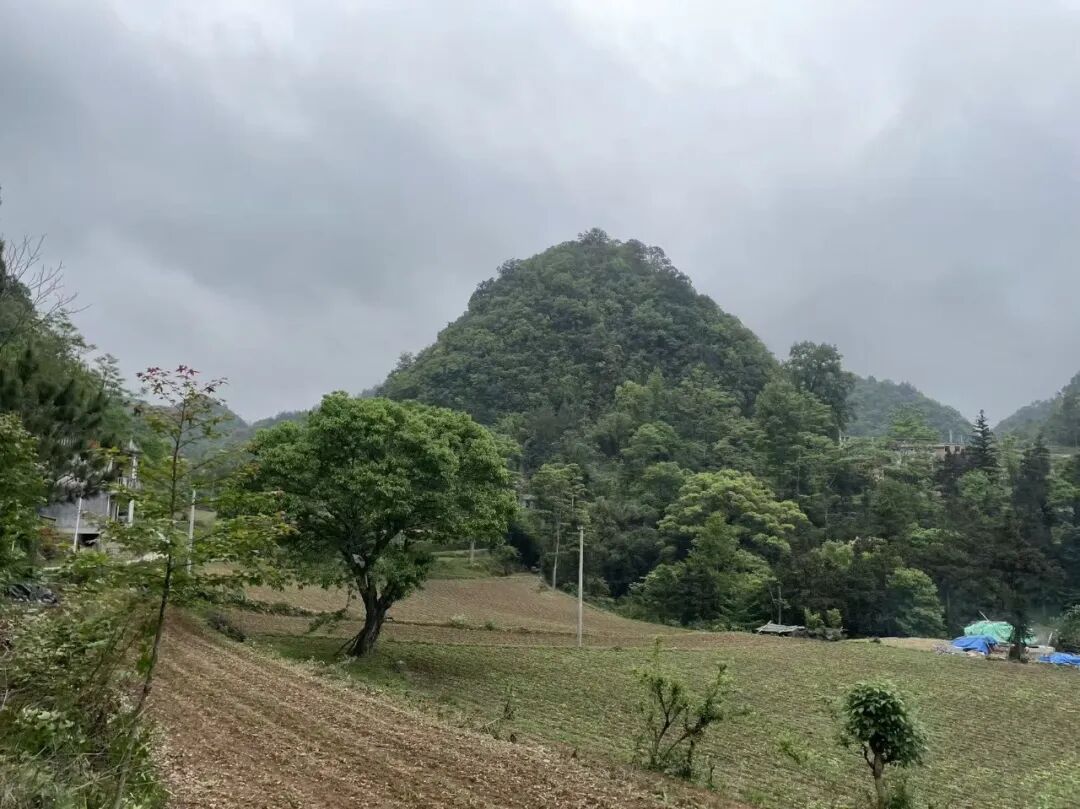
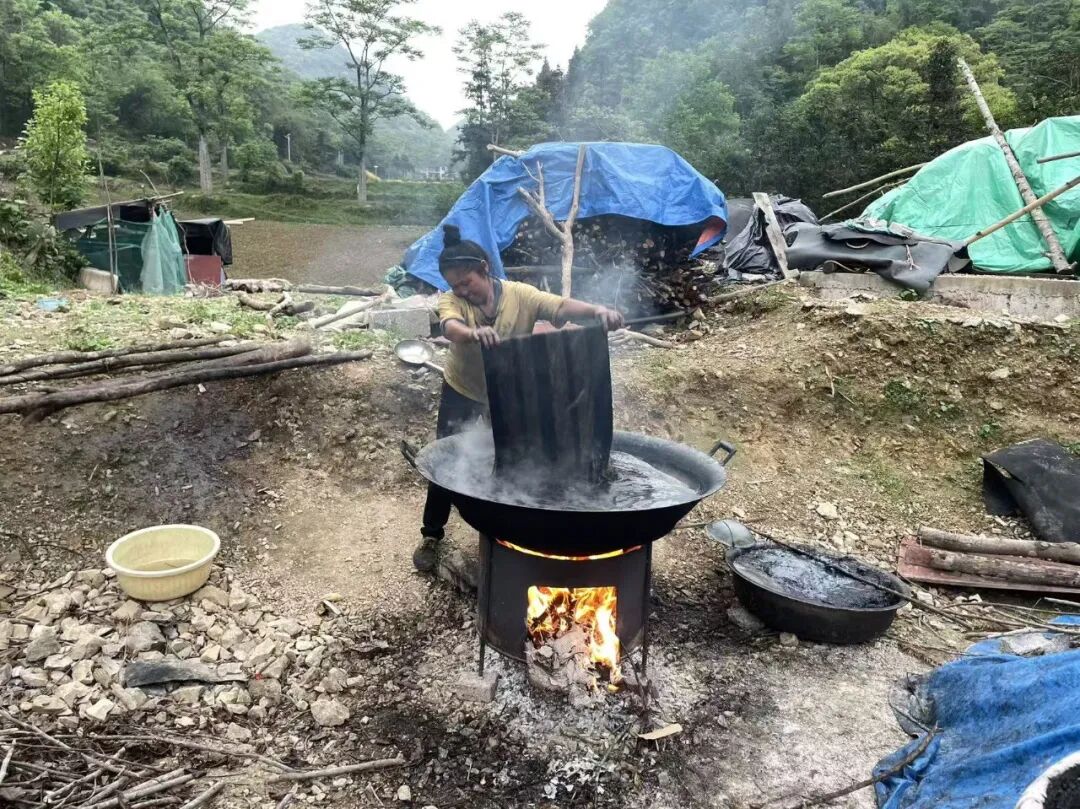
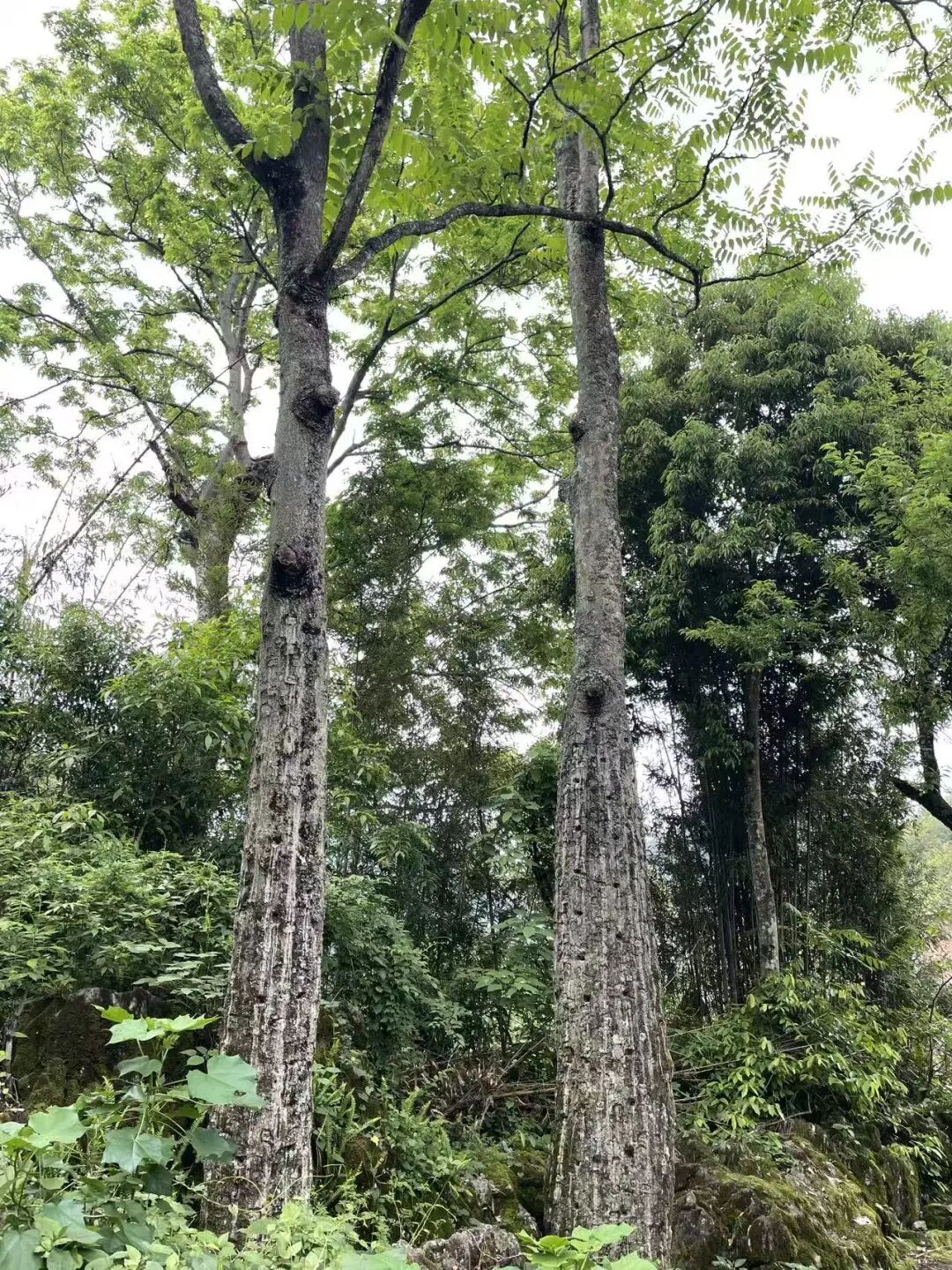
◉ This tall lacquer tree in the valley is key to the traditional dress of the White Pants Yao—the golden-yellow resin taken by slitting the trunk is used to dye the cloth and paint patterns on it. This method of extracting the resin is sustainable: the trunk heals and thickens, and a single tree often accompanies a family for several generations.
As I left Yaoli in the evening, the haze that had unsettled me that morning, as though it were a cap over my head, had completely cleared. I had tried to use my camera to capture those “spectacles”, to study those “oddities”, but the day’s market run, cooking and walking had told me, in the plainest scenes of hemp soup and dyed cloth: There is no spectacle here, only Yao people striving to live within the rhythms of nature.
I thought again of Guan Qi, who had died suddenly not long ago and who had also worked on this land. For this reason, too, I wanted to come and see the places where he had worked so hard. Guan Qi, Meng Fang, and the other few companions I met on the trip were all weaving themselves, through their work, into Lihu’s daily life. What they protect is not one or two landscapes or a static, unchanging tradition, but the ability of the people here to carry on their own lives with dignity. By this point, that suspended feeling I had as a tourist—watching from the other bank—had disappeared, because I had genuinely come to realise that what is called a rooted connection to the place is not something that can be gained through a few days of wandering and looking. It comes from long-term rootedness, from continued understanding, companionship, and shared responsibility. Those who truly change a place are often not those who have merely visited, but those willing to genuinely spend a stretch of their time there.
*While writing this article, I was helped by experts at the Guangxi White Pants Yao Ecomuseum and the Nanning Meinong Social Work Service Centre, for which I am deeply grateful. I would also like to thank the Fourth Nandan Music Festival for giving me the opportunity to forge a connection with Lihu.
– This is Foodthink’s 812th original article –
Foodthink
Author
Wang Chunhui
A former journalist and editor, with many years in non-profit organisations. Interested in public policy, health, food and farming, and climate change, but with interests that keep straying beyond boundaries. A middle-aged person with more curiosity than practical purpose, now understanding the world through wandering, and occasionally editing books, writing and doing odd jobs.
Unless otherwise noted, all photographs were taken by the author.
Editor: Tianle
Layout: Xiaoshu
Scan the QR code to leave a tip and support original food writing
▼
Click the image to read related articles.