When a Hippie Decides to Farm

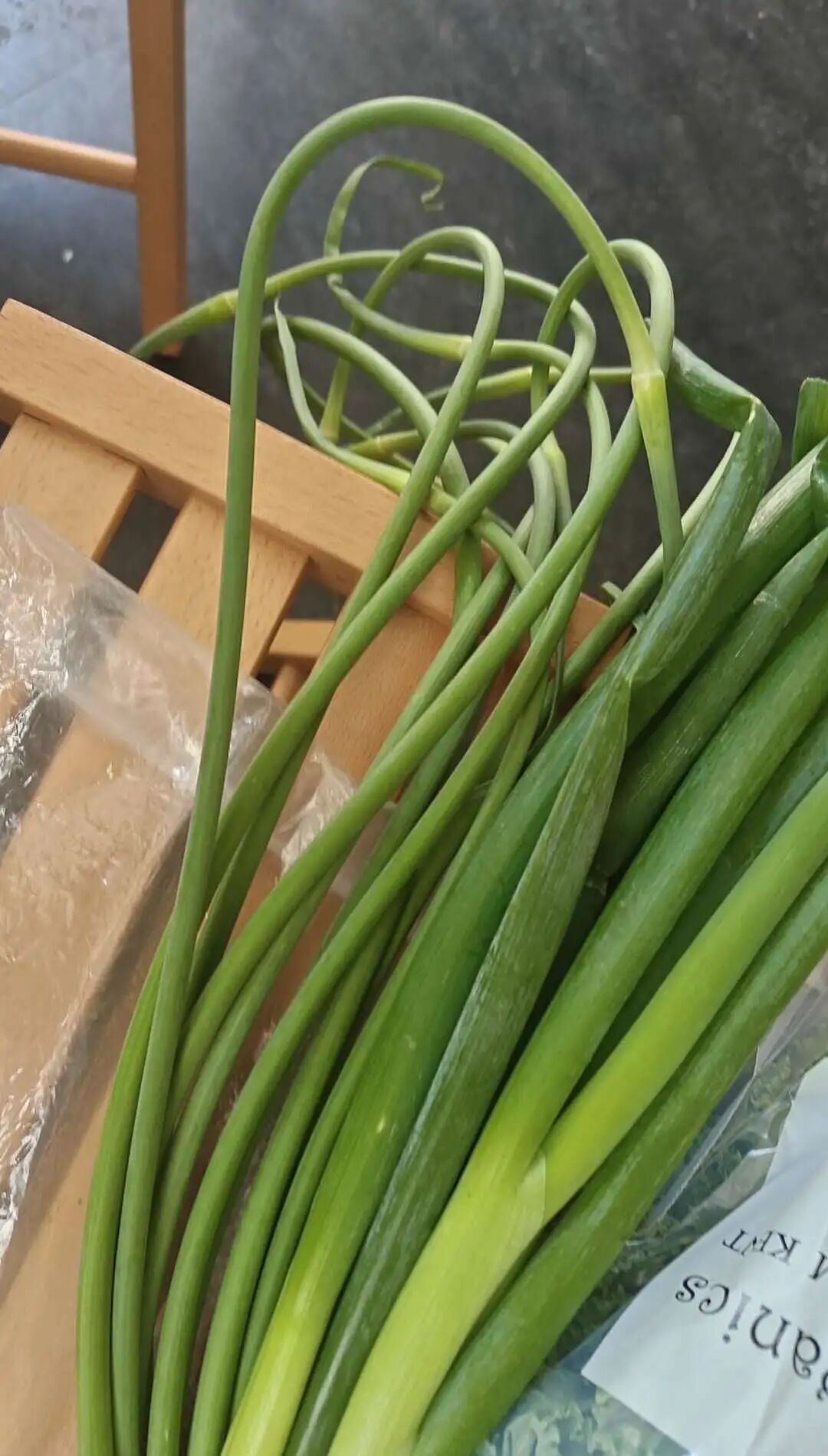
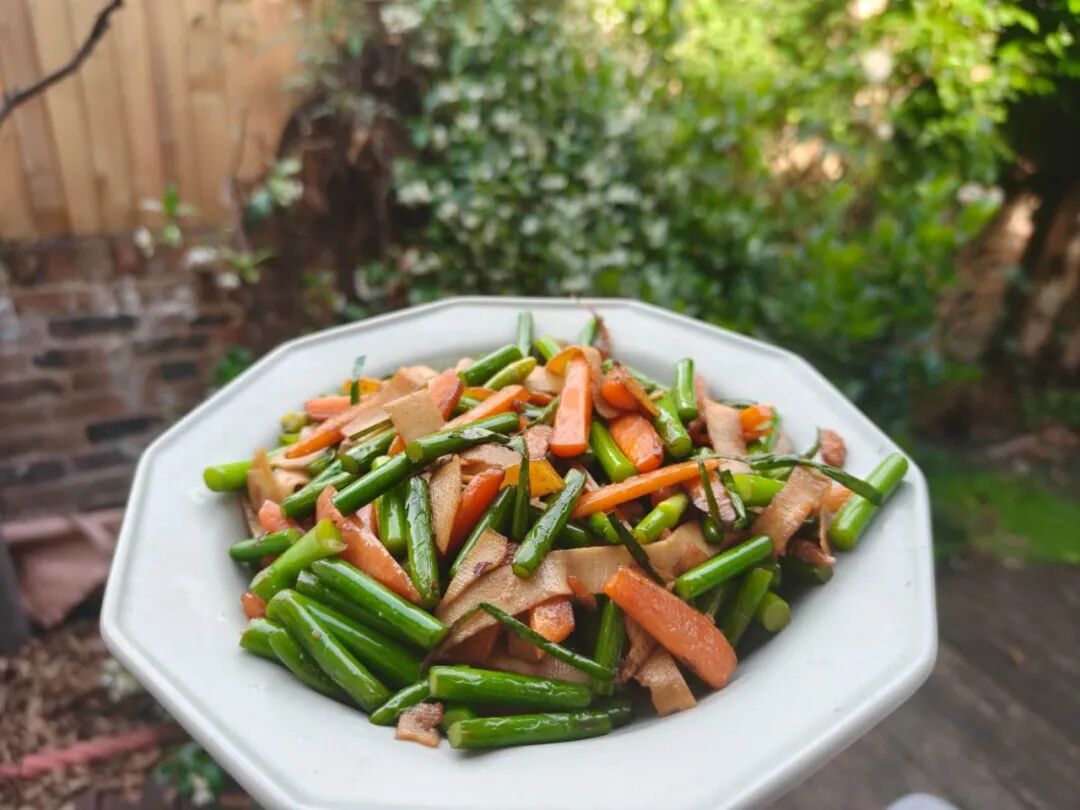
◉ Eating garlic scapes in a foreign land is a happiness. Photo: Jiang Xiechi
“I bought garlic scapes today!” One Saturday morning in early summer, a friend was showing off her farmers’ market haul. Since moving to the UK last year, she and I have often met up at the Growing Communities organic farmers’ market in north London to shop. We had grown fairly familiar by face with the farmers, but I had never heard of this stall.
It turned out the garlic grower was a Dutch man, Metske (Metske van der Laan), who had been at the market for nearly ten years but only set up a stall in summer and autumn. Before long, the market organised a farm visit for its customers on 21 June, the summer solstice, and I signed up straight away. Some thirty of us drove from north London south-east, and it took just over an hour to reach the Bore Place organic farm in Kent. Metske and her husband had been waiting for us for some time already.
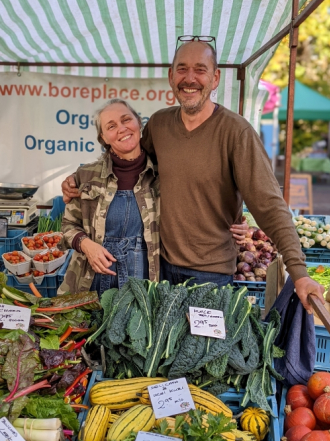
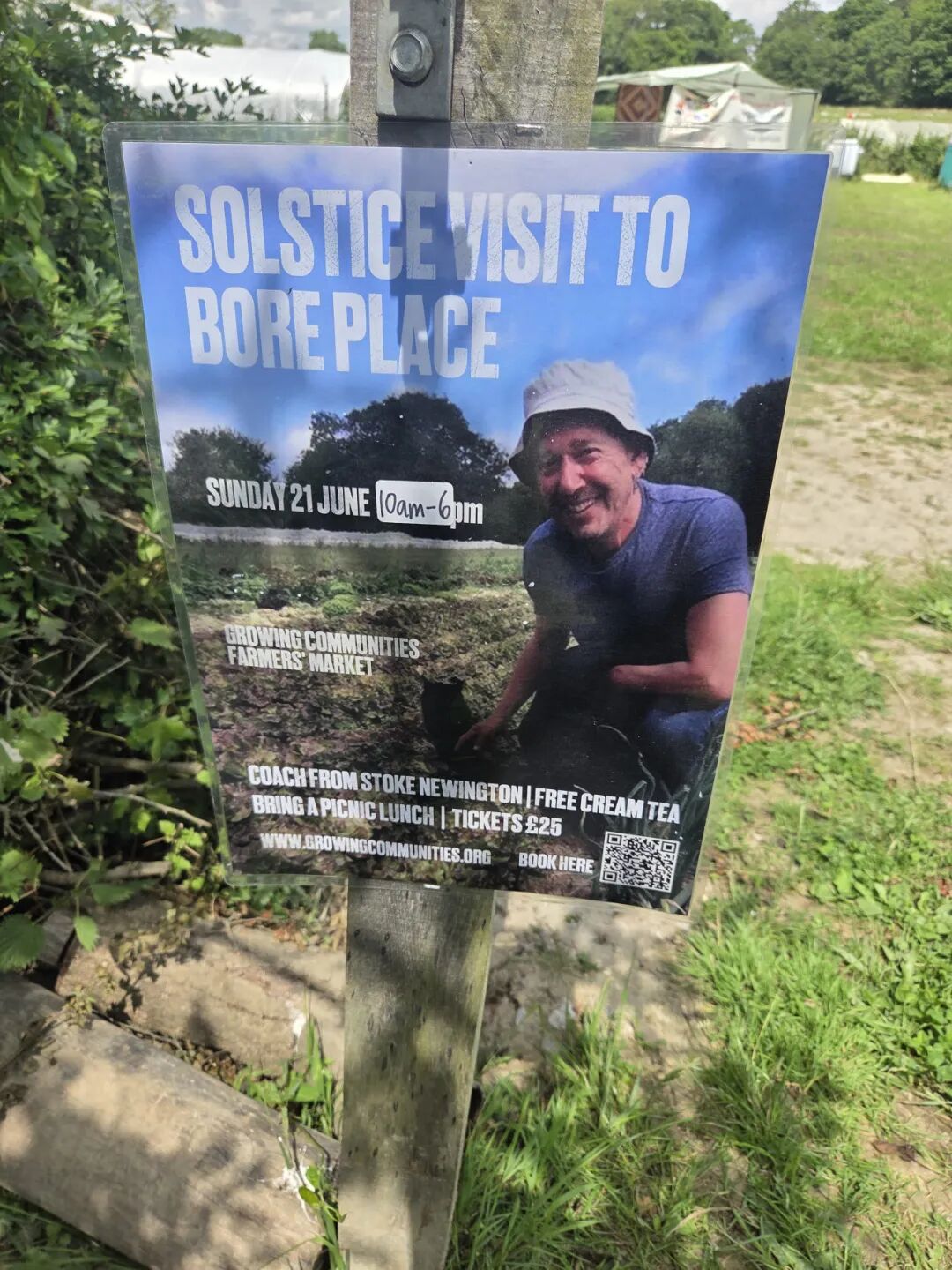
◉ Metske and her husband at the market. Photo: Growing Communities market
An Open and Shared Organic Farm
The farm sits on Bore Place, an estate of over 490 acres in which the surrounding properties are said to be home to no few country retreats owned by British millionaires. English law places great weight on private property rights, and signs reading “Private Road” are a common sight in both towns and the countryside, a reminder to uninvited passers-by to keep off. Bore Place, managed by a charity, operates on a spirit of public access, opening the land to walkers and cyclists. Of this, about ten acres are managed jointly by three parties: alongside Metske’s organic vegetable farm, there is an organic willow nursery and a campsite.
“You can hardly see this kind of land-sharing model anywhere else,” Metske remarked to us.
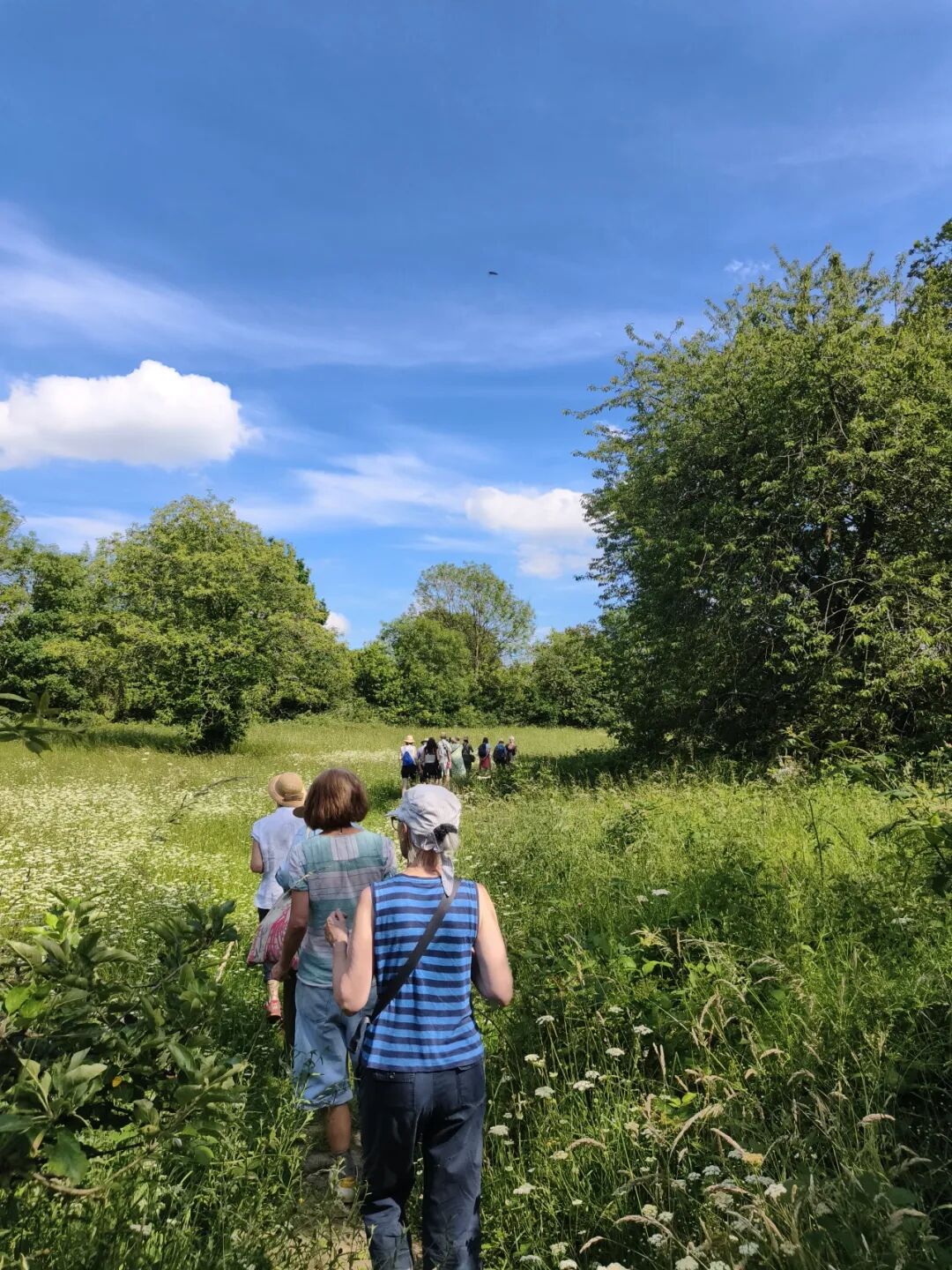
◉ Market customers strolling around the farm.
According to official figures, the average UK farm in 2025 stands at 143 acres. By that measure, Metske’s 6½-acre vegetable farm is small but beautifully done. A few polytunnels are used for raising seedlings – cucumbers and tomatoes. The open-field crops include pumpkins, beetroot, maize, French beans, Florence fennel and a variety of salad lettuces.
Lettuce is the farm’s star product. “I don’t just love growing lettuce – I love eating it, too. Does anyone remember last year’s lettuce? The texture was simply out of this world!” Metske’s pride was plain to see. Lettuce is harvested every three weeks, and the transplanting schedule is tighter still, ensuring a supply every week.
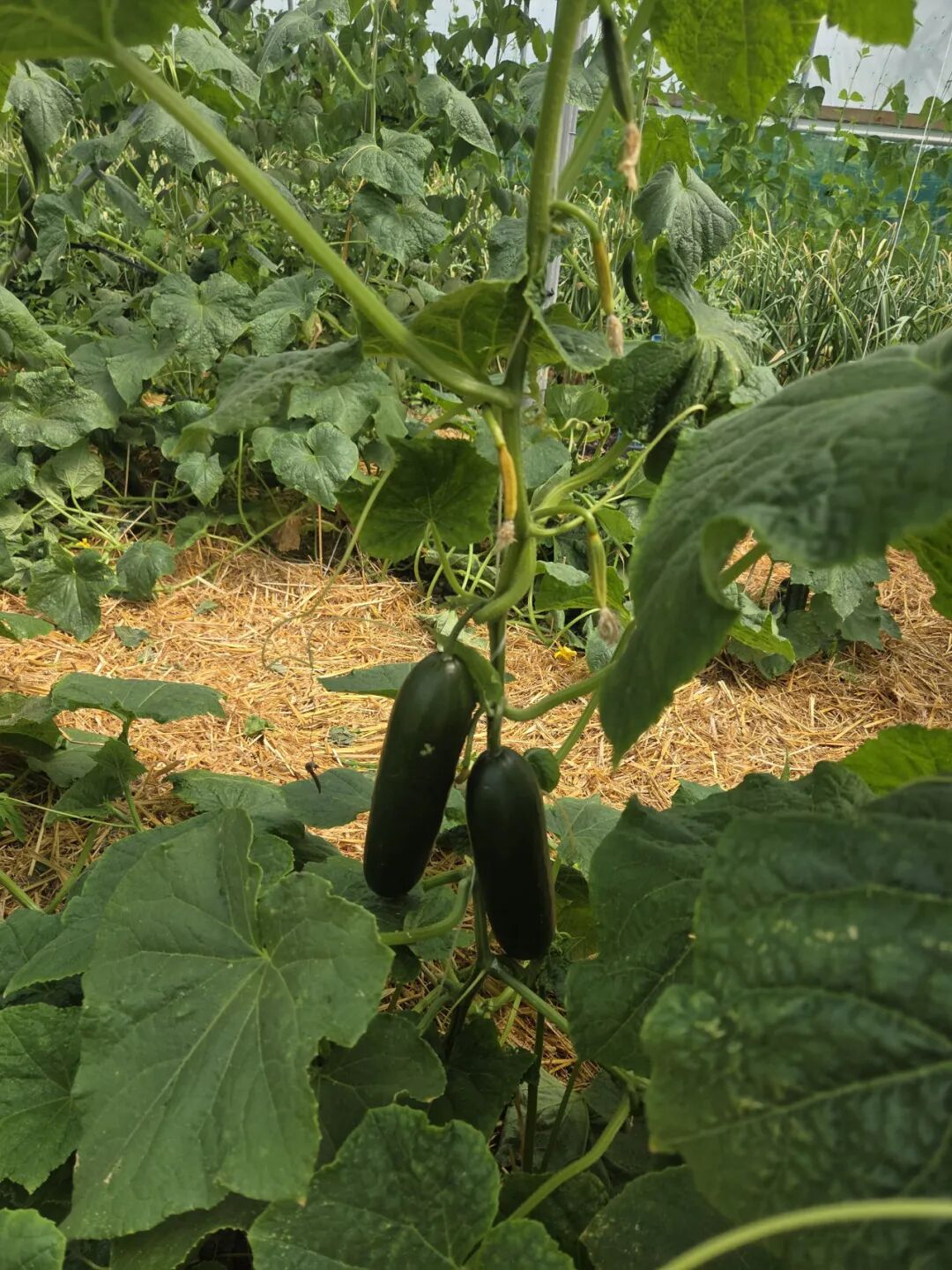
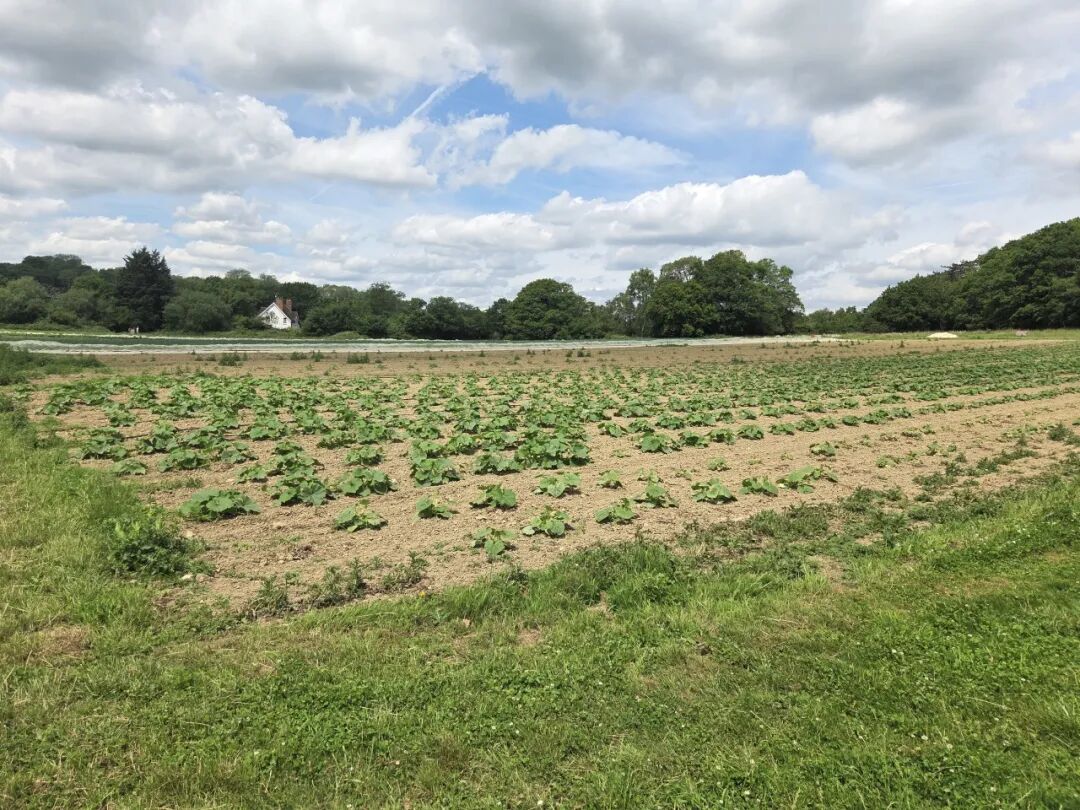
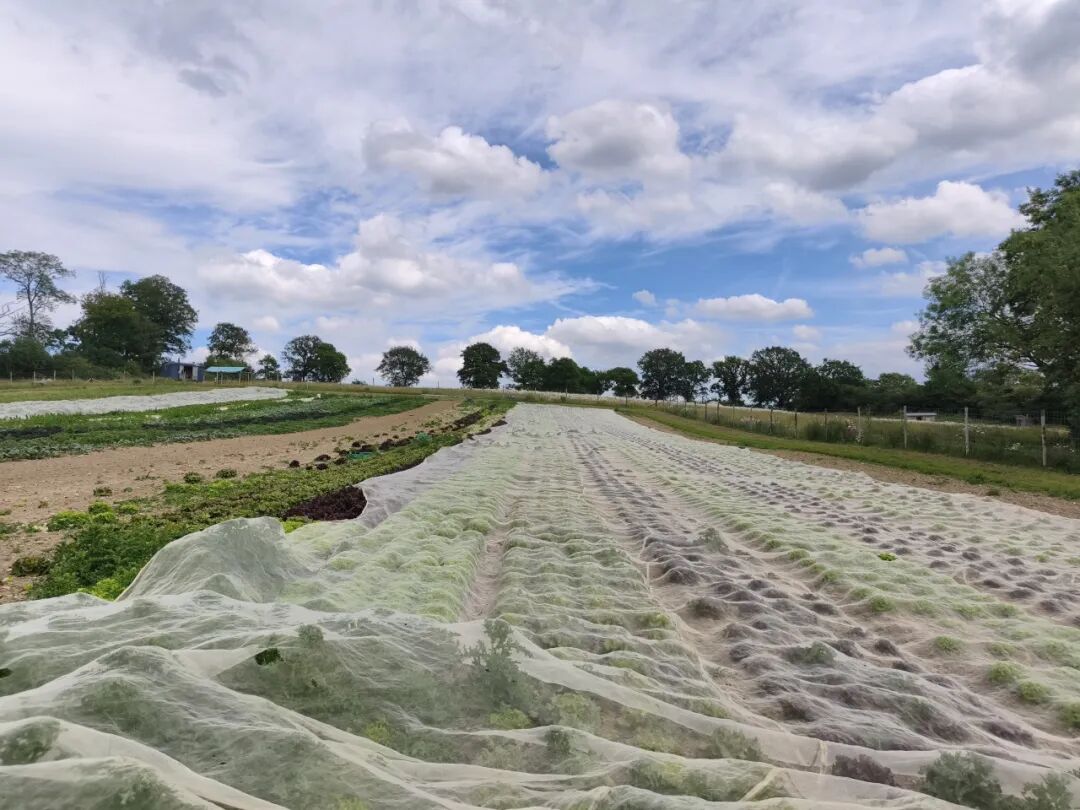
◉ Courgettes, pumpkins and lettuce under insect netting.
Soil conditions also dictate that planting must be carefully planned. The farm’s soil is heavy clay, which is not particularly suited to leafy vegetables. Fortunately, Metske has spent a lifetime working with clay. Born into a farming family in the Netherlands, he and his siblings grew potatoes in clay soil as children. Clay and potatoes are a natural pairing, but vegetables are another matter. In spring the soil is too wet; in summer, as temperatures rise, it holds moisture poorly. Only five or six months of the year are suitable for cultivation, so every bit of time and land has to be squeezed to the full.
Metske begins buying seeds and raising seedlings each February. Ninety per cent of the varieties can be sourced as organic seed, so the farm does not save its own – it purchases from certified suppliers. He also selects early-maturing varieties to time his harvest ahead of other growers; tomatoes reaching the market early are sure to attract customers. Open-field planting does not begin until April or May.
The clay soil does not lend itself to mechanised cultivation, either. Metske showed us the farm’s compact seeder. At sowing time he tries to keep the spacing as uniform as possible to make weeding and management easier. “Farming is exhausting – there’s barely a break all year round. I think the last time I took a holiday must have been over a decade ago. So if a machine can do the work, you use the machine.”
Asked about weeding robots, Metske was notably optimistic. He does not deny that they are expensive at present, but he believes that in twenty years’ time, once the second-hand market has matured, even smallholders will be able to afford one.
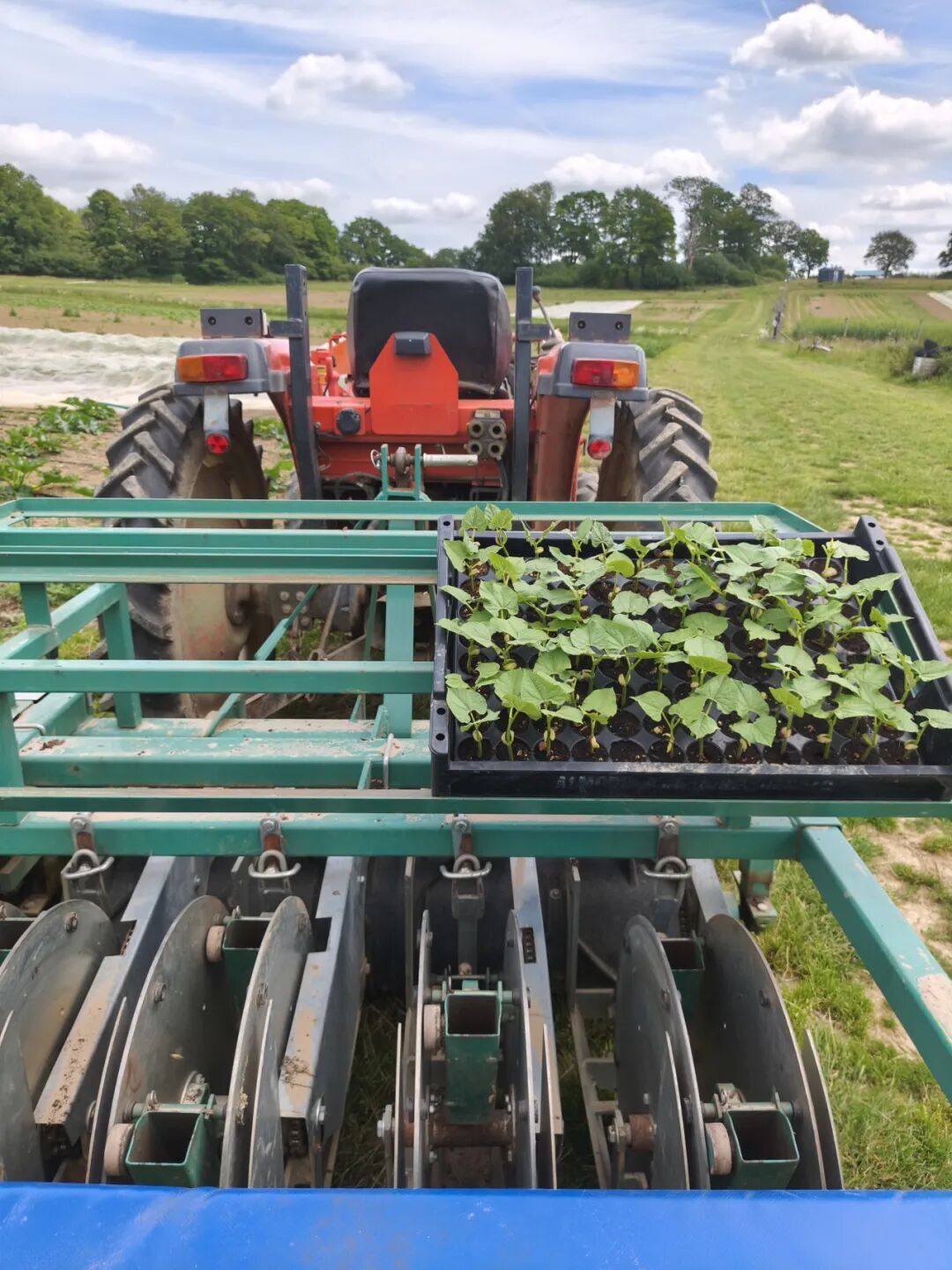
◉ Tractor and seeding equipment.
Following the path past the seeder, we came to a wildflower margin and a fallow green-manure field. One of the key functions of the wildflower margin is to attract pollinators, so the pumpkins – which need pollination most – are planted right beside it. Metske has also scattered clover seed through the pumpkin patch for its nitrogen-fixing and weed-suppressing benefits. The green-manure plots are planned to lie fallow for two years, mown regularly and left to mulch in place, building up humus in the soil.
“What do you do when you get pests and diseases?” one of the customers in our group asked.
“Sometimes I have to work out a solution myself, and sometimes nature has a plan for me,” Metske said. Not long ago, aphids were rife in the polytunnels, but the ladybirds quickly brought the infestation under control. That is because the wildflower margins provide habitat for the natural enemies of pests, helping to maintain ecological balance. Beyond the deliberately planted wildflower margins, the farm has plenty of neglected edges where flowers and weeds grow wild, serving a similar function.
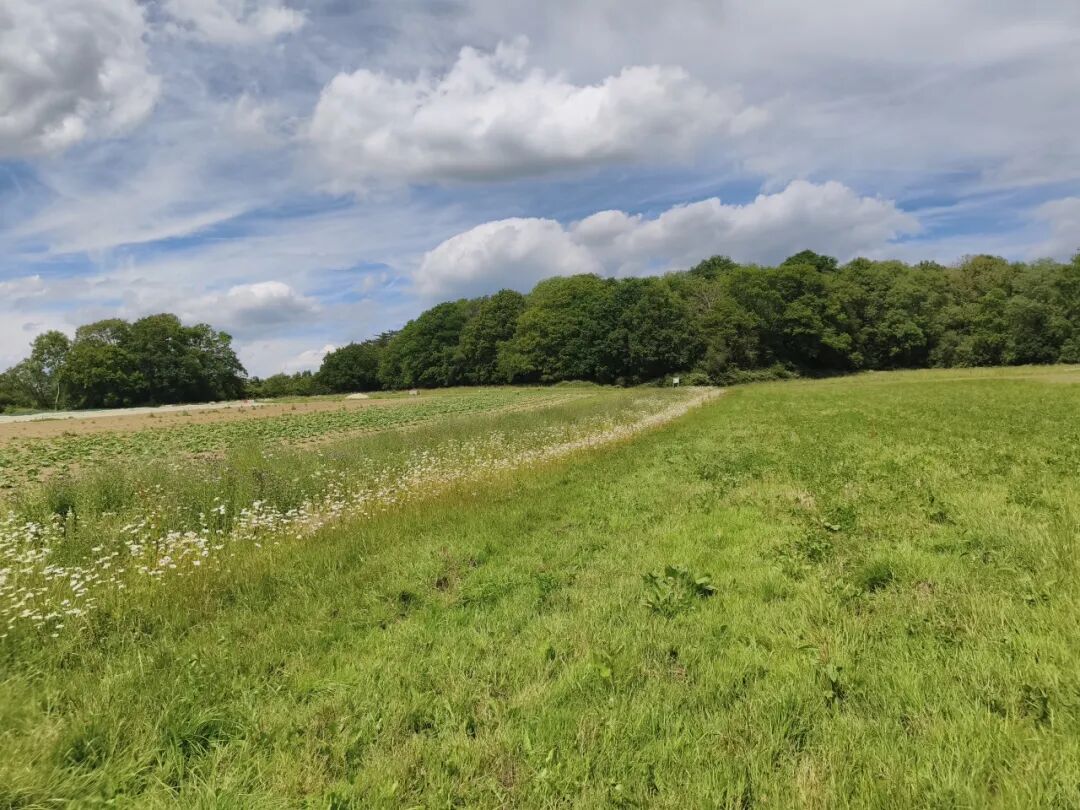
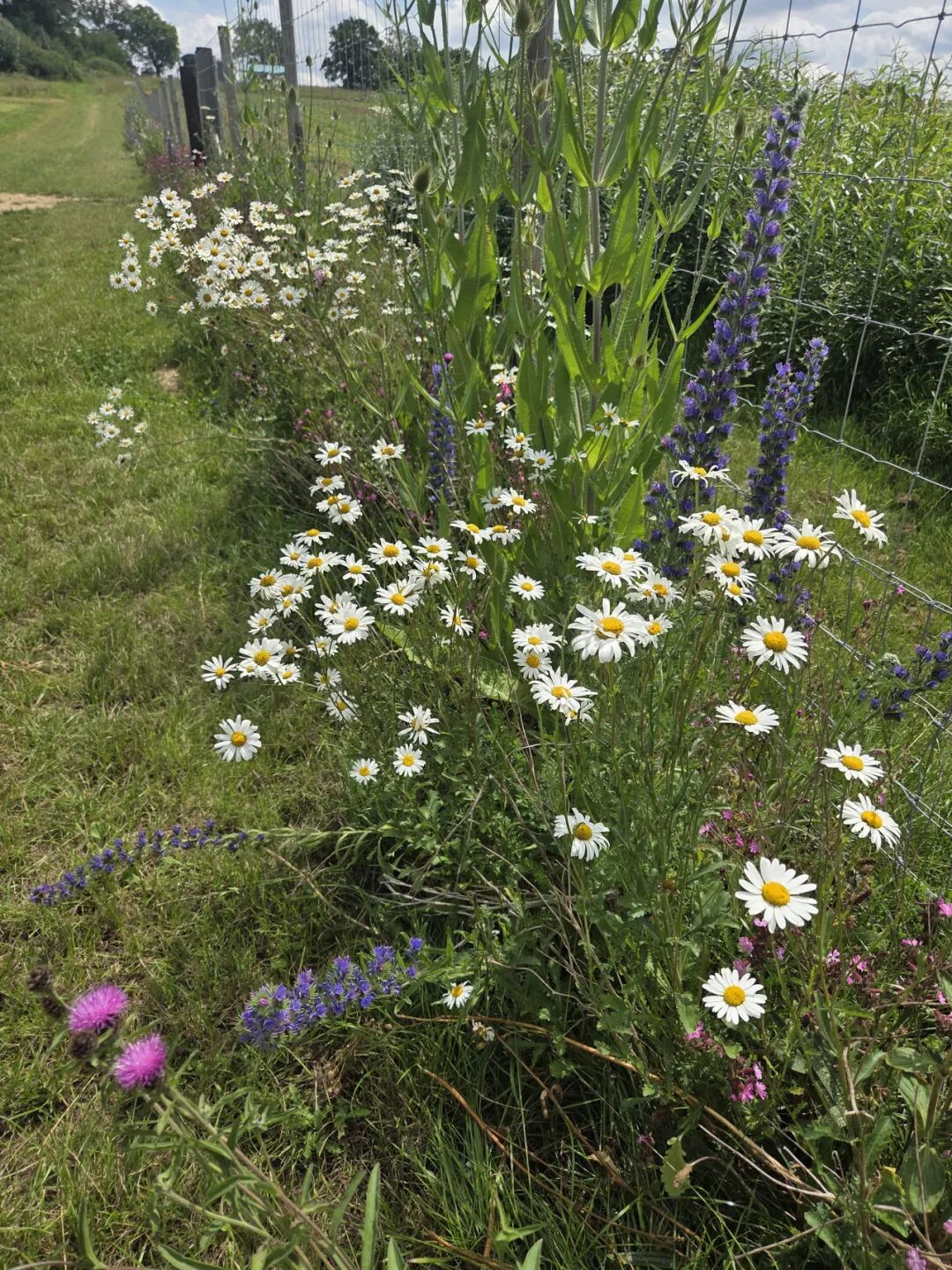
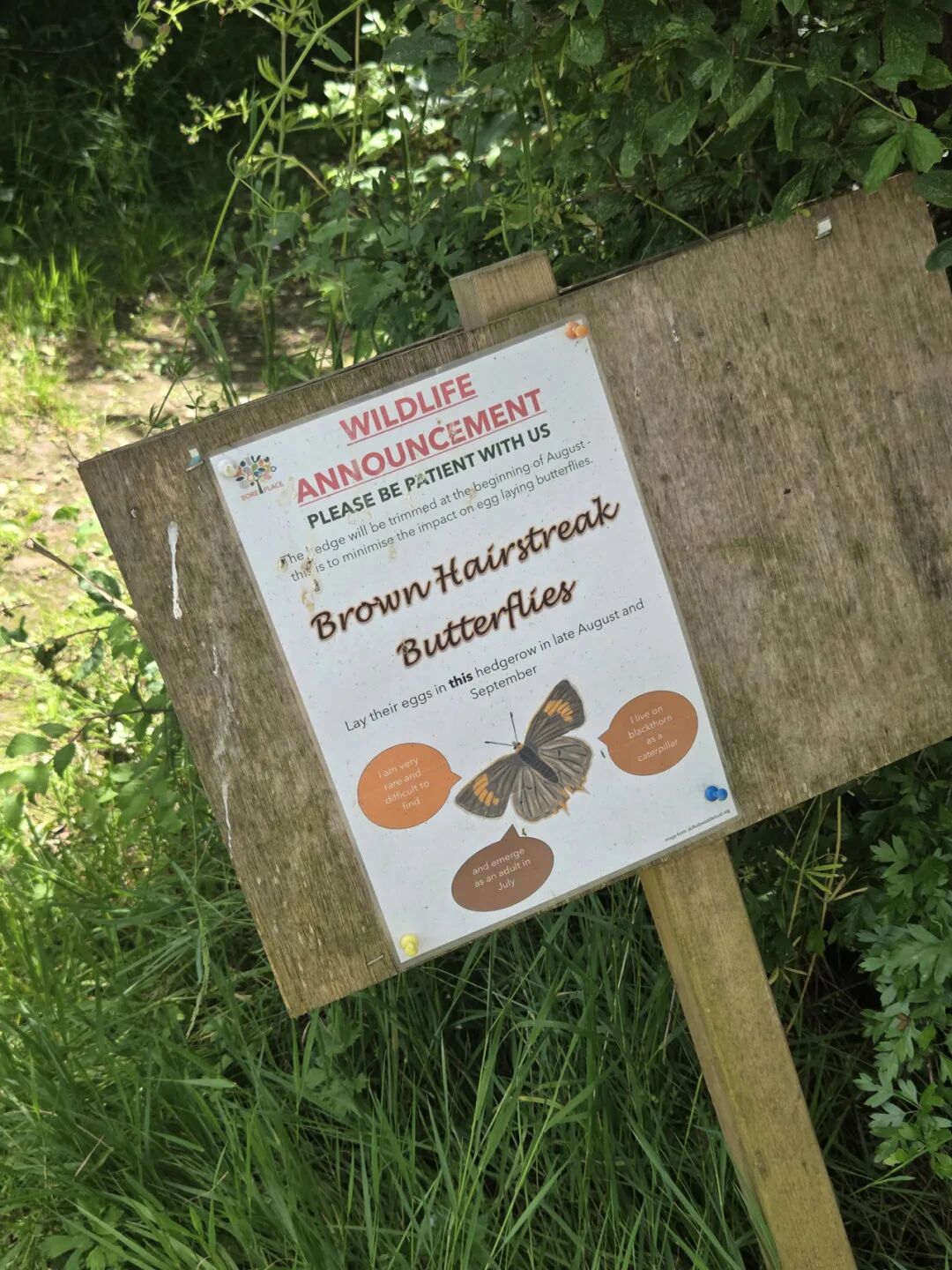
◉ Wildflower margin and fallow green-manure field.
“Have you tried spraying with chilli water?”
“I have, but the results were so-so. Besides, you don’t want to eat a hot cucumber, do you?” Metske’s wry remark drew a round of laughter. “Though I do plan to make a spray from onion skins and put it on the beans – hopefully it will keep the spider mites away.”
He also stressed that doing organic farming means accepting yield losses and adjusting your expectations. The vegetable plot opposite the fallow land, for instance, gets raided regularly by deer for the maize, so a fence has been put up. The fence keeps the deer out but not the wild rabbits – and by now, so be it.
From 2021, the UK government began piloting the Sustainable Farming Incentive, a scheme that pays cash subsidies for 102 on-farm management practices with ecological value. In 2026 the qualifying measures were trimmed to 71, including organic growing, nitrogen-fixing crops, hedgerows and wildflower margins. Take the wildflower margin, for example: the government pays an annual subsidy of £739 per hectare, which works out to about 442 yuan per mu?
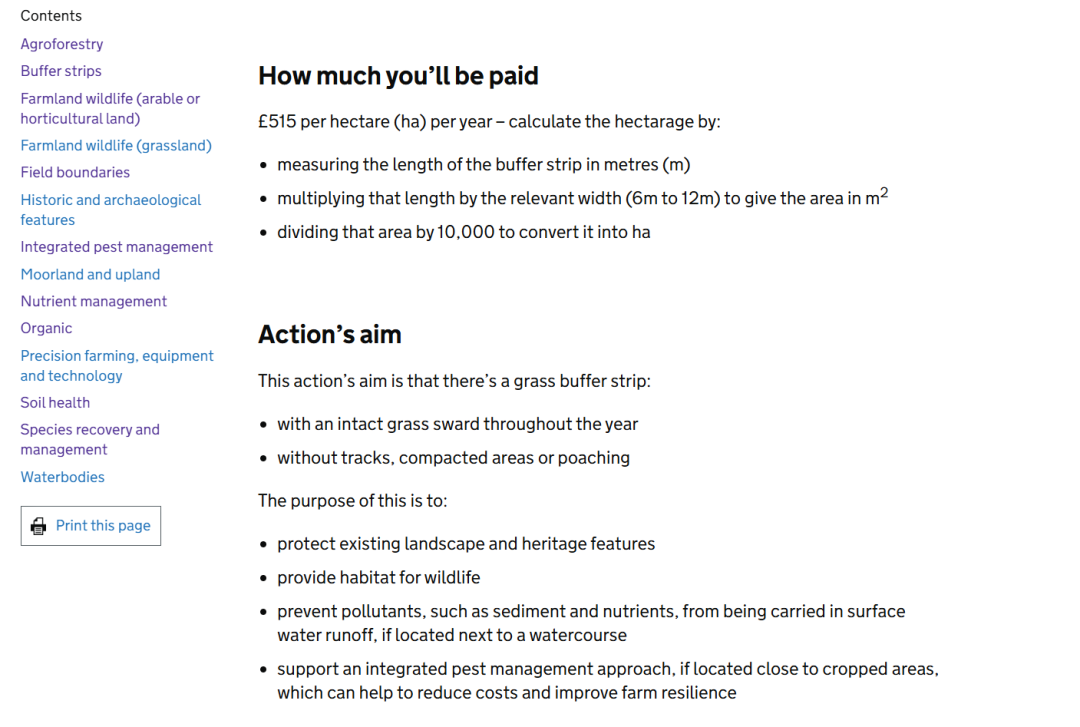
◉ Example of the UK’s Sustainable Farming Incentive. Source: UK government website.
In early 2026, the UK government pledged £24 million (approximately 215 million yuan) for the agricultural ecological compensation scheme, with a quarter of the funding set aside for small farms of under 50 hectares. But Metske has not applied for a subsidy. For one, his farm is too small; for another, he is not the landowner. Even without public funding, the network of contacts and sales channels he has built up over more than two decades in the trade are more than enough to keep the farm going.
From Hippie to Organic Farmer
The first time I came across Metske at the market, what caught my eye was the seven earrings in his left ear – surely a seasoned hippie. This time I finally had the chance to hear his story of getting into farming.
In his youth, Metske took part in the squatting movement in the Netherlands – groups, led largely by anarchists and hippies, would occupy vacant properties and “redistribute” them to people in need of housing and space. In the 1970s, vegetarianism was in equal vogue alongside the squatting movement. And so, Metske and his companions turned the squatted house into a vegetarian restaurant.
The vegetarian emphasis on diet and environment went hand in hand with the ethos of organic growing. Metske’s restaurant naturally turned to Dutch organic smallholders for its ingredients. He later moved into organic food retail, riding the wave of growing organic consumption across Europe, and the business flourished. But earning more as a retailer than a farmer, with money coming more easily, left Metske with a guilty conscience.
“I made up my mind to live an honest life, one that was more grounded.” So he went to work as an apprentice on an organic farm in the Netherlands. Metske says that in those two years on the farm he learned far more than in four years of university, and his resolve to do organic farming was only strengthened. And so he handed the organic retail business over to his partners, crossed the North Sea, and set about finding land to put down roots in England.
In the early 2000s, Metske continued to hone his growing skills through courses and farm placements, and also built up a network of contacts in Britain’s food-and-farming scene. “The most important thing was meeting the people behind the Growing Communities market,” he stressed in particular. With the skills and the contacts in place, the next task was to find land.
Metske spent a long time looking for land. Just as he was running out of hope, a phone call led him to a farm in West Sussex, in southern England. The two sides hit it off at once, and Metske rented a farm of about six acres, naming it Pannel Organic. This was in 2005. The farm was just two hours’ drive from London but fell outside the Growing Communities market’s catchment area. So he targeted the consumer base around Brighton and Lewes on the south coast, running a vegetable delivery service and supplying organic greengrocers, until the tenancy came to an end in 2017.
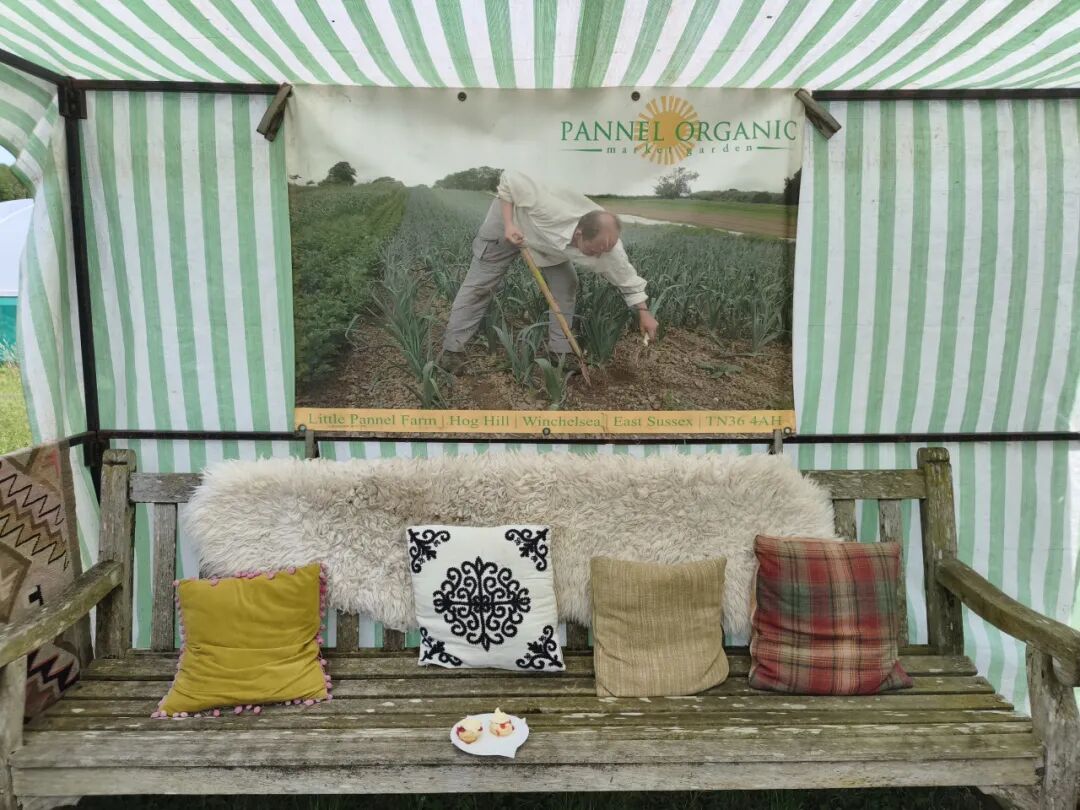
◉ The farm still has a Pannel Organic poster up.
Fortunately, Metske soon received an invitation from Bore Place to take on organic growing on a few acres of land. In 2019, he started running the farm independently. At the same time, Metske formally joined the Growing Communities farmers’ market, selling at a stall in London every Saturday during the growing season and also supplying the market’s veg boxes and organic wholesale service.
It took Metske more than twenty years to go from novice to seasoned organic grower. He has also passed on his hard-won experience to the next generation. During our visit, a young person came to him for advice, and Metske recommended the growing course at Organic Lea, an organic farm in north London. Beyond honing growing skills, sales channels and social resources that share the same ethos are equally vital for organic smallholders to stay afloat. Take the organiser of this farm visit, for example – the Growing Communities farmers’ market in north London.
Founded in 1996, the farmers’ market is dedicated to supporting environmentally friendly local smallholders and paying fair prices for seasonal organic produce. To date, 23 farms have a stable partnership with the market.
What does “environmentally friendly” mean? Market growers must hold organic or biodynamic certification. What does “local” mean? The farm must be no more than 70 miles (approximately 113 km) from the market. For organic meat, eggs and dairy, the distance can be extended to 100 miles (approximately 161 km). Stalls selling processed food must ensure that 70 per cent of their raw materials are sourced from market growers; if that standard cannot be met, all raw materials must carry organic certification.
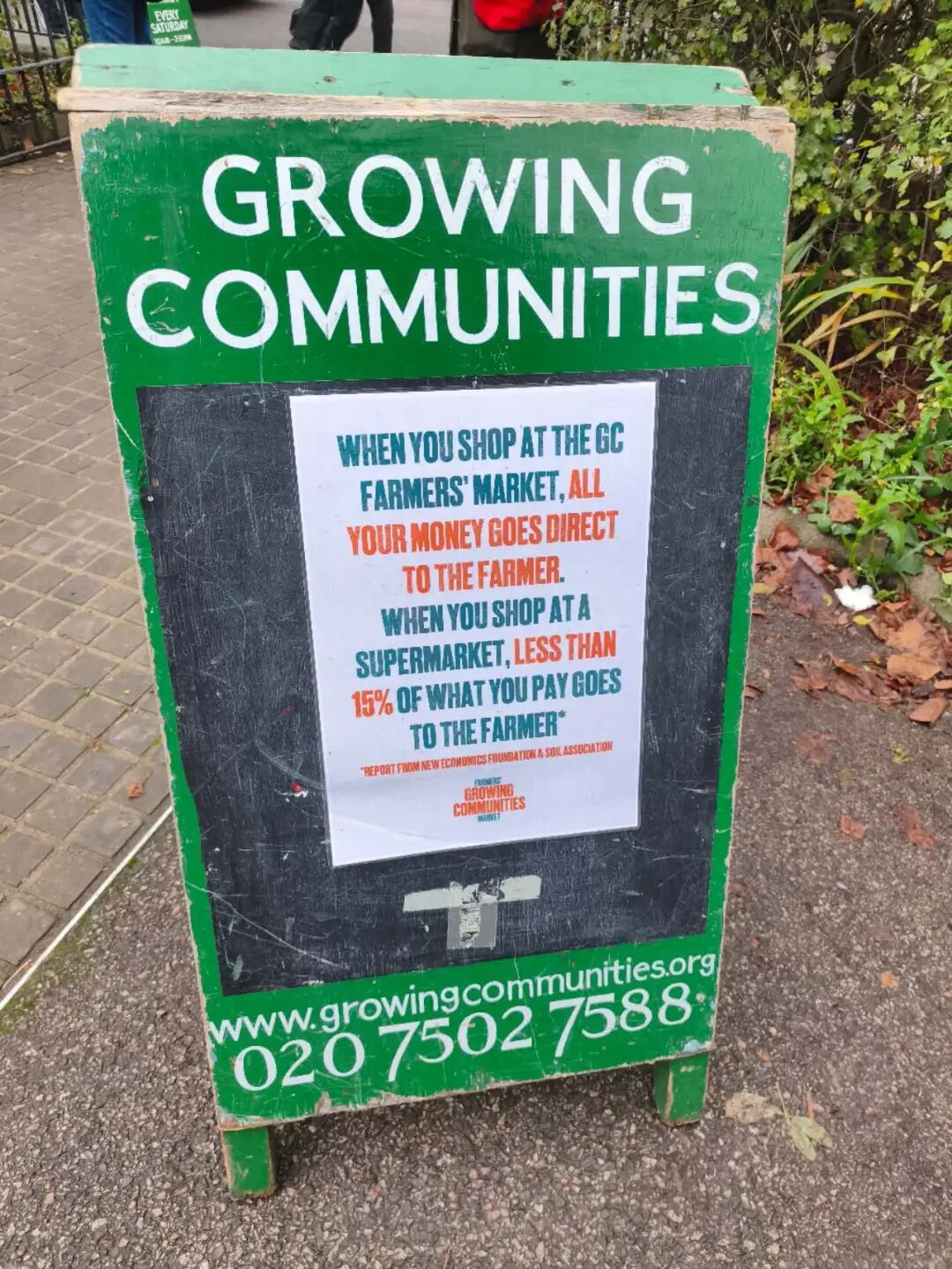
◉ A sign at the market explains to shoppers the social value of buying from a farmers’ market.
Why support local organic smallholders? The sign at the market entrance makes it perfectly clear: “If you shop at the Growing Communities farmers’ market, all the money goes to the growers. If you shop at a supermarket, farmers receive less than 15 per cent of the retail price.”
If anything, farmers sometimes cannot even recover their costs. The UK-based campaign group Sustain analysed in a report that a conventional carrot sold in supermarkets at £0.59 per kilo carries a gross margin of just £0.01. In reality, farmers do not even earn that penny. Because carrots are a staple vegetable, retailers often push the purchase price below cost to keep shelf prices low and encourage consumption.
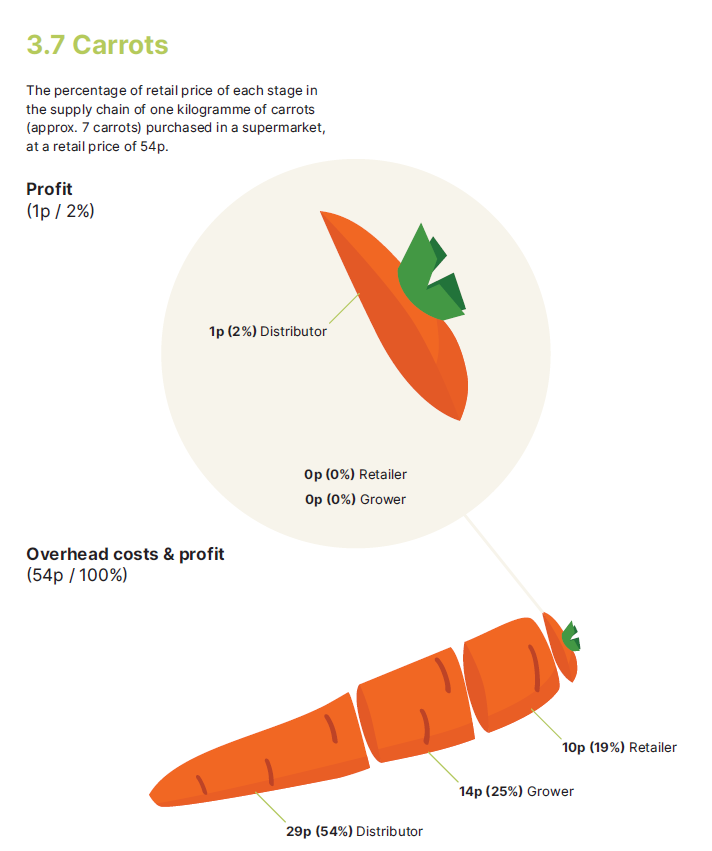
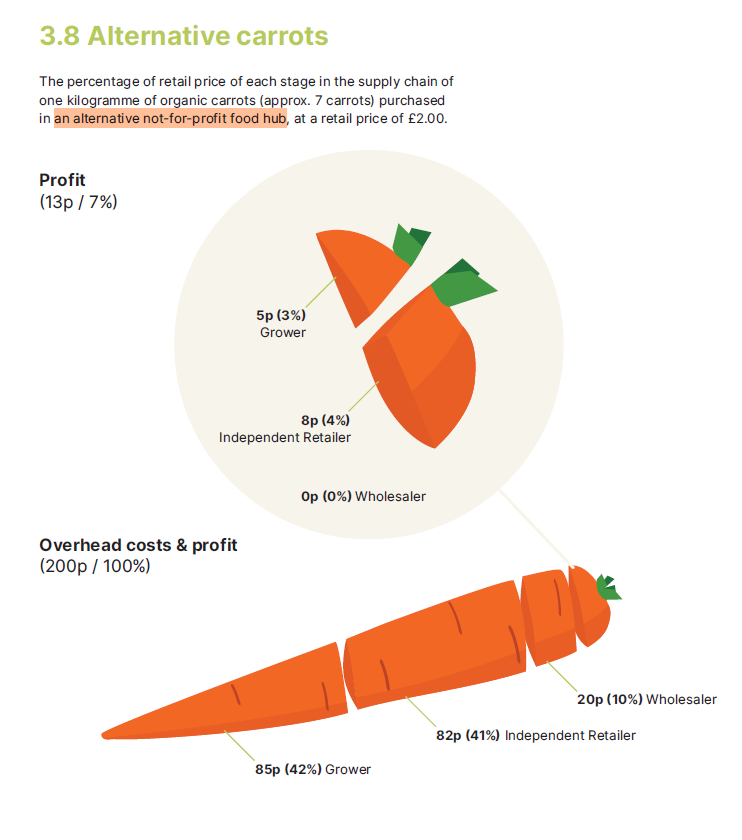
◉ Comparison of profit distribution in the conventional supply chain versus the alternative food system, using carrots as an example. Source: Unpicking Food Prices
The high-volume, low-margin revenue strategy of retailers not only squeezes farmers’ profit margins – the public purse is paying the price, too. As far back as 2017, the UK Department of Agriculture estimated that without subsidies from the EU’s Common Agricultural Policy (CAP), over 40 per cent of farms would be running at a loss. After the UK’s exit from the EU, direct payments dropped sharply, and things have only grown harder for farmers day by day.
Ordinary people in the UK are not faring well, either. Since the pandemic, inflation, rising energy and food prices have collectively triggered the ‘cost of living crisis.’ Faced with a problem that seems to have no easy solution, I still believe in Metske and the alternative food system he represents. With more public funding and resources behind them, these small but beautiful practices can surely leverage even greater change.
References
– This is Foodthink’s original article no. 814 –

Foodthink
Author
Zeen
A carb enthusiast with a thing about good food, currently studying food policy at the University of London.
Editor: Tianle
Design: Minglin
Scan the code to tip and support original food knowledge
▼

▼
Click the image to read related articles


▼
Click a keyword to browse more article collections.
Seeds | Farming Techniques | Policy | Fermentation | Nutrition | Fruit | Fisheries | Events | Jobs | Takeaway | Wet Markets | Livestock | Food Talk | Sharing Sessions | Book Clubs | Harvest Festival | Smallholder Stories | Climate Change | Rural Development | Cooperative Economics | Urban Farmers | Food Safety | Digital Technology | Biodiversity | Pandemic and Food | False Solutions | Agroecology Internship Programme
Beijing | Hebei | Shanghai | Guangdong | Guangxi | Henan | Sichuan | Jiangxi | Xinjiang | Shaanxi | Hong Kong | Chongqing | Zhejiang | Jiangsu | Guizhou | Taiwan | Inner Mongolia | Philippines | Canada | Russia | Mexico | Italy | USA | UK | Germany | Netherlands | Thailand | Sweden | Japan