Chinese Bayberry Scandal: Why Can I Still Eat Chinese Bayberries with Peace of Mind? | Grandma Kouzi

This year the Chinese bayberry scandal blew up, bringing this highly seasonal, delicate fruit into sharp focus. Whether the Chinese bayberries have undergone chemical soaking, which chemicals are legal, whether they are harmful to people, what dose is the safety line… I don’t care about any of it.
It’s not that I don’t eat Chinese bayberries; it’s that I only eat the ones I grow myself.
The Surprises Chinese Bayberry Gave Me
And the Frights
At the entrance to Evil People Valley there are two trees: one is a Chinese bayberry tree, and the other is a Chinese bayberry tree too.
When I first cleared the land, I had already planned to plant two big trees with dense canopies at the entrance, with the little farm standing between heaven and earth. It could have no wall and no gate, but it had to have two big trees. My dream was that one day the canopies would stretch over the road and clasp in the sky, becoming the gateway to Evil People Valley.
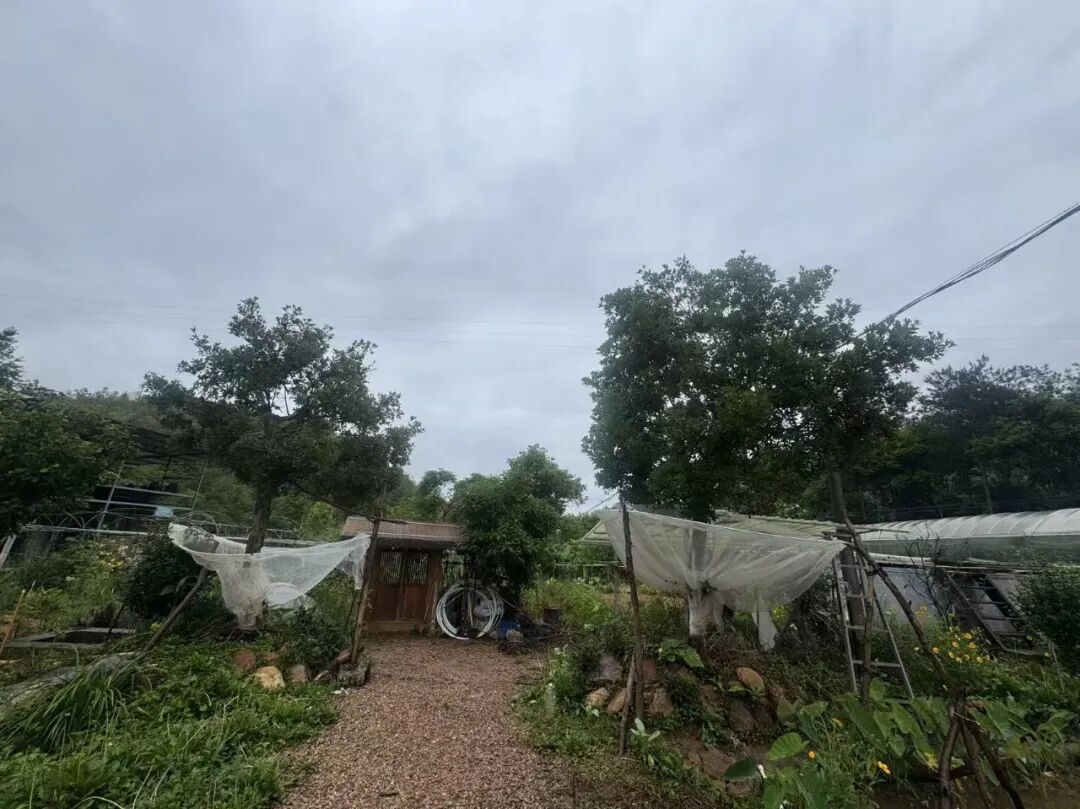
◉ The two Chinese bayberry trees at the entrance.
I had long known that fruit takes a long time to grow and a long time to store and transport, making it a heavy-hit zone for fertilisers and pesticides. But I’m a glutton, and I can’t resist the delicious fruit on the shelves. To eat was to take in poison; to abstain was to suffer. Before I achieved self-sufficiency in fruit at Evil People Valley, as a seasoned foodie, I went to great lengths to eat safely. No imported fruit, no berries or other delicate fruit, and I tried to choose only kinds that needed peeling and had thick skins, such as bananas and citrus…
So the dream at Evil People Valley is to neither take in poison nor suffer. One important reason someone from the north chooses to farm in the south is having home-grown fruit in all four seasons.
Based on my needs, a local friend who works in horticulture recommended Chinese bayberry trees and helped find a source for large trees. I had grown up in the north and had almost no idea what a Chinese bayberry was, so I hadn’t expected the “door boards” to bear fruit.
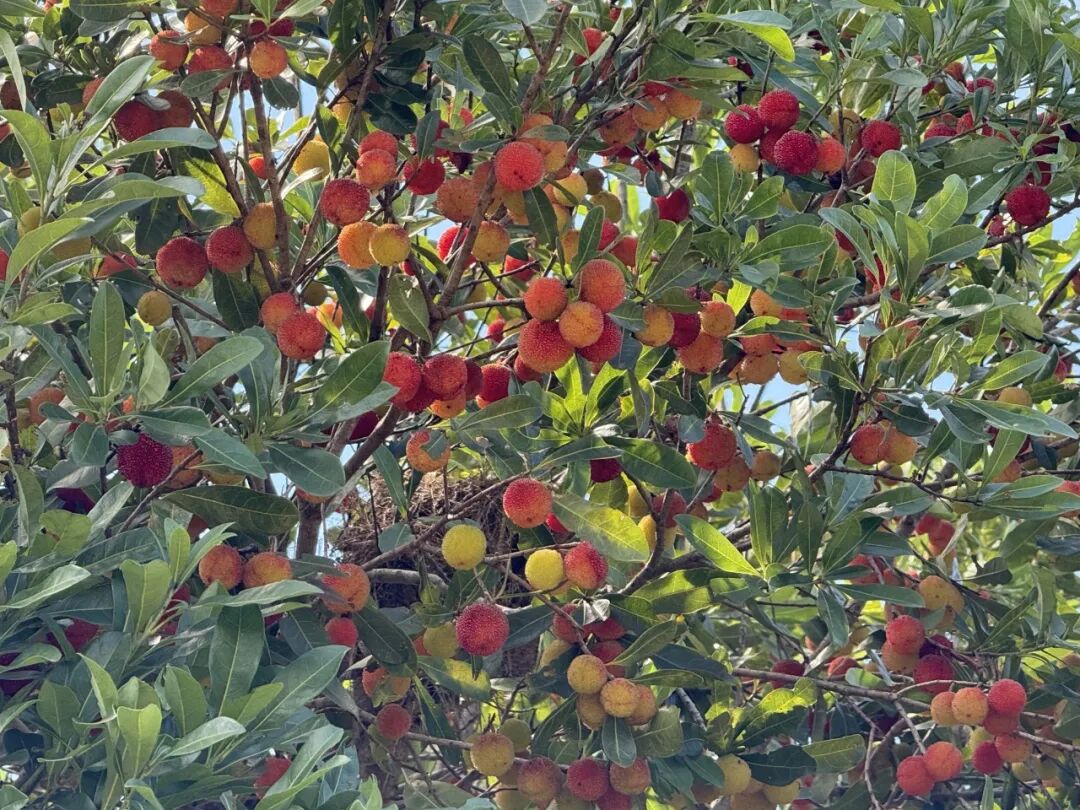
◉ The Chinese bayberries, laden with fruit in 2025.
Transplanting large trees is not easy. At the start of opening up Evil People Valley, I bought many large trees: in addition to two Chinese bayberry trees, there were three loquat trees, two crisp-skin kumquat trees, a batch of honey pear trees, and a large batch of fig trees. In the end, all the more than twenty fig trees died, five honey pear trees barely survived, one loquat tree died, all the crisp-skin kumquat trees perished, and the two Chinese bayberry trees were tenacious, taking more than a year to take hold and survive in this brand-new place. They began to bear fruit in 2024, a purely unexpected surprise.
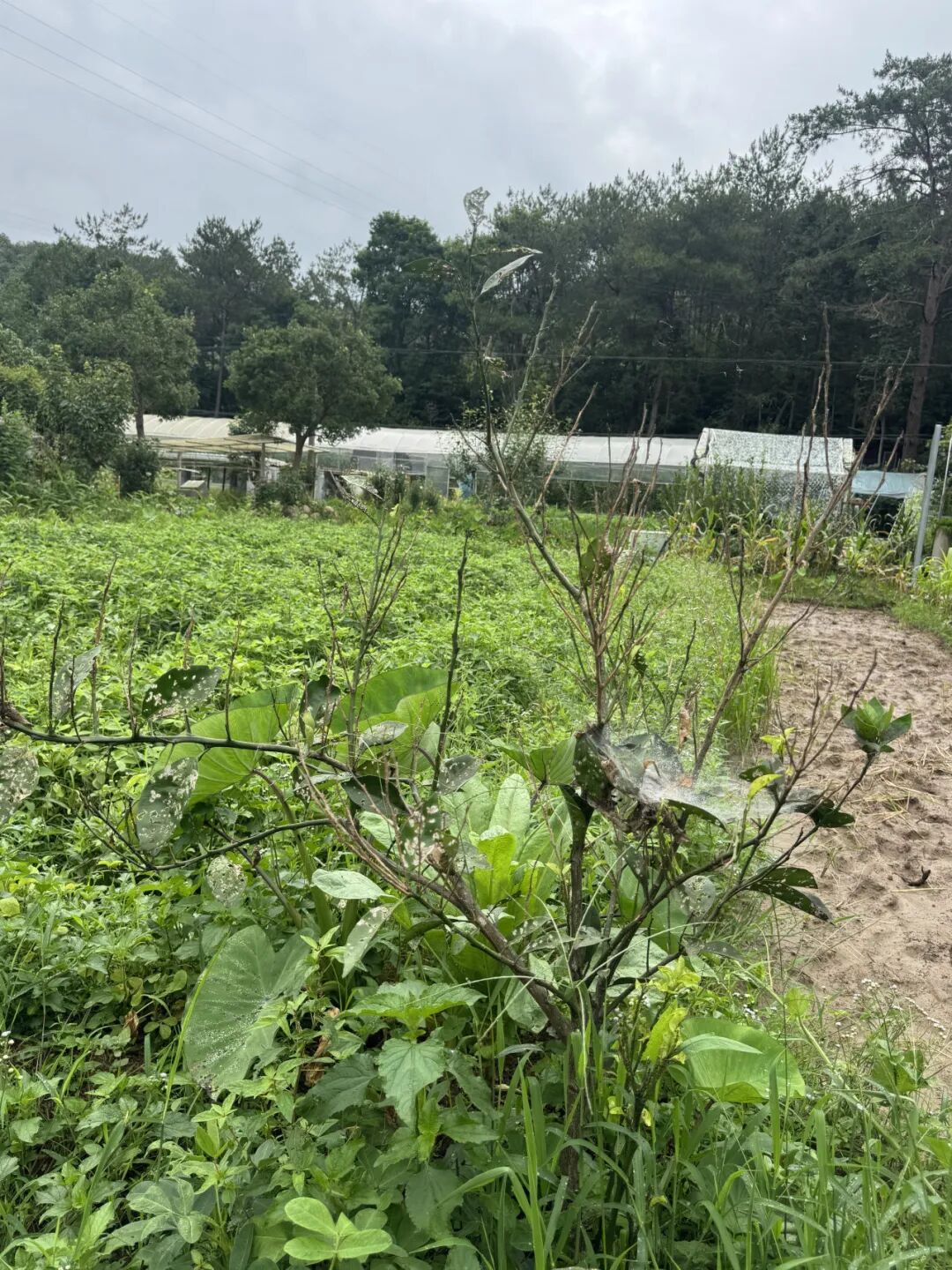
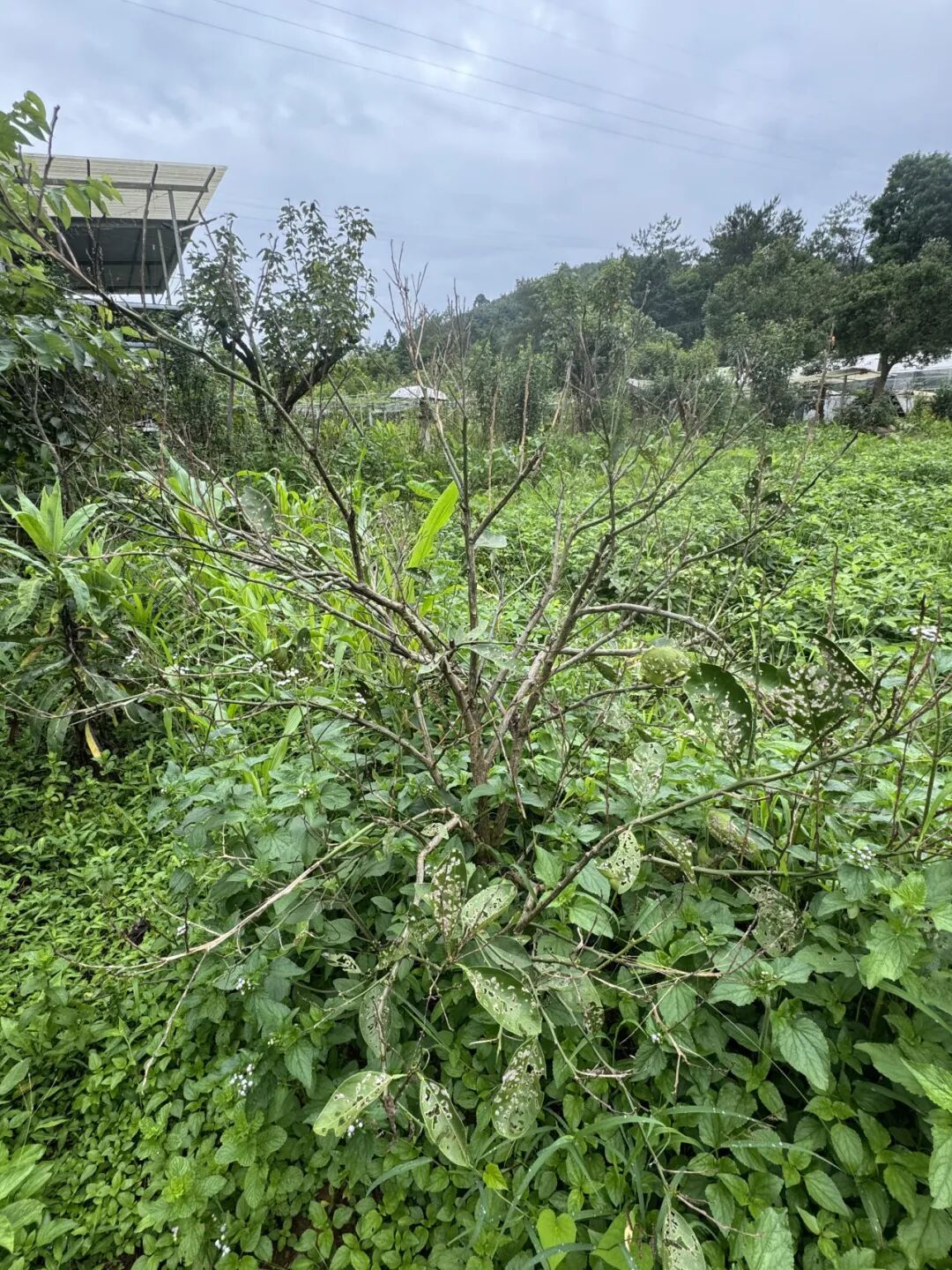
◉ I planted more than twenty citrus trees, including honey tangerines, jelly oranges, navel oranges… many varieties. In spring they flowered and filled the whole garden with fragrance. But then the pests arrived and chewed every citrus tree bare. I don’t use pesticides, so I can only hang on, waiting for the pests to feed their fill, mate, lay eggs, burrow into the soil and pupate; then the stripped branches push out new buds. The trees won’t die, but don’t expect to eat any fruit. This is why I gave up buying citrus from outside.
By 2025, the Chinese bayberry trees, having adapted to Evil People Valley, shone brilliantly, their branches bowed with heavy fruit. The trees were covered in small red lanterns, ripening in batch after batch without warning. At night, with the sound of wind and rain, how many had fallen, who can tell? I, someone from the north, had never seen such a scene. Facing the suicidal ripening of the Chinese bayberries, I went through a “blood rivers” Chinese bayberry season.
But that year the fright caused by the Chinese bayberries did not come from the blood-soaked scene, but from my son’s feedback. My son said the Chinese bayberries I sent him were sour and small, not as big and sweet as those in the fruit shop downstairs. My daughter-in-law said the Chinese bayberries were nearly spoiled when they arrived; if they wanted to eat them, they might as well buy their own.
My Chinese bayberry trees are authentic Dongkui Chinese bayberries, the largest and sweetest variety. The tree spacing is open and airy, and farmyard manure is plentiful—treatment reserved for top students among Dongkui Chinese bayberries—and what I sent my son was the best of the best. Chinese bayberries are delicate; every scrape is a fatal wound. When I posted Chinese bayberries, I used special boxes, with a separate space for every fruit. From the branch in Evil People Valley to my son’s table, it took less than a day: sent from Fujian at six o’clock in the evening, arrived in Shenzhen the next afternoon. Usually, the supply chain for Chinese bayberries in urban fruit shops is longer and takes longer. If you want to keep them looking good and someone says no special measures are needed, believe what you will.
Chinese bayberries are like this; all other fruits are the same.
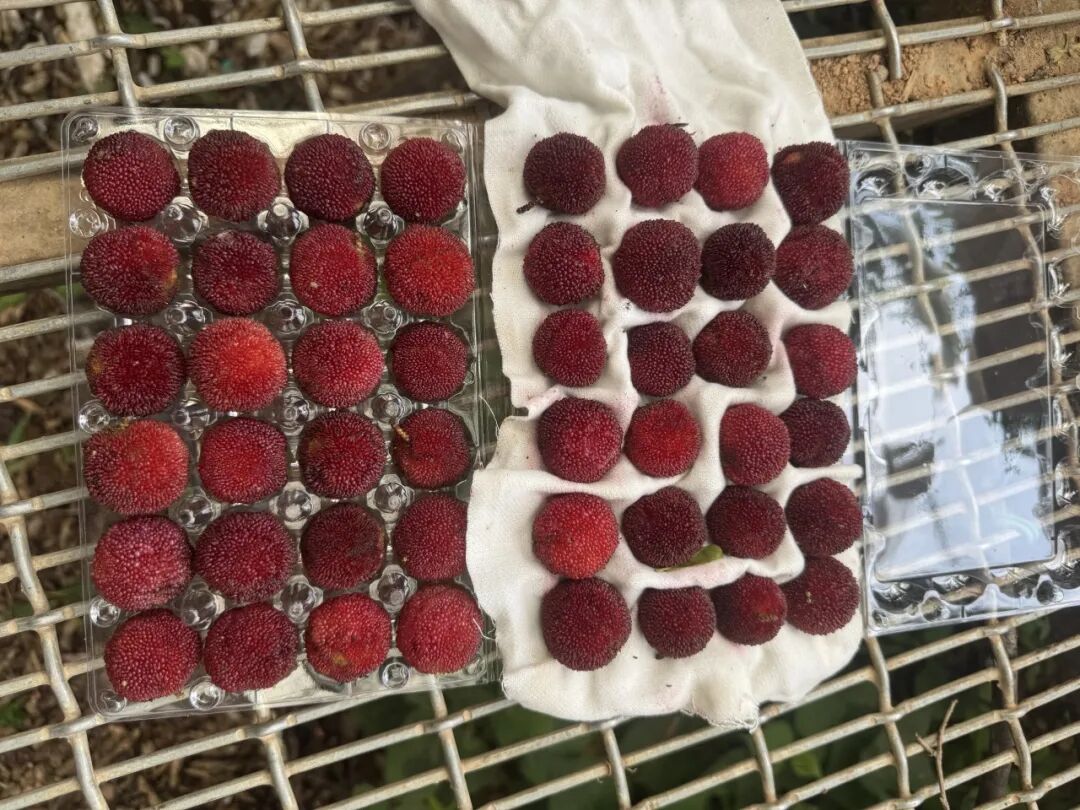
◉ The packaging I used to send Chinese bayberries. Even so, by the time the fruit reached Beijing it was nearly rotten. Friends in the capital, think about what’s going on with the Chinese bayberries you buy.
Trials and Dilemmas
After growing fruit myself, I know all too clearly just how many pests and diseases fruit encounters and how difficult it is to store and transport it. Woody citrus flowers in spring and ripens in autumn and winter, while herbaceous bananas take at least five months from flowering to picking. Because I insist on not spraying, my citrus trees have been stripped bare by insects, so naturally there is no question of bearing fruit. Given that I use no pesticides, plantains cannot be grown in close planting; I plant only five clumps in a few dozen square metres, and I expect to harvest three plantain stalks this year.
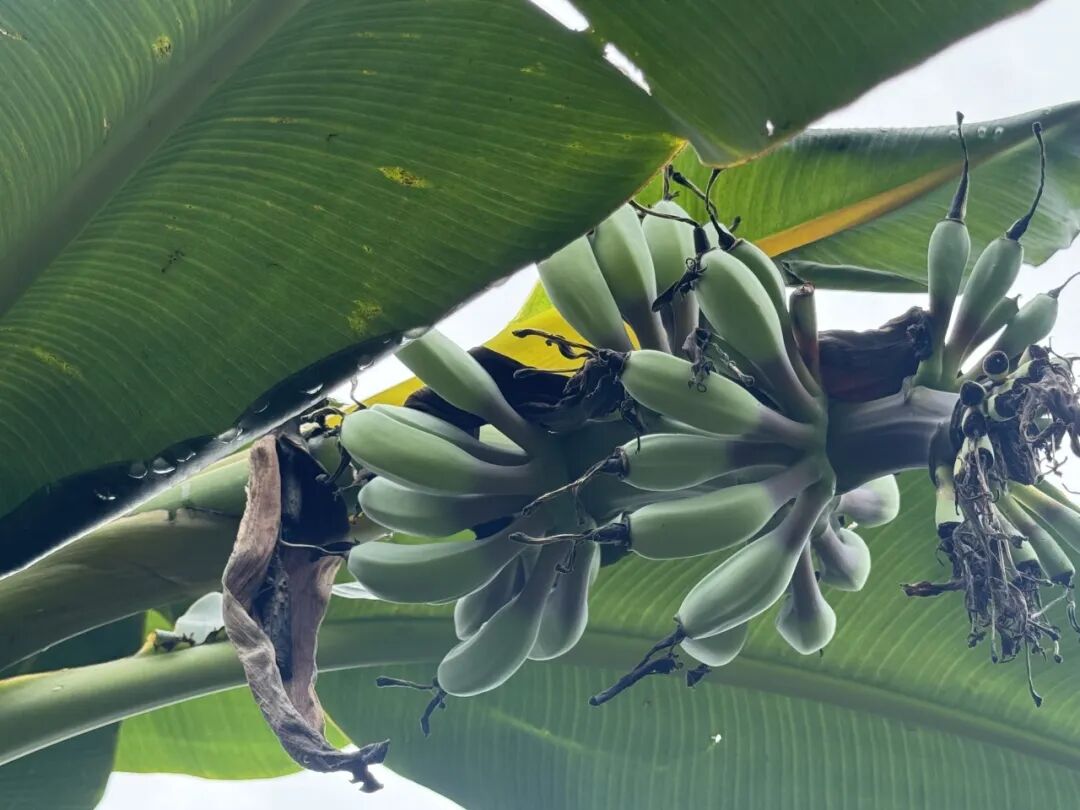
◉ The naturally grown plantain clump has produced only this little fruit.
Because I refused to spray antimicrobial fruit-protecting chemicals, dozens of kiwifruit plants along the sixty-metre riverbank bore only 26 fruits. I have grown dozens of blueberry plants of several varieties in my dry northern Taishan courtyard and in the damp Evil People Valley, but all of them died of disease. If growers were all like me, they would literally be driven bankrupt by their losses.
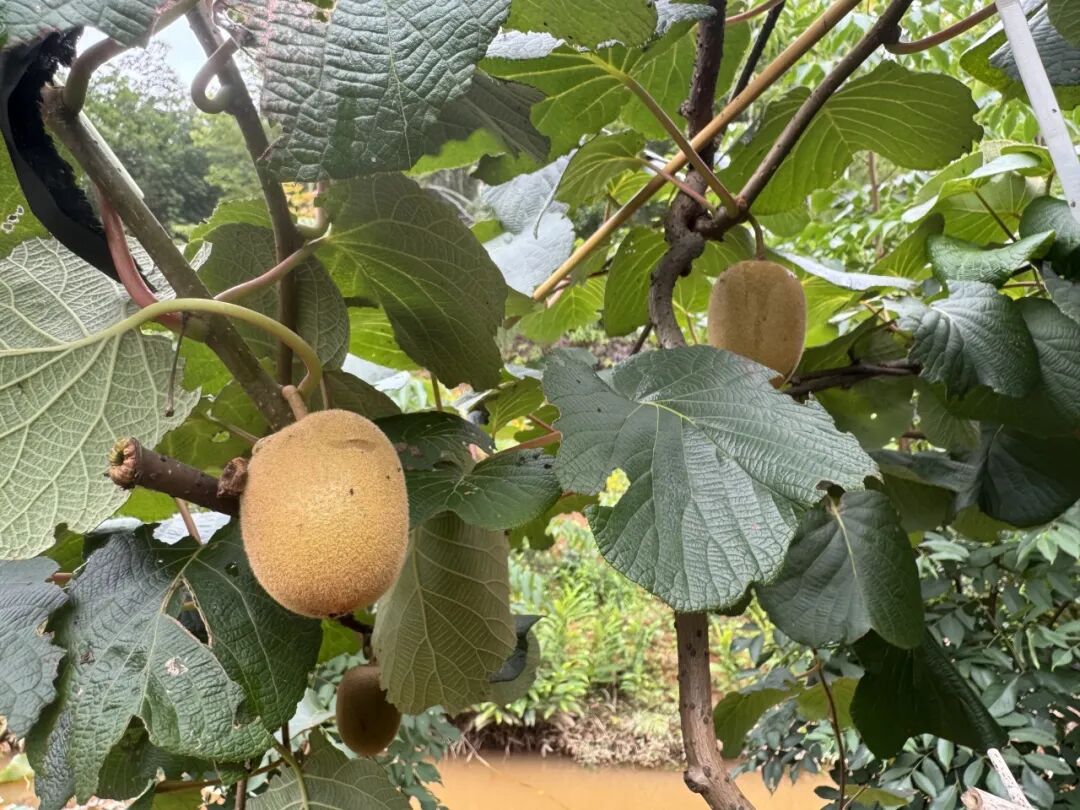
◉ Kiwifruit: in spring, the number of female flowers is tens of thousands of times greater than the current 26 fruits.
After a thousand hardships, once the fruit is ripe, I immediately face another ordeal. Fruit is living plant life. Fruit still on the branch and fruit placed on the table are not fundamentally different: both breathe and metabolise, and are still in the process of ripening, ageing, and spoiling. Moreover, the life instinct of fruit cut from the branch is to speed up ripening and complete its full life process.
If fruit is to reach the point of sale intact, its ripening process must be artificially halted. The methods are: chilled storage, inert-gas sealing, and chemical blocking; several measures are often used together. The cost of chilled storage and sealing is easy to imagine. The cheapest method is chemical soaking. For consumers it is the worst option; for operators in the distribution chain it is the best—until it blows up and endangers the whole industry. The original instigators remain perfectly hidden. A few offenders are caught in the act, and the rest scatter and switch to other fruit, leaving farmers in the producing areas in helpless despair.
Unless one is like me, disregarding yield and cost, everyone on the growing, transporting, and selling chain has to face trials and dilemmas. I have no right to choose for others, so I simply choose to stop buying fruit from outside. I, who once loved fruit so much I couldn’t help myself, have gone through a cliff-like withdrawal.
After giving up buying fruit from outside, the way I eat fruit has changed.
For the 2026 Chinese bayberry season, to avoid a “blood rivers” situation, I planned ahead and dressed the two Chinese bayberry trees in white gauze skirts. Last year, 90 per cent of the Chinese bayberries fell to the ground; this year, the gauze skirts caught them securely.
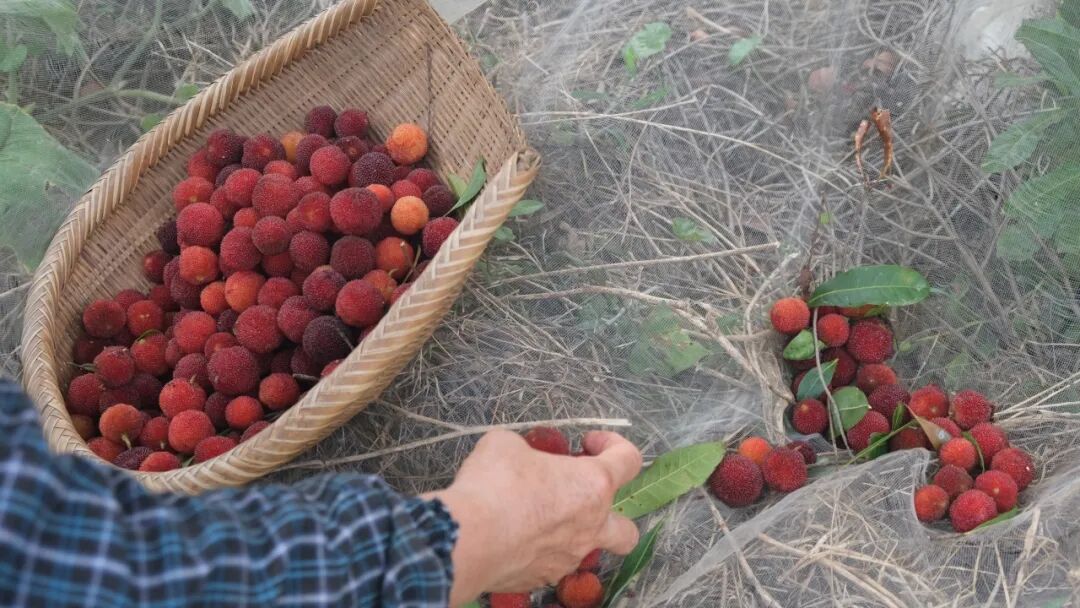
◉ The Chinese bayberries inside the white gauze skirt, kept intact.
Once the Chinese bayberries ripen, I send the biggest and best to my son. The “benefit” of this year’s Chinese bayberry scandal is that my son now knows shop-bought Chinese bayberries are not safe, and has finally accepted mine. I handle the rest myself. I pick out those that are so ripe they have turned a little black and eat them as they are; fruit ripened on the tree is less sour and less likely to make my teeth ache. The rest: the top grade is combined with perilla leaf and blended in a food processor to make juice, the middle grade is made into wine with 25% sugar syrup, and the lower grade goes into the compost bin. Every fruit I grew by my own hand is a treasure, and not a single one is wasted.
People have many ways of preserving fruit. Apart from refrigeration and the dreaded chemicals commonly used in the global fruit distribution and sales system, there are also drying, fermentation, sugar curing, salt curing, and steeping in alcohol. For fruit in season, eat it fresh as much as possible. Making a glass of perilla leaf and Chinese bayberry juice with no added water is an easy way to work through two kilograms of Chinese bayberries. The perilla leaf and Chinese bayberry pulp left after juicing can also be turned, through a winemaking process, into a cold-preserved jam to keep in the fridge and eat slowly, so that the several dozen jin of fruit from my two Chinese bayberry trees can last me nearly half a year.
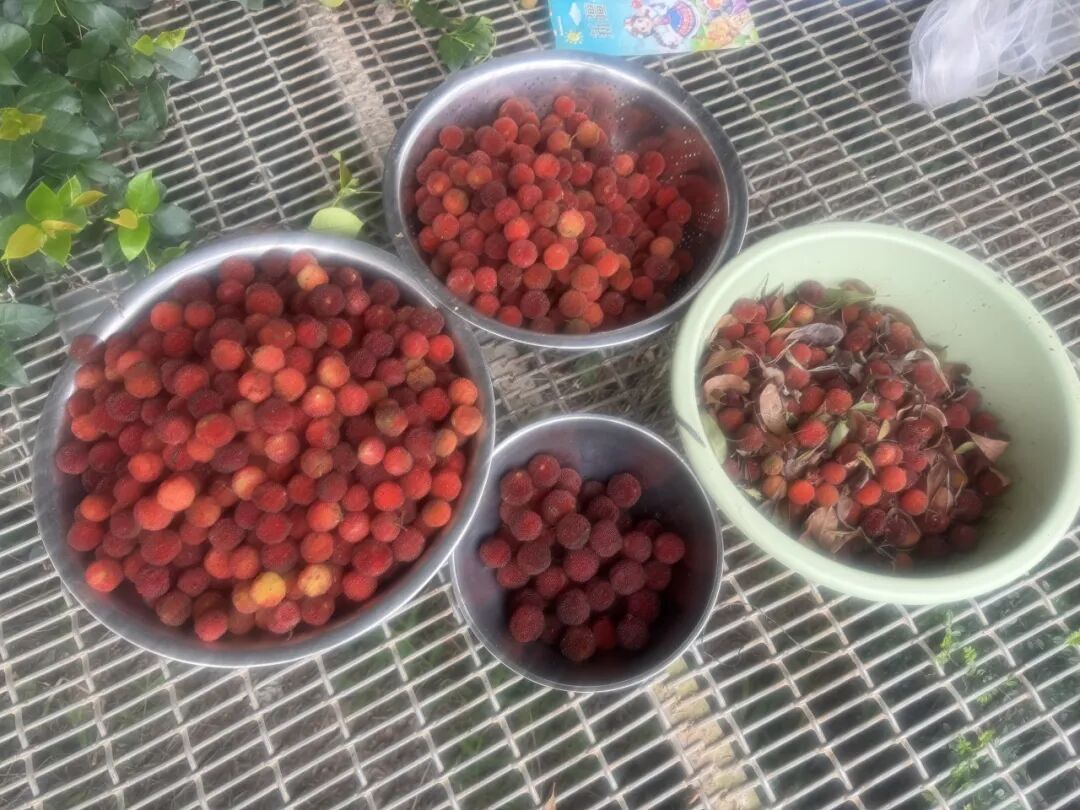
◉ The Chinese bayberry grading system in Evil People Valley.
The Fright of Modern Fruit
The real reason I, a foodie who is fond of life and averse to death, have given up buying fruit from outside is not the Chinese bayberry scandal. This year’s Chinese bayberry scandal, which exposed problems on the transport side of the modern fruit production and distribution system, is only the tip of the iceberg. What I truly cannot accept is that many more types of fruit are no longer “fruit” in the traditional sense.
Modern shop-bought fruit is largely an industrial product. Taking stock of the fruits that have been hugely popular in recent years, whether New Zealand kiwifruit, Chilean cherries, Shine Muscat or Sapphire, from variety selection and breeding through growing, harvesting and storage, transport and marketing, each is one link in an industrial food production chain. Transnational capital uses a growing and sales club model to control patents for premium varieties, sets up exclusive, closed-loop control across the entire chain, and maintains scarcity premiums. Such “fruit” has not only the distribution logic of an industrial product, but also the logic and techniques of industrialized selection and breeding.
As technology advances, fruit selection and breeding have become increasingly precise, making it easy to achieve cleansing and suppression at the genetic level. For example, fruit containing an ultra-high concentration of vitamin C is sharp and stimulating on the palate; some even describe it as “half the face going numb from the sourness.” Top antioxidants—anthocyanins, proanthocyanidins and plant polyphenols—all have high tannin content, making the taste extremely bitter and astringent, “like chewing wood.” Modern variety selection and breeding technology can use targeted gene knockout to remove this poorly tasting “junk code” and increase sweetness in a targeted way, enhancing storage and transport tolerance, to cope with months of cross-border cold chain container storage and transport. Fruit obtained this way is already a man-made industrial product, a chip dressed up as fruit.
The direction capital chooses has never been “the most nutritious” but “the most profitable”; fruit that is spotted, unattractive, or uneven in size is culled, and fruit that does not keep well is removed by distributors. Growers can only fell their trees and use seedlings that meet capital’s standards to eliminate varieties that are hundreds or thousands of years old. Retail capital can, with mere purchasing power, bring about the extinction of a variety. When we buy such fruit, we are also voting for capital with our purchases, and voting for this chain of selection.
Fruit obtained in this way is getting bigger and sweeter, with a uniform size and shape, but the levels of many beneficial nutrients have fallen rather than risen. This general decline in the micronutrient content of crops, caused by commercial selection and breeding, is called the “nutrient dilution effect”. It is consistent with the conclusions reached by Professor Donald Davis, an American scholar, whose research team monitored 43 kinds of fruit and vegetables in the United States over the 50 years from 1950 to 1999.
Our generation has, as it happens, lived through this process. In the 1960s and 1970s, the fruit I ate as a child was extremely limited, but the flavours were distinct. Among apples, there were Xiao Guoguang apples so sour they made your teeth ache, and Hong Wuxing apples so mealy they stuck in your throat; the big, sweet Yantai apples left a long lingering aftertaste. Today, on the fruit stalls, extremely sweet Fuji apples reign supreme. They are bigger and sweeter than the apples of the past, but it seems the aroma I remember from childhood can no longer be found. The nutrient content of the slightly sour little apples that our parents and grandparents picked from the hillsides fifty years ago might now take three or four huge Fuji apples to match. But the price is that we are also swallowing more fructose, and fructose is, as everyone knows, a health risk for modern people…
Fruit as a Luxury
In the wake of this Chinese bayberry scandal, people’s concerns have extended beyond Chinese bayberries to other fruit as well, and some have raised the question: Do we really need to eat fruit?
No need. There is no nutrient in fruit that is essential to the human body and found only in fruit.
People can obtain adequate nutrition from vegetables and other foods and do not need to eat fruit at all. Modern fruit consumption is driven both by the cravings of appetite and by being swept along by fashion trends.
Everyone knows kiwifruit, the so-called king of VC, and blueberry, the so-called king of anti-ageing anthocyanins. In reality, whether it is VC or anthocyanins, both are widely found in many kinds of fruits and vegetables in nature. The true king of VC in the fruit world is the prickly rose; China’s native prickly rose, which comes close to a wild fruit, has a VC content up to dozens of times that of kiwifruit. The prickly rose is admittedly not pleasant to eat, but the delicious winter jujube has a VC content five times that of an ordinary green-fleshed kiwifruit. If one’s sole aim is to obtain VC, there is no need for kiwifruit at all.
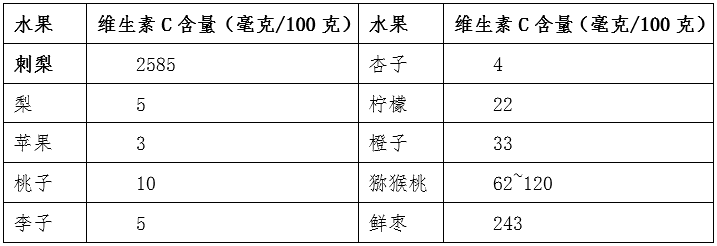
◉ Data from the Chinese Food Nutrient Composition Table (6th edition)
The reason the king of VC is so well remembered is largely because this fruit is backed by New Zealand and Zespri, with formidable agricultural production and marketing capabilities. Under a marketing offensive, kiwifruit has been given the title of king of VC, Chilean cherries have been given a social association with financial freedom, and blueberries have been branded with the label of refined self-discipline.
Many of the fruit world’s IQ taxes are also fashion taxes, precisely targeted at “high-end consumers”. Cherries are simply a type of sweet cherry. A premium of over 100 yuan per jin actually stems from an extra-long logistics chain and more than 40 days of cold chain storage. This extremely sweet middle-class privilege is, at bottom, a fashionable candy ball fed to people by South American fresh produce giants. So many people are, in fact, paying for the class-label premium aligned with the lengthy supply chain, and for the brainwashing of fashion culture.
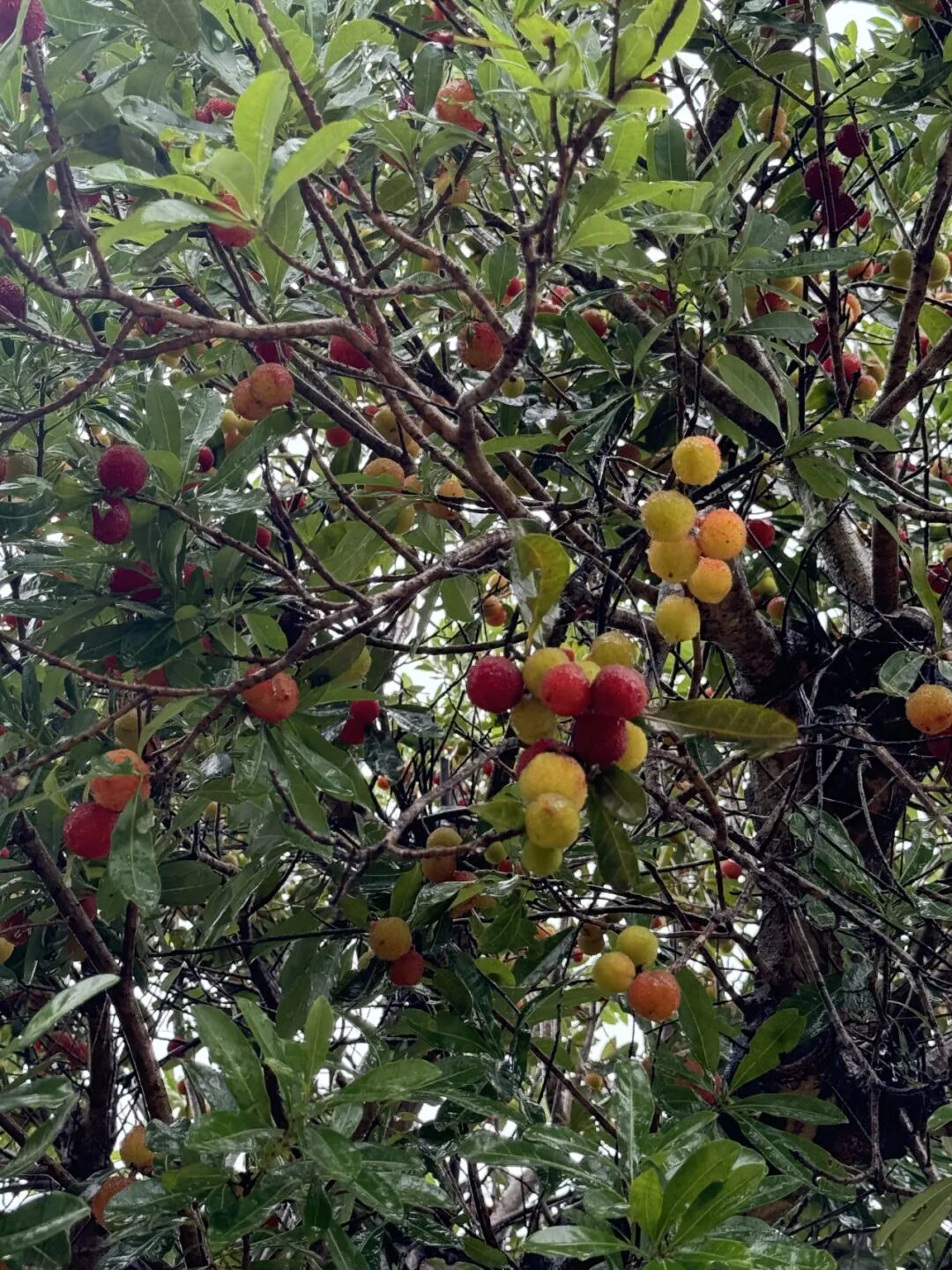
◉ The 2025 Chinese bayberries.
Returning to this year’s scandal-ridden Chinese bayberries involved in chemical soaking, as a foodie, the reason I am emotionally stable is not that I have my own Chinese bayberries and need not buy them from outside, but that a faint memory still remains. The Chinese bayberry scandal is not a new thing. More than a decade ago, it erupted once: in 2011, it was again chemical soaking of Chinese bayberries, and again pesticide residues over the limit. That time, authoritative voices soon denied the rumours, calling them “malicious hype, malicious boycott”, and so the world returned to peace, the clouds still light and the wind still mild as before. The world’s tangled hot topics come one after another, just like big-headed babies, tainted milk powder, gutter oil, and oil tanker trucks—they all pass after a while. I believe that without having to wait for the next Chinese bayberry season, the rippling emotions of consumers at large over Chinese bayberries will settle down.
The reason I am writing this piece is that it arises from the Chinese bayberries, but is not only about Chinese bayberries. Can Chinese bayberries still be eaten? Using my own methods, I have eaten plenty. Can fruit still be eaten? From the standpoint of nutrients the human body must have, it is not something that must be eaten; considering the pleasure deliciousness brings, it is fine to eat it. But when eating fruit, one should make choices, rather than be chosen.
– This is Foodthink’s No. 814 original –

Foodthink
author
Kouzi
A determined farmer and village winemaker. Full-time foodie, part-time farmer, writing in my spare time.
Editor: Xiaodan
Layout: Minglin
▼
Click the image to read related articles.