Dunhua Under Water: The Biggest Flood in the Northeast’s Memory

Between 06:00 on 14 July and 06:00 on 15 July, in the space of a single day, Dunhua, a county-level city on the banks of the Mudanjiang River in Yanbian Korean Autonomous Prefecture, Jilin Province, recorded 24-hour average rainfall that exceeded the local historical maximum. Water levels in several rivers in the area kept rising, and floodwaters eventually spilled over. About one third of the urban area was flooded, and several local townships remained under water for days.
This was the result of warm, moist air carried by Typhoon Bavi interacting with a high-level westerly trough over the northeast and the subtropical high to the east.
Dunhua lies in the upper reaches of the Mudanjiang River. From here the river flows northeast into Heilongjiang Province, and the river-basin flood further expanded the affected area. Multiple townships in Heilongjiang carried out evacuations and flood relief.
In late July, Foodthink travelled to Dunhua to document the real ordeal of this small city and its surrounding villages during the flood. For many people in the northeast, it was the biggest flood in their memory. Homes were flooded, farmland was destroyed, and ginseng fields were submerged; for this black earth, the water may only have been a beginning — the climate is changing, and the northeast is facing new challenges.
Floodwaters Enter the City Centre
Market Flooded
Days of continuous heavy rain turned into surging floodwaters. On 14 July, the water level of the main stem of the Mudanjiang River in the Dunhua section rose rapidly to 494.64 metres, approaching the guaranteed water level. This was already the upper limit at which the embankment works could ensure their own safe operation. At 20:00, Dunhua City activated a Level 1 flood emergency response, and at 21:00 the Dunhua municipal government issued an urgent appeal for safe shelter, warning that an exceptionally large flood peak would soon occur on the main stem of the Mudanjiang River. The water eventually rose over the river embankment and flowed into the city centre.
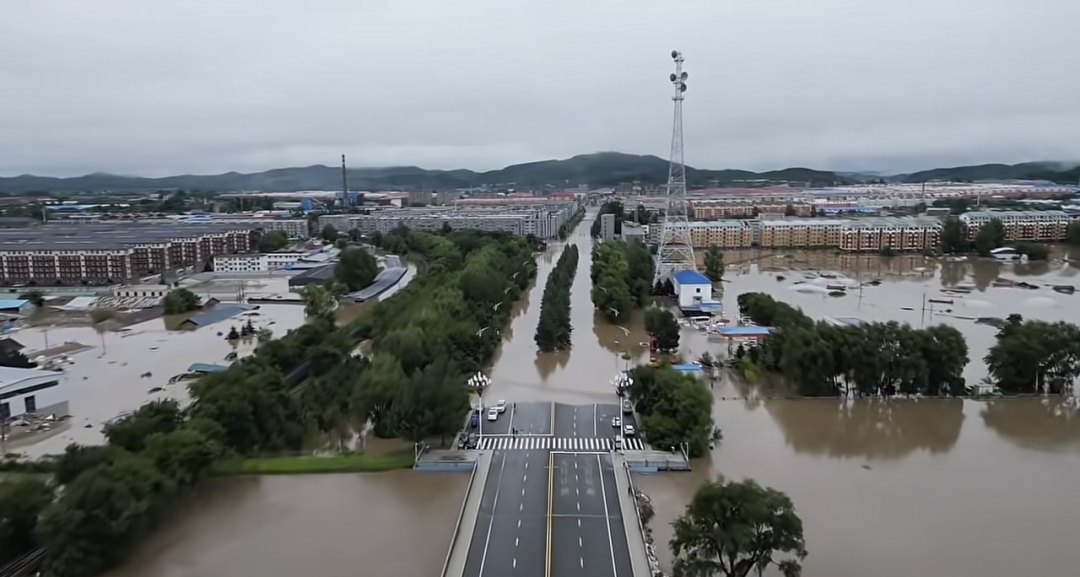
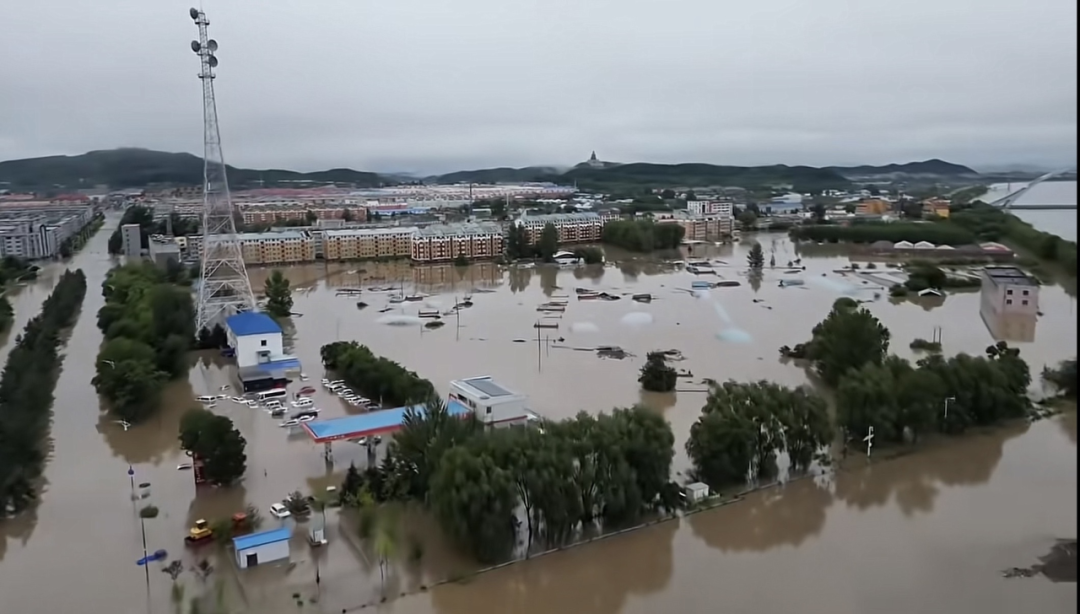
◉ Large parts of Dunhua city centre were flooded. Image source: Douyin
Sister Juan, who runs a dried-goods wholesale business at the market, experienced the flood peak firsthand. By the afternoon of 14 July, the Kanghui Agricultural Wholesale Market had already been flooded to waist height for an adult.
The water rose sharply again in the middle of the night. That evening, worried that her goods might be damaged, she did not move away with the others and stayed at the market to guard her stock. In under half an hour, the water in the shop rose from knee height to chest height. She and her husband hurriedly moved their goods, placing the lighter items — dried mushrooms, wood ear mushrooms and dried fish — on the tin canopy on the roof, but the more expensive ginseng gift boxes could not be rescued and were all swept away. It was only when one corner of the tin canopy collapsed that the two of them gave up trying to save anything more.
By the time Sister Juan and her husband left, the entire market had been completely flooded and was in disarray. The water was more than a metre deep, with all kinds of objects floating in it. Debris kept striking Sister Juan in the chest, making it hard to walk. She had to lean on her husband, who stood 1.8 metres tall, and he supported her as they slowly made their way out of the market.
The rain fell for a day and a night and did not stop all that evening. By 06:00 on 15 July, the water level was 1.21 metres above the guaranteed water level, and standing water had appeared in several residential complexes, roads and underground spaces in the urban area. It was not until 09:00 that the rain eased, and the water level was still rising.
The Mudanjiang River runs through Dunhua. The rain caused the entire eastern part of Dunhua to be widely flooded. A video posted on 16 July by an online user in Dunhua showed large residential areas being inundated by floodwaters, and the city looked as if it had been soaked. A local resident told Foodthink that at least about one third of Dunhua city had experienced flooding and waterlogging, and that in some low-lying areas water had flooded both ground-floor and first-floor units.
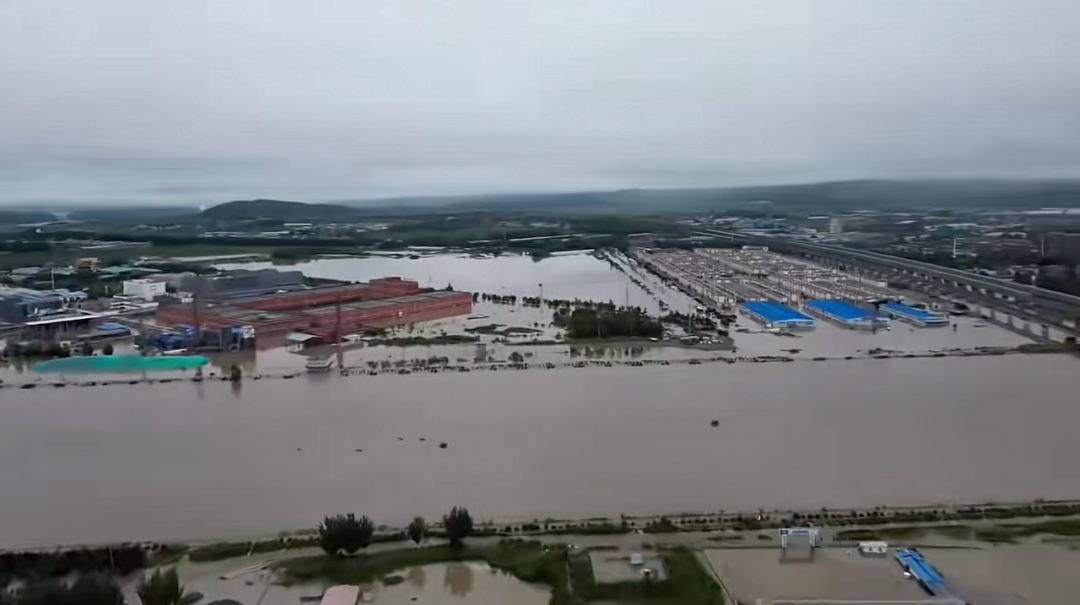
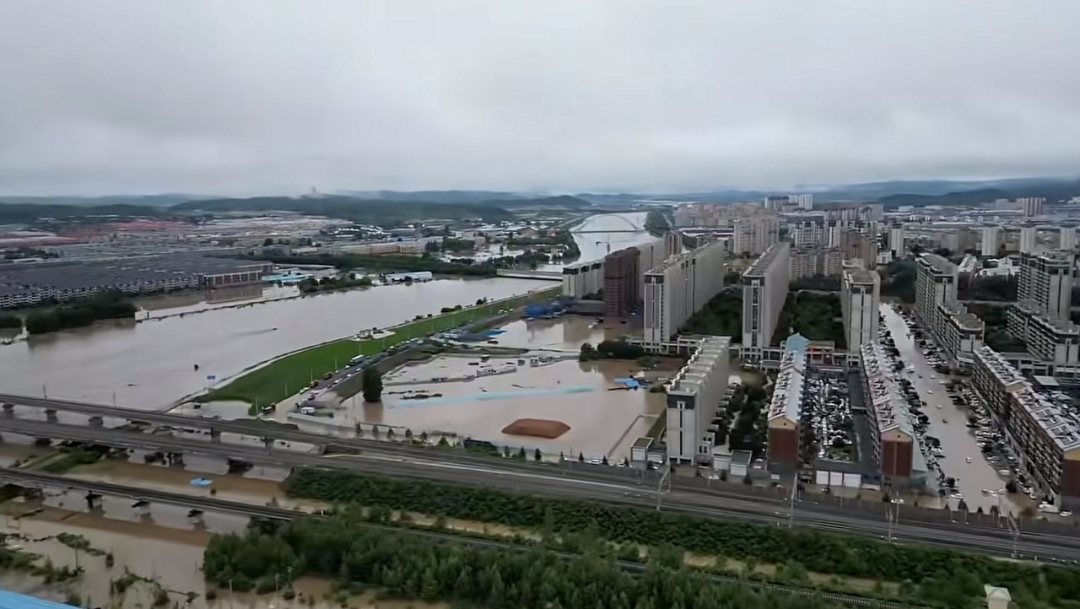
◉ Large residential areas in Dunhua city centre were flooded. Image source: Douyin
The water remained for more than two full days and only began to recede slowly on 16 July. On 17 July, Dunhua City began full-scale drainage and silt removal, and many streets were covered in thick silt, with lorries coming and going without pause. Some residents were still trapped. Sister Juan’s cousin, with her child, was trapped on the third floor with no water or electricity; it was not until the fourth day that a rescue team arrived in kayaks and got them down safely. As of the afternoon of 20 July, many residents reported that their residential complexes were still without electricity; because water in the basements was difficult to pump out, generators were the only power source at night.
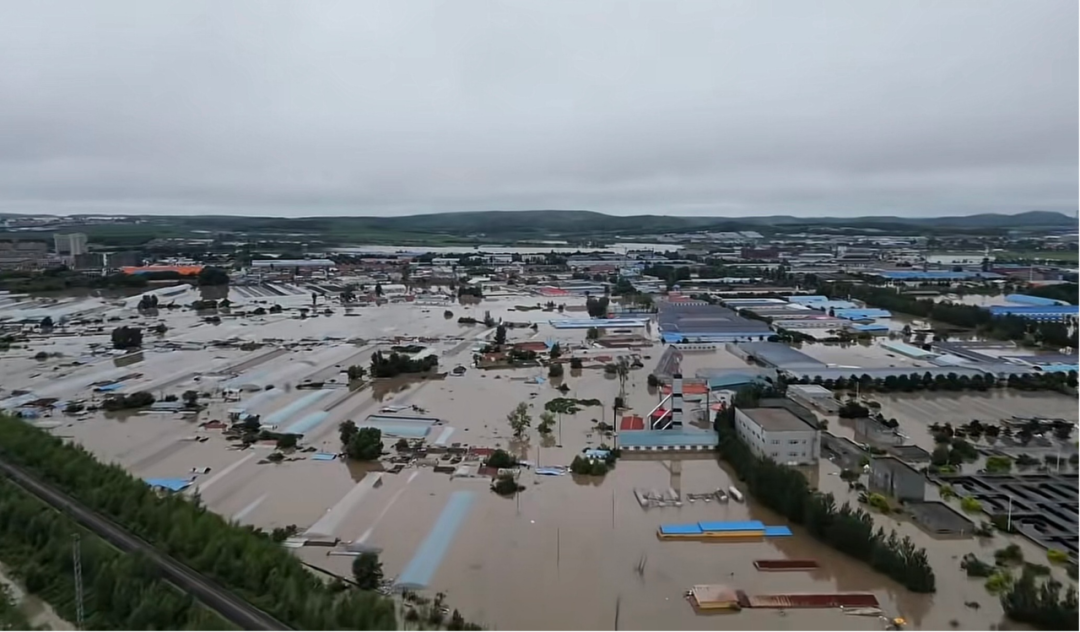
◉ Floodwaters rushed into the wholesale market. Image source: Douyin
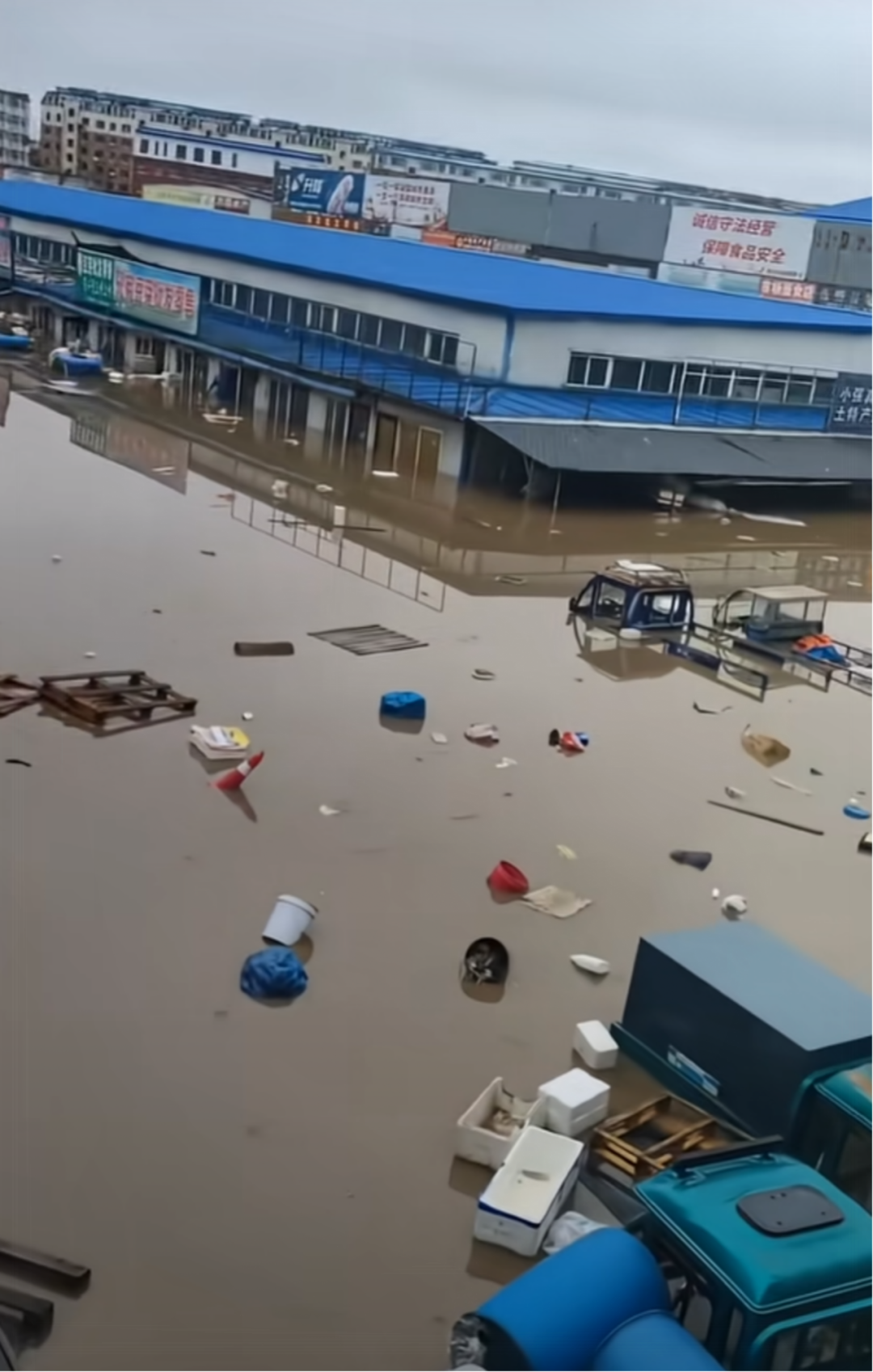
◉ A local trader filmed the wholesale market being flooded. Image source: Douyin
By 20 July, when Foodthink walked into the wholesale market, a foul smell hit them in the face. The fishy odour of silt, the sour, rotten smell left by meat and vegetables fermenting in the heat, and the smell of disinfectant were all mixed together, stinging their eyes. As far as one could see, silt covered the ground. To the left, thousands of soy sauce bottles that had been flooded lay on their sides by the shop doors, caked in yellow mud. Further ahead were the fish shops, with chest freezers piled in disarray. Wheelbarrows and rubbish carts came and went continuously around the market. Hundreds of wholesale shops had lost their usual bustle and were drowning in the stench.
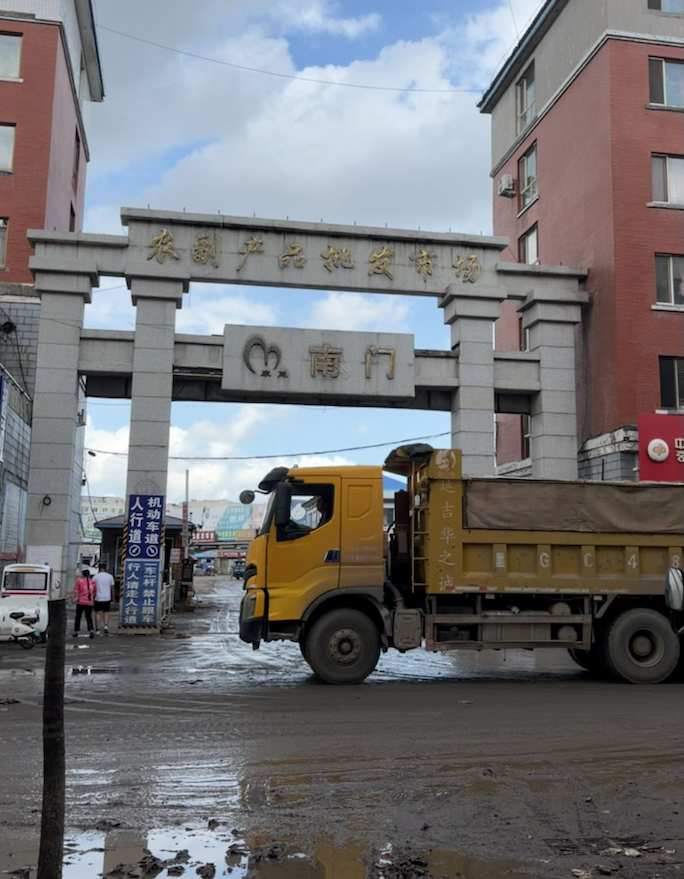
◉ After the water receded, the Kanghui Agricultural Wholesale Market was being cleared of silt.
A trader in the vegetables area told Foodthink that on 13 July he had just brought a full lorry of onions into the market and offloaded them when, on 14 July, the water came in, and thousands of kilograms of goods were destroyed. He could not help saying, “If only they had warned sooner that the flood would be this big, I would not have placed that order.”
This flood was also beyond the experience of Chen Yuan, an egg wholesaler: “In all these years, I have never seen water like this.” When he returned to the market, he found the water in the shop so deep that he could barely see, and that hundreds of boxes of eggs and gift boxes of medicine had been soaked, causing losses of more than 100,000 yuan.
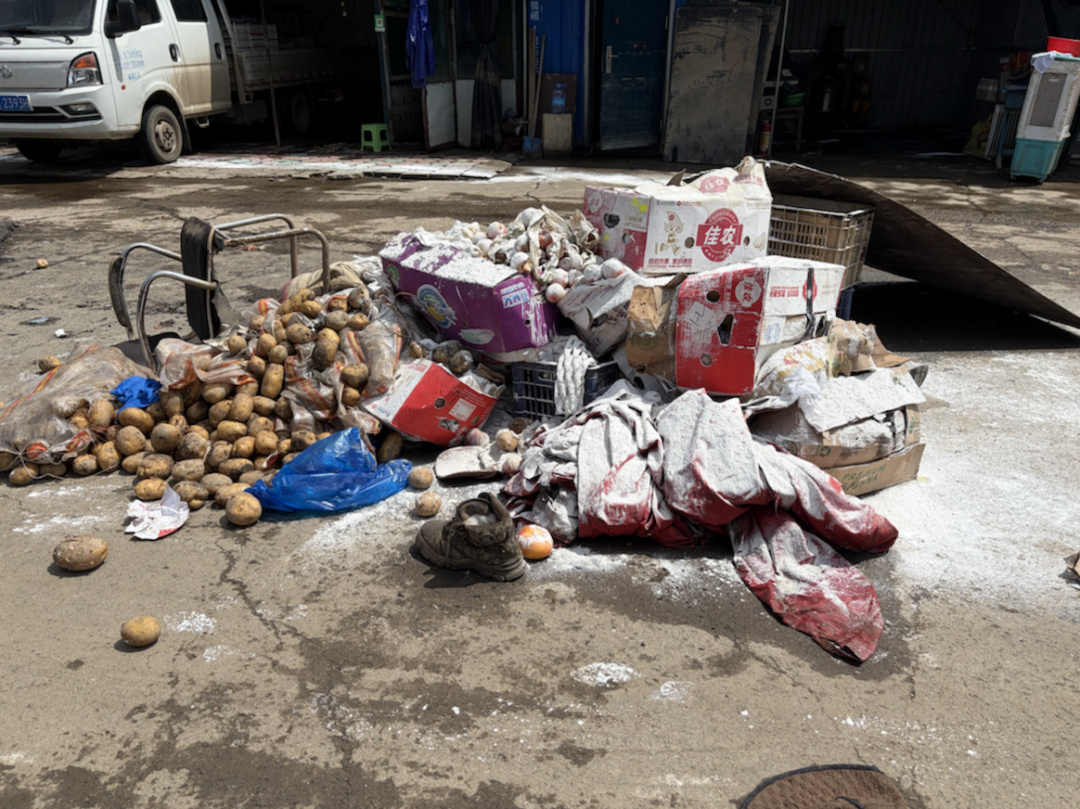
◉ Flood-soaked food at the Kanghui Agricultural Wholesale Market, waiting to be destroyed.
Those who suffered losses were not only the wholesale market traders; Dunhua’s food supply was also disrupted over these days. A staff member of the wholesale market told Foodthink that the Kanghui Agricultural Wholesale Market is the largest agricultural products wholesale market in the area, and that more than half of Dunhua’s agricultural products are distributed from there. Because volumes are large and prices low, some vegetable markets in nearby county seats also come here to buy their stock. The shutdown prevented some traders from restocking and briefly affected vegetable prices; some rose, but overall prices remained fairly stable. Large supermarkets have their own supply chains, and, thanks to modern logistics, prices did not fluctuate much.
A vegetable trader told Foodthink that in normal years, local vegetables are usually the main supply during this season, but this time many townships were hit by the flood, many greenhouses were washed away, and roads were impassable, so they began buying smaller quantities from places such as Beijing and Changchun.
Pork was also temporarily in short supply. Pork wholesale shops in the market could usually sell more than ten whole pigs a day, but the slaughterhouse was also affected by the flood, and some of the traders they worked with had suffered flood damage, so in the past few days only two or three pigs arrived each day and were all pre-ordered by morning.
Village Flooded for Three Whole Days
Outside the city, several riverside towns and townships in the northeast were hit by floodwaters. In many areas roads and bridges were washed away and homes swept away, but the rescue support and attention they received were far less timely than in the city.
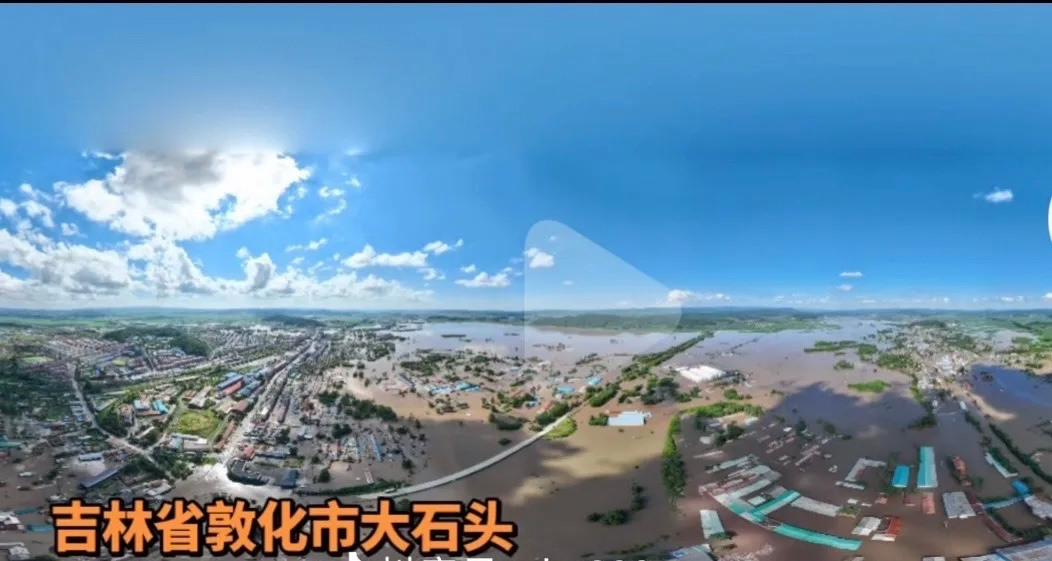
◉ An online user posted that Dashitou Town suffered severe flooding. Image source: Douyin
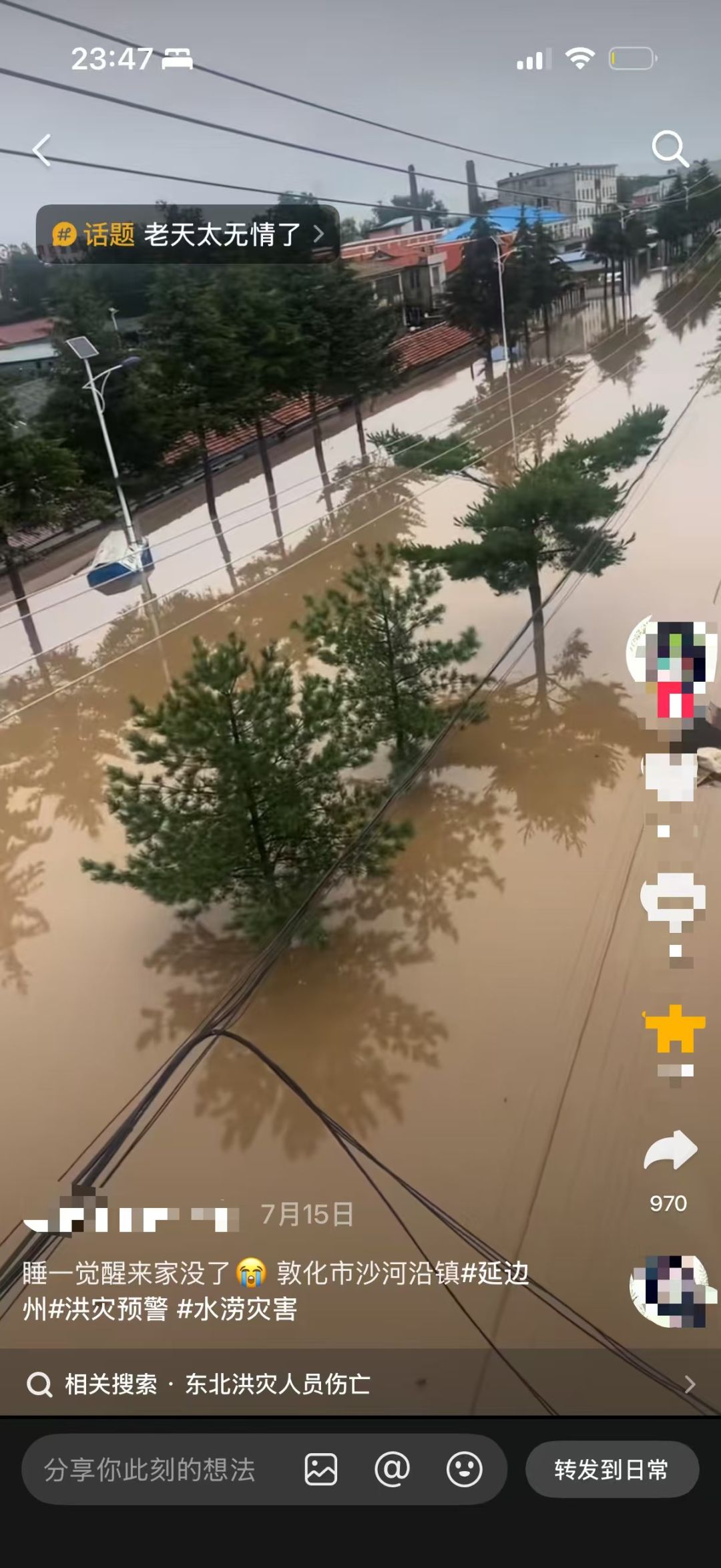
◉ An online user posted that, on 15 July, Shaheyan Town suffered severe flooding. Image source: Douyin
On 14 July, after the heavy rain in Dunhua, Dashitou Town and Shaheyan Town, 30 kilometres from the city centre, temporarily became “islands”. Many online users posted that they had still not been able to contact their families, hoping to draw attention. Several people told Foodthink that some videos showing the flood damage, once posted online, were quickly required to be deleted locally.
In the towns, many of the residents were elderly and not confident using the internet to call for help, so they could only wait for rescue in a predicament with no water, no electricity and no signal.
But these areas were the most severely affected. In Shaheyan Town, the Shahe River, one of the main tributaries of the Mudanjiang, runs from southeast to northwest, forming an S-shaped bend near Shahe Bridge. Because of the terrain, when the flood peak arrived, the water here rapidly spilled over the banks and flooded a nearby area of several hundred metres.
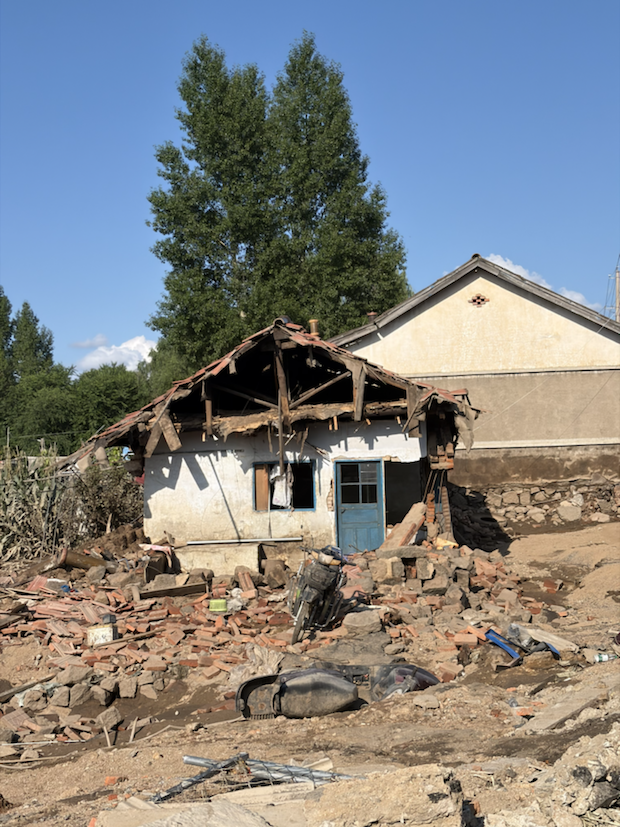
◉ The bridgehead in Shaheyan Town was severely affected, and some private homes were washed away.
The bridgehead was the first to be hit, and an old house and several greenhouses were completely washed away. A nearby two-storey building survived, but the floodwater was still as high as 3 metres. The building was a hair salon. Sister Qiao, the shop owner, recalled to Foodthink that it had been flooded last year, but the water level then was only about 40 centimetres. This time, she had placed household appliances such as the fridge on waist-high tables in advance, and she and her family went up to the first floor. But that night, unexpectedly, the water flooded the ground floor, and the house quickly lost electricity and signal. She was trapped on the first floor and endured five or six days before she could tell her sons and daughters she was safe.
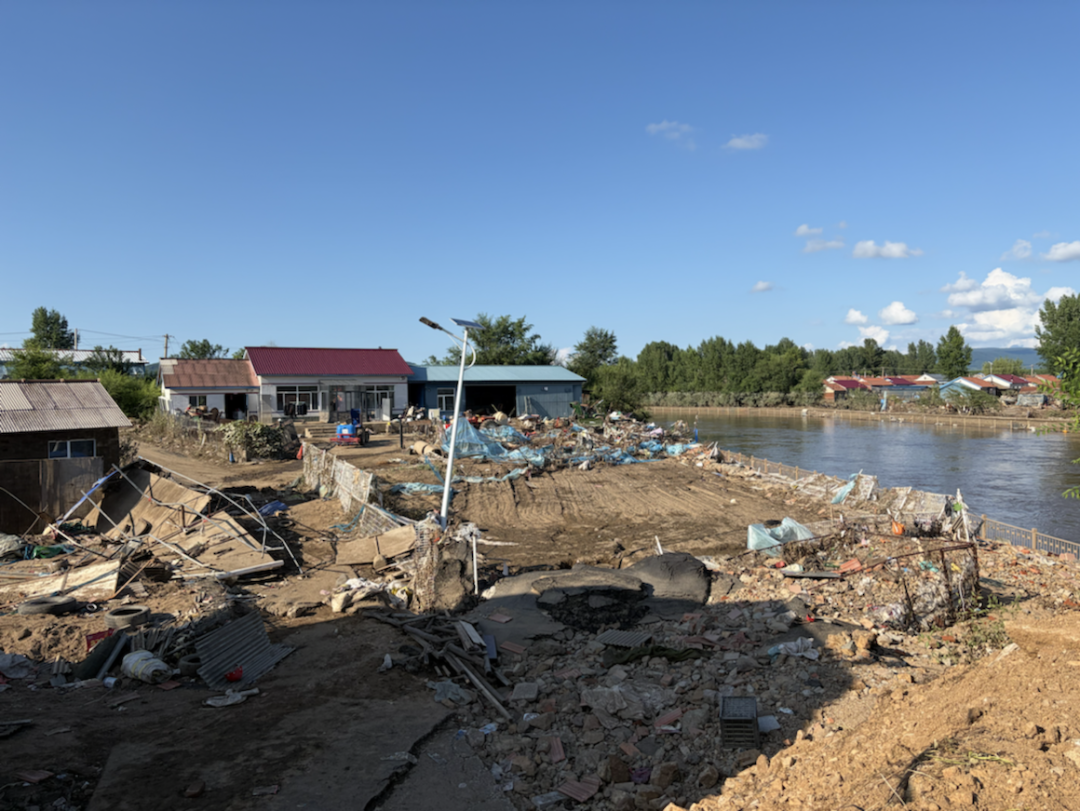
◉ Riverfront houses and greenhouses in Shaheyan Town were washed away.
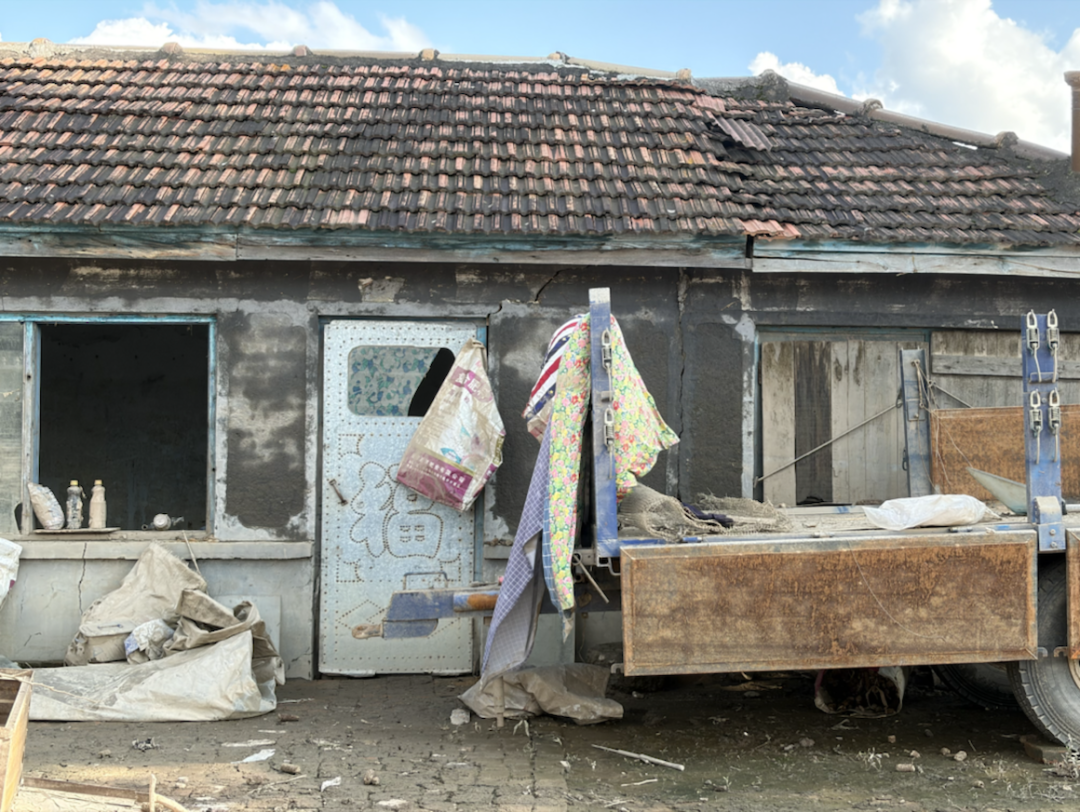
On the afternoon of 20 July, beside the main road in Shaheyan Town, Uncle Wang was crouching at his doorway, cleaning the machinery, while the entire front gate was covered in silt. On the afternoon of 14 July, he had been out doing carpentry work when he suddenly saw the water coming in from the south side of the town. It had reached his knees in less than half an hour. When he saw the water coming, Uncle Wang quickly withdrew. Behind him, “the water was chasing people as they ran”.
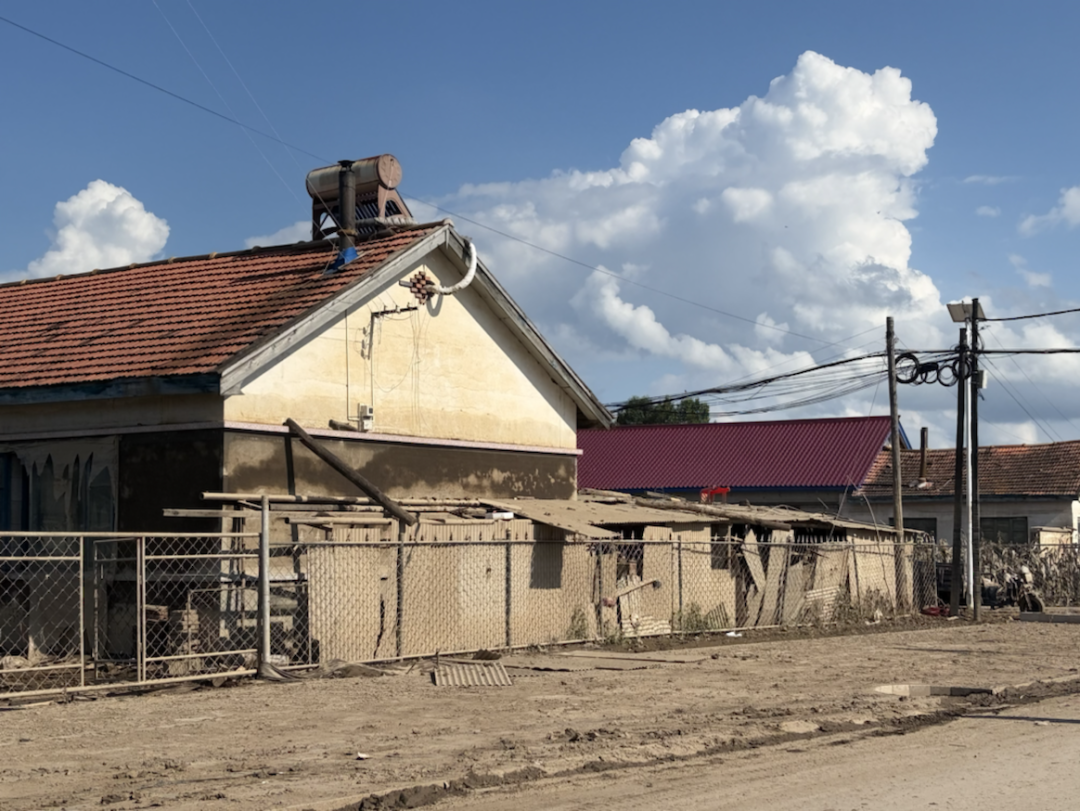
◉ After the water receded in Shaheyan Town, the houses still showed water marks and silt.
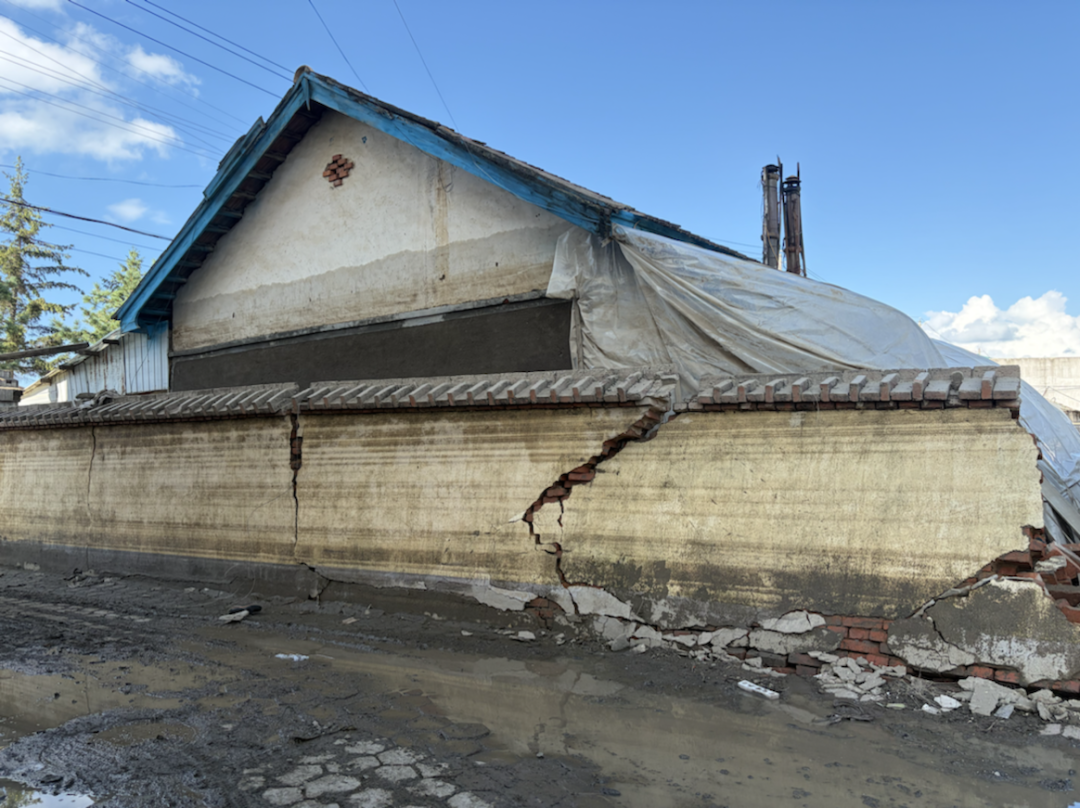
◉ After the water receded in Shaheyan Town, a villager’s boundary wall had been washed through by the flood.
Fortunately, Uncle Wang’s 85-year-old mother had been moved to the school evacuation site in advance. When speaking of the experience that day, he was still shaken. “How could I not be afraid?”
Because the evacuation was so hurried, Uncle Wang had not had time to take anything. That night, at the school evacuation site, each person was given only a plastic sheet, and Uncle Wang and his mother lay on the sheets and simply slept.
At 60, he had been through three floods: the first as long ago as the 1950s, then in 2018. This time was the most severe: the whole village was under water for three full days. A smell of decay hung over the village. The smell came from drowned livestock. Disinfection crews were everywhere, to guard strictly against any subsequent outbreak of disease.
Three days later, the water receded. When Uncle Wang stepped into his courtyard again, the storehouse had been washed away and the farm machinery had been soaked. The water supply had only just been restored, and the electricity was still off. He washed his clothes and shoes and left them by the door to dry. Now, what worried him most was still the house. The brick house had stood for 30 years, and after being submerged, if it was not repaired it could not be lived in; repairing it would cost a great deal of money. “If the water rises again in a few years, no one could say.”
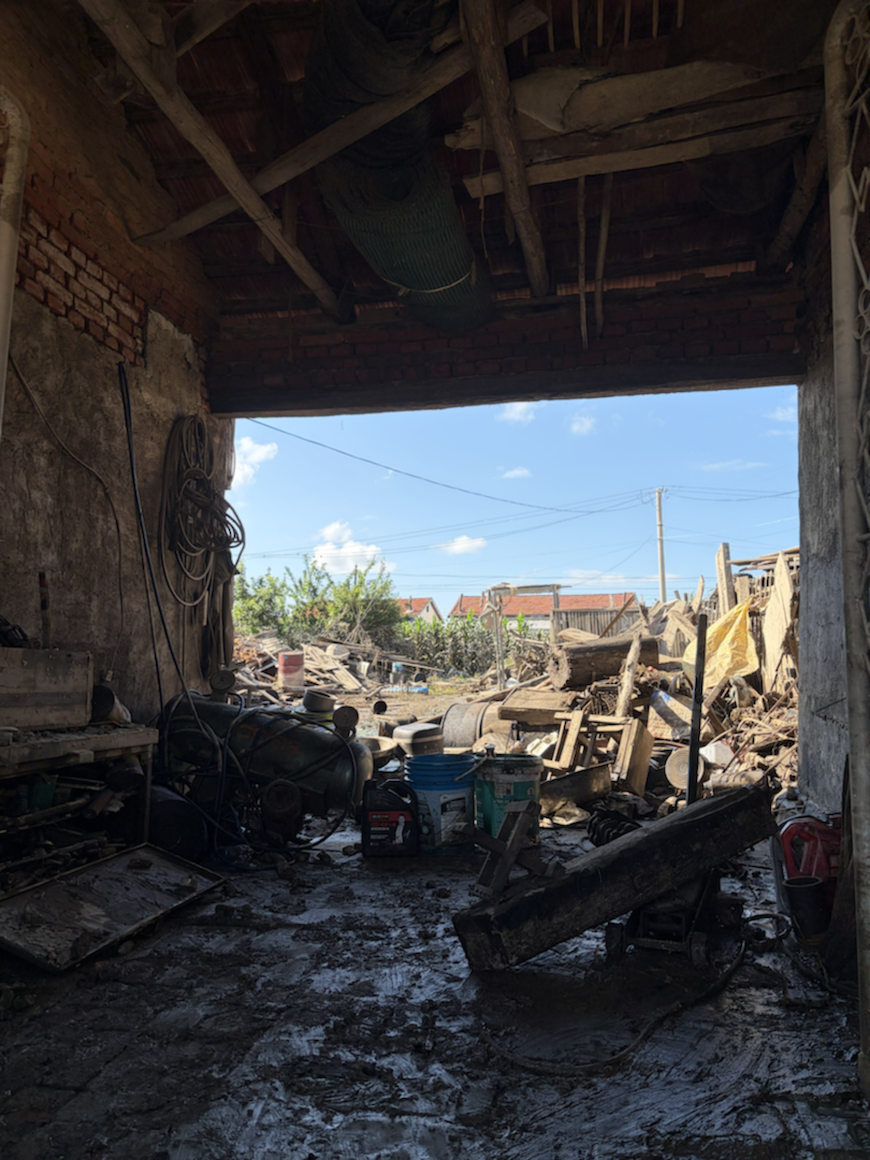
◉ The flooded courtyard and home of Uncle Wang, a villager in Shaheyan Town.
Fortunately, the villagers had all evacuated in time. During the visits, several villagers told Foodthink that no local residents had died, but in Changle Village, outsiders had lost their lives in the flood because they were unfamiliar with the flood situation. They said that several young people had taken a lift to Yanji to take an examination and visit relatives. The expressway was closed, and the driver, unfamiliar with the roads, had taken a wrong turn. They came upon the floodwater, and the car, with everyone inside, was swept into the river. A villager who had witnessed the rescue and recovery said that neither the driver nor the passengers had managed to escape.
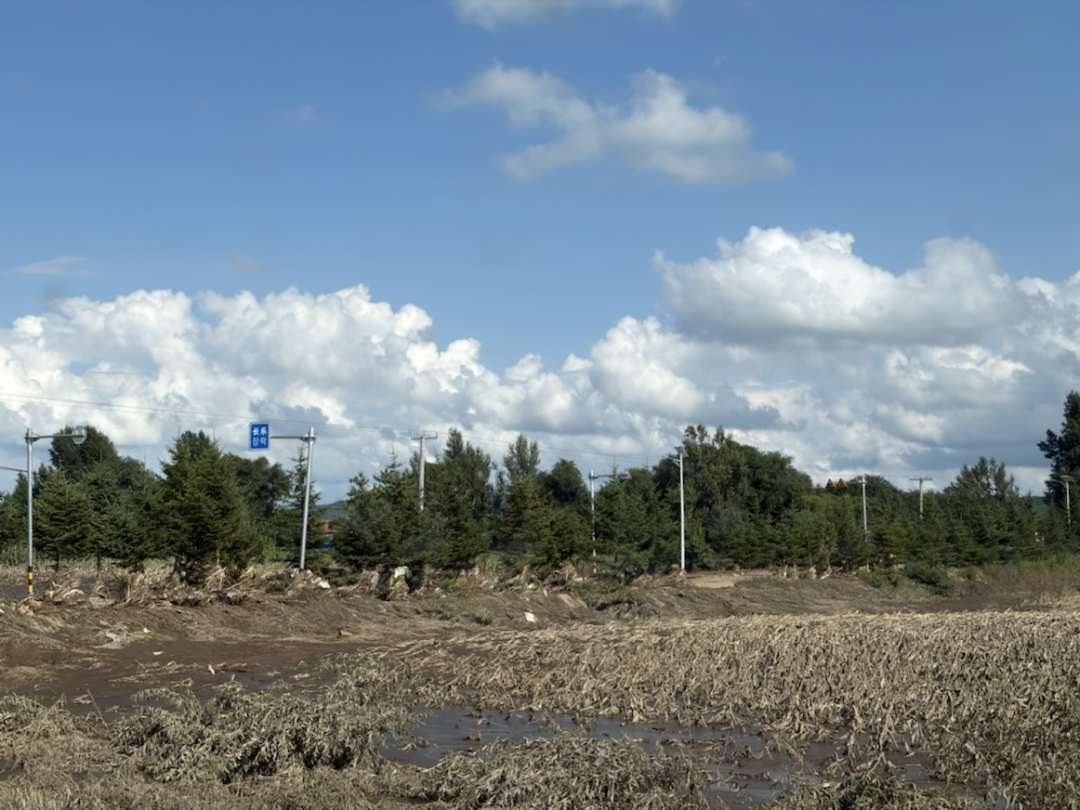
◉ In Changle Village, Shaheyan Town, the river overflowed and rushed into large areas of farmland.
When Foodthink passed Changle Village, it saw rescue teams at the bridgehead. Most of the rescue teams that had reached the nearby towns and townships were local volunteer teams, along with Party-member vanguard posts and deployed cadres.
Just after 6 p.m., the sun went down. The rescue teams in Shaheyan Town began their return journey, and the mobile signal vehicle also withdrew; the mobile signal was lost again.
The electricity had still not been restored; village after village fell into darkness, and the rain started again.
Two Months of Continuous Rain and Waterlogged Land
Rain had already been falling for nearly two months. Generally, in Dunhua, maize is sown in mid-to-late May. Uncle Wang remembered that he had already sown and had finished applying the pre-emergence herbicide before the seedlings emerged. Just as he was waiting to make the second application, the rain began.
Chen Yuan, in the city, also remembered that between May and July there had been only a few sunny days. The rain was not heavy, but it kept falling; in previous years, it had only rained for a few days in that period.
A water conservancy expert who did not wish to be named explained to Foodthink that the northeast is not a dry, low-rainfall region, and rainfall during the normal rainy season is also substantial. Over the past two to three decades, rainfall in northern China has indeed increased. At the same time, as climate anomalies have intensified, the frequency of extreme rainfall has risen, locally causing rainfall that exceeded design standards and leading to more disasters.
Xu Xiaofeng, president of the China Meteorological Services Association, noticed the abnormal weather in the northeast this year. He explained to Foodthink that from May this year, the northeast cold vortex and warm, moist air moving northward unusually formed a strong rain band in the northeast. The heavy early rainfall left high base water levels in the soil. The landfall of Typhoon Bavi brought a new wave of moisture, causing extreme rainfall in some local areas, a sharp surge in river levels, and a sharp rise in pressure to release floodwaters. Although Typhoon Bavi passed through quickly, the original rain band in the northeast remained strong, intensifying the disaster.
In this flood, large areas of farmland were damaged. When Foodthink visited along the river course, it saw large areas of maize fields near river bends inundated; after the water had passed, the maize was caked in mud and lodged on the ground.
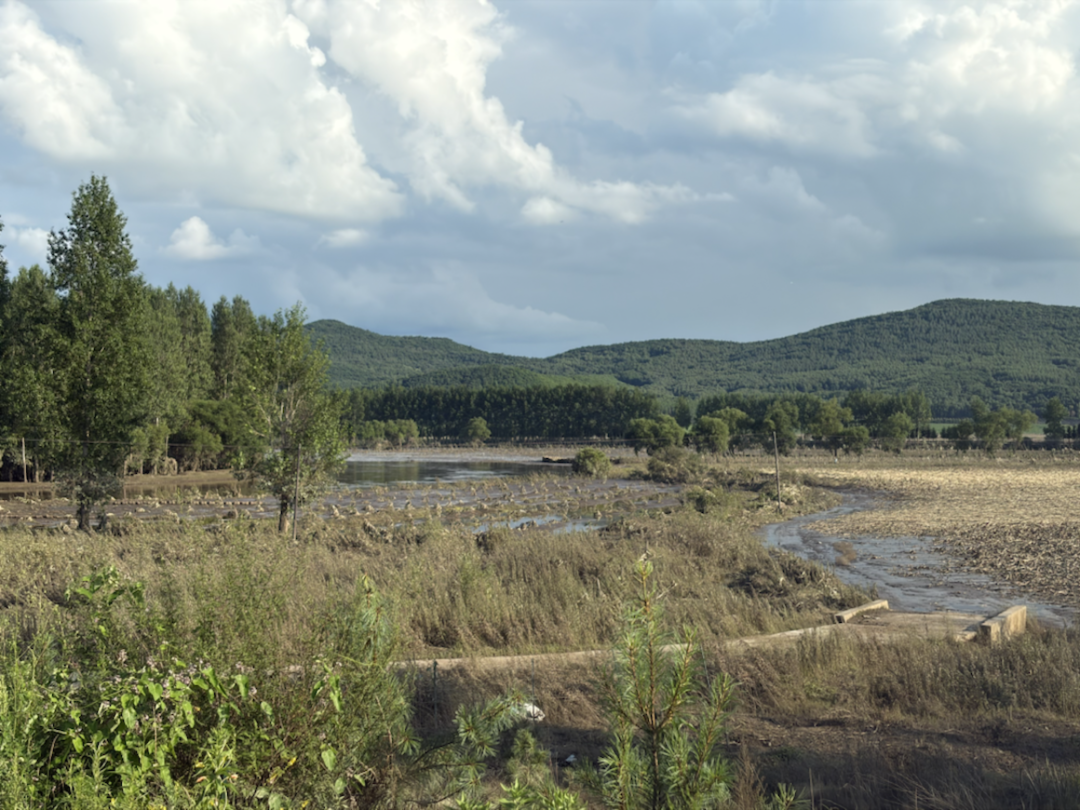
◉ Flooded farmland in Shaheyan Town, with some areas waterlogged.
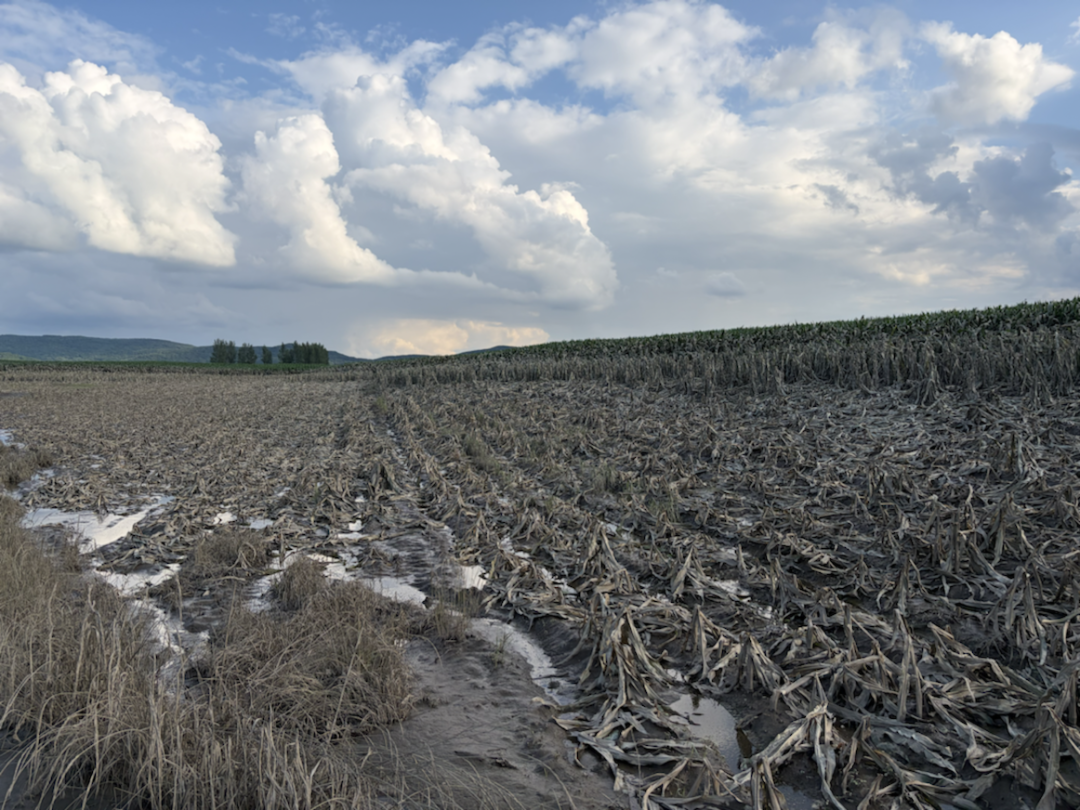
◉ Flooded farmland in Shaheyan Town, with the maize lodged on the ground.
Uncle Wang rented 20 mu of land this year to grow maize, and half of it was flooded in this disaster. Even selling the remaining half of the harvest would barely cover his costs. Another villager from Zhongxin Village told Foodthink that about 90 mu of their own land had been flooded, and they had lost tens of thousands of yuan just in rent.
The continuous rain not only damaged the growth of crops and vegetables, but also greatly affected the local ginseng industry. In Dashitou Town, Dunhua, many online users posted that 10,000 mu of local ginseng fields had been affected and waterlogged. Many local industry insiders also confirmed to Foodthink that many ginseng farmers in Dunhua, Antu and elsewhere were severely affected.
As the foremost of the northeast’s three treasures, ginseng is widely cultivated in Jilin Province. In 2025, Jilin’s ginseng output value surpassed 100 billion yuan, and its production volume and trading volume ranked first nationwide; Tonghua, Dunhua, Baishan and others are all main production areas.
As early as early June, many ginseng farmers in Jilin had posted that their ginseng fields were waterlogged. By July, in many areas, to respond to the heavy rainfall brought by the landfall of Typhoon Bavi, several reservoirs began releasing floodwater. According to China Jilin Net, on 13 July, Dunhua carried out pre-discharge from 11 small and medium-sized reservoirs to free up storage, creating a total of 3.11 million cubic metres of available capacity.
But the rainfall on 14 July still put pressure on local rivers and reservoirs. Between 6 a.m. on 14 July and 6 a.m. on 15 July, the average precipitation in Dunhua City reached 109.1 millimetres, with 24-hour rainfall setting a new local all-time record. By 6 a.m. on 15 July, 10 of the city’s 38 small and medium-sized reservoirs had exceeded their flood-limit water levels, 7 rivers had exceeded their warning water levels, and 6 rivers had exceeded their guarantee water levels.
The water rushed towards the riverside villages. In Dashitou Town and Qinggouzi Township, Dunhua, some ginseng fields close to the river were flooded over large areas.
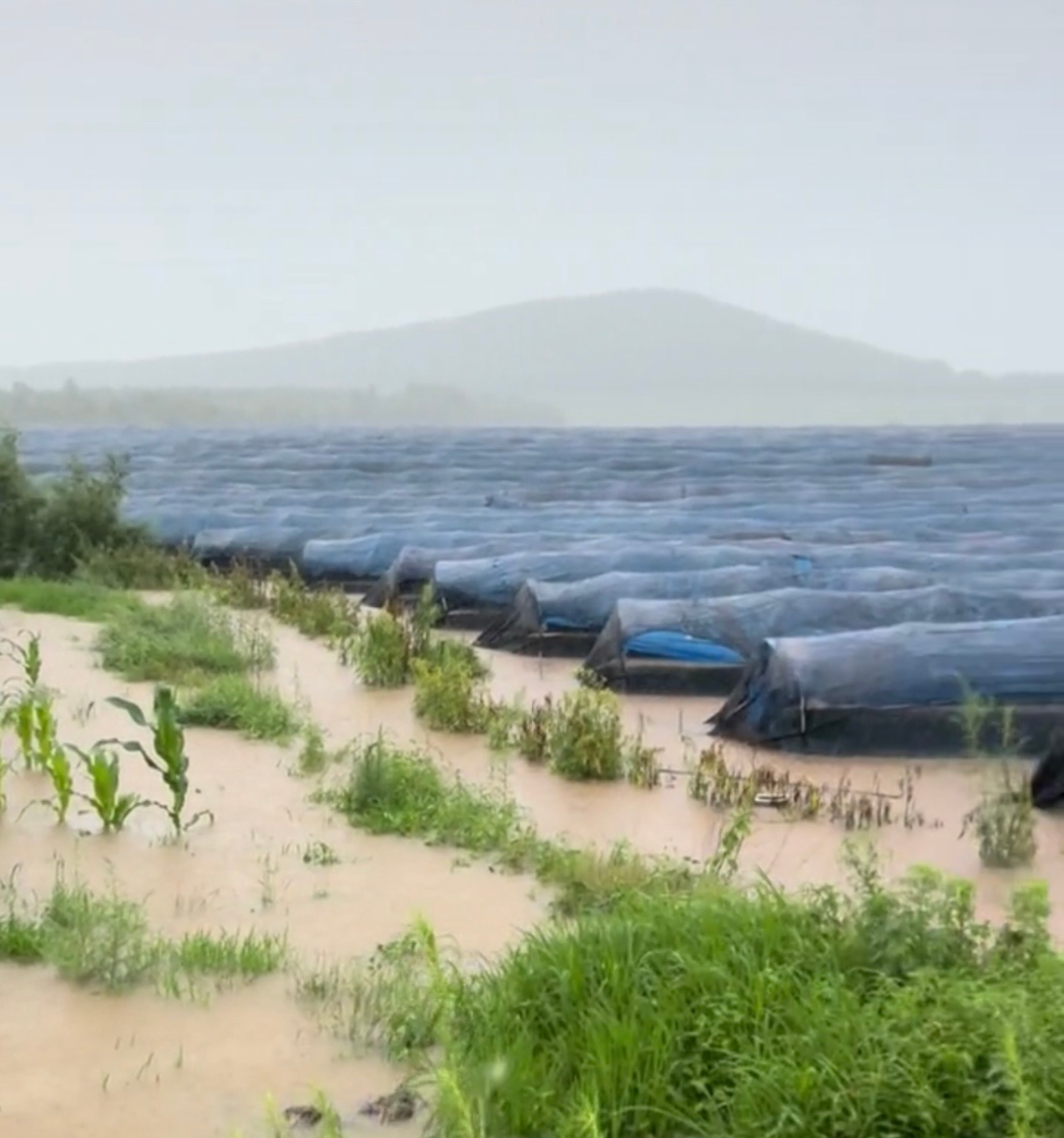
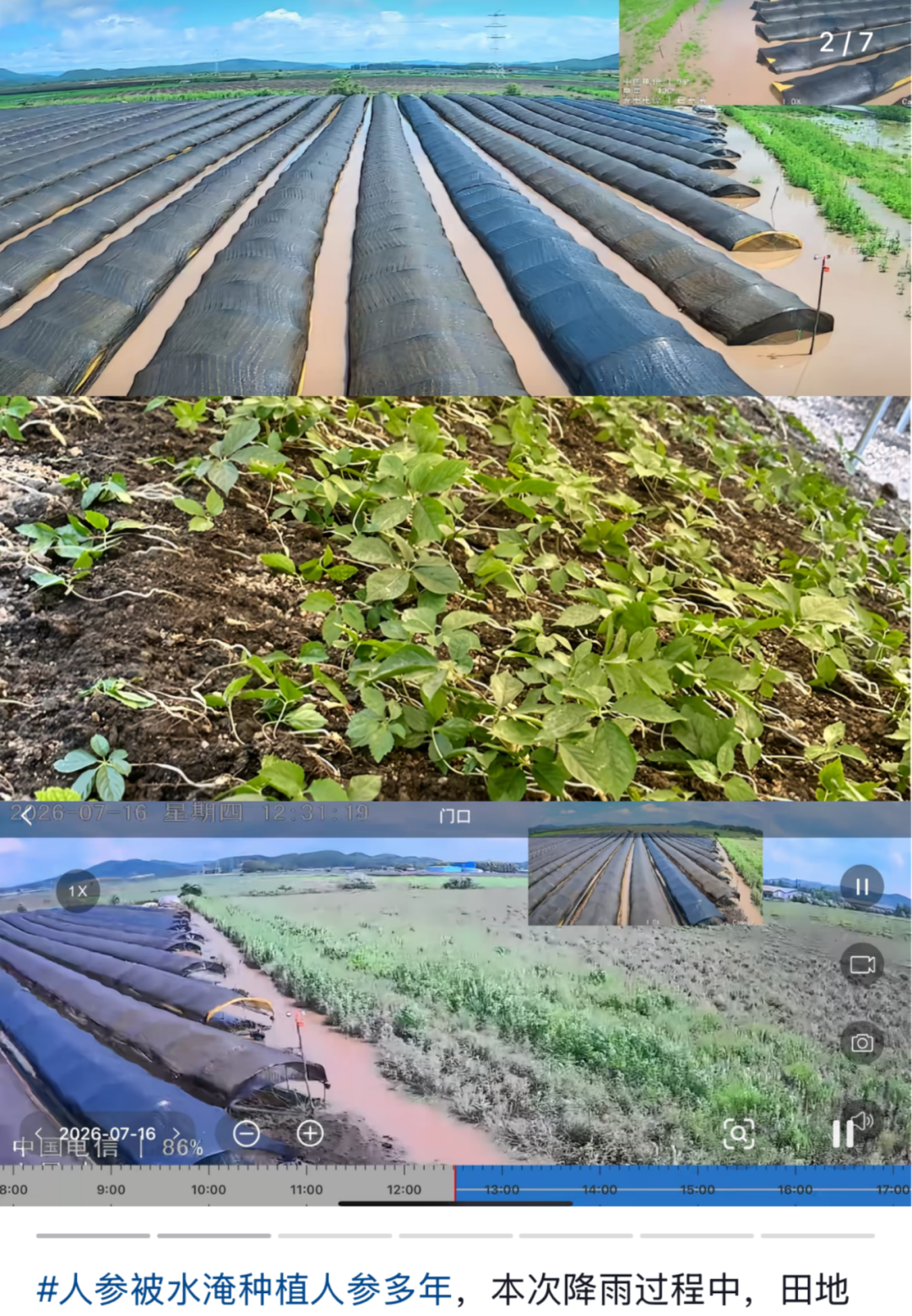
◉ Several ginseng farmers in Dunhua posted that their ginseng fields had been flooded. Image source: Douyin
Xiao Mei, a ginseng farmer in Dashitou Town, Dunhua, said that her 15 mu of three-year-old ginseng fields had been inundated by river water, with losses of more than 500,000 yuan. Although harvest season had not yet arrived, she had no choice but to dig up fresh ginseng and sell it at a loss at just over 7 yuan per jin. Another ginseng farmer in Qinggouzi Township, Dunhua, told Foodthink that excessive flood discharge from an upstream power station had caused river water to overrun three villages, flooding their ginseng field. A third ginseng farmer’s 10 mu of ginseng fields were directly washed away, with losses of more than 100,000 yuan.
Li Qi, a ginseng farmer in Tonghua, Jilin, told Foodthink that in the early days ginseng farmers all planted ginseng on the mountains, because the hillsides drained well and this was naturally beneficial for ginseng, a crop that is intolerant of waterlogging. But felling trees to plant ginseng caused soil erosion, and after the state introduced forest-protection policies, such practices were prohibited. Many ginseng farmers then had no choice but to “move down from the mountains”, converting their farmland and flat land for cultivation. Flatland cultivation is prone to flooding, and if a ginseng field drains poorly and is waterlogged for just two days, pathogens can grow, seriously affecting growth. Ginseng roots are extremely vulnerable to waterlogging; when the soil is too moist, the root system struggles to get air, and the ginseng can be smothered to death.
Liu Bing, who has traded in mountain ginseng for more than 30 years, said that in recent years many local farmers have also been willing to convert farmland to grow ginseng. He had done the arithmetic: with maize, income is only just over 1,000 yuan per mu; with ginseng, management costs fall, and as long as there is no frost or flooding, in good market conditions a single mu can earn tens of thousands of yuan. Among the ginseng farmers he knows, almost none buy commercial insurance; they all think the climate in the northeast is relatively stable and that insurance is unnecessary.
But the climate has changed, and the weather challenges faced by ginseng farmers have become more frequent. Li Qi noticed that in the past it rarely rained in May and June, but over the past two years this period has simply become the rainy season, “as rainy as the south”. The climate has also become less cold, more as if there is no spring. Winter ends, and after just a few days of spring, it goes directly into a hot, rainy summer. In July last year, when a typhoon struck the northeast, many ginseng farmers were flooded; Li Qi’s family was also badly flooded, “it’s just that less was reported upwards”.
In early July, after learning that a typhoon would make landfall, Li Qi began digging deep drainage ditches and setting up drainage channels, among other emergency measures. Under days of continuous heavy rain, she managed to keep her ginseng fields from being flooded.
As for the future of ginseng farming, she has an almost fatalistic attitude: “It is like trying to fight Heaven—can you beat it? There is no way to overcome it; one can only accept the will of Heaven.”
The “Up the Mountain, Down to the Floodplain” Land Dilemma
Many netizens posted, questioning whether improper local flood discharge had led to the damage.
In response, the aforementioned water conservancy expert said that the primary concern of water conservancy facilities such as reservoirs is to ensure the safety of the hydraulic works themselves. When heavy rain occurs, pre-discharge is essential; the dam’s design flood level must not be exceeded, and downstream areas are generally notified before releasing floodwater, with people reminded to evacuate. With large populations and limited land, many traditional floodways have been developed and used by residents and even local governments. In this incident, most of the downstream areas in the northeast that were evacuated for flood discharge were in fact floodways or flood storage areas.
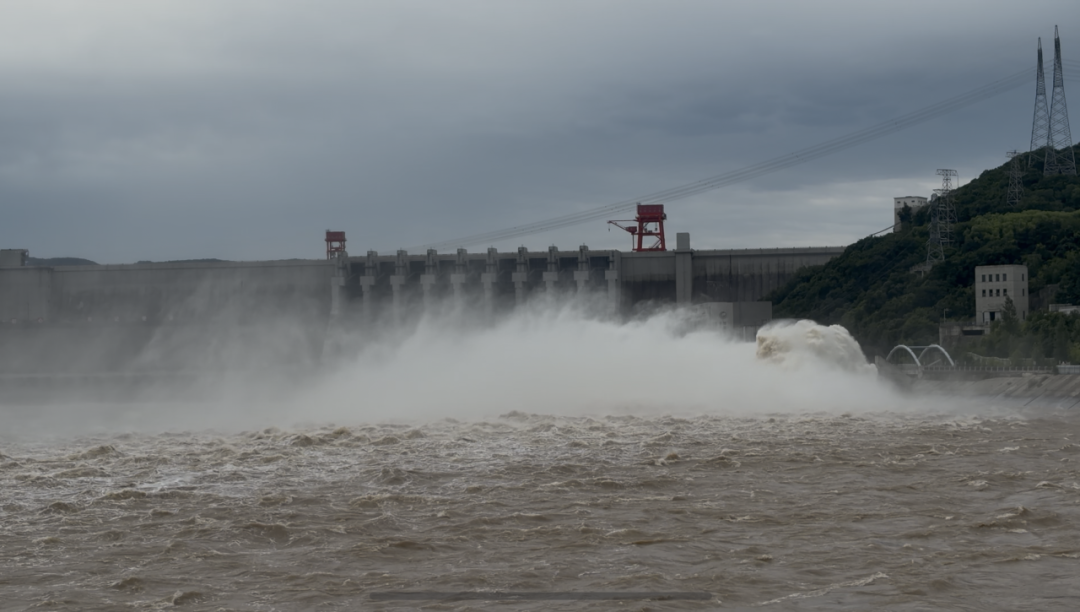
◉ On 19 July, floodwater was released from Fengman Reservoir in Jilin.
This kind of situation is not uncommon. He said that in the Yangtze River basin, people have cultivated land and lived in some flood storage and retention areas with a 100-year flood control standard. These areas are often fertile and are quite suitable for cultivation, as long as no major flood occurs. Meanwhile, over the past few decades, urban peripheries have been intensively developed and used. To maintain the state’s 1.8 billion mu land red line, and to meet the balance requirement for land occupied and compensated, much basic farmland has also begun to “move up the mountain and down to the floodplain”. In many places, some river floodplain land that had not been flooded for decades has gradually been converted into basic farmland.
The question is whether rural water conservancy facilities can cope with increasingly frequent heavy rainfall in the future, and the possible flooding and waterlogging disasters it may trigger. He told Foodthink that urban flood embankments largely meet standards and generally should not have major problems, but rural areas are extensive and river channels are dispersed; flood-control facilities cannot all be built to high standards. Most can only withstand 10-year to 20-year floods.
Flood-control awareness in various parts of the north also needs to be strengthened. In the view of Song Xianfang, a researcher at the Institute of Geographic Sciences and Natural Resources Research, Chinese Academy of Sciences, over the past few decades human activities have expanded, “forgetting where floodwater is meant to go, blurring the boundaries, so that places that were always bound to be flooded will naturally suffer disaster.”
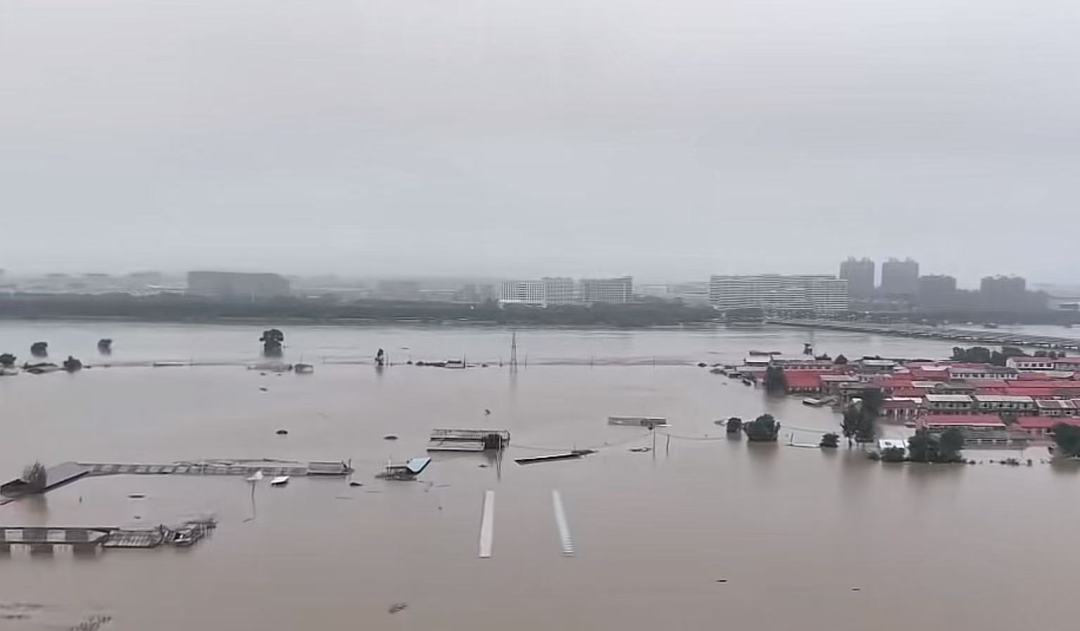
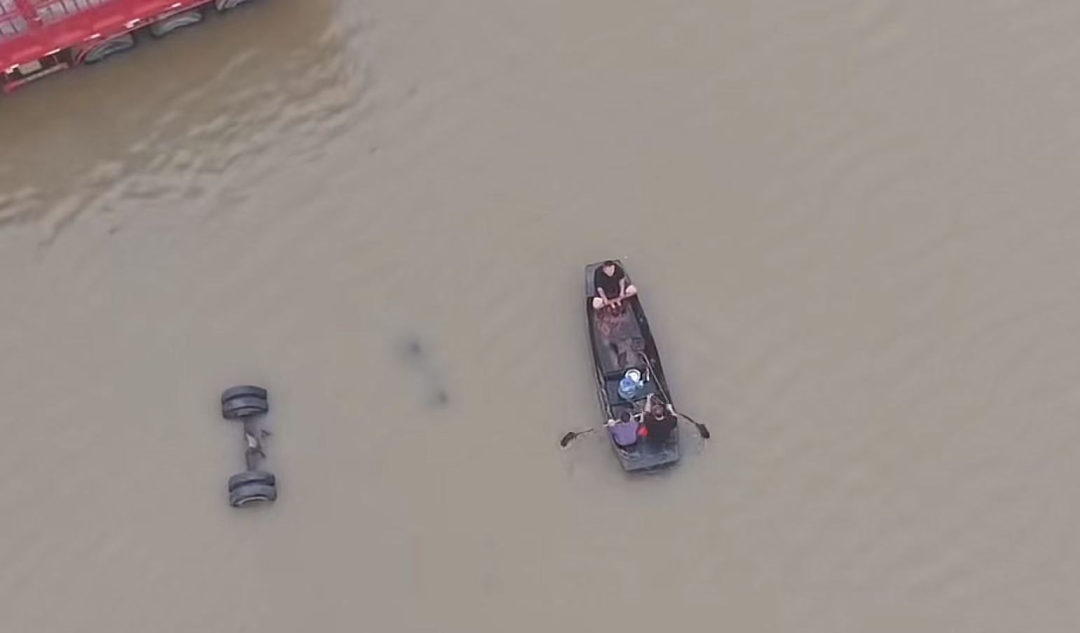
◉ Tonghua in Jilin, and Fushun and Tieling in Liaoning, and other areas also suffered severe damage; Hui County in Tonghua was flooded, and residents organised self-rescue. Image source: Douyin
In 2024, when Song Xianfang went to eastern Jilin for field research, he was also caught in a flood. He told Foodthink that inadequate response measures still exist in many disaster-hit areas. He gave the example that, because there had been no flood for a long time, many water amusement facilities had been built on the water; the 2016 Xingtai Qili River flood caused major casualties, and the water amusement facilities were all washed away. Only after the 2023 Zhuozhou flood did the local area begin to build reservoirs and construct river channels.
The aforementioned water conservancy expert told Foodthink that in the 1950s and 1960s, local farmers carried out water conservancy works every winter and cleared river channels. Nowadays, many farmers have moved to cities, and relying entirely on professional staff to do this has its limits.
He also said that flood control cannot rely on engineering works alone; non-engineering measures are also needed. When encountering floods exceeding standards, the main approach should still be to release floodwater, with prevention as a supporting measure. Relying only on engineering works creates major conflicts between people and water, high costs, and high risks; once embankments are flooded, the losses are even more severe. In his view, non-engineering flood control is relatively reasonable. He stressed that forecasting should be strengthened and land use strictly managed: high-value-added, high-tech industries should not be sited in areas prone to flooding; commercial agricultural insurance should be further promoted, with insurance companies and government disaster relief making up farmers’ losses.
Although the flood has now passed through, these efforts remain especially urgent. Xu Xiaofeng said that the northeast is still within the rain band, and with the arrival of the normal July rainy season, the flood situation could be further aggravated. Some areas may suffer a second disaster, so continued vigilance is needed.
Days after the floodwaters receded, Dunhua was still in the process of rebuilding. On 20 July, Chen Yuan, who was clearing standing water out of his shop, was hit by another shower; rain poured off the roof. He put his mop aside to rinse it and said, with a sigh, that if it had not been for two sunny days in between, he would not have been able to get the shop in order at all that day.
The weather forecast showed that rain would continue over the following week. According to a forecast issued by the Central Meteorological Observatory on 23 July, rainfall in the northeast was still continuing, with heavy rain or torrential rain in central Heilongjiang, northern Jilin, eastern Liaoning and other areas. The western part of the northeast was expected to have severe convective weather, with thunderstorm winds of force 8 or above or hail.
The rain will still fall.
– This is Foodthink’s original article No. 827 –
Foodthink
Author
Lin Jixia
The countryside has never been an idyll. Life is overlooked, fragmented and forgotten, caked in dust. Independent writer, consistently covering climate, rural areas and labour.
Unless otherwise stated, all images in the article were taken by the author.
The interviewees Chen Yuan, Li Qi, Liu Bing, Sister Juan and Sister Qiao are pseudonyms.
Editor: Xiao Dan
Layout: Ming Lin
Scan the code to tip and support original food knowledge
▼

▼
Click the image to read related articles.
▼
Click keywords to explore more article collections.
Seeds | Agritech | Policy | Fermentation | Nutrition | Fruit | Fisheries | Events | Jobs | Takeaway | Wet markets | Livestock | Food Talk | Sharing sessions | Book clubs | Harvest Festival | Smallholder stories | Climate change | Rural development | Co-operative economy | Urban farmers | Food safety | Digital technology | Biodiversity | Pandemics and food | False solutions | Ecological agriculture internship programme
Beijing | Hebei | Shanghai | Guangdong | Guangxi | Henan | Sichuan | Jiangxi | Xinjiang | Shaanxi | Hong Kong | Chongqing | Zhejiang | Jiangsu | Guizhou | Taiwan | Inner Mongolia | Philippines | Canada | Russia | Mexico | Italy | United States | United Kingdom | Germany | Netherlands | Thailand | Sweden | Japan