
I Was a Picker in Online Grocery: 30,000 Steps a Day, Three Mao per Item
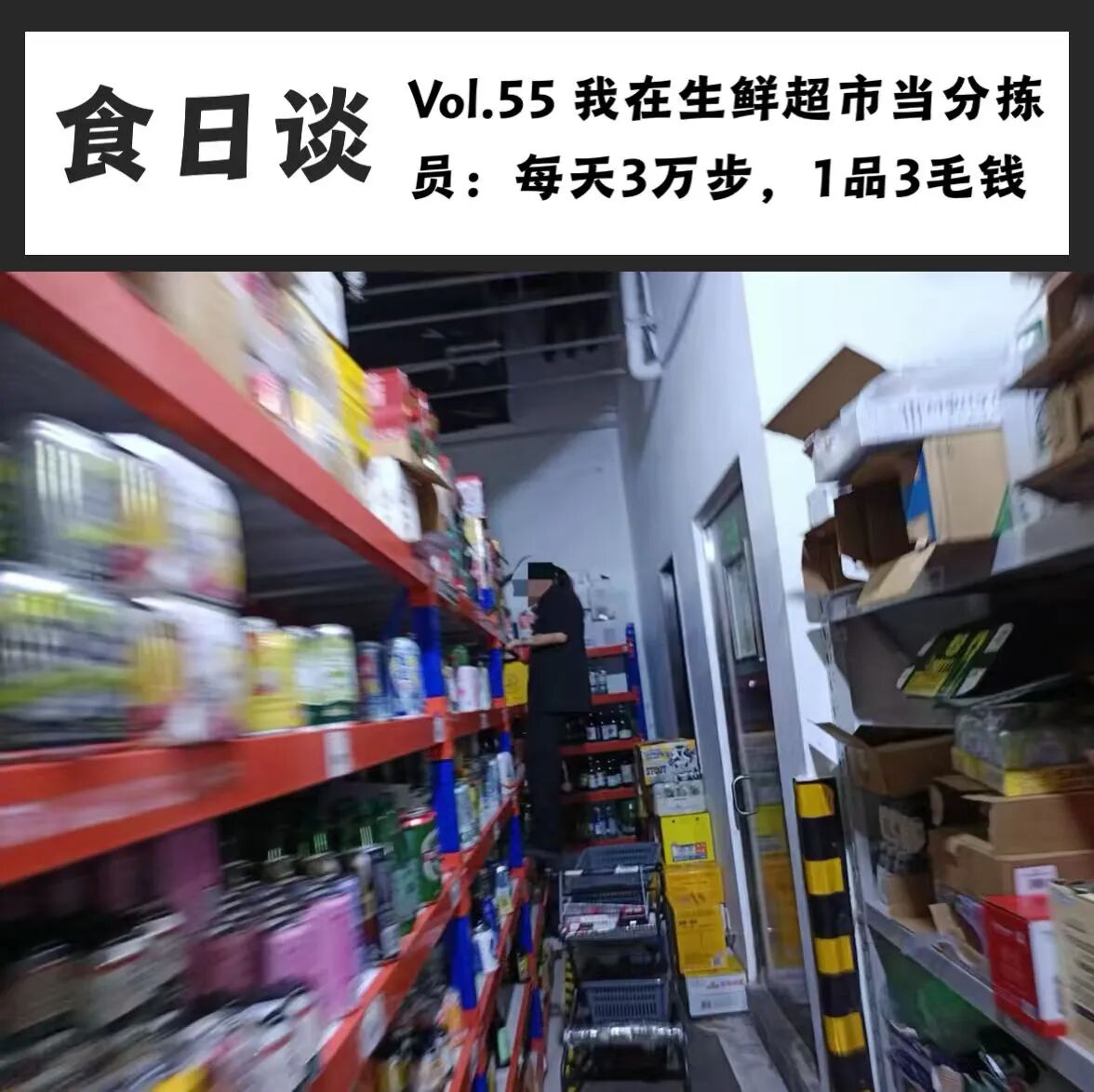
On an ordinary day, you decide to cook a meal at home and open the online grocery app on your phone. You pick out your ingredients, then on a whim add some snacks and a 4.5-litre bottle of mineral water. The instant you hit pay, the words “30-minute delivery” jump out at you, and you feel reassured—sure you will have all of this food within half an hour.
But what you may not realise is that behind the convenience of “30-minute delivery” are the exhausted sprints of delivery riders and warehouse pickers. For pickers in particular, “sprinting” is meant in the most literal sense: from the moment you place your order, their feet have to start moving, weaving and darting between cramped shelves to select your items. Even carrying a 9-kilogram bottle of water, their pace does not slow in the slightest.
Thirty thousand steps a day, twelve hours at work, three mao per item, nine minutes per order—this is the reality of pickers working in the corners of the city we never see.
This episode’s Food Talk guest He Siqi is a social worker who spent a month working as a picker at JD Qixian this summer, experiencing firsthand the pace of labour under the forward warehouse high-pressure system. It was a world that looked ordinary but was in fact intense: a “psychological assessment” before starting; a real-time countdown on the PDA during shifts; a supervisor hovering over the monitoring screen, pressing for speed, calling you out by name if you were even a minute late; and fines for mistakes, or being made to “hand-copy the packing guidelines” like a schoolchild.
On top of that, thousands of plastic bags and ice packs are consumed every day, and the cold-store chill and the noise of the shop floor are all part of their working life.
During that month, He Siqi truly understood what “algorithmised labour” means—a human body merely an extension of the system, slowly drained by time, data and efficiency. This invisible labour underpins the “30-minute delivery” we have grown to take for granted. The algorithm demands that pickers work as efficiently as machines, but people are not machines; the suppressed frustration and anxiety of the job can only be carried silently by those doing the work. Some stayed for their social insurance; others quietly left.
When convenience becomes the norm, do we still see the people living inside a countdown? In this episode, we talk about the kind of people who keep the entire system running behind “30-minute delivery” in online grocery; and we discuss how, in an “algorithmised” picking system, the human body and dignity become part of efficiency.

This Episode’s Guest
 He Siqi
A social worker who has long focused on workers’ rights. Has delivered food and worked as a picker. Currently an independent content creator, dedicated to giving workers a voice so that overlooked stories reach more ears.
This Episode’s Host
 Yuyang
Editor at Foodthink, focused on labour issues in a mobile society.
 Tianle
Founding editor at Foodthink, convenor of the Beijing Organic Farmers’ Market.
Time
line
01:27 Getting started: stumbling from shelf-stocker to picker, a “psychological assessment” before starting—everything turned out stricter than expected
04:40 The grueling daily routine: 30,000 steps a day, 12–14 hours, nine minutes per order, three mao per item… Behind these numbers is the running pickers do every day between the warehouse and the cold store
18:33 Pressure and punishment: supervisors watching real-time monitoring screens, pressing for orders, calling names; mistakes can mean fines or being forced to “hand-copy the packing guidelines”
26:22 Over a thousand plastic bags and ice packs wasted every day—the environmental cost behind our convenient lives
29:57 Stories from fellow pickers: a sharp, capable 24-year-old picker and mother, a defiant young post-2000s-generation summer worker, the exhausted “Order King” who never stops running
34:11 People versus the system: the shop floor and the back room blaming each other, constant arguments, labour-hierarchy tensions obscured by the algorithm
43:12 Social insurance and identity: can pickers put down roots in the city?
49:06 Labour seen from the consumer’s side: complaints, replacement orders, and the disconnect from empathy
56:35 When we step away from the wet market, what do we gain and what do we lose?


100 People Who Feed Us
The rice in your bowl, the vegetables on your plate, every meal you order on your phone—behind each one lies a vast and complex world of reality. To trace the true contours of that world, Foodthink’s podcast Food Talk has launched a series—”100 People Who Feed Us.” By following the vivid, lived experiences of 100 food and farming workers, the series maps the professional landscape of “food” and “farming,” revealing the most authentic human stories behind our meals.
Who Gets a Good Meal from “Pin Haofan”?
Film vs. Reality: What Is the Real Life of a Delivery Rider Like? | Food Talk Vol. 38
A Discussion: Should You Order Delivery on a Stormy Day?
Delivery in Extreme Weather: The Other Side of Urban Convenience
Craft Beer: More Than Just a Consumer Pastime
In the Age of Prepared Meals, How Should We Eat Well?
Scan the QR code below
on XiaoYuzhou | Ximalaya | Lizhi | Apple Podcasts
to subscribe to the “Food Talk” podcast

Feel free to leave comments in the comment sections of any podcast platform—we will reply from time to time. Scan the QR code below to add Shitongjun (Foodthink’s secondary WeChat account) and note 食日谈 (Food Talk) in the remark field to join our listeners’ group chat.

Unless otherwise noted, all images are provided by this episode’s guest
Podcast music: Banong
Produced by: Xiaojing
Edited by: Yuyang
Contact: [email protected]