
As Extreme Heat Becomes the Norm, These Farmers Choose a Different Way of Life (Part 1)
I. Climate change through the eyes of small-scale farmers: spring droughts, soil, and food storage
The downpour began on the evening of 17 June, falling in intermittent bursts until the following afternoon. “After the Spring Festival, we had a few rains, and then it stayed dry until now.” Over the past two months, there had been almost no meaningful rainfall in Ganjiaodian Village, Ziyang, Sichuan, where he lives. The curling leaves on the maize stalks served as a silent signal to any visitor of the drought that had gripped this spring.
Just the day before the rain started, the local forecast had recorded a temperature of 39°C.
For Yang Xiuyou, who returned to his home village seven or eight years ago, the spring droughts have been the most tangible manifestation of climate change. In his memory, droughts this severe and prolonged had not occurred since the 1970s.
After lunch, Yuan Yong asked Yang for a pair of wellies, preparing to head out to his fields. Yuan is a senior agronomist at the Dongxi Street Agricultural Comprehensive Service Centre in Jianyang, and a technical advisor for agricultural projects at the non-profit organisation “Home Action” (Chengdu Home Action Public Welfare Service Centre). He had come to Yang’s home primarily to check on the recent progress of the ecological rice.
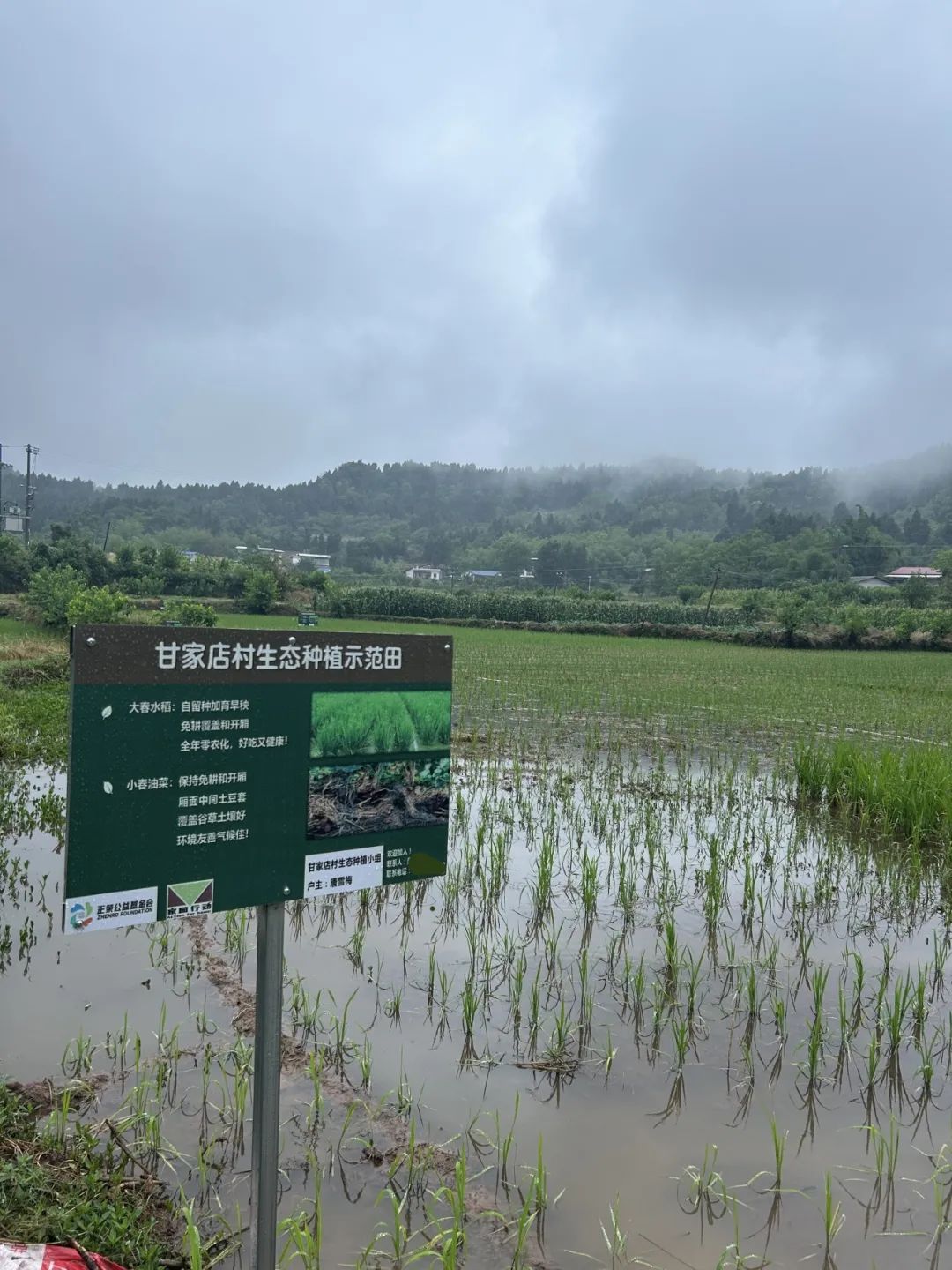
Stepping into Yang Xiuyou’s paddy field, Yuan Yong reported the data from the soil tester to his Home Action colleagues: “pH 5.6, temperature 26°C, soil depth approximately 10 centimetres.” Deeper into the field, he measured a pH of 6.4 at 26°C. In an adjacent plot, Yuan recorded a pH of 5.1 and a temperature of 25°C. This belonged to another villager who had only started adopting ecological farming this year.
For rice, slightly acidic to neutral soil is most suitable for the absorption and utilisation of various nutrients, typically within a pH range of 5.5 to 6.5. In conventionally farmed fields, the soil pH often falls below 5.5 due to the use of acidic substances such as pesticides and chemical fertilisers. However, after three years of ecological farming, the soil pH on Yang Xiuyou’s land has undergone a marked change.
“The natural restoration process of the soil is actually quite fast. Look, in just two or three years on your land, it’s already moved up to six-point-something. With these baseline figures, you should have confidence now, right?” Yang Xiuyou stood on the ridge of the field, listening silently to Yuan’s analysis.
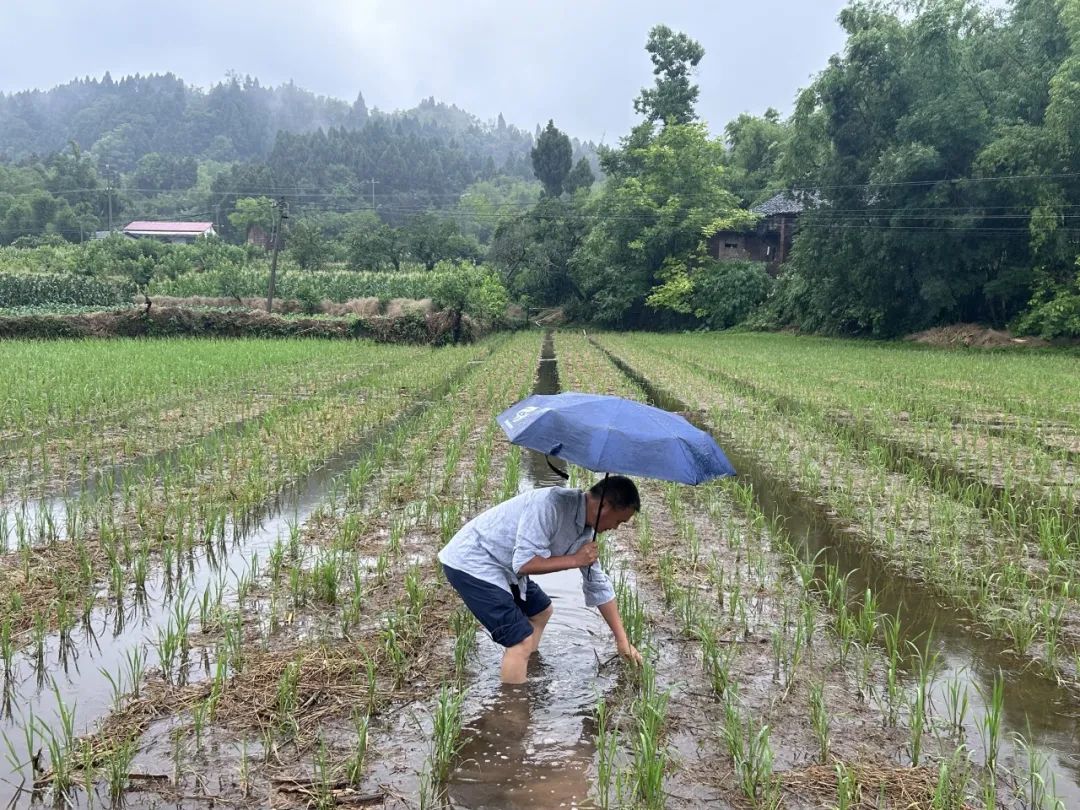
This is the third year he has adopted the climate-friendly rice cultivation techniques promoted by Home Action.
Unlike traditional flood irrigation, this method involves planting seedlings on raised beds with ditches; water only needs to be maintained in the ditches to reduce the total amount of irrigation required. This ecological approach also emphasises the use of traditional local varieties and the implementation of no-till farming and straw mulching. This means avoiding manual or mechanical tilling of the soil as much as possible and covering the fields with straw after transplanting to control weeds, increase fertility, regulate soil temperature, and maintain moisture.
The strict prohibition of chemical fertilisers, pesticides, and herbicides sounds almost “counter-intuitive”. However, Yang Xiuyou was drawn to the method because it saves water, withstands drought, and reduces the cost of agricultural inputs—even though the first year of trials was not smooth.
Due to the spring drought of 2023, the first crop of rice could not be planted. To mitigate losses, Yang converted two mu of his land to soybeans in July, applying the same no-till and mulching ecological principles. That year, most of the village’s soybeans suffered from powdery mildew, leading to reduced yields, but Yang had a bumper harvest. He eventually sold his ecological soybeans at 4 yuan per jin, while conventional soybeans fetched 3 yuan per jin on the market.
“At first, I planned to sell them for 5 yuan a jin, but then I thought, never mind.”
“Everyone else thinks about selling higher, but he thinks about selling lower,” Yuan Yong teased from the side.
“My only cost was the seeds,” Yang laughed.
Last year, the two mu of ecological rice finally yielded a harvest, with the first crop producing about 700 jin per mu. After this, by regrowing seedlings and ears from the existing rice stumps, he harvested another 100-plus jin of ratoon rice in the autumn. In addition, he grew some maize, which is more drought-tolerant than rice.
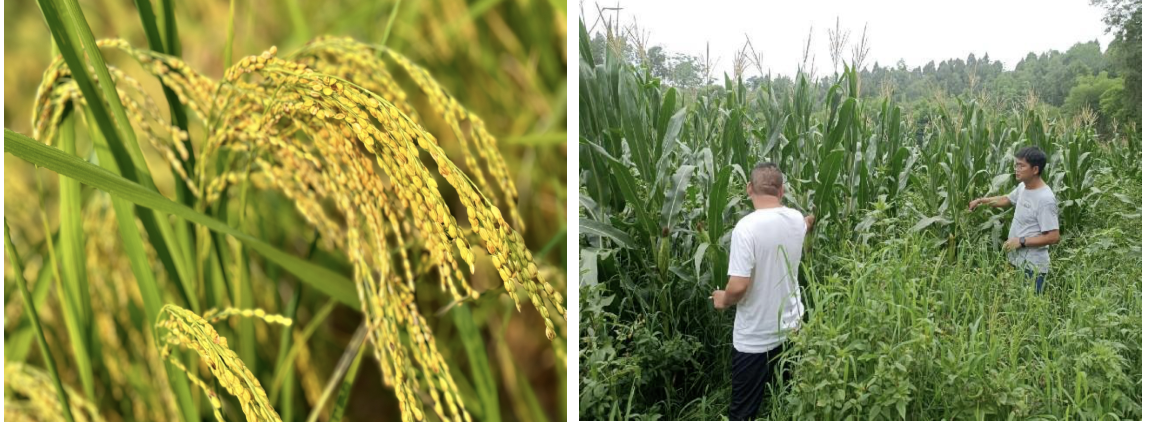
The harvested grains were sealed by Yang in plastic bags and stored in iron grain drums for his family’s yearly consumption—except for the 100-plus jin of ratoon rice, which had been mostly eaten by birds while drying on his roof.
“It’s not just one place; we’ve encountered many villages where residents store grain this way,” said Hu Xiaoping, head of Home Action. He noted that one of the villagers’ reasons for not selling their grain is linked to climate change. Affected by extreme weather, villagers worry that land which produces good rice this year might not do so next year. Hu Xiaoping observed that some of the villagers he worked with stored enough grain to meet their family’s needs for three or four years.
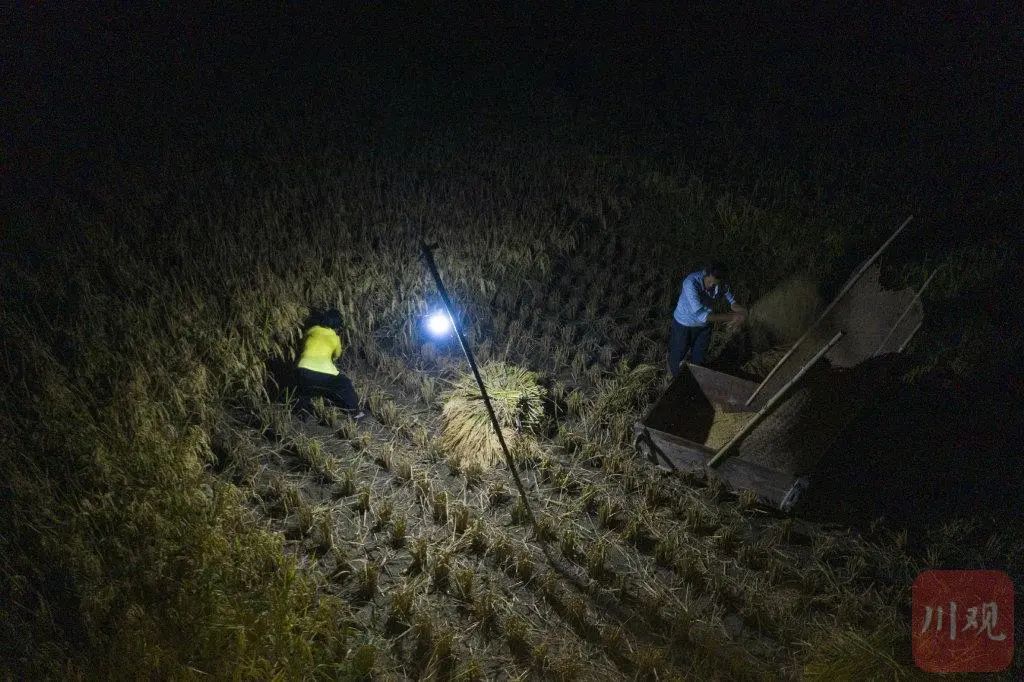
These fears are not unfounded. With climate change, drought and extreme heat events in Southwest China are increasing significantly. In Yang Xiuyou’s village, the rice was too dry to be planted the spring before last. Last year, it was planted, but they almost couldn’t harvest it—following the Start of Autumn, Eastern Sichuan suffered several consecutive days of extreme heat. It was impossible to work the land during the day, leaving many farmers with no choice but to harvest their rice at 10 pm by torchlight. They said they had never encountered such heat before.
II. We cannot respond to climate change in ways that exacerbate it
Particularly the farmers, who are at the mercy of nature and provide food for all of humanity—what should they do?
Hu Xiaoping graduated from China Agricultural University with a degree in Rural Regional Development and possesses deep experience in rural community development, ecological agriculture, and local economies. In 2017, he founded Home Action, focusing on agriculture, community governance, and the protection of local culture. As the head of an NGO, Xiaoping’s life is split between two linguistic worlds that run in parallel and occasionally intersect: when fundraising or discussing projects externally, he speaks Mandarin, and sometimes English, constantly responding to the recurring concerns of domestic and international climate philanthropists—how China is reducing greenhouse gas emissions, and what innovative paths rural areas can take to adapt to climate change.
When he returns to the village, he speaks the local dialect, chatting with the aunties about the taste of traditional food varieties and the problem of pesticide bags being discarded haphazardly. The ability to translate between these two discourse systems—the external and the internal—is a fundamental skill for rural workers. In recent years, more and more NGOs have taken root in the countryside, attempting to solve the troubles brought by climate change. For the increasingly hot and dry provinces of the Southwest, everything from installing fans in village activity rooms to building micro-reservoirs has its use.
But in Xiaoping’s view, the key to facing climate change is not the translation and transmission of discourse (i.e., simply making farmers aware that “climate change” exists), but rather dismantling the agricultural systems that trap farmers in a climate crisis, allowing them to find a way of life that coexists harmoniously with nature while providing enough return to sustain their dignity as workers.
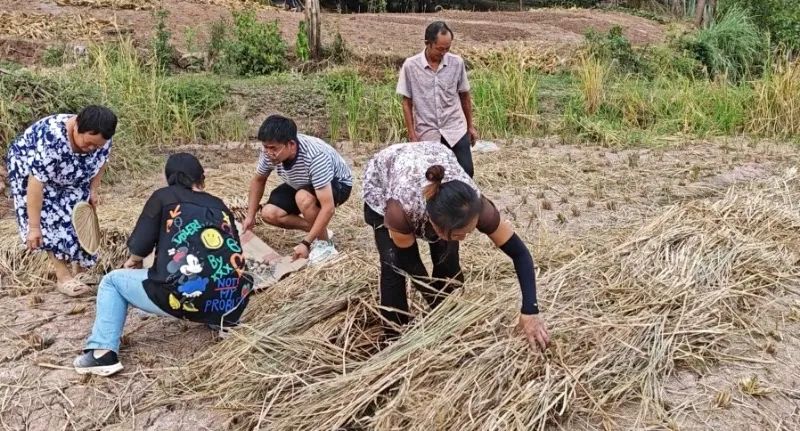
They are currently rolling out this ‘experiment’ across several villages in Sichuan. Yuan Yong, who spends most of his time embedded in these villages providing technical training to farmers, puts it incisively: ‘We cannot counter climate change through short-sighted methods that only exacerbate it.’
Ultimately, Home Action’s logic operates on two levels. First, the promotion of ecological farming techniques, the core of which is rebuilding healthy soil through no-till cover; extensive scientific research has confirmed that soil acts as a vital buffer for agriculture in the face of climate change. Second, an emphasis on farmer autonomy, reducing their reliance on external inputs and strengthening the cohesion of community self-organisation. These two goals are two sides of the same coin: ecological techniques free farmers from the grip of fertiliser, pesticide, and seed distributors, while the daily acts of observing one another’s methods and exchanging seeds deepen the bonds between the left-behind elderly. To some extent, this also functions as a form of ‘social elderly care’.
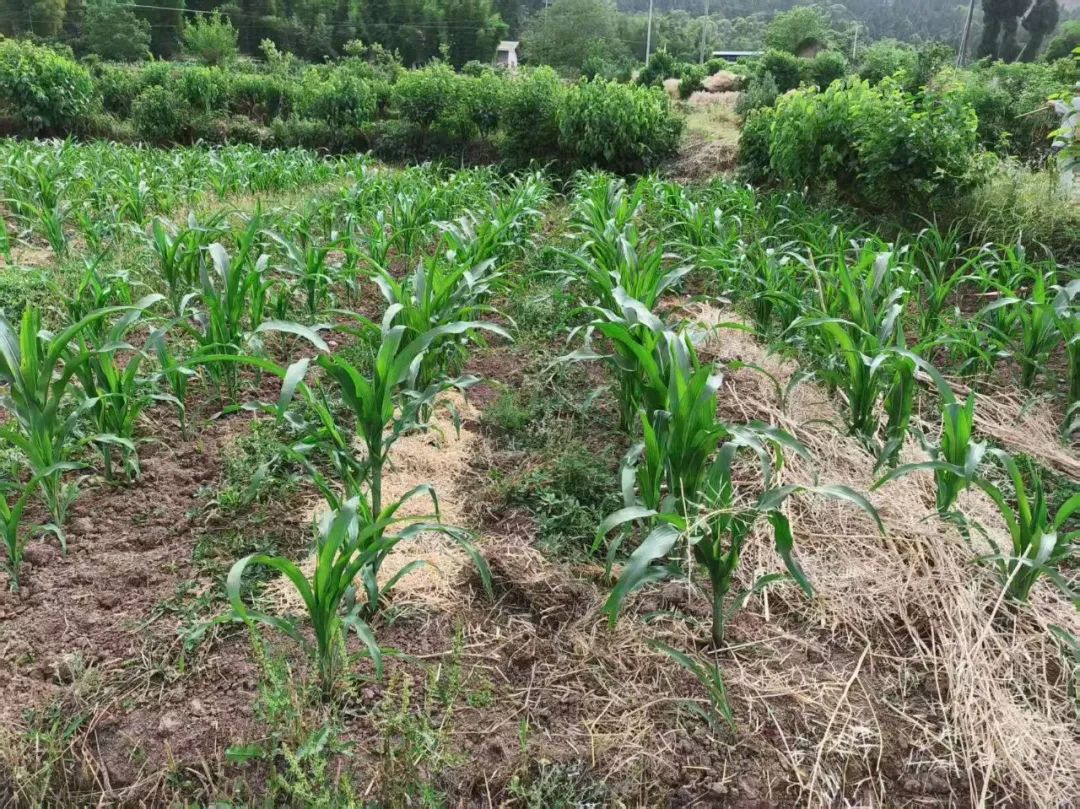
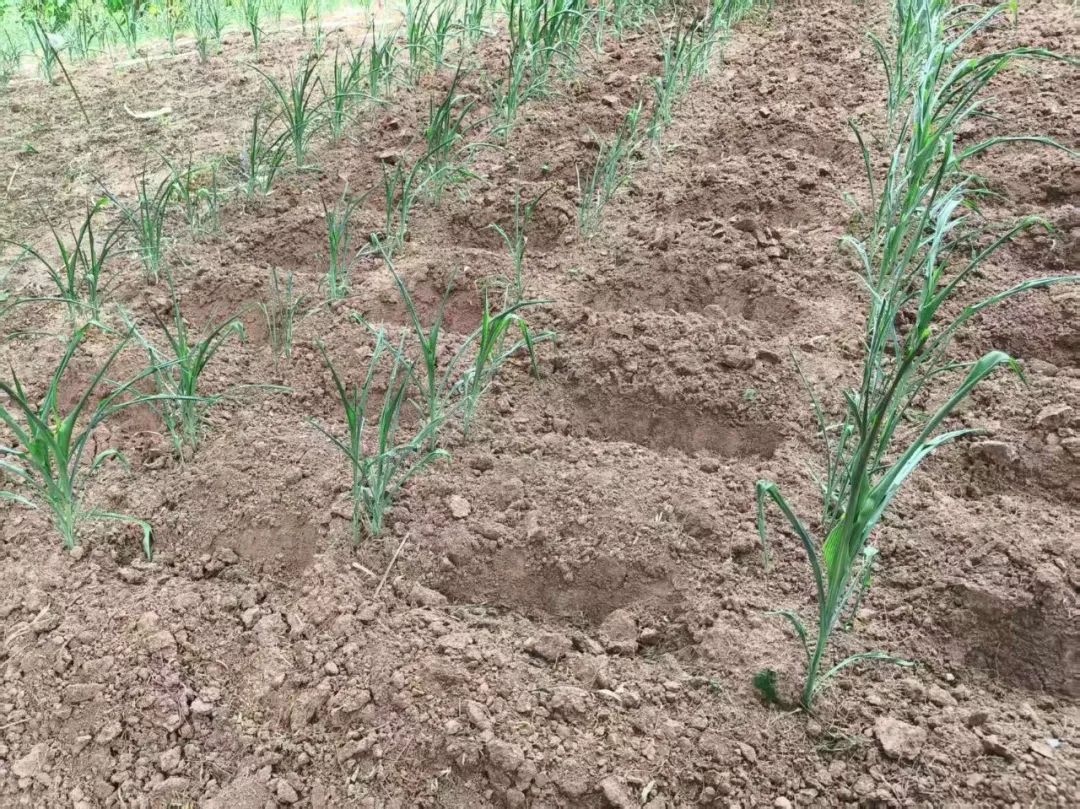
Last year in Zhaizi Village, Jianyang, I attended a training session hosted by Yuan Yong on no-till bedding techniques for ecological rice. He didn’t start the session in the role of an agronomist; instead, he began by chatting with the crowd about health and the spring droughts. Yuan Yong invited Uncle Zhong, a farmer who had started using no-till bedding for his rice the previous year, to share his experience.
At first, Uncle Zhong was a bit hesitant, but as soon as the conversation turned to the current use of pesticides, he opened up. ‘You absolutely must not use pesticides!’ he exclaimed. As the session ended, he laughed while seeing everyone off: ‘People in the city have to pay for gym memberships to exercise, but I don’t need that! Working in the fields every day keeps every muscle in my body toned.’
Yuan Yong noted that physical and mental health was the most frequently mentioned need during discussions with the villagers. During their baseline survey, they had interviewed villagers to understand their needs, expecting income to be the primary concern. To their surprise, health ranked first.
‘Second was care for those left behind, then how to improve parent-child education, while increasing the guarantee of basic living supplies ranked eighth.’ From the villages they visited, the pressure on livelihoods was actually not as great as expected.
This observation is also linked to how Home Action selects its project sites.
Xiaoping explained that when choosing locations, they prefer villages where most of the land is still owned by the villagers. ‘In these cases, the variety of crops is much richer, which basically meets the villagers’ seasonal needs for food. A core reason for this is that the residents of such villages do not rely entirely on the land for their economic income.’
These villages also tend to face severe ageing and ‘hollowing out’. Those who remain place a higher value on their emotional connection to the village, yet they often lack self-organised community structures in their daily lives. Given this reality, whenever Home Action enters a new village, they do not rush to promote ecological farming techniques. Instead, they organise activities and engage in dialogue with the villagers to jointly explore the most suitable entry points for climate adaptation locally.
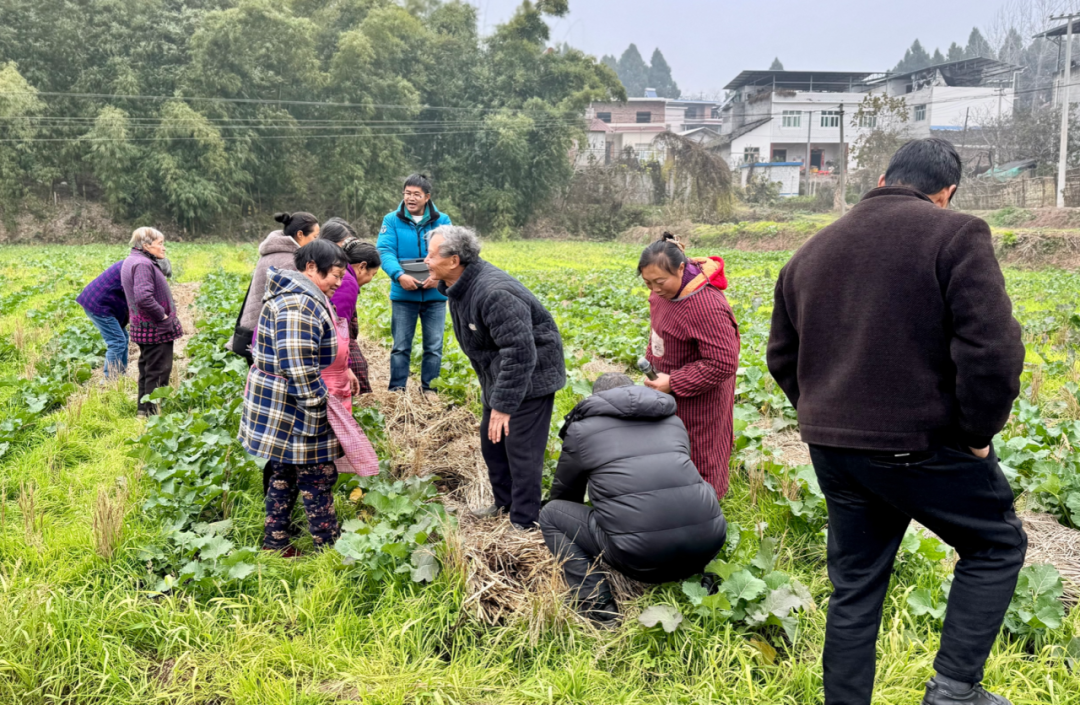
Through these activities and exchanges, the villagers began to develop a tangible, first-hand sense of climate change and a way to express it. For instance, during one community discussion, a villager noted that abnormal temperatures the previous year had caused the flavour of that season’s fermented bean curd to be consistently off.
At the Songping community project site in Panzhihua, frequent communication with the villagers revealed a key entry point for addressing climate change: the protection of heirloom varieties.
“At first, when we went to the village and asked if people had any local heirloom varieties at home, everyone said they didn’t,” Hu Xiaoping recalled. However, further contact with the villagers soon proved otherwise.
When they visited villagers’ homes for a chat, facing the sunflower seeds, peanuts, and dishes offered to them, they would ask where the seeds for that food had been bought. This immediately prompted a different version of the story: “These are our local peanuts; they’re a bit smaller, but they taste wonderful. This vegetable is a local heirloom variety; you can plant it once and eat it for years.” Based on the heirloom varieties identified through this research, Home Action launched a ‘Vegetable Garden Project’ in the village, encouraging 30 households to convert their small private plots to ecological farming methods.
Additionally, they supported a local ecological arts troupe in managing agricultural waste. This case was included in a presentation Yuan Yong used during a lecture in another village: “When the locals take the initiative to engage in these environmental governance activities, other community members who aren’t participating see it and realise, ‘They are people from our own village, not outsiders,’ and they become far more conscious about not littering.”
III. Improving the lives of those who stay
“Whether it’s ‘conservation tillage’ or ‘climate-friendly rice cultivation’, these are external terms and techniques. We don’t want the villagers to simply learn a set of techniques from us; we want them to learn how to observe and analyse their own current problems, find experience within their own traditions, and establish their own understanding, techniques, and methods of action,” said Hu Xiaoping.
This transformation does not happen overnight; it is a process where the changes made by a few gradually influence many more. In Zhaizi and Ganjiadian villages, I met elderly farmers willing to experiment; they are men of few words, but they speak with endless passion when discussing their planting experiences.
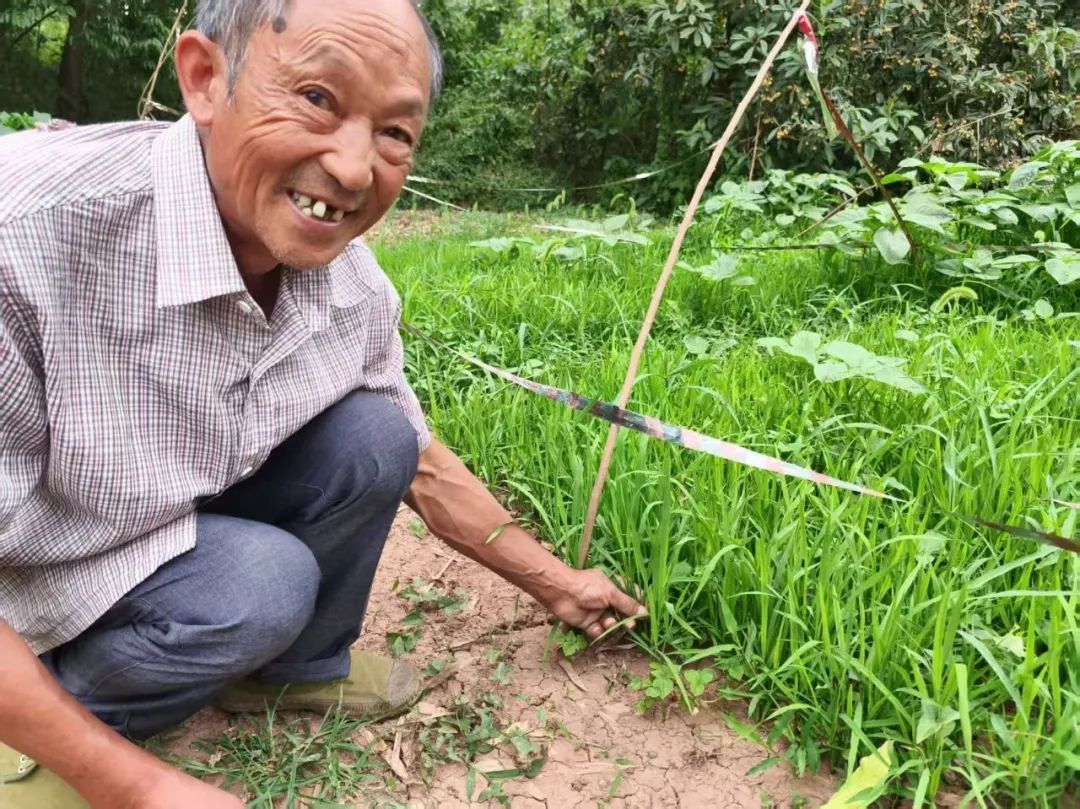
These individuals are what Hu Xiaoping calls the ‘community pillars’. Cultivating such key figures is a primary goal for Home Action at this stage. “The issues we are discussing align with the needs of these pillars. For example, on the issue of soil degradation, Uncle Zhong from Zhaizi Village noticed it himself, so when we discuss these problems, he doesn’t think we’re talking nonsense.”
In Ganjiadian village, Yang Xiuyou is one of their key partners.
This year, the number of villagers willing to try this method has increased to four. While Yuan Yong was testing the soil in Yang Xiuyou’s paddy field, Sister Tang, who also uses ecological planting, arrived. Due to the compaction of the soil and this spring’s extreme drought, she repeatedly told Yuan Yong that under the no-till method, the seedlings were difficult and painful to plant by hand.
Listening to this, Yang Xiuyou whispered from the side, “Planting seedlings is a bit hard this year, but they don’t understand. Usually, we have a bit of grass covering the surface; you just push the grass aside, poke a hole in the soil with your thumb to let the seedling stand, and that’s it. It’s not entirely the same as planting in water.” Once back at home, he spoke about the fertiliser and pesticide formulas he had learned online over the past two years. The field fertiliser is made from brown sugar, white vinegar, and beer; “you can also soak chillies in white vinegar for half a month, and it’s very effective against stem borers.”
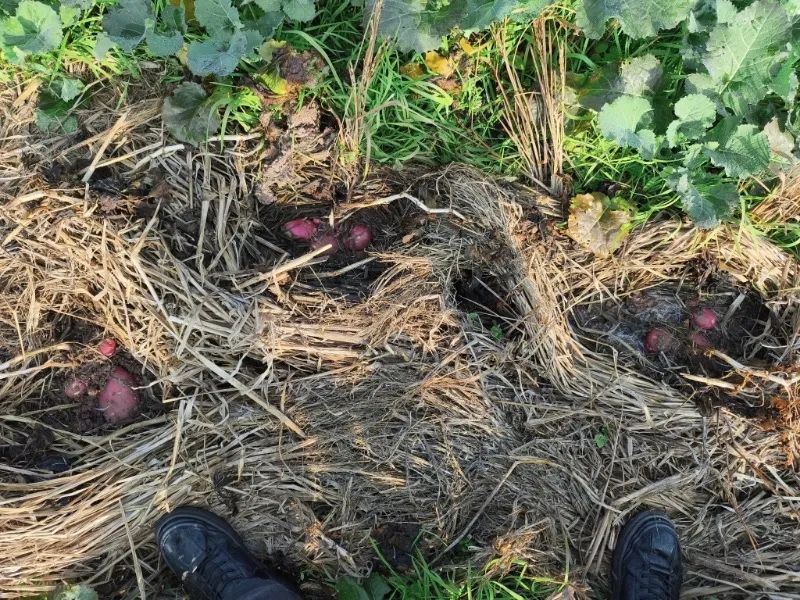
This year, Yang Xiuyou applied this no-till cover ecological planting philosophy to more of his land. In addition to continuing the grass-covered maize fields, he experimented with dry rice planting on a small plot using the Mo-jiang purple glutinous rice, an heirloom variety provided by Home Action. In autumn, he plans to plant potatoes in the rice fields immediately after threshing. Following Yuan Yong’s advice, he will use the straw covering the ground, digging ‘seed nests’ in the grass to place the seeds before covering them again. “It’s convenient; when it’s time to harvest, you just push the grass aside.”
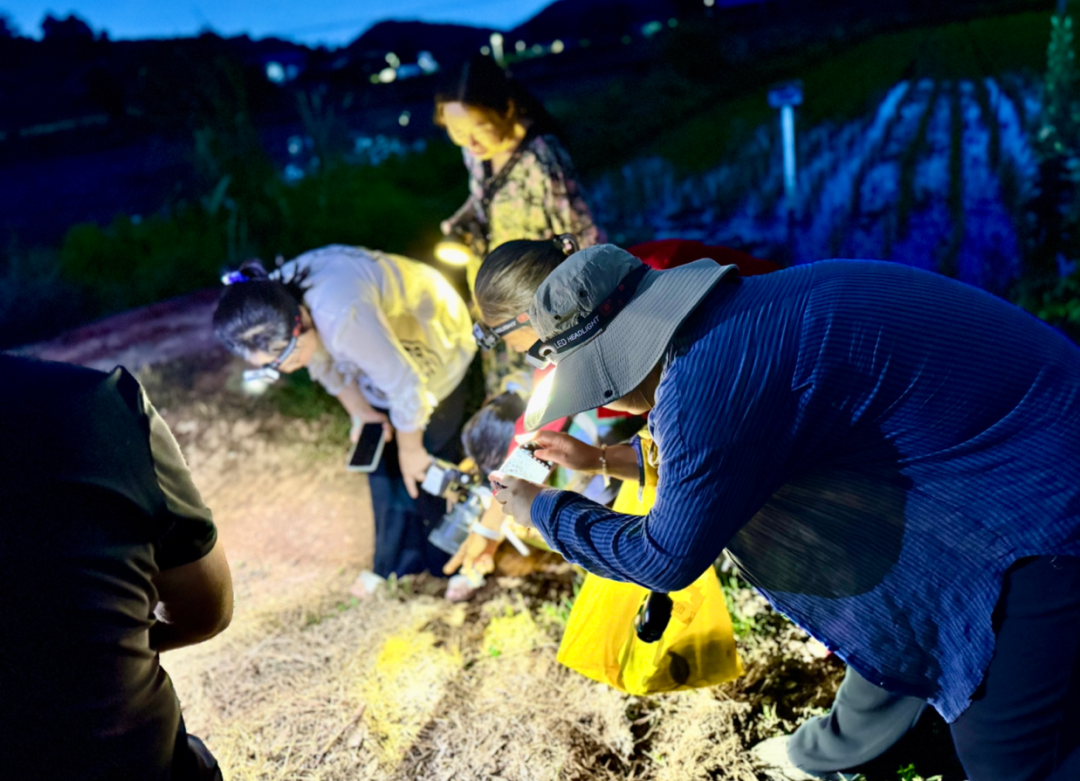
Not long ago, Home Action organised a night observation and biodiversity survey in Zhaizi Village, about 50 kilometres away. The ecological fields saw an increase in frogs, insects, and birds. After the activity, birdwatching became the favourite pastime of the village’s older women.
“Facing the problem of rural hollowing, we haven’t tried to attract young people back to the village through specific jobs. Instead, we look at it from another angle—how those who stay can live a better life,” said Hu Xiaoping.
Unless otherwise noted, images are provided by Home Action
Editor: Ling Yu