Brazilians Destroying Forests Is Their Problem — What Has It Got to Do with Us?
The Amazon rainforest is vanishing at a rate of millions of hectares per year.
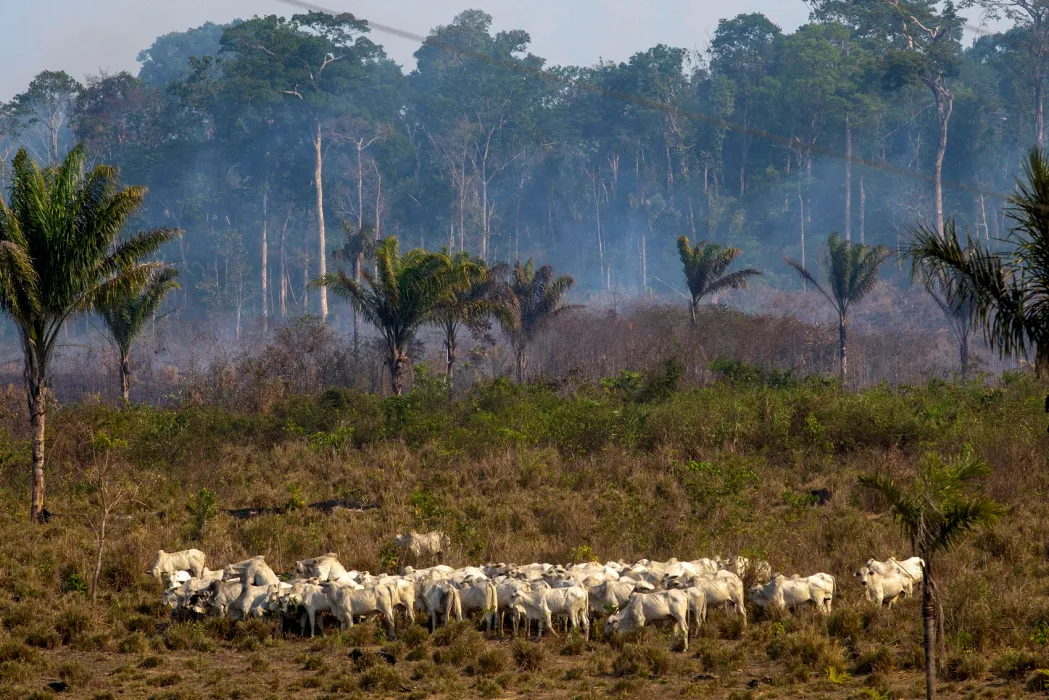
In the first twenty years of the 20th century, the deforested area in the Brazilian Amazon reached 44 million hectares — more than the entire area of China’s Yunnan Province. Expansion of livestock farming is the leading cause of illegal deforestation — low-cost pastureland and feed have underpinned the price advantage of Brazil’s beef industry. Industry giants led by JBS have been sourcing cattle from illegally deforested ranches, making “environmental windfalls.”
In January this year, a work funded by Foodthink’s Lianhe Programme, “Fake Meat” Drives Out Real Meat: The Dining Table, Herders and the Amazon revealed that JBS meat products have already reached the tables of herders on the Qinghai-Tibet Plateau. Since 2022, mainland China has imported over one million tonnes of Brazilian beef per year, accounting for more than 40 per cent of total beef imports. In addition, Europe, and Hong Kong, China are also major importers of Brazilian meat products.
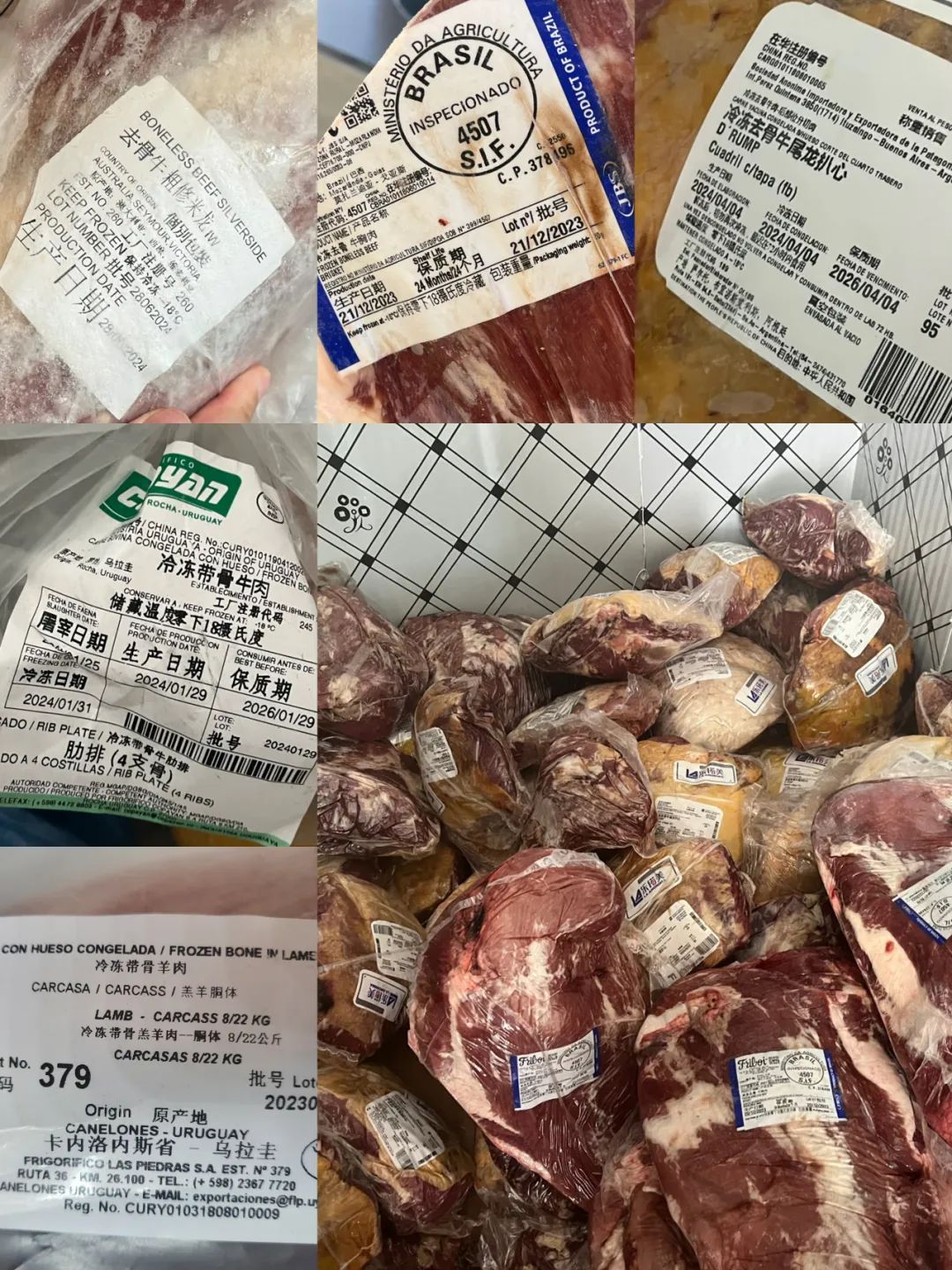
Some dismiss any link between beef consumption and deforestation as utter nonsense — a classic case of “China-bashing.” Others support environmentalism and argue that importing Brazilian beef eases pressure on China’s grasslands, calling it a “necessary evil.” Some prioritise food security and warn that dependence on imports will sooner or later create a chokepoint dependency.
Other readers try to grasp the complexity the article seeks to convey. They see the destructiveness and negative externalities of industrialised production systems, recognise the multiple values of traditional pastoralism, and feel firsthand how biodiversity loss, accelerating climate change, and the inequity of food and agriculture systems affect the Community with a Shared Future for Mankind.
What do you think? Which end of the spectrum are you closer to? You are welcome to take the poll at the end of the article and leave a comment to tell us what you think.
Perspective 1: They Just Want Higher Prices!
An utterly pointless article. They just want higher prices, that’s all — all it comes down to is that little bit of meat the herders sell The wealthy can afford it. Ordinary people can forget about eating it!
Protecting their own interests is the real core of the matter. Imported meat has hit the previously inflated prices of beef and mutton hard, so they resort to drawing a distinction between “real” and “fake” meat to prop up those old high prices.
Meat has become cheaper — it’s just that their profits have taken a hit. Ordinary people live from day to day; they buy whatever is cheaper.
One amusing point: every cattle-raiser thinks their cattle are the best and should fetch a higher price. Yet most of the people who actually pay to eat beef do not accept that price — some herders themselves refuse to accept it and will buy cheap imported meat for their own tables. Nobody denies that grass-fed is better than grain-fed, but nobody has pointed out that grass-fed is about giving the rich better quality, while grain-fed is what lets ordinary people afford beef at all. Stop emphasising that Tibetan yaks are rich in omega-3 and good for cardiovascular health. For ordinary people, simply being able to eat beef — and more of it — is already a sign of an improved standard of living. It seems that herders raising yaks domestically have contributed almost nothing to this, yet expect to earn more. In short, if you think your cattle are good enough to command a premium, sell to the wealthy — sell to the world.
On one hand, I feel sympathy for herders whose livelihoods have been disrupted and I resent capital’s pursuit of profit at the expense of the environment. On the other, cheaper beef means more people can afford to eat more meat, and per-capita meat consumption in China was already low to begin with.
Objectively, I understand the herders and I sympathise with them — but with a salary of three thousand yuan, I still want a taste of beef.
As an ordinary consumer, choosing to yield to price in the face of everyday necessities is hardly blameworthy. When the granaries are full, propriety follows; when food and clothing are ample, dignity follows. Confronted with such grand issues, most people will still prioritise meeting their most basic survival needs first. Real change is very hard to bring about through individuals alone.
Perspective 3: Small-Scale Operations Simply Cannot Compete with Industrialised Farming
Free-range grazing will never compete with intensive, large-scale farming — that is simply the law of business.
Their grass is better, their technology is better. Instead of thinking about how to improve production methods, all they do is complain.
This is merely a glimpse of what we call the advanced, modern products of human progress — scientific and technological development, industry specialisation. You can call it progress; you can also call it regression. But it is the trend of the times, something that cannot be resisted — nor is it clear why it should be resisted at all.
Many people simply cannot afford to pay high prices for beef and mutton, given the income levels. With imports filling the gap and driving prices down, more people can eat meat — surely that is a good thing? As for herders’ incomes, industrial transition takes time, and some pain in the interim is inevitable. Think of how difficult it was for workers who were laid off in the past — the whole country went through it together.
Why can foreign producers raise beef cattle at such low cost while we cannot at home? Is it not because grazing-based methods in pastoral areas are too inefficient and too expensive? Is it not that imported meat is cheaper, rather than domestic meat being overpriced? What is there to say when small-scale operations cannot compete with large-scale farming?
The traditional production model has met its reckoning in the market economy era. Reform is essential — we must move with the times.
A very well-written and realistic article. As someone born and raised in Gannan, this piece touches on many things that local people rarely pay attention to. Sitting on the fringe of the Qinghai-Tibet Plateau, the pastoral areas of our three counties — L, M and X — once had livestock farming as a pillar of the local economy. But the traditional pastoralism based on something akin to the household contract system, compounded by natural constraints such as the absence of large-scale grasslands, has kept local animal husbandry intensely local and traditional, unable to compete with large-scale, capitalised, industrialised livestock operations. It is like comparing the livestock industry of the American West with the grazing factories of the Pampas — with the globalisation of economy and capital, decline is inevitable. South America is not only Brazil’s beef, nor is it only recently that Argentine beef has entered the Chinese market. What exists has its reasons; to a degree, most consumers’ purchasing choices reflect market demand… the market shapes demand, and capital absorbs the sunk costs. Yet for those of us born here, we do not want to see a pillar industry of our homeland compressed indefinitely, even to the point of losing all sense of direction. I believe sustainable development and industrial upgrading of local animal husbandry are the urgent priorities. Among us locals, a large proportion still buy only locally raised grass-fed meat when they eat meat at home, rarely purchasing imported products. Even local restaurants have a premium category dedicated to grass-fed and other locally sourced meats. But with only a tiny slice of traditional and upgraded local markets, compounded by the younger generation’s growing indifference to traditional channels, we simply cannot withstand the shock of capitalised livestock farming.
Why is meat that strictly follows food safety standards, passes inspection and quarantine in more than one country, and circulates legally in many parts of the world considered “fake meat”? Why is meat produced by methods that are traditional but evidently unhealthy, unhygienic and unsustainable considered “real meat” — simply because it comes from a traditional way of life? Why should we long for and cling to a way of producing and living that is inefficient, unhealthy, and unsanitary? Why is a safe, healthy, efficient system that lets more people — including the poor who could never afford it before — eat meat at a lower price almost a priori deemed wrong and bad, even when it meets all legal and regulatory requirements?
(Reply to the previous comment) You are completely conflating all the concepts. 1. Safety and health are two different things — try drinking cola as if it were water, every single day. 2. Health and flavour are qualities that inevitably get eroded by the pursuit of safety and profit.
In reality, the quality and safety of imported meat surpass most domestic meat. It is simply the freezing process that dulls the freshness and texture.
The quality of beef and mutton from Brazil, Argentina and Australia is actually not bad either. The main issue is that it has to be frozen for the journey to China, and frozen meat will never taste the same as fresh.
Profit is just profit — this notion of “strict adherence to food safety” has long been an empty slogan! Look at the state of food in China today: strict compliance with food safety standards has long been hollowed out by profit and so-called modernisation! I ask you: is home-cooked food healthier, or is your so-called food-safety-compliant ready-made meal healthier?
Dairy production has very high requirements for both raw materials and processes. Most of the milk we drink nowadays is also what people call antibiotic-contaminated milk — much of it has antibiotic residues exceeding permissible levels, and there is no way around it. It is like how many of the medicines we take for illness contain hormones. Raising cattle is no different. Then there are the requirements for processing and production environments — it is all quite a hassle.
I am a feeding worker at a feedlot. You have no idea how filthy it is here. I dare not eat the meat myself. They give the animals injections every few days. There are other things I will not go into — I cannot say what kind of injections they are. If you have the choice, stick to meat from more conventional sources.
Finishing has thoroughly ruined the authentic quality of the meat. I am serious. Ever since feedlot-finished beef and mutton appeared on the market, I have barely eaten any — it reeks. With finished beef and mutton, the texture may improve, but the natural flavour turns foul. The mutton is particularly offensive. Originally, beef and mutton from the grasslands had more character than that from other regions. Now it all smells dreadful — just with different regional labels.
When I visited Inner Mongolia before, the beef there was yellow-fat beef, and it was truly delicious — filling, too. At a barbecue restaurant, we ordered meat by weight and two of us finished a jin and a half with no other side dishes at all, absolutely stuffed. In Shanghai, we would manage two jin but would need side dishes to go with it. In 2021 I bought a piece of bone-in meat there, froze it in the fridge, and boiled it in 2024. When I parboiled it, there was almost no blood foam, and it was wonderfully fragrant — no gamey smell whatsoever. No need for spring onion, ginger, or star anise; just a pinch of salt and it is good to eat. Very fresh, with a hint of milky aroma.
Free-range beef and mutton from Tibetan pastoral areas is the healthiest of all.
Let me speak from the heart. I grew up in the pastoral areas and I love meat — I absolutely love it. But now when I go to a restaurant, I will not order the beef or mutton on the menu. It is 100% imported meat. It is not that imported meat is bad, but I genuinely cannot bring myself to eat a single bite.
Perspective 7: “There Are Always Scheming Commoners Plotting Against Me!”
Classic “China-bashing”. China, which could not even put enough food on the table before the 1980s, has ended up being blamed for the destruction of the Brazilian rainforests.
Oh, right, right, right. So Chinese people eating meat makes them the chief culprits behind the Amazon rainforest, while Americans eating meat is perfectly justified. A textbook spineless public intellectual.
You cannot embrace free trade only when it suits you to dump your products on others. Besides, whether Brazilians destroy their rainforest or not is their own business. What has it got to do with us?
Bro, you are absolutely right. Today they tell you that eating meat harms the rainforest; tomorrow they will say eating seafood harms the ocean; and the day after that they will say developing industry affects the atmosphere. The moral finger-pointing and PUA (psychological manipulation) will never stop — in the end, even breathing will be wrong. Just look at what is happening now: because farmers are not allowed to burn crop residue, pests and plant diseases are getting worse and worse.
Even though ordinary people are eating regular imported meat, it indirectly protects our own pastures and, not to mention, drives beef prices down. In this economic climate, people can afford to eat beef all year round — why would you not give credit where it is due? Is it wrong for individuals to make small sacrifices for the greater good? Must beef prices be kept artificially high? When both options carry harm, you choose the lesser evil. Being China’s parent nation is no easy task.
Also, do not put the blame for deforestation on our own heads. It has nothing to do with us. Doing our own environmental protection well is the greatest contribution we can make to the world.
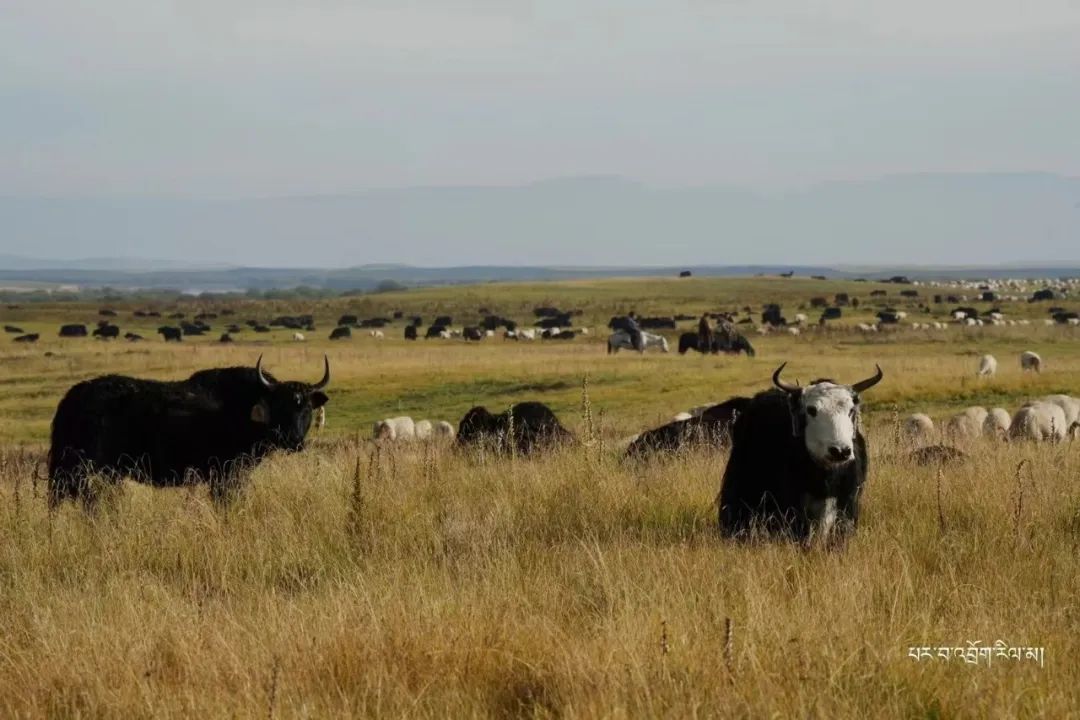
If there must be a connection, let me say something politically incorrect from a globalisation perspective: perhaps it is precisely by relying on globalisation and widespread imports — with our main beef consumption supported by imported soybeans for raising beef cattle, as well as direct imports of finished meat — that China’s pastoral areas and grassland ecosystems are spared the role of safeguarding national food security, and are thus able to help us maintain the Water Tower of China and the ecological barrier of the Qinghai-Tibet Plateau… That is why many people domestically are actively working to promote “zero-deforestation soy” initiatives. Though still in its early stages, it is worth paying attention to. Any effort to connect a local issue to a grander perspective is commendable, but it also requires caution, because the complexity involved may far exceed what we imagine. — “Yaks Should Never Be Just Beef”
Do you know why the country always buys imported meat? Do you know how much the state invests every year in restoring and protecting grasslands? Do you know how much subsidy the state provides every year for herders’ equipment purchases? I hope you will study this comprehensively, keeping the country’s long-term strategic thinking in mind. Try engaging more with people working in agriculture and pastoral affairs. I used to think the same way, but after multiple rounds of learning about national policy, I feel the government is looking further ahead than we realise. No matter how much imported meat Chinese people eat, it has absolutely nothing to do with tropical rainforest destruction. Do not drop labels from thin air — they can perfectly well take other approaches. Our own pastures in China need protecting too. Look after your own house first.
Buddy, you may not eat it, but plenty of others will. But you need to understand — the soybean crisis did not happen overnight. Over here, many herders have stopped raising cattle and sheep entirely; every day they keep them, they lose more money. When the vast majority of people in China stop raising them, do you think imported beef and mutton will stay cheap?
Perspective 10: The Burning of Rainforests Across the Ocean Concerns Every Living Creature on Earth
As a herder, I think the term “fake meat” is remarkably precise — it perfectly captures how they define “meat”. Especially in terms of global food security, calling meat produced through modern feed-processing technology and force-grown to maturity “fake meat” is highly representative and carries important guidance for food safety and public health!
This is just one example of how industrialisation and globalisation have affected the lives of people across the Earth. Because the issue of yaks is not simply about what meat to eat… changes in lifestyle, destruction of the ecological environment, and the reshaping of culture and history are all woven into it.
Eat cheap “fake meat”? Or expensive “real meat”? Eat more cheap “fake meat”? Eat less expensive “real meat”? In truth, there are many choices. But as a herder, a choice may need to weigh the sustainability of one’s livelihood. As a consumer, perhaps one needs to consider the sustainability of wellbeing — health, education, social relationships, the environment, one’s mental state, and so many dimensions beyond the material. — “Eating ‘Fake Meat’ or ‘Real Meat’? Perhaps What We Should Really Focus On Is Food Security”
I do not understand why you insist on putting yourself in the consumer’s shoes first, then finding excuses for the act of consumption. The way imported beef has invaded herders’ traditional way of life is a complex issue, and the current situation was created jointly by consumers and national decision-makers. Why can it not be criticised?
Those of us who grew up in pastoral areas eat meat from childhood — our dietary habits are simply different from those in agricultural areas, and our tastes differ too. This is not a matter of failing to compete or complaining without cause. It is a question of herders, a group of ordinary people you do not understand, whose living and working spaces are being disrupted and who have no means to resist.
(I am) a practitioner in agricultural and rural work. I believe the provincial government should consider whether it needs to coordinate herder and livestock management — including but not limited to providing quality inspection services and establishing livestock alliances. Despite the enormous challenges, small-scale herders are numerous and scattered; they are the bedrock of national food security and must not be abandoned.
I say this responsibly: the value of yaks on the Tibetan plateau has not disappeared — rather, it needs to be re-examined and reassessed in the context of a new era. We should take a comprehensive view of economic, ecological, and cultural factors to promote the sustainable development of the yak industry.
Follow the laws of nature and live in harmony with the natural world, and the human body will be healthy! Traditional nomadic life is the true way to survive. Be grateful to nature and hold reverence in your heart.
I work in the agriculture sector. The author writes brilliantly, and the analysis is spot-on. But I am convinced that everything follows its own pattern. Brazil, Argentina and their ilk are killing the goose that lays the golden eggs, and their comeuppance will surely come to pass before long.
Emotionally, I have great sympathy for the herders, and the climate crisis is pressing. In some countries, land is disappearing at a pace that can no longer be described as “slow”. Even if we look the other way when it comes to what happens abroad, extreme weather is occurring ever more frequently at home — this year alone, drought has cut crop yields in Liaoning. The burning of rainforests across the ocean concerns every single living creature on Earth. Buying “fake meat” does not merely harm herders here at home; it also damages the environment right around us. How can anyone say it has nothing to do with us?
Take pastoralism, for instance. Is intensification the only way forward? The negative consequences of intensive production are enormous. Much of the environmental damage caused and the health risks ignored under the logic of putting economic growth first have gone unexamined. Flip it around, and you can see that traditional pastoralism is inherently sustainable and green. If our market mechanisms and policy support are not adjusted in time, and the products that better serve our modern needs — for health, the environment, the economy and society — are allowed to vanish while producers are harmed, that is the fault of the system, not a matter of purely value-based preference.
The essential problem with cheap meat lies in the negative externality — production inflicts profound damage on the environment and on society, yet the cost of that damage is never incorporated into the pricing system. Tradition, to be sure, should not be treated as some unchanging inheritance, since it has always been shaped and reshaped within history. To respect tradition is also to recognise that it evolves in symbiosis with the needs of the times. By contrast, climate change and ecological imbalance carry irreversible costs that every last one of us will ultimately pay. Cheapness, however, is merely a surface appearance, bought at the cost of uninternalised environmental and social losses.
The article is excellent. It lays bare the complex lives shaped by the corporatisation and globalisation of “capital”, revealing numerous hidden connections and making us aware that our individual actions, accumulated over time, may amount to an unstoppable torrent that crushes all before it. These connections are real, and we must not pretend not to see them. Anthropology, of course, is not about nostalgically clinging to “the old” and resisting “the new”; at its heart, it is rooted in caring for the human condition. Whether or not we should take a “Big History” view, we ought to cast a caring glance towards the vulnerable in our lifeworld, rather than turning our eyes away from others” suffering.