
What Is It Like to ‘Herd Pigs’ on the Loess Plateau?
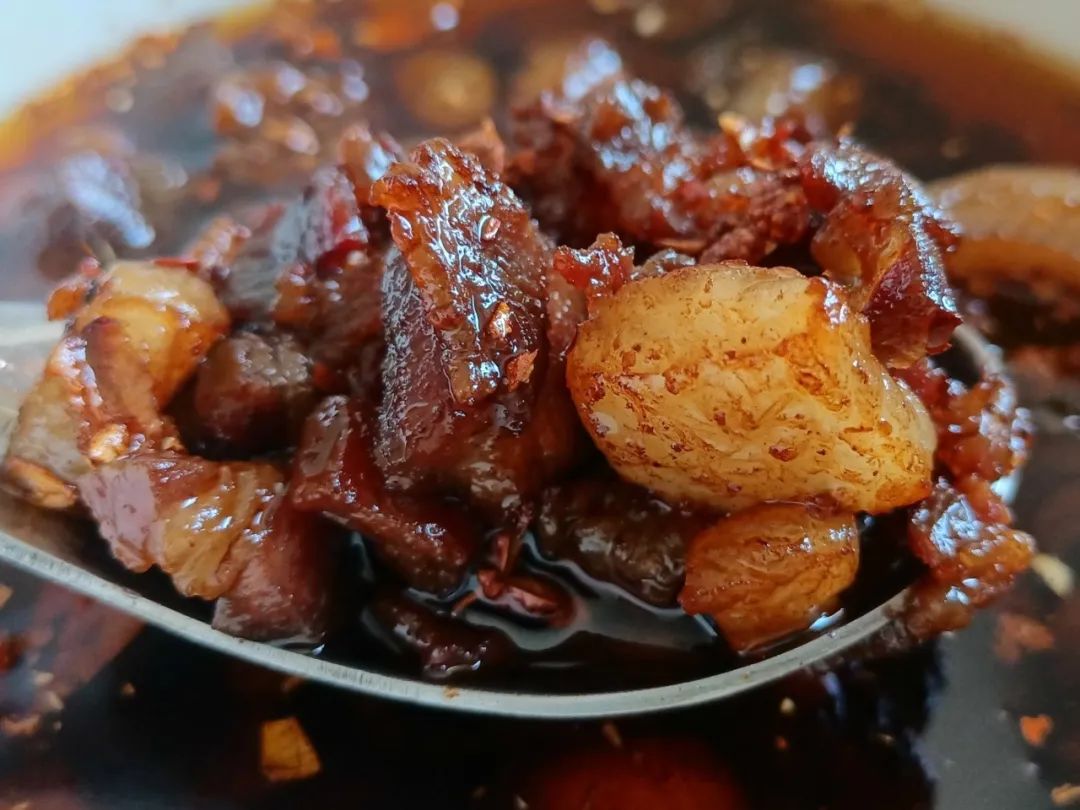
Every time I make the pork-topping, I am reminded of those cheerful mountain-roaming black pigs in the mountains of Gansu, and of this spring’s visit with the Beijing Organic Farmers’ Market to “herd pigs” alongside the returnee young farmer Wu Longlong.
I. Returning Home
Wu Longlong was of medium build, dressed in a plain dark smock, black trousers and cloth shoes, looking sharp and capable. He had been waiting a while; his face, flushed pink in the slanting sun against the distant loess, rather neatly fitted the “stereotype” of a northwestern man.
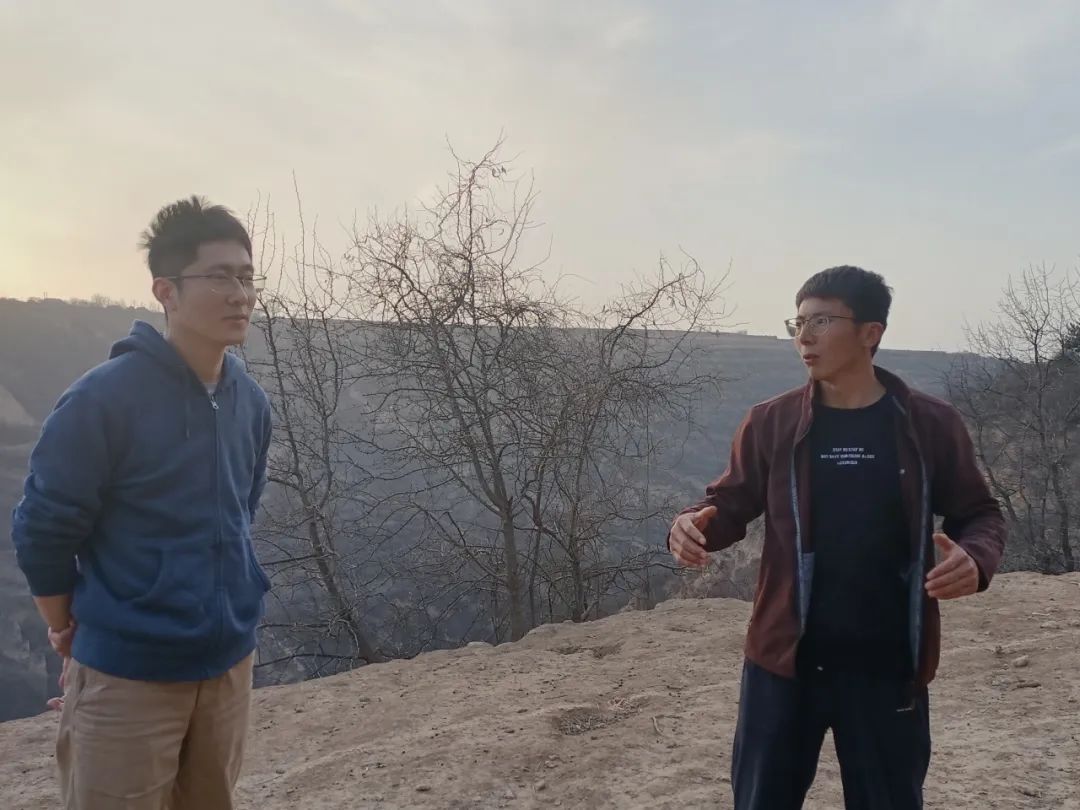
Yet the spectacles perched on his nose and his neat, scholarly fringe hinted at a formal education rare among the returnee “new farmer” community. Wu Longlong is a Qingyang lad born and bred, born in 1988, who graduated from Beijing University of Agriculture in 2015 with a degree in Animal Science. But he never once entertained the idea of seeking employment in a city; upon graduation, he resolutely returned to his hometown of Ning County.
Ning County sits on the ancient lands of the State of Yiqu from the Spring and Autumn and Warring States periods, in the Longdong (eastern Gansu) region, long beset by poor transport links and limited access to information. Wu Longlong told us that Ning County only got its high-speed rail link in 2020. “Every single train was packed – even the old folks couldn’t wait to hop on and take a spin to Xi’an.” Before that, travelling south to Xi’an or west to Lanzhou was equally troublesome.
Yet Qingyang, home to Ning County, has long enjoyed the nickname “Granary of Longdong.” The region has the deepest loess deposits in the world, making it ideal for farming, and it is one of China’s principal coarse-grain producing areas. The Malian River and the Jiulong River, both within Ning County’s boundaries, flow into the Jing River, part of the Yellow River system; both rivers still carry a generous volume of water, and paddy rice can be grown along their banks.
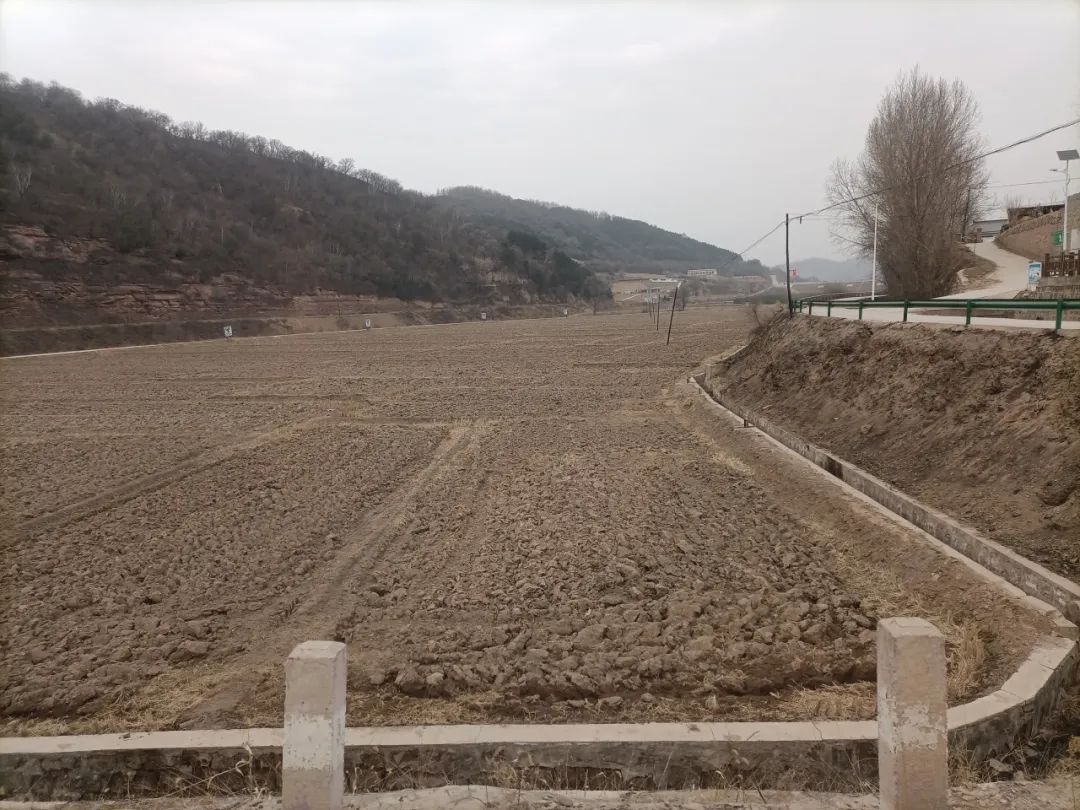
In his first year or two back, Wu Longlong wanted to harness his hometown’s exceptional agricultural resources and develop a circular agriculture combining crop cultivation with livestock rearing. He organised the villagers into a cooperative, raising cattle and sheep, and planted Broomcorn millet on several hundred mu of contracted wasteland. The grain was grown, but with no way to sell it, they had no choice but to dump it as ordinary produce at a rock-bottom price – losing everything they had invested.
Lost and uncertain, Wu Longlong began to “go out and look.” He enrolled in the Liang Shuming Rural Construction Centre’s “Lead Goose” Programme and a northwestern new-farmer training course, meeting many fellow ecological farmers. Before long, he decided to pivot his strategy, focusing solely on ecological livestock rearing and honing his skills in pork butchery and market connection.
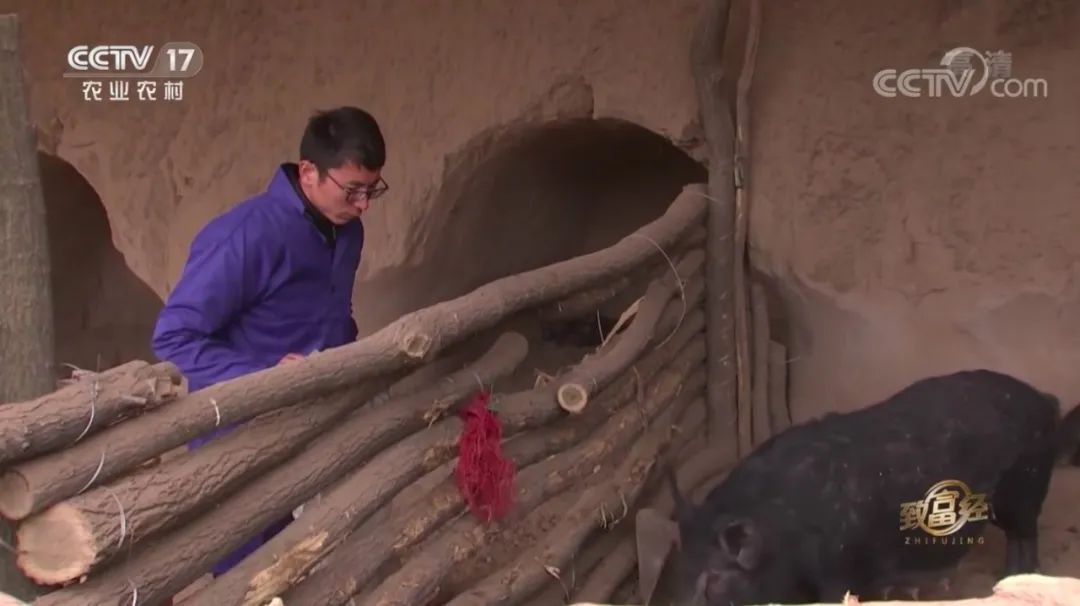
With fresh perspective came a turning point in sales. In August 2019, Wu Longlong was invited to film an episode of Hunan Satellite TV’s variety show “Day Day Up.” In March 2020, CCTV-17’s “Path to Prosperity” reported on Wu Longlong’s story of returning home to start a business. Two breakout moments carried his philosophy and ecological produce to a far wider audience.
We settled into his Wuling pickup – the same one he uses to haul pigs and odds and ends – and set off straight for the rearing site. The navigation showed the trip from the station at just over an hour and forty minutes. “Drive fast and you’ll make it in just over an hour,” Wu Longlong said.
II. Pig Herding
In her report “China’s Pork Miracle,” livestock industry expert Xie Minyi noted that plentiful pork supply owes much to government support for large-scale, industrialised, and standardised pork production. By 2023, large-scale commercial pig farms (those sending more than 500 pigs to market annually) accounted for 68 per cent of the market. In other words, most of the pork we eat day to day comes from these operations. Breeds bred for higher dressing percentages, cramped living spaces, and shorter turnaround times are all accelerating the loss of pork flavour.
The thought of pork with a faint gamy tang made my eagerness to see the black pigs pressing. What’s more, Wuluo Village, where Wu Longlong lets his pigs roam, sits right on the doorstep of the Ziwuling National Nature Reserve in Gansu – his own home ground.
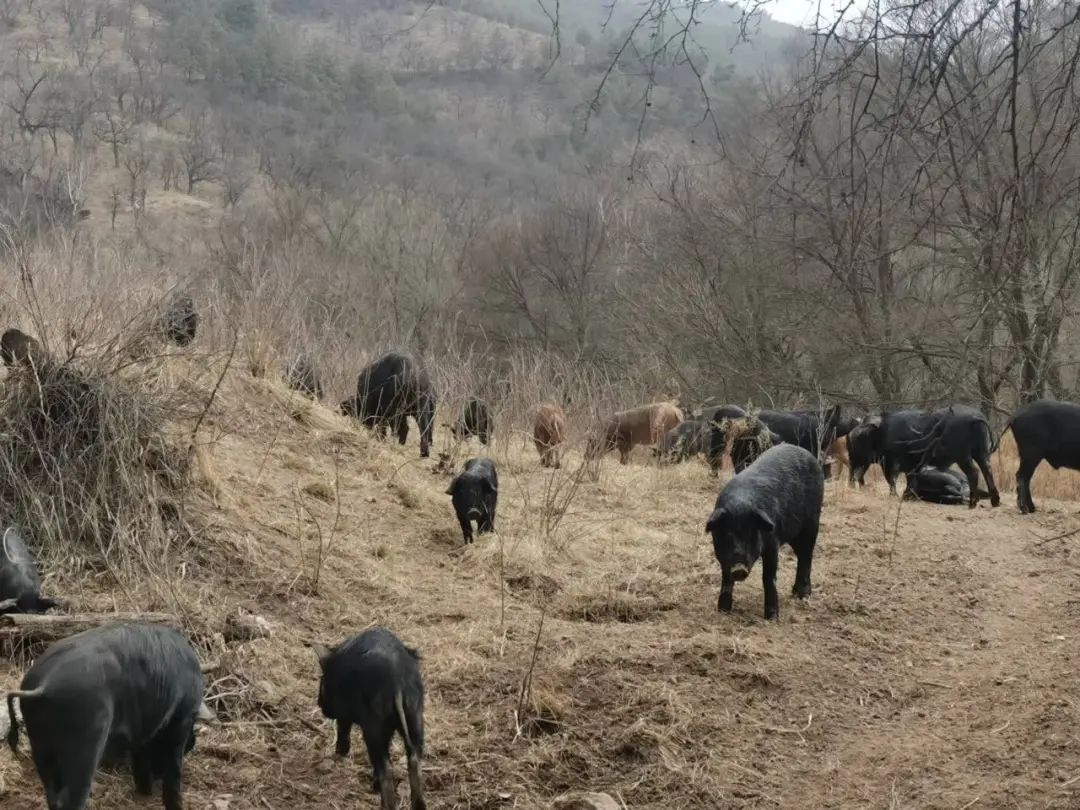
Setting off, the view through the windows was mostly a wash of yellow, broken occasionally by a streak of grey-green. The deeper we drove, the flatter the hills became and the richer the vegetation. “In summer the mountains are incredibly green – nothing like this at all! The ecology up here is superb. Leopards, badgers, wild boar, rabbits, deer… every kind of animal.” Only later did we learn that the Ziwuling Nature Reserve is home to the densest and largest known population of North China leopards.
Being right next to the reserve, it was inevitable that a few pigs would fall prey to leopards each year. Wu Longlong, however, was not as worried as one might expect. He told us that pigs are deeply social animals – when a predator attacks, the entire herd rallies to fight back. “They’re ferocious!”
Faced with a barrage of questions from the market colleagues, Wu Longlong was forthcoming, candid and knowledgeable, turning the chat into something like a timed Q&A quiz show, answering and driving without missing a beat. As dusk deepened, the pickup left the tarmac and plunged onto a dirt track through the hills – narrow lanes, steep drops – and we couldn’t help but grip the handrails tightly.
“Whoa – you’ve made a pickup feel like an off-roader! This road’s pretty dangerous… let’s prioritise safety, please.” Wang Rui from the Beijing Organic Farmers’ Market, responsible for visiting partner farms, had been quiet the whole trip; now he suddenly spoke up. But Wu Longlong drives this very route every morning and evening to tend the herd, the road worn into muscle memory. “You get used to it!”
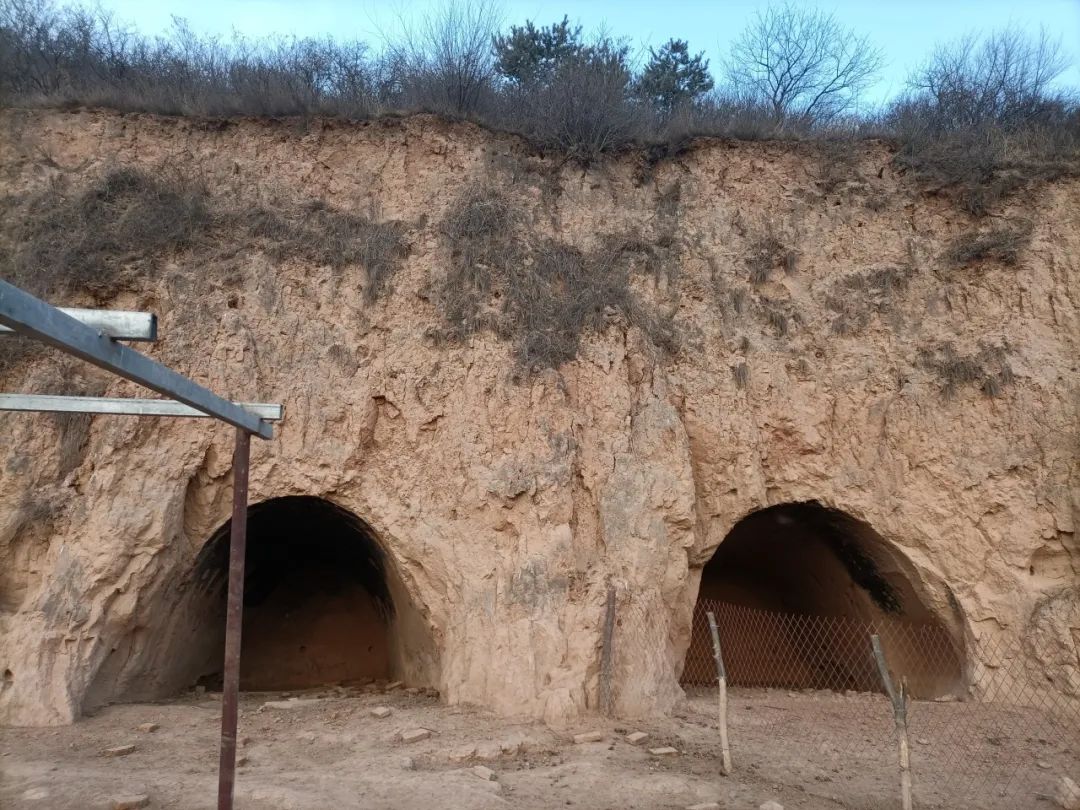
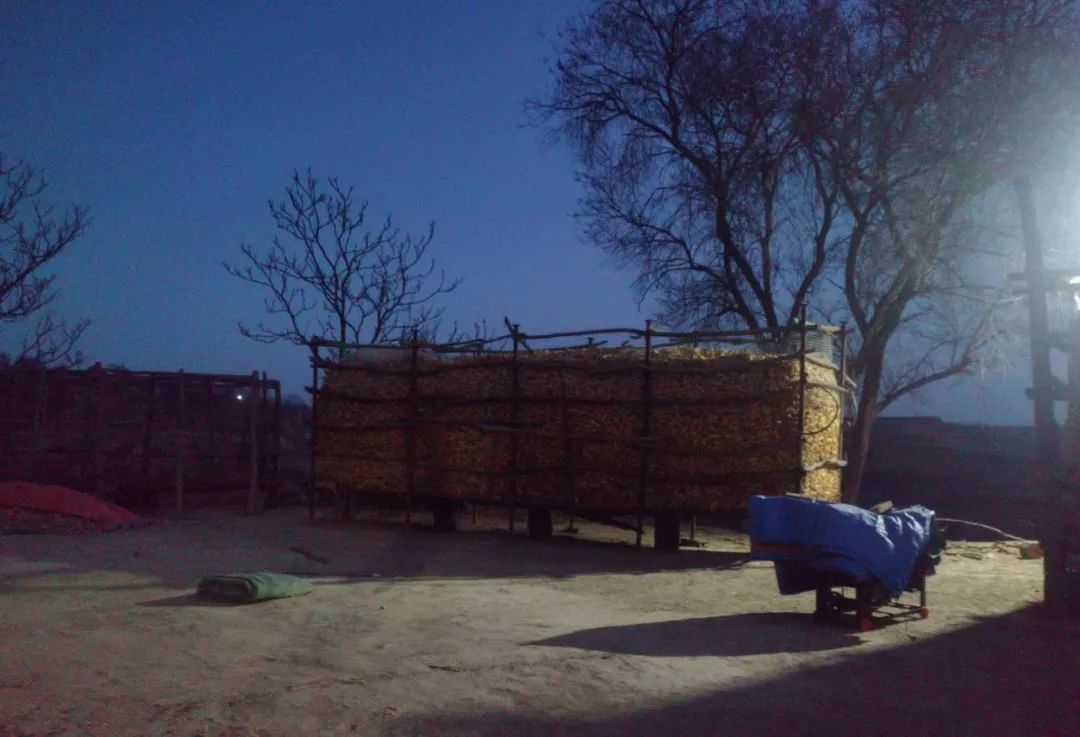
Bumping and swaying, we finally reached a small flat strip of ground squeezed between a row of yaodong and a deep gorge. More a fence than a sty – wire mesh stretched between timber posts alongside the abandoned cave dwellings. The pigs housed here roam freely into the mountains during the day to forage and play, and settle into the yaodong at night to rest, drink water, and eat a small portion of supplementary maize.
Unlike the typical backyard pig-rearing common in rural areas, Wu Longlong’s black pigs spend eight months of the year out on the mountain, a blend of free-range rearing and confined housing. “This is how everyone here ‘herds pigs’,” he said. Letting the herd roam and forage freely through the valleys saves on feed costs as well as on the outlay for housing and land.
Having never witnessed pig herding before, I couldn’t help but wonder – what do the black pigs actually eat up on the mountain?
“Don’t be fooled by how bare the woods look now,” Wu Longlong told us. “Come May, the hills are full of Rosa xanthina berries – sweet as can be, and the pigs adore them. Once the stream ice thaws, the mountain will offer even more food. On a typical day, the pigs root through the undergrowth for fresh grass, munch dandelion greens, gobble up insects, and drink spring water to fill three-quarters full, so each pig needs only half a jin of maize kernels in supplementary feeding. By autumn, when the acorns ripen, supplementary maize holds no allure whatsoever – the herd can gorge on the fallen acorns to their hearts’ content.”
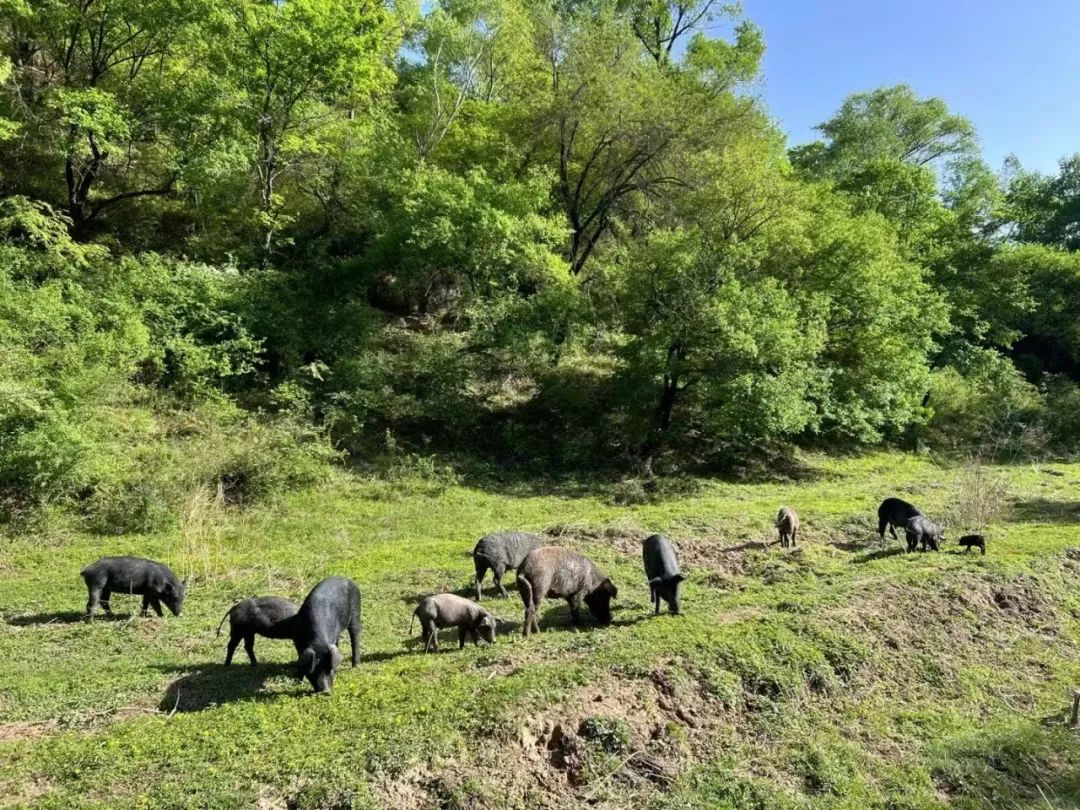
Wu Longlong said that supplementary feeding isn’t just about filling the pigs up – it also keeps them from going feral, prevents them from joining up with wild boar, and ensures they can “recognise their people”. After all, wild boar up in the mountains don’t get fed by anyone – aren’t they doing just fine? The truth, he mused, is that once a farmed herd has learned how to find food and water on the mountain, they no longer need us – it is only we who need them.
III. Mountain-Roaming
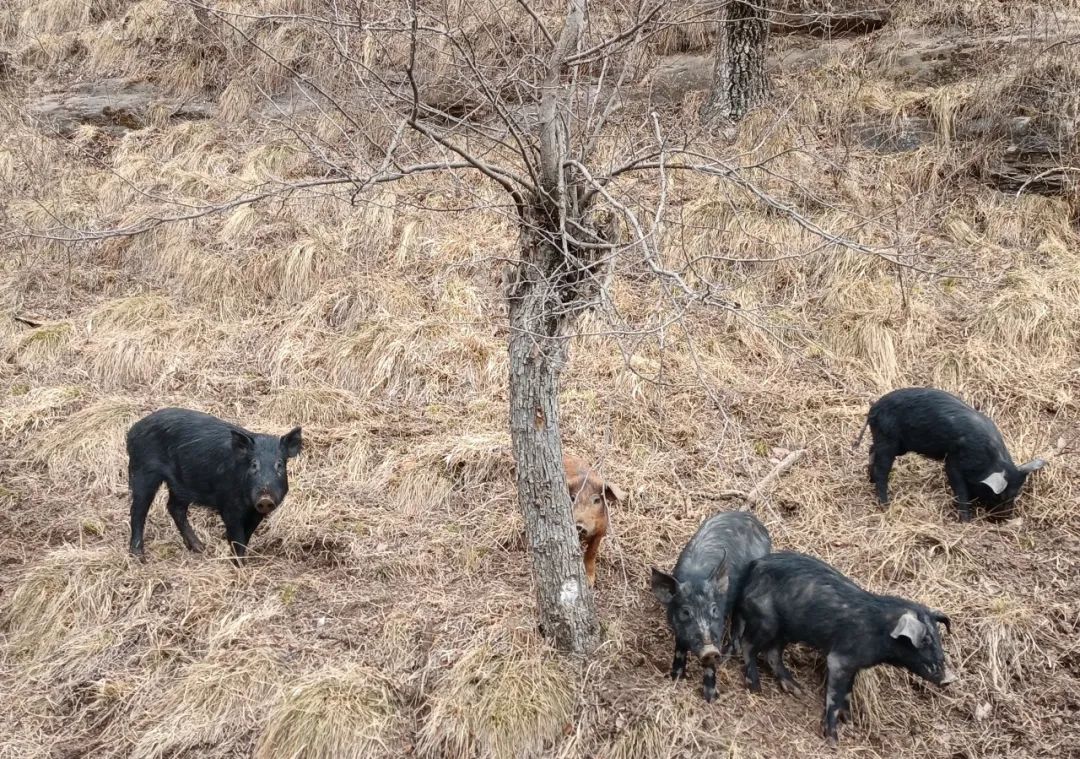
The next morning, at last we laid eyes on the legendary mountain-roaming black pigs.
These pigs belonged to a partner farmer in the neighbouring county. Wu Longlong had also leased a hillside near the village, where he kept three herds of free-range pigs, each numbering thirty-something head. “Hard to get an exact count – roughly that many.”
The mountain tracks here were steeper and more treacherous; only a farm motorised tricycle could manage them in and out. The herd spotted the familiar faces and the tricycle at once and bounded over eagerly, wagging and greeting us – they must have thought it was feeding time.
Wu Longlong admitted a little sheepishly that the pigs look their worst at this time of year. Indeed, the young pigs were rather gaunt – the mountain grass had only just begun to sprout, with little to forage on, so none had filled out with any real fattening yet. But they looked perfectly content nonetheless, for they had the whole hillside to themselves.
We walked on, observing the traces the black pigs had left. Wu Longlong pointed to a hollow in the earth, trampled soft by countless hooves. “This is a nest the pigs make for themselves – they sleep right here at night.” It genuinely did look cosy.
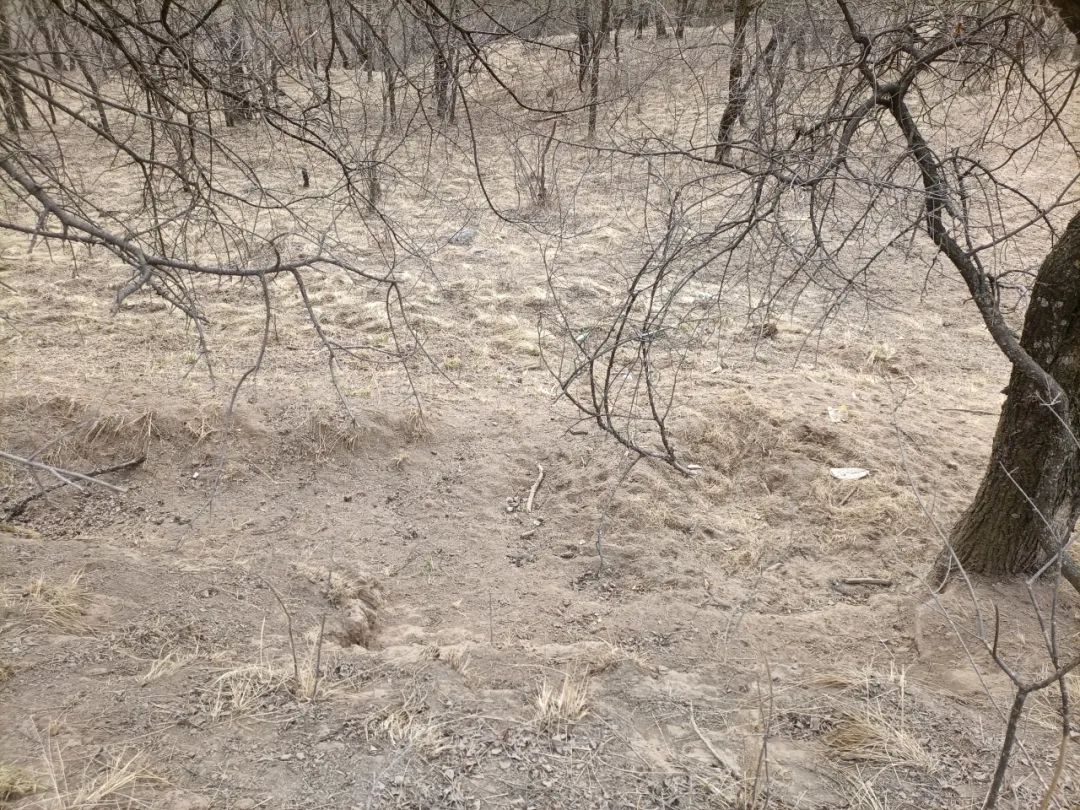
Generally, a confined-raised Gansu Black Pig needs close to ten months from birth to reach the two hundred-odd jin of market weight. Free-range black pigs, however, eat a wilder diet and move far more, so they can take over a year to mature. But the meat of overwintered pigs (year-end pigs) contains richer flavour compounds, and their lean-meat ratio is slightly higher than that of house-raised pigs, yielding a perfect balance of fat and lean.
Half of Wu Longlong’s piglets are bred on the farm; the other half are sourced from village households. He prefers piglets that have been roughing it outdoors in the yard, and steers clear of those raised in heated incubators. “Those incubator-raised piglets have poor immunity – let them loose on the mountain and they won’t survive.”
Young piglets are fragile and prone to illness, and more vulnerable to wild predators, so newly acquired piglets are kept enclosed for a while first, with their feed adjusted from the adult diet. They must be given boiled maize, wheat, and beans, with the grains coarsely cracked – ground too fine and they risk scours. Once they reach four months old, the piglets can head out onto the mountain.
Compared with fully confined pigs, the mountain-roaming pigs in the woods are sturdier and more robust. Should a pig fall ill, Wu Longlong’s first resort is Traditional Chinese veterinary medicine for dietary conditioning – for instance, if a pig has eaten too many apricots and developed “internal heat”, he brews it a herbal decoction.
When herbal remedies aren’t enough, antibiotics are also used. Of course, such pigs are fitted with an ear tag to distinguish them; medication is administered strictly in line with regulations and the withdrawal period is observed before they go to market, sold on as ordinary pigs to local villagers.
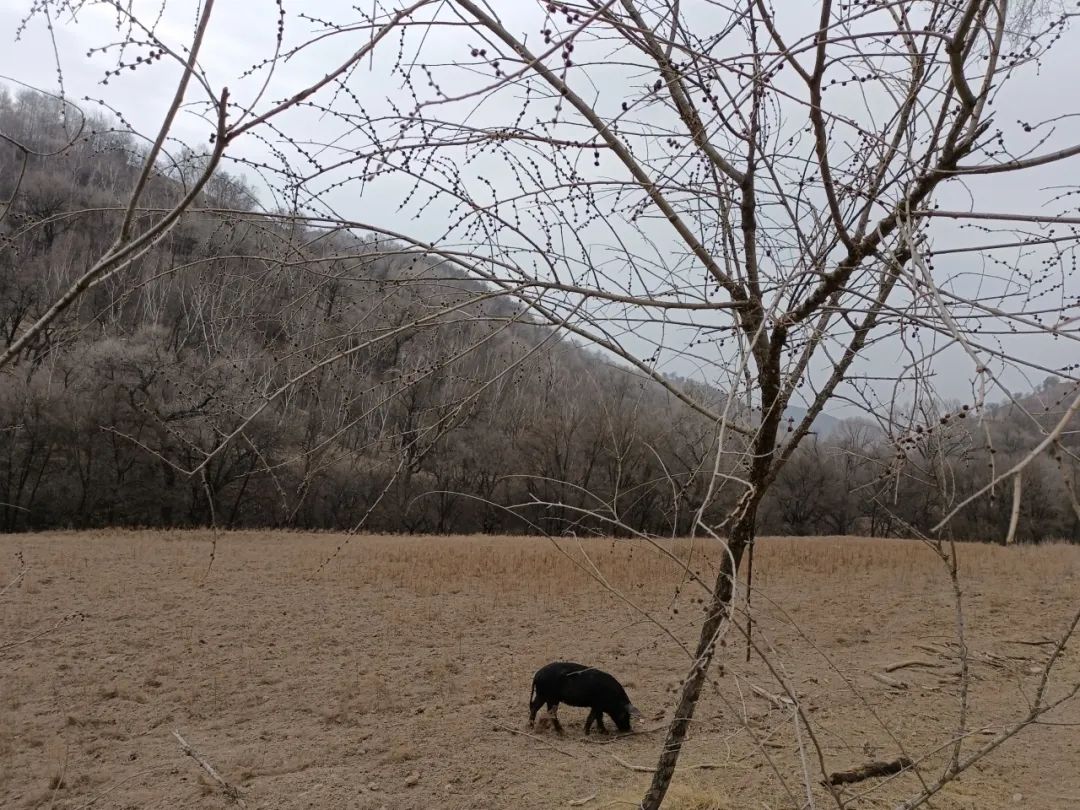
In recent years, the annual toll from illness, leopard predation, and pigs going feral and wandering off has been around ten to twenty head. On this visit, we also met the “One-Eyed Hero” – a pig who had escaped from a leopard’s jaws, losing an eye in the fight and bearing a gaping wound torn in its thigh, yet still fighting on and living. Herding pigs right next to the Ziwuling Reserve – perhaps blessings and dangers simply go hand in hand.
To cut down on losses, Wu Longlong plans to tighten up management, reasonably limiting the herd’s grazing radius and controlling the cycle to market. The cleared ground beside another row of yaodong at his doorstep is where he has marked out the site for new enclosures.
IV. Family Matters
Wu Longlong confided that his father had once been a gambler, racking up quite a pile of gambling debts in the village. When Wu Longlong graduated and came home, villagers approached him to collect his father’s debts. He laid down the law: “I’ll scrape together any other debt – but gambling debts? Not a penny!” After that, father and son clashed many times over the gambling habit, until eventually Wu Longlong helped his father quit for good.
His father’s younger brother had been left with physical and intellectual disabilities from childhood injections, had never married, and still lived with Wu Longlong’s parents. When Wu Longlong returned to start his farm, he gave his uncle a job herding sheep, and other relatives who had scattered across the country for work were gradually drawn home again by the pull of ecological farming.
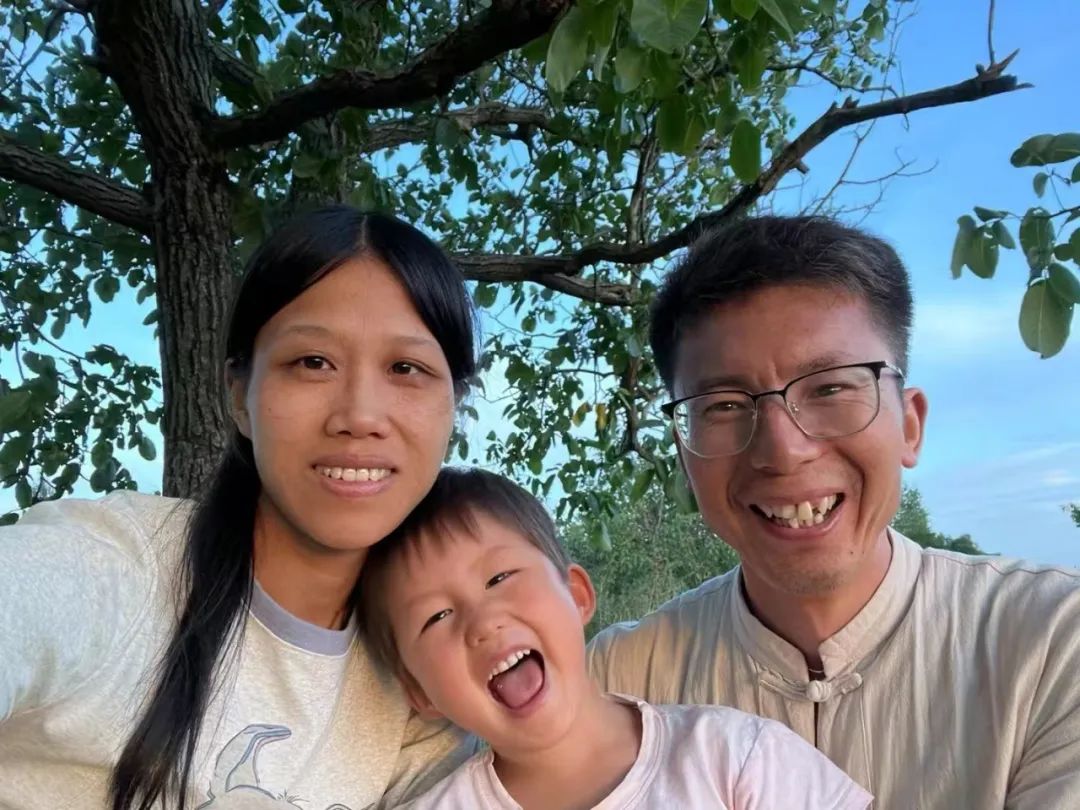
While continually navigating life with his extended family, Wu Longlong had also built a family of his own. During the pandemic, he fell in love with Qiqi, a girl from Guangdong who had come to volunteer on the farm. They married and had a darling daughter nicknamed Watermelon. That evening at the farm, we sat down to a Cantonese-style meal in a farmhouse courtyard on the Loess Plateau – a blissful sense of displacement that made us marvel at the strangeness of fate.
After a decade of “swimming against the current”, Wu Longlong had finally built a business and a family in the hometown he adored, achieving solid, down-to-earth results. His story had begun to inspire a new generation of young people in Gansu to head home. In another ten years, what might Muchtongxin Ecological Farm look like?
Author
 Z X
Colleague, Foodthink project team and Dishwashing Division
 Ze’en
Foodthink editor, a Shaanxi person whose lifelong passion is noodles – the art of tossing in pork-topping still needs honing.
Unless otherwise noted, images in this article are courtesy of Foodthink and Muchtongxin Ecological Farm.
Editing: Ze’en