
How Does a French Delivery Platform Overturn Global Platform Capitalism?
Foodthink Says
But beyond criticism, can we imagine an alternative platform model? What would such a platform look like? Who would own it? How would algorithms be designed and managed? Would riders still be surveilled by algorithms? Would there be a minimum wage? Would paid annual leave be available?
On 24 November, four Chinese government departments jointly launched the “Qinglang – Addressing Typical Algorithm Problems on Internet Platforms” campaign, requiring action against key issues such as blindly pursuing profit at the expense of the rights of workers in new forms of employment, using algorithms to carry out big-data price discrimination against loyal customers, and the failure of algorithms to deliver pro-social services that protect users’ legitimate rights and interests.
Foodthink hopes that by introducing CoopCycle, a French delivery platform founded in opposition to platform capitalism, readers will be inspired to imagine a brighter picture of the information society.
This article was first published in the international critical communication journal tripleC under the original title “The Transformative Potential of Platform Cooperativism: A Case Study of CoopCycle”. Foodthink has obtained the authors’ permission to translate the piece, and what follows is an abridged version.
I. Platform Capitalism vs Platform Cooperativism
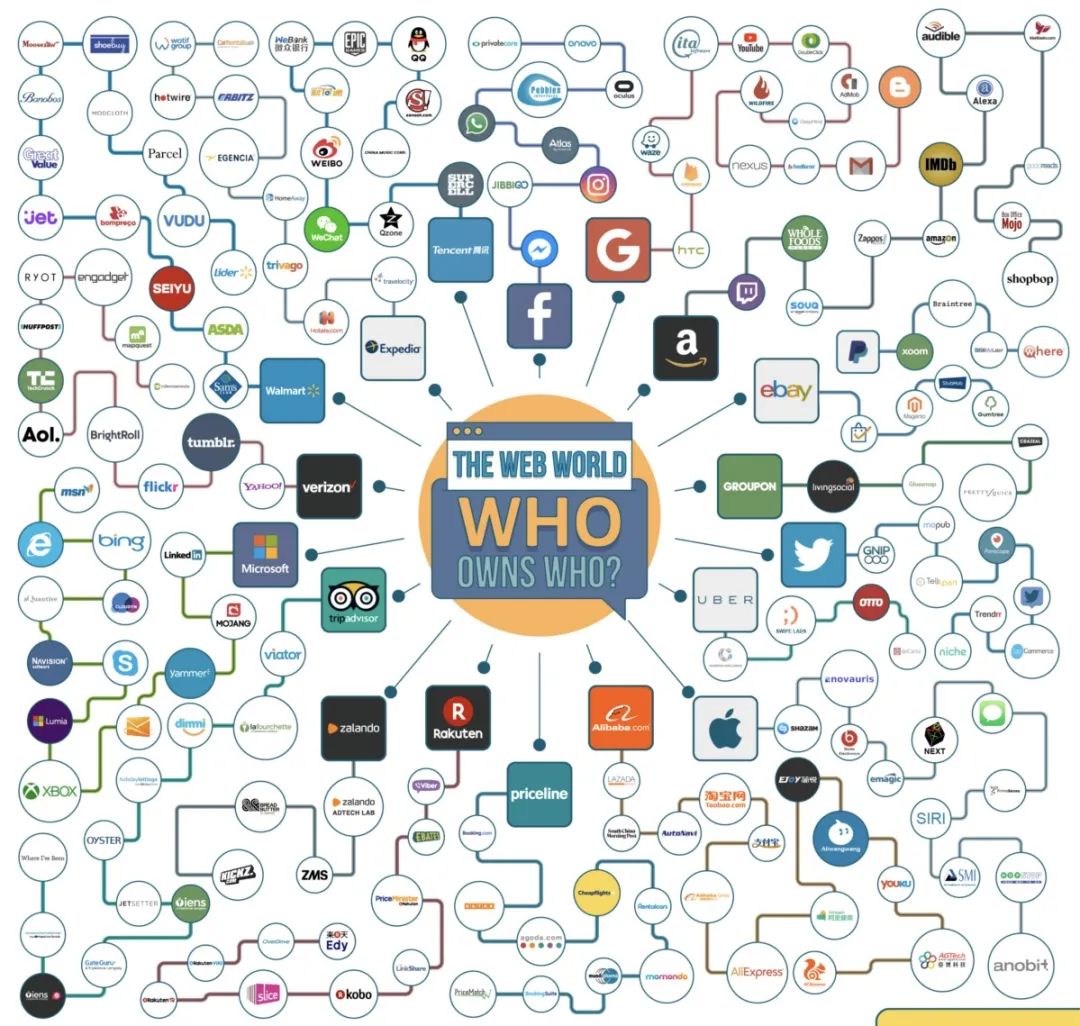
Platform capitalism has evolved into an Internet oligopoly dominated by a handful of companies, including Google, Facebook, Amazon, Apple, Microsoft, Alibaba, Baidu and TikTok. The “sharing economy” has been co-opted by platforms and has misled the public. The Internet could have provided every element needed to build a better democracy and a better world, yet those very elements are now being exploited for profit. In practice, under the platform capitalism model, the logic of “sharing” extends only to the loosely connected front-end users, while the back end of the platform remains under the centralised control of the corporation.
Platform cooperativism, in particular, adopts an operating logic diametrically opposed to that of platform capitalism. It combines the principles of the traditional cooperative with algorithmic management, practises collective ownership of the means of production, and operates democratically on the basis of “one person, one vote”.
II. “You Can Only Earn Money by Riding a Bicycle”
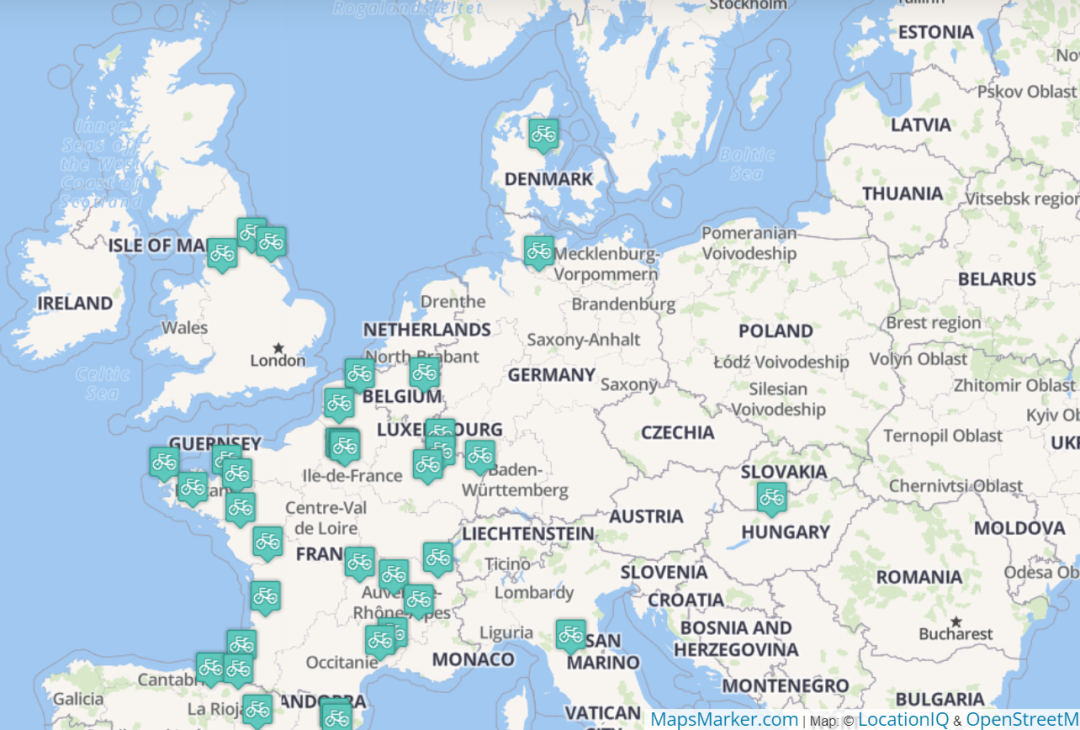
The founding team was made up of activists committed to opposing the economy and organisational model of foodtech platforms such as Deliveroo. These profit-driven foodtech platforms leverage venture capital and algorithmic management, deploying a range of tactics—including data monetisation and the offloading of unemployment risk—to maximise shareholder returns. CoopCycle was born in response to this landscape, triggered by the collapse or sudden withdrawal of mainstream delivery platforms such as Take Eat Easy and Deliveroo from local markets in 2017.
The original idea behind CoopCycle came from a programmer who cloned the proprietary software of foodtech platforms, repurposed the technology, and built a digital commons designed specifically for cooperative deployment, tackling the prohibitive costs of developing a delivery app from scratch.
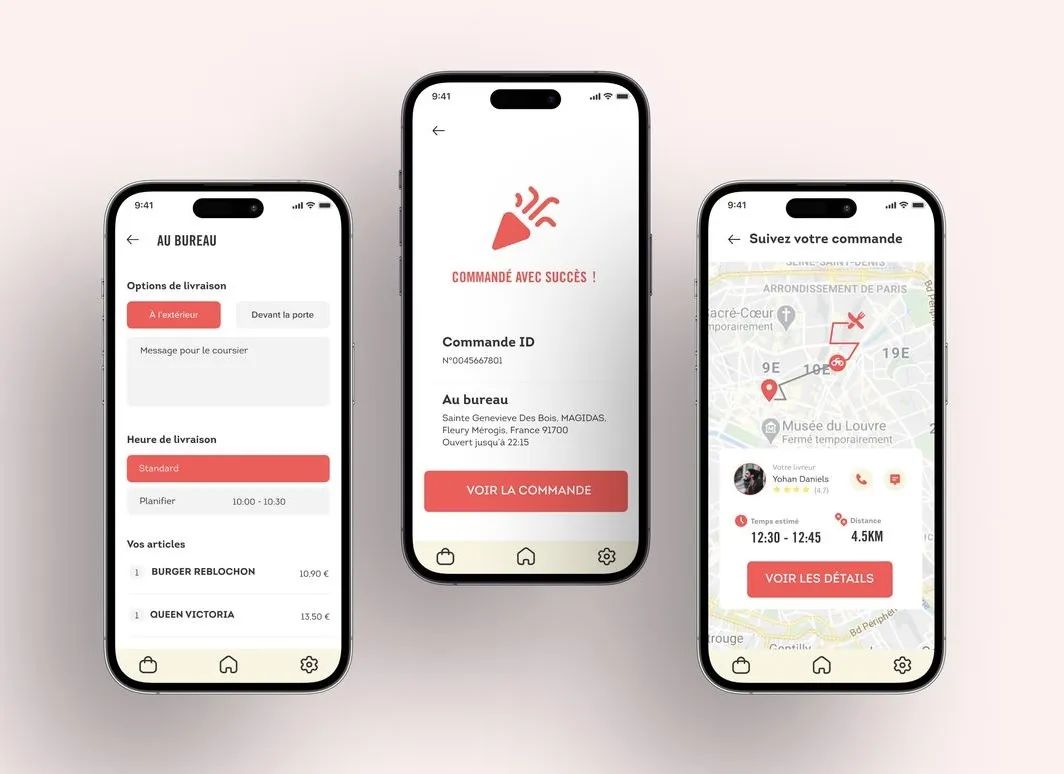
The CoopCycle software has been designed as an anti-capitalist model built on collective ownership of the means of production, democratic decision-making and the sharing of value among workers. Labour within the cooperative federation is paid hourly and enjoys the security of stable employment benefits, including a minimum wage, unemployment benefits, paid annual leave, sick leave, pensions and medical insurance. As they put it: “Money should not breed money. All the profits should flow to the workers—you can only earn money by riding a bicycle.”
III. We’d Rather Talk More with Our Riders
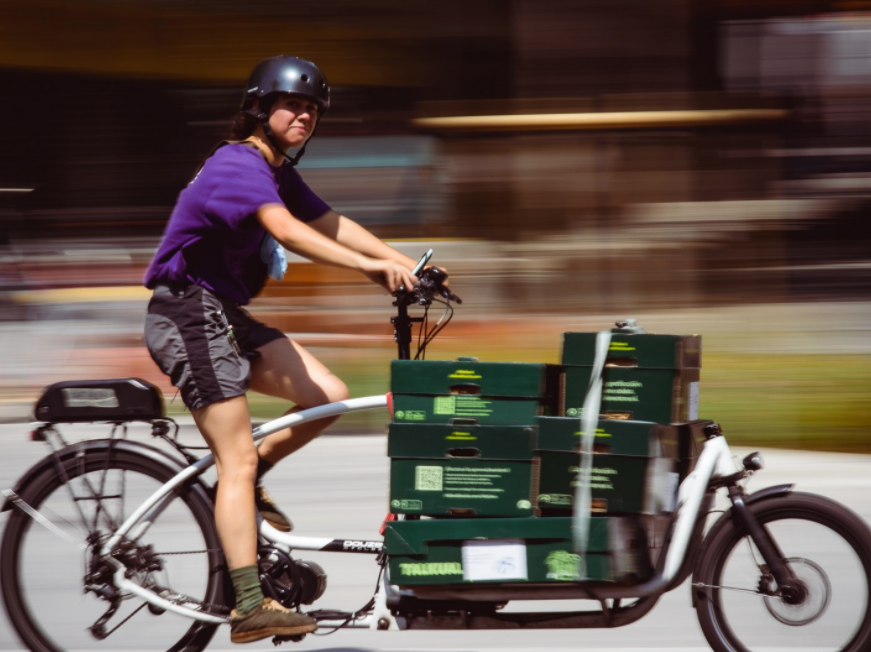
Cooperatives respect and support local economic and cultural customs, unlike the parasitic nature of platform capitalism. Cooperatives adopt a horizontal organisational model, one that affords riders care and dignity and earns them friendlier treatment from customers. Unlike platforms such as Deliveroo, riders can refuse assignments without it affecting their income or contract status.
CoopCycle’s software implements neither dynamic pricing nor gamification or habit-forming design. Geolocation tracking is not used for worker surveillance or algorithmic management. CoopCycle also does not use a rating system; cooperatives prefer to follow internal qualitative processes to assess rider performance. As one manager said: “We’d rather have more conversations with our riders. What do you think makes a good job? What are you good at? What do you think is behind your doing so well? What aren’t you doing so well? Is there anything you could improve on?”

CoopCycle’s long-term vision is to further develop the software and specialise in political lobbying to expand the cooperative economy in France and beyond. They do not believe they can overturn the hegemony of foodtech giants overnight. Instead, they envision occupying a long-term, sustainable ecological niche in socio-economic activity, thereby posing a threat to platform capitalism.
IV. Decentralised Governance
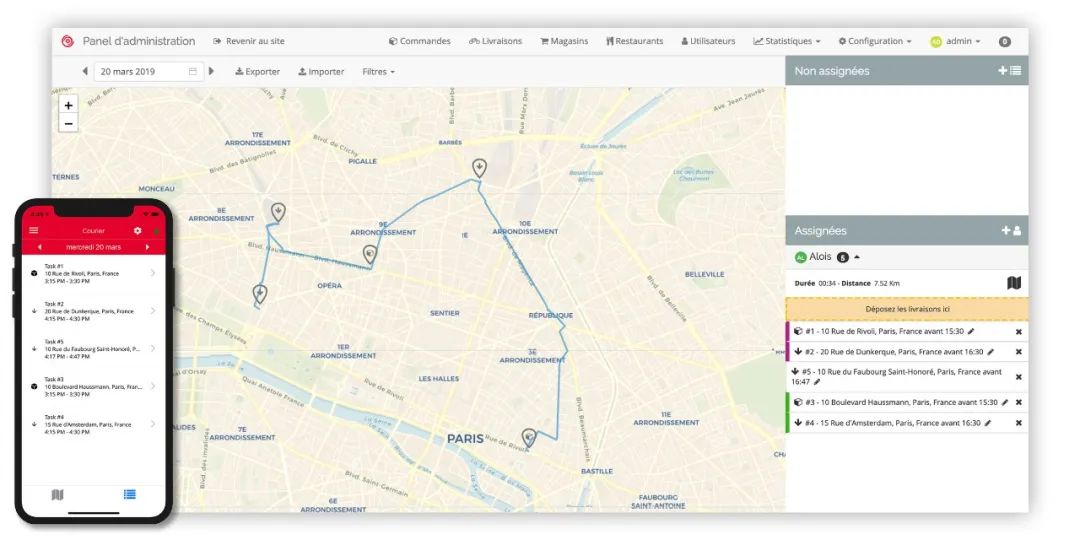
Unlike Deliveroo, UberEats and Wolt, which maintain centralised control over user data, CoopCycle’s decentralised software logic means there is no central entity; instead, local cooperatives run and manage the application on their own servers or infrastructure. As a result, there is no algorithmic surveillance or control over how local cooperatives organise their work, nor is there any surveillance of riders themselves.
Moreover, this means that the data generated by platform operations is hosted on local cooperative servers. The cooperatives and their riders jointly own the platform they use to organise their work and the data produced in the process. The decentralised digital infrastructure is transparent and visible to its users.
Democratic decision-making rules encompass both centralised governance and distributed governance. The cooperative principle of “one person, one vote” applies at the federation’s annual general meeting (regardless of size or turnover, each cooperative has one vote) as well as at each member cooperative’s monthly general meeting. At the federation’s annual meeting, members discuss major decisions and plans regarding software development and institutional matters (such as organisational structure, finances and so on). At each cooperative’s monthly meeting, members discuss task allocation, rota scheduling, business models, fund distribution, points of conflict, paid and unpaid work, and more.
V. Seeking Survival in Competition
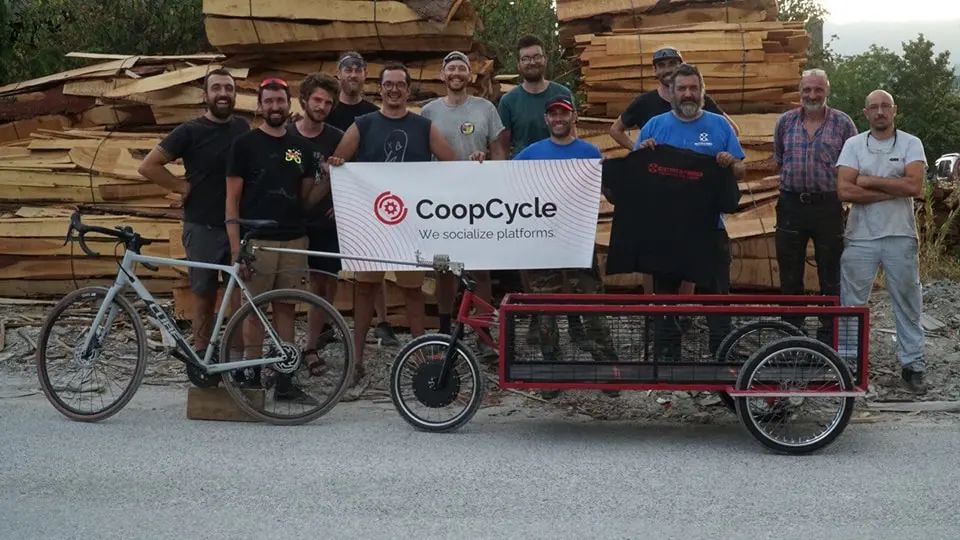
Intense competition, low prices and thin profit margins are hallmarks of the food-delivery industry. Yet during the pandemic, CoopCycle completed 100,000 deliveries and achieved a turnover of €3.5 million (equivalent to CNY 26.61 million). Some restaurants prefer to work with CoopCycle because its commission rate is lower (around 20%) compared with the 30% charged under platform capitalism. CoopCycle’s lower rates reduce prices for both restaurants and customers, thereby laying the groundwork for a democratised pricing mechanism.
They also face unfair competition: because profit-driven platforms can deploy gig workers to cut costs and have access to fundraising channels, they are able to charge extremely low prices and afford to hire more workers in order to capture a larger market share and stifle competition entirely (a winner-takes-all strategy). Platform cooperatives, by contrast, bear many additional costs because they must pay taxes and provide workers with benefits such as social security, insurance, and paid wages for sick leave and holidays. In addition, amid inflationary pressure, people are experiencing a cost-of-living crisis, and demand for food delivery is beginning to slow.
VI. Coopyleft—Genuinely Open and Shared
To use CoopCycle’s software code, users must obtain a Coopyleft licence—a restrictive variant of copyleft (a licensing model that is more open and shareable than conventional copyright). This licence restricts commercial use of the software to cooperatives and other qualifying entities. The federation acts as gatekeeper for the licence, enabling member cooperatives to pool technical or managerial resources, knowledge and services to reduce costs—such as platform software, mobile applications, teaching materials, marketing and legal support.
In sum, whether in terms of value propositions, governance models, economic policy or technology and legal policy, CoopCycle demonstrates a platform cooperative model with transformative potential. Unlike traditional cooperatives, which struggle to scale, CoopCycle has successfully expanded internationally through political lobbying, an international legal toolkit and global coordination. The Latin American cooperatives launched in 2021, and the connections forged along the way with non-governmental organisations, trade unions, financial institutions, local authorities and other socio-economic actors, are important milestones on a roadmap toward building a global anti-capitalist bloc and an anti-hegemonic agenda.
In the future, CoopCycle could evolve into a cooperative incubator, expanding from the food-delivery sector to cross-sector supply chains and forming a broader platform cooperative ecosystem. Interestingly, we are already witnessing CoopCycle gradually moving in this direction, exploring partnerships with like-minded organisations across France.
Author(s)
Haris Malamdis | Assistant Professor in the Department of Sociology at the University of Athens. His research interests centre on social movements, the commons, and the social and solidarity economy.
Editor: Tianle