
When Drone Spraying Does It All, Are Smallholders Still Needed?
As global warming intensifies, the fall armyworm has emerged as a new threat to agricultural production worldwide. During our fieldwork in the summer of 2019 in Ji County (pseudonym) on the North China Plain, the arrival of the fall armyworm plunged the entire county into a “wartime” state.
The fall armyworm, commonly abbreviated as “FAW” and also known as the “autumn armyworm”, is a major transboundary migratory pest flagged in the global alert system of the UN Food and Agriculture Organization (FAO). It is characterised by long migratory flight distances, strong reproductive capacity, and devastating crop losses, primarily attacking maize, sorghum, and other crops.
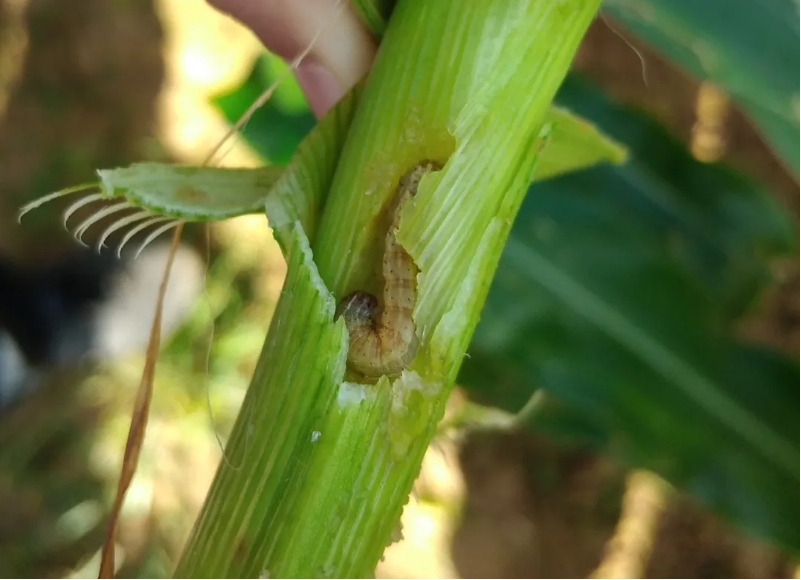
At the time, summer-sown maize on the North China Plain was at the tasseling and silking stage, a critical period that determines yield. Pest damage at this stage can severely reduce production, so the sooner it is treated, the better. Upon detecting signs of FAW, Ji County immediately set up a “Fall Armyworm Monitoring, Early Warning and Control Leadership Group” and dispatched plant-protection drones to carry out pest control.
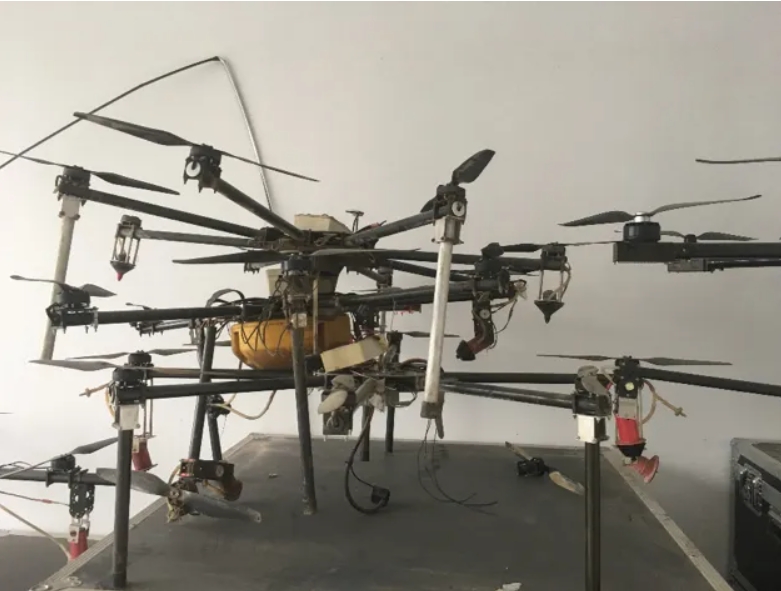
However, farmers in Ji County were growing anxious because they could not obtain timely drone-based aerial spraying (abbreviated as “drone spraying”). The number of plant-protection drones was limited and could not meet all farmers’ pest-control needs in a short window of time, nor could farmers determine the order in which their fields would be treated. They could only wait anxiously, like ants on a hot pan.
I. From Mastery to Displacement: The Relationship Between Farmers and Technology
In this period, agricultural technicians went into rural areas to instruct and teach advanced techniques. Farmers in Ji County not only received public-interest agricultural advisory services provided by the state and government, but also gained access to more scientific grain cultivation and plant-protection methods.
One villager recounted to us: ‘Back then, seeds, fertilisers, and pesticides were all distributed by the government. The village production team leader and the agricultural technician taught us how to use them, how much to apply, and what the benefits were – they explained everything clearly.’
During this period, quality, high-efficacy inputs such as phosphate fertiliser and nitrogen–phosphorus compound fertiliser, along with agricultural techniques like crop transplanting and wheat rust control, were promoted directly into production through farmers’ hands-on practice. Large tractors and other agricultural machinery from countries such as Poland and Czechoslovakia entered the daily lives of Ji County’s farmers. Under the patient, one-on-one guidance of agricultural technicians, farmers mastered these techniques and grain yields rose significantly.

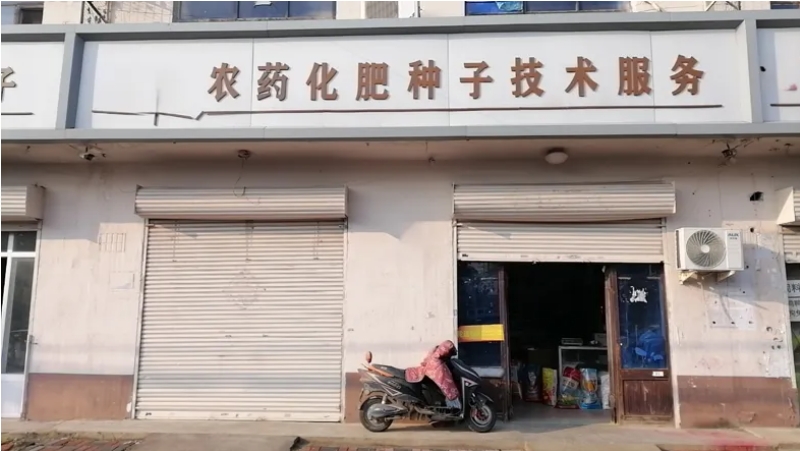
After the launch of reform and opening-up in 1978, agricultural technology extension entered a market-oriented period, with agro-input retailers driving the introduction of advanced technologies into rural areas through paid services. As the market economy developed, many agricultural technicians “entered private enterprise”, opening agro-input shops in market towns. This grassroots agro-input market then took on the vital task of agricultural technology extension.
For local farmers, agro-input retailers were familiar neighbours. Through years of trading together, they had developed close, personal ties with farmers. These retailers were often former agricultural technicians or practitioners with a solid grasp of agronomy, and they were highly favoured by farmers.
Farmers in Ji County regularly visited agro-input shops to purchase seeds, pesticides, and fertilisers. Some even uprooted diseased crops from their fields and brought them to the retailer to be “diagnosed” on the spot, so that the right remedy could be “prescribed to match the symptoms”.
These new-type agricultural business entities have invested substantial capital, command advanced agricultural technologies, and achieve a mechanisation rate of 100 per cent. At this stage, farmers no longer serve as recipients of agricultural technology extension and practitioners of technology; they need only make a phone call to obtain the corresponding technical services: “We are only responsible for paying – what pesticide they use or how much they apply is beside the point, as long as it works.”
It is precisely this transformation in the mode of agricultural technology extension that has given rise to the dilemma faced by Ji County farmers in applying agricultural technology, as described at the beginning of this article.
II. Do Farmers Still Need to Master Technology to Farm?
Through our fieldwork, we found that technology extension projects in Ji County are increasingly being “bundled” into a single contract awarded to one agricultural technology company – Lantianmeng Agricultural Technology Co., Ltd. (pseudonym, hereafter “Lantianmeng”). Between 2014 and 2019, Lantianmeng took on more than ten professionalised integrated pest and disease control projects for crops, including Ji County’s winter wheat “one-spray three-protection” programme and the “one-spray multi-efficacy” programme for mid-to-late-season maize.
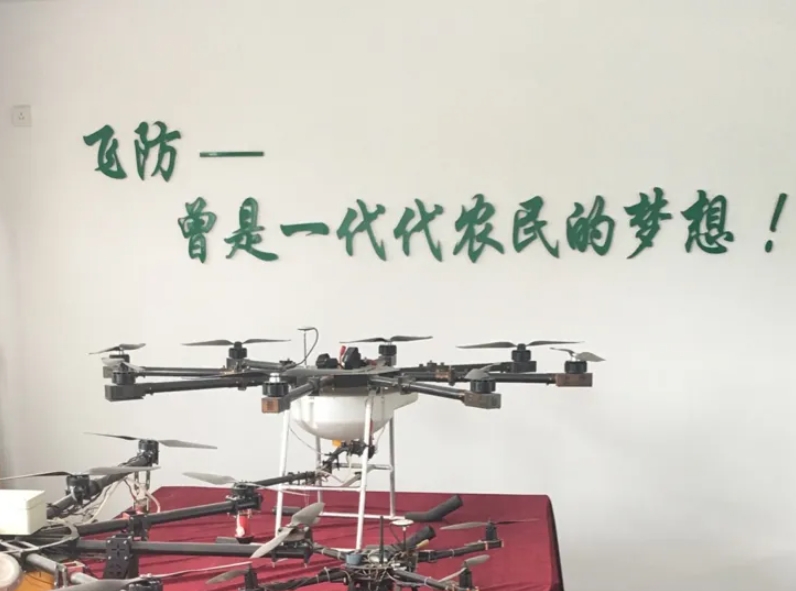
For various reasons, delivering technology extension directly to individual farmers has become increasingly impractical.
First, farmers operating on small, scattered plots have their own habits and ideas about production, making it difficult to meet the requirements of new technology programmes.
Take plant-protection technology projects as an example: to achieve the goal of green pest control, the government has set requirements to ‘use low-toxicity, high-efficacy pesticides’ and to “reduce pesticide use by 6% over three years”. Yet farmers want affordable, highly effective pesticides. Low-toxicity pesticides are “slow to take effect and expensive”, so “for ordinary folk, it’s better to just buy the highly toxic ones – the insects die almost instantly”.
By contrast, Lantianmeng claims that the pesticides used in its drone operations comply with government-recommended standards, and that simply switching to drone spraying naturally reduces pesticide use: ‘When applying herbicide by drone, the dosage must be cut by at least 30%; otherwise the crops will suffer phytotoxic damage.’
Second, new-type agricultural business entities are well-capitalised, own a sufficient fleet of spraying drones, and can carry out plant-protection operations efficiently.
According to Lantianmeng, by 2021 the company had over 300 drones. A single drone can cover 500–800 mu per day (based on a six- to eight-hour working day), with an annual service capacity exceeding 700,000 mu.
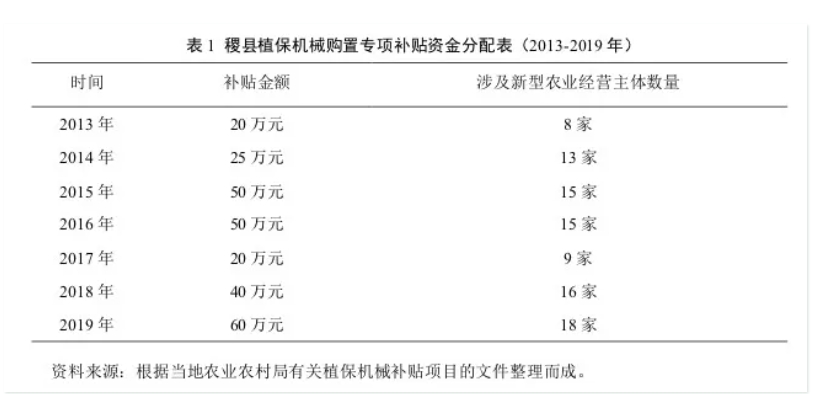
In practice, the high efficiency of drone-based aerial spraying depends on substantial project subsidies. Within the project-based governance framework, drone-spraying companies receive dedicated government subsidies for purchasing drones and other plant-protection equipment, while farmers purchasing technical services also benefit from agricultural subsidies.
Taking the 2020 “one-spray three-protection” programme for wheat in Ji County as an example, under the programme’s funding allocation rules, participating farmers can receive drone-spraying services at a rate of 8 yuan per mu, with the remaining 10 yuan covered by government subsidy. Without this subsidy, farmers would have to bear a cost of at least 18 yuan per mu.
III. What Has Drone Spraying Brought to Farmers?
Smallholders working scattered plots tend to need spraying at different times – Zhang family today, Wang family tomorrow – and their plots are small and dispersed here and there. Although farmers are willing to pay drone operators to spray their fields, in practice Lantianmeng is not particularly keen to oblige.
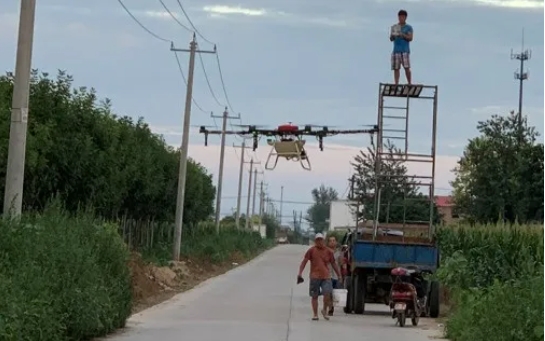
During our fieldwork, drone operators also shared their frustration with us: ‘It’s just a tiny plot – you’ve barely begun the flight before you need to make a turn. The drone goes up and then immediately needs to come down; it’s hard to precisely control the amount of pesticide and water used.’ Left with no choice, farmers began pooling together with several neighbours who also needed spraying, arranging for a drone operator to come and treat all their plots at once.
When there is a surge in spraying demand, Lantianmeng prioritises providing technical services to large-scale farmers. Smallholders are left queuing and often miss the critical farming window, likely encountering the very scenario described at the beginning of this article.
In 2019, when drone operators provided spray services to smallholders, an incident occurred: wheat crops affected by overwintering aphids that had spread from nearby vegetable greenhouses meant the originally calibrated dosage proved insufficient, forcing the operators to return and respray.
For millennia, agricultural development and farming in Chinese society have been built upon the model of smallholder family farming. Farmers mastered specific agricultural skills and field experience, working the land diligently to secure their harvests. Yet with the advent of plant-protection drones, farmers’ existing plant-protection skills have become redundant.
Moreover, plant-protection drones are highly specialised, difficult to operate, carry multiple potential hazards, and must function in complex and variable working environments. These high barriers mean that ordinary farmers without training simply cannot operate drones themselves and must resort to purchasing drone-spraying services.
In the past, farmers would exchange labour with one another and regularly seek plant-protection advice from agro-input retailers, forging close bonds of familiarity within the community. Now, spraying is entirely handled by drones – one phone call brings the operator, and once the job is done and the bill is settled, they leave.
In Ji County, more than 21,000 smallholder farmers are still engaged in agricultural production. How to alleviate their difficulties in adopting technology, how to better connect smallholders with technical services through farmer cooperation and organisation, and how to enable smallholders to truly master agricultural knowledge and technology – all of this should be a key focus of policy deliberation.
Editor: Ze’en