
A Woman’s Pastoral: From Impossible to Possible | Grandma Kouzi

A Woman’s Life
A woman, standing at sixty, looks back upon her thirties. So far, oh so far — as if a lifetime apart.
In the 1990s, in my thirties, all manner of end-of-century fables fluttered through the sky.
In novels and films alike — those who save the world and those who unmake it — the central figures in every apocalyptic tale are men. How perilous, how lofty! A mere woman has neither the strength to follow nor the heart to pursue.
As a woman, a mother of a small child, what my eyes searched for and my mind clung to was the strange, treacherous twisting of women’s fates amid the apocalyptic storm.
I have long since forgotten the title of the most harrowing end-of-century novel, or the name of its protagonist, but the fates of three women I have not forgotten to this day.
In these apocalyptic fables, the male lead is always the saviour, a god — saving the world, battling demons, scarred beyond telling, and the more beaten down, the fiercer. In such a story, the god does not die.
In those fictional apocalyptic epics, women — the god’s supporting cast — wheel past one after another, like figures on a revolving lantern, and die.
The first to die is the male lead’s wife. She never truly “appears” — she is already dead before the story begins, killed by cancer brought on by environmental pollution.
The second to die is the first love, who perishes at the very start of the upheaval. All upheavals bring hunger, yet she does not die of hunger. She dies of food — dies defending it. The grain meant to save lives takes hers instead.
The third to die is the male lead’s white moonlight — the scientist who discovered the apocalyptic food that would save humanity — who dies by the rape of a mob in the midst of the great upheaval.
Men save the world; men destroy the world. Women are destroyed within it. This is no apocalyptic fable. It is, in its barest truth, the condition of women in this world: their fates, their lives, are simply a part of men’s lives, of men’s narrative.
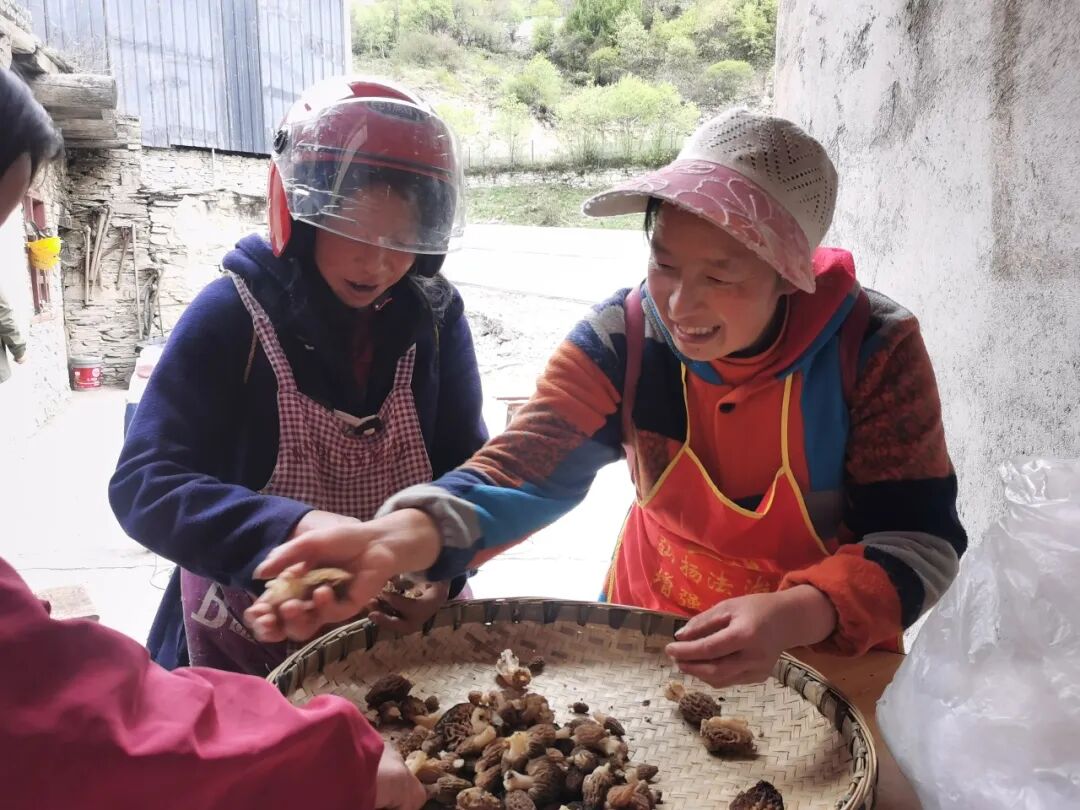
◉ Muyunpo women’s harvesting group. Image source: Foodthink
A Woman’s Pastoral
The land is the very root that nourishes life. From the ancient old man striking the ground and singing to Tao Qian of the Eastern Jin plucking chrysanthemums by the eastern fence, from Walden and the literature of nature to the myth of capital, people across all ages and lands have turned to the soil in every conceivable way.
On the land, is it possible for a woman to have a life of genuine independence and free choice? Or, put more bluntly: Can a woman live alone in a pastoral life?
In the Stone Age or the agricultural age, it was simply not possible — the level of productive forces did not allow it.
As a social animal, humanity chose to form society through the struggle for existence, yet we are also “socialised” — made into social beings — for the sake of survival. The lower the level of productive forces, the larger the group needed to keep alive. For our earliest ancestors, belonging to a clan was the only way to survive, whether man or woman.
As productive forces rose, the minimum unit of survival on the land grew ever smaller — from the extended family, to the household. There are occasional legends of living wholly apart from the world, such as Robinson Crusoe, but they remain legends, and even the protagonists in those legends are men.
I love reading Laura’s Little House on the Prairie, which depicts the real lives of American pioneers. The West — vast, sparsely populated, rich in resources — was a pastoral idyll by nature. The basic unit of survival was the household, and each household was a complete ecosystem. Men felled trees and built houses, farmed and hunted; women fed the cattle and milked them, ground flour and baked bread, made their own butter and soap. Every household had to sustain a full chain of food, clothing, and shelter just to stay alive. Many “women’s tasks” could be done by men too, and if a man did not mind the quality of life, a single man could pull through on his own. But a woman could not — at the very least, she needed a man, needed a family.
“Wives and daughters carry baskets of rice; young children carry pots of broth. They follow along to bring food to the fields while the able-bodied men work on the southern ridge.” In China, it is the same. “My old wife draws a chessboard on paper; my small son hammers a needle into a fishing hook.” In the pastoral narratives of the Chinese, women are likewise merely helpers and bit-part players.
In 2006, 2007, and 2008, I filmed a documentary in a small village called Chezhou, in Zhongdian County (now called “Shangri-La”), on the banks of the Jinsha River. Every household here had a complete system of self-sufficiency: the paddy fields by the river yielded two crops a year of wheat and rice for people to eat; the dry land on the hillsides grew mulberry and beans, and produced the maize to feed cattle and pigs; and the several dozen mu of woodland on the higher slopes provided firewood for heating and cooking, along with timber and stone for building.
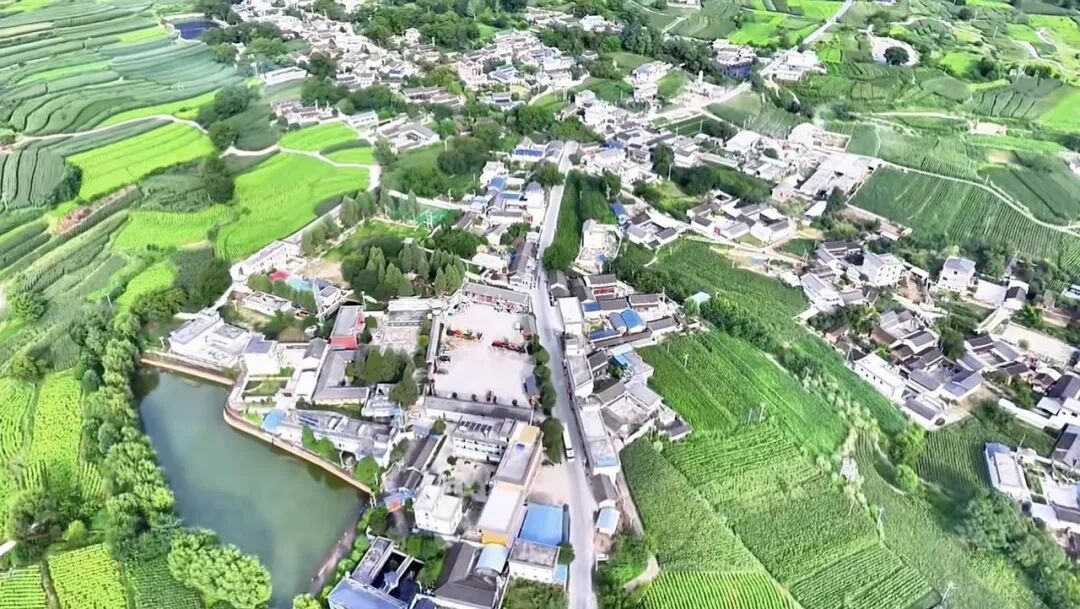
◉ Chezhou Village, Shangri-La, known by the epithet ‘Little Jiangnan.’ Image source: Douyin user @藏域桃源
Fifty years ago, the smallest unit of survival here was the extended family, because daily life also included growing mulberry, rearing silkworms, boiling cocoons, reeling silk, spinning thread, weaving cloth, embroidering, and making garments — a workload no single couple could manage on its own. Once people no longer had to make their own clothes, the extended family gave way to the nuclear household.
I adored that place, adored the life there. But I also knew how much this fondness was merely armchair romance. I was perfectly clear: with my abilities, I could not shoulder a life like that. I assumed that for a woman to survive alone in a pastoral setting was a fool’s dream.
I did not yet know, at that time, that a woman could already claim her own pastoral life, wholly on her own.
On another beautiful island — Taiwan — there was a real woman making her way toward the land, not toward death, but toward life. Toward living, toward daily life, toward a dream that never dies, a dream that belongs to women and to the land. Her name is Li Baolian. We call her “A Bao.”
A Bao has written her experience of living alone on the land into a book, Tǎo Shān Jì (Chronicle of the Mountain), which rivals “China’s Walden”.
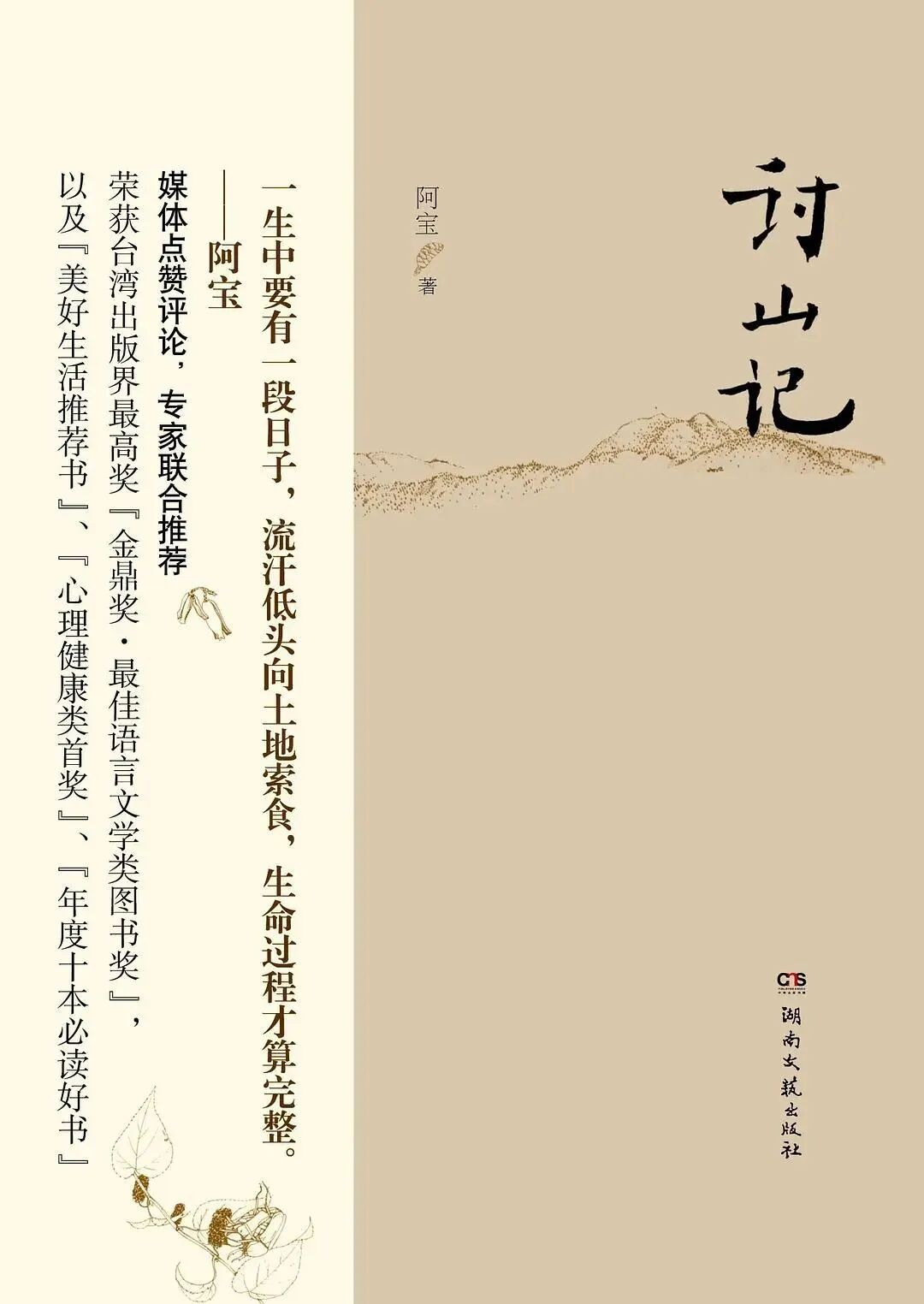
◉ Tǎo Shān Jì (Chronicle of the Mountain) records A Bao’s story of moving up to live on the mountain. Image source: The Paper
From the standpoint of survival, Walden was merely a two-year piece of performance art, weighted more toward philosophy than toward the practice of staying alive. Later classics of nature writing — Solitude in the Wilderness and Walnut Farm Notes — are about long-term, self-sufficient, solo living. Both of their protagonists are men, and superhumanly capable at that — “real-life male supermen.”
I have quoted, more than once, something a Bosnian survivor of the Bosnian War once said: he said that people who survived a time of chaos had all “turned into beasts.” Borrowing that construction: those who survive alone in the wilderness are all formidable men — or they become men.
Environmental pollution, food-safety issues, end-of-the-world crises… every modern person has to face these, and almost every one of them imposes an additional layer of trial on women. Perhaps women need a piece of land more than others — or rather, women need, more than others, the land to give them direct, material support for their lives. At the same time, the realities of survival place a higher demand on a woman’s ability to draw that life-support from the land.
What I want to know is: Can an ordinary person, relying on their own labour and a limited sum of money, choose their own life? Especially women among the ordinary. A Bao’s story gave me inspiration.
A Bao was once a wandering itinerant woman, carrying a roll of canvas across a thousand rivers and mountains. She felt that in a lifetime one should have a stretch of “facing the yellow earth, begging the land for food” — only then is life complete. After thirty, that feeling became all the more urgent. In 1999, answering the land’s call, she walked into Lishan and learned to be a fruit farmer. For more than twenty years, A Bao has been putting her philosophy into practice, living it out in the body.
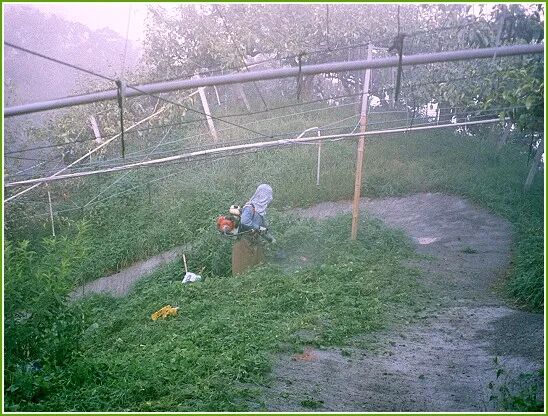
◉ A Bao at work. Image source: A Bao’s website
A Woman’s Way of Living
After she took up farming, A Bao had also briefly gone down from the mountain. In her mother’s final years, she rented a place in Yuanshan, Yilan, next to the Veterans Hospital, and shuttled back and forth between the orchard and the hospital.
The farmhouse I rented while farming in Yilan in 2018 and 2019 was, as it happened, the very house A Bao had lived in.
Now A Bao lives in Lishan year-round and plans to keep living in the mountains. In her years of solitary life in the wild, she has cleared land and grown vegetables, learned carpentry and house repair, and tackled every kind of plumbing and electrical problem on her own. The last time I went to Lishan before leaving Taiwan, she was in the middle of completely dismantling the wooden house, with the aim of finishing the insulation layer and structural reinforcement before winter arrived. Lishan sits at high altitude, and in winter heavy snow can seal off the mountain entirely. She is warming the winter with her own two hands.
Once, A Bao was so weak she could barely manage a pair of pruning shears — she even wrote about the embarrassment in her book. Now, though she has developed a superhuman grip, her hands remain slender. A Bao is a painter, a true bohemian at heart, and even her working apron has a literary air about it — the fabric and the cut are thoroughly bohemian. A Bao is still that slight woman from the south, speaking in a low, unhurried voice. She lives in the mountains and wilds, holding her own in every direction, but she has not become a man.
A Bao became the first one-person farmer in Lishan, and this was made possible by Taiwan’s social service infrastructure. Lishan is remote, but buses reach it, and since the advent of parcel delivery in Taiwan, couriers have gone straight to the village. Combined with the spread of the internet, one can sell across the whole island without ever leaving home. A Bao’s fruit is renowned throughout the island, so she need not worry about sales — as long as she keeps the orchard at a manageable scale, she can absolutely handle it all on her own. Machines and tools help people break through their limitations, and they have been a particular boon to women who lack physical strength. A Bao has a three-wheeled vehicle, and she is a bit of a tool obsessive. She has a rather impressive tool wall, with a strong artist-bohemian touch: she has drawn the outline of every tool in cartoonish lines on the wall, right where each one is supposed to hang.
Practitioners of natural farming often hold many thoughts and critiques about modernity. But modern human society has also made solo survival possible for ordinary people. In particular, a woman running a one-person farm is built upon a stable social environment, a comprehensive social service system, the widespread availability of machinery in the post-industrial era, and internet-based purchasing, sales, and delivery services.
A Bao has been alone in Lishan for over twenty years and has now purchased the mountain woodland she has worked for so long; she intends to keep living here. She has not only redefined her own life on the land but has also opened up the possibility for more women to redefine their lives, carving out a space of “possibility” for many others through practice. The better she does it, the wider the space she opens up behind her. Many have benefited as a result — including me. At the end of 2017 I became a new farmer in Yilan. Before me, there were already more than twenty women running one-person farms: some farming full-time, others half-farming, half-X.
Although I am the same age as A Bao, I started twenty years later. By the time I finally found my way to Eren Valley, I was already “heading into my sixties.” From the very beginning, it was an experiment in individual living by a modern woman — one with clearly defined physical limits, returning to the pastoral life in a measured, partial way.
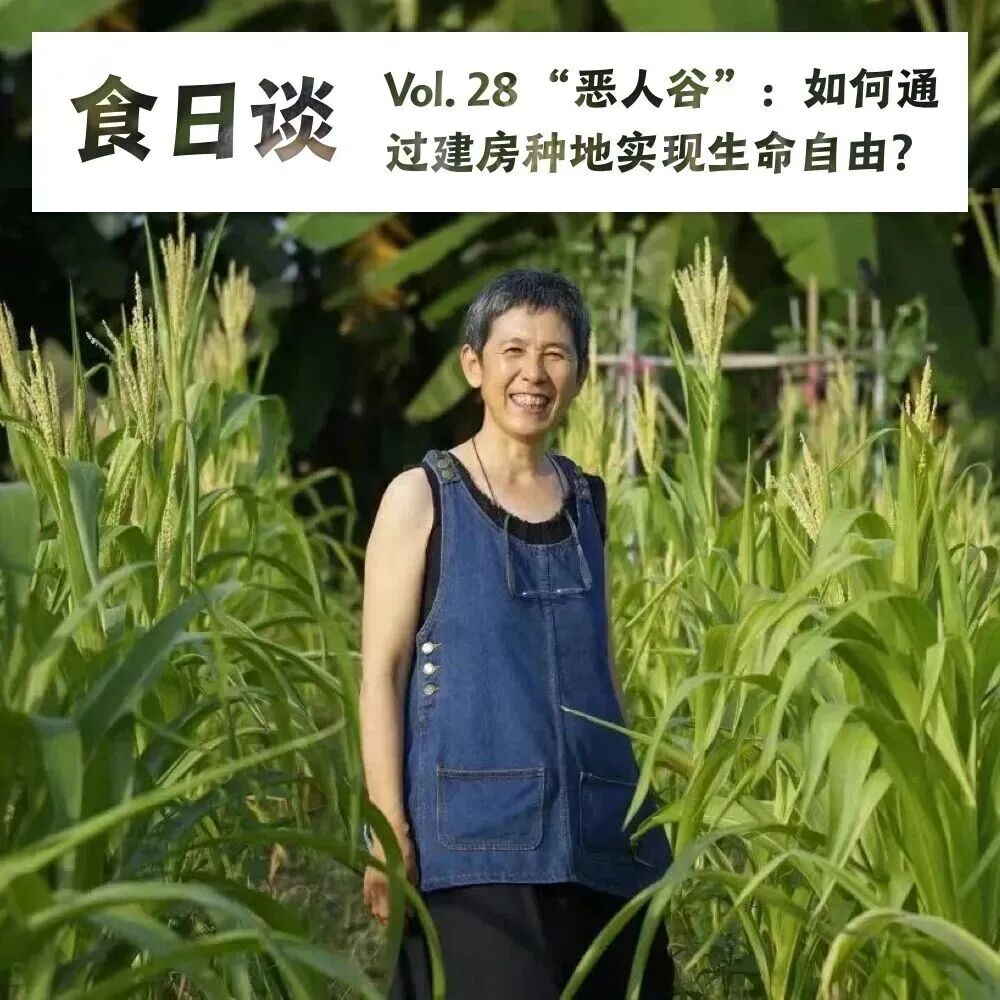
◉ Click to read Grandma Kouzi’s story of farming and building a house.
Living Solo in a Pastoral Setting
A Bao practises production-oriented farming: she sustains the operation by selling fruit, buys her rice with the proceeds, and relies on a modestly sized community of friendly smallholders in Taiwan to maintain a high quality of life.
Mine is lifestyle-oriented farming — I produce no goods for sale, expand no scale; I farm only for my own three meals a day. Eren Valley is small, but it has everything one needs. I grow whatever I feel like eating, aiming for the highest standard of living.
I dare not live alone in the wilderness, yet I cannot stand the “zero-distance” of constant human contact. For me, “building my hut in the human realm” suits better: a place that keeps just the right distance from the village, within cycling reach of both the town and the swimming pool.
Knowing my own limits, I cannot learn A Bao’s carpentry skills. In the early days of clearing Eren Valley, I straightforwardly hired someone to build the house, and paid a steep tuition for it. Oh, if only the world had “ifs” — at the very least, I could have saved two hundred thousand. But the good news, dear reader, is that you no longer need “ifs,” because I am here. I have already stepped over the mines ahead of you and written a guide to avoiding the pitfalls.
I spent five hundred thousand; with my lessons, you can manage on three hundred thousand. And if, unlike me, you are not fearful of villages and are willing to rent a house in one, you could achieve self-sufficiency in southern China within five years and a budget of under two hundred thousand.
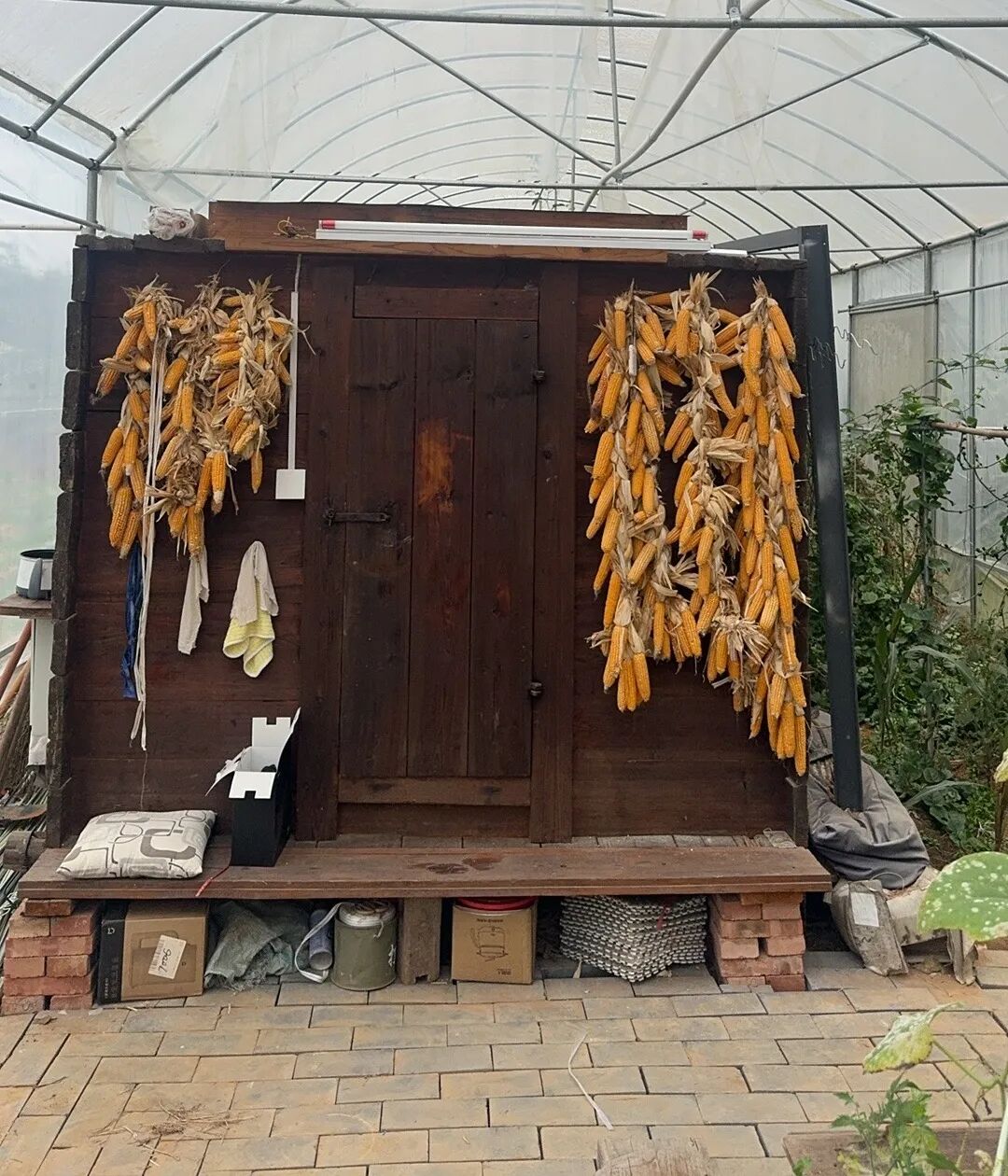
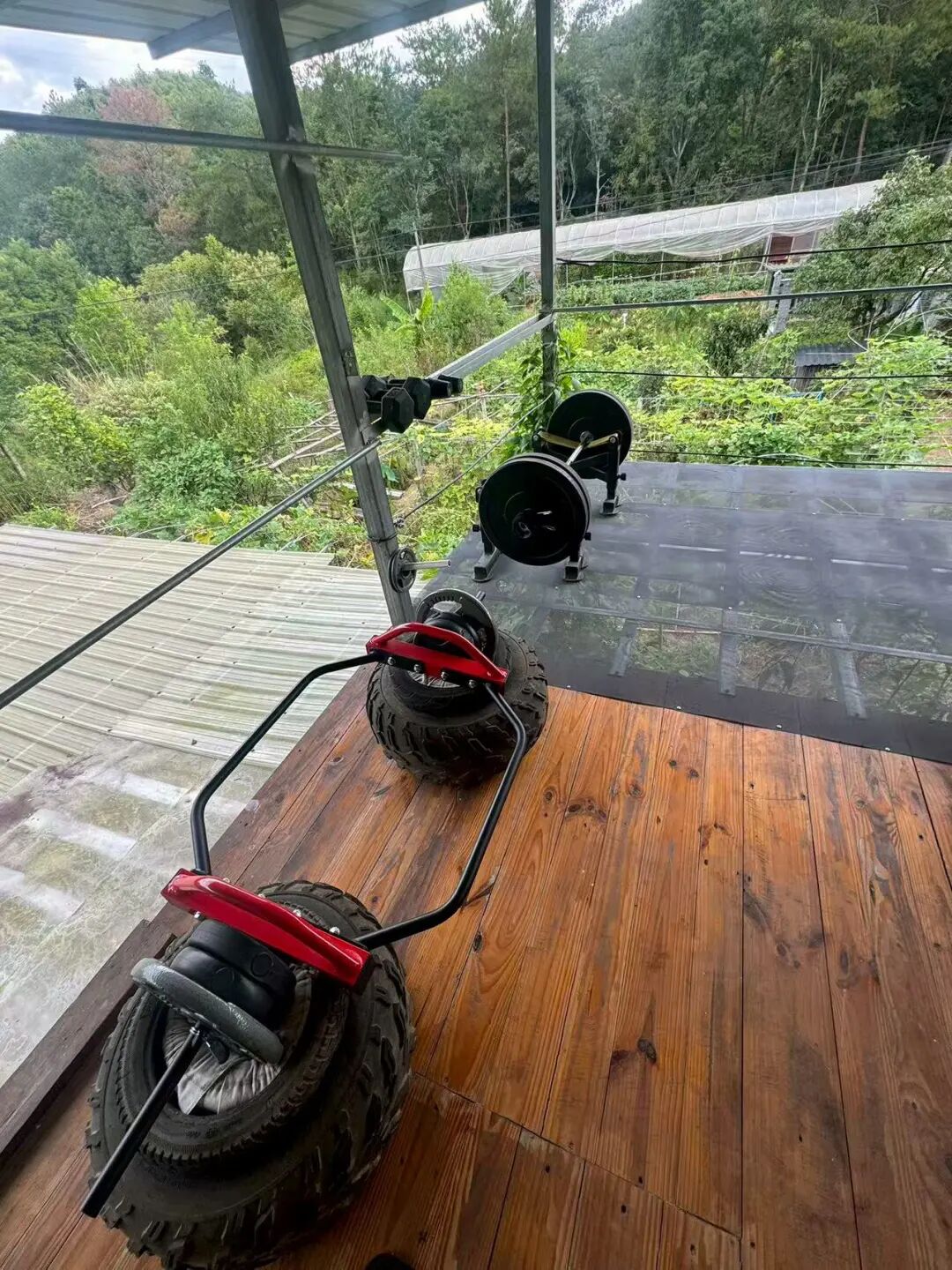
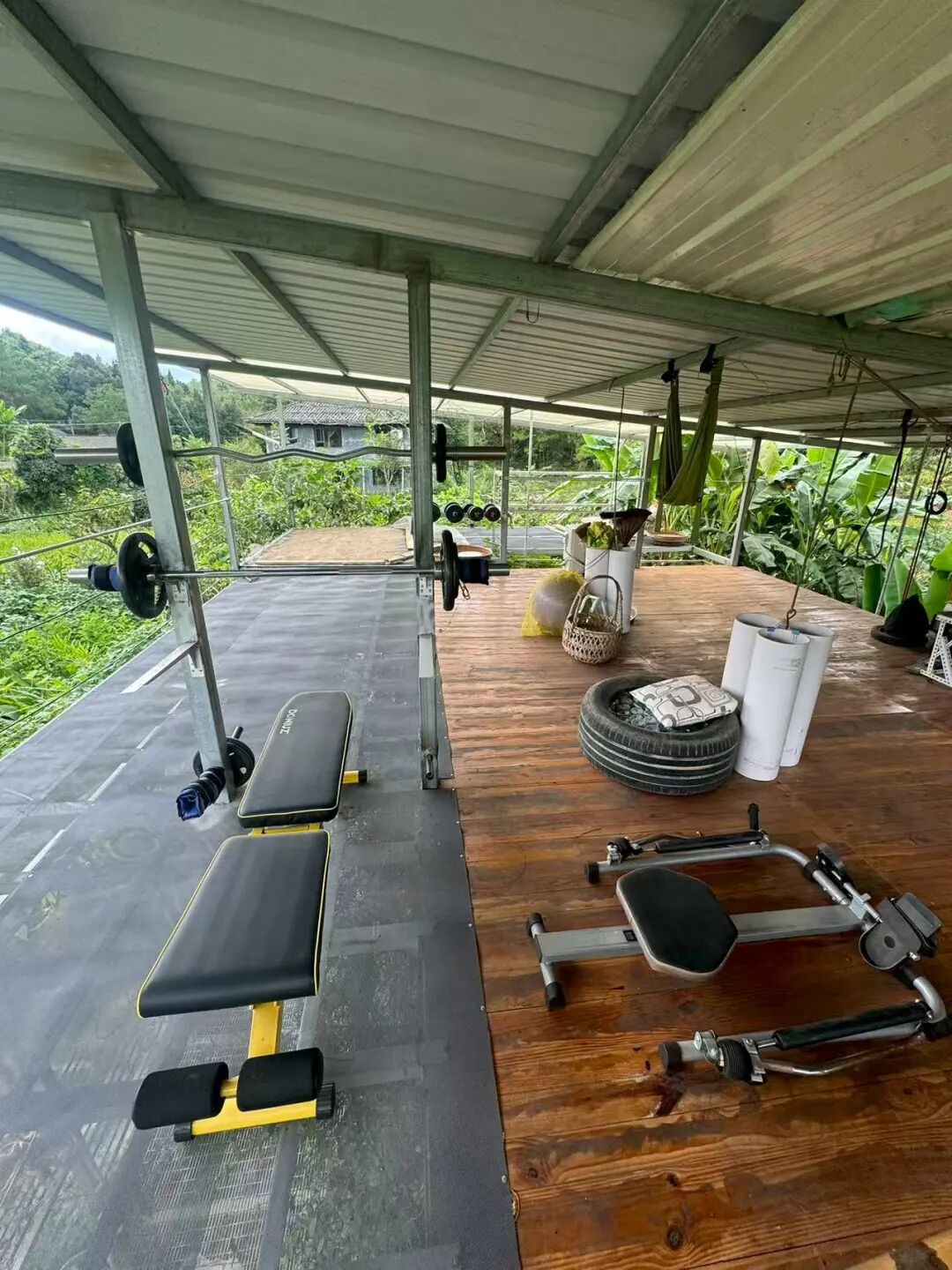
◉ The “Winter Palace” built from a secondhand barn, along with some fitness equipment. Image source: Kouzi
If, like me, you adhere to the strict “three-no” philosophy — no chemical fertilisers, no pesticides, no herbicides — and Meicuntou in Liancheng, Fujian, opens its doors to people like us and provides public services, the cost can be even lower: a one-person farm for a little over a hundred thousand.
From knowing nothing about farming and having no confidence whatsoever in my own capacity for labour, to moving with complete ease through Eren Valley; from the sub-health of a middle-aged city dweller to every single health-check indicator improving — I have reached the initial stage of “not a single bite of anything from outside.” In the fifth year in Eren Valley, I am fully self-sufficient apart from salt. This year’s harvest: twenty to twenty-five kilograms of rapeseed, over fifty kilograms of peanuts in their shells, over fifty kilograms of maize, over fifty kilograms of various rices, over fifty kilograms of various beans, and over a hundred pumpkins. The quantities are mostly the vague “over fifty kilograms,” because once the yield exceeds what survival demands, I no longer weigh or count — it goes straight to feed the chickens and ducks.
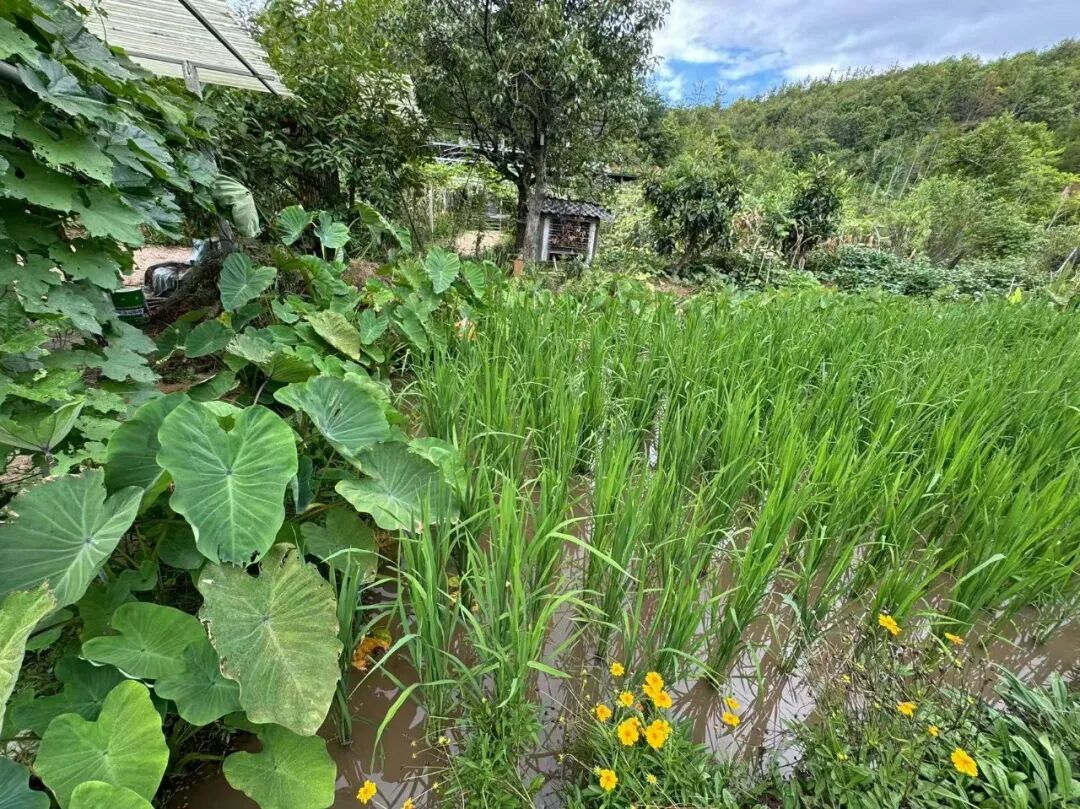
◉ A corner of the pastoral landscape: taro on the paddy and the field ridges, making layered use of the sunlight. Image source: Kouzi
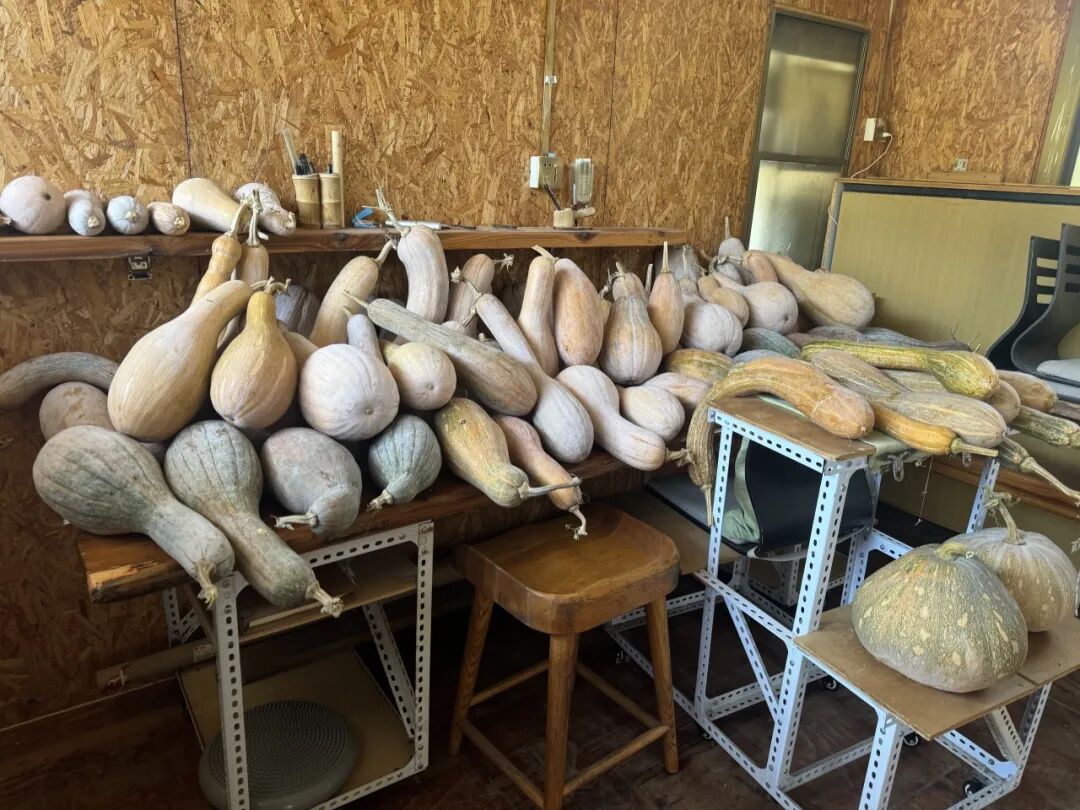
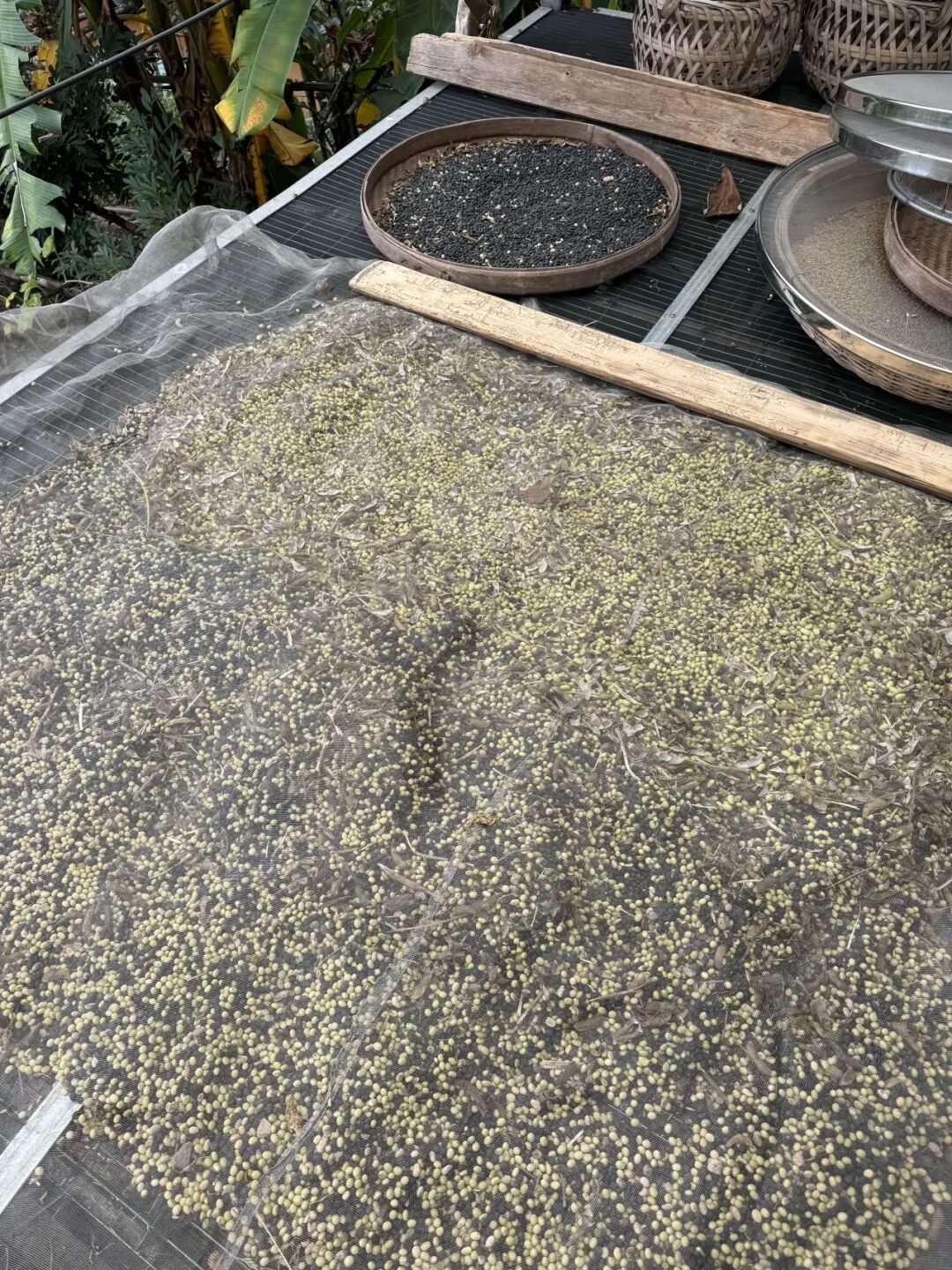
◉ Pumpkins and various beans harvested in 2025. Image source: Kouzi
This is a life created by a woman in her sixties, with her own labour and her own two hands. The aspiration of women who came before — to be independent and self-reliant — has depended on the enabling power of technological development and the progress of the times.
In 2025 I achieved the minimum level of fruit self-sufficiency and have now begun raising fish. I am exploring “chicken-centred design” — a sustainable, self-cycling system of planting and rearing built around the chickens’ needs, within a plot of about half a mu. With the same egg output and the same number of chickens, I am confident I can halve the feed by 2027. I will also implement a “duck-centred design” by the same logic, as well as an integrated chicken-duck-fish system.
I want to explore the ultimate state of “shutting the door and living by the sky” — particularly the ultimate state of a woman living solo in a pastoral setting. By seventy, I will have built a complete living system including water and electricity self-sufficiency, completed all soil improvement, gone fully no-till, and finished constructing a food forest across the entire property, entering a state of lasting sustainability. Not only will I eat better and live more comfortably here, but the arrangement will also better match the labour capacity of a woman of advanced age and respond more fully to the demands of daily life.
– This is Foodthink’s 799th original article –
Foodthink
Author
Kouzi
A farmer and long-distance walker, the village’s brewing master. Full-time foodie, part-time farmer, hobbyist writer.
About the “She and the Land” Column
This year is the UN’s International Year of Women and Girls in Agriculture. Foodthink is launching the “She and the Land” content column, focusing on women in agriculture and food systems. We will go into the fields, markets, fishing ports, pastures, kitchens, laboratories, and city streets and lanes to see the women who are often overlooked yet always present — those who take part in production, research, cooking, distribution, and care, supporting our daily lives with their labour experience and wisdom. They are both cultivators of the land and key builders of rural areas and food systems. Through interviews, writing, and workshops, we hope to tell their stories, to understand how women’s participation shapes our food systems, and to invite everyone to explore together: for women working in food and agriculture, how does a fairer, more dignified future come about?
Editor: Xiao Dan
Layout: Ming Lin