
Can a Sports Meet in the Fields Keep Children Free from Nature-Deficit Disorder?
Foodthink says: “Can you run faster than a rabbit? Can you jump further than a grasshopper? Can you hop higher than a chicken?”
“Check out our sports meet events: Javelin Spearfishing, Tug-of-War, Weed-Pulling Race, Flower Field Relay, Vegetable Sprint, A Gift for the Sun God, Countryside Treasure Hunt!”
“Run under the sky. Sweat in the field. Laugh with people.”
In mid-April, we came across the invitation from Nanjing’s “Fifth Phase Community” for their May Day Farm Sports Meet and decided to head out and see what a sports meet in the fields is like.
A Parent-Child Sports Day in the Fields
By: Meng Meng
Nature holds a wealth of energy we have yet to harness. No university is greater or more complete than the reality shaped by nature and the will and wisdom of humanity.
[Soviet] Gorky, Notes from a Journey in the Soviet Union
The farm sports meet is organised by the “Fifth Phase Community,” which was only formed in March this year, yet the participating organisations are all highly renowned in Nanjing’s sustainable living circle. “Time Farm” has been exploring permaculture in open fields since 2012—a design philosophy that emphasises observing, adapting to, and mimicking natural ecosystems—and its vegetables, rice, and poultry are highly regarded among members. The “Sustainable Living Research Society” was founded by a few young people and has already achieved modest success. The “Living Food Workshop” grew out of the same roots, making handmade food with no additives.

After this year’s Spring Festival, the three organisations decided to deepen their collaboration and establish the “Fifth Phase Community” to jointly explore, practise, and promote sustainable living and development approaches. The Sustainable Living Research Society and the Living Food Workshop moved to Time Farm, where they rented two small courtyards by the fields to live in together, along with 15 mu (roughly one hectare) of land as a cultivation and education base. The May Day sports meet was the community’s first public appearance.

1
An International Sports Meet on the Farm
In mid-April, the moment the sports meet sign-up post went up, the 15 places were quickly oversubscribed.
On May Day, as soon as it was past nine o’clock, 17 families from Nanjing and the surrounding area arrived at Time Farm on the banks of the Jurong River in Jiangning District, cracking their knuckles, eager to get started. The youngest “atlete” among them was just two years old, and the “support crew” were still in baby strollers, unable to walk. The sports meet was also quite “international”—an Australian family and an Italian family had signed up, both long-time members of Time Farm.


At 10 o’clock, over 20 “little athletes” and their parents gathered in a sea of Chinese milk vetch blossoms. This was Time Farm’s duck-rice paddy; every year, before the rice seedlings are transplanted, a crop of Chinese milk vetch is grown as green manure to improve the soil. Early May is when the Chinese milk vetch is in its most glorious bloom. Once the events had been introduced, everyone lit a torch by the irrigation channel, and the sports meet was off!

2
Experiencing Agriculture Through Sports
Since this is a sports meet in the fields, all the events are connected to nature and agriculture.
The javelins are reed poles gathered on the spot, the targets are wooden “fish,” and javelin throwing becomes “spearfishing.”

“A Gift for the Sun God” involves throwing potatoes using “Space Sports” movements to see who can throw the farthest.

The Flower Field Relay is a 25-metre family relay race in the sea of Chinese milk vetch blossoms.

The Weeding Contest involves pulling grass bare-handed within a set time limit to see who pulls the most.
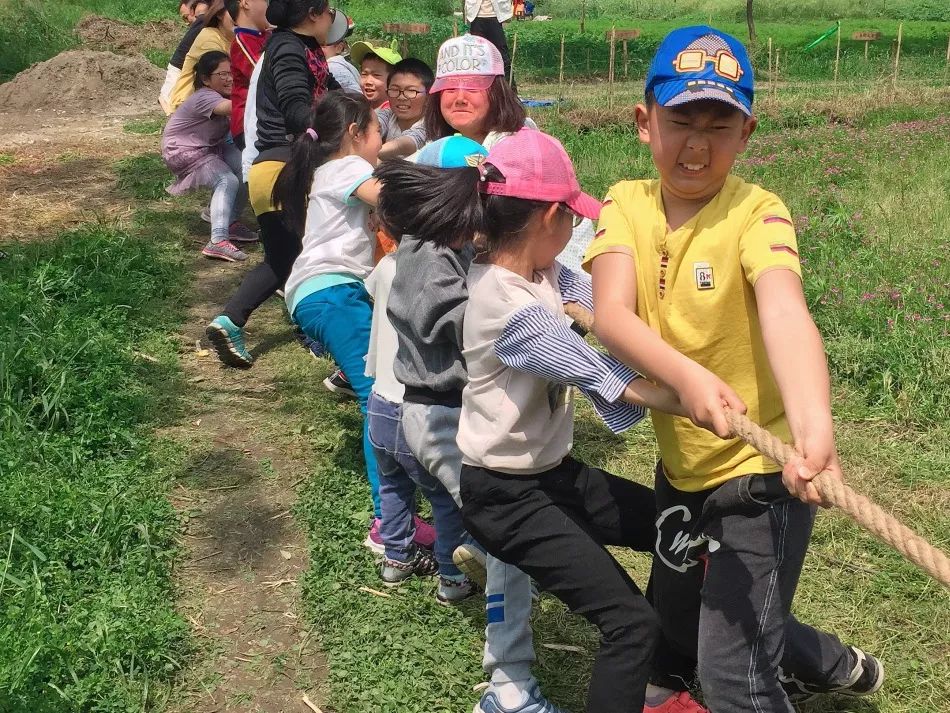
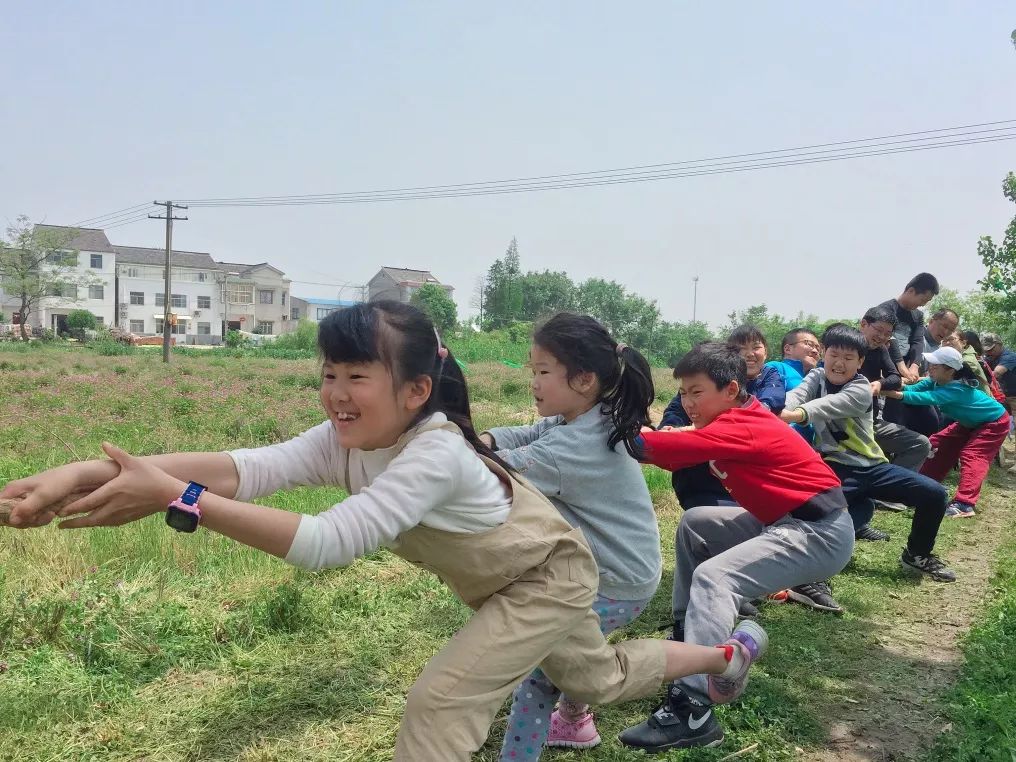
The event with the most participation is, of course, the traditional tug-of-war. This is a proper tug-of-war — both teams pull beside the irrigation channel, so the losing side risks falling into the water. Of course, there is no real danger.
3
A Sustainable Field Lunch
A whole morning of running and letting loose in the fields had left everyone a little tired — just in time for lunch.
Of course, lunch had to reflect the “sustainable” theme. Early in the morning, the young members of the Fifth Phase Community, under the guidance of Teacher Gu Yingjun of Time Farm, had picked fresh lettuce, stem lettuce, potatoes, carrots, garlic, green garlic, and spring onions at the farm. Paired with other sustainable ingredients the Sustainable Living Research Society had sourced from across the country, the volunteers, led by chef A Cai, prepared a delicious spread: lettuce salad, chilled yuba, potato and carrot stew with meat, sausage with green garlic, stir-fried wood ear mushrooms with stem lettuce — and, of course, Time Farm’s germinated brown rice. Apart from the pork, laver, and tomatoes the farm does not grow, all ingredients were either supplied locally or came from fellow sustainable farmers elsewhere that the Fifth Phase Community knows well.

The Fifth Phase Community asks every family to bring their own tableware and to avoid single-use items. Once the food is ready, everyone dines under a bamboo shelter set up in the fields.
Five-year-old “Little Motor”, with her parents, has taken part in nearly every activity of the Sustainable Living Research Society — baking bread and pizza in a homemade “clay bread oven”, and joining the rice harvest last year. While serving the rice, Mama said to Little Motor, “The rice you’re eating today is the rice you harvested yourself in autumn.”
After the meal, Little Motor washed her own bowls and chopsticks at the tap. The wastewater, free of detergent, flows into the irrigation channel to become irrigation water.


Eating in the fields isn’t limited to sitting on the ridge between the plots. The older children wander through the One Metre Garden and the herb spiral built by the older boys and girls of the Sustainable Living Research Society, climb up onto the still-unfinished “sustainable composting toilet”, gaze out over the fields, and chat as they eat.

4
From Physical to Mental Contests
After lunch, Teacher Gu Yingjun of Time Farm organized a Sustainable Development Knowledge Quiz, and the children gathered around him to hear the questions.
Teacher Gu first asked the children, “Do you know which are the four hottest years since Earth’s temperature records began?” In a “little grove” of upraised palms, the children let loose a round of wild guesses. Eventually someone offered a possibly correct answer: “Is it 2016 to 2019?” Teacher Gu, who has an IT background, explained that it was actually 2015 to 2018 — 2019 had only just begun, and it was still too early to say.

Teacher Gu then asked, “So what impact does climate warming have on our lives?” The children all chimed in — soil will turn to desert, polar bears will lose their home, the oceans will slowly dry up (Teacher Gu quickly interjected: “No, there will be more water!”), there will be fewer species in nature… It seems the children are quite familiar with the topic of climate change!
Teacher Gu’s final question was: “What actions can we take to slow down climate warming?” This question was not just a test for the children — it was directed at everyone.

Teacher Gu wrapped up by saying that answers shouldn’t stay at the level of knowledge alone — he hoped the children would put things into action in their everyday lives to help slow down climate warming. During the Q&A, he also explained the workings of permaculture farming and its impact on natural ecosystems, planting a green, sustainable seed in the children’s hearts.
5
Treasure Hunt in the Fields
Before the “Treasure Hunt”, Teacher Xiao Pang of the Sustainable Living Research Society set the children a “tough challenge” — they had to find the leaves of ten plants out in the fields: crape myrtle, chinaberry tree, mulberry, snakeberry, plantain, Chinese lobelia, black medick, ramie, wild lettuce, and goldenrod. Only then could they head to the vegetable garden for the “treasure hunt”.

After studying the ten plants on the “task” over and over, the children searched painstakingly through the fields, along the irrigation channels, and across the grassland — crape myrtle, harder to spot before it has flowered; chinaberry tree, which can be used in medicine; mulberry leaves, a silkworm’s favourite; snakeberry, alluring in its red colour but slightly poisonous; plantain, its leaves riddled with tiny holes; Chinese lobelia, whose blossoms open on just one side; black medick, dotted with tiny yellow flowers; ramie, in great patches, its undersides furred with silver; wild lettuce, with its serrated edges; and Canadian goldenrod, the invasive species that gives farmers headaches.

During the Treasure Hunt in the Fields, children and parents not only got to know common wild plant species and their growing habits, and learned in depth about the edible and medicinal value of plants and the harm caused by invasive species, but also learned to help one another and share what they found — when a plant turned up, they would pass it on to friends who hadn’t spotted one yet, and then everyone would set off together in search of the next.

The flowers and grasses were lush along the irrigation channel. Yuwen, a Year 4 pupil, excitedly held up a newly found plant to show her mum, while her little brother trailed behind, carefully searching for the plants on the task list. Yuwen said, “The nature lessons at school aren’t this fun.” Yuwen’s mum said that children growing up in the city rarely get to experience the fields. Since Yuwen’s grandfather’s family lives in the countryside, the kids can still head out to play in the fields during the holidays — other children might not even have the chance to get their hands in the soil.
As the sports day was drawing to a close, one child accidentally stepped into the irrigation channel. The channel wasn’t deep, but the bottom was caked with silt used as fertiliser, and the child’s shoes sank into the mud and were gone. Everyone pitched in, waving long poles back and forth in the water, trying to fish the shoes out. In the end it was Teacher Xiao Pang who fetched the “nine-tooth rake” and finally pulled the shoes up. Everyone joked that next time they should set up a dedicated “shoe-fishing” event — even more fun than any of the other contests.

Yiyi’s mum said, “Yiyi’s school has set aside a plot of land for growing plants, but other schools rarely offer that kind of opportunity.” Teacher Xiao Pang of the Sustainable Living Research Society is the farming-lessons teacher at the Waldorf school Yiyi attends, which is how the parents came to hear about this kind of activity. Yiyi said, “Our school has farming lessons too, but they don’t teach it this way. It’s more fun here.”
6
Nature-Deficit Disorder and Nature Education
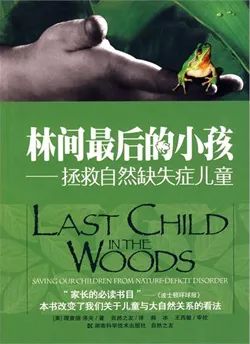
American author Richard Louv writes in Last Child in the Woods: Saving Our Children from Nature-Deficit Disorder that modern children, growing up surrounded by electronic devices, have less and less contact with nature, and he introduced the concept of “nature-deficit disorder.” He believes the main causes of “nature-deficit disorder” are parents restricting children from playing outdoors, a decline in available play spaces, and the prevalence of electronic devices.
At the Fifth Phase Community sports day, we can also see how profoundly electronic devices — rivals to nature — affect the children: using phones to photograph and identify flowers and plants; seizing every spare moment between activities to grab a phone and play a game; or gathering together to look at their phones.

It is so easy to get pleasure from electronic devices, but is this simple “happiness” really enough for a child growing up?
Louv believes that a lack of contact with nature leaves children without a basic respect for the natural world, causes depression and attention deficit disorder, which in turn leads to declining creativity and other issues, and also contributes to childhood obesity. To address this, in 2009 the United States introduced a bill — No Child Left Inside — urging states to carry out environmental education so that children can learn outdoors through discovery and hands-on practice.
At home, the lack of nature education is also gradually being taken seriously. Waldorf and other schools have introduced “nature lessons” that truly step beyond the schoolyard and into the natural world, opening up farmland on campus so children can get their hands into the soil with farming lessons, while parents have begun making a point of taking their children outdoors to play. All manner of commercial and non-profit projects flying the banner of “nature education” are springing up everywhere.
At the Fifth Phase Community, we have witnessed an attempt that is not yet polished but full of sincerity: on an eco-farm, children and parents learn together, experiencing the knowledge and joy of permaculture, practising sustainable living through play. After all, food is the most vital connection between us and nature.

Editor | Tianle
Photos | Mengmeng, Fifth Phase Community
Layout | Niuniu