Raising Sheep on Borrowed Money: Qinghai Herders Grind Through Yet Another Year

I. Summer Pasture: The Last Pastoral Song
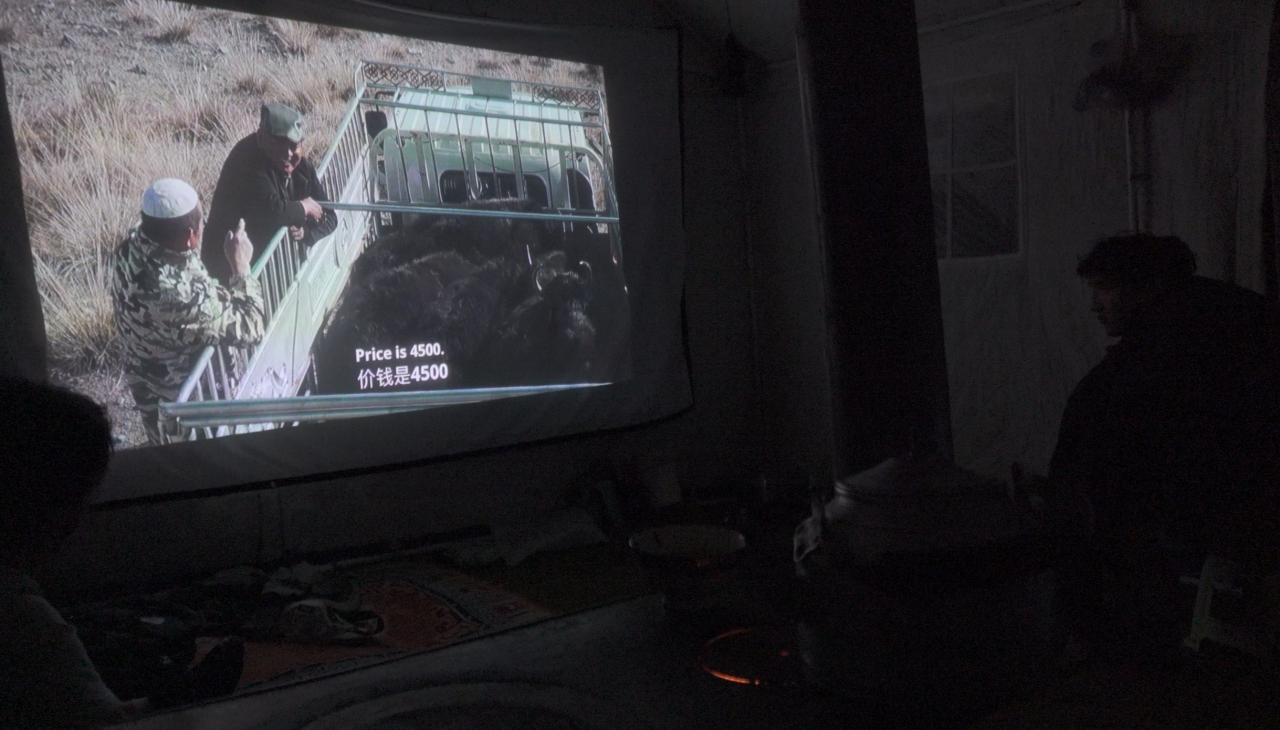
The Ni’ejia family is a typical Tibetan herding household around Qinghai Lake, still grazing in the traditional way. They were one of the protagonists in the documentary I filmed last year, Whose Table, Whose Pasture. A year has passed since that filming, and I have come back to Qinghai, both to show the people I interviewed the finished film and to find out more about how they have been getting on.
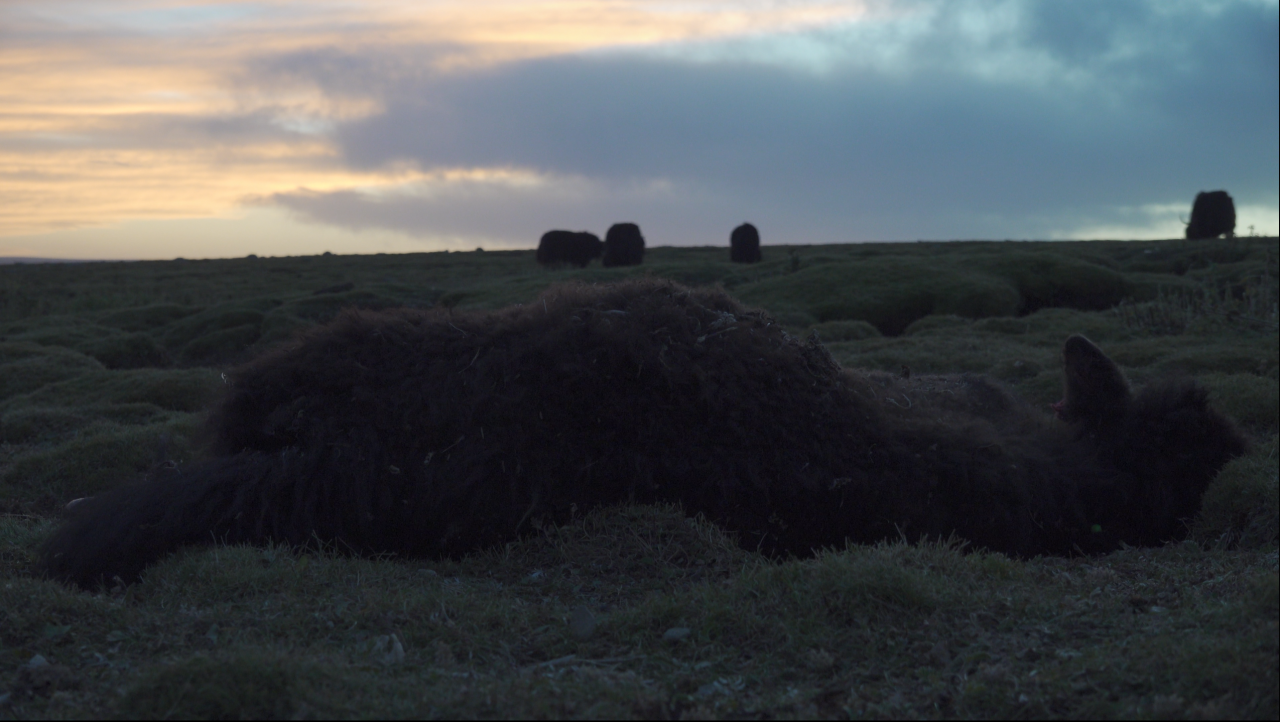
By the time summer on the steppe was drawing to a close, the Ni’ejia family had moved up to this communal summer pasture at Caohun (phonetic). Few outsiders ever come here. Apart from Ni’ejia’s third uncle, who lives on the mountainside a kilometre or two away, the other families are all several kilometres off. There is hardly any sign of people around—only the white yurts of the pasture, visible in the far distance. Apart from cattle, sheep and Tibetan mastiffs, the most common creatures would be the plateau pika and the white-rumped snow finch, and, on occasion, wolves that drop by at night.
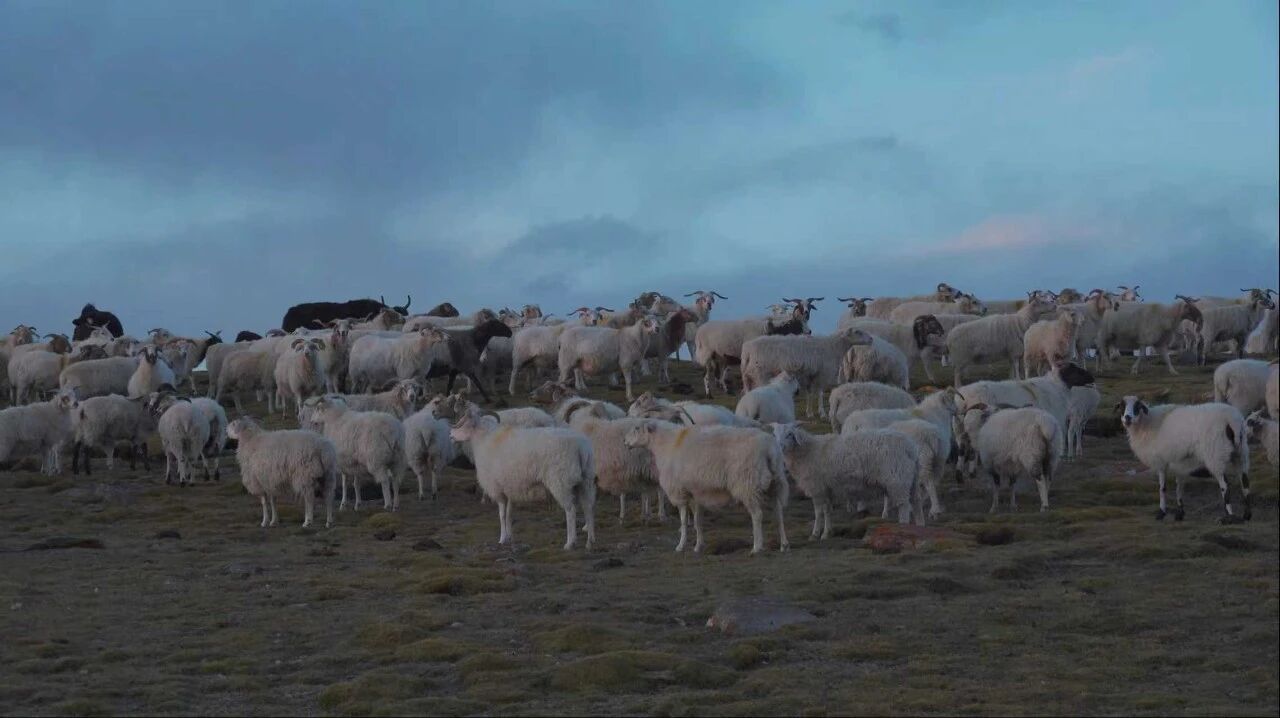
Yet behind the postcard-perfect scenery, herders’ livelihoods on the steppe are growing ever more precarious. Since 2023, when we began documenting herding communities around Qinghai Lake, we learned of the sharp fall in cattle and sheep prices and the way imported frozen meat was hitting the pastoral market. We joined Foodthink’s Lianhe Programme to record how these new market shifts were striking herders’ lives. Last November, my partner and I drove all the way around Qinghai Lake and completed the filming.
Qinghai Province is not among the country’s main cattle and sheep-producing regions, but it is one of the five major pastoral regions—and it has the highest volume of yak and Tibetan sheep sent for slaughter in the country. Over half of the income of pastoral and farming households in the herding areas around Qinghai Lake comes from the Tibetan sheep industry. Falling prices strike directly at their livelihoods. The herders recall that they have already ground their way through four or five years of a market in which cattle and sheep prices kept sliding.
National data confirm the trend: mutton prices entered a downward cycle in 2021, and live sheep prices have kept sliding ever since. Cattle prices have taken a brutal hit, too—by 2024, domestic beef prices had at one point fallen to a near five-year low, and live cattle prices had dropped even further, to a near ten-year trough.
Under the pressure, some herders have not weathered the market downturn and have sold off all their cattle and sheep, leaving the industry altogether.
This year, the Ni’ejia family has not yet sold any sheep. They plan to move down to the winter pasture and wait for buyers to come. They have also learned that prices have edged up a little compared with last year. So, will a price recovery make things a shade easier for the herders? My follow-up visit began with just this thin thread of hope.
II. Qieji West Road: A Game of Buying and Selling
National market data tell a similar story: across September as a whole, the national average price of beef was 70.90 yuan per kilogram, and mutton 69.59 yuan per kilogram. But compared with 2023, both beef and mutton had still fallen by around 10 yuan per kilogram.
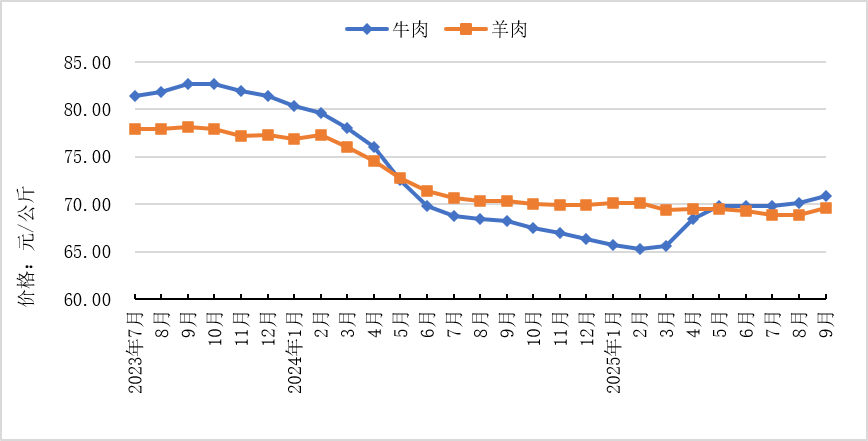
I walked into the shop and asked about the reason behind the price increase. The shop attendant told me that winter cattle and sheep are basically fed on concentrate, whereas in summer they graze on grass. The feeding method makes a noticeable difference to the taste of the meat. As a rule, finishing cattle and sheep that are slaughtered while overfat carry too much belly fat and a thick fat layer. For local consumers accustomed to eating hand-grabbed meat, grass-fed meat is naturally the more popular choice. So September prices tend to run a little higher to begin with.
Leaving Xining, the proper follow-up journey began in Gonghe County, 142 kilometres away. On both sides of the G6 Highway leading into Gonghe County, the pasture stretches out in unbroken waves. Roadside signs read “Watch for livestock,” and herds of yaks and Tibetan sheep stand or lie spread across the grassland. Gonghe County is the seat of Hainan Tibetan Autonomous Prefecture. By long-standing convention, Qieji West Road in Gonghe County has become the centre for live sheep trading, and herders from the surrounding area all come here to sell their sheep.
Last year it was on this very road that I came across another group of filming subjects—Maki’s father. He had been standing on the road with his companions, waiting for the sheep dealers to come. A sheep dealer is essentially an “intermediary” in the livestock trade, and most of them are local Hui people. The cattle and sheep that herders raise enter the market, and ultimately make their way to the dinner table, through these dealers step by step.
The summer grass-fat season is one of the busiest periods of the year for sheep dealers. I had arranged to meet Maki in the evening, but he cancelled at the last minute, saying he needed to go to Heishui River to collect on debts. So I was left doing what I had done the year before: heading back to Qieji West Road and trying my luck.
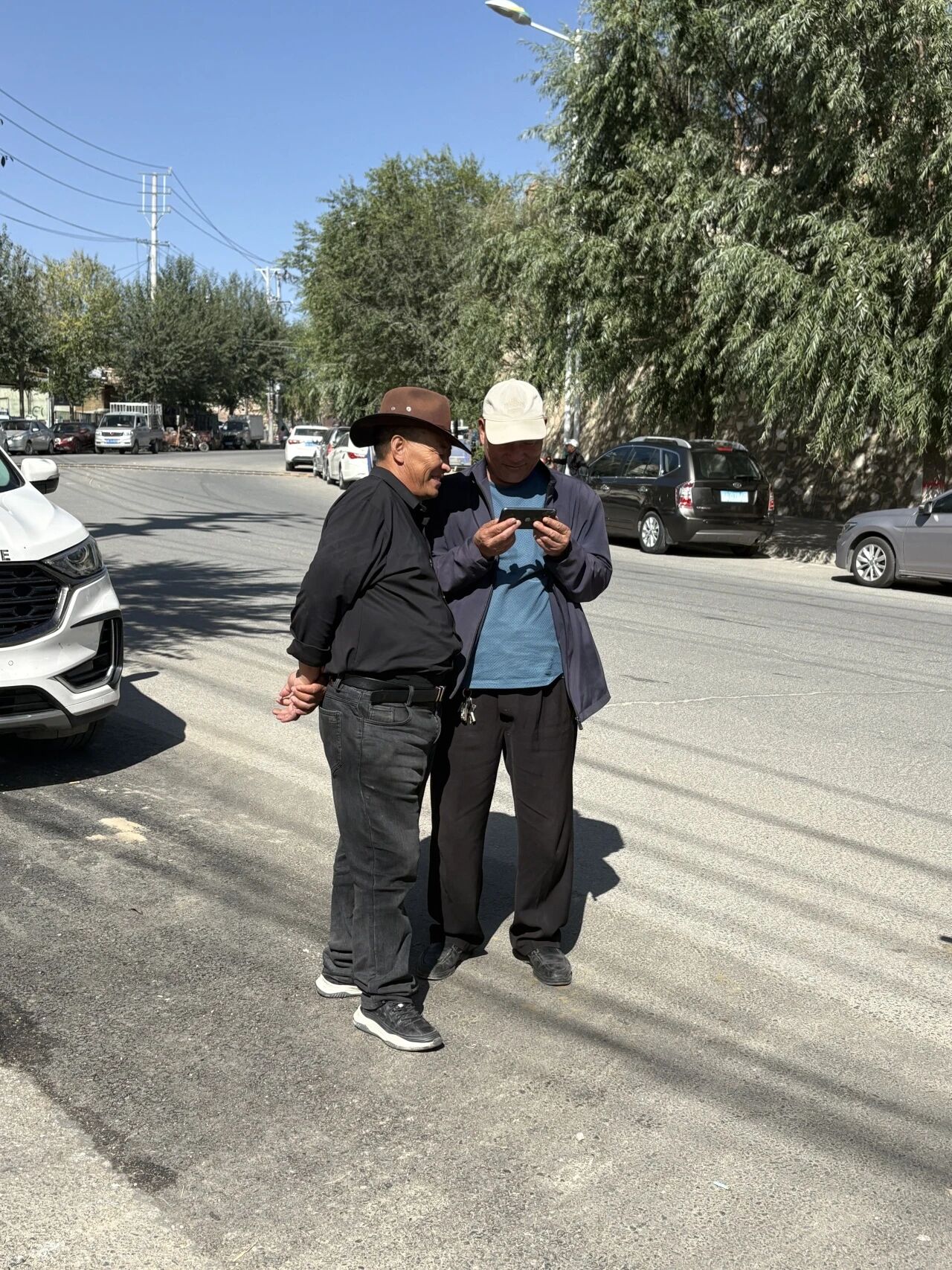
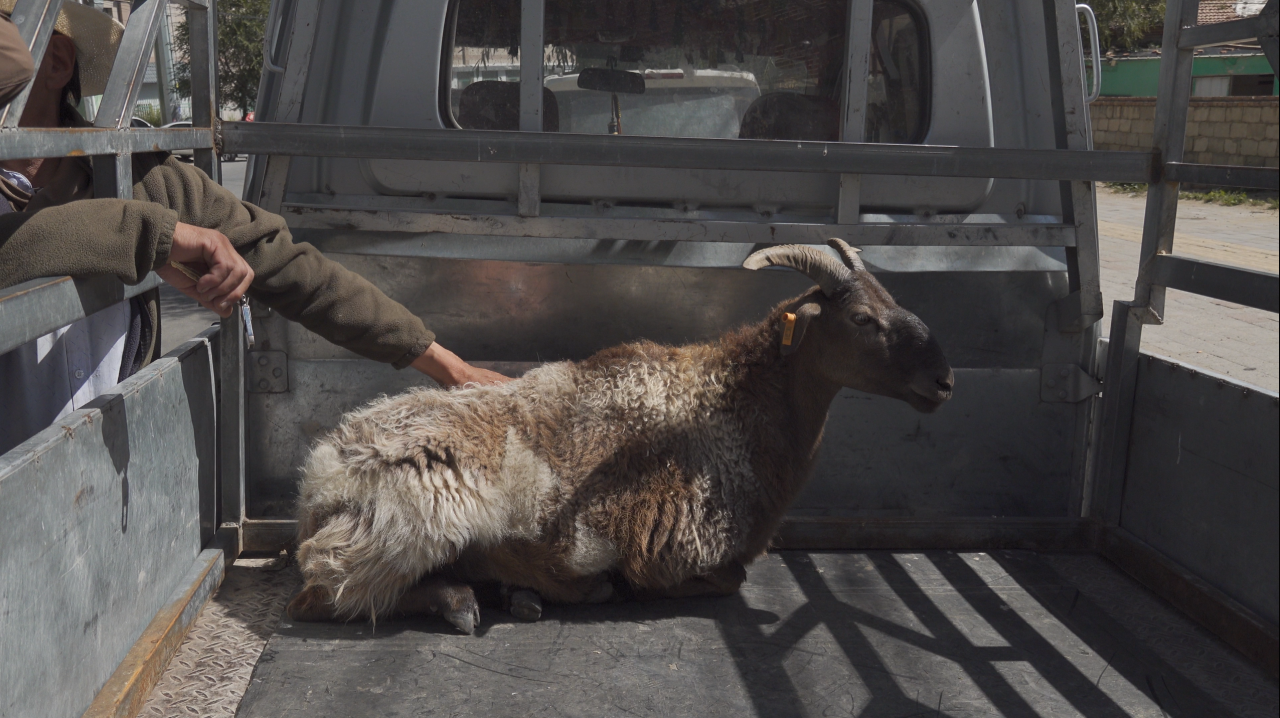
Live sheep trading generally takes place only in the morning. On this particular day, just one sheep appeared. Five or six sheep dealers had gathered by the roadside, occasionally glancing at their phones to watch the videos of cattle and sheep that herders had sent over, appraising them, and chatting away. They were not worried about business; in this season, trading usually happens up on the mountain, and the younger dealers had all gone up there, where they could take in seventy, eighty or even a hundred sheep in a single run. The herders no longer needed to bring their animals down to the market.
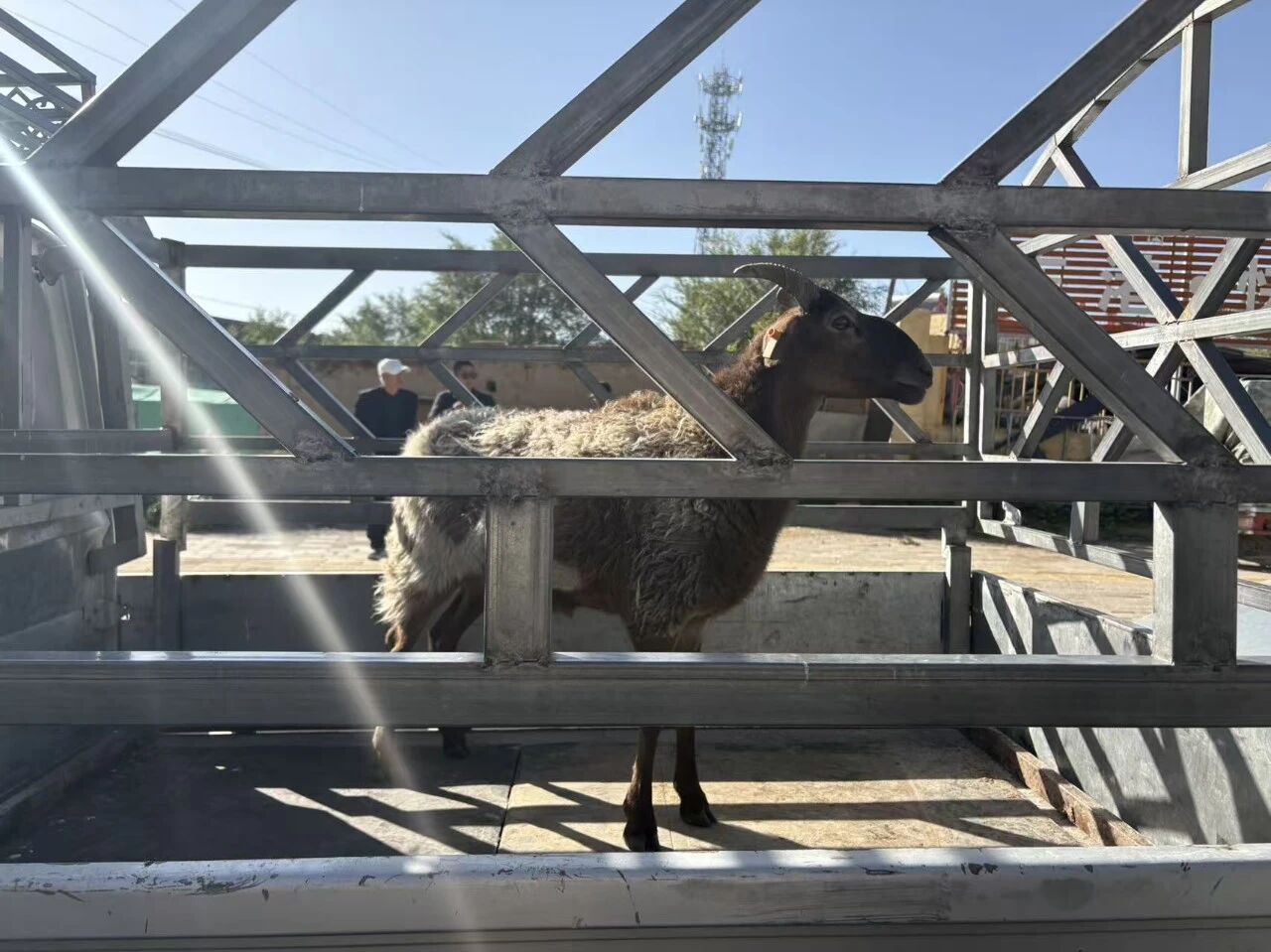
But they were all rather uninterested in this sheep. The dealers said the animal had a problem—a problem in its head. That was why it had a cross-eyed look and walked at an angle, unable to keep to a straight line.
As far as I could tell, the sheep did not look unwell. The more likely explanation was that the price could not be agreed. An experienced sheep dealer can gauge, almost by instinct, how much meat each animal will yield after slaughter, and then work out a fair bid against the going market rate. Bid too high and you take a loss; bid too low and another buyer will snatch it away.
According to the dealers, this ewe, a little over two years old, was too thin and small—just a little more than 20 jin of meat. At this year’s wholesale price of 25 yuan per jin for sheep and 27 yuan per jin for yak, it was worth at most 600 yuan.
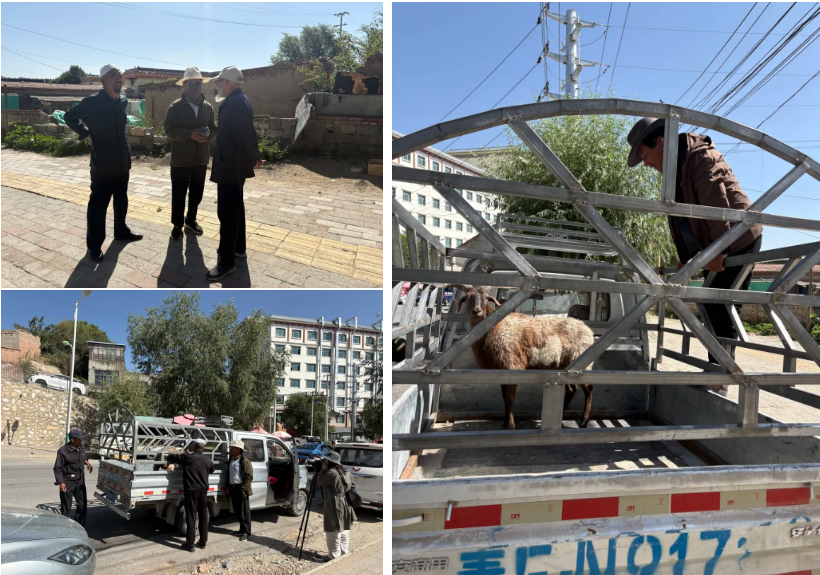
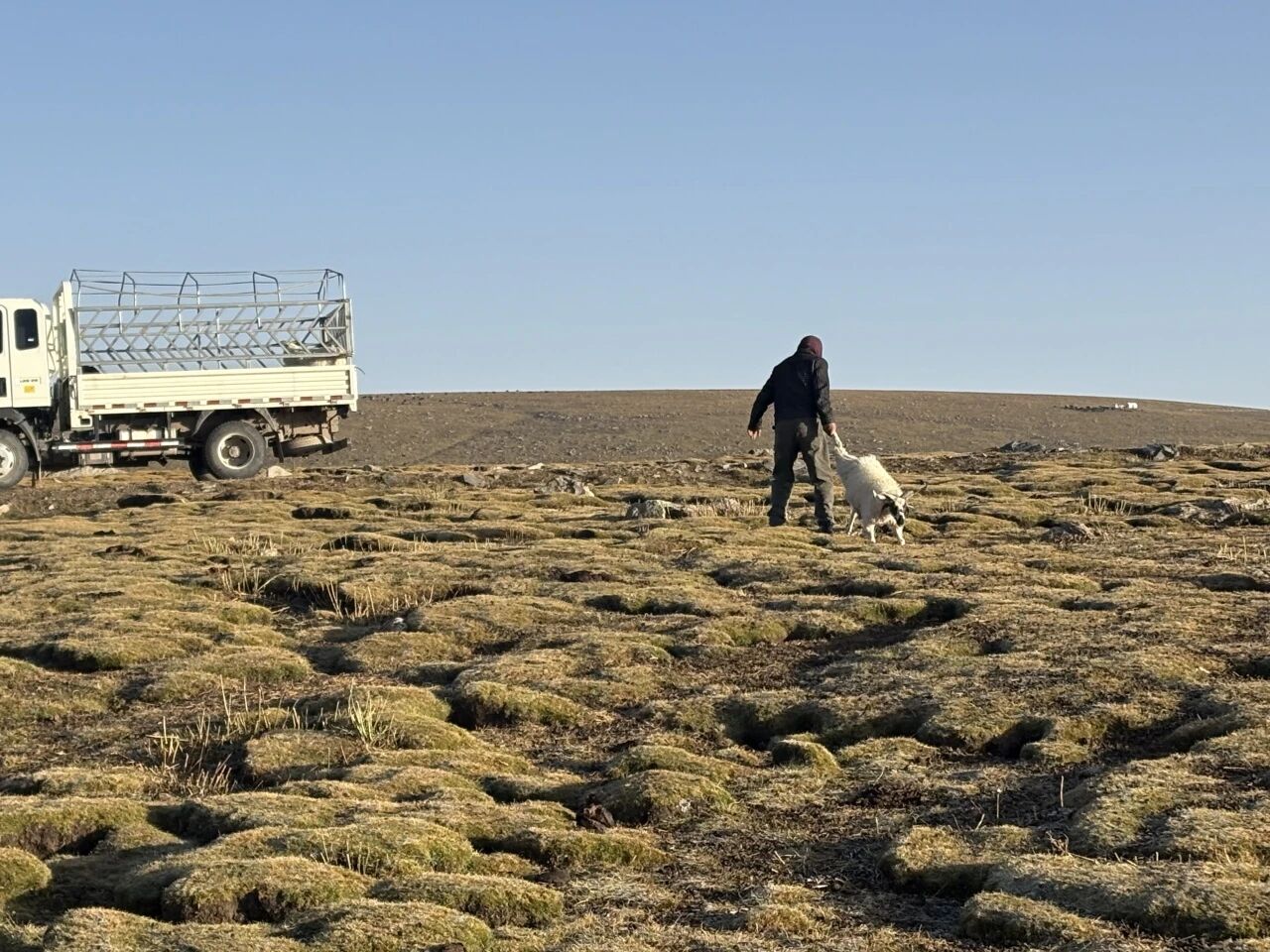
The sheep’s owner was a Tibetan man. He insisted the sheep was not sick! To get it sold, he had driven his small truck here first thing in the morning from thirty or forty kilometres away. He was asking 900 yuan, which was enough to put off several dealers who had come over to have a look. After a succession of dealers whispered a few words to the Tibetan man, one after another they turned and left.
By twelve o’clock, the sheep dealers on Qieji West Road had each drifted off, and the lone sheep still had no buyer.
III. Sheep Herders Trapped in Debt
The price fall has also cut their income. At the same time, the fixed costs of herding and their annual outgoings have not decreased. Every herder I filmed mentioned not having enough pasture. To keep their cattle and sheep well fed, they either have to rent more pasture or buy feed. When cattle and sheep sell for less than they would like, they expand their herds to maintain the same income level—which sets up a vicious cycle.
The remaining tens of thousands of yuan go toward repaying his loan. By the time I came back this year, 200,000 yuan of the loan was still outstanding. Every year, when the repayment date arrives, he can only borrow from relatives and friends first, and pay them back once the new loan comes through. This cycle of borrowing new loans to repay old ones has already been going on for seven or eight years.
By Wang Sheng’s own calculation, he needs at least four more years to clear the debt.
Provided, of course, that his current life of grazing in secret can continue.
IV. The “Singles’ Alliance” in the No-Grazing Zone
To cut down on feed costs, the herders in the village have resorted to guerrilla tactics, sneaking back to the pasture to graze. Without doing so, their loan-funded herding life would be hard to sustain.
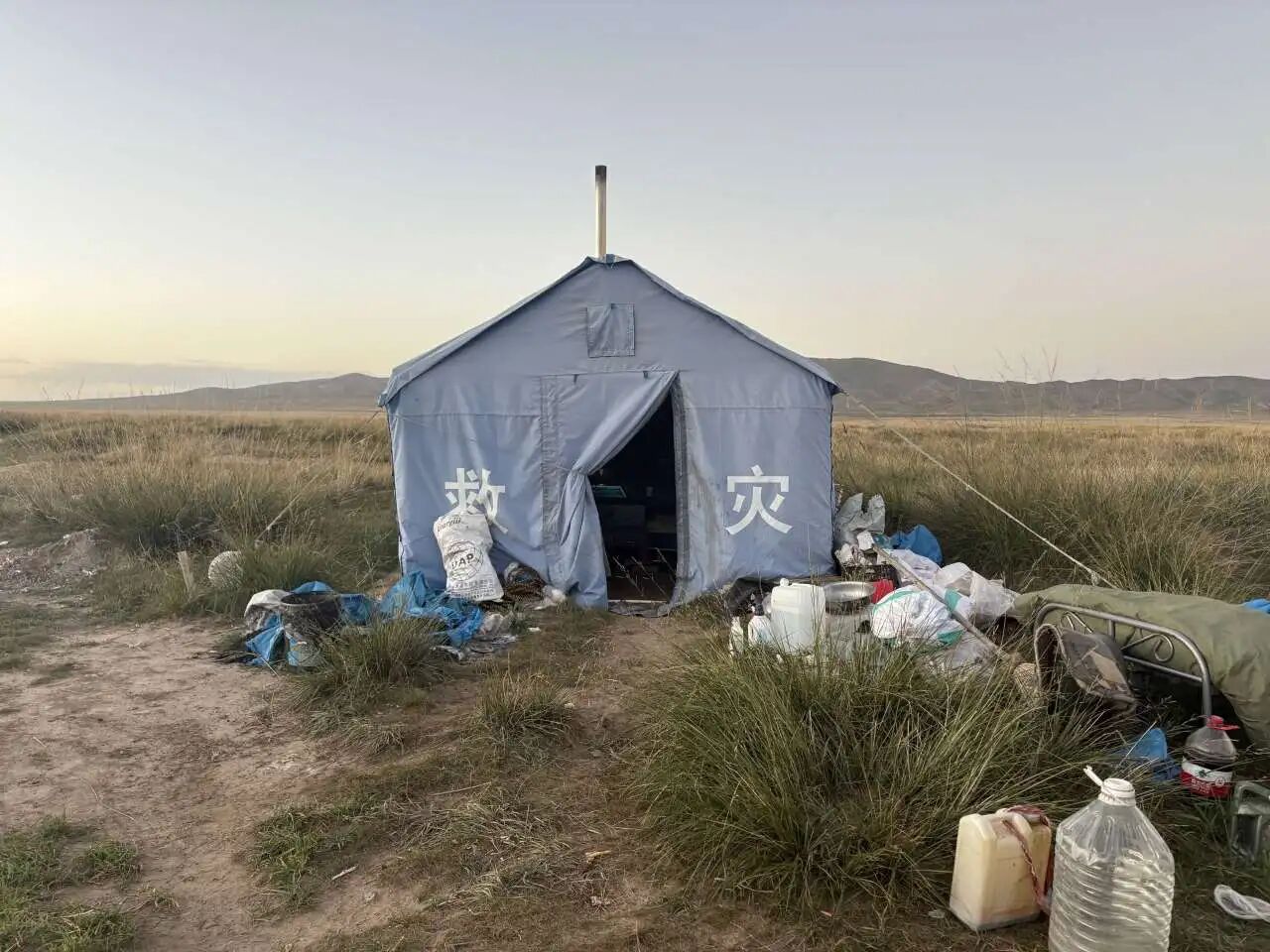
These herders almost all live in disaster-relief tents, far from their families. The furnishings in the tents are bare: a bed, a stove, and on a simple trestle table, everyday necessities, instant noodles and biscuits. The tent moves with the sheep. Wang Sheng has a house in the village, several dozen kilometres away, but after so long without anyone living there, it has long fallen into disrepair. “Where would we get the money to fix it?”
Besides, the sheep cannot be left without a herder. Every morning, Wang Sheng drives the sheep out onto the pasture to graze, then brings them back in the evening—the same routine of turning them out and gathering them in, every single day. He also has to watch the flock’s health; if a sheep turns sick, he needs to buy medicine and treat it promptly.
On 13 September this year, when I arrived at Wang Sheng’s location, he was in the middle of gathering his sheep.
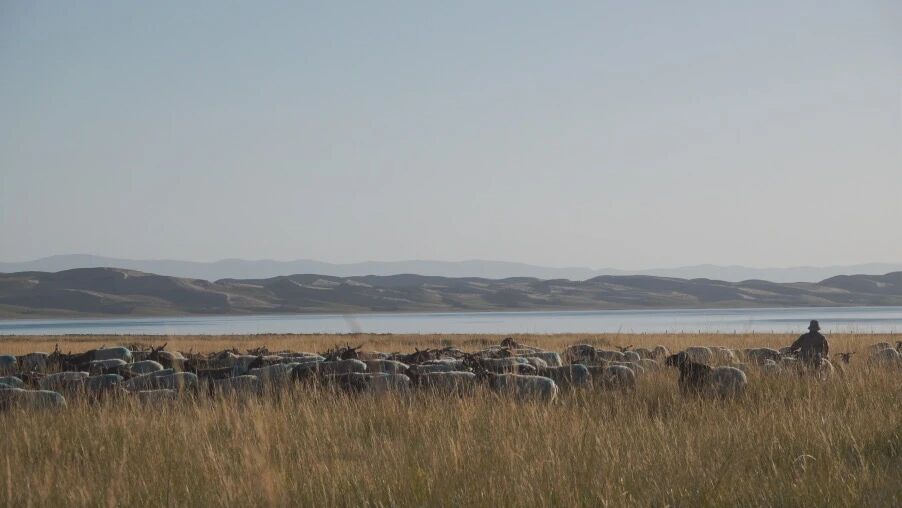
The flock was feeding along the shore of Qinghai Lake, picking through tall feather grass that came up to half a person’s height, and the grass around them was already largely stripped bare. Wang Sheng had to ride his motorbike out to where they were grazing, and together with other herders from the village, charge through the flock on their bikes, shouting and calling out at intervals. Once startled, the sheep would scatter in every direction. The herders kept watch on the flock’s movements, chasing or blocking them on their motorbikes, guiding the strays back to their respective groups.
It took more than an hour before the village’s 3,000-plus sheep were finally all back where they belonged.
“Any cordyceps around?” During my time in Qinghai, I had already heard that other herders could supplement their income by digging up cordyceps. “We don’t even have cordyceps here.”
Working away from home, then? “A little over a hundred yuan a day—when on earth would I ever pay off the loan?”
E-commerce? Doing the slaughtering and processing themselves, or even cutting out the sheep dealers and finding customers directly? Any other subsidies? Every idea I could think of was dismissed.
“So what do you do afterwards?” I pressed a little, anxious for them.
Their answer was simple—wait. Wait for sheep prices to rise: from this year to next, from next year to the one after.
V. A Way Out?
By the time I returned to Qinghai and got in touch with Tenzin Zongzhi, he had already moved to Gonghe County, renting a small room for 190 yuan a month where he lived with his wife and their son, who was almost three.
Coincidentally, his current address was very close to Qieji West Road, where the live sheep trade takes place. Step outside the courtyard gate and I could hear sheep bleating from a nearby yard.
Prices had ticked up a little this year. Mentioning the cattle and sheep he had sold last year, Tenzin Zongzhi showed a hint of helplessness. “Prices were really bad at the time, but if I didn’t sell, there wasn’t enough grass. It was truly a loss either way.”
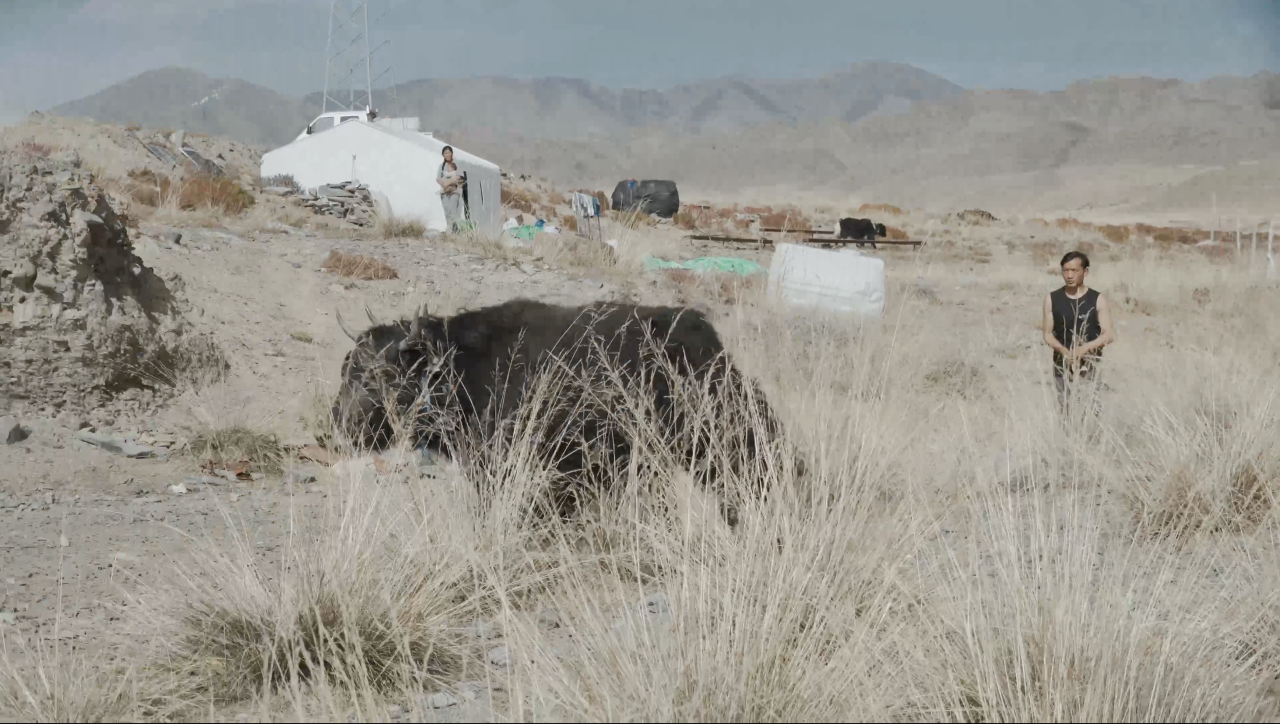
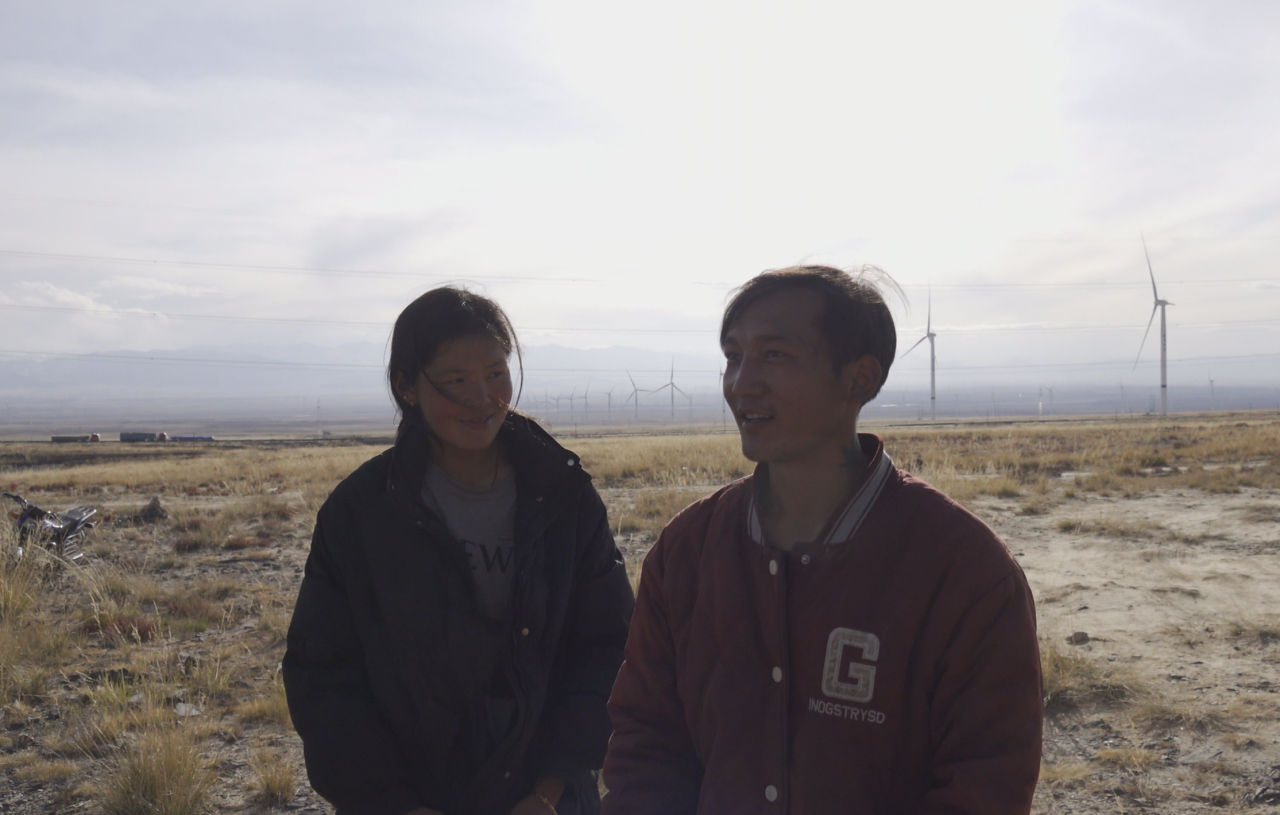
I was curious how Tenzin Zongzhi made a living in Gonghe County. The answer was somewhat unexpected. After hitting dead ends in job after job, he took up food delivery, completing at least 30 orders a day. It was the first time in his twenties that he had left the pastoral area to work in a city. City life often left him feeling drained—no matter how late he got up, he felt exhausted, whereas in the pastoral area he was full of energy every day.
“Herding is so much simpler than this.” Going from a free herder to a delivery rider trapped in an algorithm, he had to struggle to adapt to the shift. In his eyes, the job was full of danger—he had to ride very fast to avoid running late. Not long before, he had been fined 200 yuan for a late delivery, which was the equivalent of two days’ earnings. The danger also came from theft. Since becoming a delivery rider, he had lost orders, and just the other day he had carelessly lost his own phone, so he had to keep delivering using his wife’s phone.
He also tried to avoid getting into confrontations with rude customers while delivering. Once, a customer humiliated him—”Aren’t you just some delivery guy?”—and he was so furious he threw the person’s food on the ground.
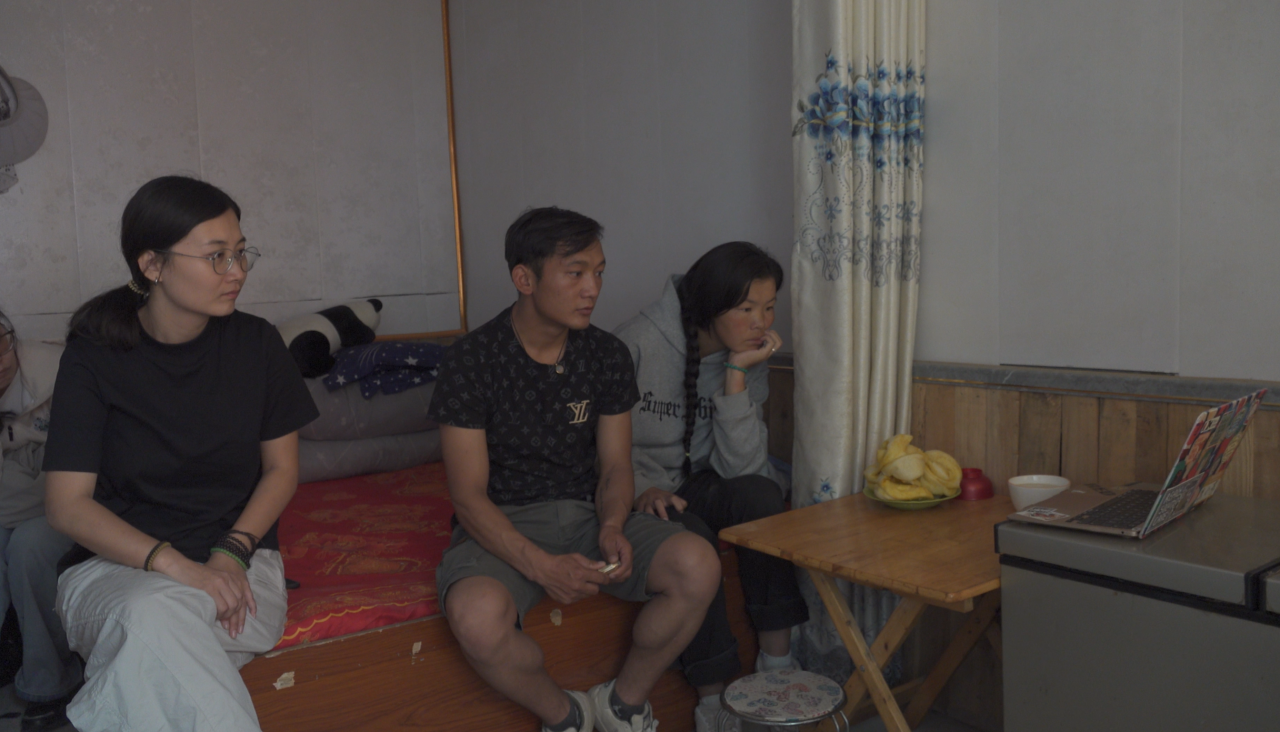
I had originally planned to carry on filming Tenzin Zongzhi’s story, picking up where last year’s left off. He was happy to agree and let me follow him the next day. But to my surprise, when I arrived at the rented room the following morning at our agreed 9 a.m., I found he had not even gotten out of bed. My first instinct was that I had run into a young man who liked his sleep. But then, after a while, he shuffled out, washed his face, and told me that last night he had been given last-minute orders requiring him to work through the night and had not got back until six in the morning. He was exhausted and could not take us out to film.
He missed herding life a great deal. “The most comfortable thing is herding at home. But the pasture is not enough—that is a really big problem. If you have too few cattle and sheep, a family of five or six cannot live off them alone. Out of desperation, you start wondering whether there might be some other way out, and that is why I ended up coming here to work.”
Perhaps this attempt to find a way out will ultimately end in failure. He told me that in a few months he was planning to go back, probably to herd again.
Yet even though prices had edged up a little this year, the fundamental contradictions in the market had not reversed. Imported meat, for instance, was still flooding the market in large quantities. In the first three quarters of 2025, cumulative beef and mutton imports remained steady; beef alone accounted for 2.125 million tonnes, up 1.0 per cent year on year.
Although imported meat prices had also risen sharply—the average landed price of beef was US$5,225.12 per tonne (about 37.88 yuan per kilogram), and the average landed price of mutton was US$3,846.16 per tonne (about 27.88 yuan per kilogram), both up 23.5 per cent year on year—even after successive markups from the port all the way through to retail, imported meat still held a clear price advantage over local meat at 60 to 70 yuan per kilogram.
As a result, across the country, a trend of cattle and sheep farmers exiting the industry has also emerged. By the end of the first three quarters of 2025, the national cattle herd stood at 99.32 million head, down 2.4 per cent year on year and 0.6 per cent quarter on quarter; the national sheep flock stood at 290 million, down 6.9 per cent year on year and 3.7 per cent quarter on quarter.
Will the better prices the herders have been hoping for really come?


At 7:40 p.m. on 19 December, the documentary Whose Table, Whose Pasture, directed by Jiao Xiaofang and Qiongwu Tenzin, will be screened at [Fengnianqing Space] at Pazhou South TOD in Guangzhou. After the screening, Director Jiao Xiaofang will join online for a Q&A session. You are welcome to come watch!
A-Mei the Cleaner, Who Just Wants a Proper Meal | The Wage Worker’s Table
In Malaysia, Chinese Merchants Want Only Grade A Durian
“Fake Meat” Ousts the Real Thing: Herders, Dinner Tables, the Amazon
Watermelons Guaranteed Sweet, Growing Watermelons Guaranteed Bitter
From the Shan Yao to the “Chosen Mushroom Gatherers”: A Termite Mushroom Sparks a Gathering Frenzy
Ma Lan in Shenzhen, with No One to Share a Meal
Why Has the Sweetness of Childhood Disappeared?
Technology, Pesticides and Drone Pilots: The Other Side of the “Technological Revolution”
Who Drove the Wet Market Away?
Will Fresh-Food E-Commerce Make the Wet Market Disappear?
When Drones Become the New Farming Tool: Who Is Defining “Scientific Farming”?