
Indian Riders Choose New Year’s Eve Strike as Platforms Launch “10-minute delivery”
I. A “Failed” Strike
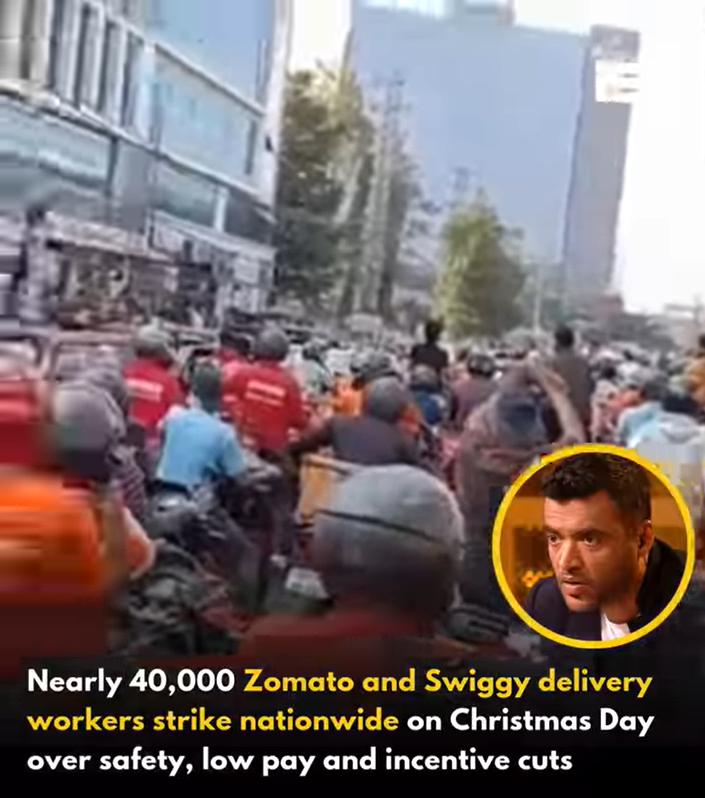
It is described as failed because the strike did not achieve its initial objective — Indian food delivery riders hoped that by stopping work at a time of surging New Year’s Eve orders, they would leave platforms with orders but no riders, thereby putting pressure on platforms to withdraw the “10-minute on-time delivery” service they had previously launched. In addition to this core demand, food delivery riders also had other demands, including asking platforms to provide greater safety and income security.
Unexpectedly, platform companies used a cold-and-hot tactic: they handled the strike coldly and ignored the riders’ demands, while raising “market adjustment” prices linked to average order value, luring riders into continuing to take orders, and reducing demand to cope with insufficient delivery capacity. The result was: there were not enough riders who stopped work — as industry estimates suggest, there are roughly 700,000 to 800,000 monthly active food delivery riders in India. A strike by 40,000 riders was not enough to bring New Year’s delivery to a standstill. Therefore, the New Year’s delivery operations of India’s major food delivery platforms were not significantly affected.
Feeling secure, Deepinder Goyal, founder of Zomato, one of India’s largest review and food delivery platforms, still mocked the striking riders on X (Twitter) on New Year’s Day.
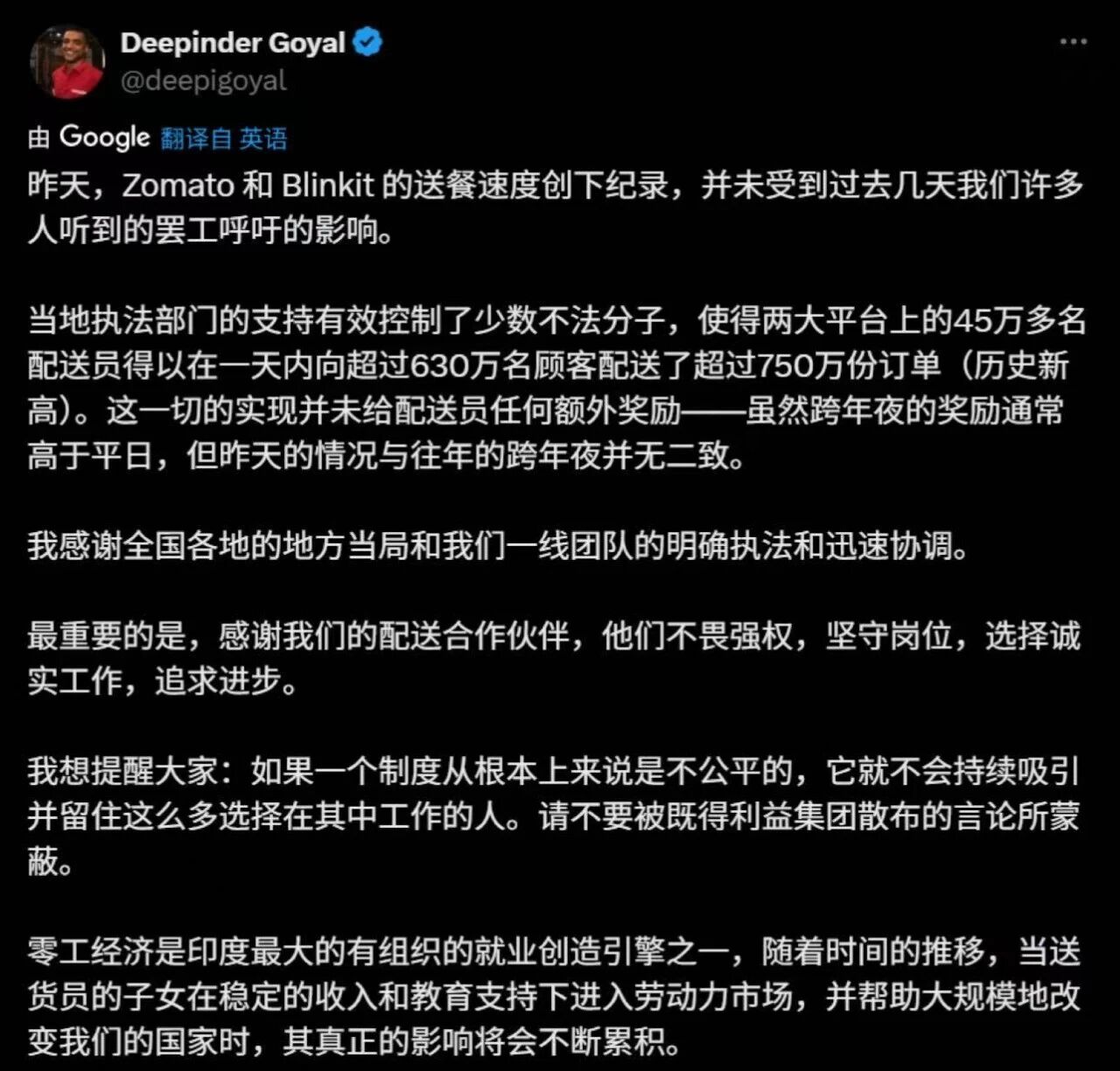
In response to the demands put forward by the striking riders, he said: “Just think: if a system is inherently unfair, how can it continuously attract people to join and treat it as a career choice?”
By “partners” he meant food delivery riders, showing that, in the employment relationship, riders are not regarded as the platform’s employees. This also meant that it was very easy for platforms to retaliate later against riders who had stopped work or struck — Indian labour law protects employees’ right to strike, so employers cannot dismiss or terminate their contracts for striking. But because riders do not have an employment contract, they do not enjoy such rights.
II. Workers’ Repeated Battles Against the Platform Economy
So, as a developing country with a population of 1.4 billion, what is India’s platform economy like?
Like most countries in the world, India has only in recent years seen a mushrooming of various platforms. Moreover, these platforms have also grown rapidly with the onset of the COVID-19 pandemic.
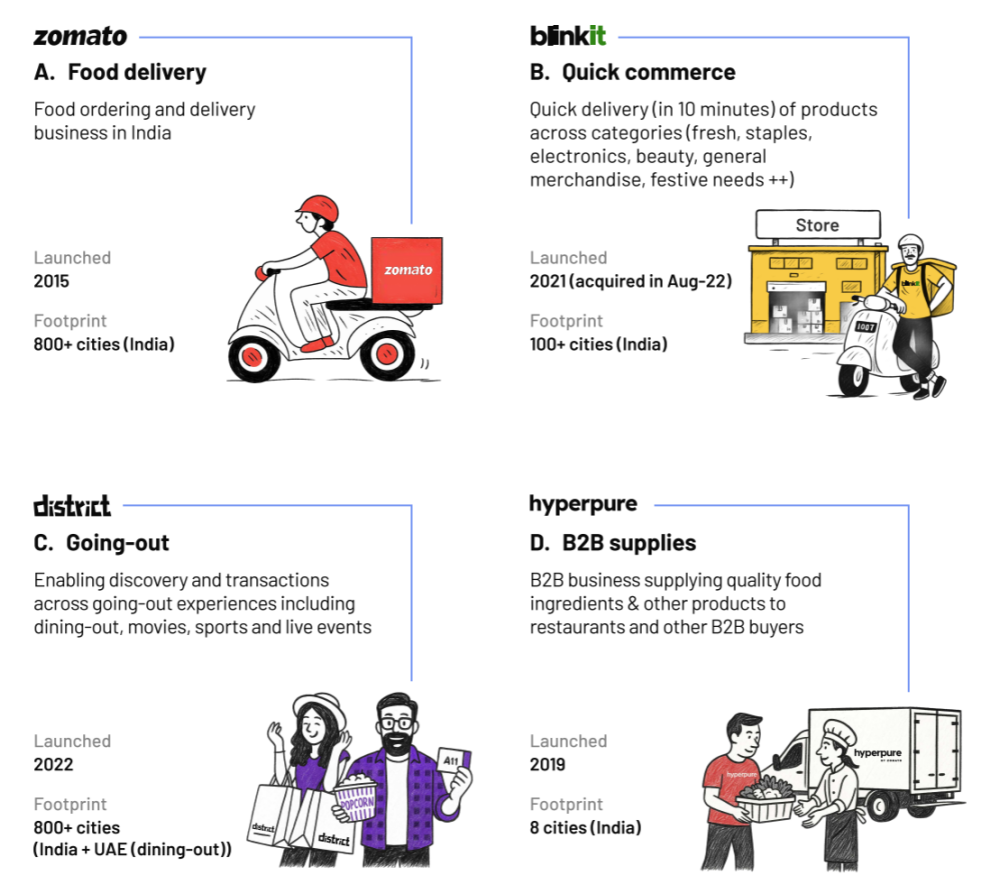
Take Zomato, one of the giants, for example. Founded in 2008, the platform was originally called FoodieBay, a restaurant review website. In 2010 it changed its name to Zomato, its current name, and continued to roll out review services around the world. By 2015, Zomato began testing food delivery services. At first it only cooperated with other food delivery platforms; it did not have its own delivery fleet until 2017. During the pandemic in 2020, Zomato seized the moment when Indian states announced social distancing to expand rapidly — on the one hand, it acquired Uber Eats‘ Indian business; on the other, it began operating daily grocery delivery. By this year, Zomato has become India’s largest food delivery platform, holding a 58% market share in restaurant food delivery.
Why was the pandemic such a boost to Zomato’s expansion? On the one hand, there was the demand for food delivery after people went into isolation; on the other, the pandemic hit the Indian economy hard, creating a large number of unemployed people. Western media interviewed many food delivery riders on India’s streets at the time of the New Year’s Eve strike, and many said they had previously been sole traders or small business owners, whose cash flow collapsed during the pandemic, leaving them unable to keep their small shops running and forcing them to become riders.
In India, the world’s most populous country, the strategy of food delivery giants has been to increase investment, cut unit prices, and seek a monopoly. India’s food delivery order prices are very low. Data shows that Zomato’s average delivery fee per order is about 12.5 Indian rupees, roughly one Chinese yuan. After subtracting the share paid to riders, the income from a single food delivery order cannot sustain a giant food delivery platform. So how do these companies keep operating? On the one hand, they rely on platform fees from the restaurant industry — restaurants using food delivery pay Zomato a 15% to 30% commission per order; on the other, they rely on continuous investment — people expect that once platforms such as Zomato achieve some form of monopoly across India’s huge market, they will be able to raise prices and rake in profits, and are therefore very willing to believe in Zomato’s future.
III. Small Businesses Go Under in Large Numbers, Rider Pool Constantly Replenished
As a result, in India, e-commerce and food delivery platforms are driving an accelerating cycle — food delivery and delivery platforms keep rising, and to secure a monopoly in India’s huge market they keep driving down prices; price cuts cause a large number of small shops and small business owners to be unable to compete, turning them into unemployed workers; these people then find it hard to find or take up manual labour or office-based work, and many are absorbed by platforms, becoming food delivery riders who buy their own motorcycles and “partner” with the platforms.
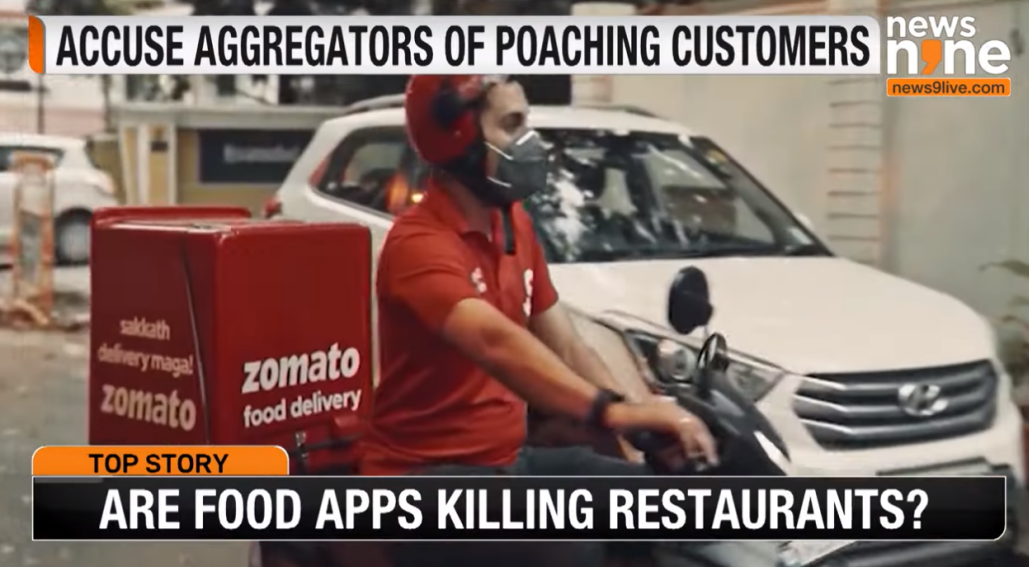
Against such a backdrop of an “ample supply” of labour, the remark by the Zomato founder, “If a system is inherently unfair, how can it continuously attract people to work?”, is a textbook case of out-of-touch privilege. It is precisely because of such a buyer’s market that Indian food delivery riders face ever-greater delivery pressure and income pressure.
IV. Excessive Working Hours Endanger Road Safety
Safety and accidents are issues of concern to many Indian riders. This is closely related to platforms squeezing the delivery time for each order. Riders complain: the existing delivery targets have already made them repeatedly run red lights, break the rules, take risks, and rush themselves to exhaustion. “To complete orders on time, we have to speed up and speed up again. If we are not fast enough, we cannot deliver on time. Once I receive an order, all I can think is hurry, hurry, so that I can take on more orders.”
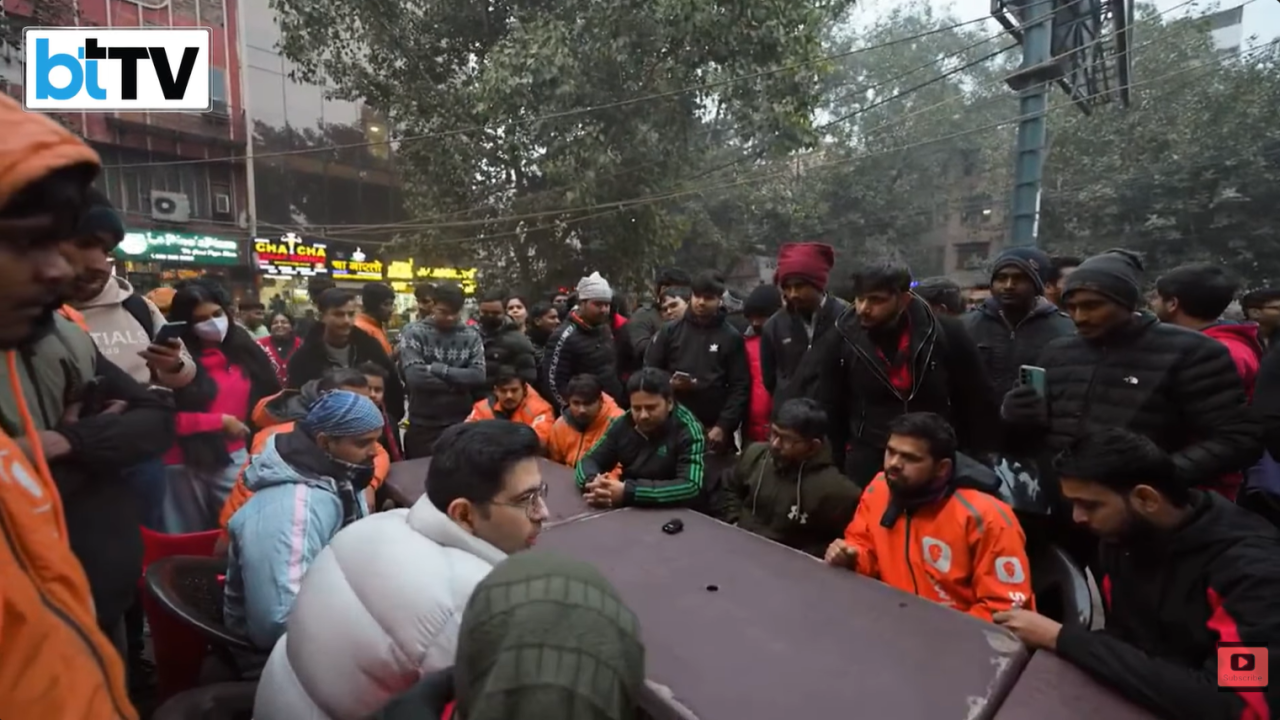
The striking Indian riders argued that the platforms’ new “10-minute delivery” proposal was aimed at competing for market share while disregarding riders’ safety. Once liability arises, they have no employment contract, and platforms merely treat them as “franchise contractors”. In a meeting between senator Raghav Chadha of the Indian Parliament and the riders, the riders said that they were very concerned about safety, especially about being injured or crashing under enormous delivery-time pressure and then having no protections afterwards.
V. Contract Workers or Sole Traders?
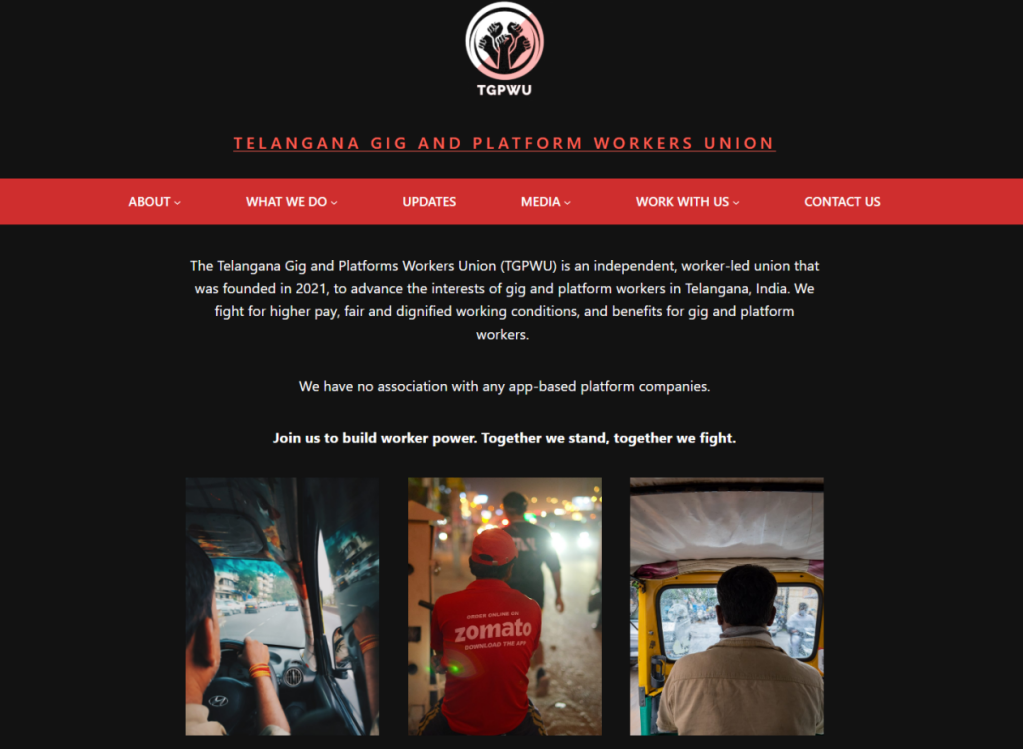
In India, several trade union organisations in the gig sector have appeared in recent years. The Telangana Gig and Platform Workers Union (TGPWU), which launched this riders’ action, and several other trade unions have previously organised protests by app-based domestic workers and ride-hailing drivers, highlighting overly poor treatment by platforms, and caste and identity discrimination.
The very nature of platform work means that the gig economy is often regarded as difficult to organise into employee associations and trade unions. These associations in India respond to this reality by increasingly using social platforms to organise activities and connect workers, for example using short videos online to promote occupational safety awareness, income tax return filing, and social security registration. Meanwhile, they also secure offline “rest points” for riders, and use offline connection, collection, and feedback of issues as follow-up measures to online outreach.
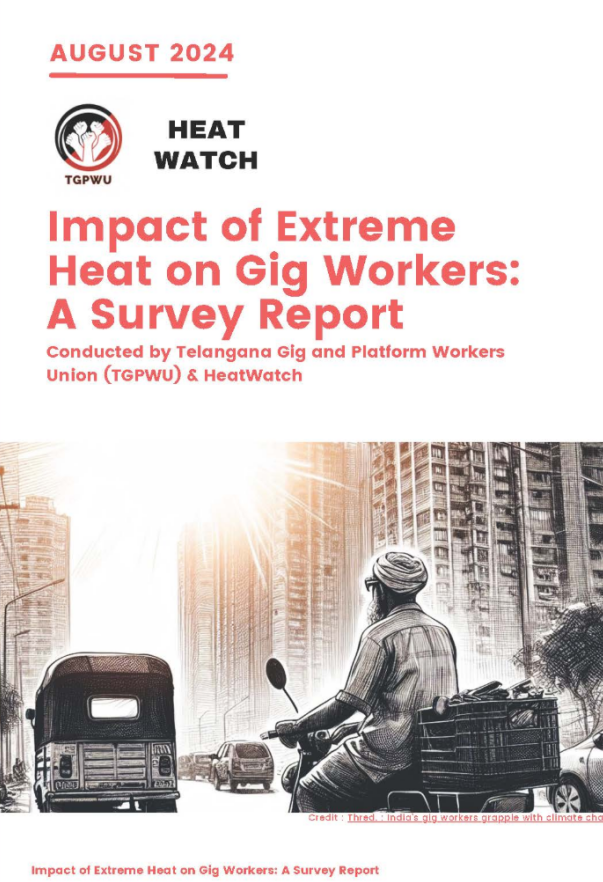
A report published by TGPWU in 2025 shows that 62% of the gig workers surveyed said the trade union’s work had brought benefits to some extent, including providing a platform to voice demands, breaking the impasse in which individual workers could not engage the platform side in dialogue, and so on.
VI. Platforms Have Been Called In for a Talk
In addition, as similar work stoppages have increased in recent years, and with the push by various associations of riders and gig workers, the Indian central government, while not intending to acknowledge riders as platforms’ “employees”, is also considering launching plans to bring gig workers under social security and regulation. Some local governments at the state (province) level have already enacted laws or are preparing to bring platform workers under legal protections.
Among these, Rajasthan state has already enacted laws, while several states including Karnataka have entered the legislative process. The common feature of these laws is that they all stipulate that platforms must set aside roughly 1% to 5% of per-order income to establish a protection fund for riders. In addition, most of the laws also stipulate that companies must provide riders with complete contracts and register them with the government. Although this is not an employment contract, the benefits are also meagre, and there are further practical issues in implementation, the approach is actually similar to recent legislative practices for managing the platform economy in Singapore and elsewhere — that is, treating platform labour as a status akin to employment, and requiring platform companies to bear part of the mandatory social insurance responsibility.
Editor: Tian Le