
No Need to Shiver: The Right Way to maodong in the South | Grandma Kouzi
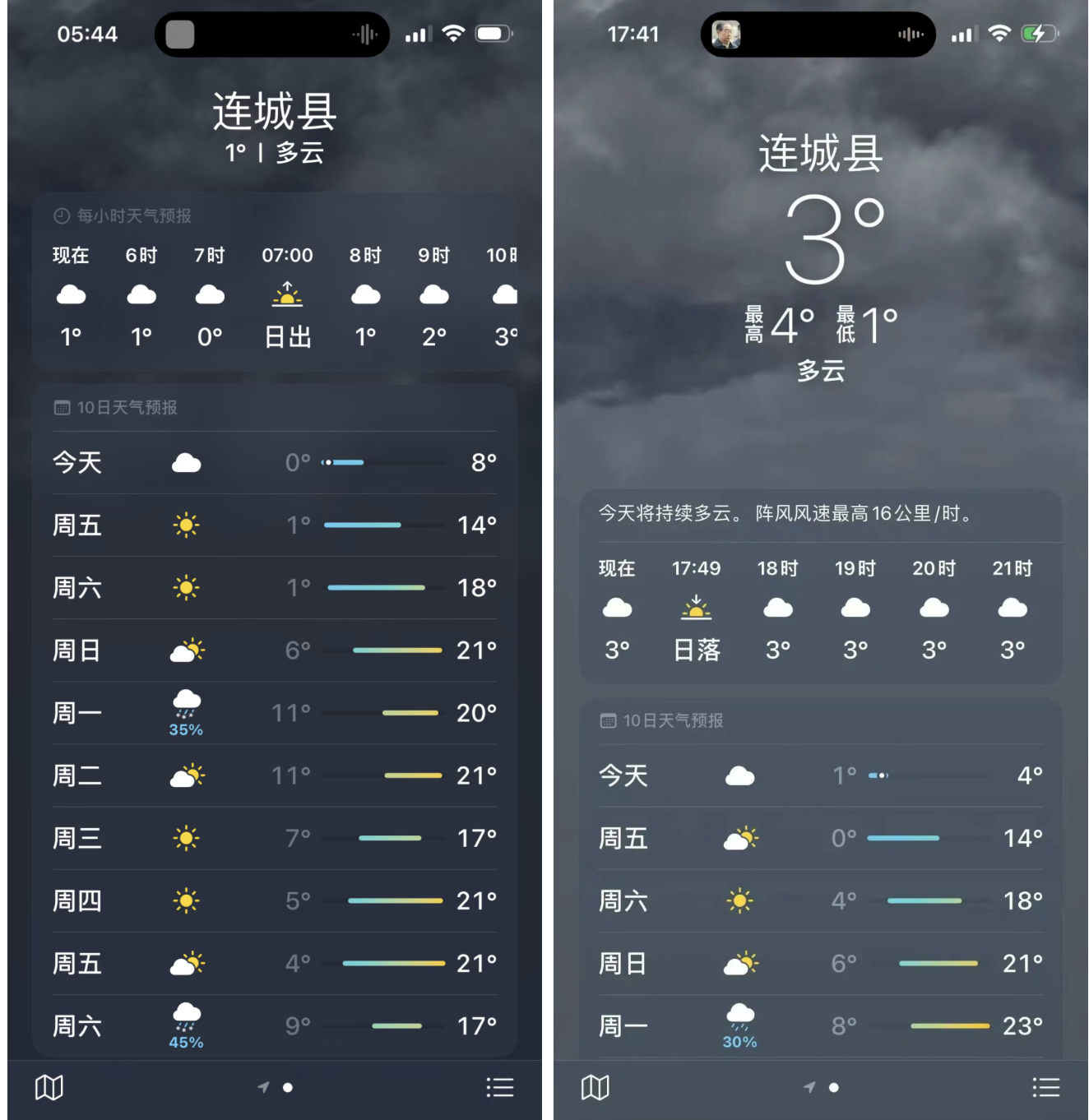
As I put pen to paper, it was the second day of the twelfth lunar month in the Yi Si Year of the Snake, Major Cold, the fourth day of the fourth nine-day period. “Third and fourth nines, walk on ice”—the fourth nine should be the coldest time.
Before that, brilliant sunshine had continued day after day, with a midday high of 24°C. Locals call this a “little spring” in winter. The old saying goes, “If Major Cold is not cold, neither man nor beast is at ease.” Clearly Heaven takes this solar term seriously, bringing a sharp temperature drop for Major Cold. The weather forecast gave a low of 1°C, one degree above freezing. In fact, when I got up there was no water: the tap water pipe had frozen. In rural Fujian, many tap water pipes are exposed; when they freeze, the water stops—at least -2°C, or even lower.
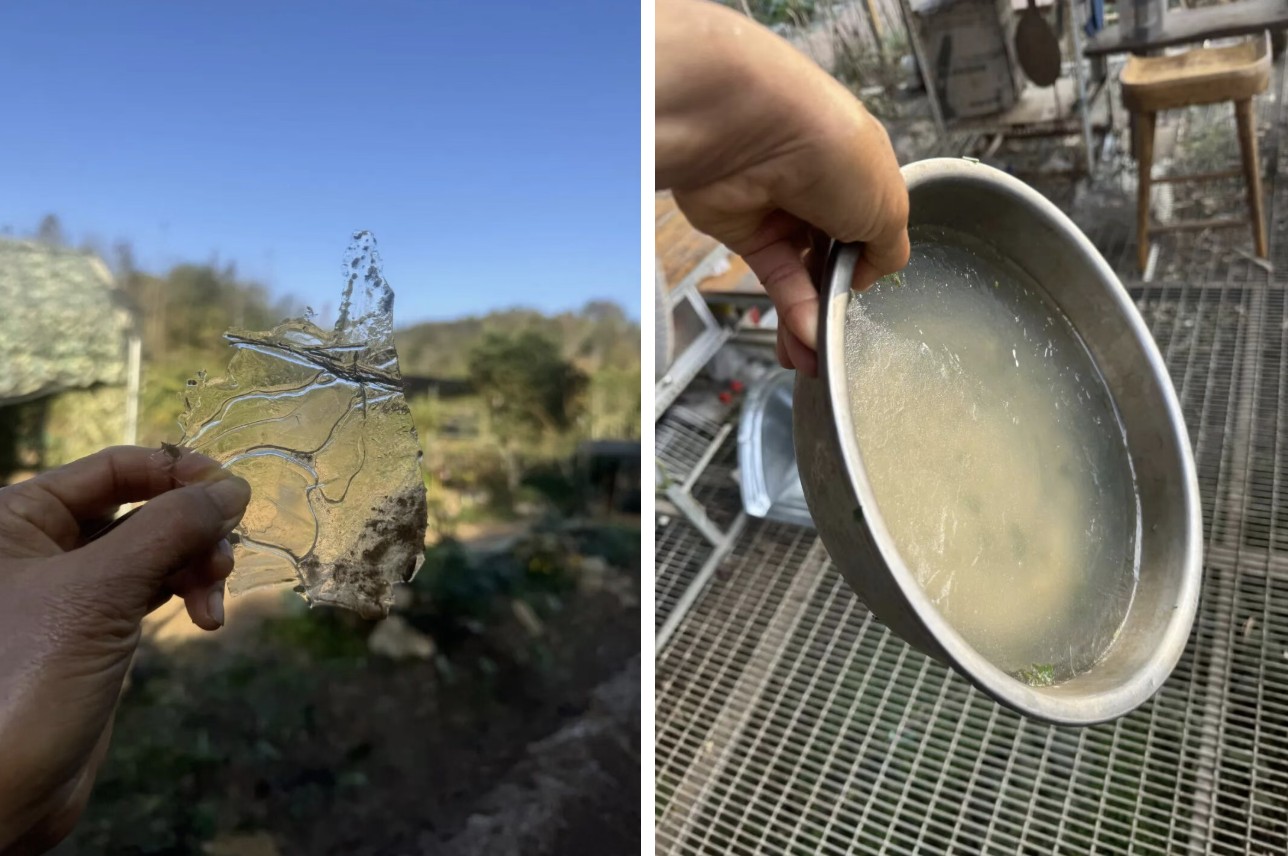
In my sixth winter in Fujian, I have finally found the right way to stretch myself and open the winter days.
One: Meet the Army with a General, Meet the Cold with a Kang
Northern cold is a physical attack; southern cold is a magic attack. It lies in “wet cold”, a double pincer of “high humidity + low temperature”. Water quickly absorbs and conducts body heat, so in damp cold air the skin loses heat fast. If the temperature falls to single digits, the skin feels as if it is soaking in ice water; chilblains, quite normal.
For people from the north, winter is easy: if it gets too cold, go home and snuggle; one coil onto a hot kang and you are warm.
In Fujian winters, going inside can actually be colder. Outdoors you are either exercising or working; moving generates heat from within, but once you return indoors and stop, it is miserable.
Houses in the south have almost no insulation; inside and outside are equally cold. When the sun is out, indoors is actually colder. Southern winter nights are long and damp-cold; the body and mind can easily lose heat.
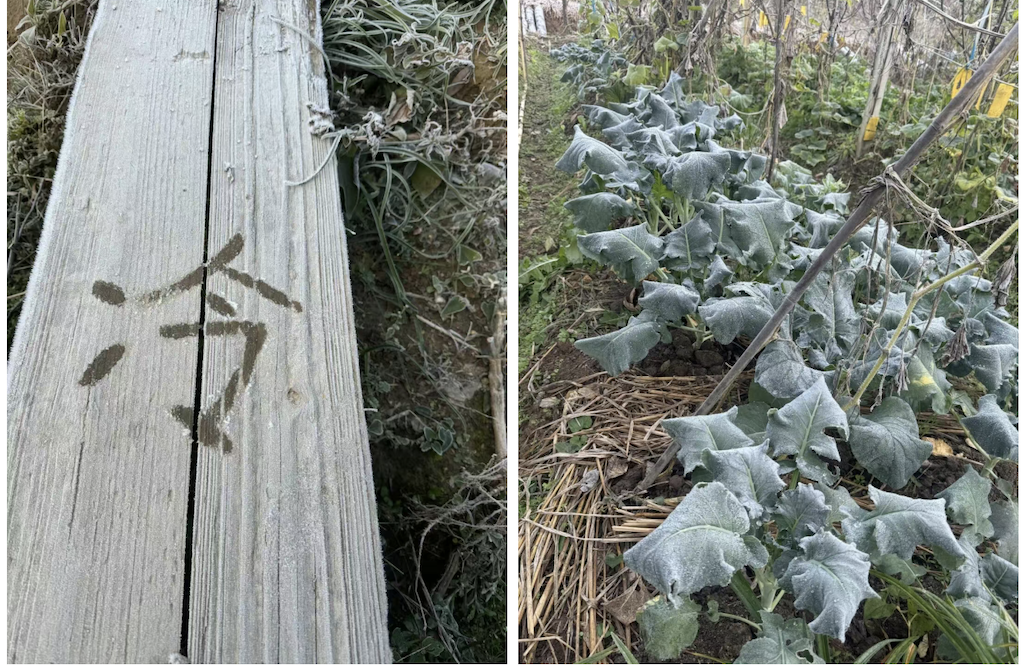
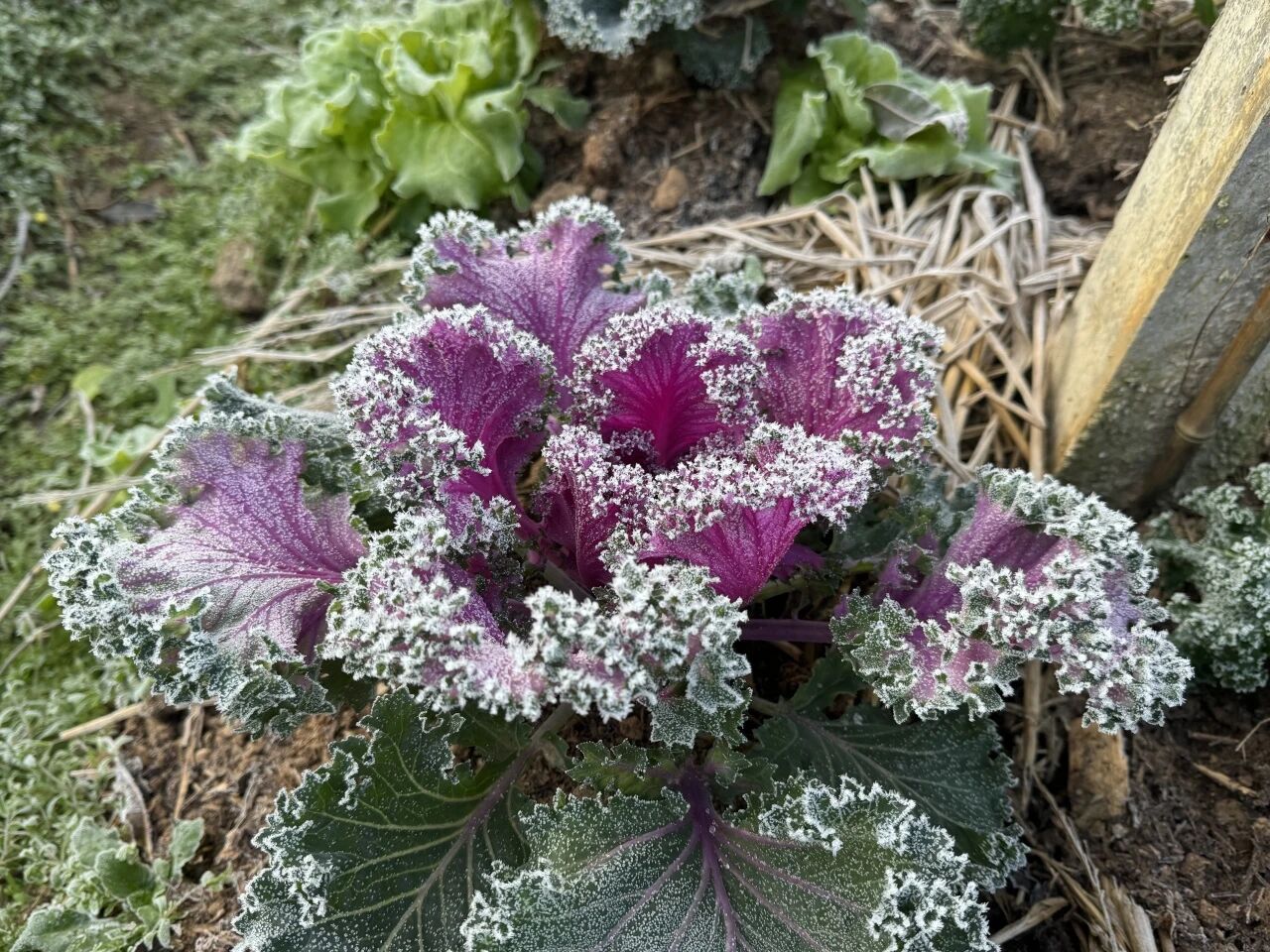
To fight the cold, north of the Yellow River people use central heating, while in Yunnan and Sichuan they set up open hearths; only the people of Fujian are the toughest. “You people in the north rely entirely on central heating to get through winter; we rely on a body full of righteous qi,” said a small, slim post-office lady, her uniform thin, her posture upright. Me? I was wrapped in all the belongings from my suitcase, shoulders hunched, back bent, curled into a ball.
Although “cowering” and “creepiness” are completely different words, when I cower in my thick clothes, I always feel it is somehow linked to creepiness; body and mind both urgently need to stretch out.
After accepting that I could not learn the Fujian people’s full body of righteous qi, in the second year I combined a large kang from the Northeast with a rocket stove, and set up a large rocket-stove kang—the character “kang” comes with the fire radical built in from the start.
Firing a kang is undoubtedly a northern invention, just right for dealing with the damp cold of the south. Once the large kang is fired, the colder it is outside, the warmer it is inside. I peel off my armour-like clothes one by one, and my soul, so cold it had curled up, slowly stretches out.
Not only did I stop fearing the cold in winter, but even the hardest late-spring hui nan tian became less hard to bear. At the turn from spring to summer in Fujian, the mouldy rainy season is truly “a thin, unending drizzle, months on end without a single clear day”. The air is so wet that water runs down smooth surfaces such as tiles and glass. When continuous rain sets in, I fire up the stove too; with a good heat, that damp, sticky feeling is baked away.
The rocket stove is wonderful, but it brings its own dilemma. In the south the baseline temperature is high; as soon as several days of strong sun continue, the thermometer reads over 20°C at midday. But the rooms are cold and grey, and at night even colder. At such times I cannot help but agonise over whether to light a fire.
The root of the dilemma is not about saving or using firewood. It is mostly that the days are so warm that good sunshine seems to go unused, which feels a bit wasteful. As a thrifty person, what I find hardest to bear is wasting nature’s gifts, wasting resources. Beneath that, the more fundamental reason is whether my life is in tune with local conditions and the resources at hand.
I hope I can live so harmoniously in the present that whatever this land produces is what I eat, and eat it well, following the rhythm of its spring, summer, autumn and winter, and live comfortably. To be more specific, that means being comfortable in summer, unafraid of heat, and stretched out in winter, unafraid of cold. The pavilion over the water has greatly improved summer comfort, and the large rocket-stove kang lets me avoid cowering. If I could also sort out the dilemma, that would be even better. Until the polytunnel granary became my sunlit “winter palace”, and ended the dilemma.
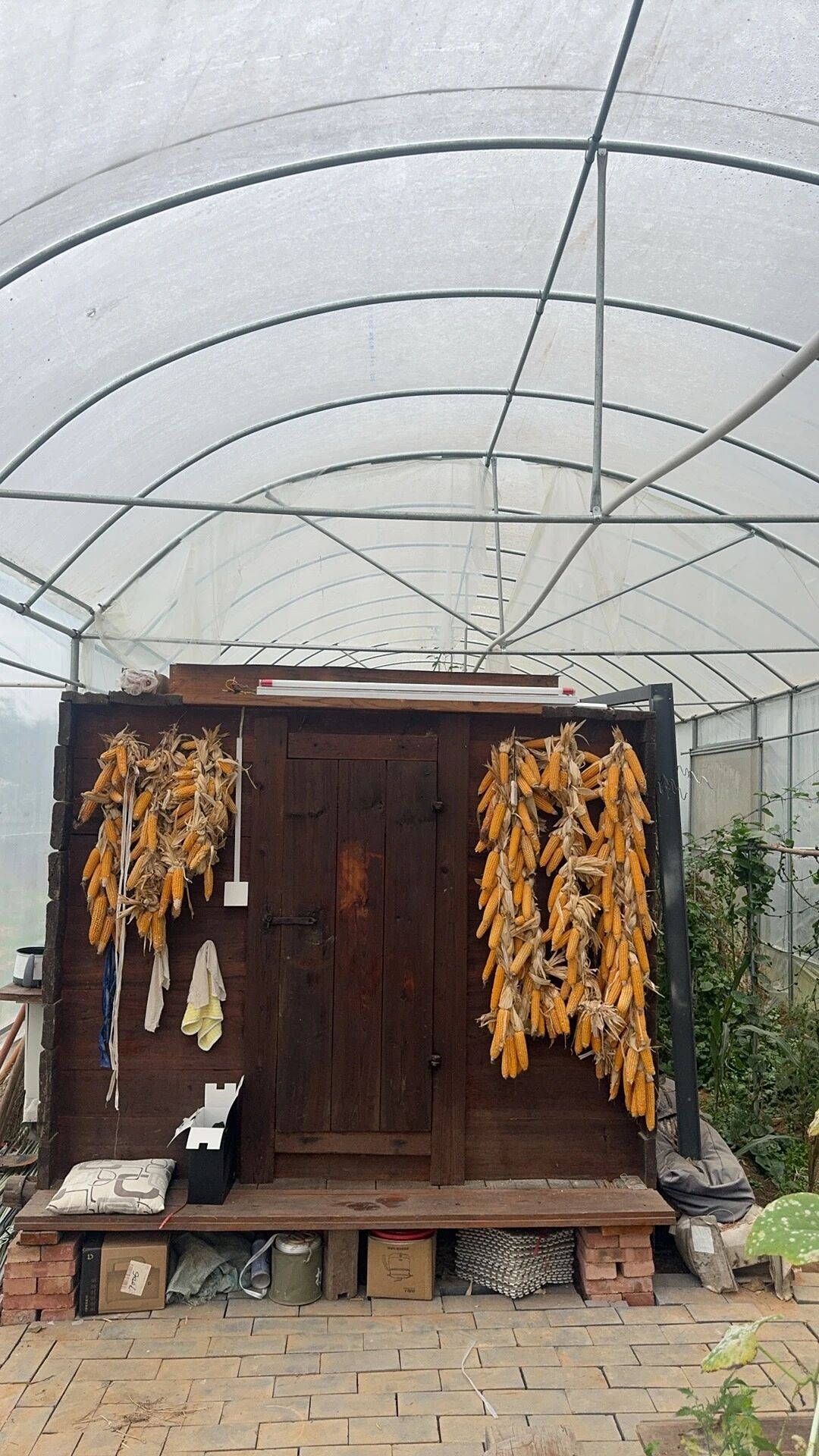
II. Repurposing Waste: Granary Turned Treasure
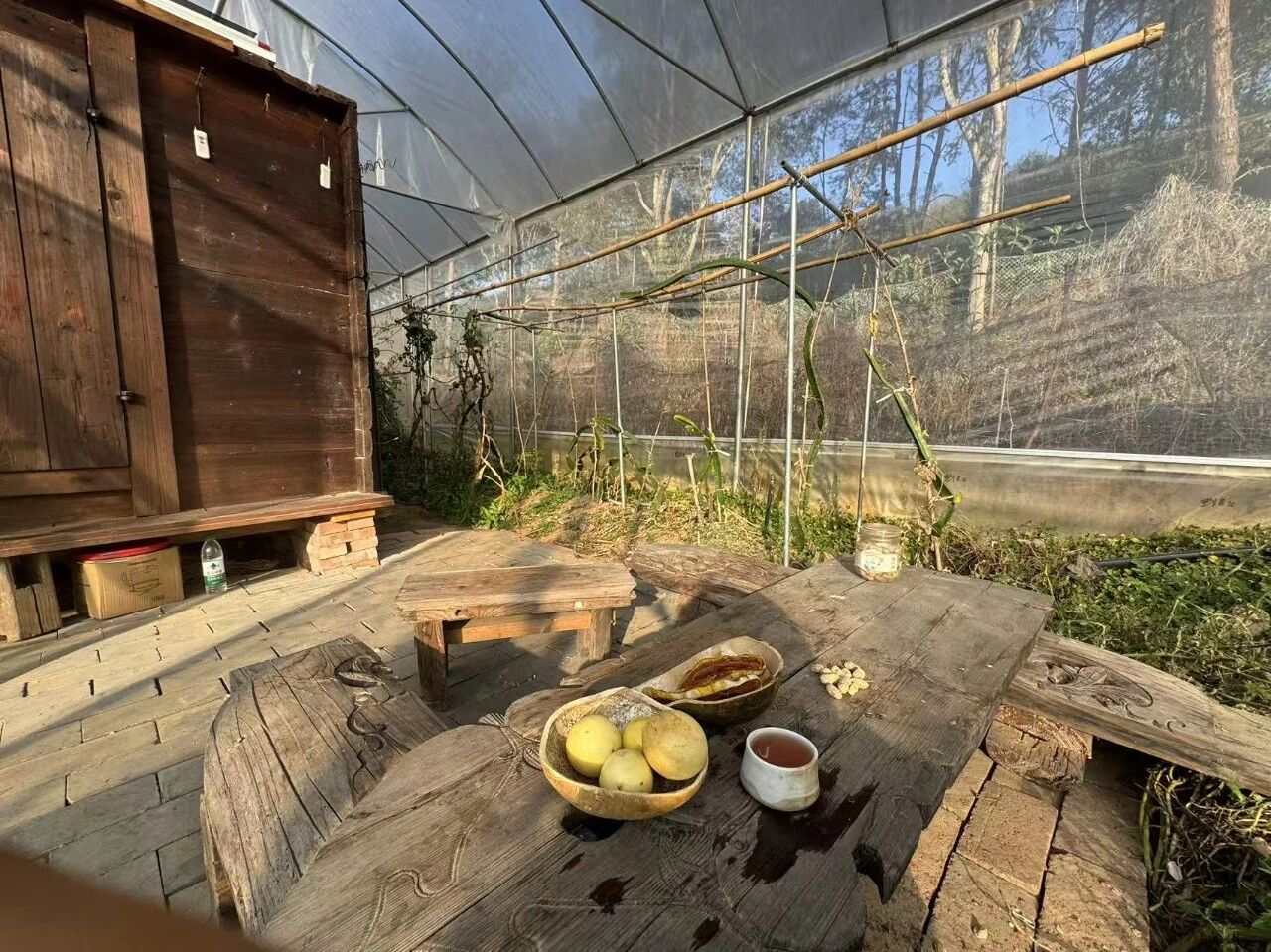
The real reason for building the polytunnel is sheer appetite: I want to be able to eat my own plantains, papayas and passion fruits in winter. Inside my polytunnel, I grow various winter vegetables and fruits, and I have also installed a granary.
I love local old granaries. This traditional grain storage structure is two metres square, made from whole slabs of thick Chinese fir, interlocked together, with a capacity of seven or eight cubic metres, and can store several thousand jin of millet.
Nowadays, almost no one stores grain at home; obsolete granaries are either burnt or sold. I have bought several old granaries in succession and turned them into my storage room and rocket-stove kang hut, and I am also planning to make a granary tea room inside the polytunnel.
At first, everyone objected, saying the granary lets in neither light nor air and is cold in winter and hot in summer. It is said that when older generations caught a thief, they would lock the thief in a granary; although it was ventilated, it had no light, a proper “dark prison”.
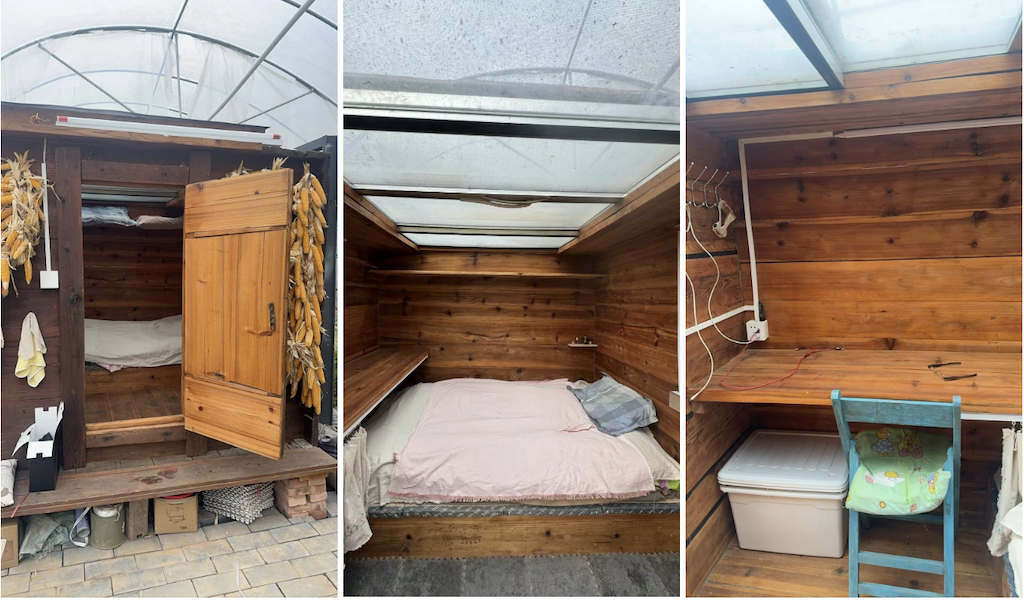
Fortunately, there is a hidden gem near Eren Valley: a scrapyard. The scrapyard takes apart the scrap collected from door to door, then sorts it and sells it. Some glass doors from freezers and display cabinets are rejected by second-hand recyclers; they are scrap among scrap, and no one wants them. I bought them for ten yuan each. I put four freezer doors together; they are just about as wide as the granary, paired face to face, and can be pushed and pulled. Two kinds of waste combined: two negatives make a positive. The black granary now has both light and ventilation.
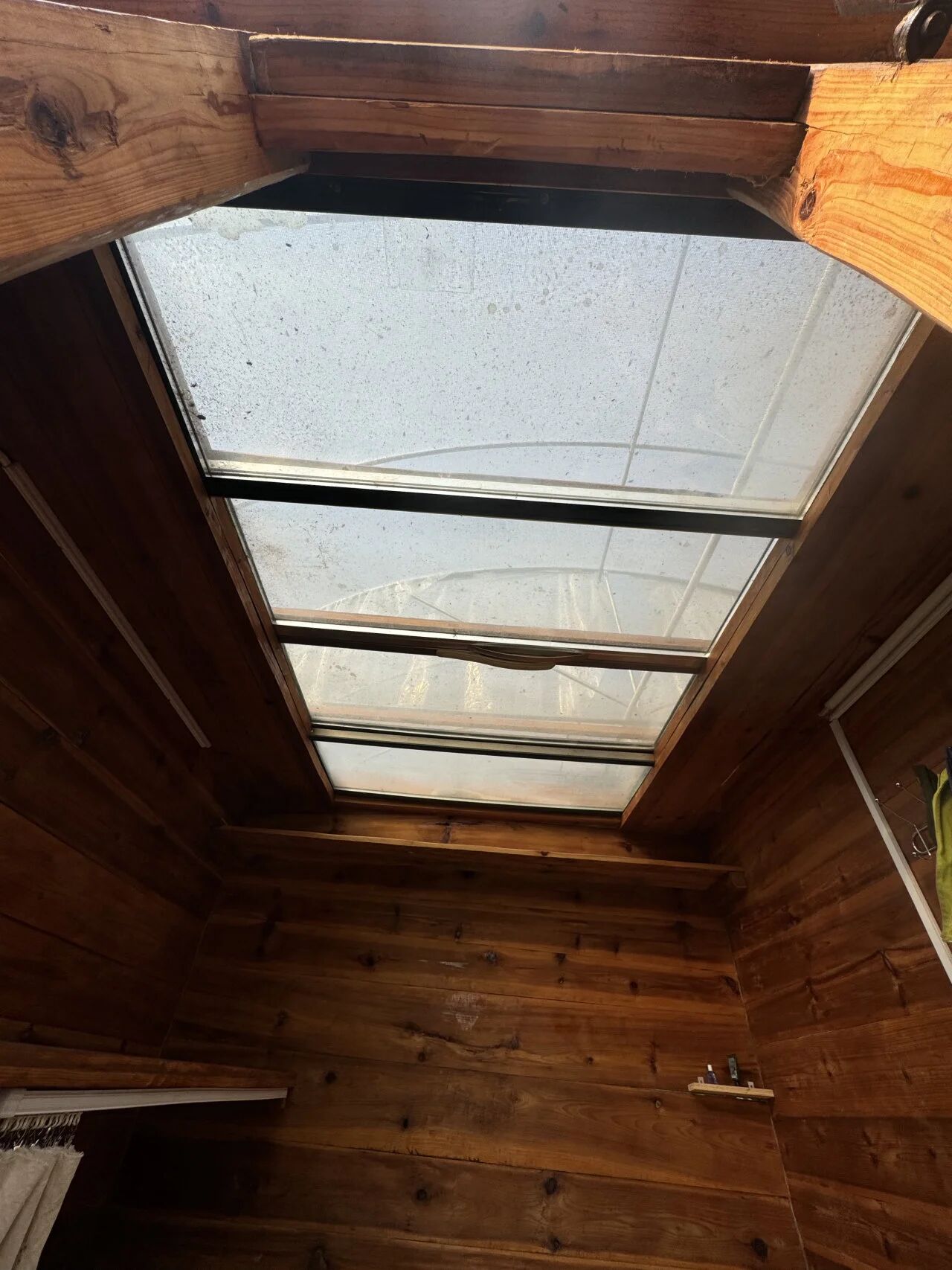
The clear roof has saved some of the granary’s roof boards. The original planks that were removed were used to build a low bed; lay a tatami mat, and it becomes a tea room. Lay bedding on it, and it becomes a bed. On sunny days, when the door is opened, a wave of heat rushes in.
The polytunnel is already a warm house, and the clear roof overhead has made the granary the warmest of warm spaces. As soon as I enter, I have to take off clothes; by midday I actually have to take it down to just short sleeves. The feeling of being warm enough to sweat in winter is more than just “delightful”; the cowering little soul immediately stretches out.
The polytunnel granary has solved my winter dilemma. When it is grey and the temperature drops, I fire the large kang; whenever the sun is out, I sleep in the granary at night. The sun bakes the bedding until it is hot and soft, warm, relaxed and energy-saving, so blissful that I am humming.
III. In Winter, Naturally, You Want to Drink Something Warm
Daily life—food, clothing, shelter, getting around. Being warm indoors is not enough; southern winter is a magic attack everywhere, and it is the same wherever you go. As for clothing, so long as it is thick enough and warm enough, all is well. For a foodie, the thing to study more is, naturally, food. In the damp cold of winter, one must eat well and drink well.
When the weather turns cold, all one wants is something warm. Winter is the perfect season for ginger, white radish and jujube soup.
The old saying goes, “Eat radish in winter, ginger in summer, and you need no doctor’s prescription.” In fact, in winter you should not only eat radish; you should also eat ginger.
Ginger has long been self-sufficient, and this year’s radishes are coming into their own.
The local crop is white radish. They look much the same, but there are many kinds. Growth periods can be 60 days, 90 days or 120 days.
I have now learned a new way of sowing; in fact, it is the local people’s old way: mix seeds of different growing periods, put a few seeds into the same hole. The early-maturing varieties can be picked and eaten after just over fifty days; pulling out these early ones makes just the right space for the late-maturing ones to grow. One planting can last three months, with fresh, tender radishes every day. As long as the timing is worked out, sow another batch every so often, and the harvest period can be extended further.
Homegrown radishes are very crisp and sweet, and can be eaten raw. But the amount that can be eaten raw is very limited, and in winter I only want something warm; besides, I have rather too many radishes. So the foodie in me has developed a quick way of getting through a large amount of radish.
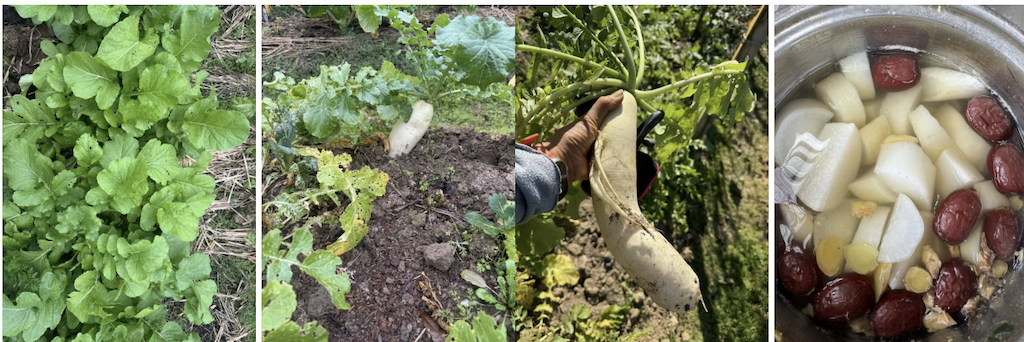
Once warmed through from inside out, you have the strength to face the cold. Going out, there is no need to hunch the shoulders or tuck in the neck. Carry the torn radish tops leisurely to the chicken coop, feed the chickens, and collect eggs on the way.
For the next meal, boil a small pot of water, poach two eggs, then pour in a ladle of sweet fermented rice made from black glutinous rice. This year’s black glutinous rice harvest was over twenty jin; every so often I make a bottle of sweet fermented rice, the best thing to warm an old, cold stomach in winter.
IV. Dried Pumpkin Freedom
As a foodie, I have long coveted dried pumpkin. In previous years the yield was disappointing, leaving nothing but regret. This year I have finally achieved pumpkin freedom, and have tried different methods.
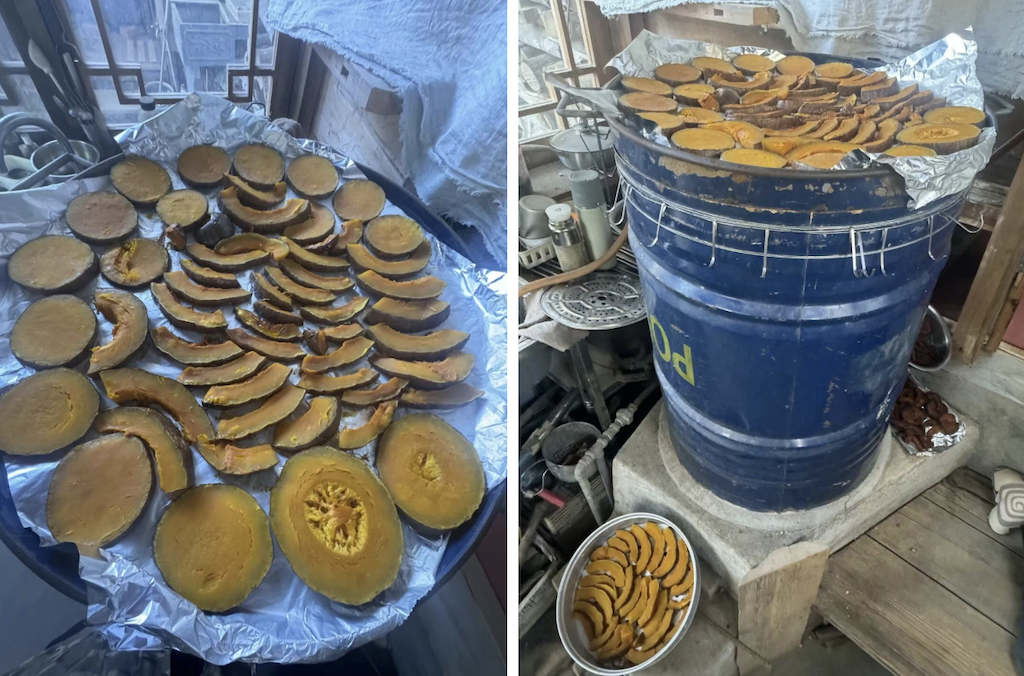
The first method begins as soon as the temperature drops and a fire is lit. Slice the pumpkin into thick pieces, steam it until cooked, then lay the slices on the rocket stove to dry out. Once dry, steam them a second time, and continue drying. Dried pumpkin, steamed and dried three times each, is translucent, extremely sweet, extremely fragrant, and chewy—the best winter snack.
This method is good, but the quantity is too small. You cannot make much at once; while making it you taste it, and by the time it is finished it is eaten. Completion and ruin arrive almost at the same time.
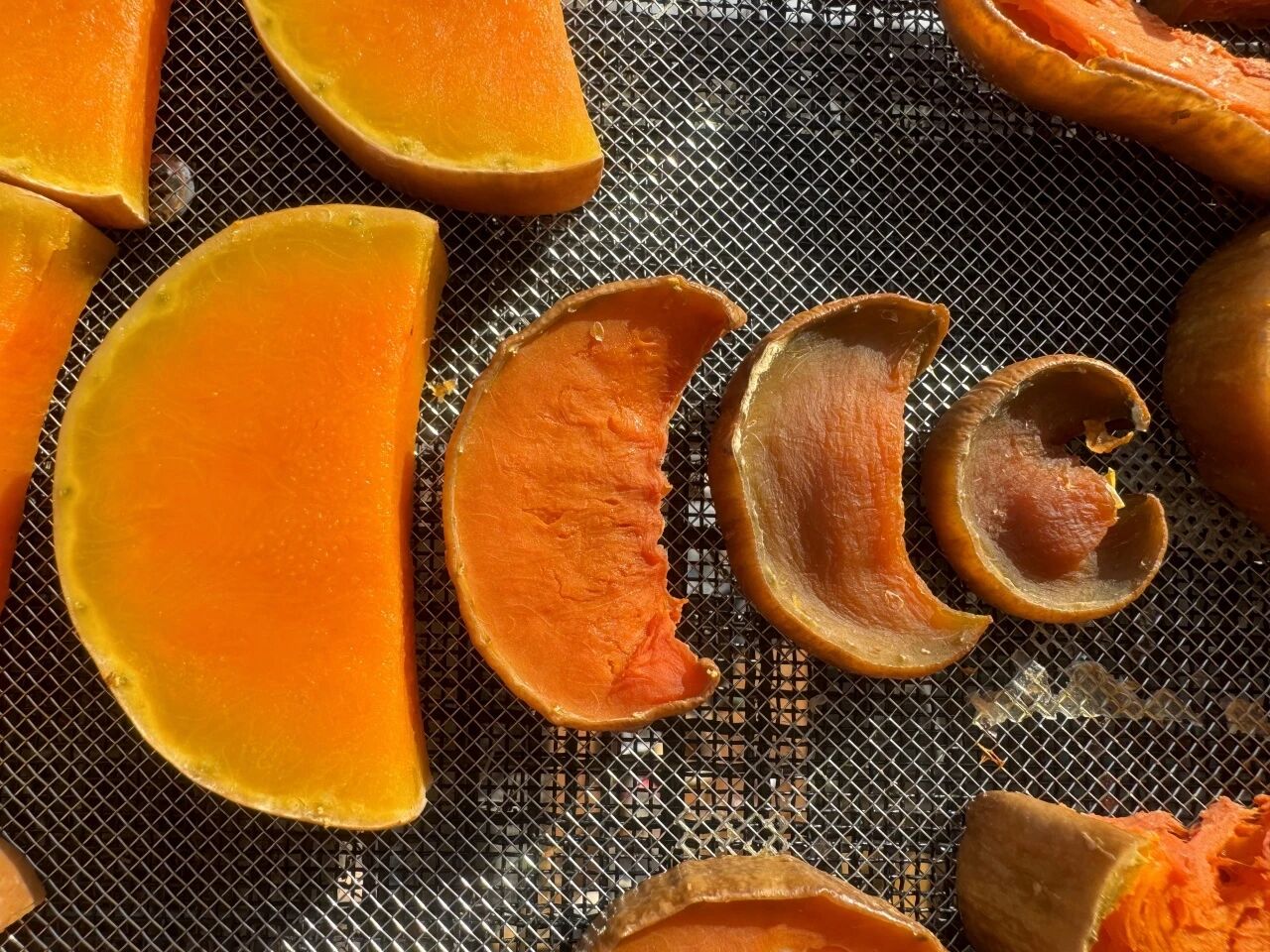
The second method has to wait for a sharp cold snap, after the flies have disappeared.
Fujian’s winter can also have brilliantly sunny times. You need to watch the weather forecast closely; when there are consecutive clear, sunny days, you can make sun-dried pumpkin. I have a large enough drying net. On the first day, steam a pot; on the second day, steam another pot. As shown, from left to right, they look like day one, day two, day three and day four. If the sun is good, generally on the fifth day you can smile and taste the treat. If the sun is poor, on the third day you can cry and take it to feed the chickens; the pumpkin has already turned sticky and is no longer fit for humans to eat.
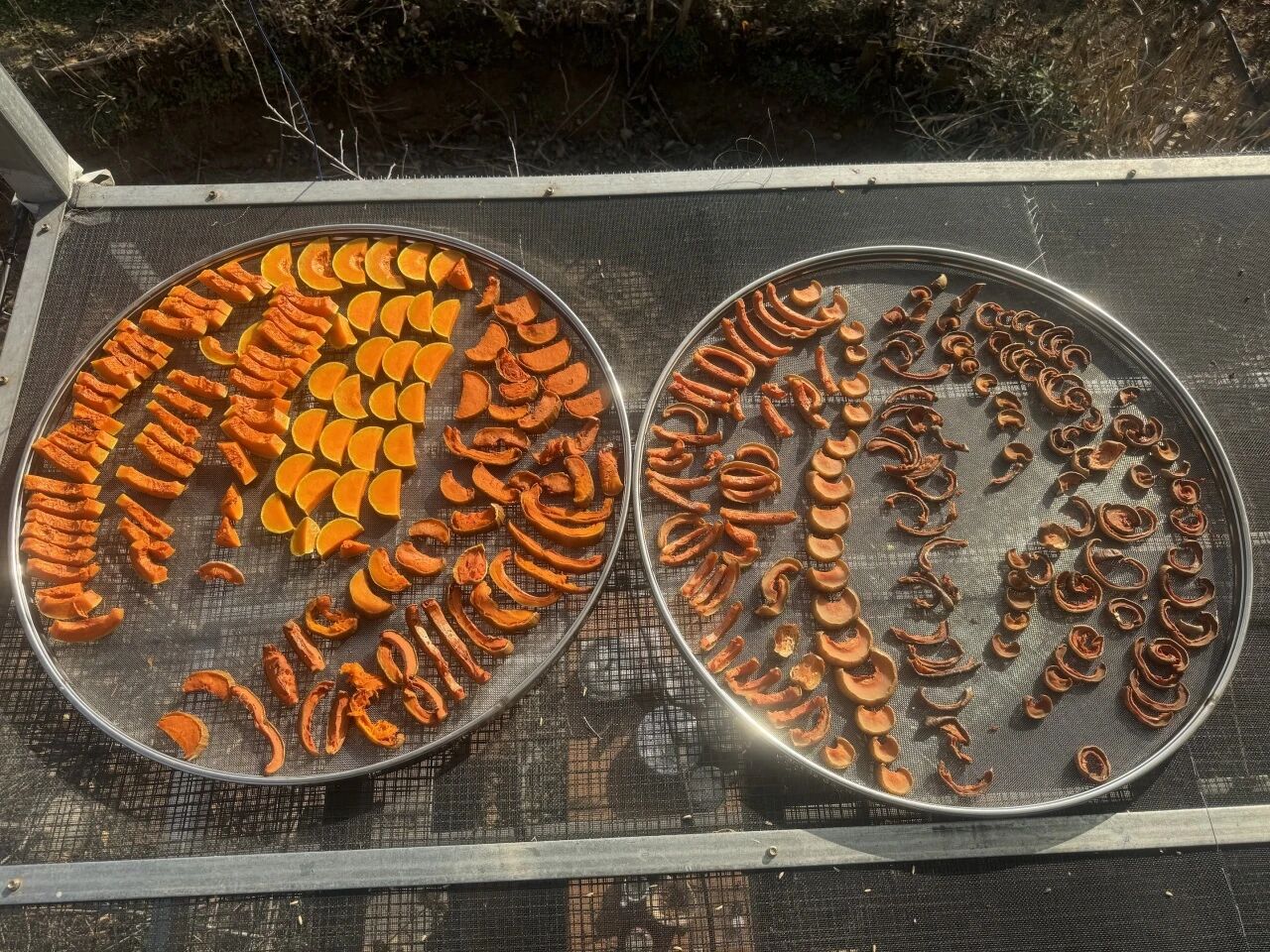
The third method: dry first, then steam.
If the pumpkin is sliced and steamed directly, it has too much moisture, so later processing requires more care and it is easily sticky. Drying it first, then steaming after dehydration, can effectively prevent stickiness.
In the past, when making small batches of dried pumpkin, I always tasted as I went. By the time it was finally finished, it was almost eaten, so I never knew what the actual yield of dried pumpkin was. This time I consciously kept a count.
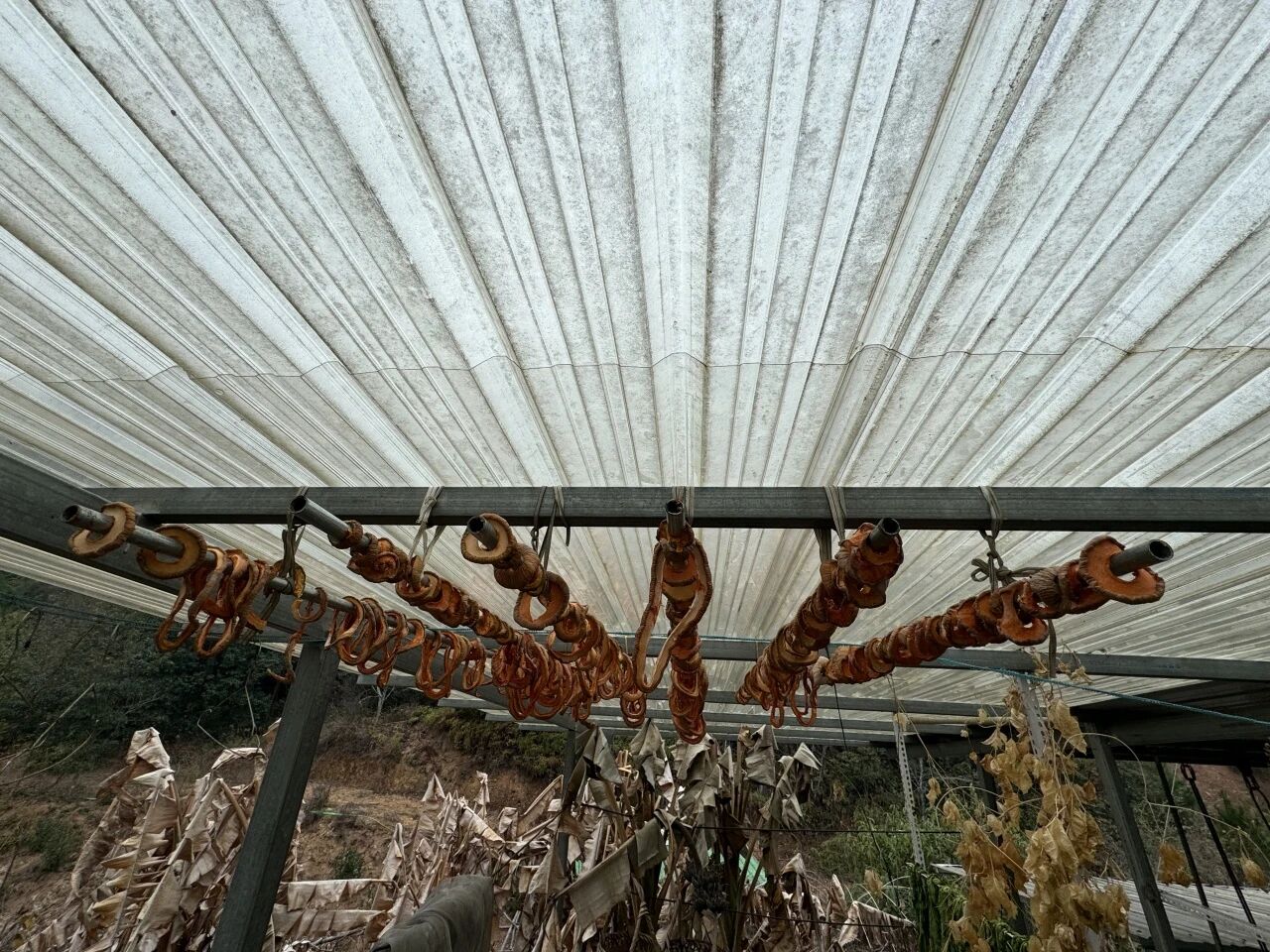
I chose large pumpkins and sliced twelve at once, over a hundred jin. After a whole day’s work, I hung all the pumpkin rings under the fierce sun. In about ten days the moisture dried out and the volume shrank greatly. The raw pumpkin rings were dried to the right point, just in time for this drop in temperature, so I could light a fire and roast pumpkin.
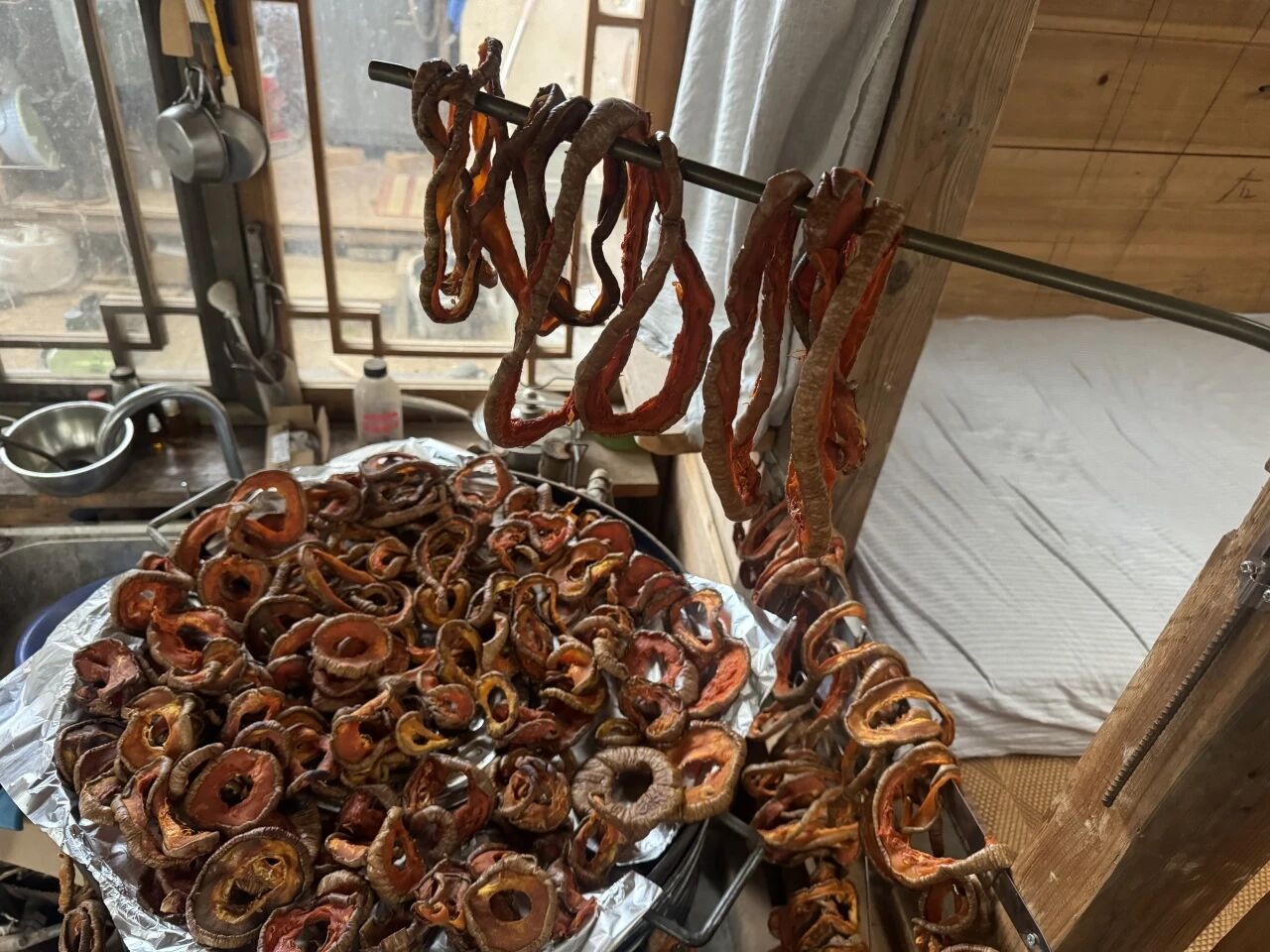
Before putting the sun-dried pumpkin into the steamer, it weighed 6.7 kg together with three steamer tiers. After it was finished, there were only two tiers; weighed with the two tiers, it was only 3.4 kg, so the net weight was estimated to be at most 6 jin. Of course, this does not mean that the yield of dried pumpkin is 6%; a foodie can only guarantee that the dried pumpkin made is delicious, but cannot guarantee the pumpkin’s bodily safety throughout the long production process.
The dried pumpkin, sun-dried first and then baked, is the best snack I have eaten in my life.
Dried pumpkin is not only delicious; it is probably also the most nutritionally dense way to eat pumpkin. Although pumpkin is a treasure food I love, because it has high water content and large volume, the amount I eat is limited. Once it becomes dried pumpkin, it is different: the nutrient content per equal volume is greatly increased.
This round of cooling lasted five or six days, just enough time for three rounds of steaming and drying to finish a batch of dried pumpkin, and at the same time I finished this maodong article. It is now the eighth day of the twelfth lunar month. “Seventh and eighth of the twelfth month: the cold can freeze your chin off.” The seventeenth day of the twelfth lunar month is Beginning of Spring. “If Beginning of Spring arrives in the twelfth month, spring is likely to be cold”; perhaps the cold days that follow will still last a while.
If it continues to be cold, I will make another batch of dried pumpkin. If it warms up, I will go into the polytunnel granary and enjoy my “little spring”. Cold or warm, each has its own ease and stretch.
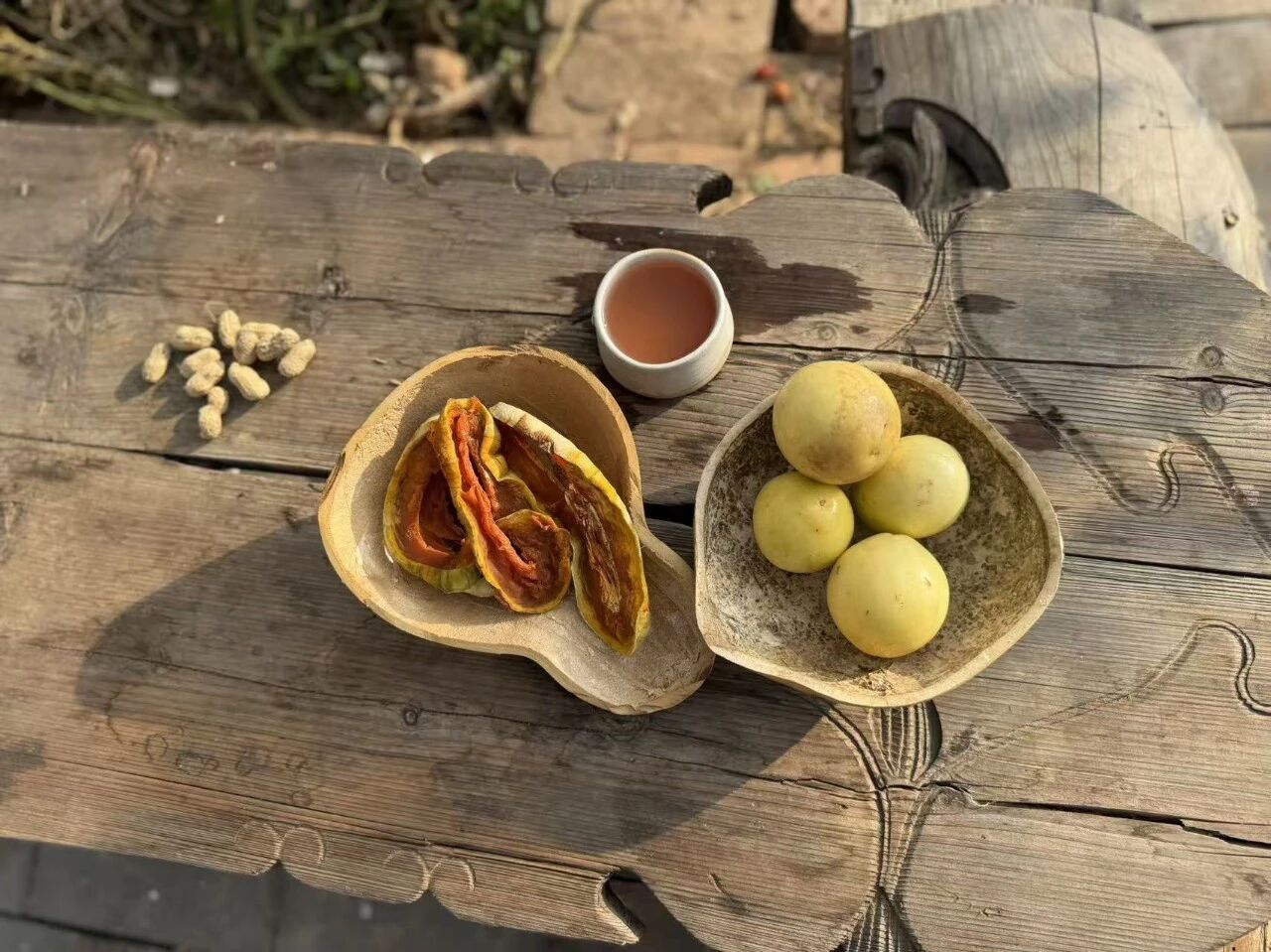
Dried pumpkin, thoroughly dehydrated and sun-dried, can be kept for a long time and eaten slowly. The weather forecast says the sun will come out tomorrow; while sunbathing in the polytunnel and browsing books, set beside me the best winter companion trio: dried pumpkin + roasted peanuts, paired with Ruiyan rice tea. Being the southern king is no easy feat.

Unless otherwise stated, all images in this article are provided by the author.
Editor: Xiaodan