
A Woman Born in the 2000s Learns Farming: “We Can Also Drive This Big Machine Well”
Foodthink Says
Yet to this day, in the world of agriculture, gender differences still exist. Women’s roles in the agri-food system are often not fully recognised, and so the United Nations has declared 2026 the International Year of the Woman Farmer, aiming to raise public awareness, narrow the gender gap, and improve women’s livelihoods worldwide.
Tomorrow is International Women’s Day, and we recommend this article by Wu Ting, a young woman born in the 2000s. She comes from Anhui and has watched her elders toil over the land since childhood. Against the broader trend of agricultural mechanisation, Wu Ting’s father also bought a combine harvester, became an agricultural machinery operator, and supported the family by providing agricultural machinery services. Recently, after returning home, Wu Ting took part in an agricultural machinery training course out of interest.
Through the training, she not only observed the urgent need among older agricultural machinery operators to update their skills and keep pace with the times, but also keenly perceived the constraints placed on women in the world of agriculture. Below is Wu Ting’s account and reflections on gender bias in the world of agriculture.
I. Taking the Agricultural Machinery Operator Exam
With the thought that every extra skill opens another path, I immediately called the registration number. I had no grand career plan in mind—just wanted to get a qualification.
Now, most agricultural machinery operators are self-employed; they are often people who do not want to work for someone else but still want to earn money. When the rush harvest ends in northern Anhui, many operators set off to other places in groups of three or five, as near as Shanghai and as far as Jiangxi or even Guangxi.
Being an agricultural machinery operator has been the way the older generation in my family supported the household. In 2009, my dad joined the trade as a combine harvester operator. As a child, I often felt reluctant to see my parents leave home.
Their work also taught me how hard life can be. One year, my parents went out for the rush harvest. Summer temperatures often soared above 40°C. During that month, they often suffered heatstroke. When they got home, the two of them looked visibly different from before—more haggard. Only later did I learn how hard it had been.
Accidents can happen too. An agricultural machinery operator they knew was once harvesting rice when the vehicle rolled into a ditch and the combine harvester landed on him. After he died, the weight of supporting the family fell on his wife and child, and the child was forced to drop out of school.
Compared with agricultural machinery operators, my previous office jobs were indeed “comfortable”—no exposure to wind and sun, no heavy physical labour in the fields, and not so exhausting. But the money earned from that “respectable” work was only enough to support myself, and spending all day in a cramped office space also left me mentally drained.
Agricultural machinery operators work for themselves, earn more, and find their work more rewarding: they stand on their machines, facing the yellow crops, filled with the joy of a good harvest. But it is also a harder livelihood, one that even comes with risk.
The two generations work in different ways, and their hardships are different too; neither is easy.
II. The Female Trainees’ Fear
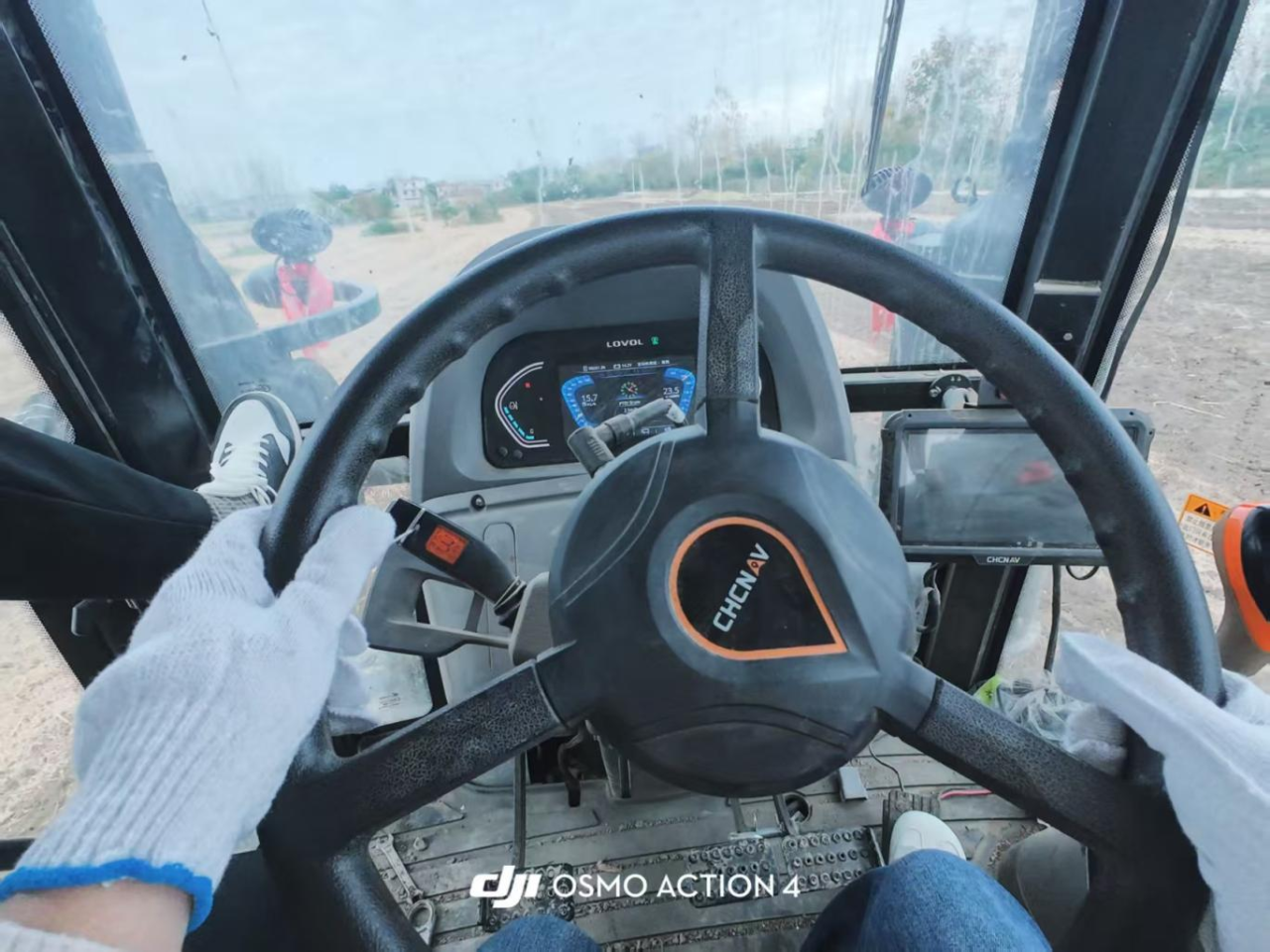
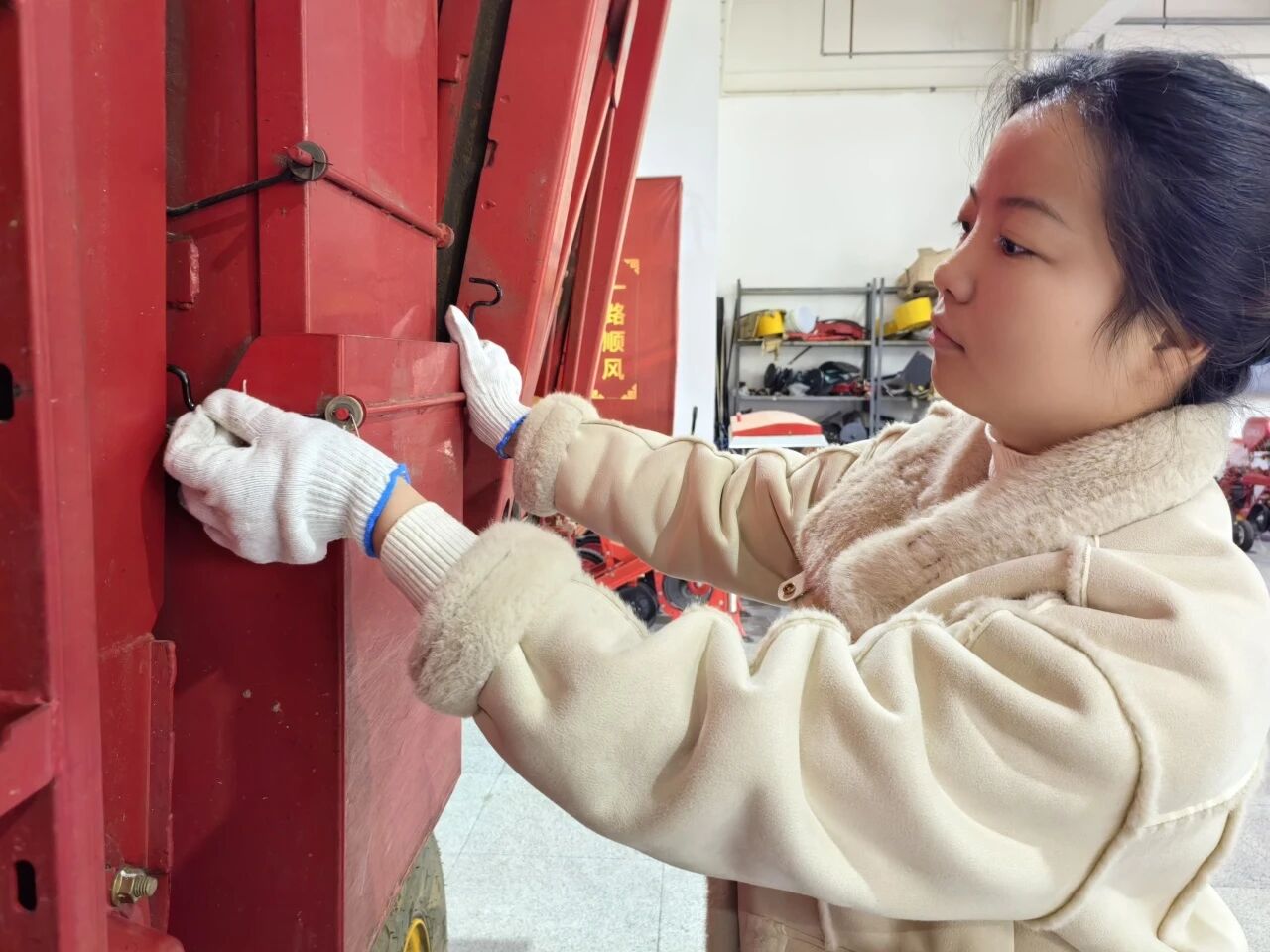
I preferred the practical lessons to the theoretical ones. The practical part began with following the main group to learn to drive a tractor. Before, I had usually only watched this big machine from a distance and never imagined that one day I would become its driver.
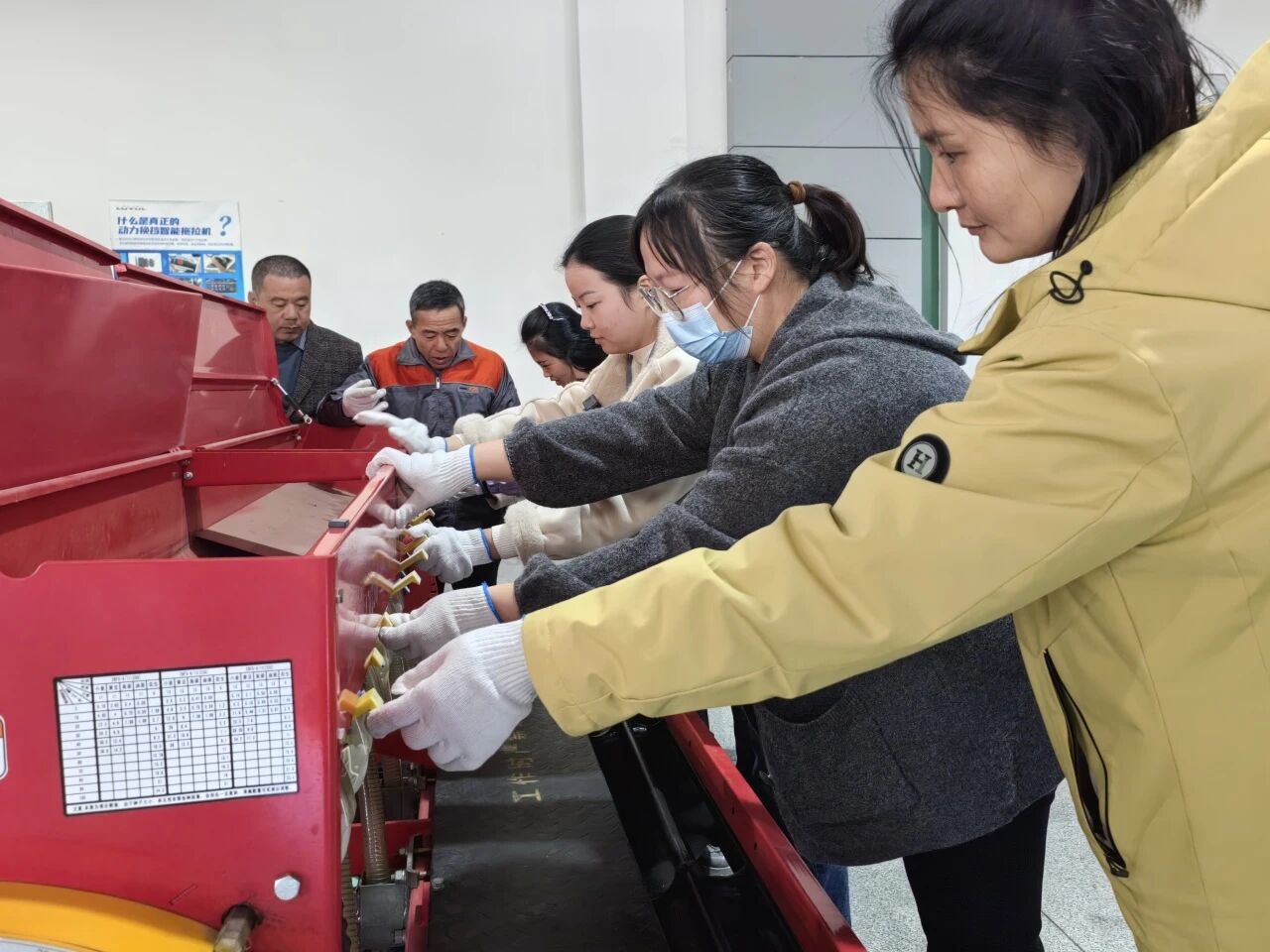
I also noticed that there were very few female trainees in the training group; this cohort had 50 trainees in all, only 7 of them women, and most were older male agricultural machinery operators who had previously driven tractors. Most of them were in their forties or fifties; they were people from Fuyang’s three districts and five counties who engaged in agricultural production and also worked as agricultural machinery operators. The tractor had been their “old companion” for years, yet they had almost no experience operating drones. They had come here to learn the skill of operating drones in addition to their “old companion”, so that pesticide spraying on their own land would be more convenient and they could also earn some money by spraying pesticide for others.
The training course was run by the Central Agricultural Radio and Television School’s Fuyang Branch in Anhui Province, which everyone habitually called “Agricultural Radio and Television School“.
In the free agricultural machinery training provided by the government, trainees who had already accumulated quite a lot of production experience could at least get a clear grasp of the workings of these newly emerging agricultural machines, so that they would not be at a disadvantage when asking for advice at the shop because they did not know the trade.
Compared with the experienced male trainees, the female trainees were far more nervous when facing a tractor. Just as the stigma of “female drivers” still persists, a similar prejudice is at play in agricultural machinery, with many people instinctively placing it in “men’s world”.
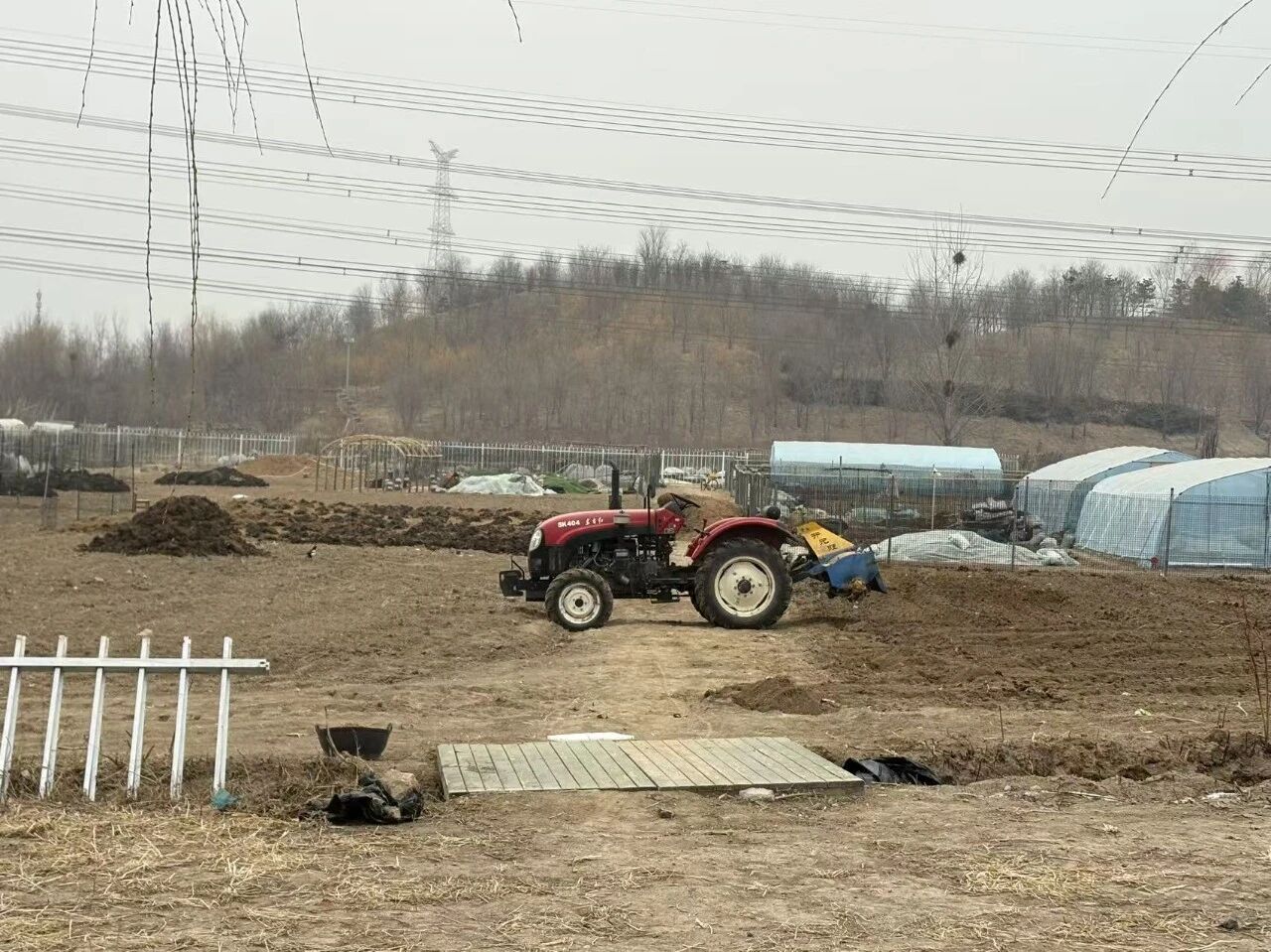
During the practical lesson, the other female trainees and I began to hesitate before we had even started driving. Looking at the old graves not far away in the field, then at the four tractors lined up in front of us, everyone looked wary, afraid that if they drove badly and accidentally collided, they would damage someone else’s old graves. The safety officer quickly reassured us: “Just select first gear, go slowly, and there is still a safety officer on the vehicle.”
The atmosphere of insecurity still spread. “It’s still better when the men drive; they have experience, and we are still a bit lacking,” an older female trainee said.
I was a little unwilling to accept this; I raised my hand to show that I wanted to drive next. Then I crossed the dirt ditch in front of the field and strode towards the tractor.
But pique aside, at first I did not even know how to open the tractor’s cab door. After getting in, the safety officer sat on my left and went through each step for me: first turn the key to the start position; to the left of the steering wheel was the forward/reverse gear lever, push up to go forward and press down to go reverse; to engage a gear, first push the gear lever to the front left, then move it to the right into first gear. Then he pointed out the positions of the brake, accelerator, and clutch for me.
I was so nervous that my head was in a fog; the words went in and immediately slipped out, and my palms began to sweat. When I finally moved off slowly, the tractor driven by the trainee beside me suddenly came straight towards me. I instinctively slammed the brake. After that scare, I finally told the positions of the brake, accelerator, and clutch apart for good.
When I reached the headland, it was time to turn the tractor around. I was sitting in the driver’s seat, with open land before me, the wheat in the field beside us just emerging, and the roar of the machine in my ears. Only then did I notice that my palms were completely covered in sweat. Fortunately I was wearing gloves, so the steering wheel did not slip in my hands.
I forced myself not to be distracted. I gripped the steering wheel tightly with both hands, kept my eyes steadily ahead, and ran through the steps the safety officer had just explained in my head again and again. Finally, when I successfully turned it around, I involuntarily let out a long breath, and the sweat on my palms gradually receded.
III. We Can Also Drive This Big Machine Well
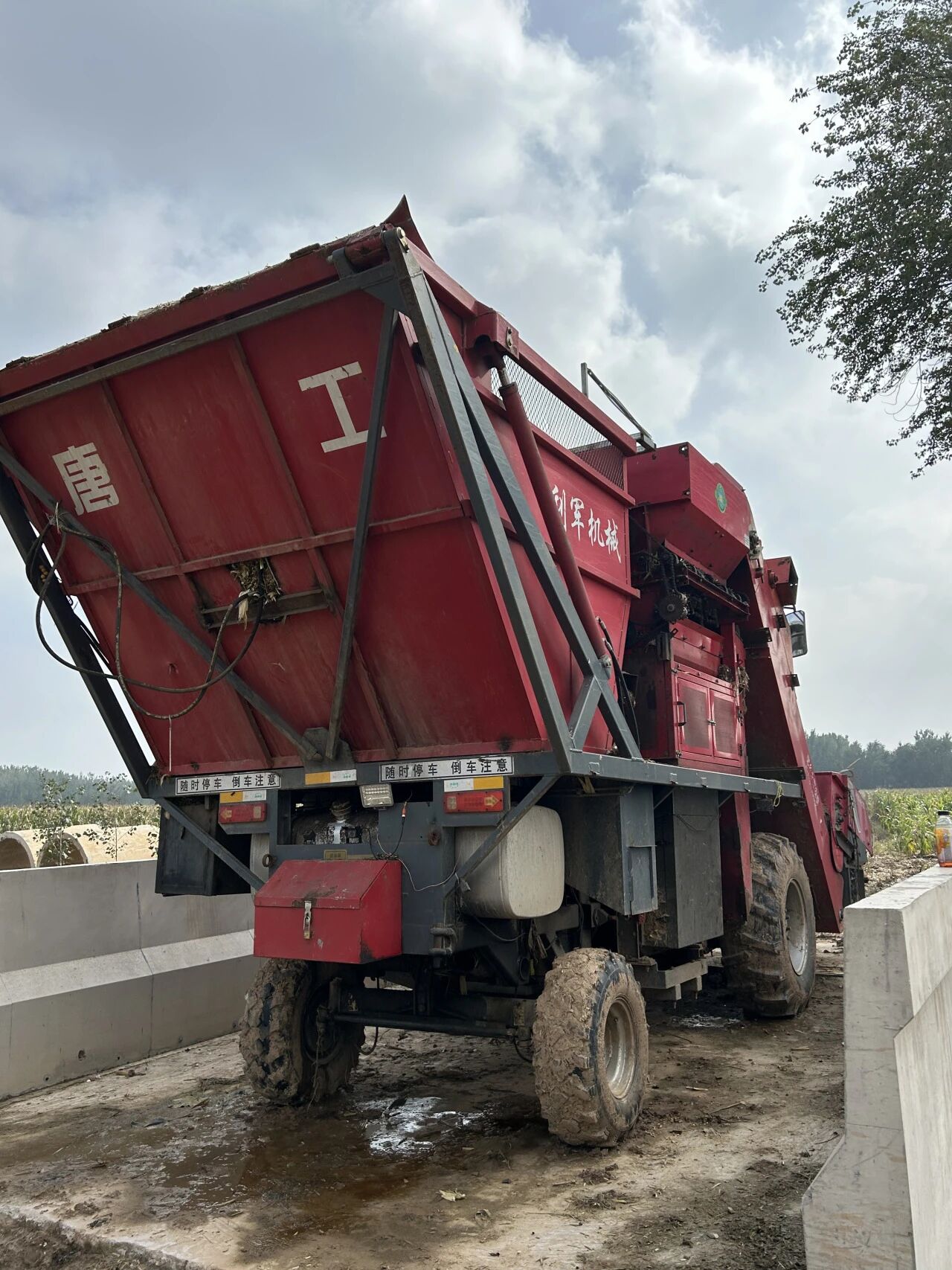
Driving a combine harvester is a completely different thing from driving a car. This combine harvester at the training base had no steering wheel, and the cab held only one seat. In front were two control levers, one on the left and one on the right, and underfoot was a very wide brake pedal, with no clutch. Insert the key, press the red button, and the engine starts. How the machine moves is entirely down to the two levers in your hands: push them forward and it goes forward; leave them alone and it stays where it is.
At first many of the male trainees could not drive it well, which made me even less sure. I found myself weighing it up: drive it, or not? I even considered trying to talk people out of it: “It’s too hard, forget it, don’t roll it over. It’s such a big machine; if it did roll over, the damage would be beyond our means to cover.”
The female trainees training with us also chimed in: “Even the older agricultural machinery operators can’t drive one well. There are so many men, and yet only a few dare to get on.” Another female trainee added: “This contraption is meant to be driven by men in the first place. If they can’t manage, we certainly can’t; women can’t drive a combine harvester well.”
In fact, the younger female trainees were a little unwilling to accept this, but it was not easy to push back on the spot. Later, a male trainee nearly drove the combine harvester onto the kerb, and the header nearly knocked a tree down.
Our hesitation only deepened. The older female trainee beside me said in a low voice: “This combine harvester is not particularly large, and by rights it should not be that hard. But I just do not dare; I do not feel confident… Yet I still want to try.”
She was a few years older than me, and not yet thirty. Before she came, her family had actually supported her decision to learn. “My father-in-law said that if I learned it, then when the family bought a combine harvester, I would be the one to drive it and harvest the rice for the family.”
Later, a teacher from the Agricultural Radio and Television School asked: “Is there any female trainee who wants to come up and have a try?” Everyone yielded to one another, and no one was the first to speak. After hesitating for a moment, she suddenly stepped forward, got there before another male trainee, and was the first into the combine harvester’s cab.
The safety officer first showed her how to start the engine and work the levers. Soon, the combine harvester moved off slowly under her control, and the body of the machine was remarkably steady.
I heard an older woman exclaim: “So a combine harvester does not shake, after all! Earlier, when I watched those men driving combine harvesters and saw them shake so much, I thought that was just how it was.”
During this time I kept filming her. Watching her drive so steadily—reversing into place without crossing the line and leaving plenty of space from the kerb and the trees by the road—I suddenly felt a little more sure of myself: perhaps I could drive it well too.
So the belief in our minds that “only men can drive it” is not due to any inborn difference. Under this unspoken assumption, women are more likely to deny themselves and other women too: the less they dare to have a go, the more it seems that “surely they can’t”, and the stereotype just goes round and round.
When it was my turn, there was still a little incident. After getting into the cab, as soon as the door closed, my mind suddenly went blank, and I had to call the safety officer back. The old machine did not quite behave; as soon as I put pressure on a lever, it shuddered in jerks. A sweat broke out on my back, and when reversing I still crossed the line. But in the end the machine got back to its starting point, without hitting a tree or the kerb.
After the first, there was soon a second, a third, and a fourth. Almost all the female trainees went up to try it, and the older female trainee who had spoken earlier did too. She drove a little unsteadily, but still completed it successfully. When she got out, there was disbelief in her eyes, and she said, full of surprise and delight: “My legs went weak just from sitting up there; I never expected that we could drive such a big machine well!”
IV. Assessment
I selected a gear, released the clutch, and the tractor moved off steadily. Following the teacher’s instructions, I held the steering wheel firmly and kept my eyes on the field ridge in the distance as a reference—this was a new technique I had learned in the training. As I drove, I suddenly remembered something my dad had said when I was a child: “By the sound of the engine, you can tell whether the ploughing is even. If the sound is dull, it is going too deep; if it is light, it is going too shallow.”
I slowed down without thinking and strained my ears to listen. Sure enough, while I had just been ploughing that stretch, the tractor sounded a bit dull. I gently lifted the control lever, listened again, and the sound steadied. In the rear-view mirror, the turned-up earth was slightly yellow and spread evenly behind. The damp, earthy smell drifted into the cab—the familiar smell of the land.
When the assessment was over, I threw that pair of sweat-soaked gloves into the training station’s bin. They had fulfilled their mission, like the stone roller in my memory. Before, we used a stone roller to flatten the soil and level it into a rice-drying yard. Later on, we had a grain suction machine, a grain turner, and a grain dryer. The drying yard was gradually replaced by concrete ground, and the stone roller was placed under the eaves. Still later, the eaves were torn down; the new house had no eaves, and so the stone roller had nowhere to rest.
On the bus home, through the window, I saw, in the setting sun, a drone releasing white pesticide mist over the wheat field, even and fine. By the field ridge, an old man stood with his hands behind his back, watching; his shadow was long, and the mist from the drone was gently settling on a patch of young, tender wheat shoots just beyond the shadow.
Before we said goodbye, I said to the older female trainee I had been training with: “Hurry up and have your father-in-law choose a combine harvester; you can drive it from now on, and you will no longer have to get someone else to harvest the rice.”
Editor: Xiao Dan