
Low-Carbon Agriculture Enters the No. 1 Document: What Does It Mean?
I. Climate Change in the No. 1 Document
But this does not mean that the No. 1 Document, themed on agriculture, rural areas and farmers for 22 consecutive years, is paying attention for the first time to the relationship between climate change and agriculture. As early as 2010, when climate change first appeared in the No. 1 Document, it appeared in the second paragraph, which opens by setting out the main theme: “The impact of climate change on agricultural production is increasingly significant; favourable conditions and positive factors for agricultural and rural development are accumulating, while various traditional and non-traditional challenges are overlapping and becoming more prominent.” This shows that the authorities had long since recognised the huge impact climate change would have on China’s agriculture.
In 2012, again in the second paragraph, the No. 1 Document once more linked climate change with the challenges facing China’s agriculture, with a strong sense of crisis: “The impact of global climate change is deepening; pressure is increasing over shortages of arable land and freshwater resources; the risks and uncertainties facing agricultural development have clearly risen; and the task of consolidating and developing the favourable situation in agriculture and rural areas has become more arduous.”
In the same year, in the section on agricultural technology extension, the document proposed to “greatly increase subsidies for key technologies and sound practices for agricultural disaster prevention and mitigation, stable production, and increased output,” and to expand the coverage of public meteorological services in agriculture and rural areas, and raise the scientific and technological level of agricultural meteorological services and rural meteorological disaster defence.
Interestingly, from then on, the word “climate” was long absent from the No. 1 Document. It was not until 2022 that “the return of a king” came in the first paragraph, in a rather grave tone, and was placed alongside the year’s most important issue: “At present, the global COVID-19 pandemic continues to spread, the world’s economic recovery is fragile, the challenges of climate change are salient, and the tasks for China’s economic and social development are extremely heavy and arduous.” In the section on effectively preventing and responding to major agricultural disasters, it also proposed to “strengthen research on the medium- and long-term impacts of climate change on agriculture.”
In the Central No. 1 Documents over these three years, climate change was more like an invisible but immense shadow, with little concrete work outlined. It was not until 2023 that the climate issue first had a concrete means of action in the No. 1 Document. In the section on strengthening the capacity to prevent and mitigate agricultural disasters, it proposed “to study and carry out work on a new round of agricultural climate resource survey and agricultural climate zoning.”
The outcome of this research is reflected in the 2026 Central No. 1 Document, where the word “study” has been removed and the relevant wording has become more direct action: “Carry out the agricultural climate resource survey and zoning, strengthen monitoring, forecasting, and early warning for meteorological, hydrological, and geological disasters, and improve the capacity to respond to extreme weather.”
II. Disaster Prevention and Mitigation and Climate Change
Over the past few years, each year has seen multiple droughts, floods, and extreme weather events that catch people off guard, with “50-year” and “100-year” disasters occurring almost every year. Taking last year alone as an example, devastating floods continued to occur, especially in northern China: from 23 July, torrential rains hit many northern areas, 13 national meteorological stations recorded two major historical extremes, and Yixian, Hebei, even had “a whole year’s rain for Hebei fall in a single day.” In Miyun, the hardest-hit district in Beijing, a heavily invested farm was also washed away; the land lost its plough layer and still cannot be cultivated, with economic losses reaching 30 million yuan.
By October, prolonged rain and waterlogging in the Huang-Huai-Hai region and across North China affected the autumn harvest; wheeled combine harvesters struggled to enter muddy fields, and drying equipment such as drying towers was insufficient, leaving much of farmers’ maize mouldy and rotten. In rural Hebei, water accumulated in low, flat fields and could not be drained away. In addition, southwest China experienced consecutive drought from winter into spring.
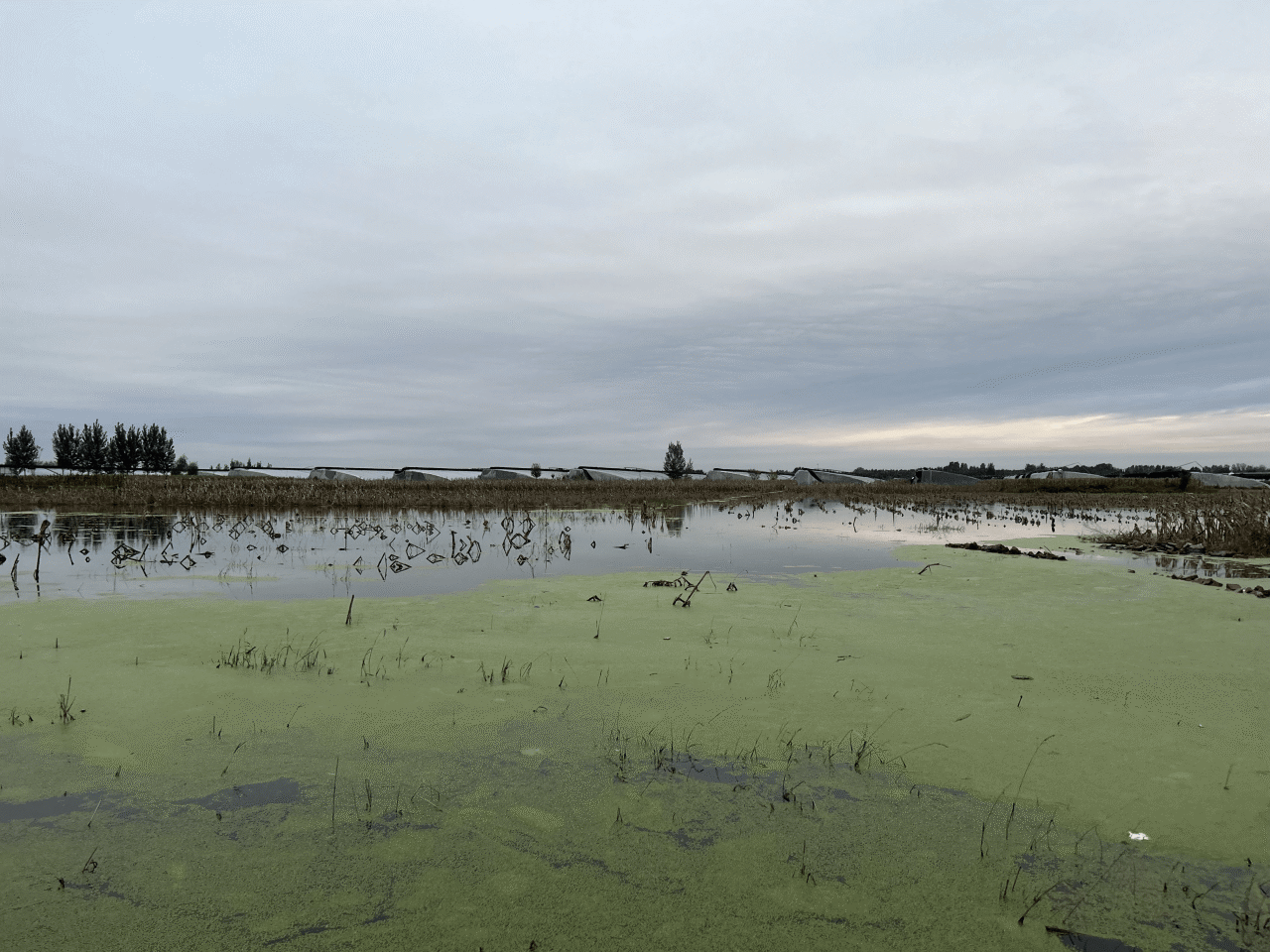
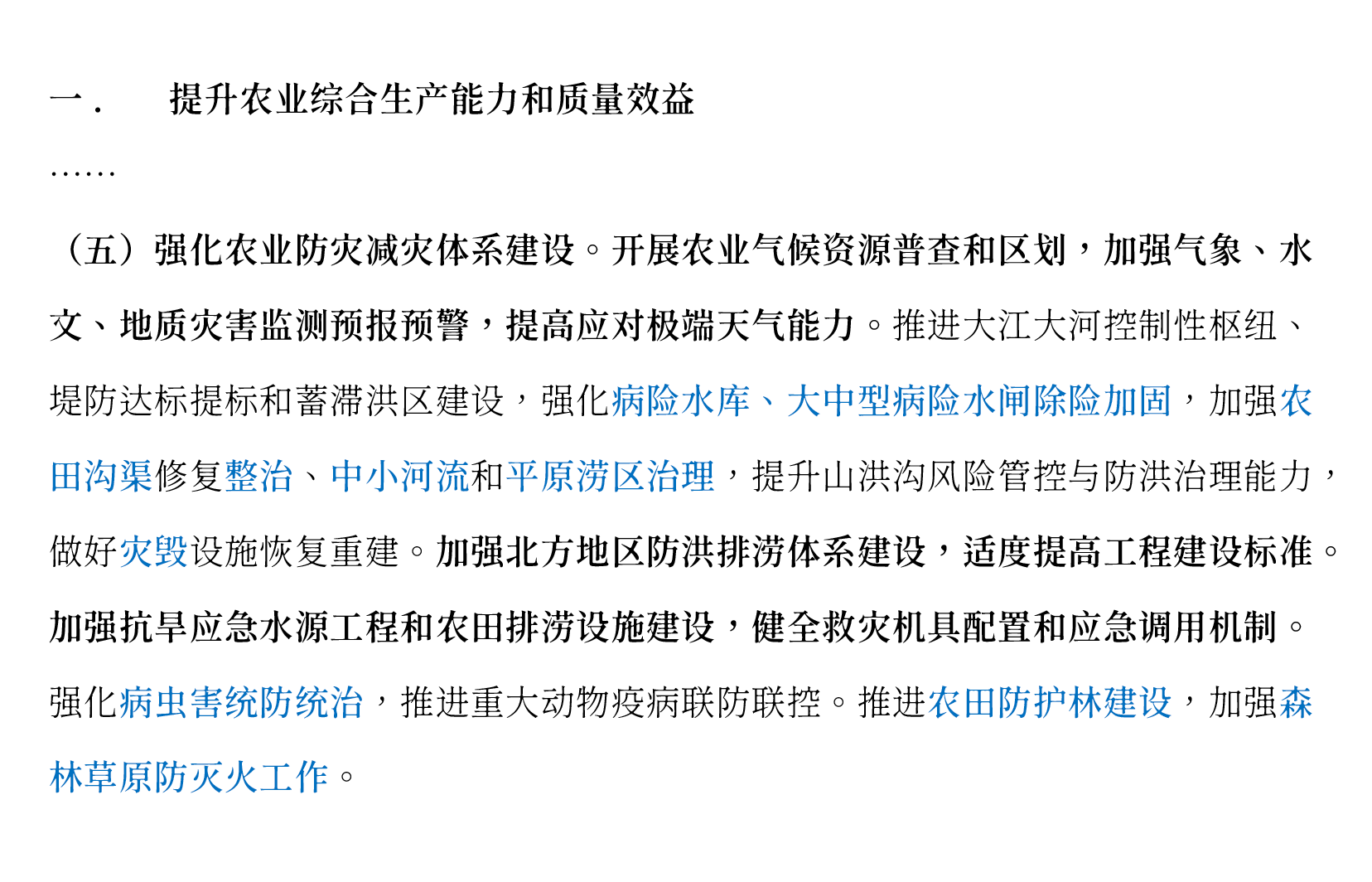
These extreme weather events can be attributed, to varying degrees, to climate change. The floods in the northern main production areas are especially alarming. This year’s Central No. 1 Document specifically proposes to “strengthen the construction of the flood control and drainage system in northern regions and moderately raise engineering construction standards”, and it emphasises “the allocation and dispatch of disaster relief machinery.”
A person close to the Ministry of Agriculture and Rural Affairs told Foodthink that responding to extreme disasters caused by climate change is currently an important task for the Ministry of Agriculture. In recent years, the focus of building China’s agricultural production system has been on improving agricultural resilience to prevent, mitigate, and respond to disasters. For example, in 2024, the Ministry of Agriculture had established an information-sharing mechanism with meteorological, water resources, emergency management, and other departments to monitor disaster conditions, held monthly consultations with the Meteorological Bureau, and issued climate trend bulletins, among other things. It had also carried out canal and ditch improvement in northern farmland together with the four northeastern provinces (regions).
III. Agricultural Climate Resource Survey and Zoning
According to Pengpai News, China has not carried out a systematic agricultural climate resource survey for more than 40 years, while climate change has already brought significant changes, such as increased heat resources and adjusted precipitation patterns; the most direct manifestation is the “northward shift of planting belts” in agricultural production.
In 2020, the first year of the “dual carbon” goals, Zhu Dingzhen, a member of the National Committee of the Chinese People’s Political Consultative Conference and chief expert in meteorological services at the China Meteorological Administration’s Public Meteorological Service Centre, also proposed at the national two sessions that the third agricultural climate zoning survey be launched as early as possible, to “take stock of our resource base and prepare for the future.”
According to a review compiled by Pengpai News, from 2023 the China Meteorological Administration began a “pre-study” of agricultural zoning, specifying that five core climate zoning maps for various crops—covering planting, yield, quality and other aspects—would be produced. From 2024, the China Meteorological Administration, together with the Ministry of Agriculture and Rural Affairs, conducted survey and zoning in seven provinces, including Inner Mongolia and Liaoning; in 2025 the work was expanded to 18 provinces and Tangshan in Hebei, adding 10 pilot crops and refining technical specifications and implementation plans.
The new round of agricultural climate resource survey and zoning was launched on 29 January 2026 and will be completed on a rolling basis over four years, producing six categories of agricultural climate zoning that cover 10 main bulk crops and 15 major specialty crops.
Regional zoning is also a prerequisite for disaster prevention. In an interview with Jiemian, Qian Long, a professor at the School of Grain and Materials, Nanjing University of Finance and Economics, pointed out that the Central No. 1 Document’s disaster prevention and mitigation principle of “according to local conditions” distinguishes the characteristics of different scenarios—flood control and drainage in the north, waterlogged area management in plain regions, and flash-flood gully risk management—so that targeted measures can be applied.
IV. How Farmers Can Participate in Low-Carbon Agriculture
However, the key to the success of “low-carbon agriculture” lies in ensuring that farmers benefit, rather than making farmers pay the bill for the green transition — from the straw burning ban to the heating difficulties in rural northern China, not entirely successful negative examples already exist, and they must be reflected upon.
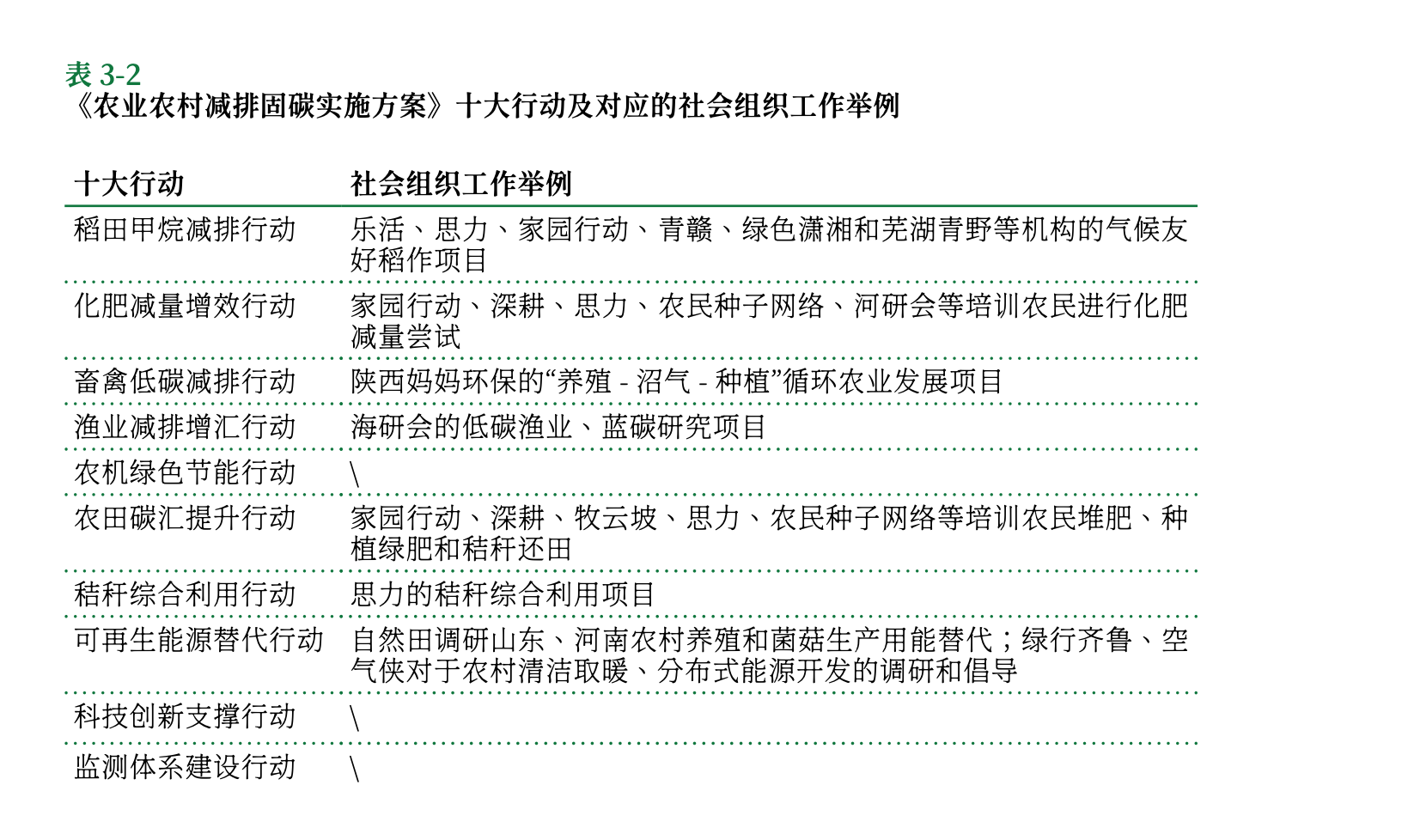
In September 2025, Foodthink released the report “Research on Action Pathways for Rural Social Organisations to Respond to Climate Change,” pointing out that farmers have long been the most sensitive observers and victims of climate change, yet few resources have been directed at paying attention to and helping them.
At the same time, farmers also face inequities in discourse and policy: from a mitigation perspective, small and medium-sized farmers, especially those engaged in ecological agriculture, have lower emissions in both production and daily life than large-scale industrial agriculture and urban residents, yet their contribution to emission reduction is not recognised; from an adaptation perspective, they are more sensitive and more vulnerable than other groups.
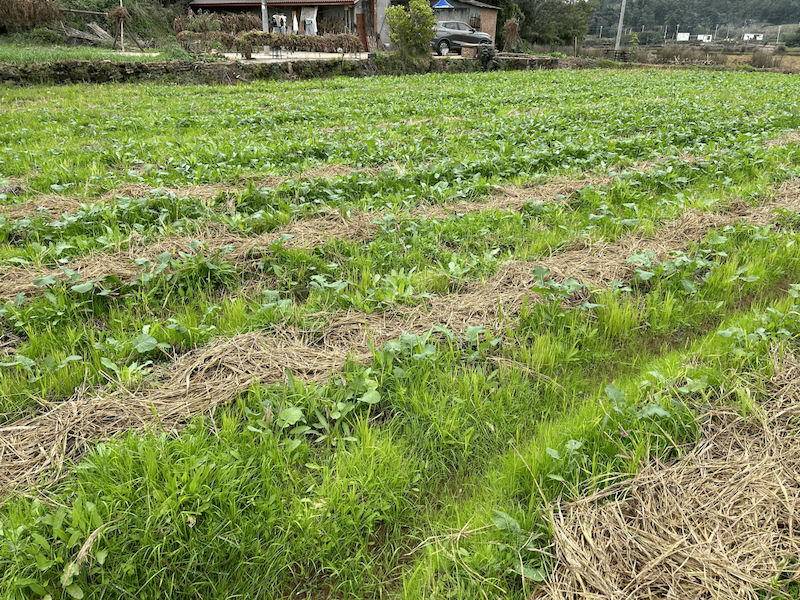
In practice, Foodthink, based on interviews with a large number of rural social organisations and frontline workers, found that, driven by climate funders, many social organisations actually entered rural areas to carry out climate work with the initial intention of reducing emissions and pollution, hoping to reduce emissions of methane, one of the main greenhouse gases produced by crop cultivation.
But once they entered the complex rural reality, they often still had to first address farmers’ more urgent problems such as water shortages, lack of funds, and rural hollowing-out, in reality, it is only on the basis of community work that “low-carbon agriculture” can be undertaken.
When it comes to the specific goal of promoting green technologies, policy also needs to address farmers’ distrust of and unfamiliarity with new technologies. On 28 February, a report titled “The Agricultural Green Transition against the Backdrop of Chinese-Style Modernisation”, authored primarily by experts and scholars within the system and released with the participation of several social organisations, also introduced low-carbon agriculture as an important concept for China’s agriculture in responding to climate change. But the report also found: “The promotion and diffusion of green agricultural technology is essentially a social action that requires social support and also generates social impacts. However, China’s agricultural green transition process has underestimated this.” In other words, if ordinary farmers cannot take part in these new technologies and methods, the goals of the green transition will also be difficult to achieve.
In the face of these issues, civil organisations have the advantages of being flexible, professional, and close to the grassroots, and can bridge the large gap between policy execution and implementation. The report calls for strengthening the capacity building of social organisations and also raising their voice in the transition.
Achieving the climate goals in the Central No. 1 Document is far from enough by relying only on big words such as “low-carbon agriculture”, “resource survey”, and “climate zoning”. How to design policies that allow ordinary farmers to participate and benefit, on the basis of these concepts and tools, is the real test for implementing the document, and also the key to making the No. 1 Document truly take root.
“Implementation Opinions of the Ministry of Agriculture and Rural Affairs on Implementing the ‘Opinions of the CPC Central Committee and the State Council on Anchoring Agricultural and Rural Modernisation and Solidly Advancing Comprehensive Rural Revitalisation'”, 19 January 2026, https://nyj.yl.gov.cn/yw/zslb/202602/t20260206_2073506.html
Pengpai account “China Meteorological Administration”, “Reporter’s Observation | The Central No. 1 Document Again Raises ‘Agricultural Climate Resource Survey and Zoning’—What Is the Deeper Meaning?” https://m.thepaper.cn/newsDetail_forward_32535311
State Council, “National Irrigation Development Master Plan” (2012-2030), 2013
Hu Xueping et al., “An Analysis of the Causes of Consecutive Droughts in Southwest China from 2009 to 2013”, 2021, Meteorology, http://qxqk.nmc.cn/html/2014/10/20141006.html
The Central No. 1 Documents of past years, etc.

*Click the link to get the full text of Foodthink’s report “Research on Action Pathways for Rural Social Organisations to Respond to Climate Change”
Edited by: Tianle and Lingyu