Why Did 2 Billion Honey Bees Disappear?

Foodthink Says
In March this year, pesticide spraying in oilseed rape fields caused devastating losses for bee farmers, and honey bee deaths briefly became a hot topic. But in addition to the visible “deaths”, there is a more hidden disappearance: the honey bees did not die in large numbers inside beehives; instead, entire bee colonies left, leaving only empty beehives, with no dead bees to be seen. This phenomenon is called colony collapse disorder (CCD).
Research conducted by Chensheng Lu, a Harvard University professor and author of The Vanishing Bees, together with beekeeper Kenneth Walhoer and insect toxicologist Richard Kalahan, found that continuous ingestion of low doses of neonicotinoid insecticides can affect the mitochondrial health of honey bees and ultimately lead to CCD. As seed coating technology has been widely adopted, systemic pesticides enter plants from the seed stage and then spread further into soil, water, and air, affecting insects of every size in the food chain, ultimately reaching people’s dining tables and entering their bodies.
20 May is World Bee Day. We have selected excerpts from The Vanishing Bees, starting from Professor Lu’s experiment and the empty beehives left behind after the honey bees disappeared, to reconsider the relationship between modern agricultural technology and ecology.
We thank Shanghai Translation Publishing House for authorising the use of this article.
After we completed the field experiment in which we confirmed that colony collapse disorder had occurred in 15 beehives after honey bees had ingested very low doses of neonicotinoid insecticides, we began cleaning up the environment at the beekeeping experimental site. The results of our experiment were solemn and tragic. Every upright empty beehive was a beehive without honey bees, like a tombstone. We sacrificed 15 beehives to uncover the toxicity of neonicotinoid insecticides—something we should have known but had been kept in the dark about.
Although the hypothesis of our experiment was that honey bee colonies ingesting low doses of neonicotinoid insecticides would exhibit the toxic phenomenon of CCD, when I witnessed this tragedy, I was still deeply shaken. Anyone unfamiliar with the experiment would feel immense confusion and fear when standing before these empty beehives.
What is puzzling: why were beehives that were still perfectly healthy before winter entirely empty in winter? What is frightening: if the cause of the honey bees’ disappearance also affected us, would humans disappear too?
But when I moved from a vibrant, buzzing beehive (the control beehive) to a lifeless, empty beehive just one metre away, I realised that I was experiencing another silent spring. The beehives that had suffered CCD over winter were, in the fullness of spring, so quiet that it felt unsettling. That silence was more suffocating than the calm before a storm.
Compared with the 20th century’s silent spring, the 21st century’s silent spring has shifted its protagonist from small birds to honey bees, and its culprit from DDT to neonicotinoid insecticides. But both are new ecological crises caused by pesticides. A hidden pesticide toxicity has produced a silence in spring that ought not to exist.
For more than 60 years, humanity has been travelling through the time tunnel of this silent spring. When we came to understand the toxicity of DDT as an insecticide and the importance of protecting wildlife, environmental awareness began to take hold in more progressive countries, and they successively established government agencies similar to environmental protection agencies.
More than 60 years later, due to the widespread use of another pesticide, humanity has once again created another silent spring, as if the end of this 20th-century environmental-protection time tunnel was actually the starting point of the 21st century. The ecological crisis caused by new pesticides seems to bring us back to that starting point 60 years ago, where we helplessly watch the honey bees struggle and perish.
Opening the Pandora’s Box of Seed Coating
Looking at the results of the two CCD experiments at Harvard University, we might think the culprit behind CCD is honey bees ingesting very low doses of neonicotinoid insecticides—imidacloprid and thiamethoxam—from high-fructose maize syrup. Because of the multi-generational toxic effects of neonicotinoid insecticides on mitochondrial DNA, the generations of honey bees that need to produce the most energy to overwinter in the beehive suffer functional damage to their mitochondrial DNA and age prematurely, leading to unprecedented CCD.
The fact that neonicotinoid insecticides are the cause of CCD in honey bees is beyond dispute, but the route by which they cause CCD is a relatively little-known new agricultural technology—seed coating.
From traditional pesticide spraying to seed coating, we have not only changed the way pesticides are used, but have also, deliberately or inadvertently, changed how these systemic insecticides and fungicides in the environment affect the conditions for survival of non-target organisms and environmental biodiversity.
The pesticide manufacturing industry has called the invention of combining systemic pesticides with seed coating a major milestone in the development of agricultural technology in the late 20th century. It proudly believed that from then on, plant protection could, like human medicine, use pesticides precisely. However, the massive disappearance of honey bees worldwide has led European Union authorities to place an indefinite restriction on the use of the three most heavily used neonicotinoid insecticides, bursting the bubble.
The arrival of seed coating is actually a strategic development for the pesticide manufacturing industry. On the surface, seed coating provides farmers with a one-stop service for purchasing seeds and pesticides; in reality, it has also substantially increased the industry’s revenue.
Coated seeds do not contain only neonicotinoid insecticides; they can also be coated with systemic fungicides, plant growth regulators, nutrients, and so on. Therefore, I believe that even government regulatory agencies cannot be certain exactly how many types and how much of neonicotinoid insecticides and systemic fungicides are coated on a single maize seed.
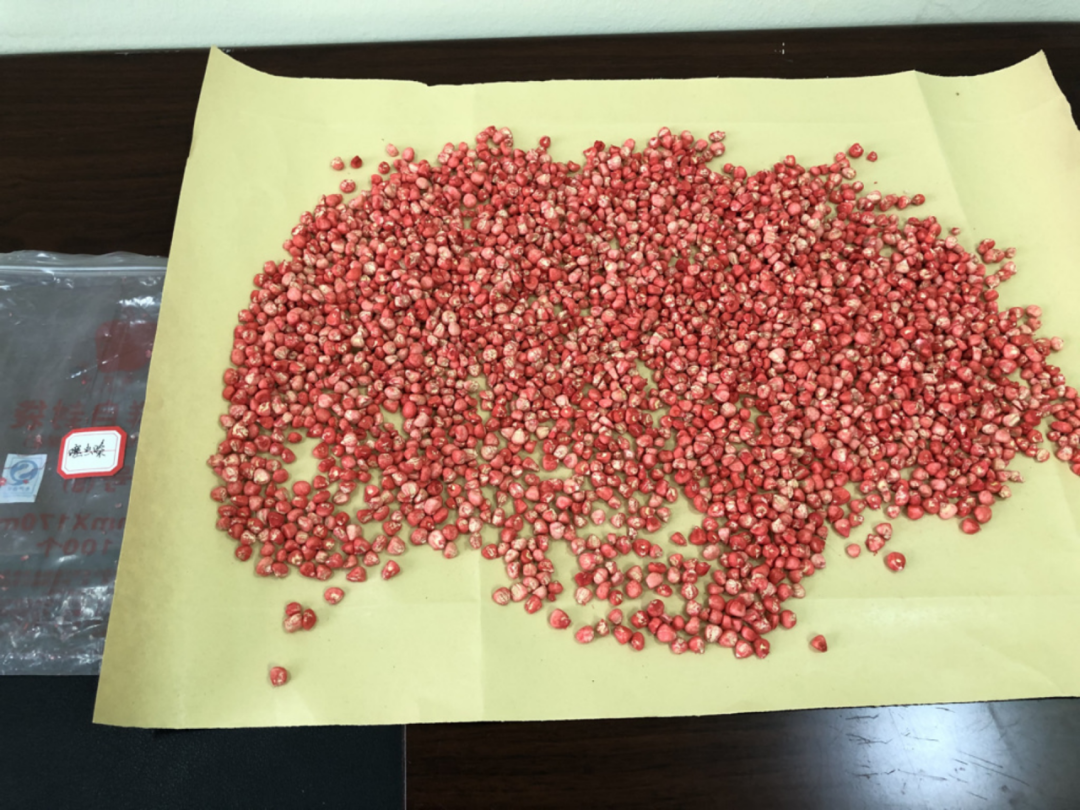
◉Maize seed after seed coating with neonicotinoid insecticides. Photograph: Chensheng Lu
But ever since I personally conducted the CCD experiment, witnessed this terrifying ecological crisis of the honey bees’ disappearance, and came to better understand the transgenerational toxicological effects of the mitochondrial DNA damage caused by ingesting low doses of neonicotinoid insecticides, as well as the harm that coated seeds inflict on the environment and ecology, I must, before the end of my career, speak out against the existence of neonicotinoid insecticides and against the legality of seed coating treatments.
Neonicotinoid Insecticides on Our Dining Tables
A large body of experimental results has shown that a large proportion (80–98%) of the pesticide on the outside of the seed coating leaches directly into the soil and then enters surface water and groundwater. A further 2–20% of the pesticide enters the plant after the seed germinates. Because systemic pesticides are hydrophilic, they move with the crop as it grows, until the crop is harvested and enters the human food chain.
In other words, once coated seeds treated with neonicotinoid insecticides are sown, neonicotinoid insecticides become omnipresent in the environment and in food.
While seeds coated with neonicotinoid insecticides pollute the soil and surface water, a small proportion of the neonicotinoid insecticides is absorbed by the plant’s roots and moved upward from the seed. It enters the plant’s transport system and is carried to every part of the plant, including the pollen and nectar in its flowers, before finally being released into the air.
Those most harmed by this pollen-mediated route of intake are, of course, pollinating insects, including honey bees, because pollen is their main source of protein. But organisms harmed by pollen intake are not limited to these important pollinating insects. During the spring flowering season, whether or not we are out admiring flowers, as long as we are outdoors we inevitably inhale pollen. Some people may suffer severe allergic reactions, while others are unaffected. However, because neonicotinoid insecticides are widely used in agriculture, urban greening, and parks and home gardening, each year’s pollen season becomes a peak period for the intake of neonicotinoid insecticides, especially for those who like to go out in spring to enjoy the flowers.
Because systemic pesticides are hydrophilic, colourful seeds treated with neonicotinoid insecticides can theoretically protect the plant, from sowing to harvest, against subterranean and above-ground pests, thereby ensuring food production. From the standpoint of plant protection, then, coated seeds appear to play an indispensable role.
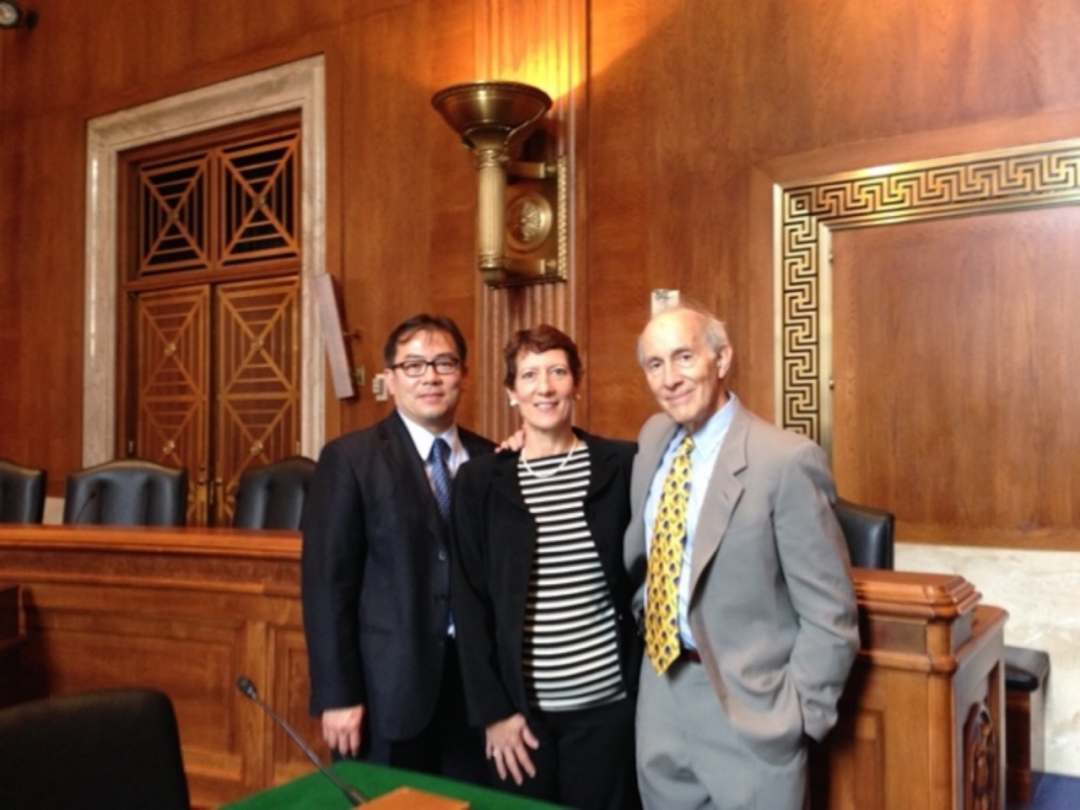
◉Professor Chensheng Lu and two research colleagues were invited in September 2014 to attend a joint hearing of the United States Congress on “How to Address the Decline in Honey Bee Colony Numbers”. From right to left: Dr Eric Chivian (professor at Harvard Medical School in the United States and one of the recipients of the 1985 Nobel Peace Prize), Dr Melissa Perry (professor at the George Washington University School of Public Health in the United States), and Dr Chensheng Lu (associate professor at the Harvard School of Public Health).
But agriculture cannot be concerned only with crop growth and yield. After all, crops are also part of the ecosystem, and, like other organisms, they breathe the same air, drink the same water, and use the resources that the soil provides to sustain our lives. Therefore, agriculture should not enjoy any special privileges, and it certainly should not constantly use “food security” as a shield to act as it pleases.
The history of pesticides in human society tells us that the abuse of pesticides will only invite pesticide resistance. Putting millions of kilograms of insecticides into the soil year after year is itself a form of abuse, an irresponsible dumping of toxic chemicals, and a way of pursuing agricultural production by any means necessary.
By the time we have no tools left to fight agricultural pests, it will be too late to look back and examine whether seed coating is a sustainable plant protection tool. This is not an alarmist prediction; it is something that will happen sooner or later.
When a Beekeeper Cannot Keep Honey Bees Healthy
Mr Varhollow told me that this year (2023) would be the last year of his life keeping honey bees. He said: “If even I cannot keep my honey bees healthy, then all the knowledge passed on about keeping honey bees is a lie. There are more and more threats in the environment preventing the entire beehive from growing healthy and strong.” It left him feeling sad and helpless.
Mr Varhollow said: “I tried selling organic honey, because organic honey sells for two to three times the price of ordinary honey. But every year, residues of neonicotinoid insecticides are detected in the honey, so this cannot be done.” Mr Varhollow also said: “The spread of neonicotinoid insecticides in the environment has been faster and more widespread than I imagined, and it caught me off guard. Continuing beekeeping has become a struggle, and it no longer makes any economic sense.”
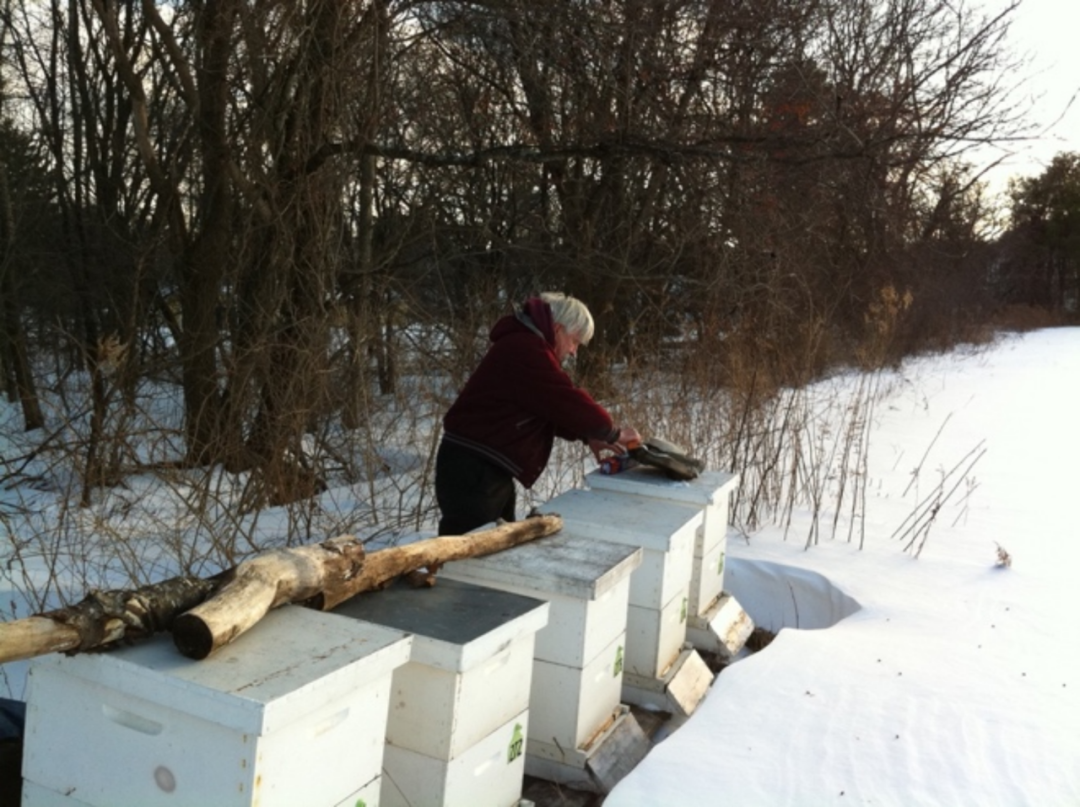
◉Inspecting an experimental beehive during overwintering. Photograph: Richard Callahan
Mr Varhollow is not engaging in anxiety-mongering, much less seeking sympathy. In June 2023, the Associated Press, an authoritative American news outlet, reported: “In 2022, 60% of American beekeepers lost large numbers of bee colonies, leading to unsustainable earnings.”
The Associated Press’s report makes no mention of the impact that the intake of neonicotinoid insecticides has on honey bee survival. It argues that climate factors are the main cause behind varroa mites leading to bee colony deaths. From ordinary people’s backyards to professional apiaries, beekeepers of every size regard “bad weather” as the main cause of bee colony deaths. The Associated Press presents substantial evidence showing that, as climate change progresses, honey bees and many of the flowers they pollinate are out of sync, which has had a serious impact on both honey bees and flowers. However, the Associated Press has not linked, and cannot link, the problem with varroa mites to the difficulty that climate change causes honey bees when foraging for pollen and nectar.
Cherish the Honey Bees You See
A thin sheet of paper is all that really separates anxiety-mongering from setting out the facts. Is it anxiety-mongering to point to the disappearance of honey bees? Is it anxiety-mongering to point to the importance of honey bees to people and the ecology? Is it anxiety-mongering to point to the irreversible health effects caused by mitochondrial toxicity? Is it anxiety-mongering to point to the environmental harm caused by neonicotinoid insecticides and seed coating? The phrase “anxiety-mongering” is a statement that requires no accountability, the lowest-cost response, and a consoling remark that buries the truth of the matter.
The causes and consequences of the disappearance of honey bees are already an undisputed scientific fact. Deliberately downplaying the ecological disaster caused by neonicotinoid insecticides and seed coating merely pushes human civilisation into the abyss. The health effects of mitochondrial toxicity across biological populations and their descendants are also a scientific fact. We humans are now faced with verifying this scientific fact in a vast biological experiment on a planetary scale.
By the time we have sufficient scientific evidence to confirm that our current understanding of the mitochondrial toxicity of neonicotinoid insecticides and the environmental harm caused by seed coating is correct, it may already be too late, and the cost may already be too high.
Whether 21st-century agriculture still needs to rely on chemical pesticides as a tool is a highly contentious question. This is because, since DDT first came into use, no widely used pesticide has stood firm without being phased out. Most have been banned because of known toxicity and pesticide resistance in the environment.
We need to think from multiple perspectives and carefully consider the ecological and health risks brought by pesticide use. Before we have found a balance that can simultaneously take account of agricultural production, the protection of the ecological environment, and human health, “whether pesticides need to be used” is not an urgent question. The pesticides we need are those that have the least impact on the ecological environment and human health.
The disappearance of honey bees is a rejection of the neonicotinoid insecticides and seed coating technology we chose in the 21st century. I believe we still have a little precious time to make amends for the mistakes we have made; this may be our last chance. So please cherish the next unexpected encounter with a honey bee in the wild or in a park. Who knows whether it might be the last honey bee you see in your lifetime.
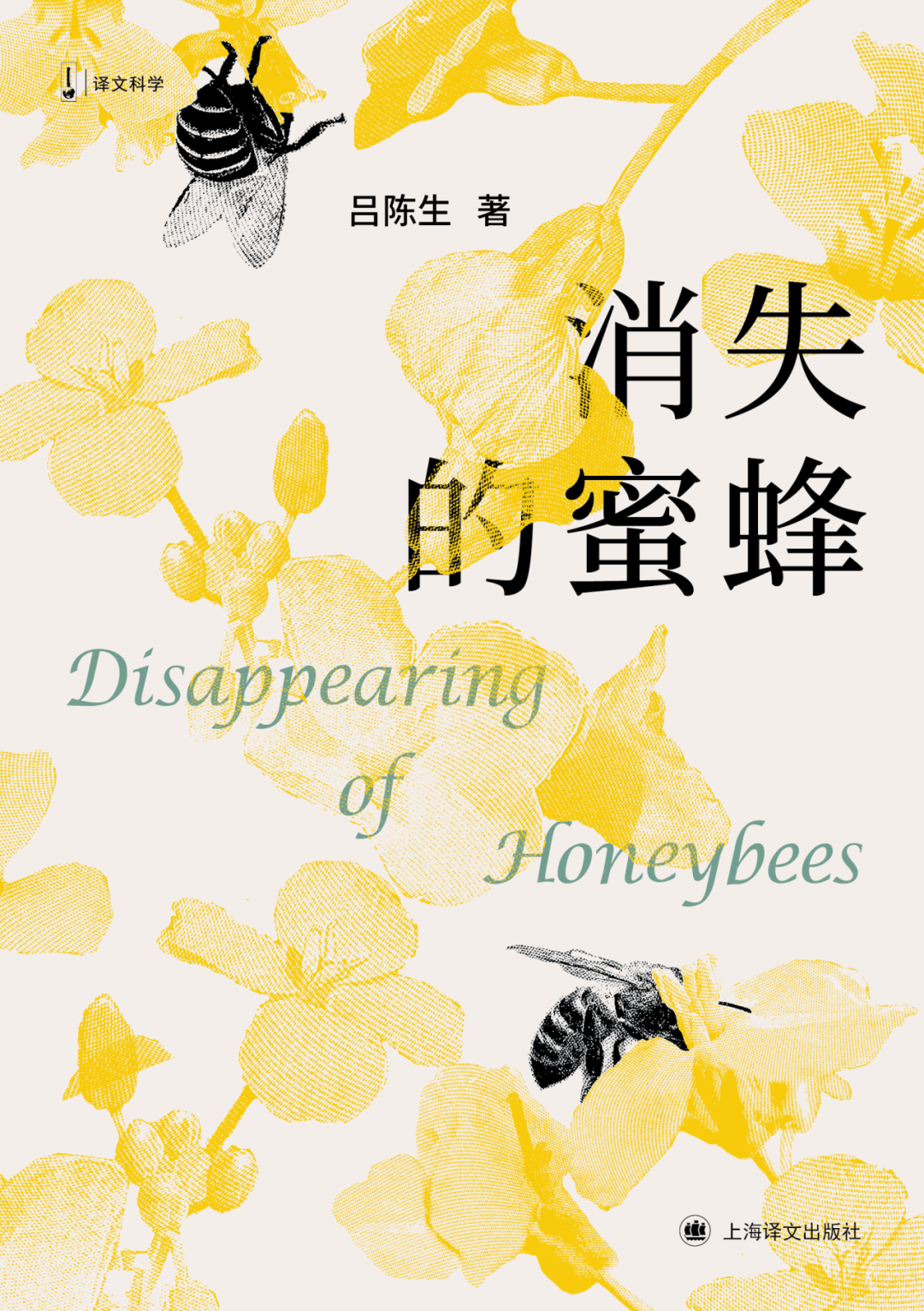
▼
Click the image to read related articles