The Smallholders’ Sales Command Centre

Like many people who follow international rural politics, I had long heard of the Brazilian Landless Workers’ Movement (MST for short). Landless people, land occupation, struggle, land reform—these MST keywords were so striking that I unconsciously equated it with a land movement “rooted in rural settlements and sustained struggle.” It was not until October 2025, when I walked into one of their agricultural produce warehouses in Brazil, that my preconceived impression was completely shattered.

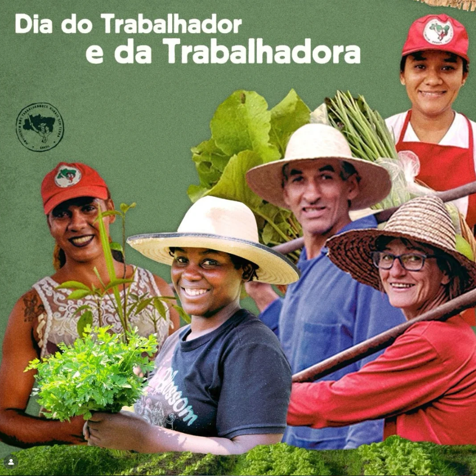
◉ The logo and posters of the Brazilian Landless Workers’ Movement. Image source: MST website.
The warehouse is not large, at a little over two thousand square metres, and is still under construction: the wall finishes in some areas are not yet complete, but the functional layout is clear and straightforward—one side is for dry goods, the other for fresh fruit and vegetables. Staff showed me a stock list running to more than a dozen pages, densely packed with three to four hundred items: coffee, chickpeas, grain flours, jams, vegetable sauces, spice packets… In that moment I suddenly realised that MST is by no means solely focused on “fighting for land”; it is also doing something harder and more easily overlooked—selling the produce from dispersed smallholders at scale.
“Organic produce is so hard to sell” is a simple but profound conclusion I have reached after years of focused research into domestic organic farming. But after in-depth conversations with MST partners, I found their sales model very different from the various decentralised, piecemeal attempts by domestic peers: MST relies neither on sporadic market stalls nor on hawking in friends’ circles, but has built a complete system covering warehousing, order matching, compliance certification, channel development, and logistics and delivery, turning the sale of produce into a recurring, sustainable operating mechanism. The warehouse before me is a key node in MST’s integration into Brazil’s urban food network.
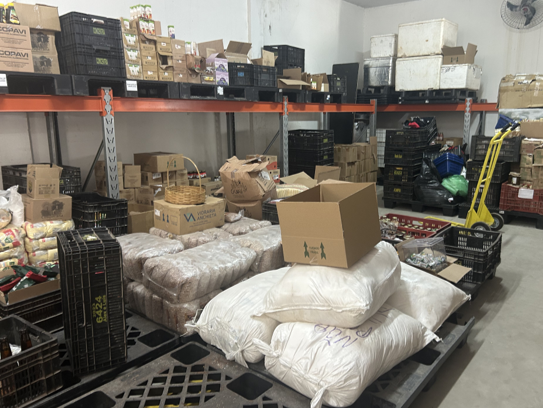
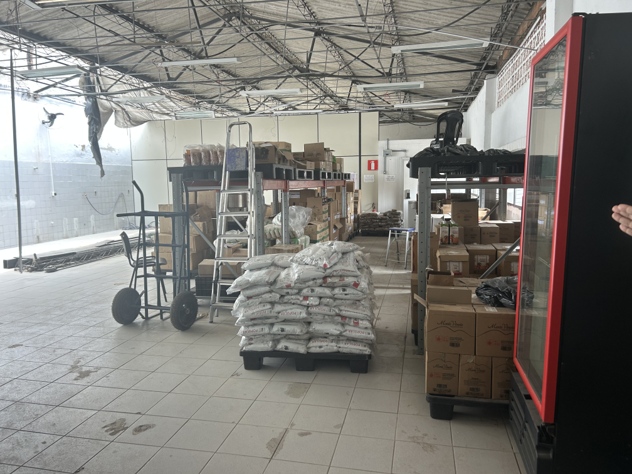
◉ The warehouse, still under construction, seems unremarkable, yet it is a vital hub sustaining the MST movement.
I am eager to understand exactly how they built this organised sales system; and I want to explore even more— what transferable lessons this practice from Brazil holds for us, who are now likewise trying to work out “how organic smallholders can enter the market efficiently.”
After the Land Occupation
MST’s full Portuguese name is Movimento dos Trabalhadores Rurais Sem Terra, usually translated into English as the Brazilian Landless Workers’ Movement. In Chinese, two renderings are common: “无地工人运动” and “无地农民运动” (Landless Workers’ Movement), the latter being more widely used.
Its rise is closely linked to Brazil’s social and historical roots: the plantation economy inherited from the colonial period created an extremely unequal pattern of land distribution—In Brazil, 42.5% of the land is controlled by less than 1% of the population, a situation that has directly given rise to around 4.5 million landless people. To address this predicament, in 1984, 92 farmer leaders held a meeting in Cascavel, Paraná, and formally announced the founding of MST. Its aims were direct and resolute: advance land reform, organise the landless people, and enable people to truly take root on the land, produce and live there.
Under Brazilian law, land must continuously serve a productive function, otherwise it may be declared “ownerless land”. MST has made precise use of this provision, developing a phased strategy of struggle: first, it sets up camps or settlements on land it regards as “idle and not generating social productive value” (often settling and taking root first); then it organises production and collective life; and it enters a long legal and administrative process—through litigation, policy advocacy, political negotiation and other means—seeking government recognition of the “productive function” that the land has been re-endowed with, after which it may finally be possible to obtain legal ownership of the land. This process is full of manoeuvring and hardship; bloody clashes, armed repression and forced evictions occur from time to time.
Today, MST has more than forty years behind it, with its struggles and practices spanning 23 of Brazil’s 26 states and achieving remarkable results: to date, it has helped 450,000 families obtain land and led the establishment of 1,900 farmers’ associations, 185 cooperatives and 120 agricultural processing workshops.
MST’s wide-reaching influence has led most researchers to focus on its mobilisation methods, organisational form, camp life and political strategies; these dimensions are admittedly important. But from the practical standpoint of everyday living, there is an even more critical question: once land has been occupied, how does one sustain a livelihood? Holding land-use rights does not amount to having a sustainable livelihood and secure living conditions.
For residents of the settlements, the challenges of survival are especially concrete: part of the land is unsuitable for growing food crops, making self-sufficiency difficult to achieve; and even on arable land, where farmers persist with pesticide-free and chemical-fertiliser-free organic farming, they face the dilemma of “quality without a premium price”. Only by selling produce at a reasonable price and converting food into cash can daily expenses and the running of the household be supported.
Within the mainstream food system, smallholders from the settlements are inherently at a disadvantage: they lack experience in market sales, and when facing channel partners such as large supermarket chains, their fragmented produce can hardly find a foothold. The central question therefore gradually sharpens into: how can the dispersed output of smallholders be consolidated into an organised supply, enabling stable and sustained sales.
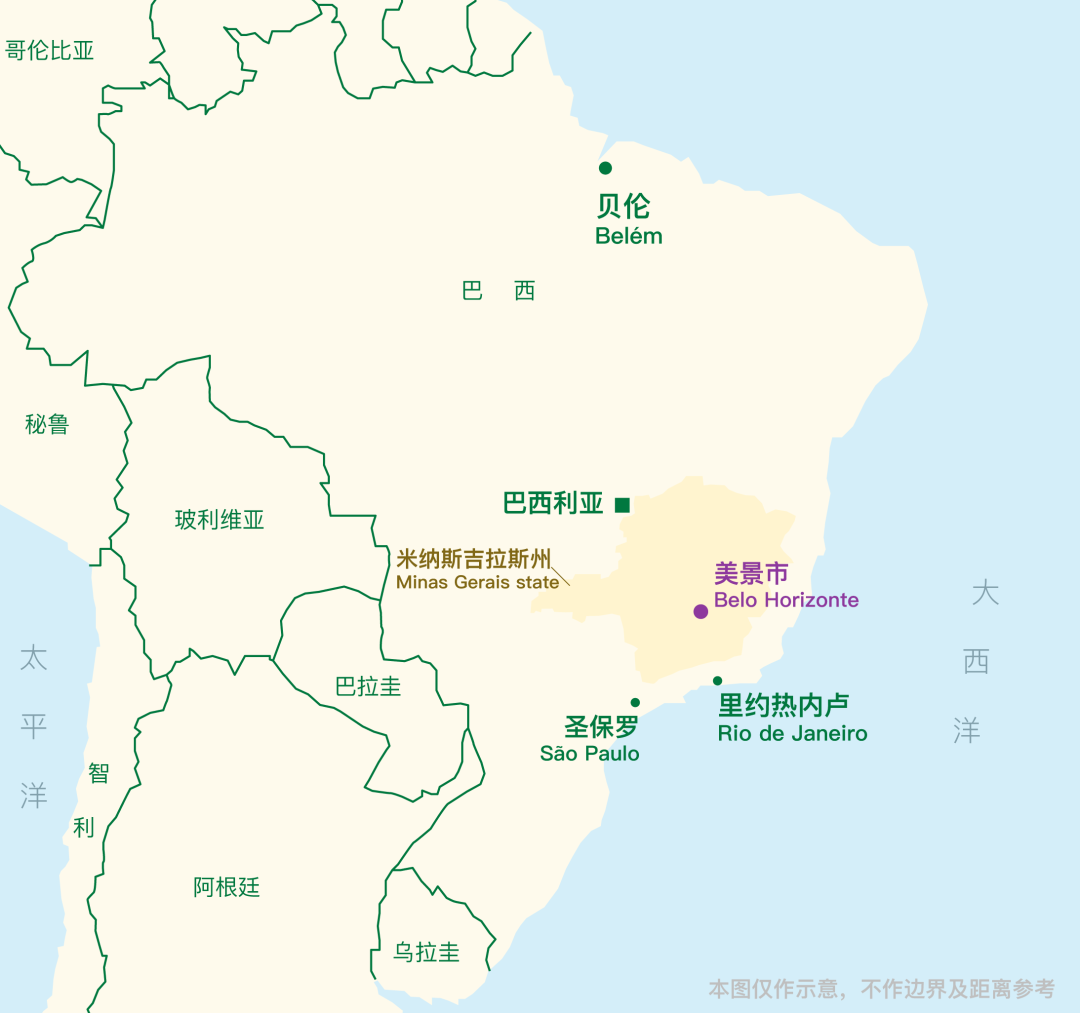
◉ This article is based on research into MST’s sales platform in Belo Horizonte, Brazil. Map: Foodthink
The Smallholders’ Sales Command Centre
Our research site is Belo Horizonte, in south-eastern Brazil, the capital of Minas Gerais state, with a population of around 2.5 million.
The platform that received us was called Concentra, with a team of four or five staff members, all young. The oldest among them was only about forty, and three of them had in-depth conversations with us. These three members left me with the same impression: Their conviction was unwavering; they were absolutely sure that what they were doing was valuable and meaningful. Two of them had experience of living and working in settlements—MST settlements are not merely places to live; they also come with schools, basic healthcare facilities and public spaces for communal life. They had grown up in the settlements from an early age, receiving an immersive education in MST’s values.
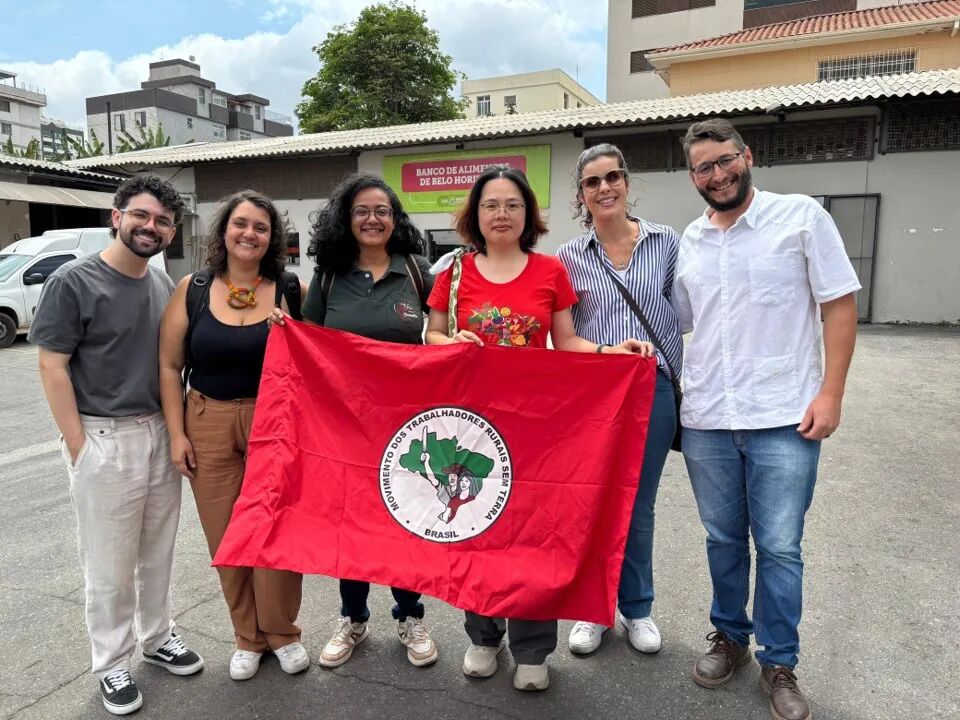
◉ The author of this article (third from the right) with the Concentra team and local guide Luiza in Belo Horizonte, Brazil.
MST’s value system may be relatively complex, but its core revolves around the “four pillars”: the struggle for land, the struggle for agricultural and land-system reform, the struggle for social change, and organisation and education. The atmosphere of collective life in the settlements and the systematic education there have fostered a strong sense of identification with this value system among young people, while also continually cultivating a core group of people willing to devote themselves to organisational work for MST.
One of Concentra’s staff members, after graduating from university, took part in a government-organised rural service project similar to “Western teaching support” before ultimately choosing to return to the MST network and devote themselves to its work. My local guide Luiza, a teacher at a local university who has worked with MST for many years, reflected: “These people are all remarkably clever.” This shows that, through its long-running movement, MST has built a stable pool of talent, continually attracting outstanding people to join.
Concentra plays a dual role as an “intermediary and coordination centre”: upstream, it links with seven cooperatives in Minas Gerais state, while also bringing together products from other MST cooperatives across the country; downstream, it links with government bodies, supermarkets, restaurants and other buyers. It is responsible for receiving orders of various kinds, and, based on each cooperative’s available resources and production strengths, it allocates demand precisely to suitable cooperatives, coordinating between them to effectively prevent destructive competition among the cooperatives. When necessary, Concentra also makes advance payments, providing financial support for smallholder production.
In addition, the platform centrally oversees tasks such as warehousing, sorting, logistics and delivery, product-line development, processing coordination, and compliance and certification facilitation. In effect, it takes on the substantial volume of “market support work” that would otherwise fall on individual smallholders, lowering the barrier to market entry through a specialised division of labour.
A staff member told me the story of how a moringa jam came into being. The product began when a mining company approached them of its own accord—because its mining activities had caused an ecological disaster in an MST settlement, the company wanted to order 1,000 boxes of jam as part of the compensation. After Concentra organised the members to complete production, the company said it tasted excellent, and the team had the idea of developing it into a long-term product for sale. But for produce to reach the market, it has to clear a series of hurdles: meeting food hygiene and safety standards, designing compliant packaging and labels, and completing various registrations and permits. Fortunately, Concentra has a dedicated legal team, and ultimately, even through dialogue and lobbying at the political level, it persuaded government departments to recognise a route to compliance for the product, enabling it to officially go to market.
Staff put it plainly: every product has a long development cycle, and it can only truly survive through sustained coordination across legal compliance, policy engagement, production organisation and sales channels. The ability to “institutionalise products, bring them into compliance and integrate them into larger distribution systems” is precisely the most acute gap for smallholders—MST did not leave individual farmers to work things out on their own, but turned it into a collective capability of the entire network.
I also noticed that they are incubating a new own-brand — Raízes do Campo (roughly “Roots of the Field / Roots of the Countryside”). Taking one of its coffee products as an example, the packaging clearly shows that the product is jointly produced by two cooperatives, covering 604 farm households, and carries Brazil’s official “family farming” (agricultura familiar) certification mark. Notably, the brand deliberately omits the MST logo. The reason is pragmatic: in Brazil, MST is a pronounced left-wing political symbol, well regarded in some circles, but for entering mainstream channels, especially large supermarkets, this label would instead become a barrier. They therefore created a “neutral brand” to lay the groundwork for embedding it in a wider sales network.
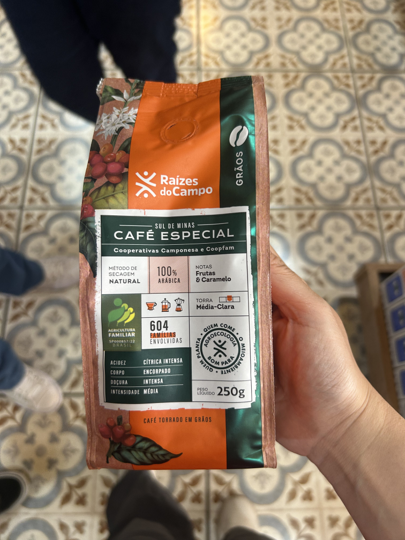
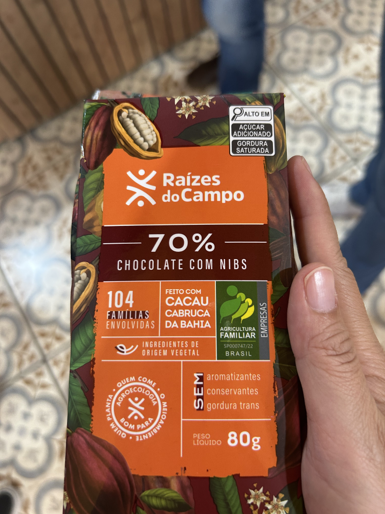
◉ Coffee and chocolate products from Raízes do Campo.
So far, Raízes do Campo has successfully entered some small community supermarkets. Staff frankly acknowledge that working with major supermarket chains is extremely difficult: their requirements are not only stringent, but they also push prices down sharply. Still, they have never given up trying, and products from a cooperative have even successfully made it into Walmart. This pragmatic attitude impressed me: get the business going first; strategies can be adjusted flexibly; everything is centred on scaling up and benefiting more farmers.
Production and Consumption
The Two-way Linked Ecosystem
When it comes to organic farming, we often entertain a romantic notion that smallholders naturally favour the model, are happy to cooperate and actively take part in communal affairs. But reality is exactly the opposite—in the early stages, mobilising farmers to join a cooperative production and sales system is extremely difficult; persuading them to switch to organic farming is equally fraught with resistance, and outsiders often overestimate smallholders’ willingness to participate.
A staff member revealed that in a settlement of 100 households, those who can be consistently mobilised to participate in the early stages are often only about ten activist households. The strategy they adopt is to “start with a pilot and expand”: first, they allow a minority to try it out and create a model that is “able to earn money, with reliable payment”. When other farmers see concrete returns and realise that this model truly works, they gradually broaden participation. Guiding farmers to shift to organic farming and standardise their products is an even more gradual, drawn-out process.
One of the regrets of this fieldwork was not being able to go to the settlements to observe the full production process on the ground, or to gain a deep understanding of their internal division of labour and profit-sharing mechanisms. However, Concentra made clear that most of the product profits are returned to the producers and allocated autonomously within the cooperative, and that the market performance of the products directly becomes the core driver motivating farmers to participate in production.
MST’s farm products are sold mainly through three channels, forming a diversified and stable channel matrix.
The first category is restaurants with local specialities. We visited one run by people from northern Minas Gerais. The owner’s relatives live in an MST settlement, and she herself had previously worked in the settlement’s kitchen. The restaurant specialises in home-style seasonal dishes, and most of the ingredients come from relatives’ crops or the settlement’s cooperative.
We dined right in the middle of the lunchtime rush, when the restaurant was full and business was booming. MST staff also took the opportunity to bring in farm products from other cooperatives for promotion, hoping that the restaurant would both use them and help sell them. The food we tasted that day had an authentic local Brazilian flavour: banana with rice and beans, accompanied by tomato and vegetable salad, pumpkin, and a dish of stir-fried cassava flour called Folofa; all the ingredients came from the settlements. This kind of channel relies on emotional and cultural identification to build connections; although it expands slowly, the foundation of trust is solid and the cooperative relationship is stable.
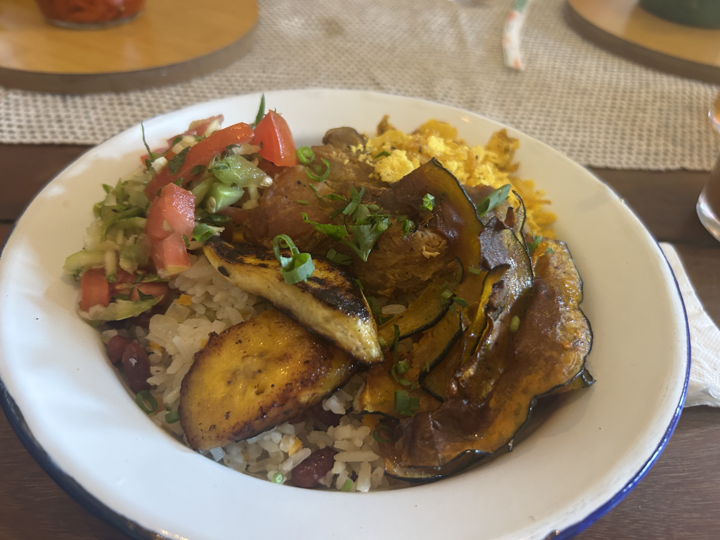
◉ All the ingredients in this Brazilian dish enjoyed at the restaurant come from MST settlements.
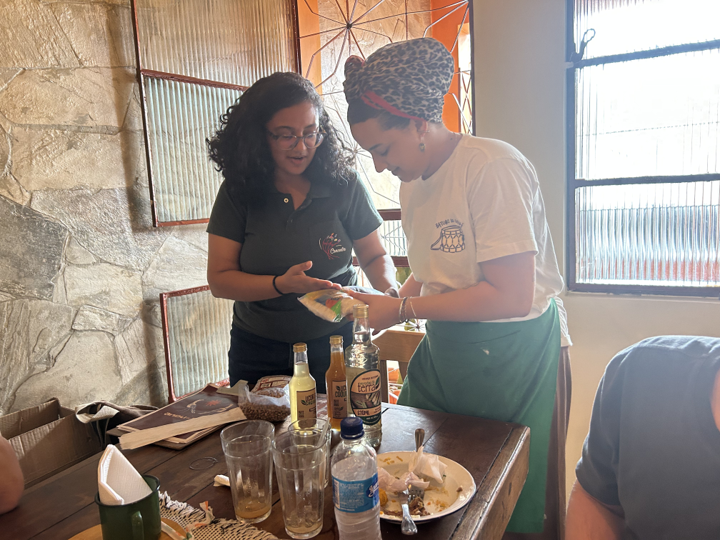
◉ MST members introduce products from affiliated cooperatives to a local restaurant.
The second category is niche stores specialising in organic and eco-friendly food. The store we visited is located in a relatively “progressive and open-minded” neighbourhood. MST products such as coffee beans, jams and vegetable sauces are placed for sale alongside other organic goods, with no dedicated shelf. To enter this type of store, a product’s price and quality must be competitive — after comparing on the spot, I found that MST products have a price advantage among comparable organic farm products. In addition, the MST network operates around 20 directly managed stores nationwide and has also set up an online sales platform, further broadening its retail channels.
The most surprising to me is the third channel — local government. A staff member explained that this warehouse in Belo Horizonte supplies fresh ingredients to the community kitchens in the PAA (Government Food Procurement Programme). These kitchens mainly serve waste pickers and other vulnerable urban groups, and can absorb about one tonne of farm produce every 15 days. Another important partner is the PNAE (National School Feeding Programme), which aims to improve the quality of school meals, encouraging the purchase of local family farming products and increasing the share of fresh ingredients (Brazil is also deeply troubled by the rampant proliferation of ultra-processed food).
The core requirements of these two national programmes align closely with the characteristics of MST’s farm products, forming a stable basis for cooperation. But the room for such cooperation is closely tied to the political environment: under the Lula government, policies were relatively relaxed, and MST received more political recognition and support; during Bolsonaro’s time in office, several forms of cooperation between the two were put on hold, MST’s space to operate was squeezed, and it was even regarded as a “hostile force”. Therefore, the team also frankly expressed concern: if right-wing forces in Brazil surge again in the future, their situation may once again become precarious.

◉ MST actively participates in two major Brazilian government procurement programmes.
Can China Copy the Playbook?
MST’s farm produce network is essentially a branch of its social movement as a whole. Decades of movement activity have given this network a solid “base”—including an ample talent pool, a unified set of shared ideas, a mature model of production organisation, heightened consumer consciousness, and limited political recognition.
This is a tightly interlocked system; without decades of struggle and accumulated educational experience, there would be no MST farm produce sales network to speak of. This practical experience is distinctly Brazilian and difficult to replicate directly. In other words, MST’s farm produce network may look like “selling goods”, but is in fact the outward manifestation of the movement’s achievements: the movement builds up the infrastructure, and the network converts that infrastructure into concrete sources of livelihood and development resources.
◉ In Brazilian niche stores specialising in organic and eco-friendly food, MST products are often seen.
Concentra’s operating model clearly reveals MST’s open and pragmatic attitude: it is not averse to cooperating with mainstream systems, nor does it cling to “a small market among one’s own people”. Contract farming, a multi-brand strategy, and even “omitting the MST logo” — a seemingly contradictory practice — are all fundamentally aimed at accessing wider sales channels, scaling up, and benefiting more farmers. At least at the present stage, they have not fallen into the predicament of “losing control after expanding and, in turn, exploiting workers”; on the contrary, Concentra has consistently stressed that, in distributing profits, the platform should give as much as possible to the production side, safeguarding smallholders’ interests.
Political support has played the role of a “stabiliser”: the government provides low-cost warehouse leases, government procurement delivers stable orders, and policy programmes open institutional pathways. This support gives the farm produce network firmer grounding to operate. With this security, sales expectations are clearer, payments are more reliable, farmers have a stronger incentive to participate, and the network as a whole can expand healthily. But in turn, this also makes the network dependent on the political climate — once the wind changes, room for development can shrink with it.
MST’s experience cannot simply be copied to China. The social environment, political system and organisational space we face are fundamentally different. In China, many ecological smallholders are forced to become “all-purpose farmers”: they must master cultivation techniques and sales skills; they must understand how logistics works and know the laws and regulations; they must build brands, run communities and expand channels. Every step is fraught with difficulty. When I was doing fieldwork in some rural areas in Guangdong, I witnessed this predicament with my own eyes — the farmers are not lacking in effort; structurally, they are forced to work alone, without collective support.
The core insight from MST’s practice may be: For smallholders to secure a foothold in the market, the key is not to keep pressuring individual farmers to master all “sales skills”, but to organisationally integrate functions such as sales, compliance, warehousing, processing and logistics, converting them into collective capacity and platform capacity — turning dispersed supply into supply that can be standardised and scaled for market access.
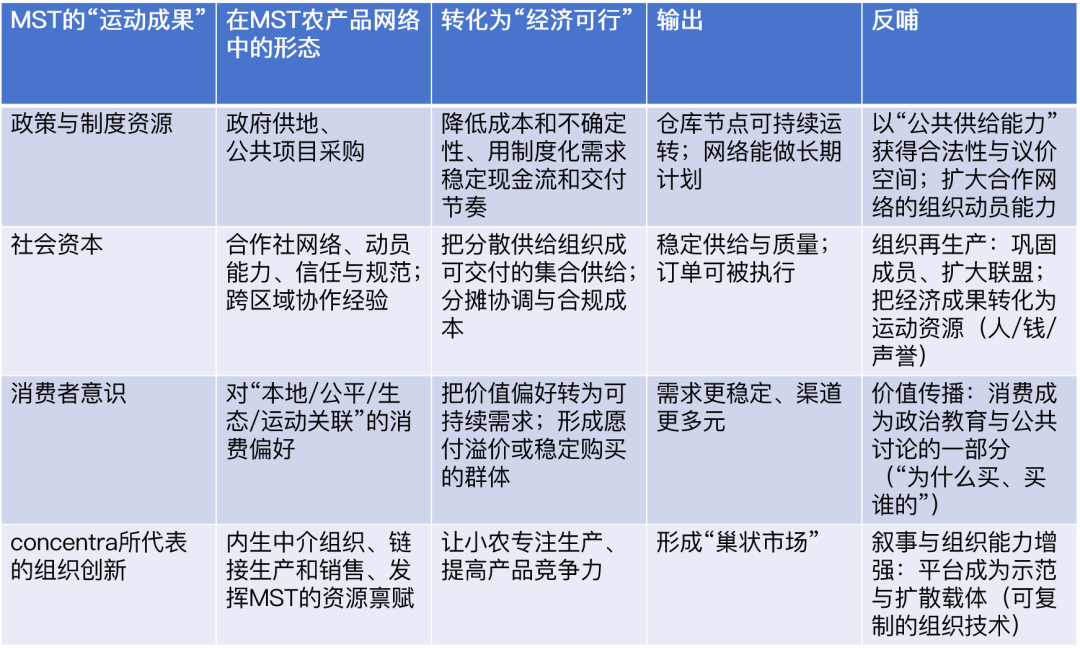
◉ MST makes full use of policy and institutional frameworks and social capital, mobilises consumers, and boldly innovates in its sales network, building a “production-distribution-resources-movement” cycle.
Ultimately, the distribution of organic produce has never been a purely market-driven issue; it also has a public dimension. It requires policy support, infrastructure, organisational capacity and consumer consciousness to work together. It is precisely through the convergence of these conditions that MST’s farm produce network has built the “production-distribution-resources-movement” cycle: when products sell, the organisational foundation of the settlements becomes stronger; the stronger the organisation, the more momentum MST’s values and mobilisation capacity gain for sustainable development. This may be the most valuable insight that this Brazilian experience offers to practitioners of organic farming in China.
– This is Foodthink’s 804th original article –

Foodthink
author
Zhong Shuru
Associate Professor at the School of Tourism, Sun Yat-sen University, with a PhD in Anthropology from Texas A&M University in the United States. Long engaged in research on wet-market culture and sustainable food systems. The monograph “China’s Wet Market” is forthcoming.
All images, unless otherwise noted, were photographed or produced by the author.
Edited by Tianle
Layout by Xiaoshu
▼
Click the images to read related articles.