Why I Recommend You Never Throw Away These Great Kitchen Items?

Foodthink Says
Is there a food-related item you’ve used for many years that’s still by your side? A while back, Foodthink invited readers to share their stories of “Long-termism in the Kitchen.”
When an object is passed from one generation to the next, it becomes more than just a tool. In the clear marks of its use, we see a family’s life and memories.
Notably, kettles, rice cookers and other important modern kitchen appliances have all disappeared from the long-termism leaderboard.
By contrast, pots and knives have become the perennial champions. Pots appear most often, cast-iron pots in particular. No matter how many times you move house, the pot always comes along. Judging by practicality and durability alone, the cast-iron pot truly is the embodiment of long-termism in the kitchen.
Of course, the most remarkable example of “long-termism” in this collection is the one we’ve saved for last — you simply must see it!
With this collection, we hoped readers would take notice of the old items in their homes, and that in an age of “break it, replace it,” these objects might be mended, repaired and carried on in use. Thank you to every reader who took part — your contributions have let us see the everyday reality of people living and cooking with such care, and have allowed us to touch the stories behind each family.
Pot
Yuyang
I’ve had a steamer pot in our family for at least ten years now. It’s hard to say exactly when I started using it — as far as I can recall, it has always been in the kitchen. I’m very familiar with the burn marks that have accumulated over all those years, and I’m confident that no matter where I am, I’d recognise it at a glance as the pot from our home.
This pot originally belonged to my mum and she used it for cooking. After I graduated, got married, and moved out on my own, she gave it to me. The bottom of the pot is completely blackened by fire and smoke — you can’t tell how many meals must have been cooked in it for it to end up looking like that.
I’ve already moved house several times with this pot, and the next time should be the last. Every time I use it to heat up rice, make soup, or steam corn and egg custard, it’s quick and heats everything through thoroughly. Compared to a wok, it always gives me a sense of ease — once all the prep work is done, you just need to sit back and calmly wait for the food to steam.
Once I was in a rush to cook and the wok was busy with another dish, so I tried making jiangmu ya (a dish of duck braised with ginger) in the steamer pot. It all burned, haha. I suppose a steamer pot is a steamer pot and a wok is a wok — you can’t use a steamer pot as a wok.
The base is particularly thick and the handles are very sturdy — I should be able to keep using it for many more years. If an old item still works, I’ll keep using it. Unless it breaks, I don’t think there’s any reason you must replace an old item. It reminds me of the recent film Good Things, which shows a mother throwing out old belongings as a way of severing ties with the past, thereby ushering in new growth. Growth is necessary, but the ability to manage one’s belongings is a wonderful quality that should not be discarded. It means a person is capable of taking responsibility for their things and their life. When progressivism envisions a progressive way of living, it should start from the small details of everyday life like this, not from abstract ideas. Keeping an old item — saving resources, protecting the environment — is a very progressive thing to do, and we should be proud of it.
Deep Blue
I’ve had my cast-iron wok for over a decade now, and ever since I started using it, none of my other pots compare. I bought one with two handles, and it’s big enough that I can stir-fry with plenty of ingredients with ease. The thickness of the pan means it holds heat remarkably well once warmed up — sautéing, boiling, pan-frying, deep-frying, I can do it all with confidence. Quick stir-frying keeps vegetables a vibrant green with their flavour intact, and for slow-cooking clay pot rice, you get that wonderful crispy rice crust at the bottom.
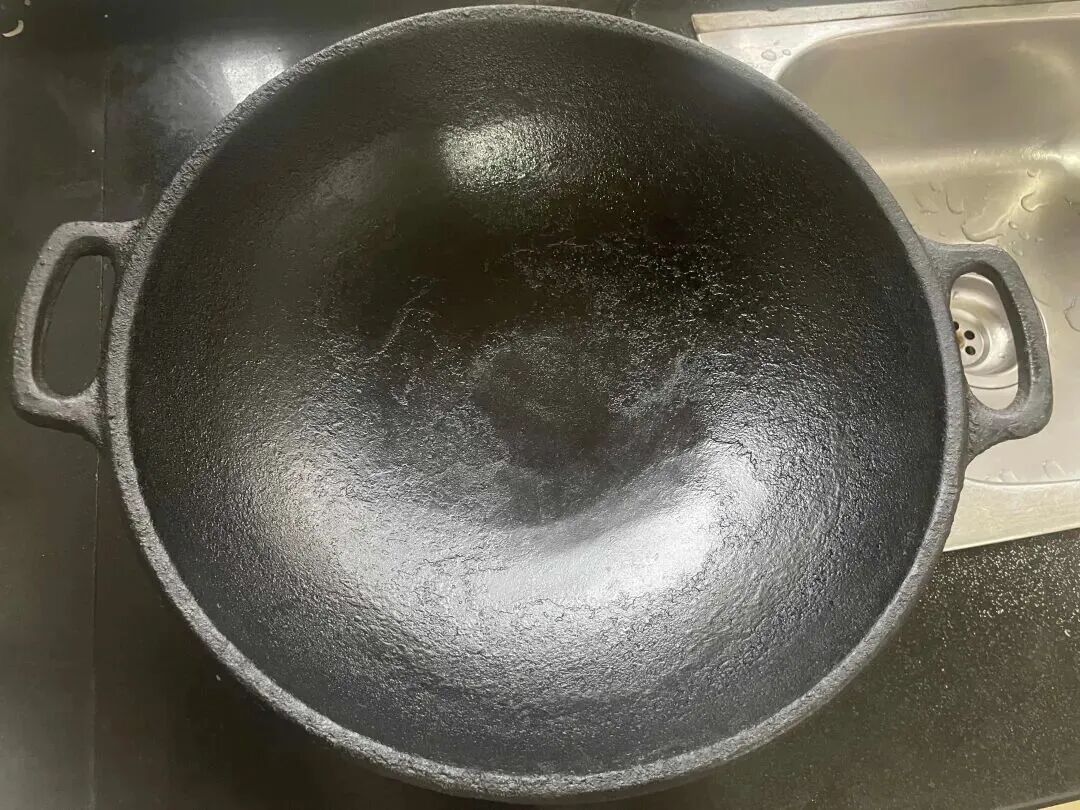
After more than a decade of use, the body of the pot is black, glossy, and beautifully seasoned with oil. My friends and I joke that if we ever had to flee a famine, we’d leave everything behind and just carry the pot on our backs — just get some clean water anywhere and make a soup, and it would still taste amazing. All those years of searing and simmering with every kind of ingredient have infused the pot with all sorts of wonderful flavours of its own.

Yvette
Back in the day, I loved steak so much that I bought a cast-iron wok. It cost around 500 yuan. I take it with me every time I move. I went from a complete novice who didn’t know how to season a wok to now having this one well cared for — and the wok has witnessed the progress of my cooking skills. During the period when I was constantly ordering takeout, it was locked away in a cupboard for about a year without being used. Last year I dug it back out and started using it again — it felt like running into an old friend.
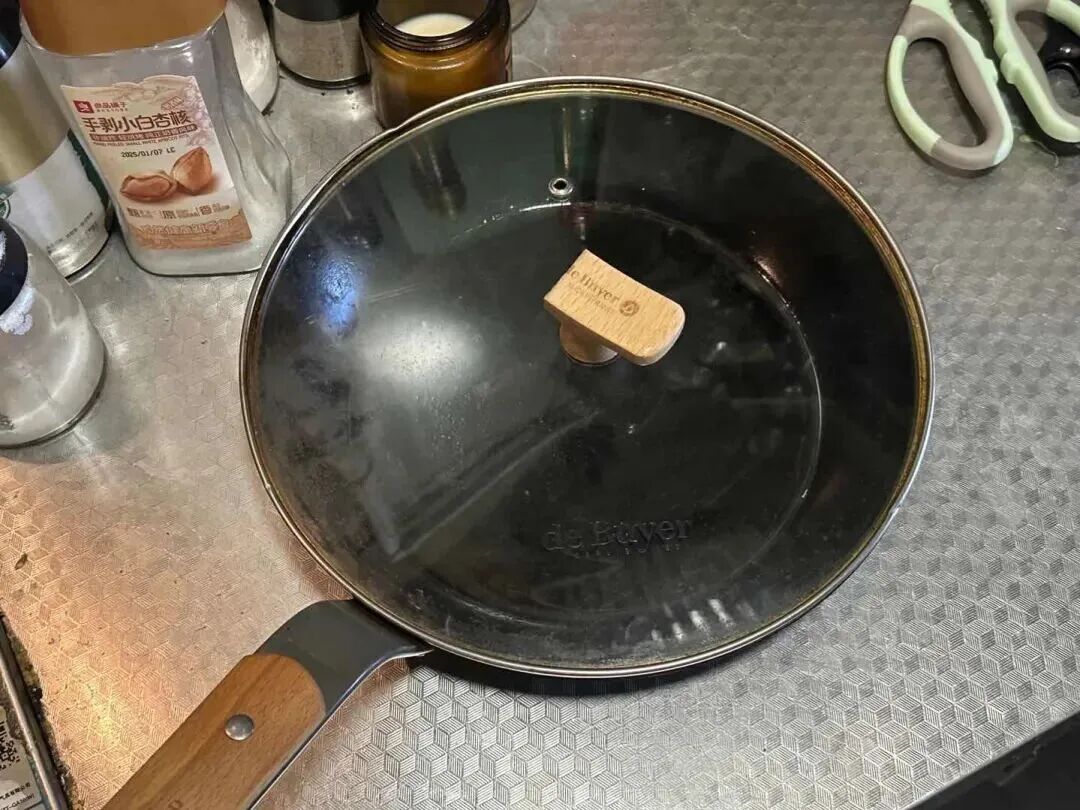
I’m also curious — which kitchen tools simply can’t keep up with long-termism? I know about non-stick pans, but what else? Are there things that should be thrown out on a regular basis?
Zhu Yijuan
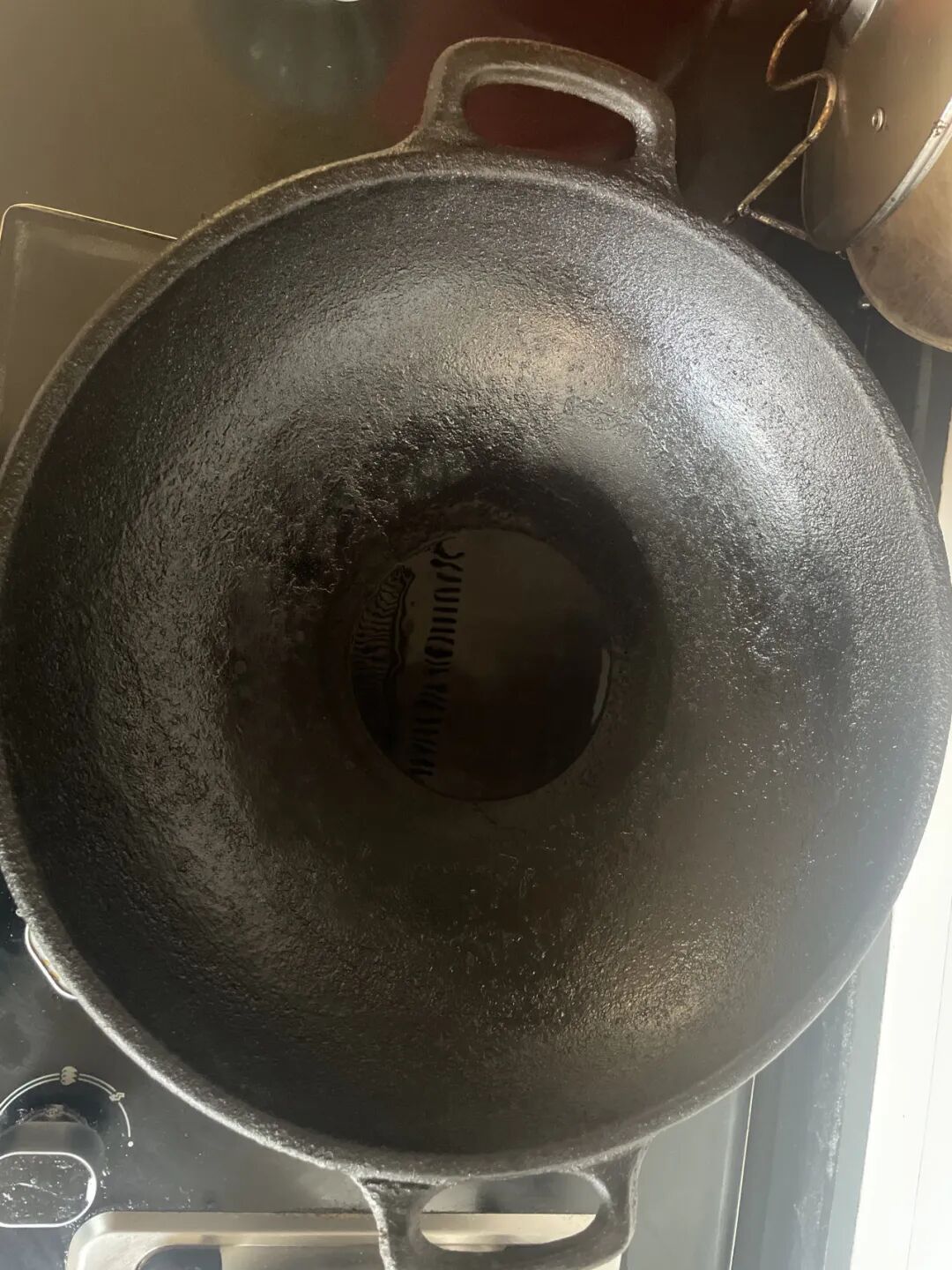
I checked Taobao and found that my cast-iron wok was purchased on 26 February 2013 — thirteen years! It’s the piece of cookware I use most every day, three meals a day, through all four seasons. At the time I bought two identical cast-iron woks; my daughter was in secondary school then. I kept one in storage, and after she got married, that one went with her to her family’s home. Every time I visit my daughter, I still use my own cast-iron wok.
Que Yiyi
I have a Jianshui purple stoneware steam pot, which my mum probably bought when she visited Jianshui for a trip. She says it’s been over thirty years old. I’ve moved house several times growing up, and it has come along with us every single time. Last year, my mum brought it to Japan for me. It has never been replaced because steam-pot chicken can only be made in this pot 😂
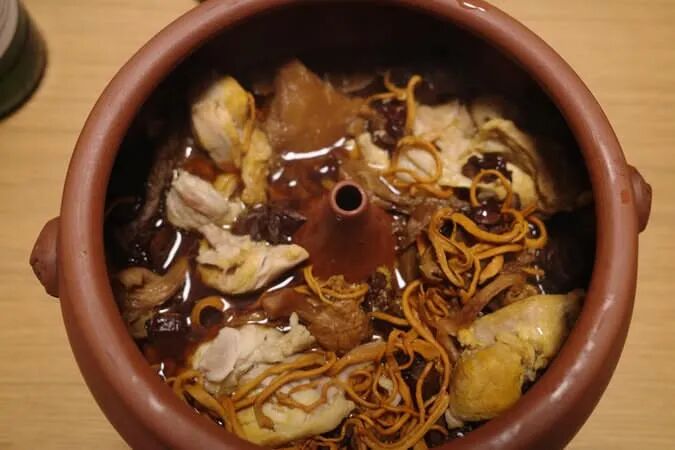
During the pandemic, one day I suddenly craved steam-pot chicken and mentioned it to my mum. After the pandemic, when she and my dad came to visit me again, she brought our family’s steam pot with her to give to me. Steam-pot chicken is a renowned dish of southern Yunnan, and it also appears in the writings of Old Master Wang Zengqi, who described eating it as a way to cultivate vital energy. It was also a dish that always appeared at banquets whenever I went to one as a child. The chicken is tender and the broth is delicious. Having a steam pot in a Yunnan home is probably as ordinary as having a takoyaki pan in an Osaka household. Last summer, when Mum took the steam pot out of her suitcase, she told me this pot must be about the same age as you are. I was stunned — so it had been with us for that long.
Anonymous
I have a soup pot. Since I don’t eat much meat these days, I’ve stopped making soup and now use it for pickling: in winter I pickle Chinese cabbage and green cabbage, in summer I pickle watermelon rind. I’ve been using it for many years.
Actually, I keep almost all my kitchen tools. The key is to try not to buy appliances — I don’t have a rice cooker, no microwave, no juicer, no blender. Whatever I want to cook, I manage with just one soup pot, one frying pan, and one mortar.
Enamelware
Because resources were relatively scarce and consumer choices limited, enamelware became one of the most common household items in Chinese homes in the late 1990s. Compared with other materials, enamel pieces are sturdy, durable, and resistant to rust — truly “mend and patch it for three more years.” In this collection, quite a few readers mentioned the enamel items in their homes. What they represent is not just a shared memory of that era, but also an attitude towards objects that is profoundly different from today’s.
Heidi
My family has had this enamel basin since I was little — it might be about forty years old. It was at our home in Shiyan before, and now it’s at our home in Wuhan.
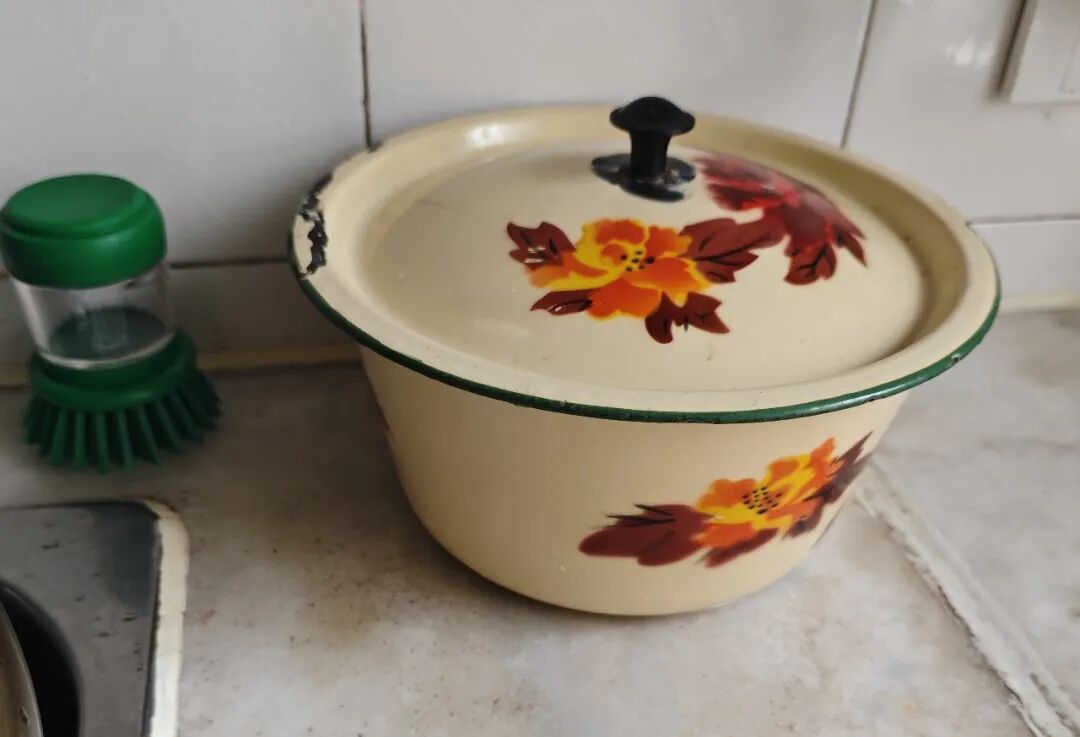
As I recall, it was originally used for serving soup. After we moved to Wuhan, it sat unused for a long time, tucked away to one side. Later we started using it to hold water, but gradually some small rust spots appeared on the inside, so now it’s used for the murkier second rinse, which we use to water the plants on the windowsill.
My feelings towards this pot have shifted over time. For a while I wanted to throw it away because I thought the pattern was so tacky, but slowly I started to find it more and more appealing.
Shi Keke
I have an enamel rice jar made in 1983. I picked it up on Xianyu for 12 yuan and have been using it for two years now. I have no idea how long its previous owner used it or how long it sat idle. Ever since I bought it, I’ve stored all my rice and grains in it — no more weevils. When I moved from Tianjin to Chengdu, I brought the jar along.
Before, our rice at home had weevils — the bugs would travel back and forth between different grains, and it drove me crazy. Then I bought this jar, put all the rice in it, and the weevils stopped for good. A lightweight enamel rice jar — far more to my liking than ceramic.
My parents’ home also has the same style of enamel jar that my grandma brought over. In winter they used to store vegetables in it out in the yard. When they moved, they didn’t take it with them. I’ve been really worried about it — I hope it finds an owner who appreciates it just as much.
The Flintstones
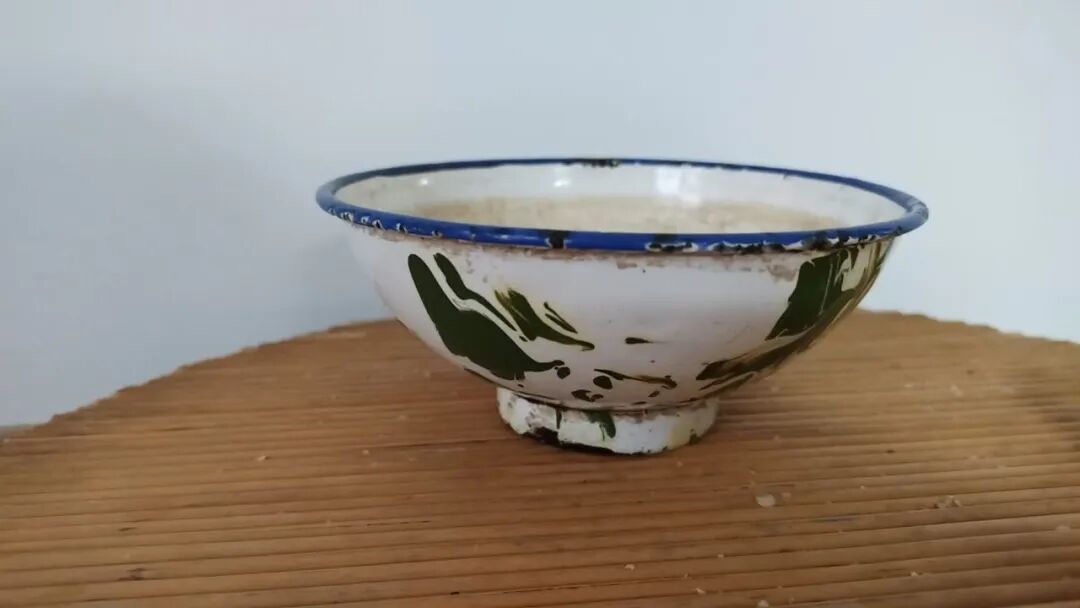
As far back as I can remember, there has been a blue-rimmed enamel bowl in our home. I’ve been told that as a small child I loved wearing the bowl as a hat and broke so many that one was specifically set aside for me. When I was little I used it to hold rice and dishes; as I grew older I used it for porridge; and then, once we got a microwave, only just-off-the-stove hot porridge could be served in it — cold porridge went into glass bowls and into the microwave. Now it sits in the cupboard with a whole bunch of “microwave glass cookware,” in a kind of semi-retired state. In my memory it has always looked old — the scratches, the chipped edges — all the same as they are now. The only part that’s a bit hazy in my memory is the pattern on its side, like flowing water or drifting clouds. As a child I always imagined it was a fairy mountain or the Celestial River from Journey to the West. I had always assumed it was blue, but when I went to look just now I found it was actually green. Looking more closely, I discovered there is even a faded “a certain ceramics factory” logo on the bottom of the bowl — I never expected an old piece like this to still hold new surprises.
Student Liu
The enamel cup the school handed out during primary school military training — it’s been with me for 33 years. I used this cup for washing and drinking water during the training. Most of my classmates just threw theirs away once it ended, but I’ve kept mine right up to now. Soaking beans, holding soy milk, catching water, scooping rice, digging into noodles — it works perfectly for all of it. Even though there are similar enamel cups online now, none of them match it in material or feel.
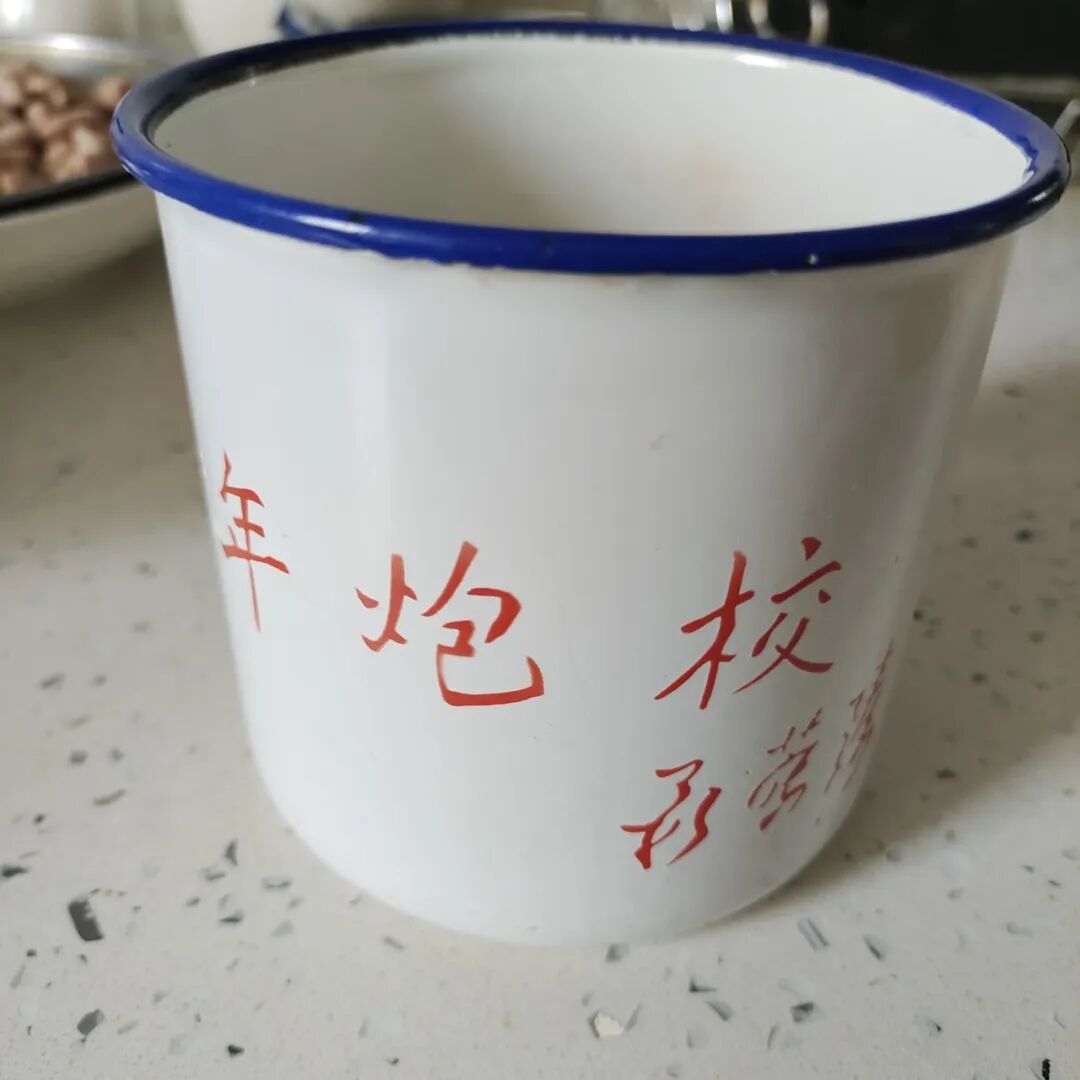
Once I went camping and my friends all had really nice gear — you could tell it was expensive at a glance. I brought my enamel cup. It was cold, and I poured myself a cup of hot tea and held it in my hands — so warm 😍
Tanzi
When Xuanlin first left Beijing in 2016, she left me quite a few things. The one exception was a red enamel pot. She could see how much I loved it and said to me: “Tanzi, I can’t give you this one — it’s my absolute favourite. It’s so heavy, and I carried it all the way back from Europe. On top of that, it was expensive; I really had to make up my mind to buy it.”
Hearing her say that, I felt not a shred of disappointment — just a sense that I had excellent taste.
At the end of 2019, when she returned to Beijing again, fate brought us back together as colleagues. I saw that red enamel pot once more. Every morning the kitchen would fill with a warm aroma — it was Xuanlin brewing brown sugar ginger water.
Xuanlin can be careless, too. That day, what drifted out of the kitchen wasn’t a sweet fragrance but a burnt smell. She had forgotten to turn off the heat and scorched the pot.
Brown sugar, ginger, jujubes… all of it had turned into a black residue stuck to the bottom of the pot. Xuanlin soaked it, scrubbed with steel wool, but there was still a layer of black skin on the bottom. “Tanzi, this pot is beyond saving. It’s been dry-burned several times now — it always sticks. Why does this always happen to me?”
She was really hard on herself about her beloved pot; the frustration had reached something like a breaking point. I spoke up. “Stop scrubbing — just give it to me. I’ll take it home and work on it slowly. I’m not fussy, and it should still be usable.”
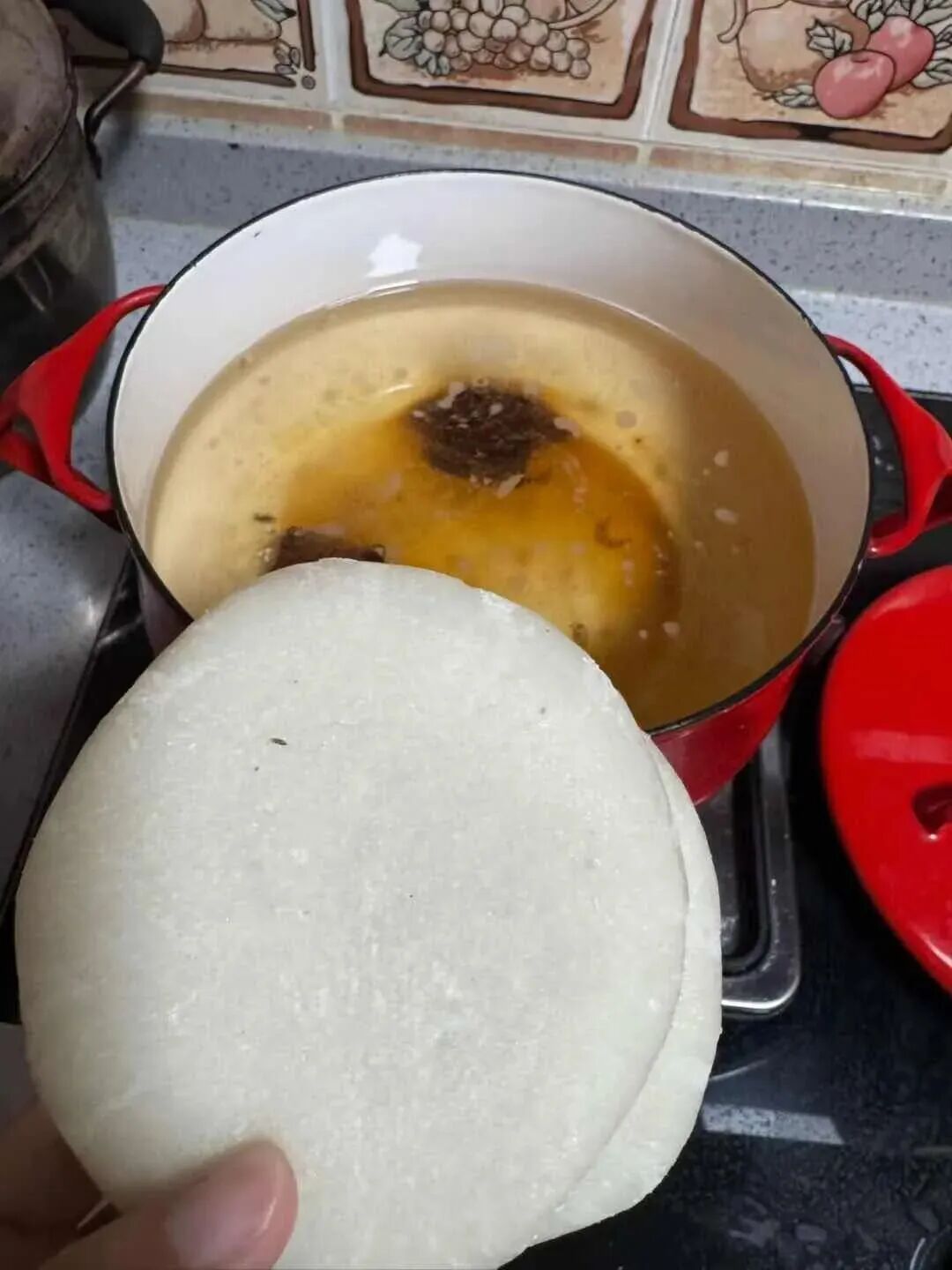
Xuanlin turned to look at me and said, “Alright, Tanzi — then consider it an early birthday present for you.” I was so happy. That way, no one had to keep feeling sorry about it. These days I use the pot every day to make brown sugar ginger water,
This pot is wonderfully practical. Thank you, Xuanlin — thank you for giving me such a lovely gift.
Knife
Yanqi
This kitchen knife was bought at the market. I have had it for almost thirty years now — I was already using it when I started primary school. The blade is light but sharp, and it works beautifully for both slicing and mincing meat. I started cooking in primary school, also with this knife. It has been with me through so many dishes. It has never changed owners, but it has come along with us through many house moves. I have always loved using it. It is truly durable — never needed a single repair. You hardly see one-piece cast-iron knives like this on the market anymore, where the blade and handle are forged as one piece, and it is especially light. Most knives these days have a stainless-steel blade with a plastic handle and are considerably heavier overall. It is a rare thing that my kitchen knife barely rusts at all.
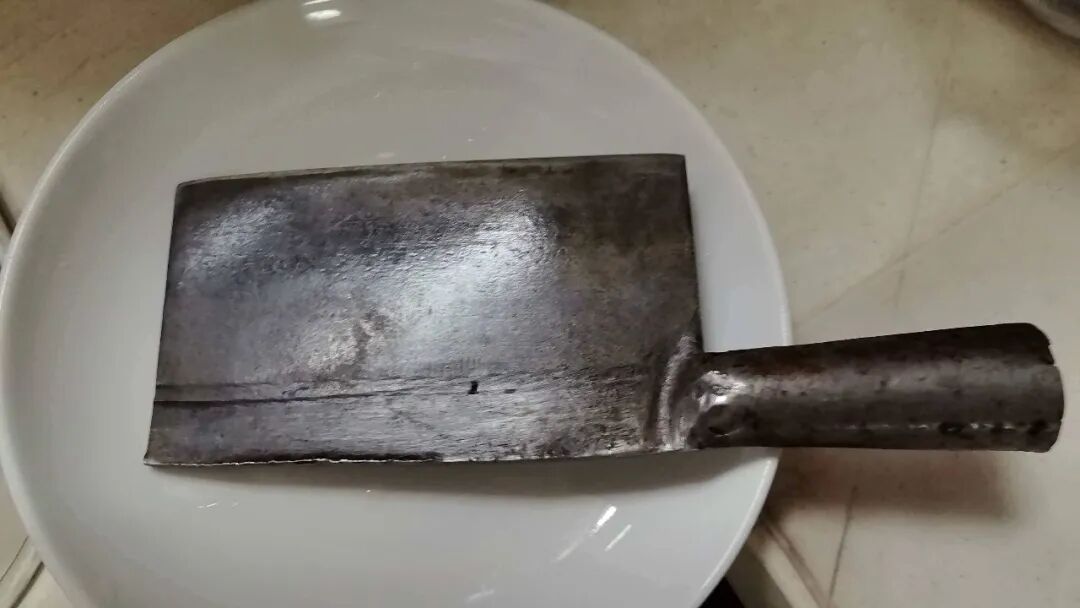
I remember when I was little, I was really afraid of using a knife. I used to hang around the kitchen helping out, and watching Dad chop vegetables with this knife was so cool — I wanted to try it myself. Eventually I just got used to it.
Little Things, Big Roles
Yelüsu
The oil can in my home now has been in use for seven or eight years. I bought it at the market. In my family, the oil can is a fixed role, not a specific object.
The oil can isn’t for storing fresh oil; it’s for the old oil. In our area, every household has the custom of going through the oil once before the New Year — usually frying crispy meatballs, plus batter-coated carp pieces and hairtail strips. The leftover clear oil can’t be finished in one or two meals, let alone when there’s the New Year rule against lighting the stove. Over the years, who knows how many oil cans have been smashed, but this one always gets a good half-drink of oil around the New Year, and then slowly empties out again.
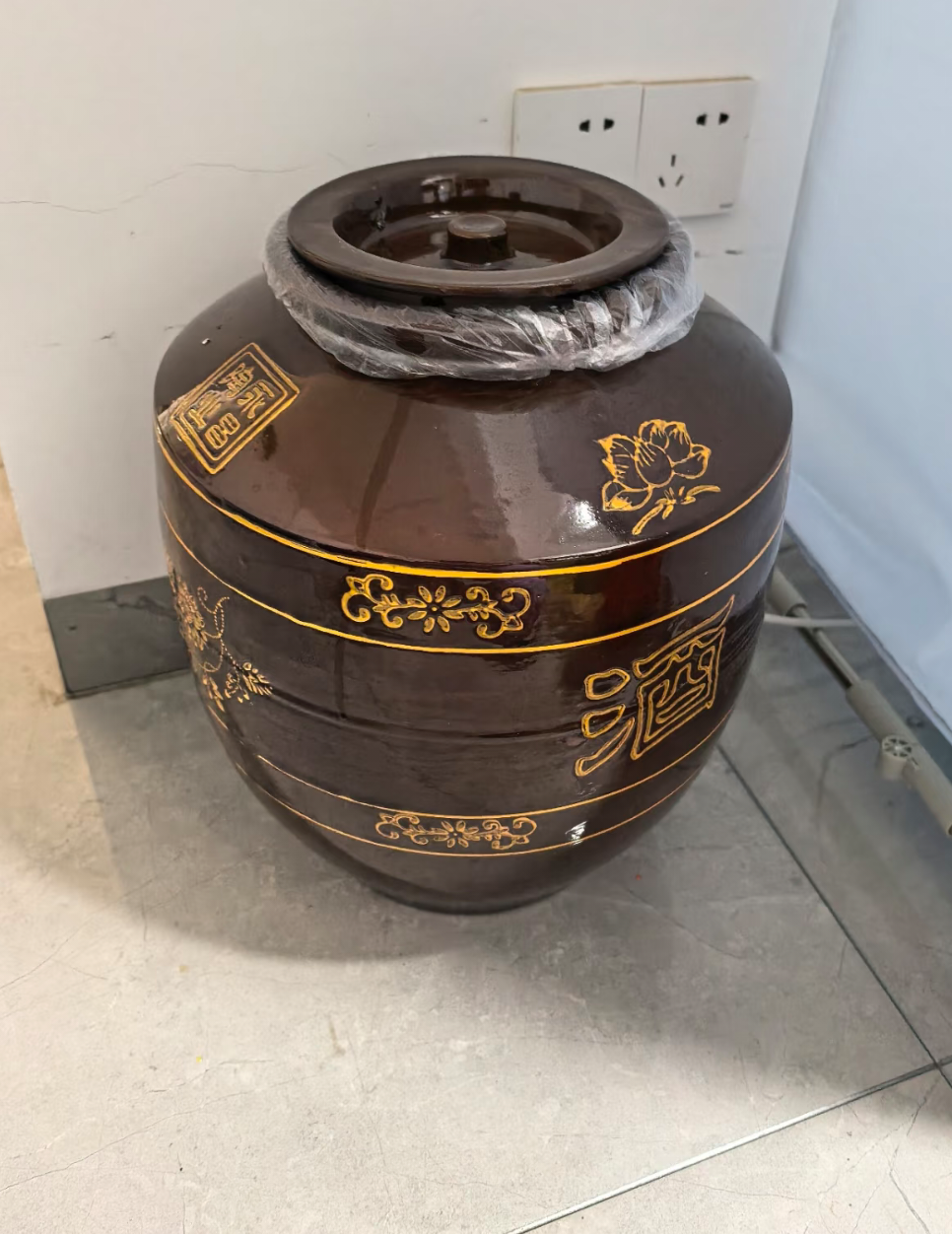
The garlic mortar is also, more or less, connected to the New Year. Southerners eating dumplings like to dip them in soy sauce, while Northerners’ vinegar bowl always needs garlic paste and sesame oil as well. The dumplings line up and take a turn rolling through it, and before I know it I’ve eaten thirty. The garlic muddler is often lost, but the mortar itself is remarkably solid.
Zhe Zeng
This soup spoon has been in use ever since I was a child — over thirty-five years now. It came to our family when my father and my uncle divided the household. Seeing it always brings back fragments of memories from eating with my family. Most of the time it’s used for lettuce soup, noodle broth, all kinds of soups. It connects the taste of home, connects people to each other, connects people to their food. I hope to keep using it for years to come.
Orange
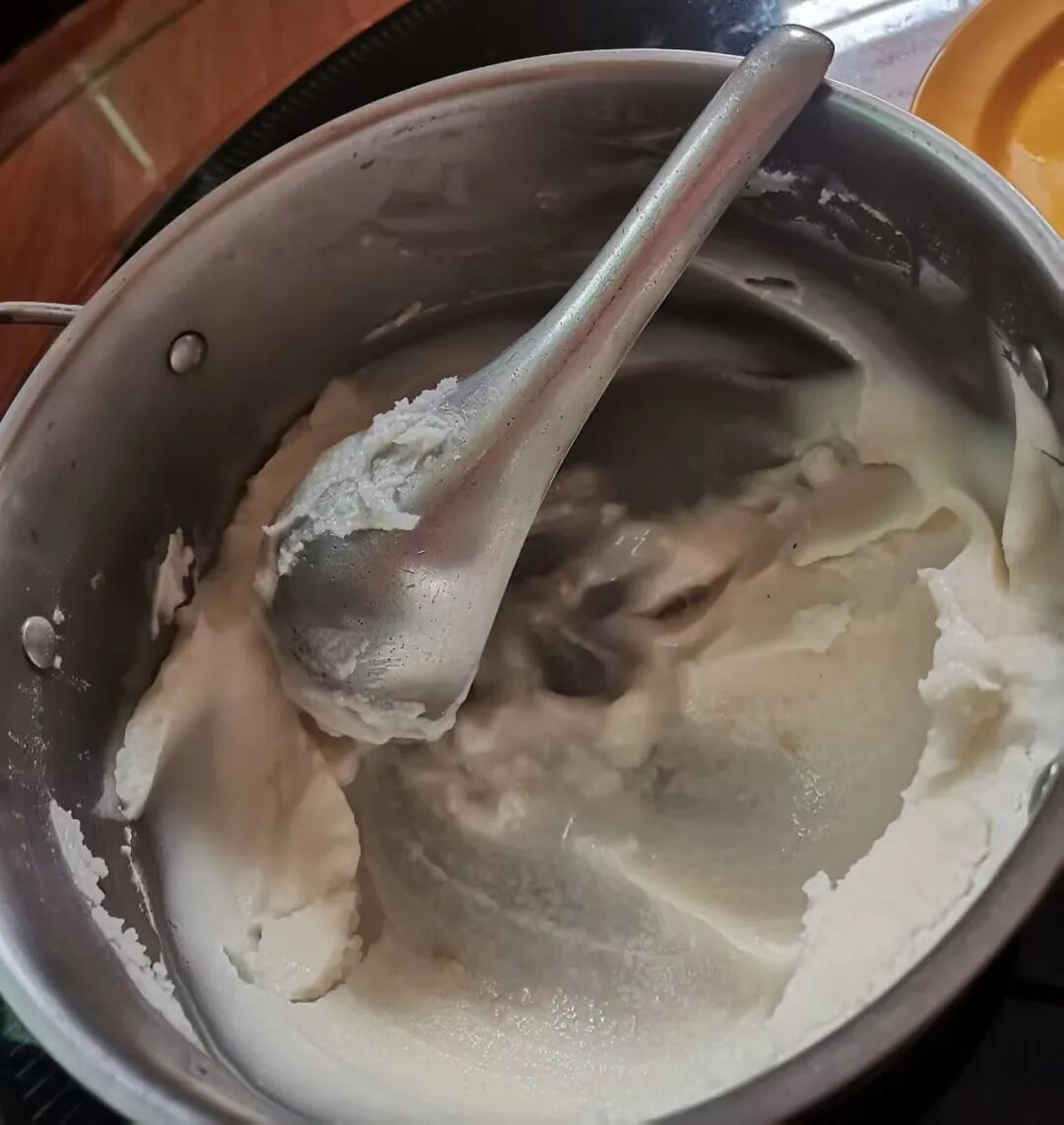
My family has a small object made of bone for scooping dumpling filling. I just looked it up — it’s called a beef bone dumpling filling spoon. Whenever we need to make dumplings, it’s guaranteed to appear on the table. It’s flat, with one wide end and one narrow end. As a child I was curious about what it was, and when I heard it was made from beef bone, I assumed — just like a sheep knuckle, a kind of homemade toy — that it was simply a natural shape. So for a while I thought cows actually had a bone that grew like that. It wasn’t until later that I found out it had been ground down.
We’ve been using it since my grandmother’s time. Later it was passed to my mother, and she was using it when she first learned to make dumplings. By the time I started learning, it was still the one I used. It must be around thirty years now.
I’m not used to it, so I only use it occasionally, but every time we make dumplings, it’s there. I think it’s far more practical than a spoon. Compared to a regular spoon, this “spoon” is flat, so it’s less likely to leave filling stuck to it. Sure enough, every shape has its reason for being.
It “migrates” wherever we make dumplings, so it’s also an important member of the family. We’ve gotten so used to it, and there are wonderful memories attached. No repairs so far — I hope it can stay with us for a long time yet.
Chen Ziyu
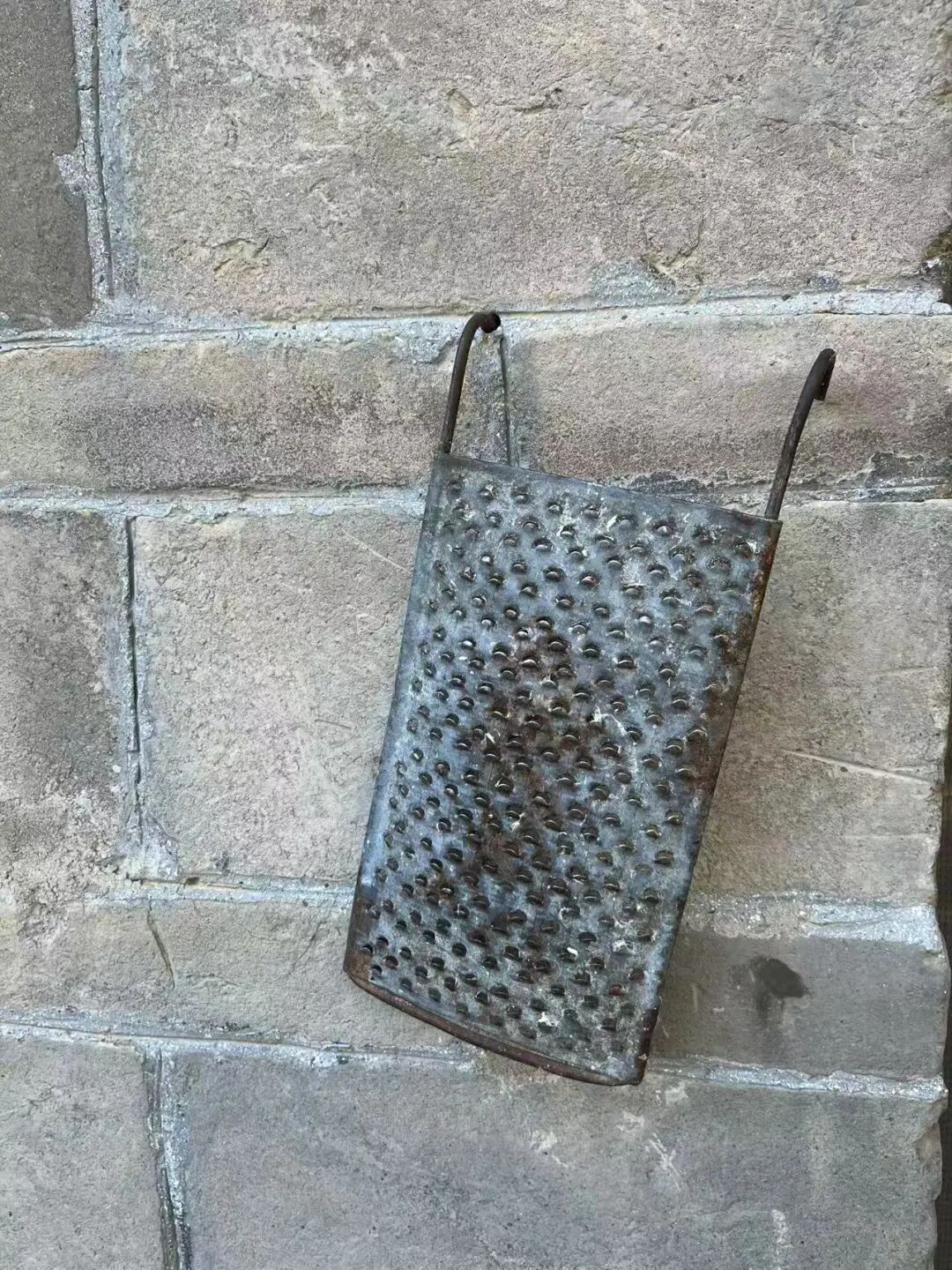
Does anyone still know what this is? We call it a cazi — a flat grater for chunky vegetables. You use it to grate potatoes, radishes, cucumbers and the like into smooth, even strips or shreds. This cazi is at least thirty years old; we’ve been using it since my grandmother’s generation. Strangely enough, whenever I use it to grate something I always manage to scrape my hand and draw blood, but the older generation never makes that mistake. Even though there are plastic and 304 stainless steel graters now, our family still reaches for this old one — just like there are cleaning cloths these days, but at home we still use loofah sponges to wash the dishes.
There are quite a few old items from the countryside, like the basin for kneading dough, and the flat tray we use for dumplings every winter — it’s made from sorghum stalks and looks a bit like a little bamboo raft. The finished dumplings are laid out in neat rows on top of it. When a lot of people are making dumplings together it’s such a lively scene. We’re still using it to this day.
Saoqie
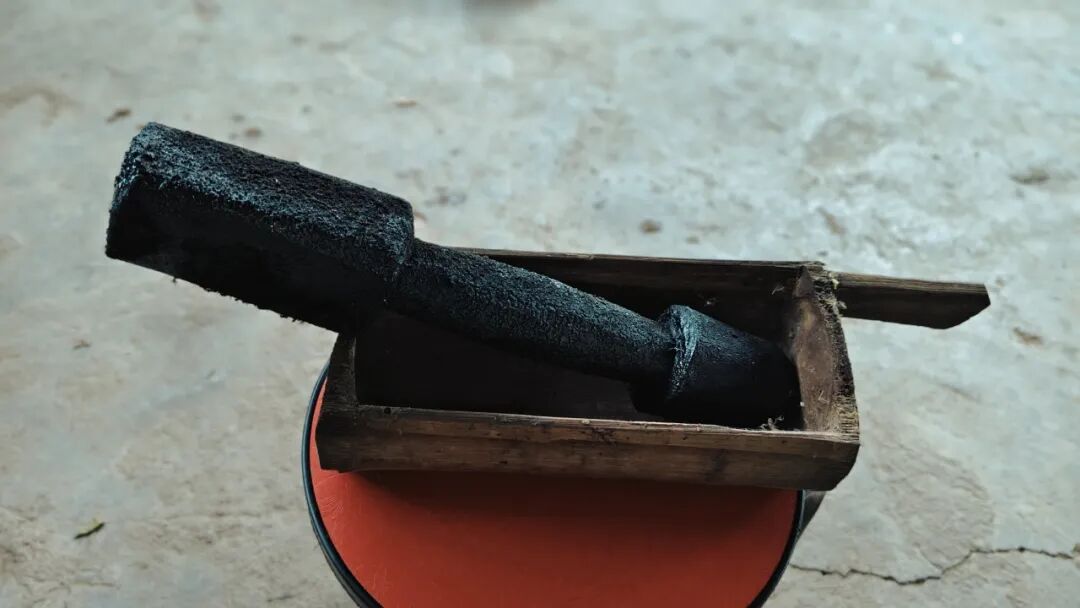
The first old item is a pounding tool — at least thirty years old. Among the Jino people, everything can be pounded. You can pound Nami, pound eggplant, or pound cooked food. For things like meat or dried meat, they’re cooked first and then pounded; for cold-tossed dishes and the like, you pound them straight up.
The second item is a bowl. When we go up the mountain to work, we put our rice in it. Because it’s woven from bamboo, it’s light, thin, and breathable, so the rice doesn’t easily go sour.
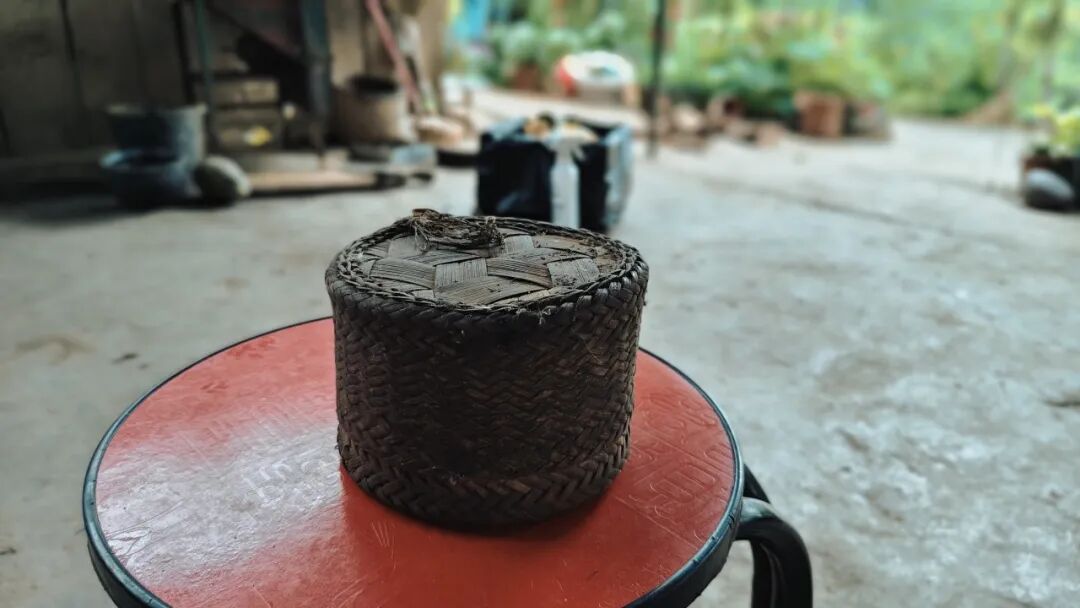
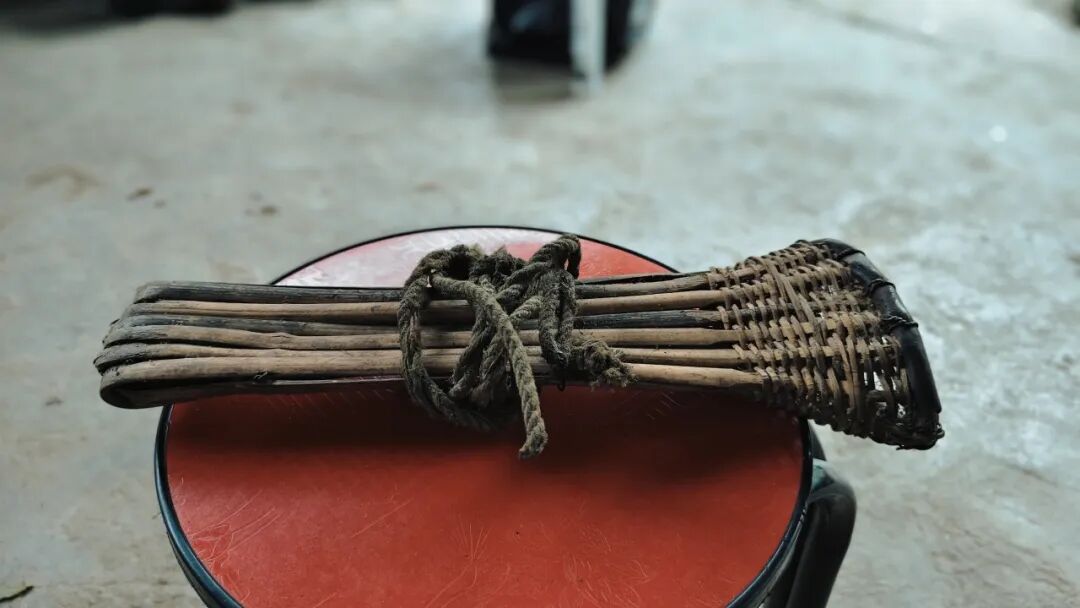
The third item is a knife sheath. Compared to the first two, it hasn’t been in use as long, but for me it’s still an old item — I’ve had it for seven or eight years. Every time I go into the rainforest, I use it to tuck the iron knife at my waist. Why do I call it a kitchen item? Because up on the mountain we can use it to cut down banana trees, and then use the banana leaves to make bao shao! My motto is: In the rainforest, everything can be bao shao! Bao shao means wrapping food in freshly picked banana leaves and grilling it over a fire — there’s bao shao pork, bao shao eggplant, bao shao small fish, and so on. The banana leaves can be used for bao shao, and when having a field meal they double as a tablecloth. The white tender core inside the banana pseudostem tastes astringent but can quench your thirst, and banana flowers can be stir-fried with mince. So you see, this iron knife and its sheath may not look like they have much to do with cooking, but they can certainly be counted as items in our Jino kitchen.
Yuyang
In rural Northeast China, there’s a type of dining table called a “stand-against-the-wall.” Unlike the fixed dining tables that are popular nowadays, it’s foldable — you only set it up when you need it, and otherwise it’s tucked flat against the wall, taking up no space at all, hence the name. What sets it apart from modern foldable tables is that it’s entirely joined together with wooden structures, using no iron nails or metal fasteners. The tabletop isn’t supported by two pairs of crossed legs but by three: one leg is fully fixed, one leg is a central pivot, and the third is a moving leg. Every time you set the table, the moving leg swings open around the central pivot like a compass, then you find a slot underneath the tabletop and lock it in place. And that’s the table set up. Even now, looking back, the whole process still has an indescribable elegance to it.
So many children from the Northeast mention the “stand-against-the-wall” with a tone of nostalgia and warmth, because whenever it was unfolded, it was always a time when people were gathered together — a family eating, drinking, making dumplings, writing Spring Festival couplets, playing cards, or a few kids getting together after school to do homework. It stands there so quietly, obedient, yet as if alive, accompanying and listening to the life of the family it belongs to. When it’s unfolded, that golden tabletop seems so vast, having carried so much — so many plates of food, so many bowls of rice, so many cups of wine, so many words. Once, that golden tabletop was, to me, like an eternal world. Then one day I discovered that outside my hometown there was a much bigger, ever-shifting world. At that point, that table, which would never be set up again, leaning against the wall, seemed so, so small. But the eternal attachment to people and things that it nurtured in me always makes me feel that, even after we’ve left, it’s still standing there in this enormous world, lonely, waiting for something.
Long-Termism, Alive
Tin Duck
The pickle mother brine that came from my hometown was scooped out by my mother from the pickle jar back in our family home in Wushan, Chongqing, ten years ago, bottled up, and brought to my home in Chengdu. The mother brine has been in continuous use in Wushan — a conservative estimate would put it at thirty years, and a less conservative one would suggest it has been cycling since my grandmother’s time.
My first memory of the pickle mother brine is from my childhood home in the old town of Wushan. Then the Three Gorges reservoir was filled, and the entire old town was submerged. The whole county moved up the hill, and the pickle jar went with it. After that, my mother brought it from our hometown to Chengdu. Later I also shared the mother brine with friends in Hangzhou, and once their brine had matured, they passed some on to friends in Shanghai. Then I ran pickle workshops in different cities, and the mother brine began spreading across the country.
There was once a major crisis. One time I opened the lid and picked out some pickles for a stir-fry but forgot to close it, leaving the brine exposed to the air for an entire day. By the time I noticed, the surface was covered in a very thick layer of white film. I was scared out of my mind. I carefully skimmed off all the white film, added fresh vegetables, salt, and baijiu, and didn’t open the jar for a month. When I opened it again, everything had returned to how it was before. The vitality of the mother brine is as tenacious as the old folks themselves.
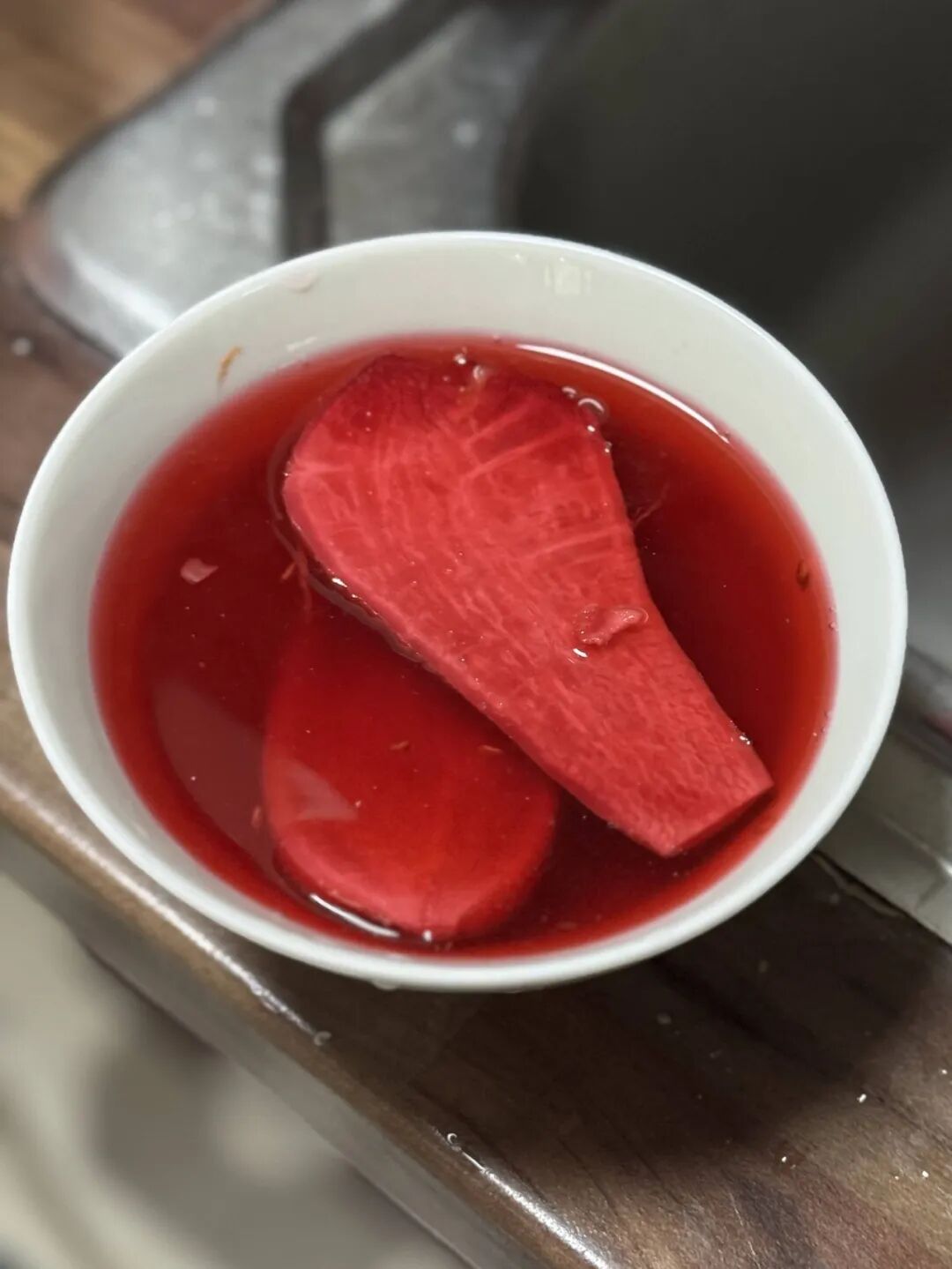
In many parts of Sichuan and Chongqing, when people make pickles, they generally just scoop out the pickled vegetables to eat. Our family has always used the pickle brine in cooking — in some dishes it stands in for vinegar. One small dish my mother used to make when I was growing up is called numbingly spicy broad beans: dried broad beans are dry-toasted on low heat in the wok, ginger, garlic, and green Sichuan peppercorns are crushed in a stone mortar, soy sauce is added, then a spoonful of pickle brine to make the sauce. The fragrant broad beans soak up the sauce until they’re full — all numbing, fragrant, sour, and refreshing — perfect for a summer when you can’t bring yourself to eat. I only found out later that this is a classic Sichuan dish. I have no idea where my mother learned it, or why she so ingeniously swapped the vinegar for pickle brine. It really is a mysterious family recipe. Last Chinese New Year, back home, I mentioned the dish to my mother, and she made it again. Still tastes exactly like it did when I was a child.
Sha Yu
Sister Chicken came from an egg — I can’t remember how many years ago. The year lost all meaning the moment it came to remembering the age of a being whose age simply cannot be pinned down.
I’m told Sister Chicken has lived in a seedling nursery, a poultry farm, a farmstead, an orchard, then at a friend of my parents’ home whose name I can’t remember, and after that, in the boot of our car, and finally in our home.
We perhaps always expect that behind the narrative of “long-termism” or similar life-philosophy stories there must be something romantic, or at least tender — but the only reason Sister Chicken has endured in our home is that she can overdraft her own lifespan to trade for eggs, and that is simply sad, or at least a little oppressive. The protagonist of the memory is imprisoned in the corner of the vegetable patch, her feet tethered to the root system of the South African leaf — she always liked to rummage around, peck, and defecate all over the garden, so my mother tied her up. Did it work? Obviously. Most of the time she could only stay within a small circle of 100 cm around the South African leaf. Only on rare exceptions could she go defecating everywhere again and be roundly scolded by humans. Until once, when the family went away on a long trip, she kicked her legs and thrashed about, hanging herself on the southeastern branch, struggling until her feet were blood-swollen for days and no one found out.
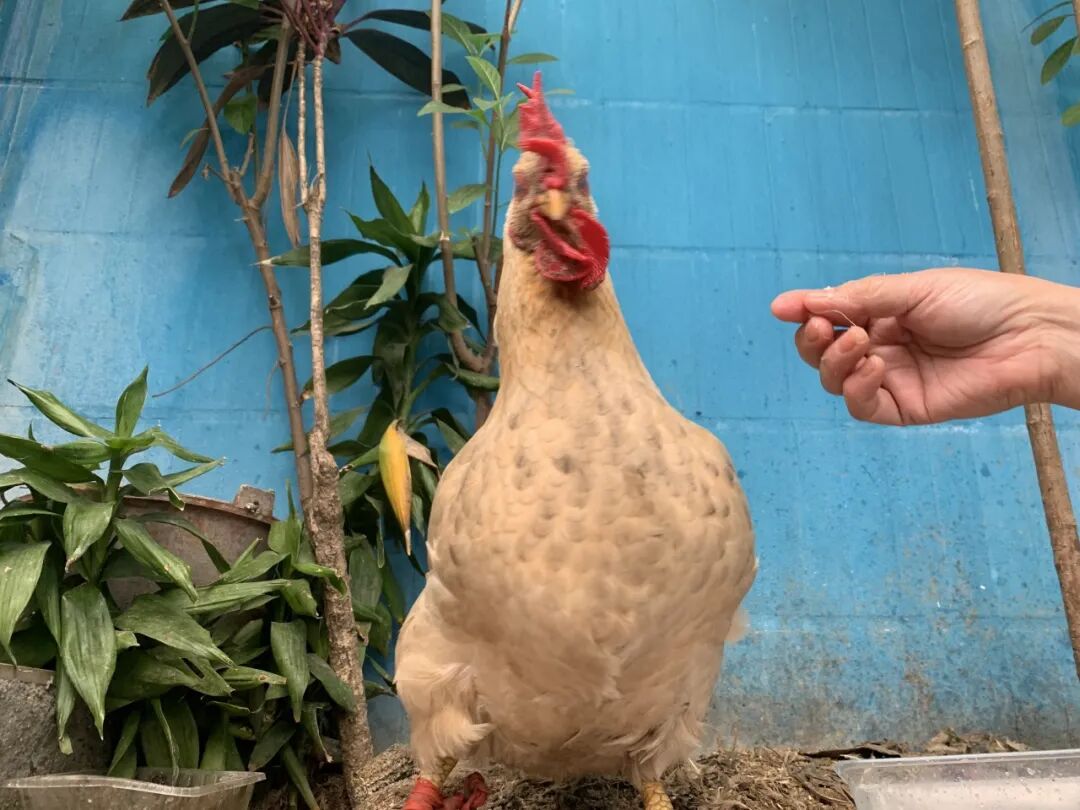
When the weather turns hot, Sister Chicken’s hormones go haywire — she lays small eggs, develops chicken lichen, gets picky and stops eating. My mother grumbles and buys her fresh corn kernels every day but won’t let her come inside, because Sister Chicken stinks. She’s only brought in at night to sleep in a cardboard box. One summer it must have really been too hot — the sun warped and distorted, rain drizzled for months on end — and from then on Sister Chicken developed depression. All day long she stood there dazed and blank, not struggling, not doing anything. Everyone knew something was wrong but no one did anything, just topped up her feed and changed her water. No one could bring themselves to put her down. Sometimes I’d crouch beside her, hovering, trying to provoke some reaction (a foolish jailer), and she would just stand there like a wooden chicken. This long, gradual torment was wearing down the nerves of every human beneath that foul Lingnan sky who was connected to it yet stood by doing nothing. This silent violence endlessly cursed the spirits of every living creature under the eaves who shared her nights yet kept their silence. And I remember, always, that one memory is a taste — after she died of a cold, we ate her.
The soup is sweet.
What other old items do you have in your kitchen?
Feel free to leave a comment and tell us your story with it.
Unless otherwise noted, all images are submitted by readers.
Edited by: Kerry
Layout by: Ming Lin
▼
Click the image to read related articles.