Anthropologist’s Check-in Notes at Shahe Grand Market | New Book Excerpt & Saturday Event

Foodthink Says
Wet markets today seem to be undergoing a remarkable “restoration”: once just a mundane daily errand for older generations toting their bags to buy vegetables, they have now become a social-media destination young people eagerly flock to, a window onto urban life, and even carry the emotional value of a “healing space”.
From “checking in” at Shahe Grand Market’s watermelons priced as low as eight mao per catty and its antiques from successive dynasties (not guaranteed genuine), to decoding the ins and outs behind stall signs, what sort of “ways in” can a wet market offer? As anthropologist Shuru Zhong notes, wet markets are not only “attractive and pleasant to browse” landscapes and consumer spaces, but also entry points for observing society, understanding the city, and practising life.
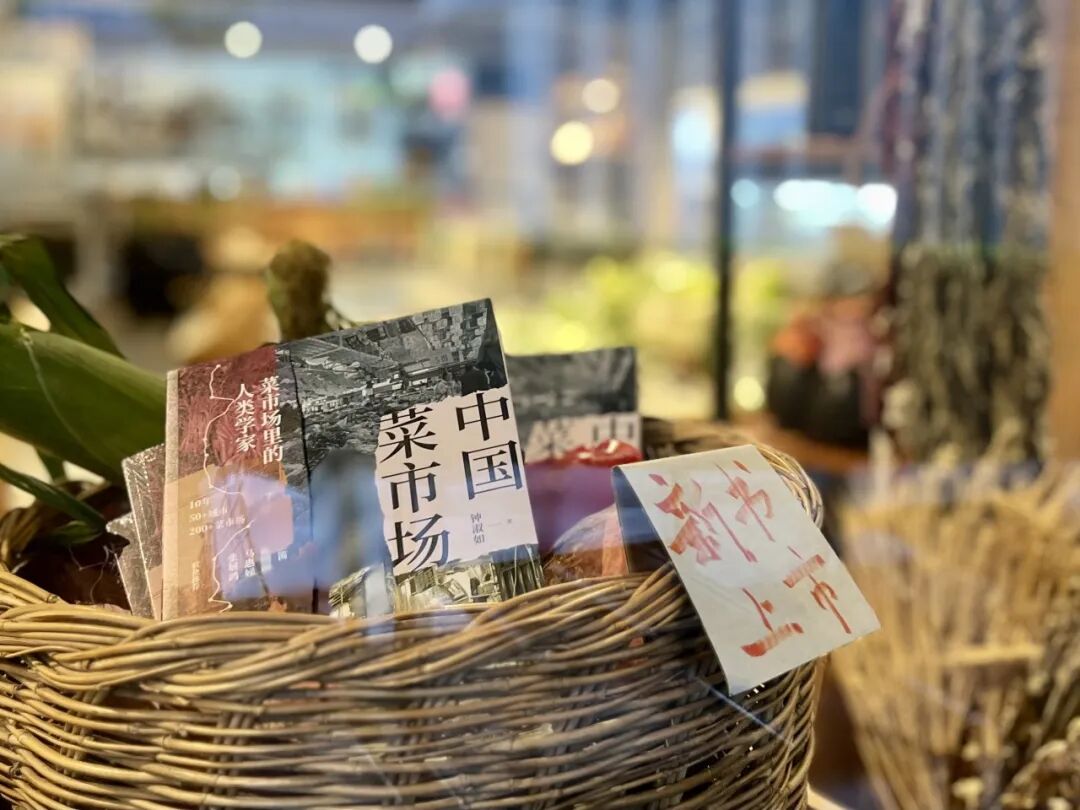
◉ Click the image to purchase.
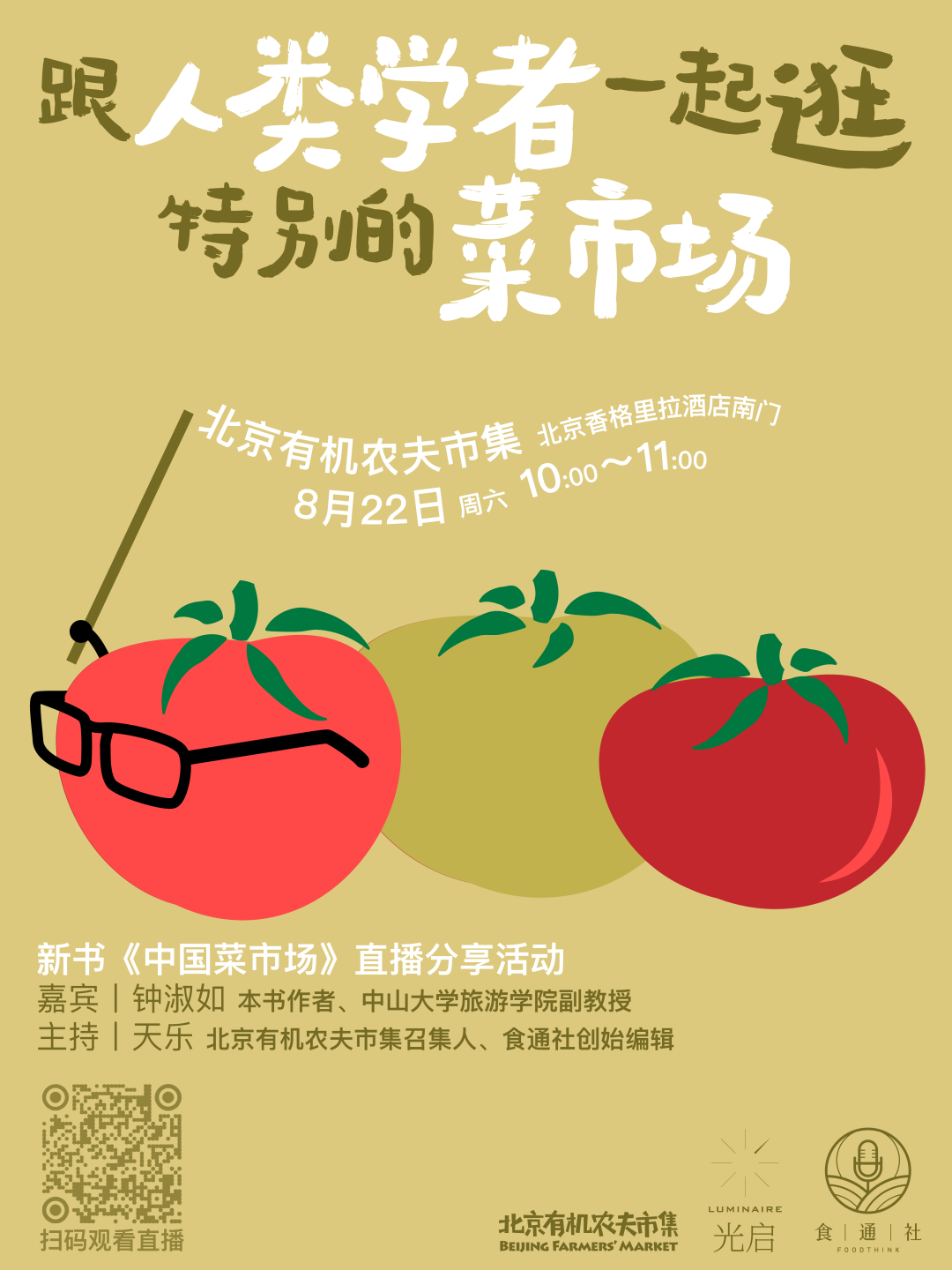
Tomorrow (Saturday, 22 August), Teacher Zhong will also appear in Beijing with the new book “Chinese Wet Markets” to browse a special wet market and chat about it. (* For event registration and booking, see the preview at the end.)
Before the event begins, let us follow her prose into an exploration of wet markets—
*This article is an excerpt from “Chinese Wet Markets”, “Creative Ways in to Wet Markets”. With thanks to the publisher, Guangqi Shuju, for granting permission.
Some people never set foot in the market on their doorstep, yet as soon as they are away from home they make a wet market their first stop; others, scrolling short videos of “going to the grand market”, are drawn in by the bustle and plunge headlong into the whirl of everyday life. In recent years, wet markets have become a window onto a city’s local life and have also created new imaginings in the online world. But for me, wet markets are not just “attractive and pleasant to browse”; they are also entry points for observing society, understanding the city, and practising life. During my fieldwork, I encountered different “ways in” to wet markets: the check-in style—going to a grand market to witness a real and boisterous carnival of life; youth accompaniment—using fieldwork methods to turn the bustle into the ins and outs; parent-child study tour—treating the market as a tangible “museum”, sowing curiosity between food and people. The paths differ, but all lead to a closer connection with place.
Checking in at social-media-famous wet markets has actually become a sort of trend, which I found genuinely surprising. In recent years, wet markets have been turning into popular travel destinations, such as Zhuanxin Market in Kunming, Fengmen Hengjie in Suzhou, Kexiang Market in Nanjing, and Bashi in Xiamen. Wet markets are a window onto a city’s local life and customs; many visitors are drawn there by sayings such as “If you want to understand a place, go to its wet market.” Compared with the run-of-the-mill old towns and gourmet pedestrian streets, wet markets are far more authentic and interesting.
In the online world, wet markets have developed a style quite different from their slightly forlorn reality, growing ever more bustling, with something of a “restoration” about it. Many social-media influencers publish check-in guides and short videos about wet markets. Some have gone viral on major social media sites, with click counts often in the millions. A typical video might show a stylishly dressed influencer, representing the perspective of ordinary urban young people, heading to a wet market in search of novelty, hunting down local snacks and flavourful food, and letting viewers experience local specialities, customs and seasonal rhythms.
Among the various video categories related to wet markets, “going to the grand market” is especially eye-catching. Grand markets are traditional rural markets; with market days in different regions staggered according to the lunar calendar, they form an important network for the exchange of goods in rural areas. Now, grand markets on the urban-rural fringe are check-in spots that young people “flock to”: Poli Grand Market in Qingdao, Shahe Grand Market in Changping, Puhe Grand Market in Shenyang… In the crowd are quite a few young people who seem to have entered the Grand View Garden.
The excitement of going to a grand market is vividly described as “hardcore”, “surreal”, “rustic”, “eye-opening”, “so cheap it is practically free”, “once you are in, you cannot get out”, “you want to buy everything you see”… I feel the same way.
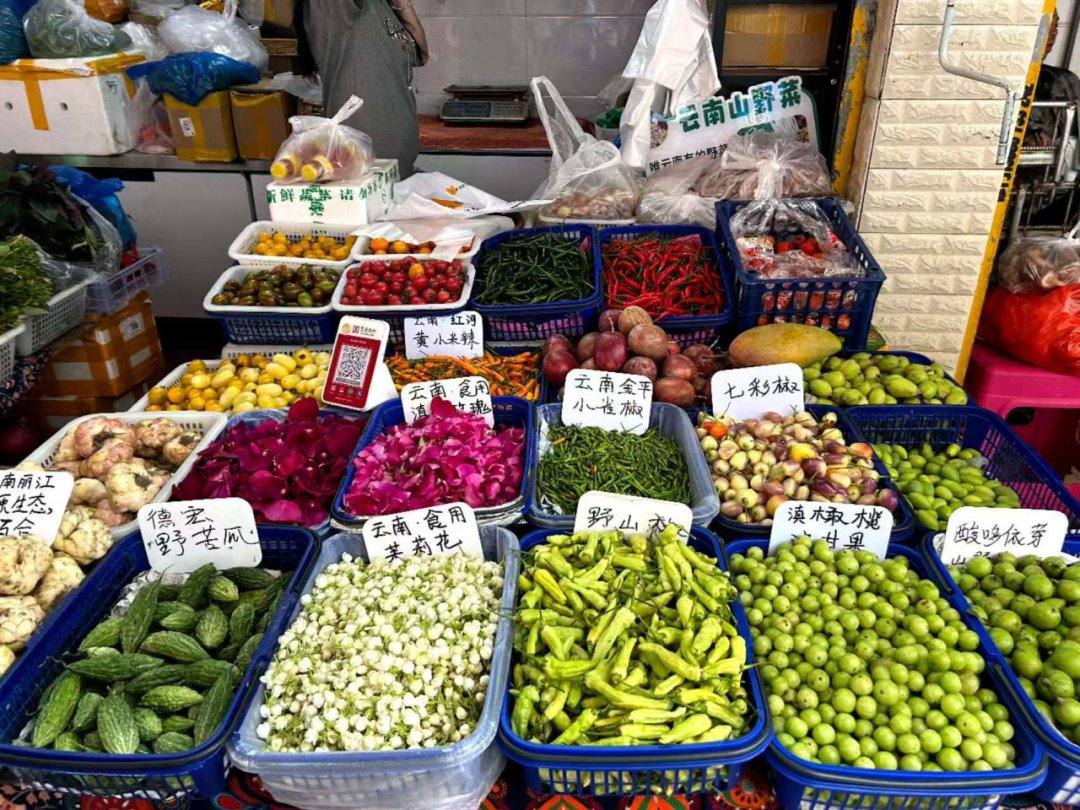
◉ Spring wild vegetables at Zhuanxin Market in Kunming.
In late summer and early autumn, I came to the Shahe Grand Market, covering 50,000 square metres. Located in Changping District, Beijing, the market opens on Wednesdays, Fridays and Sundays, and is entirely in the open air. Right at the entrance, you can immediately feel the market’s surging popularity. At eight or nine in the morning, crowds stream by without pause: you see older men coming out contentedly, toting big scallions, older women cradling pots of flowers, parents with four- or five-year-old children, and young people gathering in threes and twos. Different modes of transport weave in and out of one another—bicycles, small electric scooters, stand-up electric balance scooters, and the indispensable wheeled shopping trolleys.
Here, prices are so low they are beyond my everyday understanding; the 100 yuan in my hand has never felt so valuable. (This is still Beijing!) Goods generally have no elaborate packaging; red and blue plastic bags are the most beautiful colours, yet they have their own units of measure: sold by the heap, bought by the bag. “A hundred and two percent” home-grown vegetables from Yanjiao, two yuan per catty, take any you like; the sandy-fleshed Zhangjiakou tomatoes—the stallholder broke open a whole basinful for customers to taste, and one try tells you whether they really taste of tomato; live fish and prawns, sold by the basin, are all considerably cheaper than in city markets; the current middle-class must-have, “fruit freedom”, can truly be called within reach at the grand market: fresh blueberries 20 yuan per catty; Shuixian mango 5 yuan per catty; Shine Muscat grape 10 yuan per catty; Kyoho grape 6 yuan per catty; in-season Pinggu peach 3 yuan per catty; Qilin watermelon eight mao per catty—watermelons are also sold in bags, 10 yuan a bag, with three or four inside.
However, while there are bargains that are genuinely good, there are also items that require careful discernment. Looking at these astonishing items, so hard to distinguish genuine from fake, one broadens one’s horizons while also marvelling at the complexity of humanity. The air-dried beef at the entrance, priced at 30 yuan a catty, is most likely pressed from duck meat; durians that can easily go for 30 yuan a catty sell for only 20 yuan a catty at the grand market, but are very likely Kanyao durians with large pits passed off as Monthong; camel milk from Tianshan is rare and precious, and can also treat the “three highs”; one sip and, sure enough, the non-dairy creamer flavour comes through strong; second-cut pork at 15 yuan for two catties is a price rarely seen even at the bottom of the pig cycle, yet the surface of the meat is seeping water, and who knows how long it has been sitting in the freezer; a drink stall with international flair, its bottles in all colours, very pleasing to the eye; for just 10 yuan, a customer can obtain craft mojito and craft blackcurrant drinks, original imports from Ukraine, merely re-bottled in Foshan and with no identical version to be found on Taobao; there are also genuine Putian AJ and Nike shoes, with the full range of styles, the latest and discontinued pairs alike, simply placed in thin plastic bags and spread flat for customers to browse and choose from, simple and sincere.
Those who care about life’s aesthetics can also buy lotus flowers and lotus seed pods at the grand market, so fresh they seem ready to drip. The stall selling ground crickets gives away small bamboo cages, and several older men crowd around it. Children visiting the grand market need not be disappointed either: there are stalls selling children’s toys, as well as puppies, kittens and little rabbits, with flowers, birds, fish and insects all on display. There are also tobacco shreds and pipes of various qualities at the grand market. Tobacco shreds are sold by the catty, so one can spend as much or as little as one likes. There are well-known brands such as Zhonghua, Xuanhe Men and Huanghelou, as well as more affordable options like Hongtashan and Huangjinye, and the stallholder personally demonstrates how to roll cigarettes.
Some stallholders from Panjiayuan also frequently drop in at Shahe; the wenwan stalls span the history of ancient China, with every dynasty fully represented at 30 yuan a piece. You can choose Tang-dynasty Buddha-bead bracelets, Ming-dynasty snuff bottles, or mixed-dynasty copper coin strands; of course, not guaranteed genuine. Next to it is a second-hand goods stall railing against modern consumerism, where all the odds and ends of old goods can be repaired and reclaimed, as if my maternal grandfather’s storage box had been tipped over and spilled on the ground, laid open for everyone to see. There are quite a few wenwan walnut stalls as well. The walnuts are handled under different imposing-sounding names: cu jin, ying zui, tiandi shizi tou. Once bought, you can keep handling them while browsing, soaking up a little of the market atmosphere. There are also green, unpeeled walnuts called ha ma tou; their distinctive shape, strikingly like a golden toad, has attracted a following of “appearance fans”. Buying new walnuts is as thrilling as gambling on raw jade.
The grand market seems to be resolutely saying “no” to industrialisation. The sheets and duvet covers are in old-fashioned floral patterns, looking quite festive. A little further on, you happen to come across a stall stretching cotton batting and making cotton-padded quilts on the spot; paired with a floral duvet cover, you can easily take home a one-of-a-kind quilt. The belt stalls lay out large sheets of cowhide in different shades. Customers need only stand while their waist is measured; the stallholder deftly cuts the leather and punches the holes, guaranteeing genuine materials. Belt buckles can follow Western modern styles such as Chanel and CK, or a retro court style in gold-inlaid jade, even with dragon patterns. Walking sticks of different materials are handmade with fine workmanship; the materials range from peach wood to ash pole, and custom orders are available. The young stallholder pulls out a hidden treasure—a majestic dragon-head stick in the style of She Taijun; as the stallholder straightens up, it feels as if they will set off on a campaign in the next second…
After taking a quick round of the grand market, I glanced up at my watch and two hours had passed. On my way out, I carried a bagful of Pinggu peaches and a piece of hawthorn cake in my hand, with two little zodiac gourds in my trouser pocket, picked out for me by a child I chanced to meet, my belly full of flatbread and stewed offal, and dopamine coursing through my mind. Here, I deeply felt that my eyes could not keep up, but all my worries vanished, no wonder young people love to browse the grand market.
Going to a grand market can bring a fresh and exotic experience, because the non-everyday grand market forms a strong contrast with young people’s daily life, bringing an exotic feel to real life, even a trace of carnival flavour. One enters an unfamiliar rhythm of life, an unknown liminal threshold, is drawn to unadorned authenticity, is caught up in the bursting bustle, and can find a moment’s indulgence and release from the pressures of reality.
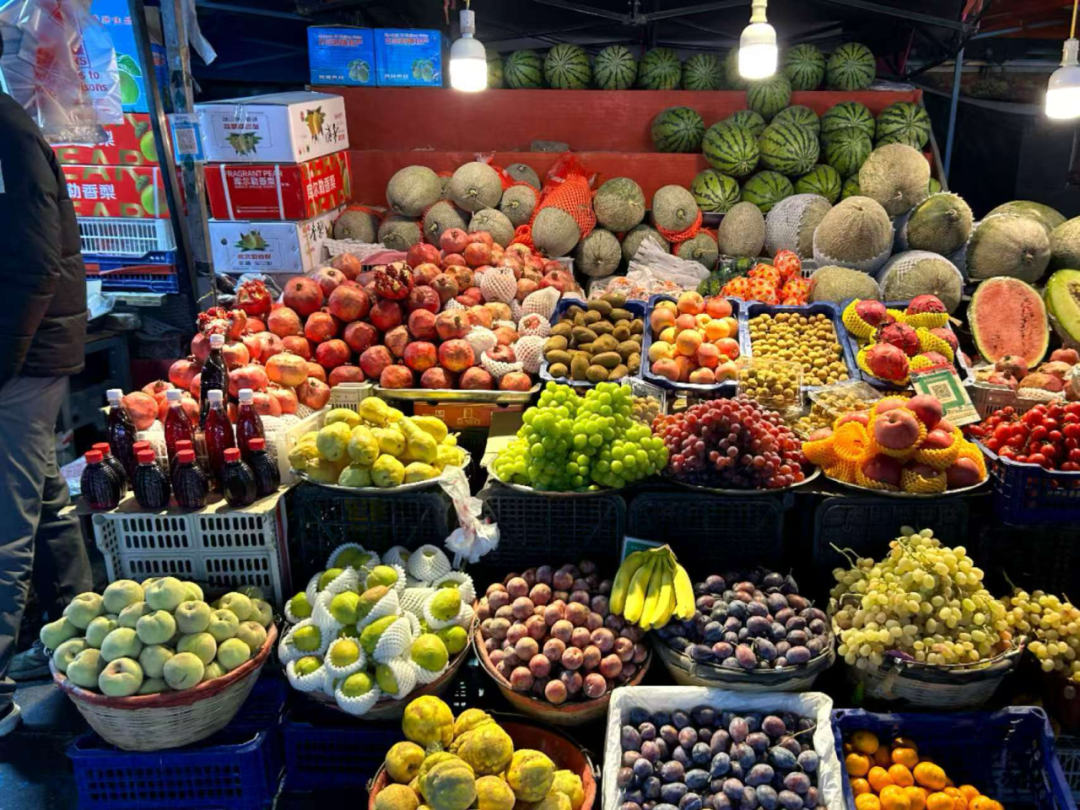
◉ Autumn fruits and melons at Hotan Night Market.
***
Another way in to a wet market is to move from watching the bustle to seeing the ins and outs. In recent years, more and more young people have begun to feel curious about the people, happenings and things in wet markets. They can smell the mingled scent of dampness and freshness, see the fine details on handwritten signs and plastic bags, and hear the stallholders’ cries rising and falling in turn. I have led many wet-market visits, and have watched this curiosity turn into action.
In 2024, as an adviser, I worked with Fengnianqing to launch a wet-market research group. At first there were only about ten people; now the group chat has more than 70 members. Our motives are all different: some just want to chat with stallholders; some want to photograph every plastic bag used for vegetables in a single market and find out exactly how many kinds there are; some are fascinated by the typefaces and phrasing on handwritten signs; some follow the traditional snack stalls around the market in search of flavours; some study how to buy ingredients of “quality at a fair price”; and others set out to spot the “shrewdest stallholders” and learn their ins and outs.
We have organised several visits, trying to cover as many urban and rural cross-sections as possible. Guangzhou’s traditional wet markets and “social-media-famous markets”, rural markets on the urban-rural fringe of Foshan, and Hong Kong’s street markets are all on our route. As one member’s parents work in wholesale at Huijixing in Shenzhen, we also went further upstream in the vegetable supply chain into wholesale markets, trying to understand how food moves through the city.
When leading field visits, I give a guided commentary and share my views. But as an anthropologist who has long studied wet markets, I deliberately set aside the researcher’s “arrogance”; I do not rush to provide answers, preferring to let the group look for itself, ask questions, feel the dents in the cutting boards, smell the damp air at the fishmongers’ stalls, and gauge the moisture in the leafy vegetables. In the wet market itself, the specific sensations and knowledge gained through hands-on experience are often more effective than attending a hundred lectures. In my view, a wet market is a public space for learning, where young people can reflect on their lifestyles and consumer choices.
We do our best to draw on participants’ individual experiences and agency. For example, one participant, Yi Ding, drawing on the database of the newspaper where he works, mapped out the historical threads of Guangzhou’s wet markets and led everyone into a historical setting during a walk. Through this we learned the history of part of Shanyuan Market—Yuanyang Market: in 1958, small-scale commerce began to appear in Haizhu District, state-owned enterprise communities emerged in their wake, and Yuanyang Market was built by Yuanyang Company to make life more convenient in the staff quarters. It is closely linked to the course of market-oriented reform; its property-rights structure remains complex to this day, and that has also made subsequent upgrades and renovations difficult… Everyone listened intently, using history to understand its present-day form.
To encourage exploration, each event has an active member taking the lead, doing the prep work in advance and setting small tasks. After the visit, they sit down for a focused discussion. On one occasion, the lead member asked everyone to draw a “sensory map”: go to a spot inside the market and record “what I smelt / heard / touched / tasted / saw”. If this sensation had a shape, what would it be? What colour would it be most like? What word does it bring to mind? Each spot is paired with a photo, to be labelled on the map later. Such an exercise can bring the “hard-to-describe qi” down into details that can be shared.
“The unique ‘qi’ of each market can only be found by being in it,” one member said. Observations at Xinhongfeng Market were especially vivid: under the influence of the Hubei people drawn together by the garment industry, the market is full of “Tianmen flavour”. The foam boards on the vegetable baskets do not say “local”, “Conghua” or “Qingyuan”, but “Tianmen”: Tianmen’s aubergines, potatoes, Chinese gourds and garlic sprouts—even the salt is produced by Changzhou Company in Tianmen, Hubei.
After several visits, someone said: “Once you have spent enough time in wet markets, you can feel your embodied understanding of food, culture and the city slowly changing.” “I feel that I am getting to know the city of Guangzhou better and better.” Some people have moved from “dislike” to “can’t live without”. A member, Yi Ye Zhou, recalled that as a child she most feared the market’s dimness, dampness and noise: “Adults would drag me along to buy vegetables, and eight times out of ten I would try to slip away.” After going abroad, she learned to cook and discovered that supermarkets did not carry many seasonal ingredients, so she turned to wet markets. Around a corner, she came across Chinese toon and seasonal coriander, bought them excitedly and posted about them on Moments, only to be told she had mistaken Chinese celery for coriander. After the laughable mistake, she realised that if she wanted to eat well, she could not stay confined to supermarkets; she had to broaden her understanding of food.
Walking into Huijixing Wholesale Market in Shenzhen, one is struck by the figures: about 85% of Shenzhen’s vegetables come from here. The shock of “So that is how simple it is” makes one realise that, in a city where consumption levels are very high, the differences in vegetable sourcing between different supermarkets and restaurants are not as great as one might imagine. The impression one gets from browsing Huijixing is that a vast chain sustains many people, but food here is more like goods in circulation. Some members have therefore begun to understand why they have grown accustomed to online shopping, favouring e-commerce or Hema, and have started to ask why “soulful” wet markets are becoming rarer—why do people merely treat them as commodities? Can we have more choices?
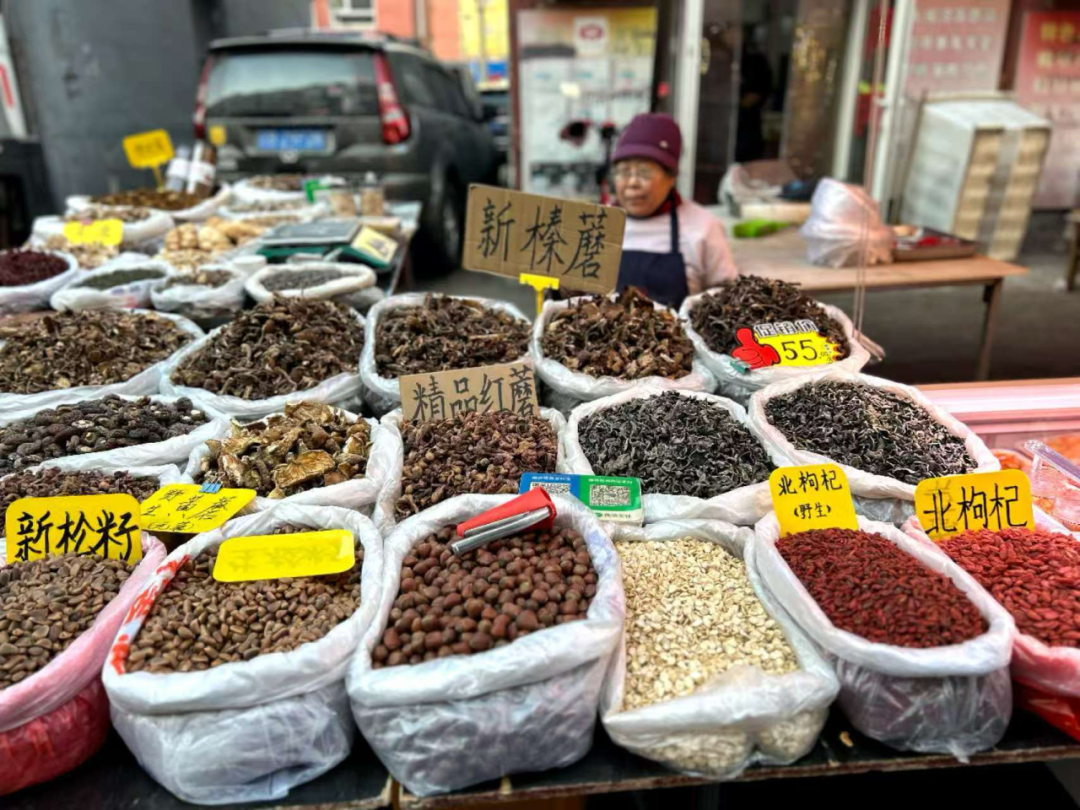
◉ Winter mountain produce at Yaming Market in Shenyang.
In rural markets in places such as Sanshou in Foshan, Nanxiong in northern Guangdong, and Maoming in western Guangdong, Fei Lan wrote: “I saw live chickens, ducks and geese, bamboo-woven baskets and unfamiliar yet abundant local produce; I saw more handmade foods, and food producers who face consumers more directly—vegetable farmers, poultry farmers, beekeepers… I also saw a closer connection between us and the countryside, the wild, coarse texture of the countryside, the varied lives of smallholders in different regions, and the flexibility, resilience and wisdom of those working in food.”
These events are not “neatly organised”; they are mostly driven by interest, but everyone’s enthusiasm has consistently remained high. By 2025, partners outside Guangzhou also proposed holding events in their own hometowns, so we initiated the “wet market archive” records, discussed “how to browse a wet market” online, shared techniques for interviews and observation, and then each went to put it into practice.
The template for the wet market archive is simple:
1. Basic Information
Name, location, opening hours, market type, date and time of visit, observer.
2. Spatial Observation
• A market floor plan (you may look for a photo or hand-drawn plan on the market noticeboard).
• Feelings about the spatial observation (record the wet market and the surrounding community with words and photos—
• Observation: this may be an overall feeling, or specific observations, such as stall positions, layout, flow, facilities, and thoughts about why they are arranged this way. For observations of the surrounding community, start by considering who the wet market serves and what features the nearby community has. If possible, it is best to consult some sources or carry out light local research).
3. Food Observation
• Notes and photos related to food. You can describe the foods you are interested in,
• or the food of the wet market as a whole.
4. People Observation
• Observe the different types of people in the market; ideally, include some personal stories.
5. Subjective Feelings and Reflections
• What unexpected discoveries have you made in the wet market? How would you describe your overall feeling about this wet market? What are some interesting points?
6. Wet Market History
• Depending on your interests, choose whether to dig deeper.
At first, I worried that under such rough guidance, the wet market archive entries everyone compiled would turn out too similar, but I soon realised I had worried for nothing. Everyone has their own focus: some pay particular attention to visual presentation, noticing that some markets write their slogans in such detail that they even include cooking methods; others notice that the “service” a market offers has its own meaning in the community—beyond selling vegetables, it is also an information centre, posting job ads, sharing neighbourhood gossip and providing all sorts of everyday services.
Looking back, my favourite moment always comes after everyone has dispersed. We gently set our bags down, sit in a circle together, and tell one another about the different worlds we have seen in the same market: who cares about the size and material of the plastic bags, who is fascinated by the lettering on handwritten shop signs, who suddenly falls silent over a snack from home, who, for the first time, understands “why I used to dislike browsing wet markets”. I think this is why I keep taking everyone along. The wet market is still that noisy place, yet time and again it helps people think more clearly about questions about food, about the city and about themselves.
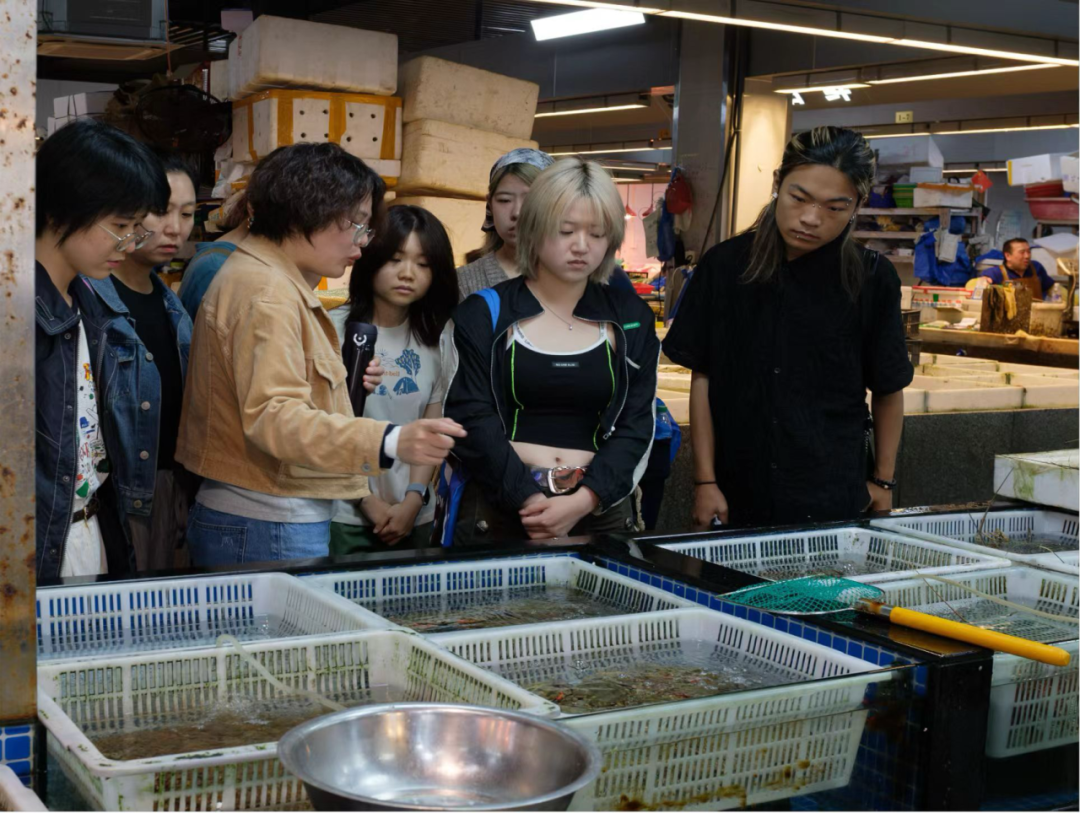
◉ How do young people browse wet markets? The author often takes part in wet market visits with young people and has also, together with members, initiated the wet market research group.
– About the Author –
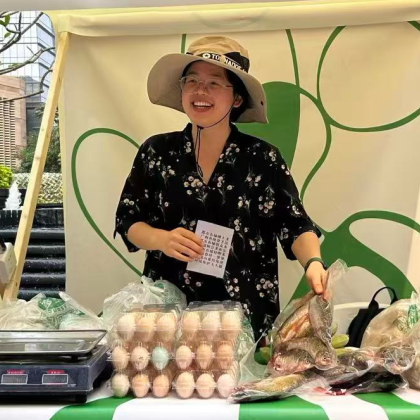
Zhong Shuru | Associate Professor, School of Tourism, Sun Yat-sen University; PhD in anthropology, Texas A&M University, United States. She has long studied wet market culture, sustainable food systems and food tourism, and in both research and practice continues to explore how food can serve as a medium to reconnect people with food, nature, society and place.
From doing hands-on “work” at a fish stall on an island to exploring how wet markets can connect to sustainable living, Zhong has appeared as a guest on Foodthink, sharing many insights about wet markets, which you can read here.
– Event Preview –
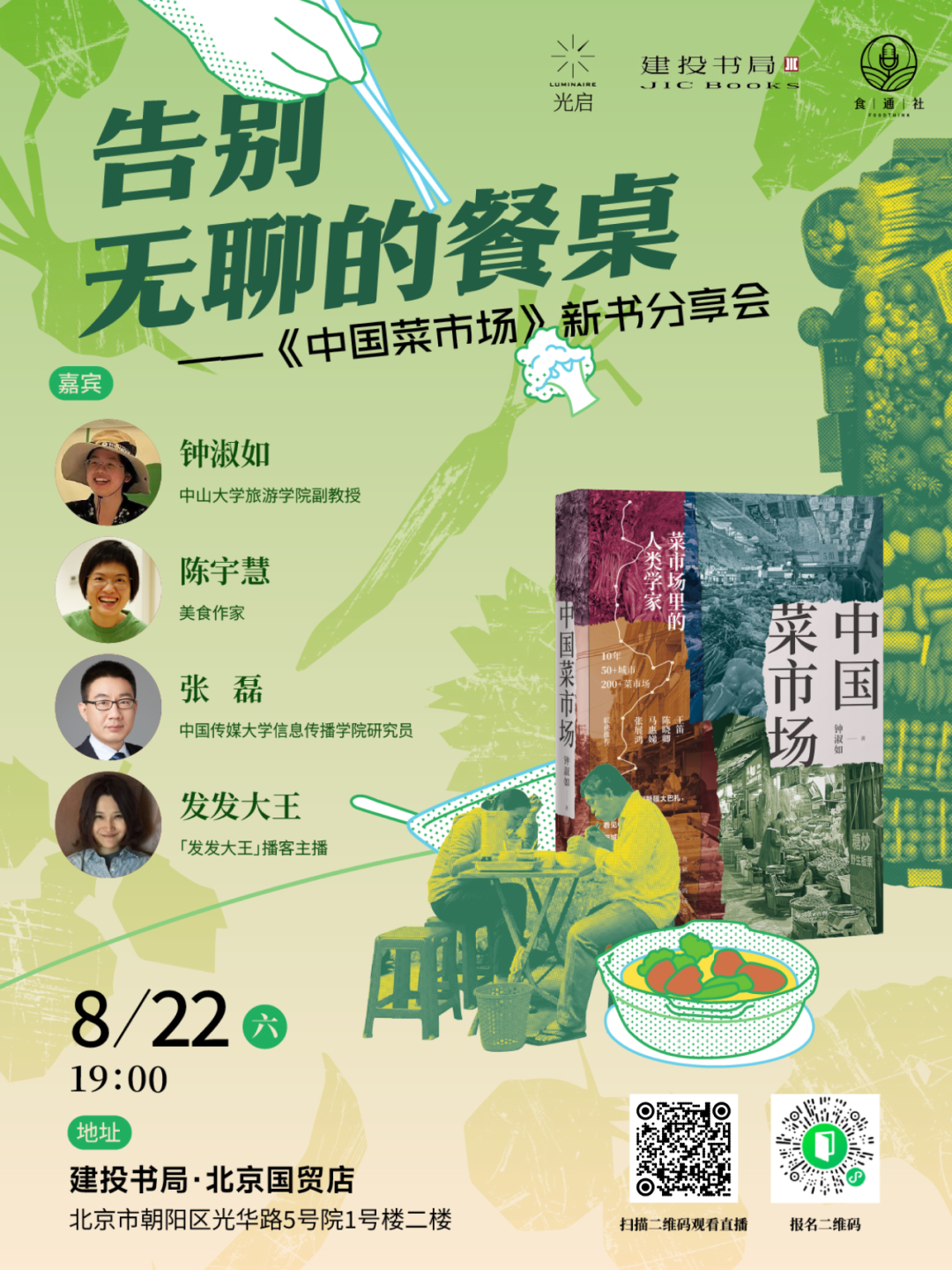
– New Book Details –
“Wet Markets of China“
Author: Zhong Shuru
Guangqi Shuju | Published July 2026
10 years, more than 50 cities, more than 200 wet markets…
Based on panoramic observation and fieldwork of urban wet markets in various regions,
it explores the history of wet markets, the stallholder community, the supply chains behind wet markets, food consumption culture, urban public management and so on.
– Contents –
All images in this article are illustrations from the book.
Layout: Xiaoshu
Scan the QR code to tip and support original food knowledge
▼

▼
Click the image to read related articles.
▼
Click a keyword to view more article collections.
Seeds | Agritech | Policy | Fermentation | Nutrition | Fruit | Fisheries | Events | Jobs | Takeaway | Wet Markets | Livestock | Food Talk | Sharing Sessions | Reading Group | Fengnianqing | Smallholder Stories | Climate Change | Rural Development | Cooperative Economy | Urban Farmers | Food Safety | Digital Technology | Biodiversity | Pandemic and Food | False Solutions | Ecological Agriculture Internship Programme
Beijing | Hebei | Shanghai | Guangdong | Guangxi | Henan | Sichuan | Jiangxi | Xinjiang | Shaanxi | Hong Kong | Chongqing | Zhejiang | Jiangsu | Guizhou | Taiwan | Inner Mongolia | Philippines | Canada | Russia | Mexico | Italy | United States | United Kingdom | Germany | Netherlands | Thailand | Sweden | Japan