Napa Cabbage Dipped in Formaldehyde, Real People Taste a Hundred “Poisons” | Grandma Kouzi

Recently, food safety news has once again topped the trending charts, after a blogger reported that someone had dipped napa cabbage in formaldehyde. On 22 August, the Kangbao County People’s Government in Zhangjiakou, Hebei issued a statement saying that preliminary checks confirmed the matter was true: a buyer had illegally dipped the vegetables in formaldehyde while loading them, in order to keep them fresh during transport.
This kind of news surfaces from time to time, but similar incidents have continued to occur despite repeated bans. In an era before the concept of food additives existed, many chemicals were openly added to food to preserve it, keep it fresh, and so on. It took many years, however, for people to recognise the hazards of these substances and for the struggle over food safety to play out.
Department of Agriculture Officials Test Poisons on Real People
In 1902, Harvey W. Wiley, chief chemist of the Bureau of Chemistry at the United States Department of Agriculture, recruited 12 young and sturdy men at the Department to form the “Poison Squad”. They were to prove, through trials on human subjects, that food additives widely used at the time, including formaldehyde, borax, salicylic acid, saccharin, and sodium benzoate, were harmful to health. His experiments were conducted in full public view, under media oversight.
The volunteers were all young and sturdy. Wiley’s design was this: if vigorous young men could not tolerate the substances, that would naturally prove they were harmful.
During the trials, they lived in the scientific dining and lodging house and went about their usual lives and work. Their diet was strictly monitored, with a specially assigned chef preparing their three daily meals. Wiley personally used a balance to weigh the chemicals added to their food each day.
The test subjects and the control group were given strictly identical food and drink, except for the substance being tested. Before every meal, each volunteer had to record their weight, body temperature, and heart rate. They also carried sample jars for urine and faeces with them. The samples were promptly sent to chemists for analysis.
The first substance to be tested was borax, which was widely used at the time. Within days, the volunteers began to lose weight. As the dose was increased, they developed loss of appetite, bloating, persistent headaches and abdominal pain, among other symptoms. In the sodium benzoate trial, only three persisted to the end; the others fell severely ill, with symptoms including unbearable stomach pain, dizziness and weight loss. The formaldehyde trial also laid everyone low.
Ultimately, Wiley proved beyond doubt that these substances were harmful to health.
America’s “Gilded Age” was a period of industrialisation and urbanisation, of the development of the chemical and food-processing industries, and a period when food safety scandals erupted. In the United States, “swill milk” directly and indirectly caused the deaths of more than 8,000 infants. In Europe, watered milk, alum bread and sweets containing lead gave rise to Britain’s Food Adulteration Act (1860). But efforts to pass food safety legislation in the United States were repeatedly thwarted by corporate power and never made it through Congress, which is why trials on real people took place.
In the end, the United States passed the Pure Food and Drug Act on 30 June 1906. Also known as the “Wiley Act” after the name of its drafter, the Act’s historical significance cannot be overstated. The Act not only became a national regulatory standard for food-related matters, but also established, at a professional level, the core rules of modern food safety. It has been drawn on and cited by food safety legislation in the vast majority of countries worldwide; China’s Food Safety Law (2009) likewise encompasses these core food safety rules.
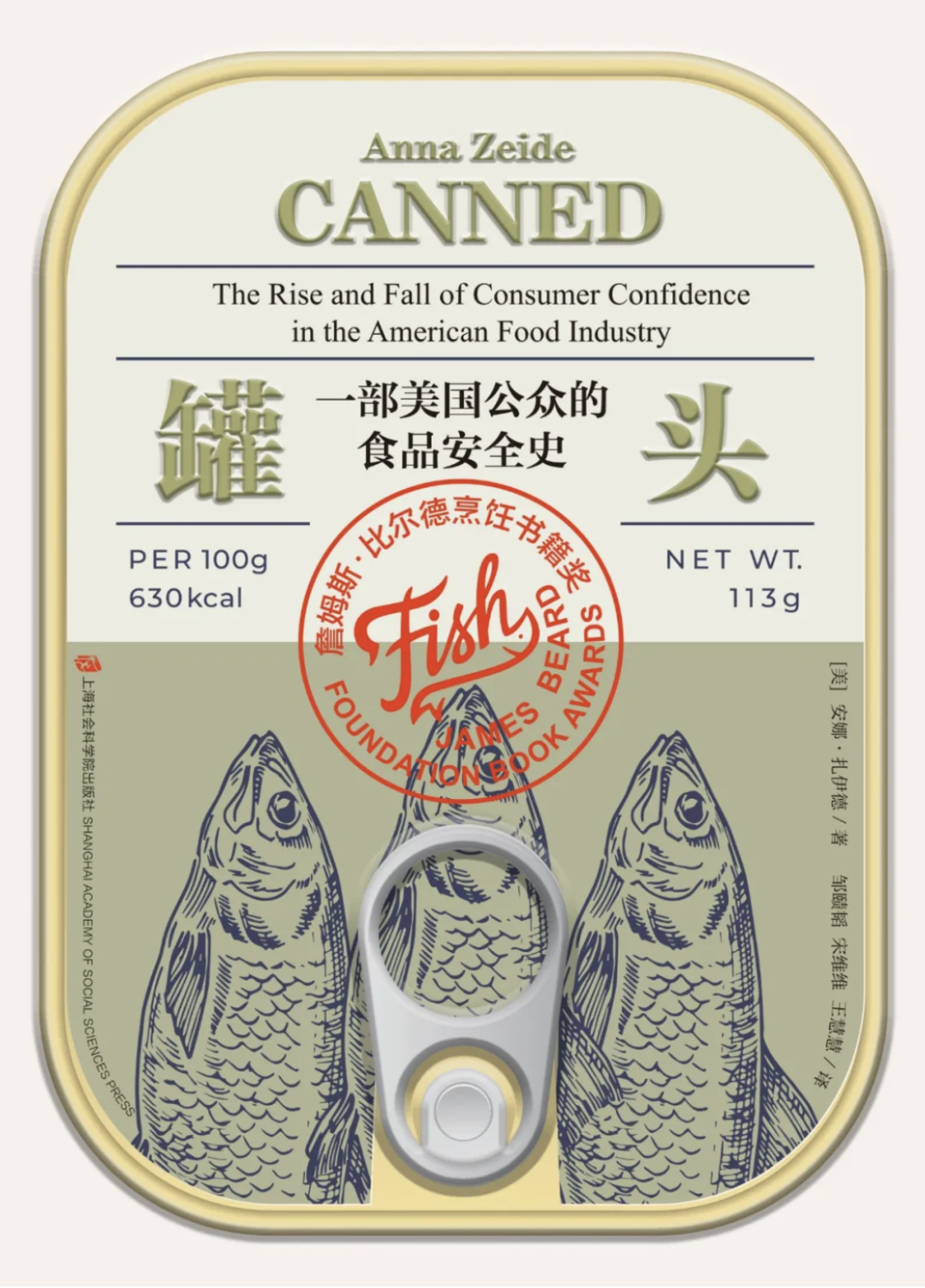
◉ American scholar Anna Zeide’s book Canning: A History of Food Safety for the American Public explores the American public’s relationship with food safety.
Persistent Illegal Additives
Remember borax, the first target in Wiley’s trials on real people? Borax is all-purpose and easy to use, cheap and readily available; apart from being toxic, it has no faults.
I just went online and bought 500 g for a dozen yuan or so. Of course, I have no intention of imitating people tasting poison; my aim is to “poison”: steam a small potato, combine it with an equal weight of white sugar and an equal weight of borax, mash it into a paste, and place it where cockroaches appear. The potato’s aroma and texture, along with the sweetness of the sugar, will lure cockroaches into calling their friends over for a feast. After this pleasant free buffet, borax will kill them all. For the next few months, there will be no need to worry about cockroaches disturbing you, and as a bonus there will be far fewer ants as well.
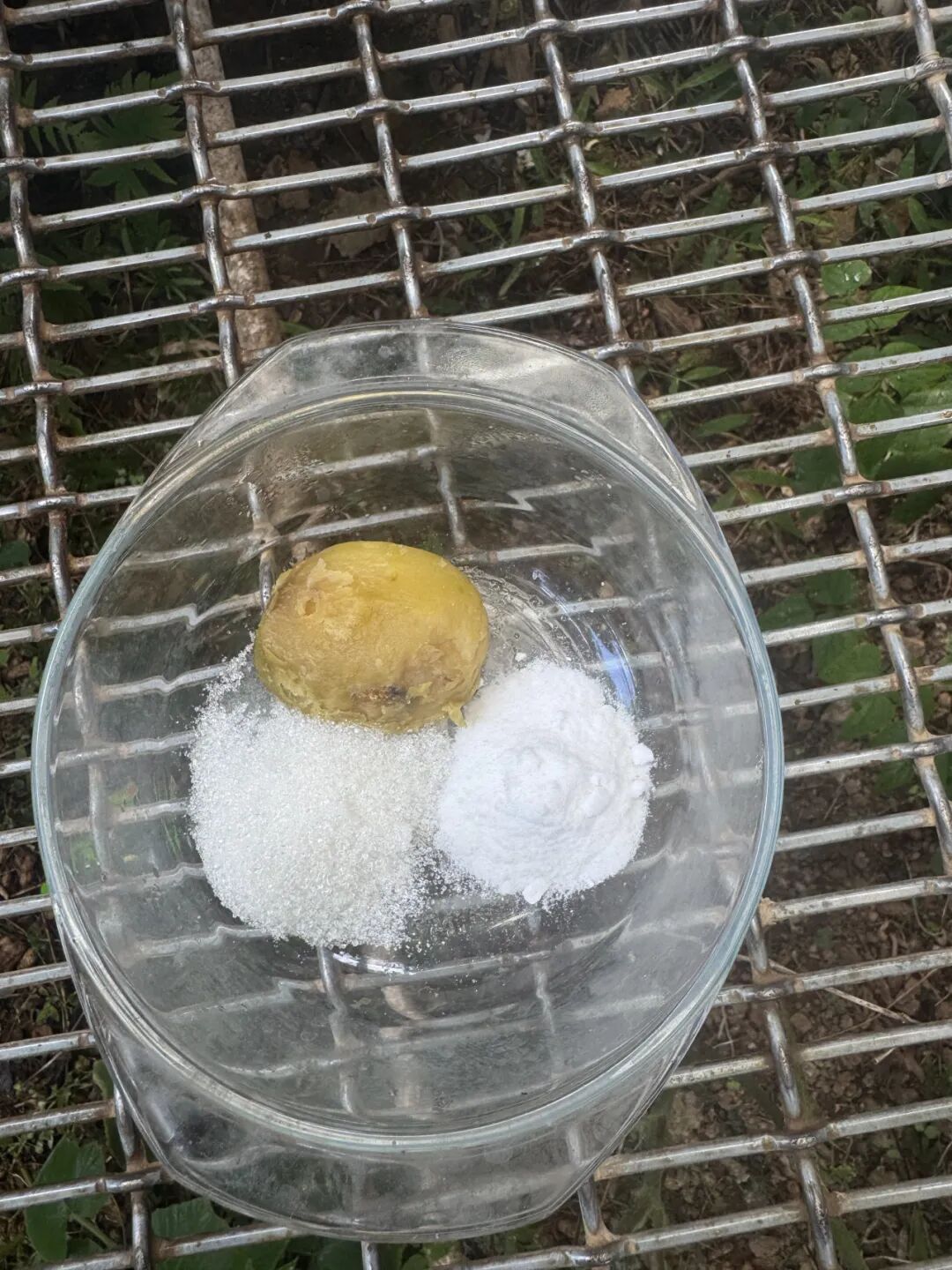
◉ Equal amounts of white sugar, borax and potato, once mixed, make an insecticide. Image: Kouzi
Borax is toxic. In 1978, China first explicitly listed it as a food preservative prohibited from use, and in 2008 it was added to the List of Non-Edible Substances That May Be Illegally Added to Food. Yet as of today, in 2026, incidents of illegal borax addition continue to occur.

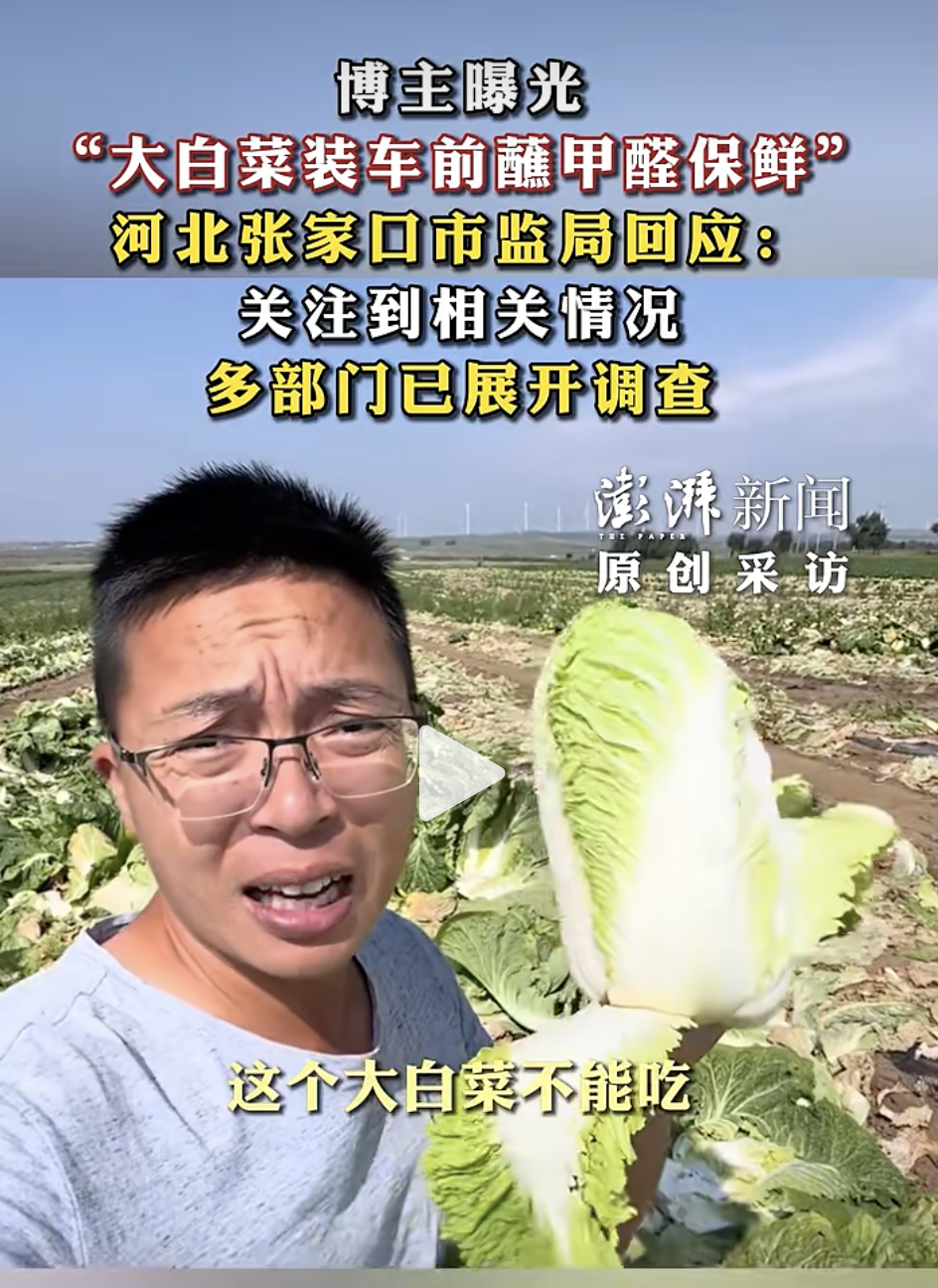
◉ In August this year, a cooked-food shop in Qingyuan, Guangdong, was investigated for adding borax to meat products. Image source: Douyin (left). Recently, a blogger reported that in Kangbao County, Zhangjiakou, Hebei, someone was suspected of dipping napa cabbage in formaldehyde and loading it for transport elsewhere. Image source: Pengpai News (right)
This is because borax can “turn the rotten into the miraculous” in food: it changes the protein structure of rice- and wheat-based products, meats and soy products. When added to cold skin noodles and hand-pulled noodles, it makes them smooth, supple and difficult to break, with a good chew; when added to meatballs and dried tofu skin, it makes them springy and chewy and able to withstand boiling, upgrading the mouthfeel on the spot.
When it comes to illegal borax addition, rice- and wheat-based products are the worst affected. Sticky rice dumplings, rice noodle sheets, noodles, dumpling wrappers, wonton wrappers, frozen dumplings and wontons may all be affected. Unscrupulous traders also inject borax into pork to make the meat’s colour brighter, its texture slicker, and its keeping time longer.
Just in mid-August, in Lianzhou City, Qingyuan, Guangdong, a cooked-food shop was also found adding borax to meatballs and dried tofu skin meat rolls. In this kind of news, the people involved who appear on television are almost all small businesspeople, small owners and small traders with a plain, honest face—the ordinary people we usually meet on the street and in markets.
Besides borax, formaldehyde, likewise colourless, odourless, versatile and all-purpose, is a definite carcinogen. It is commonly used on frozen seafood and dried goods such as dried tofu skin, as well as on short-distance, perishable agricultural products such as bagged vegetables, mushrooms and fruit. Equally deserving of vigilance are sulphur dioxide, used on rehydrated products (such as tripe, yellow throat and white fungus); industrial caustic soda and formalin, used to rehydrate squid; malachite green and eugenol, used to transport and preserve live fish; and nitrites, used on bulk cooked meat and pickled products…
Manufacturers may not always be honest enough to produce in accordance with the ingredients list. In a recent food safety supervisory sampling inspection by the State Administration for Market Regulation, 2,325 batches of samples were tested and 45 batches were found non-compliant. The non-compliant use of additives was the most prominent issue, involving multiple categories such as sweeteners, colourants, preservatives and bleaching agents. For example, the synthetic colourants Brilliant Blue FCF and Tartrazine were detected in dried noodles; sulphur dioxide residues above the standard were detected in five-spice pickled mustard stems, lotus root and star anise; and cyclamates, explicitly prohibited for use by the state, were detected in baijiu. There were also problems such as microbial contamination and heavy metals exceeding standards.
Science and Ruthless Ingenuity
In the food industry, the use of additives is no longer merely about functions such as preserving and keeping food fresh; science and ruthless tricks can manufacture so-called delicacies out of nothing.

◉ Abe Kei’s book exposing food additives. Image source: Douban
Abe Kei, who had worked for ten years at Japan’s largest food additive company and was hailed in the industry as the “god of additives”, had recorded in Exposing the Truth About Food the “meatball” he had made for a food company: the main ingredients were mushy, sticky beef scraps originally fit only for dog and cat food, spent hens too old to lay eggs (Abe Kei’s original word was “waste hen”), and textured soy protein. First, flavouring agents such as beef extract were added to establish the taste of a “beef meatball”; lard and starch were used to add a smooth, slick mouthfeel; then binder and emulsifier were added to facilitate large-scale machine production; colourant fixed the colour, and antioxidant prevented fading; preservatives and a pH adjuster were used to extend the shelf life; and, once combined with “ketchup”, it became the “meatball” in the supermarket display case. Real ketchup was too expensive, and the “ketchup” contained no tomato at all. Instead, it was made by blending diluted glacial acetic acid, caramel colour, colourant, acidifier, thickener and so on. Its texture, colour and taste were indistinguishable; only the price was worlds apart.
Abe Kei managed to turn a heap of waste into the miraculous. Not only did he blend a taste that children love, but he also perfected the ideal mouthfeel: children could chew it to pieces in two or three bites, and everyone who tried it loved it. This “meatball” was also widely loved by housewives; not only was it cheap, but it came in vacuum packaging, ready to eat after being microwaved, making cooking convenient.
Abe Kei’s turning point in life came on his daughter’s third birthday. Having been working desperately hard for a long time, he came home early and found on the dining table the meatball he had developed. Before then, he had always been proud of this product, believing that turning discarded raw materials into food was both environmentally friendly and helped housewives save money. But the moment he saw his own child eat it, he was overcome with self-reproach. After that, he resigned from the food additive factory and began publicly exposing the inner workings of the food industry.
Later, when giving talks, he often performed live demonstrations. A large pile of little bottles filled with “white powder” would stand beside him; joking as he went, he would scoop out the powder from dozens of little bottles one by one, stir it, and pour it into hot water. Without adding a single drop of pork bone stock throughout, he made the bone broth of pork-bone ramen from Kyushu, Japan, a taste that even locals would find familiar and tasty.
This phenomenon is not unique to Japan. Some chicken essence and beef powder on the market do not even need to contain chicken or beef. Now, quite a large proportion of food in supermarkets, if you look carefully at the ingredients list, are “complete collections of additives” not far different from Abe Kei’s demonstration.

◉ This is an early 20th-century Dutch-language print advertisement for Maggi stock cubes. The slogan read: “… a real brand!” Like other industrial foods, Maggi stock cubes saved tired housewives cooking time, but this convenience came at the cost of nutrition and flavour. Image source: Science Popularization Press
Additive Effect
Do not assume that legally permitted food additives are entirely harmless to health.
Every additive used in the “meatball” developed by Abe Kei was a legal and compliant product, with no illegal additions; every additive was used within its legally permitted dose, with no overuse; and the meat raw materials were not rotten or spoiled, merely trimmings and offcuts left over from the processing of other meat products.
But he knew clearly that most of the current compliant dosage levels are extrapolated from animal experiments on a single additive—a “single metabolic safety line”—and do not take into account the additive effect and synergistic effect that arise when multiple additives enter the human body at the same time. In children, whose metabolic organs are still developing, simultaneous intake of multiple additives can not only exceed their metabolic capacity, affecting physical development and normal nutrient absorption, but also interfere with the development of the nervous system and trigger allergic reactions.
Moreover, legal additives and legal dose levels may not always remain legal. Food additives are often first put into use by manufacturers, driven by the demands of production and sales, and only later restricted or banned once problems are found. Different countries and regions have different rules for the use of food additives. For example, Chinese mooncakes cannot be exported to the European Union because the widely used dehydroacetic acid and its sodium salt (sodium dehydroacetate) is comprehensively banned from use in food in the EU; China has also now greatly narrowed the scope of its use, entering a countdown to a ban.
There is a famous “rational, neutral and objective” saying: “To discuss harm without considering dose is hogwash.” Every time a food-safety issue triggers public panic, some expert or scholar comes out to say this line, then cites authoritative sources and explains how much one would have to eat before harm is done to a particular organ. I instinctively recoil from the condescending professional superiority that comes with it, and at the same time I want to turn the same sentence structure back at them: “To sever the additive effect and synergistic effect among multiple harmful substances and deliberately single out a ‘single metabolic safety line’ to argue that there is no harm is hogwash.”
“The dose makes the poison” is a core principle of toxicology and the core defence that manufacturers and sellers have repeatedly found effective when facing regulators and public opinion. People have widely accepted this idea and easily generalise from it, assuming that other substances added in everyday life work the same way and that, as long as the dose is low enough, the harm can be considered negligible.
Some endocrine disruptors, although not directly added to food, are widely present in food-related containers and packaging, household detergents and cleaning products, non-stick cookware coatings and so on. Research has found that such substances can affect the human body at very low levels. They are associated with reproductive damage, abnormal development in children and cancer risk, depending on the specific substance and route of exposure; in some cases, the harm actually exceeds that of high doses.
Medicines must be demonstrated and tested before they can be marketed, and food-safety issues are receiving increasing attention, but in almost every country, such chemicals containing endocrine disruptors are not required to prove their safety before going on the market. With so many varieties and new products constantly appearing, manufacturers put them into use first, as a matter of course, and restrict or ban them only when problems arise.
The Teflon coating developed by DuPont in 1938 first shone brightly in the Second World War. After the war, it was put to use in non-stick pans, cookware and other everyday consumer settings, thanks to its non-stick, heat-resistant properties. However, subsequent research found that PFOA (perfluorooctanoic acid), a processing aid used in Teflon production, is a highly hazardous persistent organic pollutant. Only after the International Agency for Research on Cancer listed it as a carcinogen did countries gradually introduce controls; in 2023 China listed PFOA in the China List of Strictly Restricted Toxic Chemicals (2023). Now PFOA (perfluorooctanoic acid) has been phased out by major non-stick cookware manufacturers.
Examples of this kind are innumerable; in other words, we are using our consumption and our lives to take part in one large-scale human experiment after another, unbeknown to us.
28-Day Ultra-Processed Food Experiment
Just because something is not sold everywhere does not make it safe, and just because not everyone eats it does not make it safe.
British physician Dr Chris van Tulleken also carried out a “real person tasting a hundred poisons” experiment on his own body on a BBC programme. It was not as precise as Wiley’s design, which weighed “poisons” on a balance and had a control group; instead, he “lived an ordinary, normal life”. Core medical data, including blood tests before and after the trial and brain magnetic resonance imaging, were overseen throughout the filming by relevant experts at University College London Hospital.
Chris was in good health, with a sensible everyday diet, and rarely ate “ultra-processed food”. Once the trial began, Chris no longer boiled his own porridge for breakfast; instead he ate boxed cereal from the supermarket, with a strawberry yoghurt drink. Lunch was a convenience-store sandwich and microwave fast food; dinner was frozen pizza and fried chicken nuggets; his usual snacks were energy bars and sugar-free cola. It sounds quite healthy, but that is exactly what makes industrial food so frightening. In the puffed cereal, real oats are just one of the ingredients; in the strawberry yoghurt drink, milk only plays a minor supporting role, with flavouring and syrup as the real stars.
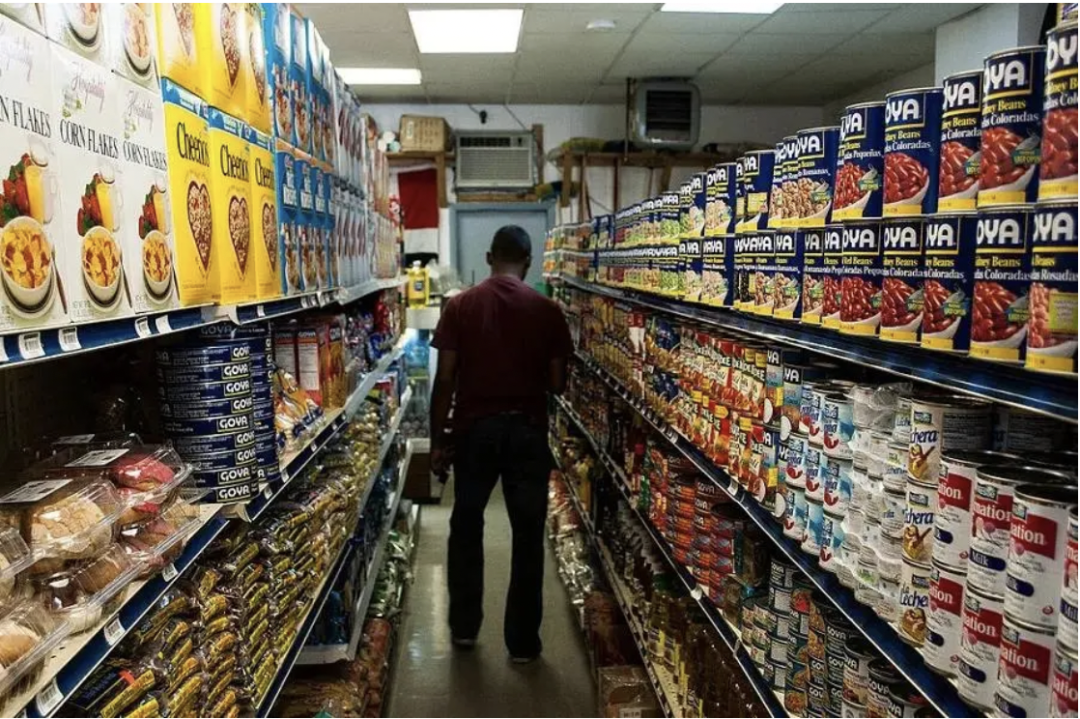
◉ Canned and packaged foods stacked high on supermarket shelves in North America. Photo: Sun Shan
Chris first suffered from constipation, which quickly developed into haemorrhoids, because the food he was now eating contained almost no natural dietary fibre. Then he felt hot, sweated a lot and woke easily; this progressed to anxiety and irritability, his mental responses slowed, his memory declined, and he lost patience with his children and enthusiasm for work…
At the end of the 28-day trial, Chris had put on 6.5 kg and developed fatty liver. Various additives had affected his gut, and the cause was probably the various food additives. Animal studies have shown that the various commonly used emulsifiers (such as soy lecithin, mono- and diglycerides of fatty acids, carrageenan, polysorbate 80, and so on) are like “washing-up liquid” for the gut: they weaken the intestinal mucus layer, making it easier for bacteria to come into contact with intestinal epithelial cells. Long-term intake may induce low-grade chronic inflammation and increased intestinal permeability (that is, “leaky gut”), and is associated with obesity and metabolic syndrome.
The magnetic resonance imaging scan also showed that his brain had already developed addiction-related changes, almost the same as the patterns seen in the brains of people with addictions. The “Bliss Point” we have already discussed refers to manufacturers’ use of a specific ratio of sugar, salt and fat to maximise the pleasure of eating, make it hard to feel full or cloyed, and even directly stimulate the release of dopamine. Human appetite is like a runaway car with the accelerator pegged and the brake line cut: not only can people not stop once they start eating, but after finishing, they still feel “not having had enough.”
After Chris returned to a healthy diet, his weight came down and his physical symptoms slowly subsided. But the bad news is that his brain had not recovered. In other words, although he could rely on willpower to give up unhealthy high-sugar foods, the addictive effects in his brain were still there.
If You Don’t Trust the Ingredients List,
Just Cut Out Additives Altogether.
Many people now know to check the ingredients list before buying, but where one side makes a clever move, the other finds a way round it; the ingredients list, too, is quietly changing.
“Clean label” is a word game often played by some sellers, who exploit an information gap and use health concepts to mislead consumers. “Non-fried” means first coating the product in oil, soaking it in oil, and then baking it at high heat. It really is not deep-fried in a pan of oil, but that does not mean it is free of fat or trans fat. The harmful reactions that occur when starch and oil are heated at high temperatures are by no means absent, and some baked non-fried crisps have an average acrylamide content even higher than that of deep-fried crisps.
Some “0 added preservatives” claims are achieved by adding excessive amounts of salt and sugar for preservation. “0 added sugar” often merely means “0 sucrose”. More and more people know that eating sugar is bad for health, but by splitting white sugar into several differently named sugars—glucose syrup, crystalline fructose, concentrated fruit juice, and so on—each individual ingredient can be pushed further down the ingredients list. In reality, the total proportion of added sugar has not decreased; in some products, the total sugar content still ranks near the top of the ingredients list.
When “concentrated apple juice” and “fructose syrup” appear on the ingredients list, many people assume that “apple juice” is healthier. In reality, juicing causes the dietary fibre in fresh fruit to be almost completely lost, and once the water is removed by evaporation, fructose and glucose can account for 65%–72%, making it little different from fructose syrup. A similar situation can be seen with other concentrated fruit juices.
Some sellers exploit regulatory gaps and use this kind of wordplay to create the illusion of “clean ingredients”, even raising the product premium on this basis. The customer can never outsmart the seller. Since it is impossible to guard against all the different additives, I have simply stopped trying; if I do not eat it or buy it, I am safe.
I have always believed that the absence of additives is more important than organic status. When buying ready-made products from the supermarket, the “organic” gimmick can be ignored entirely. However organic the raw ingredients, once sodium stearoyl lactylate, calcium propionate, ascorbic acid, mono- and diglycerides of fatty acids, and butylated hydroxytoluene are added, the result is just as harmful to our small lives. If organic ingredients are cooked high in fat and salt, with flavouring and monosodium glutamate added, or used with large amounts of added soy sauce, oyster sauce, sauces and seasonings, it is more reassuring to keep ordinary ingredients simple and clean—boiled and steamed.
Here are two simple, easy-to-remember tips:
First, choose whole foods and avoid processed products. If you cannot deal directly with whole-food ingredients, choose the option closest to the whole-food form. If you can buy flour and make steamed buns yourself at the weekend, do not buy ready-made steamed buns or bread; if you can buy shell-on prawns, do not buy peeled prawns or prawn patties; if you can buy a whole piece of meat, do not buy meat patties or meatballs.
Second, avoid the “crisp-and-gummy taste”. Peach-kernel pastries and pineapple cakes both require large amounts of shortening, with the trans fat level off the charts. Dried fruit and vegetable crisps and mushroom crisps mostly undergo low-temperature vacuum frying (also known as low-temperature frying), have a fat content over 30%, and use fruit and vegetables merely as a gimmick. The various gelling agents in jelly and ice cream have zero nutritional value and burden the gut and stomach, so children with weak digestion need to be especially careful. Strawberry-flavoured yoghurt contains no strawberries, and grape-flavoured drinks contain no grapes; almost all are made by blending in flavouring and colouring.
Key point: choose whole foods and avoid the “crisp-and-gummy taste”.
No one wants to be a guinea pig for additive testing, and no one is eager to test poisons on their own body; the real difficulty is putting it into practice. I spent five years in Eren Gu carrying out a very timid experiment: cutting out additives completely.
Practice has shown that I can do it, and in fact you can too.
References
– This is Foodthink’s 833rd original article –

Foodthink
Author
Kouzi
A steadfast farmer and village brewer. Full-time foodie, part-time farmer, and amateur writer.
Editor: Xiao Dan
Layout: Ming Lin
Scan the QR code to send a tip and support original food knowledge
▼

▼
Click the image to read related articles.




▼
Click a keyword to explore more article collections
Seeds | Ag Tech | Policy | Fermentation | Nutrition | Fruit | Fisheries | Events | Jobs | Takeaway | Wet Market | Livestock | Food Talk | Sharing Sessions | Book Club | Harvest Festival | Smallholder Stories | Climate Change | Rural Development | Cooperative Economy | Urban Farmers | Food Safety | Digital Technology | Biodiversity | Pandemics and Food | False Solutions | Ecological Farming Internship Programme
Beijing | Hebei | Shanghai | Guangdong | Guangxi | Henan | Sichuan | Jiangxi | Xinjiang | Shaanxi | Hong Kong | Chongqing | Zhejiang | Jiangsu | Guizhou | Taiwan | Inner Mongolia | Philippines | Canada | Russia | Mexico | Italy | United States | United Kingdom | Germany | Netherlands | Thailand | Sweden | Japan