Next to a Trendy Street, a “Slow” Business Holds On in Wenzhou’s Wet Market

In an age of rapid change, wet markets have, for a variety of reasons, found themselves in a difficult position. Some have been unable to escape the fate of closure; others, valued for the convenience they offer residents, have been allowed to remain. Shuangjingtou wet market in Wenzhou is one such case. One cannot help but wonder: in a world now shaped by e-commerce, fresh produce supermarkets, and other emerging formats, will those who still make their living in a wet market embrace online trade, or will they stay rooted in the small world of the market?
The Largest Dried Goods Shop in the Wet Market
In the early 1980s, Shuangjingtou New Village and the surrounding residential neighbourhoods spontaneously gave rise to a market of itinerant street vendors, which eventually evolved into a roadside wet market. This east–west road is a long, narrow lane 450 metres in length and 6 to 8 metres wide. On an ordinary day, it can barely accommodate two pedestrians and an electric scooter side by side; on holidays, when roving stalls crowd the lane, only single-file passage remains possible.
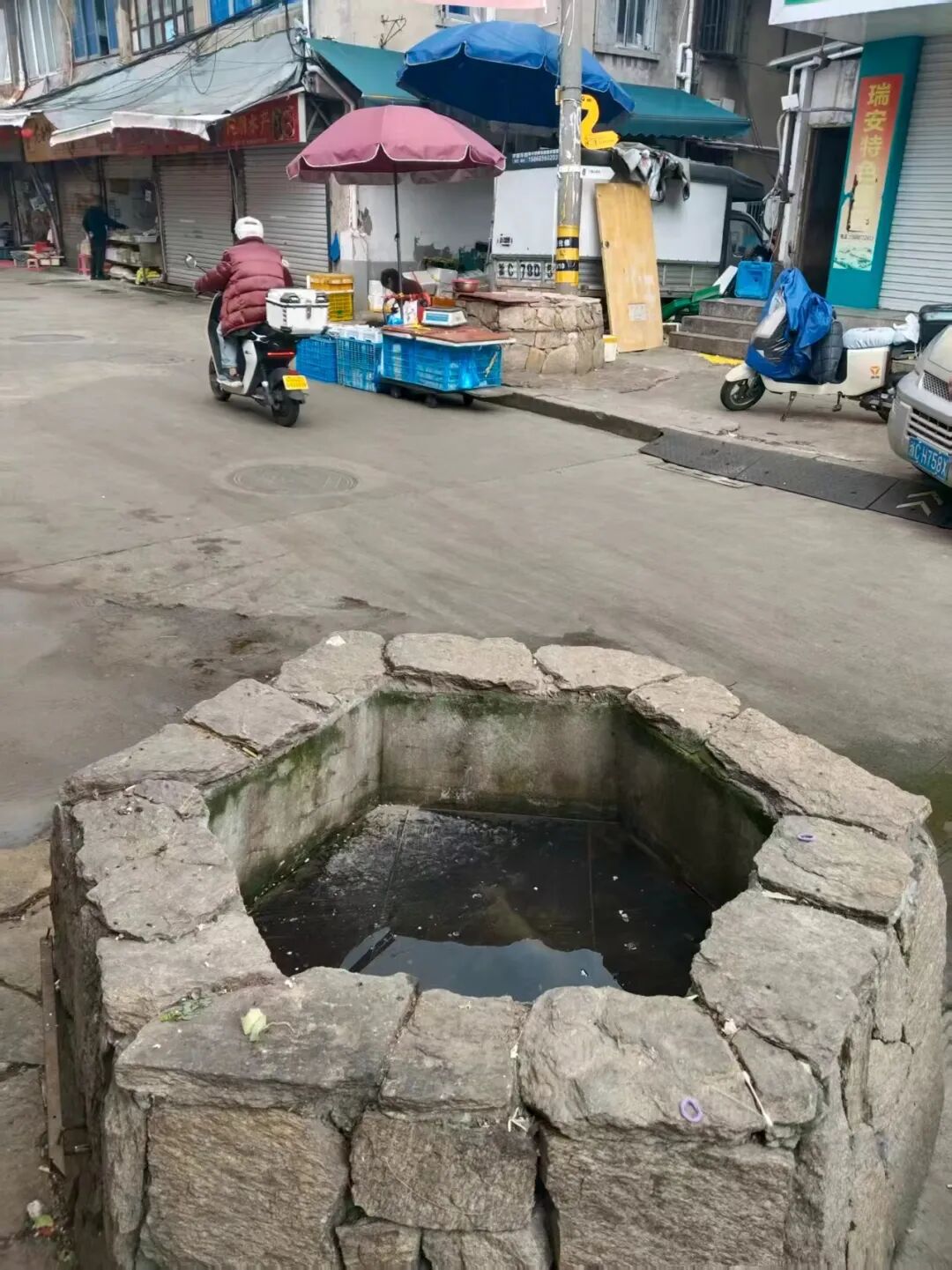
◉ Shuangjingtou wet market takes its name from two wells. Accordingly, the renovated Shuangjingfang also adopted the English name “well well”. Source: Foodthink
Because of the large number of itinerant vendors, the dilapidated condition of the fixed stalls, and the narrow passageways, the district government had in 2017 and 2021 planned to demolish and relocate this open-air wet market in its entirety. At the time, some shop owners, unable to withstand the persuasion from the industrial and commercial bureau and the sub-district office, moved to the Puxieshi Agricultural Trade Market.
The Puxieshi Agricultural Trade Market is an indoor wet market, separated from Shuangjingtou wet market by a single road. The cheapest stall there rents for just a few thousand yuan a year. At Shuangjingtou wet market, by contrast, stall rents generally run at 100,000 to 200,000 yuan a year, placing it toward the upper end for Wenzhou’s urban area (Lucheng District).
Although rents are far lower than at Shuangjingtou wet market, produce prices there are sometimes actually higher. “There aren’t many customers over there now, so the stall holders mark up their prices. The higher the price, the less they sell. If the wholesale cost is five yuan and half the stock goes to waste, the effective cost becomes ten yuan. So you end up buying things that are both stale and overpriced,” said Xu Yunyian, who runs a seafood and dried goods stall at Shuangjingtou wet market.
Most of the itinerant vendors and shop owners who wanted to stay resorted to “street smarts”: they worked out the time patterns of the urban management spot checks and waged a kind of “guerrilla war”, pulling out fast whenever the enforcement officers turned up.
Fortunately, when the sub-district office conducted a residents’ opinion survey, the majority were against demolishing the wet market. As a result, the plan to fully demolish Shuangjingtou wet market was abandoned in 2022 and replaced by a limited upgrade to the environment and business formats, allowing the wet market itself to remain.
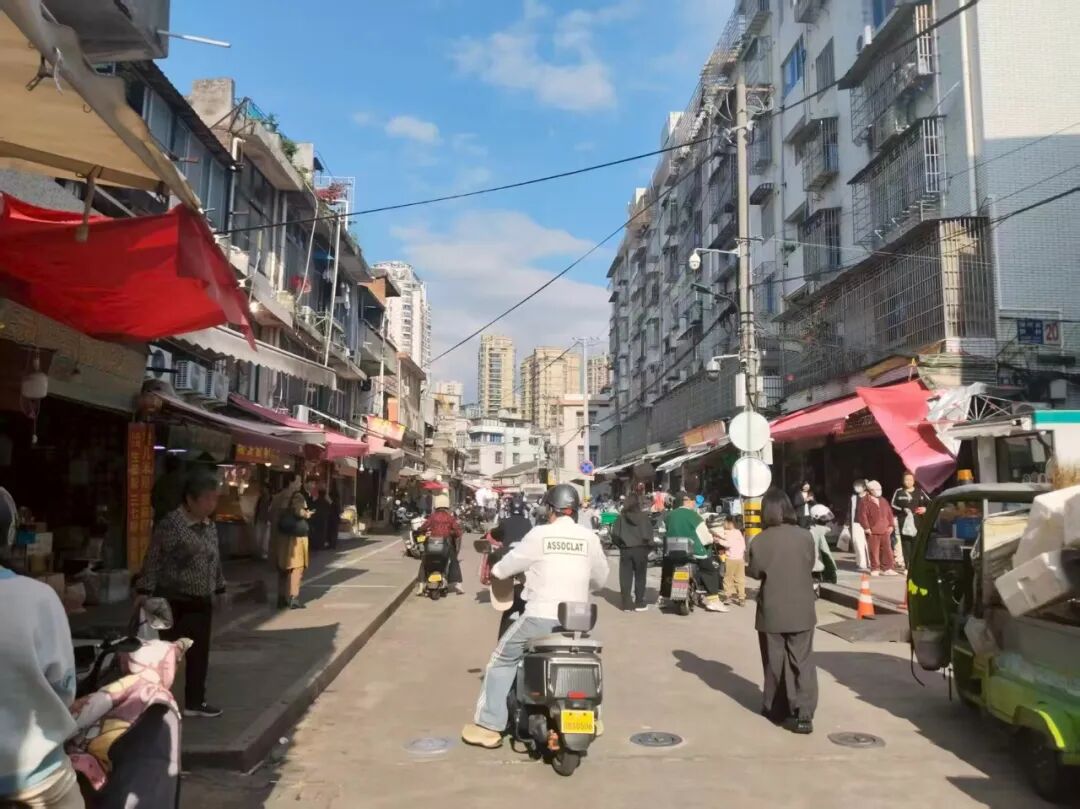
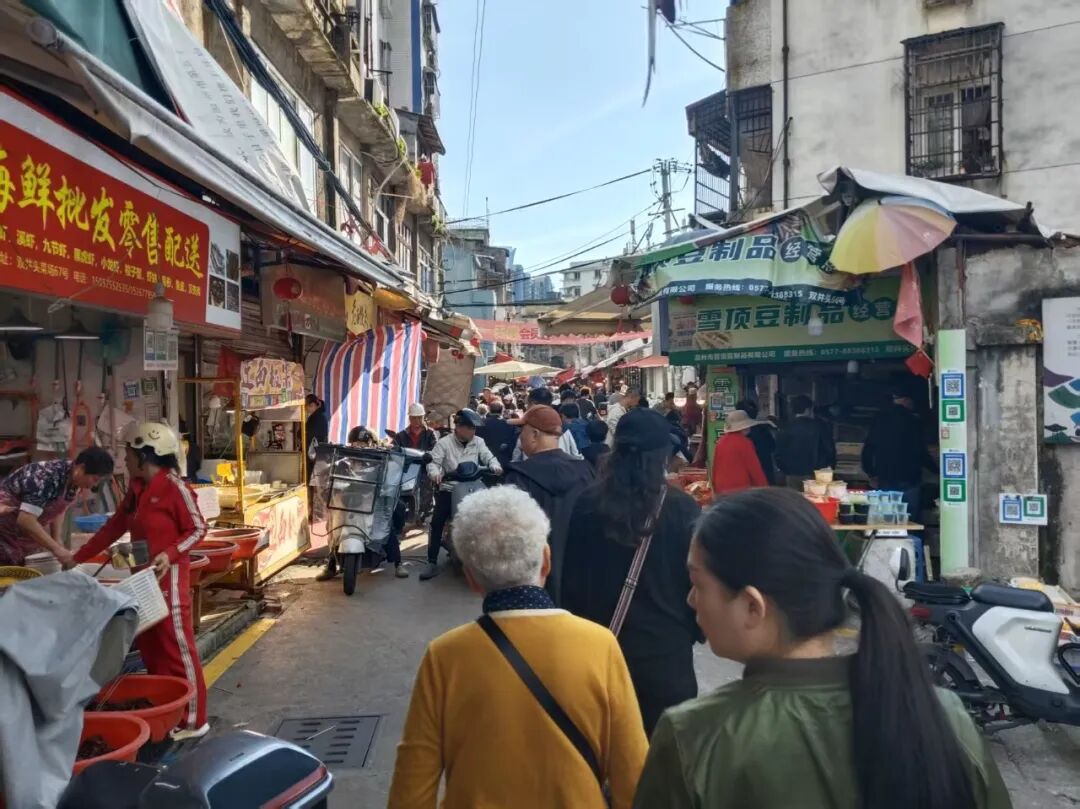
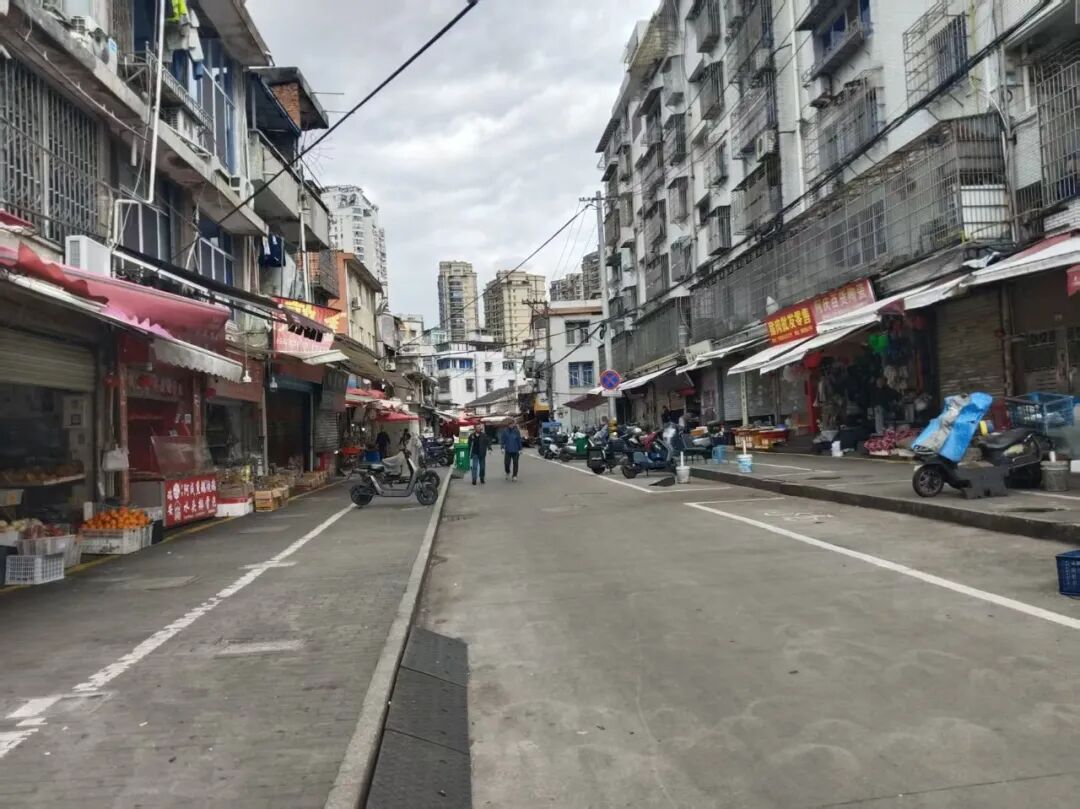
◉ These three photographs were taken during busy and comparatively quiet periods at Shuangjingtou wet market. Source: Foodthink
Today, the 50,000-square-metre Shuangjingfang has become a new must-visit landmark for culture and tourism in Wenzhou’s Lucheng District, home to numerous restaurants, cafés, and comedy mini-theatres. Popular stand-up comedians such as He Guangzhi have performed there on multiple occasions, while Shuangjingtou wet market forms part of the Shuangjingfang vernacular-culture district.
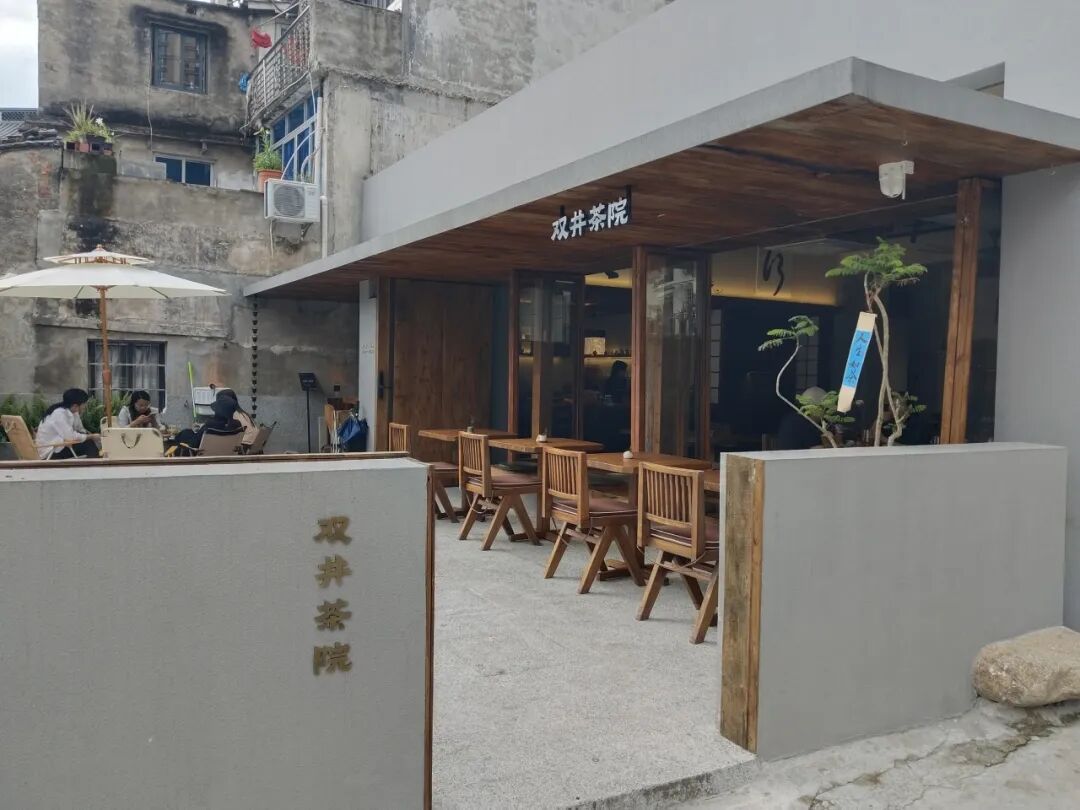
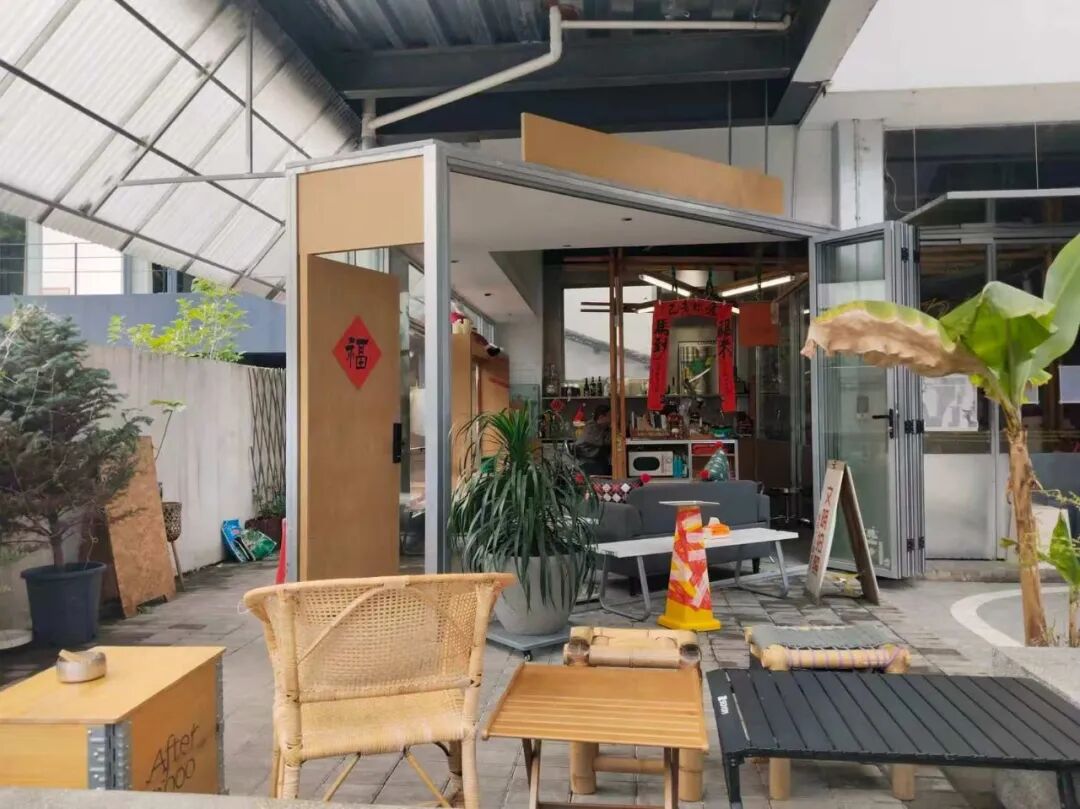
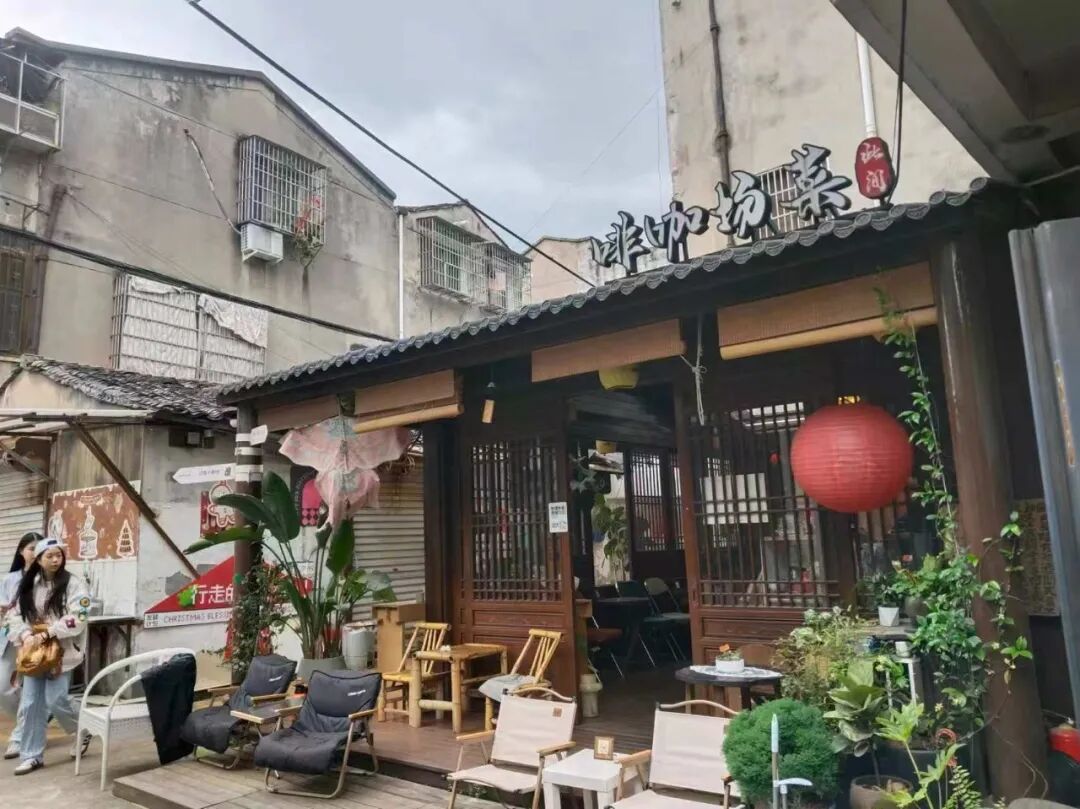
◉ The new business formats after renovation. Source: Foodthink
Yet the two have not merged. There seems to be an invisible barrier between them. On the odd holiday, a small wave of good-looking young people browsing Shuangjingfang will, quite by accident, wander into the earthy, everyday bustle of Shuangjingtou wet market.
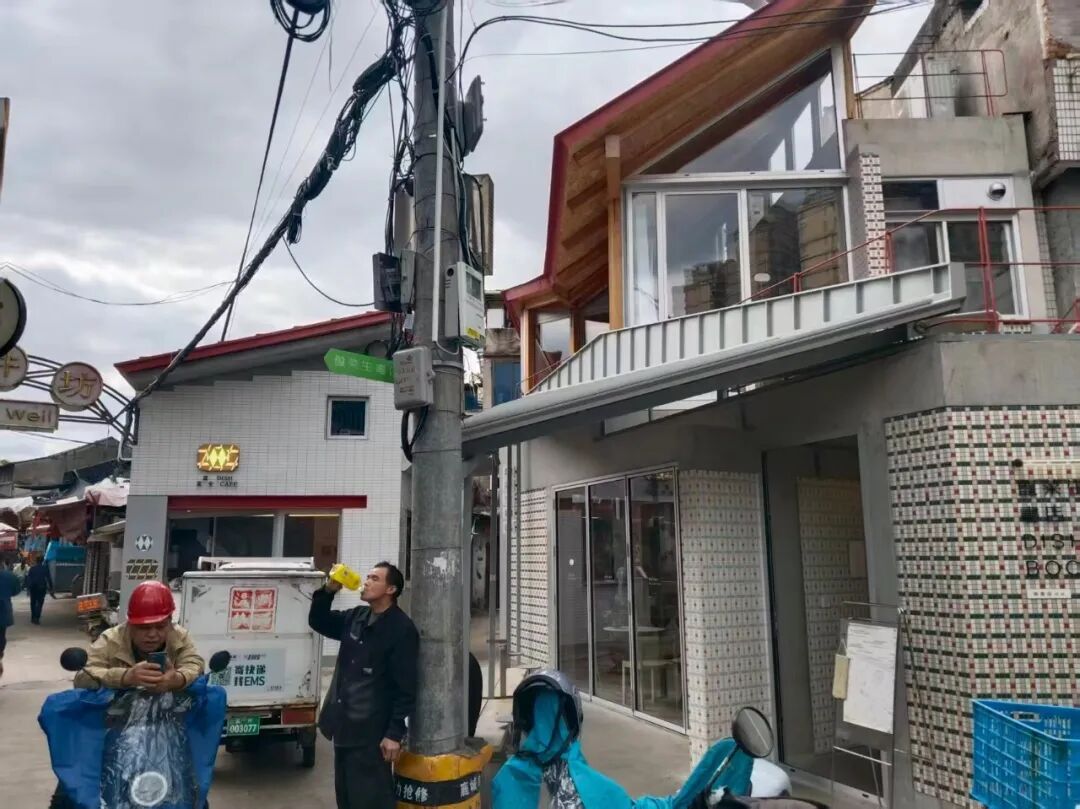
◉ The entire district is, for all practical purposes, divided by the viral Panchaisheng Bookstore: on one side lies the down-to-earth, everyday wet market; on the other, new formats such as cafés and stand-up comedy that attract young people. The two sides rarely interact. Source: Foodthink
“Shuangjingfang hasn’t channelled any foot traffic to us. It has had almost no impact on our business at all,” said Yunyian. Right next to Wenzhou’s famous must-visit spot, Xu Yunyian, who tends Shuangjingtou wet market, is also running a kind of traditional trade.

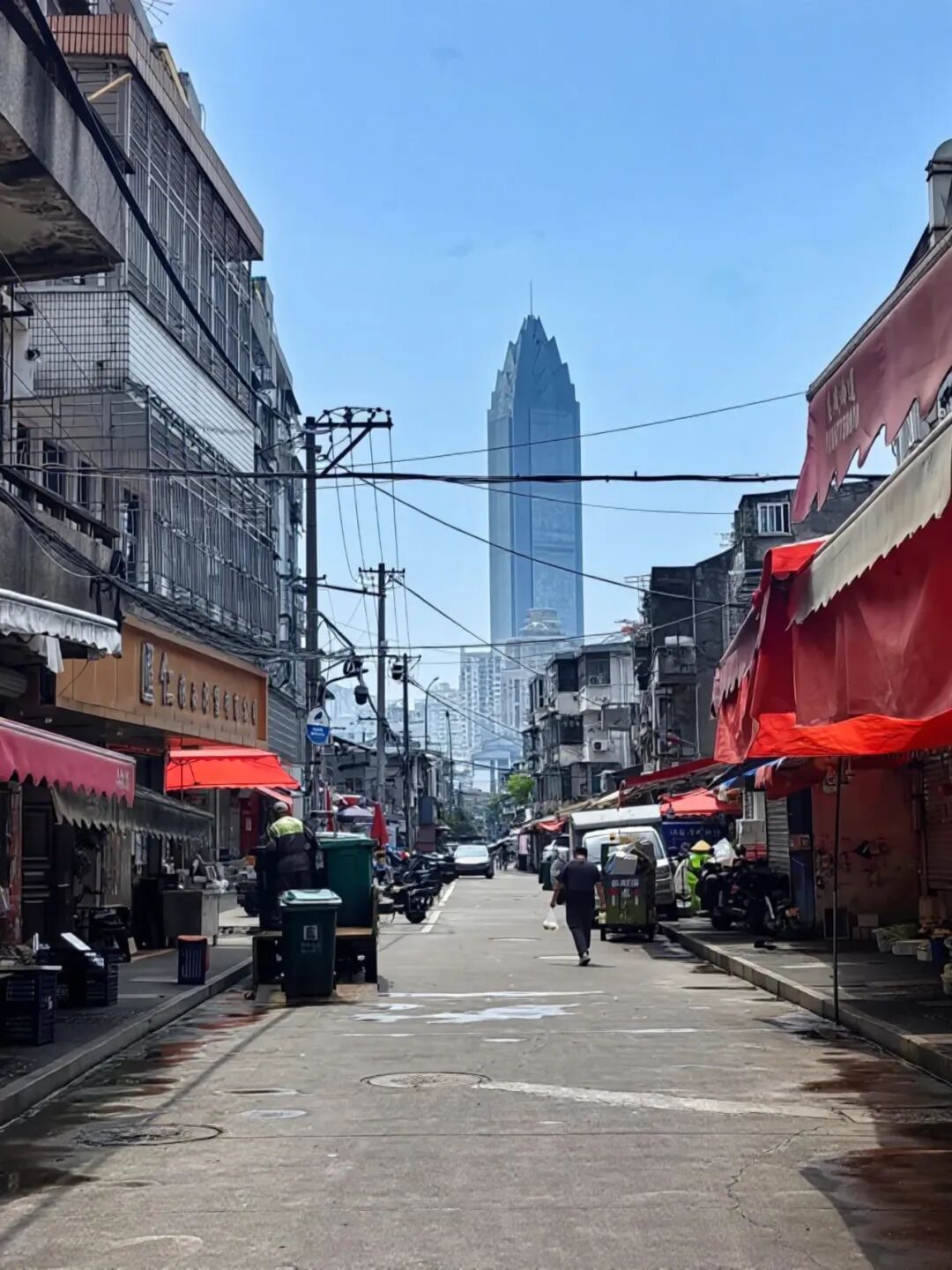
◉ Shuangjingtou wet market.
The Art of Business in the Wet Market
The “Shuangjingtou Li Jian Ginseng and Dried Goods Shop”, run jointly by Yunyian and her husband Li Jian, is the largest dried goods shop in this wet market. At fifty, Yunyian is the driving force behind the store – easygoing and outgoing in temperament, quick and resourceful in business.
Before the national craze for spicy, bold flavours, Wenzhou diners craved the pure freshness of ingredients and leaned towards saltier tastes. The briny-umami depth of the sea sat squarely in their comfort zone. A people who live and eat by the sea, Wenzhou folk are as dependent on salted seafood sides – baidaisheng, mud snails – as they are on proper meals such as scallion-oil big yellow croaker and wine-braised qiūměng.
All of this can be found in Yunyian’s shop. The dried goods store stocks a range of affordable seafood products priced at no more than 35 yuan per jin (500 g) – dried shark, dried hairtail, baidingkou, small silverfish, Manila clam meat, Dongtou seaweed, wakame, and the like.
She sources most of her stock from the local Dongmen Seafood and Dried Goods Wholesale Market in Wenzhou. Buying from the Dongmen market costs only a few jiao to a yuan more than purchasing directly from the source manufacturer – a negligible margin – so there is no need to arrange dealings with out-of-town suppliers herself, saving both time and effort.
When it comes to product selection, though, Yunyian has her own know-how. She conducts business with caution. For viral dried goods such as Yunnan morels, she resists the temptation to stock up in bulk, avoiding the losses that sharp price swings can bring. Yunnan morels have fallen from a peak of over 1,000 yuan per jin for so-called Yunnan special grade (the largest size) six or seven years ago to 300–400 yuan per jin today.
“When they first came on the market, the media hyped them up, claiming that eating morels could dramatically boost your immune system. But as more people took to cultivating them, prices gradually came down. The real demand for viral dried goods is not that great – people buy just a little, out of curiosity or as a gift. Unlike everyday staples such as dried baby shrimp that you want to eat day in, day out, it is the common dried ingredients that move in volume.”
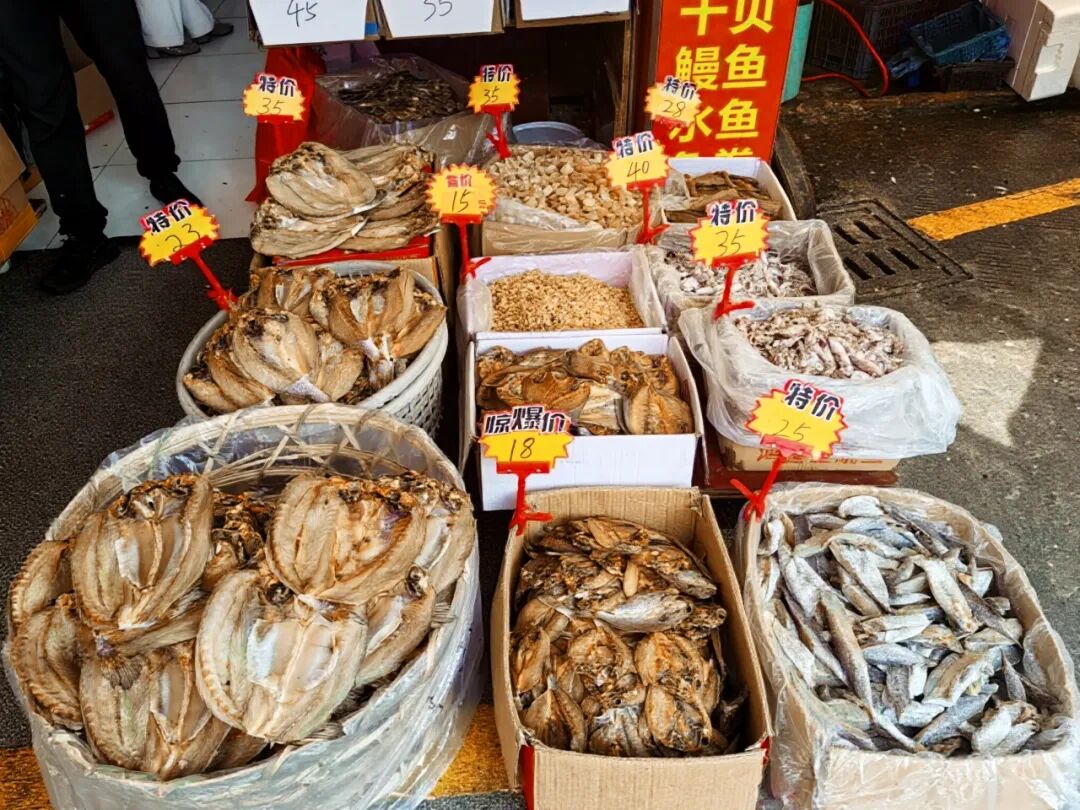
Seafood dried goods are fast-turnover items. During the annual closed fishing season, from May to August, dried salted fish, dried baby shrimp, squid, pen squid, and cuttlefish sell particularly well. Once the closed fishing season lifts, from October through to Chinese New Year, dried eel (yóumán gān) hits the market. The cheapest semi-dried variety goes for just over 30 yuan per jin; at its best, fully dried eel has fetched as much as 80 yuan per jin. But prices for dried eel no longer run that high – they generally stay at or below 60 yuan per jin. Customers who fancy it will spend over 1,000 yuan in one go, stocking enough to last the year.
Beyond that, the shop’s best sellers also include Wenzhou specialties such as duck tongues, dried cuttlefish, dried shrimp, and Tengqiao smoked chicken. The shop stocks traditional Chinese herbal tonics year-round – American ginseng, Korean red ginseng, notoginseng (Panax notoginseng), Gastrodia, Astragalus, and goji berries – as well as everyday soup ingredients: white sugar, brown sugar, rock sugar, mung beans, red beans, Job’s tears, dried red dates, purple dried jujubes (Southern variety) for slow-cooked soups, and golden honey dates. The higher-priced items are fish maw (huājiāo), sea cucumber, and cordyceps.
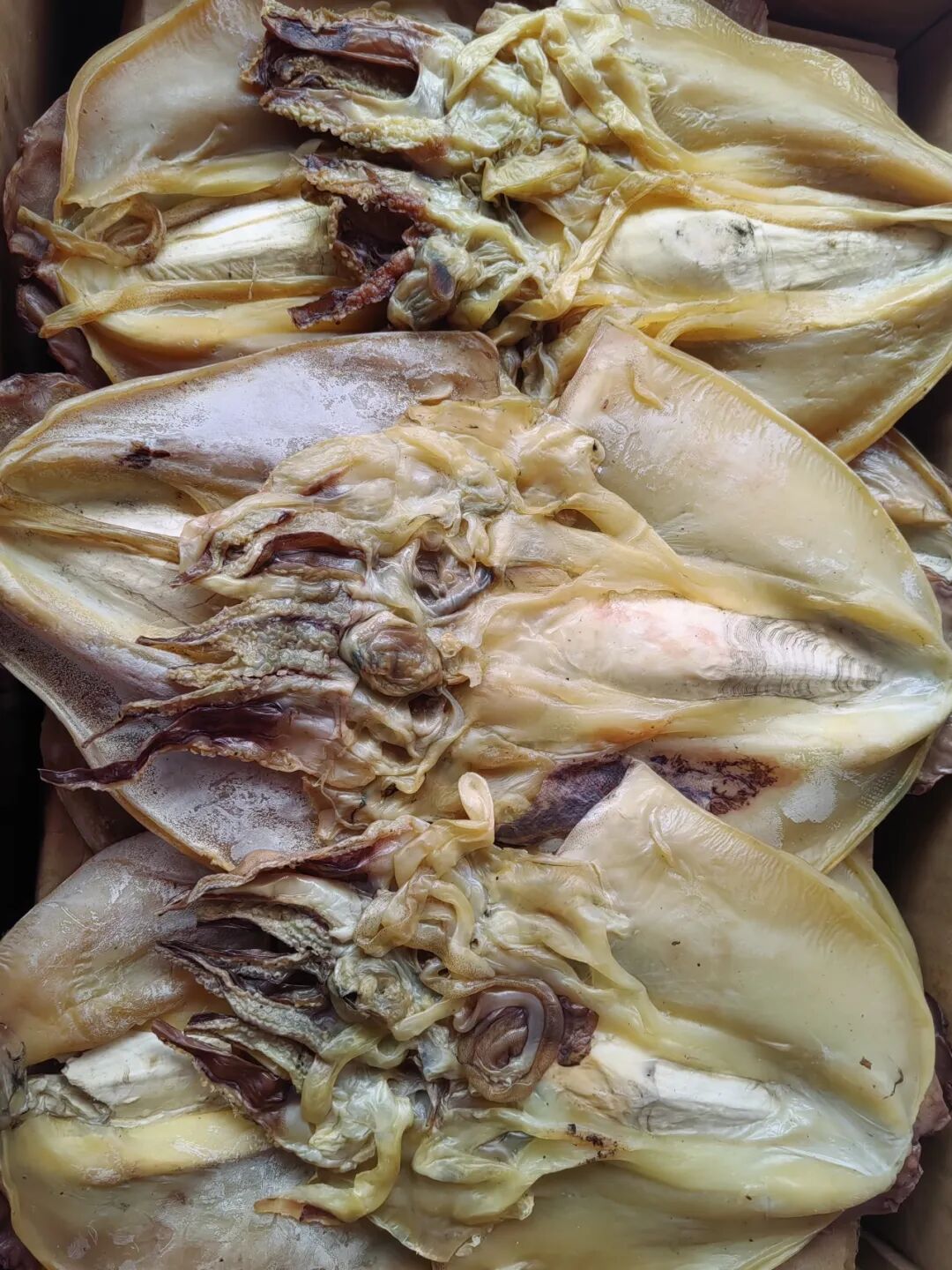
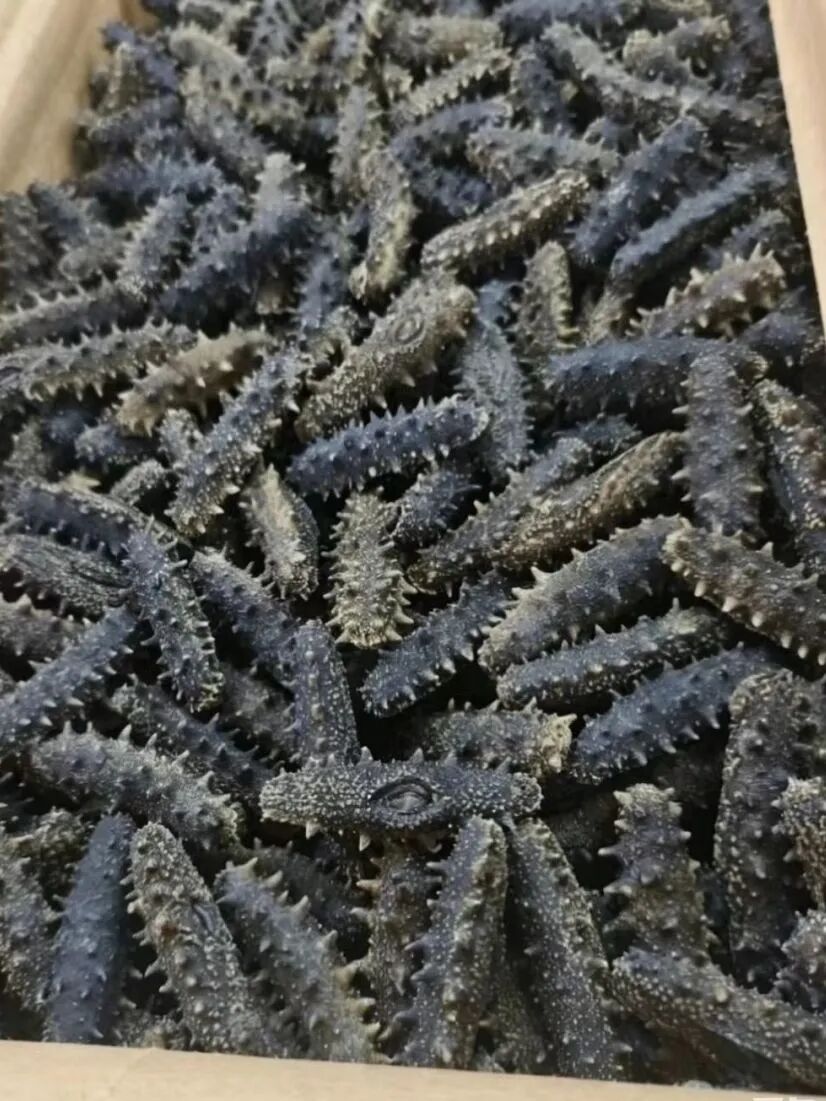
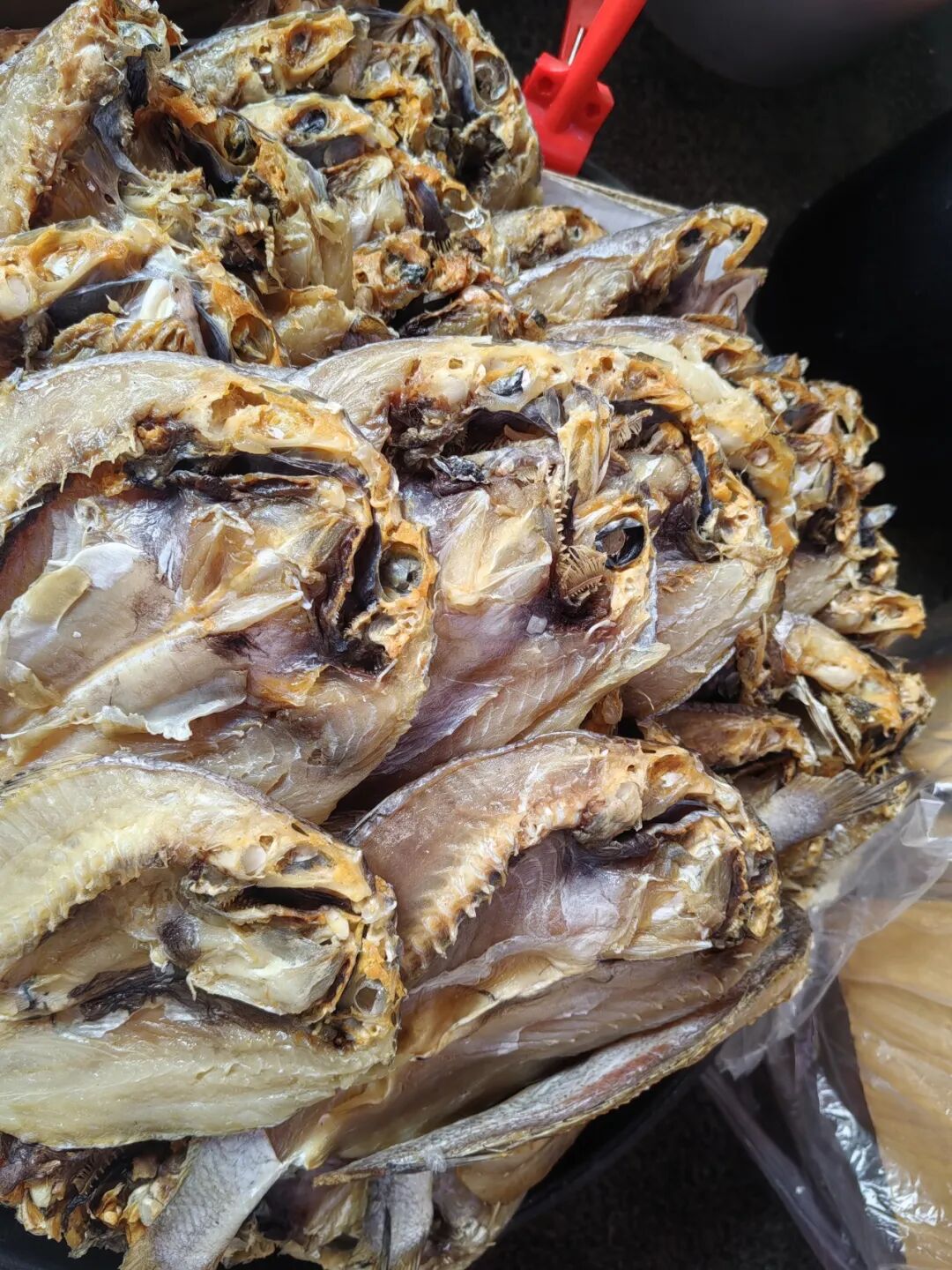
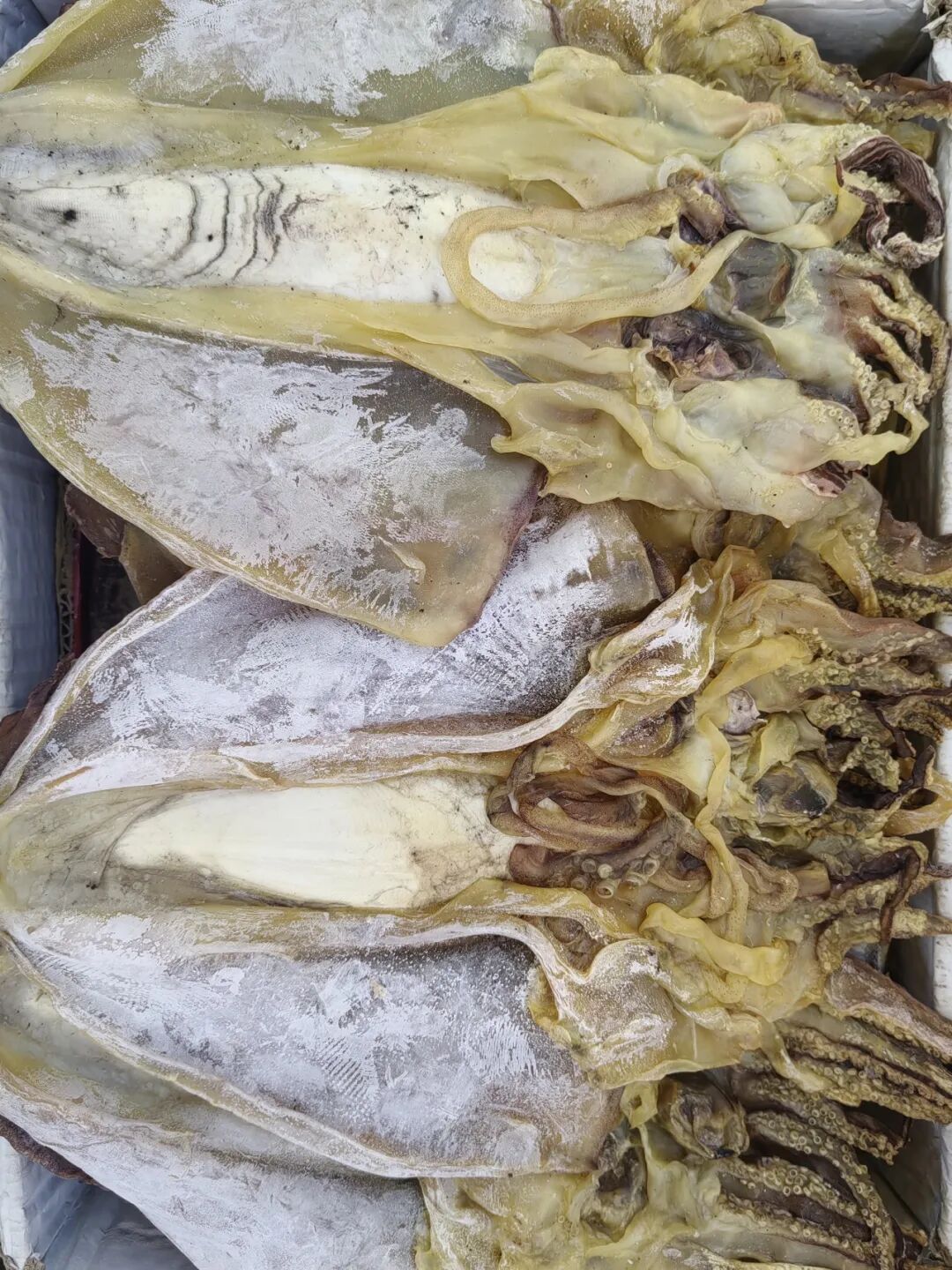
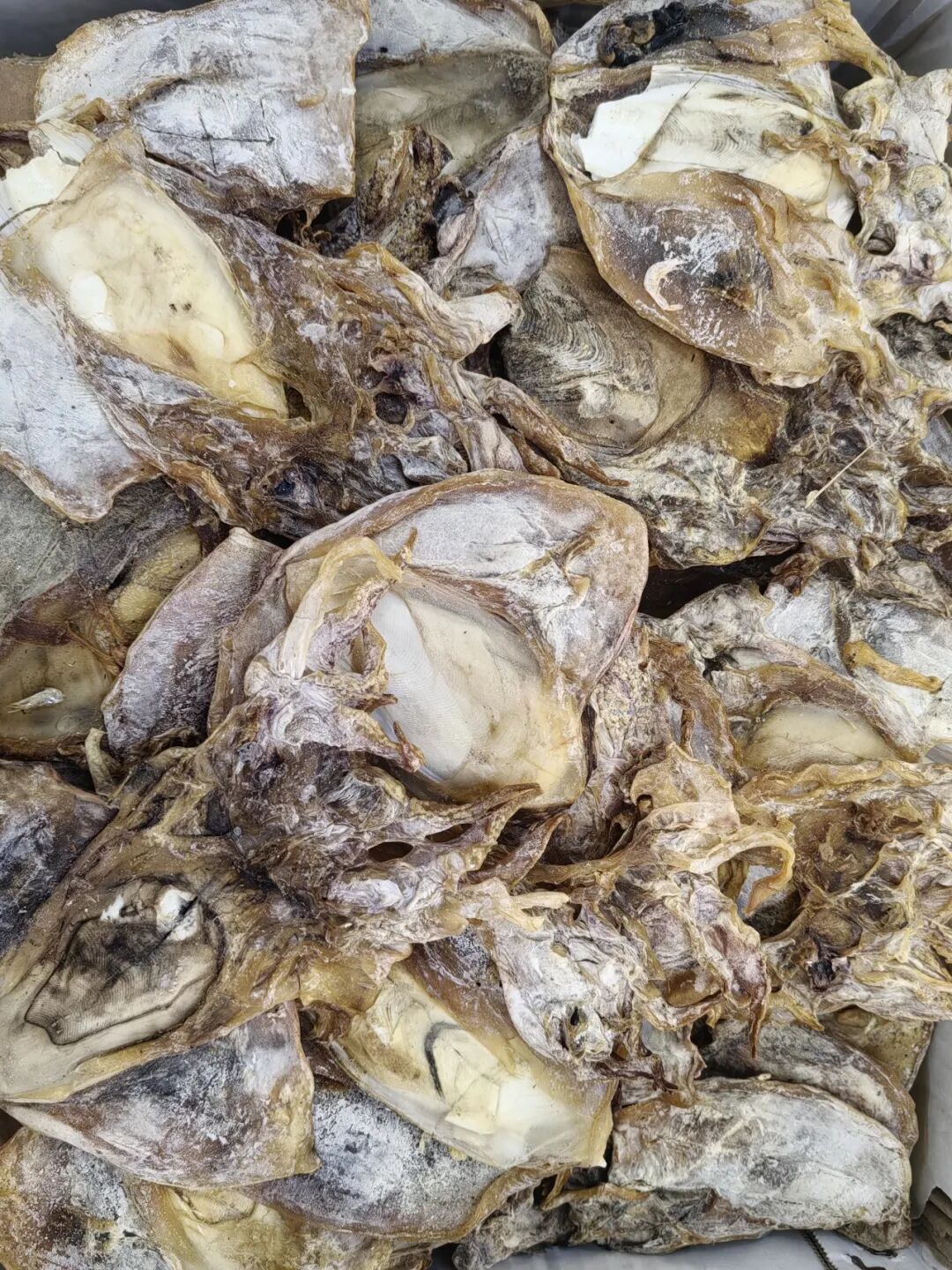
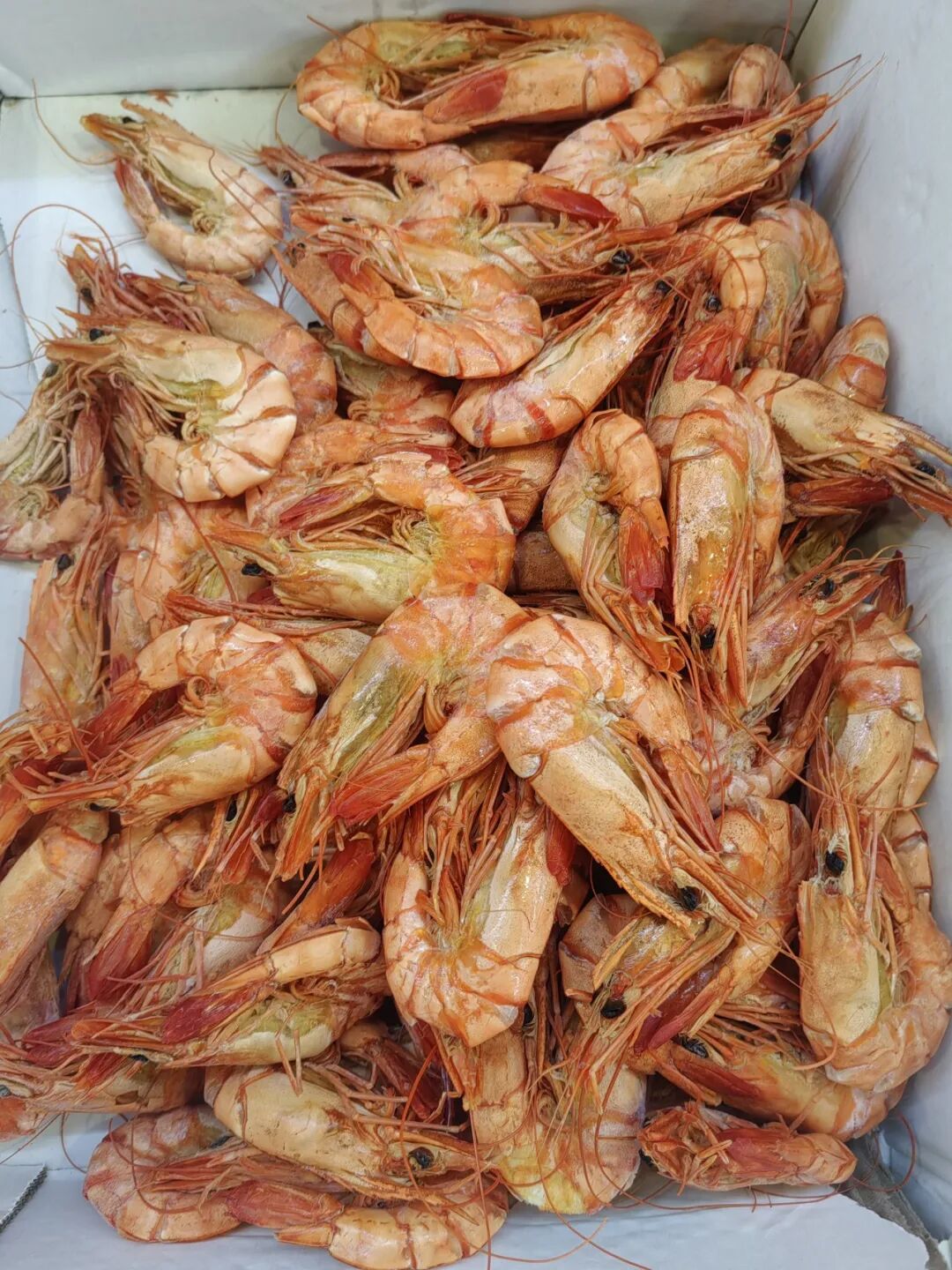
◉Some of the products in the dried goods shop.
All manner of dried goods fill most of the shop’s floor space, leaving only a narrow passage for foot traffic – just wide enough for one person to squeeze through.
Falling Back to the Wet Market
Always greeting people with a smile, Yunyian has a rich work history – she has held a proper job and run all manner of businesses.
She is from Yongjia, Wenzhou. In 2000, she graduated from the medical assisting programme at Wenzhou Health Cadre School, earning a secondary vocational diploma. After graduation she worked as a contract worker at a community health centre, and in 2001 married her husband, a Wenzhou local. Contract workers had no permanent post, and a monthly salary of 800 yuan was simply not enough to cover a family’s expenses. Relying on her professional background, Yunyian tried her hand at running a pharmacy selling traditional Chinese herbal tonics.
From the 1990s onwards, many people from Yongjia left the mountains to strike out in business elsewhere. Yunyian’s family followed her brother and sister to the suburbs around Jiangsu and Shanghai to open a clothing supermarket. Once they had left, their eldest son was left behind in Wenzhou, entrusted to the care of his paternal grandparents.
After five years in the clothing business, when their son reached primary-school age, Yunyian and her husband figured that educational resources in the Jiangsu suburbs were not as good as those in Wenzhou city. To give their son a better education, they closed their out-of-town business and returned to Wenzhou.
Back in Wenzhou, the couple ran a small-goods wholesale business at the Huanglong Wholesale Market in Lucheng District, selling everyday sundries – cosmetics, jewellery, slippers, umbrellas, and other small general goods. They stuck with it for ten years. During the wholesale years, Yunyian gave birth to her second son.
This small-goods wholesale market, built in the 1990s with 120 million yuan in private fundraising, began its gradual decline from 2010. Around 2016, the rise of e-commerce dealt a massive blow to brick-and-mortar stores. Yunyian’s small-goods shop was caught up in it too, and business kept slipping downhill.
Later, the Huanglong Small-Goods Wholesale Market began its restructuring and demolition. By 2019, a landmark woven into 26 years of Wenzhou’s collective memory was gone, and the couple pulled out of the market as well.
Yunyian stayed home and “played” for a year, figuring out what business to start next to make ends meet. At the time, many businesses were being hit hard by e-commerce platforms such as Taobao. She figured the one sector least affected was probably the wet market – “People have to eat and buy vegetables to stay alive. If even the wet market businesses are gone, then we truly have no business left to do.”
For most of 2020, Yunyian spent her time “wandering around” various wet markets in Wenzhou’s urban area, doing her research. In the end, she decided to set up shop at Shuangjingtou wet market, where produce prices sat at a mid-range level. She started with herbal tonics, and the shop has been running ever since; in the dried goods shop, tonics and dried goods now make up roughly half the stock each.
“Doing business in a wet market means earning hard-earned money. A family of four’s entire living depends on this shop,” said Yunyian.
Over the three years of the pandemic, this dried goods shop actually did well – it could be counted among the busiest in the wet market. During the pandemic, customers worried about cross-infection and were reluctant to go out often, so they bought larger quantities in one go. Compared with seafood and aquatic products that can only be kept for a short time, dried goods have a much longer shelf life.
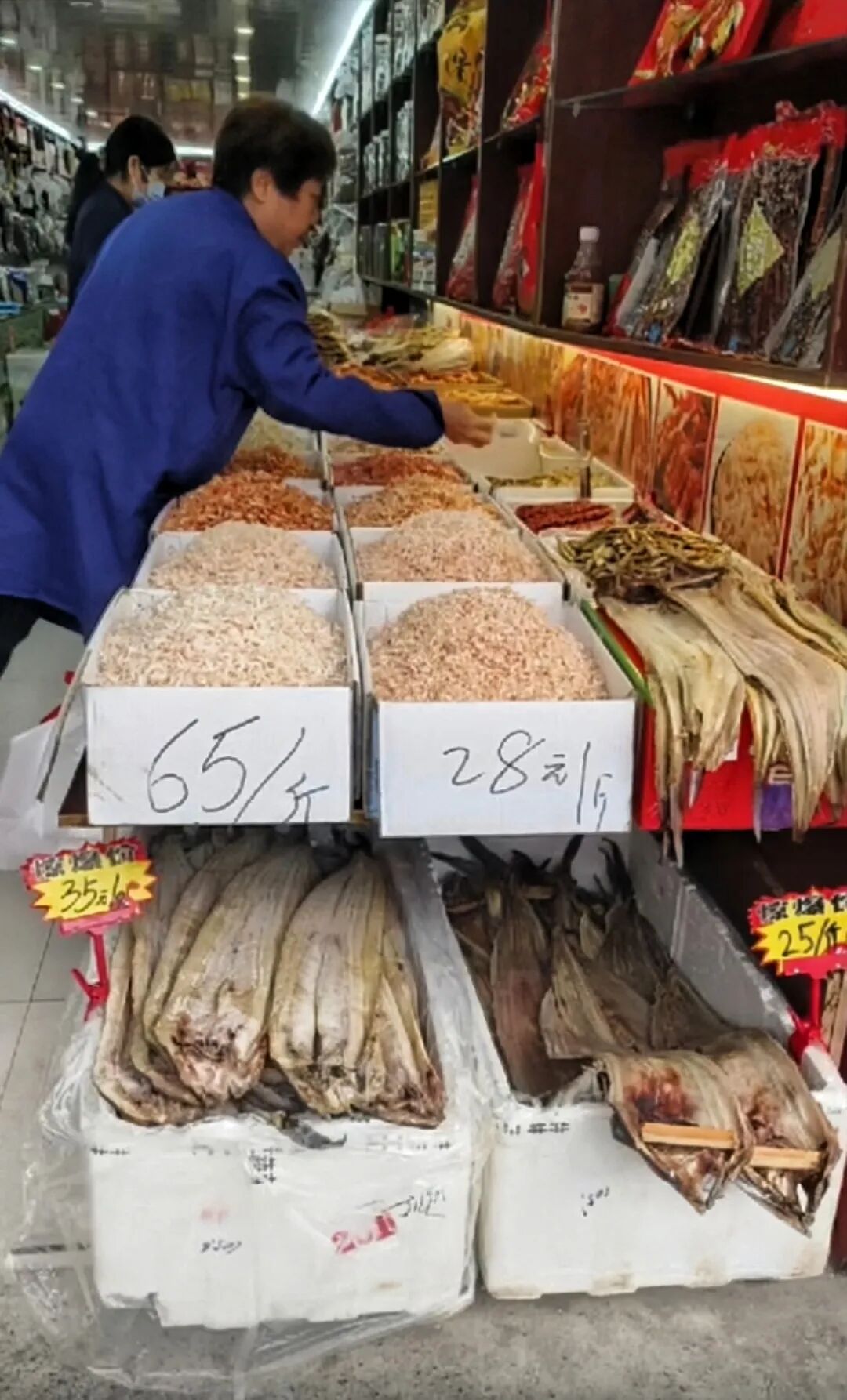
◉ Customers selecting dried ingredients on their own in the dried goods shop.
Business Is Built by Enduring
After seven years of trial and error, Lijian and Xu Yunyian have established a firm footing at Shuangjingtou wet market.
There is an old Wenzhou saying: “Business is built by enduring.” Her husband Lijian and a hired worker start work at 5 a.m. every day, sorting through the stock stored in the cold room and freezers and laying it out at the shop entrance.
Some of the older regulars, grandfathers and grandmothers in their sixties and seventies, are used to catching the early market. They are often in the shop buying before 6 a.m.
By midday, business across the entire open-air wet market slows down, and each stall is practically deserted. In summer especially, under the glare of the sun, after working for six hours from early morning, the stallholders grow tired and take a break. In the dried goods shop, Yunyian, her husband, and a hired worker – three of them – take turns resting for an hour. Foot traffic picks up again around 3 p.m., and they stay open until 8 p.m., when they pack up and close for the day.
The dried goods shop’s main customer base is still walk-in shoppers from the wet market. A small number are corporate clients – private business owners who typically buy dried goods as festival gifts for their staff or as presents for clients. Since most of the people who come in are regulars, all items carry clearly marked prices. When the three of them are so busy their feet barely touch the ground, the regulars pick their own goods. “Customers choose what they want, bag it up, and hand it to us. We key in the price on the calculator, and they just scan the code.”
The month around Chinese New Year is the busiest time of the year. Daily average turnover is three times that of a normal month, accounting for nearly a third of the year’s total. During the New Year period, the shop’s narrow passage is packed with customers. Lijian stands at the entrance with a megaphone, hawking their wares, while Yunyian coordinates things inside. At peak times, Yunyian brings in her own parents to help and temporarily hires seven or eight extra workers. Working hours during the New Year are longer than usual – after closing at 8 p.m., they are still busy packing orders. Take dried eel, for example: during the New Year period they sell an average of three boxes a day, each weighing about 50 to 60 jin.
On the first day of the lunar New Year, some seafood and dried goods stalls close, but the Yunyians keep theirs open. Many customers rush to visit relatives and friends on the first and second days of the New Year and need to bring gifts, so they come to the dried goods shop to pick some out. Some customers whose fridges cannot fit everything will even store their purchases at the shop.
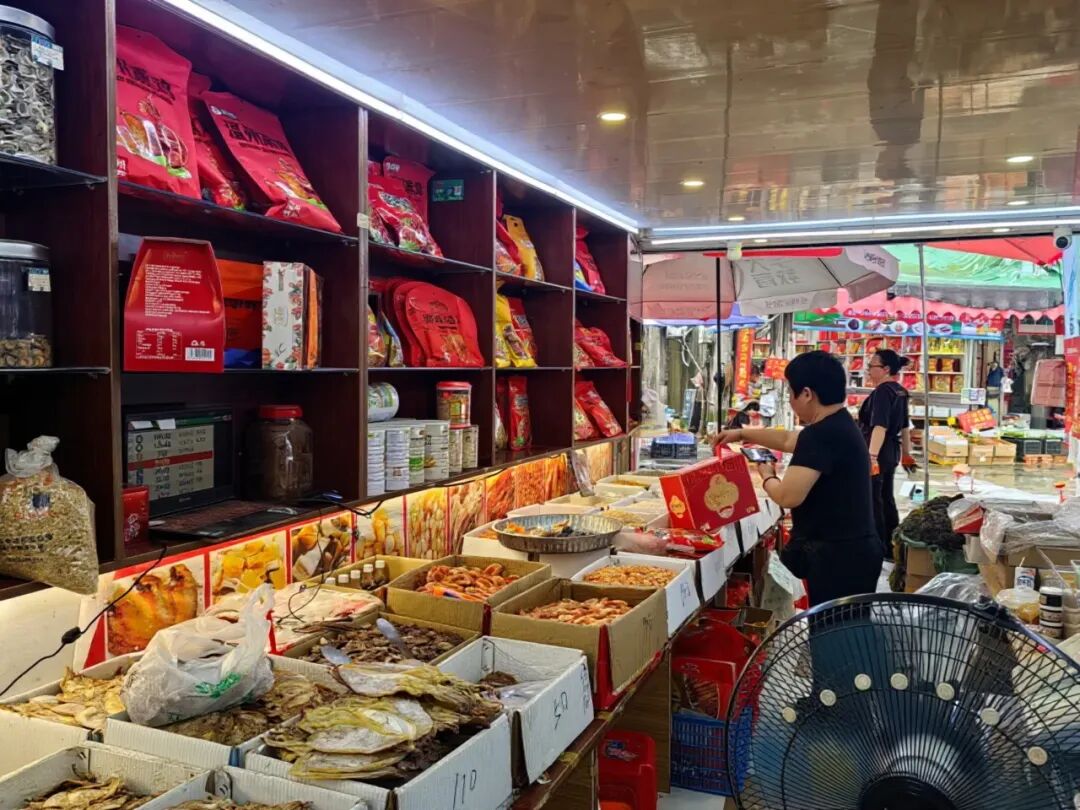
◉Shop owner Yunyian photographing a gift box packaging sample for a customer.
Saying No to E-Commerce
Although the e-commerce blow had led the couple to close their small-goods shop, the Lijian Ginseng and Dried Goods Shop has not kept up with the times in how it does business. They have not chosen to open an online store or do livestream selling, nor have they joined delivery platforms such as Meituan or Taobao Flash Purchase.
“Our shop sells at wholesale prices as retail – we are even cheaper than e-commerce. I have looked into opening an online store; joining an e-commerce platform costs money, and we do not have rent to worry about. We only make a few yuan per jin on an item, and e-commerce commission rates far exceed ours. When we first opened, people from Meituan, Taobao, and others came knocking to recruit us. They offered to have a third-party operations company run our online store, but they wanted to collect fees upfront, and the commission was very high. After paying the fees and commissions, there was basically no profit left.“
The dried goods shop grows its customer base mainly through word of mouth. Yunyian firmly believes that good wine needs no bush. Some friends who once lived in Wenzhou but have since moved away still miss the taste of the dried goods, have added Yunyian on WeChat, and place orders regularly. When Wenzhou people go out of town to visit relatives and friends, those relatives who have tasted Wenzhou specialties (especially duck tongues) naturally become Yunyian’s customers as well.
She is an old-school sort – she rarely orders delivery. At midday she goes to the wet market herself to buy ingredients and has the hired worker cook lunch. She has not even downloaded Dingdong Maicai or Meituan Maicai. When a customer contacts her on WeChat to buy goods and she needs to send a courier, she is at a loss, because the shop’s address has no precise location pin.
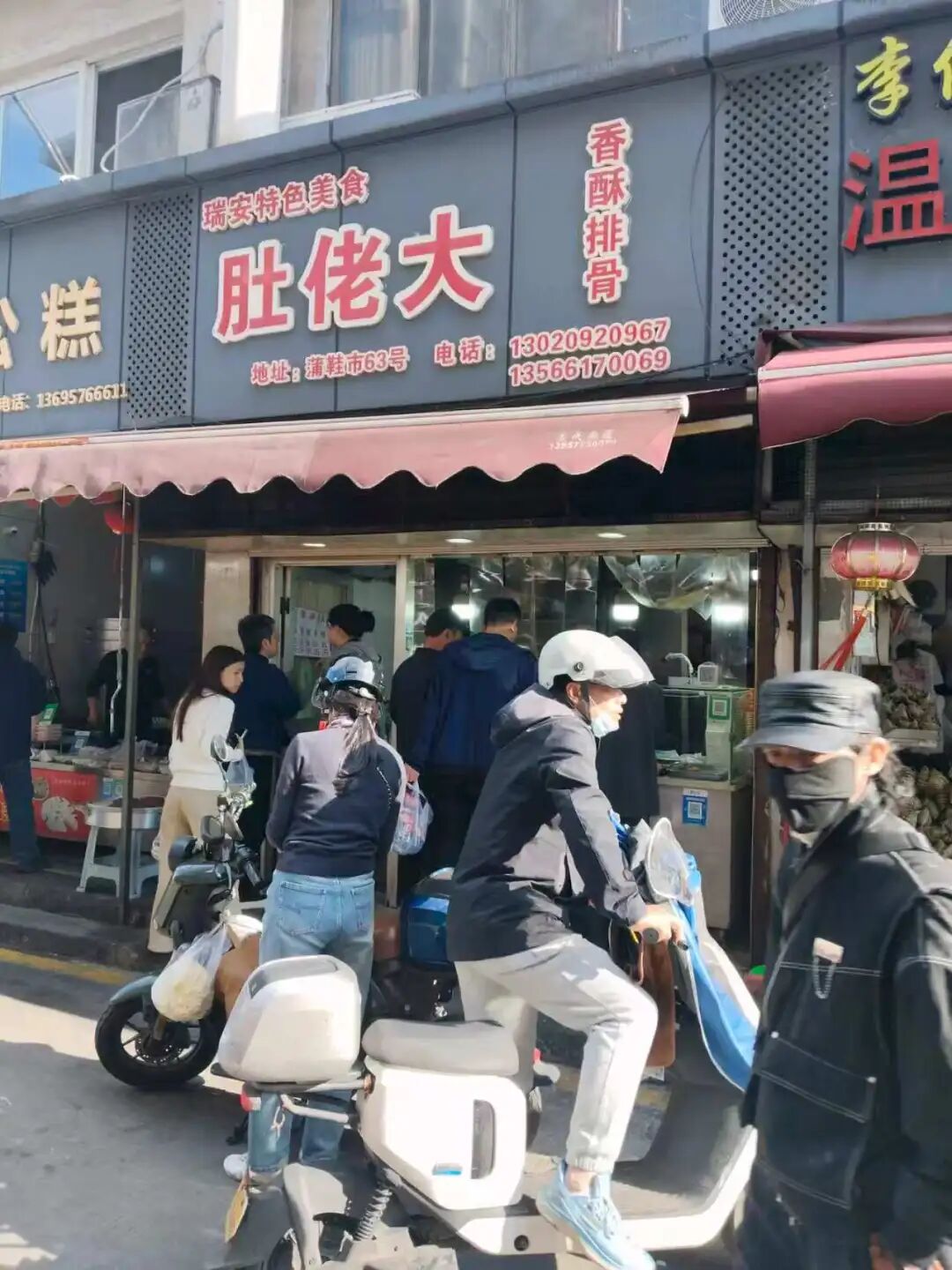
◉ Some of the popular food stalls in the wet market draw such crowds that each batch sells out the moment it comes out of the wok – there is simply no way they could run an online business. Source: Foodthink
At Shuangjingtou wet market, aside from one tiny shop selling mung bean cakes whose owner does livestream selling, no other merchants do livestreams. Yunyian feels that just keeping this shop running is exhausting enough; she simply has no energy left for livestreaming. “I am so busy I do not even have time to reply on WeChat.”
Fortunately, Yunyian’s customers are also generally on the older side. The dried goods shop’s main customer base is retired elderly people, whose purchasing power is far greater than that of younger shoppers. “When young people come to buy dried baby shrimp, they buy in 10-yuan increments – if the scale comes up even one yuan over, it is a no-go. They only buy enough for a few meals at a time. Elderly customers with limited mobility, wanting to stock up conveniently, buy dried baby shrimp in half-jin or one-jin quantities. If you weigh out two jin for them, they do not mind at all.”
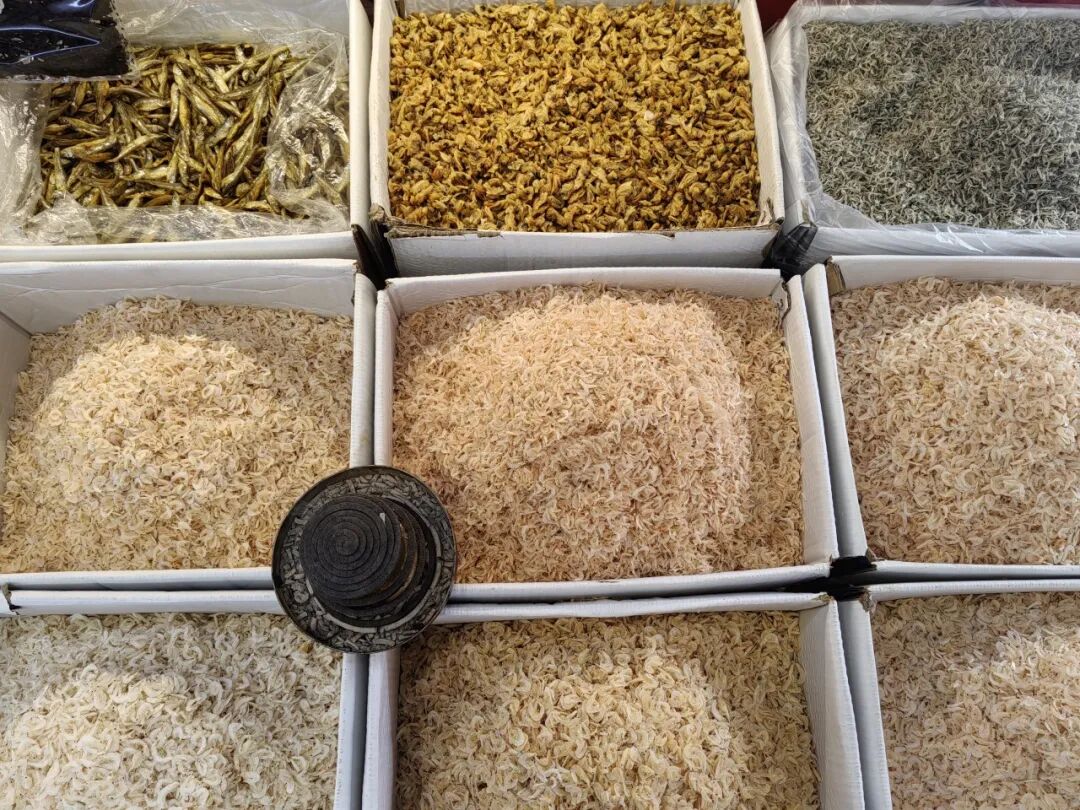
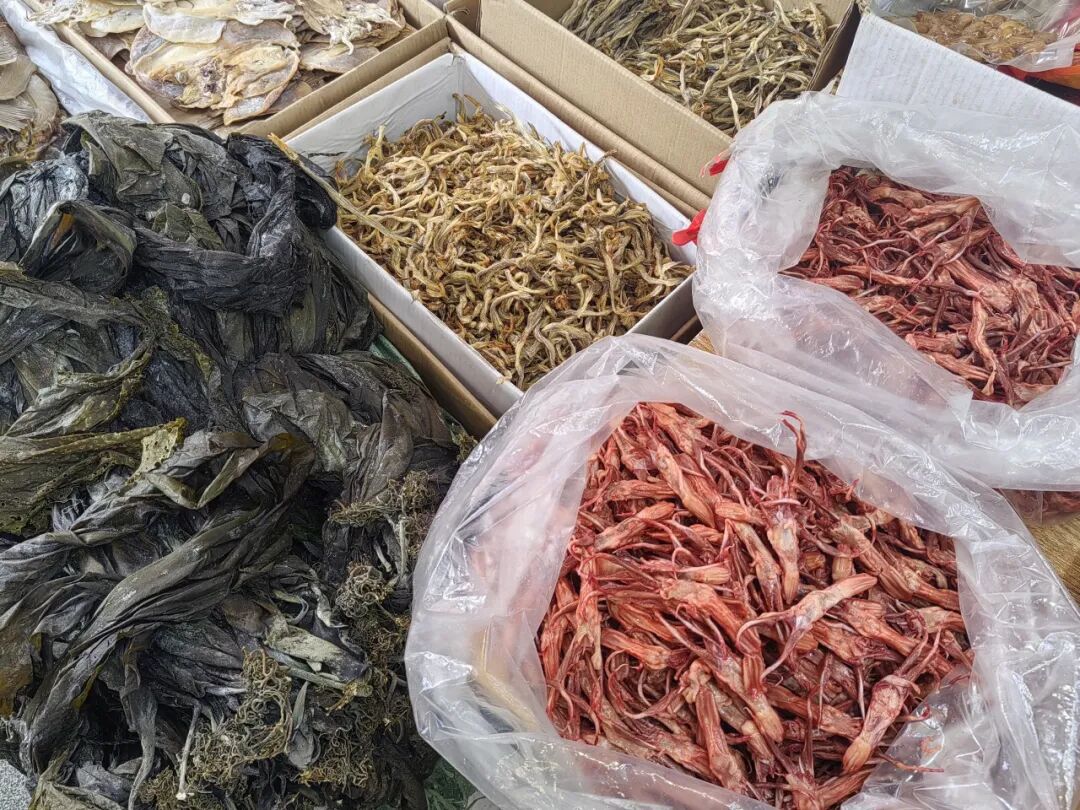
◉ Various dried goods.
The Family That Stays With the Wet Market
Although Yunyian’s work is exhausting, she always tries to carve out a few days during public holidays and the winter and summer school breaks to take her younger son out. In her WeChat Moments feed, beyond work logs, the most frequent posts are records of her two sons’ growing up – she calls them “the Big Master” and “the Little Master”.
Because the dried goods shop is open almost year-round, whenever there is a matter that requires closing early or stepping out, Yunyian and her husband have to take turns watching the store. So even when they do take their sons out, it is rarely the whole family together.
In 2025, the eldest son came home after graduating from university. With a degree in electronic information engineering, he installed the shop’s anti-shoplifting system. “The initial installation cost over 2,000 yuan, but now it only costs a little over 1,000. Other people have to pay someone to come and fit it. My eldest son knows how to install it, so we saved the money for a professional.” Mentioning the installation, a flicker of pride crosses Yunyian’s eyes at once; she beams, dimples showing.
The younger son is now in Year 4 of primary school – he has, in every sense, grown up in the wet market. It was in the market that he saw his first snowfall, ice pellets drifting down and landing on the tip of his nose, a little ticklish, and he couldn’t help but reach up and flick them off. On New Year’s Eve, his parents took him to a narrow alley near the shop to set off firecrackers, and he was not the least bit scared. Born playful, he kept running off to play with the children of other stalls right up until Year 1, often without so much as a word to his parents.
Because of his mischief, Yunyian has received no end of complaints from teachers. Now the younger son lives much the same life as children of other dual-income households: on school days he stays at an after-school care centre until eight or nine in the evening, and on weekends he attends academic tutoring. Unlike other dual-income couples, however, Yunyian and her husband must take their turns accompanying him out for badminton and basketball to get his exercise.
As for her two sons’ futures, Yunyian is now thinking in different directions. The eldest does well academically and is currently applying for civil service positions.
“I originally hoped my younger son could keep up with his studies too, so he would not have to earn a hard-living wage later on. But I have made peace with it now: if school does not work out, let him take over the business. We have been in trade for decades – we have a steady customer base, resources and connections.”
But Yunyian also has a private wish: “This shop is mainly retail. I hope my younger son will do wholesale – when I was doing wholesale at the Huanglong Small Commodities Market, I found it easier than running a shop in the wet market. Retail means so many small, fiddly things.”
– This is Foodthink’s 835th original article –
Foodthink
Author:
Hongshu Lian
Full-time grocery shopping and cooking, part-time writing. Loves browsing wet markets – there is hardly any anger, depression, or anxiety that a trip to the wet market cannot put right.
Except where noted, all images in this article are provided by the author.
Editor: Xiaodan
Layout: Xiaoshu
– New Book Recommendation & Event Preview –

Scan to send a tip – support original food knowledge
▼

▼
Click image to read related articles

▼
Click a keyword to access more article collections
Seeds | Agricultural Technology | Policy | Fermentation | Nutrition | Fruit | Fisheries | Events | Recruitment | Takeaway | Wet Markets | Livestock | Food Talk | Sharing Sessions | Book Club | Harvest Festival | Smallholder Stories | Climate Change | Rural Development | Cooperative Economics | Urban Farmers | Food Safety | Digital Technology | Biodiversity | Pandemic and Food | False Solutions | Ecological Agriculture Internship Programme
Beijing | Hebei | Shanghai | Guangdong | Guangxi | Henan | Sichuan | Jiangxi | Xinjiang | Shaanxi | Hong Kong | Chongqing | Zhejiang | Jiangsu | Guizhou | Taiwan | Inner Mongolia | Philippines | Canada | Russia | Mexico | Italy | United States | United Kingdom | Germany | Netherlands | Thailand | Sweden | Japan