What Extra Costs Has Straw Incorporation Imposed on Farmers?

Want to Farm? Start with Straw Shredding
“The village said, ‘We can’t cope with it! Just put it into the field!'”
Zhao Hai recalled that after last year’s autumn harvest, he had told village cadres that he wanted the straw removed from the fields, meaning he had asked farm-machinery operators to do the baling and take the rice straw away. He was growing paddy rice for others on several hundred mu of land and thought this was the least troublesome way to get rid of the straw. But his wish came to nothing — the village committee was unable to find buyers for the straw, and most of the straw in the village could only be dealt with through straw incorporation.
In June this year, Foodthink visited three counties in Hunan to find out how straw incorporation affects farmers’ farming practices. Village A, which we visited, had, only last year, gone through the strictest no-burning season in history. The higher-level government required that no fire hotspots occur. Suddenly forced to carry out straw incorporation, Zhao Hai went through a turbulent six months or more, witnessed unusual occurrences he had never encountered in farming, and incurred many additional expenses.
Village A lies in the heart of the Dongting Lake area in Hunan. The farmland in the village was historically formed by the deposition of lake sand and is very flat, making it a major production area for paddy rice and rapeseed. Embankments separate the village’s ditches and channels from the external river system, and irrigation is carried out by drawing water with electric pumps. In recent years, the village has begun developing crayfish farming; crayfish ditches run through the paddy fields, the shallow water reflects the sky, and egrets are sometimes seen foraging between the field ridges.
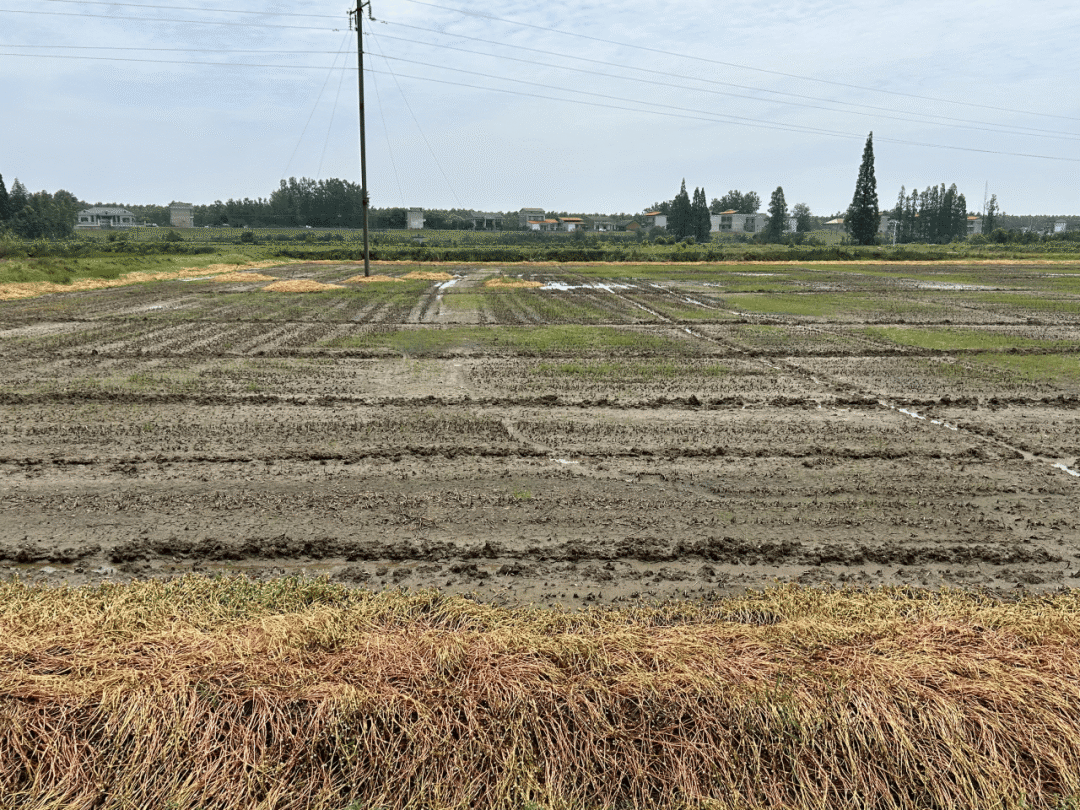
◉ In the previous season, the paddy fields were flooded with deep water for crayfish farming; after the water was drained and ditches dug, low rice stubble can still be seen.
In previous years, after the autumn paddy rice harvest, farmers followed higher-level instructions and burned straw in an orderly manner, then directly broadcast rapeseed seed into the fields. Some also flooded their fields to raise crayfish. Faced with the sudden ban on burning, the first thing farmers had to face was a thick, tangled layer of rice straw in the fields.
Looking closely, this layer of “grass” contains both shredded rice stalks and leaves as well as rice stubble still rooted in the soil (that is, root systems and short stems exposed above ground). Experts have vividly described it as a “sponge layer”. If it is not thoroughly incorporated into the soil and allowed to decompose promptly, it will hinder the tiny rapeseed seeds from taking root and developing seedlings, causing yield losses.
According to the Ministry of Agriculture and Rural Affairs’ “Guiding Opinions on the Scientific Incorporation of Crop Straw from the 2022 Autumn Harvest”, in the rice-rapeseed crop rotation areas of northern Hunan, it is recommended to use combine harvesters fitted with straw shredding and spreading devices. During harvesting, the straw should be shredded at the same time and spread evenly, with an average stubble height of less than 15 cm.
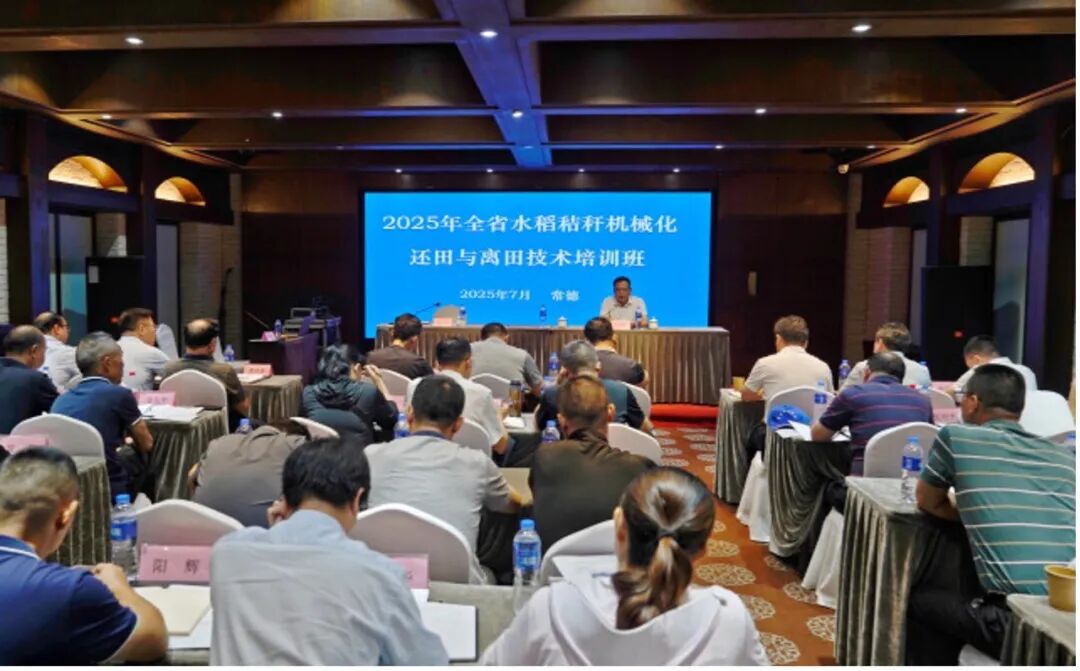
◉ On 18 July 2025, a province-wide technical training course in Hunan on mechanized straw incorporation and removal from fields for paddy rice straw was launched in Changde. Source: Hunan Daily
However, in practice, to save fuel and rush the work, farm-machinery operators often leave stubble heights far above 15 cm. The second round of Hunan Province’s routine ecological and environmental protection inspection in 2023 found that stubble heights were between 40 and 60 cm in all 80 paddy rice fields.
In addition, among the harvesters randomly spot-checked in the fields, more than half were not fitted with straw shredding and spreading devices. This is because fitting a set of shredding blades increases the machine’s workload and fuel consumption, adds at least 10 yuan per mu to the cost, and lengthens operating time. As a result, farm-machinery operators often secretly leave the shredding device unused, or remove some of the blades and carry out only partial shredding.
Local agricultural officials also helplessly admitted that itinerant farm-machinery operators from other regions have low profits to begin with, cannot earn the local straw incorporation subsidy, and are certainly unwilling to take on extra load and fuel costs. Local governments also find it difficult to manage them.
As a result, two attitudes have emerged among farmers: large-scale farmers who own farm machinery are willing to cut a little lower—the lower the rice stubble, the easier subsequent field operations are, so they are prepared to cover the fuel costs and spend the time needed to prepare the land; but for smallholders, the costs ultimately fall on them, and they are unwilling to pay farm-machinery operators extra for proper shredding; they would rather flout the ban and burn it in secret.
The village secretary of Village A also admitted that most of the villagers’ straw had not even been shredded and was still left as long stalks. Without baling and removal by the village, the villagers would wait for an opportunity to burn it.
As mentioned above, Village A was unable to find buyers for the straw and had to find a way to deal with these long stalks. It therefore coordinated with the town, which brought in farm machinery to shred the straw again. According to locals, the subsidy or labour fee paid to farm-machinery operators is 30–35 yuan per mu.
Straw shredding means crushing the rice straw once more. Locals attach a shredding head to the back of a tractor for the task. If rotary tillage is needed, the corresponding blades are fitted.
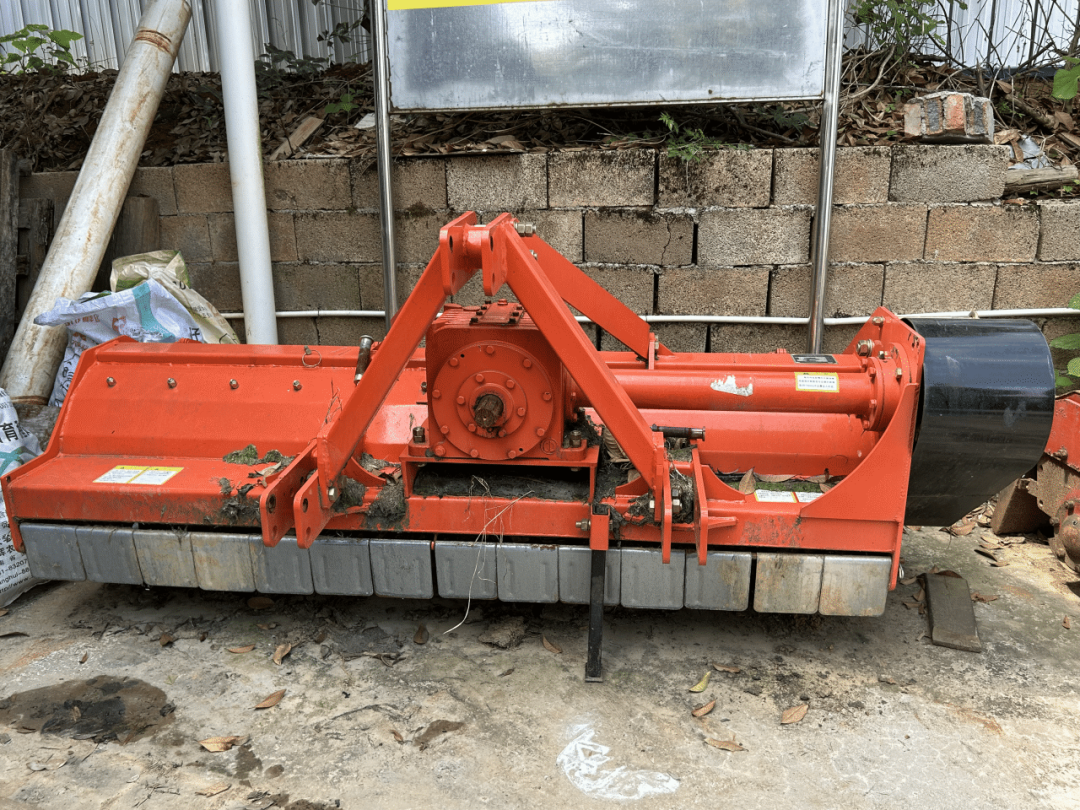
◉ A straw shredding head bought in 2025 by a large-scale farmer in Village B near Changsha can be fitted to a tractor. After the subsidy, the actual cost for a farmer to buy one is just over 5,000 yuan.
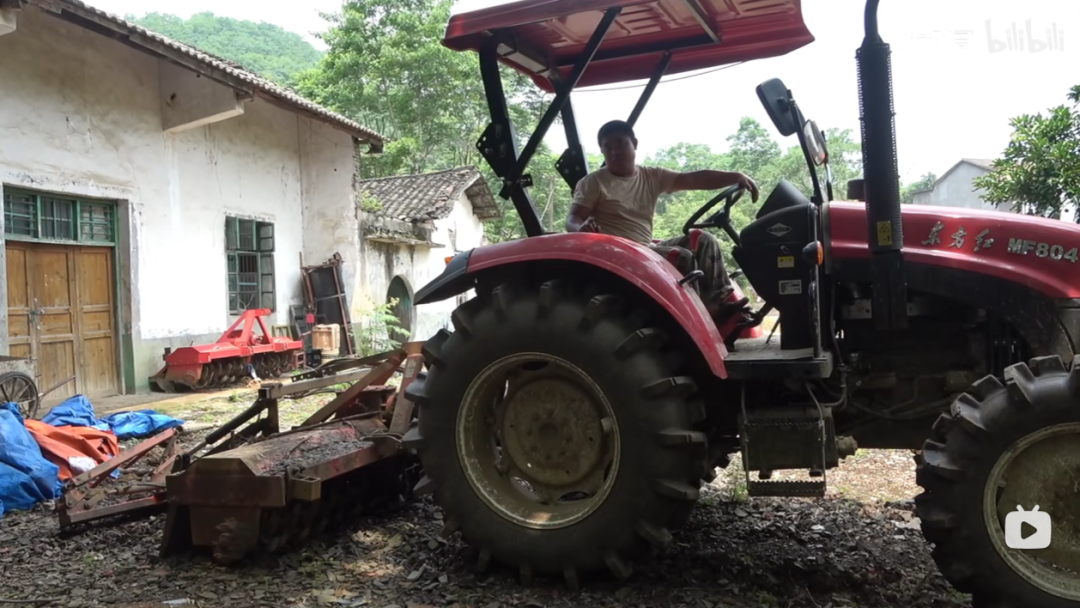
◉ Tractor used for shredding, stubble destruction and rotary tillage. Source: bilibili
The layer of straw is too thick. Even if the town government pays and dispatches straw-shredding farm machinery, the results fall short of expectations.
On top of this, because the machinery was dispatched by the town, it did not necessarily follow the farmers’ instructions. Zhao Hai felt that only the core area had been carefully shredded; in the other plots, the farm-machinery operators “once they had run through it (finished it), they just left it”.
This brought the first step in straw incorporation—straw shredding—to completion. Next, if farmers in Village A were to plant rapeseed as the next crop, they had to rotary-till the shredded straw into the field. The blades on a rotary tiller work to a depth of more than 10 cm and use more fuel, but this stage no longer attracts a subsidy. Hiring farm-machinery operators costs 80 yuan per mu. When burning was allowed, rotary tillage was used only before planting paddy rice; rapeseed required only furrowing (30 yuan per mu). The extra 50 yuan has to come out of the farmers’ own pockets.
With rainfall compounding the problem, yields fell sharply. Farmers in Village A reported that the rapeseed failed to take root, failed to put up seedlings, and was prone to lodging; many harvested only 100–200 jin per mu (the normal yield is 300–400 100-jin units).
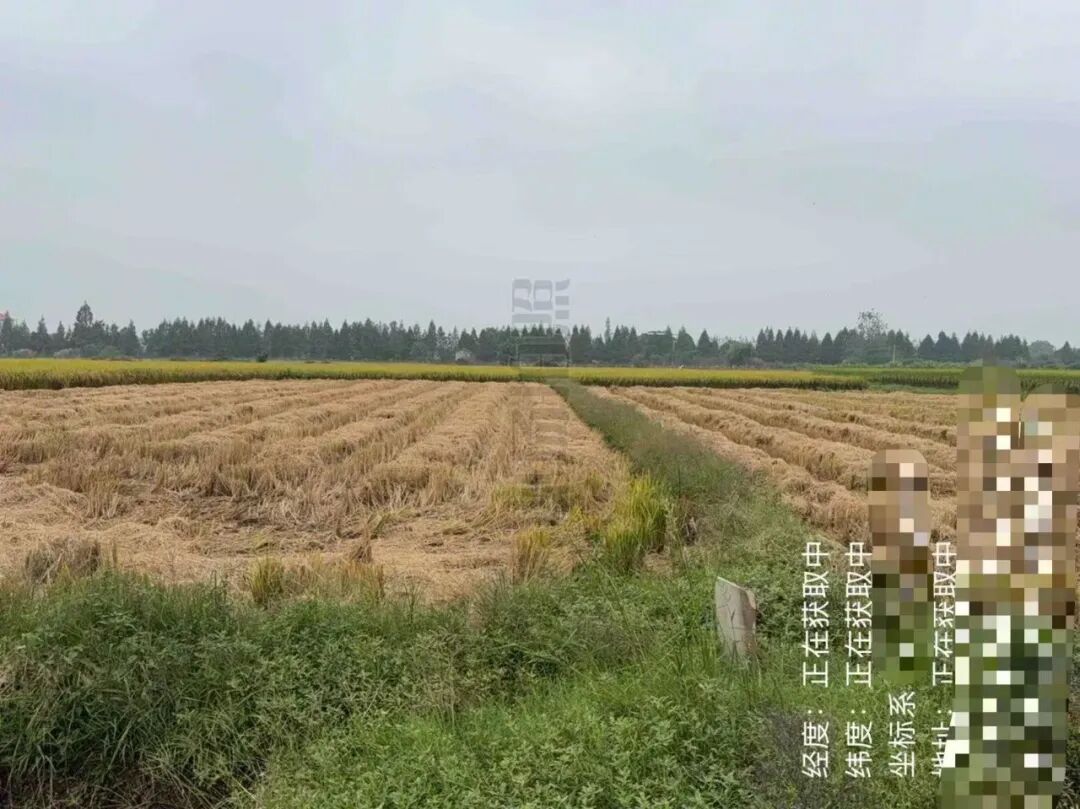
◉ After the harvest, a thick layer of long stalks was left in the paddy fields in Village A. Source: interviewee
Spent an Extra 80 Yuan
To safeguard yields, the solution in Village A was to sow more seed. Originally it was two bags of seed per mu, but in some plots it could be increased to three or four bags. Although rapeseed, as an oilseed crop, has its seed paid for by the state, the village secretary of Village A regards this, too, as spending taxpayers’ money. In addition, the seed supplied by the government is not necessarily enough; Zhao Hai, for example, often still has to buy a little himself.
They also considered applying the straw no-till mulching method mentioned in the aforementioned “Guiding Opinions on Straw Incorporation”, which would avoid the cost of rotary tillage. However, the rice stubble scattered over the surface is uneven in thickness and still affects rooting and germination, so many farmers are not optimistic about this method.
Village B near Changsha has been carrying out straw incorporation since 2021, without rotary tillage. Their experience is “richer”—or, as locals put it, they have repeatedly thought up all sorts of ways to deal with the problems caused by straw incorporation.
Previously, they first ploughed the field, then raised ridges and made furrows, and sowed the seed by hand; the rapeseed did not root well either.
Now they have worked out a combination of measures: first, the rice stubble is cut lower; then large-scale farmers themselves buy blade devices capable of straw shredding and stubble destruction and mount them on the front of their tractors, at about 5,000 yuan per unit after the subsidy. This blade device not only shreds straw but also destroys stubble, meaning it digs up and shreds the rice roots and stems buried in the soil.
Finally, to help the rapeseed root better, they use a seed drill to sow. After straw shredding and stubble destruction, this machine can complete fertilising, sowing, rotary tillage and furrowing in one operation—the agricultural department has specifically promoted it, and it costs about 20,000 yuan per unit after the subsidy.
However, compared with Village A, no one pays for straw shredding in Village B, and the straw incorporation subsidy is less than 10 yuan per mu. After large-scale farmers have finished shredding the straw, they apply to higher authorities for the subsidy, which can offset just over half the cost of this operation, but the funds have not yet been approved.
According to estimates from many farmers in both villages, after straw incorporation, the additional costs of straw shredding, rotary tillage and pesticide spraying for a season of rapeseed are about 60–80 yuan. The profit per mu from rapeseed is generally only just over 200 yuan.
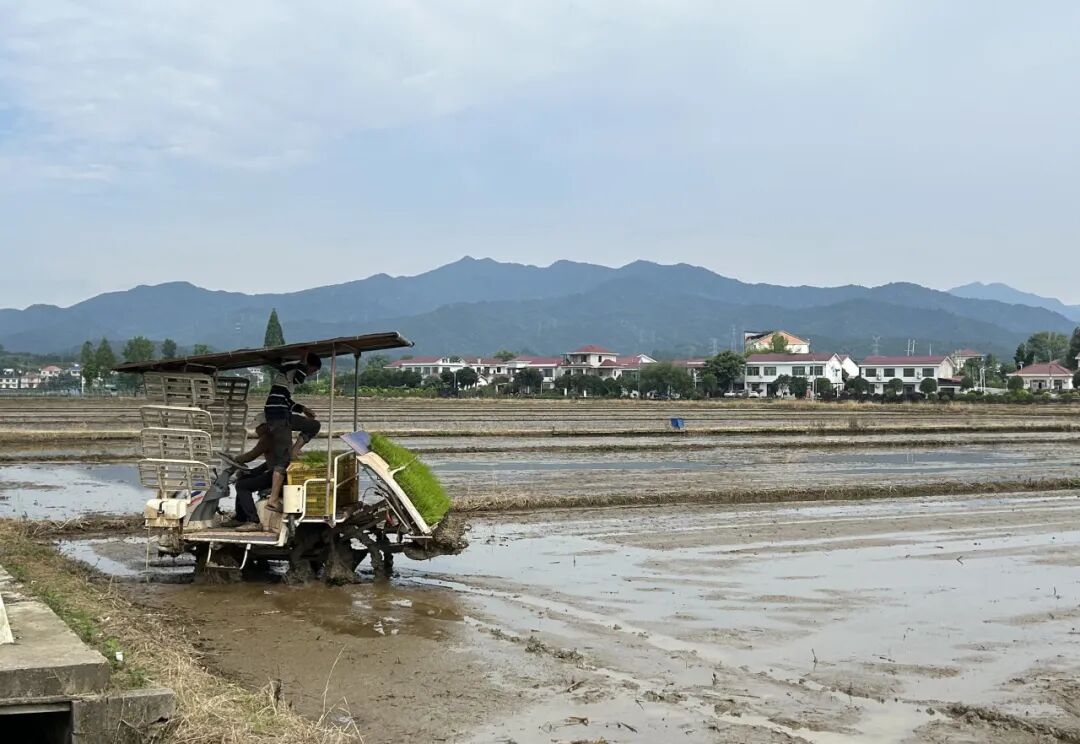
◉ In early June, large-scale farmers in Village B were carrying out mechanised rice transplanting.
Some have simply given up cultivation. A large-scale farmer in Village A has 200 mu of land, and after secretly burning a dozen or so mu, he decided to give up—his plots are scattered, and it is not worth having a rotary tiller travel 20 km back and forth just to plant a little rapeseed. Moreover, because the land has just been improved into high-standard farmland, the soil surface is uneven, and rotary tillage costs more than for others, at 120 yuan per mu. In the end, he left all his more than 200 mu of land to the village collective to grow green manure.
Pest Damage and Soy-Sauce Water
During the visits to Village B, the aforementioned agriculture official kept emphasising that straw incorporation could return fertility to the field. “Without straw incorporation, if the same fertiliser is applied, the yield will certainly be lower.”
But in the interviews, not a single farmer had actually reduced chemical fertiliser use. In the official’s presence, a large-scale farmer in Village B who had been practising straw incorporation for five years could only ask, with tact, “Could it be that chemical fertiliser is no longer as potent as before?”
Perhaps they were so worried about yield losses that they dared not reduce the amount of chemical fertiliser. But a crayfish farmer in Village A had seen with his own eyes that the straw had “enriched” the water—the feed the crayfish ate had obviously decreased. He used a composite microbial agent product based mainly on Lactobacillus plantarum to “amend the bottom” of the crayfish pond, together with brown sugar and rapeseed cake, to help the growth of microorganisms and plankton in the pond and indirectly promote the decomposition of organic matter at the pond bottom (such as leftover feed and faeces).
In such an environment, the feed he had bought in the quantities he had used in previous years was still far from used up. Crayfish cannot eat straw, but the microbial agent may promote the proliferation of microorganisms on the straw surface and the decomposition of organic matter, enabling the straw to form a biofilm and organic detritus that crayfish can feed on.
But there are drawbacks too. After the straw rotted, the field immediately turned into a murky black “soy-sauce water”, stinking and dirty; at the slightest stirring—”Good heavens, all the stench came out,” Zhao Hai said.
The aforementioned farmer, although he had saved on feed, also admitted that he had to change the water every three days. In Village A, a flat, water-rich plain where every household drew water from ditches using electric pumps, his fields lay right beside the ditch, so he had the advantage of being close to the water: “Once it changed colour, he changed it.” In one season he changed the water at least a dozen times.
But many farmers may not have had these conditions. In recent years, the village has experienced periods when the outer waterways held no stored water and there was no water available for changing. Crayfish would fall ill and die; sometimes, before they even realised that the water needed changing, the young fry had already failed to survive. Adding pumps and water-pumping equipment was also a cost. In fact, crayfish farmers could also receive a “straw incorporation via the gut” subsidy of 10 yuan per mu, but almost a year has passed and it still has not arrived.
Amid the gains and losses, what was plainly visible to everyone was the runaway increase in field crop pests.
The village secretary of Village A recalled that at the autumn harvest, when he drove to the fields at night, as soon as he turned on his torch, the field was thick with insects.
A grower in Village A said that half of the additional 80 yuan in his cropping costs had gone on pest control. The drone service charged 20 yuan per mu, and it was flown twice. In previous years, his rapeseed had never needed pesticide spraying.
The pests affected not only the winter rapeseed but also the paddy rice in the fields from spring to summer. Two large-scale farmers in Village B recalled that seven or eight years ago, rice stem borer (commonly called the stem borer) damage was not so serious; without pesticide spraying, the insects would at most eat a few rice plants. In the following years, however, they could reduce the rice crop to a total loss. Rice thrips also became increasingly numerous; previously they damaged only the rice seedbeds, but now wherever there was rice straw, there were pests.
The frequency and intensity of pesticide spraying are both increasing. Previously, spraying only became necessary when the rice was in grain filling; by the time the rice ears had “nodded”, the insects no longer bored into the stems. Now, half a month after transplanting, they have to start spraying with higher-quality imported pesticides and keep going all the way until before harvest, with a total of three to four rounds of pesticide spraying per rice season. Some smallholder farmers have even sprayed eight times in one rice season and still failed to keep the pests in check. “Can you imagine? Once every 20-something days, soaked in pesticides!”, the large-scale farmer who helped him harvest lamented.
Farmers and agricultural technicians also found that some insects seemed to have developed pesticide resistance, as if they had already “mutated” and “upgraded”.
Farmers reasoned that now that the straw was no longer burned, during winter the insects could hide in rice stubble and could therefore never be eradicated. In addition, local plots were scattered, and single-crop rice fields, early-rice paddies and late-rice paddies were intermixed, so they formed a “patchwork field”; after pesticides had been sprayed on one side, the insects would fly over from the other and “shift about, causing damage”, making coordinated prevention and control difficult.
They all remembered that an official from Changsha, Hunan Province, had personally gone to the countryside and cracked open “rice stubble” (i.e. rice stubble), finding more than ten insects in a single stubble.
The aforementioned agriculture official confirmed that rice stem borer damage had “caused trouble” in Hunan; some places had even suffered total crop failure. From 2024 onwards, the Hunan Provincial Department of Agriculture and Rural Affairs has repeatedly used wording such as “critical battle”, “severe outbreak” and “major outbreak” to describe the situation of rice stem borer damage in rice fields. In April 2025, the Ministry of Agriculture and Rural Affairs went to Hunan specifically to investigate rice stem borer prevention and control.
In the same year, the Hunan Plant Protection and Quarantine Station’s “Disease and Pest Intelligence” forecast that rice diseases and pests would occur on the heavier side overall, with various diseases and pests affecting 310 million mu-times, of which rice stem borer affected 62 million mu-times. In addition, the province-wide weighted average number of rice stem borers per mu was 9,773, an increase of 67.6% over the average for the past ten years and 20.9% over 2024.
Those interviewed were worried that, as straw incorporation continued, pest damage would become increasingly severe.
Ecological Rice Farmers’ Solution
Is straw burning an inevitable by-product of intensive, high-input agriculture?
First, continuous cropping or tight crop succession, and land that cannot be put into crop rotation or fallowing, provide a continuous breeding ground for pests. Many villagers in Hunan we interviewed recalled that, when they were children, the village did not cultivate in winter; the collective organised “sun-drying the soil”: in winter the subsoil was turned up, and frost would always kill off some of the insects.
Nowadays, only tobacco-growing land still receives this “soil-baking and seedbed-sunning” treatment, because tobacco seedlings are only transplanted there in March or April, so after the autumn harvest the land can be left fallow in winter.
In addition, if the rice is not machine-harvested, farmers cut it by hand and can always leave the rice stubble much lower—only one inch, “like a shave”—so the insect eggs have nowhere to hide. The aforementioned “Disease and Pest Intelligence” also notes that the province-wide proportion of rice area harvested by machine has reached 90% or more, while the rice stubble in machine-harvested fields is generally rather high.
Most importantly, as rural areas gradually gained gas and electricity and livestock farms moved towards scale, even low-calorific-value rice straw became useless. Once, it was stacked up and stored in the loft above the pigsty, used for cooking fires, feeding pigs and cattle, and laying on roofs and beds; even the early rice kernels, once picked out, could be used to make little rice-straw scarecrows…
In Village C, in another town also in the Dongting Lake region, the more than ten mu of rice fields that Ding Yong leases have long been managed under ecological farming and straw mulching, yet he says that last year’s concentrated outbreak of rice planthoppers did not have much of an impact on him: other people in the village could no longer prevent them, but his yield remained within the previous range of fluctuation. He regards the biodiversity achieved in the fields as a key reason: rice stem borers come and go every year, but their natural enemies, rove beetles, spiders and so on, are also regulars in the field, keeping the level of rice stem borer damage within an acceptable range.
In addition, Ding Yong said that the winter green manure, Aeschynomene indica, is sown ten days before the mid-season rice is harvested, while the field is still moist. After harvest, the straw is laid directly on the soil surface, which in fact helps the Aeschynomene indica with sun protection and moisture conservation—in late September and early October, Hunan’s autumn is not cool. In this way, the seeds can still germinate, and the cost of rotary tillage can also be saved.
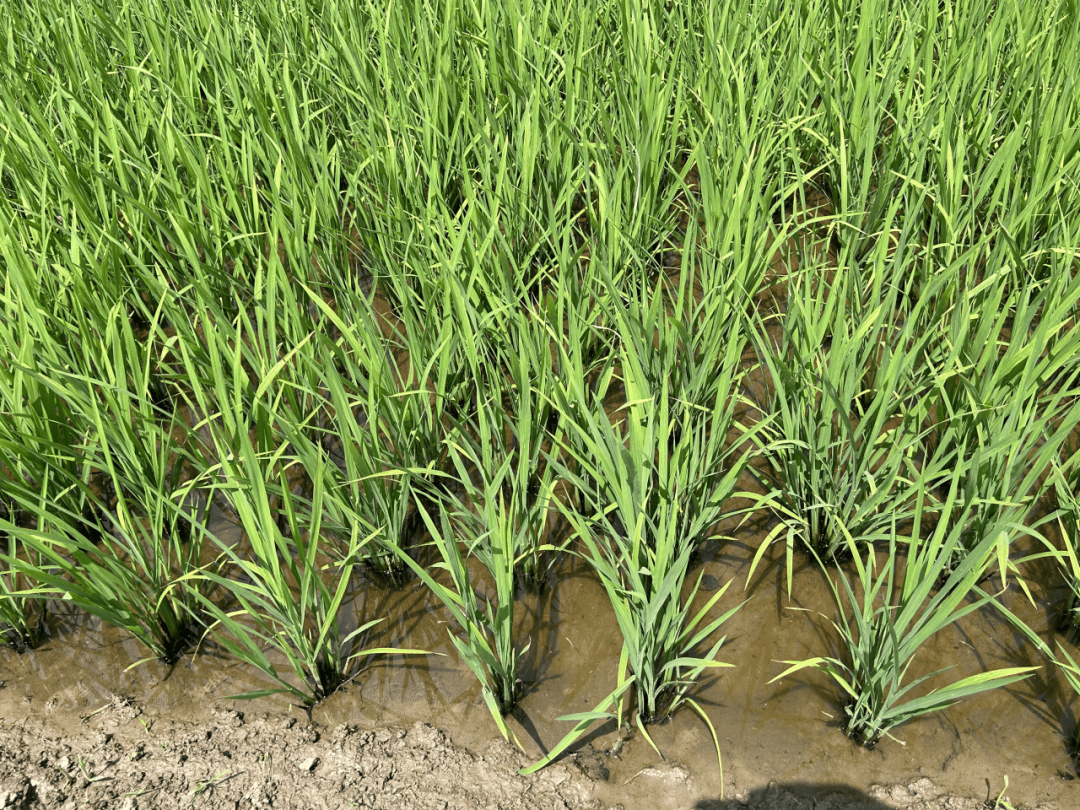
◉ In Ding Yong’s rice paddies, tadpoles, snails and birds can be seen everywhere.
The straw that gives farmers in Village A a headache is, for Ding Yong, never enough. To mulch the crops in his greenhouse vegetable garden, he cuts grass himself and dries it in the sun. Even “revolution grass”, a stubborn weed, has multiple uses: besides mulching, it can be fermented to make liquid fertiliser. “Mulching has many benefits; I call it a ‘five-guarantee household’: water conservation, soil conservation, moisture retention, fertiliser conservation and weed control,” Ding Yong explained at length. Most importantly, it returns fertility to the soil, which fits his “energy cycle” philosophy of cultivation.
To deal with the straw, Ding Yong also bought a shredder head for 4,000 yuan (after subsidy).
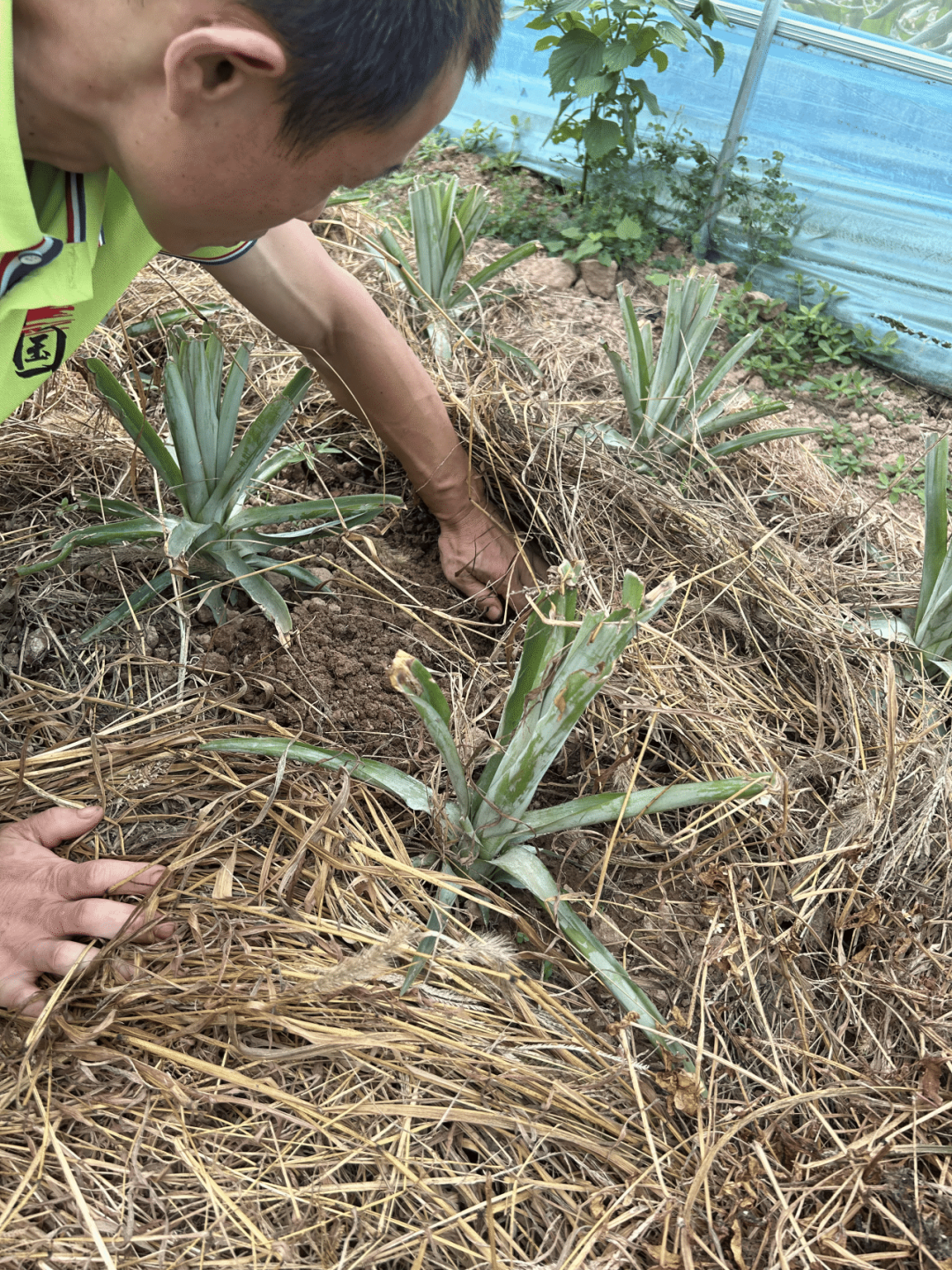
◉ Ding Yong uses straw to mulch pineapple seedlings. His comparisons showed that, after mulching, the pineapple needed significantly fewer waterings, and less enzyme residue had to be applied.
When we visited the local straw collection and storage plant and found damp, sprouted, even mouldy straw stacks—unwanted by anyone—discarded outside the factory building, he also noticed that there was rice straw here as well as rice husk, which is in fact the ideal environment for no-till mulching and potato growing. “The no-till mulching method is not fussy about the soil,” he said.
And other pieces of shredded straw, formed during baling and mixed with soil clods, are also misplaced treasures in his eyes—they can be taken back to enrich his vegetable plot.
Although Ding Yong treats straw as a treasure, he is not a target for government support. The government prioritises subsidies and support for large-scale operators using 10,000 tonnes or more of straw. Ding Yong also understands that such bosses have to coordinate large quantities of straw across the region, contact sellers, and earn subsidies; they would regard such small plots as beneath them, and in any case could not spare the effort to farm a tiny plot of a few mu intensively and create an ecological cycle.
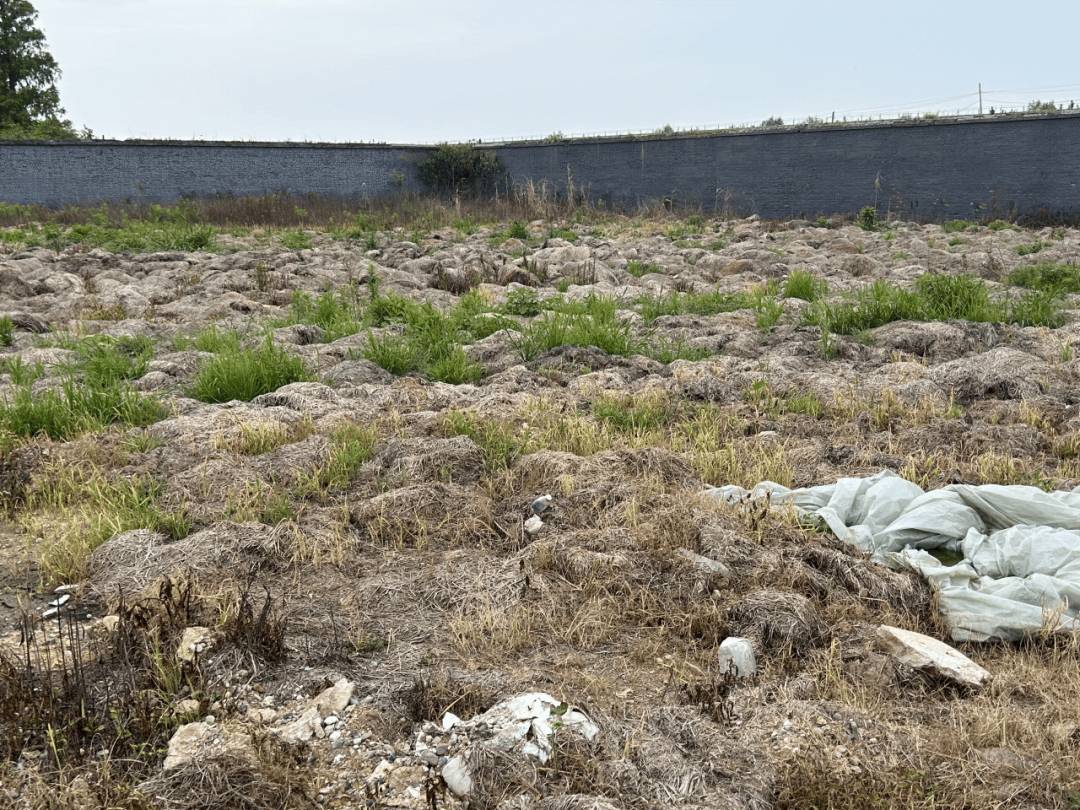
◉ From Ding Yong’s “energy cycle” perspective, this abandoned grassland is, in fact, tomorrow’s fertile potato farm of unlimited potential.
We visited other conventional farmers in Ding Yong’s village. They had also secretly removed the shredding device from the harvester, and even burned straw (especially during the short cropping interval between early rice harvest and late rice sowing). They had already walked the rough road of straw incorporation in Villages A and B: they had once received a free straw shredding and stubble destruction machine sent down by the government, then encountered more pest damage, and now can only pay out of their own pockets to incorporate the straw into the fields using rotary tillage.
In the same village, the two farming systems each come with a different cost-and-return ledger: for large-scale growers, it is a matter of calculating costs to the penny, managing yields and investing in farm machinery, to ensure that by the end of the year they can sell the grain, pay land rent to the farmers, and make payments to chemical fertiliser dealers. In this situation, in Zhao Hai’s words: whether or not the straw is burned, pesticide use will not be reduced in the slightest; but now that it is no longer burned, field management is easier, and the harrow does not get tangled with straw during rotary tillage—in short, it is simply less trouble.
Yet Ding Yong’s apparent ease naturally comes with a corresponding cost. As an ecological farmer, Ding Yong has spent years building a local ecosystem, which requires much more labour for weeding, running comparative trials, making enzyme fertiliser, and so on, so the labour costs are far higher. If the contracted land rights change, or extreme weather occurs, this small ecologically diverse environment can just as easily be lost.
Therefore, even if ecological farming seems to offer a better option for “painless” straw incorporation, we find it hard to say glibly which is more viable or more “environmentally friendly”.
Ultimately, the straw burning ban is a highly complex ledger: farmers’ livelihoods, ecological consequences and administrative costs… are all key parameters on this balance sheet, but they are always overshadowed by the single objective of air quality. Only by seeing farmers’ real struggles under the ban can we truly find a way forward for straw.
– This is Foodthink’s 832nd original article –

Foodthink
author
Pei Dan
A female writer back on the right track, focusing on climate change, the ecological environment and the particular people living through change.
Zhao Hai is a pseudonym used in this article.
Unless otherwise noted, all photos were taken by the author.
Editor: Ling Yu
Layout: Xiaoshu
Scan the code to tip and support original food knowledge
▼

▼
Click the image to read the related article
▼
Click a keyword to view more articles in that collection.
Seeds | Agri-tech | Policy | Fermentation | Nutrition | Fruit | Fisheries | Events | Jobs | Takeaway | Market | Livestock | Food Talk | Sharing Sessions | Book Club | Harvest Festival | Smallholder Stories | Climate Change | Rural Development | Cooperative Economy | Urban Farmers | Food Safety | Digital Technology | Biodiversity | Pandemics and Food | False Solutions | Ecological Farming Internship Programme
Beijing | Hebei | Shanghai | Guangdong | Guangxi | Henan | Sichuan | Jiangxi | Xinjiang | Shaanxi | Hong Kong | Chongqing | Zhejiang | Jiangsu | Guizhou | Taiwan | Inner Mongolia | Philippines | Canada | Russia | Mexico | Italy | United States | United Kingdom | Germany | Netherlands | Thailand | Sweden | Japan