Dam Breached, Contact Lost, Crops Wiped Out

Foodthink Says
Flood relief efforts in Guangxi are still under way. In the core disaster area, Hengzhou in Nanning, floods have devastated jasmine, rice, sugar cane and banana crops, as well as fisheries and pig farming—over the past two years, Hengzhou had been strengthening farmland irrigation, and, under the “new tea drink” boom, many people had expanded their jasmine plantings, so losses are now greater. Extraordinary disasters have become routine, and climate change has also been written into the 2026 national “No. 1 Document”. Moving from “flood control” to resilience building and identifying which hazards can and cannot be defended against require better solutions in both rural and urban areas.
The Rain Is Too Heavy!
Can Reservoirs Hold?
On the morning of 6 July, Zhong Luyan, a villager from Zhongtuan Village in Hengzhou, Nanning, received a warning broadcast from the village. She saw village committee members knocking on doors from house to house, telling villagers that the nearby reservoir would open its sluice gates to release water and urging them to be careful. Zhong Luyan judged that the reservoir near the village had a limited capacity and that her house and fields were high up on the hillside and therefore reasonably safe; she chose to stay home to monitor the situation. Soon, she heard the news that the dam of Liulan Reservoir, more than ten kilometres away, had breached. Yubiao Reservoir, five kilometres from Liulan Reservoir and also in the upper reaches of the Yu River, overflowed at the same time.
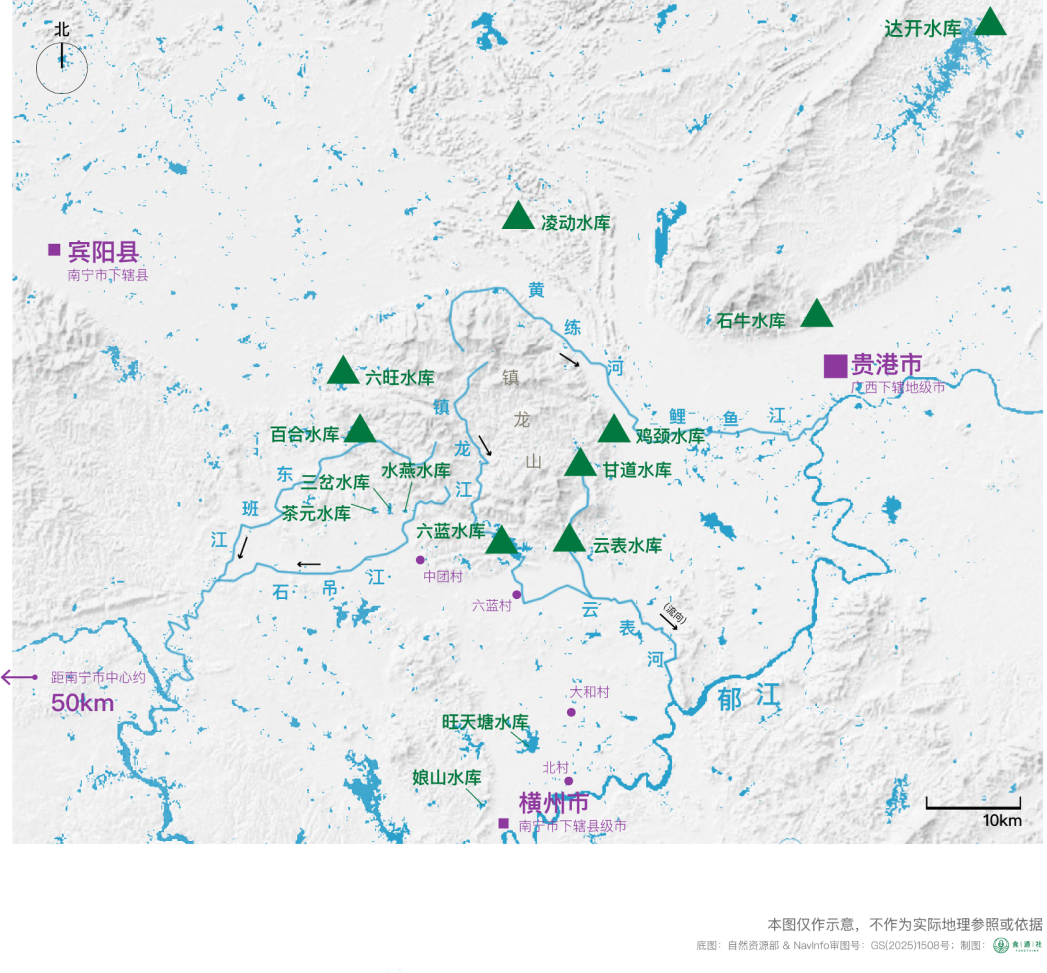
◉ Reservoirs in the Yu River basin, a tributary of the Xijiang River, in which dangerous conditions have emerged. Of these, Liulan Reservoir and Yubiao Reservoir join the Yu River via the Zhenlong River and the Yubiao River, respectively; both rivers originate on Zhenlong Mountain, the area that received the most concentrated rainfall in this event. In addition, floodwaters from the Dongban and Shidiao Rivers and from the Huanglian–Liyu River system enter the Yu River from the west and the east, respectively. Image source: Foodthink
Zhong Luyan has been “lucky”: the reservoir’s flood release did not pass through her hillside jasmine fields, and only a small patch of field ridges was flooded. The phones of the many other farmers in Hengzhou we tried to contact were all out of service due to signal problems. Online rescue posts showed that the whole of Zhenlong Township in Hengzhou had been cut off, and by the morning of 9 July the signal had still not been restored.
In Dahe Village and Bei Village in Hengzhou Town, farther from the reservoir breach, villagers’ houses have for the time being been saved, but incoming floodwater has piled up as high as three metres, and nearly 10,000 mu of jasmine and rice fields belonging to more than 1,000 villagers were submerged.
Since 3 July, affected by this year’s No. 10 Typhoon Maysak, Guangxi has experienced historically rare, widespread and sustained heavy rainfall, with more than 77% of its townships receiving rainfall of heavy-rain intensity or greater. According to Xinhua News Agency, as of 11 a.m. on 9 July, Nanning had relocated and provided shelter for 64,500 residents, including 54,500 in Hengzhou City and 9,321 in Binyang County who were due to be relocated. In addition, 375,000 people across Guangxi were affected by the disaster, with 39 deaths and 9 people missing; the area of crops affected reached 12,900 hectares.
The most prominent event amid the flooding was the breach of the Liulan Reservoir dam on the morning of 6 July.
Liulan Reservoir is located on the Yubiao River, a tributary of the Yu River, in Liulan Village, Xiaoyi Town. It is the largest medium-sized reservoir in Hengzhou City, providing irrigation and domestic water supply for a total of 170,000 people across four townships and 46 administrative villages, with a stable irrigated area of 157,300 mu, and is also an important backup water source for the urban area of Hengzhou. According to public reports, systematic repairs were carried out at Liulan Reservoir in 2009 and 2023. Some media reports have found that its cumulative investment has exceeded 400 million yuan.
But at 10 a.m. that day, the reservoir’s dam instantly tore open, leaving a 50-metre gap, and floodwater surged straight down into the downstream villages and towns, as well as unbroken stretches of farmland. In an instant, villages were swallowed by metres-deep, murky floodwater, with the ground and first floors of many homes completely submerged. Roads, electricity and communications were widely disrupted, and many villages became islands surrounded by floodwater, cut off from the outside world. A local villager interviewed by Phoenix TV said: “What was most terrifying was that, even after the flood release, the water had not receded.”
At 11:30 a.m., Nanning raised its flood emergency response from Level 3 to Level 1.
In his analysis, Hao Nan, founder of Zhuoming Xinyuan, identified the heavy, sustained rainfall during this round of extreme storms in Guangxi as the key factor behind the intensifying disaster. Comparing it to the ‘7·20’ extreme rainfall in Zhengzhou, Henan, which remains fresh in people’s memory, he noted that the weather there had been calm before an abrupt burst of short-duration, intense downpour. In this Guangxi disaster, however, prolonged heavy rain had already saturated the soil and pushed river channels to the limit of their capacity; just as the water infrastructure was reaching its breaking point, the final few hours delivered an even more intense wave of extreme rainfall. “This kind of rain is the most dangerous. It’s like getting pummelled in a boxing ring—you’re swaying, barely able to stay on your feet—and then suddenly you take a few heavy punches.”
Analyses show that this typhoon’s track was unusual and that, after it made landfall, the heavy rain never subsided. According to statistics, in the 24 hours from 8 a.m. on 5 July to 8 a.m. on 6 July, torrential to extreme rainfall struck the southern and eastern parts of Guangxi. Rainfall exceeded 400 millimetres in eight counties and districts, including Binyang County in Nanning, Qinnan District in Qinzhou and Qintang District in Guigang; rainfall in Luwei Town, Binyang County, reached 713.3 millimetres.
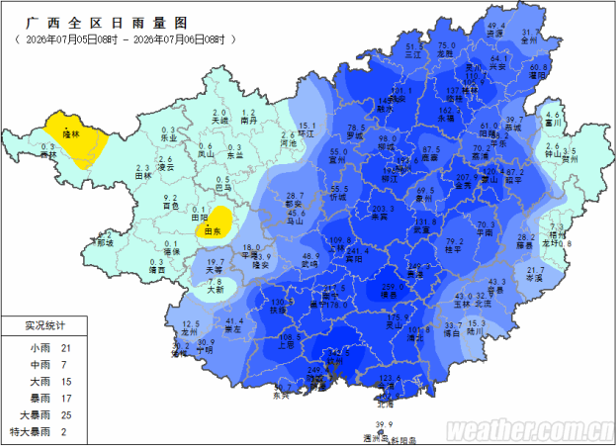
◉ Map of daily rainfall across Guangxi (8 a.m., 5 July 2026 – 8 a.m., 6 July 2026). Image source: Meteorological Bureau of Guangxi Zhuang Autonomous Region
The Pearl River Commission reported that, in just two days since 4 July, 77 rivers across the Pearl River basin, including the main stem of the Xijiang River and tributaries such as the Liu, Yu and Gui Rivers, have experienced floodwaters above the alert level. On a single day alone, water levels on 40 small and medium-sized rivers surpassed the highest on record.
As the sustained rainfall continued, by 9 July, at least 12 reservoirs in Hengzhou and the surrounding area had developed dangerous conditions, including “overtopping”—that is, flood levels rising above the “design flood level”, the level at which the structure can reliably fulfil its flood-control function—and partial breaches or failures. Apart from the nine reservoirs in Nanning and Guigang reported in the evening of 7 July—Liulan Reservoir and Yubiao Reservoir among them—Sancha Reservoir, Niangshan Reservoir and Wangtiandang near Hengzhou City had also issued flood-release notices, and downstream flooding was severe.
Hao Nan explained that the “design flood level” of a reservoir is an important safety threshold, if a dangerous condition develops while the water level remains within the design flood level, it is usually related to the quality of the structure itself. But once it breaks that level and exceeds the structure’s intended carrying capacity, no guarantee of safety can be made.
“We used to rely on a group of reservoirs to deal with once-in-a-century disasters, but that standard of protection no longer works. A ‘once-in-a-century’ event may now occur every five to 10 years. Extreme rainfall records will inevitably be broken—not just here, but in other places in the future as well,” Hao Nan asserted.
What is to be done? He was deeply impressed by a remark once made by a water resources expert: “We must move from ‘cannot be flooded’ (dare not be flooded) to ‘unafraid of being flooded’.”
Another senior water resources expert explained to Foodthink the approach to handling beyond-design flooding: “Small floods belong to people, large floods must be left to the water.” When extreme rainfall triggers beyond-design flooding, inundation is unavoidable, but a series of measures can be taken to strengthen the resilience of disaster-exposed systems, including improving their capacity to withstand disaster, to recover and rebuild rapidly, and to adapt to changing conditions, thereby strengthening risk management.
He added that, at present, the water sector’s measures to address flood hazards are mainly “flood control”, but risk prevention and resilience-building measures have gone beyond its scope. As for adapting to climate change, there is “still much work that the water sector can do.”
Agricultural Irrigation System
Built at Great Cost, Struck by This Catastrophe
Not only water infrastructure but also agricultural irrigation systems must now take climate resilience into account. The flooding, triggered by extreme rainfall, has not only struck villages and farmers but also dealt a severe blow to Hengzhou’s agro-industrial system, which has developed around the Liulan Irrigation District.
When Foodthink called, Liang Dongcai, a villager in Bei Village, Hengzhou Town, Hengzhou City, Guangxi Zhuang Autonomous Region, had only just finished a day of patrol work and was finally having his evening meal. On 5 July, the day inland flooding struck Guangxi, he went all night without sleep, helping evacuate injured villagers.
In the low-lying areas around Liang Dong’s home, standing water reached depths of more than 3 metres, and floodwater poured into quite a few villagers’ homes. Two hamlets in his home village of Bei were affected, affecting more than 100 homes and over 2,000 villagers in all. All of the village’s main crops—more than 6,000 mu of jasmine and more than 2,000 mu of rice—were submerged. Liang Dong’s jasmine field was among them.
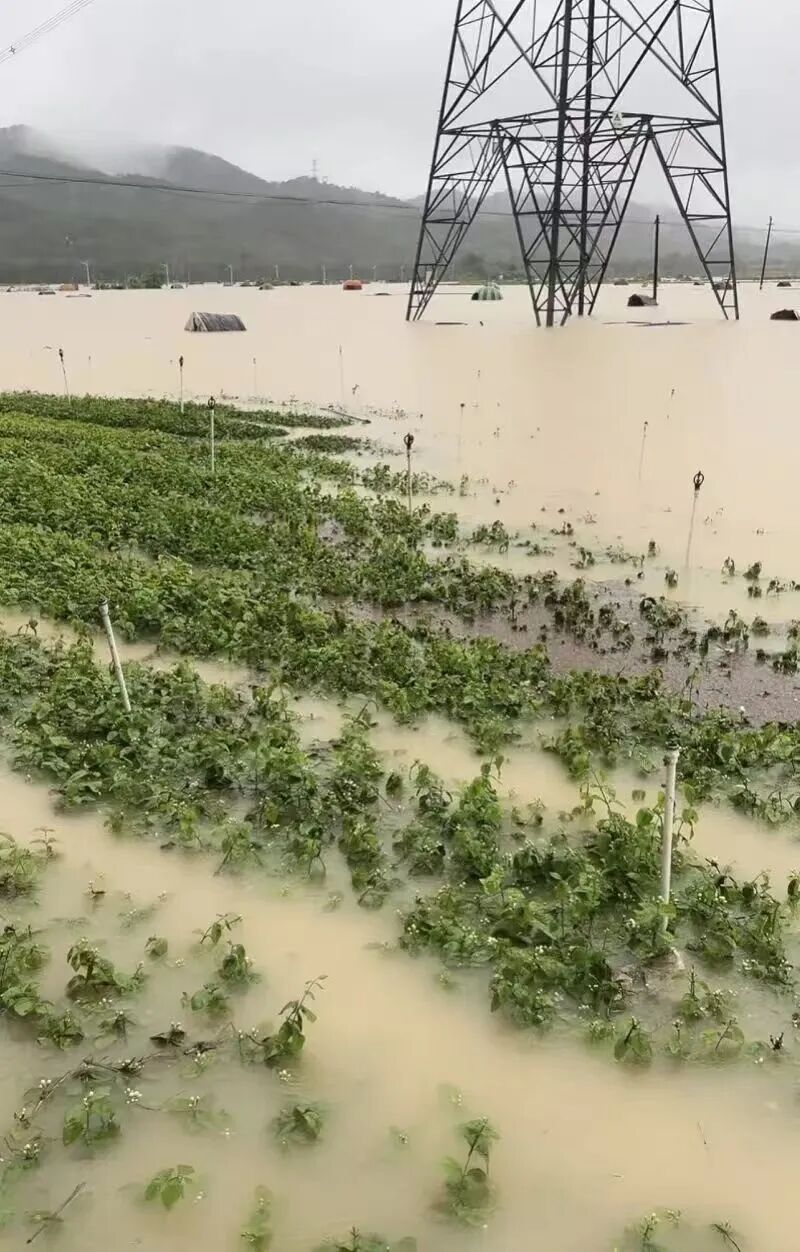
◉ Jasmine fields submerged by floodwaters, photographed on 6 July by villagers of Chaoyang Dadong Village, Hengzhou Town. Image source: Southern Metropolis Daily.
At the end of 2023, the Liulan Irrigation District Modernisation Project, with a total investment of 382 million yuan, broke ground. In the spring of 2025, Hengzhou City suffered a severe spring drought. During that period, reservoir storage fell sharply, and large areas of jasmine fields suffered water shortages, with flower-bud yields falling. To safeguard the region’s key jasmine industry, local authorities accelerated construction work on the project, and large numbers of hardened canal sections were gradually put into use in late 2024 and throughout 2025.
The focus of this project is to harden the full 60-kilometre length of main and branch canals, straighten the canal routes, reduce water losses along the irrigation route, and ensure that, in the dry season, reservoir water can be delivered rapidly to the flower fields. According to the official approval document for the modernisation project, the ancillary drainage ditches in the irrigation district were designed to a 5-year-return light-rain standard, sufficient only for routine field drainage under ordinary light-rain conditions. Throughout the renovation, the focus was solely on agricultural irrigation needs, with no flood detention or diversion facilities to cope with extreme, major floods.
“There’s no saving them—it’s a sea of water. I feel so down. Such good jasmine, and it’s been drowned.” Liang Dong said that jasmine plants might still be salvaged if left in water that high for a week, but if left beyond a week it would become a problem; root rot would kill the whole plant.
Jasmine is a perennial shrub that, with routine care, can be harvested continuously for more than 10 years. If the plants die, everything will have to be started over again next year.
For now, all he can do is focus entirely on disaster relief. He doesn’t know what else to do once the water has receded. “When the disaster is over, what else can I do?”
The roughly 6 mu of jasmine planted by Xie Shunxiong of the village committee in Daihe Village, Hengzhou Town was also almost completely wiped out. Heavy rain began on 4 July and fell continuously in the village for two full days and nights. Standing water reached two to three metres and had still not receded by the night of 9 July.
Daihe Village lies close to the Yu River. By the time the floodwaters flowed down the channel into the village, the force of the water had already lessened, so it was not one of the most severely affected areas. Villagers’ homes were largely spared from flooding, but the low-lying jasmine fields were almost entirely overrun.
In the flat, low-lying flower fields along the Yu River, the flood created a “backwater” effect. The water in the fields should have drained into the Yu River, but the river level was now higher than the drainage outlets, so it could not flow out. In places it even flowed back in, and could only keep pooling in the fields. Xie Shunxiong could only lead the villagers in using pumps to draw the water out, but it made little difference—the water being pumped out still had nowhere to go. The rain was still falling, and they could only keep waiting for it to stop.
The double-flowered jasmine that Xie Shunxiong grows has a long flowering period, with two peak seasons each year, May to June and August to September. If the standing water recedes quickly and the plants have not died, the jasmine can put out new shoots again after more than a month, and they may still make it in time for the flowering season. If the plants’ roots die, they will have to leave the village and either go to nearby unaffected orchards to cut papaya sap or do temporary work in factories in Guangdong.
In normal years, one mu of jasmine fields brings Xie Shunxiong 30,000 yuan in income a year. With this flood, he estimates his losses are close to 100,000 yuan. Daihe Village has 1,500 households and 6,700 people, and he says the average loss per household is around 80,000 yuan.
“After the disaster, we will do our utmost to secure a subsidy policy,” Xie Shunxiong said. “You really must put forward this suggestion—please subsidise the farmers.”
As a village committee member, in recent days Xie Shunxiong has gone out every morning to inspect the flood damage, record how households receiving the minimum living guarantee and the five guarantees have been affected, and check the damage to bridges and roads. He often does not get to eat until 8 or 9 in the evening.
Speaking of the village’s situation, he paused for a long time. “The sight was devastating to behold. Even talking about it now, my heart aches. More than 6,000 people in my village were affected by the disaster, and I feel deeply ashamed.” After he had said this, Xie Shunxiong hung up the phone in silence.
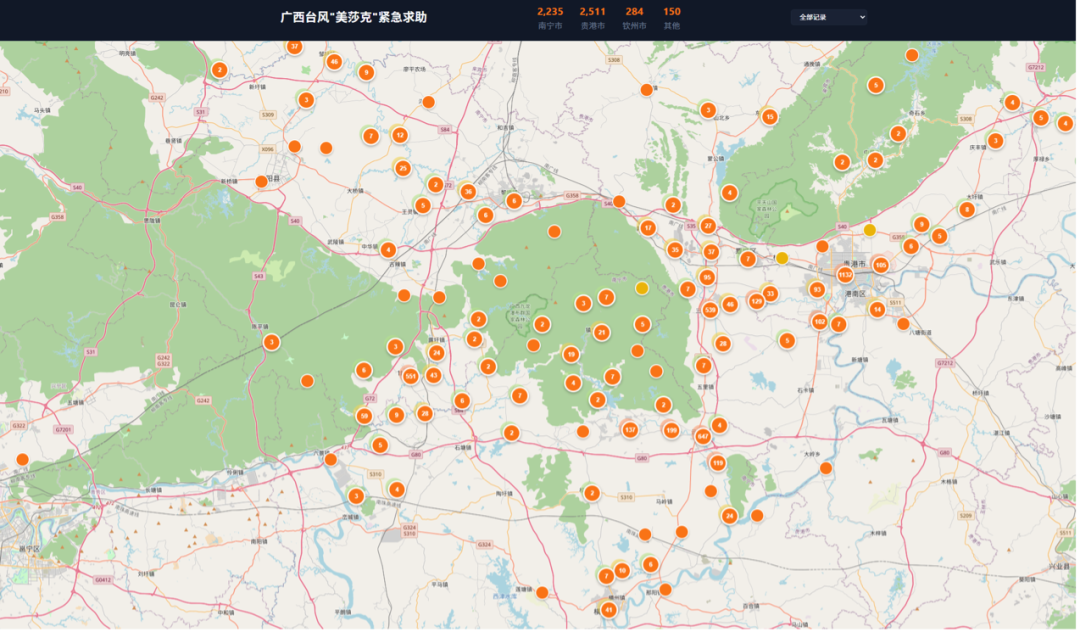
◉ At 8:27 pm on 9 July, within the Nanning–Guigang area, the “Quick Help” mutual-aid map mini-program was densely packed with help requests. Image source: interviewee
The Final Disaster That Broke the Flower Farmers
Zhong Luyan, a villager from Zhongtuan Village, runs a jasmine eco-farm. She has felt that the weather in Hengzhou has become strange over the past two or three years, and she felt this most strongly last year: “I keep feeling that there are more typhoons now, and they happen so often, and the heavy rain lasts a long time, too. It doesn’t feel like the kind of natural weather we used to have.” Last April, she saw a scene like a “sandstorm” that had never been seen in Hengzhou before: fierce winds swept across the farmland, whirling up a grey haze.
“In the past, when the weather got hot in summer, a shower would last only ten or twenty minutes. Once the sun came out, we could go out and pick flowers straight away. Now it is very different from before. Whenever a typhoon comes, we are unable to harvest or pick flowers for days,” she said.
Foodthink consulted agricultural insurance experts and found that insurance linked to the jasmine industry mainly takes two forms: first, jasmine rainfall index insurance, whose coverage period runs from late April to late October each year, coinciding with the jasmine flowering season; under the policy terms, a claim can only be triggered if the cumulative number of rainy days during the flowering season exceeds 95. The second is jasmine cultivation income insurance: if the actual total income per mu over the whole flowering season falls below the target income per mu specified in the policy, a payout can be made.
The recent case of concentrated heavy rain and inland flooding in Guangxi over a short period does not, on a literal reading, meet the meteorological standard for triggering a payout under rainfall index insurance. Meanwhile, the first jasmine cultivation income insurance policy was only issued in March this year, and it covered just a 10-mu pilot plot, so it remains in the small-scale pilot stage.
Several farmers told Foodthink that they had not known about insurance related to the jasmine industry and had never taken out any.
Yi Fujin, a professor at the School of Public Affairs and Management, Zhejiang University, has long studied agricultural policy and agricultural risk management. He said: “Agricultural insurance in practice relies heavily on the particular insurance contract. It is not the case that all risks can be covered. If all risks were really to be included, premiums would probably be very high.” He added that it also depends on how, after a disaster, the local government specifically communicates with the insurance company.
Against the backdrop of the previous year’s oversupply and long-running depressed flower prices, this flood, which struck right in the peak flowering season, was undoubtedly a further blow for Hengzhou’s jasmine farmers.
Xie Shunxiong has grown jasmine for more than 30 years. Back then, jasmine was a priority project in Hengzhou. Tea merchants from Fujian would bring tea leaves to Hengzhou, where they were processed and scented with jasmine locally. Apart from that, Hengzhou’s jasmine was also sold elsewhere, for use in making potted plants, essential oils and fragrance products, and so on.
From 2023 to 2024, the new tea drink industry underwent rapid expansion, and the surge in jasmine-tea-base products directly pushed up the price of fresh jasmine flowers from Hengzhou. Liang Dong told Foodthink that around 2023, flower prices suddenly jumped to over 40 yuan a jin. Each household could pick at most 70 to 80 jin a day, and at least 20 to 30 jin.
Household annual income in Daihe Village, where Xie Shunxiong lives, can be as high as over 100,000 yuan, and the lowest can still be more than 30,000 yuan. “Jasmine yields a large volume of flowers; as long as the price does not fall below 10 yuan, farmers will not lose out by much. Rice is only 3 yuan a jin, but one jin of jasmine is worth as much as three jin of rice.”
Such flower prices attracted many farming households to enter the market. They leased farmland previously used for sugarcane and watermelons and switched it to jasmine, hoping to ride this upswing in prices. Liang Dong had once considered expanding his planting, but those truly able to lease land and expand quickly were mostly large-scale growers with greater capital. According to official statistics, in 2024 the area of jasmine cultivation in Hengzhou was 129,900 mu, and the total output of fresh flowers was 109,200 tonnes. In 2025, Hengzhou’s publicised figure showed that the cultivation area had increased to 180,000 mu, with an annual output of fresh flowers of 130,000 tonnes.
Hengzhou has also developed a specialised labour market for picking jasmine. Every flowering season, large numbers of seasonal pickers from Guizhou, Yunnan and other regions come to Hengzhou, rent accommodation in villages, and work alongside local workers to complete the intensive picking of fresh flowers.
“Too many people are growing flowers; it has gone beyond market demand. In these past two years, the tea merchants have not been able to sell their tea either,” Liang Dong said. Beginning in 2025, jasmine prices began to fall. In the past two years, the average price had held at over 20 yuan a jin, but at the start of this year it fell to an average of over 10 yuan, dropping to 5 or 6 yuan a jin on rainy days.
In the first half of 2026, flower prices did not return to the 2024 peak, and the flood cut short the jasmine farmers’ most important income-generating period of the year.
Beyond Jasmine, More Crops Wiped Out
Agricultural damage in the flood-affected areas is not confined to jasmine cultivation.
Local staple rice and maize fields have been flooded over wide areas, and late-summer rice seedlings that had already been planted have been washed away by the flood. Sugarcane, a core sugar crop in Guangxi, has been flattened in patches, with its roots rotting in standing water. Bananas in Guangxi, now at the peak of bunch development, have also been flattened and waterlogged by the flood. WeChat Channels creator “Abao Talks Agriculture” estimates that more than 10,000 mu of banana trees have been destroyed in Guangxi.
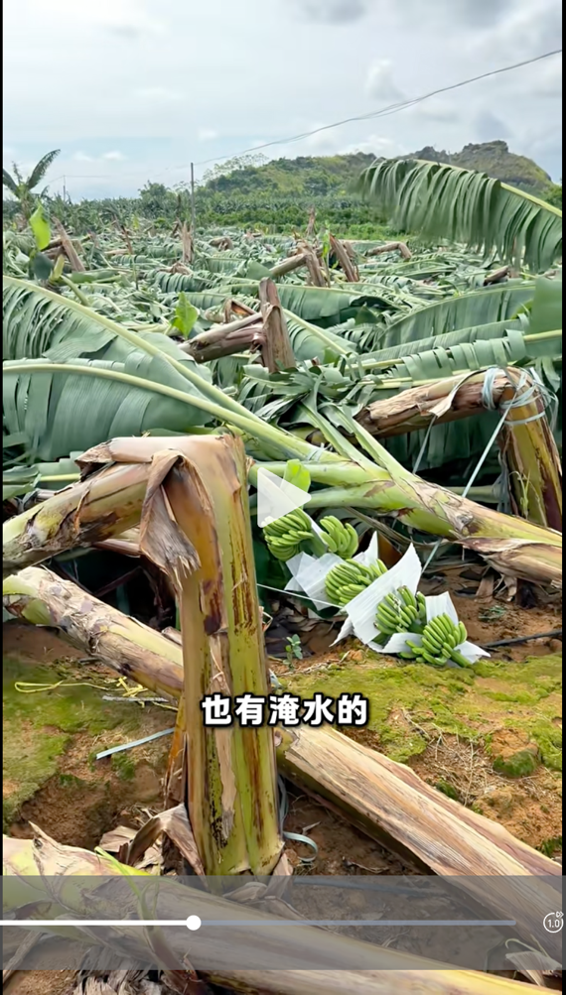
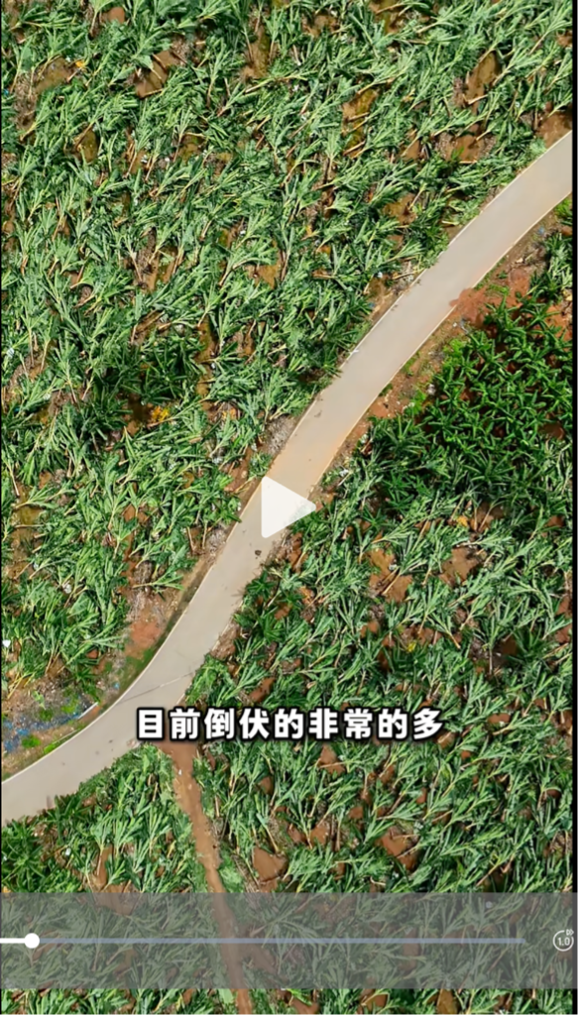
◉ Banana trees flattened in patches. Image source: “Abao Talks Agriculture”
Snake farming is also a distinctive local farming and breeding sector in Hengzhou for raising incomes. At its peak, annual output was worth several hundred million yuan. During this flood, about 800 to 900 snakes escaped from a snake farm in Dengxu Village, Yunbiao Town, Hengzhou. Snake farms in many areas were flooded over wide areas, and most of the farmed snakes drowned in their rearing sheds. Several pig farms were struck by the flood; at one farm in Yunbiao Town, all 16,000 pigs were swept away. At a cattle shed in Hengzhou, 19 cattle drowned in the flood, leaving the individual farmer with losses of about 200,000 yuan.
Fish farming also suffered losses.
The village road in Liangshan Village, Wutang Town, Nanning, was not passable until the afternoon of 6 July. When Qing Shoubai, a villager, entered the village, he saw utter devastation. Mud lay everywhere, making it difficult to move forward. He had an ecological pond of 15 or 16 mu; the day before, it had merged with the neighbouring fish pond into a vast expanse of water. “I used to see on the news or on television that floods were happening somewhere, and I felt deeply sympathetic, but to be honest, once it happened to me this time, the feeling was completely different. That sense of helplessness is very hard to put into words.” He found he could do nothing then, and could only manage a bitter smile.
The fish pond had originally been stocked with bighead carp, silver carp, grass carp and other species. He had been farming the fish for about three years, but now they have been washed out into nearby rivers by the flood, and he does not know how many are left. On the road, he met the fish farmer at the neighbouring fish pond, who looked even more exhausted and haggard than he did. The other man’s pond was several times the size of Qing Shoubai’s, and the money invested in it was probably more than 500,000 yuan.

◉ At 2 a.m. on 8 July, power was finally restored to Qing Shoubai’s farm. Image source: respondent
Qing Shoubai has been involved in inland aquaculture since 2011. He has never seen himself as lacking experience in dealing with extreme weather. Whenever a typhoon warning was issued, he kept a close watch on its path. In previous heavy-rain seasons, clearing the drainage outlets in time was enough to keep the water under control. “This time it definitely won’t work; we won’t make it in time.” He said, “Your experience simply won’t stand a chance against a once-in-a-century event.”
To continue with ecological aquaculture and keep up with the rent on the fish pond on time, he has had to borrow money from friends and relatives and scrape by for years. It was not until the past two years that he finally began to see the light, but this flood has crushed him a little more.
Just as the call was about to end, he told Foodthink that he was going to the fields again tonight to take a look. The water was gradually receding, but some people might quietly use electricity to catch fish while the standing water had not fully drained away, and he was going to stop them.
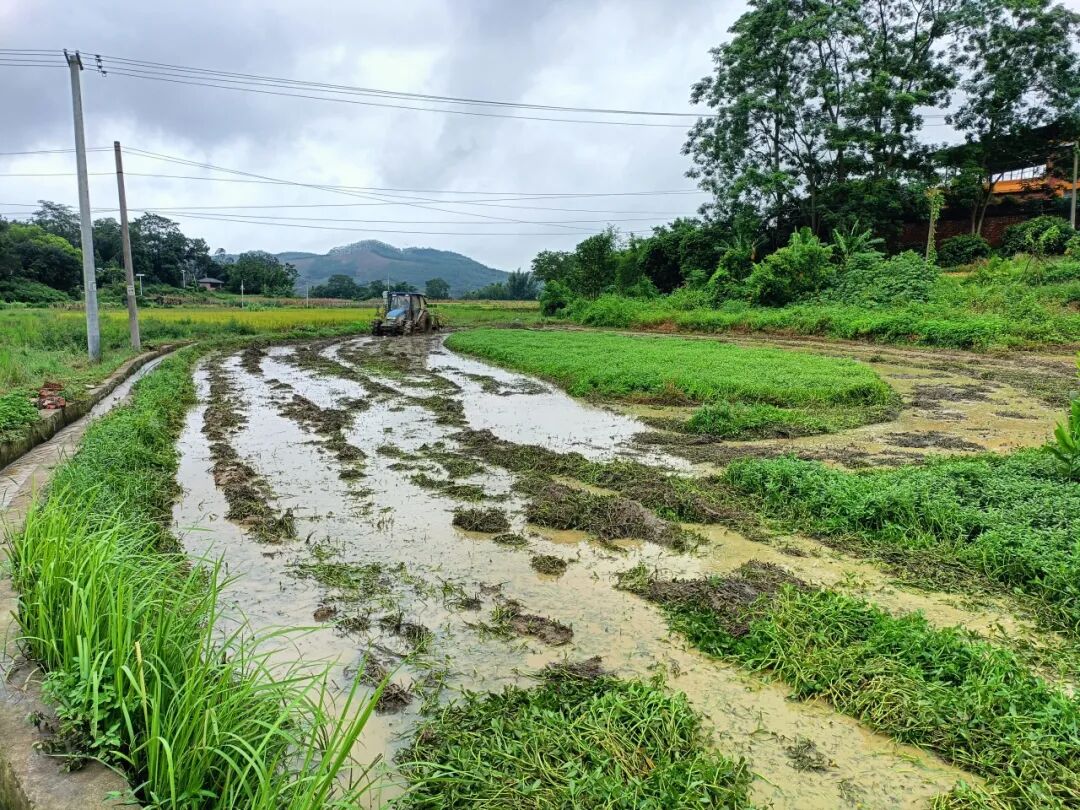
◉ In Qing Shoubai’s village, rice fields have become a sea of water. Image source: respondent
– This is Foodthink’s 822nd original article –

Foodthink
author
Lin Qiuming
Freelance writer, focused on people in the cracks of society and on neck health.
Editor: Pei Dan
Illustration: Foodthink
Layout: Ming Lin
Scan the code to tip, supporting original food knowledge
▼

▼
Click the image to read related articles
▼
Click Keywords to Access More Article Collections
Seeds | Agritech | Policy | Fermentation | Nutrition | Fruit | Fisheries | Events | Jobs | Delivery | Wet Markets | Livestock | Food Talk | Sharing Sessions | Book Club | Harvest Festival | Smallholder Stories | Climate Change | Rural Development | Cooperative Economics | Urban Farmers | Food Safety | Digital Technology | Biodiversity | Pandemics and Food | False Solutions | Ecological Farming Internship Programme
Beijing | Hebei | Shanghai | Guangdong | Guangxi | Henan | Sichuan | Jiangxi | Xinjiang | Shaanxi | Hong Kong | Chongqing | Zhejiang | Jiangsu | Guizhou | Taiwan | Inner Mongolia | Philippines | Canada | Russia | Mexico | Italy | United States | United Kingdom | Germany | Netherlands | Thailand | Sweden | Japan