
Thirty Years of Protecting the Sea, All Together: Unity Is What Puts Fish on the Table | A Visit to Small-Scale Fishing Communities in Southern Thailand
Foodthink Says
Blue Climate Partners is an action network focused on inshore fisheries and coastal ecosystem protection in ASEAN countries, dedicated to strengthening exchanges between Chinese and ASEAN public-interest organisations on marine conservation in fishing communities. Readers who are interested are welcome to follow the WeChat public account “Blue Climate Partners.”
Foodthink’s notes from the southern Thai fishing village visit consist of three posts. This is the first.

This standard four-person meal averages 250 baht (around 53 yuan). The restaurant sits right on the edge of the Andaman Sea. What makes it distinctive is that it is cooperatively run by local small-scale fishers; its name is simply the “Fisherfolk Restaurant.” Over the past few decades, destructive fishing gear routinely used in commercial fishing has caused Andaman Sea fish stocks to plummet, and fisher families who depend on a single small boat for their livelihood have found it increasingly difficult to catch enough fish.
Moreover, small-scale fishers sit at the very bottom of the value chain; even when their catch, after passing through layers of middlemen, fetches a good price in supermarkets, the profit the fishers themselves receive is always meagre.
This restaurant is an attempt to change that—letting fishers run the restaurant, while giving diners access to delicious, affordable, freshly caught seafood.
The location used to be an NGO office. The setup is quite basic: a few small tables propped up under the eaves of an open area outside the door. Inside, stacks of old office supplies still sit in the corner. This “unconventional” restaurant scene carries a certain symbolic significance—it is a small footprint in the nearly three-decade history of the small-scale fisheries movement in southern Thailand, and its existence is owed not only to the fishers’ own efforts but also to civil society’s support for fishing communities.
Taking this restaurant as a starting point for looking back, the story stretches to nearly 30 years ago.

I. Commercial Fishing Vs Small-Scale Fishers

Moreover, trawling is typically carried out by large vessels that can venture into deep waters and stay at sea for months on end. Catch from such vessels is no longer fresh; it is mainly used as processed seafood, or made into fish meal for animal feed.
By contrast, owing to their small size and limited engine capacity, small-scale fishing boats are restricted to overnight fishing in inshore waters, targeting mature, larger fish sold fresh at market.
In other words, the livelihood models of large trawlers and small-scale boats are entirely different. The former engage in indiscriminate harvesting, taking everything in their wake without mercy; the latter focus primarily on catching adult fish and, relatively speaking, have a stronger incentive to conserve juvenile fish and their habitats.

II. The Fishers Strike Back
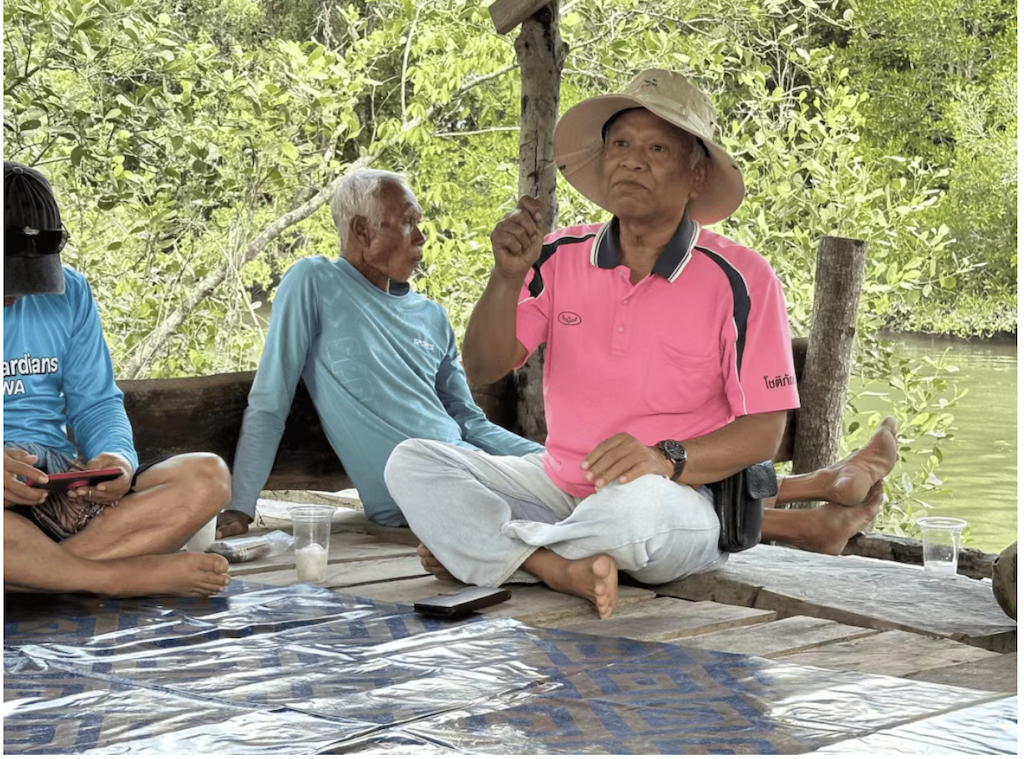
They told us that the trawling problem was so severe at the time that the fishers organised themselves to drive the intruders away. Before long, they learned how to fight “legally”—cooperating with Department of Fisheries patrol teams and the Marine Police to help law enforcement arrest these illegally fishing vessels and confiscate their illegal gear.
While it was mainly outside commercial vessels, some short-sighted local fishers also resorted to destructive fishing gear. For these, they first tried to persuade them through family members and village headmen. Some fishers refused to back down, even threatening to kill the fishers involved in conservation work. But some changed their minds. For instance, the chairperson pointed to a member in the room and said: “He used to be one of the overfishers. He would stretch a net between two bamboo poles and set it across a mangrove waterway; at ebb tide, it would catch all sorts of fish and shrimp. Many people did this at the time. When he realised the ecological damage it was causing, he took the lead in removing these nets.”
It took this group of fishers ten years to eliminate local overfishing. To this day, they still patrol to consolidate the gains of their struggle and build networks to strengthen marine conservation. After realising that formally registering as a legal organisation would help them work more effectively, they registered their fishers’ association two years ago and began protecting marine resources in a more institutionalised way.
After driving these “sea pirates” away, they said they could feel fish stocks recovering. In particular, over the past five years, every trip out to sea has yielded a catch. With NGO assistance, the fishers compiled their own baseline data on local marine species and life-cycle calendars, and came to appreciate just how abundant the resources had become. They put it this way: this stretch of sea, mangroves included, is like an ATM that everyone can use—
“Just give me a boat and a scoop net, and I have the password to the ATM.” The English for a scoop net is “scoop”—literally a “ladle.” Worked by hand from a small boat to pick up fish, it represents the most basic form of fishing there is.
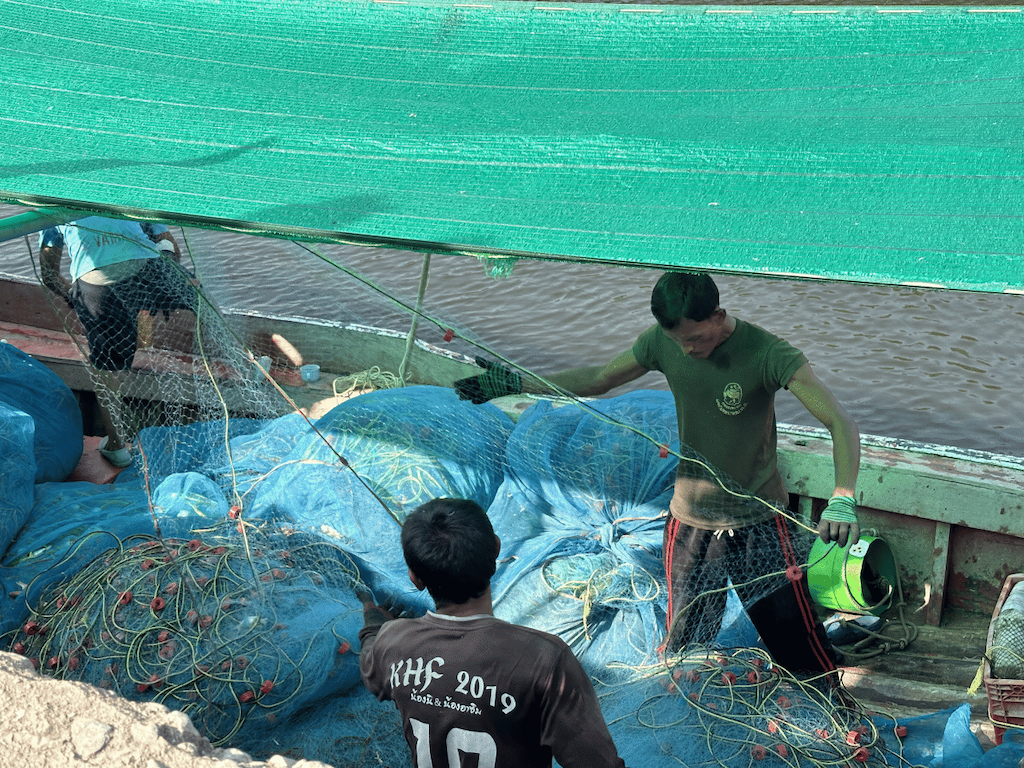
III. Fine-Mesh Nets Make a Comeback
Thailand had received warnings from the EU and the United States over rampant destructive fishing. To salvage its reputation and steady trade, Thailand tightened the Fisheries Act in 2015, banning the use of such fine-mesh nets in night-time fishing beyond 12 nautical miles. Yet commercial fishing companies have continued to complain about financial losses caused by the revision, persistently lobbying the government to relax regulation.
The revision has drawn criticism from environmental organisations, fishers’ associations, and the public. This highly contentious clause had previously been rejected, renegotiated, and amended, but was ultimately approved by the National Assembly in September 2025. The bill is currently awaiting review by the Constitutional Court; if no objections are raised, it will be submitted for the King’s royal assent and formally take effect.
During our floor-sitting chat with the fishers’ representatives, the moment the fine-mesh issue came up, heads shook in unison. “The law has already been approved at the national level, but it hasn’t started being enforced yet,” they said. Our visit fell on the eve of Thailand’s general election, and the fishers are watching and waiting. “We were still discussing this yesterday—why would anyone pass a law like this? It still comes down to who holds power. A provision like this will only benefit commercial trawling companies.”

IV. How Far Can Fishers Walk Within the System?

This is not the first time Tab has led a protest march. His life story is quite remarkable—it could be called a condensed history of Thailand’s small-scale fisheries movement. Tab comes from the countryside of Satun. As a child, he often went out to sea to fish, helping his poor family make ends meet. In 1997, he graduated from a university in Songkhla with a bachelor’s degree in history, the only university graduate among his ten siblings. After graduation, Tab did volunteer work in a fishing village, where he truly began to understand the world of fishers.
At the height of the AIDS crisis in the late 1990s, he co-founded a network of people living with HIV with a person living with the virus. This gave him invaluable experience in serving marginalised communities and building solidarity—experience that laid the groundwork for his later work in fishing communities.
Tab is the kind of person whose leadership you can feel almost immediately. His voice is slightly hoarse. Although I don’t speak a word of Thai, I could still sense the power in his words. He speaks only a few basic words of English, but he would still call out my name from time to time and ask, “Are you good?” He can remember every visitor’s name, which is no small feat. These small details reveal a muscular-memory sensitivity to communication and to building human connection—a hallmark of a classic social movement leader.
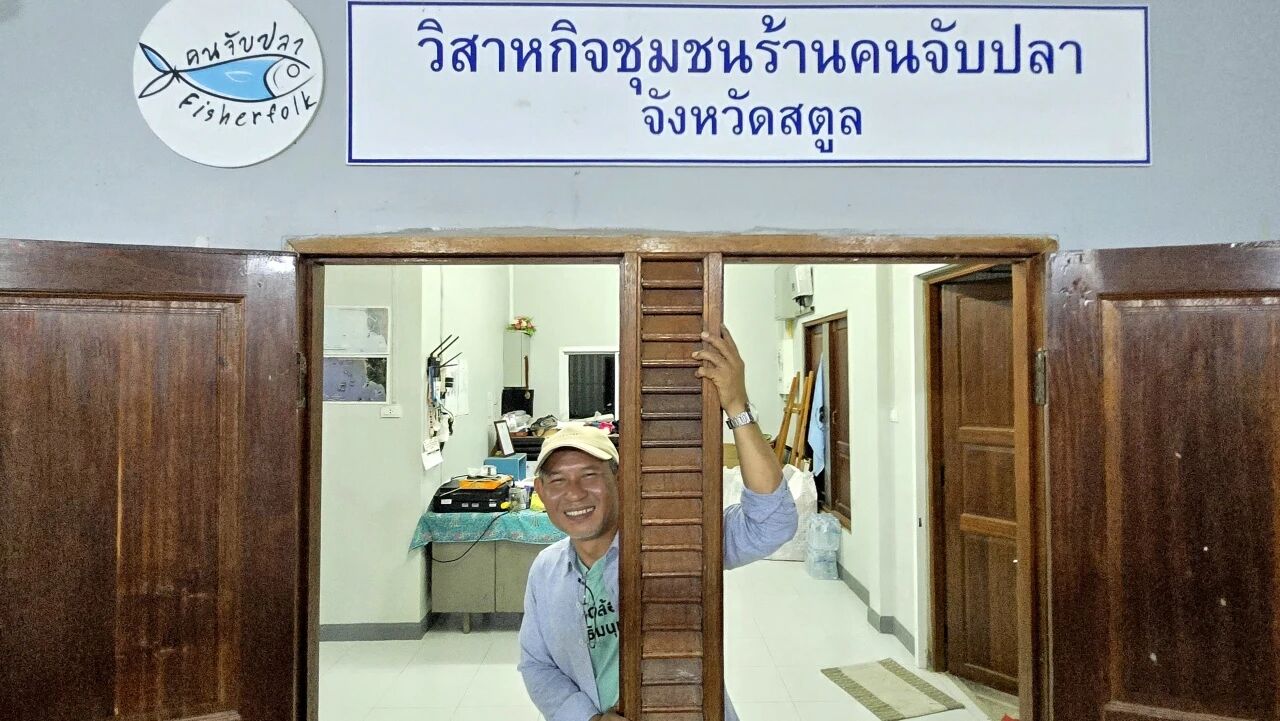
He was also selected as a 2014 Ashoka Fellow for his contributions to the sustainable development of fishing communities—the world’s largest support programme for social entrepreneurship leaders. According to Ashoka’s website, Tab has witnessed many fishers who led conservation efforts still dying in poverty, and some conservation work ending in violence, including the assassination of one fisher.
The widening gap between marine conservation and small-scale fishers’ livelihoods made Tab realise that fishers must benefit from conservation action, or the whole effort is a dead end. For nearly 30 years, he has been a voice for small-scale fishers in southern Thailand, once speaking his mind about industrial fishing: “Twin-rig trawlers should not exist in this country, nor should they exist on this planet… It is a model of fishing that plunderes the interests of people all over the world.”
In 1993, 13 fishers’ groups in southern Thailand formed the Southern Thailand Fishers’ Federation, which later absorbed traditional fishers’ organisations from other regions, grew further, and in 2009 registered as a national alliance—the Federation of Thai Fishers’ Associations, or FTFA. Tab was involved in founding FTFA and served as its manager.
A note here on the distinction between the “associations” and the “federation” mentioned earlier. A “fishers’ association” is typically a self-governing body formed by fishers from one area—perhaps several villages—that registers with the government and establishes its own board of directors and bylaws to coordinate internal community affairs, such as the Khon Khlan Town Fishers’ Association that hosted us earlier.
The “Federation of Thai Fishers’ Associations (FTFA)” is a national umbrella body composed of multiple fishers’ associations. It pools these scattered grassroots forces, giving them the capacity to negotiate with—and even push back against—governments and large corporations, and is a key force representing small-scale fishers in policy advocacy and legislative reform. Its members currently come from 19 provinces and 55 organisations.
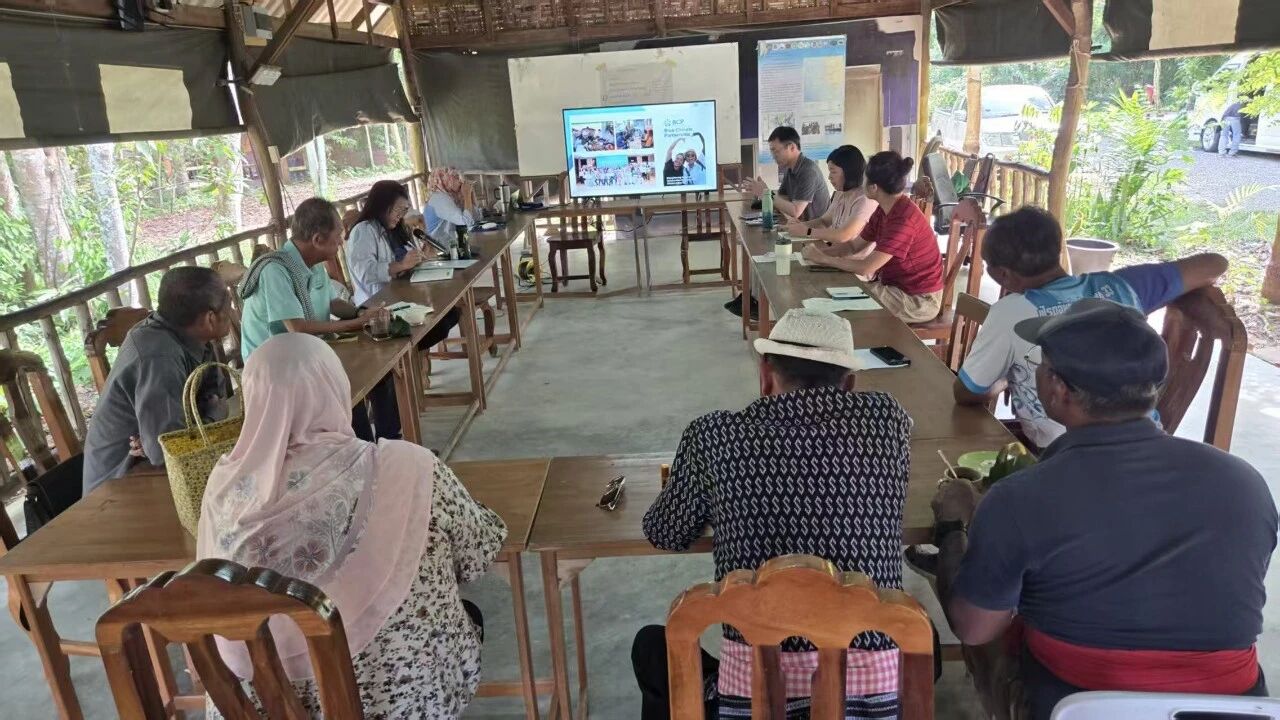
In 2012, Tab worked with hundreds of fishing communities to gather more than 10,000 signatures and submit a draft amendment to the Fisheries Act to the National Assembly, calling for decentralisation and greater involvement of small-scale fishers and local governments in coastal resource management policy. In 2013, they also successfully prevented the government from issuing 2,000 new twin-rig trawler licences.
It was precisely through this kind of bottom-up, hands-on engagement in legislation and policy advocacy that FTFA tore open a gap for the small-scale fishers it represents in a fisheries policy world that had always been closed off and tilted toward industrial fishing. In 2015, under the pressure of the EU’s yellow card warning on illegal fishing, Thailand not only tightened the Fisheries Act as mentioned earlier but also carried out a comprehensive reform of its fisheries governance system, establishing a national-level Fisheries Policy Committee and granting FTFA a permanent seat. For the first time, this gave small-scale fishers a legal standing to negotiate on equal terms with other stakeholders.
Whether fishers’ associations or FTFA, they maintain close ties with NGOs. The struggle for coastal land and resource rights is an arduous task that fishers’ organisations alone find hard to achieve. NGOs represent a professional force from civil society, outside the fishers’ own communities. They provide these fishers’ organisations with capacity building, small grants, and other social resources, helping fishers build connections with consumers, academia, and even the international community. Such support is indispensable.
The relationship between NGOs and these fishers’ organisations is deeply intertwined—to the point of mutual overlap, as the personnel arrangements make clear. For example, Tab was formerly the manager of FTFA and is now the head of the Thailand Marine Observation Association, an NGO focused on fisheries monitoring and policy advocacy.
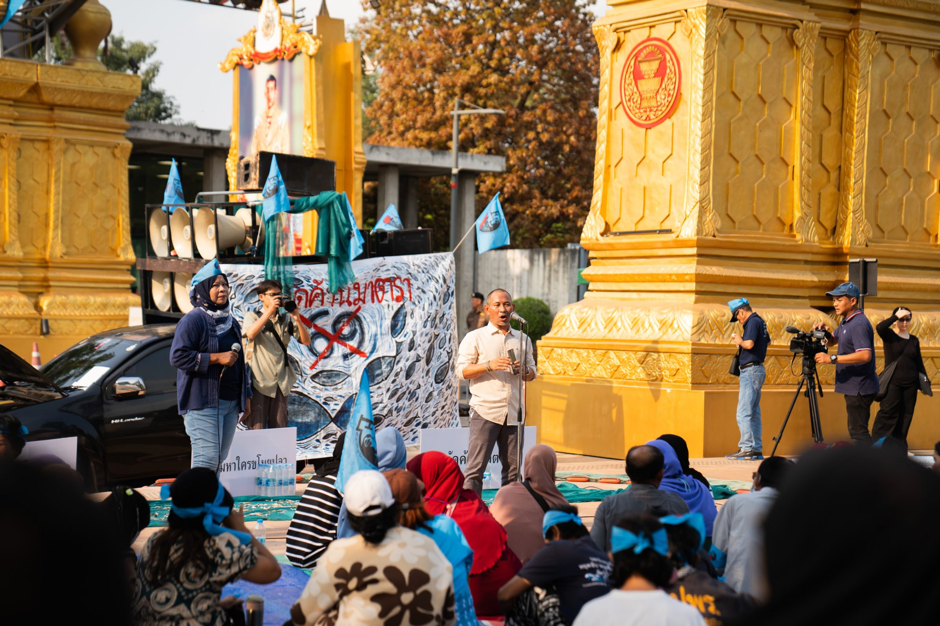
Looking back over decades of fishers’ struggle, the various institutions and fishers’ organisations we visited all expressed the same lament: when it comes to revising the Fisheries Act, politicians and commercial companies hold far greater sway, and so the law always ends up serving their interests.
“How can we make the law truly serve local people?” they asked.
Coming Up Next
This is the first of three field notes from Foodthink’s visit to small-scale fishing communities in southern Thailand. To find out how NGOs are helping to conserve local fishing communities, stay tuned for our upcoming posts.

Edited by: Pei Dan, Tianle