In 2024, we received many books from the fields of food, agriculture, ecology, sustainability and culture, each recording in its own form the complexity and possibility of this world.
From riders racing through the city to modern-day pastoralists on the steppe, from the politics of food behind foie gras to the diverse efforts to protect seeds, from the industrial trap of ultra-processed foods to the lessons of fungal networks in natural symbiosis… these books have all led us from credulity toward questioning, from a narrow corner toward the vast world beyond, to bear witness to the contradictions and hopes in the relationships between people, land, food and nature.
We hope these books will bring us reflection, inspiration or imagination on possibility in the new year, allowing us to rediscover nature and ourselves through the concrete act of reading.
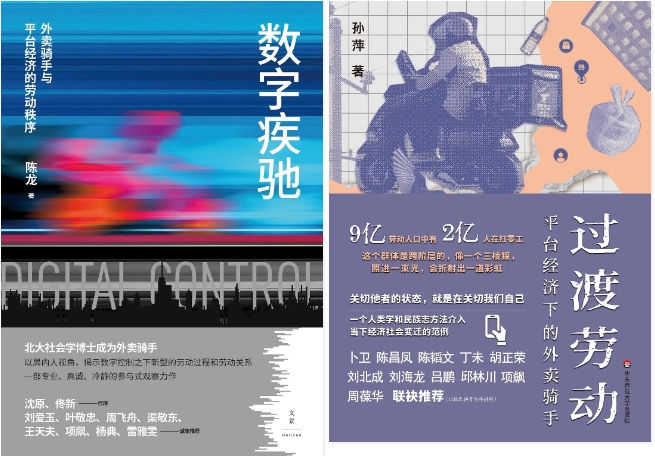
The Digital Sprint: Delivery Riders and the Labour Order of the Platform Economy
Author: Chen Long
Shanghai People’s Publishing House | Century Wenjing
Published November 2024
Transitional Labour: Delivery Riders Under the Platform Economy
Author: Sun Ping
East China Normal University Press | Mint Lab
Published July 2024
Delivery-themed films, collective incidents, academic works and even trivial gossip together form the landscape of food-delivery discourse in 2024. These two works present the lives of delivery riders in greater detail from a grassroots perspective, offering general readers an opportunity for a comprehensive understanding of this field and leaving an archive for future memory.
The riders threading through streets and alleys are themselves the most visible face of the platform economy. On the one hand, readers’ attention to these ordinary people on their doorsteps has sparked widespread empathy among “workers” for delivery riders; on the other, riders are everywhere, offering journalists and researchers the most accessible natural field. As a result, since 2020, the constellation of public concerns surrounding food delivery has consistently centred on the rider as a subject.
But at present the thunder is loud while the rain is scant, and genuine change remains uncertain. So beyond “speaking for grassroots workers”, we must also consider how to view the platform economy from more diverse perspectives and advance deeper public discussion. We must still salute the authors who persist in raising their voices, but in the current space of public discourse, perhaps more could yet be done.
— Wang Hao (editor, Foodthink)
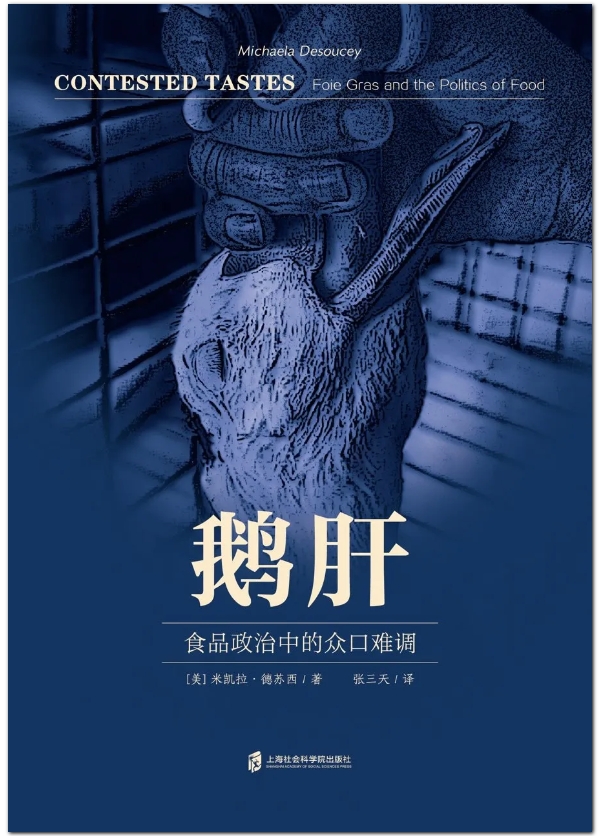
Foie Gras: The Impossible Palate in Food Politics
Author: [US] Michaela DeSoucey
Translator: Zhang Santian
Shanghai Academy of Social Sciences Press | “Food Speaks” Translation Series
Published August 2024
This book argues that the history of foie gras is considerably complex: foie gras is not merely a food but carries multiple layers of cultural, political and moral meaning. DeSoucey points out that, as a traditional French delicacy, foie gras is revered as a culinary treasure, yet it is also criticised and even attacked by animal welfare organisations for the controversial practice of gavage. Working from the perspectives of cultural sociology and organisational theory, she examines how foie gras has become a litmus test for moral and political controversy and the divergent outcomes these controversies have produced. Treating foie gras as a “cultural object”, she offers a comprehensive exploration from its historical origins to its modern industry and contested moral status. Her penetrating analysis of foie gras’s historical and cultural significance reveals its complexity across different cultural and political contexts, further examining the political and cultural conflicts behind food, and posing a thought-provoking question: do we truly decide for ourselves what we eat?
— Zhu Yan (associate researcher, Institute of Sociology, Shanghai Academy of Social Sciences)
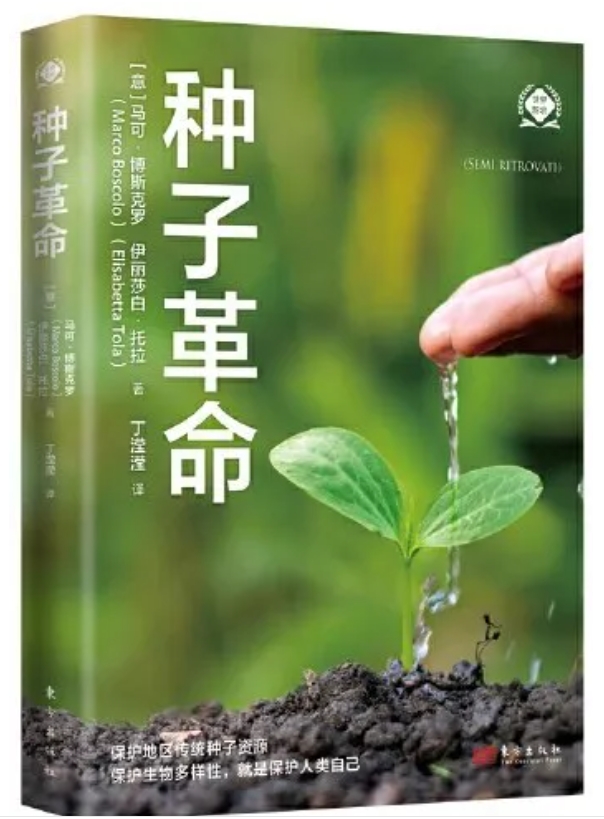
The Seed Revolution
Authors: [IT] Marco Boscolo, [IT] Elisabetta Tola
Translator: Ding Yingying
Dongfang Publishing House | World New Agriculture series
Published January 2024
Through the two authors’ fieldwork visits, this book presents cases of farmers in different parts of the world practising in-situ conservation of traditional seeds. It reveals how people protect cultural and ecological diversity through the stewardship of traditional seeds, responding to the problems industrialised agriculture has caused in food security, rural development, biodiversity and other areas. Furthermore, the book showcases advances in applying the concept of “populations” to breeding innovation, reminding us that Darwin’s theory of natural selection applies not only to natural biodiversity but can also drive the sustainable transformation of seed and food systems. This perspective offers new directions for ecological conservation and agricultural transition.
— Guan Qi (head of the Eastern Office, Farmers’ Seed Network)
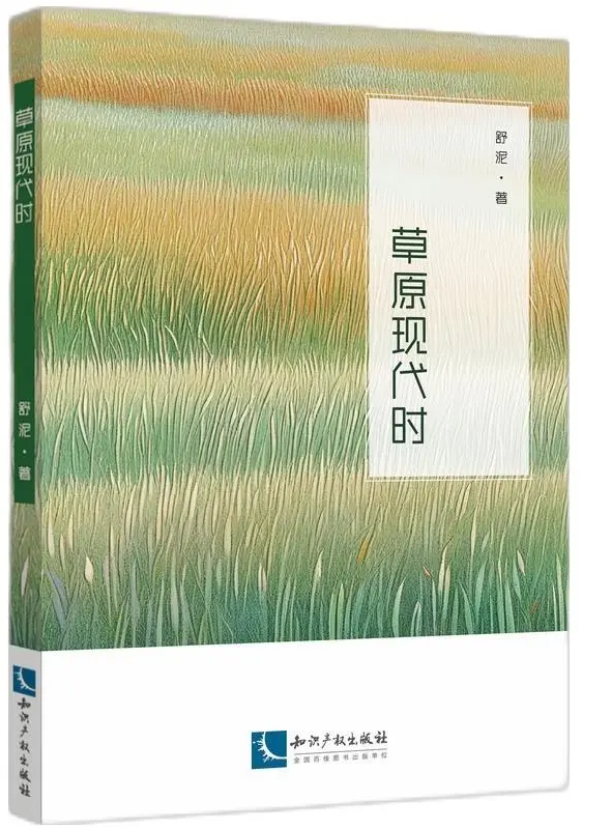
Modern Times on the Steppe
Author: Shu Ni
Intellectual Property Publishing House
Published August 2024
The grassland–livestock dual-contracting reform, which began in the 1980s, profoundly reshaped Inner Mongolia’s pastoral landscape: each household’s wire mesh fencing, motorised borehole and livestock sheds and pens replaced what had once been shared pastures. If The Wisdom of Nomads summarised a body of traditional knowledge in decline, then in this new book, Shu Ni is more intent on revealing the steppe’s lesser-known face: just as the pastures adapt to new systems of ownership and management, nomadic culture, under the pressures of the outside world, is seeking a modernity that is its own. Herding horses from the back of an off-road vehicle, herder cooperatives building their own cold-storage facilities, setting up study tours for visitors—beyond passive modernisation, herders are learning to work the market, striving to ensure that traditional culture is valued as it truly deserves. A required lesson, perhaps, for the new generation of pastoralists.
— Xiao Zhu (editor, Foodthink)
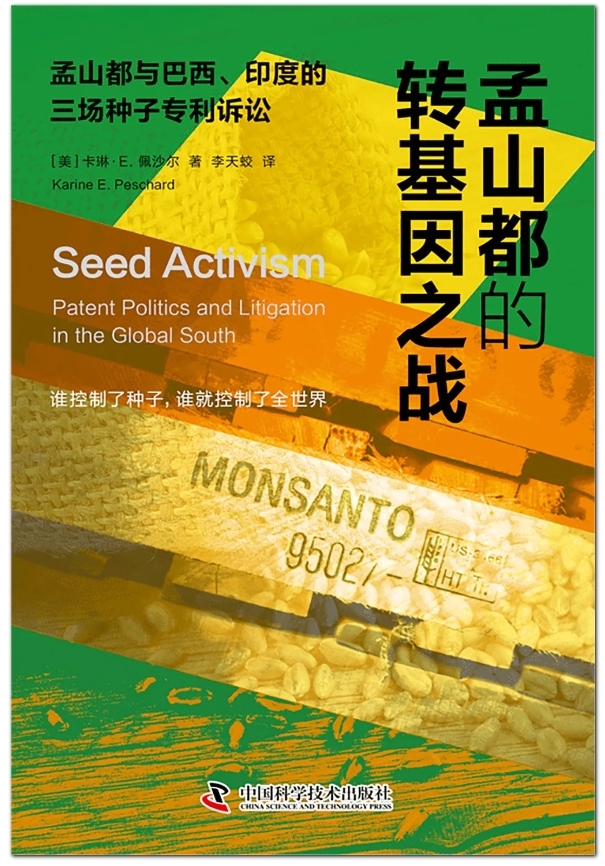
Monsanto’s GMO Wars: Three Transgenic Seed Lawsuits Against Monsanto in Brazil and India
Author: [US] Karine E. Peschard
Translator: Li Tianjiao
China Science and Technology Press | Zhongke Academy
Published June 2024
“Whoever controls the seed controls the world.” Ever since genetically modified crops appeared, Monsanto, armed with intellectual property and plant breeder’s rights, quickly extended its reach to the Global South. By analysing three lawsuits brought against Monsanto by Brazil and India over royalties for GM crops, Peschard exposes Monsanto’s stratagems and overt manoeuvres, and outlines how the two countries’ seed law frameworks have evolved amid competing interests. Although the outcomes of the three cases were far from satisfactory, legal activism did foster multi-party alliances and reminds us: a system that better protects smallholder farmers’ seed rights is not only possible but necessary.
— Ze’en (editor, Foodthink)
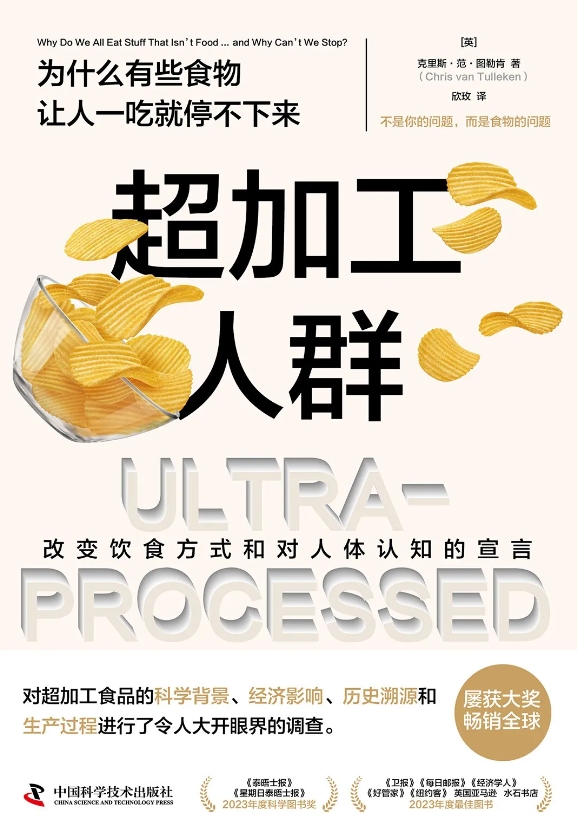
Ultra-Processed People: Why Some Foods Are Impossible to Stop Eating
Author: [UK] Chris van Tulleken
Translator: Xin Mei
China Science and Technology Press | Zhongke Academy
Published August 2024
This book sets out very clearly the essential nature of food since the late 1930s. It notes that in the UK, roughly 75% of people get 60% of their calorie intake from denatured ultra-processed foods (Ultra-Processed Foods, UPFs). This dietary pattern is not only widespread in Britain but shows a similar trend in other countries. Drawing on extensive research, the book demonstrates that excessive consumption of ultra-processed foods is closely linked to a range of health problems. It urges us to choose natural, whole foods as much as possible, support locally produced food, pay attention to the supply chains behind what we eat, and understand the far-reaching effects of industrialised agriculture on the environment and on health.
— Li Hui (founder, Xihuoli Sustainable Living Space)

Song of the Na Village: A Visual Ethnography of the Naxi Mosuo
Mosuo Sages: Dongba Oral Histories
Guarding the Dongba: A Cultural Chronicle of the Mosuo
Authors: Song Yiqing / Zhuang Yufen / Sun Qingzhong / Yang Duojizhade / Shenggen
In the Mosuo heartland on the Sichuan–Yunnan border, more than 400 Dongba rituals are still held every year. Dongba priests and xiawu practitioners move through the villages, guarding the land and its people. The people entrust their spirits to heaven and earth, treat all living things with kindness, and pass the years among the mountains in unity, harmony and quiet contentment. The vast, intricate system of Dongba culture is the fullest expression of local folklore and custom, and the ancient, archaic Dongba script is, moreover, the only pictographic script in the world still in living use. The Dongba Cultural Trilogy brings together ten years of fieldwork and three years of photography by veteran humanists and renowned cultural photographers in the Na people’s valley, recording in a race against time the folk traditions and cultural memory of Naxi and Mosuo ancient villages through cultural chronicles, visual ethnographies and oral histories.
— Han Xiao (editor, CITIC Press)
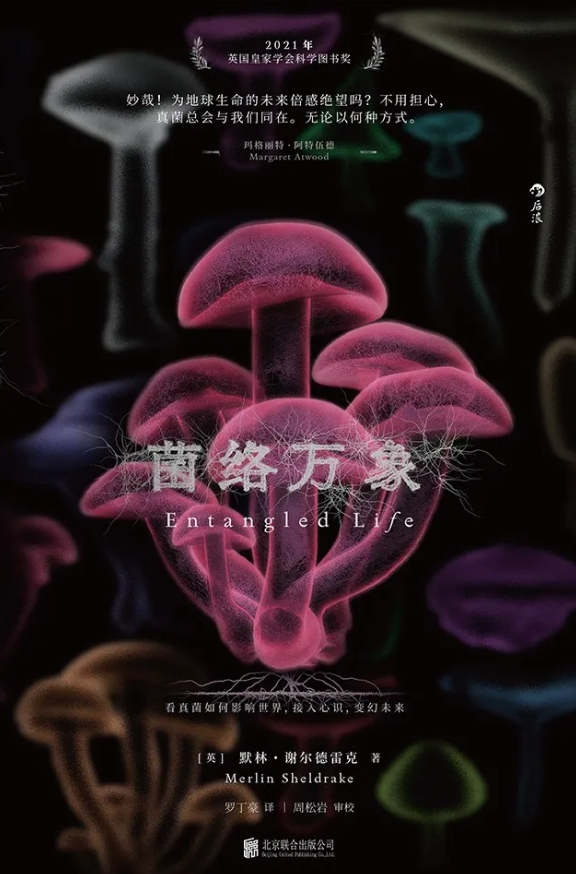
Entangled Life
Author: [UK] Merlin Sheldrake
Translator: Luo Dinghao
Beijing United Publishing Co. | Postwave Science
Published November 2024
When it comes to fungi, most people think of mushrooms, but fungi are far more than what ends up on the plate. “Fungi are everywhere, yet easily overlooked.” From Penicillium and yeast to the honey fungus sending vast networks beneath the soil, fungi nourish or kill plants and animals, survive in radiation, outer space or inside insects, break down rocks, produce medicines, induce hallucinations, sustain the relationship between plants and soil, and shape the composition of Earth’s atmosphere. These life forms—neither plants nor animals—offer us cues in our quest to live in symbiosis with nature, through a presence that is mysterious, powerful and all too often ignored. By exploring fungi, this book teaches us to break down our prejudices about evolution, ecology, individuality, intelligence and life itself. The more we understand fungi, the more deeply we come to understand this planet beneath our feet—and ourselves.
— ZX (Foodthink)
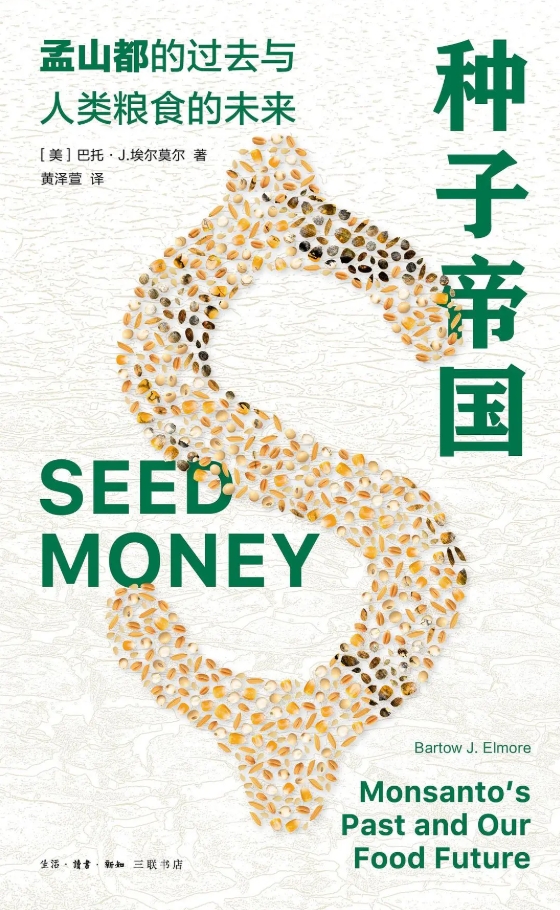
The Seed Empire: Monsanto’s Past and the Future of Human Food
Author: [US] Bart J. Elmendorf
Translator: Huang Zexuan
SDX Joint Publishing Company | Yali
Published April 2024
This book is the work of conscience of an environmental historian—accessible, engaging, and written without pretension. By placing Monsanto within the full sweep of capitalist industrial history, the author traces the trajectory of a multinational giant, helping us understand how science and technology intervene in everyday life and what problems they bring to humanity’s living environment. The author refuses the easy path of conspiracy theory, yet nor does he confine himself to archival research. He has produced not only a corporate history and an environmental history, but also a vivid portrait of the lives of the countless people whose fates have been intertwined with this colossus. Although the Monsanto Company itself has been brought to an end, its technology has not died away. How to assess the social character of technology is one of the many meaningful questions this book raises—especially when it has slipped beyond the control of ordinary people, becoming something elusive, jealously guarded by experts alone.
— Xu Zhun (Professor, Lingnan College, Sun Yat-sen University)
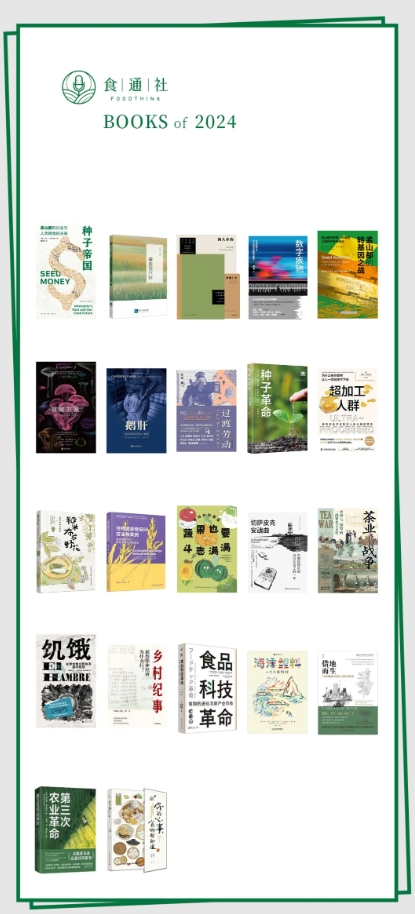
Beyond these, in 2024 we also received many new books that explore food and agriculture and related fields from fresh angles and in varied forms. Here, we would like to thank the authors, publishers and readers who have supported and cared about food and agriculture over the past year. It is your documentation, thinking and critique, your attention, introduction and discernment, your curiosity, understanding and questioning, that allow more nourishment of knowledge to return to the land and the nature on which we all depend.
– New Year’s Day Comment Giveaway –
👇
Finally, what books on food, agriculture or sustainability have you read this year that you would recommend?
We welcome your comments below
Based on the number of likes each comment receives and the content of the comments themselves
we will select 5 readers to receive
a copy of The Seed Empire or The Art of Fermentation!
Here’s to discovering more worthwhile books
Any language, new or old (books published in 2024 preferred)
If you would like to join our group reading programme
please scan the QR code for Foodthink’s personal WeChat account at the end of this article
and note “读书会” (book club) in your comment
to join our food and agriculture reading community
Produced by: Foodthink
Editors: Ze’en, ZX
