How Was the World’s First Frozen Ready Meal Born?
Foodthink Says
Long before the public began to recognise and understand ready meals, and before the state introduced relevant standards, our food had already travelled a long way between its place of origin and the dining table. From preservation methods to packaging innovations, to breakthroughs in cold-chain technology, food’s “journey” has long since changed our tables. What exactly is a ready meal? And how was the world’s first frozen ready meal born?
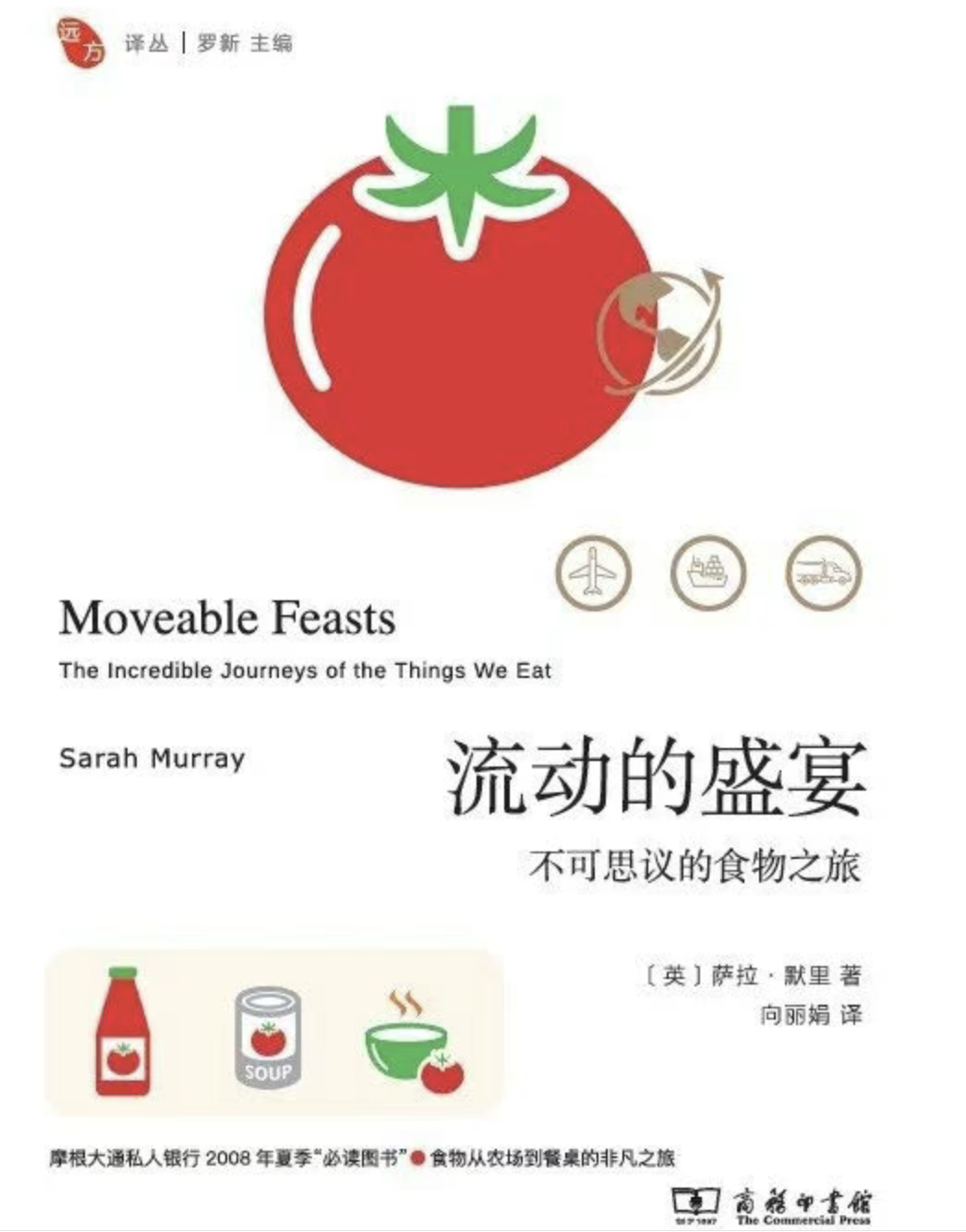
Today, Foodthink has selected an excerpt from the new book A Moving Feast: An Incredible Journey of Food (by [UK] Sara Murray, translated by Xiang Lijuan, The Commercial Press, May 2025 edition). The book chronicles the extraordinary journey of food from farm to table and the far-reaching impact this has on politics, economics, the environment, and even art. In modern society, food travels an average of over a thousand kilometres from origin to table. How did this come about? The ancient Romans used amphorae to transport olive oil from Spain to Italy. Today, cold-chain transport allows Norwegian salmon to arrive in China under refrigeration, to be processed before being shipped on to the United States. The twelve stories in the book paint a sweeping picture of the globalisation of food and the technological innovations behind it. This article is published with the permission of The Commercial Press.
I. The World’s First Frozen Ready Meal
Swanson thought this was a brilliant idea. The company designed a turkey dinner, served in small trays, packed in a cardboard box, and then frozen. Each tray was divided into several compartments: one for the meat (initially turkey, later expanded to chicken, beef, and fish), and another for vegetables and sauce. This was the world’s first frozen ready meal, and it was an instant success upon launch. Besides convenience, what won the American public over was its name – “TV Dinner” – and the packaging box modelled on a television screen. After all, it was the early 1950s, and television was still a modern novelty. A year later, Swanson & Sons had sold more than 25 million TV Dinners, and frozen food became a way of life for many households. Today, US supermarket frozen food sales exceed $5.9 billion a year. The trend is strong in the UK as well, where consumers happily devour 400,000 tonnes of ready meals every year.
II. The Evolution of Ready-Meal Packaging
Metal cans can now hold everything from soup to soda. Americans open more than 200 million cans a day. Happily, aluminium (a resource that is virtually inexhaustible) pull-tab cans are quick and easy to recycle – an old can takes less than 60 days to become a new one back on the supermarket shelf. In theory, this means a shopper has bought the same piece of aluminium six times in a year. Very few foods cannot be canned, and in some cases, canned food may actually be healthier. Canned tomatoes contain higher levels of lycopene – a powerful antioxidant – than fresh tomatoes.
Perhaps war gave birth to sealed glass jars and tinplate cans, but their demise may also be war’s doing. The retort pouch developed by Netec is being adopted by an ever-growing number of food companies, and more and more products on supermarket shelves are now packaged in retort pouches, including foods that used to come in tin or glass containers. From luncheon meat, tinned tuna, and smoked salmon to cooked rice and all manner of ready meals, they are all going into this lightweight new pouch. The typical design is three-sided sealed, with a wide, flat bottom that stands upright; some even have resealable zip closures. Like their military counterparts, these pouches have an inner layer in contact with the food, an outer layer made of nylon or polyester (which can be printed on), and a middle layer of aluminium foil (to block out oxygen and water). Most importantly, the aluminium can be replaced with a new type of barrier film so that you can see the food inside, and (this may be even more important, as people increasingly favour convenience foods) it can go in the microwave. Retort pouches are not only lightweight and easier to open, but they have the single most important advantage for the food industry: they take up little space, saving on shelf space.
And so, tomatoes may be the first food to leave the tin. The Swedish packaging company Tetra Pak, which put the Rausing family among the world’s wealthiest, has begun supplying Sainsbury’s, the UK supermarket chain, with tomatoes packed in Tetra Recart cartons. Tetra Recart is a rectangular carton made using technology similar to the retort pouch. After heat-sealing, the food inside can be kept for six to 18 months. The company also points out that flexible packaging can spare British consumers’ fingers from being cut by tins, as, according to data from the Royal Society for the Prevention of Accidents, this happens more than 2,000 times a year.
III. Modified Atmosphere Packaging
”
In early spring 2005, a severe frost struck Spain, making it impossible to supply salad vegetables to UK supermarkets. With production damaged, Spanish exporters could not fulfil lettuce orders. Lettuce prices surged by around 80 per cent. All of a sudden, food that normally crossed Europe by lorry to reach Britain had to be airlined from the US West Coast instead. Airlines found themselves unexpectedly benefiting from a lettuce-import boom. As global food supplies become ever more interlinked, the weather in a faraway country has become a matter of close attention for supermarket managers and freight agents alike. In the world of “global perishable food,” a frost in one country can end up with another country’s planes filled to the brim with lettuce.
In addition to maintaining a steady flow of fruit and vegetable shipments, airlines have found new revenue streams through an increasingly popular food category. It is “fresh-cut.” “Fresh-cut” refers to fruit and vegetables that have been peeled or cleaned, sliced or diced, and packed in small sealed plastic containers, ready to eat straight from the pack. At first, fresh-cut meant bags of washed, pre-cut lettuce. Now there are also pineapple chunks and apple slices, or mixed vegetables marketed as “Asian stir-fry packs,” catering to consumers’ demand for convenience.
Of course, for some people, chopping vegetables is part of the pleasure of cooking and eating. However, food suppliers can see from the demand they receive that there are enough lazy cooks among home consumers to justify the extra cost of this new food format. The time spent preparing a meal is also shrinking. Today, most people spend about half an hour on meal preparation. By 2030, it is estimated that the ideal preparation time will be five to 15 minutes. With vegetables and fruit already peeled and cut, that time frame is clearly achievable.
Keeping fresh-cut fruit and vegetables fresh is a major challenge, because fruits such as apples and pears turn brown very quickly once sliced. Modified atmosphere packaging (MAP) is commonly used for pre-cut bagged salads. It involves injecting nitrogen or carbon dioxide into the container to reduce the oxygen level, slowing the growth of all unwanted organisms and preventing browning and wilting. Strawberries in MAP packaging can stay fresh for two weeks after picking. People are still exploring new ideas. American scientist Olusola Lamikanra has been researching how to “trick” a plant’s sensory systems. He has found that cutting fruit and vegetables while they are submerged in water creates a barrier that prevents the physiological and biochemical changes triggered when a plant is injured – changes that lead to the fruit’s deterioration. Breathable plastic films are also being developed, using a laser scoring system to select films with different levels of permeability to suit the requirements of different foods. For example, if too much carbon dioxide builds up inside a flexible-pack can of pineapple, it can explode.
Of course, whether this type of packaging is healthy, or whether it preserves the original flavour, and what the quality is like, are separate questions. There is evidence that MAP packaging can destroy important nutrients in food. All things considered, fruit and vegetables taken out of this kind of plastic packaging simply do not taste as good as ones picked the same day.
……
— Excerpted from the introduction of A Moving Feast: An Incredible Journey of Food