
“Only After Leaving Beijing for the Mountains Did I Feel Like a Proper Person” | Food Talk Vol. 51
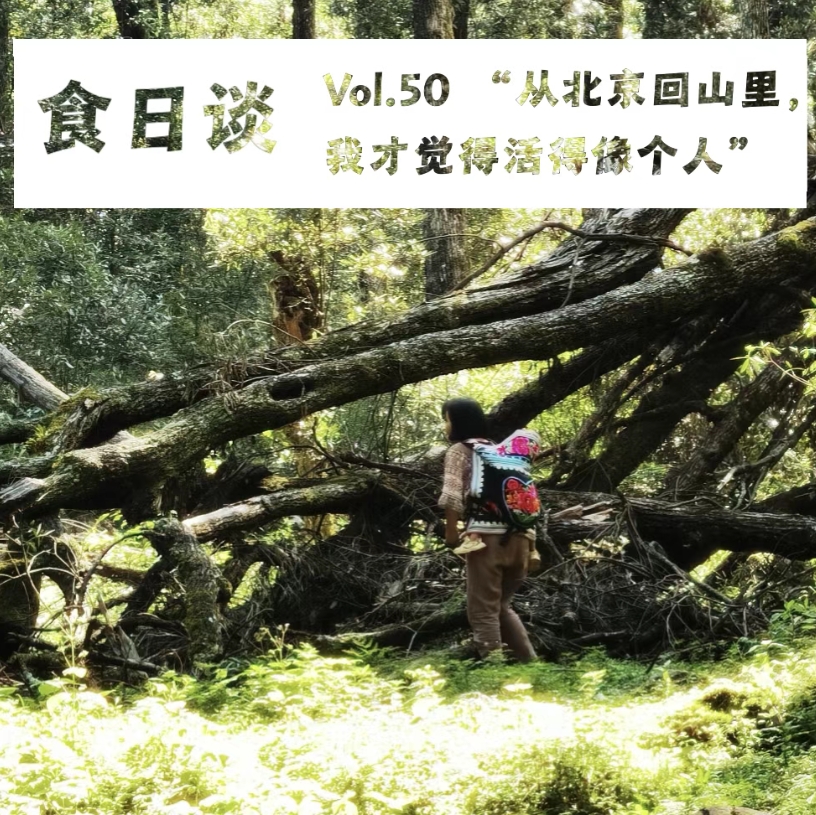
This is an honest conversation without any formula, and a collection of stories about “how to make a living off the mountains.”
Welcome to this episode. Come along into their daily mountain life. This is also the first episode in the Beijing Organic Farmers’ Market’s 15th-anniversary series of conversations. More engaging dialogues are coming soon.
This Episode’s Guests

Currently lives and works in the small forestry town of Huyuan in the Greater Khingan Range. Has collaborated with local mountain foragers for 15 years to harvest wild ingredients. Loves forest life, enjoys going into the mountains to pick all kinds of delicious food, while also observing and documenting this clean northern town.

Kangli
A Yi woman born in 1992. After finishing high school, she participated in rural development work in Kunming and Beijing. At the end of 2015, she decided to put down roots in the countryside for life, so she returned to Chuxiong, Yunnan, to start a business. She has successively launched two platforms, “Kangli Local Goods” and “Happy Homestead,” using sales to support local sustainable foraging and cultural heritage.
This Episode’s Host
 Tianle
Convener of the Beijing Organic Farmers’ Market, founding editor of Foodthink.
Timeline
02:48 Why return to the mountains? Two young returnees’ choices
04:04 What is “mountain foraging”? The origins of matsutake (Tricholoma matsutake), wild mushrooms, and mountain produce
14:26 Do locals also prefer wild mountain produce?
19:09 How to price mountain produce? Not simply following market rates, but ensuring a basic income for mountain foragers
24:51 “This isn’t a windfall” — when customers say you charge too much
27:10 The state of mountain villages: from 100 households to 80 in a Yunnan village, only 2,000 people in a small northeastern town — who is still working?
33:59 Can you feel climate change while mountain foraging?
37:25 Mountains contracted by “bosses”: the dilemma of free foraging
40:15 Back from mountain foraging, only a third of the work is done
56:46 Can you encounter bears while mountain foraging? Wild ≠ easy: the risks, hardships, and protocols of picking in the mountains
61:07 Is the hard work of mountain foraging a declining industry? Inner freedom may be a small reason to keep going


Further Reading▼
Thirty Years of Matsutake: A Yi Family Across Three Generations
Not Every Mushroom Is a “Junzi” | A Wild Fungi-Foraging Diary in Yunnan’s Markets
In Shangri-La, We Climbed the Mountain and Shared Two Meals with Our Lisu Neighbours
Scan the QR code below
on Xiaoyuzhou | Ximalaya | Lizhi | Apple Podcasts
to subscribe to the Food Talk podcast


Unless otherwise noted
all images are provided by this episode’s guests
Music: Banong
Production: Xiaojing
Episode Planning: Wen Jing
Episode Editing: Tianle
Contact email: [email protected]