
Why Has the Sweetness of Childhood Disappeared?
A Note from Foodthink
As melon and fruit varieties rapidly iterate, why have these “Baituwa” melons been excluded from mainstream varieties? Why, so loved by consumers, has it ultimately failed to endure?
As fruit cultivation becomes increasingly large-scale and commercialised, and sales grow more online and long-distance, competition in the mainstream market has evolved into an arms race in which “large producing regions swallow small ones” and “major varieties swallow minor ones.” Unable to tolerate chemical fertilisers, unable to withstand storage and transport, not “attractive” in appearance… such varieties seem destined to lose the race. The turnover of varieties may benefit large-scale commercial cultivation and distribution, but for consumers, it is not the best outcome. We hope and believe that, since consumers have a demand, these old varieties will ultimately find their own way to survive.
On 26 April, International Seeds Day, Foodthink also seizes this opportunity to call on readers to pay attention to old varieties. They may be nameless on the page, yet they are passed on through farmers’ words and hands. For it is these diverse, not single, seeds that protect the very foundations of our entire food system.
This article is jointly supported by Foodthink’s “Lianhe Creative Programme” and the Farmers’ Seed Network.
An old farmer came back from the market with two plump melons. This is an old melon variety from Guanzhong, called “Baituwa.” It is white in colour, slightly narrower at the front end than the back, and from a distance it looks like a white rabbit lying on its belly – hence the name.
“I just love eating Baituwa,” the old farmer said with a smile.
In Guanzhong, locals are in the habit of calling Baituwa “ligua” rather than “melon” – the latter sounding more like a city term. Although in everyday life people often use “ligua” and “melon” interchangeably, another farmer who has grown Baituwa says: “What we grow locally is all ligua – a bit longer than melons, which are round.” The name “ligua” carries a rustic charm, evoking warm memories of life in the past.
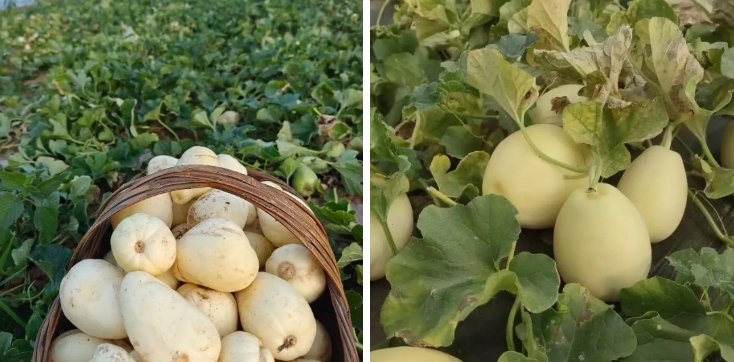
I. “Baituwa”: Past and Present
An agricultural cooperative in Gaoling District, Xi’an, promoting its own Baituwa, recalled how melons were eaten back then:
“…Back then, the way we ate ligua was rather unceremonious. Perhaps because ligua is far smaller than a watermelon, it didn’t get the same treatment – no need to place it solemnly on the chopping board and slice it into neat wedges. The fastidious would scoop up a ladle of water and give it a rinse; the less fussy would just rub it on their palms. Whether fussy or not, the next step was the same: rest the ligua on the palm of one hand, raise the other high – those with a strong arm would chop down with a flat palm, those with less strength would smash it with a fist. The ligua would generally burst into two very irregular halves. You’d hold one half in your hand, shake off the seeds inside, and start devouring it in big mouthfuls. The unfussy would eat the skin right along with the flesh; the fussy would gnaw out all the flesh and leave a thin skin behind.”
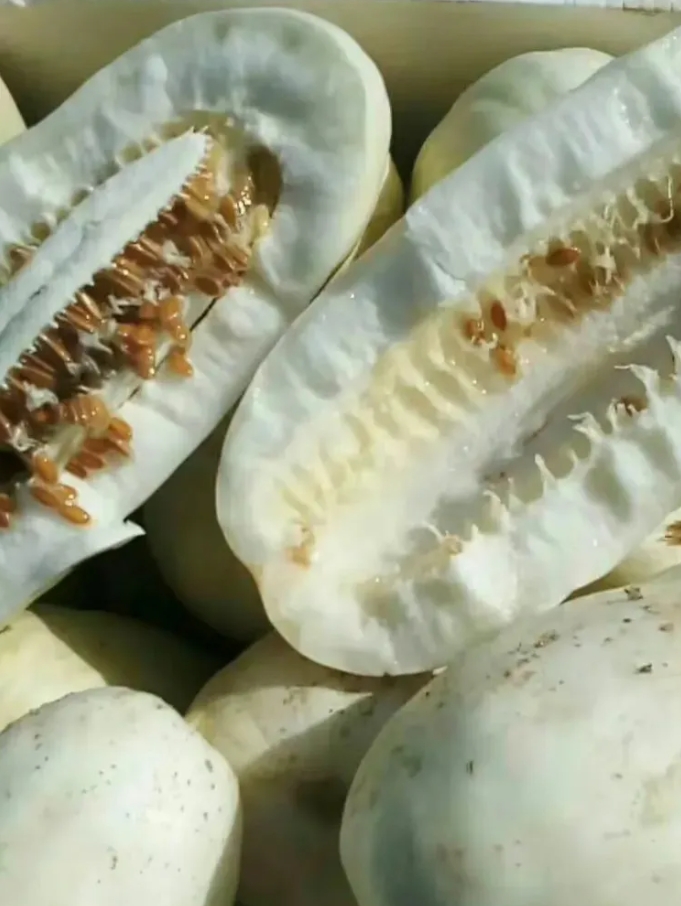
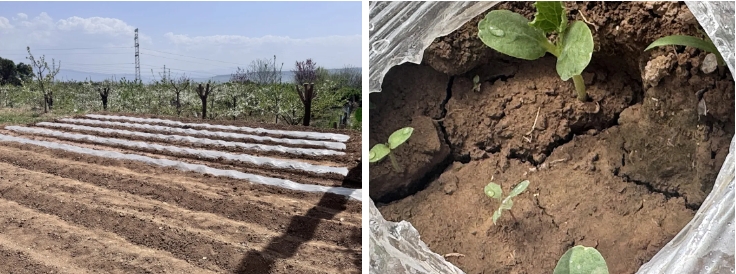
In Lantian, Shaanxi, Baituwa is usually grown for one crop a year. It is typically sown around Qingming (early April) and harvested some forty to fifty days later; some growers also interplant it with watermelons. Once the melons are in, the land can be replanted with wheat, radishes, or large-leaf spinach.
For small-scale melon farmers, growing just over a mu of Baituwa currently brings in around seven or eight thousand yuan. While the overall profit is not high, it remains quite substantial compared with growing staple cereals.
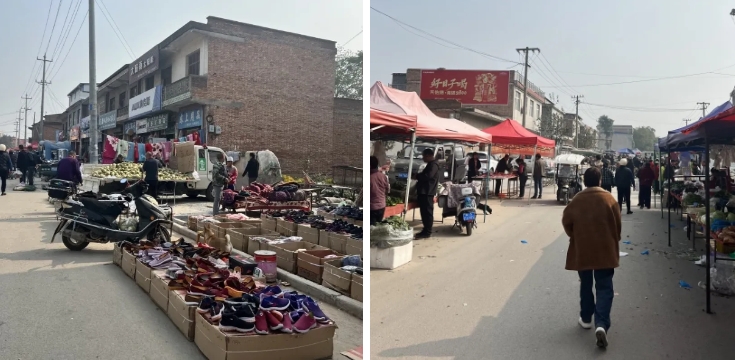
But as new varieties, along with pesticides and chemical fertilisers, have been introduced on a large scale, an increasing number of new melon and fruit varieties with mature market operations and higher margins have entered the market, dealing a heavy blow to old varieties. Baituwa has gradually retreated from city shop shelves, and can now only be caught in passing glimpses at rural markets.
Villagers in Yujia Gou, Yehu Town, Lantian, say that more than twenty years ago, nearly every household in the village used to grow melons. But growers are dwindling. Last year, the only household in the village still planting Baituwa decided not to continue, as the returns were simply not there.
“We’ve got a lot of wild animals coming to eat the melons – wild boars, civets – so people don’t want to grow them anymore.”
On the other hand, many of the village’s ligua plots were converted to white-bark pines. Later these trees turned out to be a serious financial loss locally, and most farmers dug them up and returned the land to crops, making the traces of “Baituwa” increasingly hard to track down.
Today’s Baituwa, though no longer commonly seen in cities, still has a market. In places around Xi’an, it is still being grown – by individual farmers and by specialised agricultural cooperatives alike – and has become a local specialty in Yanliang, Gaoling District, Xi’an, and elsewhere.
II. Is “Aerospace” Baituwa Still the Same Old Variety?
During the collectivisation era, old-variety Baituwa depended entirely on farmers saving their own seed – once the melons were ripe, they collected the seeds, washed and sun-dried them, and set them aside for the following year. But according to melon growers in Yujia Gou village, today’s Baituwa seed all comes from the county seed company, or from packaged seed sold by private seed-and-fertiliser shops in towns and villages.
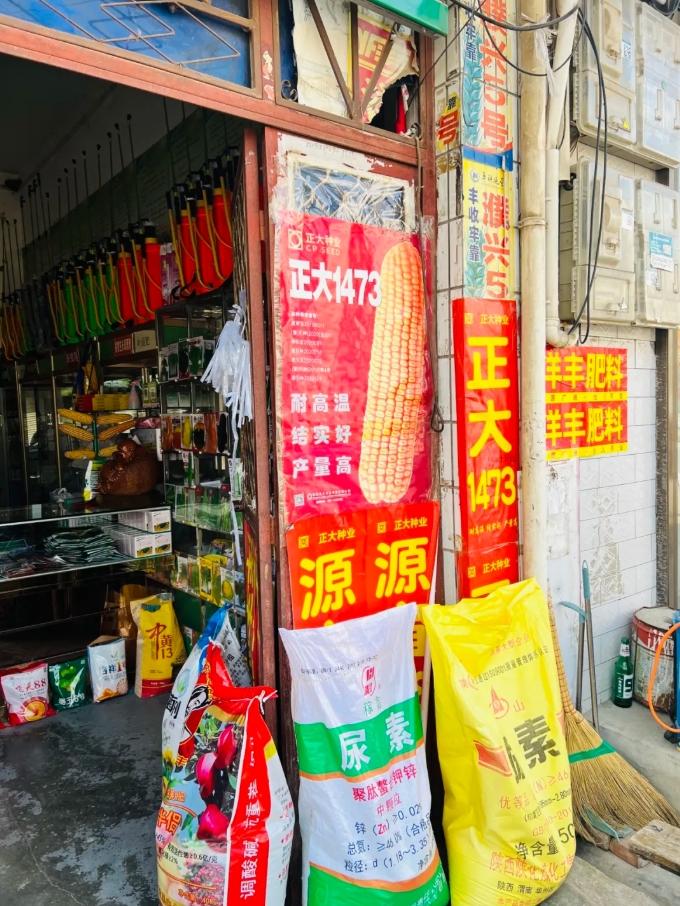
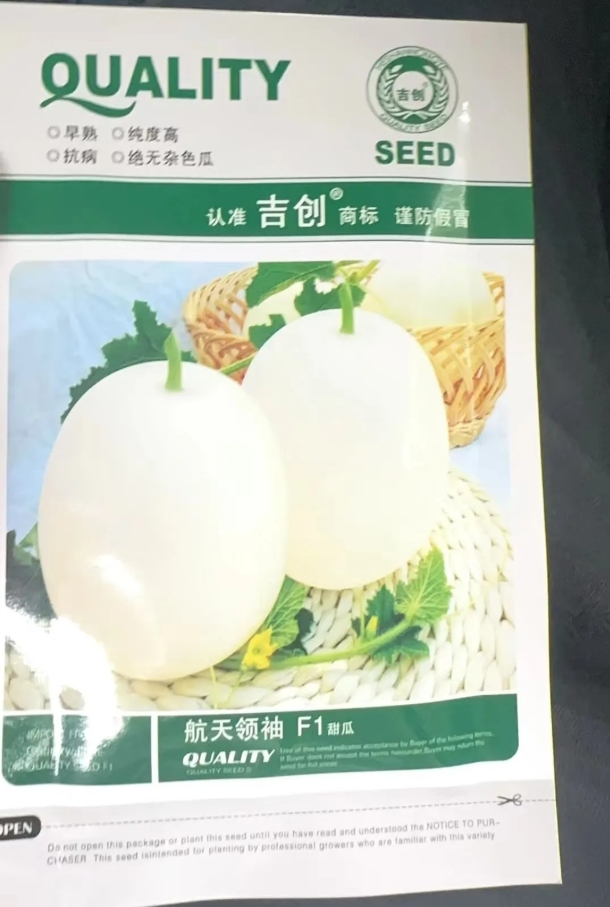
When the author went to the local seed company to look for Baituwa seed, however, the packet did not carry the name “Baituwa” at all – it was printed with the label “F1 Aerospace.” The manufacturer told me this is not actually aerospace seed; “F1 Aerospace” may simply be meant to create a high-tech impression.
Moreover, the place of origin stated on the packet is not Shaanxi but Gansu. Yet local farmers say that when buying seed they usually don’t pay much attention to the packaging details; as long as they are assured it is “Baituwa,” they still consider it the local old variety.
So what, exactly, is an “old variety”?
By definition, an old variety refers to a cultivar that farmers have domesticated and maintained themselves over time, one that has adapted to local conditions; its scientific term is landrace. From the perspective of modern genetics, old varieties generally possess a higher degree of genetic diversity than newly bred modern cultivars, which in turn determines the richness of traits within the species.
But ordinary people, when they talk about “old varieties,” rarely think about it in scientific terms.
Many elderly people, when recalling Baituwa, emphasise the texture in their memories. A grandmother in her seventies is not short on praise for Baituwa’s mouthfeel: “This is our local melon strain – crisp and sweet, and you can eat the skin too.” Watching her daughter buy a neatly packaged melon from the city market, she muttered that the Xinjiang melons sold in city markets now are cloyingly sweet. “Not like Baituwa – your throat doesn’t scratch afterwards, and your mouth doesn’t feel sore.” If she comes across Baituwa at the market, she and her husband will always buy a few to taste.
An old farmer from a village near Xi’an told me: “People around here prefer the old varieties, because the new ones are genetically modified. We’ve eaten Baituwa all our lives, so we’re used to this variety.”
In fact, Baituwa included, none of the melon varieties sold locally are genetically modified. Yet quite a few farmers cannot distinguish between the concepts behind different new breeding techniques; they lump them all together with “genetically modified,” treat the subject with alarm, and the conversation often veers into whether GM might affect fertility.
Compared with a few decades ago, the structure of fertilisers used has also shifted. While some growers still prefer farmyard manure to preserve Baituwa’s taste, others use chemical fertilisers in moderate amounts. This is due not only to lingering concerns about chemical fertilisers but also to a pursuit of the melon’s flavour.
A fellow from Jingyang, recalling Baituwa, said: “It’s delicious, but you mustn’t use chemical fertiliser. The moment you apply it, it looks pretty but tastes of nothing.”
A farmer in Lantian County who grows Baituwa said he had tried chemical fertilisers but ultimately chose farmyard manure such as chicken dung. Although chemical fertilisers can boost yields, melons fertilised with farmyard manure taste sweeter and better. Not just melons – as long as the crop is primarily for home consumption and yield is not the priority, most villagers still lean towards farmyard manure.
Besides, the farmyard manure itself has changed. Growers told me they now mostly use chicken dung. The farmyard manure of the past included not only dung from pigs, cattle, chickens, and sheep, but also night soil, usually mixed with soil and heavily blended with wood ash. However, night soil and wood ash are hardly used by anyone now.
III. Melons in the Age of Commercialisation
On the one hand, Baituwa is highly seasonal and cannot be supplied year-round; on the other, its growers have always been predominantly scattered smallholders operating on a small scale, making it difficult to enter the logistics systems of urban markets that demand stable, continuous supply. It can only be sold at rural markets in Guanzhong. As a result, many smallholders, finding that “Baituwa” demands too much labour for too little return, have gradually withdrawn from growing it.
Professional growing cooperatives that specialise in local specialties have now become the main force in cultivating old-variety melons, but their market positioning and sales channels differ greatly from those of smallholder growers. Among them, Yanliang’s Baituwa marketing model stands out as particularly successful: through e-commerce platforms and livestream sales, it has achieved leading sales volumes and brought significant economic benefits to the area.
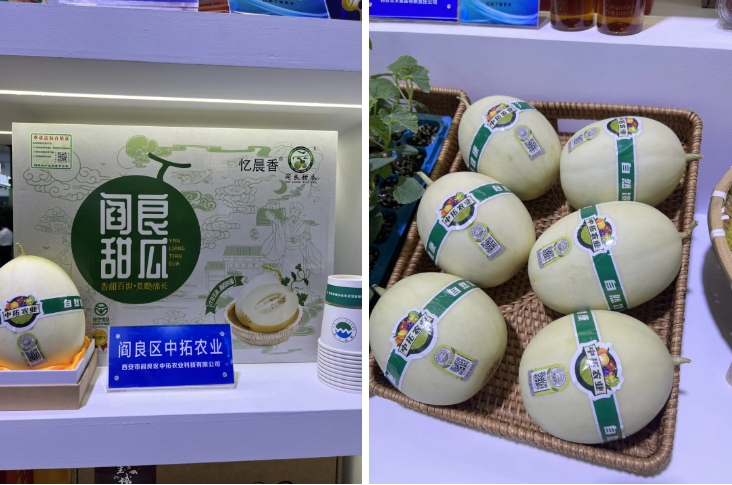
These professional growing enterprises are also developing newer, higher-end melon varieties. At the 2024 Agricultural High-Tech Achievement Expo in Yangling, Shaanxi, a new variety of Yanliang melon was on display. Unlike the smallholder-grown Baituwa, which is smaller at the front end and larger at the back, it is a uniform oval, displaying a remarkably even, attractive white with a faint hint of green. The packaging is also very refined. Staff explained that this variety is called “Cuili,” and its pricing and target market are more upscale than smallholder Baituwa.
IV. Old Varieties, Why Do You Stir My Heart So Deeply?
After decades of change, Baituwa’s traits remain broadly the same as the old variety in people’s memories, but cultivation techniques and business structures have undergone enormous transformation. At the same time, the socioeconomic foundations that sustained this old variety have been completely reshaped.
The historian of technology Francisca Bray argues that technology is also a form of culture – a product of the combined social conditions and social needs that a given context provides to people. Therefore, when a variety has long since been severed from the social environment in which it first emerged, it may be very difficult to assert that it is still the Baituwa of our memories.
But whether or not Baituwa has changed, this old variety that spans time and space offers an emotional connection that no newer variety can match. For those who know Baituwa, the moment they speak of it, their thoughts seem to be drawn back to some distant place.
It is local, nostalgic, carrying rural culture and collective memory. The author of the essay The Melon and the Boy writes in Baituwa’s voice, recalling a scene from the collectivisation era when a family sat together eating melon: “Under a starlit, moonlit night, I came to the dinner table glowing with a faint greenish light, letting the young boy’s family savour my crisp sweetness, my refreshing crunch, until even my richly fragrant flesh was cradled in mother’s hands, and the greedy boy licked it clean.”
Perhaps the charm of old varieties lies in the fact that they always remind us of past ways of life, and of the deep bond between people, labour, and the land. Back then, labour was part of life, and the plants that sprouted and grew from the earth were the medium through which growers felt their emotions and the natural world. Long watchfulness and tender care were at last rewarded with sweet juice on the palate – a sweetness that worked its way through, strand by strand – all the more precious in an age of material scarcity.
And now, when we fancy a melon, the market offers so many choices that we can pick and pay in just ten-odd minutes. Compared with the fruits of one’s own labour, its timeline feels thin, and the memory it leaves grows ever shorter.
The philosopher of technology Wang Xiaowei argues that technologies such as food delivery and smartphones, as they seep into our daily lives, are gradually stripping away our everyday experiences. Under the logic of modern technology, food seems to be little more than a means of filling the stomach and ensuring nutrition, while the relationship between people and food grows ever more insignificant.
So when people reach back for old varieties, consuming and remembering them alike, the variety itself may no longer be what matters most. What we are truly trying to recover is a vital need for connection with the land and with plants – a longing to feel the weather, the soil, the green vitality again, and to find harmony in merging one’s own labour with one’s own life.
The seas become mulberry groves and the groves become seas; time shifts and the world turns. Perhaps in the future, Baituwa will be swallowed up among yet more newly bred modern varieties. But when people hear the name “Baituwa,” they can still summon that white-rabbit shape and that crisp, sweet taste.
2. https://mp.weixin.qq.com/s/xO0ES33CeX3IVDcYXWsKsQ
3. https://mp.weixin.qq.com/s/t2hiYt3ktEbUnoZuk8xGSw
4. Institute of Folk Culture, Beijing Normal University: Francisca Bray: Technology as a Form of Culture, https://zhuanlan.zhihu.com/p/687162223
5. Wang Xiaowei: Deep in the Everyday – Returning to a Harmonious Relationship Between People and Technology, https://new.qq.com/rain/a/20240202A0673V00

About the Lianhe Creative Programme
After multiple rounds of interviews with a panel of six judges, eighteen creative projects were ultimately selected to receive support from Foodthink’s Lianhe Creative Programme. Six have been published so far:
Amei the Cleaner, Who Just Wants to Eat Properly | The Working Class Table
In Malaysia, Chinese Merchants Only Want Grade A Durian
“Fake Meat” Ousts Real Meat: Herders, the Table, the Amazon
Watermelons Guaranteed Sweet, Growing Watermelons Guaranteed Bitter
Thanks to Yidao for help with the ecology of old varieties section of this article
Edited by: Wang Hao