When the No-Burn Policy Becomes the Last Straw for Small Farmers
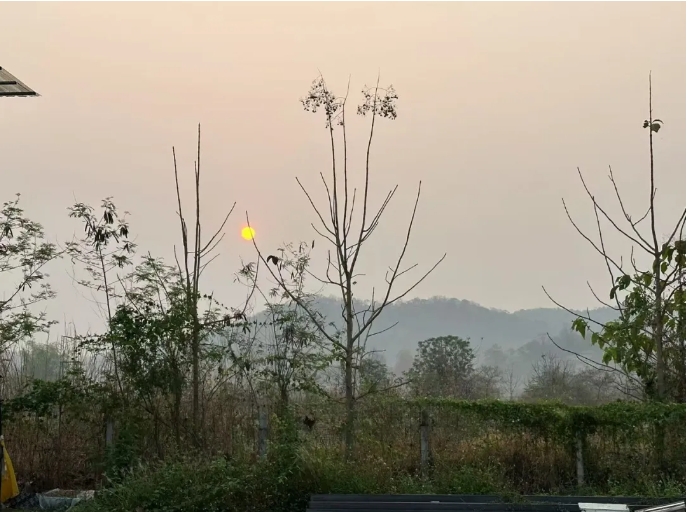
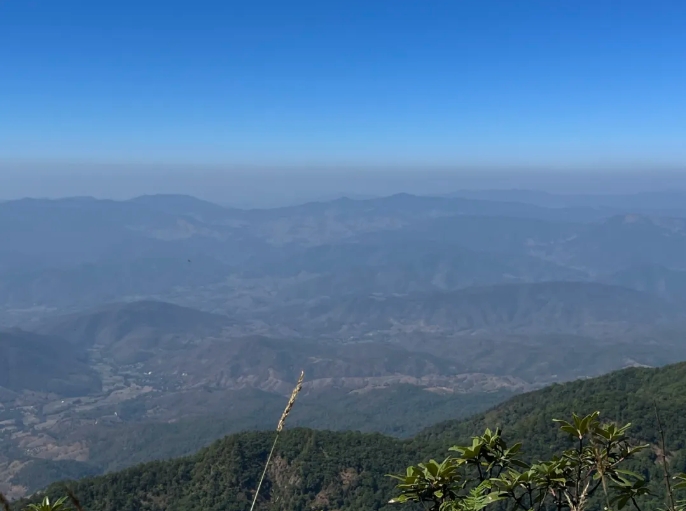
From the end of last year through April this year, Chiang Mai, a northern Thai city renowned as a tourist destination, has been frequently shrouded in thick haze. On 29 March, IQAir named Chiang Mai the most polluted city in the world, with an Air Quality Index (AQI) of 188, 17.4 times the World Health Organization’s air quality guideline levels.
A considerable share of the air pollution comes from burning cane. In northern, northeastern and central Thailand, December to February is the annual season for burning sugar cane.
The cane referred to here is sugar cane, grown for sugar production. Its leaves are numerous, long and sharply edged. When cutting cane by hand, workers must expend great effort to remove the cane tops and leaves, which contain little sugar. Sugar accumulates primarily in the main stalk, and the fibrous rind of the cane is thick, so surface burning does little to affect the sugar content inside. This is why many cane farmers choose to burn before cutting.
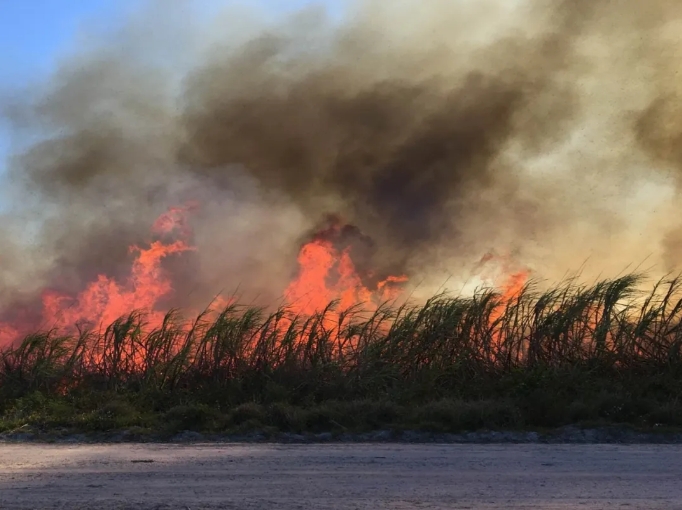
Caught between air quality and a livelihood, cane farmers face a vicious cycle: to burn, or not to burn.
According to official statistics released this year, the national average share of burnt cane received was approximately 15 per cent of total cane milled per day. Nevertheless, some sugar mills defied the rule, accepting burnt cane at rates above 25 per cent.
Among them, the sugar mill in Udon Thani Province accepted the highest volume of burnt cane, reaching 43 per cent — making it the province with the highest rate of cane burning in the country. Udon Thani Province, located in northeastern Thailand, is the country’s largest cane-growing province, with 120,000 hectares under cane cultivation, accounting for 10 per cent of the province’s total area.
Under the nationwide threat of air pollution, pressure on the Thai government has mounted, with different departments acting separately to urgently “deal with” the source of the pollution.
On 14 January this year, Thailand’s Ministry of Industry ordered the closure of the Udon Thani sugar mill on grounds of a safety-law violation, penalising the mill for its persistent excess intake of burnt cane.
Shutting down the sugar mill, in effect, punishes the cane farmers.
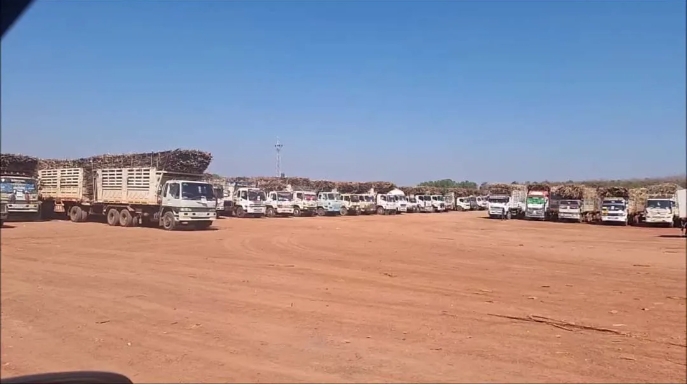
Farmers had already burned and harvested their cane before setting out for the mill, only to learn of the closure upon arrival. Nearly 2,000 trucks were stranded, one by one, queuing at the mill gate. Farmers waited anxiously at the entrance, hoping the government would relent and the mill would reopen. As the wait dragged on, the cane continued to rot.
Thailand’s Prime Minister Paetongtarn Shinawatra believes that farmers should bear responsibility for air pollution. According to The Nation Thailand, in response to the severe air pollution episode in Bangkok, she stated that if farmers are found burning land for clearance, the government will suspend all subsidies from 1 June this year through 31 May next year.
Cane farmers in the region said that the Udon Thani sugar mill had been purchasing their burnt cane for many years, and this was the first time the government had so decisively shut it down.
II. Why the Burning Never Stops
By 2019, the government pushed further with stricter measures, including greater support for the use of agricultural machinery; the establishment of no-burn zones; a subsidy of 120 baht per tonne (approximately 25.68 yuan) for fresh cane; and a cap on sugar mills’ purchases of burned cane, initially set at 30 per cent and gradually reduced to 5 per cent over the following two years.
Subsidy incentives and penalties did produce results at first. The proportion of cane that was burned fell from 60 per cent to 26 per cent over three years. But the gains were short-lived: after 2021, the burning rate began to climb again. In the 2023–2024 season, it reached 30 per cent.
The reason is simple: the cost of harvesting fresh cane is roughly three times that of burning it. The penalty for accepting burnt cane was a deduction of approximately 6 yuan per tonne, while the subsidy for fresh cane was approximately 26 yuan per tonne — whether penalty or incentive, the amounts were far too small to close the cost gap between the two methods.
Many cane farmers, when they ran the numbers, simply chose to pay the fine and keep burning.
In truth, farmers are well aware of the benefits of fresh cane: it is more readily accepted by sugar mills, it has a higher sugar content, and it produces cleaner air. Burning cane releases large quantities of air pollutants in a short period, including particulate matter, carcinogenic organic compounds and trace metals. The health consequences of exposure to these pollutants are primarily respiratory, including asthma and lung cancer. The most immediate victims are, of course, the cane farmers themselves and nearby communities.
But for them, a livelihood matters more than health, and the burning keeps going. With results falling short, the government’s response has been to raise the penalties. For the 2024–2025 season, Thailand’s Ministry of Industry moved early to impose even stricter measures, such as reducing the number of collection points for burnt cane and sharply increasing the penalty to approximately 26 yuan per tonne, in a bid to further deter burning and encourage fresh harvesting.
Khon Kaen Province is also a major cane-growing province in northeastern Thailand, with 9.6 per cent of its land area under cane cultivation, second only to Udon Thani Province. Labour shortages are the number-one challenge here every harvest season. Chairat makes his living growing cane, cassava and rice. To balance costs and market risk, he has worked out a shrewd strategy: in the 2023–2024 season, 80 per cent of his cane was harvested fresh and the remaining 20 per cent was burnt before cutting.
This was a decision based on a careful weighing of many factors, including the proportion of burnt cane that local mills were accepting, sugar prices, and other production costs. Chairat said that fresh harvesting was simply to ensure the cane would be accepted, not because fresh cane commanded a higher price.
“Doing this this year doesn’t guarantee I’ll do the same next year. Costs keep rising, conditions change every year, sugar prices shift — all of these affect next season’s planting plans and harvesting methods,” Chairat said. “Fresh-cut cane may fetch a better price, but the cost of growing it is going up too.”
Chairat’s experience is far from unique. Data show that Thai farmers’ cane production costs in the 2022–2023 season set a record — 1,122 baht per tonne (approximately 247.34 yuan). Multiple factors drove this: rising prices of fertiliser and pesticides, higher labour costs due to shortages, and surging global energy prices, which have pushed up transport and processing costs.
Climate change is also emerging as an increasingly significant cost variable. In 2022, Chairat’s cane fields were hit by a serious flood, making the subsequent harvest difficult. The waterlogged soil made it hard for harvesters to enter the fields, and delaying the harvest risked the cane toppling over, so he had to hire manual labour. By harvest season, Chairat found that labour costs had hit a new high.
In 2024, drought caused poor cane growth, and Thailand’s sugar yield fell to its lowest level in 13 years. As the pressures of cultivation mount, some small farmers have stopped growing cane altogether.
III. Small Farmers: Suffering the Most, Gaining the Least
For some small farmers, the question is how to survive, not how to earn more — survival has become their primary concern.
The most viable alternative to burning before harvest is the use of cane deleaffing machines and sugarcane harvesters. The Thai government has been promoting mechanisation primarily through lower loan interest rates and support for domestic manufacturers of harvesters, but by current results, the loans have failed to incentivise most cane farmers. Simply put, if the government and sugar mills cannot provide direct funding or machinery support, small farmers cannot afford it.
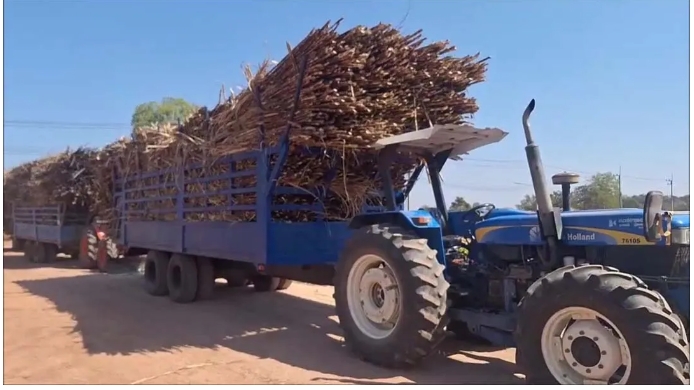
According to data from the Thai Chinese Daily, by 2021 Thailand had only 2,000–2,500 sugarcane harvesters, capable of harvesting 60–75 million tonnes of cane per year. If all cane grown across the country were to be harvested fresh, the number of harvesters would need to rise to 3,400–4,500. More importantly, not every region’s cane-growing area and method is suited to harvester use.
Small farmers in Thailand typically grow cane on private land in small plots, with neighbouring farms directly adjacent to one another. It is impossible for every farm to purchase machinery, given the high cost and the low frequency of use. A single sugarcane harvester can cost 8–12 million baht (approximately 1.71–2.57 million yuan) before fuel, and is used only three to four months a year during the harvest season.
“We must grow more than 10,000 tonnes of cane before we can even think about buying a machine,” said Ganok, a Thai cane farmer. He believes the cost of machinery should not fall entirely on cane farmers: “The mills should help us by purchasing machinery. The mills push the burden onto farmers, while sugar prices are falling and labour costs are rising.”
Though these farmer-support measures seem to fall short, what about thinking differently — how can the non-sugar residue be turned from waste into value?
The Thai government has laid out a series of alternative energy development plans covering 2015 to 2036. Among them, the government hopes to maximise the use of cane resources by supporting the biochemical industry — for example, generating electricity from bagasse and producing ethanol from molasses. By adding value to cane, the plan aims to secure cane farmers’ income while stabilising farm product prices. It also projects that cane could generate an additional US$9.6 billion in economic value annually and provide cane-related jobs for 300,000 households.
Unfortunately, small farmers have been excluded from this development plan.
Under Thailand’s 1984 Cane and Sugar Act, 70 per cent of annual sugar production revenue is allocated to cane farmers, with the remaining 30 per cent going to sugar mills. However, revenue from non-sugar cane by-products, such as ethanol and electricity, is not shared with cane farmers.
The Northeast Thailand Cane Growers’ Association has been calling in recent years for a revision of the Cane and Sugar Act. The association wants cane farmers to receive a fair share of revenue from cane by-products, giving them greater financial stability. It also urges the government to invest in infrastructure and to support or subsidise cane farmers’ labour costs, thereby reducing cane burning.
Thai scholar Professor Sirima Panyamethikul has called for community participation in developing sustainable solutions to reduce air pollution, rather than a blanket ban on agricultural burning: “We must provide farmers with more practical and workable alternatives.”
Yet such appeals, shouted so many times over, seem to have become correct but useless platitudes. Rising agricultural production costs, market volatility, and unjust policies leave cane farmers with no choice but to extract what little profit they can at the environment’s expense. When they are branded “polluters” and forced to “pay for pollution,” giving up agriculture becomes, for some, their last resort.
Small farmers caught in the “pollute or leave” dilemma — are they only Thai cane farmers?