
From the Guoshan Yao to “Chosen Foragers”: The Termite Mushroom Triggers a Foraging Frenzy
Foodthink Says
This article is supported by the Foodthink Lianhe Creative Programme, and was written in the summer of 2024. The “Guoshan Yao” series of articles explores how, amid migration in the new era, Yao people are drawn into urbanisation and the market economy through food. The author takes the Yao-Hakka Market Fair in Ruyuan County, Shaoguan City, as a fresh starting point, meeting local smallholders, returning to Yao mountain villages, and telling the emotional stories of people rooted in the hills and fields and their relationship with food.
“It’s only just Dragon Boat Festival—have they already come up this early?”
Qiaoyun, heavily pregnant and staying at home for the rest of her pregnancy, was nevertheless worried over the phone that we might miss 2024’s peak foraging season. She urgently told us to head to the county seat of northern Guangdong—Ruyuan County, Shaoguan City—to forage for termite mushrooms, known locally as “Summer Solstice Mushrooms”.
Ruyuan is a Yao Autonomous County. The plains are home mainly to indigenous communities, while the mountain areas are dotted with Hakka villages and Yao settlements. Among them are the Guoshan Yao—a Yao branch that has long migrated between deep-mountain Yao villages. Since the 1990s, driven by poverty-alleviation policies and dam construction, Hakka and Yao settlements have gradually relocated to the plains, creating an ecosystem of mixed Yao and Hakka communities.
We are Springflut, an interdisciplinary, cross-cultural creative studio. We became acquainted with the Guoshan Yao through a participatory art project in a Yao village community. Over the past three years, as our fieldwork has deepened, we have travelled back and forth with our Yao friends between the mountain villages and the county town on the plain. However the environment shifts, we always circle around the Guoshan Yao’s dining table and food concerns to look after one another—this has become the bedrock of our relationships with the Yao people, for eating, after all, is a serious matter. It was in this context that the “Summer Solstice Mushroom” story was stumbled upon.
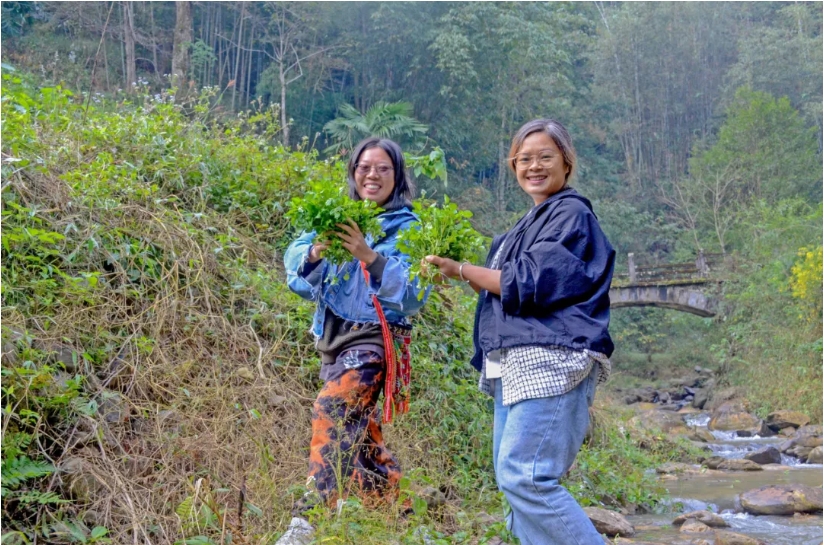
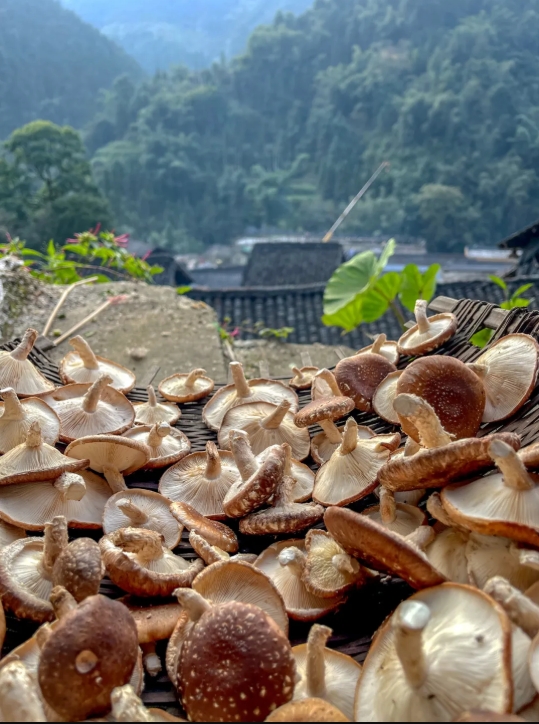
Unlike the wild shiitake found deep in Yao mountain villages, the Summer Solstice Mushroom grows on the alluvial plains and hills of the Bei River—a tributary of the Pearl River system—close to Shaoguan Danxia Airport. Freshly foraged Summer Solstice Mushrooms are sent via fresh produce delivery or cold chain transport, arriving at farmhouse restaurants, upscale dining establishments, and wet markets in Pearl River Delta cities within hours, and eventually reaching consumers’ tables. The mushroom is best used in chicken soup or a quick stir-fry, and its exquisite flavour has made it a favourite among diners. Prices in Ruyuan fluctuate daily, generally ranging between ¥120 and ¥500 per kilogram.
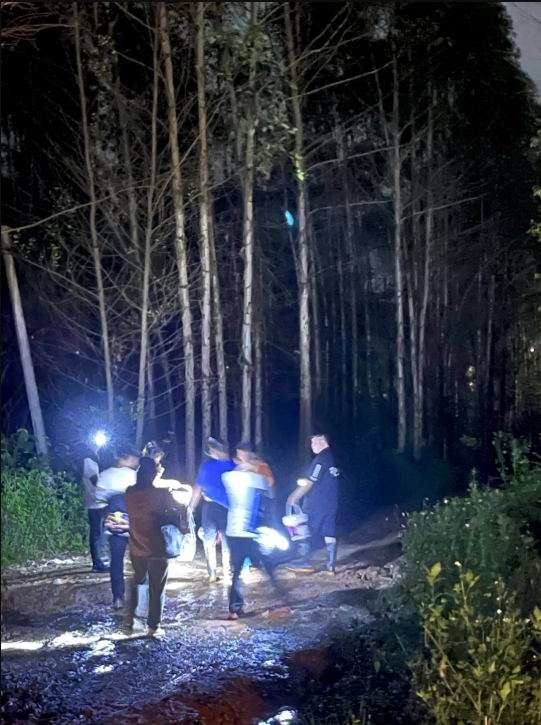
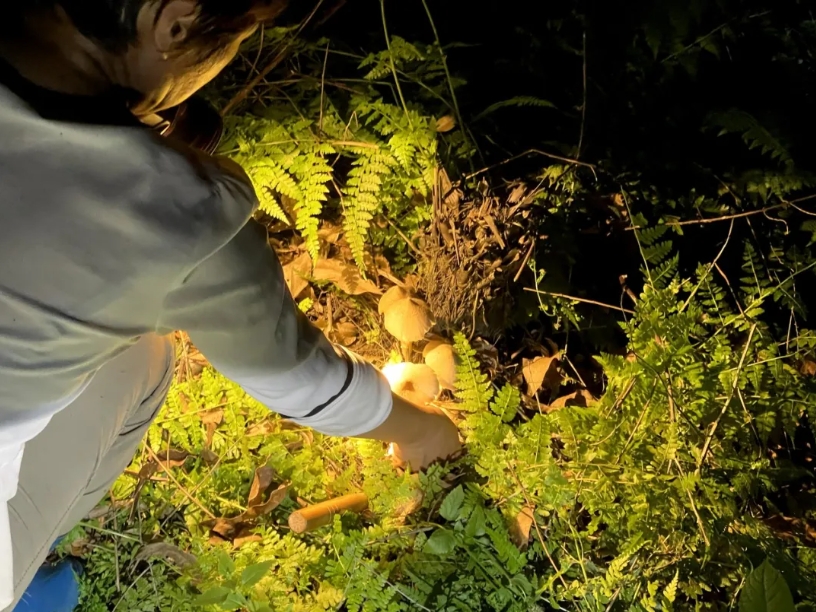
The market’s craving for that first taste of the season keeps goading the nerves of northern Guangdong’s mushroom-foraging army. Every summer, a “mushroom-foraging fever” sweeps the region, igniting a full-blown frenzy—beams from powerful torches pierce the eucalyptus plantations and bamboo groves as foragers work through the night.
Even as they are swept into the narratives of urban–rural mobility and rural revitalisation, the Guoshan Yao retain an attitude of openness and acceptance. Their wisdom of fluid, flexible, and resilient living continues to be passed down quietly within the community. The story below—of the Guoshan Yao and the Summer Solstice Mushroom—is a small window into their “philosophy of movement”.
I. From “Can We Eat This?” to “They Sell Well”
The appearance of shiitake in the Yao village had once shattered our stereotype of deep-mountain Yao settlements as barren and short on forest produce. The Summer Solstice Mushroom, in turn, became a breakthrough that helped us understand how Qiaoyun’s family had adapted to the migration from mountain to plain.
Qiaoyun’s father was once a hunter; her mother was a farmer and embroiderer. In the 1990s, the family ended generations of “mountain-crossing” life in the Nanling Mountains of northern Guangdong, over twenty kilometres away, and moved to the plains near Shaoguan Danxia Airport. They had to relearn how to farm on this flat land, building their house brick by brick with their own hands.
Qiaoyun was only just starting primary school at the time. In her memory, it was about leaving her childhood companions in the deep-mountain Yao village and meeting Han Chinese classmates at a new school—and it was on one of those walks home from school that Qiaoyun first brought the Summer Solstice Mushroom to her parents’ attention.
“Back in primary school, I used to walk home with my Han Chinese classmates and we’d spot plenty of mushrooms along the roadside. My classmates said they’d dig them up and take them home to eat, so I thought it was fun and dug some too. But my father flatly refused to eat them—he said he’d never seen them in the mountains and worried they might be poisonous. I told him my Han Chinese classmates’ families all ate them. He wouldn’t believe it and threw them away. Another time, I filled a whole winnowing tray, and he just gave them straight to a friend—I remember that person took the tray too and never brought it back.”
Qiaoyun’s parents, who had spent their lives working the mountains, were wary of the Summer Solstice Mushroom—something they had never encountered in the hills. At first, they weren’t sure whether it was safe to eat. It was only after neighbours in the new Yao village started eating them that Qiaoyun’s parents finally allowed the whole family to try.
It was not until around 2016 that Summer Solstice Mushrooms appeared at the market near Qiaoyun’s home. Before that, “We’d just pick a few to take home and eat. When there were lots of them, they’d rot on the ground by the roadside and nobody would bother. Occasionally we’d pick some to give to relatives and friends in the county town, because people in most areas didn’t even know there were Summer Solstice Mushrooms around here. We were early to find them, really.”
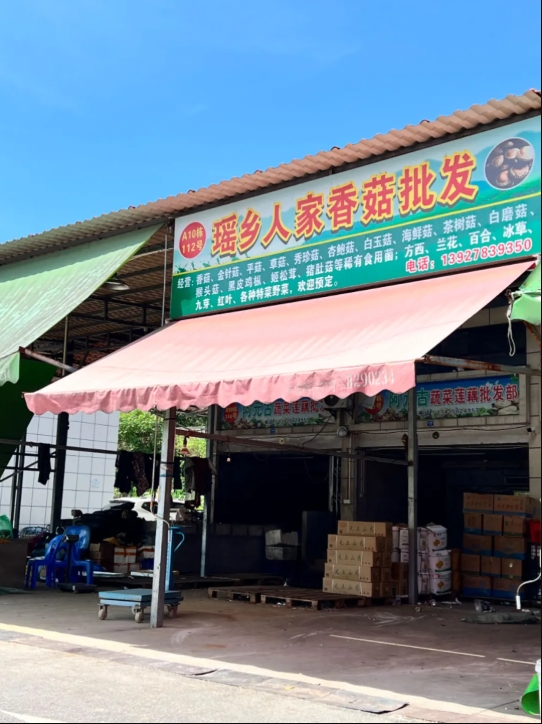
The Pearl River Delta’s “craving for fresh flavours” has unlocked the potential of the wild mushroom market. From the “lychee mushroom” of Zengcheng orchards to the Summer Solstice Mushroom of the Shaoguan hills, mushroom traders have steadily expanded their sourcing territories. Compared with termite mushrooms from Yunnan, in-province transport is faster, the mushrooms arrive fresher, and consumers get better value for their money. As a wild variety of termite mushroom, the Summer Solstice Mushroom does not appear among the edible fungi listed at northern Guangdong’s agricultural wholesale markets, nor is it covered by the national “Vegetable Basket” programme—driving it to develop its own “underground market”. In the market’s “periphery”, foragers, consumers, and buyers all push and pull against one another, fuelling the annual “mushroom-foraging fever” year after year.
Foraging Summer Solstice Mushrooms has also become a new livelihood option for villagers across the Yao–Hakka region of northern Guangdong.
II. The Summer Mushroom-Foraging Blitz Army
Born with the season, the mushroom cannot sustain a year-round livelihood. Yet as the profits continue to rise, it still draws in large numbers of “gig workers” from diverse ethnicities and walks of life.
In 2024, heavily pregnant and unable to venture deep into the hills or the wild, Qiaoyun decided on a simple stroll near her front door—and stumbled upon a whole cluster of Summer Solstice Mushrooms. “They were growing right in the grass, just a fence’s width from the airport, and beautifully plump,” she said. Meanwhile, Qiaoyun’s mother harvested several clusters from beneath the banana trees in their own yard. Mother and daughter sold their finds to the buyers straight away.
That “buyer” was none other than Qiaoyun’s closest friend—Xiuping. They had grown up together in a deep-mountain Yao village, migrated to the plains together, and remained neighbours even after each had married and raised a family. At first, Xiuping and her husband had been just another pair of hands in the foraging army; it was now their third year as buyers.
They knew the Summer Solstice Mushroom inside out. Xiuping was adept at reading its growth patterns. “The mushroom’s cycle follows the solar terms—across four periods spanning Grain Buds, Grain in Ear, Summer Solstice, and Minor Heat, the mushrooms come up in waves,” she explained. Her experience told her, though, that the solar terms were only a guide; the mushrooms did not always appear on schedule. In 2024, for instance, they did not emerge until after Grain in Ear.
She timed her entry to perfection, moving in at the best moment to start buying—”about a month, give or take.” Once it was over, everyone drifted off to other work. With the Summer Solstice Mushroom season wrapped up, Xiuping and her husband prepared to head back to the mountains and run a small shop, because “there are so many people out playing in the water during the summer holidays.”
Not everyone was willing to take on the extra risk and upfront cost of becoming a buyer, as Xiuping and her husband had, chasing a bigger slice of the profit. Most simply treated foraging as Qiaoyun did—a temporary side gig on top of their main work, a way to earn a little extra to help the household, for the work was hard and unreliable.
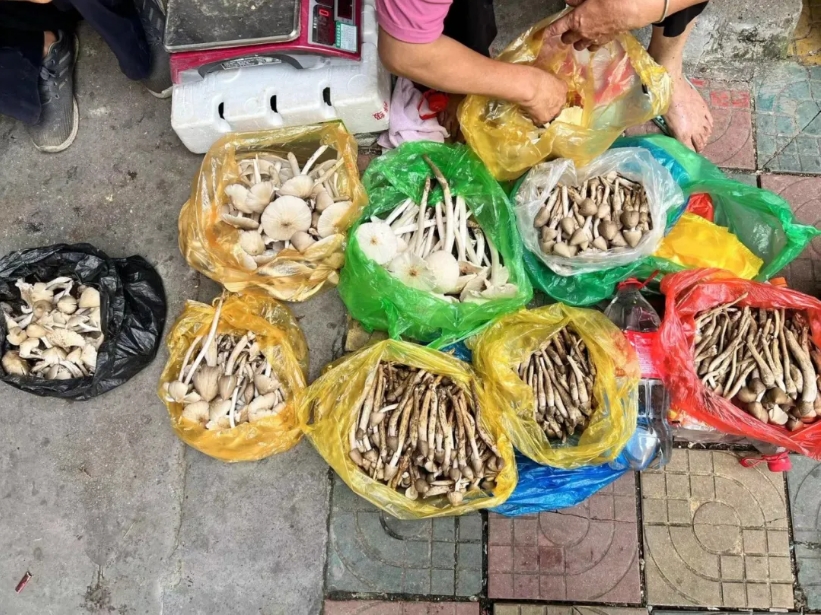
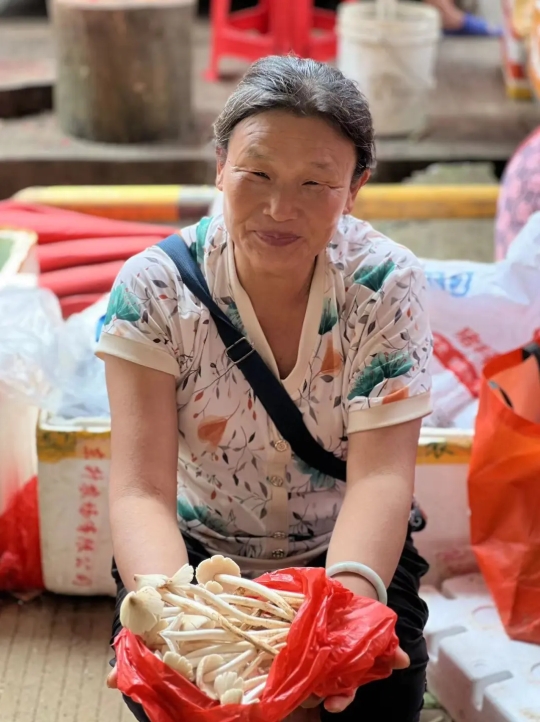
A-Feng, a 55-year-old local smallholder, sold her home-grown vegetables every market day. When summer arrived, her stall gained a few red plastic bags of Summer Solstice Mushrooms, the vivid colour almost announcing to passers-by: “This season’s finest—right here.”
A-Feng belonged to the ranks of “amateur foragers”. When summer came, she added “mushroom foraging” to the list of jobs she already juggled, and the work ran round the clock. “I left home at two in the morning to forage and kept going until daybreak. This little bag—that’s all I got, not even 250 grams. Then I went home, grabbed my home-grown vegetables, and set up my stall.” Once that was done, A-Feng would be up the next day again, cutting tobacco.
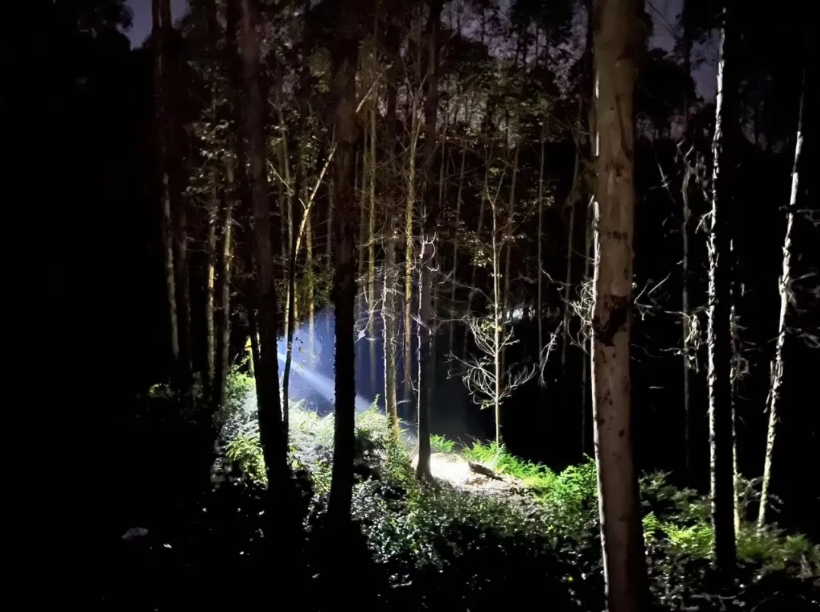
Along the village lanes after dark we also came across quite a few “recreational” amateur foragers. Groups of young people on motorbikes swept past, chatting and laughing, while one of them expertly swept a searchlight across the treeline. To the throngs that filled the woods night after night, hunting Summer Solstice Mushrooms was little more than a seasonal game of chance—a bit like joining a night-hiking group. They jostled and giggled their way along, not unduly fussed about how much they ended up with.
Only a small fraction followed the seasons into becoming professional foragers—each summer they would set aside their regular jobs entirely and throw themselves wholeheartedly into foraging; some migrant workers would even resign to join in. For them, the Summer Solstice Mushroom was their sole source of income during that window. They slept through the day and worked through the night, relentless in their efficiency, mostly going solo or in pairs.
Some spent more than twelve hours on their feet in a single day; pulling an all-nighter was routine. These were not casual outings. Where the amateurs were relying on luck, the professionals drew on over a decade of foraging experience. They moved in silence, breath held in concentration, and could quietly gather over five kilograms in a single night—equivalent to an amateur’s entire summer harvest.
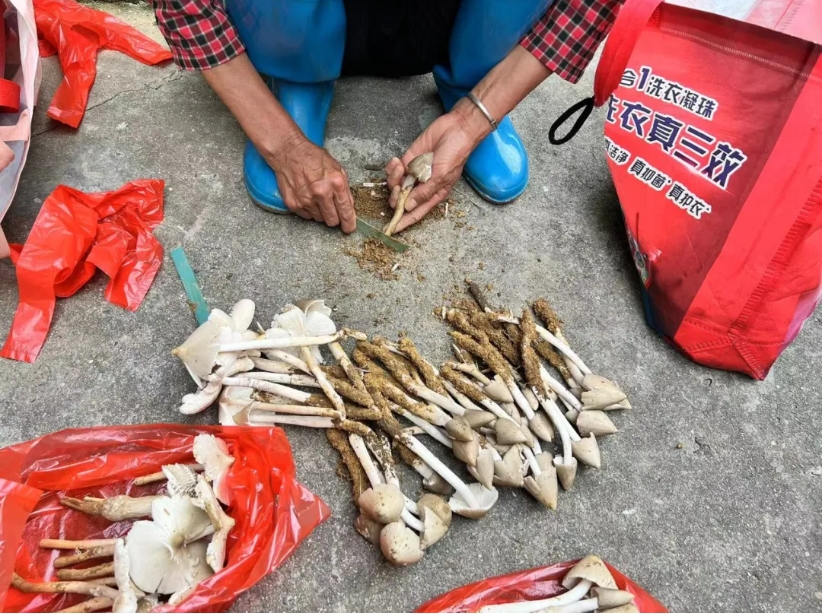
The moment a fresh batch of Summer Solstice Mushrooms pushed through the soil, Pingxiu—a 61-year-old Hakka forager—clocked an astonishing haul: over five kilograms of top-grade half-open caps and bullet-heads in a single night. “I set out at four in the morning and was at the market just after eight.” With the day’s overall yield running low, the buying price climbed—when goods are scarce, they are dear—and by the time Pingxiu arrived at the market, a familiar trader had already reserved her entire stock.
This professional forager kept not only her own strict schedule but also went to great lengths to raise her efficiency. “I deliberately spent a whole year in the next-door village learning how to forage for Summer Solstice Mushrooms.” She scraped the soil off the mushroom stems with a razor blade as she chatted with us, her Mandarin thick with Hakka.
Once the brief mushroom season ended, the termite nests that gave rise to the Summer Solstice Mushroom needed time to recuperate, or had to migrate a short distance to breed next year’s crop. The sprawling foraging army—composed of all manner of gig workers—dispersed almost as quickly as it had gathered, each member rushing off to their next job, only to reconvene next summer.
Amid all this, one community never stopped learning when summer was over. Within the group, they shared and exchanged what they had gathered, spontaneously turning local knowledge of the Summer Solstice Mushroom into a tradition passed from mouth to ear, continually refined and spread—leaving their neighbours far behind. That community was the Guoshan Yao, Qiaoyun’s own people.
III. The “Chosen” Foragers
“It’s not enough to know how to pick them—you have to be able to climb mountains. The Yao people are remarkable; they climb so fast you cannot catch them even if you try,” a Hakka professional forager told us, brimming with admiration as she described her image of Yao foragers. We had walked the hills with Qiaoyun, and had scrambled up the slopes of a Yao settlement with our Yao aunts and uncles, and knew their agility first-hand—even young and strong as we were, we struggled to keep up. We wanted to understand how mountain-born skills carried over onto the plains, and how decades of accumulated natural knowledge set the Guoshan Yao apart from the rest of the foraging army.
Pushed by Qiaoyun’s urging, we finally arrived in Ruyuan, Shaoguan on the very day of the Summer Solstice. “Dragon Boat Festival was this year’s peak—you missed it. This Summer Solstice, we’ll just have to try our luck.” Catch the right timing, and you are already halfway to success. Plainly, we had missed the window. Qiaoyun was sorry for us, and she opened a short-video app so we could cram up on Summer Solstice Mushroom lore.
“This account belongs to a junior high school classmate of mine—he owns several large cold-storage warehouses now and does bulk trading in Summer Solstice Mushrooms. He posts videos often, being the first to let everyone know that the mushrooms have come up and it’s time to head out and forage.” Several of the videos Qiaoyun showed us had been filmed in the dead of night. Under the harsh glare of a torch, something glistened faintly beneath a tangle of dead branches. A middle-aged man, thickening around the middle, lay on the grass and—in the Yao language, with exaggerated expressions—declared the arrival of a new batch of Summer Solstice Mushrooms as though proclaiming it to the world. He lay on his side, gently pushed aside the dry leaves beside him with his hand, and dozens of Summer Solstice Mushrooms appeared on camera. “Of course, it’s not as easy to find them as he makes it look. He’s just trying to get everyone out and hype up the market. But it still works as a foraging signal.”
As in any ordinary county town, short-video apps are an important platform in Ruyuan, Shaoguan—for entertainment, socialising, shopping, and sharing local news. Qiaoyun taught us how to use nearby location filters to quickly find posts by locals foraging Summer Solstice Mushrooms. “So many people are posting videos today—a new round must be coming up. You could go out and try tonight. When they have only just pushed through the soil, they can be hard to spot. Treat your first outing as experience-gathering.”
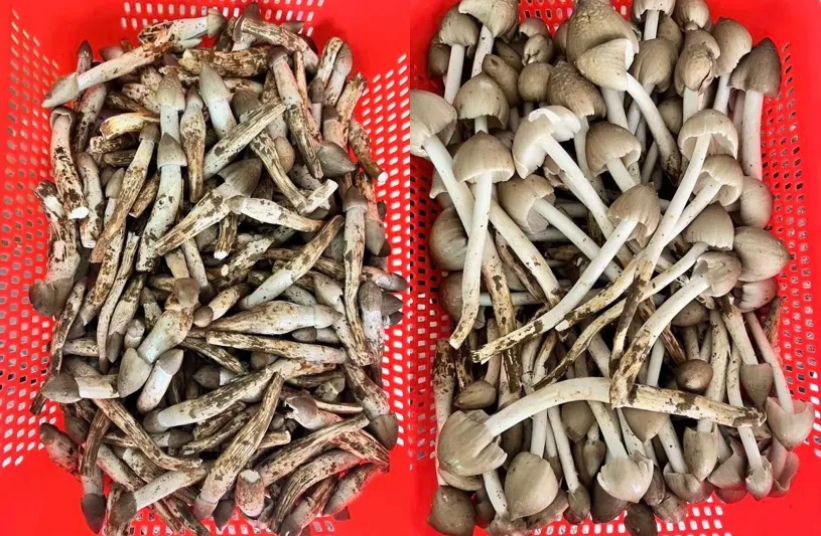
With that, Qiaoyun took us next door to Xiuping’s to see the Summer Solstice Mushrooms first-hand. Xiuping’s “family warehouse” was in fact a few chest freezers with glass doors wrapped in insulating film, providing a constant-temperature environment for the mushrooms. “Summer Solstice Mushrooms are generally graded into bullet-heads, closed caps, half-open caps, and fully opened caps, in descending order of price.” Xiuping carefully displayed the mushrooms, neatly sorted and arranged in red plastic basins. “Bamboo-grove ones are whiter, while eucalyptus-plantation ones tend to be yellowish or darker. We generally eat bamboo-grove ones, because bamboo groves aren’t fertilised the way eucalyptus plantations are.”
Speaking of foraging technique, Qiaoyun produced a small iron trowel and spade, polished to a shine from use. “Summer Solstice Mushrooms need to be dug with tools, because part of them is buried underground. But you have to be very careful—too deep and you’ll damage the termite nest underneath, and they won’t grow near there next year. Too shallow and you might snap the mushroom in two.” She also told us to bring searchlights—apparently, white light works better than yellow.
“Daytime is hot, and you’re more likely to run into snakes. Some people head out at dusk. But most go out after dark—first, it’s not as hot, and second, they’re easier to find, because when you shine a searchlight through the trees at night, that glint you see is most likely a Summer Solstice Mushroom. Some people only go after midnight and stay up all night. That takes nerve, because it gets pitch black out there. Once, my mum and I accidentally wandered into a graveyard while foraging—absolutely terrifying.”
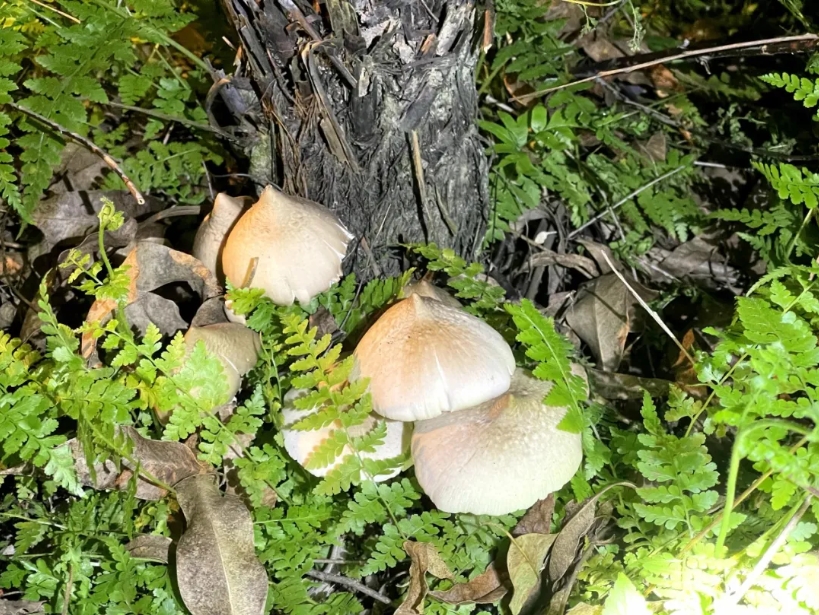
Armed with Qiaoyun’s crash course in Summer Solstice Mushrooms, we set off on motorbikes to the nearby bamboo groves. Motorbikes are more nimble than cars and can reach more hidden corners. We combed through five bamboo groves and found only two wild mushrooms—but they looked suspicious, so we sent Qiaoyun photos for identification. “Both of those are poisonous—you mustn’t pick them. Summer Solstice Mushrooms grow in clusters, dozens together. A single one is definitely not them.”
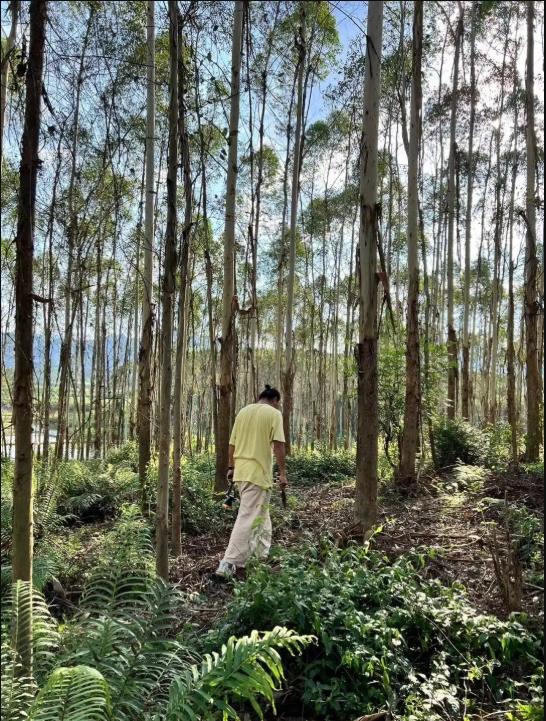
Having grasped the Summer Solstice Mushroom’s “social” habit of growing in clusters, we decided to head for the newly “internet-famous” eucalyptus plantation. Qiaoyun said the mushrooms there had been at a bumper abundance in 2023, with foraging armies converging from all directions. “You could try your luck,” she said.
The Yao who work as buyers disseminate Summer Solstice Mushroom knowledge through commercial logic and set the rules of the market. Foragers like Qiaoyun, through lived experience, tell us something different: to earn your living from the sky, you must understand the rules above and beneath the earth.
Qiaoyun’s mind could piece together a growth map of the Summer Solstice Mushroom, much like a map of the herbs and wild greens of the Yao village. These experiences have been traced out on foot over many years, shaped step by step through the exchange of information within the community.
So rather than call the Yao “Chosen” foragers, it is truer to say their foraging “superpower” comes from an intimate, unrivalled familiarity with the mountains and the land. Generation after generation, the Guoshan Yao have migrated, building their settlements on the steep slopes of the Dayao Mountains, clearing hillsides to grow crops or plant fir forests. Living off the mountains, engaged with them across generations, they have developed a keener sensitivity to the land, the forests, and the climate—accumulating a distinctive body of natural knowledge. Facing the mountains and the forests, they do not fear or fight them but seek to know and understand them. Their relationship with nature mirrors the symbiosis between the Summer Solstice Mushroom and the termite.
For the Guoshan Yao, the plains and hills and the Summer Solstice Mushroom are simply a new environment and a new wild mushroom. Drawing on a life experience built on shifting cultivation and mobility, on fluidity and change, the Guoshan Yao are also adapting to the rhythms of modern urbanisation. Deeply aware of the fragility that binds humans and nature, they are not driven by an anxious need to control, but rather seek, with down-to-earth patience, a way to live alongside. This grants them a swifter, more complete grasp of the Summer Solstice Mushroom’s secrets—and opens a new way of coexisting with nature beneath the canopy of urbanisation.
IV. Living by Nature as Compensation
By contrast, for Qiaoyun, foraging Summer Solstice Mushrooms is less a livelihood than a kind of compensation for the mountain way of life. Whether it is the Summer Solstice Mushroom or any other wild mushroom, none of it truly matters—what she needs is a reason to keep returning to the Yao Mountains, or at least to climb the flat hills and plains, to follow memory in search of seasonal wild greens and fruits, to reawaken the childhood memories of the Yao hills. That is a force of emotion so deep it shakes the soul, and it nourishes Qiaoyun. Swept into the new-era discourse of movement between city and countryside, the only things she can hold on to are food—perhaps a way of cooking, a flavour.
For the Guoshan Yao, the Summer Solstice Mushroom is a node connecting the new environment to the old world. In the new Yao village where Qiaoyun lives, many of the young people go off in twos and threes after work, heading to the little hills to forage mushrooms. “It’s like going into the mountains to pick wild fruit when we were small,” Qiaoyun recalled, her voice softening over childhood in the deep-mountain Yao settlement.
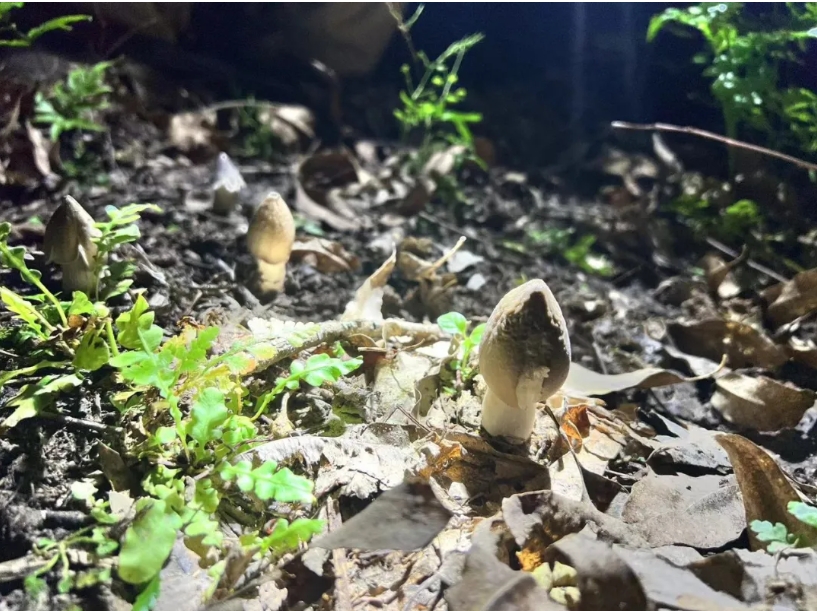
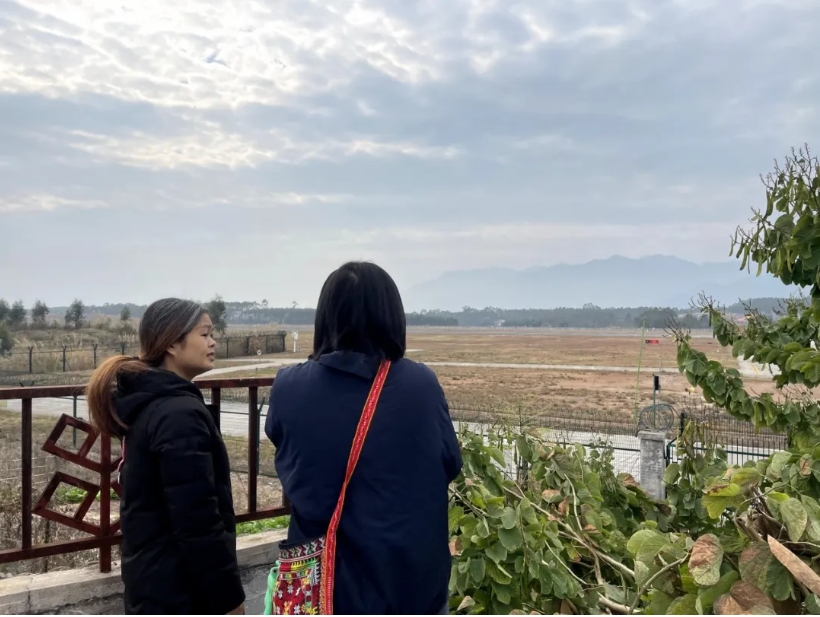
“When we first moved here, the airfield was abandoned, and we’d take the cattle to graze on it. There were plenty of wild fruits to eat nearby. Then we discovered the Summer Solstice Mushroom, and we’d often head to the little hillocks just beside us to forage—there were so many, and you didn’t have to walk far. Later, the airport was brought back into use, switched from military to civilian, and the hills in the distance were leased out for eucalyptus plantations or wild fig trees (Ficus hirta). By 2024, there were fewer Summer Solstice Mushrooms to find near home—we had to go further afield.”
Qiaoyun’s home is barely fifty metres from the airport; the crack of bird-scarers rips through the air, one after another. With her history of foraging Summer Solstice Mushrooms and wild fruits, she is acutely aware of how the surrounding natural environment has been squeezed. With the airport’s expansion, this new Yao village is bracing itself for another round of relocation.
The ancestors of the Guoshan Yao crossed hill after hill in search of new fields for their shifting cultivation. Qiaoyun’s generation searches among the bamboo groves and eucalyptus plantations for Summer Solstice Mushrooms—for a new livelihood, and, in the gaps left by urbanisation, a wistful space to be with nature. Qiaoyun’s father, through repeated migrations, taught himself to build houses. He transitioned from hunter to farmer, then to contractor and craftsman, and in his spare time he always rides his motorbike searching for a spot to go fishing.
Qiaoyun’s mother still farms, growing rice, vegetables, and fruit for the family—from mountain terraces to plain paddies. Sometimes she goes out into the wild to gather herbs for the Yao herbal bath.
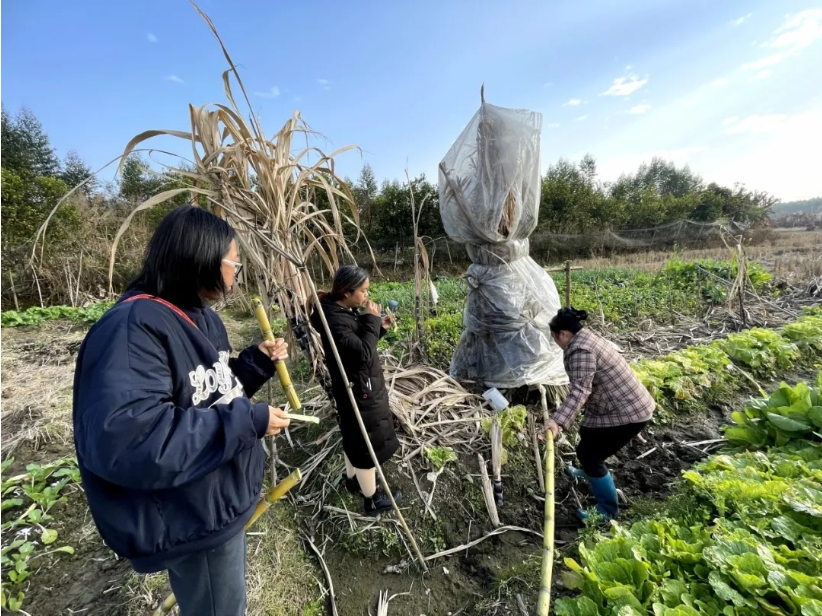
As for Qiaoyun, besides growing chillies and greens in the village flower garden, she also searches the nearby woods and stream banks for seasonal wild greens and fruits. “Sometimes I go back to the village up in the mountains—there are wild greens and fruits you can only find there, and they taste better too.” Each in their own way, they express, through how they live, the emotional memories tied to the Yao village and the Yao Mountains.
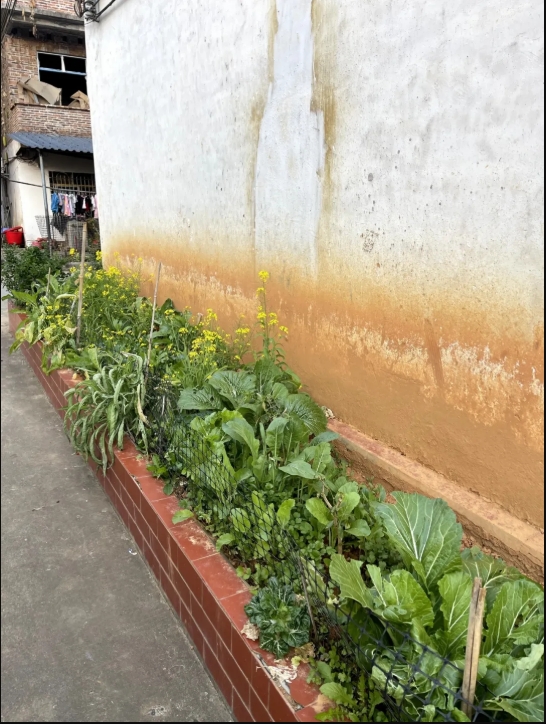
As urbanisation gathers pace, the Yao mountain villages grow ever quieter. The Guoshan Yao scatter with each migration, and for Qiaoyun and people like her, lost emotional memories can only be sought again in new surroundings and new foods—practising, in fits and starts, a life lived by nature. The food memories of the deep-mountain Yao villages are deeply etched into their taste buds.
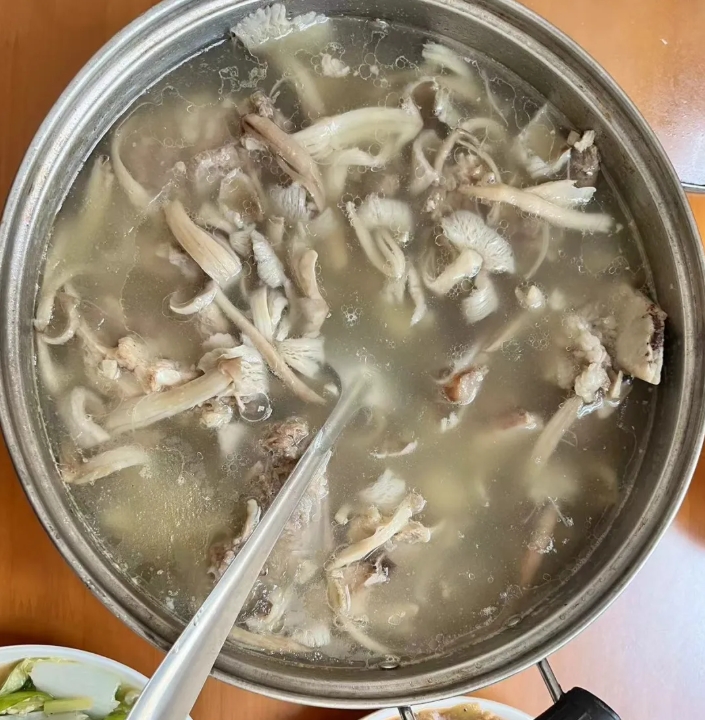
Unlike most places, where termite mushrooms are simmered in chicken broth, Qiaoyun prefers pig face. Just add ginger and salt for seasoning, simmer over a medium heat until the broth turns milky white and the pig gums and scalp are still crisp, and it is done. The resulting mushroom broth is fragrant without ever being cloying, the termite mushrooms tasting all the more sweetly delicious, with no heavy chicken fat to overpower the flavour. Rather than eating Summer Solstice Mushrooms, it is more like cooking pig face—an ingredient that demands careful handling at the annual pig-slaughter banquet, where nothing from the pig goes to waste.
V. Bonus: The Summer Solstice Mushroom, Too, Crosses Mountains
Qiaoyun gave birth to her baby just as the Summer Solstice Mushroom season drew to a close. After summer, the new airport district sprang up at a breathtaking pace—business complexes rising from the ground, and an industrial zone reportedly under construction. How much idle woodland will still be left for Summer Solstice Mushrooms to grow in 2025, and how many people will still want to make foraging a living—we have no way of knowing. What can be foreseen is that as the airport district, the suburban industrial zone, and the commercial areas take shape, the local economy will gradually shift—and with it, the way of life of the Yao, the Hakka, and the indigenous communities.
For this year’s foraging season, Qiaoyun has already promised to take us once more to her secret mushroom spot.
A single Summer Solstice Mushroom tugs at the livelihoods of local people and draws the Guoshan Yao into a new era of migration. No one can dictate where a Summer Solstice Mushroom appears, for the termites have their own will. Their migrations, much like those of the Guoshan Yao, are full of wisdom and courage—seeking new paths through collective effort. Along the way, a new species brings a new food, and with it a new livelihood and a new way of life.
The Summer Solstice Mushroom, the termite, and the Guoshan Yao together practise a cross-species emotional exchange, nurturing new life—human and non-human alike—equally fragile, interdependent, and open to a more diverse living environment in the midst of movement. This, too, is the lesson that Qiaoyun and her Guoshan Yao people, and the Summer Solstice Mushroom and its termites, have shared with us.
After multiple rounds of interviews by a panel of six judges, 18 projects were selected for support through the Foodthink Lianhe Creative Programme. Four have now been published:
“Cleaner A-Mei, Who Just Wants to Eat Well | A Worker’s Table”
“In Malaysia, Chinese Traders Want Only Grade-A Durian”
Editor: Xu Youyou