
Tilapia Invasion Devours Farmed Fish and Shrimp; Fishermen Seek Compensation from CP Group
On 4 February, the Department of Fisheries (Thailand) announced that it had just successfully bred a genetically modified strain of Blackchin tilapia. Offspring produced by mating these modified tetraploid tilapia with natural diploid tilapia cannot reproduce, and the government hopes this will help reduce the invasive species from Africa and reverse the damage to the ecosystem.
Currently, Blackchin tilapia have infested as many as 19 provinces across Thailand, destroying local aquatic ecosystems. As a result, environmental scientists have noted that the spread of Blackchin tilapia represents “the most severe ecological destruction in Thailand’s history”.
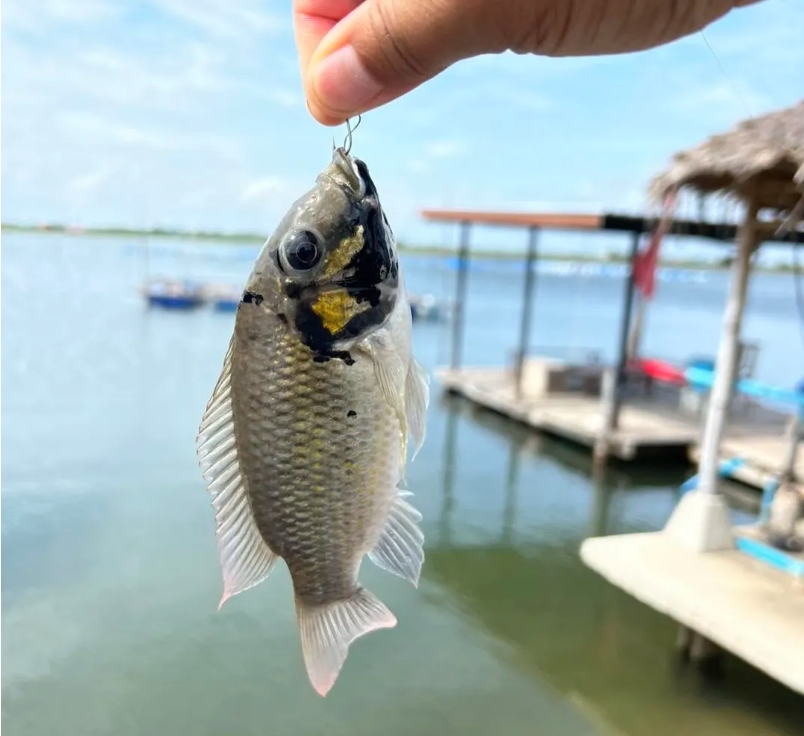
The news has raised concerns among the public and the scientific community alike: what impact might experimentally modified animals with altered chromosomes have on ecosystems and related species once they enter the wild? A more cautious approach is warranted.
The Thai government’s move has a touch of “fighting magic with magic”: it is attempting to beat natural invasive species by introducing modified, artificially sterile tilapia into the wild. After all, the very reason Blackchin tilapia originally made their way from Africa to Thailand was also a failed experiment.
According to Thai media reports, CP Foods, a subsidiary of the Charoen Pokphand Group (CP Group), imported 2,000 Blackchin tilapia from Ghana in 2010 for a breeding trial at its fish farm in Amphawa District, Samut Songkhram Province. This was, on record, the only introduction of the species in Thailand. At the time, the CP Foods import trial was primarily aimed at improving the disease resistance of commercially farmed Nile tilapia and testing the Blackchin tilapia’s adaptability to saltwater, to meet its ever-expanding industrial-scale farming needs.
Although the CP Group claimed the experiment was unsuccessful and quickly ended the project, Blackchin tilapia began to be spotted in the waters around the experimental farm. Before long, traces of the fish appeared across multiple provinces in Thailand, and even in the canals of Bangkok.
On 13 January 2025, more than 200 public representatives from 19 provinces across Thailand gathered outside the CP Group headquarters in Bangkok. Representing fishermen harmed by the Blackchin tilapia infestation, they filed complaints against the CP Group and its subsidiary CP Foods. They told the media that, over the past decade and more, the Blackchin tilapia invasion had caused local ecosystems to collapse and fishermen’s livelihoods had come under threat. They demanded that the government take action and called for compensation from the CP Group.

I. The Tilapia Invasion

Its extremely strong adaptability and reproductive capacity mean that once it enters a non-native natural environment, it can instantly become an invasive species that devastates local ecosystems. In southern China, tilapia is currently the most significant invasive fish. Blackchin tilapia’s close relatives — Nile tilapia and Zille’s tilapia — were introduced to China in 1978 and subsequently entered the country’s natural waterways. Studies show that in certain stretches of the Pearl River Basin, tilapia populations actually exceed those of all other fish species combined.
A similar story has unfolded in Thailand. A statement submitted by protesters to the Thai Prime Minister reads: “Blackchin tilapia have eaten all the food in ponds and natural canals; they consume plankton and young aquatic animals. As a result, shrimp, fish, molluscs, and crabs in ponds, as well as other aquatic animals in natural waterways, have all been devastated.”
When a natural ecosystem is disrupted, it is individual fishermen engaged in traditional fishing and aquaculture who suffer first.
Independent media outlet Mongabay quotes Wanlop Kunjeng, a former shrimp farmer in Samut Songkhram Province, who said that ten years ago his shrimp ponds were destroyed by Blackchin tilapia, forcing him to switch to farming sea bass — a fish large enough to withstand attacks from Blackchin tilapia. The cost, however, is higher upfront investment than shrimp farming, along with a longer payback period.
Lam Chek Koon, Southeast Asia lead at GRAIN — an organisation that has long supported smallholder farmers — told Mongabay that Blackchin tilapia “have destroyed the traditional shrimp-farming systems in coastal areas that did not require commercial feed, forcing small-scale farmers to adopt intensive, closed systems dependent on feed, chemicals, and antibiotics supplied by agribusinesses”.
Moreover, unlike other commercially farmed tilapia, Mongabay also quoted an environmental scientist at Khon Kaen University who noted that Blackchin tilapia meat is less palatable than that of other commercial tilapia species, so even when fishermen bring them ashore, there is little local demand.
According to data from the Lawyers Council under the Royal Patronage, the direct economic losses suffered by fishermen amount to 2.486 billion Thai baht (approximately RMB 533 million), while additional losses to society and the ecosystem exceed hundreds of billions of baht — yet even this estimate is considered low. “Many have fallen deep into debt or lost their land, and some have even taken their own lives, especially in Samut Songkhram Province.”
In July 2024, the Thai government added controlling the Blackchin tilapia infestation to its national agenda, approving a budget of 450 million Thai baht (approximately RMB 97 million) and offering up to 15 baht per kilogram (approximately RMB 3) to incentivise the capture of Blackchin tilapia.
But this government buyback programme lasted less than four months, and the price later dropped to 3–4 baht per kilogram (approximately RMB 0.6–0.8). At that rate, fishermen had to catch a tonne every day just to make a profit — an arduous task. Many stopped fishing altogether once the government ended the buyback.


II. What Responsibility Should the CP Group Bear?


In 2017, affected community fishermen and aquaculture operators filed complaints with the National Human Rights Commission of Thailand, seeking remedy and government intervention.
CP Foods denied any responsibility for the environmental crisis. They claimed that while the company did import Blackchin tilapia from Ghana in December 2010 for research purposes, a month later the fish became weakened and died, and the project was abandoned. The company then disposed of all the fish using approved methods and submitted samples and documentation to the Department of Fisheries.
But the commission that received the complaints reported that CP Foods had failed to comply with the biosecurity regulations set by the Department of Fisheries. They noted that “the company failed to submit written reports on the test results and mortality of the Blackchin tilapia, in breach of the standard conditions of the non-indigenous aquatic species permit”.
Despite multiple investigations by the Thai government since then, the source of the Blackchin tilapia has still not been officially attributed, leaving affected fishermen unable to hold CP Foods accountable or claim compensation.
In July 2024, the BioThai Foundation, a Thai public-interest organisation focused on biodiversity and sustainable agriculture, announced that it would pursue legal action against the company. Withoon Lienchamroon, a board member of the foundation, told the Bangkok Post: “The government has been spending taxpayers’ money to solve this problem, which is unfair to us. We need the perpetrators to face justice under the law.”

The January 13 rally this year reaffirmed the demand for compensation through litigation, calling on the government to identify the party responsible for the ecological disaster. An open letter issued by the rally noted that CP Foods’ profit for the third quarter of 2024 alone reached 7.3 billion Thai baht (approximately RMB 1.56 billion). They argued that the CP Group, “as a publicly listed company, should redistribute a portion of its profits to society to address problems such as the Blackchin tilapia infestation.”
III. Will There Be a Response?
Even if everything proceeds smoothly, the process of ecological restoration will be far more difficult and protracted than holding anyone to account or securing compensation, and Blackchin tilapia themselves are unlikely to be “eradicated” as quickly as people hope. A Thai fisheries expert told the BBC: “The problem with invasive species is that once they settle in, they are very difficult to eliminate.”
Thai independent media outlet HaRDstories quoted a senior aquatic ecologist from the Mekong River Commission, warning that if no action is taken to address the problem systematically, the Mekong Delta and Singapore may also come under threat within the next five years.
It is easy to imagine that this long struggle — between people, and between people and nature, over Blackchin tilapia — is far from over.
In a statement of solidarity, MASIPAG wrote that it is “corporate greed and indifference to ecological and community well-being that have fuelled this environmental disaster.” A small number of invasive organisms can produce such far-reaching and irreversible consequences — can short-sighted people learn from this? Without a mechanism to compel perpetrators to compensate for losses and restore the environment, and without careful regulation of breeding experiments of this kind, environmental disasters driven by economic interests will remain difficult to avoid in the years ahead.

❸ The Cabinet must establish a national-level committee and provincial working groups to eradicate Blackchin tilapia, restore ecosystems, and revive the livelihoods of farmers and others affected. The committee and working groups must target the complete eradication of Blackchin tilapia by 2026 and allocate the corresponding budget.
❹ Once the investigation is concluded and those responsible are identified, the government must bring legal charges against them and carry out prosecution proceedings. The negligent parties must pay compensation for losses, so that the cost of restoration does not fall on Thai taxpayers.
References
https://www.bangkokpost.com/thailand/general/2836047/cp-foods-no-show-at-panel-meet-on-alien-fish
https://bkktribune.com/cpf-accused-of-breeding-blackchin-fish-since-first-fish-import/
https://bkktribune.com/series-of-legal-action-taken-in-blackchin-tilapia-fish-invasion-case/

Editor: Wang Hao