
Over 200 Million Chinese People Eat Delivery Every Day: How Much Do We Really Know?
Foodthink Says
The most visible change is in how Chinese people consume food.
According to media reports, 275 million people use the Meituan platform every week to meet their dining needs — from browsing and finding restaurants, making decisions based on rankings, and placing orders, to dining in and having meals delivered home. In 2023, the user base of China’s food delivery platforms reached 535 million. Of these, 4.08 per cent of consumers ordered delivery more than 20 times a week (an average of three to four times a day), 13.52 per cent ordered 11 to 20 times a week (an average of two to three times a day), and 32.78 per cent ordered five to 10 times a week (an average of one to two times a day). In other words, roughly half of China’s urban residents order delivery almost every day.
It is not just eating out that depends on delivery. Even when cooking at home, the ingredients may come from an e-commerce platform. Led by leading companies such as Dingdong Maicai, JD Daojia, Xiaoxiang Supermarket and Freshippo, the number of fresh food e-commerce companies nationwide reached 26,300 in 2023, with a user base of 513 million. Fresh food e-commerce transactions accounted for 29.4 per cent of urban residents’ food expenditure.
These delivery and grocery platforms initially won public acceptance under the banner of “convenience”, “efficiency” and “intelligence”. Yet their negative effects on society and the environment — and even on food quality and food safety — have become increasingly pronounced. The most widely watched concern is the workforce behind the platforms, represented by delivery riders.
In 2024, media outlets, scholars and filmmakers produced extensive reporting, research and creative work on food delivery and e-commerce platforms. Here we round up the stories, events and works from the past year that made the deepest impression, including Foodthink’s own original content, reporting from institutional media and independent creators, as well as two new books and two films. In 2025, Foodthink will continue to follow the digital technologies and capital forces behind food production and consumption, and their impact on nature and people in the food system. We also welcome contributions from like-minded creators and invite participation in research and discussion.
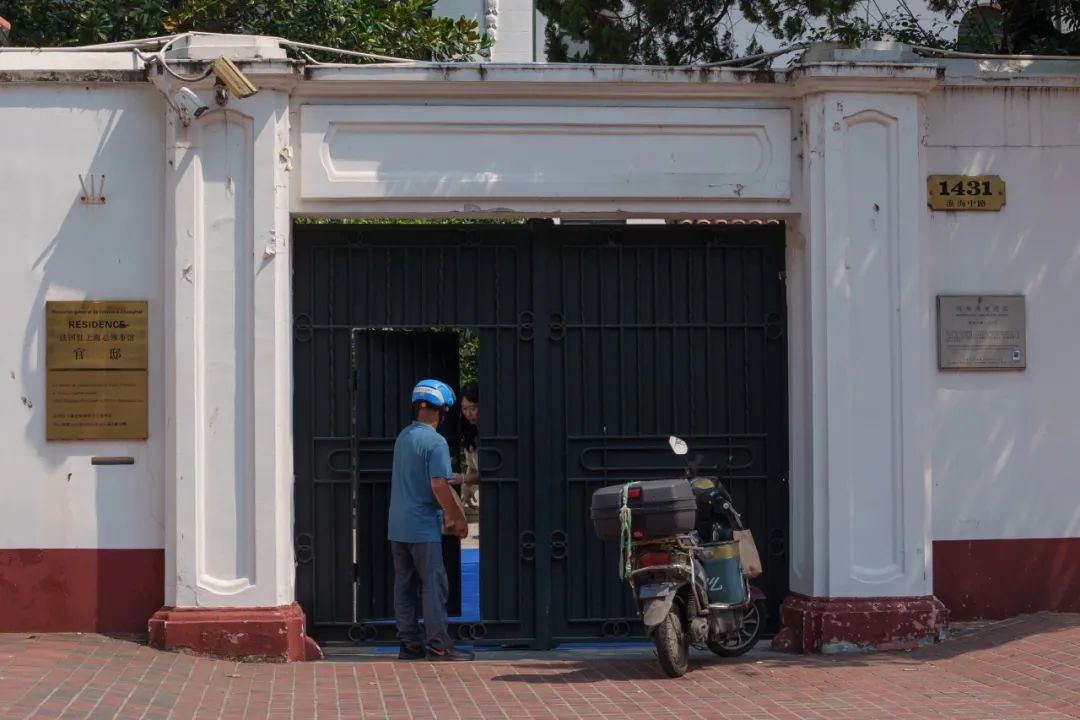
The Delivery Rider Who Begged Online and the “Order King” Who Died Suddenly on a Delivery Scooter
He was then told that Meituan’s crowdsourcing insurance would not cover the accident, and as he waited, his savings gradually ran out.
In the end, hungry and cold, after much struggle, he finally set aside his pride and asked strangers online for a bite to eat…
But not every rider survives to the day of begging online. In August 2024, a delivery worker in Hangzhou died suddenly on his delivery scooter. According to media reports, the 55-year-old Mr Yuan was an extremely hardworking rider who often rested for only three or four hours at a time. He was a well-known “Order King” in the area
A Hangzhou Rider Forced to “Kneel” Sparks Collective Protest by Delivery Riders
How Is the “Kangaroo Family” — Five of Six Delivering Food — Doing Now?
The family, who had been doing Meituan delivery for two years, was “optimised” after last year’s Spring Festival, and Ma Chang’s income dropped considerably. On top of that, his father was involved in a traffic accident while on a delivery, which also made him deeply aware that delivery riding is a “high-risk industry.” In May 2024, Ma Chang made up his mind to return to his home in Henan and replan the direction of his life.
But he found that the body clock shaped by years of delivering had left a deep imprint on him. To this day, he still finds it hard to escape the “delivery world” in his subconscious.
Delivery Platform Algorithms and Riders’ KPIs
Unstable employment relationships, low pay, minimal benefits, stringent attendance controls, and excessive labour are hallmarks of this digital gig economy. Moreover, because this work is highly substitutable and the labour process is dispersed, these digital workers have virtually no collective bargaining power when facing labour disputes. Most critically, algorithms and artificial intelligence have increasingly strengthened the platforms’ control over digital workers, yet the platforms attempt to conceal their drive for efficiency and profit maximisation under the banner of technological progressivism. Under these conditions, digital workers are alienated into flesh-and-blood machines governed by algorithms.
Riders controlled by platforms and algorithms can only push themselves to the limit, until the cost is paid in lives.
► For more news and discussions about delivery riders, see the 2024 Labour Rights Events Roundup: Hard Times, Mutual Sustenance | 2024 Labour Rights Events Roundup
Who Should Be Held Responsible for Delivery Food Safety?
In August 2024, CCTV News exposed a batch of “ghost delivery” operations — restaurants that rent out their licences to operate under fake addresses and fake photos, inflating themselves into popular, high-rated shops. It also revealed food safety problems at multiple delivery outlets, with some best-selling shops sharing a building with scrap recycling stations.
This is not merely a handful of isolated food safety incidents on the delivery platform. As far back as 2016, CCTV 3·15 had already exposed the chaos of delivery platforms partnering with unlicensed restaurants. Now, eight years later, the problems persist. Yet in the pursuit of market share, platforms turn a blind eye to problematic merchants. Some industry insiders also argue that the platforms’ low-price strategy has, to a degree, produced the outcome of bad money driving out good.
But can ordering delivery from a well-known restaurant guarantee good food? Famous food programme director Chen Xiaoqing recently revealed, in a dialogue with Luo Yonghao, that he has no delivery app on his phone and never orders delivery — not even from highly rated restaurants — “because I have been in this industry for so long.” As for the specific reasons, “it is hard to say, and I cannot say.”
When delivery platforms not only fail to guarantee food safety but even fuel and drive the black food industry, we cannot help but ask: what value does this business model hold for consumers?
Why Has the Film “Against the Current” Been Neither a Critical nor a Box Office Success?
Unsurprisingly, the film fell far short of the commercial expectations of Xu Zheng and his investors, drawing countless negative reviews and sparking public debate over capital further consuming and exploiting the underclass through cultural products.
Particularly in the film’s final act, Xu Zheng attempts to use a false resolution to erase the conflict between delivery platforms and riders — one that runs completely counter to how audiences experience the pervasive pressures of everyday life. In this sense, even as a speculative businessman, Xu Zheng failed to capture the emotional structure of the public this time.
A Director Who Reflects on Algorithms Aims His Debut at Delivery Riders and Programmers

Perhaps this extends beyond programmers and delivery riders. In modern society, when people are so absorbed in their own busy work, relationships between people grow distant, cold, and even turn into an irreconcilable hostility.
It is only after the protagonist himself is laid off that he realises programmers and riders are merely two groups equally trapped under platform capital and algorithms, neither able to control their own fate.
The film ends with the tragedy of a delivery rider’s death, but it does not exploit the suffering of the underclass. After experiencing all of this firsthand, the protagonist makes an “unexpected” life choice. Rather than being bought off by capital again, as the protagonist of Against the Current is, he chooses to stand on the same side as delivery riders, joining hands to fight the platform and attempting, through personal choices and actions, to seek new hope together.
Perhaps this is also what the film tries to inspire and encourage in us: in a society where misfortune and tragedy do indeed exist, if we can see one another within it, consciousness will awaken, and change will come.
Film Vs. Reality: What Is Life Really Like for Delivery Riders?
Transitional Labour in Digital Sprint
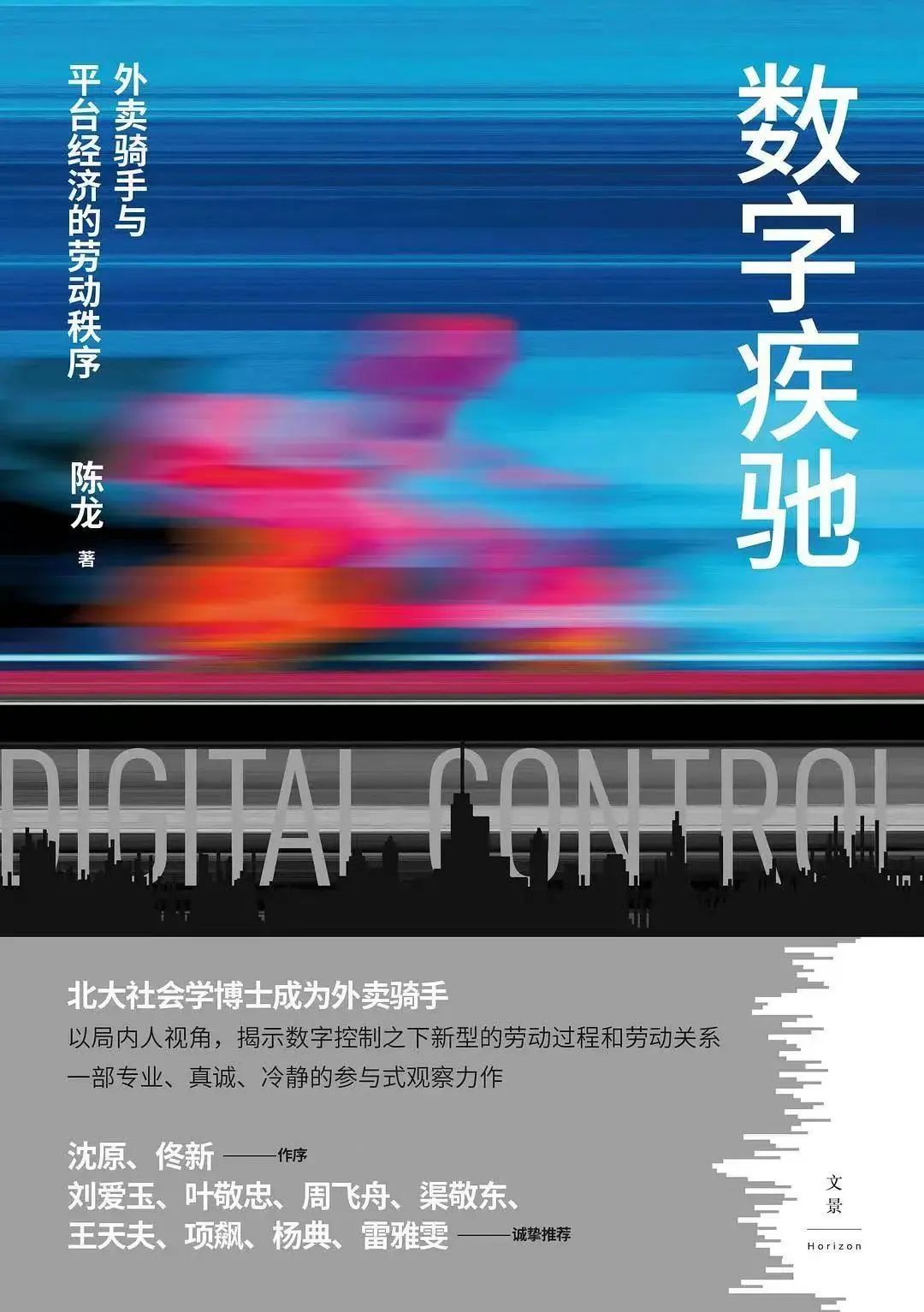
Chen Long argues that the labour process of riders on the platform differs from that of factory workers: riders are not merely controlled by rules set by their employer. On the one hand, control is not held solely by the platform; merchants and customers disperse this power, which on the surface displaces and dilutes the labour–capital conflict. On the other hand, control itself is becoming ever more obscured. Through the platform, riders see only surface-level instructions but cannot see through to who is truly pulling the strings behind the scenes.
Riders appear to have escaped the collective working environment of the factory, achieving individual “freedom” and “more work, more pay,” yet digital technology enables platform management to bear down on each individual, producing this contradictory blend of “freedom” and “control.” According to Chen Long’s observations, since the birth of delivery platforms, the freedom riders can exercise in their labour process has been steadily shrinking, while the platform’s control has shown a gradual upward trend.

“Transitional” points to the high degree of fluidity and uncertainty inherent in delivery work as a livelihood. Sun Ping observes that although riders always say they are only doing delivery “as a stopgap,” this “transit” so often becomes a permanent, normalised state. Once these highly mobile riders enter the gig economy, most never return to traditional positions such as factory work. Their “transitoriness” manifests in jumping back and forth between different platforms — delivering food today, doing parcel deliveries a while later, and perhaps driving for a ride-hailing service for a while after that.
For gig workers today, life and labour, production and reproduction, have never been so tightly bound together. Sun Ping hopes to move beyond a single framework of control to describe gig labour on digital platforms, to depict the wholeness of individual riders’ lives — not limited to their working conditions and labour trajectories, but extending to their daily lives, families, friendships, and thinking — and thereby to see the fraught interplay between individual life trajectories and work.
It should be noted that after the book’s publication, the author and editor of the Renwu magazine piece “Delivery Riders, Trapped in the System” — the report that first linked delivery riders to platform algorithmic control and sparked widespread online debate — publicly condemned Sun Ping for inappropriately claiming personal credit for her role in that report, prompting discussion about research ethics and norms of interaction between scholars and the media.
Although this incident is on the surface a dispute over intellectual property, the real focus is the article’s broad social influence, and the contest over how that influence might be converted into cultural capital in the media and academic worlds.
Some have said that delivery riders are still living and working in the real world, making such arguments seem especially ironic and tedious. But we should recognise the serious significance of this event: if a researcher’s motivation from the outset is to convert discursive authority over delivery riders into cultural or economic capital, can that motivation keep them consistently and fairly amplifying riders’ voices? If a delivery platform can directly provide media outlets or scholars with certain resources on this topic, does the story of riders still matter?
Ultimately, the purpose with which media and academic workers speak up for “delivery riders” may determine in what way, and as what kind of “delivery riders,” the public will see them. And this bears on whether genuine action and change can take place.
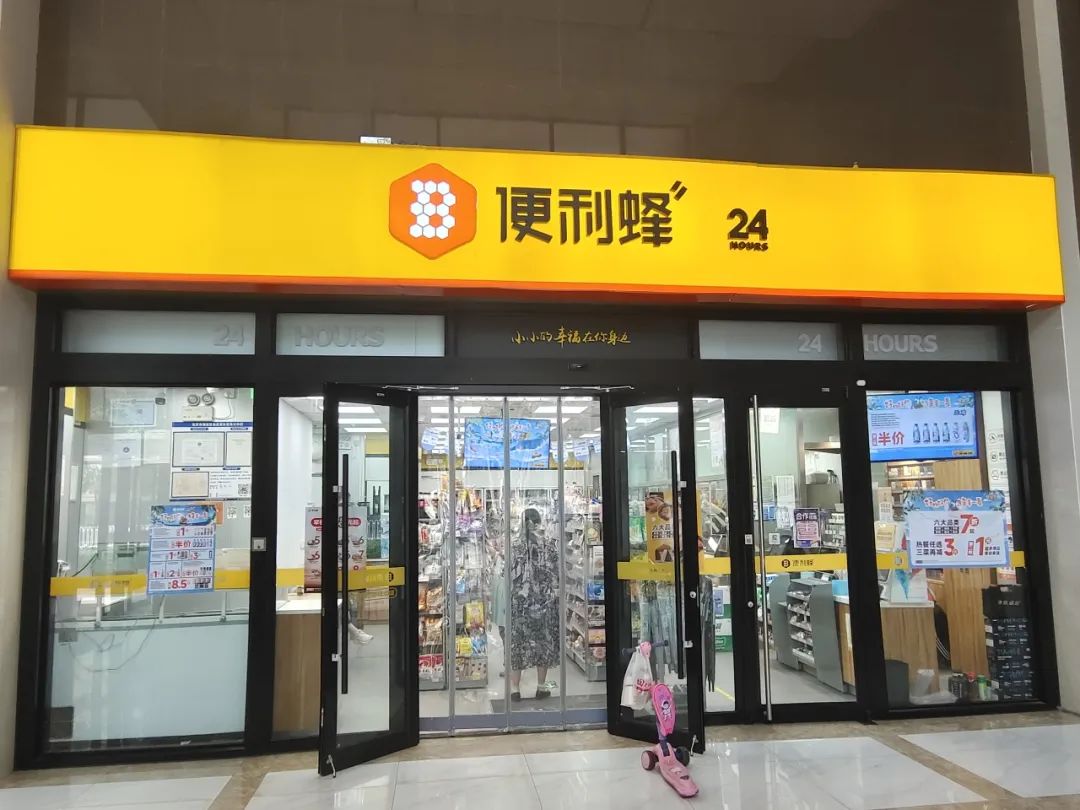
Alienating Shop Staff into Flesh-and-Bone Machines: Bianlifeng
But Bianlifeng is arguably more radical than most internet and technology companies. Founder Zhuang Chenchao sought to “strip all human decision-making out of day-to-day operations and hand it over to computers,” creating a complete automated control system in which a shop assistant’s daily labour process is broken down into 70 to 80 simple tasks, each involving the mechanical execution of sweeping, wiping, restocking, meal assembly, and other routine, mechanical duties.
A traditional convenience chain needs two years to train a store manager, while Bianlifeng requires only six. Replacing store managers with an algorithmic system did indeed enable Bianlifeng’s breakneck expansion, but at the cost of an extremely oppressive working environment for staff stripped of autonomy, and the high instability of work locations caused by being shuffled between stores.
Ironically, as it turns out, algorithms are not necessarily superior to humans in operational decision-making. After several years of rapid expansion, news of layoffs and store closures began to surface from late 2021 onwards, and the number of stores plummeted from over 3,000 to just over 1,000.
Today, Bianlifeng is no longer favoured by capital, and its over-reliance on algorithms in its operating model is also beginning to be called into question.
Replacing Digital Oligarchs with Cooperatives: An Alternative Delivery Model
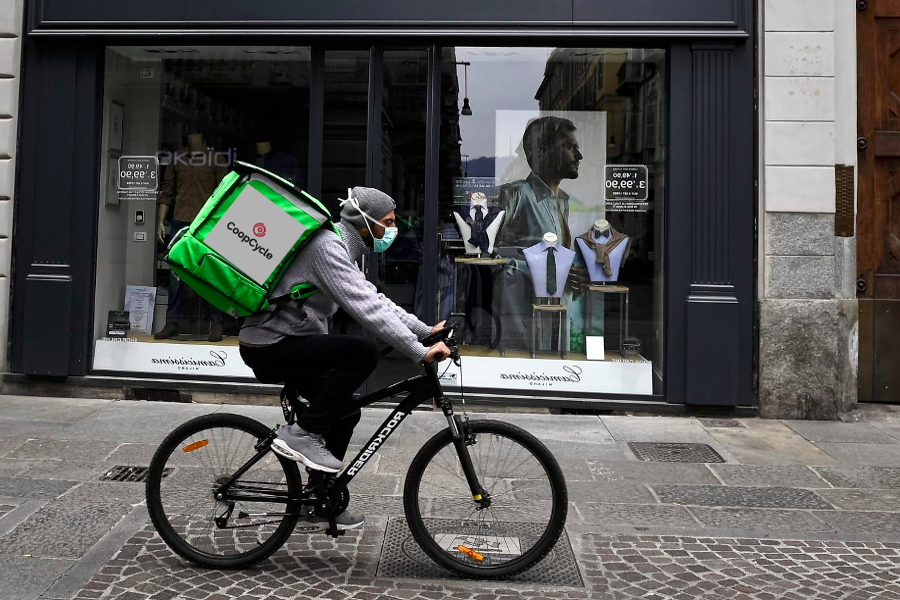
In recent years, the emerging international movement of “platform cooperativism” has been seen as an alternative path. To a degree, it inverts the logic of “platform capitalism,” and Europe’s CoopCycle is a typical representative. It is a European federation of bicycle delivery cooperatives operating in 16 cities. They have developed a free, open-source food delivery application, enabling riders in each city to redevelop the app according to local needs and create their own bicycle delivery platform cooperatives.
Unlike typical platform companies, CoopCycle only provides riders with the necessary informational tools but does not take a cut from each order. Instead, it charges 2.5 per cent of each cooperative’s added value (no less than 500 euros per year) to cover its own operating costs. It also offers support to riders and cooperatives, including business model guidance, skills training, and consumer communication. The cooperatives emphasise: “Money should not beget money; all profits should flow to the workers. You can only earn money by riding a bicycle.”
CoopCycle sees itself as a “digital commons.” All data and information generated in the delivery process belong to the cooperatives, and they do not use information technology to monitor delivery riders. Riders also have a clear labour relationship with their cooperative: pay is calculated by hours worked rather than by number of orders, and they are entitled to a minimum wage, unemployment insurance, health insurance, and paid leave. Through a direct democratic model of “one cooperative, one vote; one person, one vote,” riders hold management and decision-making power over the cooperative.
The story of CoopCycle shows clearly that digital technology and food delivery services are not the problem in themselves. When power is in the hands of the workers, technology and platforms have the potential to create a win-win-win outcome for workers, consumers, and the environment.
Singapore’s Road to Platform Worker Legislation
As one of the first countries in the world to establish dedicated legal protections for platform workers, Singapore’s Platform Workers Bill is regarded as a milestone and offers a valuable reference for China and other countries seeking to address labour protections in the platform economy.
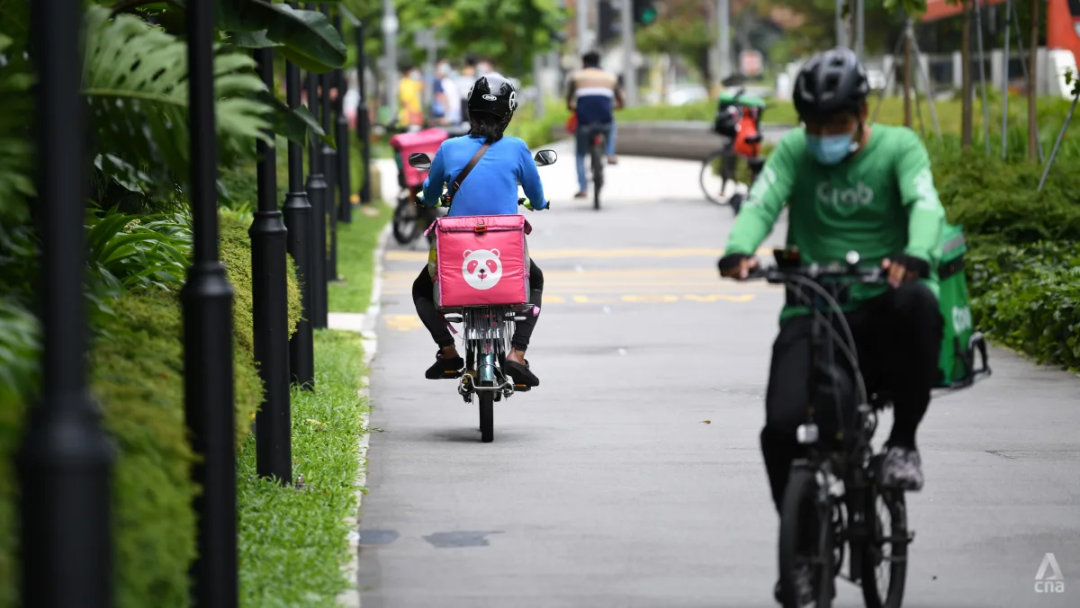
Following the passage of the Bill, Singapore’s major ride-hailing and food delivery platforms Grab announced that from 2025, on top of the existing platform fee, it would charge an additional S$0.20 per order (approximately RMB 1) to cover the costs of the new legislation. Whether this move will effectively safeguard workers’ rights, and whether it offers a model worth emulating domestically, is something we will continue to follow up on.
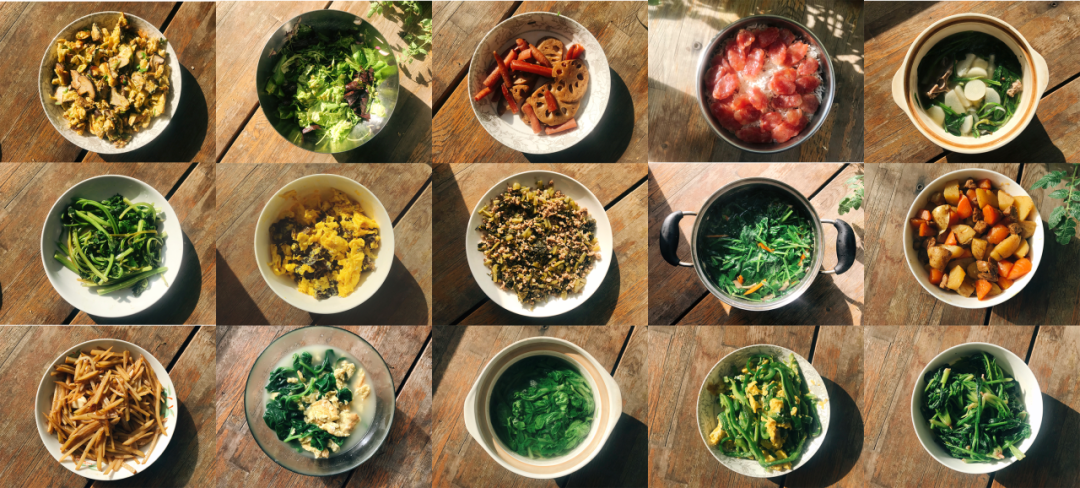
How Will You Eat in 2025?
Feel free to leave a comment and share your views with us. We also welcome partners interested in writing and research to join our writing community, so we can continue to track the labour, health, and environmental issues behind food together.

Editor: Tian Le