In 2004, I was carrying out fieldwork in a village in Mao County, Sichuan. One villager said to me: “The Sichuan pepper trees are running uphill.” He meant that Sichuan pepper trees used to grow best in the river valley, but that was no longer the case. Instead, they now thrived better on the mid-slope, and even the mountaintop—where peppers had never grown before—could now produce them. This was the “warming” everyone kept talking about, and it struck me deeply at the time.—Du Ling, Chengdu Shuguang Community Development Capacity Building Centre
Growing Apples Like Grapes
The northwestern regions used to experience drought nine years out of every ten. Now there is a clear increase in rainfall, and it seems to be a long-term shift. The aspect of climate change that hits rural areas hardest is extreme weather. When we visited a village for work, we spotted rows of trellis frames in an orchard from far away and assumed they were for grapes. Only when we got closer did we find they were actually apple trees. We later learned that these were a new apple variety promoted by the government for dwarf, high-density planting. The trees are small, each one bears heavily, and the overall crop load is large, so the orchard requires a trellis system. This not only supports and stabilises the trees but also anchors the drip irrigation system and anti-hail netting. If extreme drought or hail strikes, farmers can at least mitigate some losses.—Hu Xiaojun, Gansu Yishan Yishui Centre for Environment and Social Development
What Kind of Energy Resilience Do Rural Communities Need?
Last year, Ruicheng in Shanxi was struck by a rare cold wave. Ice built up on the high-voltage transmission line running from the plain into the mountainous areas, causing a widespread power outage. For an entire week, there was no heating and no running water. Four solar panels charged the phones of everyone in the village. Southern Shanxi has never had a tradition of stockpiling coal. And of course, air pollution was severe in recent years, so coal stoves were banned. Ever since the coal-to-electricity conversion, there has been too much reliance on the power grid.—Du Jie, Jinqing Sustainable Development Public Service CentreFrom energy to infrastructure, from production to daily life, from livelihoods to health, the severe challenges posed by climate change are growing ever more visible in rural China. The government has also introduced a series of policies to strengthen rural areas’ capacity to respond to climate change. However, these policies tend to prioritise technology promotion and infrastructure development. For the smallholder farmers—who make up over 98% of all agricultural operations—and the increasingly hollowed-out countryside, systematic support remains lacking. At the same time, adaptation strategies reliant on external resource inputs and top-down administrative push often limit farmers’ capacity and room for autonomous action. Against this backdrop, the role of social organisations in rural climate change response becomes particularly critical. Through local research, frontline intervention and community mobilisation, they can fill the gaps left by policy and offer valuable grassroots insights on how policies can be more effectively implemented.
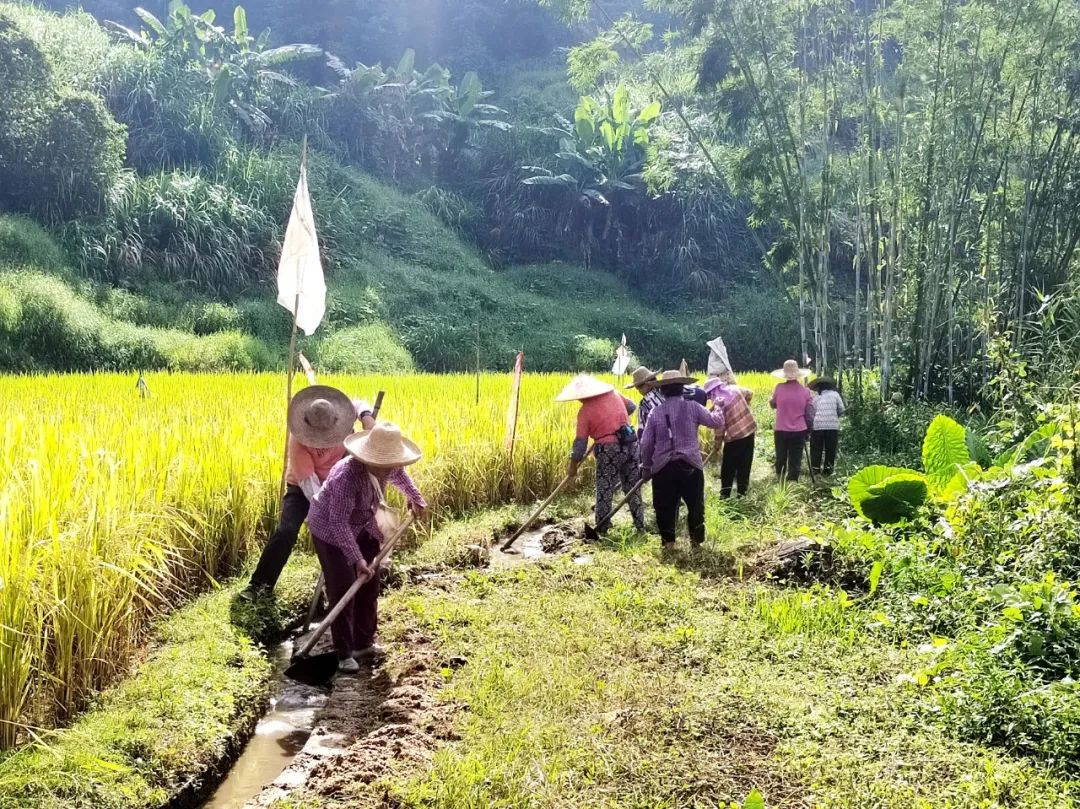
● After the Guangzhou Conghua District Shengeng Social Work Service Centre conducted a climate risk assessment in Xianniangxi Village in the northern mountains of Conghua, they found that as villagers reduced rice cultivation, many irrigation channels had fallen into long-standing disrepair, leading to water shortages, eutrophication and a growing flood risk. This October, the Centre mobilised villagers to carry out micro-hazard mitigation work—dredging and repairing the channels—which reduced climate risks while reawakening people’s collective memories and emotional connection to the village. Photo: Feng LianAlthough social organisations have begun to engage with climate issues over the past two decades, few rural organisations have deliberately integrated climate change response into their strategies and project designs. On the other hand, these organisations have extensive experience in developing rural industries and supporting vulnerable groups, maintain close ties with grassroots communities, and their past work in practice embodies a wealth of practical, indigenous wisdom for responding to climate change. In the face of the climate crisis, there is an urgent need to distil and disseminate truly effective experience. More than ever, we need approaches tailored to local conditions and community needs, fully mobilising every person and every available resource within the community—precisely what local social organisations excel at. Building on this, Foodthink, supported by the Oxfam (Hong Kong) Beijing Office, has launched the research project Pathways for Chinese Rural Social Organisations in Climate Change Response, aiming to summarise and explore the achievements, challenges and needs of rural social organisations in their climate change work, and to provide evidence-based, practical reference and recommendations for social organisations, funders, government departments, communities, researchers and other stakeholders, so that rural social organisations can carry out climate change response work more effectively.
– Research Targets –
The “rural social organisations” targeted by this research refer to institutions and groups that carry out social services and public-benefit work in rural areas, including but not limited to:◉ Traditional rural development and poverty alleviation organisations;
◉ Environmental organisations operating in rural areas;
◉ Social work agencies serving vulnerable groups in rural areas;
◉ Volunteer organisations involved in rural disaster relief;
◉ Student groups conducting research or fieldwork at designated rural locations;
◉ Volunteer organisations spontaneously established in rural communities;
◉ Rural education support institutions;
◉ Research and advocacy organisations focused on rural agriculture and farmers.
Their specific areas of work include but are not limited to agriculture, energy and infrastructure, vulnerable populations, disaster prevention and mitigation, environmental protection, and cultural education.
Organisational forms are also unrestricted: formally registered social organisations and foundations; enterprises and cooperatives registered as commercial entities but genuinely providing public-benefit social services in rural areas; or community self-organisations and volunteer groups that are not yet registered but already have a relatively stable team.
– Research Outputs –
The information you provide will help us complete the research project Pathways for Chinese Rural Social Organisations in Climate Change Response. Based on the questionnaire feedback, the project team will also invite industry experts and social organisations to take part in regional workshops and learning exchanges to share research findings and practical experience. Foodthink will further use this research to explore in depth the challenges faced by social organisations and the rural communities they serve, as well as the achievements already made, and present these insights through our WeChat public account and media portfolio.
– Completing the Questionnaire –
We cordially invite you to complete the “Pathways for Chinese Rural Social Organisations in Climate Change Response” questionnaire. Please scan the QR code below or click “here” to fill it in. It takes approximately 10 minutes. Once we receive the responses, we will also invite some organisations to take part in in-depth interviews.
The deadline for the survey is 31 December 2024
For any questions, suggestions or other feedback about this research,