Three Months of Farming, and My Eco-Farm Dream Hits the Pause Button
I. “Hands” Remain the Most Essential “Tools of Labour”
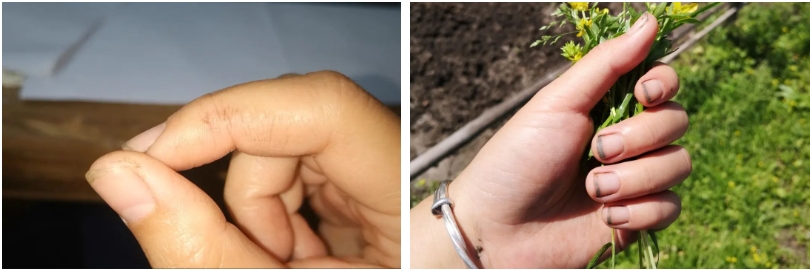
The question “Are you tired?” always comes up in conversations between the masters, the aunties, and us a handful of interns. “Tired” is the first impression most people have of agricultural production. In the daily farm work that relies so heavily on both hands, I would look at the creases in my fingers – untouched by cracks for the past 27 years – and they seemed to be silently protesting: farming civilisation has been developing for thousands of years, so why has the physical toll of working the land not lessened? Office workers’ occupational ailments receive widespread attention. What about farmers’? Are mainstream agricultural technology policies too heavily tilted towards supporting large-scale production systems? How much technology actually benefits small-scale agricultural producers?
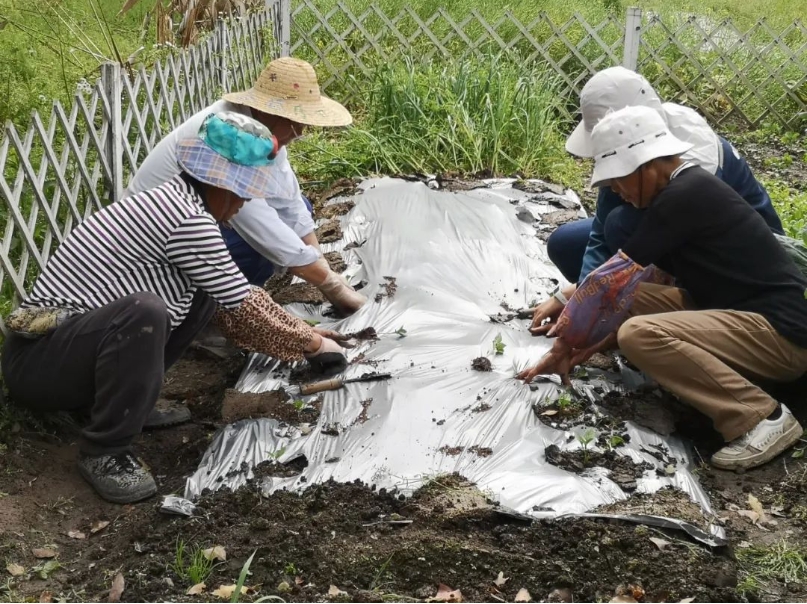
Although Letian Bay Farm is not a “smallholder” in the traditional sense, the planting tasks for roughly 20 mu of cultivated land are almost entirely shouldered by four long-term farmhands, all over the age of 70. These four masters and aunties, well past retirement age, hold the core knowledge for working this land. When the time comes that these workers all retire, how will we – powerless to shoulder such a burden – feed ourselves properly?
II. Sharing the Joy of the Harvest
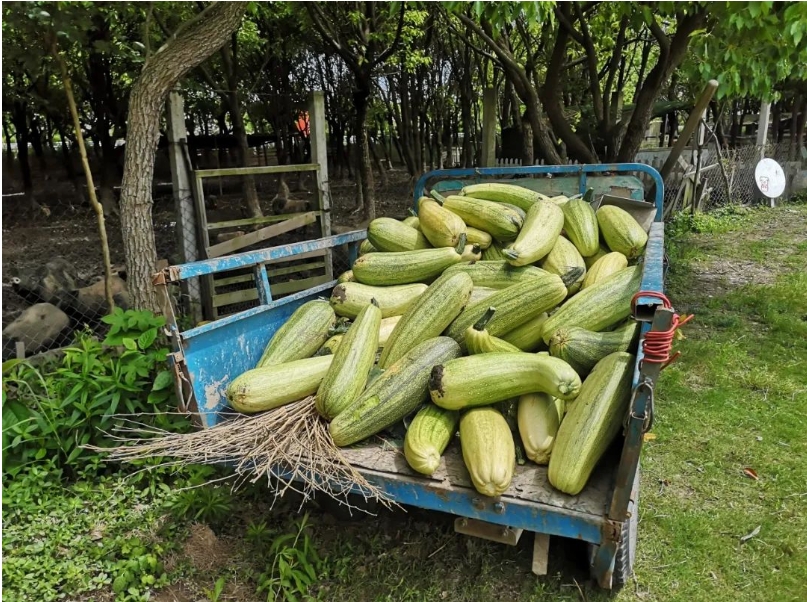
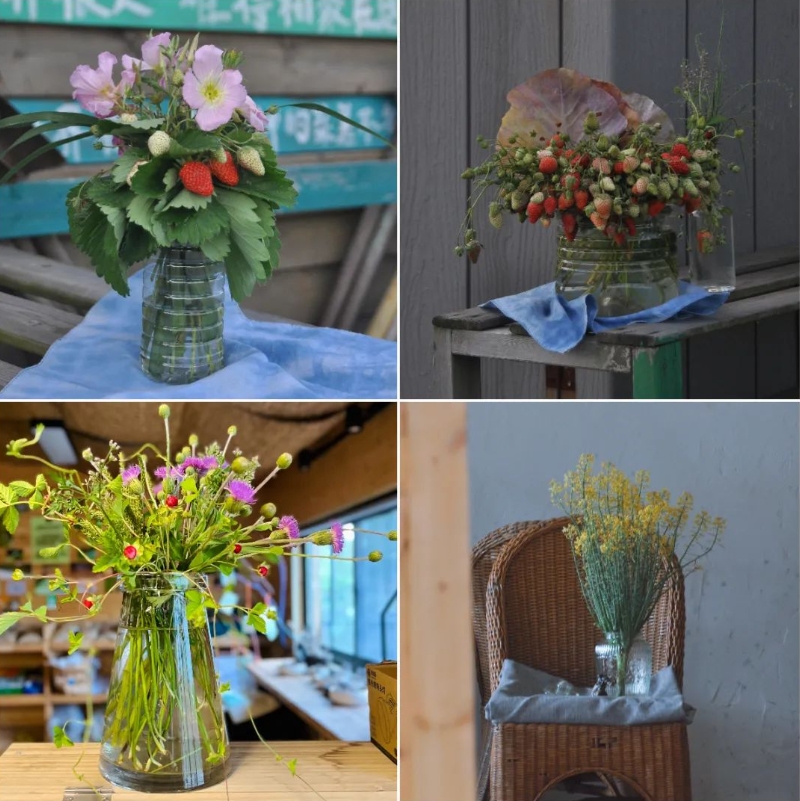
The vegetables and fruit that grow from the earth are simply wonderful. I really want to put on an exhibition for them, to show everyone their vitality. When I am preparing deliveries, I always cannot help picking a few extra, wanting the recipient to feel the joy of the harvest too.
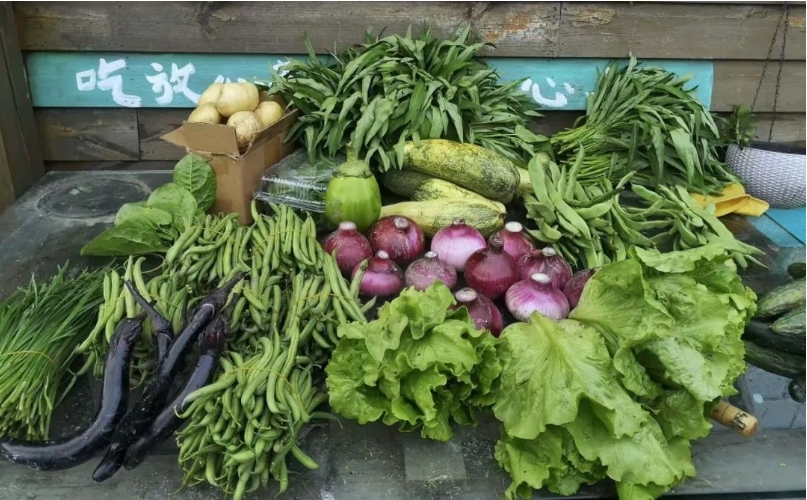
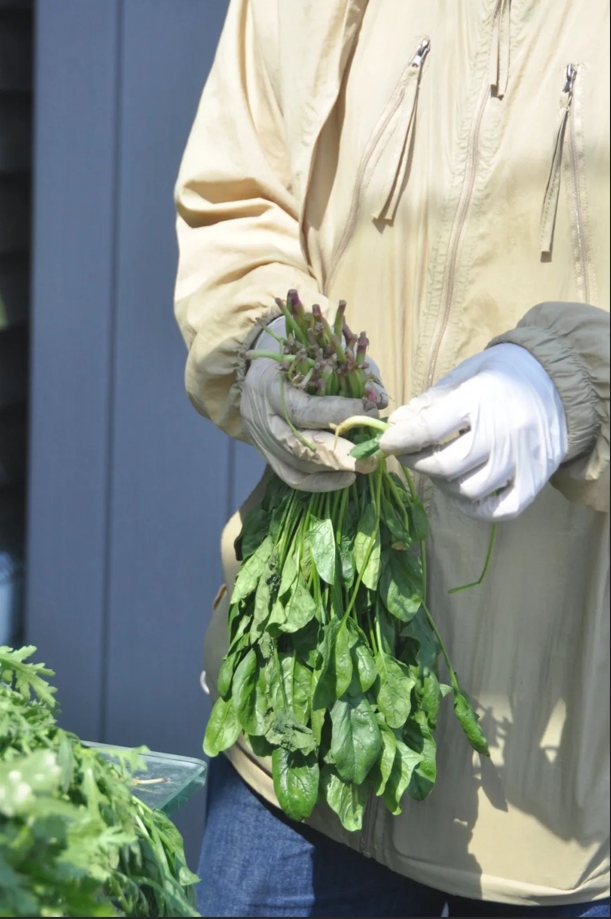
Only after preparing the boxes myself did I understand why post-harvest handling and transport have become an important area of research. It is not just about ensuring product quality – the process also carries our hope of passing on the joy of labour to consumers, one for one. Even the sorting through of Chinese chives, which I dreaded most when I first arrived, did not feel so unpleasant by the end. I am not sure if it was simply that practice makes perfect.
III. Animals and Plants on the Farm
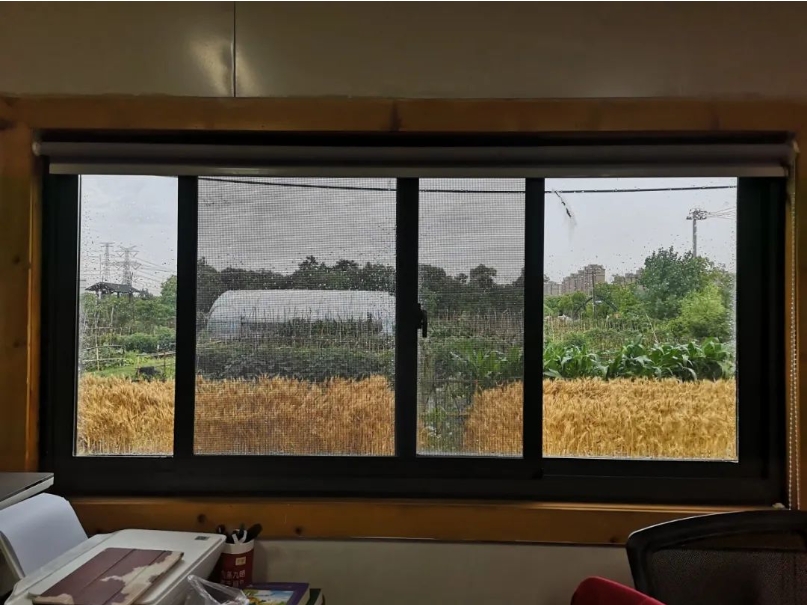
Farm tasks may seem simple, but behind each one lies professional technique and knowledge. In the fields, on the surface we are pinching out the tips of edamame seedlings, pruning and thinning fruit on the corn, tomatoes, and peaches – but what reactions occur inside the plant with every action we take? Is it satisfied with our “help”? If left to follow its own growth pattern, what would it look like? In the beginning, clumsy and unsure how to treat the crops, I was constantly being fussed at by “Foreman” Master Wang.
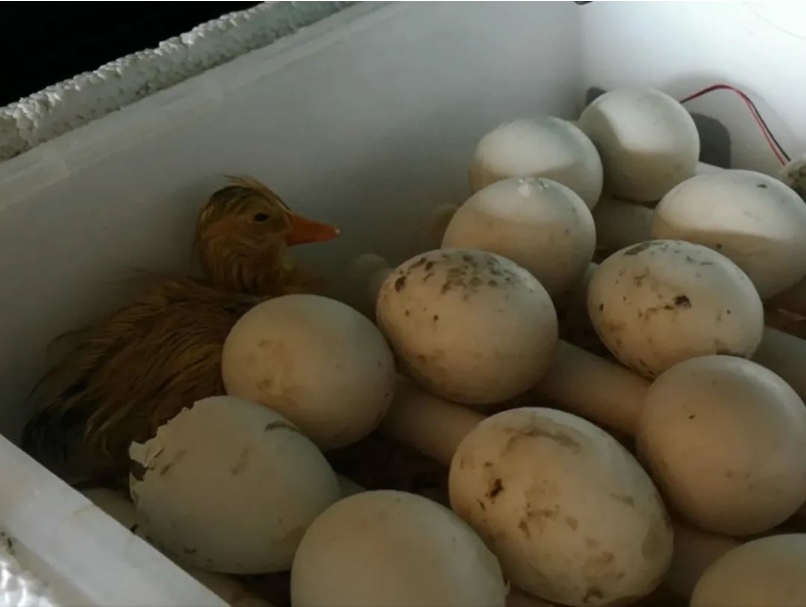
The little animals on the farm each have their own temperaments, and sometimes they fall ill with diseases we do not recognise, facing moments that threaten their lives. In early March, the “human novice parents” tried hatching ducklings in an incubator. After turning the eggs they forgot to close the box, the temperature dropped, and of the twenty duck eggs placed inside, only half hatched.
Then, for some unknown reason, the ducklings – about a month old – one by one began to wobble on their legs and show increased discharge from their eyes and noses. Lacking professional knowledge, the first-time human parents scrambled for answers at the last minute. After scouring the internet, they tentatively diagnosed the ducklings with pasteurellosis. Although we carefully dosed each bird according to its weight – just a few tenths of a gram per feed – in the end only the three strongest survived. On 5 July, before Dad Duck and Mom Duck had even seen their surviving children, they were all bitten to death by a stray dog that appeared out of nowhere.
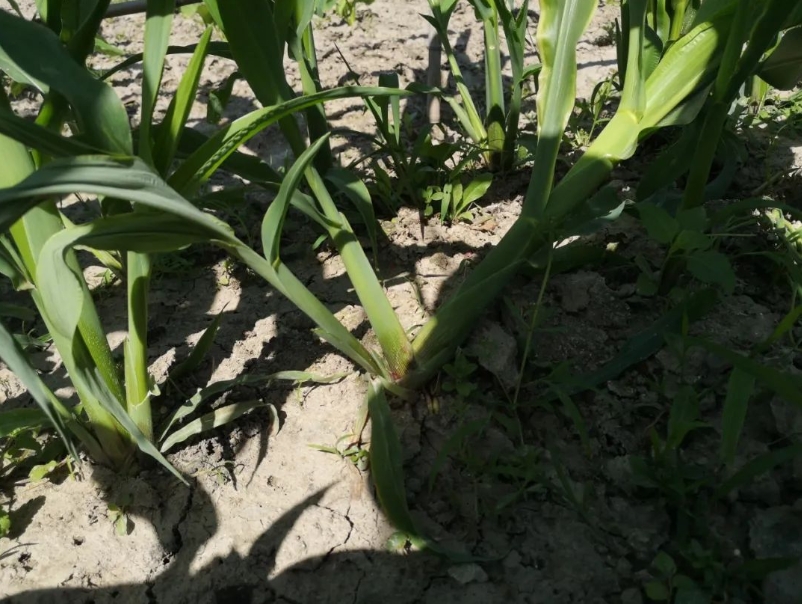
The farm’s plants were changing with the seasons too, and weeding ceased to be a pure burden – it became my avenue for first-hand observation.
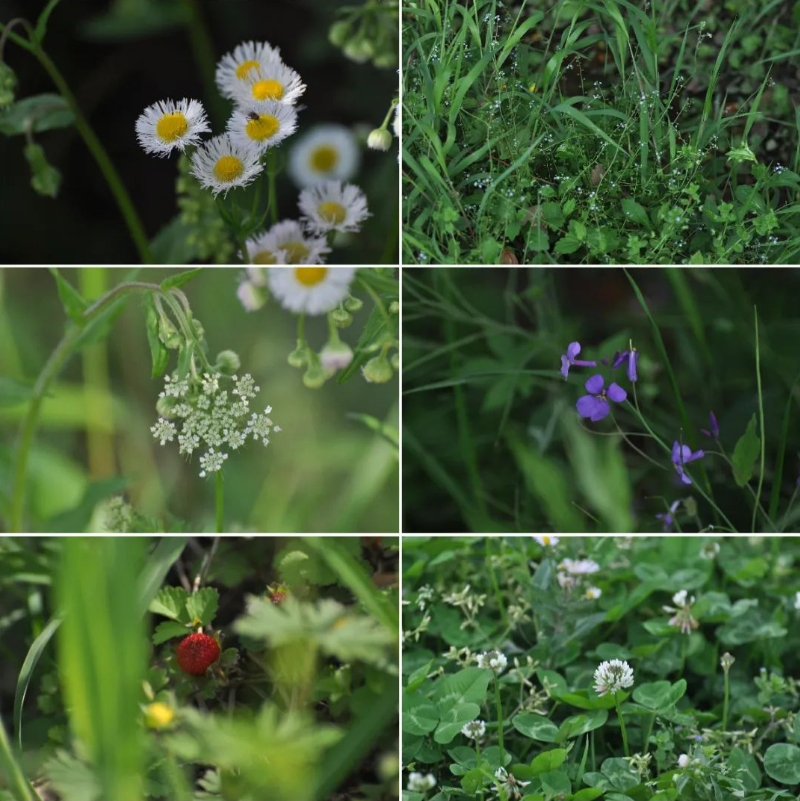
When I first arrived in early April, many plants I had never seen even in Guangdong: petty spurge growing in neat geometric shapes, slender strands of cleavers that cling to other plants with a coat of tiny hooks, hillside after hillside of white-flowered fleabane symbolising spring, and purple-flowered hawkweed and field thistle, among others.
At the time I was marveling at the absence of alligator weed – the same weed that runs rampant in Guangdong – only to discover in May that the earlier temperatures had simply not yet been warm enough to rouse it. The weeds and crops on the farm all follow their seasonal rhythms; once the window has passed, you will not see them again until next year. Perhaps it is precisely because of this seasonality that my heart holds a little extra regret and a little extra anticipation.
IV. The Ideal and Reality of the Eco-Farm
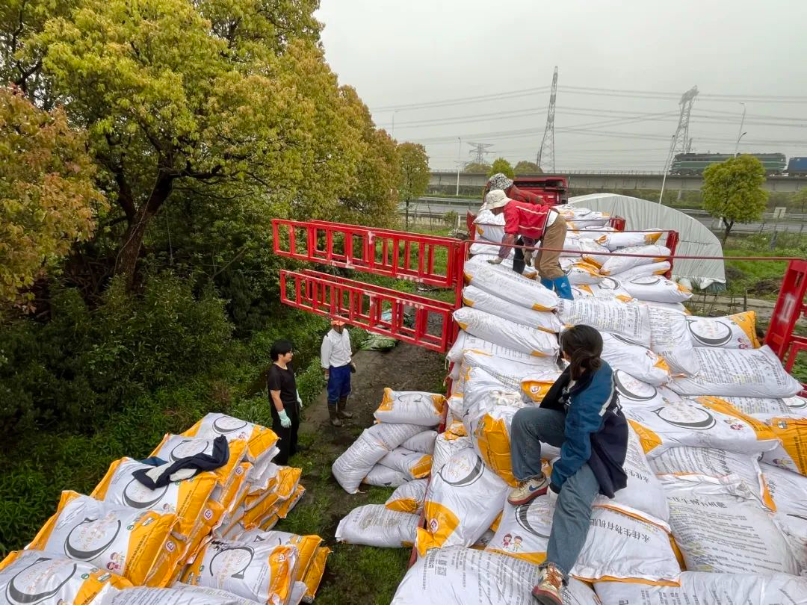
The matter of fertiliser offers a glimpse into the practical constraints on achieving a self-cycling farm: the area under cultivation, human resources, funding, infrastructure, workflow design, climatic conditions, and fertiliser quality, among others. An agricultural system that could have been more self-sufficient seems to be held back by these practical factors, as well as external constraints such as land-use zoning and all manner of regulatory approvals. In many respects, the farm still falls short of the ideal described in ecological, organic, and permaculture theory, but under current conditions, perhaps this is already the best solution for keeping the farm running.
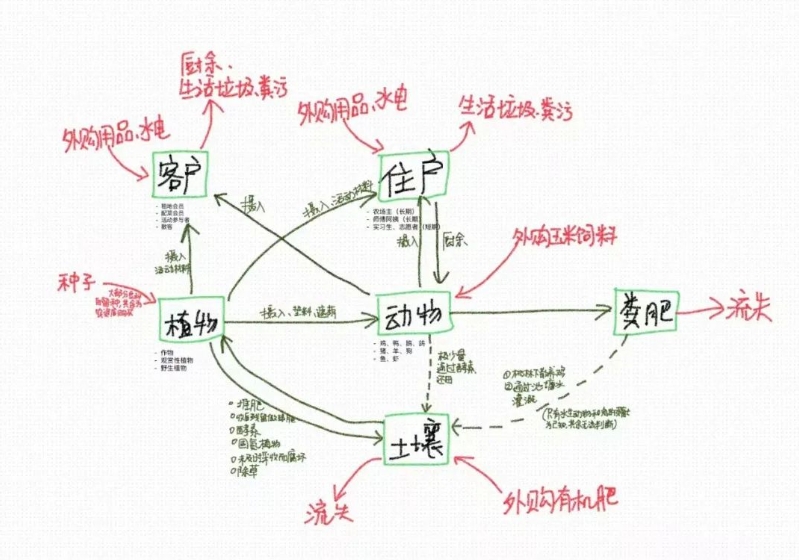
In terms of community-supported agriculture (CSA), reality poses its own problems. In an ideal CSA model, members and producers share the risks of agricultural production together. But through three months of observation, I found that some members do not understand the CSA philosophy. One member complained to us that this year the crops in her plot were worse than everyone else’s. As service providers, we ought to strive to ensure consumers receive quality products, yet consumers tend to want to share only in the gains, reluctant to bear the losses from harvest shortfalls caused by external factors.
Moreover, the vision of shortening the food supply chain through an ecological farm that deals directly with consumers has not been fully realised. Geographically, the farm is located in Fengxian District, Shanghai – a far-out suburb that not even Shanghai locals are willing to acknowledge as part of the city. Many of the surrounding residents already have their own fields and do not need an outside service bringing food from land to table. Among the more than fifty members who rent plots, let alone those who consistently come to harvest, there are very few who even receive regular deliveries. Many good ingredients rot in the ground before members arrive, never making it to the table.
Sometimes I wonder: can “eat in season, eat local” really meet my dietary needs? By the end of July, the farm was producing roughly 20 varieties of fruit and vegetables, while the supermarket offers over 30 organic options and even more non-organic ones. Compared with the supermarket, the farm itself currently lacks mushroom products, is short on seasoning ingredients, the newly sown coriander is growing very poorly in the plum rain season, and after the heatwave there is not much more leafy greens left that is fit to eat.
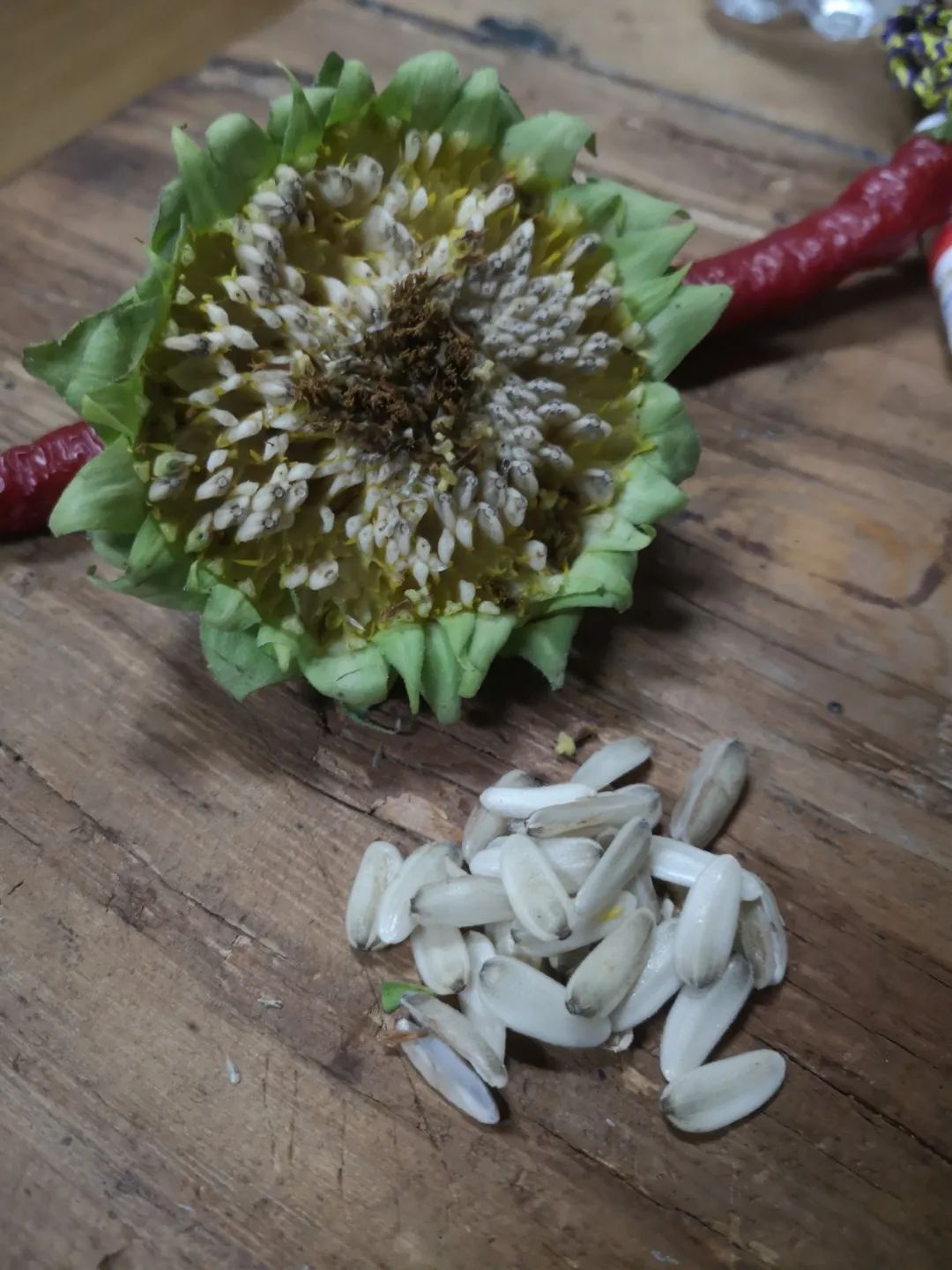
After spending two straight weeks endlessly juggling a handful of ingredients and twisting them into different dishes, I realised that relying on the output of a single farm might sustain me, but it falls short of meeting the emotional needs that food gives me. I have to admit that for a consumer who enjoys a variety of ingredients, being able to savour food from all over the world is truly a blessing. On the other hand, perhaps this also indirectly contributes to preserving the local ingredients of some corner of the world.
Finally, a farm like Letian Bay, which centres on urban leisure experiences, must also meet clients’ need for visual pleasure. To keep the farm from looking too “wild,” we have to tidy up the lawn and the flourishing plant world along the paths before every event. Each time I see the bare earth slightly exposed after a trim, I feel a sense of loss and regret, but personal preference has to yield to the demands of clients who hold greater sway.
V. Memories Strung Together by Meals
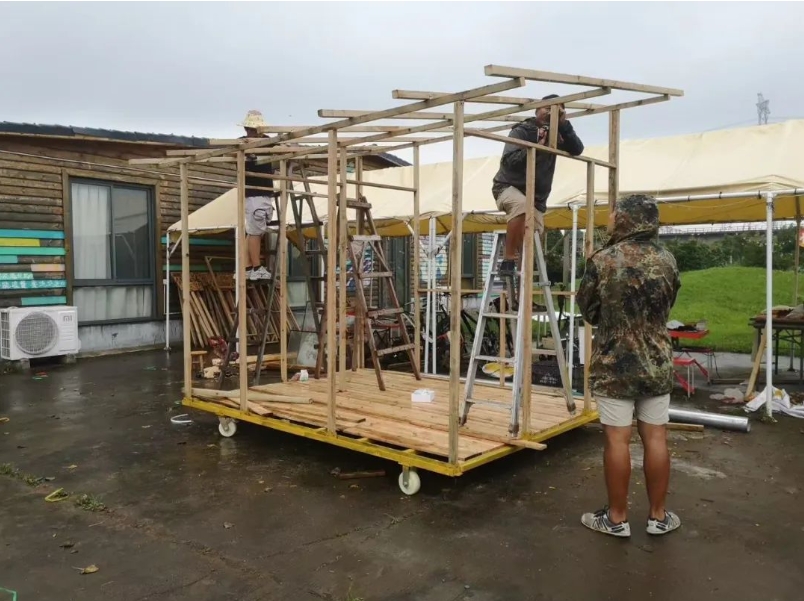
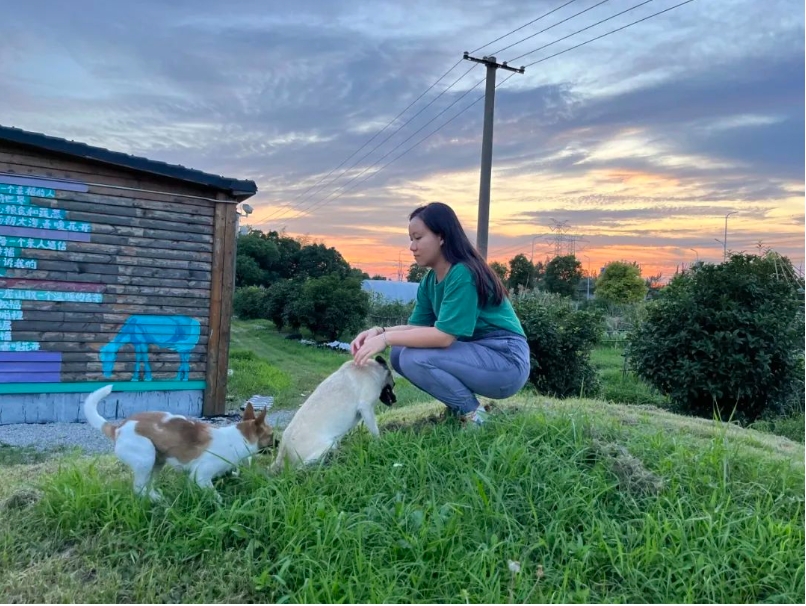
Finally, taking food as my medium for a wrap-up, I want to say that after leaving, the withdrawal symptoms probably it is missing Boss Yuan’s “painted” big cakes, Xiao Ling’s hometown specialty of wasabi chicken, Xiao Lu’s waterfall bread, Xiao Liu’s tomato and egg stir-fry, the 25 crayfish that Xiao Tong fished up over two long nights, the white-cut chicken from Master Wang – who only reveals a few of his tricks after a little coaxing – Auntie Gu’s horseshoe vine and meat zongzi, Auntie Hua’s habit of adding a dash of chilli powder to her vegetarian dishes for extra flavour, and the farm’s seasonal limited-edition cucumber jelly, Earth Three Delights, strawberry jam, iced watermelon, sugar-tossed tomatoes… and missing the farm’s living “kitchen waste processor” dogs – Princess Tudou and endearingly contradictory Xiaobao. Please make sure the next cohort of interns takes good care of them too.
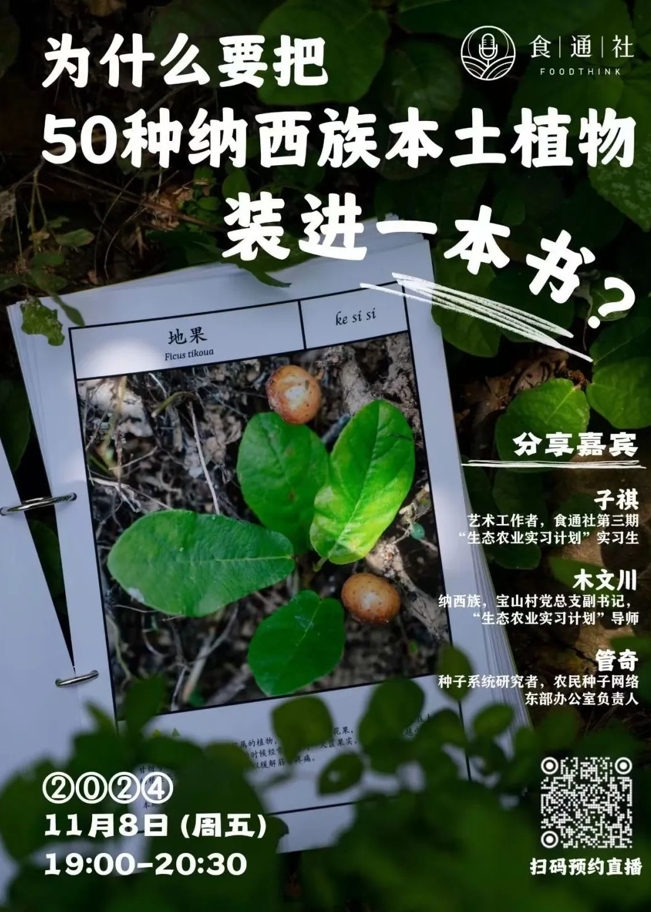
– How to Participate –
Sharing Session Format
Online Livestream
Time
8 November 2024 (Friday)
19:00-20:30
Livestream Booking
Follow the Video Account Foodthink
And you are welcome to join the Foodthink discussion group
Scan the QR code below to add Shitong Jun on WeChat
Please note “分享会” (Sharing Session) to join the Sharing Session discussion group
If you are already in the Foodthink community, there is no need to add again.
▼