
Are nutritionists becoming shills for Big Food? A Registered Nutritionist weighs in
“Do the supplements recommended by that influencer dietitian actually work?” a friend whispered to me during a gathering.
As a US Registered Dietitian, I have long been used to acting as the “last line of defence” for my friends’ nutritional knowledge. When the recommendations of high-traffic bloggers are laced with advertisements, people need a neutral voice to discern the line between science and marketing.
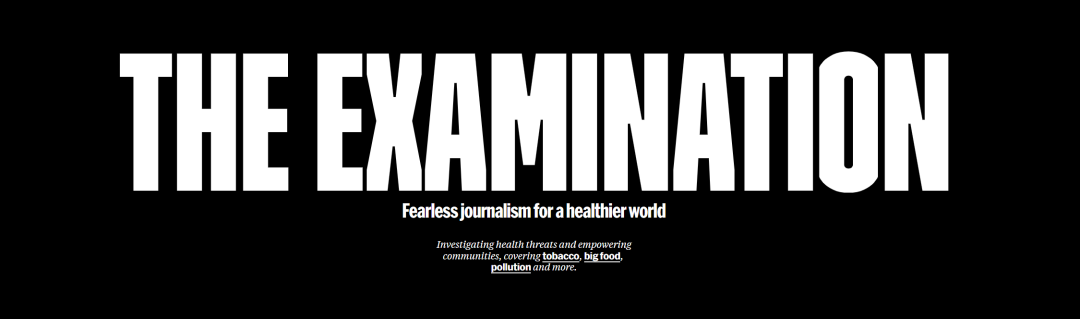
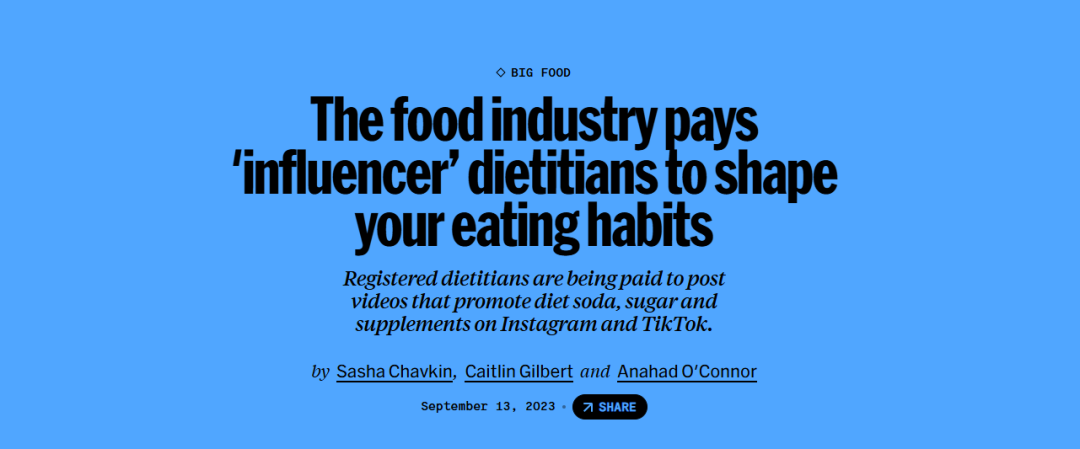
My friend’s concerns are not unfounded. In 2023, the independent news agency The Examination, in collaboration with The Washington Post, published an article accusing dietitians of being “lackeys” for food giants (the original title being “The food industry pays ‘influencer’ dietitians to shape your eating habits”, hereinafter referred to as “Corporate Pay-offs”). The report revealed that my peers—influencer Registered Dietitians in North America—not only embed various “soft ads” in their videos, but even the nutritional knowledge they present as neutral and objective may be packaged commercial promotion. In return, they can earn anywhere from a few thousand to tens of thousands of dollars for a single collaborative video.
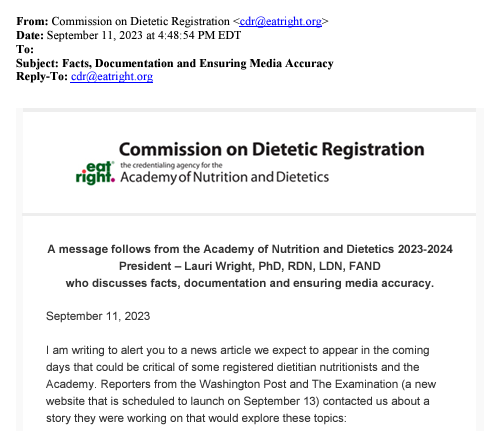
This explosive news prompted the president of the world’s largest professional association for dietitians, the Academy of Nutrition and Dietetics (hereinafter referred to as AND), to urgently release a PR damage-control piece, sending a mass email to over 110,000 Registered Dietitians, including myself, two days in advance.
Yet, at the time, I felt a flicker of relief, thinking that someone had finally exposed the “elephant in the room”.
I. Sugar or Sugar Substitutes: Who Should We Trust?
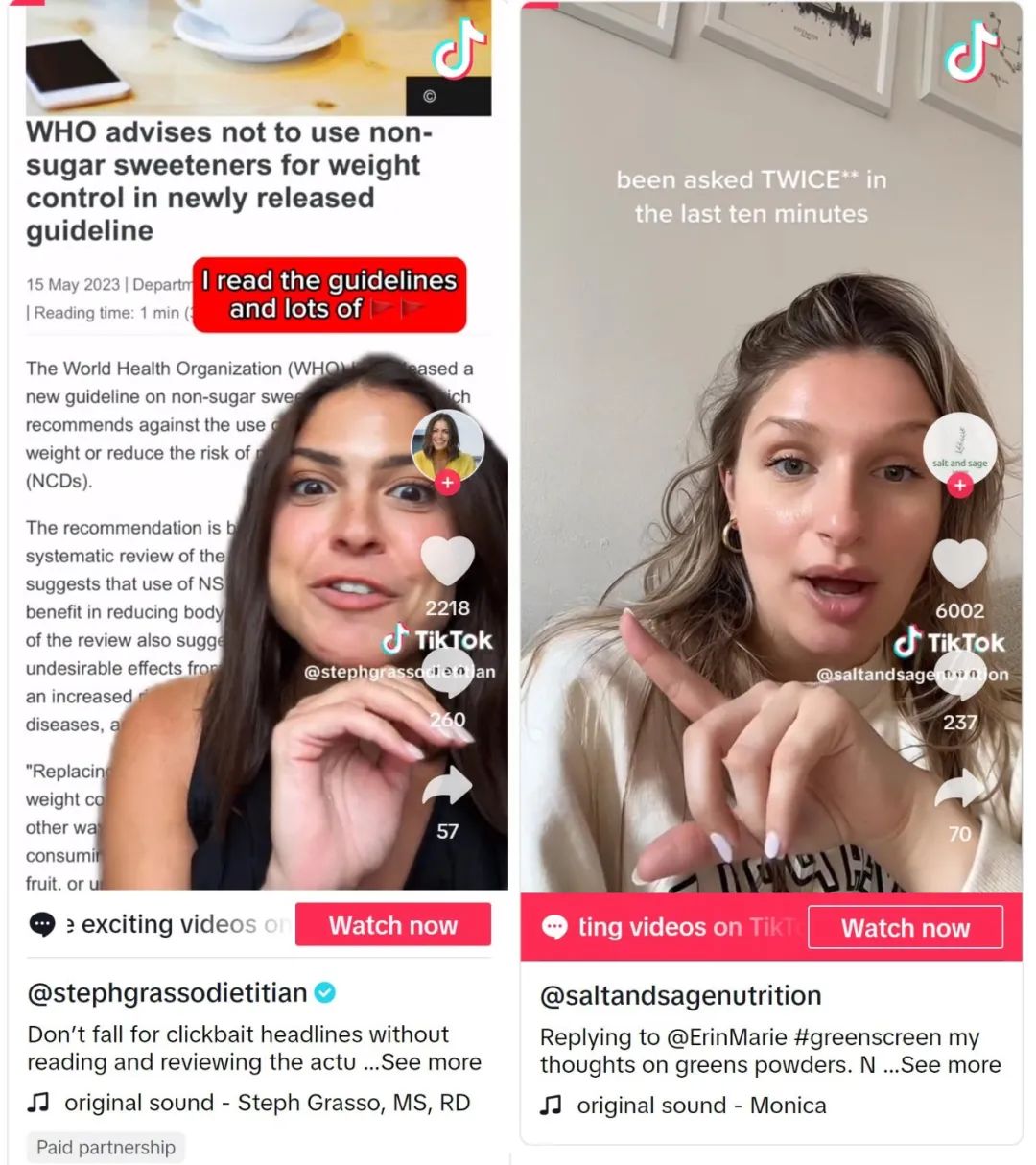
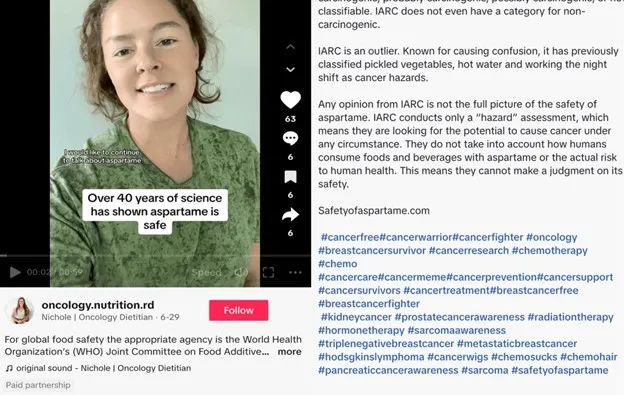
In May 2023, the World Health Organization (WHO) noted in its guidelines that artificial sweeteners do not assist with weight loss and may even pose a carcinogenic risk. Upon hearing this, beverage giants secretly poured money into swaying public opinion, and the hashtag “#safetyofaspartame” flooded the pages of health bloggers overnight. Consequently, content such as the following appeared on Instagram and TikTok:
Steph Grasso, a Registered Dietitian with 2.2 million followers, claimed on TikTok that the WHO’s warning on artificial sweeteners was an “attention-grabbing stunt” based on “low-quality science”;
Another dietitian, Cara Harbstreet, reassured her followers on Instagram not to worry about “scaremongering headlines” regarding aspartame, as “the evidence does not suggest there is cause for concern”;
Mary Ellen Phipps, a dietitian specialising in diabetes care, told her Instagram audience while sipping a soft drink that artificial sweeteners could “satisfy sweet cravings” without affecting blood glucose or insulin levels.
The article found that at least ten “mega-influencer” dietitians with over 10,000 followers, including those mentioned above, endorsed aspartame, yet none mentioned that they had received money from the American Beverage Association. This industry association represents major drink companies such as Coca-Cola and Pepsi; it acts not only as a puppet master behind the scenes but also as a dedicated lobbyist for these giants. The financial transactions behind this inevitably raise the question: has the professionalism of dietitians been eroded by capital?
One dietitian, while eating ice cream, claimed that “refusing to eat sugary foods only makes your cravings stronger”; another sponsored dietitian, holding a doughnut, joked that the “best” way to reduce sugar is to “cut it with a knife, break it by hand, or even bite it with your teeth”. Both videos were sponsored by the “Sugar Association of Canada”, but the original posts were unmarked.
II. Dietary Supplements: Violating Regulations with Stealth Ads
This is not surprising, but it is still painful for me.
I believe that a scientifically literate dietitian should maintain a conservative attitude towards dietary supplements. There are two reasons for this: first, there are too many journal papers plagued by conflicts of interest, insufficient sample sizes, significant individual differences, and flawed experimental designs, and the scientific basis for some supplements is derived from these; second, dietitians are well aware that the US Food and Drug Administration (FDA)’s regulation of dietary supplements is virtually non-existent. In the absence of scientific evidence and with questionable product quality, encouraging consumers to spend money on potentially harmful “placebos” not only violates my professional conscience but also stains my professional integrity and responsibility as a Registered Dietitian.
In fact, whether it is science communication or product promotion, any failure to disclose the source of sponsorship is a violation of relevant regulations and professional ethical codes.
Regarding the regulatory issue: according to Federal Trade Commission (FTC) guidelines, these influencer dietitians must disclose their financial interests, including explicitly stating who paid for their promotional content. Deliberately failing to do so constitutes a concealment of an “undisclosed material connection”.
Regarding professional ethics: they failed to follow a code of professional conduct established by the Academy of Nutrition and Dietetics, which requires Registered Dietitians to truthfully disclose potential conflicts of interest and prohibits the acceptance of gifts or services that may actually or appear to influence their professional judgement.
III. Hidden Food Power: The Sponsorship Controversy of Nutritionist Associations
The association itself maintains very close ties with the food industry. The article “Corporations Buying Off Nutritionists” revealed that the AND’s primary sponsors are the American Beverage Association and Tate & Lyle, a supplier of food ingredients.
As the saying goes, “it is hard to remain impartial when you are on someone’s payroll”. Just before the article was published, the AND sent out a mass response email vowing to defend the professional integrity of registered dietitians, claiming that while they could not regulate individual social media accounts, they would investigate and handle any violations. On the critical issue of sponsorship, the AND claimed that its corporate sponsorship screening is strict and transparent, accounting for only 7% of its income; however, the email completely avoided the question regarding the influence of food corporations on the industry’s narrative.
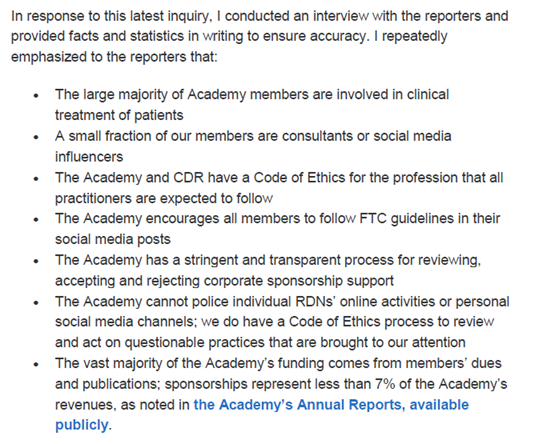
These findings stand in stark contrast to the AND’s claim of “strict and transparent corporate sponsorship screening”, revealing that corporations exert deep influence over the nutrition association not only through financial support, but also through policy, governance, and research direction.
After the renewed revelations in “Corporations Buying Off Nutritionists”, Marion Nestle, a nutrition professor at New York University and author of “Food Politics”, offered a sharp critique of the AND’s ambiguous stance:
However, reform initiated from within the industry has been an uphill battle. In 2013, the organisation launched a petition to sever the AND’s commercial ties with junk food companies, gathering over 20,000 signatures. They pointed out that companies such as Coca-Cola, McDonald’s, PepsiCo, and Hershey’s not only sponsor nutrition conferences and influence public health policy, but also provide “continuing education” courses for dietitians, telling them that “soda is unfairly maligned” and that “sugary cereals are a healthy way for children to start their day”. Ultimately, this alliance quietly disbanded in 2018; it felt as though their efforts had been like punching a cloud.
Fortunately, however, the volume of discussion regarding the conflict of interest between nutritionists and food giants has not diminished.
I remember during my Master’s at Columbia University, a professor dedicated an entire class to discussing the issue of sponsors, requiring us to read materials, compare the sponsorship policies of different nutrition associations, and evaluate their transparency. At the time, I thought it was a random exercise and didn’t understand why we were spending so much effort on such a trivial matter. But unconsciously, a seed of awareness regarding food power had been quietly planted in the hearts of us future nutritionists.
Looking back now, it was deeply significant.
IV. How can we defend a nutritional voice that is not swayed by commercial interests?
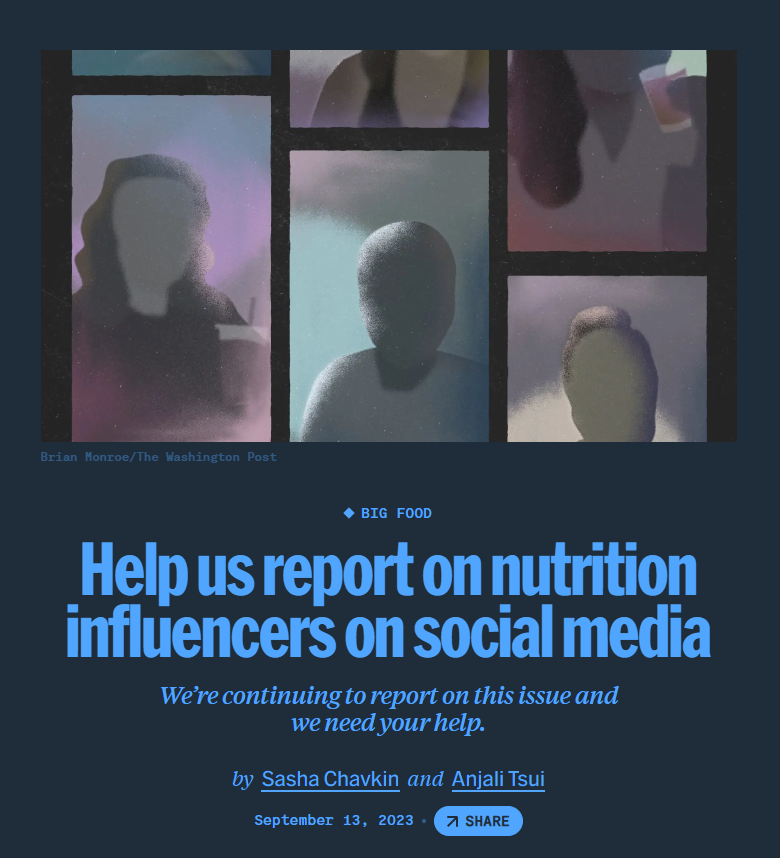
Reading this story again over a year later, the initial emotional surge has subsided, replaced by a deeper respect for the journalists involved. Yet, journalistic exposure alone is not enough; untangling the vested interests between nutritionists and food giants will require a concerted effort from multiple stakeholders.
As Marion Nestle has called for: “Nutritional advice should not be swayed by commercial interests!” This is a sentiment I hold deeply.
In my view, the role of a nutritionist should extend beyond merely providing dietary advice. It is the inescapable responsibility of every nutritionist to actively shape public discourse and help the public recognise how food giants mould the narratives surrounding nutrition. After all, our food choices are never simply a matter of personal preference; they are the product of a complex interplay between power, capital, and science.
Speaking out is the first step toward driving change.
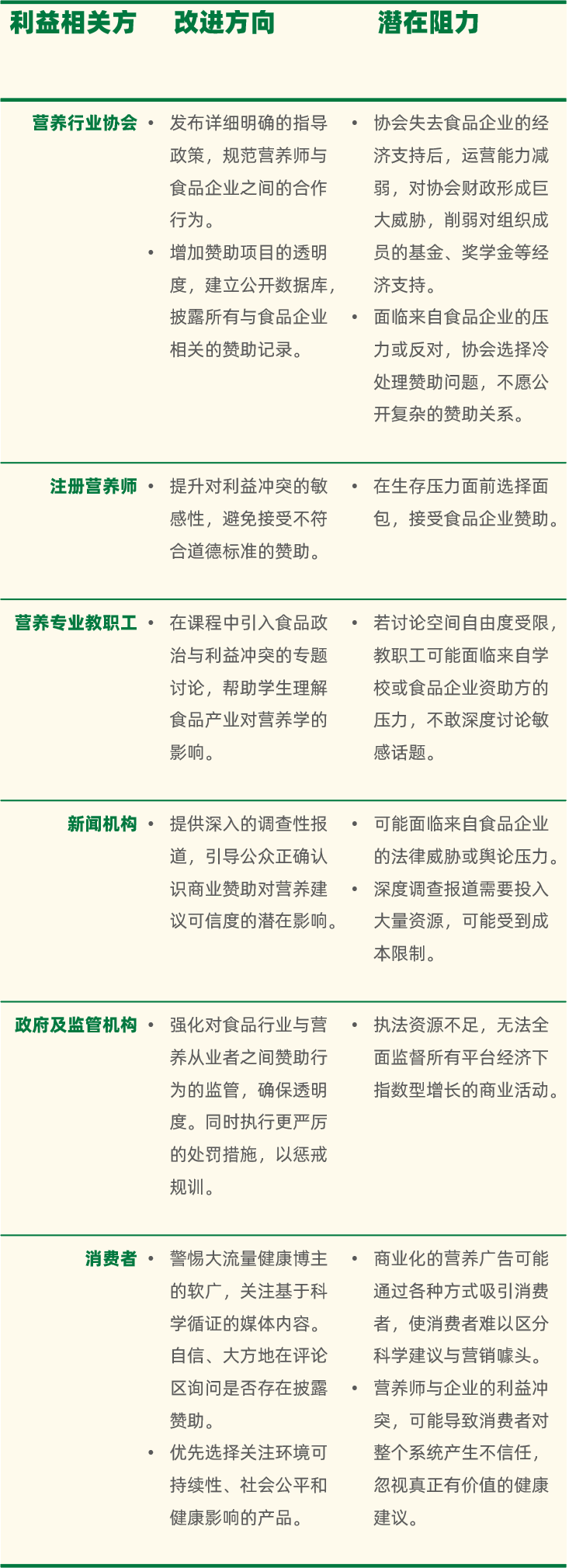
Below are the areas for improvement and the potential obstacles for the key stakeholders, from my perspective:
Dr Jiang Qianzhi, a US-registered nutritionist specialising in paediatric health, explicitly opposes the overly permissive attitude towards sugar seen in sponsored posts. She points out that parents “do not need every single meal to be a perfect 100%”, but should instead “create a healthy eating environment by consistently providing healthy options”.
In her own home, sweets are not forbidden, but fresh fruit and vegetables, low-sodium biscuits with simple ingredients, and low-sugar energy bars are always available. She emphasises that this approach allows children to view sugar and desserts as simply part of food, rather than special rewards or taboo items, thereby avoiding the distorted relationship with food that can stem from either excessive indulgence or strict restriction.
Ultimately, whether for children or adults, rather than obsessing over labels like “good foods” and “bad foods”, it is better to focus on creating a balanced eating environment where food integrates naturally into life. Visiting an orchard to pick apples or baking biscuits at home—experiencing the transformation and creativity of real food—is a far more effective way to foster a healthy mindset toward eating.
References
1.Chavkin S, Gilbert C, O’Connor A. The food industry pays ’influencer’ dietitians to shape your eating habits | The Examination. [Accessed 30 December 2024]; Available at: https://www.theexamination.org/articles/the-food-industry-pays-influencer-dietitians-to-shape-your-eating-habits
2.Ni J. WHO advises not to use non-sugar sweeteners for weight control in newly released guideline [Online]. [Accessed 1 January 2025]. Available at: https://www.who.int/news/item/15-05-2023-who-advises-not-to-use-non-sugar-sweeteners-for-weight-control-in-newly-released-guideline
3.FTC’s Endorsement Guides: What People Are Asking [Online]. Federal Trade Commission. 2017 [Accessed 5 January 2025]. Available at: https://www.ftc.gov/business-guidance/resources/ftcs-endorsement-guides-what-people-are-asking
4.can you trust tiktok dieticians? [Online]. [Accessed 5 January 2025]. Available at: https://www.tiktok.com/@prettycritical/video/7278702395264077098
5.Eat o’ Clock. Vol. 11 Health Supplements (Part 2) | Which supplements do nutritionists recommend for different age groups? [Audio improved ✔️] [Online]. [Accessed 5 January 2025]. Available at: https://eatoclock.fireside.fm/24
6.Nestle M. Food companies pay dietitian-influencers to hawk their products [Online]. Food Politics by Marion Nestle. 2023 [Accessed 31 December 2024]. Available at: https://www.foodpolitics.com/2023/09/food-companies-pay-dietitian-influencers-to-hawk-their-products/
7.Simon M. And Now a Word From Our Sponsors: Are America’s Nutrition Professionals in the Pocket of Big Food? [Online]. Eat Drink Politics; 2013. Available at: https://www.eatdrinkpolitics.com/wp-content/uploads/AND_Corporate_Sponsorship_Report.pdf
8.Carriedo A, Pinsky I, Crosbie E, Ruskin G, Mialon M. The corporate capture of the nutrition profession in the USA: the case of the Academy of Nutrition and Dietetics. Public Health Nutr. 25(12):3568–82.
9.Bellatti A. The Academy of Nutrition and Dietetics, corporate sponsorship and the alternative: dietitians for professional integrity. Br J Sports Med. 1 August 2019;53(16):986–986.
10.Chavkin S, Tsui A, Gilbert C, O’Connor A. Big Food and dietitians push ‘anti-diet’ advice, despite rising obesity. [Accessed 5 January 2025]; Available at: https://www.theexamination.org/articles/as-obesity-rises-big-food-and-dietitians-push-anti-diet-advice

In the next instalment, we will continue our discussion on the varying attitudes of dietitians towards commercial sponsorship. Whether you are a dietitian practicing in China or abroad, or a content creator in the health sector, you are welcome to leave a comment or scan the QR code to join our group and get in touch. We also welcome general readers to share their thoughts on sponsored posts by health bloggers.

Click “here” to read the article by The Examination and The Washington Post
Editor: Wang Hao
Graphics: Z X