
Thirty Years of Protecting the Sea Together: Unity Secures the Catch | Field Notes from Southern Thailand’s Small-Scale Fishing Communities
A Note from Foodthink
Blue Climate Partners is an action network focused on near-shore fisheries and coastal ecological conservation across ASEAN countries, dedicated to strengthening exchanges between Chinese and ASEAN civil society organisations working on marine protection in fishing communities. Readers who are interested are welcome to follow the WeChat Official Account “Blue Climate Partners”.
This is the first of a three-part series by Foodthink on our visits to Southern Thailand’s fishing communities.

This standard meal for four averages 250 baht (¥53). The restaurant sits right on the edge of the Andaman Sea. What sets it apart is that it is cooperatively run by local small-scale fishers, and it is aptly named the “Fisherfolk Restaurant”. Over the past few decades, destructive fishing gear commonly used by commercial operations has caused Andaman Sea fish stocks to plummet, making it increasingly difficult for fisher families relying on small boats to put food on the table.
Moreover, small-scale fishers sit at the very bottom of the supply chain. Even when their catch passes through multiple layers of middlemen and sells for a premium in supermarkets, the profits that actually reach the fishers remain painfully slim.
This restaurant is an attempt to change that reality—empowering fishers to run their own eatery while giving consumers access to affordable, freshly caught seafood.
The site currently occupied by the restaurant once housed an NGO office. The dining area is refreshingly simple: just a few small tables set up under the eaves on the open ground outside. Inside, stacks of old office supplies still remain. This “unconventional” restaurant setting carries a symbolic weight—it is a small footprint in the decades-long history of the small-scale fishing movement in Southern Thailand. Its existence is not just the result of the fishers’ own efforts, but also stands as a testament to civil society’s support for fishing communities.
Using this restaurant as a starting point to look back, the story stretches nearly 30 years into the past.

I. Commercial Fishing vs Small-Scale Fishers

Moreover, trawling is typically conducted by large vessels capable of venturing into deep waters and remaining at sea for months. Catch from these operations is no longer fresh, and is primarily processed for seafood products, fishmeal, or animal feed.
By contrast, limited by their small size and modest engine capacity, small-scale boats are restricted to overnight fishing in near-shore areas, targeting mature, larger fish to sell fresh at market.
In short, the livelihood models of large trawlers and small-scale vessels are fundamentally different. The former operates on an indiscriminate basis, decimating marine life, whereas the latter primarily targets adult fish and consequently carries a stronger impetus to protect juveniles and their habitats.

II. The Fishers’ Resistance
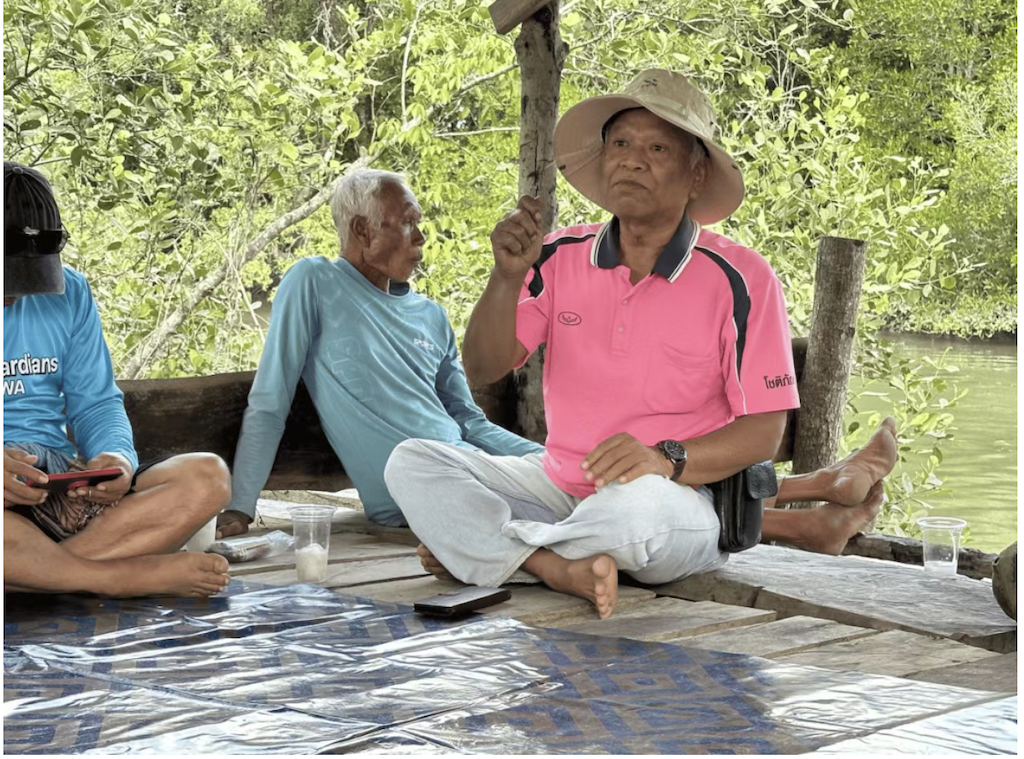
They explained that when the trawling crisis reached a tipping point, the fishers mobilised to drive out the intruders. Soon, they learned how to fight ‘legally’—cooperating with patrols from the fisheries department and the marine police to help authorities arrest these illegal vessels and confiscate their prohibited gear.
While the offenders were mostly foreign commercial vessels, a few short-sighted local fishers also resorted to destructive methods. For these individuals, they first turned to relatives and village headmen for persuasion. Some fishers bristled at this, even threatening the lives of those involved in conservation. Yet others eventually changed their minds. For example, the chairman pointed to a member present and said: “He used to be one of the overfishers too, setting up a net stretched between two bamboo poles in the middle of the mangrove channels. When the tide went out, it would trap many fish and prawns. Many people did this back then. Once he realised the ecological damage it caused, he took the lead in dismantling these nets.”
It took this group of fishers ten years to eradicate local overfishing. To this day, they continue patrolling to consolidate their gains and build networks to strengthen marine conservation. Realising that formally registering as a legal entity would allow them to work more effectively, they established a fishers’ association two years ago, shifting towards a more institutionalised approach to protecting marine resources.
After driving out these ‘sea bandits’, they say they could feel the marine resources recovering. In particular, over the past five years, every trip to sea has yielded a catch. With assistance from NGOs, the fishers compiled their own baseline data and lifecycle calendars for local marine species, giving them a tangible sense of the abundance of resources. They put it this way: the sea area, including the mangroves, is like an ATM that everyone can use—
“Give me a boat and a scoop net, and I have the ATM’s PIN.” The English term for this gear is ‘scoop’, literally meaning ‘ladle’. Deployed from small boats for catching, or held by hand for gathering, it represents the most unadorned form of fishing.
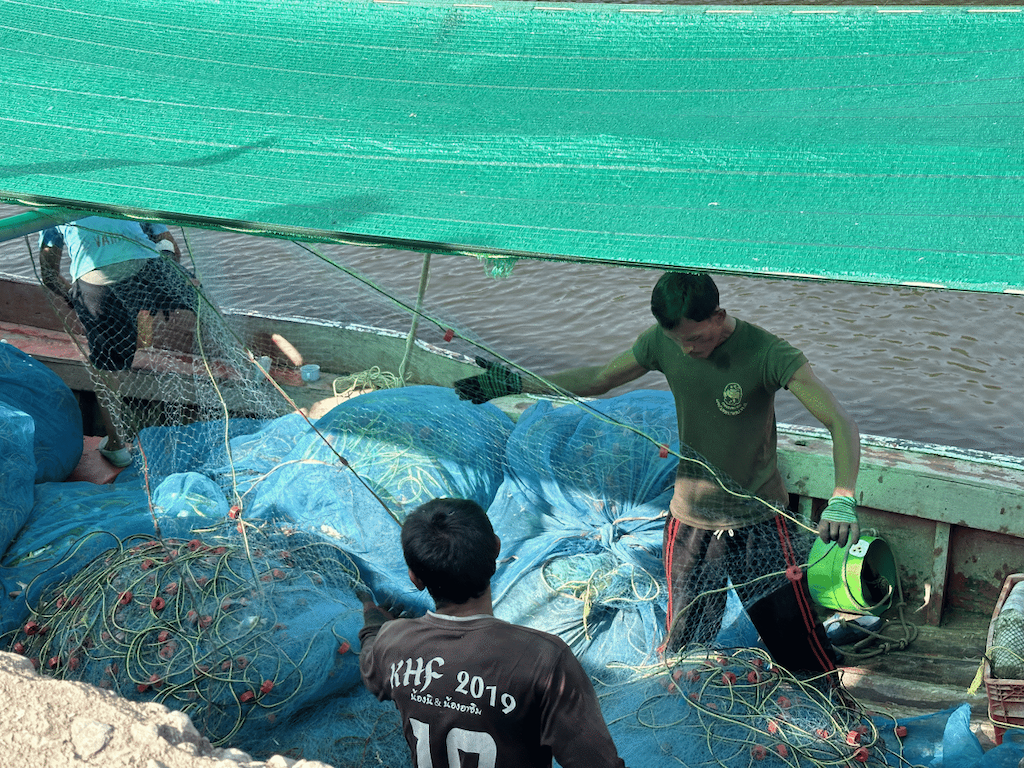
III. The Resurgence of Fine-Mesh Nets
Thailand had previously faced warnings from the EU and the US over rampant destructive fishing. To salvage its reputation and stabilise trade, the country tightened the Fisheries Act in 2015, banning the use of such fine-mesh nets for night fishing beyond 12 nautical miles. Nevertheless, commercial fishing companies have consistently complained about financial losses stemming from the amendments, persistently lobbying the government to ease regulations.
This revision has sparked criticism from environmental groups, fishermen’s associations, and the general public. The highly contentious clause had previously been rejected, negotiated, and amended, but was ultimately approved by parliament in September 2025. The bill is now awaiting review by the Constitutional Court; if no objections are raised, it will be submitted to the King for royal assent and formally enacted.
During our informal chats while sitting on the floor with fisher representatives, the mention of fine-mesh nets drew unanimous headshakes. “The law has already been approved at the national level, but it hasn’t come into force yet,’ they said. Our visit coincided with the run-up to Thailand’s general election, leaving fishers in a state of watchful waiting. “We were discussing it just yesterday: why pass a law like this? It ultimately depends on who holds the reins of power. A provision like this will only line the pockets of commercial trawling companies.”

IV. How Far Can Fishers Go Within the System?

This is not the first time Tab has led a protest march. His life story is remarkably compelling, amounting to a condensed history of the small-scale fisheries movement in Thailand. Born into a rural family in Sadao, Tab often went fishing at sea as a child to help his impoverished household make ends meet. In 1997, he graduated with a BA in History from a university in Songkhla, becoming the only university graduate among his ten siblings. After graduation, he volunteered in a fishing village, where he began to truly understand the world of fishermen.
During the peak of the HIV/AIDS crisis in the late 1990s, he partnered with a person living with HIV to establish a network for people with AIDS. This gave him invaluable experience in serving marginalised communities and building networks, laying the groundwork for his later work in fishing communities.
Tab is the kind of person whose leadership presence is immediately felt. His voice has a slight rasp. Though I don’t understand a word of Thai, I can still feel the compelling energy in his speech. He knows only a handful of basic English phrases, yet he regularly calls out my name to ask, “Are you good?” Remembering every visitor’s name is no small feat. These details reveal an almost instinctual sensitivity for communication and fostering human connection, marking him as a quintessential social movement leader.
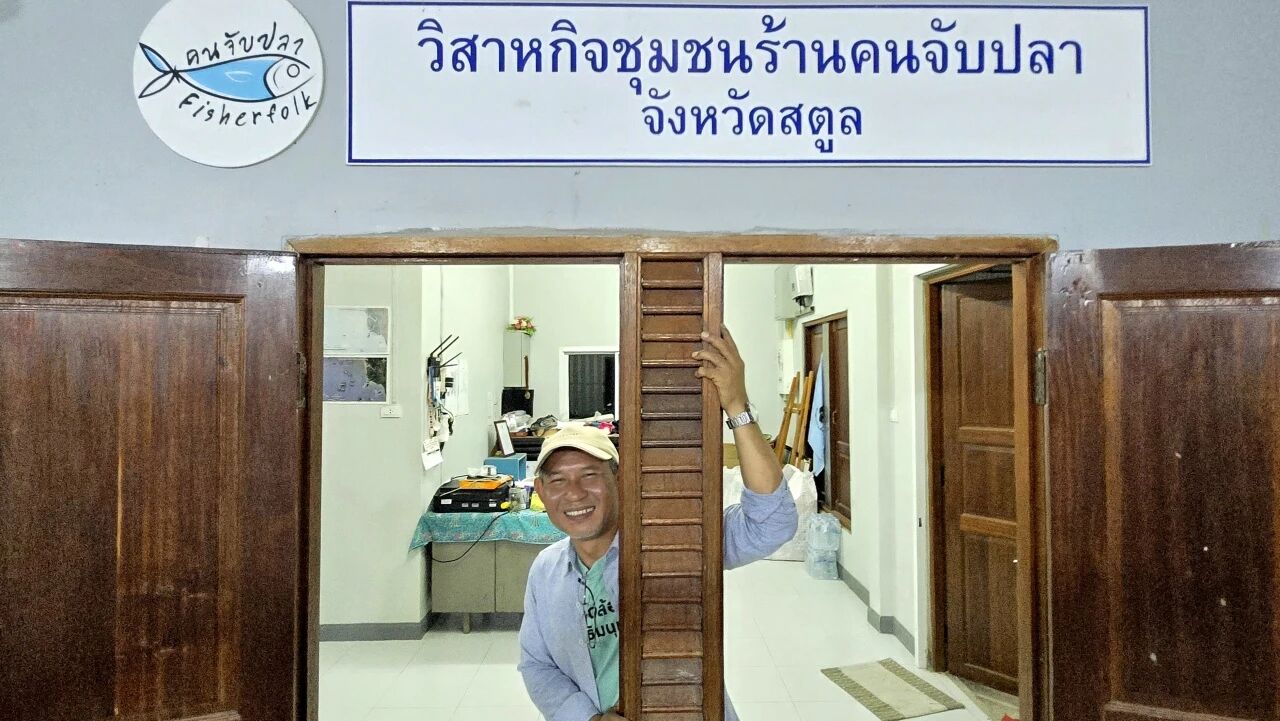
For his contributions to the sustainable development of fishing communities, he was selected as a 2014 Ashoka Fellow, part of the world’s largest support programme for social entrepreneurship leaders. According to the Ashoka website, Tab witnessed many fishermen who led conservation efforts die in poverty, and saw other initiatives end in violence, including the assassination of a fisherman.
The growing chasm between marine conservation and the livelihoods of small-scale fishermen led Tab to realise that fishers must benefit from conservation efforts, or the whole system is doomed to failure. For nearly 30 years, he has been a voice for small-scale fishermen in southern Thailand, once stating plainly his opposition to industrial fishing: “Twin-rig trawlers should not exist in this country, or indeed on this planet… They represent a fishing model that preys on the interests of people worldwide.”
In 1993, thirteen fishing groups from southern Thailand formed the Southern Thai Fishermen Federation. It later absorbed traditional fishing organisations from other regions, growing in size and influence, and was registered in 2009 as a national alliance: the Federation of Thai Fishermen Associations, commonly known as FTFA. Tab was involved in founding FTFA and served as its manager.
It is worth clarifying the distinction between the “associations” and “federations” mentioned earlier. A “fishermen’s association’ is typically a self-governing body formed by fishermen across a single region, such as a cluster of villages. It must be registered with the government, maintain its own council and governance charter, and coordinate internal community affairs, as seen with the Khon Khlan town fishermen’s association that hosted us earlier.
The “Federation of Thai Fishermen Associations (FTFA)”, by contrast, is a national umbrella organisation comprising multiple fishermen’s associations. It pools these decentralised grassroots efforts, giving them the leverage to negotiate with, or even stand up to, the government and large corporations. It is a pivotal force in representing small-scale fishermen in policy advocacy and legislative reform. Its members currently span 19 provinces and 55 organisations.
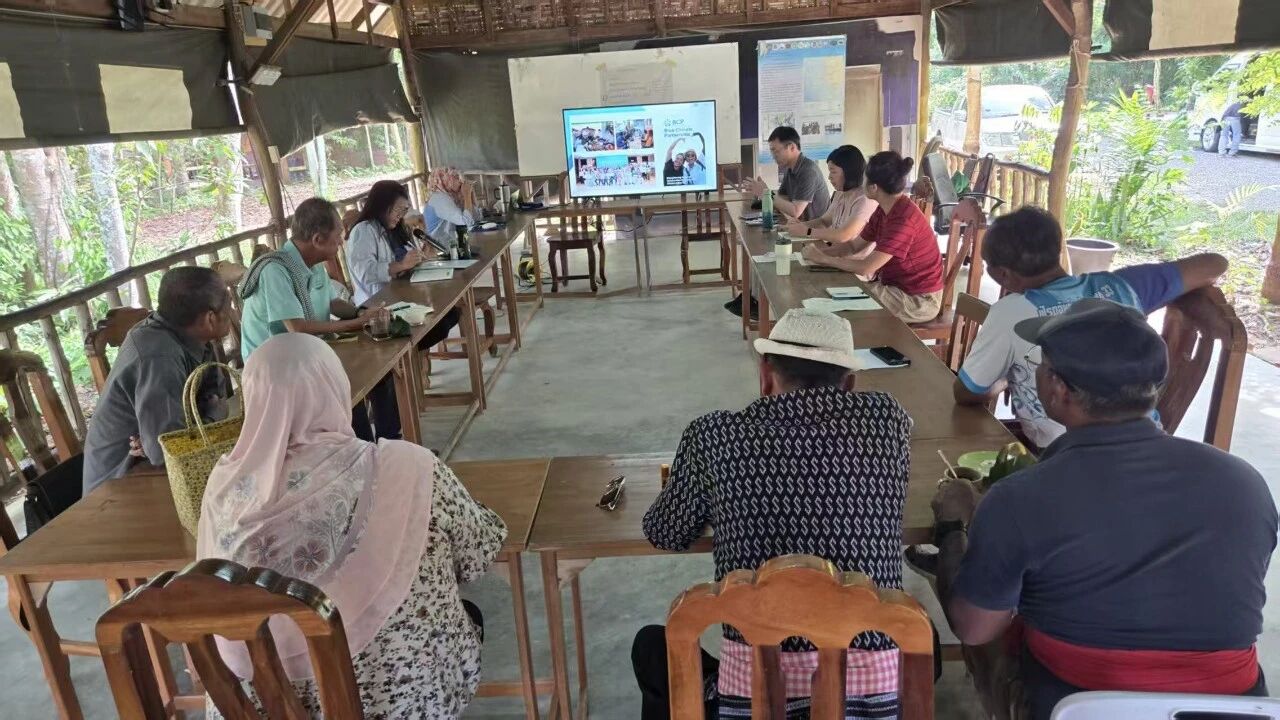
In 2012, Tab collaborated with hundreds of fishing communities to gather over 10,000 signatures, submitting a draft amendment to the Fisheries Act to the Thai parliament. They called for decentralisation and greater involvement for small-scale fishermen and local governments in coastal resource management policies. In 2013, they successfully stopped the government from issuing 2,000 new permits for twin-rig trawlers.
It is through this grassroots, proactive engagement in legislation and policy advocacy that FTFA has managed to pry open a crack in the traditionally closed, industrial-fishing-friendly policy circle, creating space for the small-scale fishermen they represent. In 2015, facing the EU’s yellow card warning over illegal fishing, Thailand did not only tighten the Fisheries Act as previously mentioned but also undertook a comprehensive reform of its fisheries governance system. A national fisheries policy committee was established, with a permanent seat reserved for FTFA. For the first time, small-scale fishermen could negotiate on equal legal footing with other stakeholders.
Whether it is local fishermen’s associations or FTFA, they maintain close ties with NGOs. Fighting for coastal land and resource rights is an arduous task that fishing organisations alone struggle to achieve. NGOs represent the professional expertise of civil society outside the fishing community. They provide capacity building, micro-funding, and other social resources to these organisations, helping fishermen forge connections with consumers, academia, and even the international community. Such support is indispensable.
The relationship between NGOs and these fishing organisations is deeply intertwined, sometimes to the point of merging identities, as the personnel flow demonstrates. Tab, for instance, previously served as FTFA’s manager and is now the head of an NGO focused on fisheries monitoring and policy advocacy called Thailand Marine Watch.
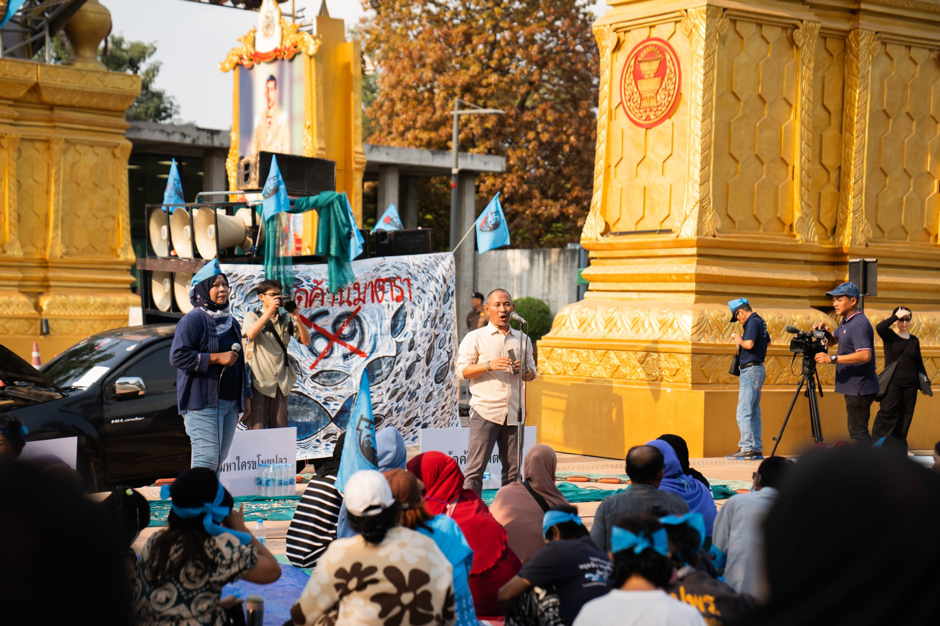
Looking back at decades of fishers’ struggles, the several organisations and fishing groups we visited invariably lamented: when it comes to revising the Fisheries Act, politicians and commercial corporations hold the louder voice, so the law inevitably serves their interests.
“How can we make the law truly work for local people?” they asked.
Coming Up
This is the first of three field notes from Foodthink’s visit to small-scale fishing communities in southern Thailand. To learn how NGO forces are helping to conserve local fisheries communities, please follow our upcoming posts.

Edited by: Pei Dan, Tian Le